If Lodvor Wasn’t Lazy, Would I be here?: Stories from Vinje, Telemark, Norway
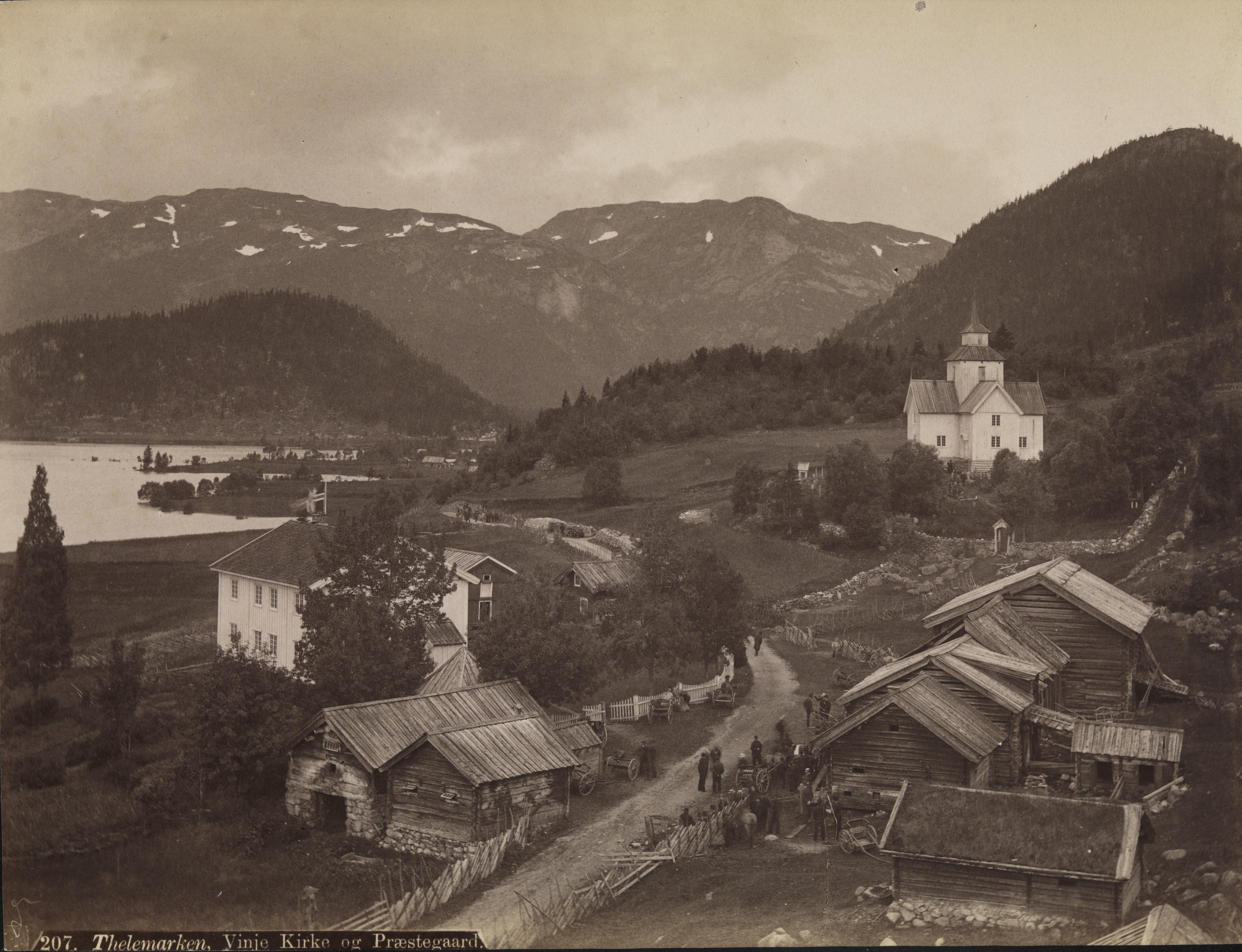
It seems our destiny hinges on a billion decisions made long before we were born. The Story of Lazy Lodvor(sometimes written with a final d) who literally squandered and lost his farms, is not just the story of my 5th great-grandfather—it is likely the reason that my 2nd great grandmother Asloûg Eilefsdotter (Elizabeth OLSON VANSTRUM) came to America in the first place. If the farm had stayed in the family she may have had better prospects. But as it was, the dwindling farm lands and growing population made it hard for families to eek out a living in mid- 19th century Norway. Her parents were farmers who owned no lands of their own, but lived and worked at many farms in Vinje [parish in Telemark]. Each farm has its own name and the history of the farms and the people who lived there are enshrined in the Norwegian bygdebøk or farm history books for Vinje.
So let’s backtrack a bit to Lazy Lodvor. Lodvor was Asloûg’s paternal great-grandfather. He had died before Asloug was born, as had her grandfather, so how much she knew of Lodvor is unknown, but he was a man of legends.
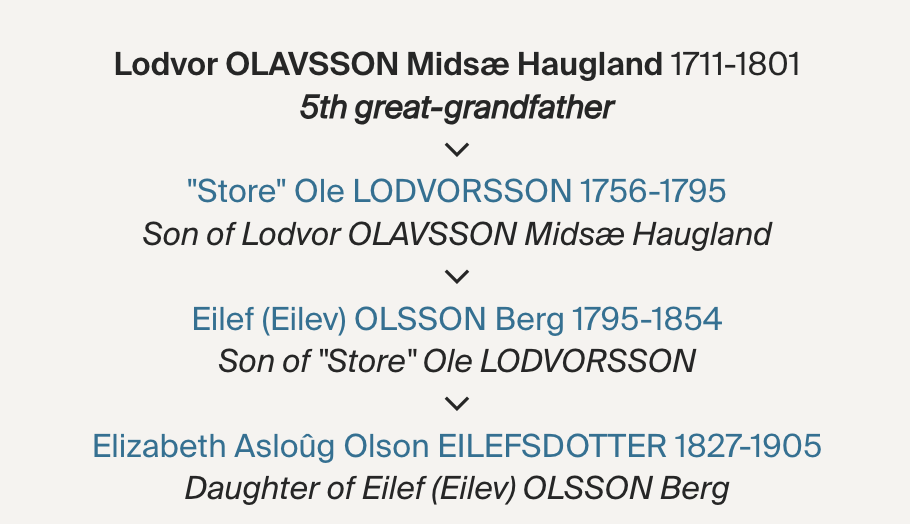
What we know of Lodvor comes from Rikard Berge’s “Vinje og Raugland “Vol II. When Rikard was 12 years old he began recording the traditional folklore from rural areas of Telemark. He was a musicologist, folklorist and biographer who collected the stories and genealogies of the area. Vinje roughly translates as “meadows” or “grasslands.” The importance of this area for farming is reflected in the Vinje Coat of Arms: a silver goat on a blue background.

The original stories are in an archaic dialect and it took many different people, a Norwegian to English Dictionary and Google Translate to make a go of it in English. Again I am indebted to Øystein Løk for his help. This is a rough translation but the gist comes through from “Vinje og Raugland Vol II.” pg 365. Midsæ is a farm, as is Haugland.
The Tales of Lazy Lodvor
“Lodvord Olavsson (born about 1710), the most famous of the Midsæ-family, was certainly the son of Olav Haugland [Olav Lodvorsson Midsae Haugland]. He [Lodvor] said that he was a little chap when the locally registered soldiers were at the city of Halden to fight against Karl XII [King Charles XII of Sweden]. He listened with long ears to all stories and songs they brought back home from the war. He himself never was in any fight, but he was in the King`s register for many years. He even danced for the king, and if he hadn’t shouted so raucously each time he threw himself around, he might presumably have been better paid. The king quacked, I can believe. Lodvord had a farm it was said, in the King’s register, where he was written as “Høyentvedt” [High West].
So it seem that Lodvor was a bit of a storyteller and ham even in his youth. His father died when he was 19 so perhaps he lacked proper guidance. The death of his mother Jorunn Steffasdatter is unknown.

showing Vinje church in red and various farms where Lodvor lived
“It took some time until he acquired “Midsæ.” He was twice married. There were three wedding couples at the church of Vinje when he married [10 March? 1740] to Ingebjørg Knutsdotter–it was next rented at Christmas. He didn’t have a permanent residence at that time, but a couple of years later he was at Midsæ, from where he later moved to and from. In 1743 in addition to Midsæ, it is said he possessed two additional farms, so he at that time was considered a “good” man. Midsæ he bought from Major Kraft who held the farm for three years, before Lodvord took possession. At that time he [Lodvor] was staying at Hustveit, from now on he stayed as a farmer at Midsæ for many years. However, he wasted all of it, not only Midsæ but his two other farms, he ate and drank it all. ”If there had been more, more would have been lost”, he said. “Well, I have the barrel in Lopt’us (Lofthus).”
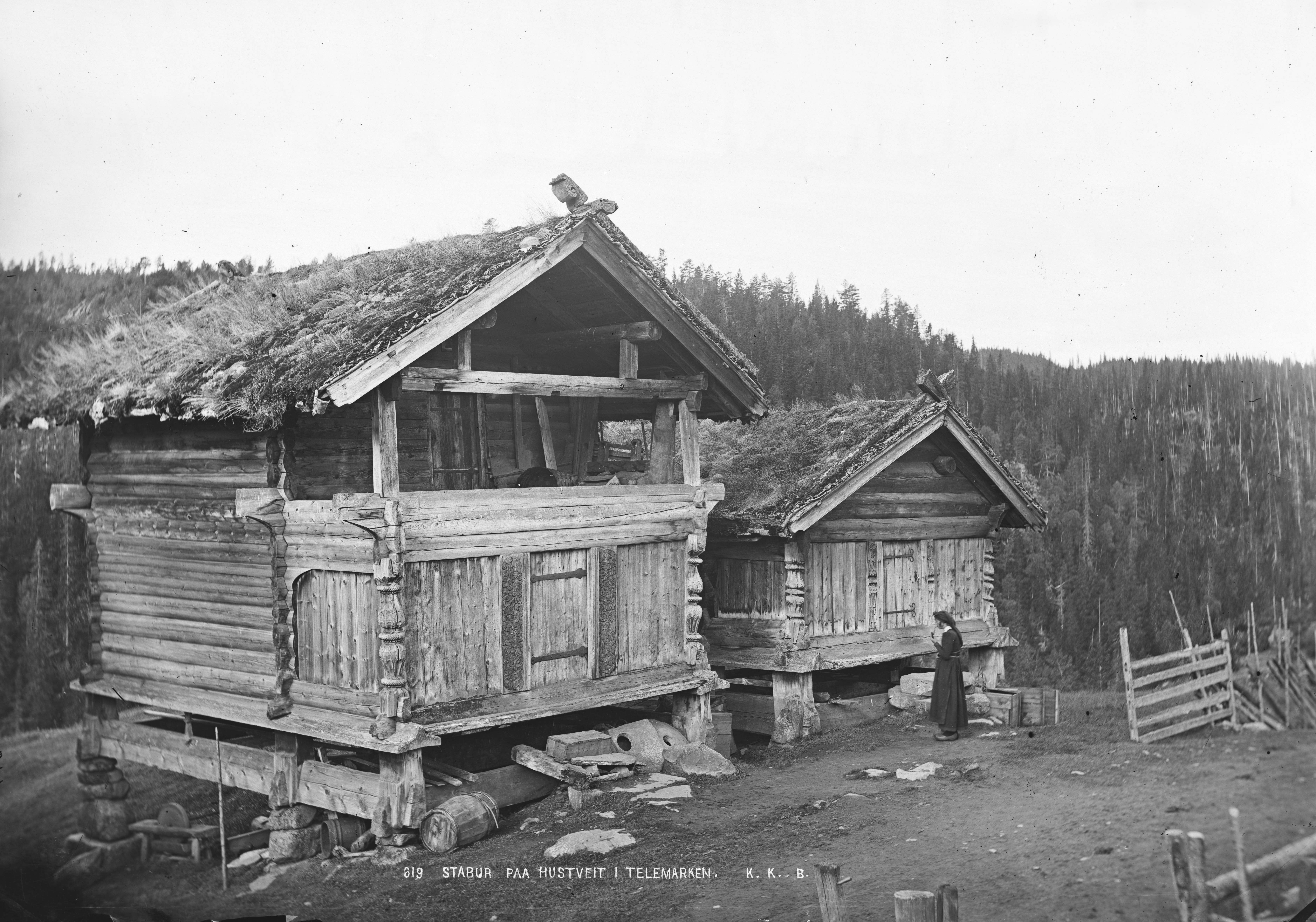
“He was so relentlessly lazy that they called him Lazy-Lodvord. He complained that he didn’t feel like working until Friday after sunset, he said. Lodvord liked his food. He had a big chair made from a huge log of aspen, Olav Plassen remembered, but it had become so rotten that a big hole peeped out in front of it.” Lodvord was sitting in his chair, he fried pieces of meat to eat, and when people turned up he put his knuckles inside the chair. He didn’t deny that he was lazy. “Howling! There should have been embers inside me!,” Hallvard Aaland quoted after him. Work was never attractive for Lodvord. The farm was separated. He didn’t care about the fields and therefore nothing was growing there but weeds, which he harvested. He would never harvest when the others did, just let the time go. One summer he began the haymaking three days before winter solstice. Then the winter storm came so cold that he had to hide under the barn to sharpen his scythe. “ Now I am about to be worried”, Lodvord said. After that this became a proverb: “I am about to be worried,” Lodvord said. He might go up to Bøgrend in order to go to the fields further up for hay. Then he sat down in Bøgrend and started drinking and making fun and singing – and everyone enjoyed Lodvord. But he was sitting there until dark and came back home to Midsæ with an empty sledge.”
Lodvor was incomparably smart, and had an answer for everything. He came to town in the springtime. His clothes and shoes were hideous. When the townsman saw the one leather shoe he had never seen one so bad before. Lodvor said, “Yes, here’s my wife.” The same year he went from Midsæ to Mosokn. Night came and he was tired so he sat himself under a fir tree. There he sat as the light shown all night. The fir stood for a long time and they called it Lodvor’s fir. Aslak Uppistog Vinje cut it down and she stood on the stump and spoke. [Perhaps of Lodvor]
“In 1752 he was married a second time to Hæge Aadnesdotter [my 5th great grandmother], and they had several children. He had such disrespect for pregnant Hæge that she gave birth in a ditch, and they asked Lodvord if he didn’t want to be in the field again. He gave an oath, “I will walk in the field again before my Hæge becomes so wide ‘o sit there in this mountain,” he said. When they had eaten everything up, both he and Hæge and the all the children, called at Midsæ. He stood above the house and looked at the garden before he parted with him: “Ah, you lazy Lodvor!” he said.
Now the children were scattered, and Lodvord walked with a staff. He went far and prayed in many villages. Once he came to Hemmestveit in Brunkeberg for a wedding. Hæge Hemmestveit was so serious. “But you man,” she said, “who has become so rich what’s amiss with you, where can you house yourself?” He had lost so much, he said. “Have you had a big fashion success, elbow burn or accident on the road?” said Haege. “No,” said Lodvord, “I don’t have them.” But I lost my desire to work, that was big enough, he said.“
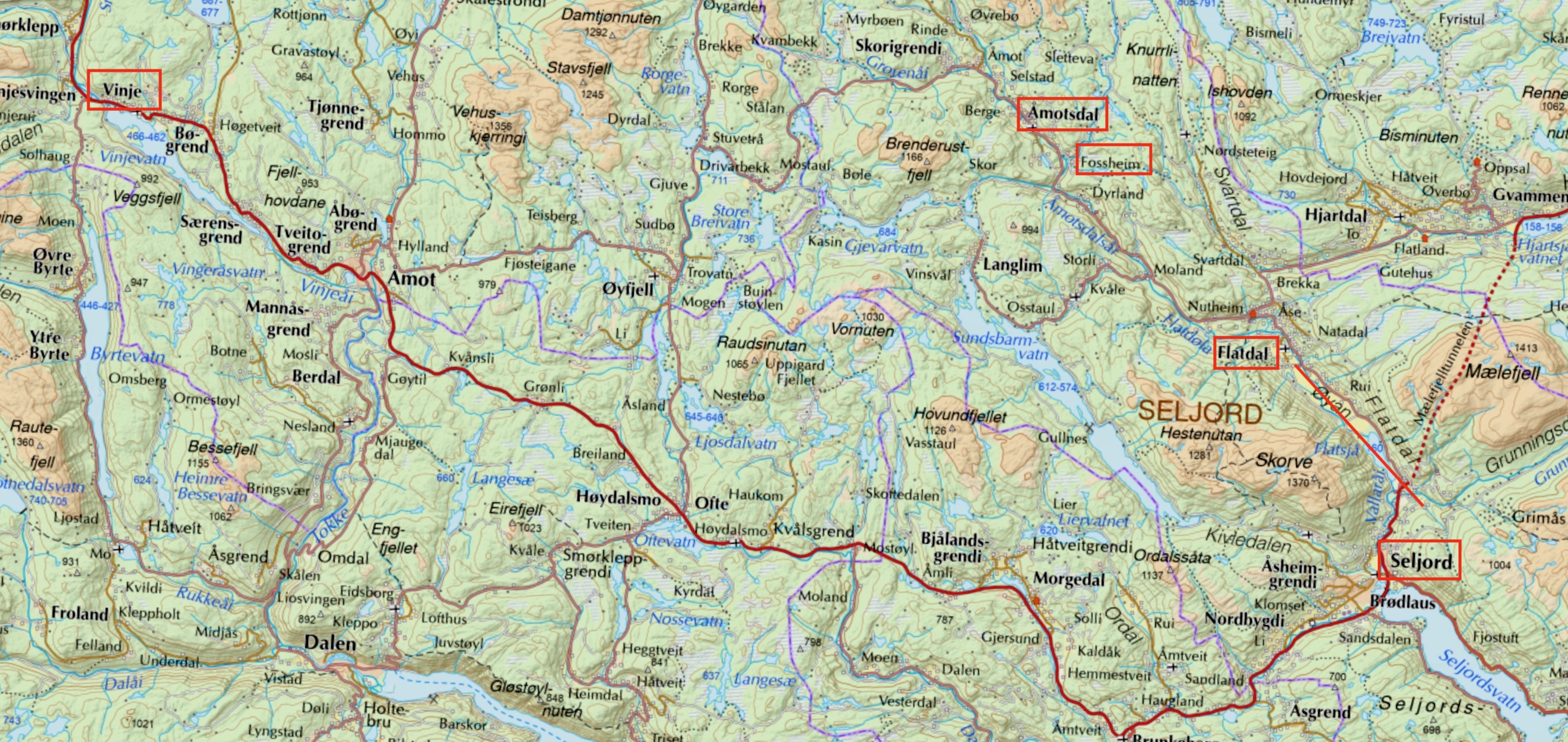
“Oh, Lodvord made good when he went begging . Once he left with some letters. He rested at Fossheim in Aamotsdal and put himself to good use there. Coming to Markenstein, which lies next to Kloppine, he came to think that he had forgotten to eat cheese at Fossheim. So back to with the begging to eat cheese. But when he came down to Flatdal, he guessed that he had left his correspondence with Markenstein, and so he returned the long way just for the sake of the cheese.
Usually beggars are not welcome, and it was so true with Lodvord. The wife at Nylend in Grungedal, after she had given to him, she said: “They will be sent to give this laggard something,” she said. “If you’re slow to them, dear, to take advantage of a noble for shame,” he said. So he was in the north of Suldal and prayed, and there sat a priest so hopelessly greedy that he wanted to take all the prayers. Now they promised a great gift of Lodvord, he dared to go in to the priest to pray. “Yes, I dare,” said Lodvord. So he came to the priest. “Do you go here begging!” said the priest. “No, I pray in Gus’s name,” said Lodvord. “Yes, then I’ll take it from you,” said the priest. “No, leave me, you do stop,” said Lodvord, ‘” A sorrow to your sex, you stand without a shave,” he said. Then the priest took him by the beard and let him out. “Then is it the law to take a man’s beard,” said Lodvord. “Lord, you have a beard,” he said. So long he argued with him until the priest was afraid and gave him, and not a little either.
They waited one cold day, and then Lodvord suited himself, and with his big hat entered the road. With his bounty he put a whole fistful of money in his hat. Put the saying in an oath, “bless you, my song, oh long have I waited for you!” he said, and so loudly that this stranger yelled and he jumped into the air. Sayings had to be songs. He knew countless visions, great visions old as all heaps, and newer wisps, steeds and stumps. He had such goals that no one knows about such ‘mouth robbery,’ and he sang so strongly and manly that everyone listened.
In Vinje they didn’t know about the story of when he came to Seljord [Where Aloûg’s mother’s family was from, some 50 miles from Vinje] on Christmas Eve , later spoken of all, over upper Telemark. Lodvor came to Seljord on Christmas Eve begging for shelter. There, they didn’t know him, and no one would let him in. Then he asked a man: “May I borrow your axe?” He got it and then he asked the wife for coals for a fire. “What do you want with that?” she said. “Well, as I don’t have a shelter I’ll need a fire”, he said. Then he went up to the nearby forest, where he collected a lot of firewood and made a huge logfire, so big that none of the farmers in the area could avoid seeing it. The fire shone so they could see it from Flatbygdi [8 miles away]. And then he started singing, about trolls in the mountains and strong fellows, so loudly that all the people in the area heard it and came by hundreds to listen to him, says Segni. They wondered why he was standing there by the fire. ”Well,“ he said, “my house is so big that I have got a shelter for all the people in Seljord. It isn’t like you who denied a lonesome, ice-painted man a roof over his head.” Then he sang loud, long ballads, people heard it all over the village and flocked to it. Everyone wanted him at their home. That Christmas Eve, the singer was stunned.
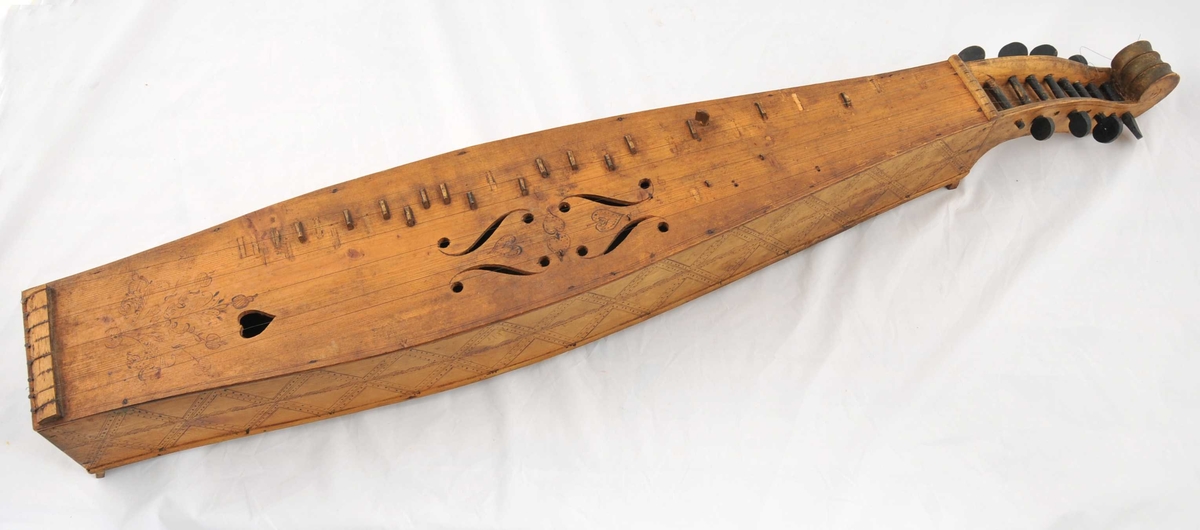
His last years Lodvor Olavsson didn’t leave Vinje. But he walked around from place to place and house to house no matter what the weather was like. Many times he lost his way, but he managed all the time, strong as a bear he was, to survive. He died at an age of ninety years in 1801. Many of his children died young, but one of the daughters, Birgit, grew up and had a long life. She lived at a small place called Grandalen nearby Midsæ. She was a gifted musician, like her father, and played and old string instrument called ‘langleik‘.”
Another of Lodvor’s children was “Store” [the older] Ole Lodvorsson and his second wife, Hege Jonsdotter, born the 20 JUN 1756 at Vinje, Telemark, Norway. He married at Vinje the 10th April 1790 to Asloûg Elifesdotter (grandmother to Asloûg Elifesdotter Vanstrum, the immigrant and my 2nd great grandmother). The older Asloûg gave birth to Ole’s son, Elif , 25th of October 1795. Sadly Ole, his father had died 4th of September 1795 less than 2 months before his birth.
My husband pointed out I was lucky that Lodvor Olavsson was a colorful character as if he had been an upstanding citizen, nothing would have been written about him. If he had not lost everything perhaps Asloûg would have stayed in Norway and I would never have been born! So thank you bestefar [grandpa] Lodvor!
In honor of Lodvor I offer this Norwegian Draumkvedet [The Dream Poem] a Norwegian visionary song, probably dated from the late medieval age. It is one of the best known medieval ballads in Norway. The first written versions are from Lårdal and Kviteseid in Telemark in the 1840s. Here sung by Harald Foss.
Kelly Wheaton ©2023 – All Rights Reserved
 Wheaton Wood
What a fascinating character!