German Immigrants to North Carolina: Pioneer Georg “Frederick” MOSER (1722-1800) Part One
The Lure of Cheap Land
Notices like the one below appeared in Pennsylvania newspapers. One might ask why did the MOSER’s move from Pennsylvania to North Carolina?

“Lands are so very cheap,” one Carolina resident wrote, “that . . . Six Hundred and Forty Acres . . . will cost three or four pounds Sterling . . . free from all Taxes. [A lie] Centennial History of Alamance County 1849 – 1949 by Walter Whitaker.
Frederick MOSER had paid Ł15 10s for his 100 acre property in Linn Township, Pennsylvania in 1749. In 1750 in the Granville District of North Carolina was offering 100 acres at three to five shillings [20 shillings per British pound]. In 1762 in Linn Township Tax List we find Henry SHARP, Frederick LIESER and Michael ALBRECHT but not Frederick MOSER all would arrive in Orange County, North Carolina about the same time. Perhpas in 1762 Frederick had already traveled to Orange County, [now Alamance] North Carolina and then assuming a starting date in the spring of 1763 the MOSER Family was to tread a well worn trail to North Carolina. The family comprised of parents, Frederick and Barbara MOSER and their 6 children ranging in age from less than a year old Nicholas MOSER to the eldest 12 year old Jacob MOSER.
“Leaving his family behind with friends, the early pioneer set out from Pennsylvania on horseback to seek a new home…With good weather, the Pennsylvanian reached North Carolina in less than one month….He crossed the beautiful Cumberland and Shenandoah Valleys in early spring. After selecting the tract he liked best, the pioneer sent for the land agent who held a patent or title to the property. The tract was surveyed and arrangements were made for a deed to be ready when the new owner returned with his family in autumn. WHITAKER pg 15-16
“By this time word had spread through the countryside, and a group of “neighbors” left their homes miles away and came to help the new settler clear his fields, plant his crops, build his fences and raise his log home. The frontiersman was usually glad that a new family had come to make their home in the wilderness, bringing news of the outside world and offering a helping hand for the tasks which one family could not do alone. When the cabin was completed, the new settler left its care to these “neighbors” and climbed into his saddle for the journey northward.” WHITAKER pg 16
Repeating his immigration with his parents from Bavaria to Pennsylvania, was Frederick lured by cheap lands and maybe a bit of adventure? As chronicled below there was much to put in order before leaving. Did he remember leaving Bavaria? Below is a plate from Eastern Pennsylvania dated 1762. Maybe a treasured dish such as this was among the MOSER’s possession as they traveled from Pennsylvania to North Carolina.

“In Pennsylvania many things had to be done in preparation for the trek to Carolina. The family sold everything they could not carry with them, and purchased three or four strong horses, or perhaps two yoke of oxen, and a heavy but commodious wagon. Into the wagon went every available article for the farm and home, leaving just enough space for the women and small children and the family bedding. Behind the wagon a milch cow or two was tethered to the axle. The elder children would drive a small flock of sheep and a few hogs. All of these things were necessities, for there was no room for the luxuries which the family had possessed. When all preparations were completed, the departing family gathered for a last time in the village meeting house to receive the best wishes and the prayers of those whom they were leaving — some perhaps forever. Finally the journey got underway. Ahead lay 400 miles of little-traveled territory, presenting frequent difficulties and dangers. Slowly the big wagon creaked along the trail, rocking the pioneer mother who sat beside her husband on the broad wagon seat, cradling a baby in her arms and dreaming of her new home. Behind the wagon the children walked, laughing and shouting and telling each other what they would do in Carolina.” WHITAKER pg 16-17

They traveled the Great Wagon Road from Pennsylvania southward through the Shenandoah Valley through Virginia to the Carolinas, along the east side of the Blue Ridge Mountains and south into the Piedmont region, it passed through the present-day North Carolina towns of Winston-Salem, Salisbury, and Charlotte, and sites of earlier Indian settlements on the historic Indian Trading Path.

ARRIVING IN THE PIEDMONT

A rudimentary log cabin such as this may have been the MOSER’s first home in North Carolina. Whether it was built in 1762 before the rest of the family arrived or in 1763 we do not know.

“Three distinct groups led the movement and established colonies in the area which became Alamance County. To the Cane Creek section, near the present village of Snow Camp, came a group of Pennsylvania Quakers; east and north of the Haw River settled Scotch-Irish Presbyterians; and along the western boundary of Alamance Creek a large number of Lutheran and Reformed settlers found new homes. Most of them were agriculturists, and few villages were built. Along the Alamance were the ALBRIGHTs, HOLTs, SCHOFFNERs, MOSERs, ISLEYs, KIMEs, … and other Germanic folk.” WHITAKER Pg14-15
Among the following, mostly German speaking folks, were naturalized in the Superior Court at Salisbury, Rowan Co, NC. Many of them were residents of the western part of Orange County. Perhaps Salisbury was more convenient than Hillsborough, Orange Co. There was probably less of a language barrier. A typed abstract of the minutes in the Rowan Public Library in Salisbury. SUPERIOR COURT MINUTES page 598 – 22 Sept. 1763 – Natives of Germany Naturalized. Among others: Adam MOSER, and Malekiah ISELY. [Frederick MOSER is not listed.]
Meanwhile we learn from Sally STOCKFORD’s The History of Alamance 1900 that all was not well in paradise. The lands that lured them to Orange County were not without issues.
“In 1744 the Earl GRANVILLE granted, bargained and sold, for and in consideration of covenants, provisions and agreements by Benjamin Martin that parcel of land lying in the Parish of St. Mathew of the County of Orange in North Carolina on the west side of Haw River and on both sides of Cane creek, 600 acres of land with the exception of the gold and silver mines found there, at the rate of 3 shillings sterling per hundred acres per year or four shillings Proclamation money at or upon the two most usual feast days — the feast of the Blessed Virgin Mary and St. Michael, the Arch Angel. GRANVILLE, [seal] By Francis CORBIN, Registered by Jas. WATSON, Clerk of Court.” STOCKFORD pg 46
When Henry E. MCCULLOH surrendered to Granville’s estate the unsold lands in McCulloh’s Great Tract #11, he listed out all of the parties to whom his father Henry MCCULLOH had sold land in Tract 11. I have included the ISLEYs and ALBRIGHTs as they were with him in Berks co, Pennsylvania and Malachai ISLEY and Frederick MOSER are credited with starting the St. Paul’s Lutheran Church in Alamance. This list of purchases, [ Great thanks to Mark CHILTON for all his work on the Blog “Wandering Through the Piedmont” in chronological order], includes:
- Anthony MOSER, 220 acres, 8 Sep, 1762 Henry MCCULLOCH , proved by Robert RAINEY. [Son of Frederick’s Uncle Johan Adam MOSER–so his cousin] Anthony’s father Adam MOSER– died after 4 Aug 1763 but before Nov 1763 [Orange County Will Books A/25 Will of Adam MOSER dated 4 Aug 1763]
- Malachy ISLEY, 200 acres, 14 Sep, 1762; ODB4/194 ISLEY to Phillip FOUST to John ALBRIGHT; Daniel MAY’s Corner; Joseph BOGG’s line; GREESON’s Corner.
- Ludowick ISLEY, 257 acres, 14 Sep, 1762
- Henry Eustice McCulloh to Lodewick ALBRIGHT, 325 acres, proved by Robert RAINEY. RegLn 1095
- Henry Eustice MCCULLOCH to Martin LOY, 347 acres, proved by Robert RAINEY .RegLn 1103
- Henry Eustice McCulloh to James ALBRIGHT, 215 acres, proved by Robert Rainey. RegLn 1148
- Malachi ISLEY to Phillip FOUST, 200 acres, proved by John Oliver. Not found, but see ODB 4/194 Philip FOUST & Catherine FOUST to John ALBRIGHT, 3 Mar 1788, 200 acres adj Daniel May, Joseph Boggs, Greeson – Henry MCCULLOCH to Malachi ISLEY 14 Sep ?, Malachi ISLEY & wife Magdalen ISLEY to FOUST 6 Feb 1764 [RegLn 1349]. Proved May 1789 by [blank].
- Martin LOY to Henry Eustice MCCULOCH, 251 acres, proved by Robert RAINEY. RegLn 1264 Not found, but see RegLn 2185 prob about 1763
- Henry McCulloch to Martin LOY(G), 251 acres, proved by Robert Rainey.RegLn 2185
- Martin LOY to Henry Eustice McCulloch, 347 acres, proved by James Boyd. RegLn 1296 – [He died after 15 Jul 1777 but before May 1779 – Orange County Will Books A/207 Will of Martin Loy, dated 15 Jul 1777, proved May 1779, OCPQS 3/128]. Grandfather of Elizabeth (LOY) MOSER
- Henry MCCULLOCH to Fredrick MOSER, 225 acres, proved by Robert RAINEY. RegLn 2186 Not found (2184 dated 15 Jun 1763)
- Fredrick MOSER to Henry Eustice MCCULLOCH, 225 acres. RegLn 2194 proved by Nicholas GIBBS 24 May, 1763
- Ludowick ALBRIGHT, 258 acres, 1 Jun, 1763; b 1731 d 1810 Orange Co. [Son of Johannes ALBRIGHT b 1728, liv Bern Twp, Berks CO, PA]
- Jacob ALBRIGHT, 215 acres, 10 Jun, 1763; ODB4/181&182 to Henry and Daniel ALBRIGHT; Rock Ck near John LOY’s Mill. see patent Bk57/86. Also Orange Deeds B 4/470 LOY’s Millpond; [ Jacob b. 1728 ; b. 1728 d. 1791 Orange Co. Brother to Ludowick ALBRIGHT above]
- Ludwick ISLEY, – GDB 1/237 Henry EUSTACE MCCULLOCH to Ludowick ISLEY, 1 Jan 1773, 250 ac adj corner of Christian FOUNKHAUSER Granvilles line, Cedar Ck.
These families lived within close proximity and often intermarried and at times this continued for generations. We will take up more about the lands in a future blog post.

LIFE IN ORANGE COUNTY

German PA & NC communities
In the History of the German settlements and of the Lutheran church in North and South Carolina, from the earliest period of the colonization of the Dutch, German and Swiss settlers to the close of the first half of the present century by Gotthardt Dellmann BERNHEIM 1872 we get some descriptions of what life was like for the early German settlers.
“The farm-yard of these Germans still abounds with fine and well-fed horses, and the old Pennsylvania four-horse wagon securely housed in the shed between two corn-cribs, with the bow-shaped body suspended above it upon chains, read to be let down in its position on the wagon, whenever it should be needed.” “In the dwelling-house, and behind a cheerful wood-fire, during the winter season, one might still notice a heavy iron plate placed upon the hearth to protect the back of the chimney, ….indicating that they were cast in the city of Reading, Berks County… and perhaps brought along to North Carolina with the emigrants from the Keystone State.” “On the blank pages of the old German Bibles of those first German settlers of North Carolina, we may frequently find the story of their colonization, stating that they were born in Pennsylvania at such a date, and that they emigrated to North Carolina and settled in such a county of that Province.” BERNHEIM pg 150
“These German settlers were all industrious, economical, and thrifty farmers, not afraid nor ashamed of hard labor, and were soon blessed with an abundance of everything, which the fertile soil and temperate climate of that portion of North Carolina could furnish them. As they were all agriculturists, they generally avoided settling themselves in towns; uninformed in the ways of the world, ignorant of the English language, and unacquainted with the shrewdness necessary for merchandising, yet well informed in their own language, and well read in their Bibles and other devotional German books, they remained at their own country homes, and enriched themselves with the productions of the soil BERNHEIM pg 153-154
The following images are from Museum of Early Southern Decorative Arts Winston-Salem, North Carolina used with permission. These are Contemporary with the time frame the MOSERs and related families lived in Orange county. Frederick MOSER’s son, Nicholas marries Elizabeth LOY, daughter of George LOY. George LOY, son of Martin LOY and Catherine Elizabeth FAUST; he was born in 1739; he died after 18 Oct 1799 but before Nov 1799 – [Orange County Will Books C/157 Will of George Loy, dated 18 Oct 1799, proved Nov 1799, OCPQS 5/634]. He was father of Elizabeth (LOY) MOSER . George LOY’s brother, John LOY b. 1747, was the father of Henry LOY b.1777 who was likely founder of LOY potters. Henry LOY was Elizabeth LOY’s first cousin. Henry LOY married Sophia ALBRIGHT. Her father was Jacob ALBRIGHT. Jacob ALBRIGHT’s name in the 1800 tax list for the St. Asaph’s district, Orange County NC. has the word Potter next to it. “An Inventory and an Account of Sales of the Estate of Jacob Albright Decd,” dated March 24, 1825 listed two potter’s wheels, a glaze mill, a clay mill, a grindstone, a pipe mold, and a stove mold. Thank to Dr. Linda F. Carnes-McNaughton for her help in sorting out the LOY potters. Please see her video “The Loy Family: Pioneer Potters of the Piedmont” I think it is important to imagine that though these may have been farmers their homes and lives were not devoid of adornment. Please compare the plate at the top of the blog post to these.

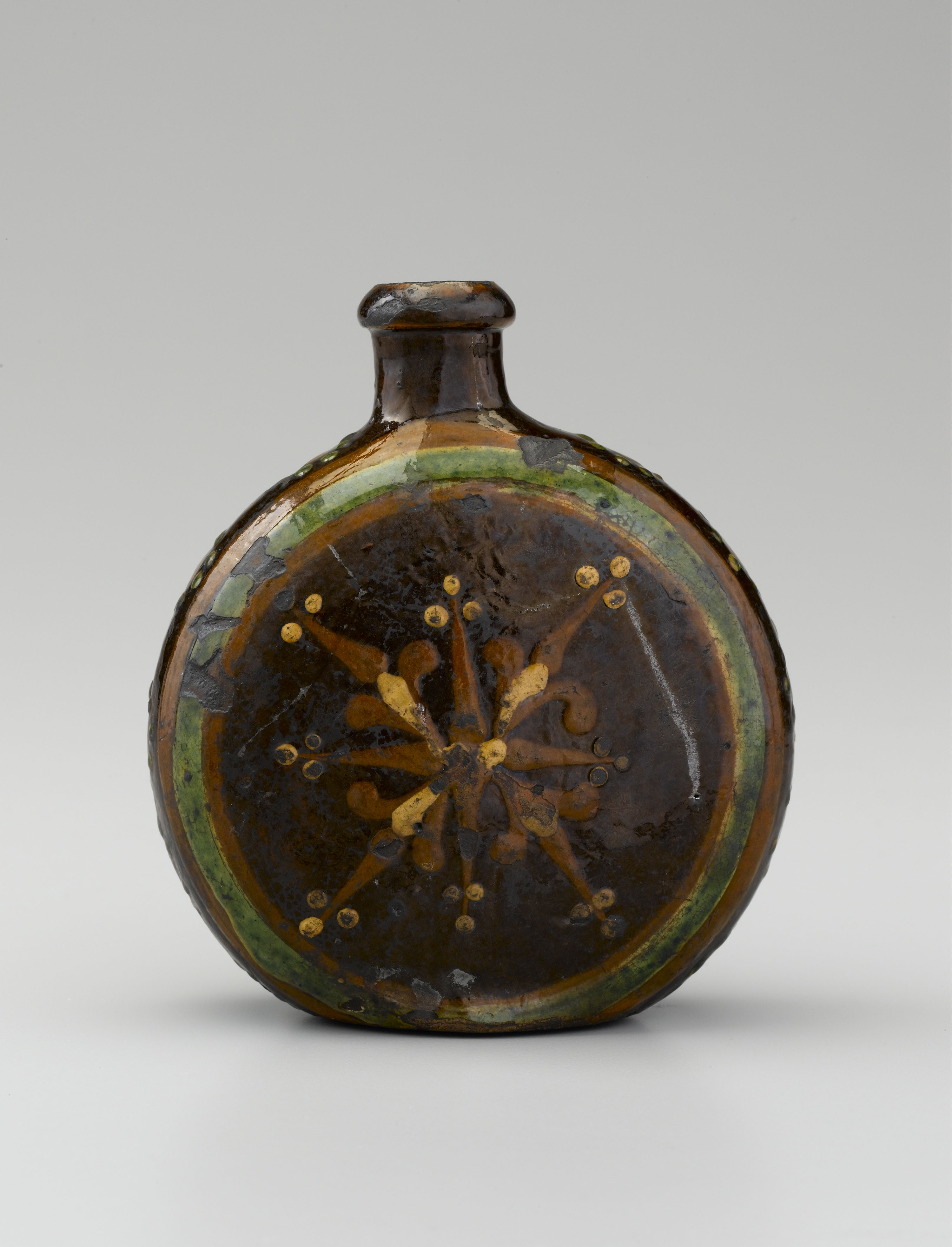
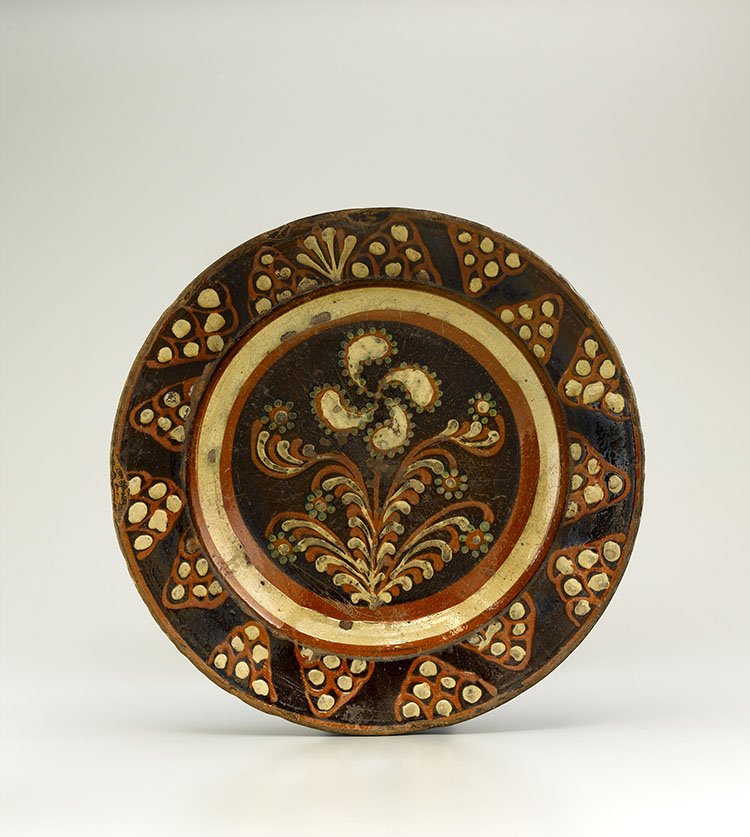
“In North Carolina... all the German settlers, with the exception of those who were located at Newberne [New Bern], came mostly from Pennsylvania during a period of twenty-five or thirty years before the Revolutionary War… consequently, one will find Pennsylvania ideas, habits, manners and customs prevailing…179-180

ST. PAUL’S LUTHERAN CHURCH, ALAMANCE

Original Lands of Frederick MOSER
As we have already seen the church was very important to German immigrants to America. It was the glue that held communities together. From Virginia LOY FAUSEL St. Pauls Lutheran Church History we learn that Frederick MOSER was a founder of St Paul’s Lutheran Church near Alamance. In the above map there is a Calvin MOSER perhaps on lands originally owned by Frederick.
“In the 3rd year of King George III, a land grant was made Frederick MOSER. His son Frederick’s grave is located at St. Paul’s Church. The first Frederick MOSER and Malachi ISLEY were founders and members of St. Paul’s in 1763. Frederick MOSER [later] settled on land now owned by Mrs S.L. Murray about 8 1/2 miles south of Graham on Sandy Run.” St Pauls Lutheran Church History by Virgina Loy Fausel 1982 writes
The following descriptions are from the History of the Lutheran Church in North Carolina, 1803-1953 by Jacob L MORGAN, Bachman S BROWN and John HALL 1953:
Malachi ISLEY and Frederick MOSER are credited as being founders and members of Saint Paul’s Lutheran Church in 1763. Malachi eventually settled on land just north of the future Friendship United Methodist Church. Magdalene, wife of Malachi, born July 22, 1729 in Germany, died December 24, 1790. Malachi, born in 1725 in Germany, died May 3, 1808. Both are buried in Saint Paul’s Lutheran Church Cemetery. In 1839, a new St. Paul’s Church, was dedicated on the third Sunday in September, 1839 BERHEIM pg 527
“St. Paul’s Church is located in Alamance County on the old Trading Path, about two and one-half miles east of the Alamance Battle Grounds. It is not definitely known when this church was organized… History spoke of itinerant ministers preaching here as early as 1759 – 1764…The first two buildings were log structures; however, we do not know much about either of them. The third and present building is a frame church, about 30 x 40, which was erected about 1893. Sunday School rooms were added in 1941 while Rev. D. I. Offman was pastor. pg 328

“The presence of Lutherans among these German settlers has never been questioned, and the concensus is that they were in the majority. They brought with them the heritage of their Lutheran faith; and Bibles, catechisms, hymn books, and other books of devotion were among their prized possessions. They had been trained to appreciate the necessity of the means of Grace, and they recognized the importance of providing for their orderly administration. With such a background, they were not likely to be indifferent to religious needs and responsibilities. It is true that they were not able to bring pastors with them. They came in small groups and even had pastors been available, they were in no position to assure them adequate support. There was no resident pastor in North Carolina until 1773, but there is indisputable evidence that Lutheran congregations had been organized long before that date. Dr. W. T. WHITSETT observes that, “Contrary to the rule with certain other denominations, the Lutherans did not think it necessary to wait for regular ministers in order to begin their church work; they set up their church services upon their arrival, and with their duly elected deacons and elders conducted regular religious worship.” MORGAN Pg 19
“During this formative period, the need for regular pastors was desperately felt. Consecrated laymen could effect organizations and do much to hold the people together, but they were not authorized to administer the sacraments and to cultivate the spiritual development of an increasing number of needy souls. For these services they were dependent upon the ministrations of traveling pastors who, on rare occasions, visited the territory.” MORGAN pg 20
CHILDREN Of Fredrick and Barbara MOSER BORN IN ORANGE COUNTY, NORTH CAROLINA
- Mary MOSER bc 1764; m. Frederick Conrad KECK; lived Clairborne Co, TN
- John MOSER bc 1766; m. 1792 Sally GARRETT; died 12 Apr 1825 Alamance Co, NC
- Frederick MOSER Jr. b 15 April 1771; m. 1795 Mary INGOLD; m.2nd 1799 Barbara ANTHONY; died 15 Aug 1823 Alamance Co
- Magdalena MOSER b 1773; m. 1793 Barnabas BUTCHER; lived Anderson Co, TN; d. 1838 Monroe Co, IN
- Eve MOSER 1775; m. Peter SHARP 31 Aug 1795; d. Aug 1822
In our next chapter we will take up the problems with land speculation, over taxation, the Regulator movement and more.
Kelly Wheaton ©2024 – All Rights Reserved
 Wheaton Wood