German Migration to America: Johan Martin MOSER 1693-c.1743 Part Two
If you haven’t read Part one you can read it here. In this chapter we will explore the beginnings of Martin MOSER’S family life and what led him and tens of thousands of others to leave Germany behind.
In the year 1677 William Penn toured Germany where he spread the message that religious freedom could be found in the American colonies. A couple decades later Daniel Falckner wrote “Curious News from Pennsylvania” [Curieuse Nachricht von Pennsylvania] in 1702. Germany’s Johannes Gutenberg invented movable type in 1440. With a long history of printed materials from flyers to books to bibles people were educated and generally well informed.
Martin MOSER’s two older sisters Anna Marie and Eva both married in 1705. Anna Marie married Micheal FRIEDRICH, a shoemaker, and Eva married Lorenz ZWIRNER, the journeyman weaver. As previously mentioned Martin’s mother Maria STRÖBEL MOSER died in 1695 when Martin was two years old and he was raised by his step-mother Elisabeth WOLLINGER. Sadly, in January of 1714 she died. Left at home was Martin’s older brother, also a journeyman weaver, and the four surviving children, ages 7 to 18, of his father Adam and Elisabetha. I suspect it was around this time that Martin struck out on his own. His brother remained on the farm at Grossulrichshausen. In November of 1714 his father Adam marries for the third time to Apollonia GERINGER.
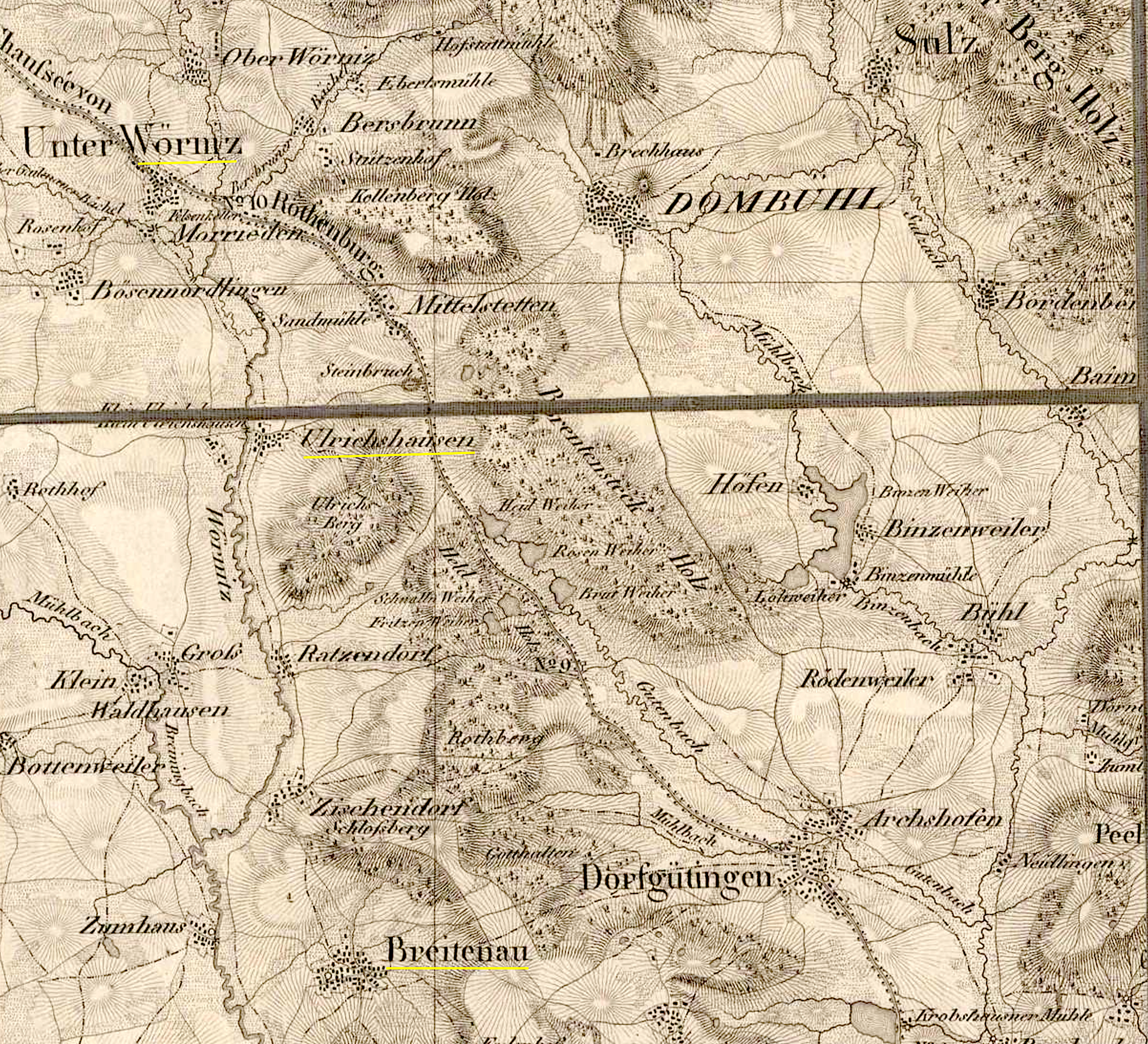
BREITENAU

Sometime between 1713-1717 Johan Martin MOSER moves to the village of Breitenau. Breitenau lies in the Ansbach district of Feuchtwangen about 4.5 miles south of Wörnitz, where Martin was baptized, and even closer to Grossulrichshausen, where he was born. The village is located in a valley to the east of the Wörnitz river. Breitenau sits between two wooded hills. Schloßberg to the north and Mühlberg to the south, each approximately 1700 feet high. The area is surrounded by grassland, arable land and scattered trees. In 1732 there were 32 properties that belonged to the Lord. These included the church, the parsonage, schoolhouse, village hall, a farm with a Inn, a farm with brewing rights, a blacksmith, a baking house and two half farms. It appears that Breitenau at this time was slightly larger than Wörntiz. A good guess is that Breitenau was in need of a shoemaker. A description of Breitenau from 1761:
“Braitenau. A mediocre village located in the district of the Feuchtwang, close to the Wörnis [Wörnitz River] and the Rotenburgische Landwehr, in which there is a parish, church and school incorporated into the Feuchtwang deanery, and a good number of residents. This place formerly belonged to the aristocratic and later imperial family of von Geyer, after its extinction in 1708, it fell to King Frederick I in Prussia, was then handed over by King Frederick William’s Majesty in 1729 to the High Princely House of Brandenburg Onolzbach… even up until the year 1728, the place had no grave field of its own for burying the dead…”
Historische und Topographische Nachricht von dem Fürstenthum Brandenburg-Onolzbach
by Gottfried Stieber 1761
Well perhaps Breitenau was mediocre then but to my eyes it was lovely as the last place my MOSERs lived before their immigration to America. This is a photo of the Schoolhouse adjacent the church.

We know for certain that Martin MOSER was living in Breitenau by 1717 as it is listed as his place of residence when he marries Margaretha SCHWENBAUER, the daughter of Wolf and Eva SCHWENBAUER, the 29th of June 1717 at the age of 24. Margaretha was born 13 Sept 1690 in Breitenau, so she was 26. Her father died when she was five, the 24th November 1695 at Gehrenberg [the next village east of Breitenau]. A transcription of the marriage entry has this wonderful description:
“The hardworking bachelor Martin Moser, his trade is shoemaker, son of the Honorable Adam Moser peasant and farmer in Grossulrichshausen and Margaretha, legitimate daughter of the Honorable Wolf Schwenbauer, in Breitenau, the Latin having [been] proclaimed three times.”
St Stephan Churchbooks

at Wörnitz

(Mirror of Human Activities.)

The Lutheran church of St. Stephens in the Breitenau, Feuchtwangen district dates from the 14th century. The chancel and tower of the church were rebuilt at the end of the 15th century. The nave was extended at the beginning of the 18th century. The cemetery, is right next to the church and is surrounded by a wall [left in this photo above and just visible behind the wall] . The church is located on the site of the former Breitenau Castle. In the distance of this photo you can see the wooded Schloßberg. The inside and outside of this church is quite lovely. Note the painting of Martin Luther above the raised pulpit.
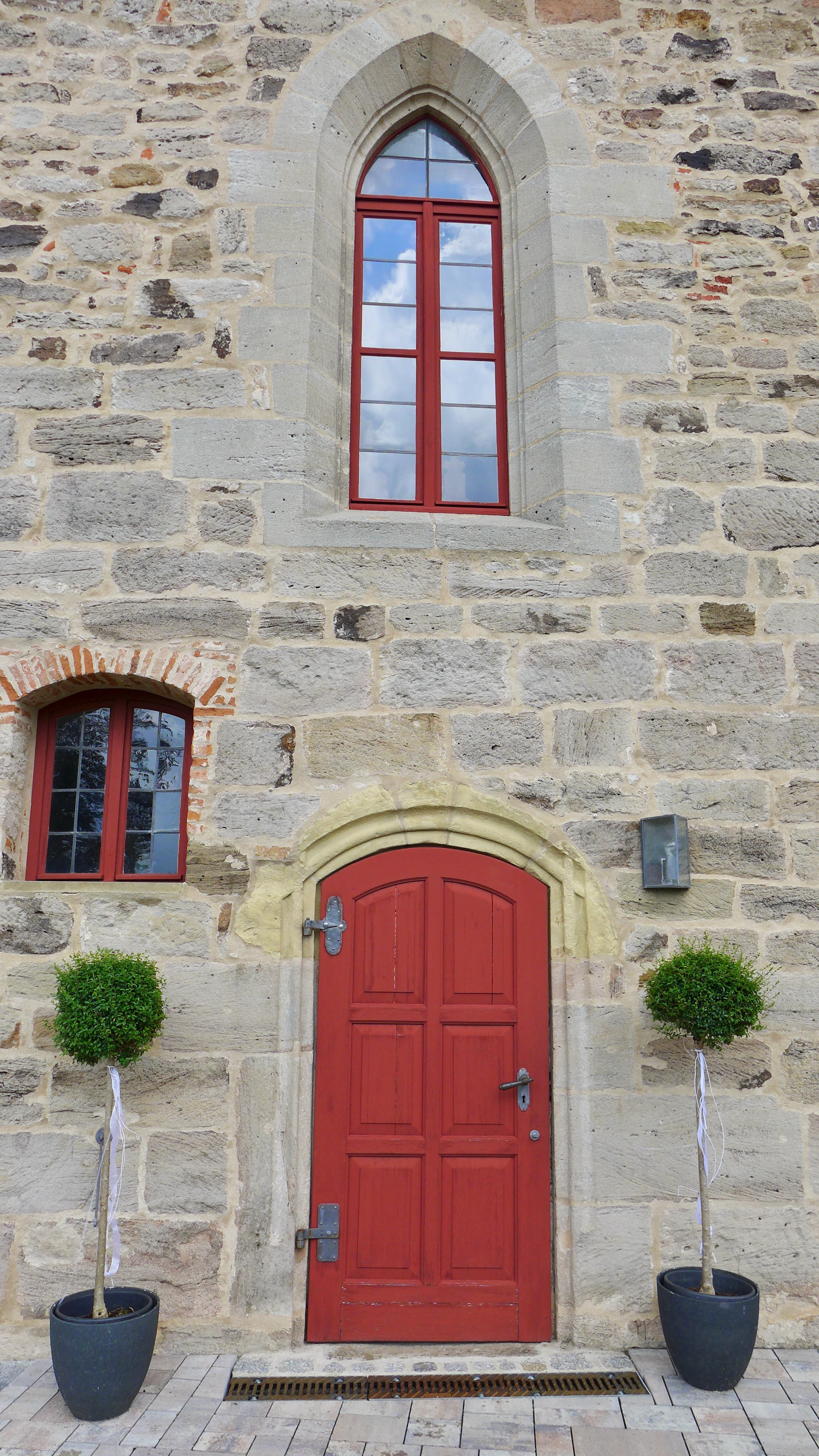
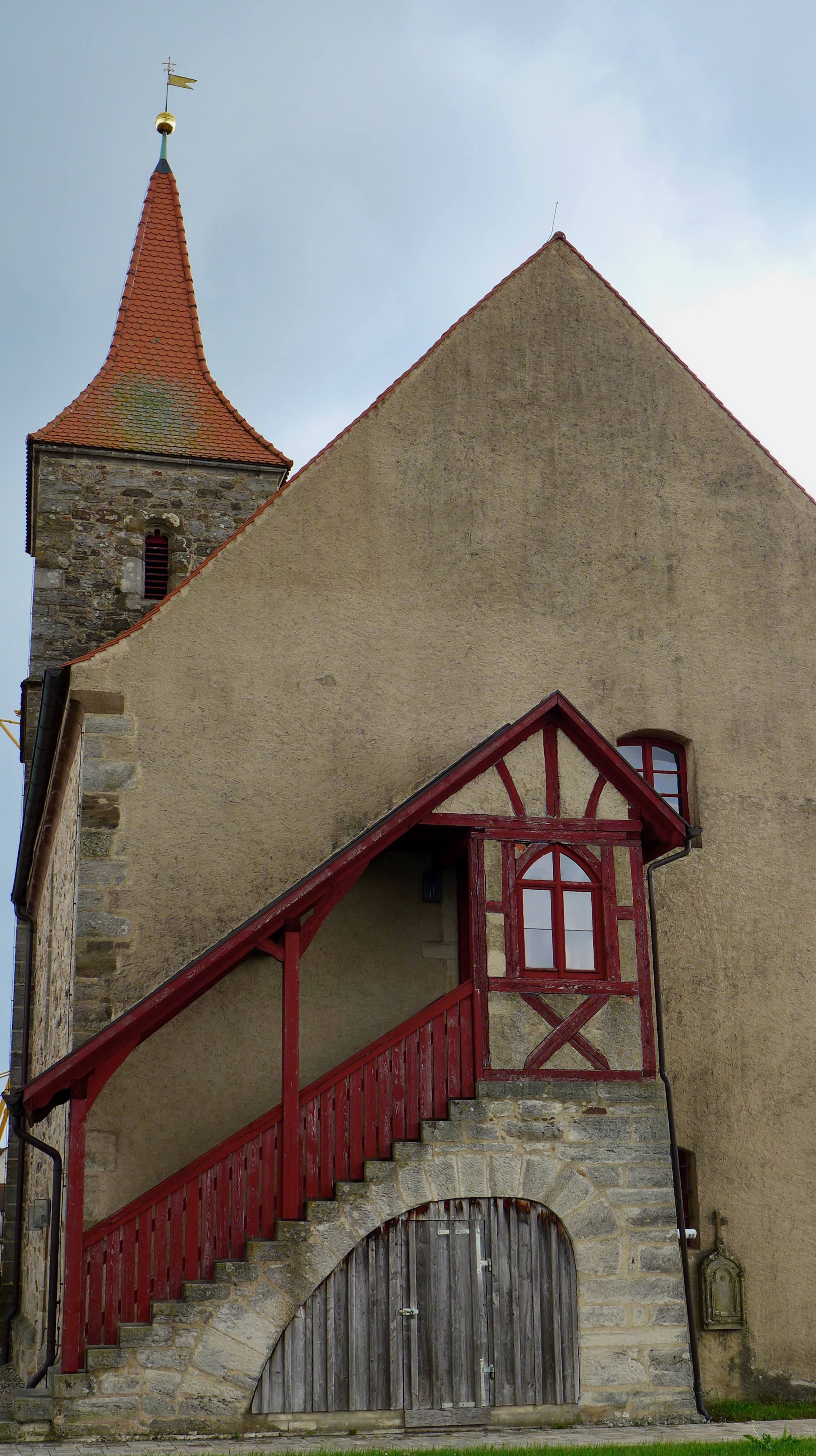

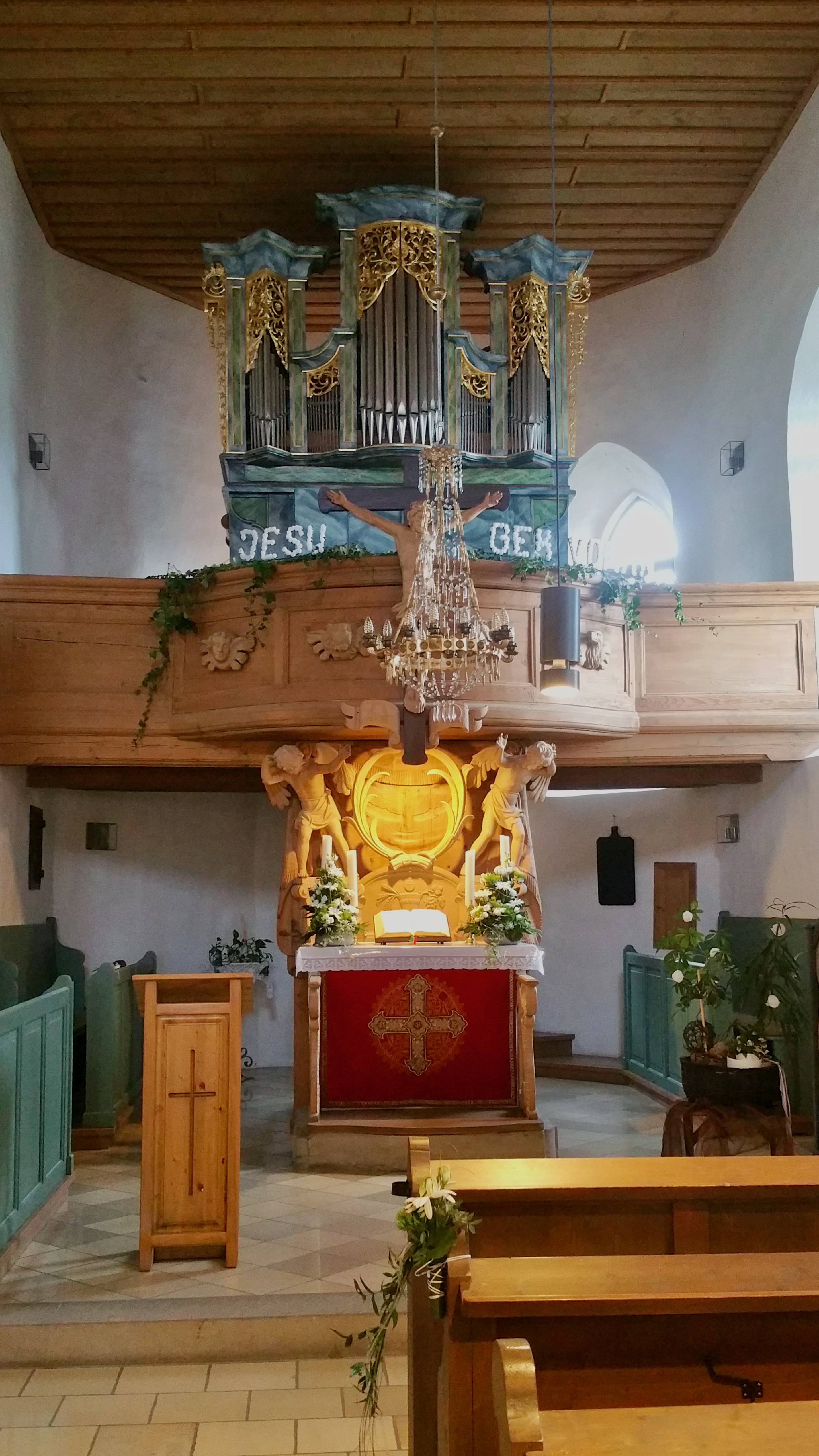

I imagine Martin and Margaretha worshiping here and bringing their children to be baptized [See Baptismal font below]. Their first child was Maria Magdalena MOSER who was born 15th of March 1717 but died 28th of August 1718. She was followed by an unnamed child in 1719. So Martin and Margaretha had much tragedy in startinga family. Finally Maria Margaretha was born on the 7th of June of 1720. But sadness again visits the family when a few weeks later Margaretha’s mother Eva dies and is buried at Breitenau the 9th of September 1719. Just a month later Martin’s father, Adam MOSER, dies the 8th of August dies at the age of 66 years and 10 months at Grossulrichshausen. A lot of loss in the first two years of marriage. I wonder if this was a turning point—with no living parents of either Martin or Margaretha did they begin to dream of a different life on a distant shore. How long would it take to plan and save for their passage?
The next birth to Martin and Margaretha was my 5th great grandfather, Georg FRIEDICH “Frederick” MOSER, baptized the 3rd of March 1722. Three more children follow: Maria Barbara born 12 Dec 1723. Anna Margaretha MOSER and a twin are born on March 1st 1726 . The twin dies and only Anna Margaretha is baptized on March 27th and a year later Johann Leonhard MOSER born 29 May 1727 all at Breitenau. So by 1727 there are 5 living children and Martin and Margaretha as they celebrate their 10th wedding anniversary. Interesting that Johan Leonhard MOSER is also the name of Martin’s brother who was born 12 January 1710 at Grossulrichshausen. So named after his uncle these shared names were to create confusion in America as to who belonged to whom.
On the day we visited the church was beautifully decorated for Confirmation.
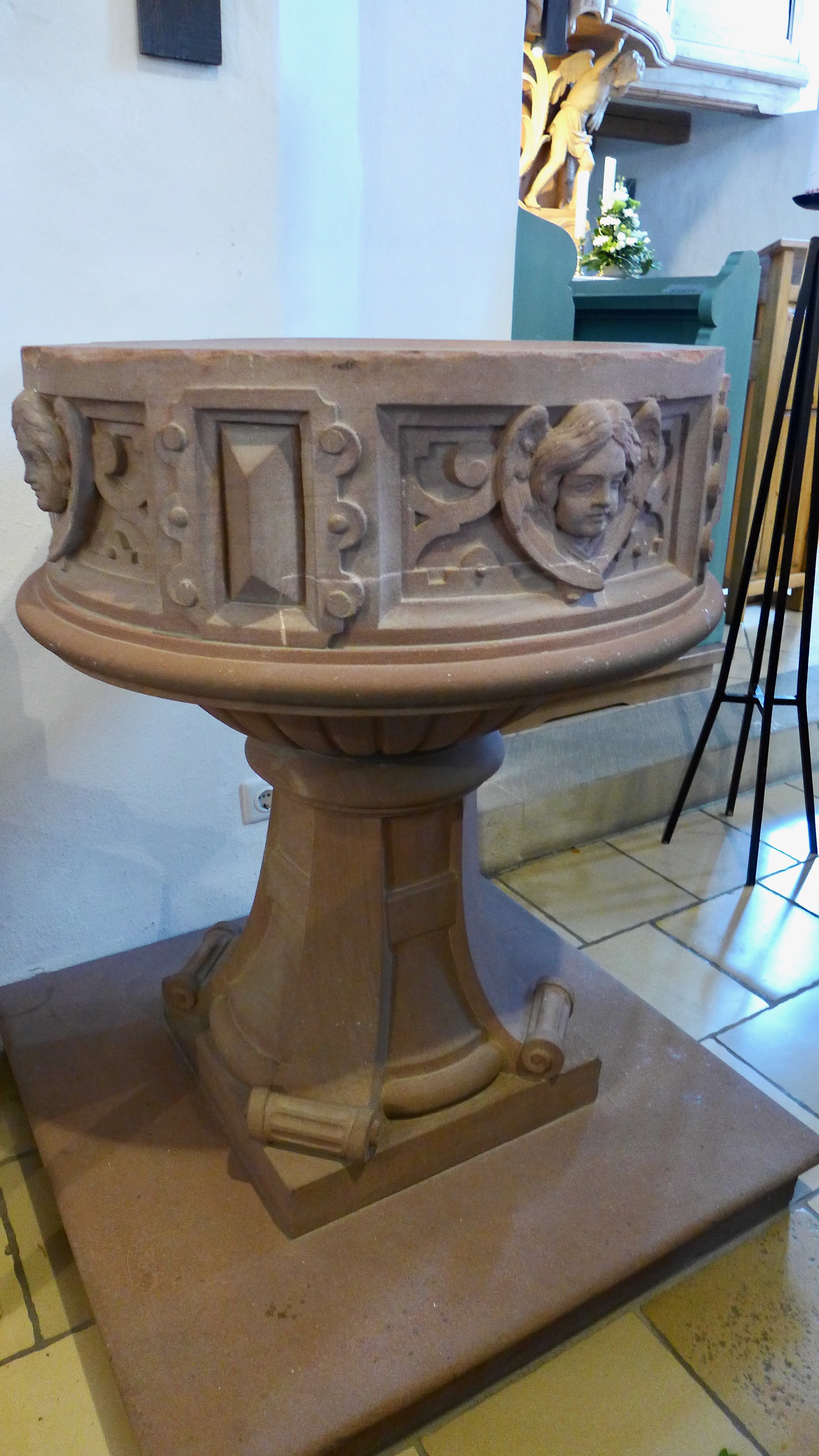
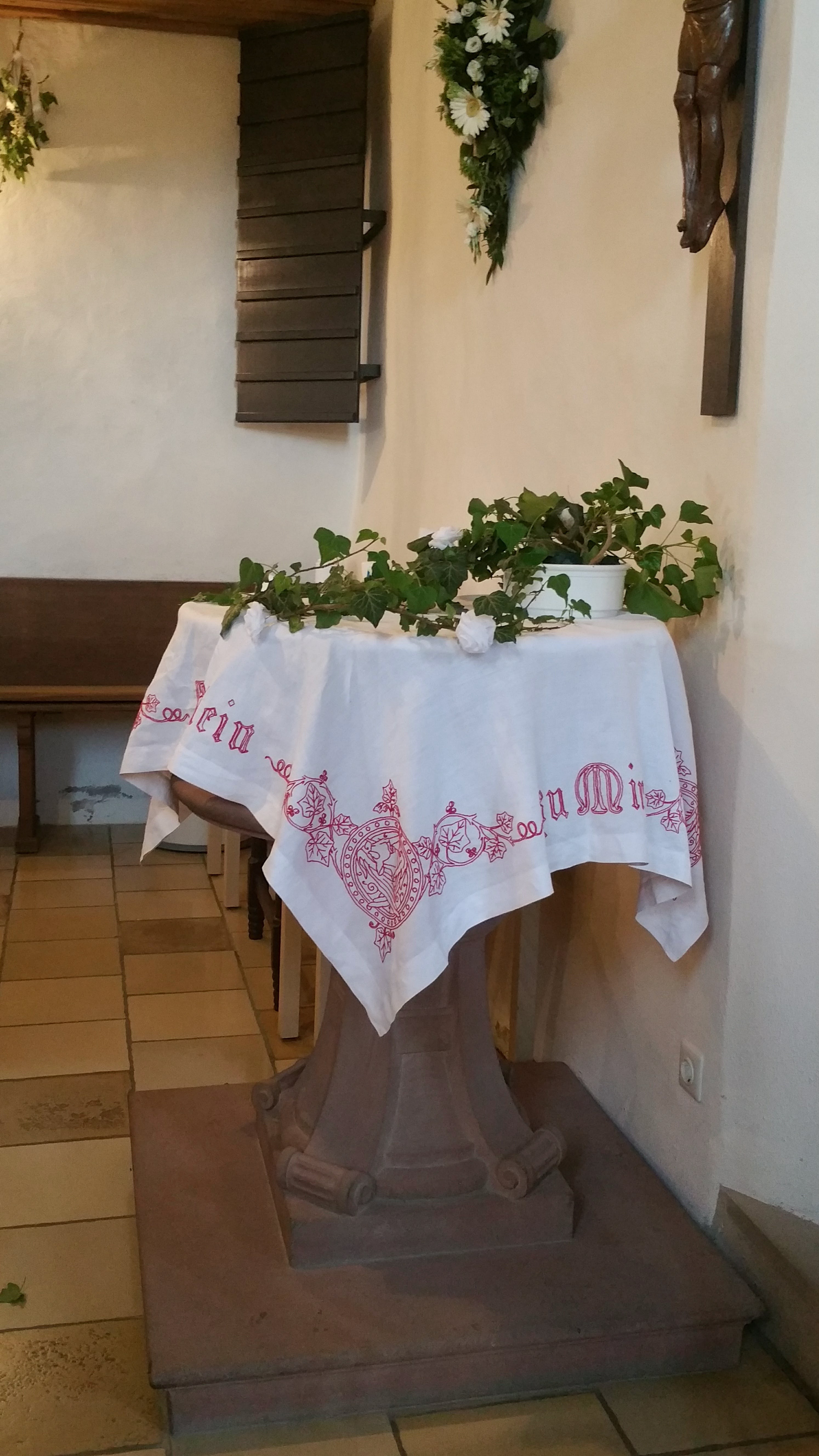

I was struck by this old pews at St Stephens, especially thinking the MOSER family may have sat right here where I was sitting. The seats were not very deep and quite hard. No falling asleep allowed during the service.

IMMIGRATION TO AMERICA
It is important to remember that in Germany land was owned by nobles and only leased by the peasantry. Both inexpensive land and religious freedom lured many German immigrants to America’s shores. As I mentioned in the first Part we have the Accurate Tidings from Pennsylvania book published by Daniel Falckner in 1703. We can only guess at what made the Martin MOSER family risk the arduous journey to America. Likely it was like most changes people make a combination of desire for something more and opportunity. While researching I happened upon a bit of serendipity. In 1724 a Johan Martin WEIGEL traveled from Hoffenheim near Sinsheim to Wörnitz for a carpentry apprenticeship. That seemed odd to me that someone would travel 75 miles for an apprenticeship. Three years later in 1727 five ships left Rotterdam for Philadelphia with approximately 1200 German immigrants. One ship was the ‘James Goodwill’ with about 200 passengers.
The following year the same ‘James Goodwill’ sailed again from Rotterdam to Philadelphia. What is curious is that at least a dozen of the families on board the 1728 sailing came from the area around Sinsheim, Germany. The same area as Johan Martin WEIGEL was from, 75 miles west of Breitenau. No other families that appear on the ship’s passenger list are associated with Breitenau or any surrounding village. The only reference that connects is that of Johan Martin WEIGEL. It makes one wonder…if it was just a series of word of mouth that brought the MOSER family to be on that second sailing.
We can only imagine what that trip was like. Leaving the small village of Breitenau of maybe a couple hundred people. My best guess is that the MOSER family traveled westward from Breitenau to Sinsheim perhaps by ox and cart or wagon. A 95 mile trek. Perhaps from there, led by Johan Caspar STÖVER a Lutheran minister, they traveled with a group of families who would sail together and settle in Pennsylvania. From there they may have continued to head due west for the Rhine River at Speyer. The Rhine was called ‘The River of Destiny’ as so many started their journey abroad here. Once on the Rhine they would have traveled by boat to Rotterdam. The MOSER family consisted of Martin and Margaretha, little Maria Margaretha age 7, Frederich age 6, Maria Barbara age 5, Anna Margaretha age 2 and Johan Leonhard 1. Perhaps they carried several trunks; one with Martin’s shoemaking tools and maybe some leather goods to keep him busy on the trip. Another with household supplies and books and another with clothing. I imagine their family bible and perhaps a copy of Accurate Tidings from Pennsylvania. What treasures would they take and what had they sold and left behind?
The Rhine River is dotted with dozens of castles. Martin and Margaretha and their children must have been gobsmacked by the views, city-scapes and castles. Imagine this view at Mainz when you have come from a small village. This anonymous etching is from 1633, so imagine it nearly 100 years later in 1728. Under good conditions, the approximately 350 miles trip down the Rhine would have taken four or five days however, there were as as thrity toll stations that belonged to the lords of each of the castles.
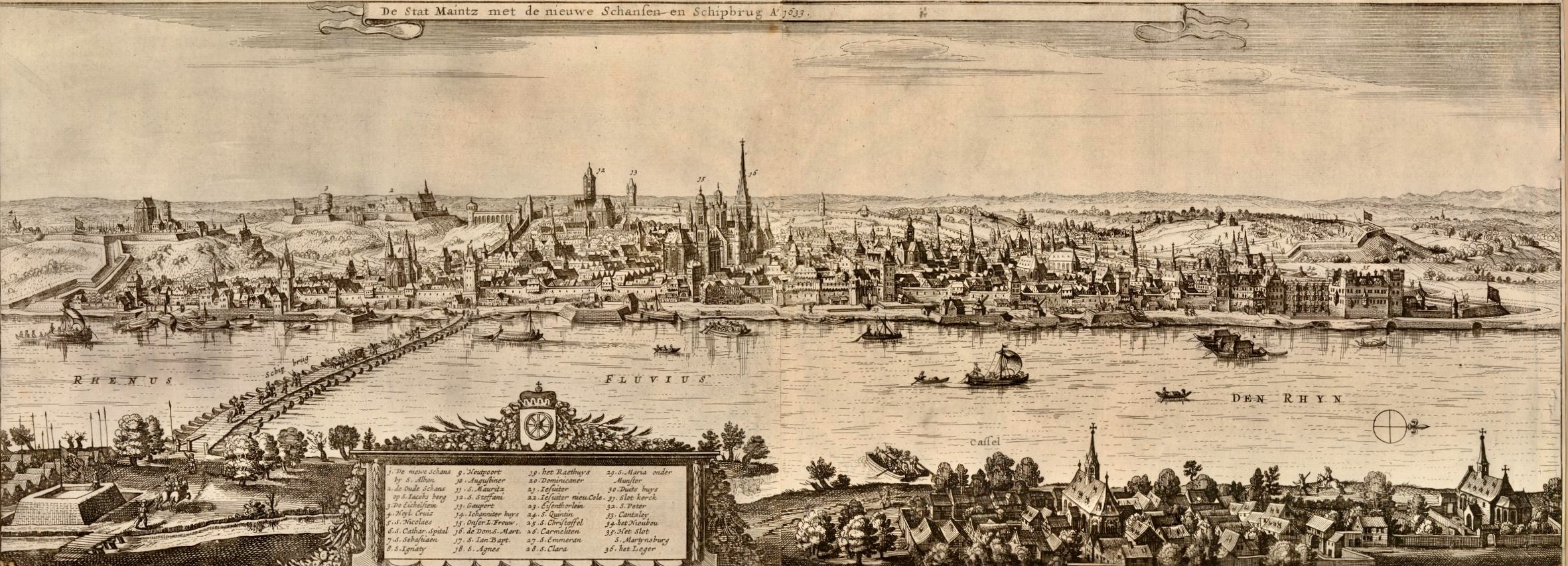
Just a little bit north a more contemporary view form 1700 [they traveled in 1728]. The scene would probably be quite similar. They likely would have traveled in a smaller boat, like one of these pictured, hired to take them to Rotterdam.

© The Trustees of the British Museum

Once they reached Rotterdam would they have found lodging while securing their passage? Perhaps the experience Reverend Stöver guided them safely through the chaos. They made there way aboard the ‘James Goodwill’ and received customs clearance at Rotterdam the 15th of June 1728. There were about 90 passengers. Johan Caspar STÖVER and his son of the same name top the list of passengers as does Martin MOSER on the 1728 sailing of the ‘James Goodwill’. In the next chapter we will explore the Atlantic crossing and arrival in Philadelphia.

Showing [Rev.] Johan Caspar Stöver Senior & Jr [left] Martin MOSER’s signature [right]
Kelly Wheaton ©2024 All Rights Reserved
 Wheaton Wood
Pingback: German Migration to America: Johan Martin MOSER 1693-c.1743 Part Three | Wheaton Wood
Pingback: THE MOSERS IN BAVARIA: Wißenkirchberg, Hetzweiler, Kloster Sulz, Altengrueth | Wheaton Wood
Fascinating account! We share a batch of very distant relatives, as I am a descendant of Maria Margaretha Moser and Johann Jacob Steinbruch, who was killed in 1756 in Lynn Twp., now Lehigh Co., PA. It is frustrating to know so much about the Mosers and so little about the origins of the Steinbruch family. Have been looking for their point of origin in Europe for the last 40 years. By any chance, have you ever searched for or found anything definitive about them in Europe? Thanks,
Annette Lynh
Annette, I do not have anything on the Steinbruch family. However you might look at the Ship’s passenger list for his arrival and see where the other families were from that have been identified. The MOSERs came over on two ships and they cluster mainly in the area around Berwangen and Walldengolach, Baden. Although the MOSERs were from Bavaria. They appear to be following the Rev STOVER. This link will take you to a distribution Map for Steinbruch in Germany which may prove helpful http://geogen.stoepel.net/?q=Steinbruch