TRAVELING for GENEALOGY: Virtual & In Person
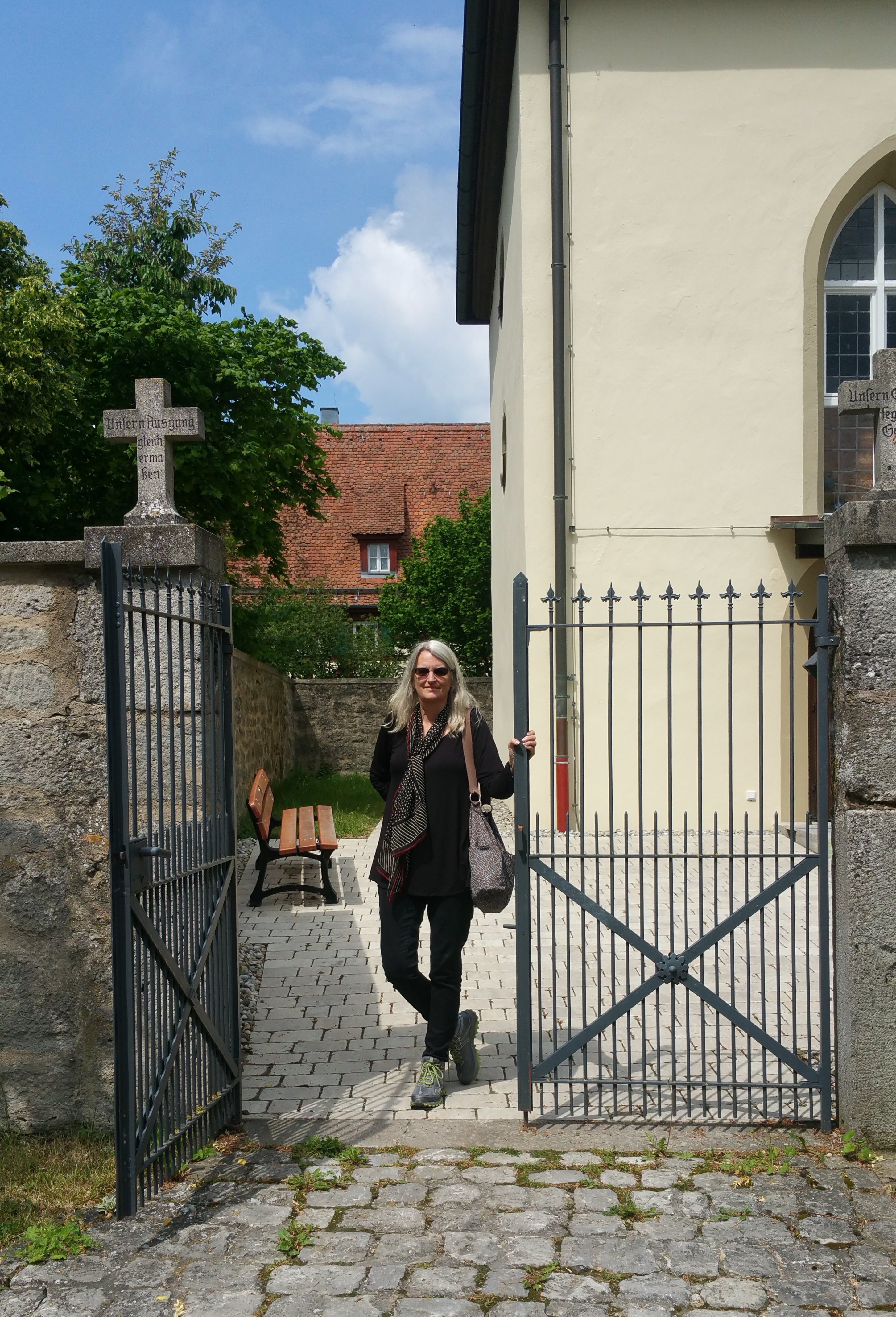
There are many types of travel and just as many of interest to Genealogists. For the purposes of this blog post I am concentrating on travel to the homeland of an ancestor or ancestors for the purpose of experiencing something of their time upon this earth. Remember our principal reason to do genealogy, besides the fun (or frustration of it), is to be able to tell the stories of our ancestors. I do not advocate the collection of names dates and places. Your job, sometimes a MISSION IMPOSSIBLE, is to recreate the past and tell your ancestors stories, to the best of your ability. There’s nothing like getting to stand in the place they lived, to help you tell the story with more authenticity and enthusiasm. If you are reading this and age, health or finances prevent you from traveling, there is still a lot you can do virtually and it is an important part of the travel planning process. So do not lose heart.
PLANNING: Avoiding Pitfalls
“By failing to prepare, you are preparing to fail.” — Benjamin Franklin
A successful trip is most often months or years in the planning. Yes, you can grab your carry-on at a moment’s notice and have a good trip, but it can also be an unmitigated disaster. Some examples of what happens without planning:
- The archive you wanted to visit is closed on Tuesdays.
- The courthouse is being renovated and the documents you wished to peruse are in storage.
- The Church documents you wished to review are now in the Nat’l church archives and not available locally.
- The Historical or Genealogical Society won’t be open during your visit.
- You have a map but cannot locate the Family Cemetery but you’ve seen it on Find a Grave.
- It’s a lot farther from point A to point B than you thought. You are running out of time.
All of the above could have been avoided through proper planning. I mention them because it tells you something about the planning process. You want to research all places ahead of time. Even a phone call, email or visit to the announcements page of their website can save you a lot of grief.
GOALS & PURPOSE

You really can’t begin your planning if you have not defined your purpose. And unless you will have weeks or months in the place you are traveling to, you really want to focus on what’s most important during your visit. As time goes on more and more records are available on line. You don’t want to waste time on things you can do from home. Often what’s most important, will be photos you want to take of headstones, homes churches, or documents related to your ancestors life. Sometimes it will be the opportunity to peruse original records. And if you are lucky you may have the opportunity to meet relatives. So you will want to compile as much information as you can ahead of time. Then organize that information so you can take it with you. You aren’t going to be lugging binders around and even if files are digitized there are times when having something printed is helpful. You will want to develop a list of places you want to visit and what you want to look at once there.
In the case of my trip to Germany in May of 2018, I had about 1/2 day to visit the 3 parish churches that my MOSER family had lived from about 1620, until their immigration to America in 1728. A very kind relative of my friend Denise, offered to drive us to each of them and he even made arrangements with the minister in the one church which is generally closed. I was able to visit the hamlet where the family farm was located although it was not clear which exact one. The landscapes of a place helps to set the context of the story. It is about 1.3 miles on foot from the cluster of farms in Ulrichshausen to St Martin’s Church, in Wörnitz. So on this trip my goal was to visit the churches and take photographs so that I could put together their story. The story can be found in the multipart Blog posts of MOSERS from Germany to Pennsylvania.


TRIP PLANNING: An Example
I am going to use an upcoming trip I am taking in May, as an example. Half the trip I will be in London where I can go anywhere public transport and my own two feet will take me, and the other part is a small group tour of Kent. This will be with my best friend from kindergarten, Denise, mentioned above. It is her first trip to England and it was her desire to go to Canterbury where her ancestor Robert CUSHMAN (sometimes spelled Couchemen or Coachmen) was instrumental in planning the voyage of the Mayflower (although he did not sail with the original passengers). So that is part of the reason for Kent. Another is Sissinghurst Castle Gardens which have been on my bucket list for decades. And Hever Castle, the White Cliffs of Dover etc. Mind you this was not planned as a “Genealogy Trip” but that is no deterrent as you will see. Note: I am using this rather than a larger trip so I can concentrate on specifics. If your trip is strictly for genealogy this would be repeated many times for each place you re visiting.
So in this case any Genealogy will be not the focus of the trip, but the icing on the cake, if it happens. So the very first thing I do when I am going somewhere is to check and see if I might have any ancestors from the area. This is true whether I am traveling in the United States or abroad.
This is where I find having a genealogy Program like Family Tree Maker quite helpful. I go to the PLACES tab, in this case I am looking for ancestors who lived in Kent, England. On the left are all locations for which I have family entries and on the far right are the individuals. Those SURNAMES in capitals are direct line ancestors. In this case it shows the surnames BIGGE, HINCKLEY, HUCKSTEP, and TILDEN. As a child a favorite park was Tilden Park in the hills above Berkeley so that name immediately attracts my attention. Tilden Park was named after Charles Lee TILDEN 1857 – 1950, probably a distant cousin. So far I have his line back to a William TYLDEN bc 1585 who died in Rainham, Kent in 1669.
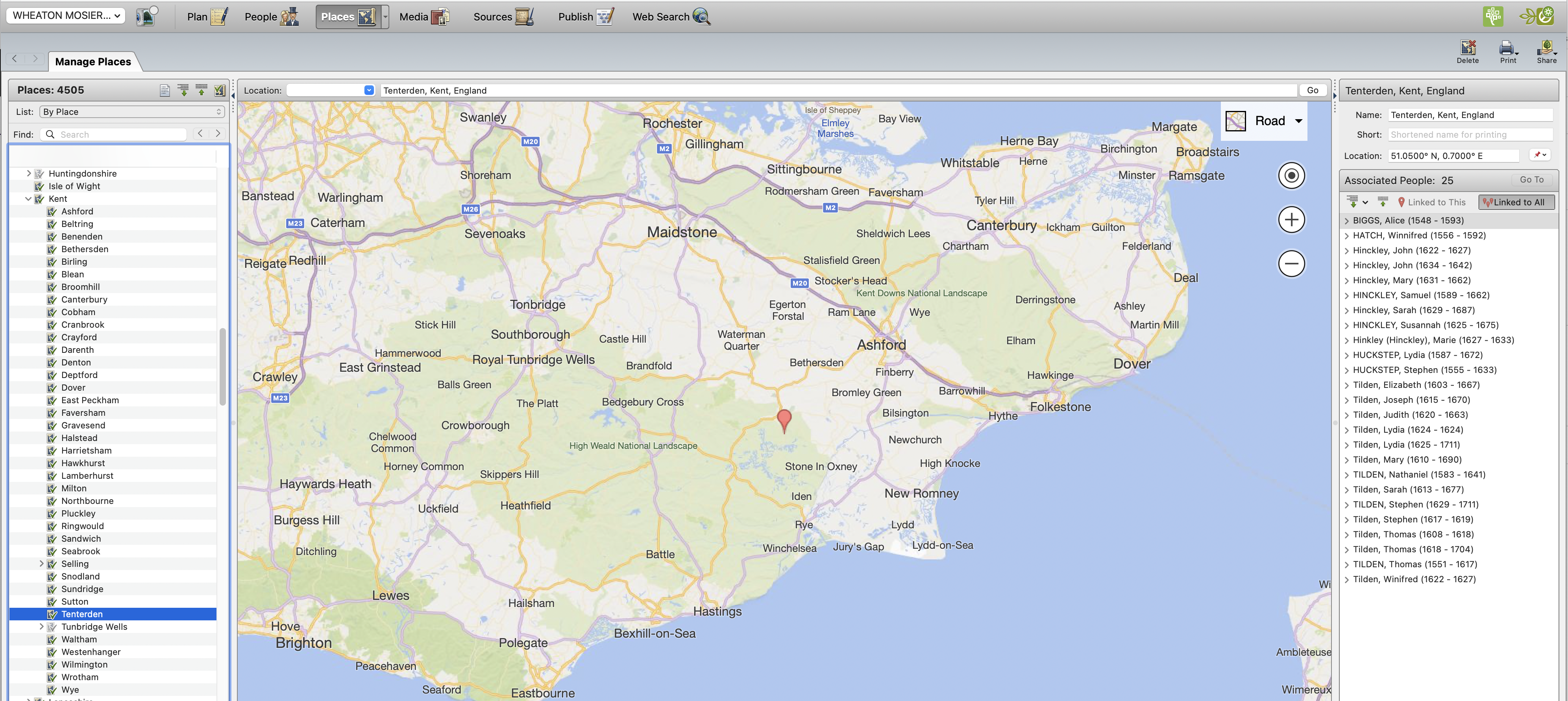
So then I click on each and start to organize the events that took place in Tenterden. So we have my 11th Great Grandmother Alice BIGGE bc 1548 at nearby Benenden, who marries at the St Mildred’s Church, Tenterden to Thomas TILDEN 10th March 1576. She dies there the 13th of May 1593. Furthermore their son my 10th Great Grandfather, Nathaniel TILDEN was born and baptized in Tenterden 28th of July 1583. He served as mayor of Teneterden and Justice of the Peace and is listed at the Townhall. He immigrated on the ‘Hercules’ in 1634-5 with his wife Lydia, and their seven children and with seven servants. He was an elder of the first church in Scituate and among Scituate’s wealthiest residents. He died in 1641 and is buried in the Men of Kent Cemetery. Furthermore his son, Stephen TILDEN , my 9th Great Grandfather was also baptized in Tenterden. Since the itinerary of the tour includes a visit to Tenterden, so with a little luck I will have time to pop into St Mildred’s Church and the Townhall.
Of course I compile a list. This list includes the TILDENS I mentioned and a CUSHMAN of my friend. So organizing your ancestors and making a cheat sheet like this really helps. Note the first column is for the place then the date of event the name the events that occurred there and the relationship to me.

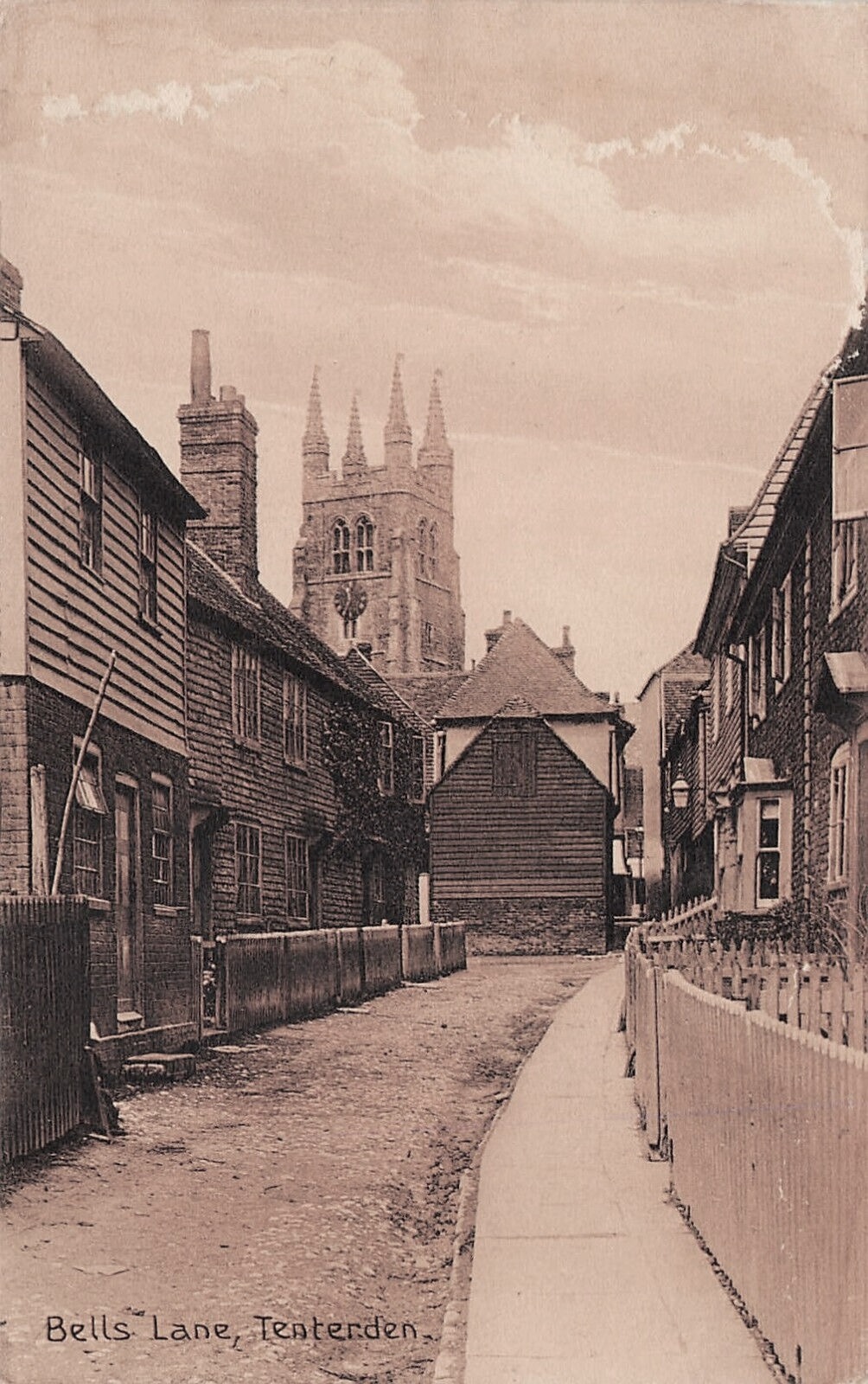
Then this is the time to do more research and there’s even a Wikipedia page on the TYLDEN family. How far you decide to research the family of interest is up to you. But a cursory glance on Ebay turns up some lovely postcards of St Mildred’s Church in Tenterden. (click on images to see full view)

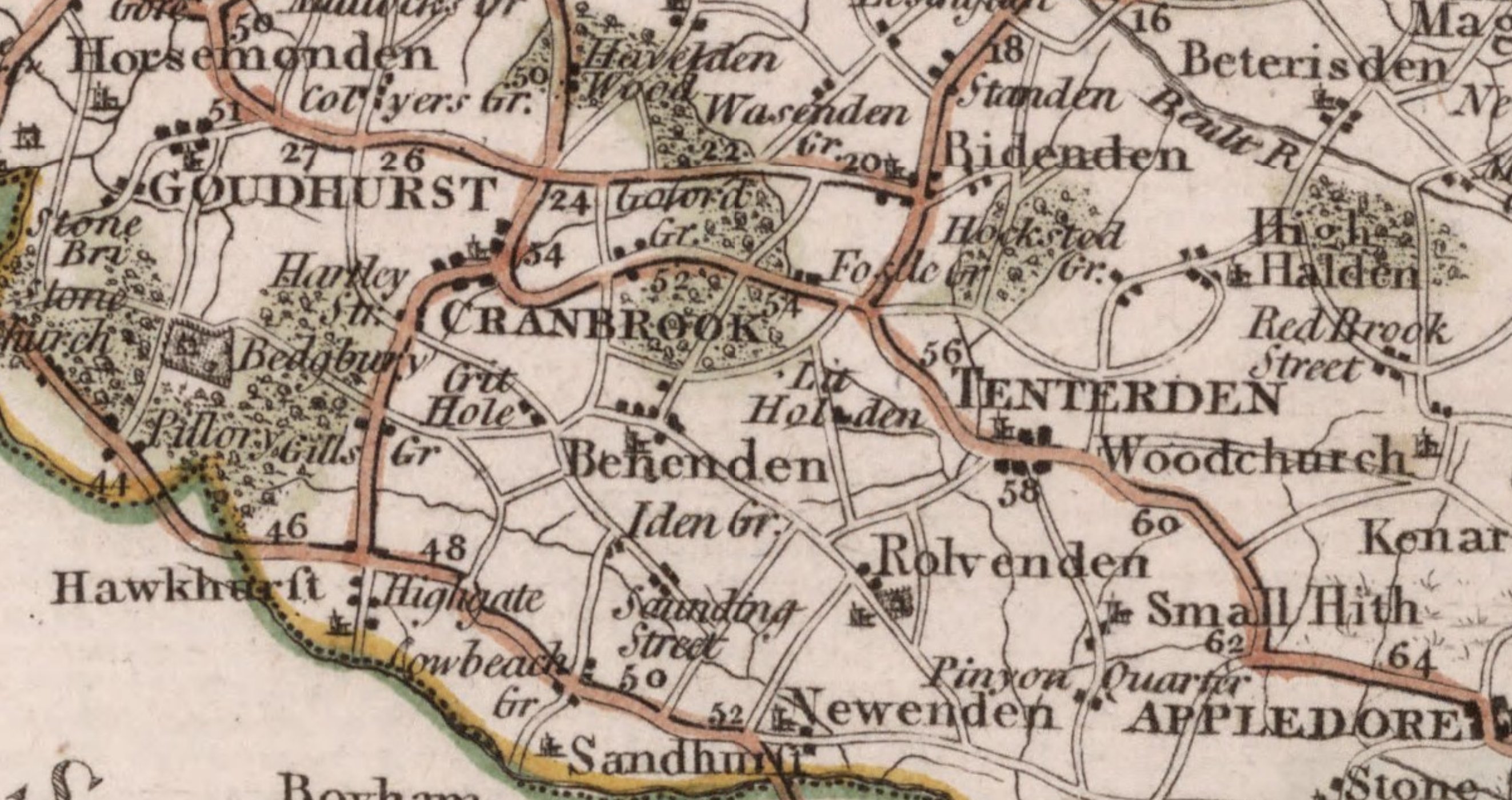
Then a look at an old 1787 John Cary Map from the David Rumsey Collection. This is part of a map of Kent showing Tenterden and nearby Benenden and Rolvenden.
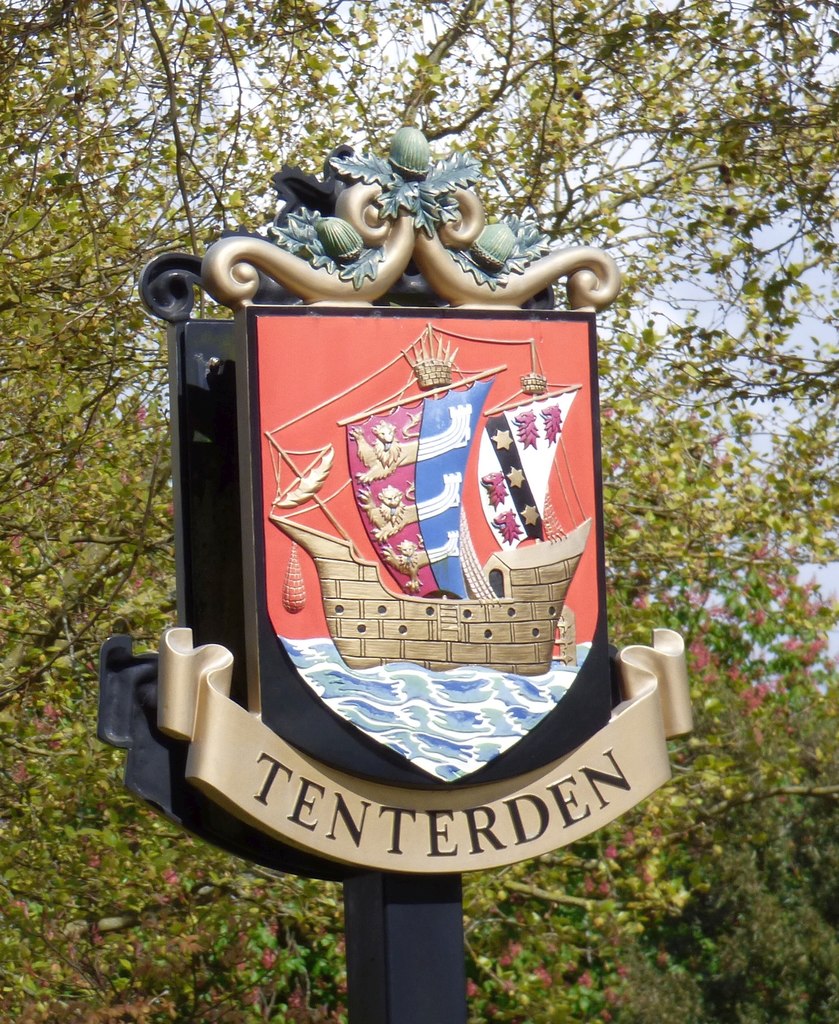
Then if you are looking at places in the UK I like to hop over to GEOGRAPH and see what photos are available. This lovely photo by Gerald England of the town coat of arms. I hope you are starting to see that long before you step one foot outside your door. There’s a lot to find.
On GEOGRAPH I found photos of High Street, of St Mildred’s Church inside and out and all the surrounding area. These photos maybe used for personal use with proper citation. They can help to orient you and suggest things you’ll want to see. So here is a photo of the ceiling of St Mildred’s Church. The roof of St Mildred’s Church, Tenterden. It says The aisled nave dates from the 14th century. The carved wagon roof probably dates from the 15th century, possibly earlier. I won’t want to miss this!

So a lot of the research and pre-planning is what I would do for any line I am researching. And that is what is meant by Virtual travel. You can spend days, weeks and months digging deep into your ancestors surroundings, documents, maps etc.
Now I turn to a book I very much recommend if you like old churches and have ancestry in England. Published in 1999 and usually copies are available on Ebay. I go to the chapter on Kent to see if St Mildred’s Tenterden might be listed. And it is with 3 nice paragraphs of information. [Hint: Always bring a a bit of cash when visiting churches as they often have a guide for purchase. Usually well worth the price, and hard to get anywhere else.] These will often date things like the baptismal font or altar or various important features. If you are telling the story of your ancestors life, you don’t want to claim they were baptized in 1583 when the font is really from the 17th century.

“Tenterden church gets a poor write-up from church guides. Yet its mighty 15th century tower is worthy of any in the Cotswolds. “
Simon Jenkins
One of the many reasons I love old churches, are in many cases, they may be the only thing left standing from when your ancestors lived there. The pews, the baptismal font maybe the very same ones your ancestors knew. So churches rank at the top of my list in Genealogy related travel places to visit, aside from records repositories. Churches were often the hub of community life. They often hold a wealth of information and although many churches have gone through many restorations many have original features.
So for each of the places I anticipate I may be able to visit I compile a list of events of ancestors and bring an abbreviated Genealogy with me. Please note that unlike New England, most gravestones in the UK or in Mainland Europe, are no longer extant or legible for ancestors buried before 1700. In many places in Scandinavia the graves of the recently departed replace the graves of those who die centuries ago. The exception is if your ancestors were interned inside the church. You will want to research this BEFORE you visit. If you are visiting large graveyards or cemeteries you will want to contact a local historical or genealogical society for finding aids or sometimes Find a Grave can be helpful.
THE SURPRISE
So I spent quite a few days researching the TILDEN family and the CUSHMANs and then things got interesting. Remember Nathaniel TILDENs is my 10th Great Grandfather and Robert CUSHMAN is Denise’s 9th Great Grandfather. Robert was born February 9th, 1577 in Rolvenden. Nathaniel TILDEN born at Tenterden 28th of July 1583 Scroll back up to the map. Rolvenden is a mere 3 miles from Tenterden. And it get’s better. The Rolvenden History Group has a Mayflower Project. This leads to many resources one an article from NEGHS that I had given to Denise. From that article:
“Robert Cushman served as the chief agent of the Pilgrims and
worked on their behalf in London from 1619 until his death
from an unknown cause in 1625. He was born in Rolvenden,
Kent, in 1577/8, son of Thomas and Elynour (Hubbarde)
“Cutchman” [Cushman] and lived his early life in Canterbury,
Kent. In 1606 he married Sara Reader, a daughter of Paul
Reader, of Lenham, Kent. Their only surviving child, Thomas
Cushman, was born in Canterbury in 1607/8.”American Ancestors Spring 2017:
Pilgrim Robert Cushman by Robert C. Cushman
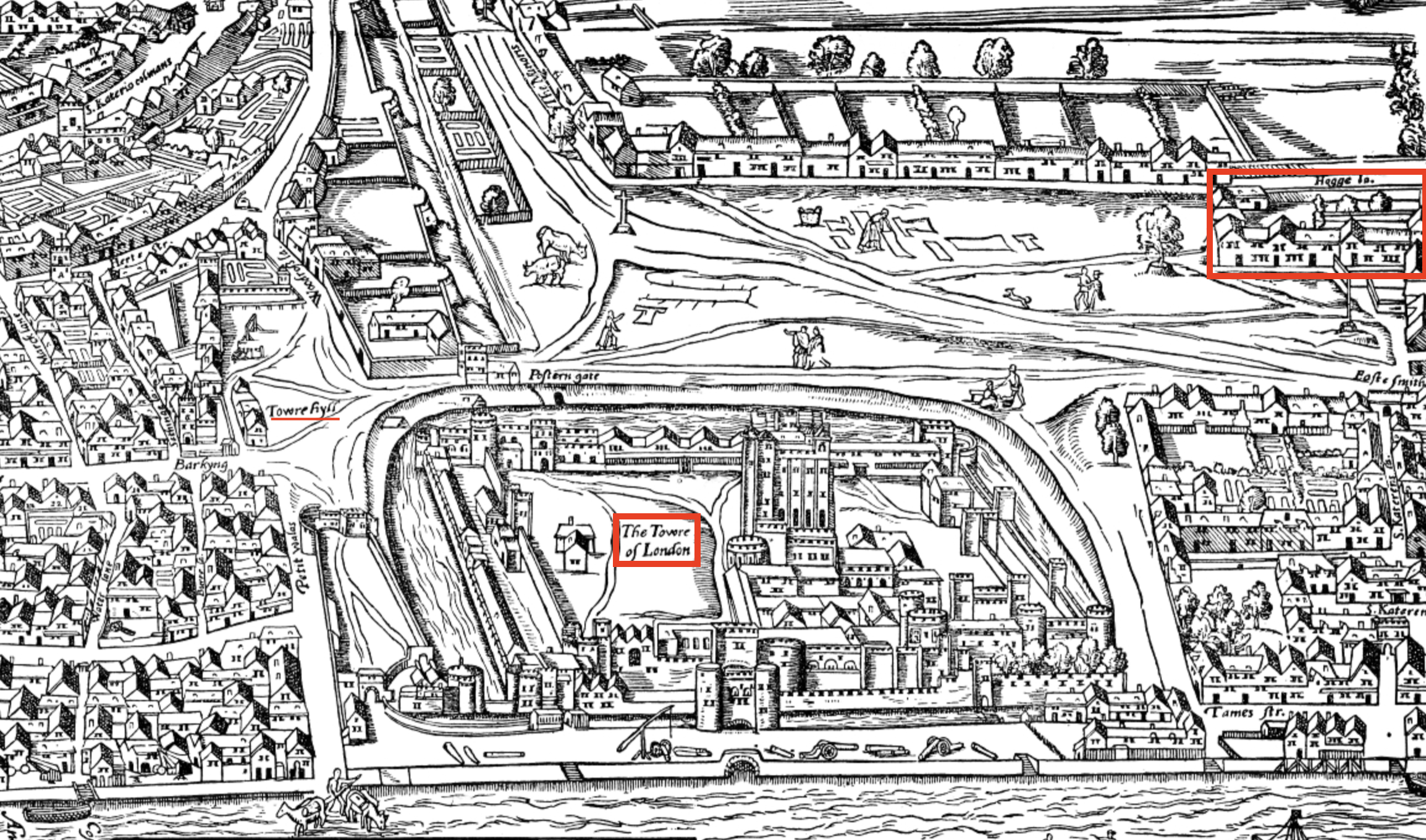
In a 1619 letter from Robert CUSHMAN to William BRADFORD, of Plymouth Plantation, Cushman is writing a book whilst living in London. Although arranging for the ‘Mayflower’ and ‘Speedwell’ he abandons traveling when the ‘Speedwell’ was not seaworthy and he was ill during the sailing of the ‘Mayflower.’ Robert CUSHMAN arrives in America in 1621, a year later than the Mayflower, with his son Thomas, on the ‘Fortune.’ He gave the first sermon preached in America on December 6, 1621, on “Sin and Danger of Self-Love”. Robert returns to England on the Fortune on December 13, 1621. The vessel is captured by the French and Robert is take to France and released two weeks later, where he acts as a financial agent for the Pilgrims. A 1624 deposition record gave an address of “Rosemary Lane, London.” This is now called Royal Mint Street and was earlier called Hog Lane, or Hoggestrete very near to the Tower of London (Coincidentally, very near to where we are staying in London). The “Agas Map of London 1561” shows exactly where this was. We are staying about where the two Cows are depicted toward the middle of the map. Hogge Lane is on the far right and the Tower of London, Middle bottom towards the Thames River. I delight in finding local connections in my travels. Also note just below the cows, is the still extant Roman Wall remains from when London was called Londinium. This wall was built between 190 and 225CE by the Romans.
In 1622 Nathaniel TILDEN is mayor of Tenterden. He is succeeded by his cousin John TILDEN in in 1623-4. Nathaniel TILDEN is ‘Jurat ‘ of Tenterden (Justice of the Peace) in 1624, 1625, 1627, and 1629 [L. Vernon Briggs, History and Genealogy of the Briggs Family, 1254-1937, 1938, Three volume]. Robert CUSHMAN dies 6th of May 1625 in Beneden, Kent while visiting relatives said to be the EVERDENs. It is said he dies of the plague. In this year an estimated 70,000 people died of the plague in England . So the year Robert CUSHMAN dies in Beneden, Nathaniel is Justice of the Peace just 5 miles away in Tenterden.
Now we must take a slight detour. Robert CUSHMAN’s father was Thomas Henry CUSHMAN who married Elinor HUBBARDE 18 Jul 1568 in Rolvenden. Thomas Henry dies 14 February 1586 at Rolvenden. Then Elinor marries second at St Alphege, Canterbury to Emmauel EVERDEN, he dies 3 December 1589. [Remember above Robert CUSHMAN is visiting the EVERDENs in Beneden when he dies.] His mother, Elinor, married for the third time 6 November 1593 to Thomas TILDEN at Teneterden. Thomas TILDEN is the father of my Nathaniel TILDEN!!! So Robert CUSHMAN and Nathaniel TILDEN were step brothers. Elinor dies 22 July 1601. Thomas TILDEN marries a third time to Alyce BOURNE. He dies in Wye in 1617. When his son, Nathaniel TILDEN immigrates to America on the ‘Hercules’ in 1634 leaving from Sandwich, Kent, England with master, John Witherley. Also on board are members of the HATCH and HINCKLEY families. Nathaniel brings his wife and 7 children AND 7 servants. Among them is a Sara COUCHMAN (CUSHMAN) who it is speculated, may be Robert CUSHMAN’s daughter. This would make sense as once her mother and father and grandparents are gone she may have been taken in by her father’s stepbrother, Nathaniel (step uncle). So my childhood friend and I share common ancestors John HOWLAND and Elizabeth ALDEN of the Mayflower and a surprise step brother relationship! This not only illustrates how you do research to a place you plan to visit. It also brings up surprising connections.
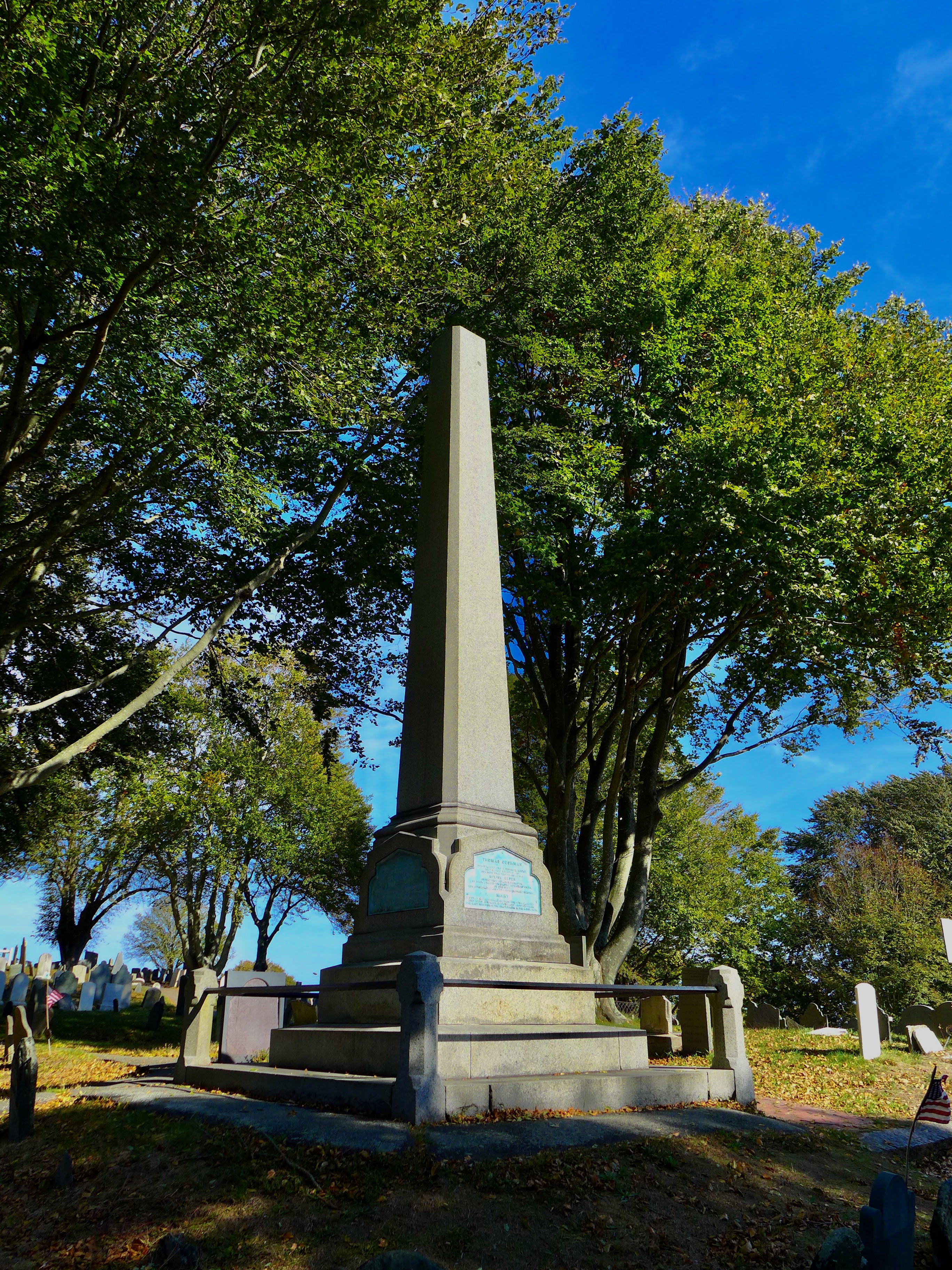
There is a large monument to Robert CUSHMAN in Plymouth, MA however he is buried in Benenden, Kent ENGLAND.
Another couple of surprises on the trip. We will be visiting Chartwell which was a hunting lodge that King Henry VIII visited when courting his future wife Anne Boleyn. But what caught my eye is his architect was Philip TILDEN (1887-1956) son of William Augustus TILDEN born 15 August 1842. I have traced him back to a Matthew TILDEN bc 1615 of Northfleet, Kent so I think part of the same clan!
GENEALOGY FOCUSED TRAVEL
There are many things to keep in mind if the sole focus of your travel is genealogy. You will want to first make a list on ancestors by place and date. Then you want to sketch out a possible itinerary. Then you want to research, research, research. You will want to include exact locations, hours and special needs. Check for hours, whether you must make arrangements in advance and who you may want to meet with :
- Churches, cemeteries, graveyards.
- Historical, Genealogy or Special interest groups. Can you arrange to have records pulled in advance.
- Archives, University libraries and other document repositories. Same as above.
- Courthouses, Town Hall offices and other Government Offices.
- Historic Houses, farms or estates. Are they open to the public? Can you contact the owners or trustees to arrange a visit?
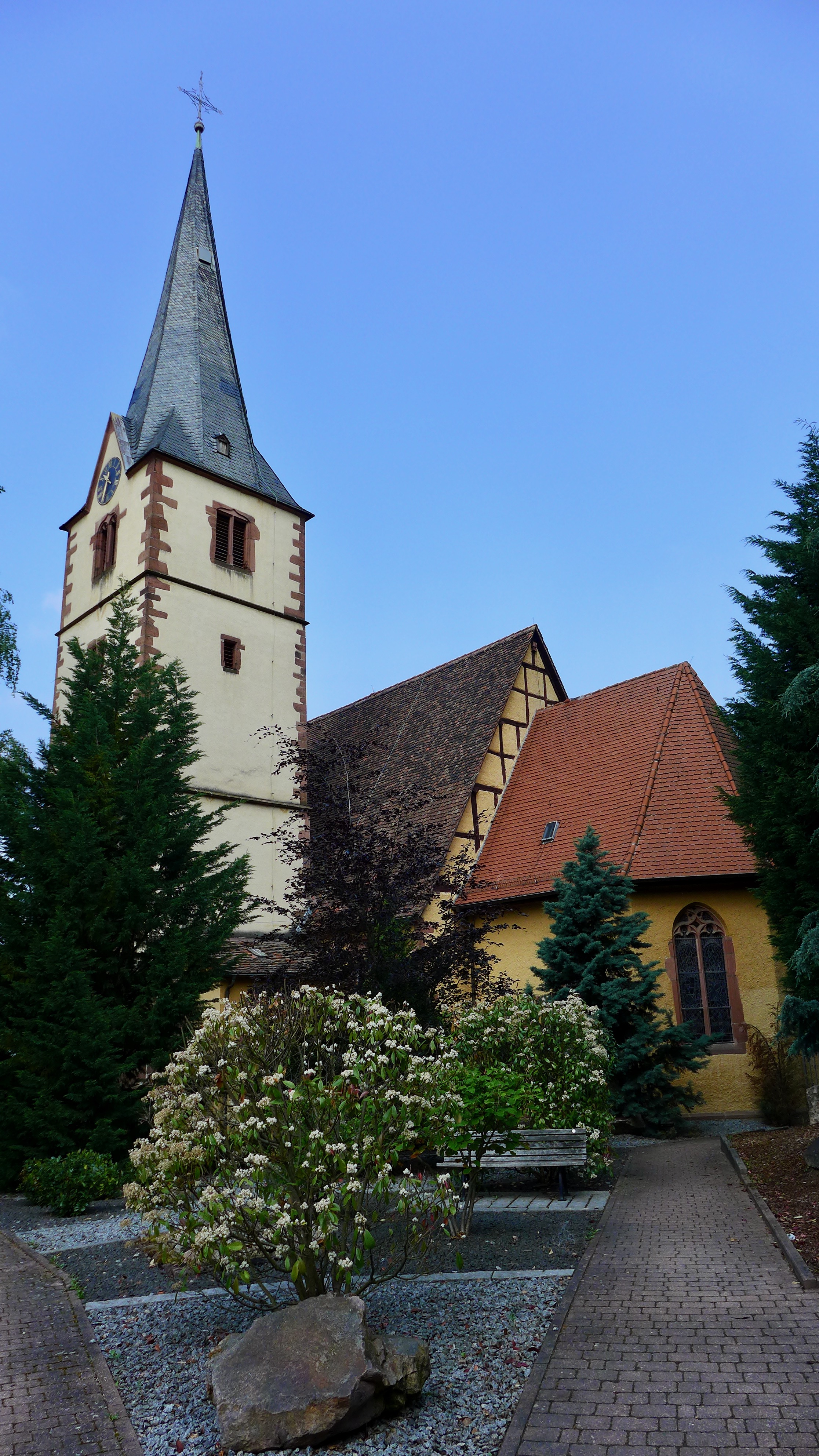
The time frame you are interested in can matter a lot. For instance many local history societies abroad are focused in the last couple of hundred years, whereas your interest may be more distant. Denise and I had a lovely visit with the minister of a village outside of Heildelburg: Dossenheim where my RIEMENSBERGER (now RAMSBURG or REMSBURG) emigrated from in 1748 to Maryland.

There is no limit to what you can achieve from the comfort of your home or by reaching out and making arrangements to visit places across the county or abroad. Careful planning is key.
SPECIAL HINTS
- Do bring small thank you gifts for people you will meet with. Remember you are an ambassador of sorts.
- Do research the history of a place, not just that of your ancestor. Context matters.
- Do look at old maps and Gazetteers . Names of places often change, as in my example above.
- Don’t just rely on a website, contact the archive or church directly.
- Don’t hesitate to go into a bakery, post office or library and ask for help. Ask if there is anyone who knows whether there are any “MCFADDENS’s” still living there.
- Change your perspective. Take Photos not just of things directly related to your ancestors. Take broad views of the cemetery, not just gravestones. Look up! Lie on the ground. Record the smells or sounds.
- Look for the oldest buildings in a place you will be visiting.
- Listen to your intuition. Take photos even if you don’t know exactly why you are taking them.
- Ask for help.
- Don’t forget to ask about large maps or Family Trees that may not be filed where you would easily find them.
FOLLOW-UP: On Current Trip Planning to Kent

So to give you an idea of the level of detail you may want to pursue. The following map shows places of interest in Canterbury including those related to Robert CUSHMAN. I like to print out or screen shot these on my phone. You’ll note they are all in easy walking distance of our hotel, no more than a couple of blocks. We will be visiting the Cathedral and Chapter House. It shows the location of the church where he was married, now an Instant Teller of Nat West. Bank and where he was briefly imprisoned at Westgate, which has Museum and rumored the best views of the city [£4 Adults, £3 Student/Concession]. And in case you don’t know concession is for Seniors! Also note that the Westgate gardens are lovely and the Gatehouse is lovely at night. beautiful at night. Which reminds me night photographs are often stunning, especially in cities. Here’s one of the steeple of Holy Trinity Church, William Shakespeare’s final resting place, at Stratford on Avon, taken on our way to a talk there. I didn’t know that Westgate was lit at night so I make a mental checklist to try to get a picture. Also Canterbury Cathedral at night is likely to be lovely and Evensong is at 5:30 Mon-Sun. One of my favorite experiences was a happy accident when we arrived at Beoley St Leonard’s Church as the services were beginning so we stayed. Another was at St Martin in the Fields, London where they were practicing for an evening concert of Vivaldi’s the Four Seasons.
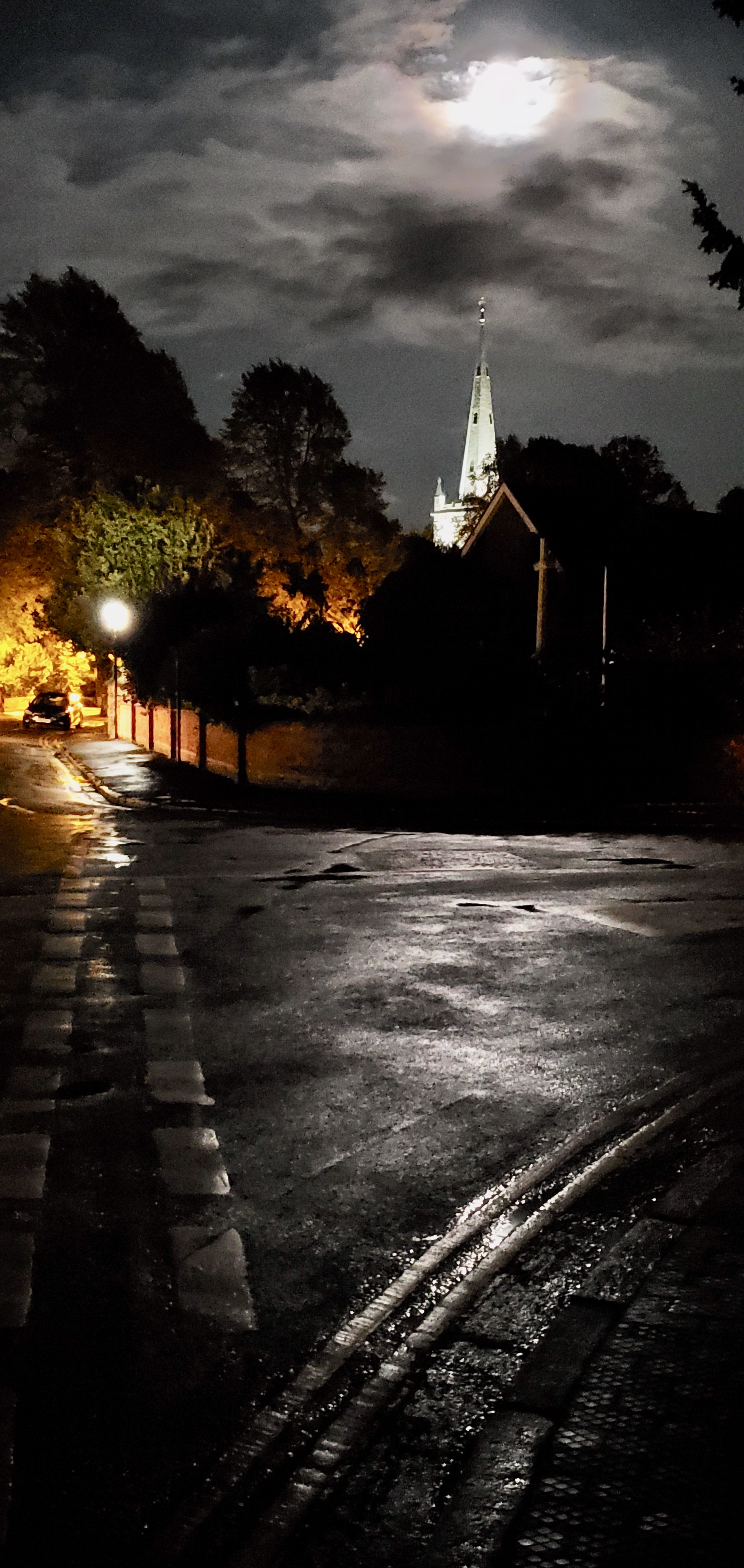
Always be open to serendipity! It leads to unusual and unique experiences.
RESOURCES
BOOKS
- Journeys Home: Inspiring Stories, Plus Tips and Strategies to Find Your Family History by Andrew McCarthy
- Travel Back to Your Polish Roots by Donna B Gawell
- Family History Trippin’ – A Guide to Planning a Genealogy Research Trip by Thomas MacAntee ebook
- Callie and Natalie’s Dutch Family History by Darlene Miller
- Visiting Your Ancestral Town by Carolyn Schott
- Researching Your Irish Ancestors at Home and Abroad by David R. Elliott
VIDEOS
- Family History Roundtable: Traveling for Your Research NEGHS
- Planning a Trip to Ancestral Homelands. NEGHS
Kelly Wheaton ©2024 – All Rights Reserved
 Wheaton Wood
Don’t forget you are a Mayflower descendant. Very interesting articleCuz NancySent from my iPad
Well, Kelly Wheaton….You are many Belts and many Braces…of total engagement…in the Fine and Silky Arts of Humanitarianism……I have today,caught and clutched..many of the components,of your Psyche-Very revealing !!I think you have an abundance of resolve andenergy…beyond the ‘norm. But your words and methods and exposition,ring True !Planning ! ! ( I easily caught your total commitment..to the cause ) [ Not to my Plan,but from the age of 18..my life turned down the long road. of PLANNING]I Worked in the British Coal Repair Workshops..and was..”Spotted”..and the dye. Was cast.Everything I did ..needed the hand of Planning..right up to the age of 72. In your case..I think you were definitely Born,to what you have achieved…… For me..? I don’t boast…I got on – with it.I did things,at the request of people who should have known better..but it got me into situations, of myself – -that allowed me the space to excel…(Not of my making) Clearly..you caught the Early Worm…before your Generation’s time… I have been amazed,reading through what’s appeared on my little Tablet. .Your Planning, brim’s over…It gets so interesting,it is virtually Hypnotic….. In fact…a Mental,Cartographer…! Well, I’ll digest more during the festival of St Nicholas ! Festive Remarks..Kelly.Let the Grey matter,refresh.!Cousin Geoff.
Yahoo Mail: Search, organise, conquer
HI Kelly, I was just in Canterbury in October to follow my 9 great grandparents the Cookes and the Chilton while attending the Kent Family History Society’s 50th anniversary of which I am Vice President, Fabulous city loved it! I need to go back and go to Sandwich as well. I stayed at the Hampton Inn, they were very friendly. I am just assuming, you may have been before, Canterbury is a walking city, I didn’t find that in anything I read ahead of time. I missed going to Hevershire due to a rental car issue and the tine it took me to get there. Also please note if you are driving to Kent, double the amount of time it will take you. It is a big city lots to see! I loved the Cathedral their archives are only open wed and thursday? Double check this, I was hoping to look at records. There is also the Heraldry Resource center, they had a lot of great books and information. There is pancake restaurant I was told about and on the wall is the original deed to hire the ships which Has Cushman and Chilton and others, something else I was not aware of, the pancakes were great, I flew into Heatrhow, however you might want check out Galwick it is closer to Kent and not to far from London I stayed in the West End of London this time. I did spend the afternoon at the Tower of London, It is fabulous place I too have London roots and went to the new museum for Churchill since I am related, Westminster Abby was packed I was overwhelmed but saw most of it. I also stopped in the Cotswald as my 7th gg grandfather was from the area, I do need to go back there , I didnt have much luck with Gloustershire Records, I tried to go and contacted them before hand and they said the record was online, I really wanted to see the original, sadly I didnt find much and was left disappointed, another reason to go back. The Librarian at Stow on the Wold was very helpful even thought we didnt find much. Anyways if you have any questions let me know.
Patricia. Thanks for the great tips. Especially the deed at the Pancake House. I have been to England over a dozen times as my son lived there and then in Wales. I will be on a small (18 person tour) and all arrangements for accomodations and visiting the Cathedral are made. I have always traveled witg someone who is comfortable driving thete or used public transport. The reason for the tour is to have someone else do the driving.
I have been to the Tour of London twice and to Westminster once. This is not a genealogy trip per se so we’ll see what a manage. For genealogy reasons I hope to get to the Middle Temple in London and the British Museum and Albert and Victoria Museum.
Its my first trip to Kent!
Have you see this authors books?
https://shop.americanancestors.org/collections/sue-allan?srsltid=AfmBOopWU3x4hLnfr4X-5vxRjz9nD5yDw1Da2RfgMHp2kStkQcsL8vFh&pass-through=true
Thanks!
Pingback: TRAVELING FOR GENEALOGY: Expectation vs Reality | Wheaton Wood