KENT The Garden of England Day One Part Three: Canterbury : On the trail of Robert Cushman
When we finished up at Hever castle we made our way to Canterbury. It was Canterbury that led us to the KENT The Garden of England tour through Blue Roads/Backroads Touring. My friend Denise and I met in kindergarten and she is a direct descendant of Robert CUSHMAN 1577-1625 who was responsible for organizing and arranging the sailing of the Mayflower. He is her 6th great grandfather. Her line is:
- THOMAS CUSHMAN [Couchman] 1512-1567
- Thomas CUSHMAN [Coucheman] 1538-1585
- Robert CUSHMAN 1577-1625
- Thomas CUSHMAN 1607-1691
- Thomas CUSHMAN 1637-1726
- Robert CUSHMAN 1665-1757
- Robert CUSHMAN 1698-1751
- Isaac CUSHMAN Deacon 1745-1834
- Isaac CUSHMAN 1779-1829
- Robert CUSHMAN 1803-1888
- William Wilkins CUSHMAN 1843-1919
- Mark Walton CUSHMAN 1879-1940
- Robert Mark Cushman her father
Robert CUSHMAN 1577-1625 was born 9 FEBRUARY 1577 at Rolvenden, Kent, England and died 6 MAY 1625 at Beneden, Kent, England. He appears as an apprentice to George MASTERS in Canterbury in 1597, at the age of 18. He lived at George Master’s house in St. George the Martyr parish making tallow candles until 1599 and maybe as late as 1603. This was the map I had prepared in advance.
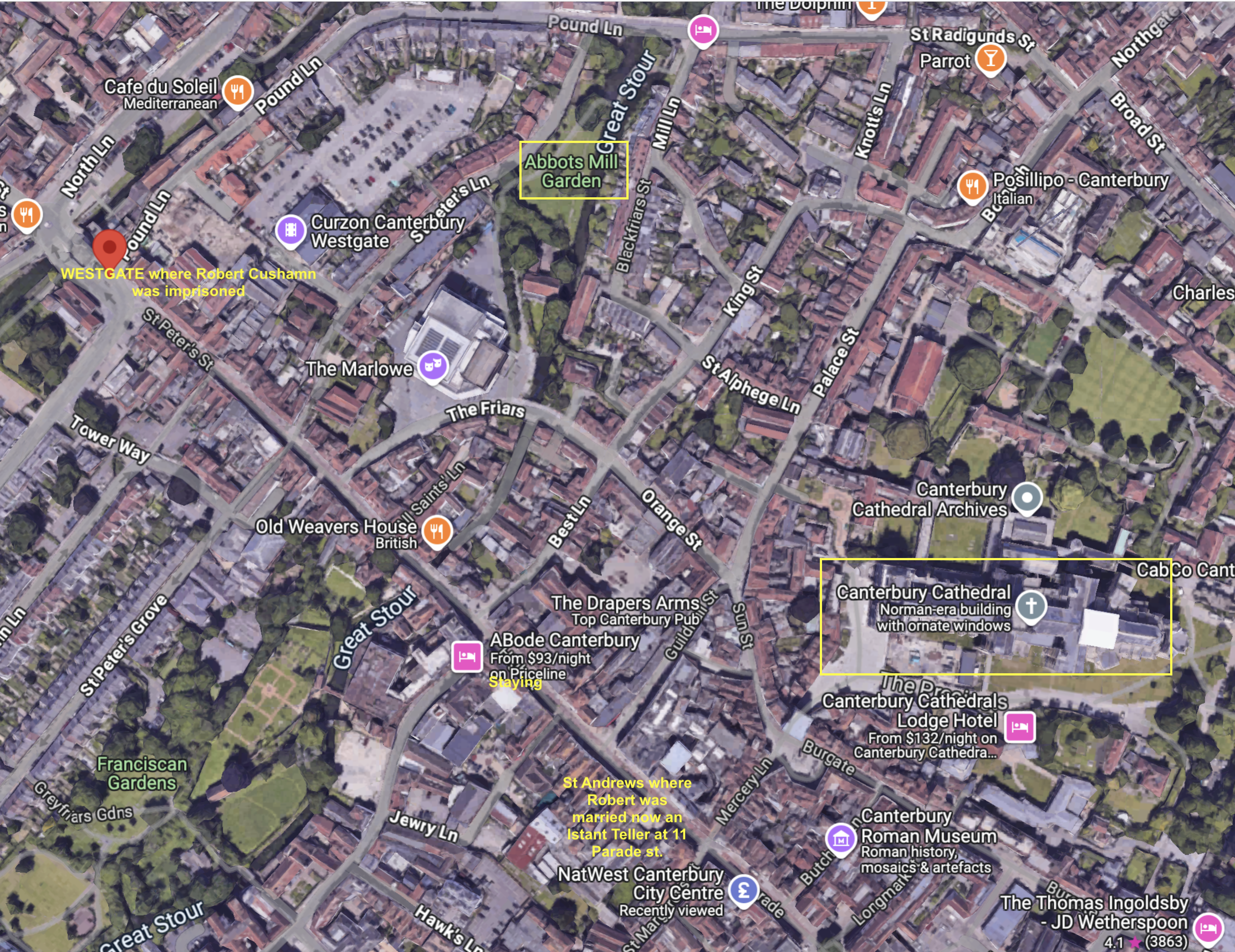
We arrived at the ABode Canterbury where we were staying the night. The building is a Grade II-listed 12th-century structure with medieval windows and exposed beams that has been renovated over the years but still maintains its timber frame exterior on High Street, Canterbury and some of the timber frame construction inside.


We checked in and then were on our own for the rest of the evening. I took advantage of that time to wander about Canterbury and along with early the next morning located some of the places associated with Robert CUSHMAN.
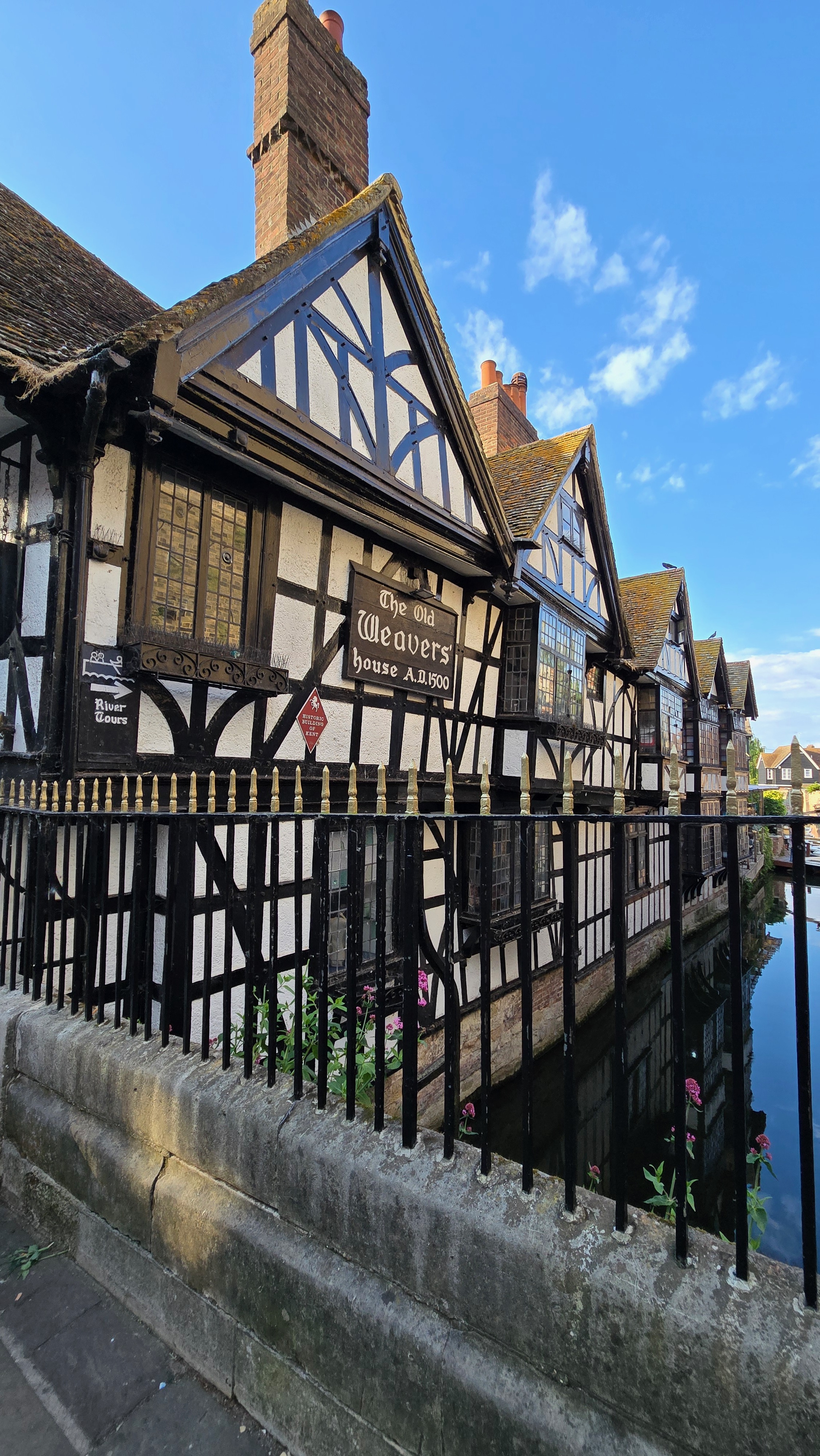
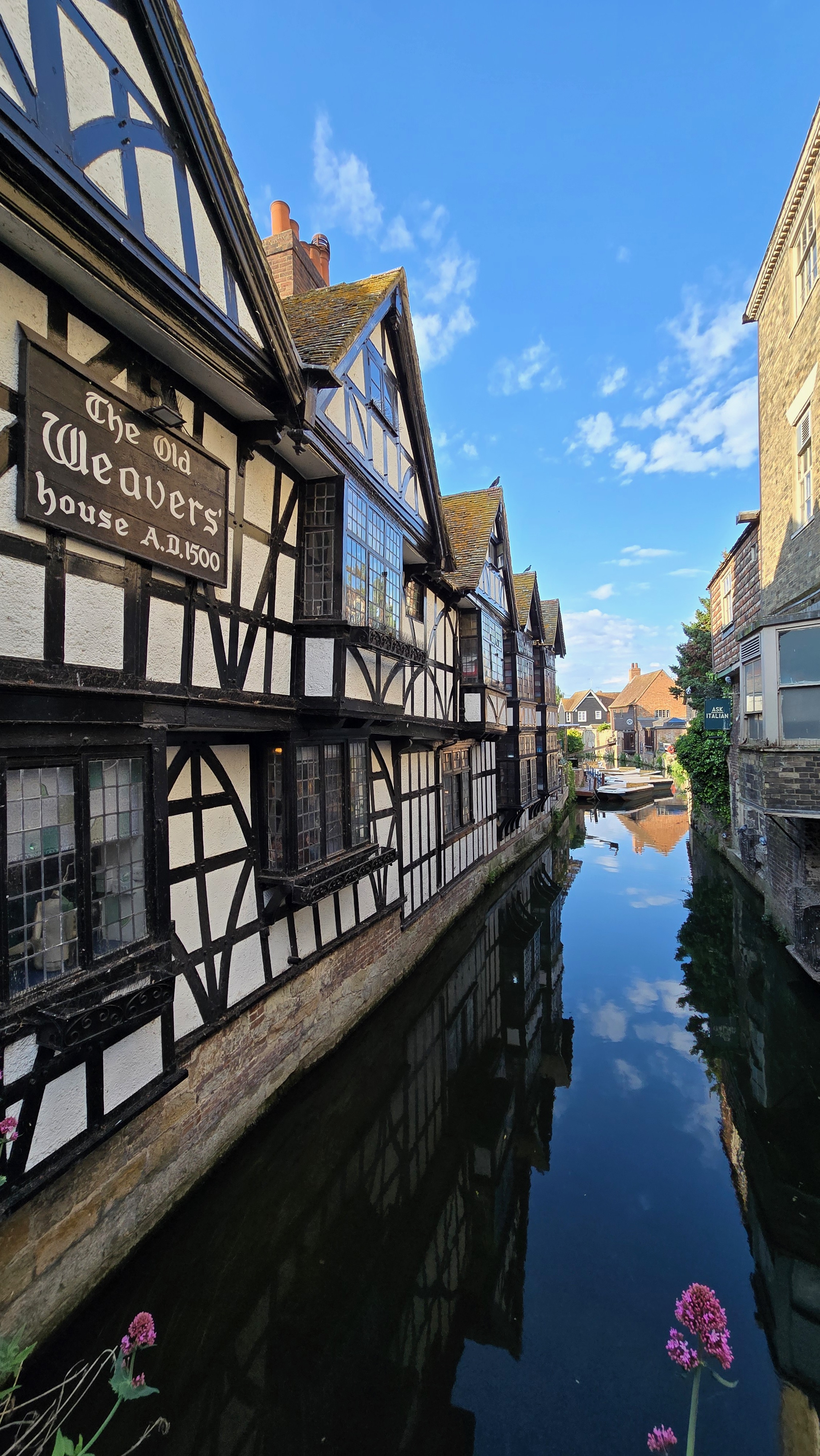
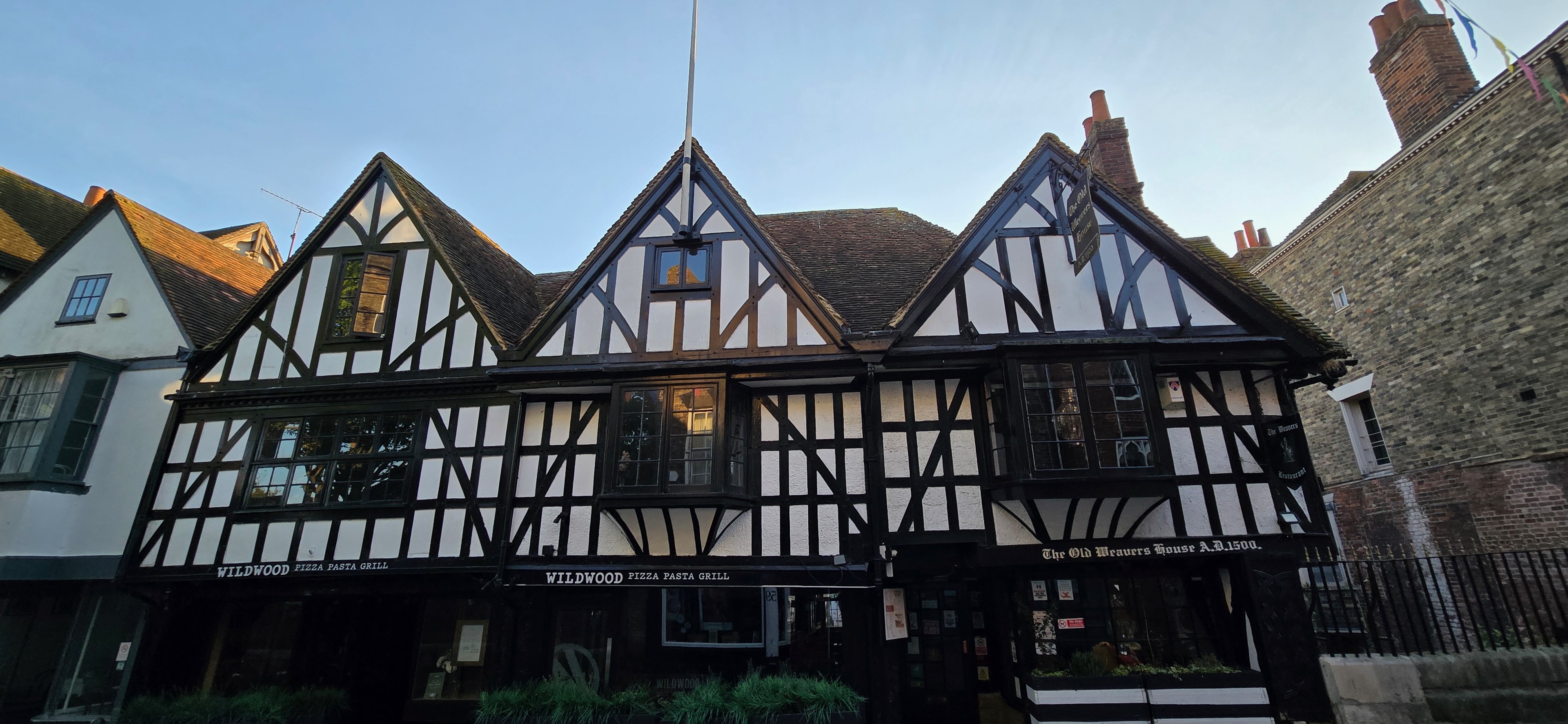
Just a few steps from the Abode you will find the The Weavers Established in 1500 on the Great Stour River. It would have been here along with the Abode during Robert CUSHMAN’s time. Make sure to expand the 3rd photo to see the Ducking stool. These were sometimes used as punishment or to humiliate and in the case of suspected witches they were used to prove whether you were a witch or not. If she floated, she was in league with the devil, rejecting the water of baptism. If she sank, she was clearly not a witch, however she would also be dead. Great choice.

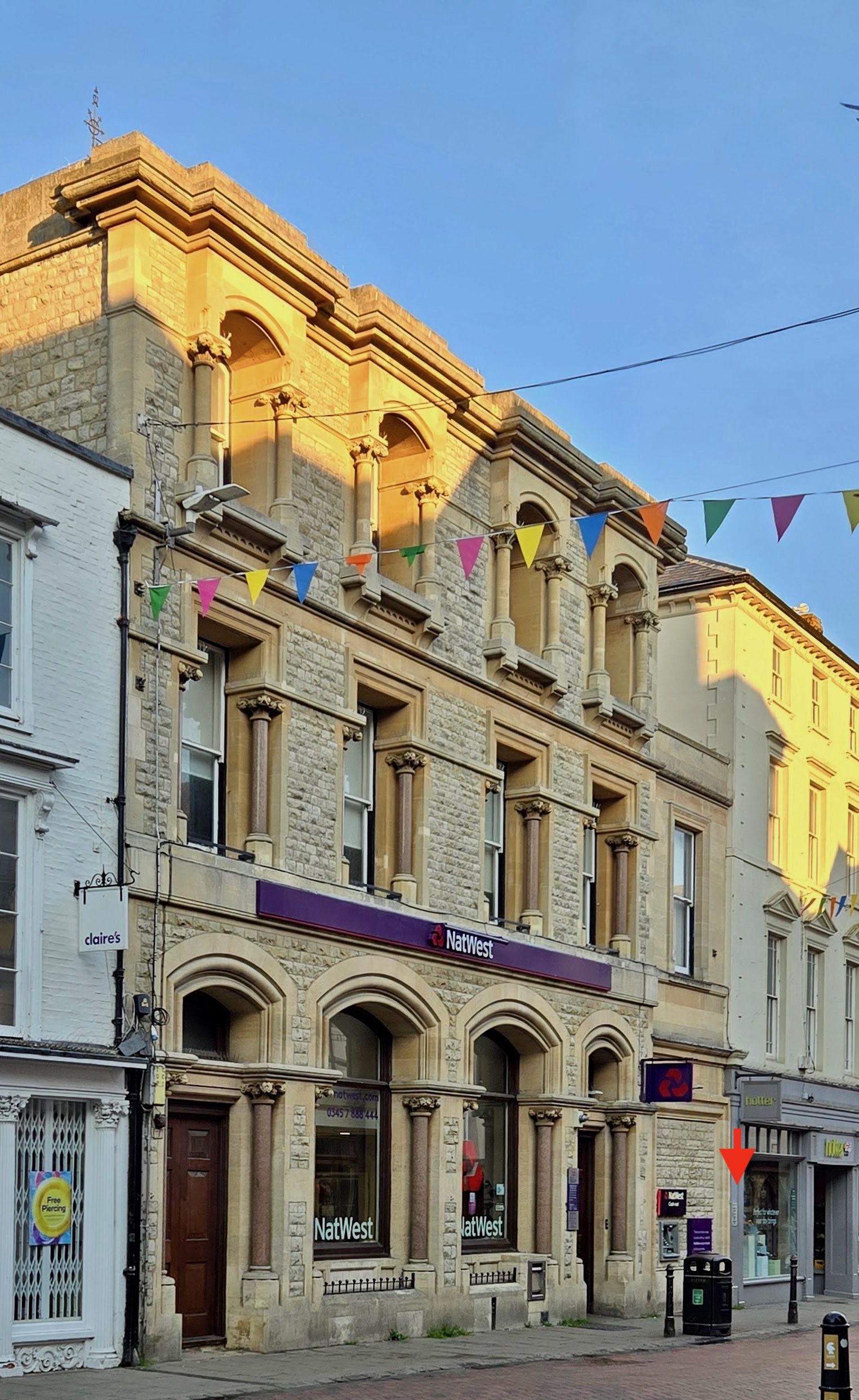
Next I headed down High street toward Westgate. The Westgate tower housed the gaol or jail where Robert CUSHMAN was briefly imprisoned. His crimes included distribution of libels and not attending his parish church of St. Andrew’s. Robert was a Puritan or Pilgrim. Kent was a hotbed of dissension from the Church of England during this period. The church of St Andrew no longer stands. His child Thomas was baptized here. It is located where the Natwest instant teller is located on Parade Street. There is a plaque commemorating it. I have marked its location on the photo.

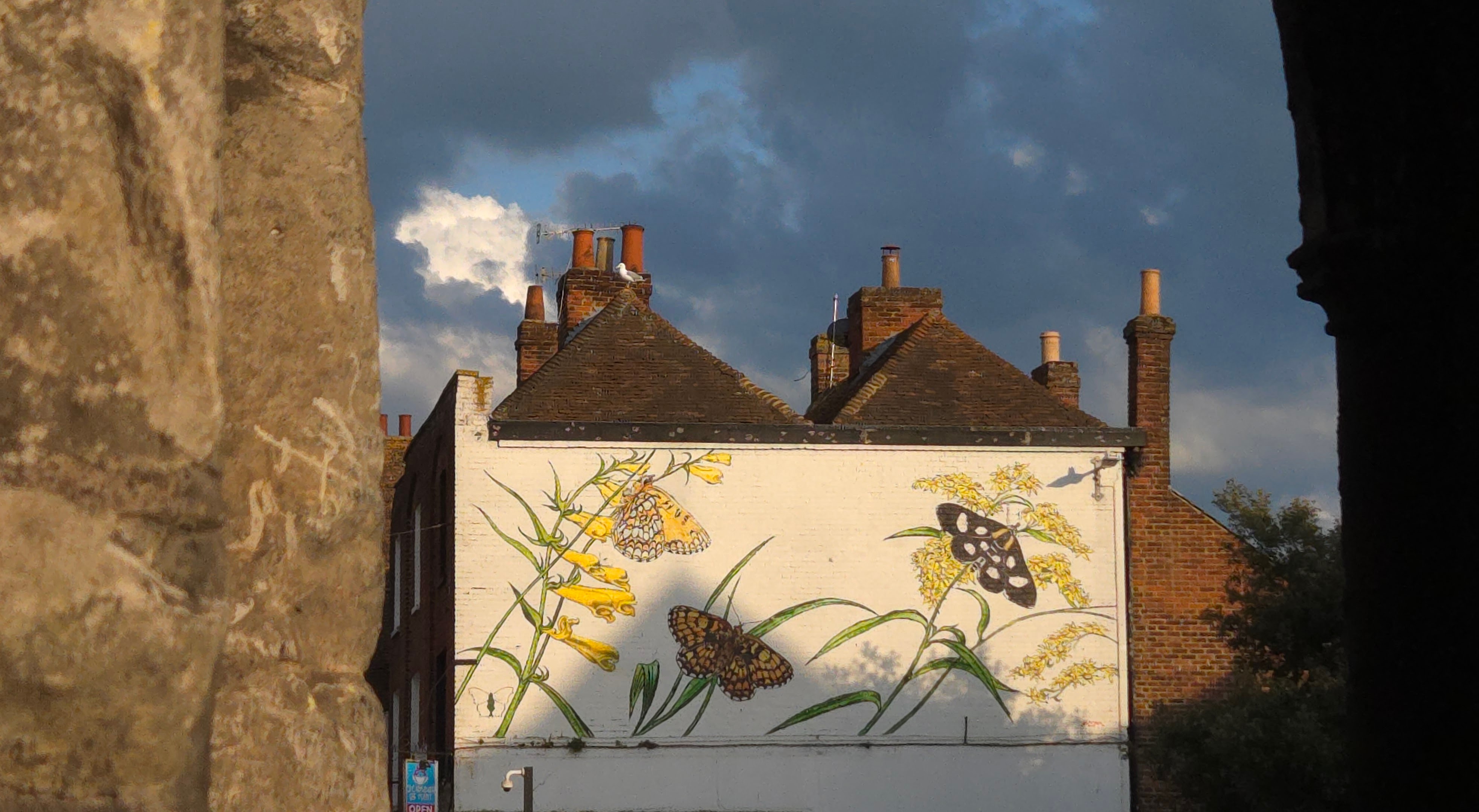
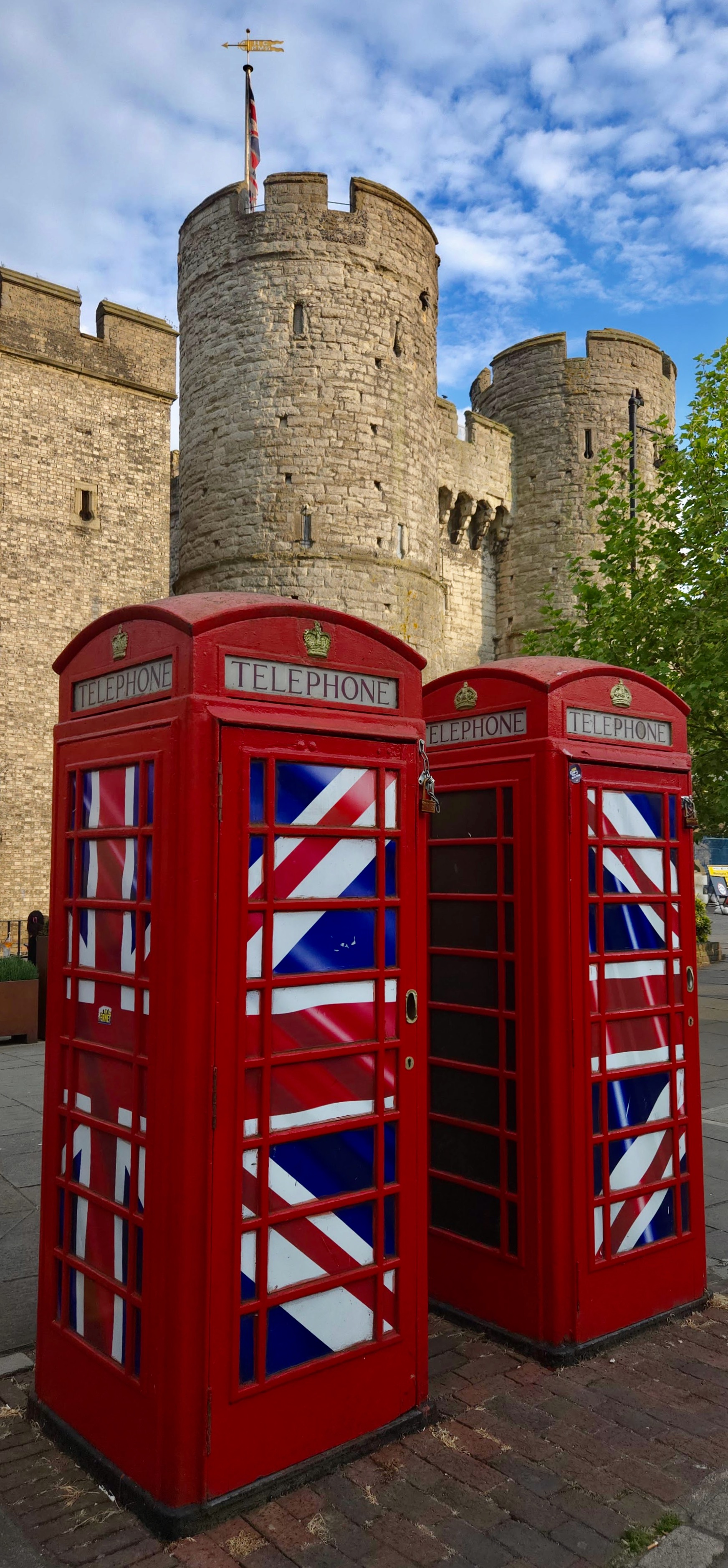
The tower was surrounded by construction so it made getting a good shot difficult. The lighting was interesting so I accepted the intrusion. My reward was to be on the other side. I broke out in a wide grin to see a mural with butterflies through the arch. Denise’s childhood nickname was “butterfly” so I took it as a good omen. [as always click on an image to see the full view]


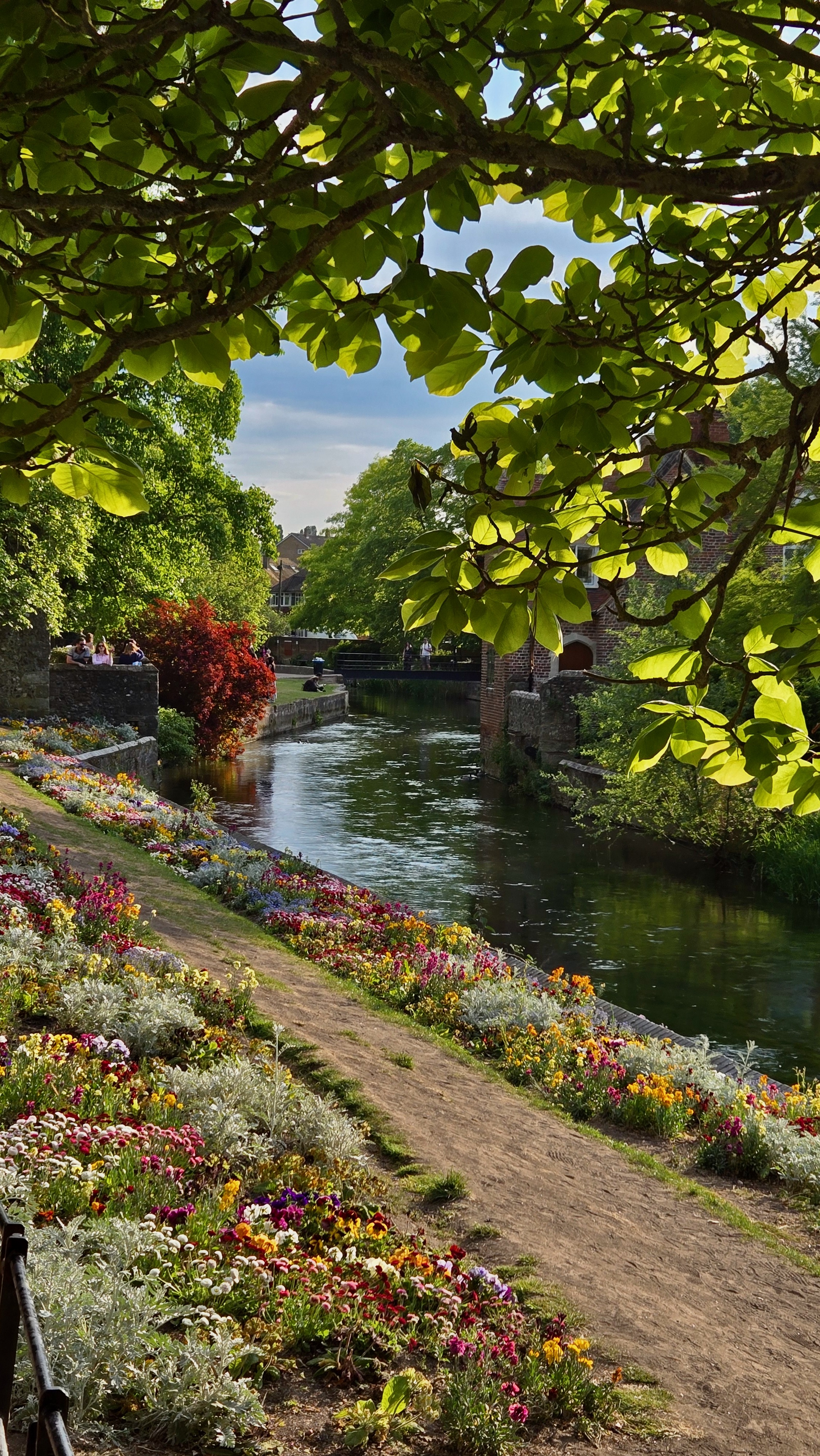
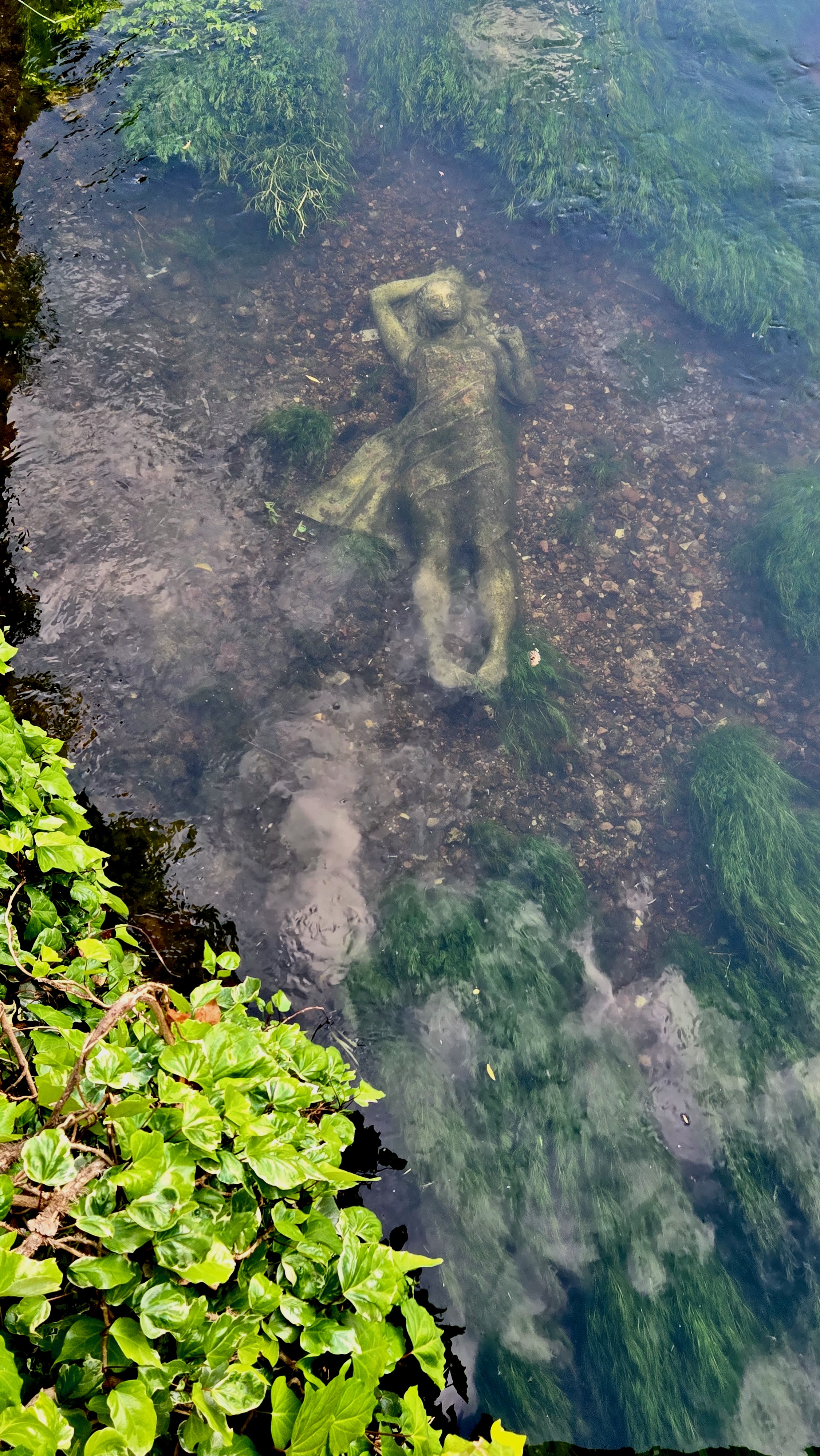
Just past the tower lies the River Stour and the Westgate Garden River Walk. I expected it to be closed as the website and the gate said 6 PM. That was clearly not the case as many people were enjoying the pleasant spring evening here. I ate my dinner overlooking the river on a park bench. I was to be pleasantly surprised with a much better view of Westgate Tower. If you find yourself in Canterbury don’t miss this gem. And make sure not to miss the mermaid sculpture by Jason deCaires Taylor installed in 2024 as seen from Westgate Bridge. The sculpture of recycled glass, LEDs and Stainless steel, named “Alluvia” and inspired by Sir John Everett Millais’s painting “Ophelia.” Ophelia is from Shakespeare’s Hamlet, which may have been inspired by a 16th century drowning which took place on the River Stour.




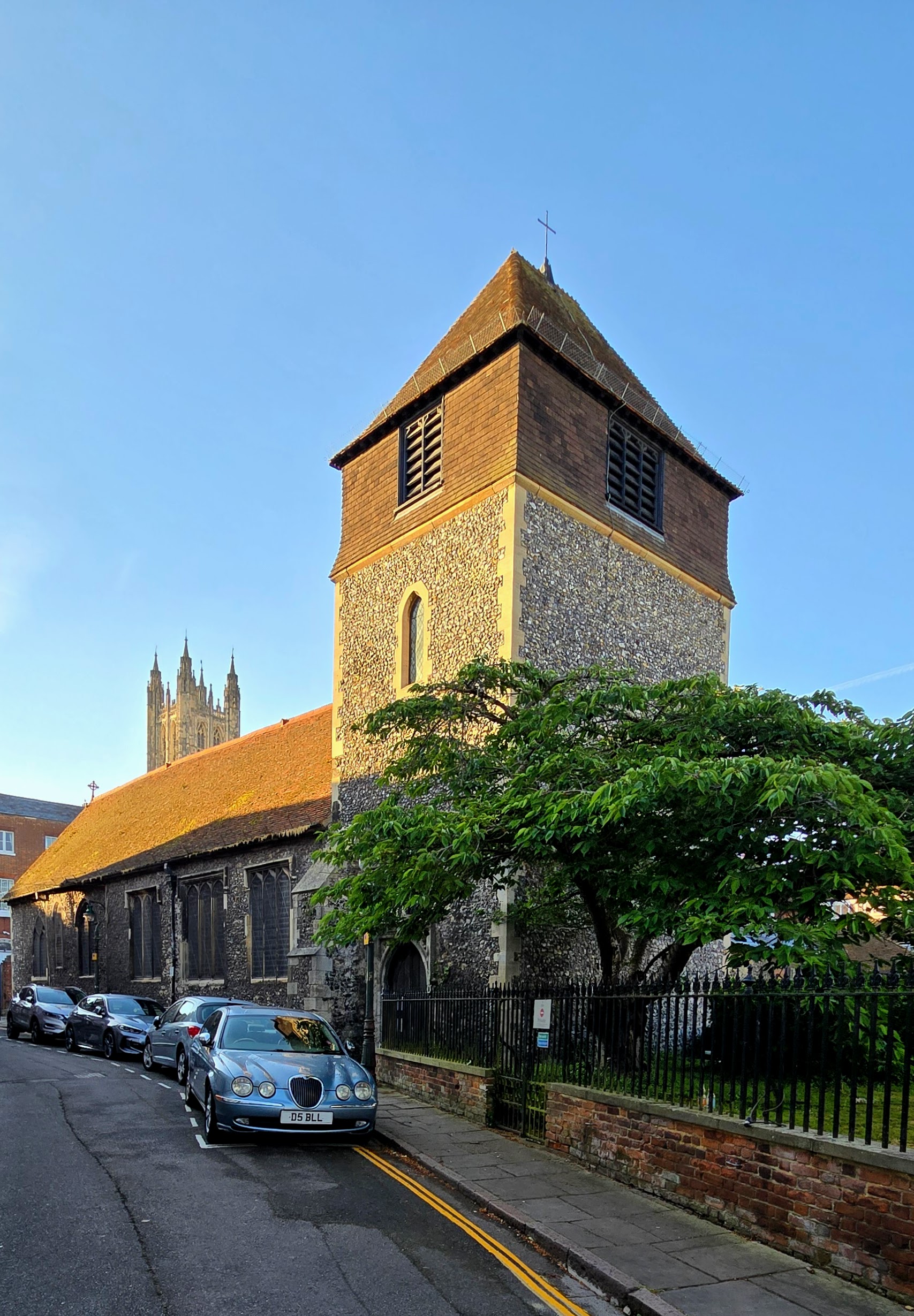
Continuing with Robert CUSHMAN, he married Sarah REDER at St Alphege church the 31st of July 1606, at the age of 28. The church of St Alphege was built in the late 12th or early 13th century. Partially rebuilt about 1470 with more restorations in the 1880s. Constructed of flint rubble with freestone dressings. It is now part of King’s School. The third photo shows detail of the flint and the last shows St Alphege with Canterbury Cathedral in the background.


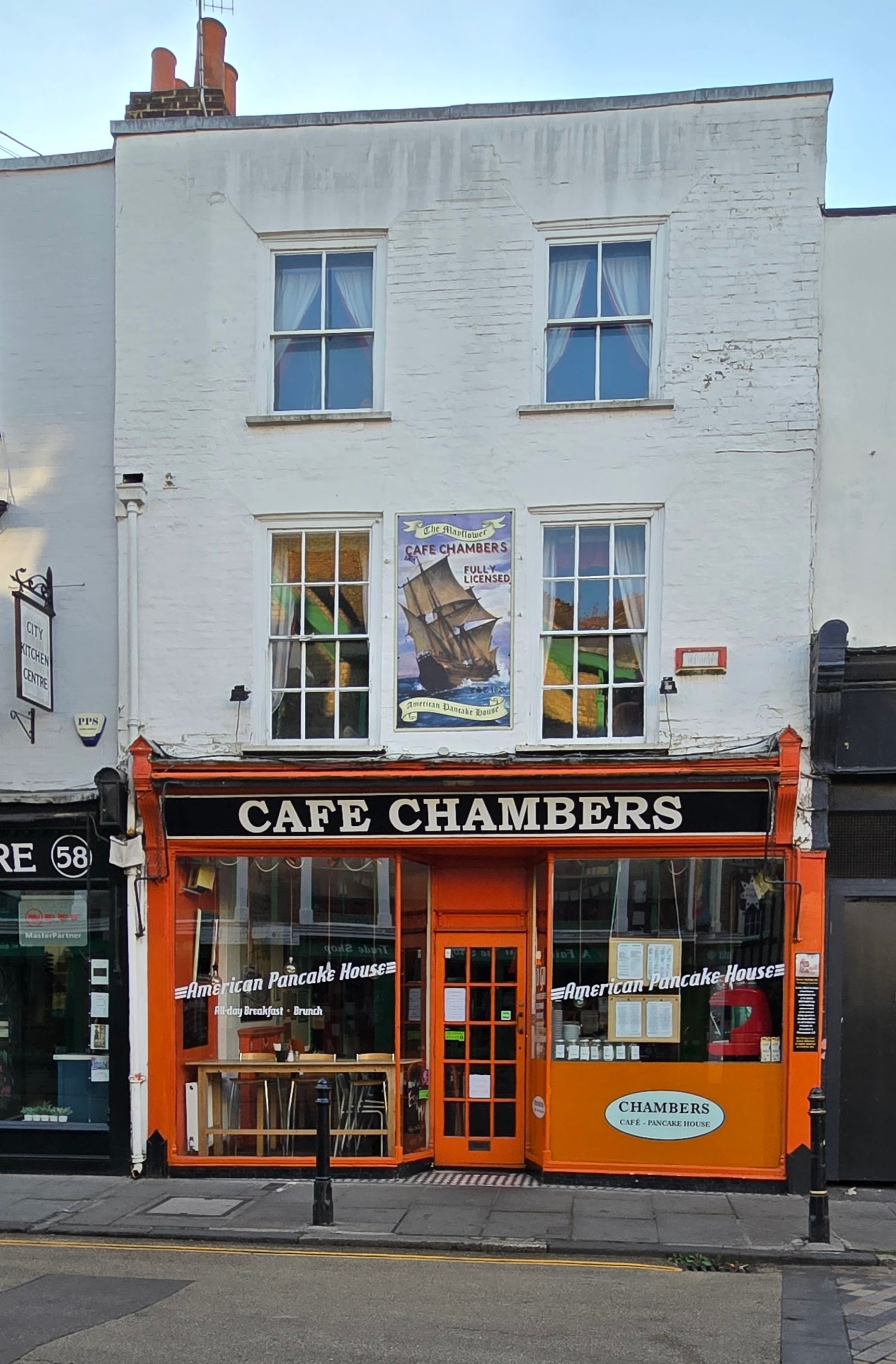
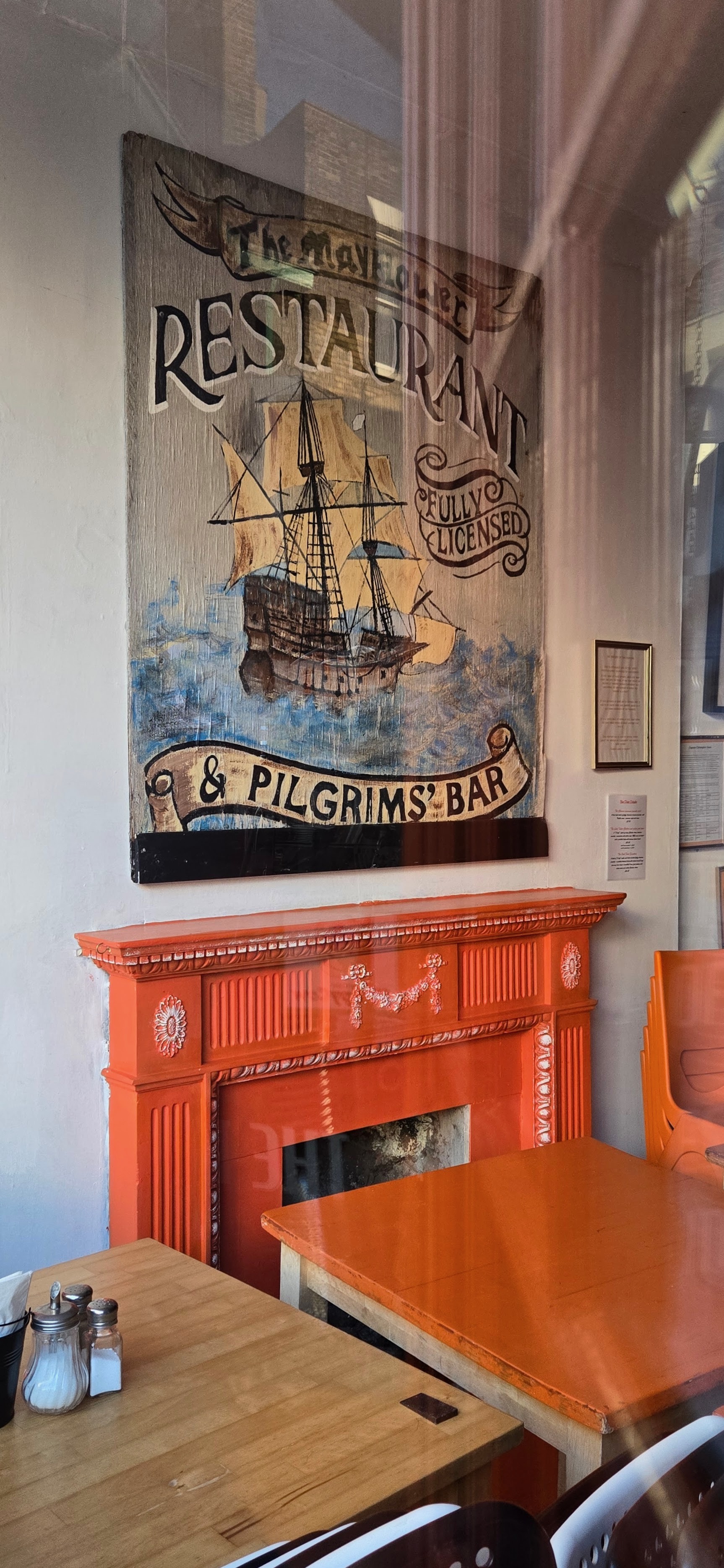
I did not take a photo of the Mark’s & Spence at 4 St George’s Street because it was built in 1930 and any vestiges of its history were gone. This was the site of George Master’s grocery and store where Robert CUSHMAN was apprenticed. It is almost directly across the street from St. Andrew’s. By 1611 he had moved to Leiden, Holland] where a group of Puritan had found asylum. His first wife Sarah and two of their children died there. In 1617 he married secondly, Mary Clarke SHINGLETON in Leiden. By 1617 he returned to England and spent part of the time in London near Tower Hill [Very Close to the Tower Hill Suites] and part time at an Inn on Palace Street, which is now the Mayflower Restaurant at 59 Palace Street.

He and John CARVER became became agents of the Leiden congregation and in June 1619 they had secured a patent. They worked to secure finances and passage to America. The Mayflower sailed from London at the end of July, 1620, and was to meet up with the Speedwell from Leiden at Southampton. The Speedwell was not seaworthy and eventually had to be abandoned. Robert CUSHMAN was ill and he and his family decided to stay behind when the Mayflower sailed for America. A year later, in 1621, Robert and his son Thomas arrived in Plymouth aboard the Fortune. Robert stayed but a few weeks leaving his son Thomas in the care of Governor BRADFORD. He arrived back in London the 17th of February 1622. His health issues persisted and he traveled to Beneden where his brother Richard was living. He died there the 6th of May 1624.
If you read my earlier posts “Robert CUSHMAN’s father was Thomas Henry CUSHMAN married Elinor HUBBARDE 18 Jul 1568 in Rolvenden. He dies 14 February 1586 at Rolvenden. Then Elinor marries second at St Alphege, Canterbury to Emmauel EVERDEN, he dies 3 December 1589. [Remember above Robert CUSHMAN is visiting the EVERDENs in Beneden when he dies.] His mother, Elinor, married for the third time 6 November 1593 to Thomas TILDEN at Teneterden. Thomas TILDEN is the father of my Nathaniel TILDEN!!! So Robert CUSHMAN and Nathaniel TILDEN were step brothers. So Denise and I are cousins!
Elinor dies 22 July 1601. Thomas TILDEN marries a third time to Alyce BOURNE. He dies in Wye in 1617. When his son, Nathaniel TILDEN [ my ancestor] immigrates to America on the ‘Hercules’ in 1634 leaving from Sandwich, Kent. Nathaniel TILDEN brings his wife and 7 children AND 7 servants. Among them is a Sara COUCHMAN (CUSHMAN) who may be Robert CUSHMAN’s daughter. So Denise’s story and mine converge.
In my next post we will continue our visit to Canterbury.
Kelly Wheaton ©2025 – All Rights Reserved
 Wheaton Wood
This is SO cool and evocative of place. The photos are just beautiful. SissySent from my iPhone
Glad you like them. Can only post a few.
Hi. St Andrews parish church was on the site occupied by Lloyds bank. A short distance north of the national Westminster. I have Couchmans and Tildens from the same area. It was a very common name. Regards Chris
Sent from the all-new AOL app for iOS