Writing About Yourself: The Blue Flower
Posted on December 19, 2025 1 Comment
I realized I never posted this before. It is a short, but true story about me. It is a relative narrow topic but it reveals volumes (excuse the pun). It avoids the general concerns about self revelation, and yet is still self revelatory. I offer it as an example of how to write about yourself, without it being too scary. It doesn’t matter what my skill is as a writer, or lack thereof is. The purpose is to leave something behind that would allow the reader to get to know you. Not the genealogists: birth, marriage and death image—but something more personal and alive.
If you choose to write your own story, and you aren’t comfortable with writing, try telling it to someone and recording it. Then transcribe and edit as you go along. It may be harder to write about yourself, but it’s worth it to those who come after you.
The Blue Flower
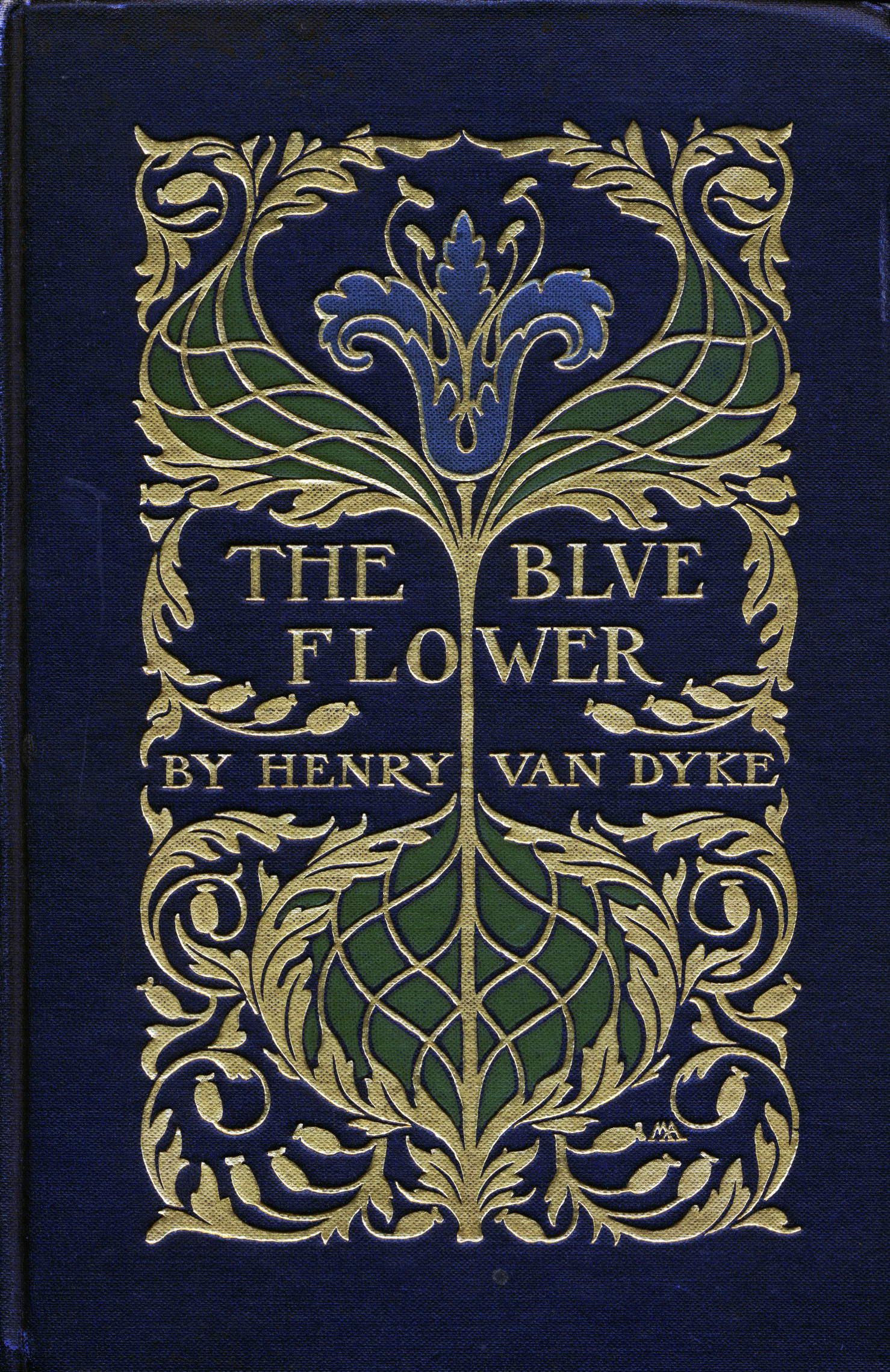
Judy and I shared a passion for books. During our high school years we would make weekly forays to the complex of red brick buildings which provided us with endless titles to feed our growing appetites. Although we lived in El Cerrito we quickly consumed its minimal fare and needed the more substantial offerings that the Richmond Public Library provided.
On our many pilgrimages to this sacred building we explored the worlds of forbidden fruit. Whether pouring over sidereal tables trying to plot our astrological charts or conducting comprehensive studies of the Kinsey reports, Judy and I sought answers. It was during these reconnaissance missions that we happened upon a most delightful way to expand our horizons. We made our way upstairs to the adult fiction stacks. Here one of us would close our eyes and be guided by the other to one of the many aisles, spun around and asked to pick a book without looking. Once selected we were required to read the selection, however dull, and report to the other on its worthiness. This was a magical process which yielded us such authors as Flaubert, Zola and Lawrence and undoubtedly many lesser ones which we quickly forgot.
On one such occasion, I selected a book titled “The Blue Flower.” It was written by Henry Van Dyke and had a most beautifully decorated cover. Inside were interesting colored plates and a series of short stories with intriguing titles like “The Blue Flower” and “The Story of the Other Wise Man.” I enjoyed this book so much that I went back for other titles by the same author, yet “The Blue Flower” remained my favorite. Eventually on a trip with Judy to a used book store in San Francisco I located a copy along with some companion volumes.
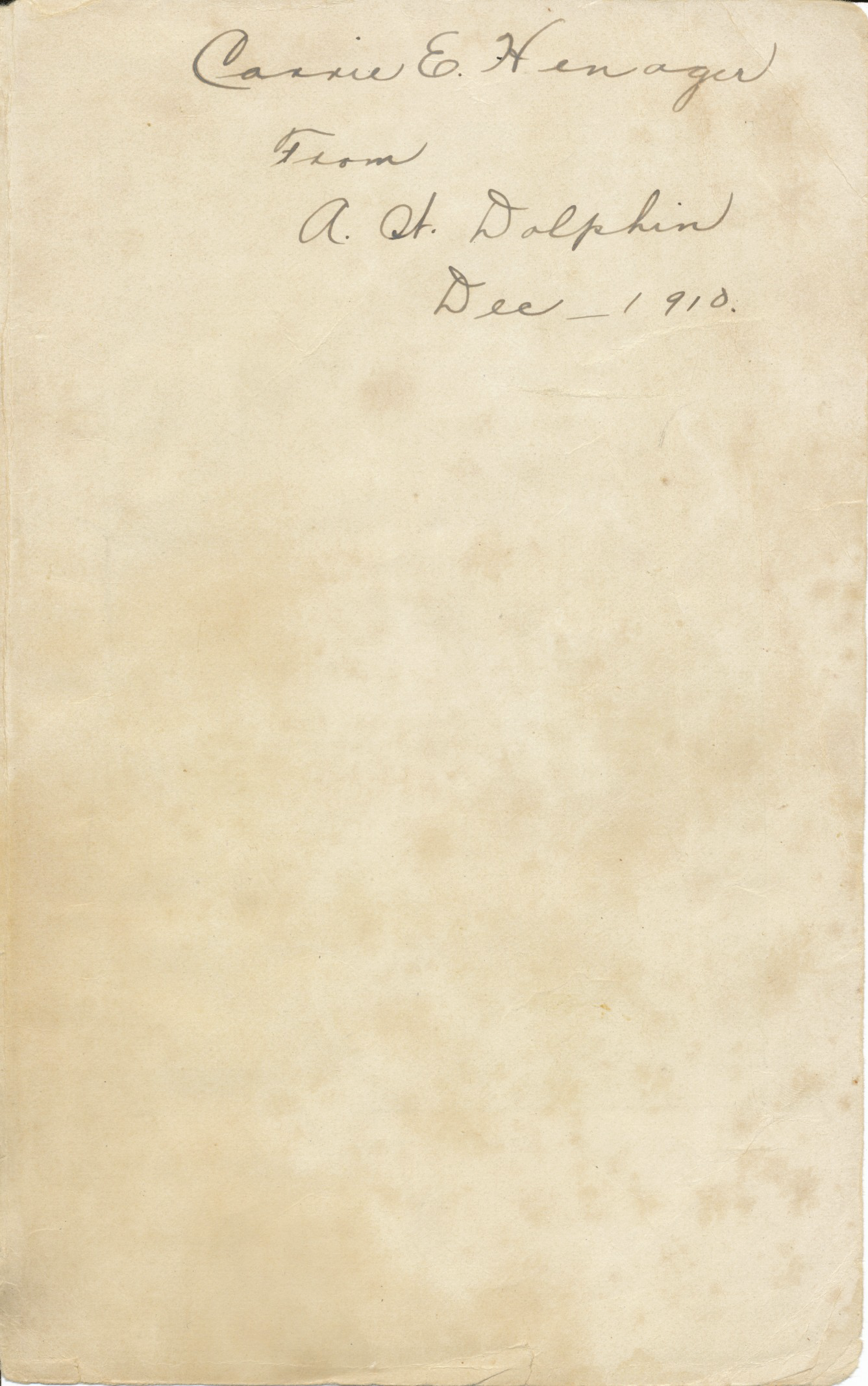
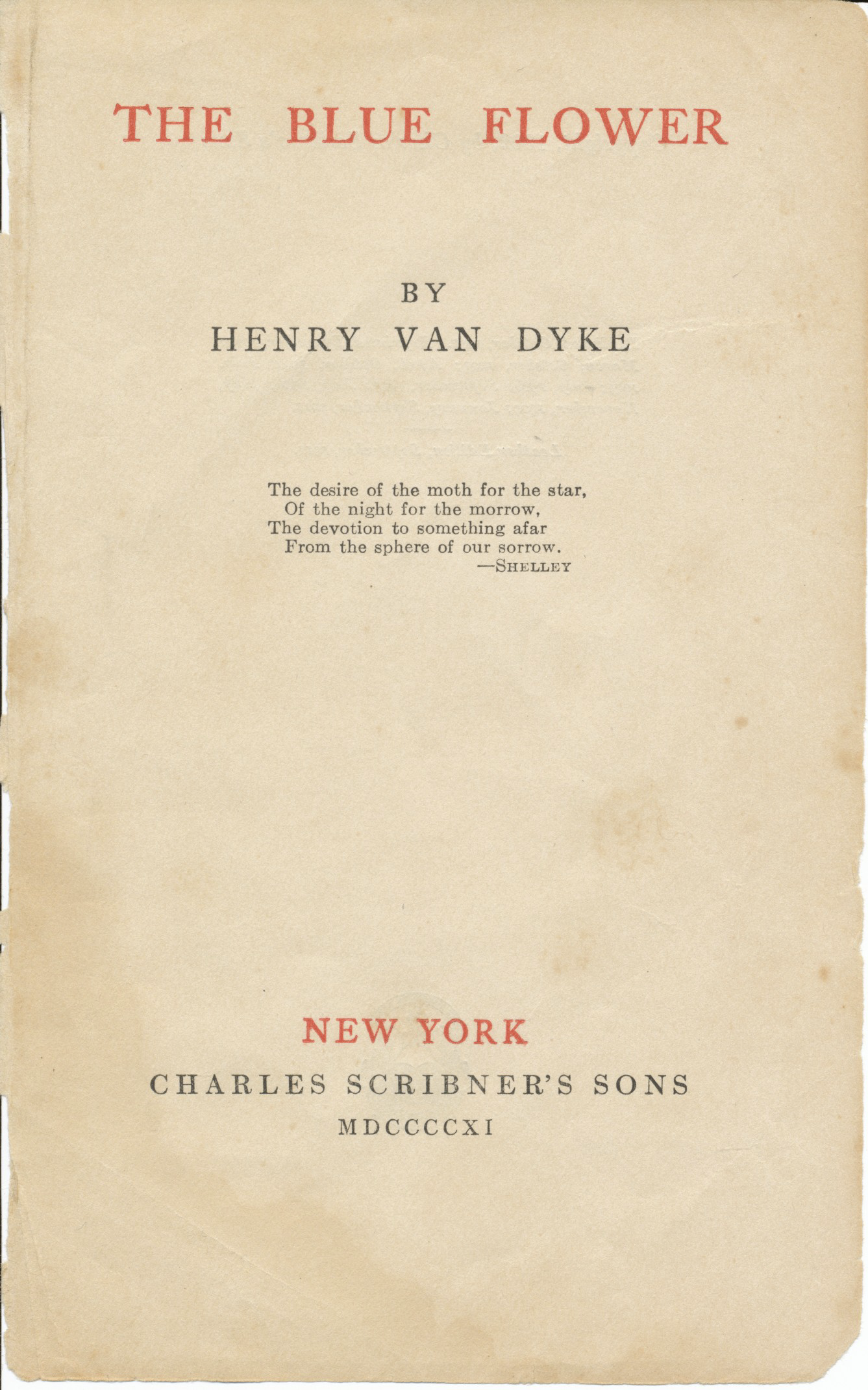
Years passed. One day while going through some boxes of memorabilia in my parent’s garage I stumbled upon a stained and yellowed page with the handwritten words “Carrie Ethel Henager From A.W. Dolphin Dec_1910.” Turning over the page I recognized the familiar color plate and the facing title page of “The Blue Flower.” Carrie was my paternal grandmother and she had died some years before from what they then called senility, but we now know as Alzheimer’s disease. I always felt connected to Carrie, but I did not know her when she was well.
The pages I had found were the frontispiece and title pages of the book that had subsequently been lost. Carefully I carried them to my parent’s house and I asked my father to look at them. He asked me where I had found them and casually told me that “The Blue Flower” was his mother’s favorite book! I was so stunned it took me a few moments to recount to him my own relationship with “The Blue Flower.” To this day my grandmother’s pages reside next to their counterparts in my copy of “The Blue Flower.” They stand as a testimonial to the often unrecognized connection we have with our past and to the moment when I came to know my grandmother Carrie through the book that we both loved.
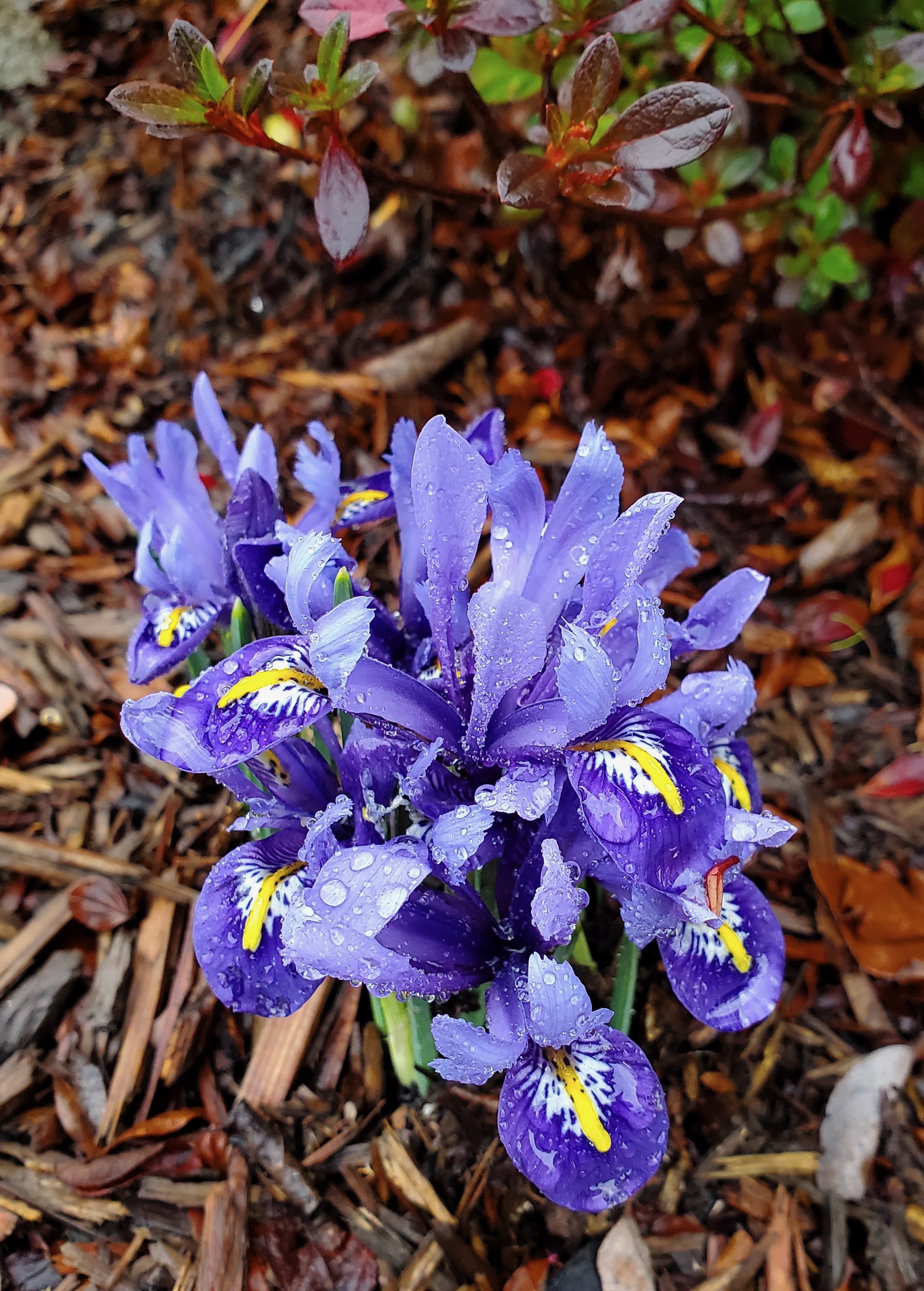
As a post script, my paternal grandmother Carrie’s favorite Flower was Blue Flags or Iris. When my Dad was dying I took him a pot of Iris reticulata ‘Harmony’ in bloom. They were planted in my garden where they continue to flourish.
Please check the Family History Writing Tab at the top of the page for more posts about writing.
Kelly Wheaton ©2025 All Rights Reserved
The Footnotes of History: Duane F Mosier as Witness
Posted on December 16, 2025 3 Comments
Most of us will never even make it into the footnotes. I was lucky that my Dad made it, not just once but many times. He was never famous but he had encounters with those who were. Billions of people living and dead are witnesses to history-making events or persons, but unless they wrote about it, or someone went digging, no one knows. An important aspect of family history research and writing is uncovering their witness. Particularly for many women men, exposing not only their contributions, but sometimes the successes claimed by others. I make no such claim for my father, but for many of you reading this—someone in your past was overlooked and someone claimed there work as their own. This could be their artistry, writing or research claimed by another or in the case of slaves or immigrants simply acting as if their work meant nothing.
General Simon Bolivar Buckner Jr.
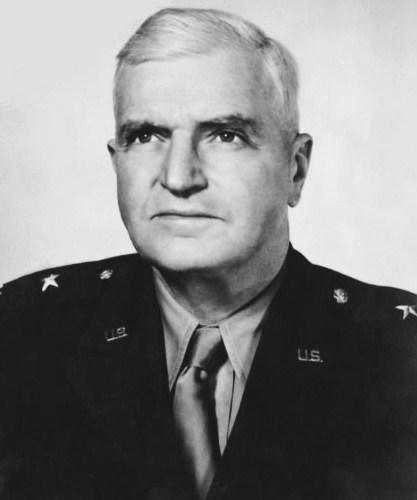
This first story, a humorous one happened when my Dad was about nineteen. This is from an interview about my Dad’s service in WWII and his first meeting of Gen Buckner, nicknamed Bucky. Bucky was born 18 July 1886. He graduated from West Point in 1908.
“Sometime after re joining the 2nd Marine Division on Saipan, the Division was reviewed (in full field transport packs with all their gear) by Lt. General Simon Bolivar Buckner, Commander of the Tenth U.S. Army, who would be in command of the Okinawa operation. The General escorted by the usual entourage of descending rank, strode through rank after rank, stopping now and then to examine an individual marine. In the hot sun it seemed like forever before he would swiftly pass through our section and we could relax a little, but No! The General stopped in front of me. My right arm whipped my M-1 Garand toward present arms, but my left hand hung limply at my side, the circulation in my left arm cut off by the field transport pack. The butt of my M-1 continued on an outward path right to the General’s groin. He was felled to the deck! Each member of the entourage in turn passed the question down the line until finally my platoon sergeant stepped to my side and queried ‘What happened?” I replied, “My arm went to sleep”. Then the General, in pain struggled to his feet. The word passed back up the entourage to the General who nodded and ordered me to fall out and remove my pack. “(D.F.M. 1996)
“The second one also involves Bucky. In mid-May, General Buckner specifically requested that the 8th Marines be returned to Okinawa. The general had originally inspected the 2d Marine Division in the preceding February and had been favorably impressed with the combat-tested 8th Marines. He gave particular praise to the battalion commanders. General Buckner was later quoted as saying ‘he had never before has the privilege of meeting such an alert group . . .’”(A Brief History of the 8th Marines by James Santelli pg 48)
My Dad wrote:
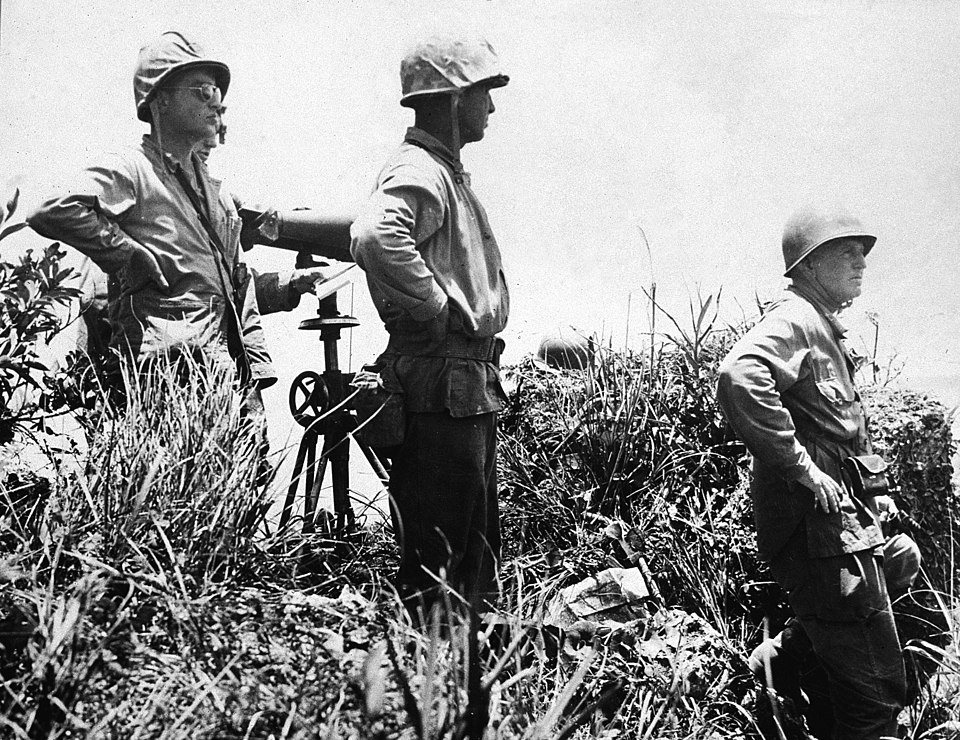
“On the 18th of June the Eight [Marines] relieved the Seventh and drove rapidly southward, establishing an observation point on a ridge overlooking the remaining Japanese held territory. It was here that I was sent, carrying a message to Colonel Wallace the Regimental Commander. It was also here that Lt. General Simon Bolivar Buckner found himself observing the ground yet to be won. After delivering the message and awaiting a reply for several minutes, I returned down the steep trail about thirty yards when a barrage of artillery shells punished the rocky point that I had just left. Continuing down the trail I returned to the Command Post of the 1st Battalion 8th and learned that the Lt. General had been killed. The second time I had been a few feet from him with disastrous results. (D.F.M. 1990)”
Tokyo Rose
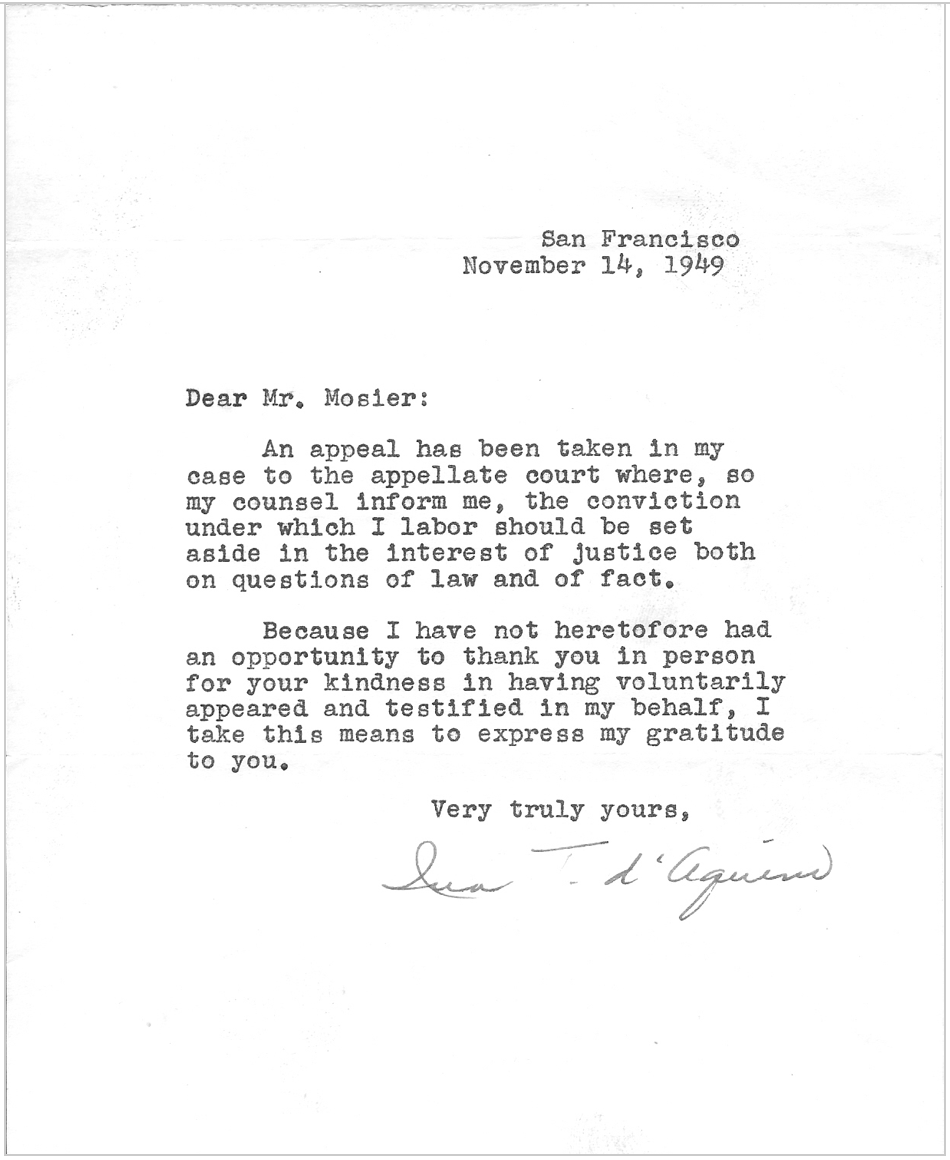
I have already written about my Dad’s involvement in the Tokyo Rose Trial here. And here is the note of thanks he received from Iva Toguri D’Aquino. He just happened to have been asked to be a witness in a very famous trial for which the FBI had to later apologize. And for which “Tokyo Rose” received a pardon from President Gerald Ford
Element 102
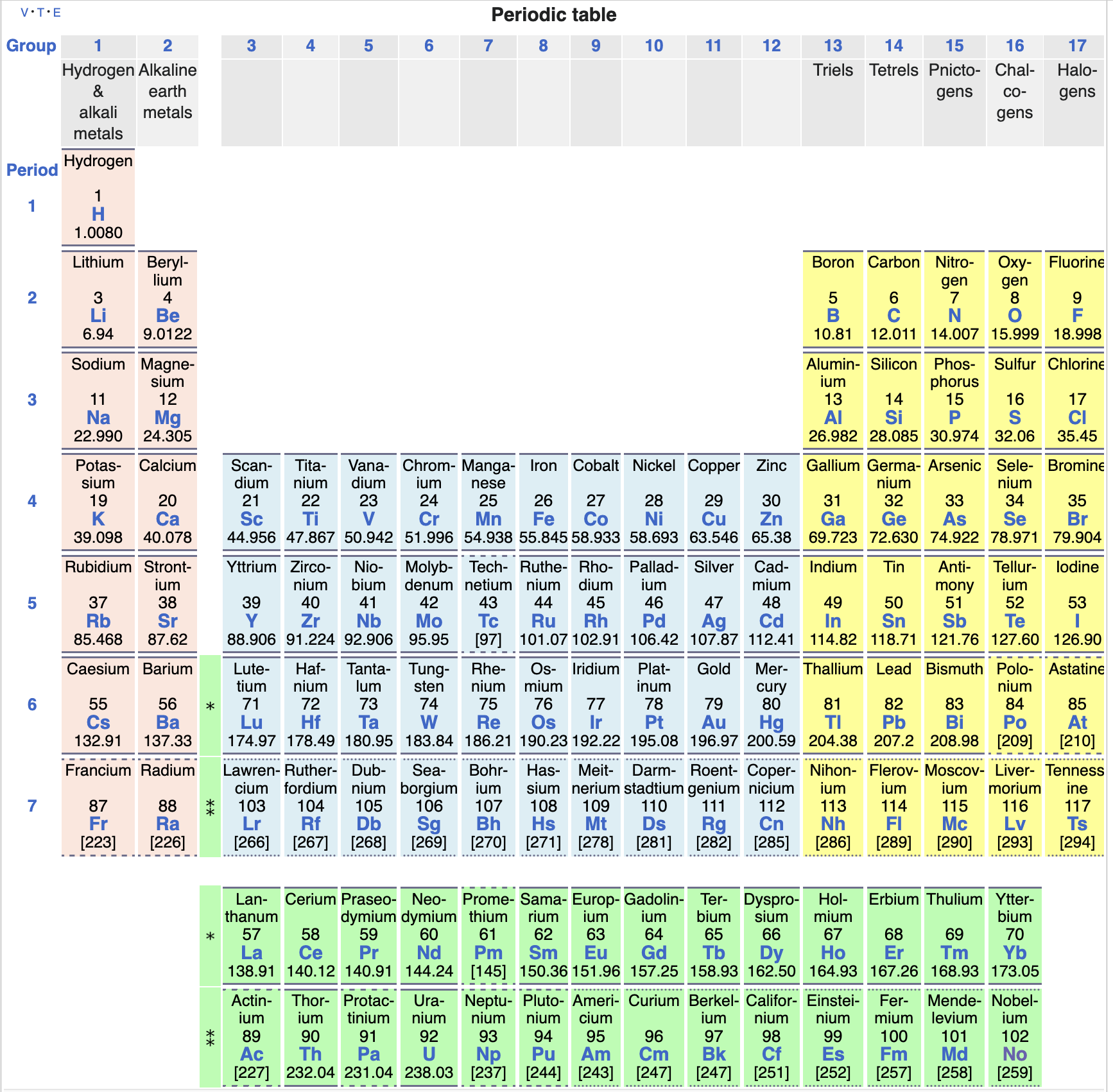
After the war my dad went to the University of California at Berkeley under the GI bill. From there he graduated with a degree in Electrical Engineering in 1951. He went on to work for The University of California Institute of Engineering Research while he made application to the Federal Government and was hired by the University of California’s Lawrence Radiation Laboratory on Nov 1, 1951 as a Junior Accelerator Operator.
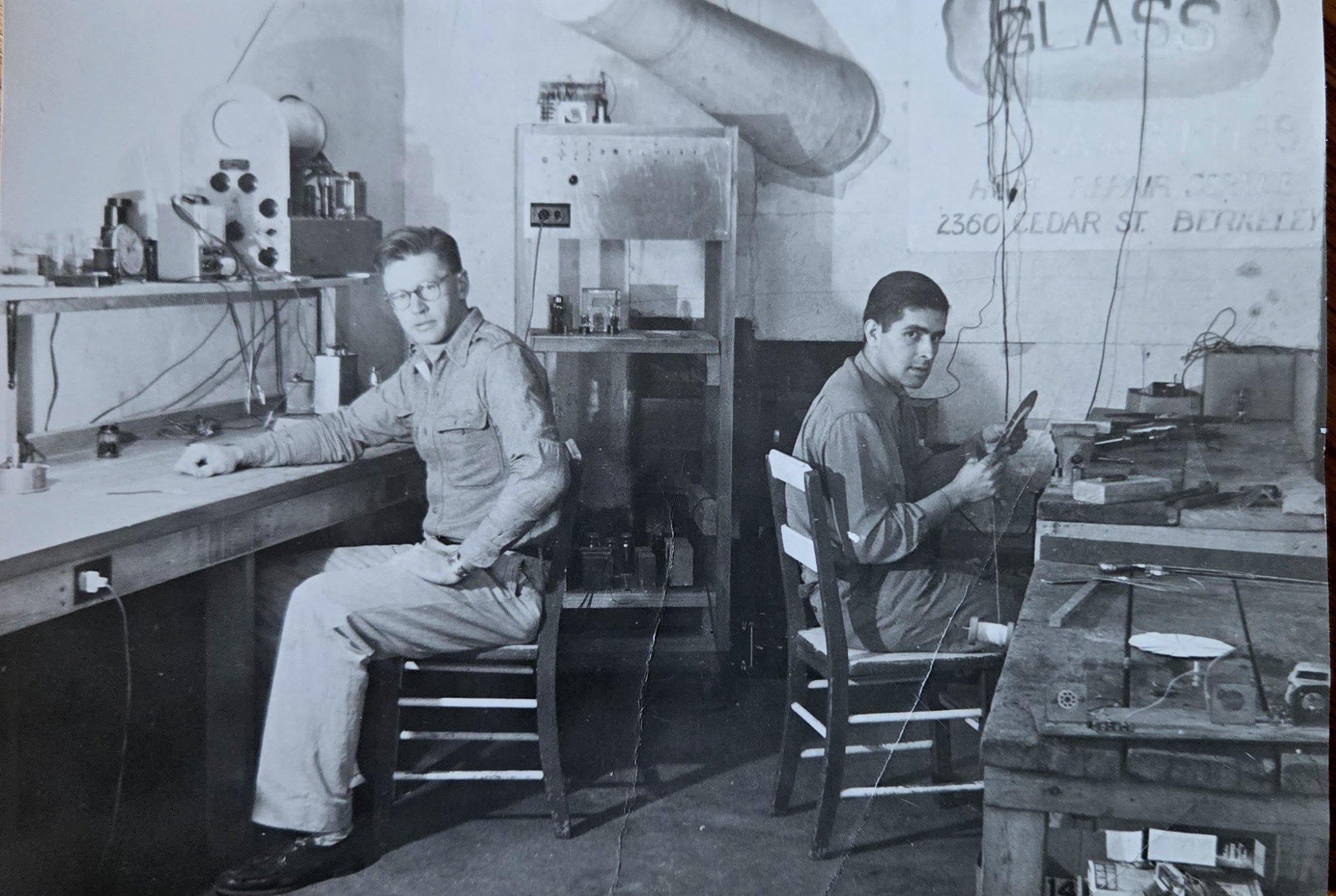
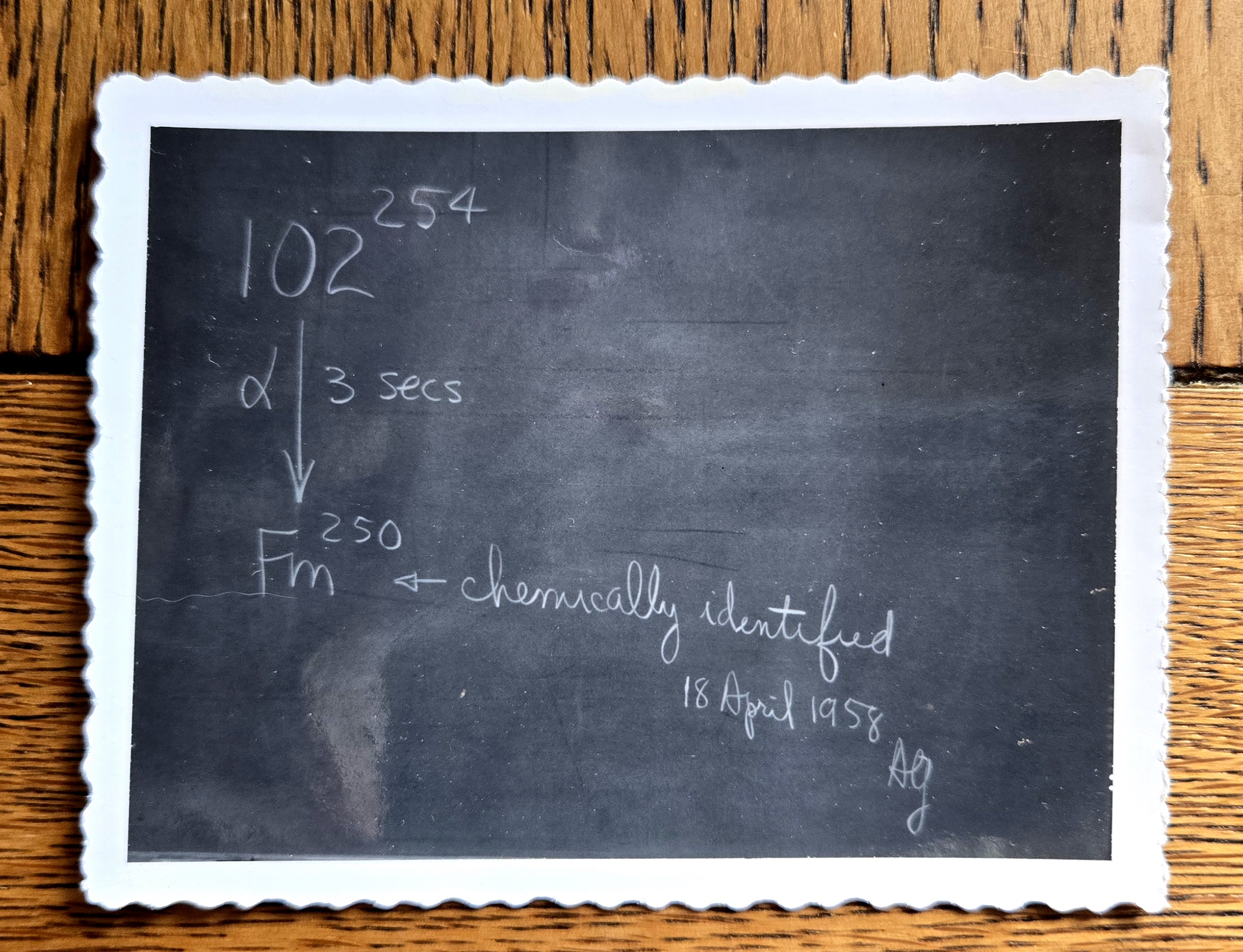
At this time he was working with the Nuclear Chemistry Division with world renowned scientists like Ernest Lawrence and Glenn Seaborg. The first announcement of the discovery of element 102 was announced by physicists at the Nobel Institute for Physics in Sweden in 1957. The next year in 1958 scientists at the Lawrence Berkeley National Laboratory repeated the experiment headed by Albert Ghiorso, Glenn T. Seaborg, John R. Walton and Torbjørn Sikkeland, used the new heavy-ion linear accelerator. After some controversy it was eventually credited to the Berkeley team and named 102 Nobelium after Alfred Nobel. Her is a snapshot my Dad took. I assume the AG stands for Albert Ghiorso. When I was a girl and even until my parents moved to Yountville my Dad had a Champagne Bottle with everyone’s names etched into it who had worked on the discovery. It also had a sheet of calculations in it. I am not sure who my Dad gave it to but it is lost to me.
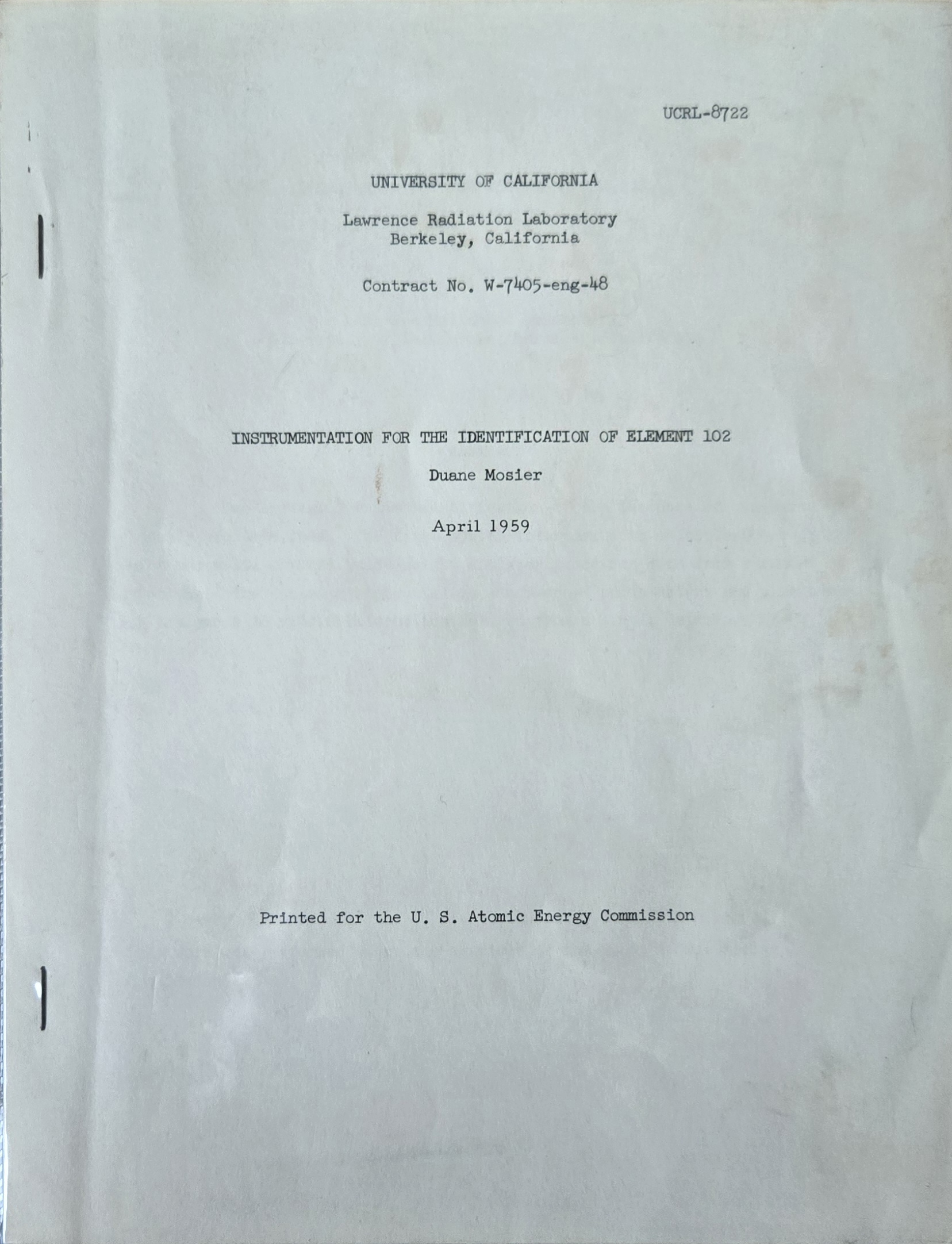
My dad authored this paper in April 1959 which was sent to the Atomic Energy Commission.
SIR FRANCIS DRAKE: The Plate of Brass
In 1977 a Plate of Brass purported to have been left by Sir Francis Drake in 1579, was discovered in 1936. Supposedly left when Drake was anchored at what is know called Drake’s Bay in Northern California.
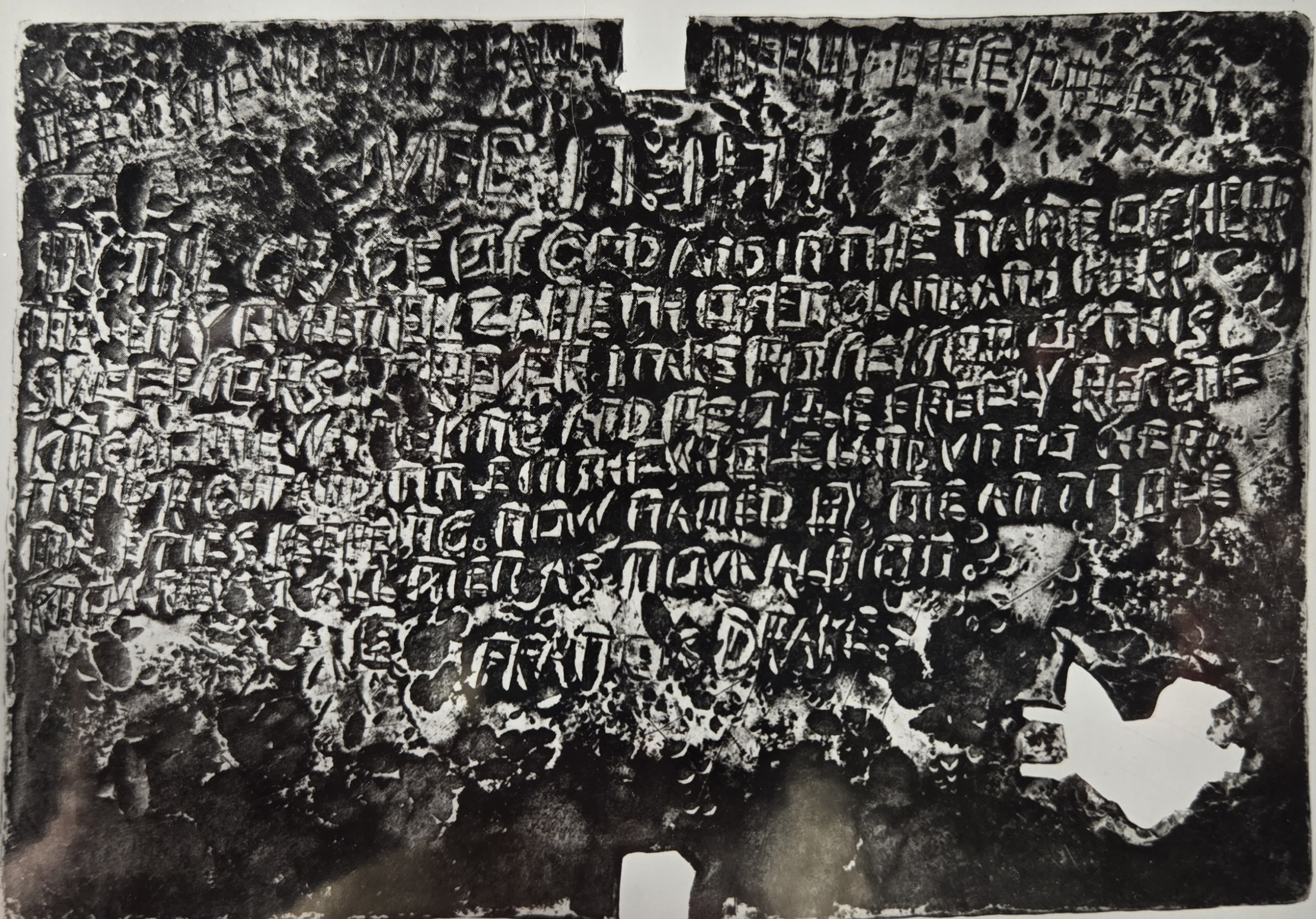
In July of 1977 Helen V Michel and Frank Asaro, friends and colleagues published their study “Chemical Study of the Plate of Brass.” They used neutron activation analysis to study the plate. They found it contained too much zinc and too few impurities to be Elizabethan English brass, while containing trace metals that corresponded to modern American brass. My Dad did the instrumentation and he is mentioned in the acknowledgments:
“A great deal of appreciation must go to Duane F. Mosier for many stimulating discussions
and his supervision of our electronic system.”
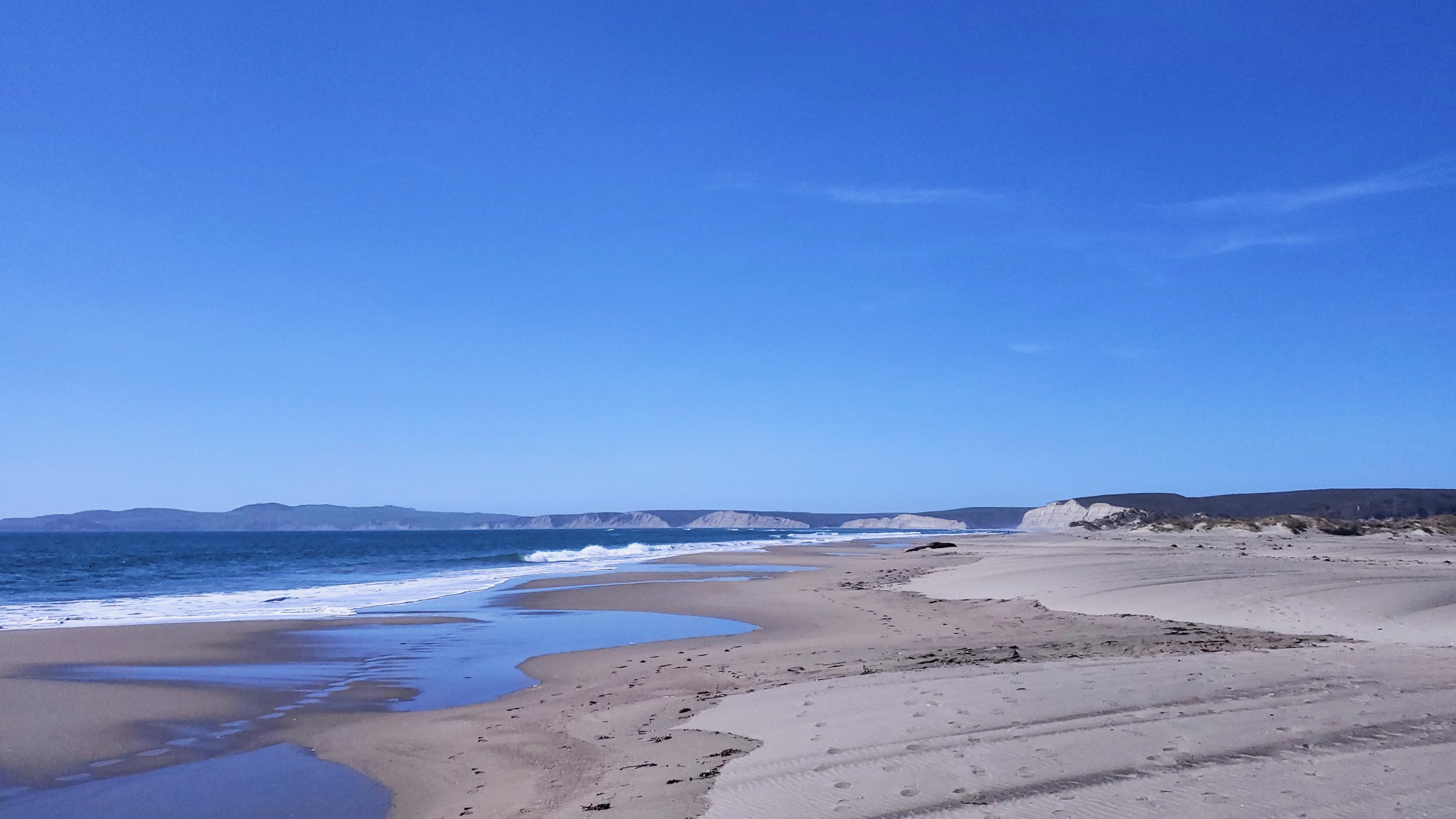
As a footnote my Dad died in 2000. In 2002 an account became public, that the plate was intended to be a joke among members of a playful fraternity of California history enthusiasts, the Ancient and Honorable Order of E Clampus Vitus which originated during the 1849 California Gold Rush and was revived in the 1930s.
DINOSAUR EXTINCTION
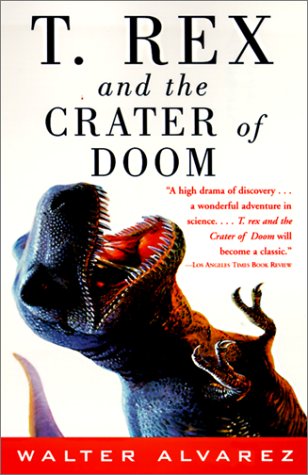
There were lots of other research projects in which he was involved perhaps this is the most wide reaching. In 1980, a team of researchers led by Nobel prize-winning physicist Luis Alvarez, his son geologist Walter Alvarez, and chemists Frank Asaro and Helen V Michel, discovered that sedimentary layers found all over the world at the Cretaceous–Paleogene boundary contain a concentration of iridium hundreds of times greater than normal. The theory is that an asteroid fell in the Yucatán Peninsula, at Chicxulub, Mexico and that its impact 66 million years ago led to and environmental disaster that led to the Dinosaurs extinction. The event caused the extinction of all non-avian dinosaurs. Most other tetrapods weighing more than 55 pounds also became extinct, with the exception of some species like sea turtles and crocodilians. Still debated but largely excepted it is chronicled by Walter Alvarez in his book T.Rex and the Crater of Doom published in 1997. My Dad was responsible for building a “neutron activation machine that could achieve the necessary levels of precision.” When Life Nearly Died: The Greatest Mass Extinction of All Time Michael J. Benton 2003.
My purpose here is two fold, one to honor my dad and his contributions to his country and science. And to inspire others to go digging. It could be letters, diaries or objects hidden in an attic or in plain site. Some people are blessed with brushes with history. Of the top of my head I can think of only two other than Frank Asaro, Helen Michel and the other scientists I met through my father. As a toddler I sat on Governor Edmund G Brown’s lap about 1960 and I met Robert Redford on New Year’s Day over a decade ago while hiking at Lake Hennesey. However, I was too busy interacting with his dogs to note it was “Bob.” In fact all 3 women didn’t notice, and all three men in my party did. What untold stories should you be writing now?
Kelly Wheaton ©2025 All Rights Reserved
Family History Writing: Telling Our Stories
Posted on December 15, 2025 2 Comments
Writing about oneself, especially in retrospect, is always a dangerous undertaking. Do you tell the truth and risk being seen in a bad light? Or do you soften the edges to make it more palatable? Will it be considered your own brand of narcissistic, revisionist drivel or worse yet will it mean a damn thing to anyone? Do you paint yourself as the hero or the victim? Or is it a bit of both. Will people think better it worse of you having read what you wrote? Is there an audacity in speaking for yourself? Perhaps, but I will claim it as my right to set the record straight. Albeit from my own biased perspective. It is the life I have lived, who better to describe and interpret it?
It seems that I judge my audience rather harshly in asking these questions, even if rhetorically. And so it goes. When I attempt to reconstruct the lives of my ancestors, I really want to know who they are. Not the sanitized, picture book stories of the past, but what were their thoughts and aspirations. What were their disappointments and struggles. How did they get through the hard times? This is not a curiosity that many share. Many are perfectly happy not knowing any of it. It’s not that they don’t care, it’s that digging any deeper might cause their carefully constructed fictions to spontaneously combust. My walls are built of tissue paper and some of theirs are stone.
Why put it down on paper? That answer is easy. Of all the ancestors that I have researched, including my parents and grandparents; my great grandmother’s diary, my grandfather’s letters and a transcribed interview of my Dad, speak with a clarity and authenticity of no other. Even Wills from hundreds of years ago speak with a precision that is impossible to duplicate. There is more of you in what you write than perhaps anywhere else.
So, where does that leave us? You and I can leave it up to posterity to figure out who we were or we can take the risk of telling it ourselves. At the end of the day we get to choose what we tell, and how we tell it— will it smack of fact, or fiction? Whether we write with precision, sterility, humor or horror pieces of us will slip through. My great grandmother’s diary—by the mere fact of choosing what to record, what matters to her, even when she doesn’t explicitly tell me how she felt— Whether it was which flowers she said were in bloom or when she wrote about visiting “her” special Bay Tree near Twin Peaks in San Francisco. She connected with me in those moments.
Of course our audience will shape how we write. Are we telling the story to or for ourselves? Are we apologists for our family? Or is our audience generations removed in the future and we are scattering bread crumbs that we hope might be helpful to someone else some day? Do we hope something will resonate in a world we cannot even imagine? Maybe simply organizing how we see the landscape of our life is helpful to our journey and perhaps someone we cannot even imagine.
So let’s get started. Some of us have written small pieces or maybe longer ones about ourselves. But for a moment let us imagine a descendant 100 years from now picking up our writing. What do you want them to know? That century is important, it lets vanity and criticism evaporate in the great scrap heap of time.
So here is the assignment: write a letter to a 4th great grand son or daughter, niece or nephew, or even a stranger that will tell them something that might help them understand what your life was life, or life in general is currently or in your past. What worried you for the future or informed you about the past. It’s a big ask—but think about it. Even if it takes awhile to come to fruition.
Kelly Wheaton ©2025 All Rights Reserved
They Came to America: The Immigrant Experience
Posted on November 22, 2025 5 Comments
The loved ones we call the dead, depart from us and for a while are absent.
And then as if called back by our love, they come near us again.
They enter our dreams.
We feel they have been near us when we have not thought of them.
They are simply here, simply waiting while we are distracted among our obligations.
At last it comes to us: They live now in the permanent world.
We are the absent ones.
Wendall Barry
We had a conversation about the immigrant experience in the Genealogy Class I teach. I said I would put together some novels, movies and perhaps non-fiction resources. There are thousands of books and films that would meet this criteria. So this is a select, condensed list from some of the countries that are well represented in America. It is a work in progress. If I have missed some you would like included please message me or add to comments and I will review for addition.
Often novels paint a fuller picture of the immigrant experience; leaving their motherland for America and their new lives here. They may help us better understand our own ancestors journeys. Historical fiction, diaries, letters and non-fiction can help us flesh out our ancestors stories. I have found novels and diaries invaluable to my research.
AUSTRIA
Novels
- The Exiles Return (2014) by Elisabeth de Waal
- A Ritchie Boy (2020) by Linda Kass — Begins in 1938
Non-Fiction
- One Eye Laughing, The Other Eye Weeping: The Diary of Julie Weiss, Vienna, Austria to New York 1938 2000
- From Austria to America: Franz Luger’s Immigrant Experience (2024) by John Luger
Movie
- The Sound of Music (1965)
CROATIA
Novels
- The Cheesemaker’s Daughter (2024) by Kristin Vukovic
- The California Immigrant (2019) by Barbara Anne King
Non-Fiction
- Immigrant Daughter: Stories You Never Told Me (2019) by Catherine Kapphahn
- The Croatian Immigrants in America: A historical study by George J. Prpic
- Croatian Pioneers in America, 1685-1900 by Adam S. Eterovich that covers the early history of Croatian immigrants in the US.
- Immigration of Ljubuški Croats to America: 1900 – 1914 by Ante Čuvalo
DENMARK
Novels
- Kingdom Come and The Evening and the Morning by Virginia Sorensen a series of Mormon novels about Danish immigrants to Utah
- A Merchant’s House by Kristian Ostergaard Danish immigrant life in early Omaha, Nebraska
Non-fiction
- Tante Johanne–1887-1910: Letters of a Denmark Immigrant Family by Tante Johanne A compilation of correspondence from a Danish woman living in rural Iowa
- Denmark to Dakota: The Story of a Danish-American Immigrant Family (2022) by Richard E. Klein
- New Life: Danish emigration to North America as described by the emigrants (1994) by Niels Peter Stilling
Movies
- The Journey to America Danish Immigrants TV documentary 3 part series
ENGLAND
Novels
- A Journey to the New World: The Diary of Remember Patience Whipple, Mayflower, 1620 by Kathryn Lask, The diary of a young Pilgrim girl who makes the dangerous journey on the Mayflower to America
- Thee Edge of Lost by Phillip DePoy historical novel set in the early years of the Massachusetts Bay Colony
- City of Dreams: A Novel of Nieuw Amsterdam and Early Manhattan Ist Book of 4 by Beverly Swerling
Non-fiction
- Of Plymouth Plantation by William Bradford: A first-hand account of the Pilgrims’ journey & early experiences
- Mayflower: A Story of Courage, Community, and War by Nathaniel Philbrick Historical narrative
- The Great Migration Directory: Immigrants to New England, 1620–1640 — A Concise Compendium, 2nd Edition by Robert Charles Anderson
- Puritan Pedigrees: The Deep Roots of the Great Migration to New England by Robert Charles Anderson
- The Mayflower Migration: Immigrants to Plymouth, 1620 Robert Charles Anderson
- Saints and Strangers (1981) by George F Willson
- The Lobster Coast: Rebels, Rusticators, and the Struggle for a Forgotten Frontier (2005) by Colin Woodard About immigration to Maine
- An Account of Two Voyages to New-England 1638 and 1633 By JOHN JOSSELYN, Gent.
Movies
- American Experience: The Pilgrims (2015): A PBS documentary
- The Pilgrims (2015): A TV movie that covers the Mayflower journey
- Saints & Strangers (2015): A National Geographic miniseries
FRANCE
Novels
- The Champlain Road (1939) by Franklin D. McDowell story of early French settlers in Canada, starting in the 1600s.
- Daughters of the Deer (2022) by Danielle Daniel Starts in 1657
- Bride of New France (2013) by Suzanne Desrochers
Non-Fiction
- French Immigrants and Pioneers in the Making of America (2022) by Marie-Pierre Le Hir
- When the United States Spoke French: Five Refuges That Shaped the Nation (2014) by Francois Furstenberg
- Memoirs of a French Immigrant (2009) by Georges Henri Caron
- French Fur Traders and Voyageurs in the American West (1997) by LeRoy R. Hafen
- French Roots in the Illinois Country: The Mississippi Frontier in Colonial Times (2000) by Carl J. Ekberg
Movies
- Acadie/Liberté: A 1993 docudrama
GERMANY
Novels
- The Next Ship Home: A Novel of Ellis Island (2022) by Heather Webb
- Tillie, a Mennonite Maid: A Story of the Pennsylvania Dutch, by Helen Reimensnyder Martin
Non-Fiction
- From Württemberg to the New World: The 400-Year Journey of a Pennsylvania German Family (2023) by Bret A. Matz
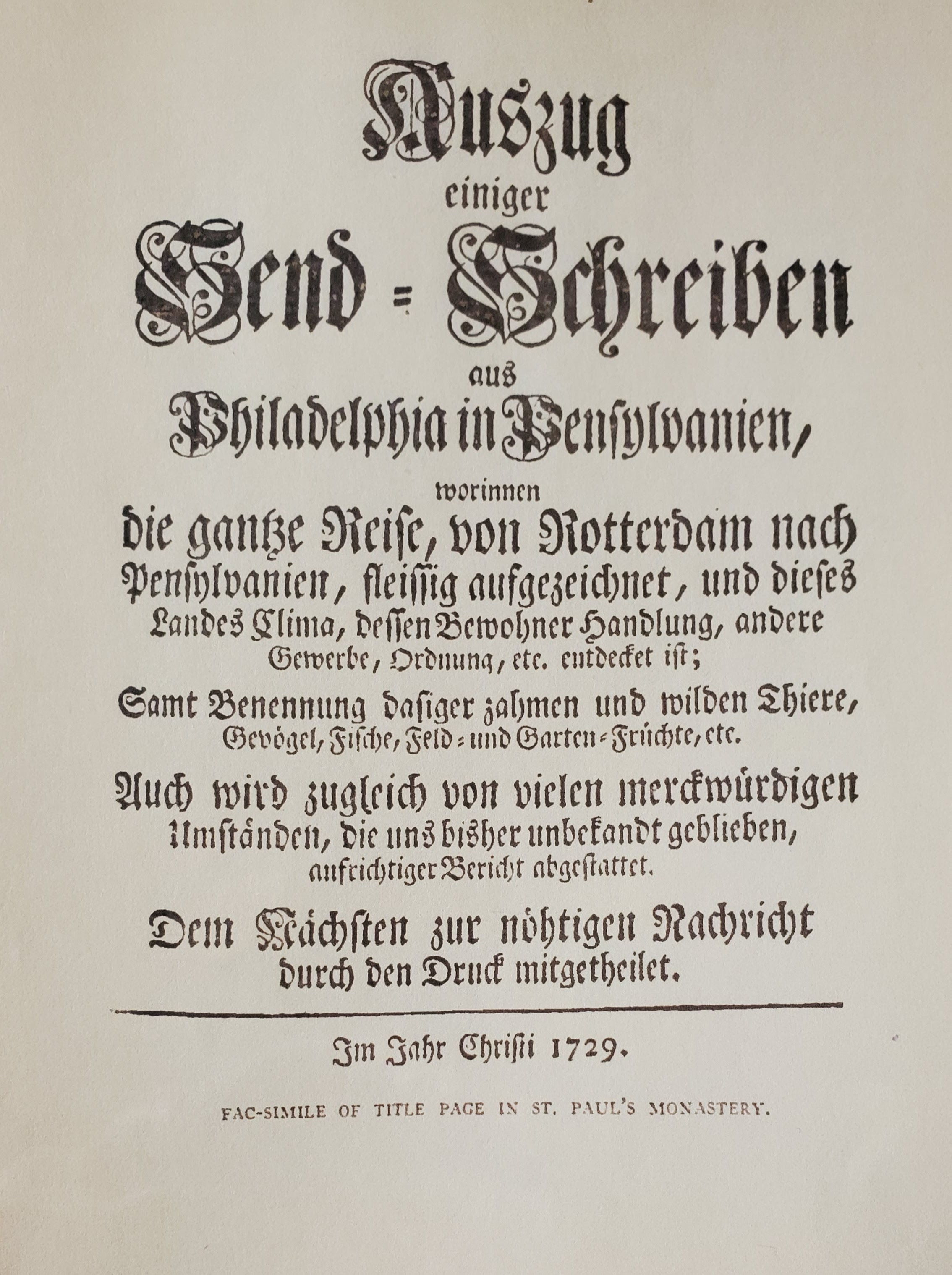
- Diary of a Voyage from Rotterdam to Philadelphia in 1728 Annonymous
- Becoming German: The 1709 Palatine Migration to New York (2006) by Philip L. Otterness
- A German-American Tale: Memoir of a German Immigrant (2017) by Annika Romero and Gustav Streckfuss
- German Immigrants, American Pioneers: The Brunners of Schifferstadt (2019) by Patricia Ogden and Boyce Rensberger
Movies
- Sweet Land (2005)
- The German-Americans: 300 Years in the New Land (1983)
- Hester Street (1975) focused on Jewish immigrants late 1800’s
GREECE
Novels
- Daughter of Ruins (2024) by Yvette Manessis Corporon
- Rain in the Valley (2005) by Helen Papanikolas
Non-Fiction
- Greeks in America (1913) by Thomas Burgess
- Small Bird, Tell Me: Stories of Greek Immigrants in Utah (1993) by Helen Papanikolas
Movies
- The Journey: The Greek American Dream (2007)
- America, America (1963): Directed by Elia Kazan
HOLLAND
Fiction
- City of Dreams: A Novel of Nieuw Amsterdam and Early Manhattan Ist Book of 4 by Beverly Swerling
- New York: The Novel (2010) by Edward Rutherfurd
- Waves of Mercy: Dual Timeline Historical Fiction (2016) by Lynn Austin
Non-Fiction
- Three Visitors to Early Plymouth by Altham, Pory, and Rasieres 1622-1627
- Cruel Paradise: Life Stories of Dutch Emigrants (2018) by Hylke Speerstra
- Netherlanders in America: Dutch Immigration to the United States and Canada, 1789-1950 (1989) by Henry Stephen Lucas
- Faith and Family: Dutch Immigration and Settlement in the United States, 1820-1920 (2000) by Robert P. Swierenga
FIlms
- New York: A Documentary PBS explores the Dutch settlement of New Amsterdam
- New Netherland: The Early Years PBS
IRELAND
Novels
- Even Small Birds Fly Free (2024) Pádraig O’Gorman
- Saints for All Occasions (2017) by J. Courtney Sullivan
- Out of Ireland (2023) by Marian O’Shea Wernicke
- The Irish Girl (2024) by Ashley E. Sweeney
- The Heart’s Invisible Furies (2017) by John Boyne
Non-fiction
- Emigrants and Exile: Ireland and the Irish Exodus to North America (1988) by Kerby A. Miller ·
- Angela’s Ashes: A memoir (1999) by Frank McCourt
- Journey of Hope: The Story of Irish Immigration to America (2001) by Kerby Miller
- The Forgotten Irish: Irish Emigrant Experiences in America (2016) by Damian Sheils
- The Famine Ships: The Irish Exodus to America (1998) by Edward Laxton
- The Lost Child of Philomena Lee (2010) by Martin Sixsmith:
Movies
- Out of Ireland (1995): Documentary traces the history of Irish immigration to the United States
- The Forgotten Irish (2002): A documentary about the lives of Irish immigrants who were forced to leave as children.
- Philomena (2013) Based on the book
ITALY
Novels
- Unto the Sons (2006) by Gay Talese
- The Next Ship Home: A Novel of Ellis Island (2022) by Heather Webb
- The Lies They Told ( July 29, 2025) by Ellen Marie Wiseman
Non-Fiction
- Creole Italian: Sicilian Immigrants and the Shaping of New Orleans Food Culture (2018) by Justin A. Nystrom
- La Storia: Five Centuries of the Italian American (1993) by Jerre Mangione
- Growing Up Italian-American: The Memoirs of Ferdinand Visco & The Stories of Two Immigrant Italian Families (July 19, 2017) by Ferdinand J. Visco M.D.
Movies
- Cabrini (2024) Story of Mother Francesca Cabrini, her work establishing orphanages and healthcare for the poor
- Golden Door (2006), A Sicilian family’s journey in the early 1900s
- Paesani (2022) documentary,mass Italian immigration to the United States between 1890 and 1930.
MEXICO & LATIN AMERICA
Novels
- How the Garcia Girls Lost Their Accents (2010) by Julia Alvarez – Dominican
- Into the Beautiful North (2010) by Luis Alberto Urrea
- The Book of Unknown Americans (2015) by Cristina Henríquez
Non-Fiction
- Homelands: Four Friends, Two Countries, and the Fate of the Great Mexican-American Migration (2018) by Alfredo Corchado
- Even the Women Are Leaving: Migrants Making Mexican America, 1890–1965 (2023) by Larisa L. Veloz
Movies
- Sin Nombre (2009) Honduran teenager and a Mexican gang member
- Under the Same Moon (2007): A young boy in Mexico tries to reunite with his mother in the United States.
- A Better Life (2011): An undocumented Mexican immigrant in East L.A.
- El Norte (1983): A Guatemalan brother and sister flee to the U.S.
- The Golden Dream (2013): A road movie about teenage immigrants journey to the U.S.
NORWAY
Novels
- Across the Deep Blue Sea: The Saga of Early Norwegian Immigrants: by Odd S. Lovoll that chronicles the journey of early Norwegian immigrants through Canadian ports.
- Grass of the Earth: The Story of A Norwegian Immigrant Family in Dakota: by Aagot Raaen Norwegian immigrant family in the Dakota territory.
- Haymaker in Heaven (2022) by Edvard Hoem based on the author’s own family history
- Westward We Came: A Norwegian Immigrant’s Story, 1866-1898: A historical novel focusing on the immigrant experience during this specific period.
- The Follinglo Dog Book: A Norwegian pioneer story set in Iowa. (1999) Peder Gustav Tjernagel
Non- fiction
- Norway to America: A History of the Migration: A historical account of the migration of Norwegians to the United States.
- The Diary of Elisabeth Koren 1853-1855 (2015) trans by Davis T. Nelson
- In Their Own Words: Letters from Norwegian Immigrants: A collection of letters that provides firsthand accounts of the immigrant experience.
- Norwegians on the Prairie: Ethnicity and the Development of the Country Town: A book by Odd S. Lovoll that explores the development of Norwegian-American communities.
- Nothing to Do but Stay: My Pioneer Mother (1993) by Carrie Young set in North Dakota
Movies
- Utvandrarna (The Emigrants) (2021): A Norwegian-Swedish drama about Swedish emigrants traveling to the United States in the 1840s, based on Vilhelm Moberg’s book series.
POLAND
Novels
- We Were the Lucky Ones (2018) by Georgia Hunter
- The Daughters (2015) by Adrienne Celt
Non-Fiction
- The Polish Peasant in Europe and America (1996) by William Thomas and Florian Znaniecki
- Polish Immigration to America: When, Why, How and Where (2016) by Stephen Szabados
Movies
- The Fourth Partition (2013) Poles to Chicago in the late 19th century
- Sophie’s Choice (1982) explores the life of a Polish immigrant in post-WWII Brooklyn
RUSSIA
Novels
- A Russian Immigrant: Three Novellas (2019) by Maxim D. Shrayer:
- My Ántonia by Willa Cather: this classic American novel features a significant storyline about Bohemian immigrants in the American Midwest
- A Prison Camp Guard’s Story and The Compromise, by Sergei Dovlatov
- The Russian Debutante’s Handbook by Tom Rachman a novel about an American of Russian descent who moves to Prague to uncover his family’s history.
Nonfiction
- Red, White & New: Tales of Young Russian Americans (2021) by Ariel Kirman A collection of short stories
- A Mountain of Crumbs (2011) by Elena Gorokhova
Movie
- Moscow on the Hudson (1984)
- These Russian Immigrants Filmed Their New Life in America (2020)
SCOTLAND
Novels
- A Place Called Freedom (2019) by Kent Follett Scotland, 1767
- Outlander 10 books (1992-2026) By Diana Galbadon
- Smoke on the Wind (2025) by Kelli Estes
- A Wild and Heavenly Place (2024) by Robin Oliveira
Non-Fiction
- Colonists from Scotland: emigration to North America, 1707-1783 (1972) by Ian Charles Cargill Graham
- Scottish Emigration to Colonial America, 1607–1785 (2004) by David Dobson
- Scotch Irish Pioneers: In Ulster And America (2019) by Charles Knowles Bolton
Movies
- Outlander TV Series (2014-2026)
- Voices Over the Water (2025)
SWEDEN
Novels
- The Immigrants, (1995) by Vilhelm Moberg’s also a movie
- Honoring Anna (2018) by Douglas Hof multi novel series begins in Sweden
- Swede Hollow (2020) by Ola Larsmo
- O Pioneers (1913) Willa Cather
Non-fiction
- Swedish Exodus: The History of the Swedish Emigration to North America (1996) by Lars Ljungmark
- The Old Country and the New: Essays on Swedes and America (2006) by H. Arnold Barton
- Letters From the Promised Land: Swedes in America, 1840-1914 (1980) by H. Arnold Barton:
- I Go to America: Swedish-American Women and the Life of Mina Anderson (2012) by Joy Lintelman
- Swedes in Minnesota (People of Minnesota) (2004) by Scott G. Christianson and E. Paul Erickson: Swedish immigrant experience in Minnesota
Movies
- The Emigrants (1971) and its sequel The New Land (1972),
OTHER Countries
- The Exiles by Christina Baker Kline England to Australia
- The Costumier’s Gift (2019) by Vicky Adin Part of a series,multi-generational family saga New Zealand
- The Brief Wondrous Life of Oscar Wao (2008) by Junot Díaz — Dominican
- Roots: The Saga of an American Family (1978) by Alex Haley — Africa
- The Joy Luck Club (2006) by Amy Tan — novel of 4 Chinese Immigrants to San Francisco
- Homegoing (2017) by Yaa Gyasi novel of 8 generations from the Gold Coast to the plantations of Mississippi
Please note as I add more resources I may be able to give more countries their due. I began with countries I have researched or represent those in my classes.
Kelly Wheaton ©2025 All Rights Reserved
Changes in Genealogical DNA Testing
Posted on November 5, 2025 Leave a Comment
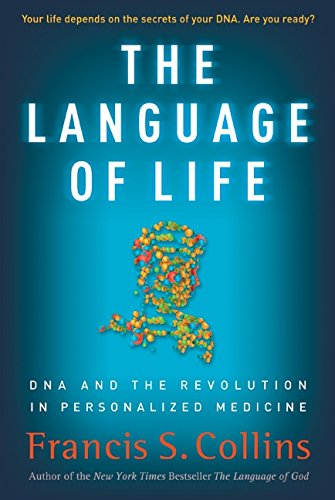
Back in 2005, Francis Collins in his book The Language of Life: DNA and the Revolution in Personalized Medicine predicted that DNA testing for health was on the horizon within 10 years and that your doctor would routinely order DNA tests for you. That hasn’t happened as quickly as he thought, but companies like 23andme built their databases by offering medically relevant Direct to Consumer (DTC) DNA testing. 23andMe has a database of about 13 million and overall the top 4 companies: Ancestry DNA, 23andMe, My Heritage, and Family TreeDNA have over 53 million test kits. Some of those may overlap so roughly 40-50 million people have done DTC DNA testing.
My Heritage and Family Tree DNA and Gene by Gene
Several things have piqued my curiosity of late. As announced in 2024 “Family Tree DNA has been a valued partner and friend of My Heritage for well over a decade. Notably, since the launch of My Heritage DNA in 2016, Family Tree DNA’s in-house lab, Gene by Gene, based in Houston, Texas, has provided My Heritage with our DNA processing services.” And furthermore “Family Tree DNA customers can transfer their family trees to My Heritage, and to continue building them on My Heritage. Family Tree DNA users can now easily transfer their family trees to My Heritage for free, after providing consent on both Family Tree DNA and My Heritage.” More recently My Heritage announced in October that is was Upgrading Its DNA Tests to 2X Whole Genome Sequencing to be carried out by Gene by Gene. And then just days ago Family Tree DNA announced 30X Full Genome Sequencing. “The All-in-one bundle includes your genome data, health analyses, and reports” for $379 on sale. Not quite the $99 WGS testing that was anticipated a few years ago but getting closer.
The above collaboration and new offerings may be a sign of the health of these two companies under Gene by Gene. And their pivot to Health offerings is intriguing. I wonder whether at a future date their may be options to combine them. Who knows?
23andMe
Meanwhile in March 2025, 23andMe filed for Chapter 11 bankruptcy protection and announced that the company was planning on selling substantially all of its assets. So its long term status is in question. Who will acquire the assets and will the data still be available to testers? Your guess is as good as mine. One of my favorite features at 23andMe was their Chromosome browser. No word on if it may come back. If sold would the genealogy component just be a casualty? So for now I can’t recommend 23andMe due to a high level of uncertainty. Sad because it has about 13 Million testers.
Ancestry
In 2019 Ancestry offered AncestryHealth® their vision “was to empower people to take action to address potential health risks identified in their genes and family health history.” Then in 2020 they suspended that offering and returned “to deepen our focus on family history, including AncestryDNA®, which remains an important part of our commitment to family history.” Ancestry has over 25 million tested and although the lack a chromosome browser are among the easiest to use especially for those already with a paid Ancestry subscription. It is also among the most expensive.
It looks like Ancestry’s focus will stay toward genealogy which is good news. It has the largest database of historical records with over 30 Billion. My Heritage has a bit more focus on International Records and has about 20 billion records.
Family Tree DNA
For now FTDNA remains the best place for YDNA and mtDNA testing if you plan on looking for matches. The shifting landscape of DNA test is hard to predict. Ancestry offered YDNA tests years ago and then abruptly stopped in 2014, as they pivoted to atDNA tests only. The earliest YDNA tests at FTDNA were 12 marker test whereas today a 37 Marker test is generally considered a minimum.
Recommendations
People always want to know the best company to test at. That depends on your reason for testing.
- If you already subscribe to Ancestry or MyHeritage, testing atDNA is a no brainer especially at sale prices starting at $29
- Chromosome Browsers are included at FTDNA, MyHeritage and Living DNA
- A nice feature of 23andMe and Living DNA is they give your broad mtDNA , and if male: your YDNA Haplogroup
- FTDNA is the project based place to test YDNA, both YSNPS and YSTRS
- MyHeritage may bring more European matches for those with recent ancestry from Europe or Israel
- Living DNA has a strong emphasis on UK testers that may appeal to those with recent UK ancestry
- Full sequence mtDNA, with matching, is at FTDNA
- FTDNA & Living DNA allow uploads from other companies
Given sales this month especially around Black Friday, you could test at Ancestry and MyHeritage for less than $70 and upload to FTDNA and swim in all 3 ponds. If you return your MyHeritage in 2026 you will get 2X WGS!
Where it all ends up in a few years—who know? In the meantime databases grow and prices come down. The Ancestral origins continue to be refined. Whether they are improved each iteration is widely debated.
Kelly Wheaton ©2025 All Rights Reserved
Writing Challenge: Choose Your Own Adventure Genealogy Style
Posted on September 19, 2025 Leave a Comment
First crossroads. Heaven, hell or purgatory. Your choice.
Second crossroad. Which ancestor will you choose?
Third quest. You will have 20 minutes to come up with a list of questions to ask your chosen ancestor. This may be a brick wall ancestor and your first question is where were you born? Or who were your parents? Or it might be a parent or grandparent that you forgot to ask important things and this is your second chance. It’s your ancestor, your questions. For the purposes of this exercise assume that they are willing to answer you and that they are up to speed with where the world is today. [Trying to ask questions within the confines of the time period they lived could be a second more challenging option].
Once you have your list of questions you can proceed in one of two ways.
- Have someone else ask you the questions and you respond. That is you assume your ancestors identity and wing it. Guess, surmise or just plain make it up.
- The second option is to do this with yourself. Assume both identities and have a conversation and record the results.
Why this exercise? To get your creative juices flowing. To think more deeply about your ancestor and what you would like to know. To get you started on crafting a reasonable story for them and perhaps giving you some insight into where to look.
SAMPLE QUESTION IDEAS TO PRIME THE PUMP:
- What color are your eyes?
- How did your propose to —-?
- How did you fell when you arrived in —-?
- What was your favorite color?
- Who was your favorite ancestor and why?
- Did you have a favorite book or author?
- What was the biggest trouble you ever got into?
- When did you first vote?
- Where did you learn your trade?
Feel free to share your questions or how this worked out for you in the comments.
Kelly Wheaton ©2025 – All rights Reserved.
KENT The Garden of England Day Three Part Two: Faversham & Whitstable
Posted on September 2, 2025 Leave a Comment
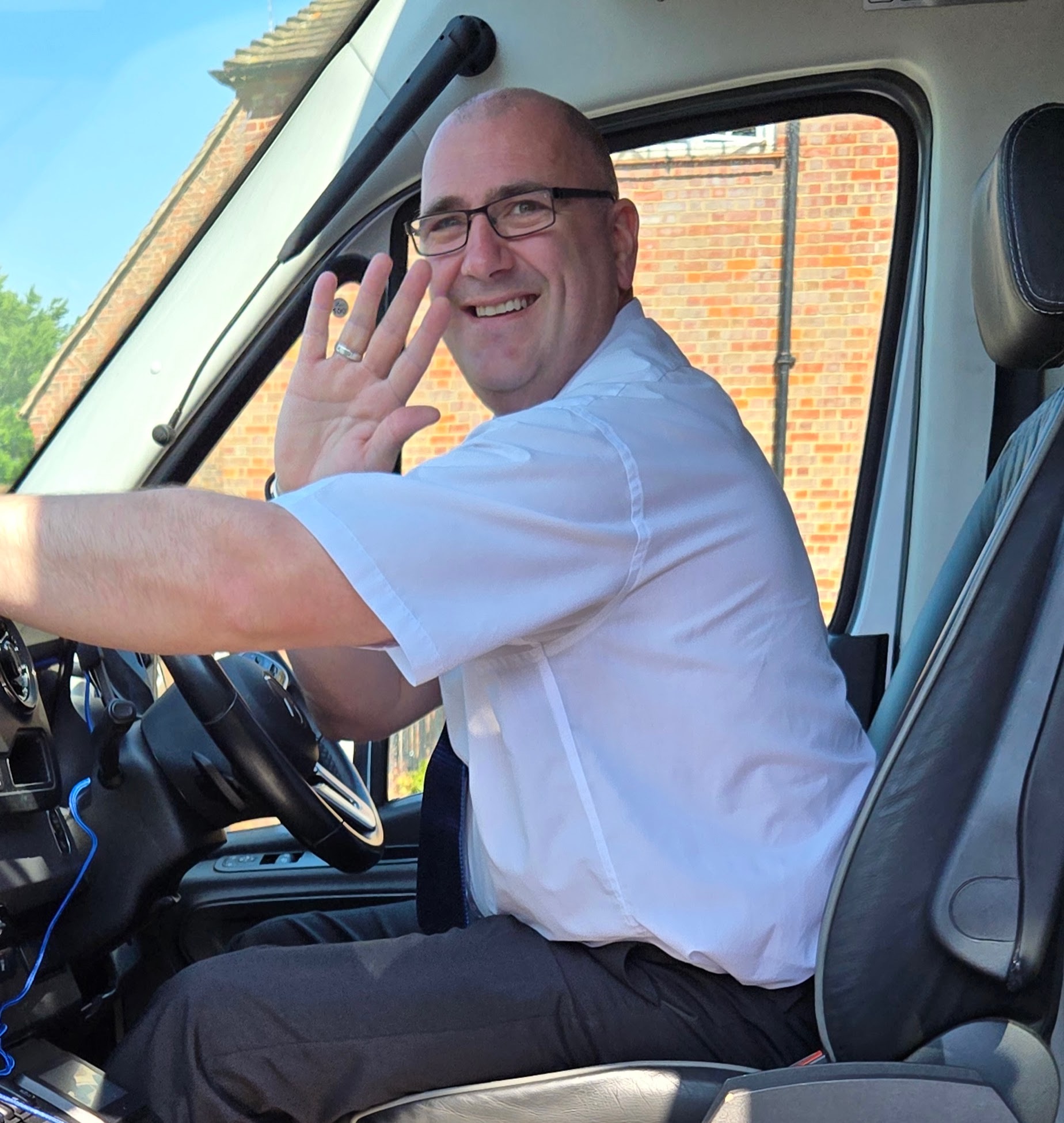
We left Leed’s Castle for Whitstable a seaside town and the setting for the British TV detective series ‘Whitstable Pearl’ which I ended up watching after I returned home. First up is tour bus and our driver Tony.
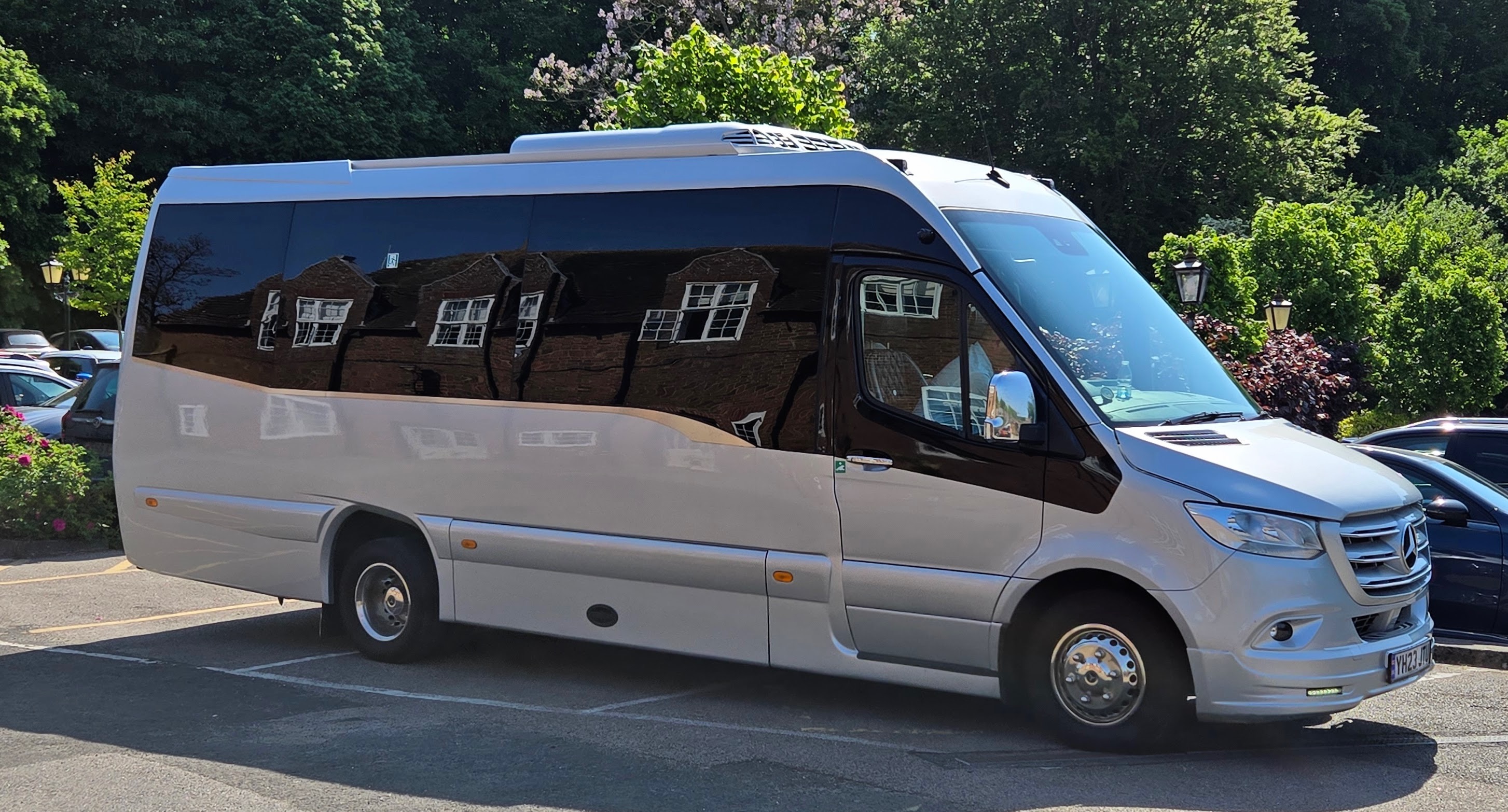
Whitstable is full of shops, art galleries and places to eat oysters.
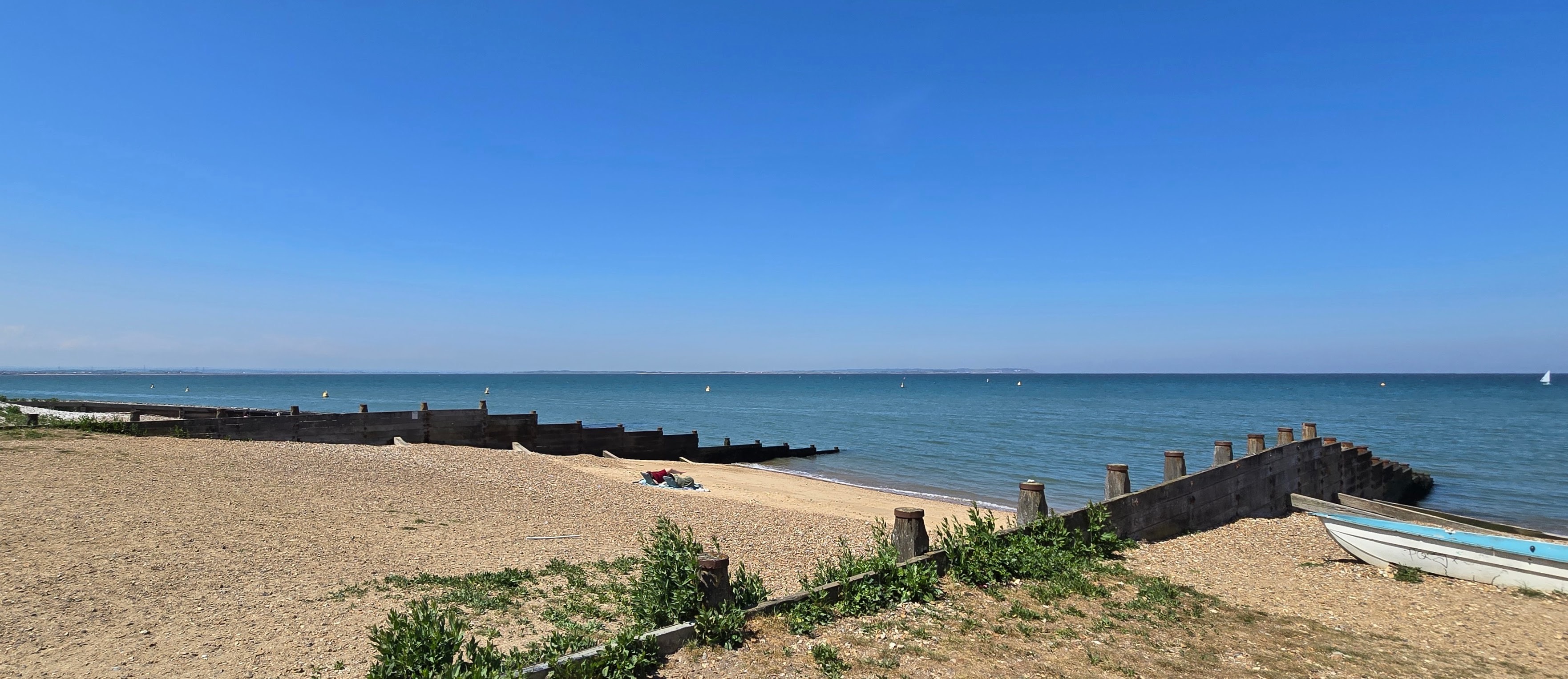
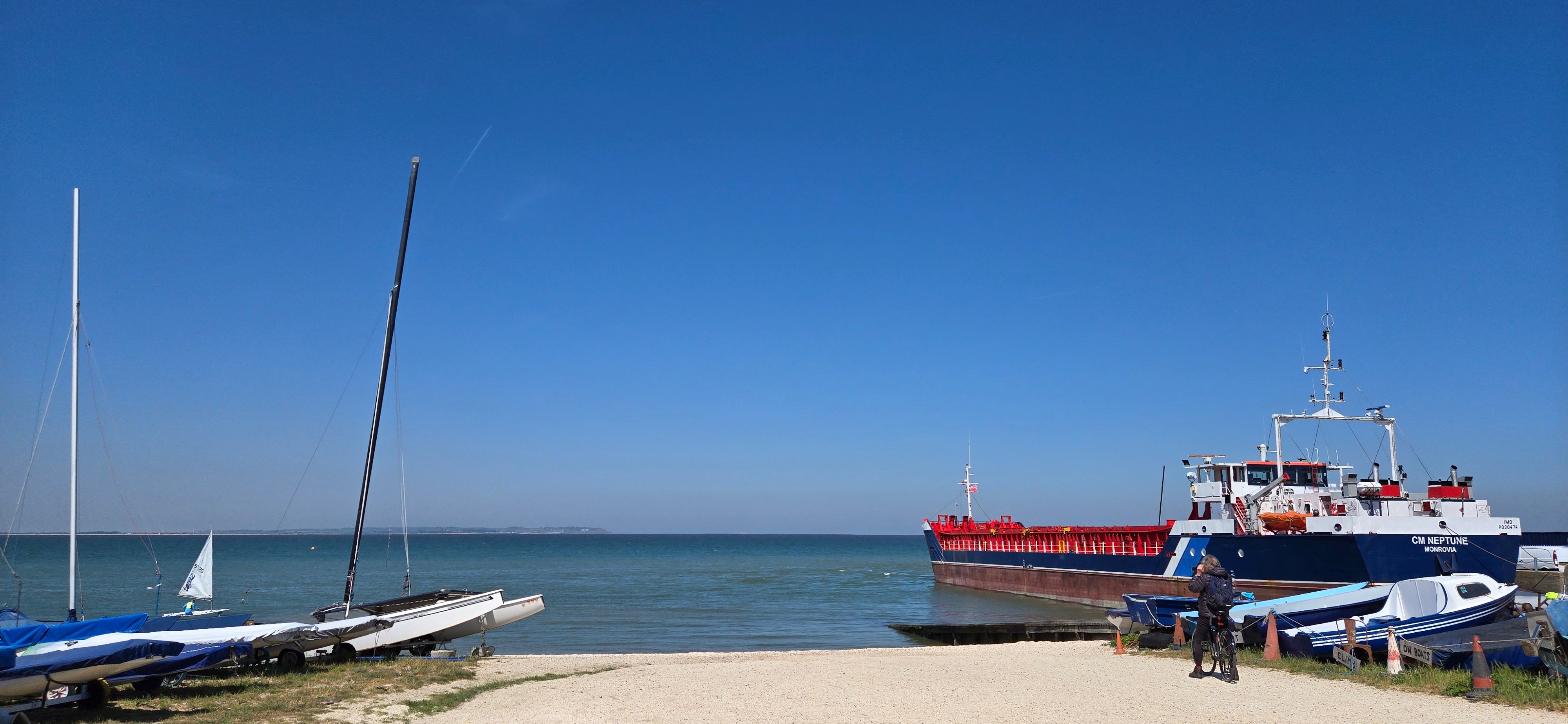
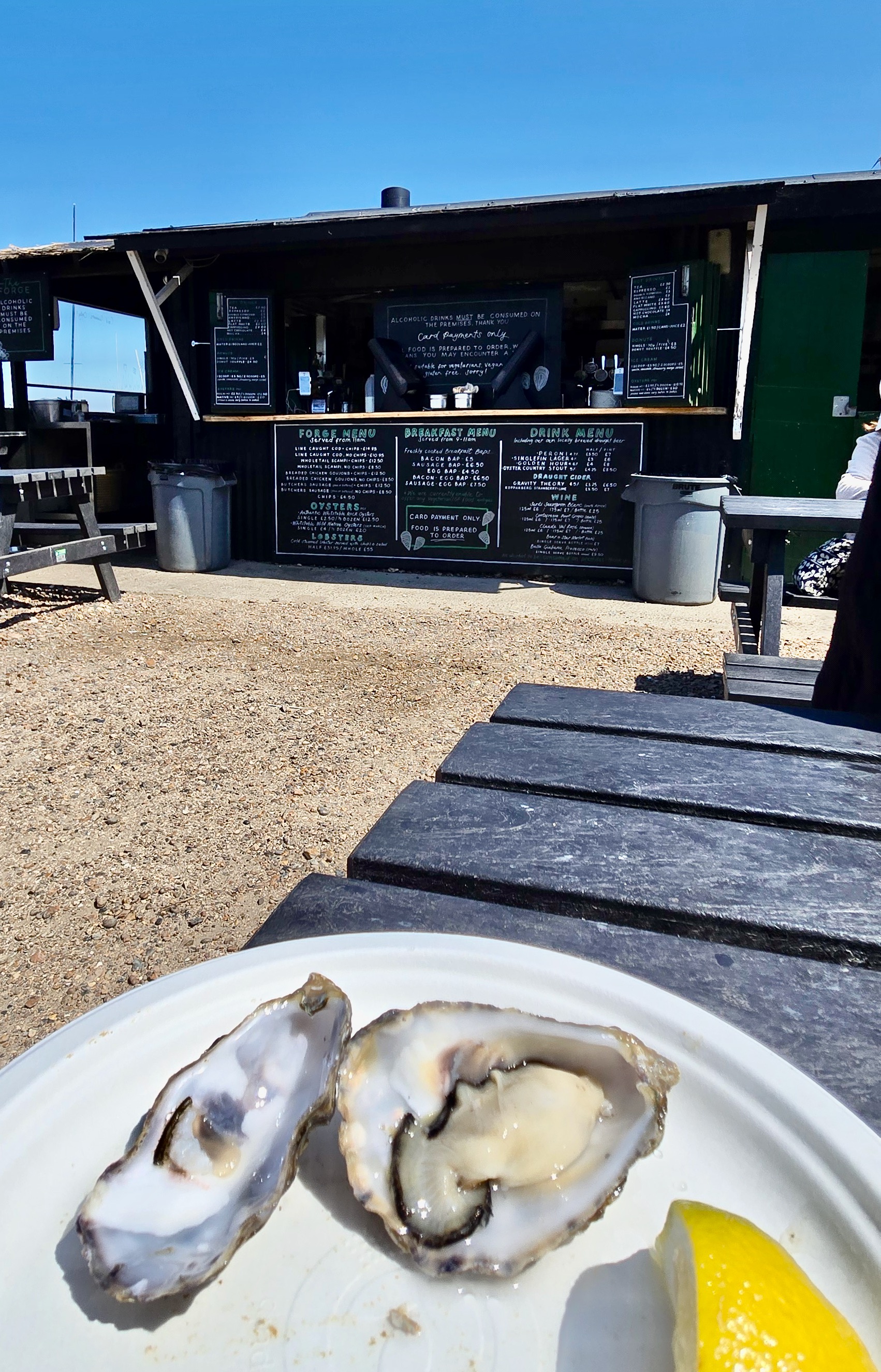
This was the site of the infamous Oyster Tasting by Charlotte that didn’t quite make it down.
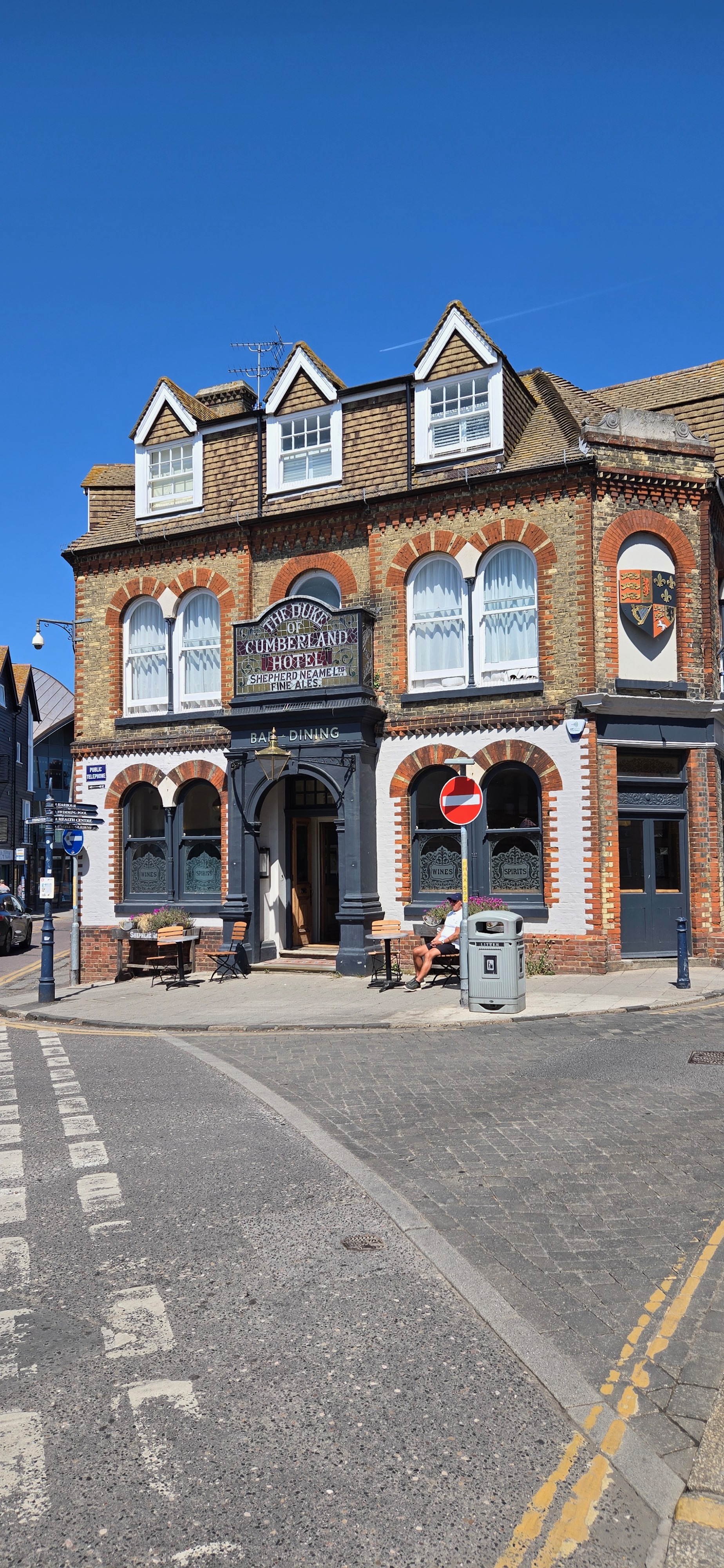
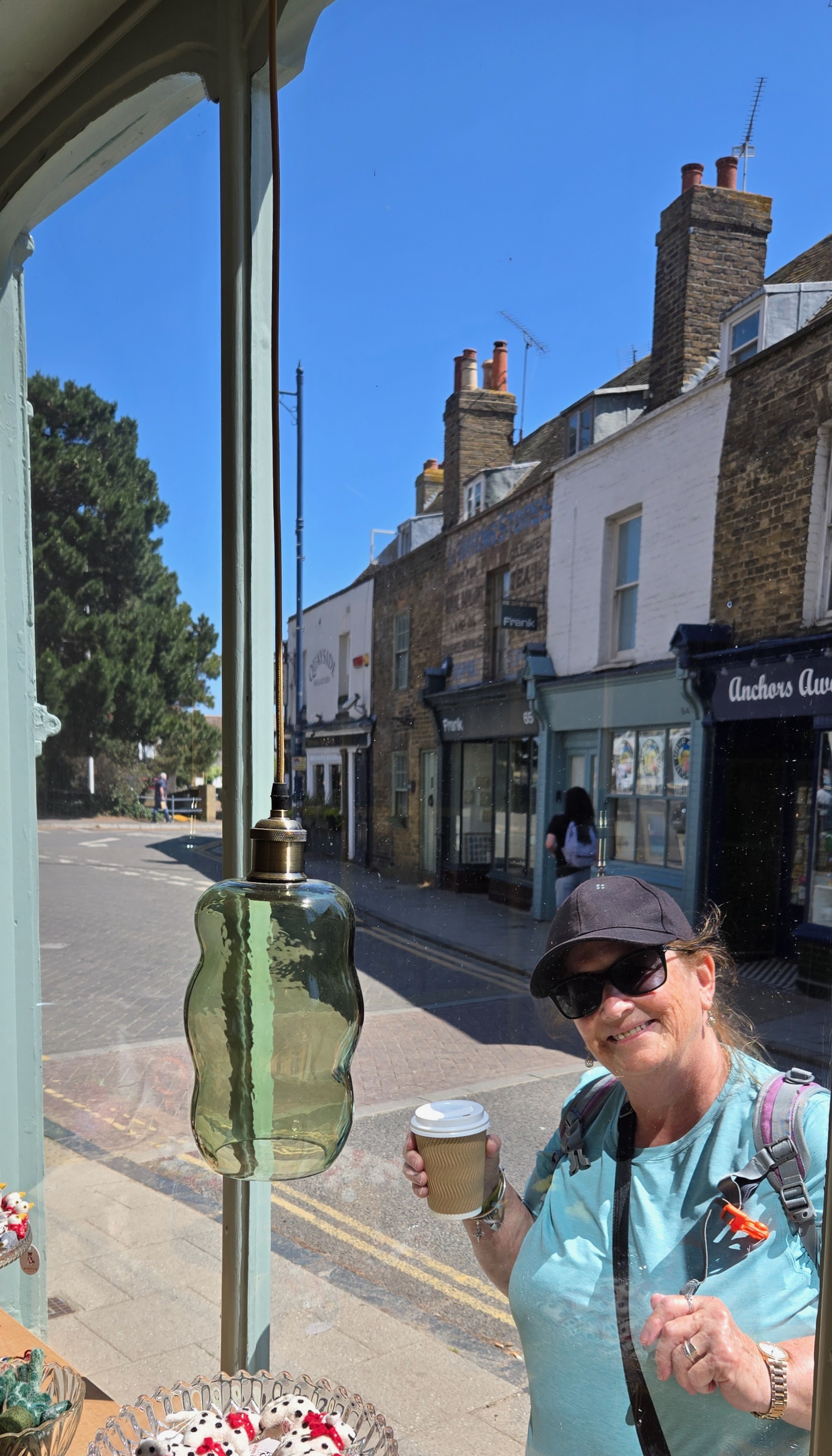
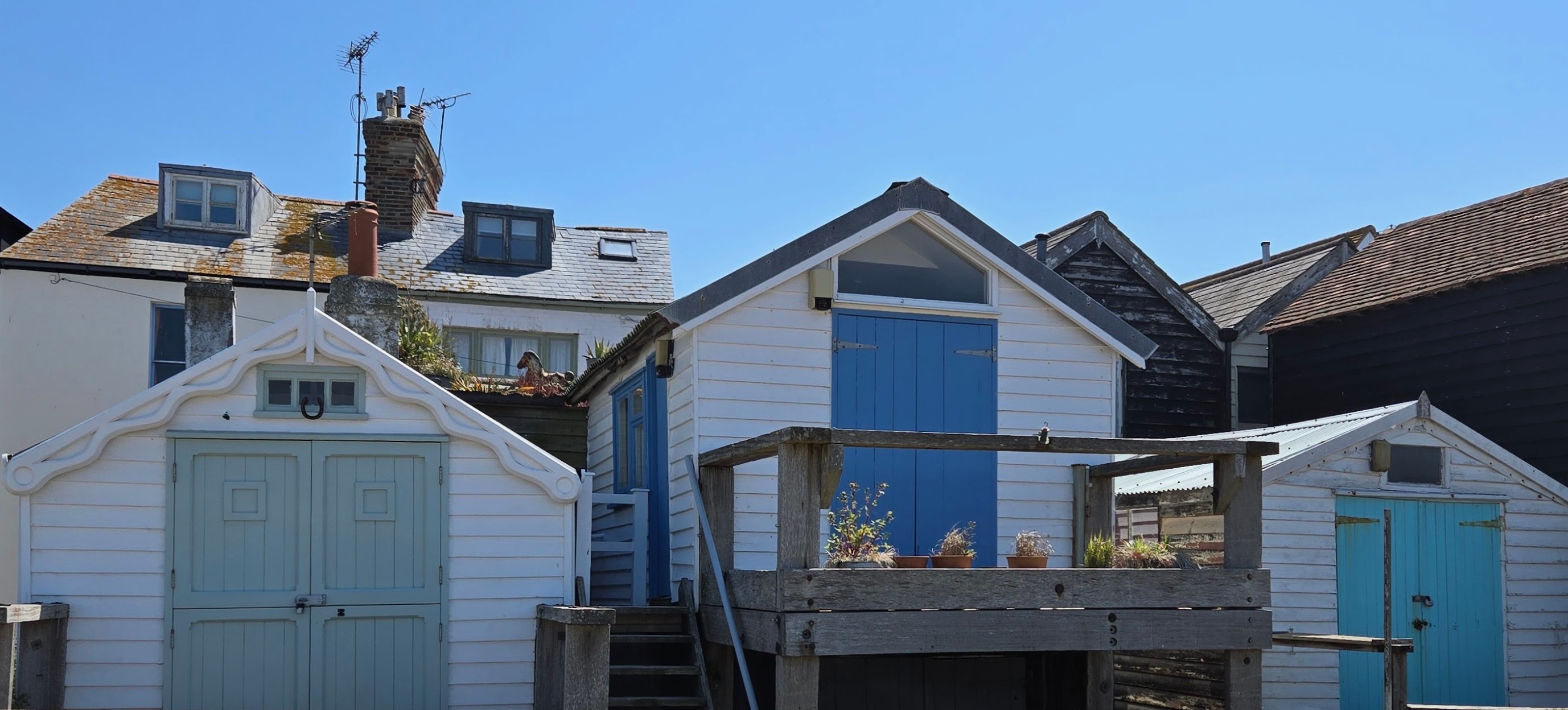
The Duke of Cumberland hotel, Joyanne spotting me through the shop window and a few of the Beach huts.
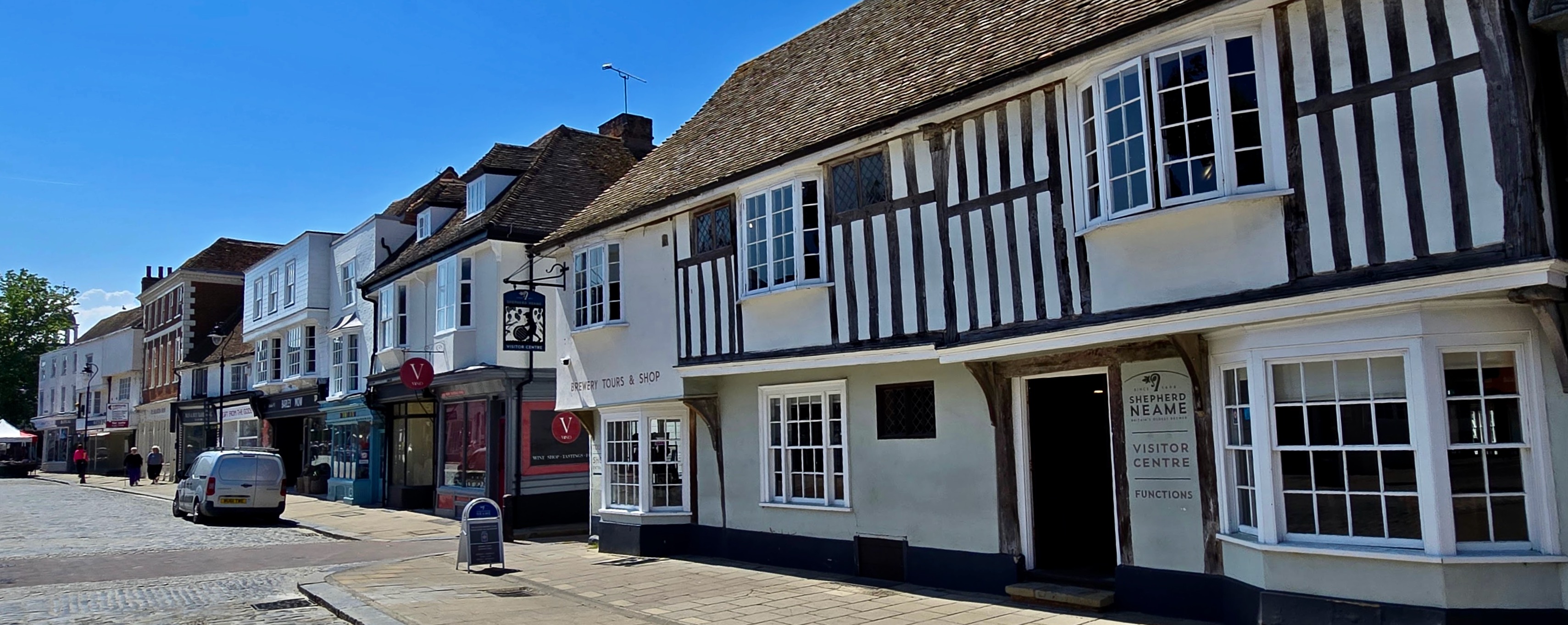
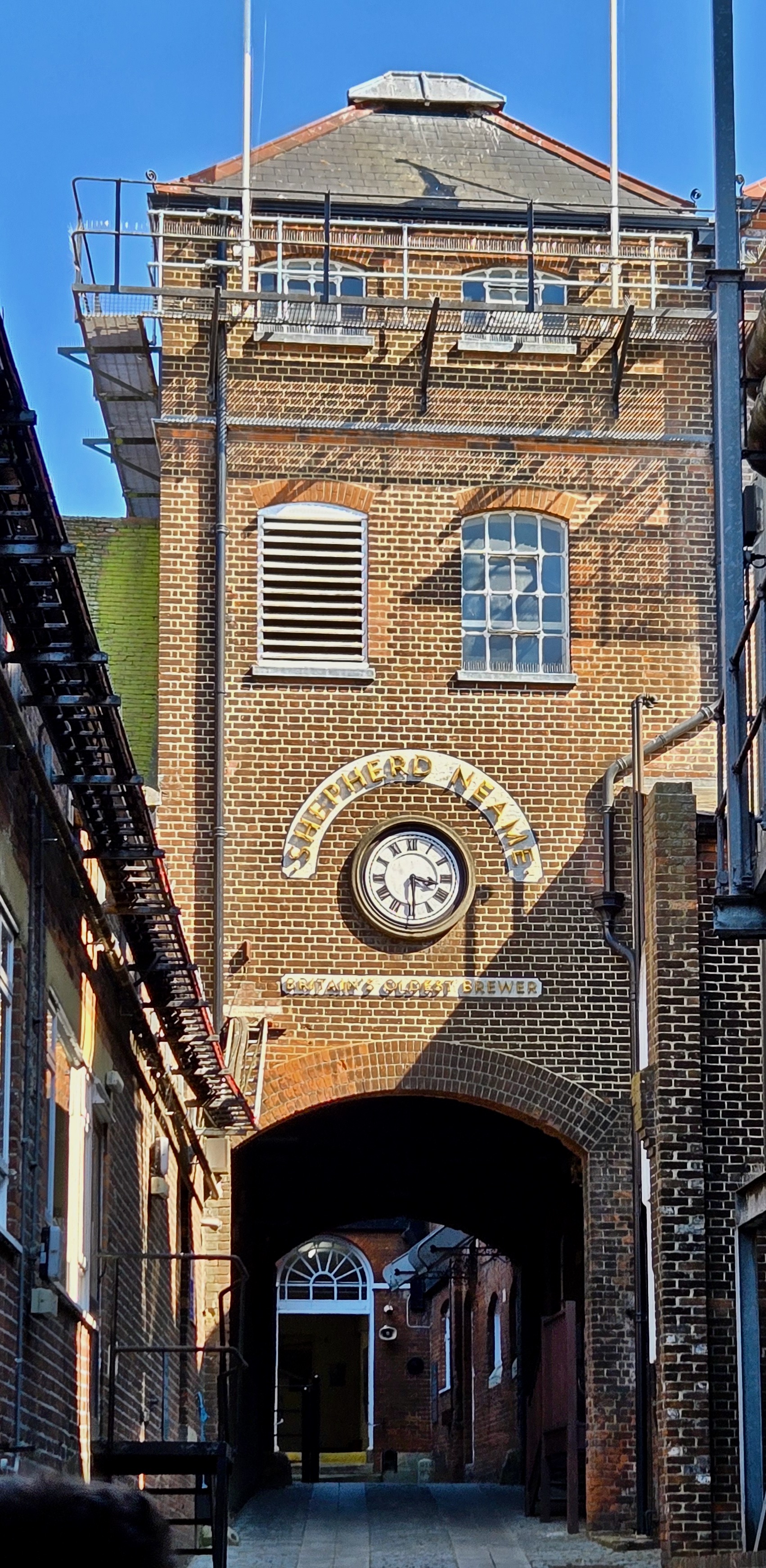
Next stop was Faversham for a tour of the Shephers Neame Brewery. We had a bit of time to have a look about. In the following photo you can see the store front for the Brewery and on the far left you can barely see a tent set up for a street market. Since we had some free time I wandered down to have a look.
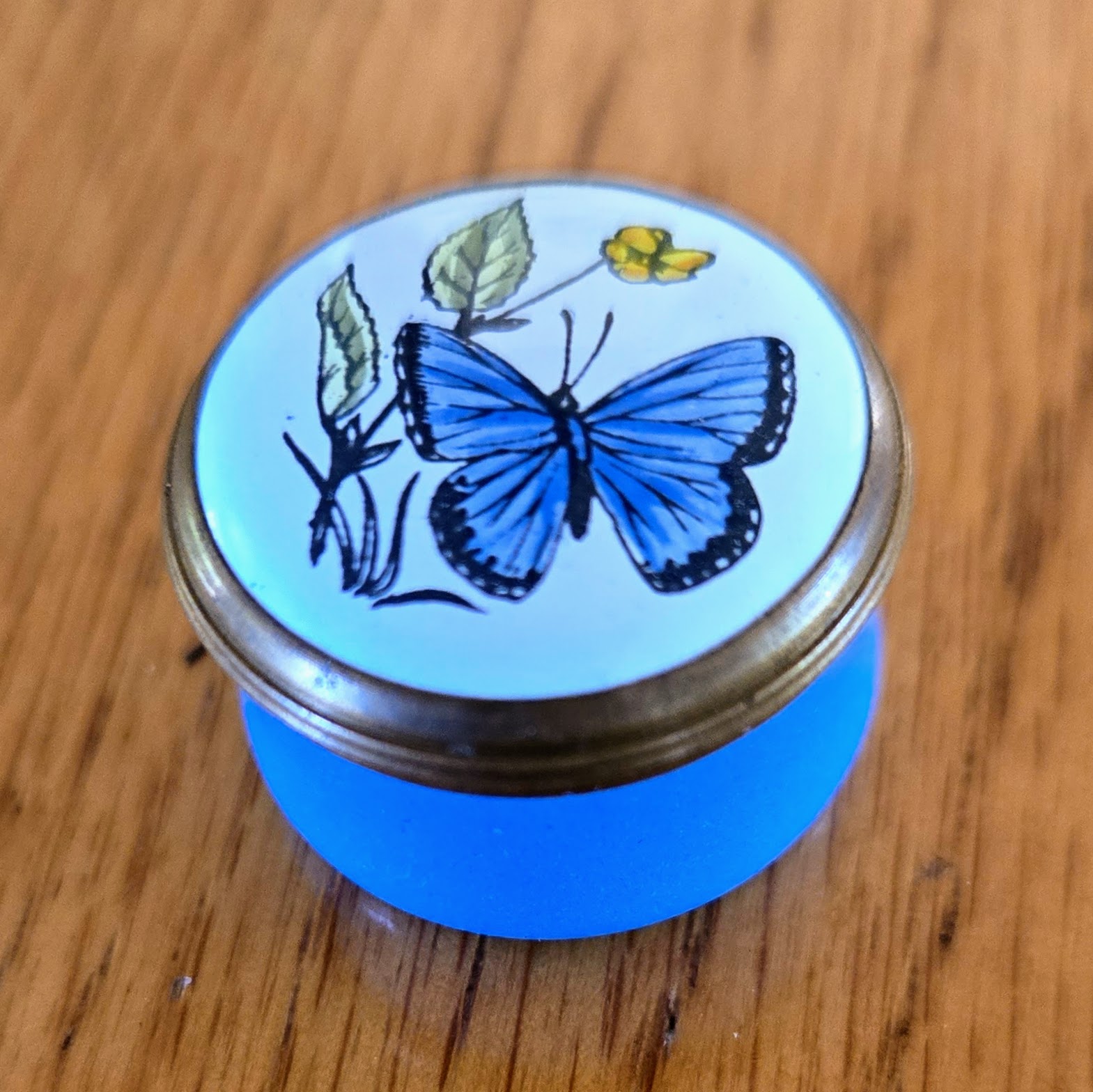
I had been looking for something for my friend Denise who couldn’t make the trip and I found it! A Crummles & Company enameled trinket box with a butterfly—which was her childhood nickname.
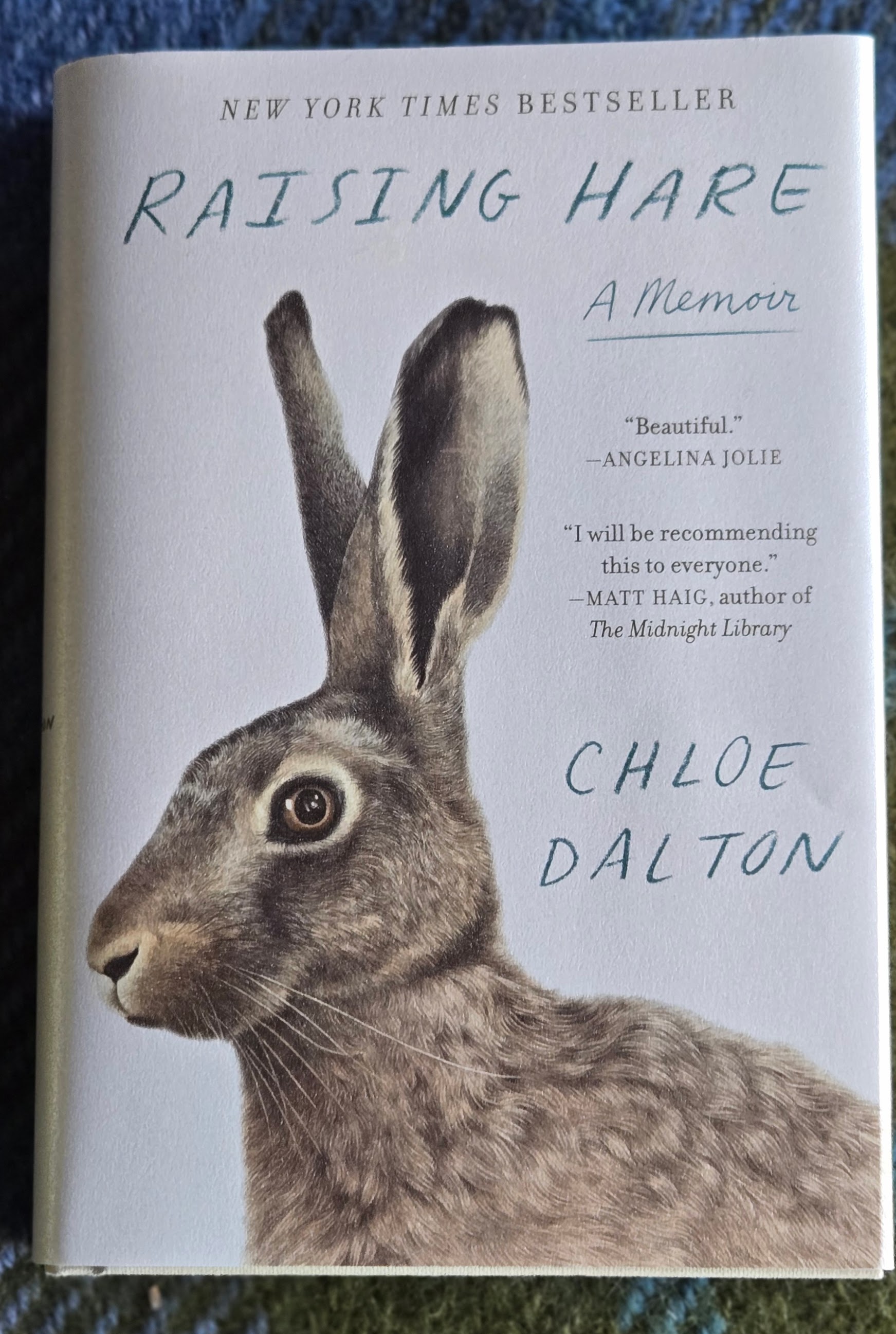
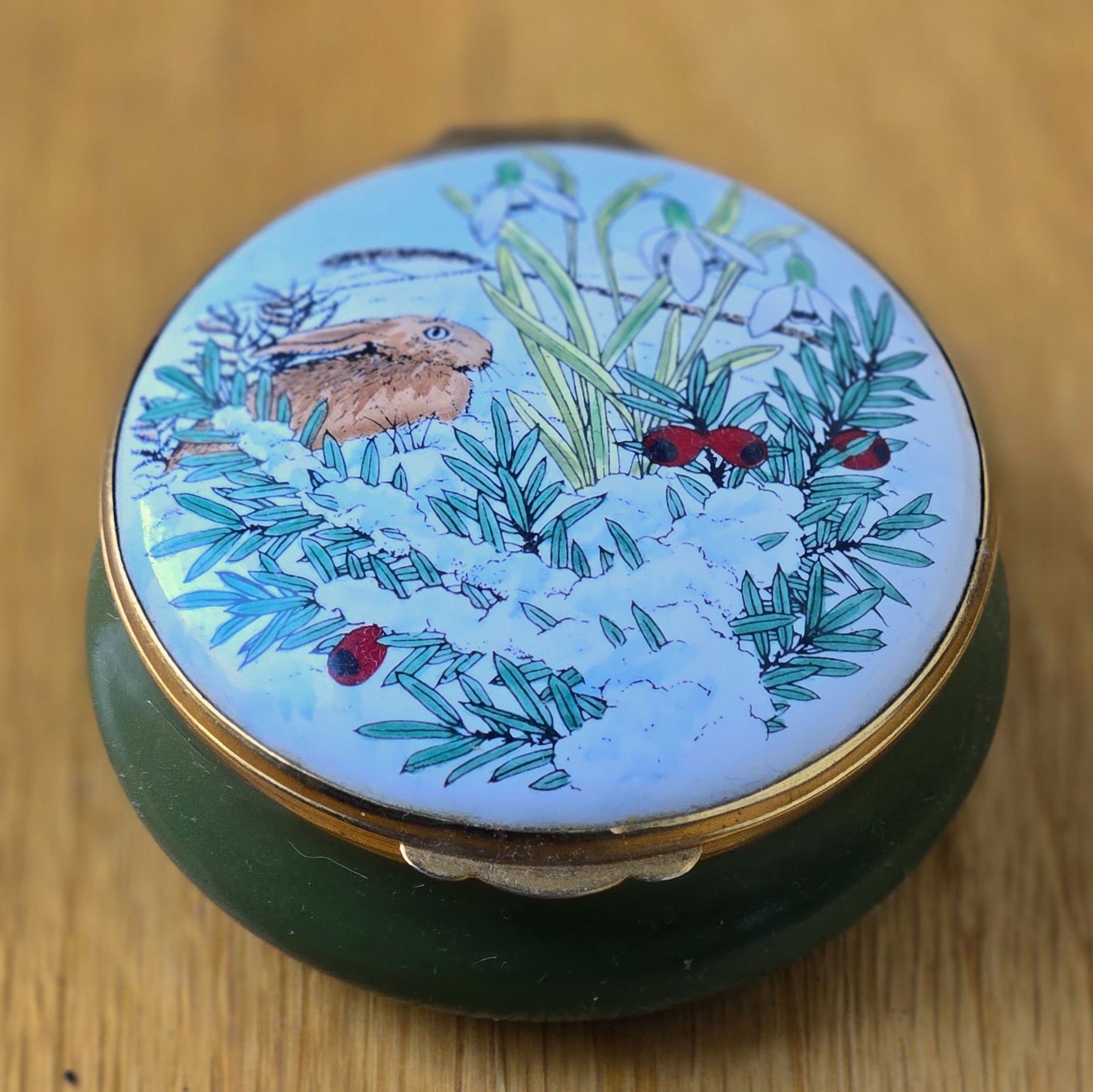
And then I spotted another one which I bought for myself. I had just been give the memoir “Raising Hare”, by my daughter for Mother’s Day. And finished it just before the trip. These are European Hares.
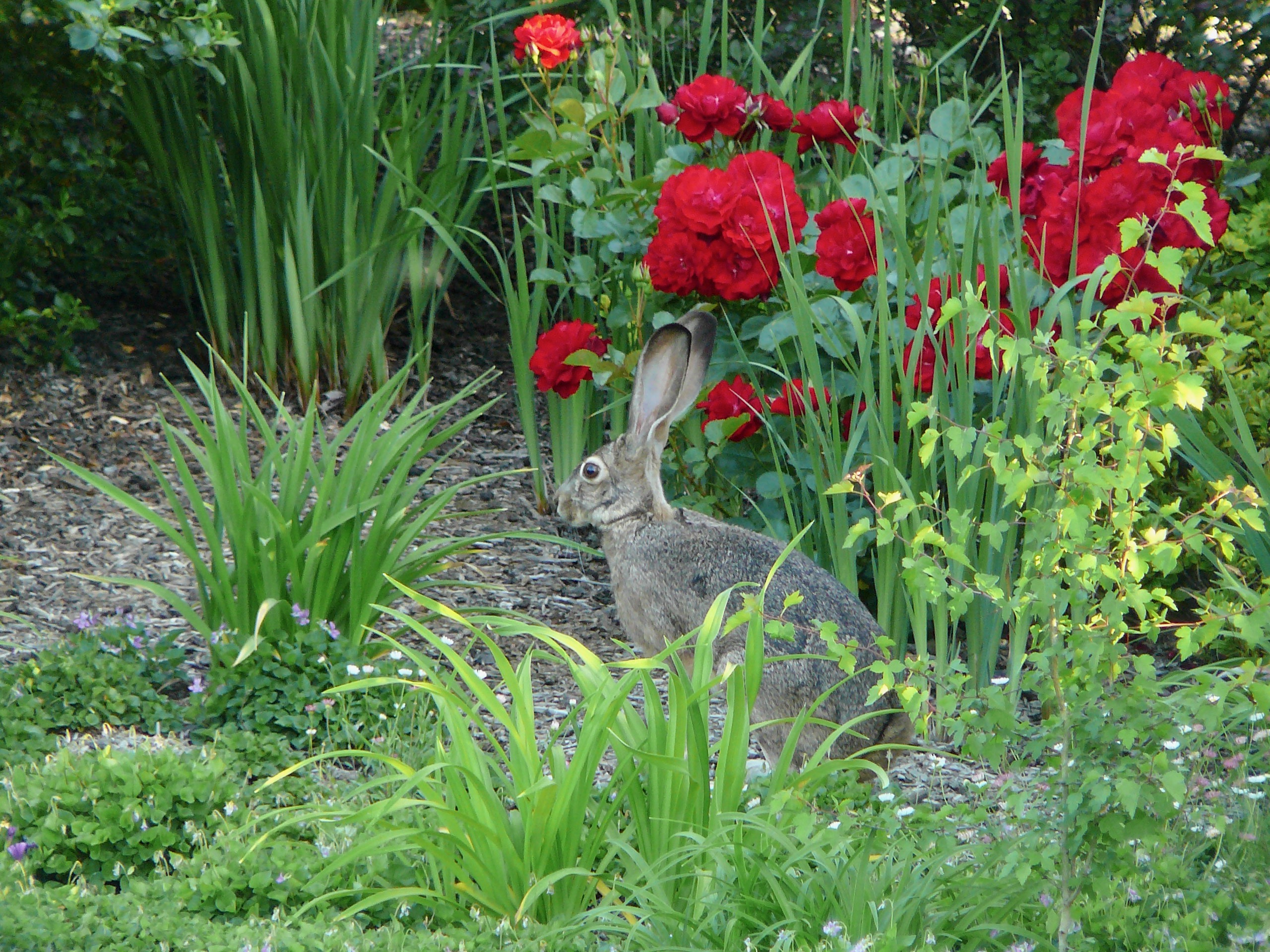
We have our own here in California. A photo of one from my back yard. They like to prune my plants at times!
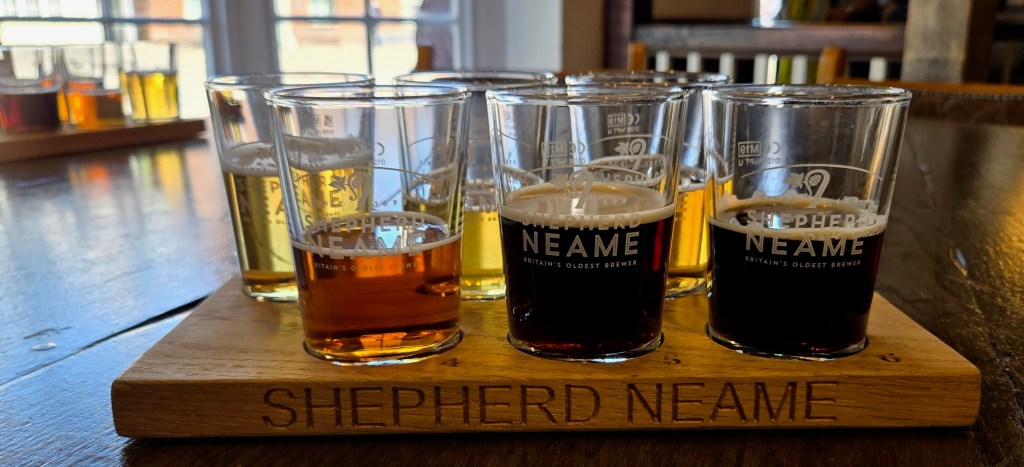
Now back to our tour at Shephers Neame Brewery which was quite interesting, even though I am not a beer drinker.
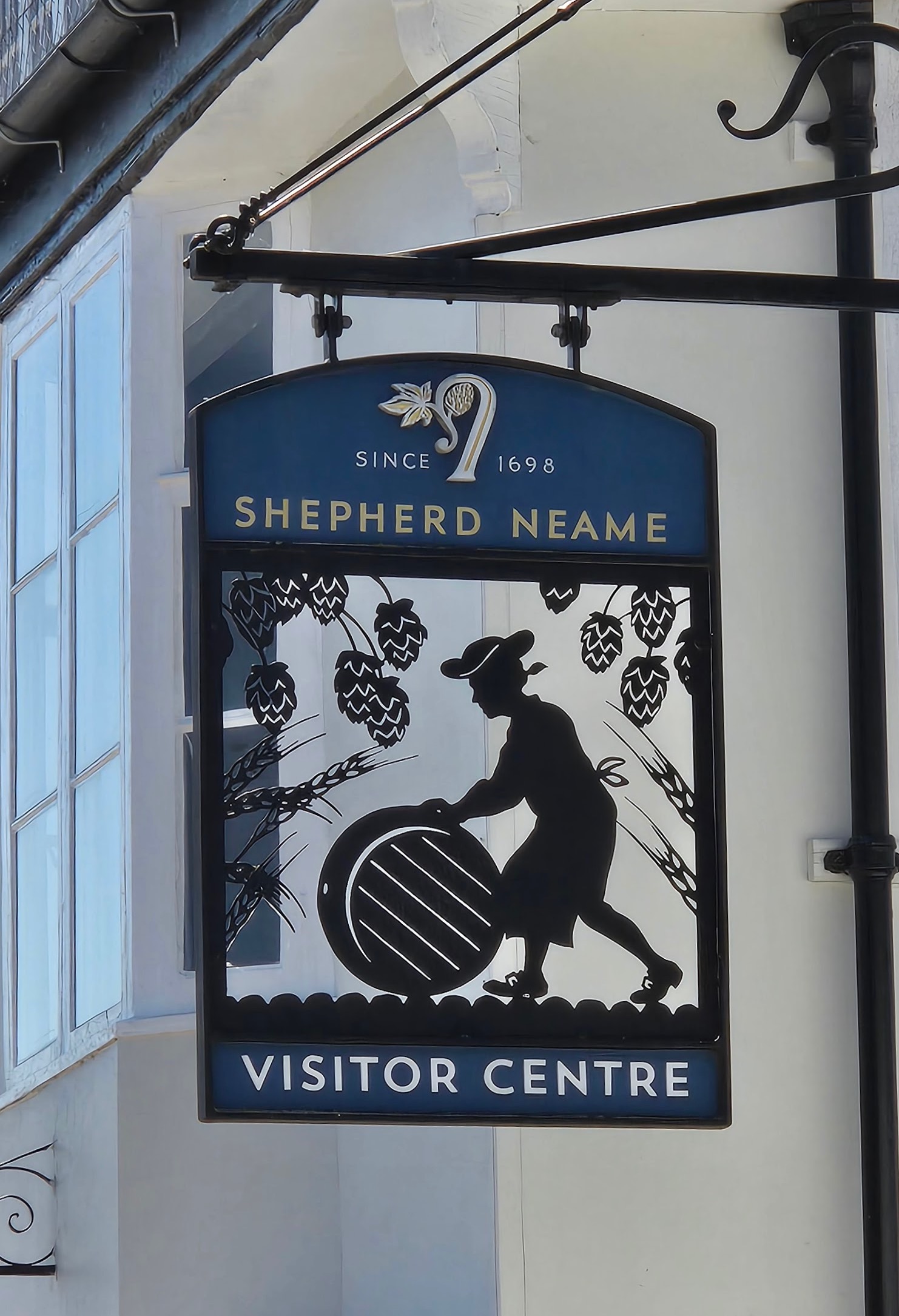
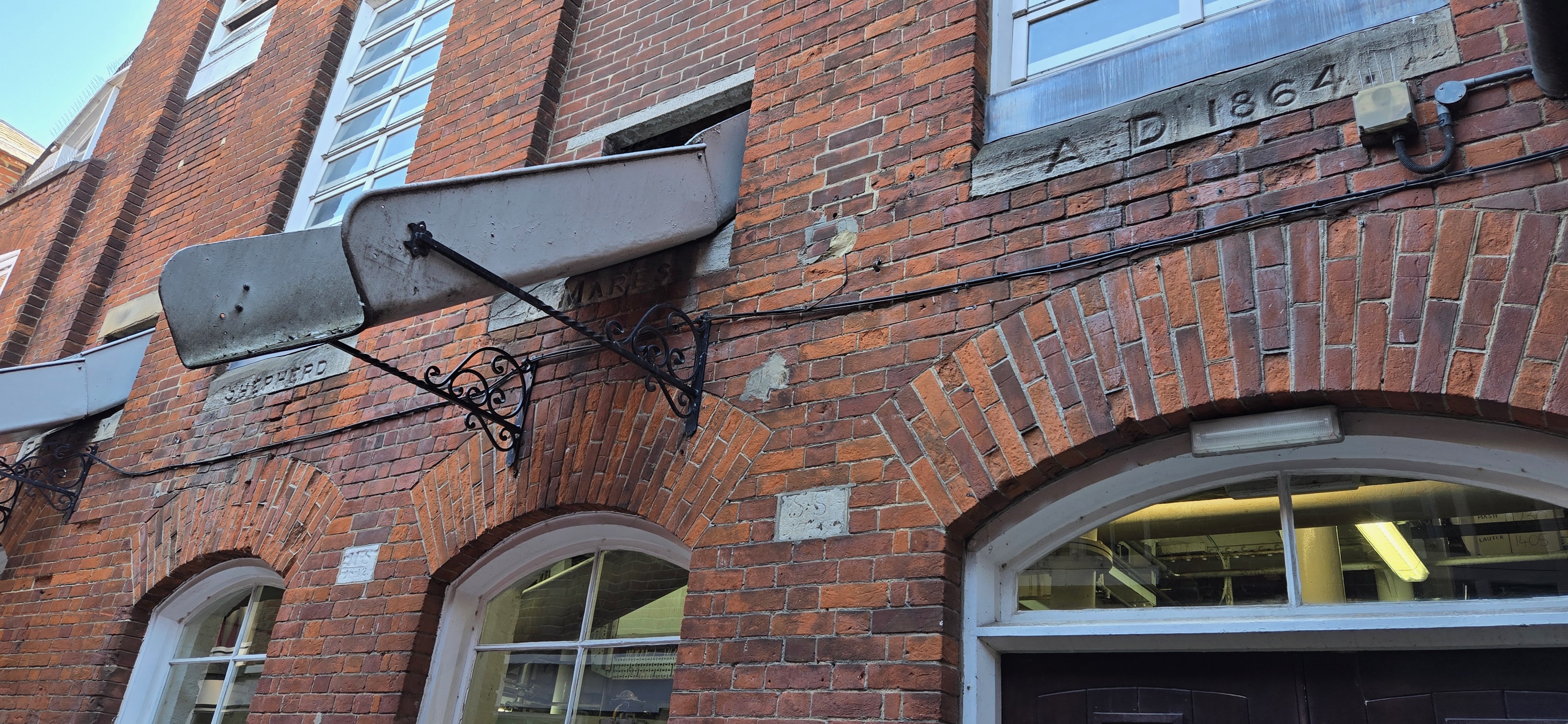
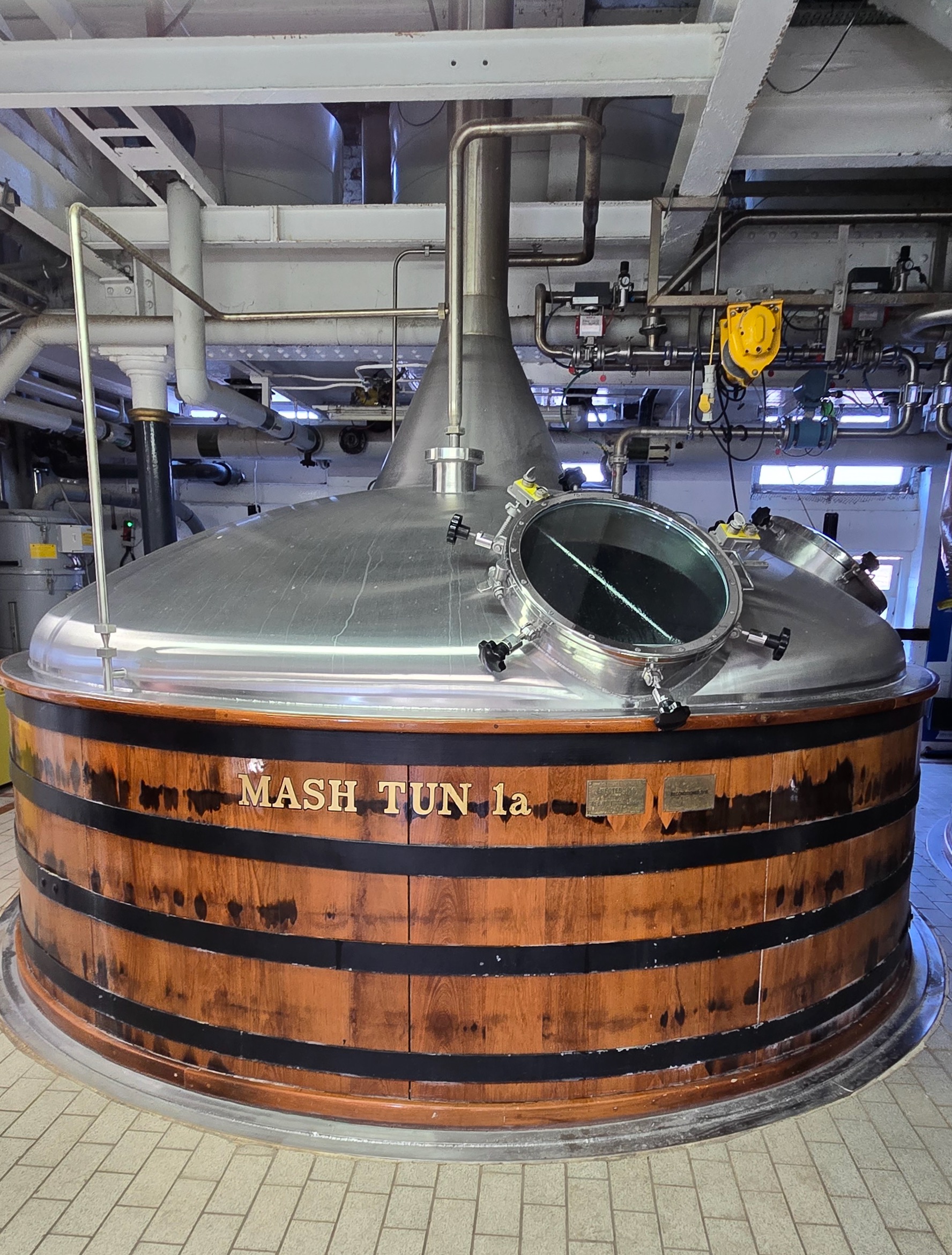
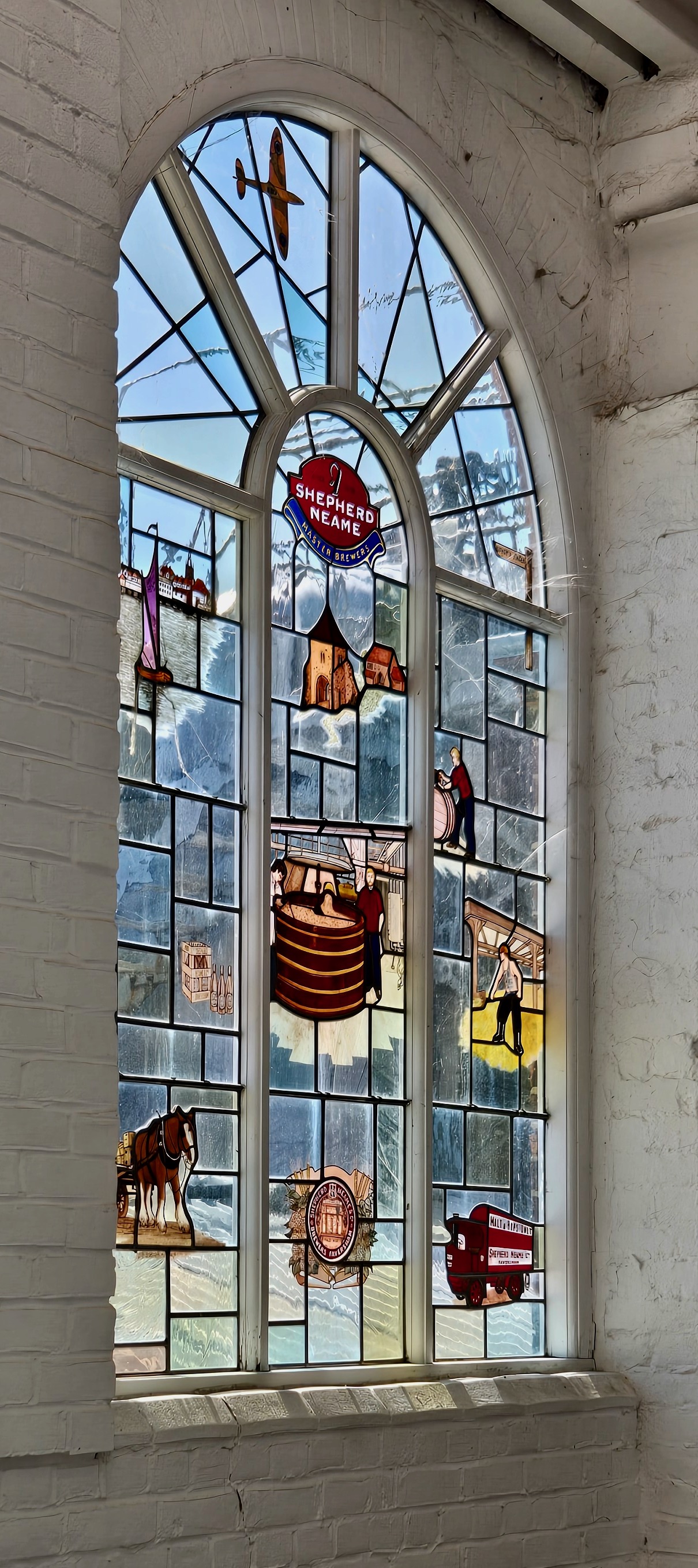
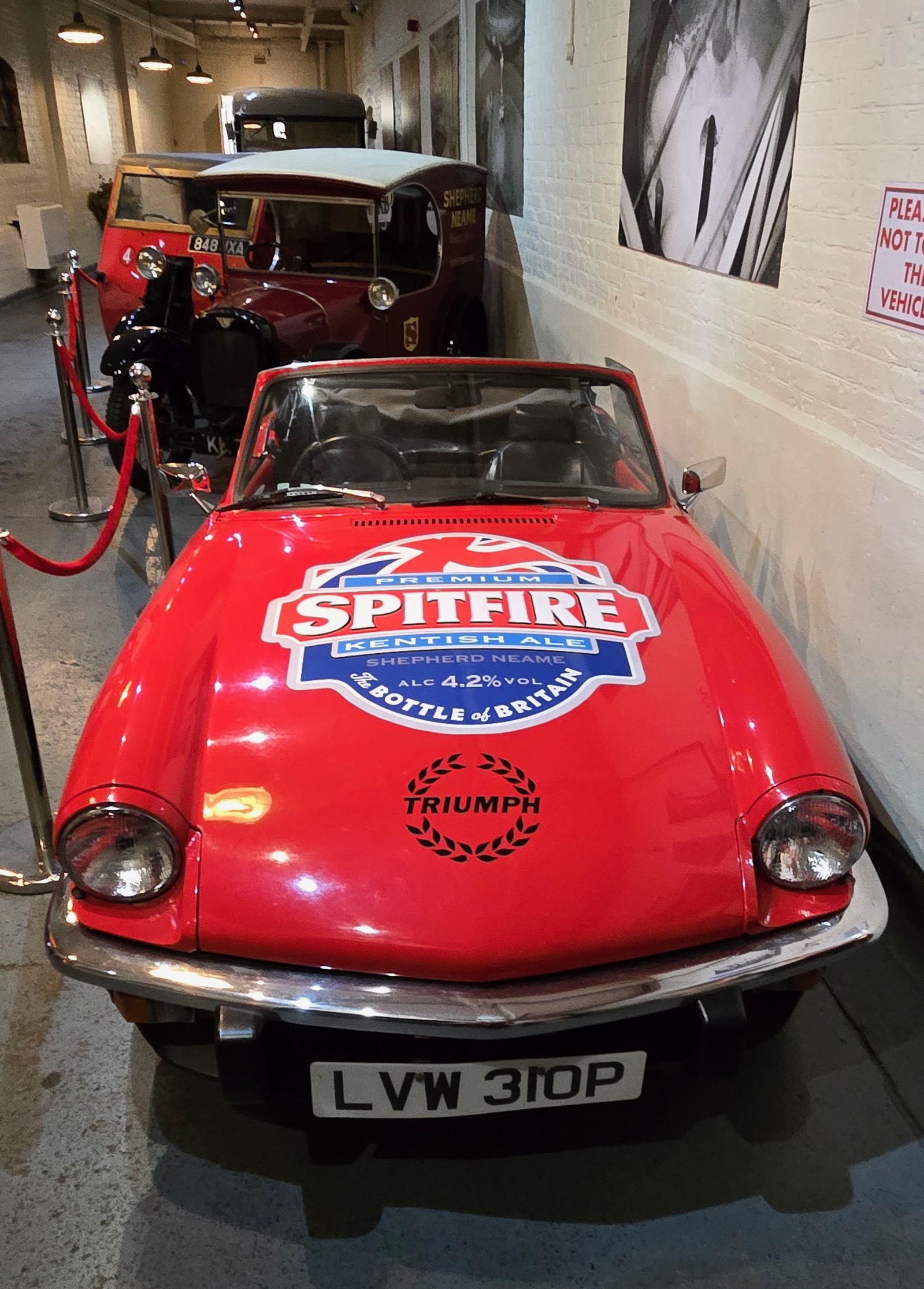
I also couldn’t resist their collection of pub signs.
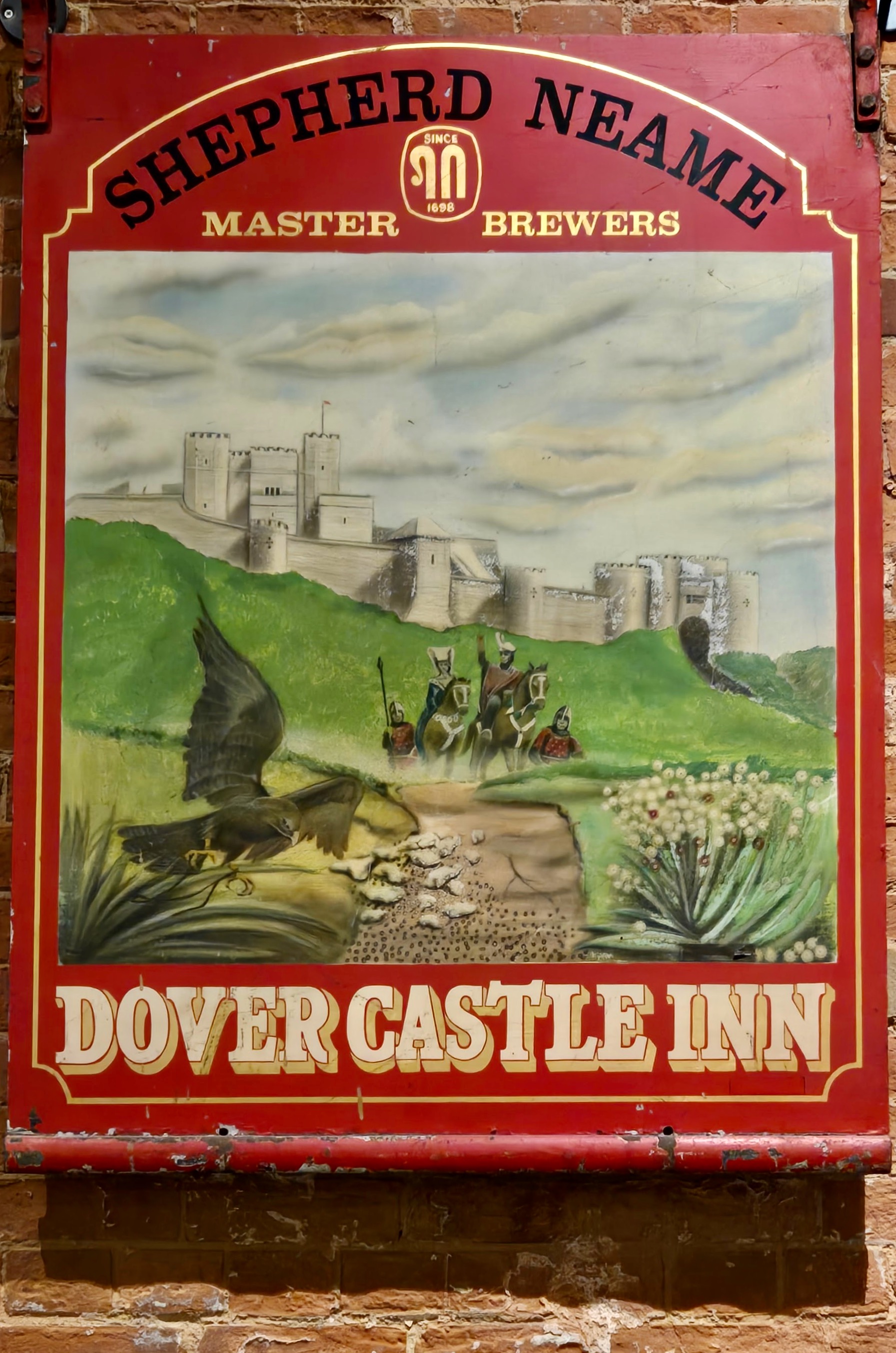
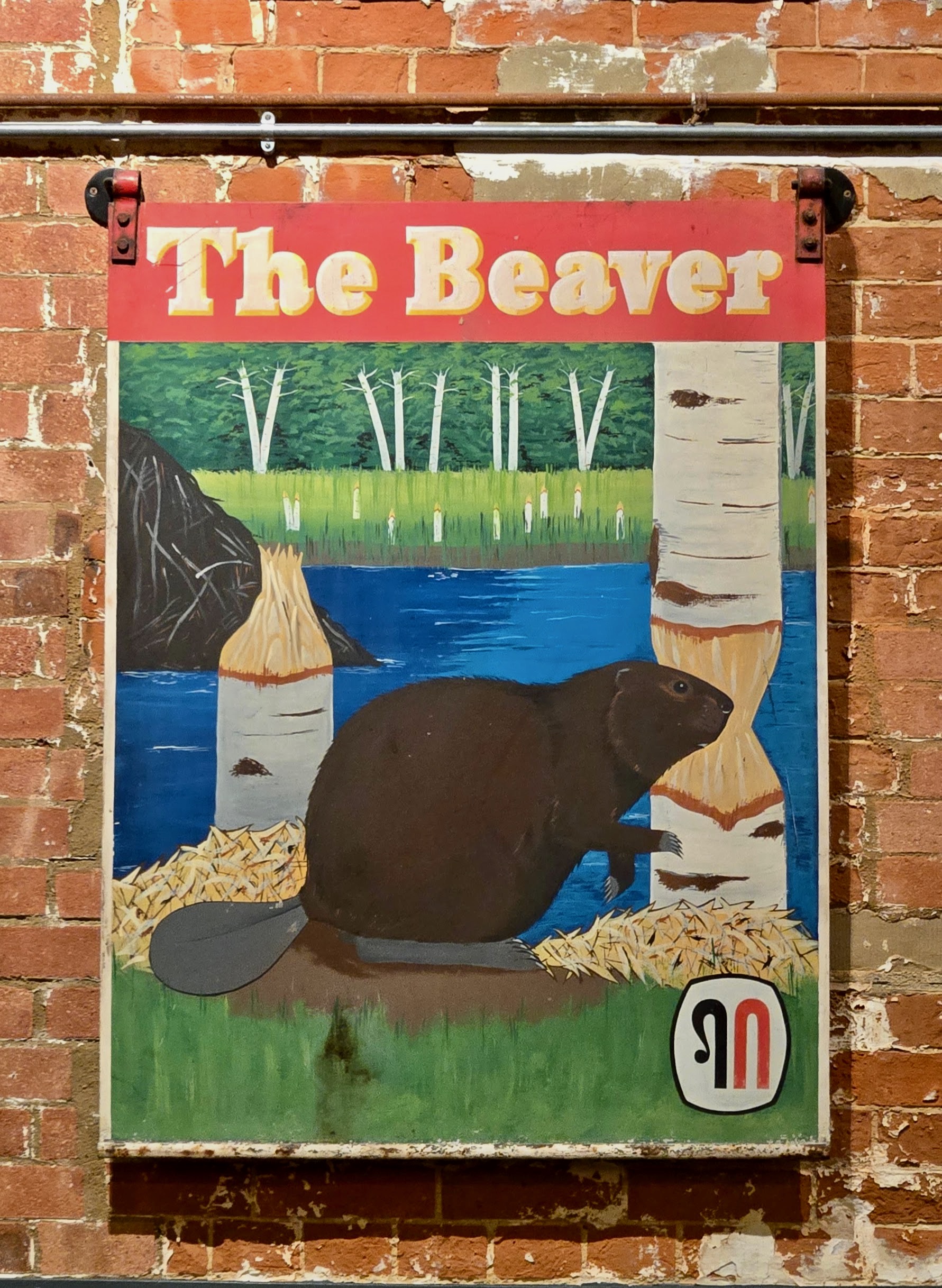
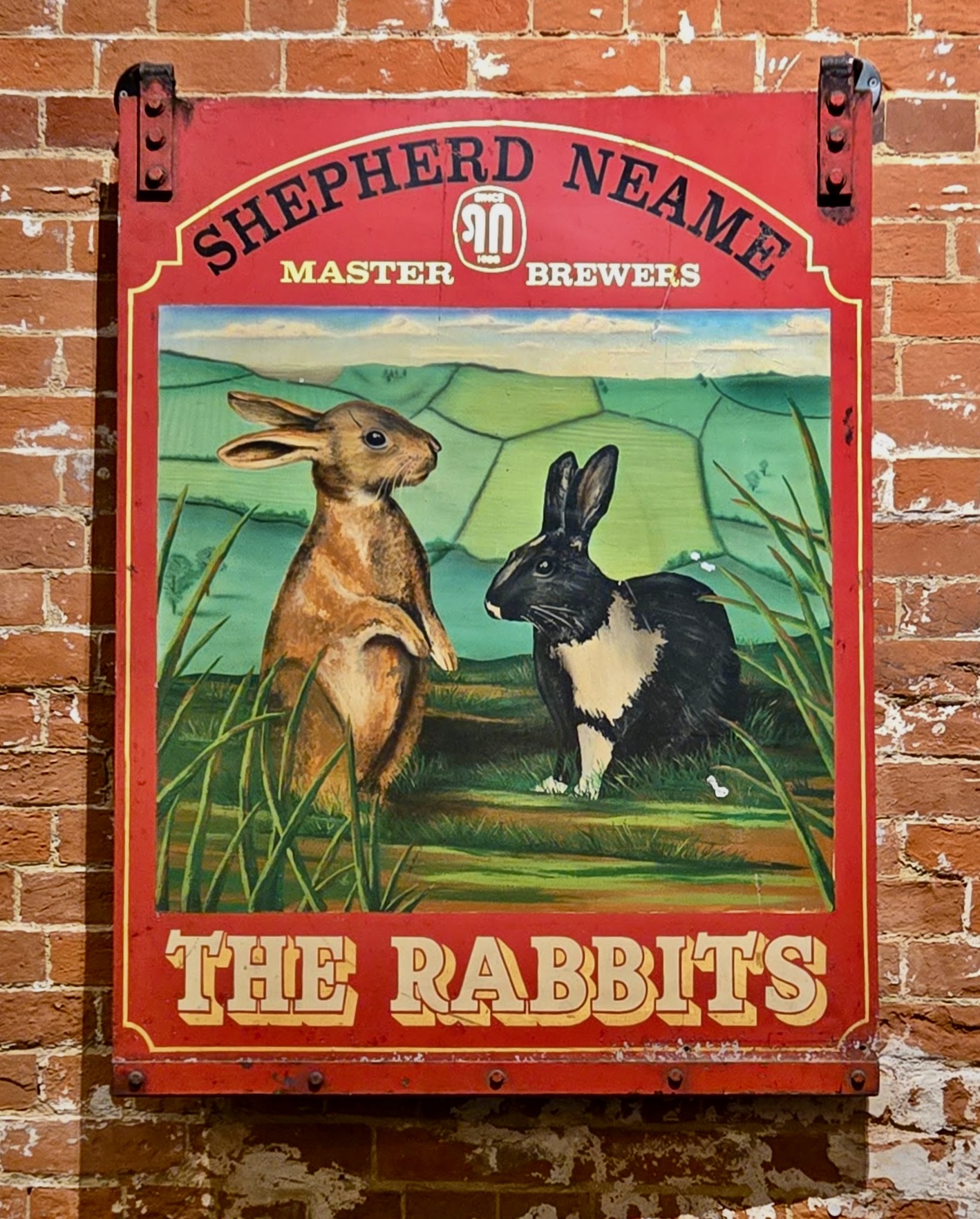
And the tasting.
And I found this chart quite interesting and comparable to similar ones for wine tasting
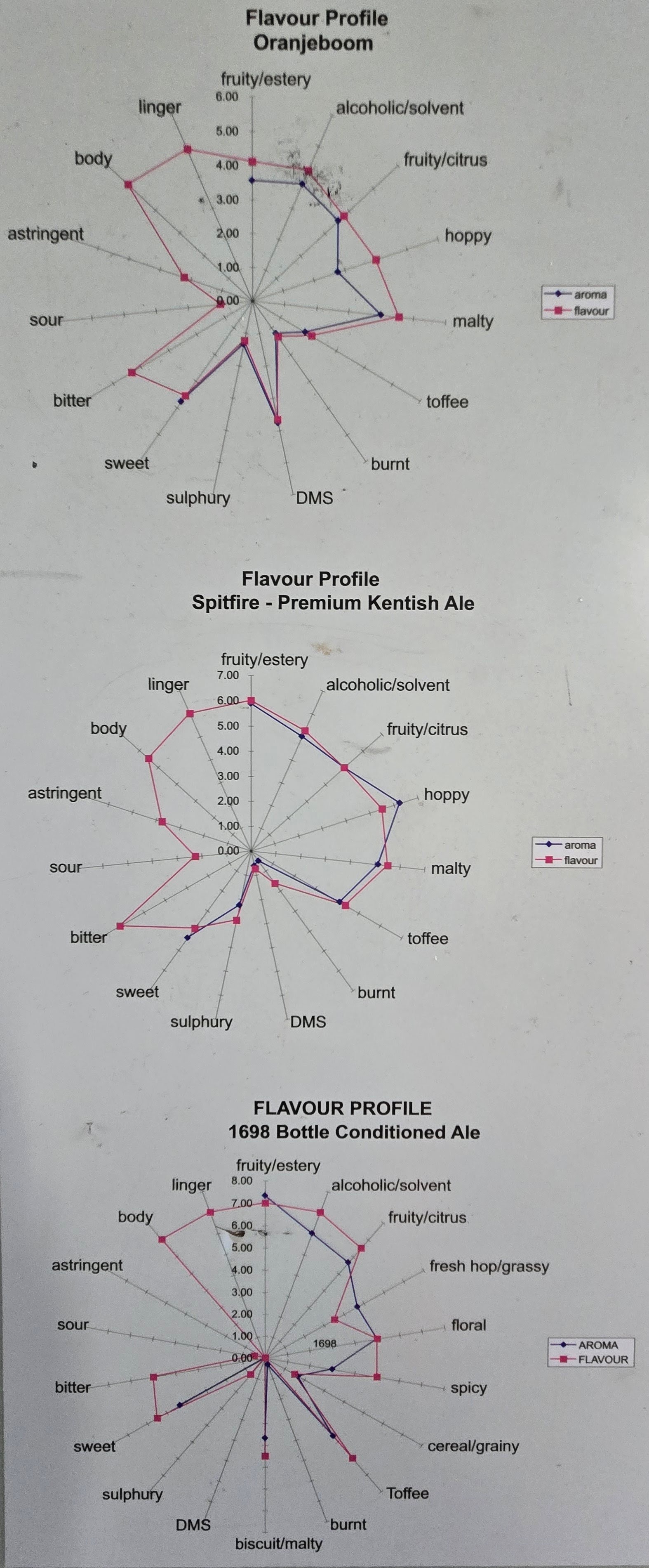
So whether you stop by for a tour or try their ales at your local pub, Enjoy!
We drove back to Leed’s Castle where we were to spend another night. We went out to eat at the nearby Park Gate Inn. We had a lovely meal and even though they were short staffed, Bamber, our waitress, took care of us to perfection! Then back to the Castle for another night’s sleep.
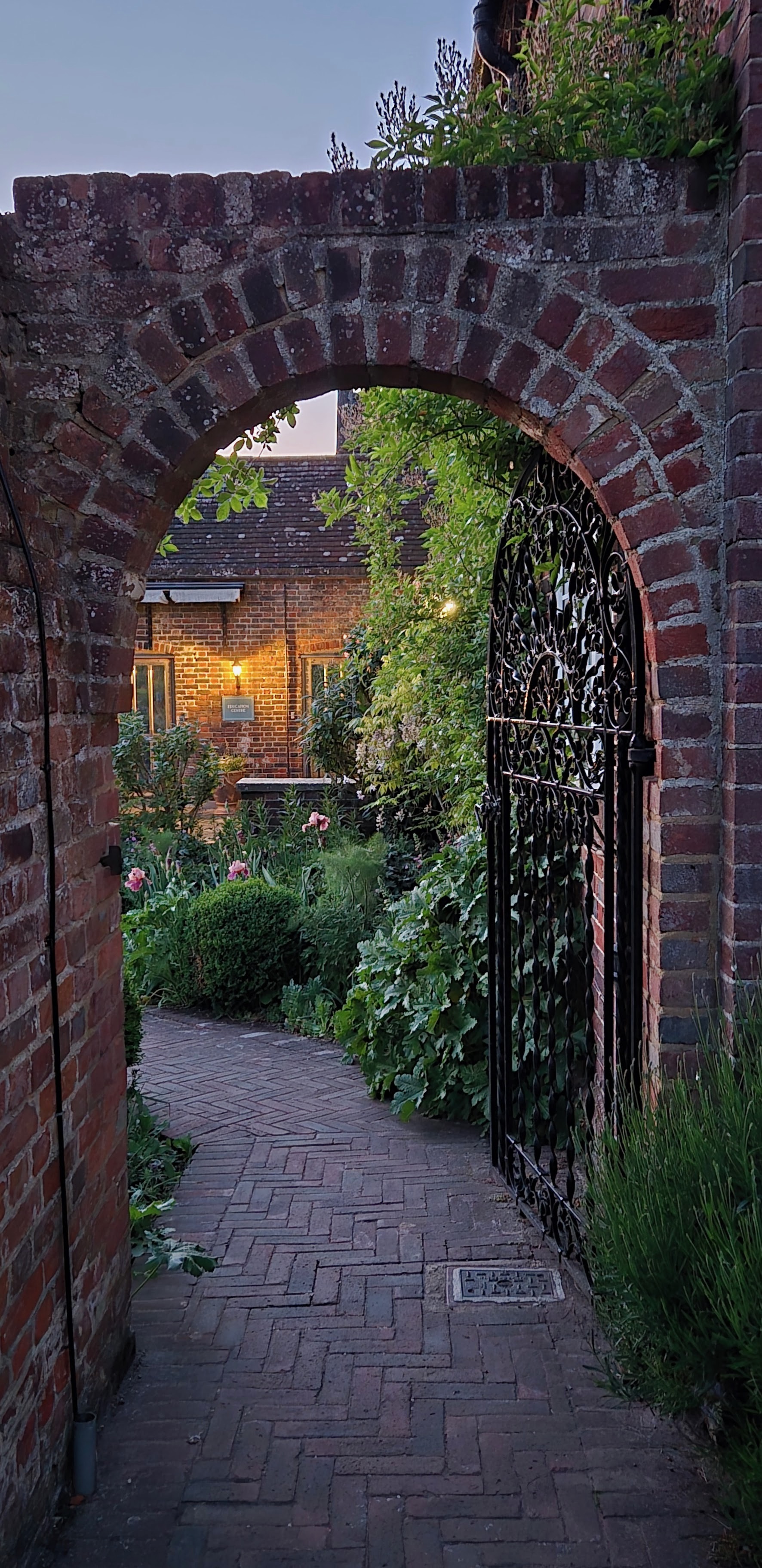
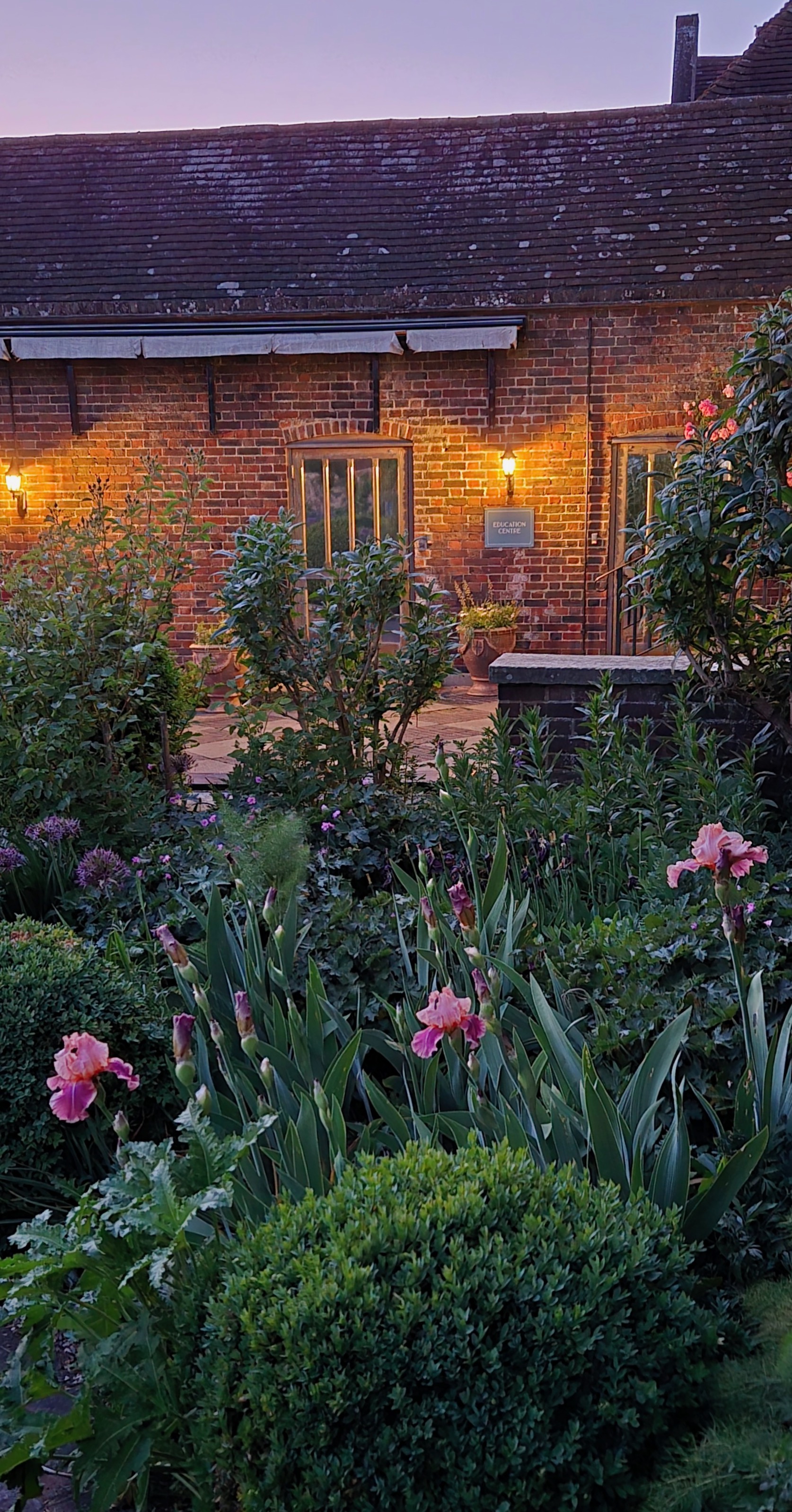
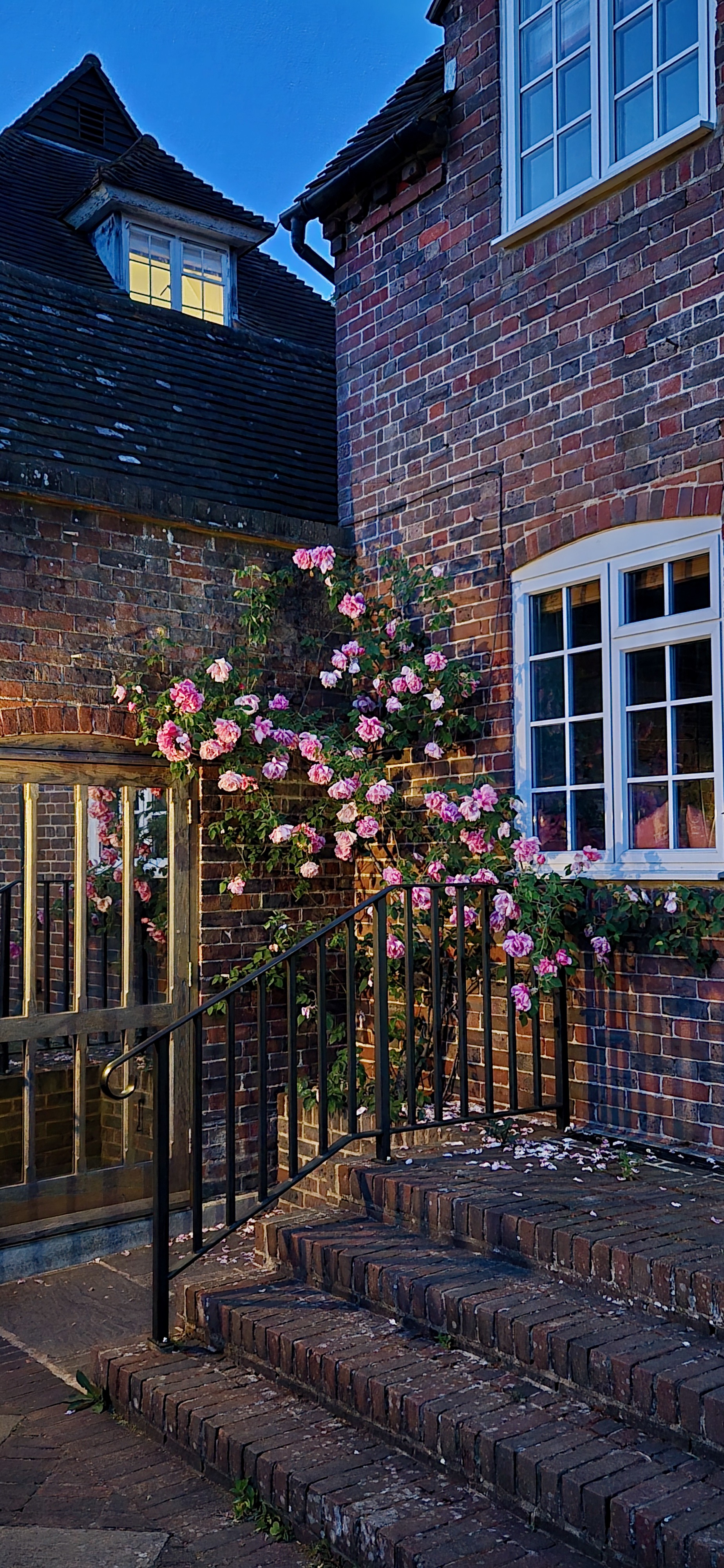
Whether day or night the gardens at Leeds Castle, put on a show.
Kelly Wheaton ©2025 All Rights Reserved
KENT The Garden of England Day Two Part Two & Day Three Part One: Leeds Castle
Posted on September 2, 2025 Leave a Comment
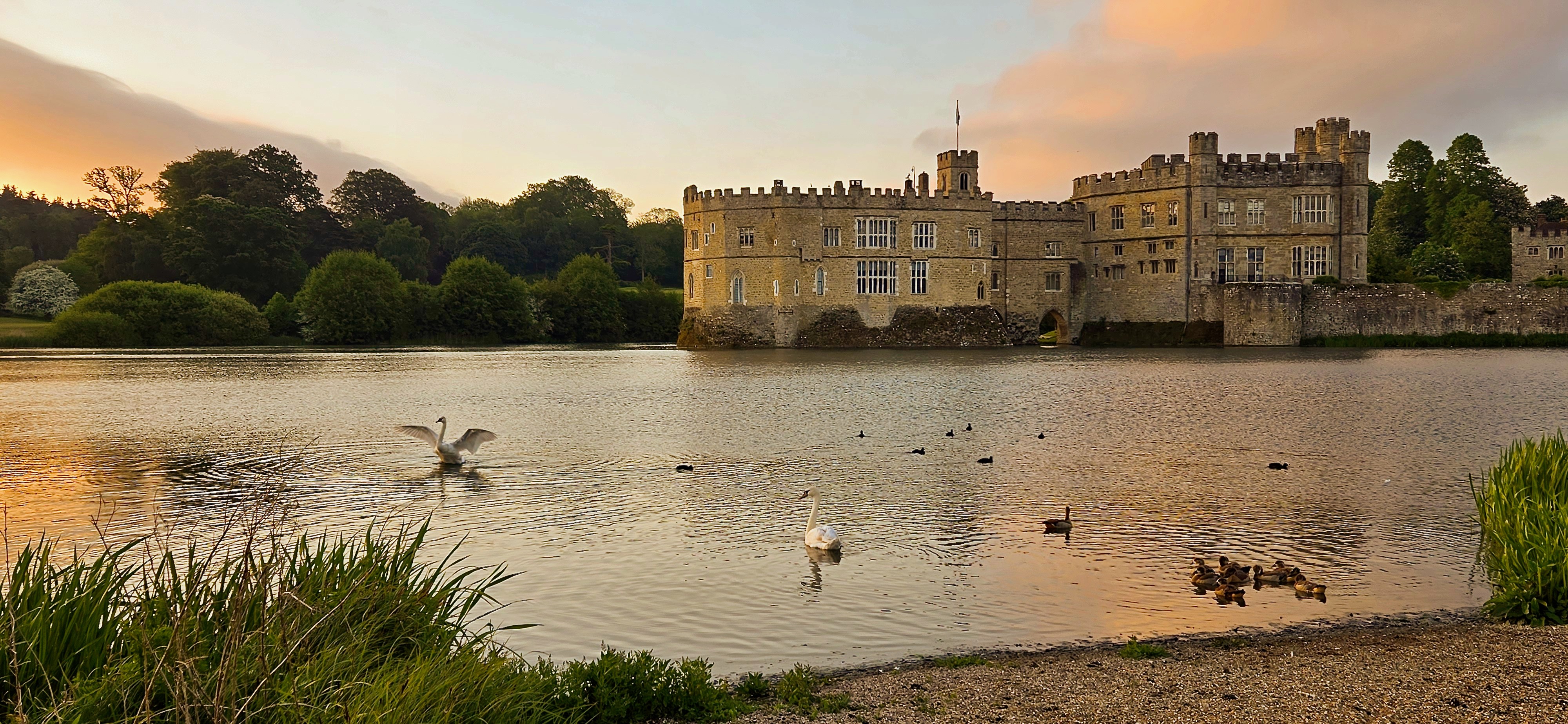
We arrived at Leed’s Castle in the afternoon for a two night stay. I had written a bit about Leed’s Castle in an earlier blog post here. Leed’s Castle is confusing for many a tourist, as it is not located in Leeds, Yorkshire, but rather near Maidstone in Kent. About the year 857, Leeds Castle was a Saxon castle built of wood on 2 islands, in the middle of the River Len. It was owned by the Saxon chief, Led or Leed, and was known as the Manor of Esledes. We drove in from the east past the golf course. The Castle lies in an idyllic setting on 500 acres of beautifully landscaped grounds. Although I am sure a “day visit” to enjoy many of the attractions is quite lovely, but for me the best parts of Leed’s Castle were revealed in the late evening and early morning hours when the grounds are only open to those staying there. We were to spend two nights here. My room, which was supposed to be shared I had to myself, and it was huge. In total there were 4 sets of window, 3 overlooking Culpeper’s Garden and one the Car park. Room, the view over the garden and the 3 upstairs windows on left were my room.
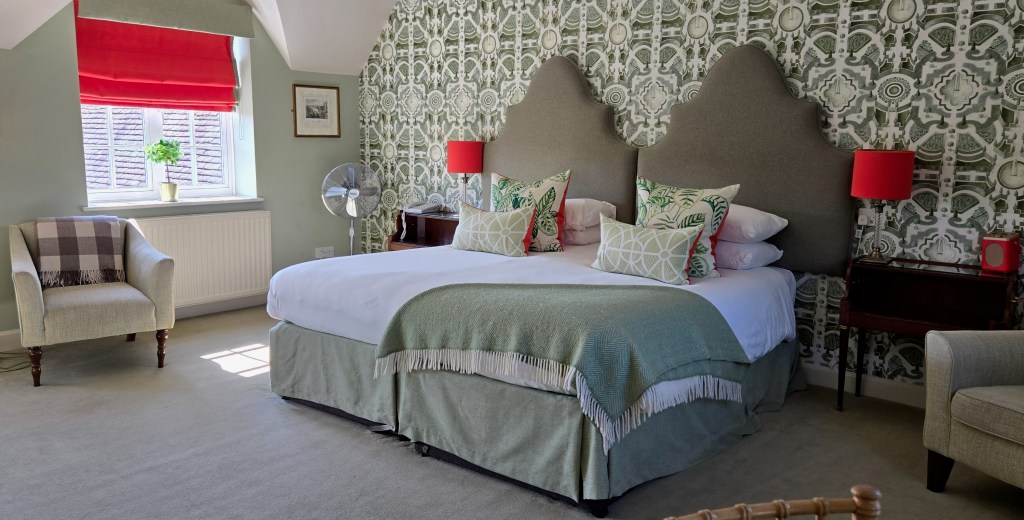
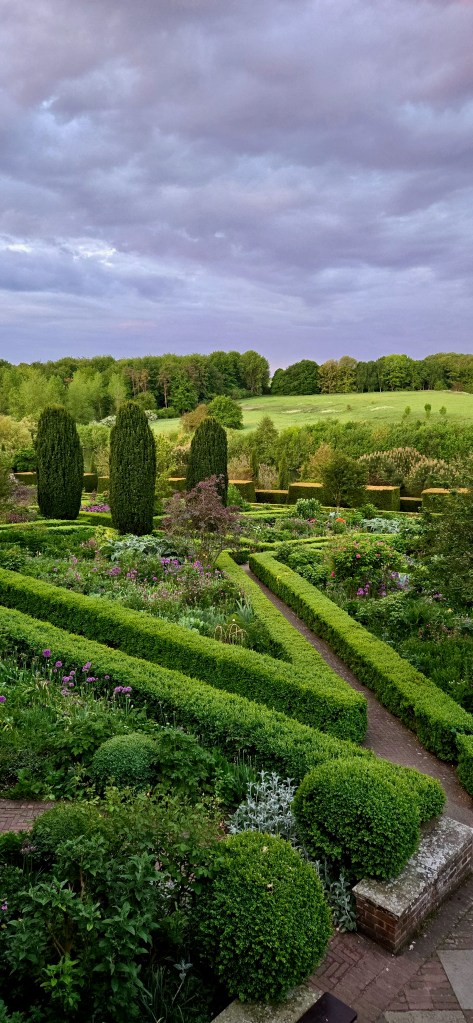
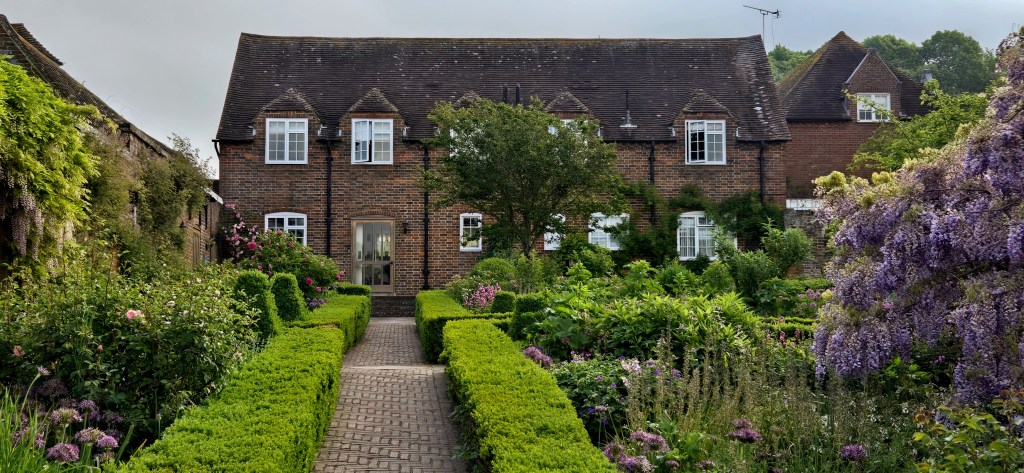
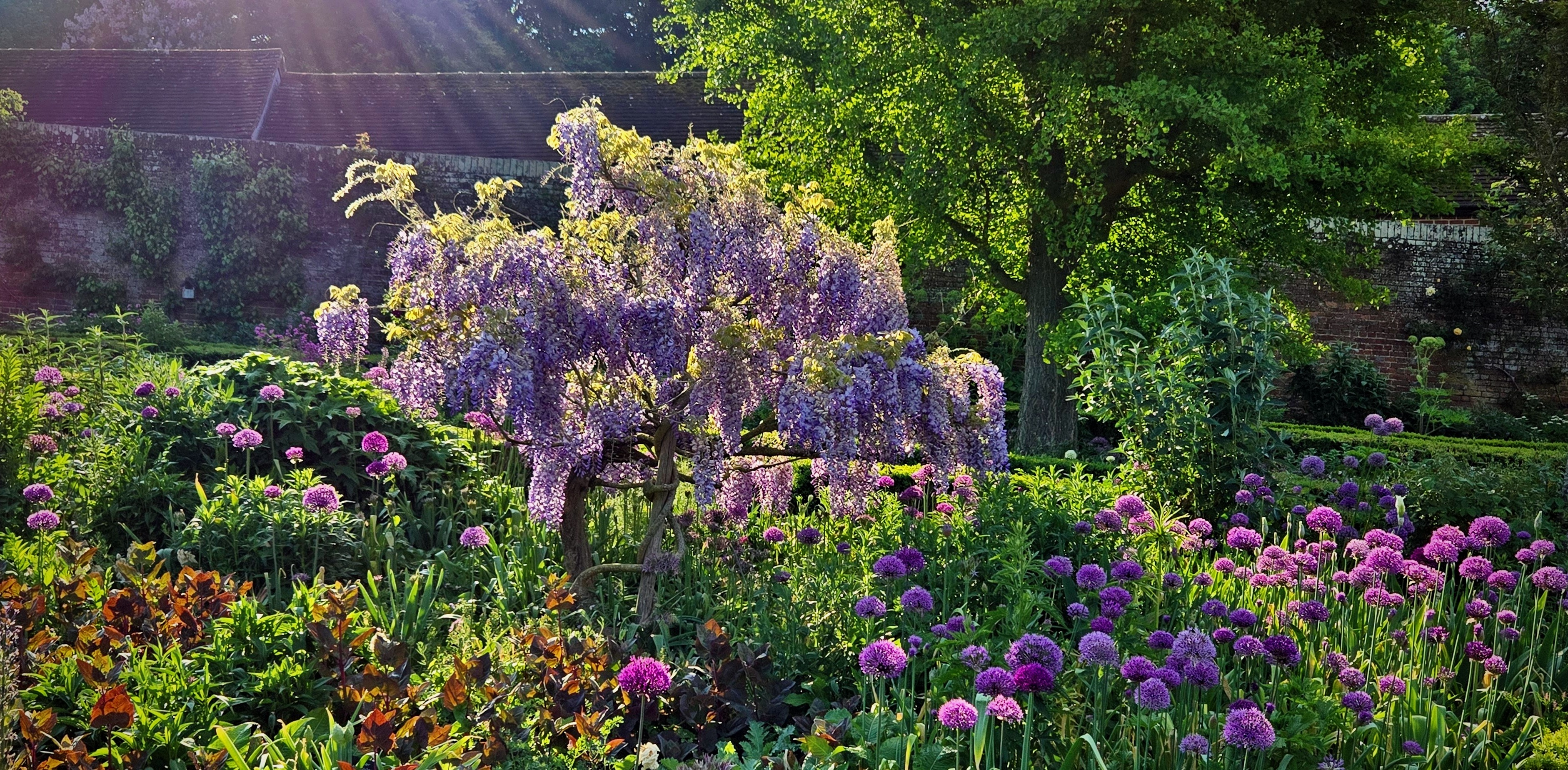
I couldn’t have been more pleased to have such a lovely view of the garden. This was the site of the original Kitchen Garden named after the family that owned the Castle in the 17th century. In 1980 it was transformed by the landscaper designer Russell Page into a beautiful formal garden with a central Wisteria tree. My grandparents had a similar one in, albeit smaller, in their garden when I was growing up. The garden with formal box hedges is chock full of roses, iris, allium, poppies and assorted perennials.
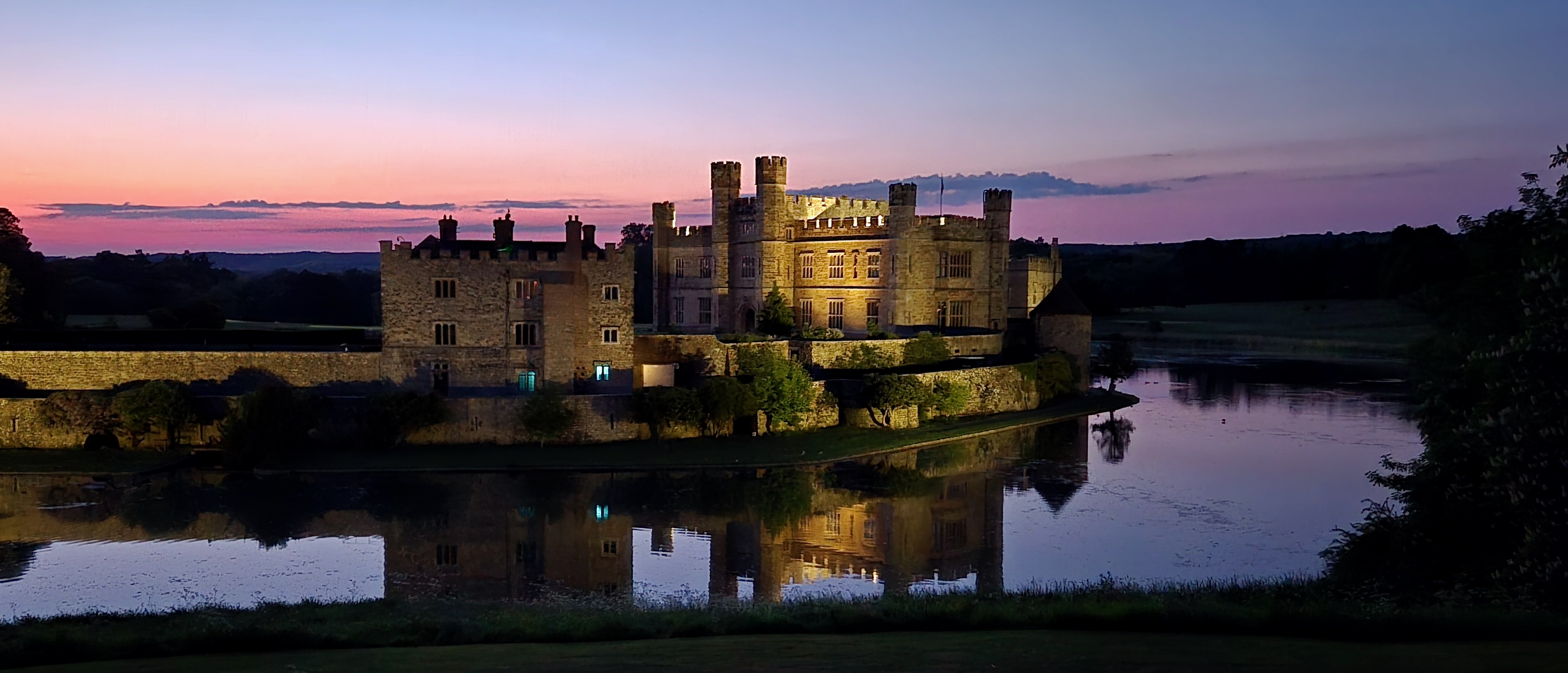
This first evening we had a stroll around the grounds, although the castle itself was closed to all but the people who were staying on the island. Dinner was at the Castle View Restaurant. The food and the view did not disappoint.
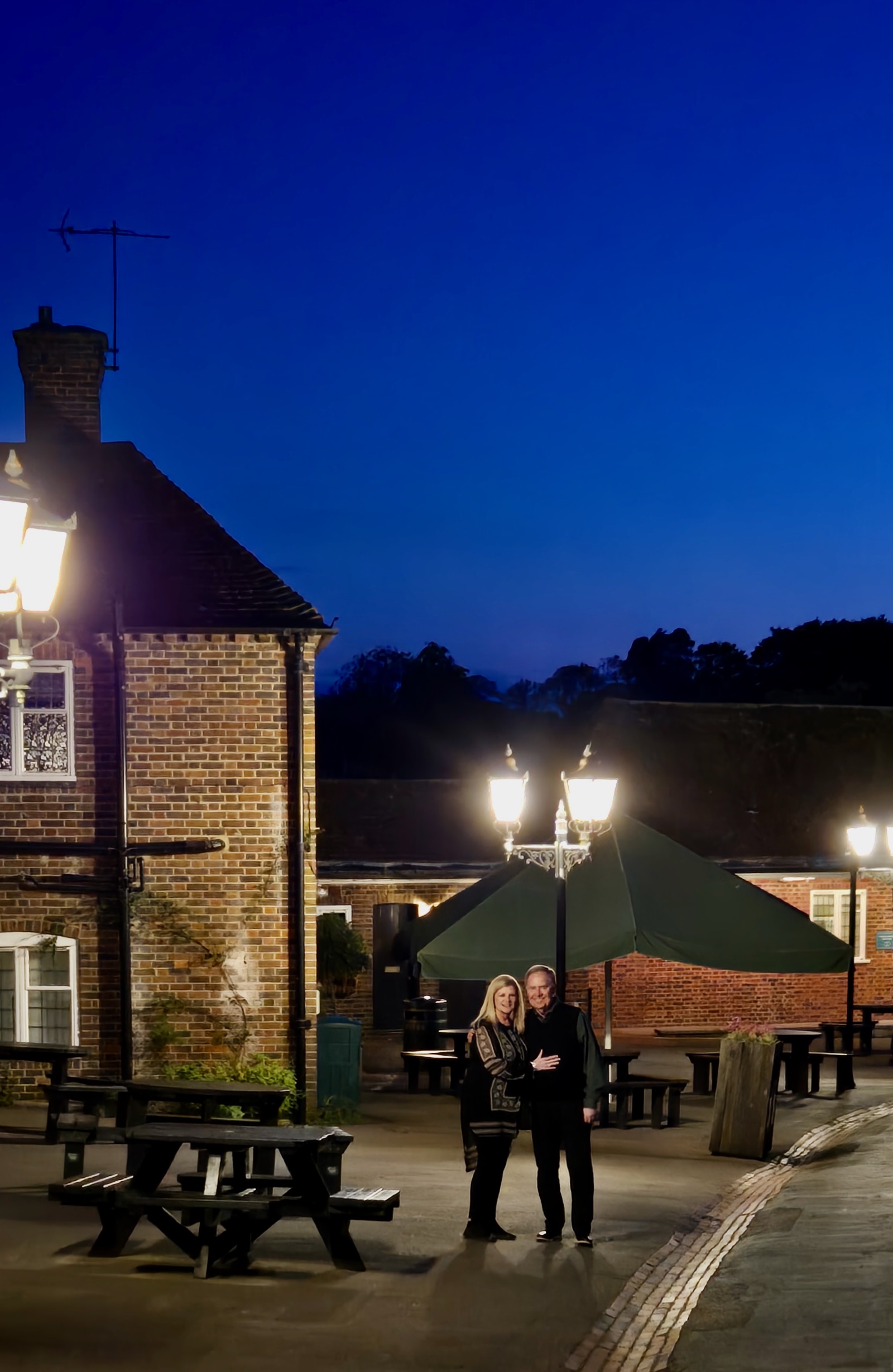
On the way back to our room I caught a quick photo of Chuck and Joan.
Off to a great night’s sleep but woke early, which gave me the opportunity to wander about the grounds before anyone else was up!
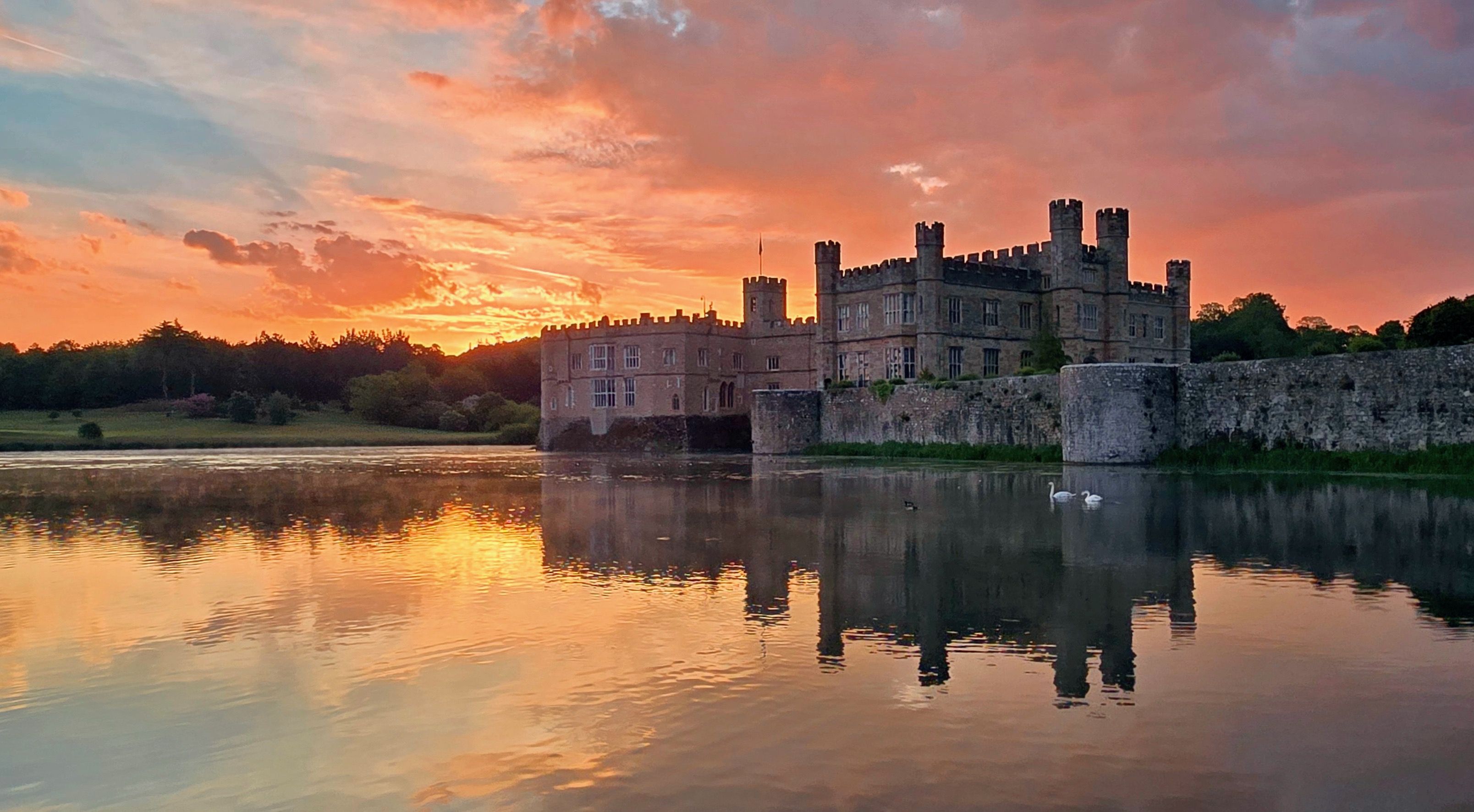
Magical colors of the early morning light.
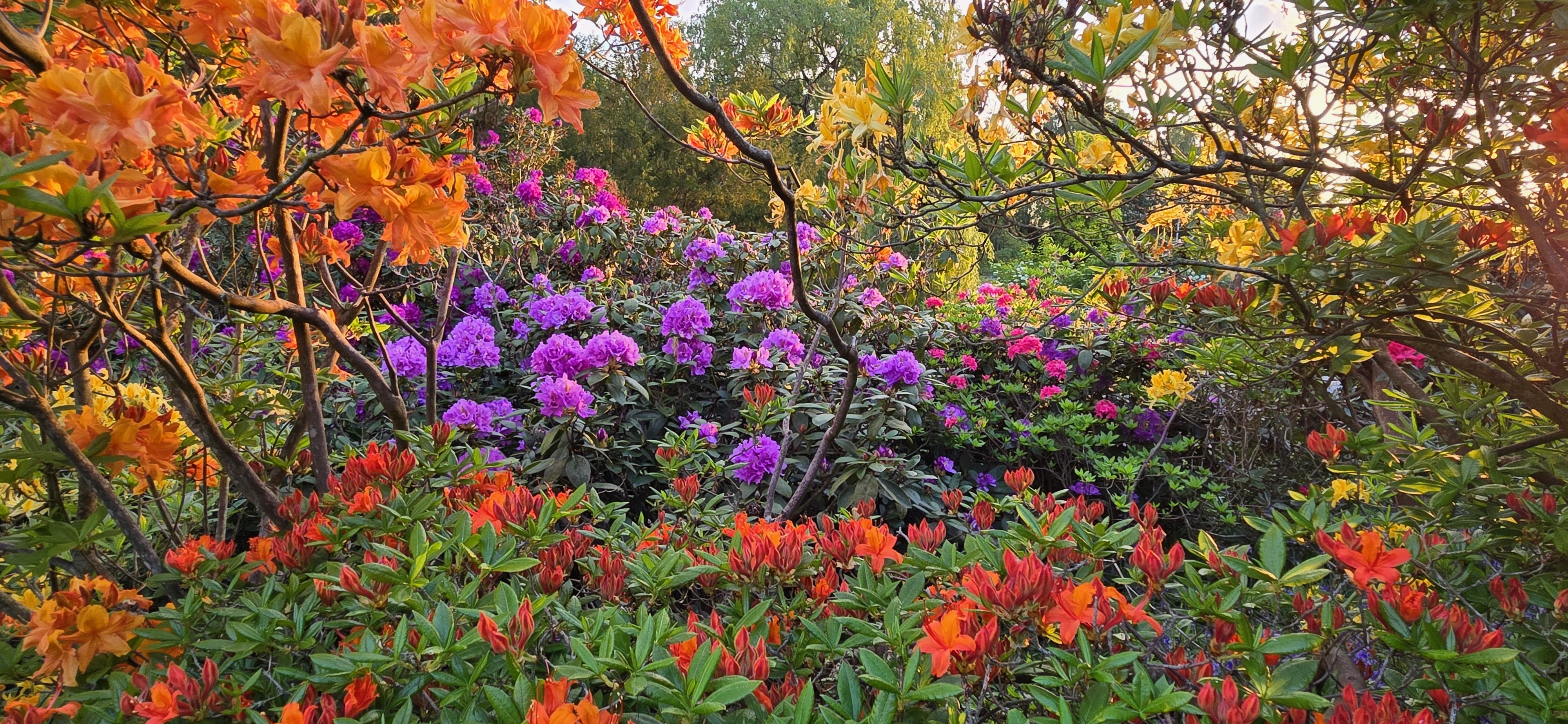
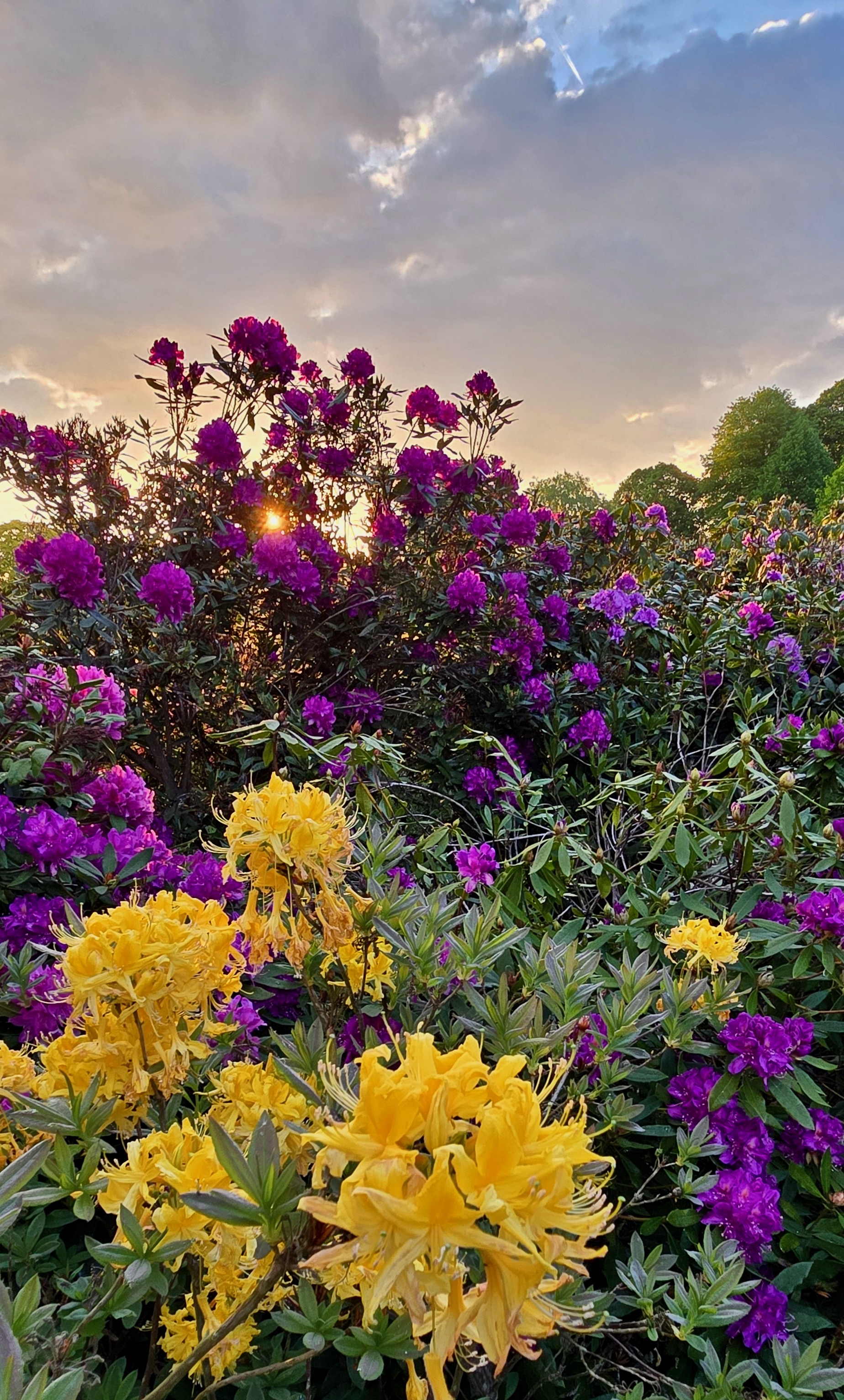
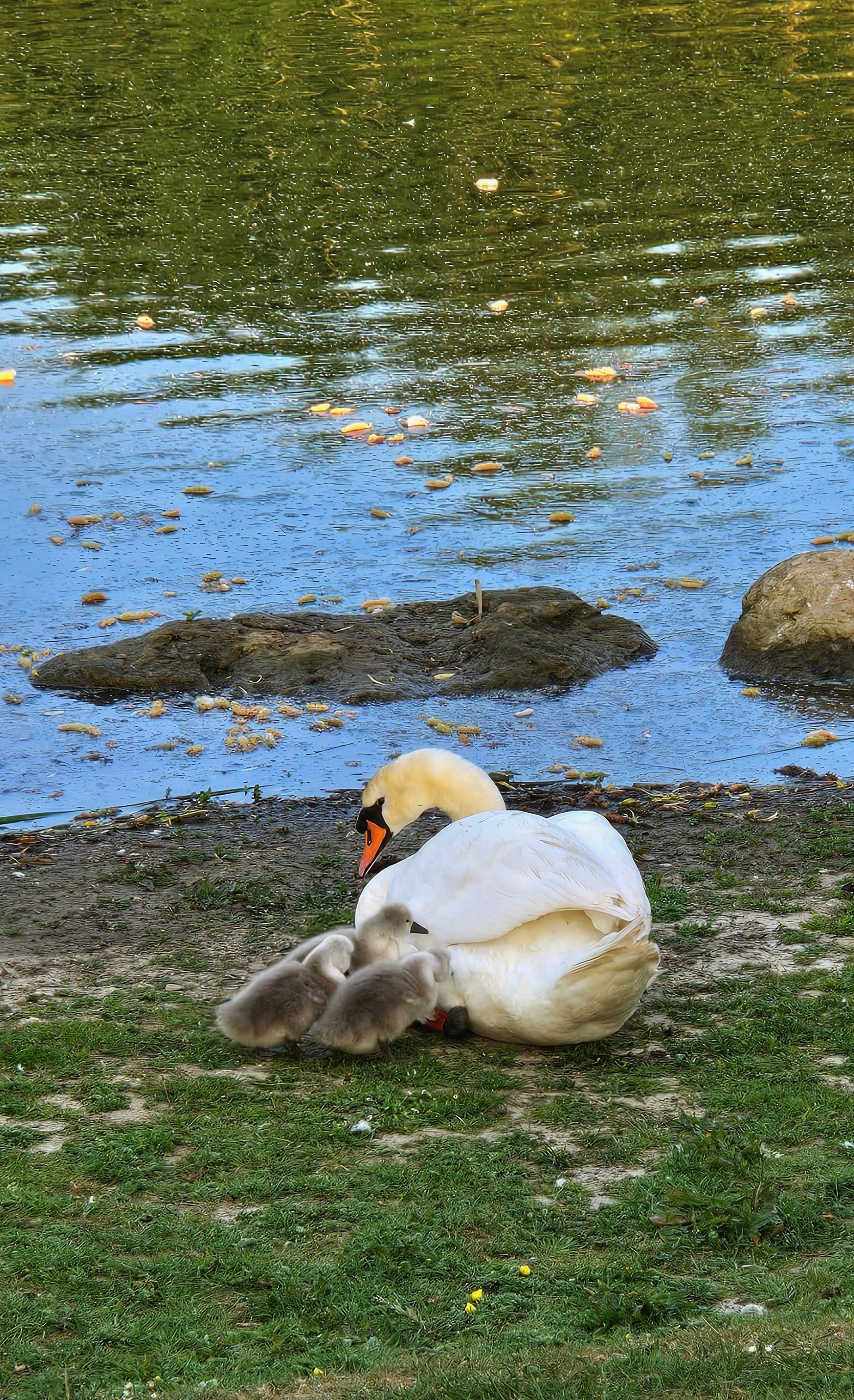
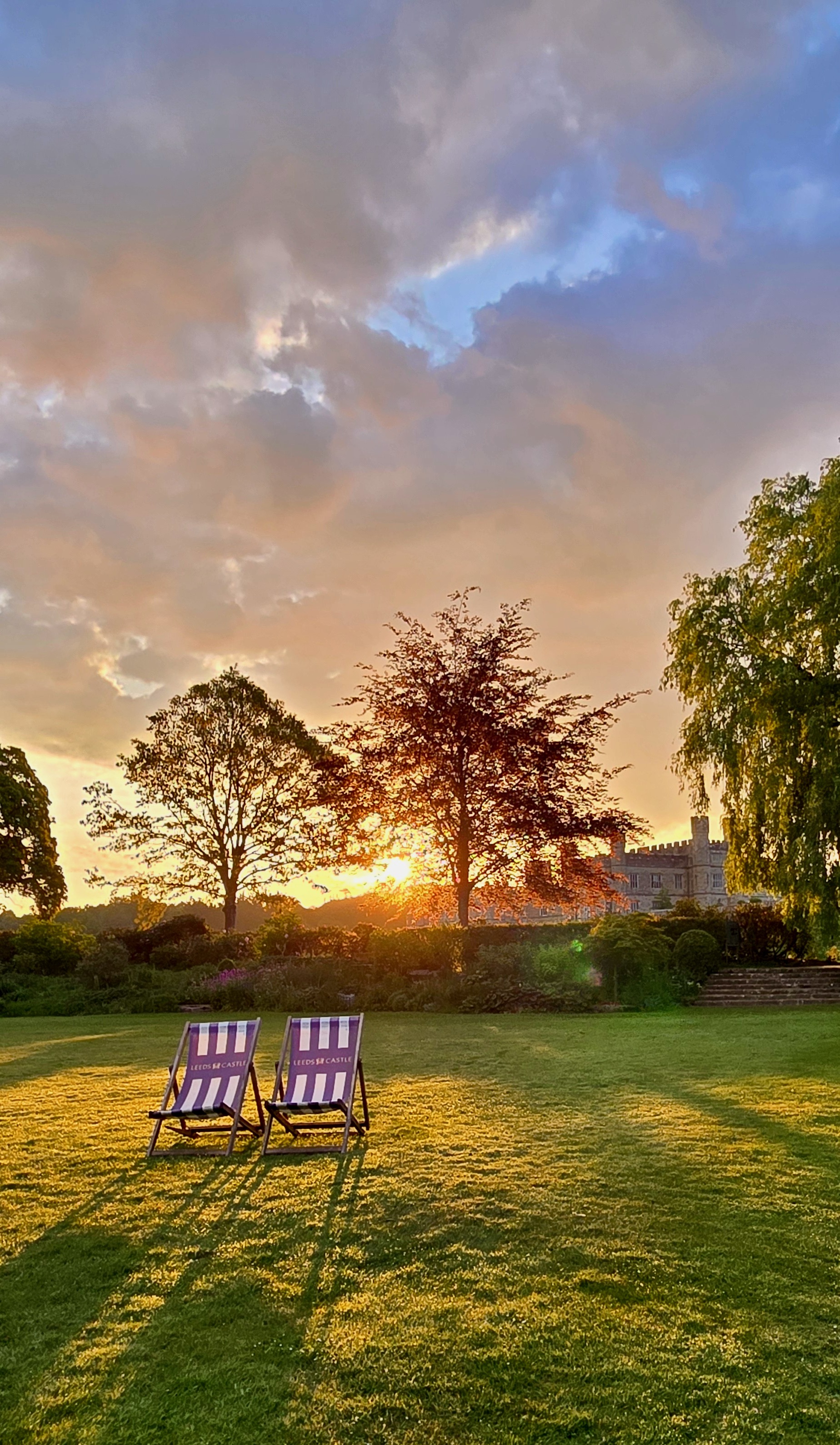
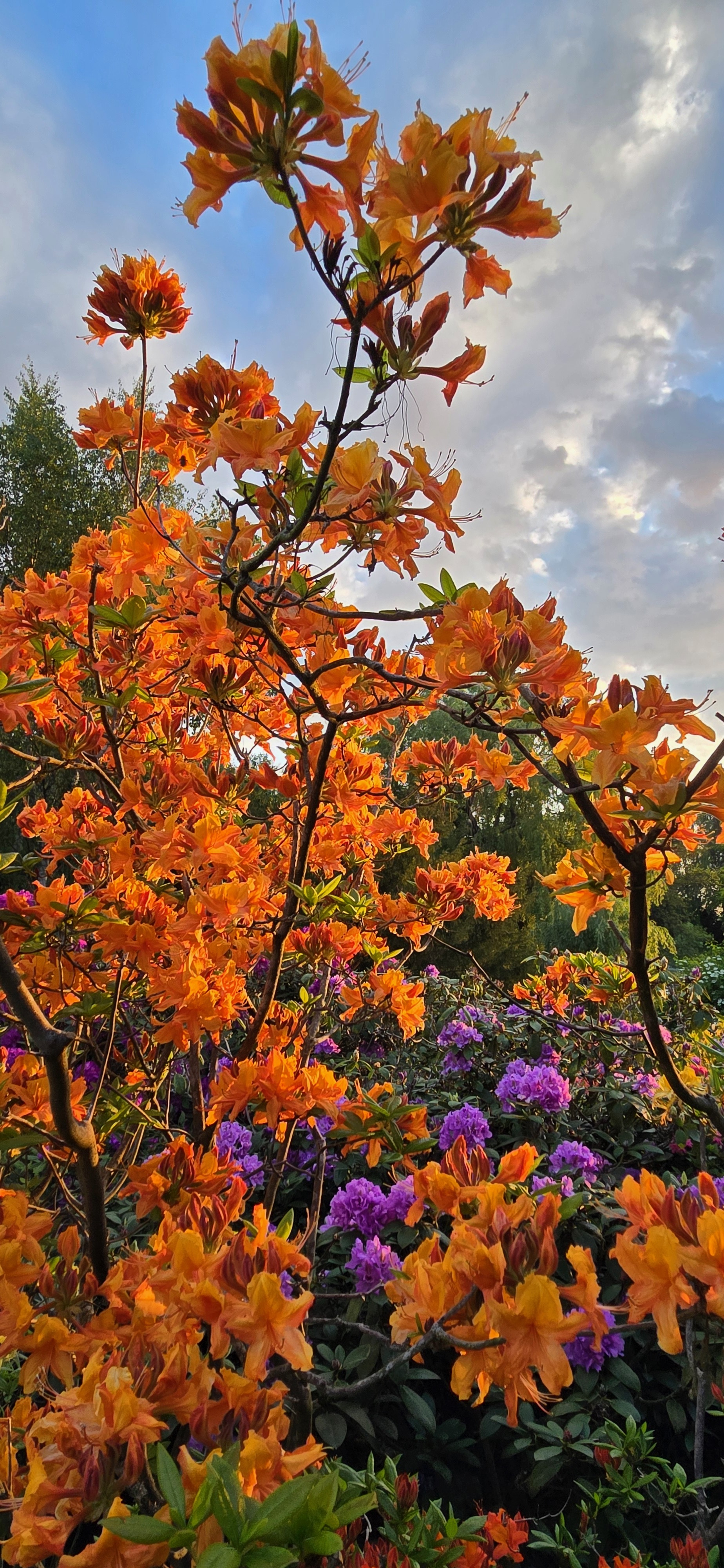
After my morning scramble about the grounds seeing many of my beloved Rhododendrons and Exbury Azaleas. The Exbury azaleas weere hybridized in England but from American deciduous azalea species. I was off to breakfast at the Castle View Restaurant and then for a guided tour of the castle.
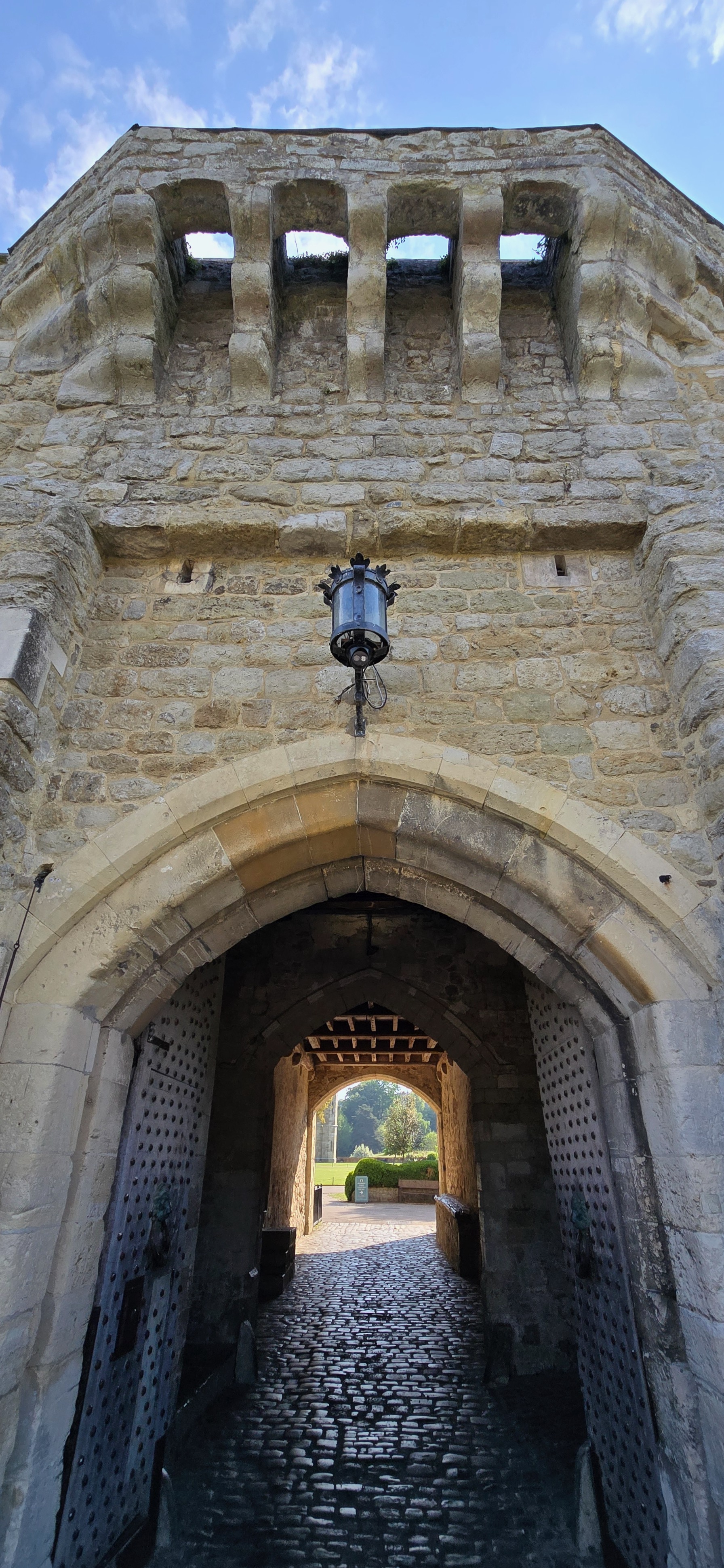
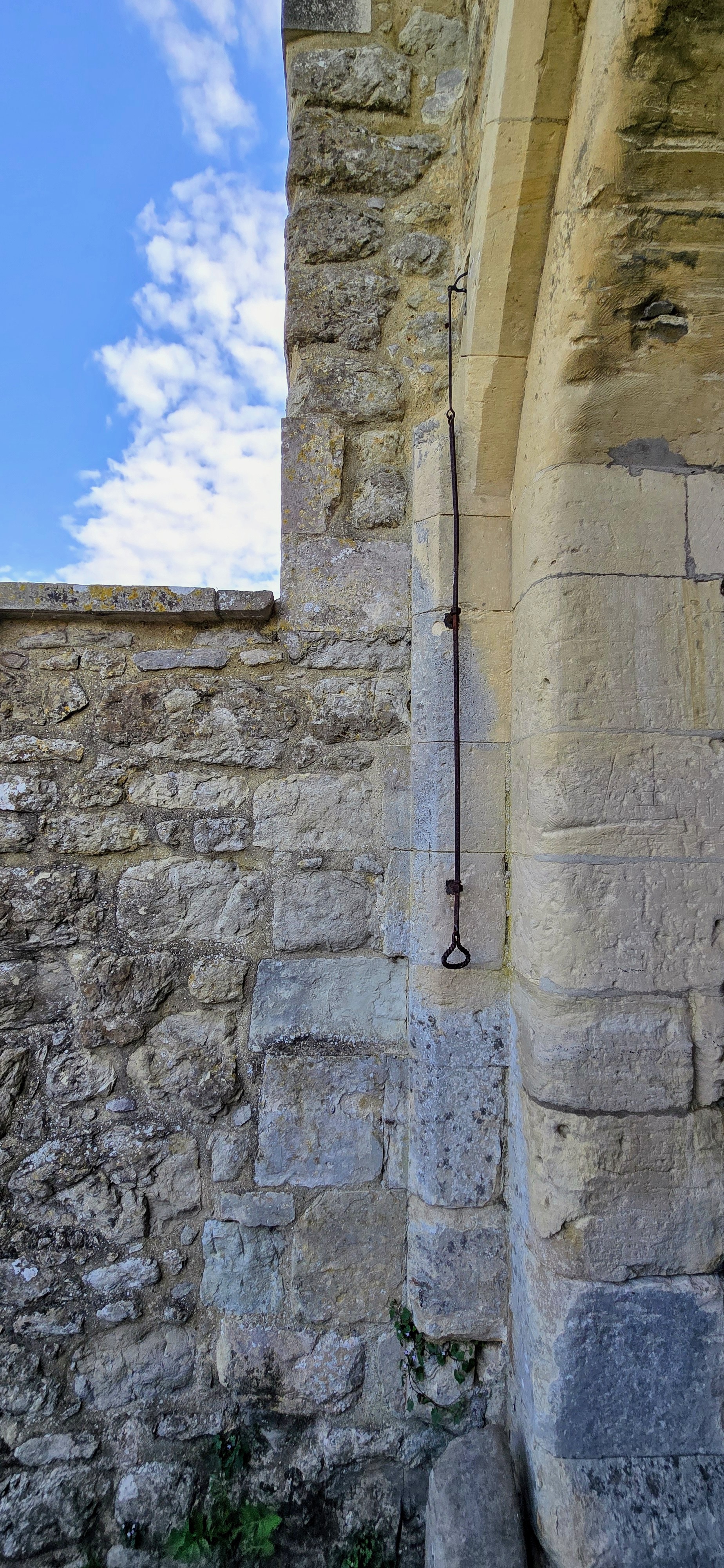
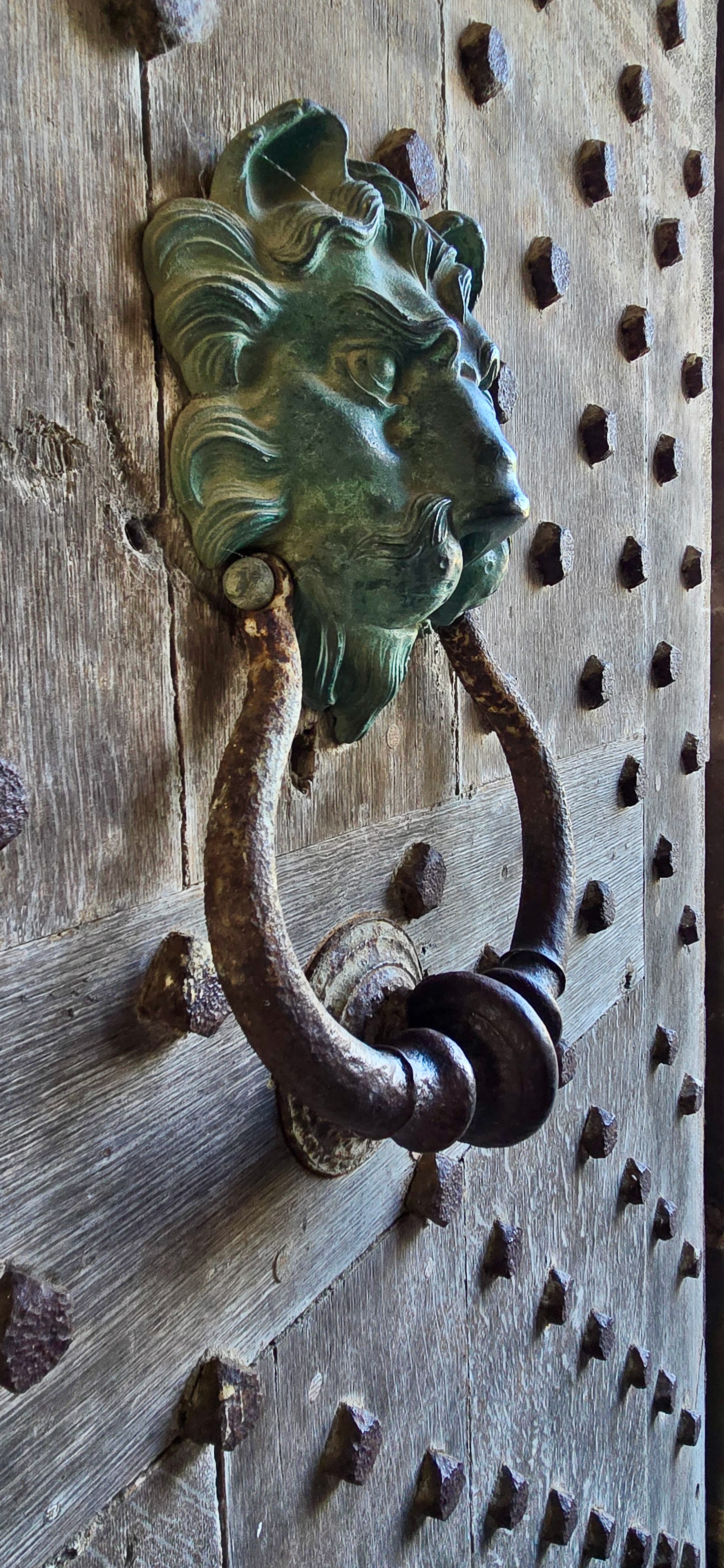
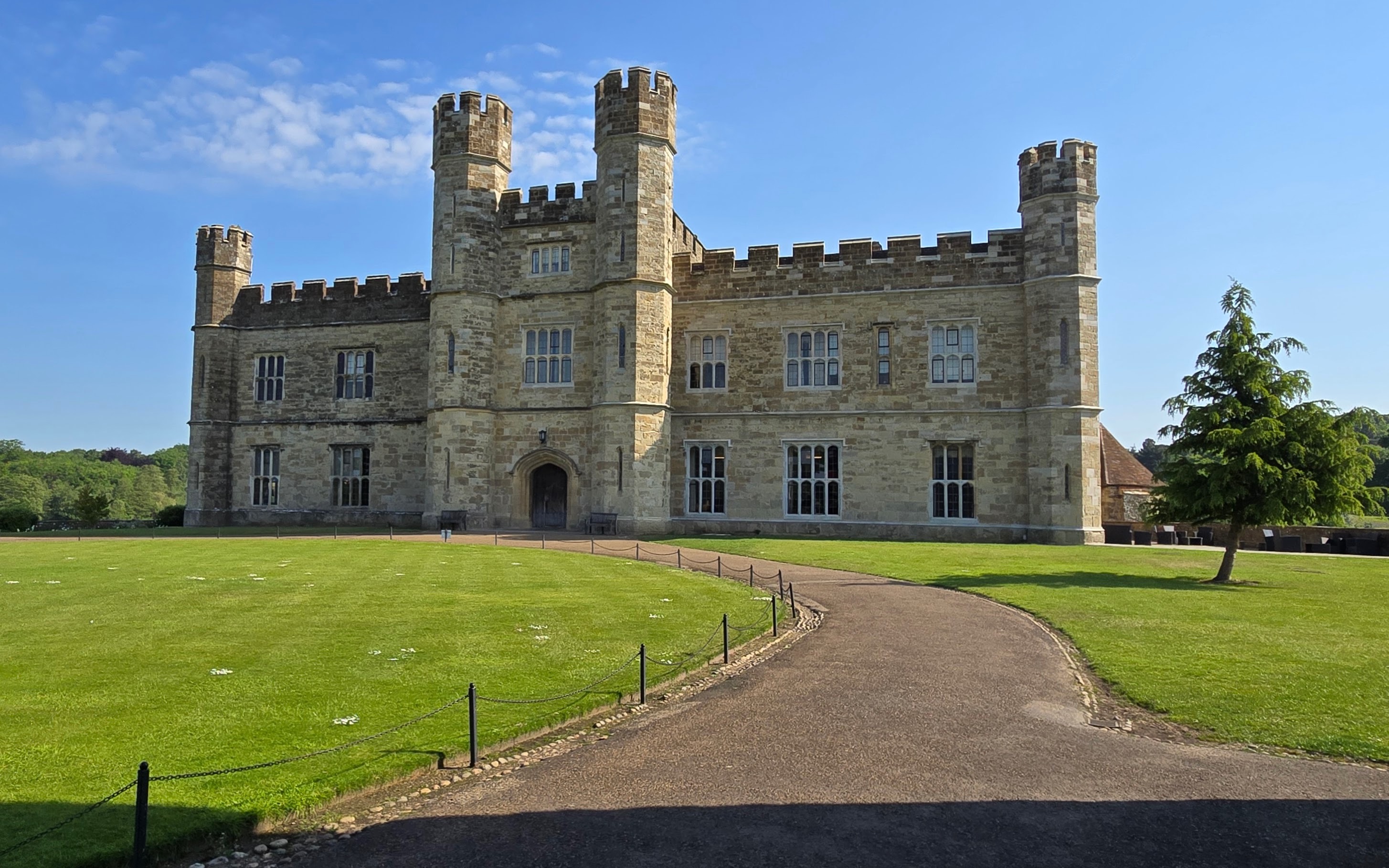
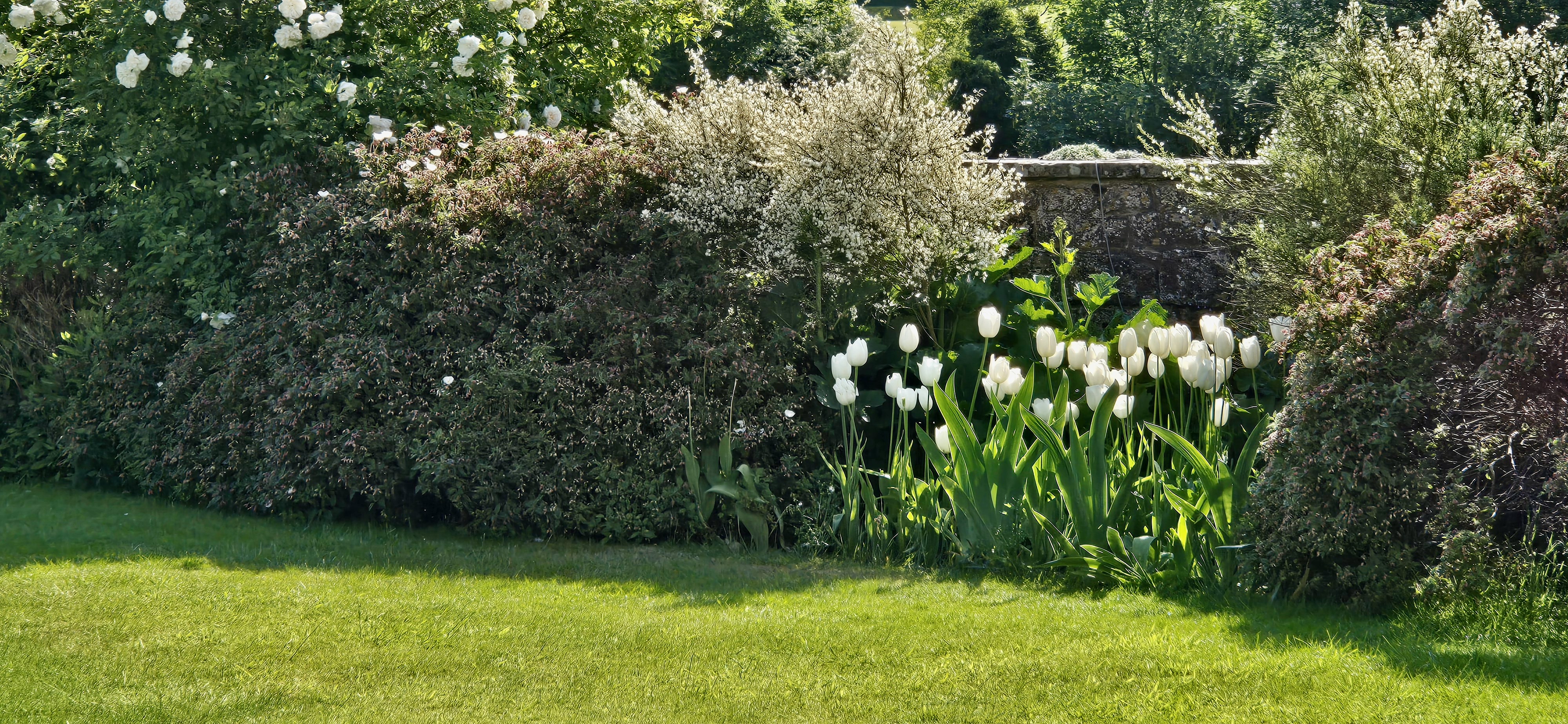
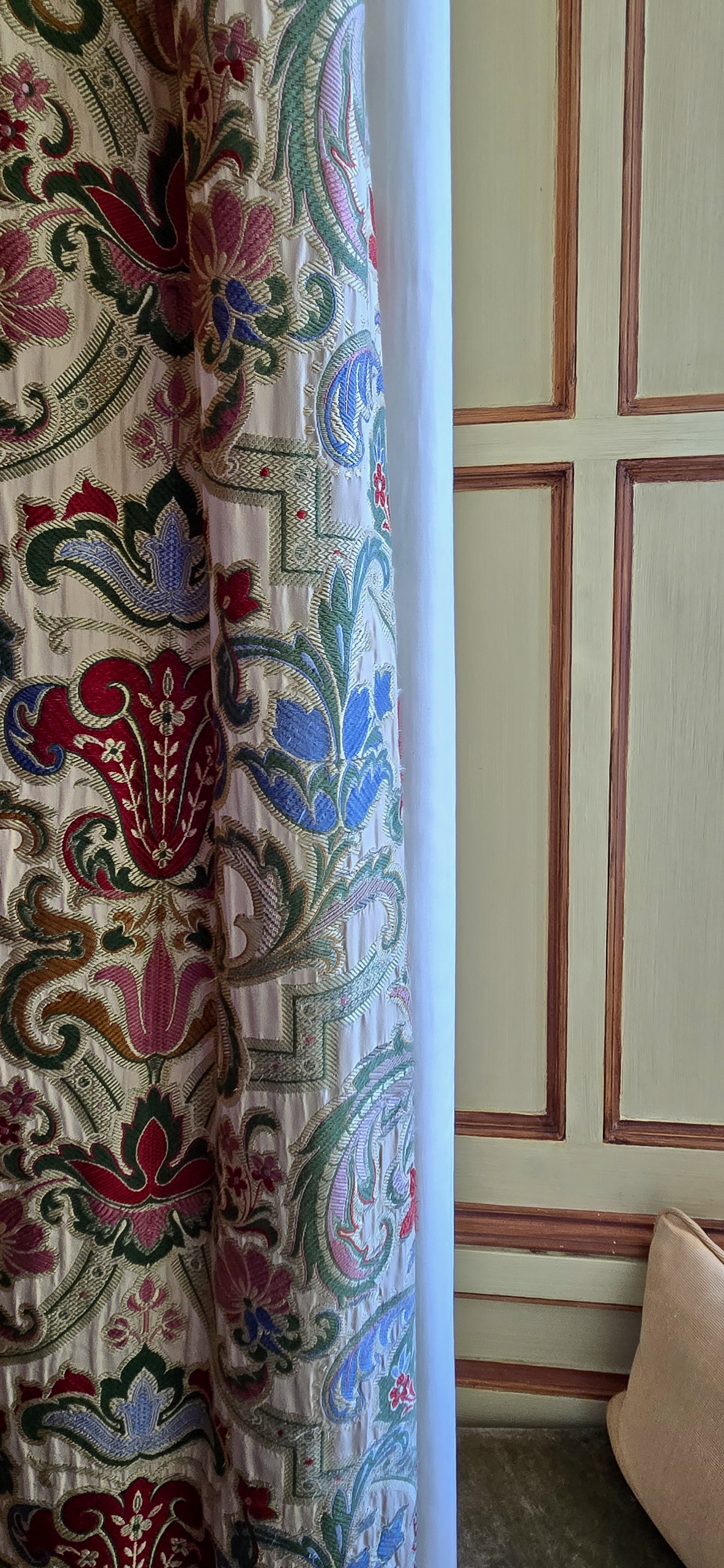
From the front entrance the size and grandeur is less visible than from a distance. Inside is a textural delight. A mix of old a new.
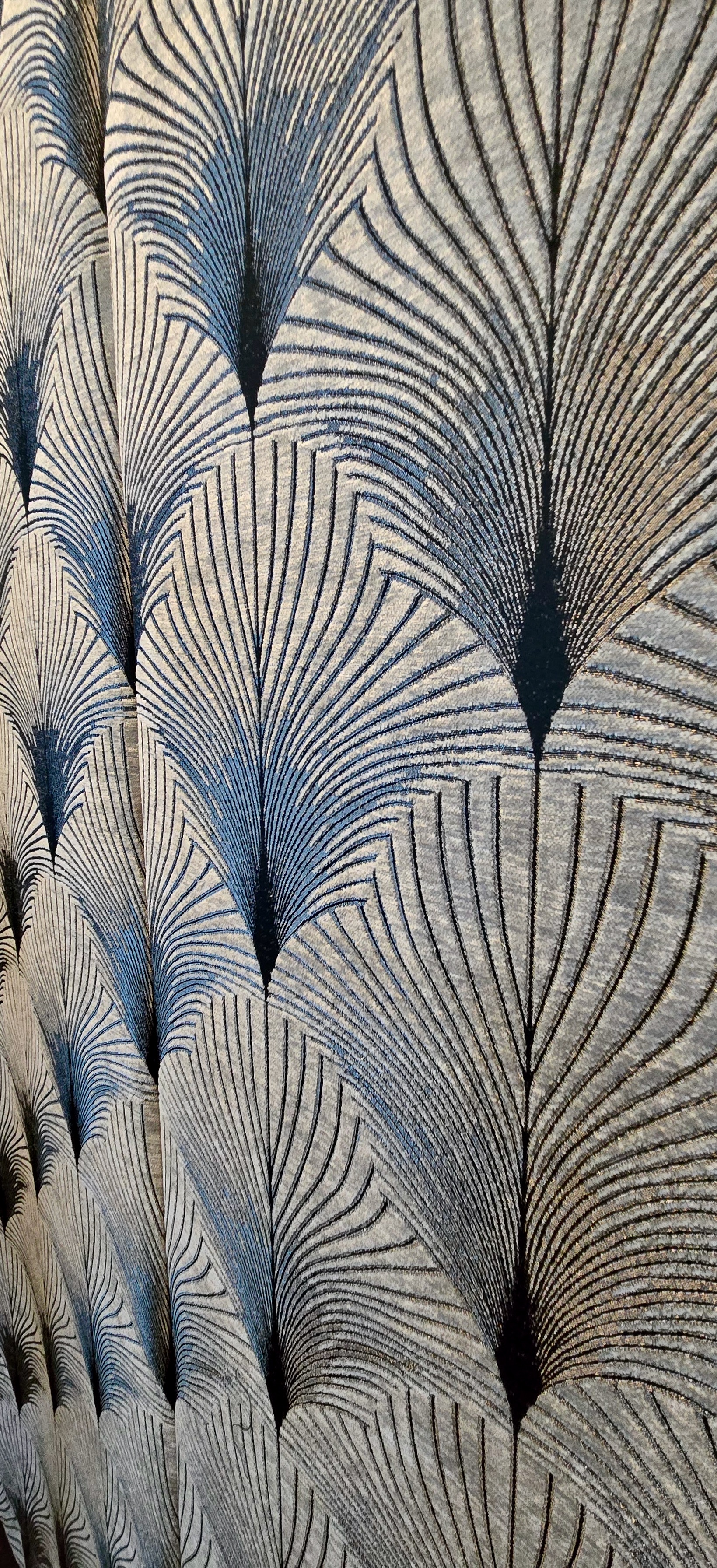
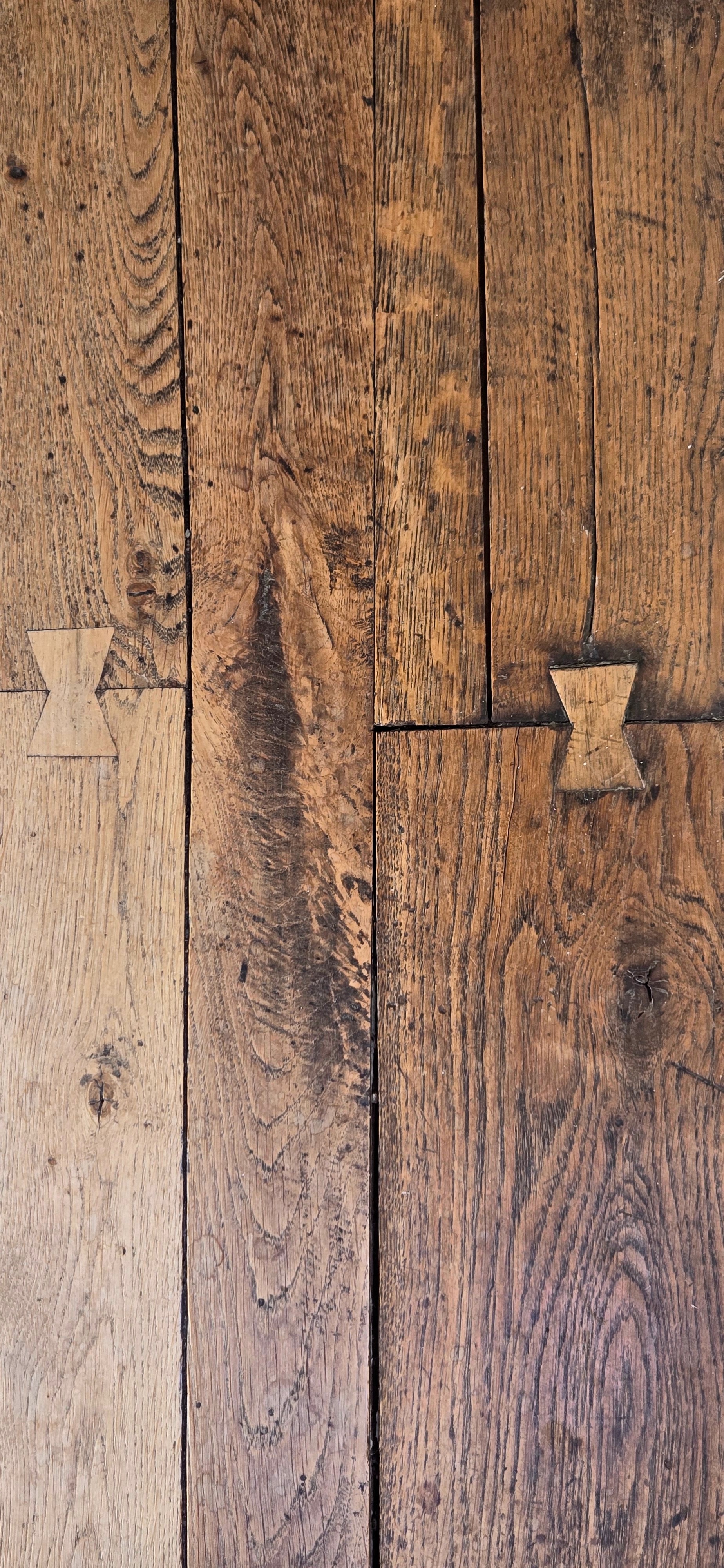
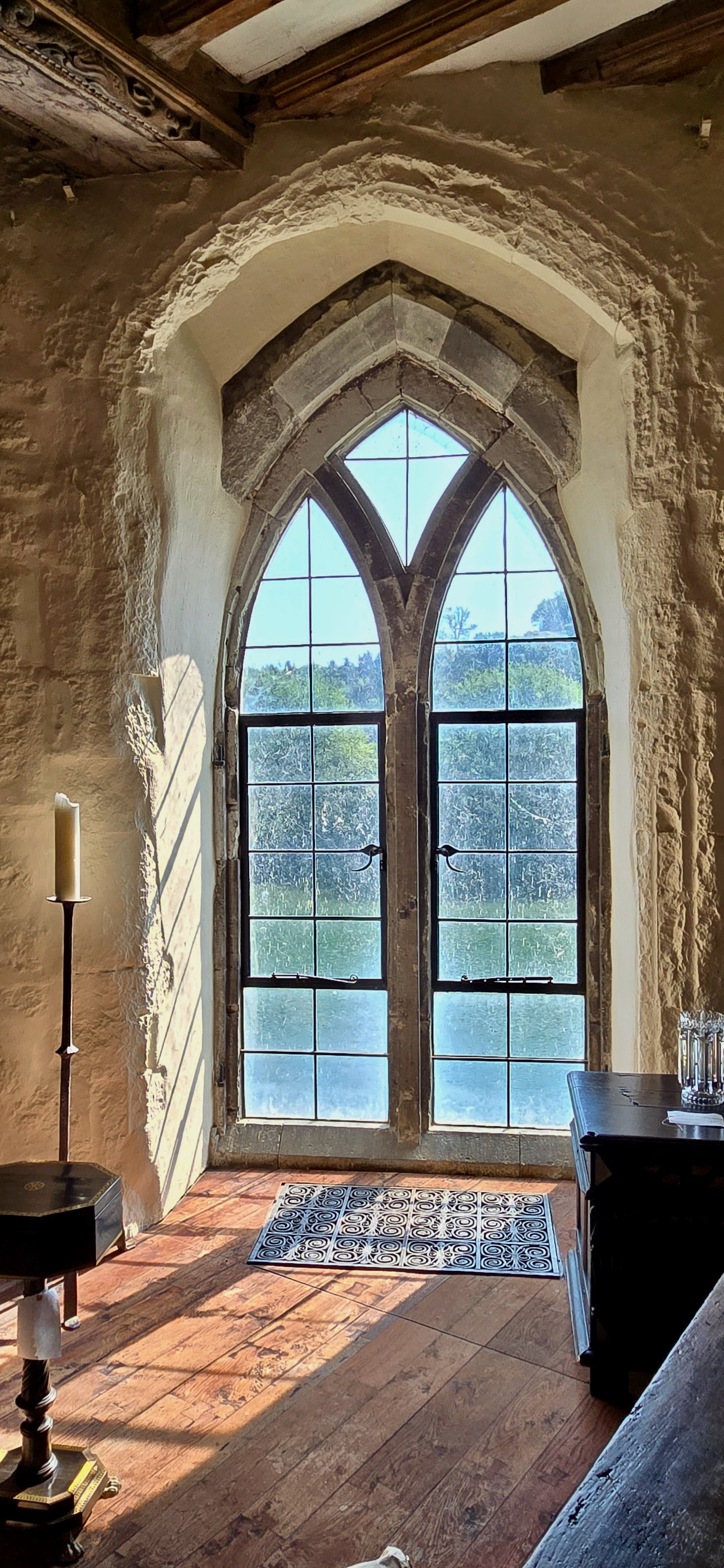
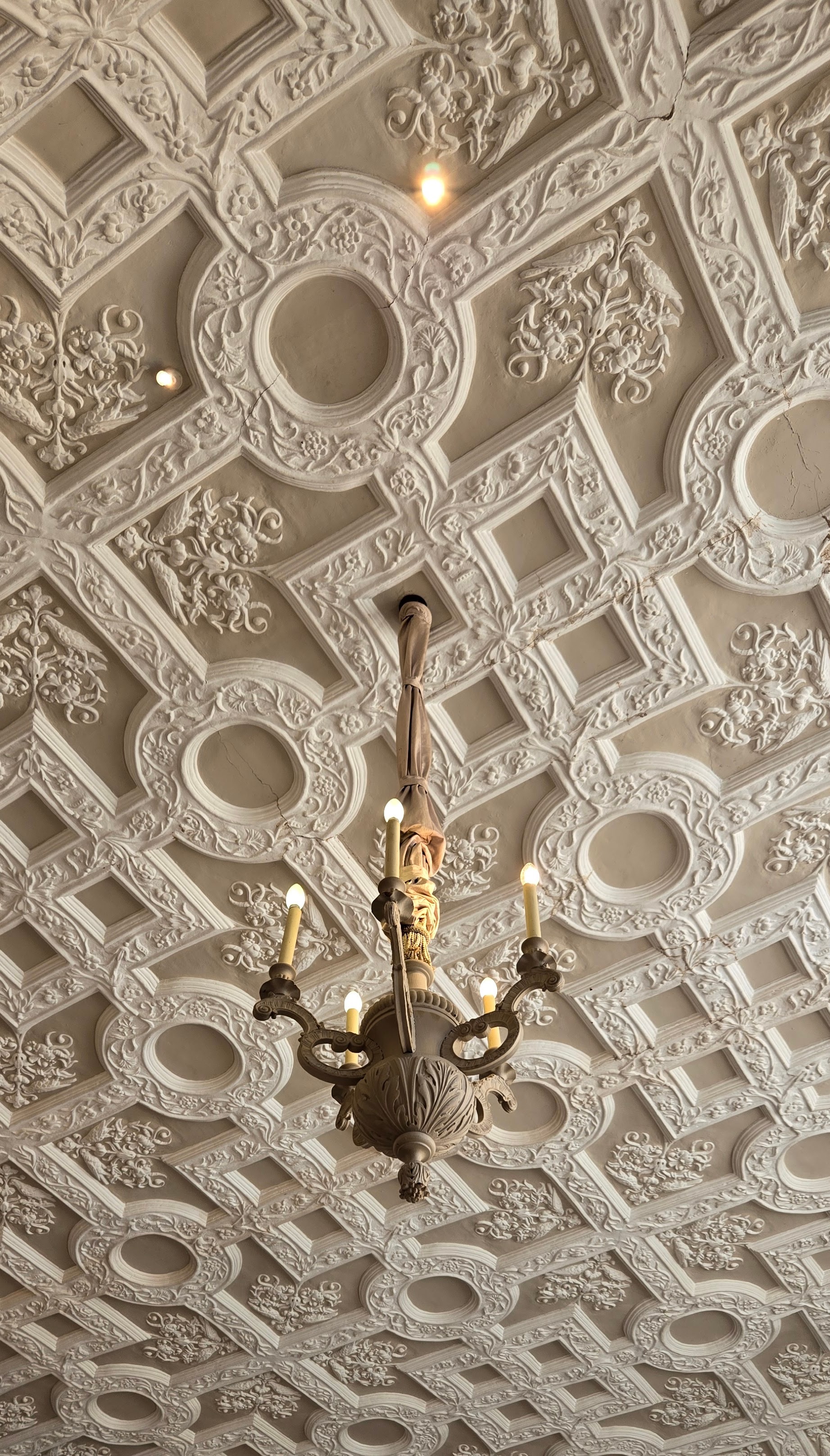
Leeds Castle was host for a significant Middle East summit in 1978 when U.S., Israeli, and Egyptian foreign ministers met eventually leading to the Camp David Accords between Egypt and Israel. This was originally set to happen in London, but was moved to Leeds Castle for security reasons. Summit room top below.
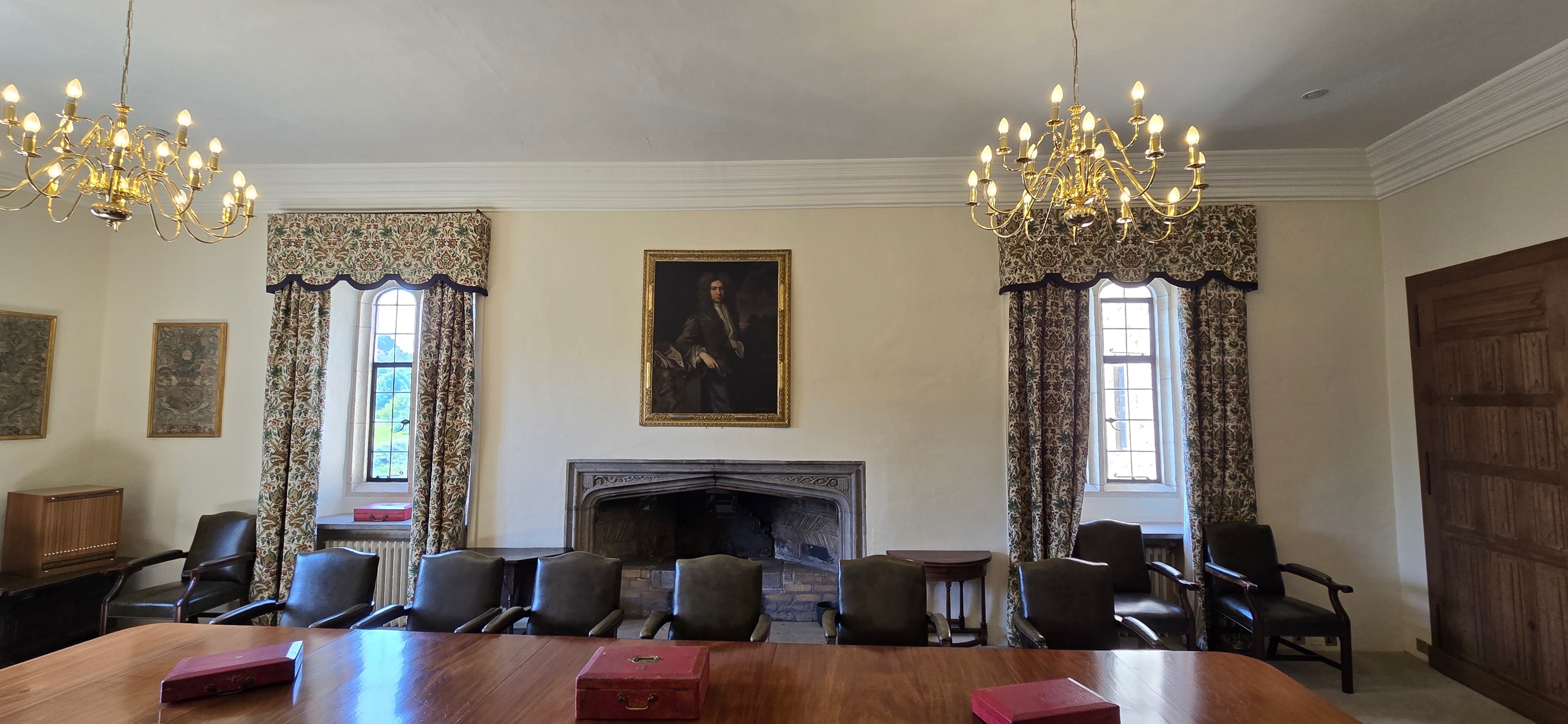
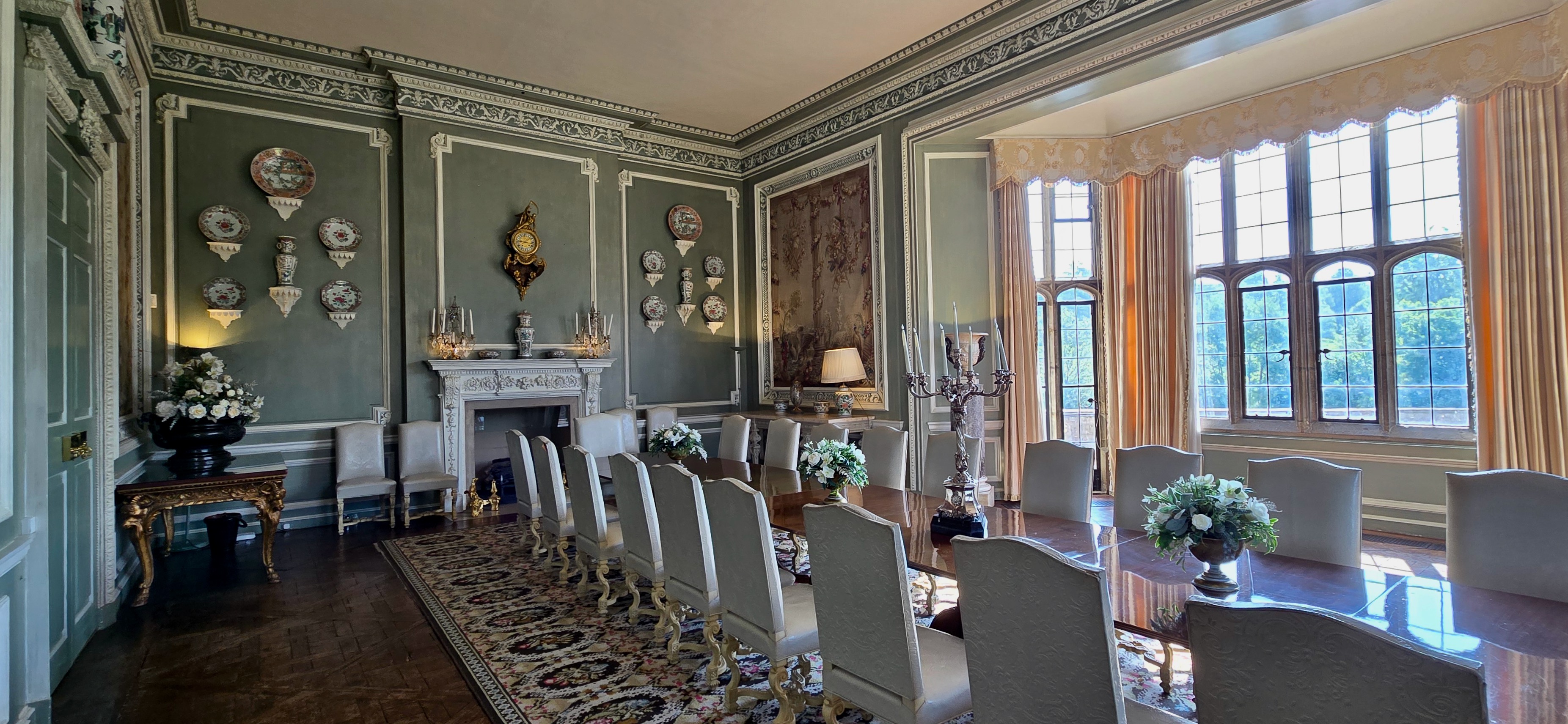
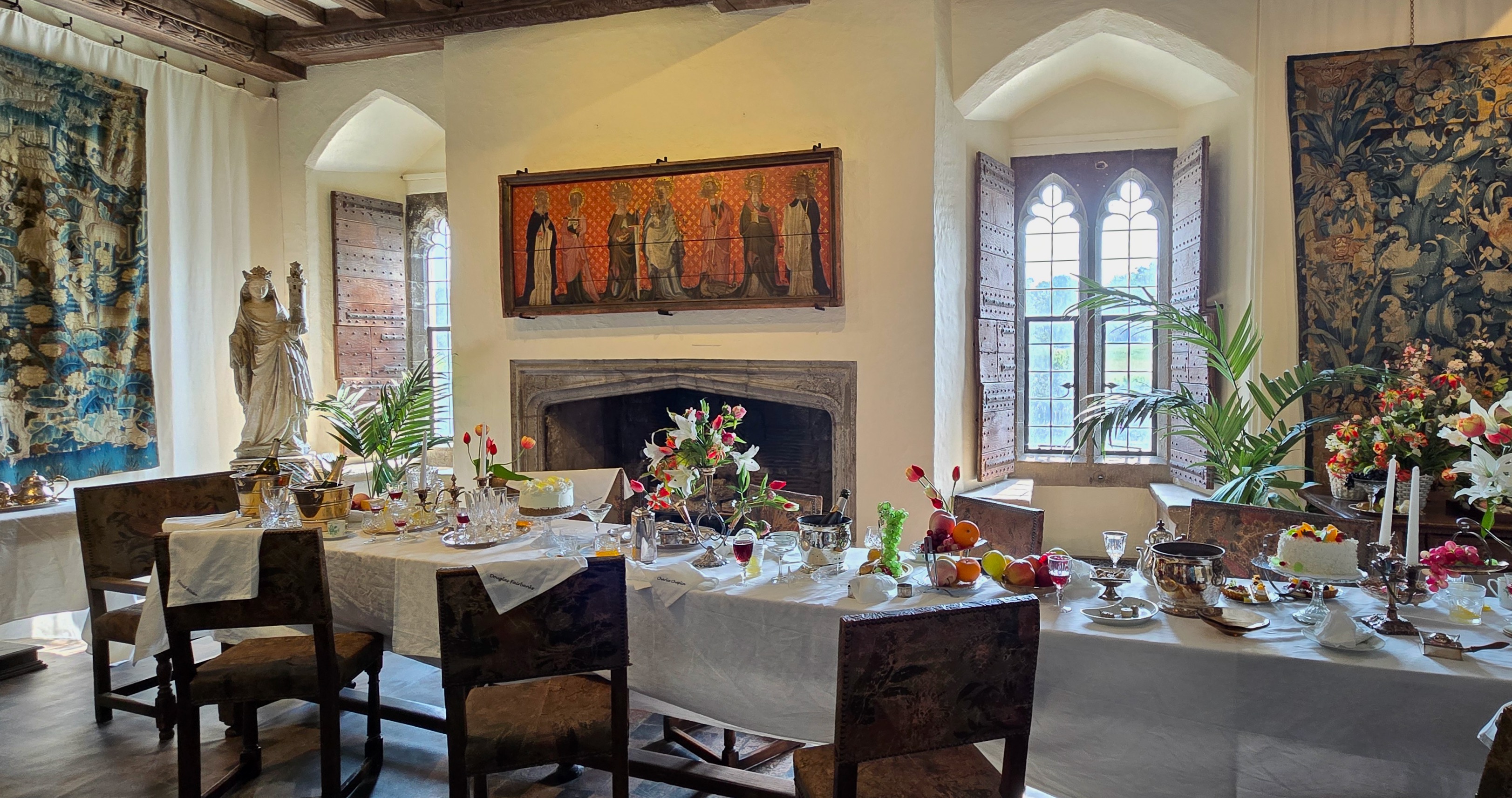
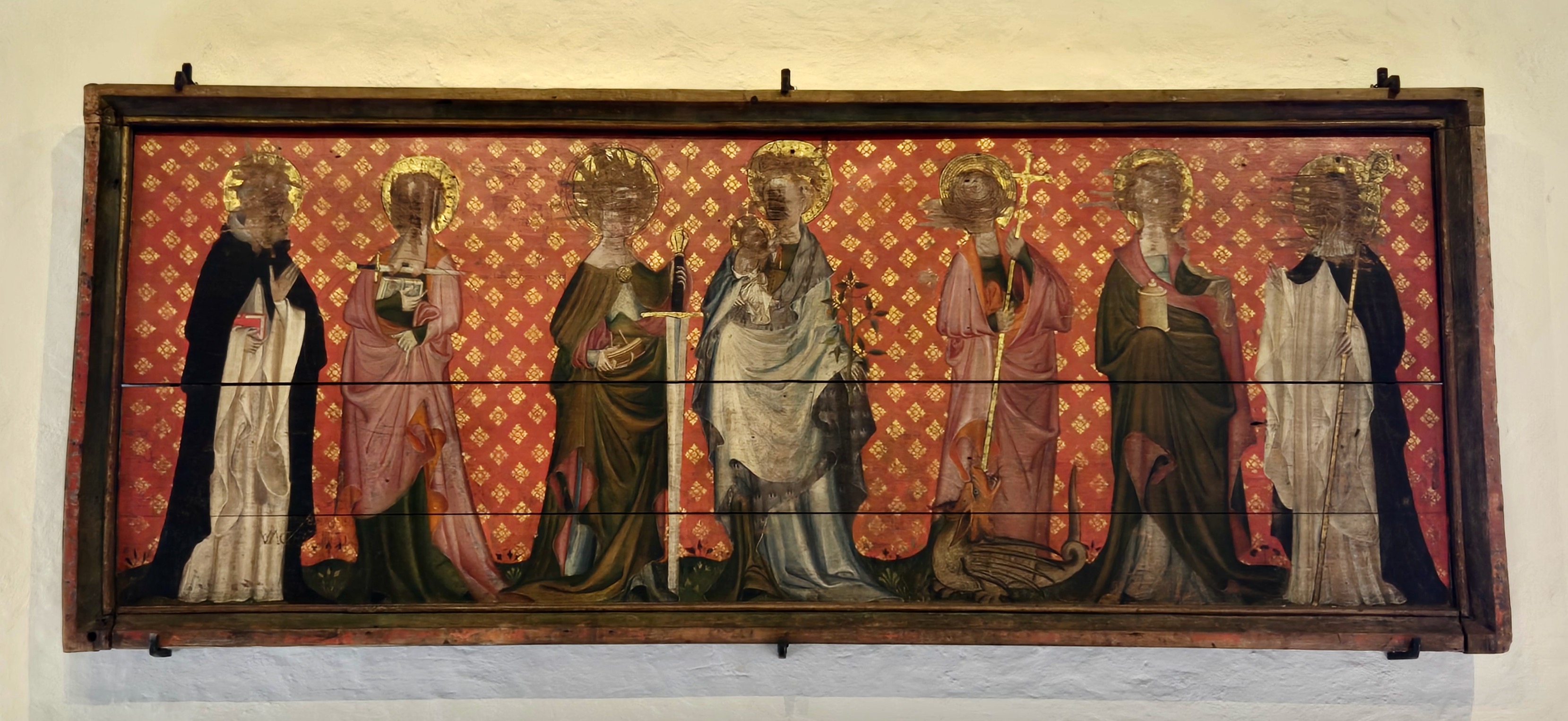
The Dining hall is the home to an “altar piece” dating to about 1410. It shows 7 saints, 6 of whom are women. The gouging of the saints’ faces may have occurred in 1539 following the dissolution of Dartford Priory, a Domincan Nunnery, which is thought to have been the altarpiece’s probable original home.
There is much more to see but I was particularly interested in the pieces designed by Stéphan Boudin (1888-1967) Interior designer to for Lady Baillie as seen in above. And know for designing the red Room at the White House for Jacqueline Kennedy. My Room at Leeds Castle was called the Boudin Room. Two pieces below designed by Boudin.
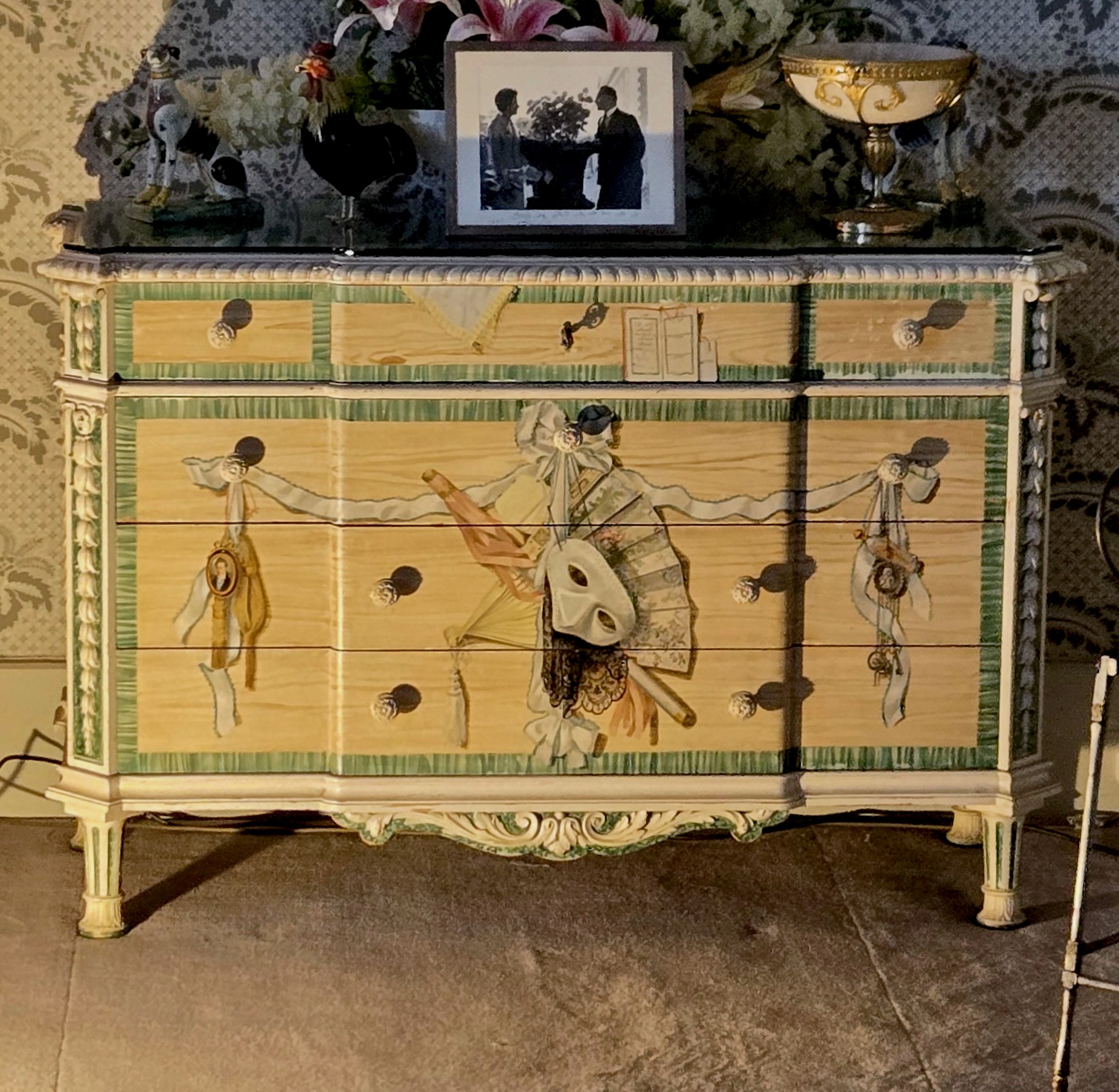
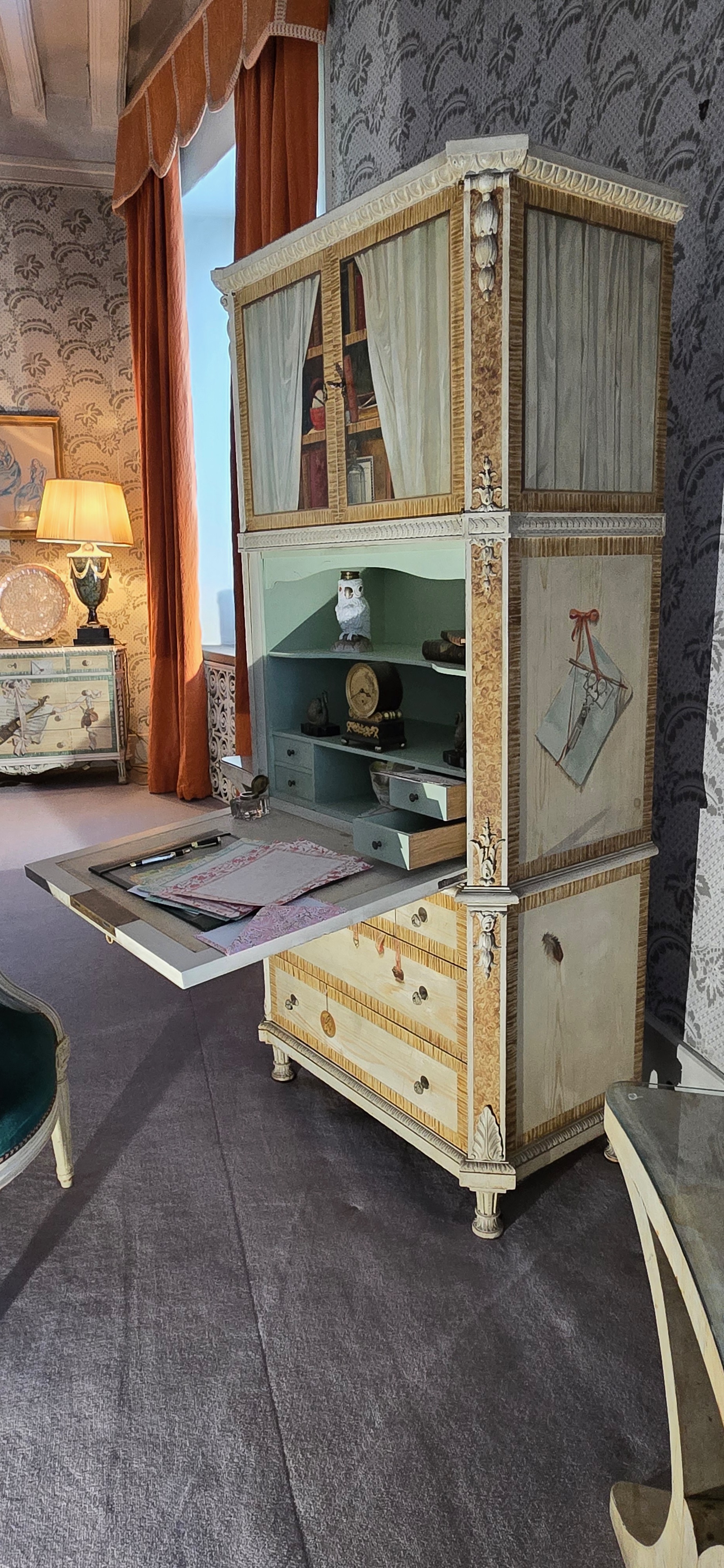
There’s lots more to see, but I will leave it to you to visit the castle and explore further. Next up are visits to the towns of Faversham and Whitstable!
Kelly Wheaton ©2025 – All Rights Reserved
Celtic Origins
Posted on September 1, 2025 Leave a Comment
Apologies to my faithful readers. I took a break after the death of my best genealogy friend, Jean to process what her life and loss means to me. I have found that I cannot be creative on demand, and must wait for inspiration and the imperative juices to flow. Sometimes all that it takes is a bit of curiosity and some serendipity.
PADEN YDNA
A few days ago I was revisiting my PADEN cousin’s Big Y DNA test. The Big Y that I and my cousin Malia sponsored back in 2018, is the gift that keeps on giving. PADEN is the maiden name of my paternal grandfather’s mother. You may recognize her from the diary that she kept and that can be found here under Mary ‘Lulu’s Diary’ entries. PADEN comes from the Irish surname Páidín, a diminutive of Pádraig (Patrick), which means “noble” or “patrician” or in the Scottish version also from a Gaelic pet form of the personal name Patrick. An alternative Mac Phaidein or Mac Pheadain, which means “son of Phaidin,” a name derived from the Gaelic Fáelán meaning “little wolf.” Our PADEN ancestor, John PADEN came from Northern Ireland, perhaps Coleraine to Maryland by 1798, when his daughter Nellie was born there. tmThe family settling in Funkstown, Washington County. In a desire to locate the PADEN family origins we finally resorted to YDNA.
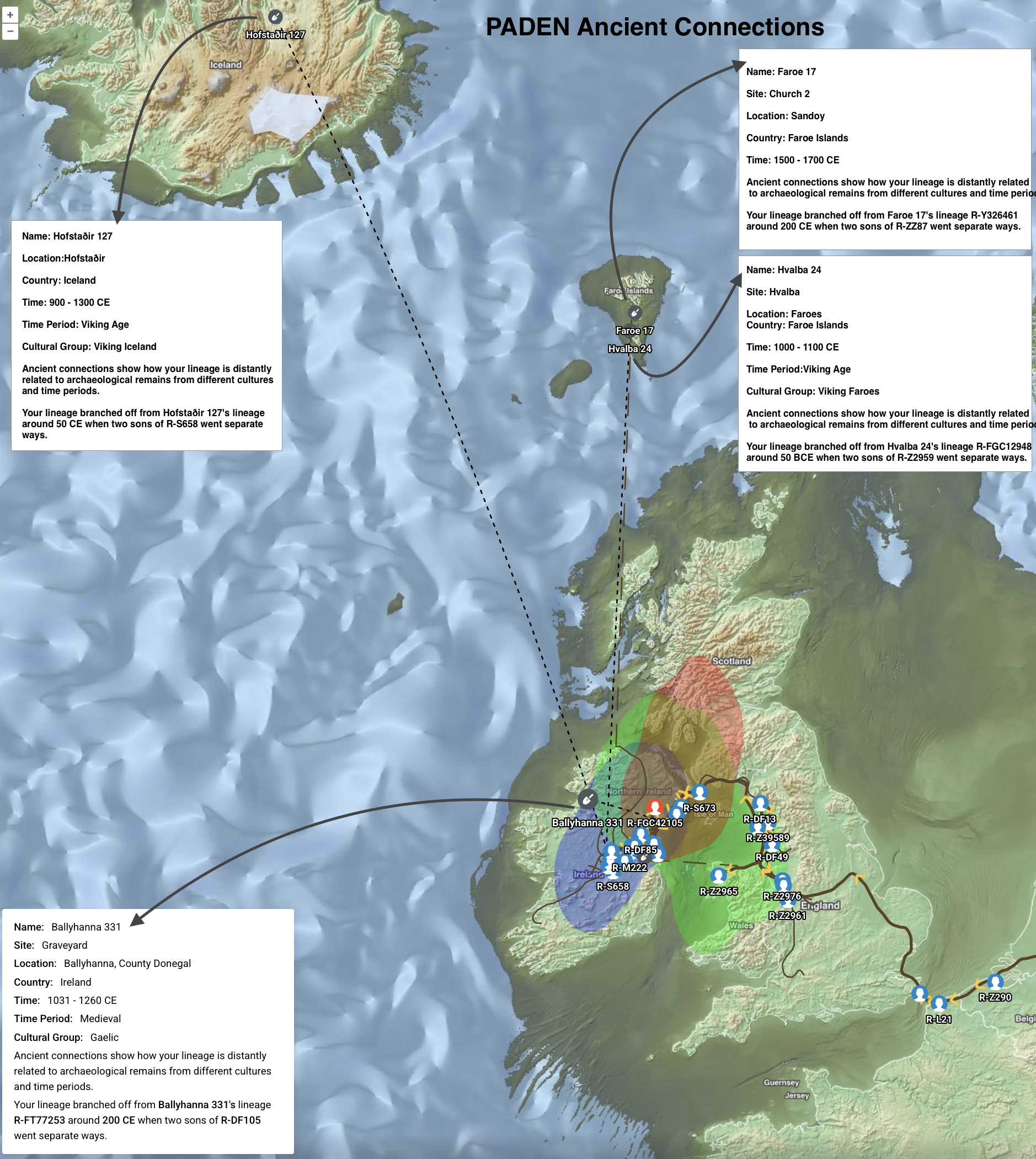
As more ancient skeletons are discovered and their DNA sequenced we are getting closer and closer to recreating the paths our ancestors took. Not just in a genealogical time frame but deep back into history. I annotated this map from FTDNA for our PADEN Ancient Connections for my cousins. It lists 4 ancient remains that match our PADEN ancestors. I will insert a caveat from my friend Roberta Estes “These remains are probably NOT YOUR ANCESTORS, but definitely ARE your distant cousins.” We SHARE a common ancestor. Sometimes that common ancestor will not be discovered in the same area that our ancestors lived. However, in looking at the Ancient shared DNA matches it does give us a geographic area. Since this was the Viking Age it is likely that these were sea faring people who frequented the Isles.
Our PADEN’s complete SNP path from the R Haplogroup : M207>M173>M343>L754>L761>L389>P297>M269>L23>L51>P310>L151>P312>Z290>L21>S552>DF13>Z39589>DF49>Z2980>Z2976>DF23>Z2961>Z2956>Z2965>M222>Z2959>S658>DF104>DF105>ZZ87>DF85>S673>S668>FGC8740>DF97>FGC19851>FTA3893>FGC19846>FGC42106>FGC42105>BY202797>BY202928
Each one of these SNPS is a mutation that happened in the duplication process of a one Man’s YDNA at the time a germ cell was replicated. That germ cell became a sperm cell fertilizing an egg that carried the YDNA. All descendants of that man will retain that mutation. His father or brothers will not! Only direct patrilineal descendants. The SNP M222’s overall frequency is: 28% in Ireland, 13.5% in Scotland, 4.7% in England, 2.5% in Wales, 2.5% in France, 1.2% in Germany. It is considered a Celtic marker found at high frequencies among Celtic language speakers.
Below is a chart of the PADEN matching Ancient remains organized by when the SNP occurred that separated our branch from that of the subject’s remains.
| Name of remains | Location | Time frame of remains | Cultural group | Time branching occurred | SNP Split |
| Hvalba 24 | Hvalba, Faroe Islands | 100-1100 CE | Viking | 50 BCE | R-FGC12948 — R-Z2959 |
| Hofstaòir 127 | Hofstaòir, Iceland | 900-1300 CE | Viking | 50 CE | R-S658 |
| Ballyhanna 331 | Ballyhanna, Donegal, Ireland | 1031-1260 CE | Gaelic | 200CE | R-DF105 |
| Faroe 17 | Sandoy, Faroe Islands | 1500-1700 | Viking | 200CE | R-Y32646– R-ZZ87 |
MY ANCIENT DNA
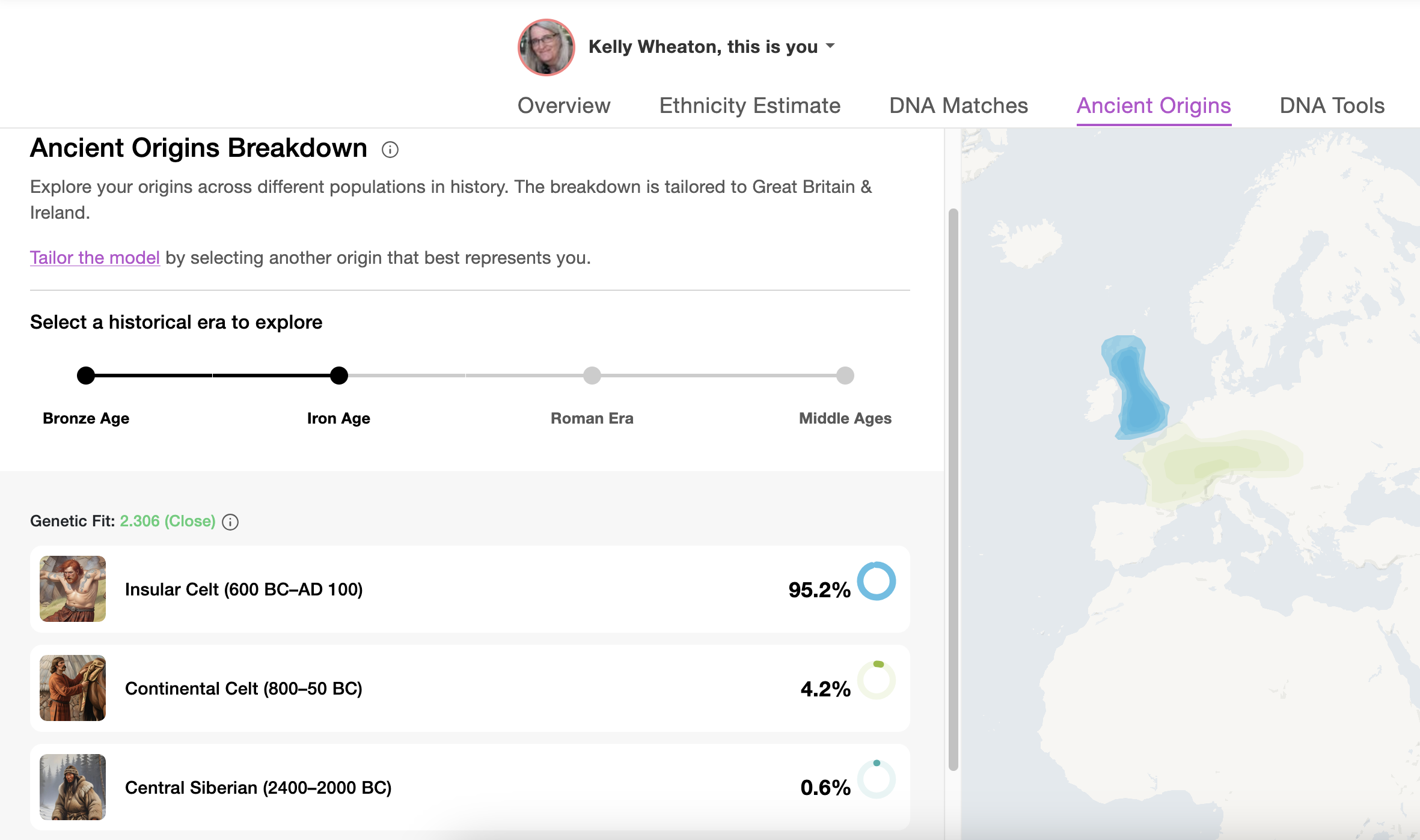
Okay, but it didn’t stop there. I went looking for my autosomal DNA at Ancestry which lists me as 3% Icelandic. I have tended to ignore that, other than to note my Norwegian and Scottish ancestors, but with these Icelandic matches for PADEN it gave me pause. So I went digging at the other companies I tested and happened upon My Heritage’s tools for Ancient Origins. My Heritage added this Ancient Origins feature back in February 2025, but I had not explored it. The chart below shows me during the Iron Age with a close match with the reference populations. The earlier Bronze age is 54.2% European Farmer (6300-2800 BCE) and 45.4 % Western Steppe (3300-2600 BCE). Now all of these should be taken with a spoon full of salt but I found the 98.4% CELTIC fascinating. I never would have expected that!
However, maybe I should have. Going back to my pre-teen years I have been interested in Ancient History. And particularly the cultures considered back then, as primitive, whether they be Native American or Maori or Celtic. The fascinating overlap of their wisdom traditions often passed down in story telling and song spoke to me of something very different and grounding. They were not the dominant cultures that got to write their own histories, so I was often skeptical of what was written about them. Savages is an oft used term by the dominant culture—and it is meant to demean and degrade.
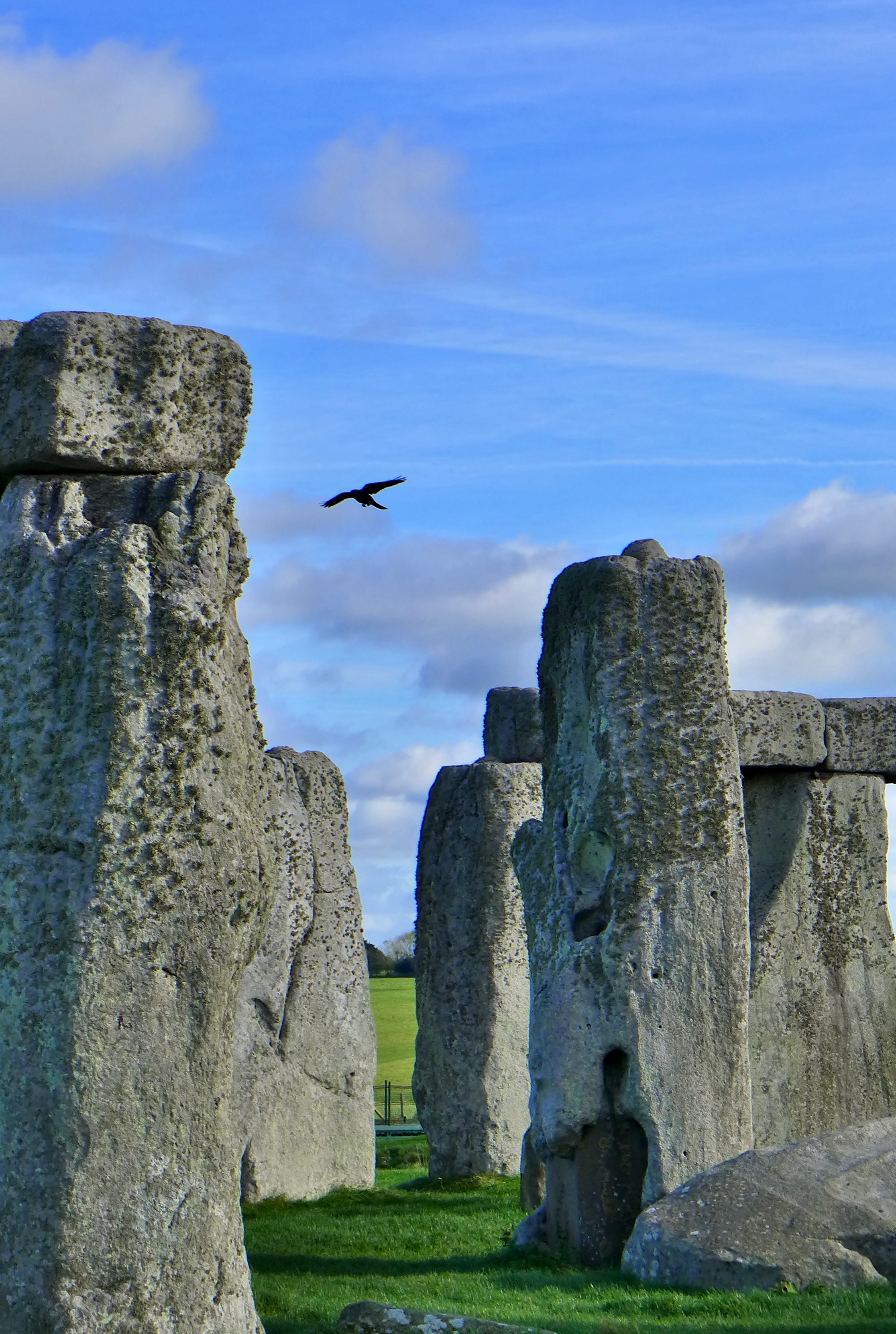
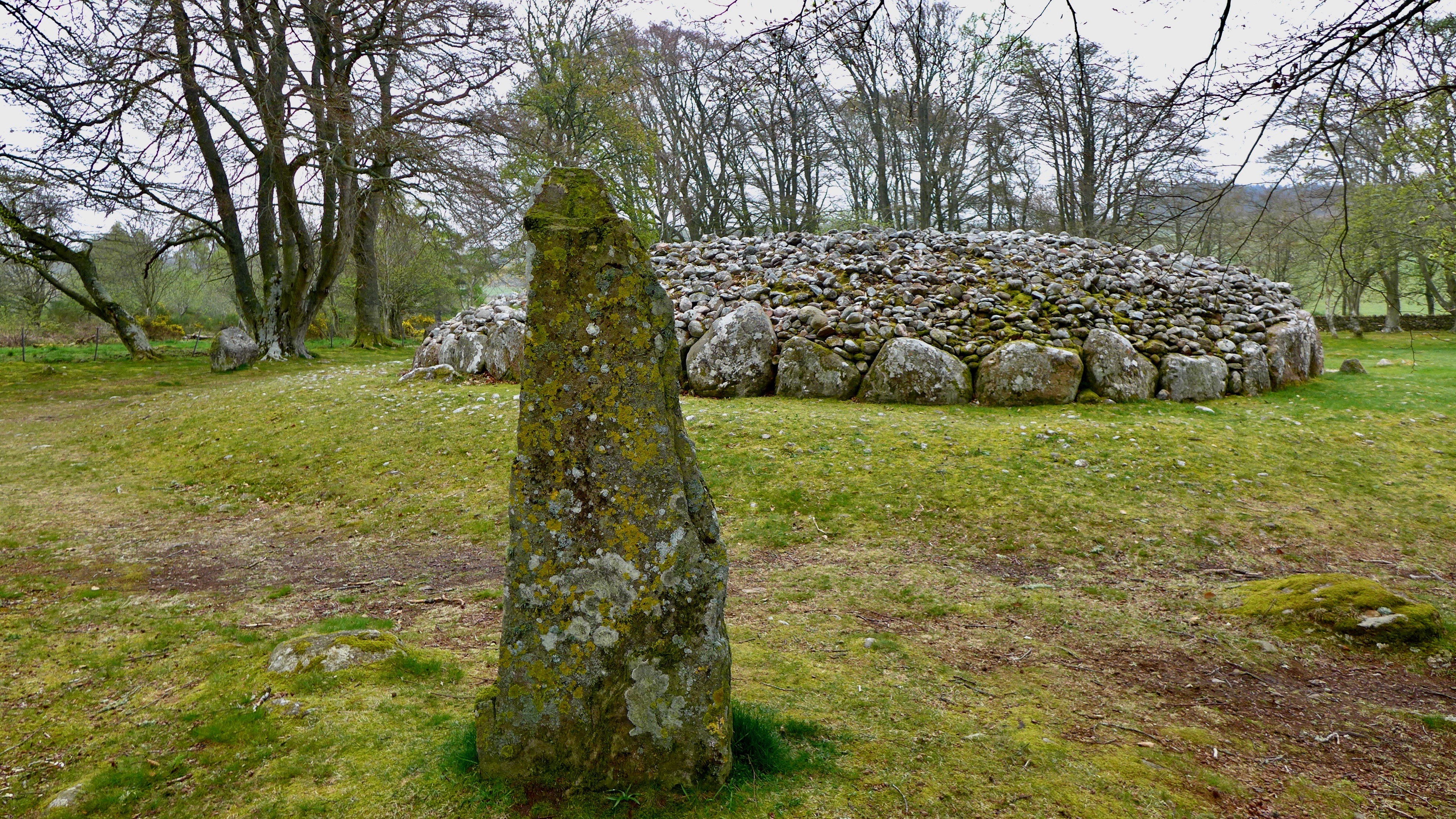
When I was a toddler I remember three large stones that my parents had purchased, and placed in our yard by crane. They were in the Japanese tradition and they were each about 3 feet long or wide. It was then my love of stones was cemented for life. And anyone who has traveled with me, knows how much I will go out of my way to visit a stone circle. Below are Stonehenge, Clava Cairns and Callanish.
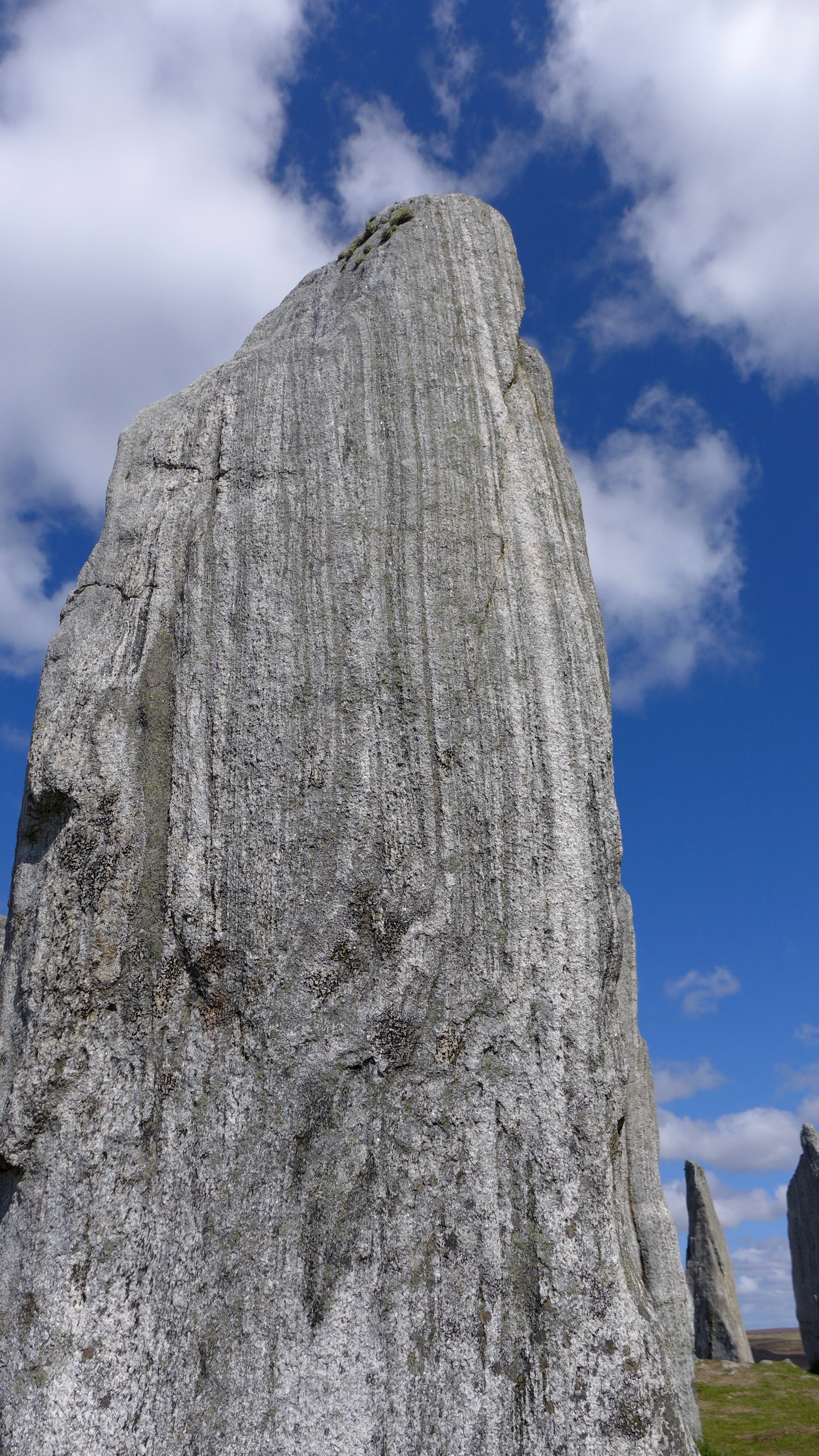
Whether Art, Archaeology, History or Music the ancients call to me—so not a surprise that I fell in love with the ancient lore of Wales and tales of Arthur Pendragon and Llewelyn the Great. And later with the book and later TV series, Outlander. It isn’t just ancient stones, or bones, or ancient Springs, or the Tree of Life. It is this love of the natural world expressed in ancient things. It is neither new, nor superficial. Their age and ability to endure, is somehow comforting. The following photos of Llewelyn the Great’s (1173 –1240) Castell Y Bere, near Llanfihangel-y-Pennant, Wales, taken in 2005 hint of such things.
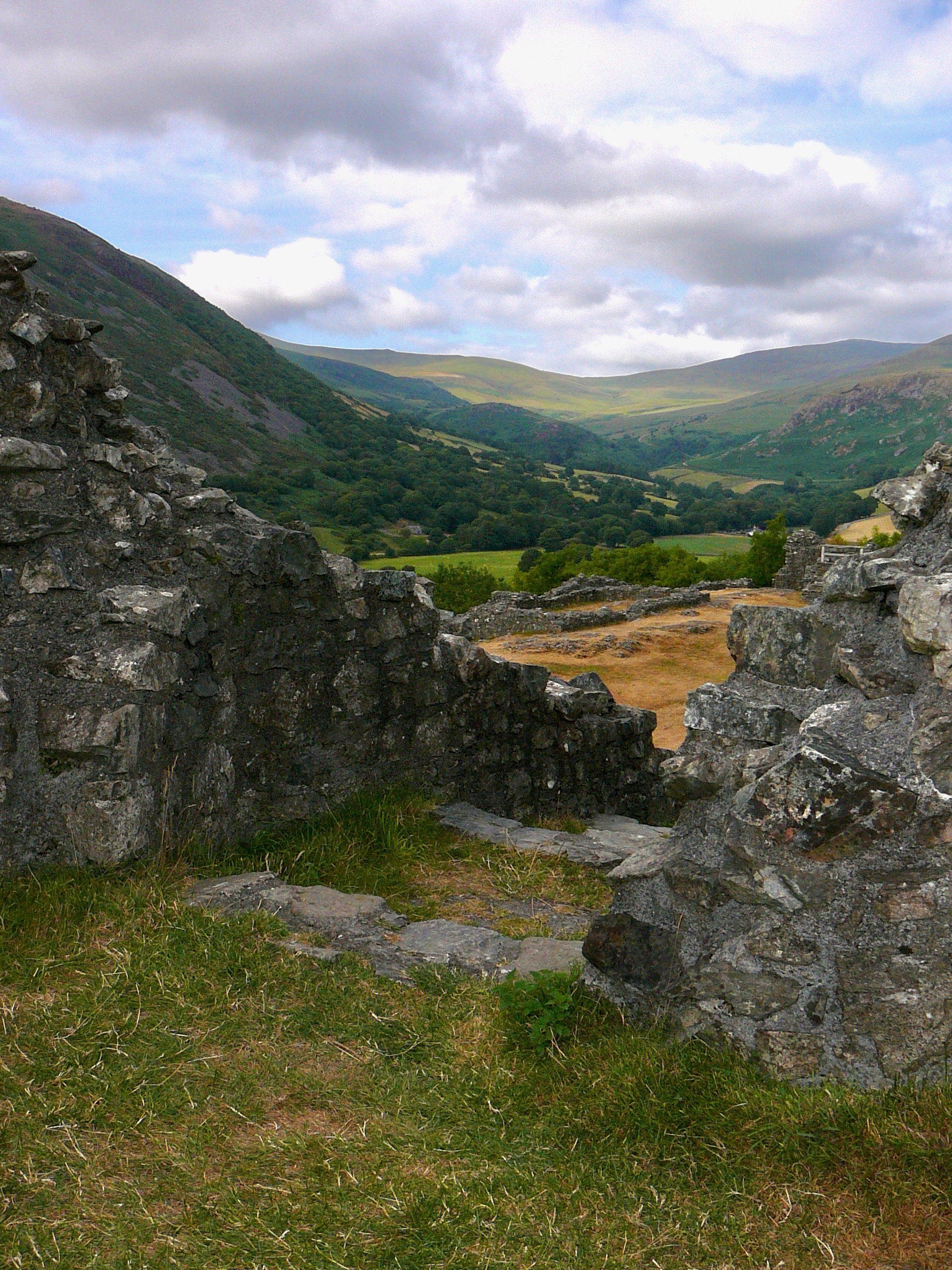
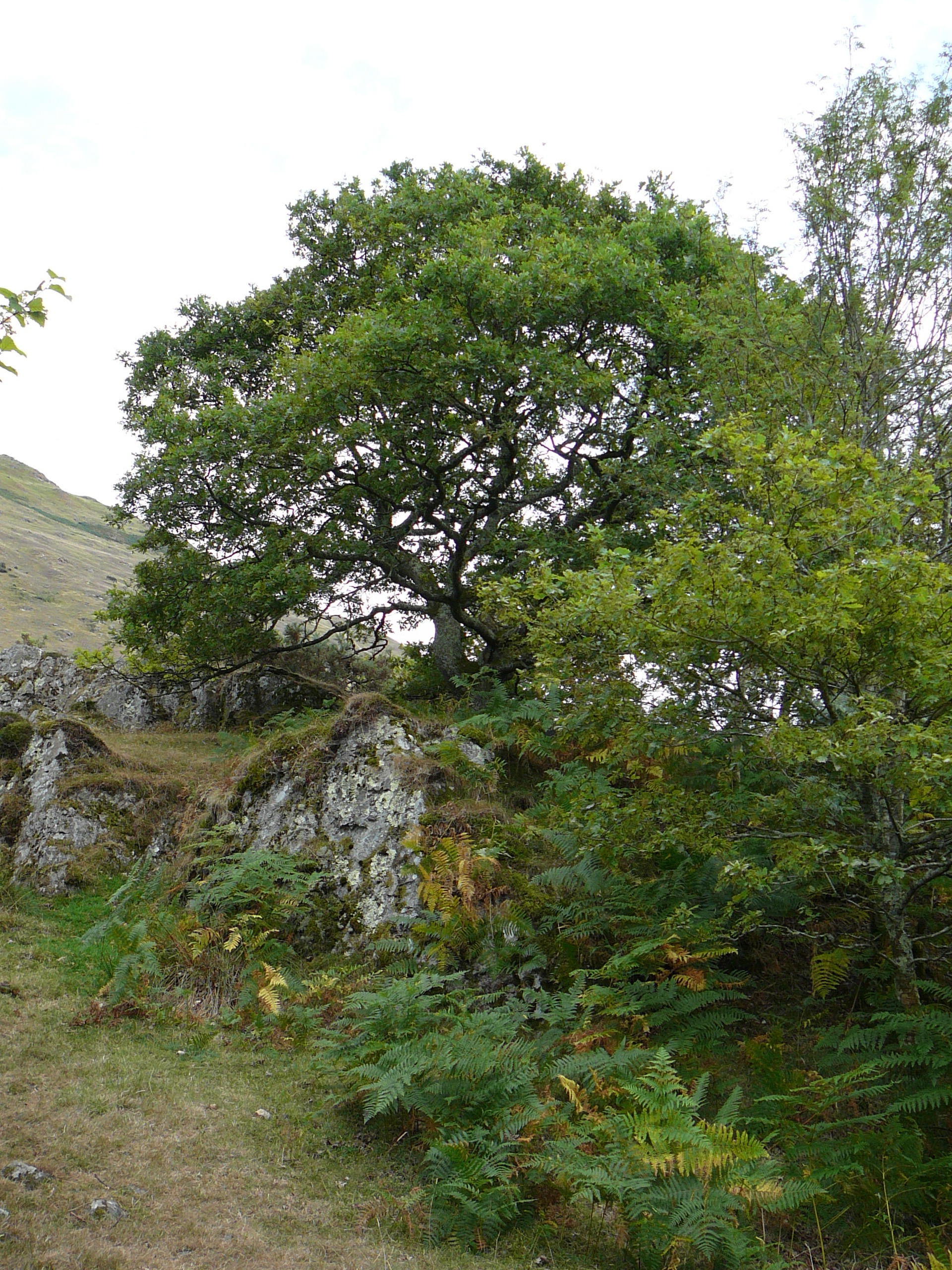
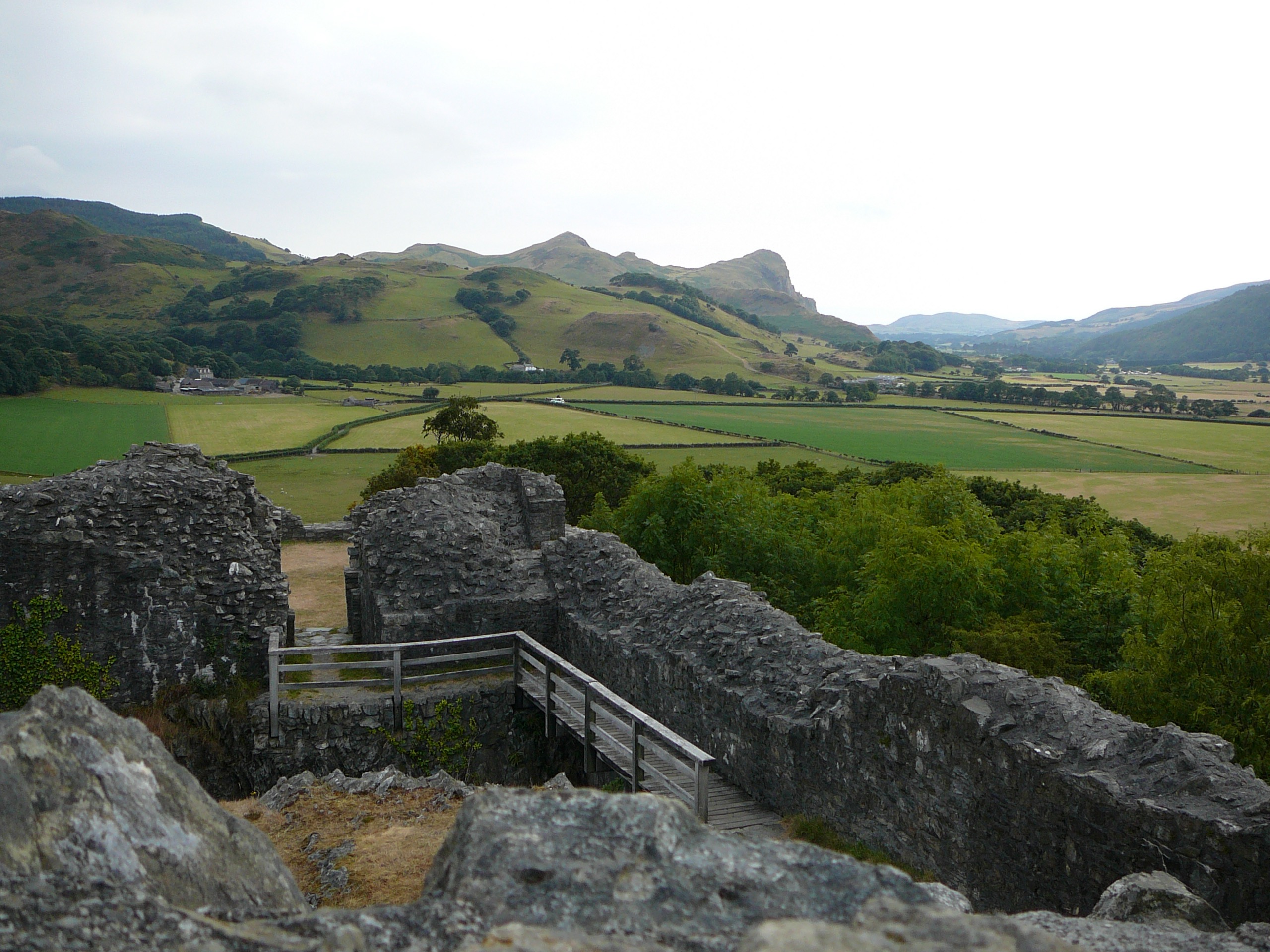
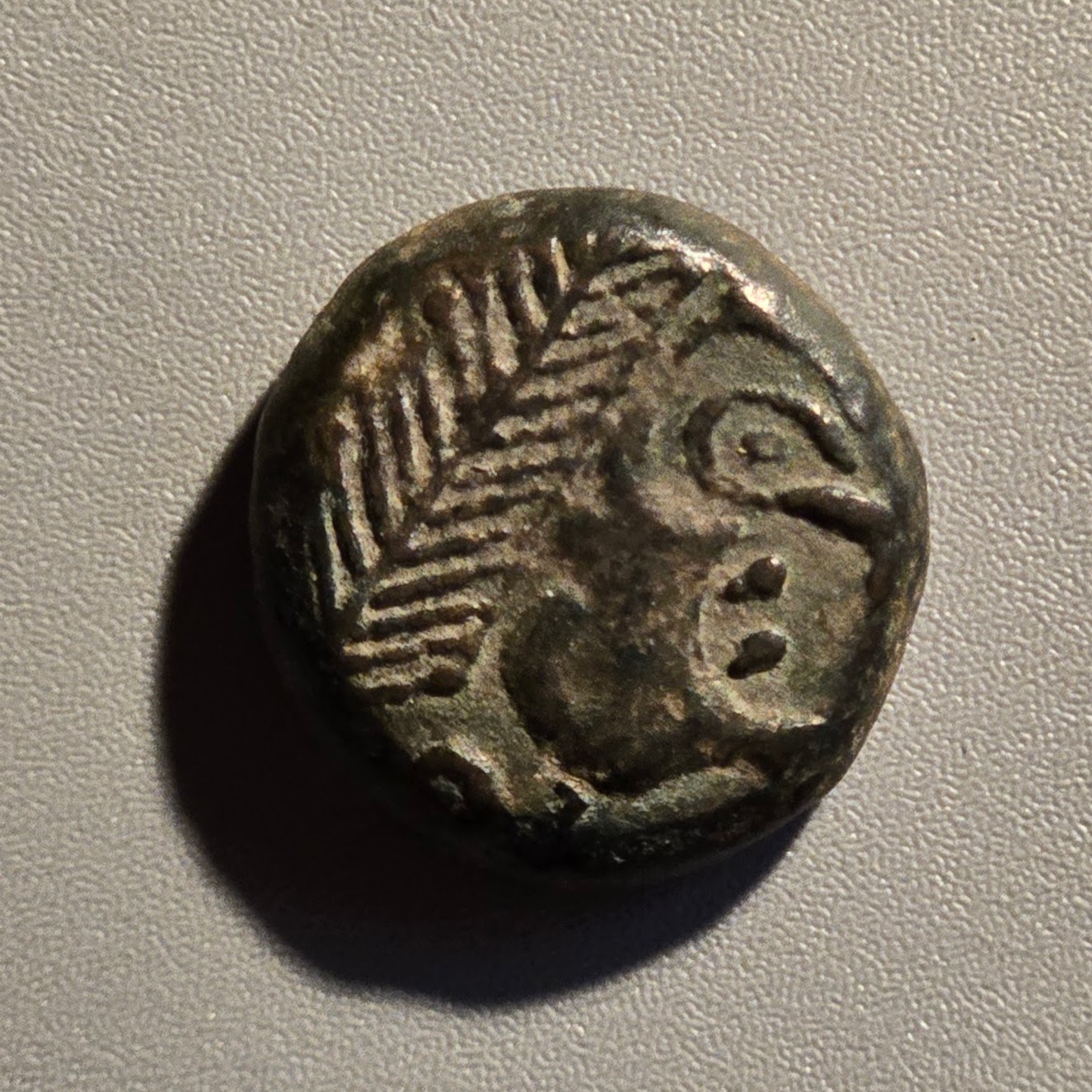
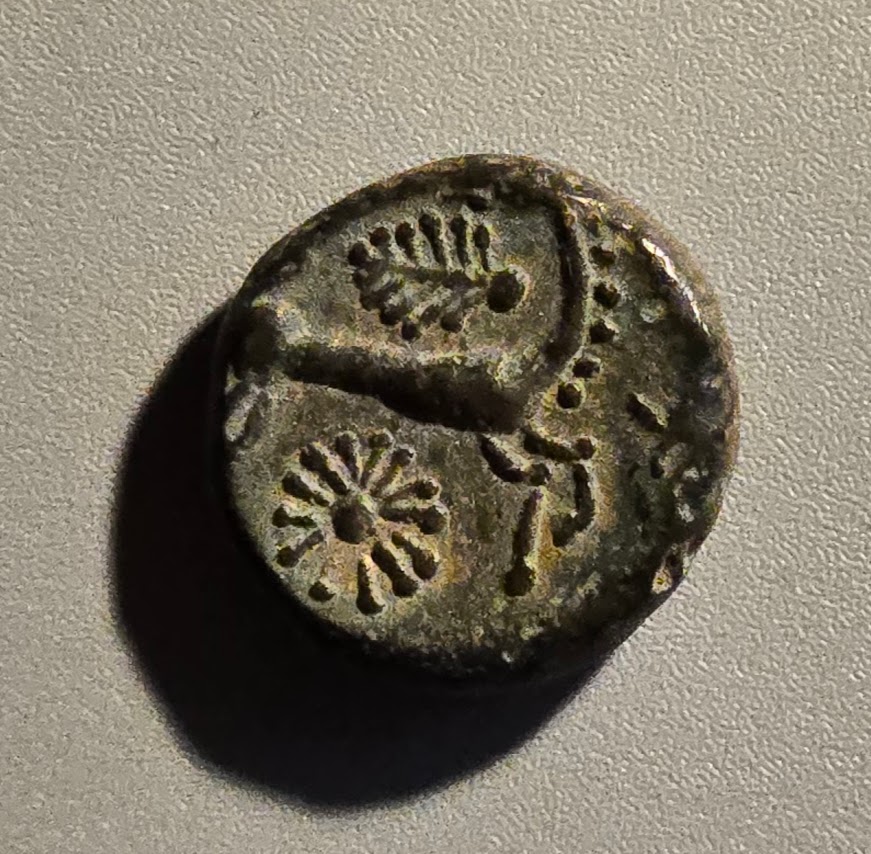
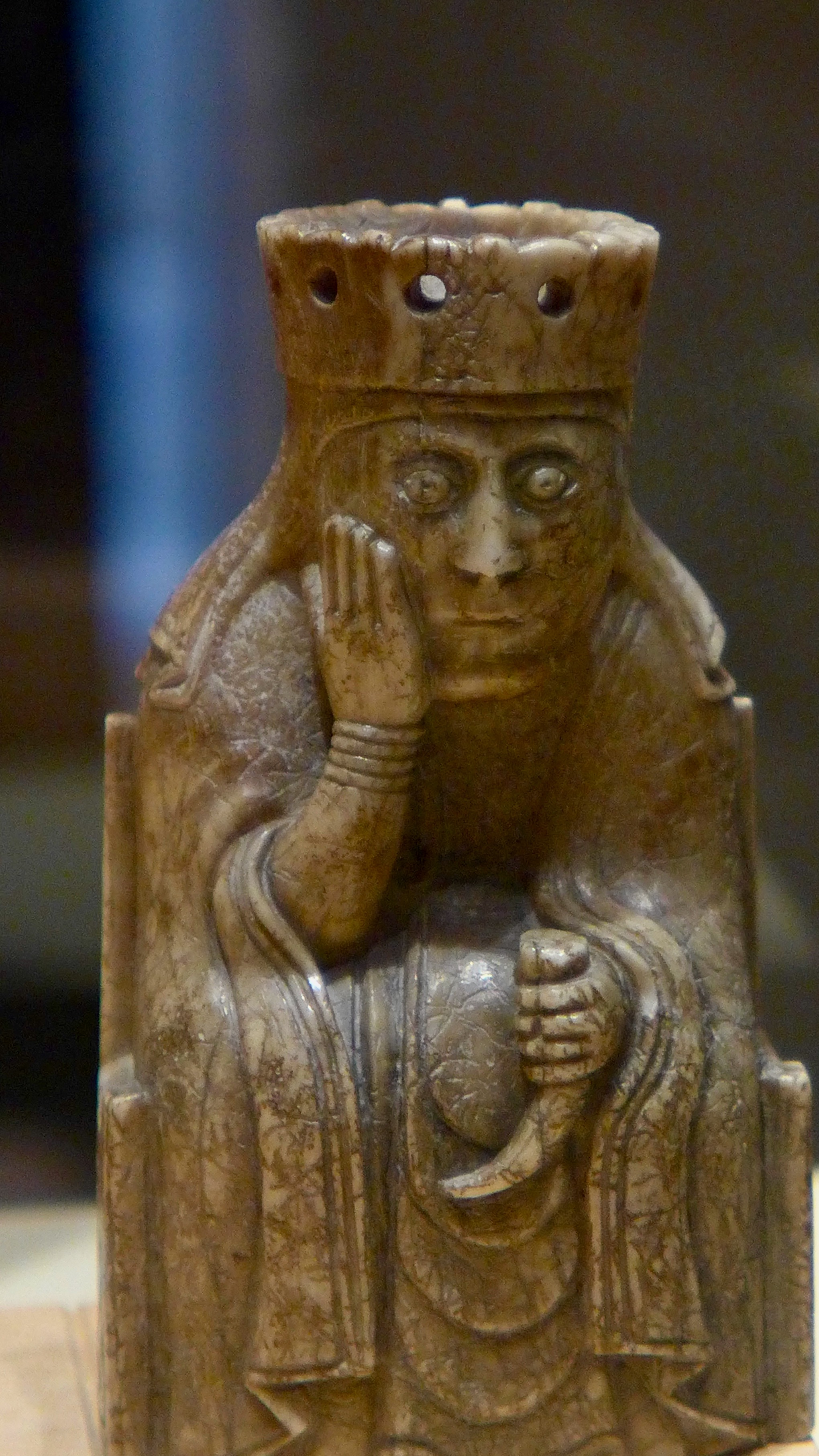
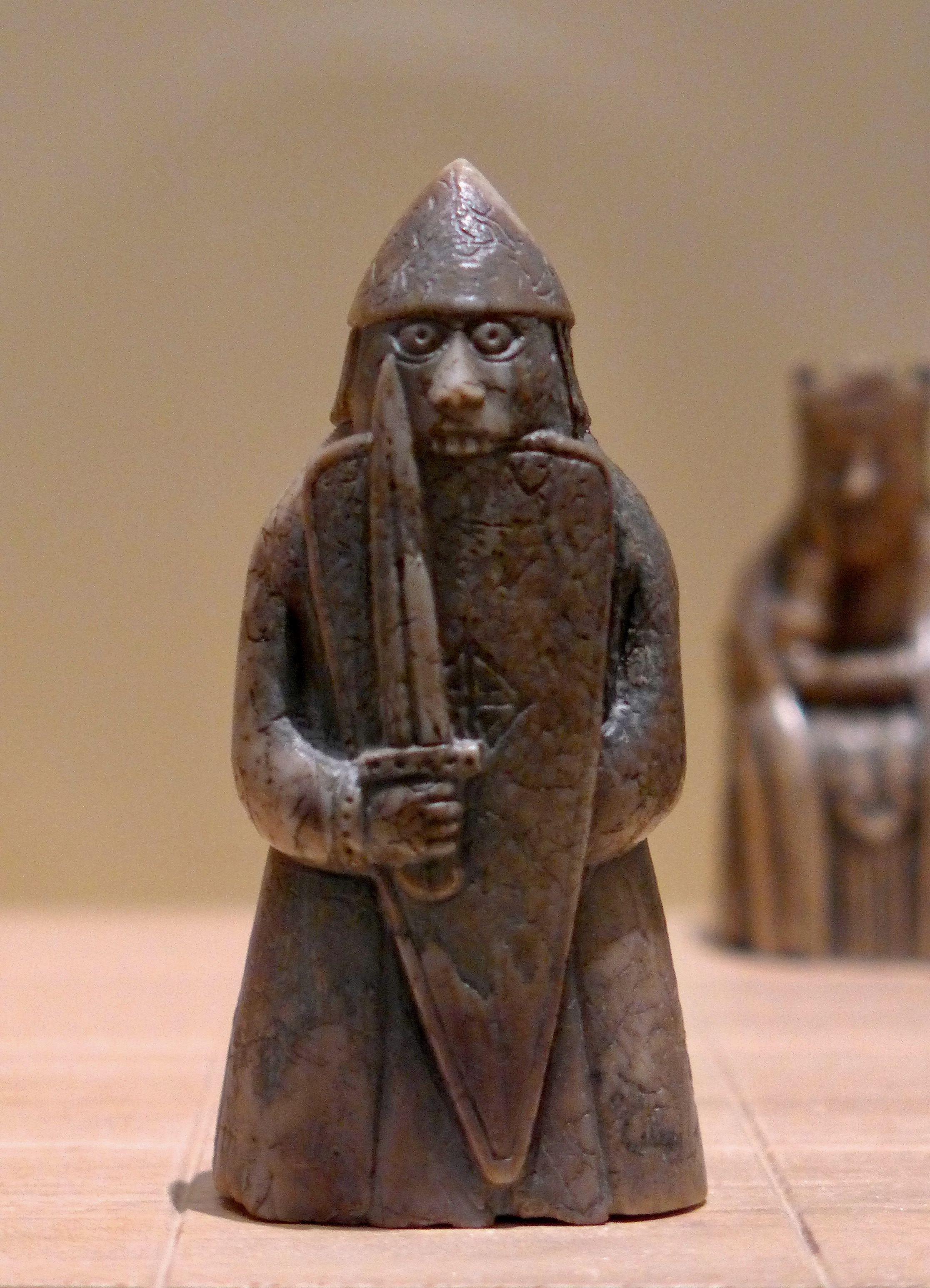
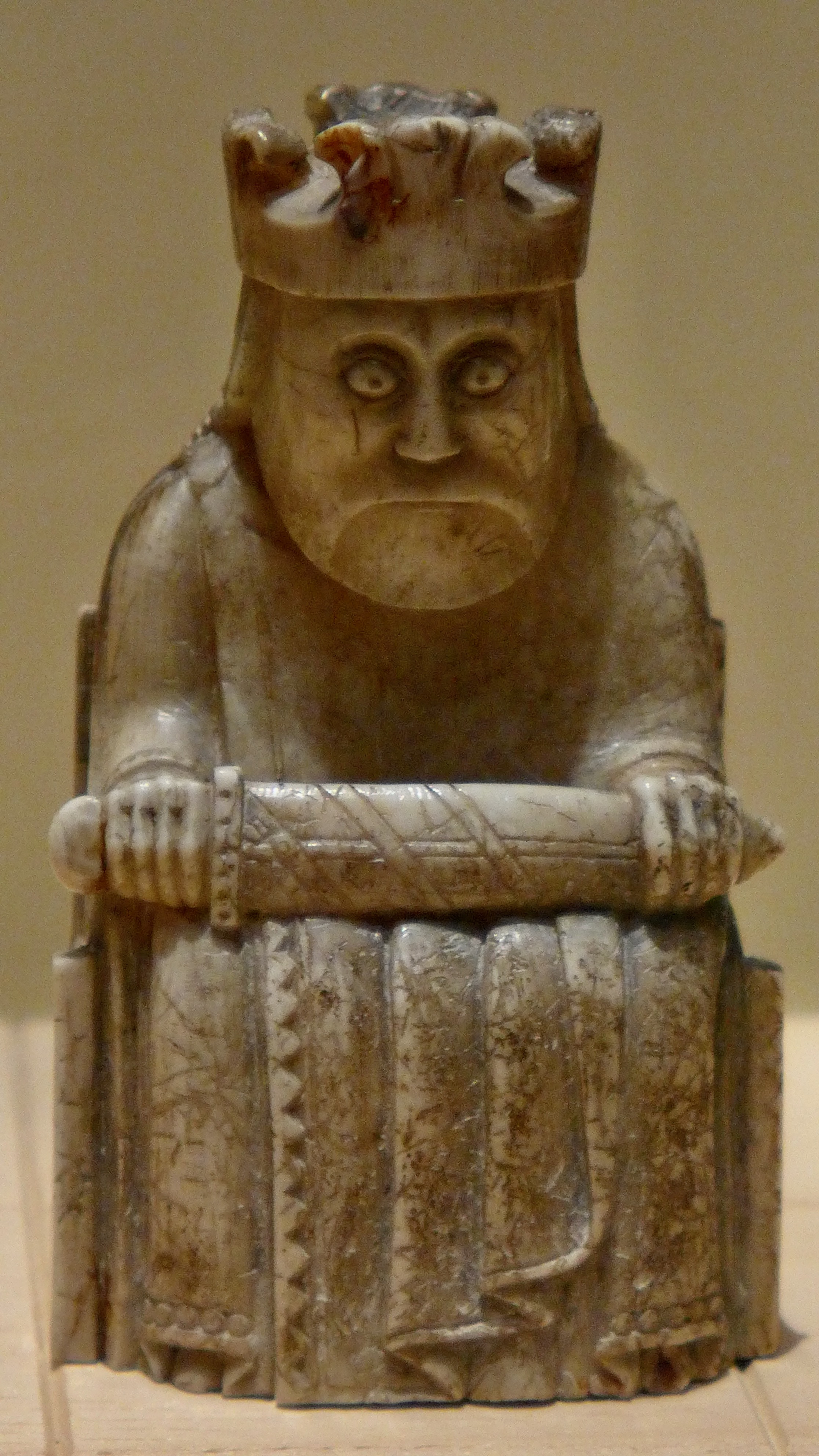
And then there are the symbols of the Celts and later the Vikings that drew me into their spirals and animal motifs. In 2016 my friend and I planned a trip to Scotland and as preparation I read Peter May’s Trilogy set in the outer Hebrides and Adam Nicholson’s ‘Sea Room’. As luck would have it the ‘Celtics Art and Identity’ exhibit, that was first on display at the British Museum, was to be at the National Museum of Scotland during our visit. All a long winded way of saying an interest became a passion. And it was helped along by my husband’s YDNA which is of Celtic origin. And reading Peter May’s ‘The Chess Man’ I became acquainted with the Lewis Chessman carved of Ivory. Which I was able to view half of them at the National Museum of Scotland in 2016 and the other half this year (2025) at the British Museum, [my principal reason for going there]. These 12th century Ivory pieces I find enchanting. [Those below are a Queen, a Beserker and a King at the Museum of Scotland. Although a smaller collection, perhaps finer pieces.]
DO WE HAVE A CHOICE?
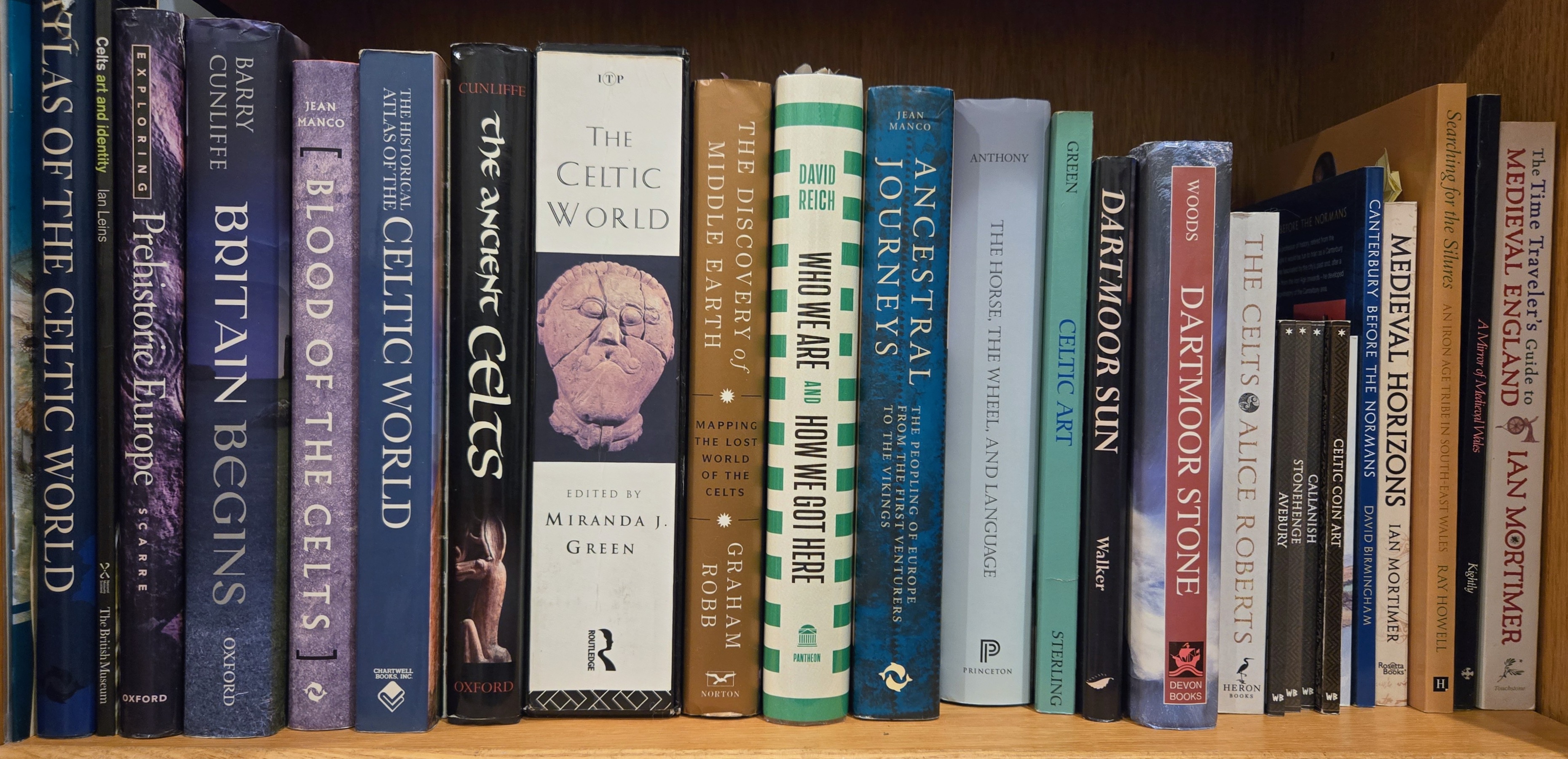
In reflecting on this unlikely journey I remembered a friend from the early days of 23andme and DNA Forums. She was an older African American woman and she shared with me her story of having taken German back in high school. Her friends gave her a hard time about it. And yet years later when she was married to a military man and stationed in Germany, she joined the German opera. She loved all things German and had no reason for it. Then she got her early DNA results and she was significantly German. In his book ‘The Horse, the Wheel and Language’ by David Anthony he writes:
“When you look in the mirror you see not just your face but a museum. Although your face,
in one sense is your own, it is composed of a collage of features you have inherited
from your parents, grandparents, great-grandparents, and so on.
The lips and eyes that either bother or please you are not yours alone but are features of your ancestors,
long dead individuals but still very much alive as fragments in you.
Even complex qualities such as your sense of balance, musical abilities, shyness in crowds
or susceptibility to sickness have been lived before.
We carry the past around with us all the time, not just in our bodies.
It lives also in our customs, including the way that we speak. The past is a set of invisible lenses we wear constantly, and through which we perceive the world and the world perceives us.
We stand always on the shoulders of our ancestors,
whether of not we look down to acknowledge them.”
And so I choose to believe that we are attracted to the ancient through the pull of the ancestors. The echoes of lives long since erased from the earth that we carry in our DNA. This book shelf is a testimony to them.
When I started my Celtic journey I suspected I might be maybe 25% Celtic and perhaps that is still true—but the significance of the Celts to me is great. Not to diminish other stories or cultures, as they are all valuable and very much intertwined.
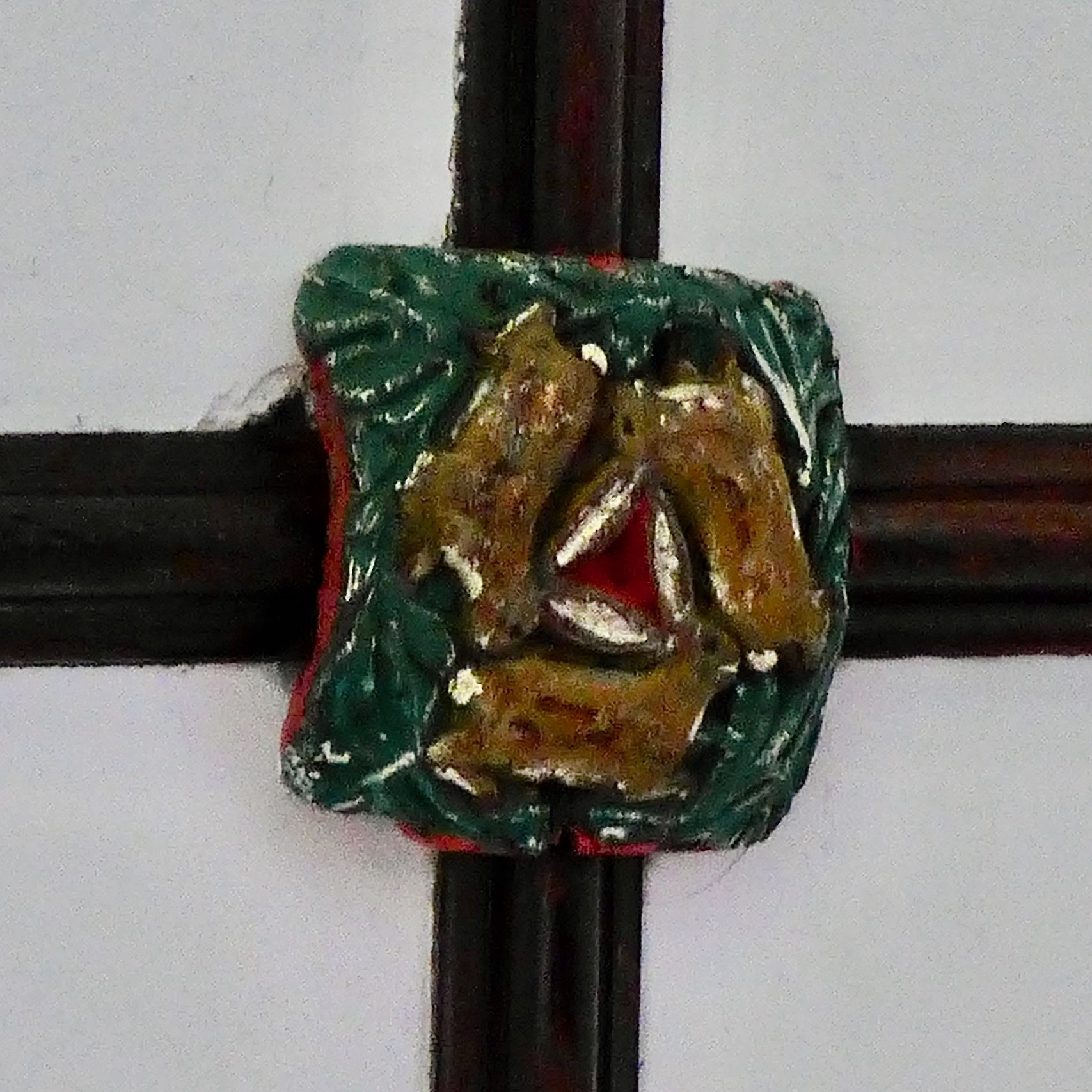
This last photo is of a boss in the church of St Pancras at Widecombe on the Moor in Devon, England. It is likely an original from the 15th century. It is of 3 hares where their ears create a triangular pattern. Hares are sacred in the Celtic tradition, symbolizing prosperity, fertility and rebirth. The three-hare motif is in Christian parlance seen as a sign of the holy trinity. However its roots are in Buddhist China and likely spread along the Silk Road to Europe and was adopted by the Celts. It is often seen in the vicinity of the Green Man in old churches.
A couple of years ago I wrote this piece on the Winter Solstice and the Celts, in case you are interested.
Thank you for indulging me. I hope to get back to my tour of Kent, England soon. hopefully this little detour has primed the pump.
Kelly Wheaton ©2025 – All Rights Reserved
Bluebells and Dandelion Wishes
Posted on July 18, 2025 Leave a Comment
Some of you who follow my blog posts will note a bit of a long pause in my posts about my trip to England. Perhaps a bit of an explanation is in order. This post is dedicated to the memory of my dear friend Jean WHEATON. Her children have written to me how much she was looking forward to these posts. It feels like she has been gone for longer than two weeks and so I will forgive myself for not being able to face this earlier. Jean was not just a fellow genealogist, but she had grown to be one of my dearest friends. That may seem a bit odd as she lived in Surrey, England and I in California and we met but once for four days back in 2015. She was a kindred spirit in so many ways and when I was in England recently she was always the ambassador, worrying over whether I was having a good time. She had been in and out of the hospital so our last few conversations were by phone. During Covid 19 we started Skyping and met almost every Saturday or occasionally Sunday for the past five years. It was a welcome respite from a world gone mad.
During my visit to Hever Castle I took the photo below. Jean had shared with me her thoughts and she was right that it is a smaller castle and more “intimate” than many other English castles. While there I lay in the grass trying to get a photo of her beloved bluebells. It was mid May and I was lucky there were still some in bloom. It was not the photo I was hoping to share with her but it would have to do.
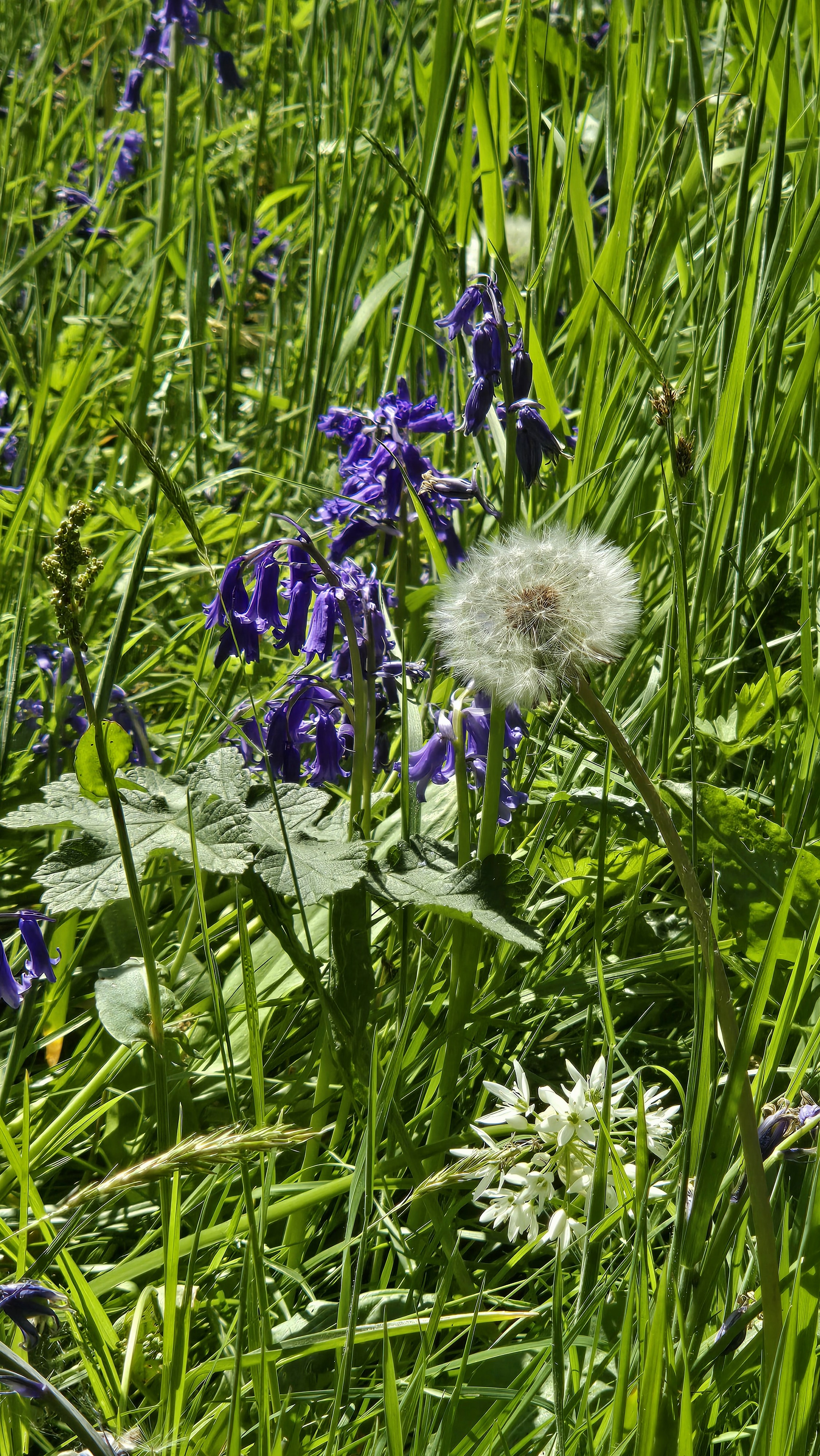
I had hoped to find a wood with a carpet of bluebells which I knew were her favorite. But instead this was a mixed open wood of buttercups, bluebells, allium and dandelions. I did not blow the head of dandelion seeds but I will metaphorically pick it now and give it a good hard blow. Some believe that the seeds will carry your thoughts and dreams to loved ones. I like to think that she would like that.
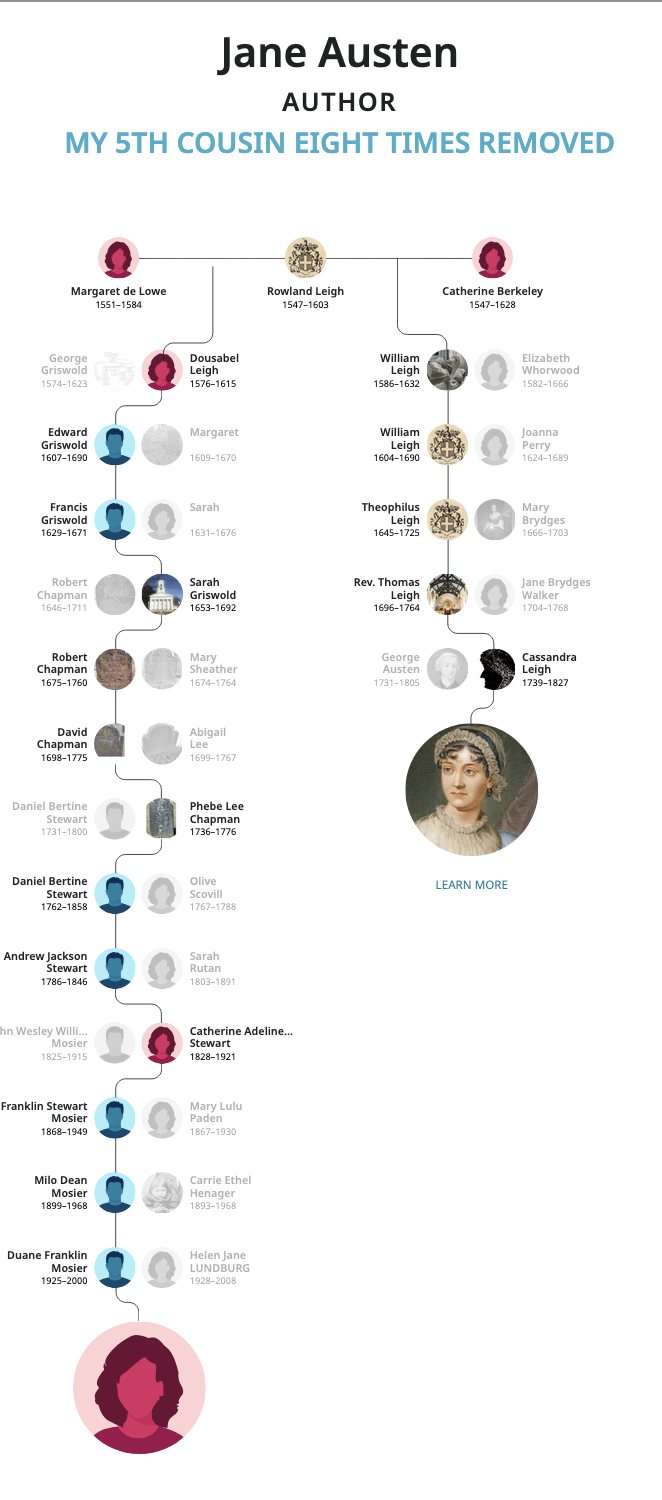
I was going back through emails between us and there were thousand just in the last few years. One cute one was about Jane Austen who was her favorite author as well as mine. I had shared that Jane was my 5th cousin 8 times removed according to Family Search—but I said I had not yet had time to prove it. I am always skeptical since many times these turn out to be wrong. But maybe my reluctance is that I would like to think it was true.
Jean had collected WHEATONs worldwide for many years in hopes of solving her husband’s ancestral past. And I was doing the same on this side of the pond. We joined forces over 35 years ago and I host her work here, even though much of the formatting was lost in the transfer and is unfinished business for me to clean up. Jean was a much better genealogist than I and documented everything with precision. I consider myself fairly organized but she put me to shame. We worked well together and I will be forever grateful to her, for her work.
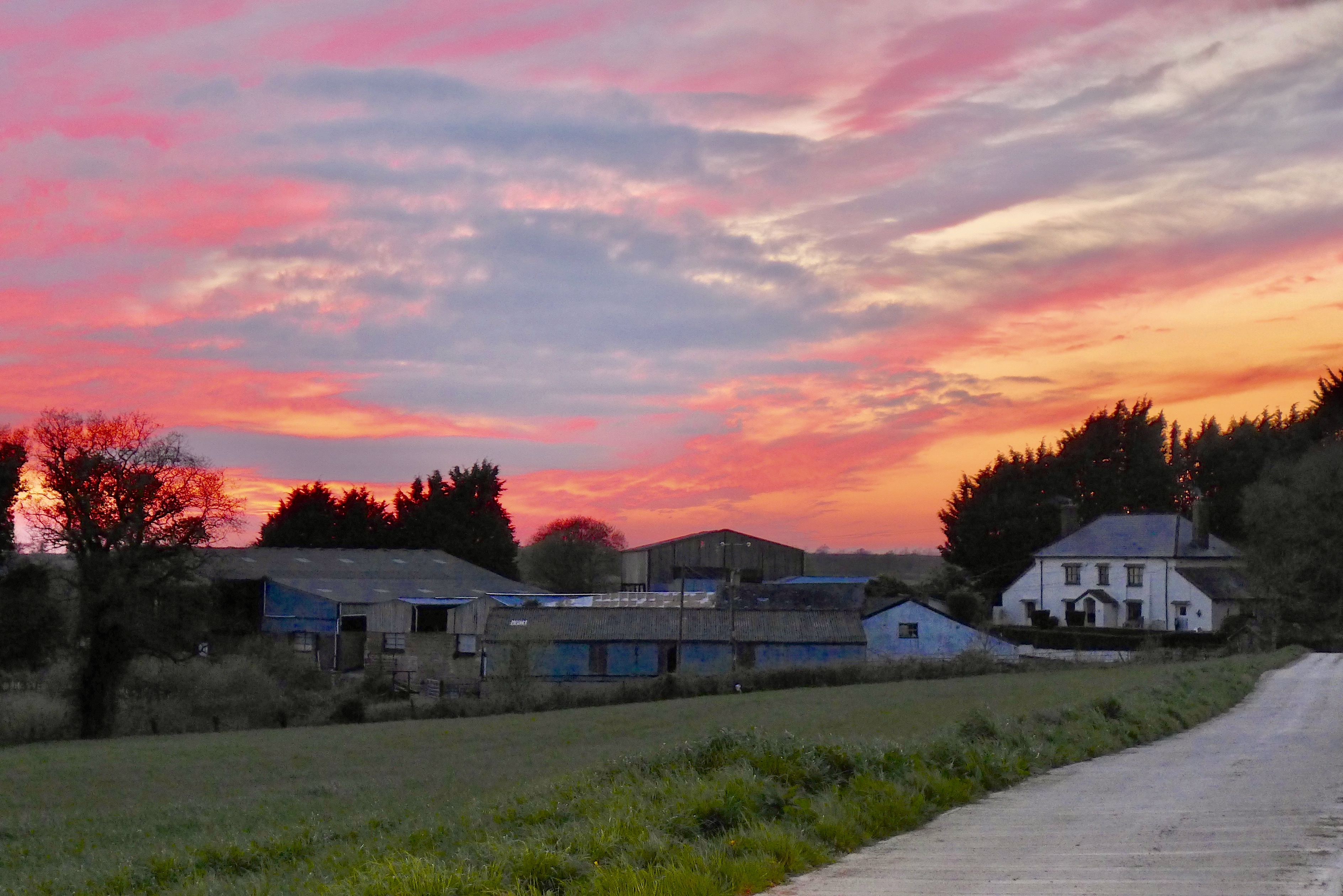
Back in 2011 while I was recovering from a cancer surgery I built my original website and wrote the Beginner’s Guide to Genealogy. Jean was there cheering me on the whole way. In 2015 I traveled to England and met up with Jean and Den in Tiverton, Devon. We stayed at the WHEADON Farm Bed and Breakfast in Witheridge. [It was originally spelled WHEATON]. This was the view as we drove into the farm.
We both had thought our WHEATON roots lay in Devon but in the end through DNA we resolved that Den’s WHEATONs roots probably lay in Staffordshire and mine and my husband’s in North Somerset, not Devon. These journeys of discovery led to many shared memories and a deep friendship that reached much deeper.
So perhaps that is part of the lesson. That as we dig deeper into our own roots we meet people who change and enrich our lives. Jean was one such person. She was generous with her time and the hundreds of people that sought her help. When she was younger she loved to dance. And she still enjoyed watching “Strictly Come Dancing” on which the American version “Dancing With the Stars” is based. She loved literature and nature and history and maps and birds and genealogy and gardens and her family. She loved puzzles and Teddy bears and had a special love of bluebells and trees and owls. Below are a few owls from our shared trip.
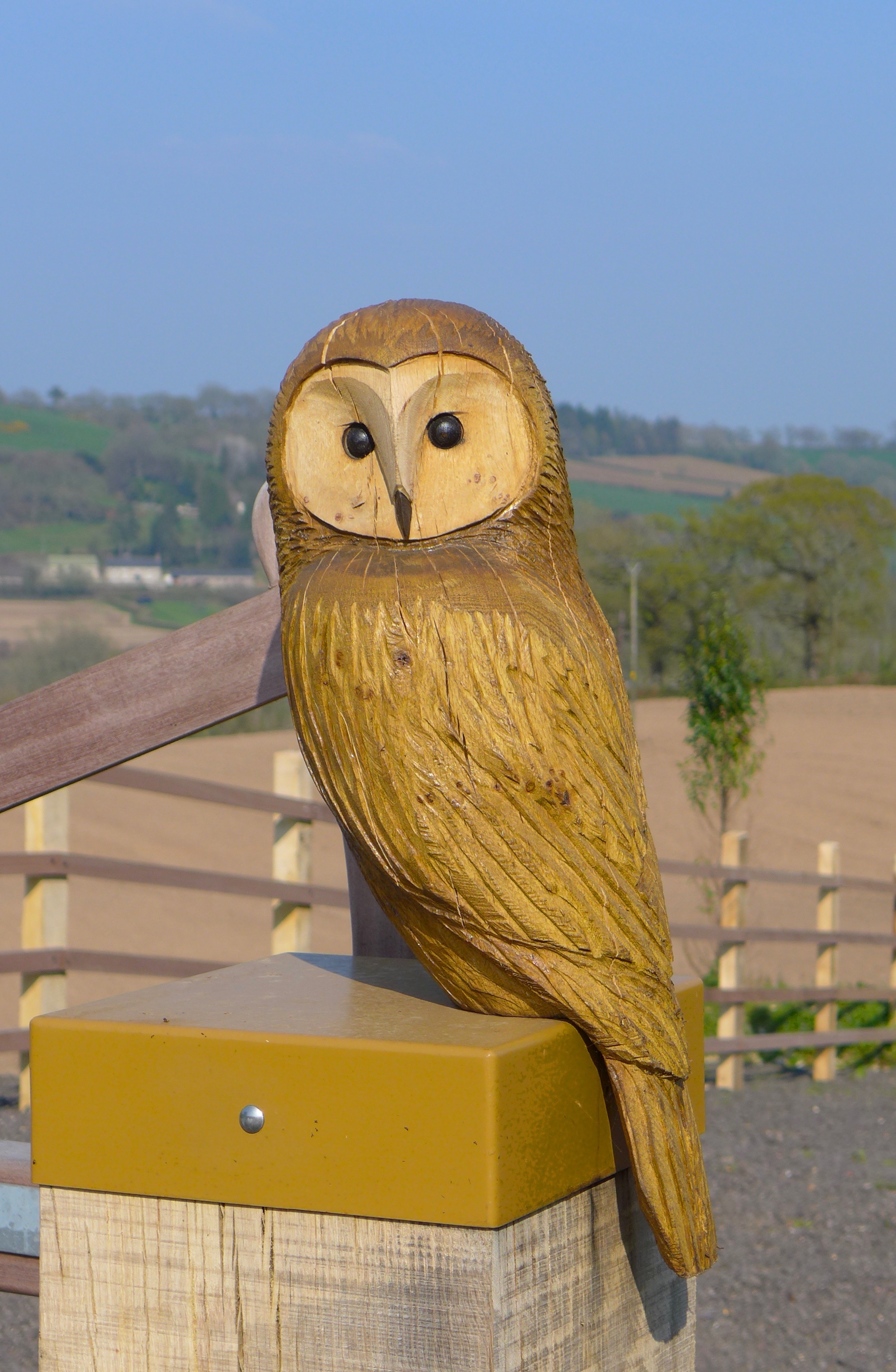
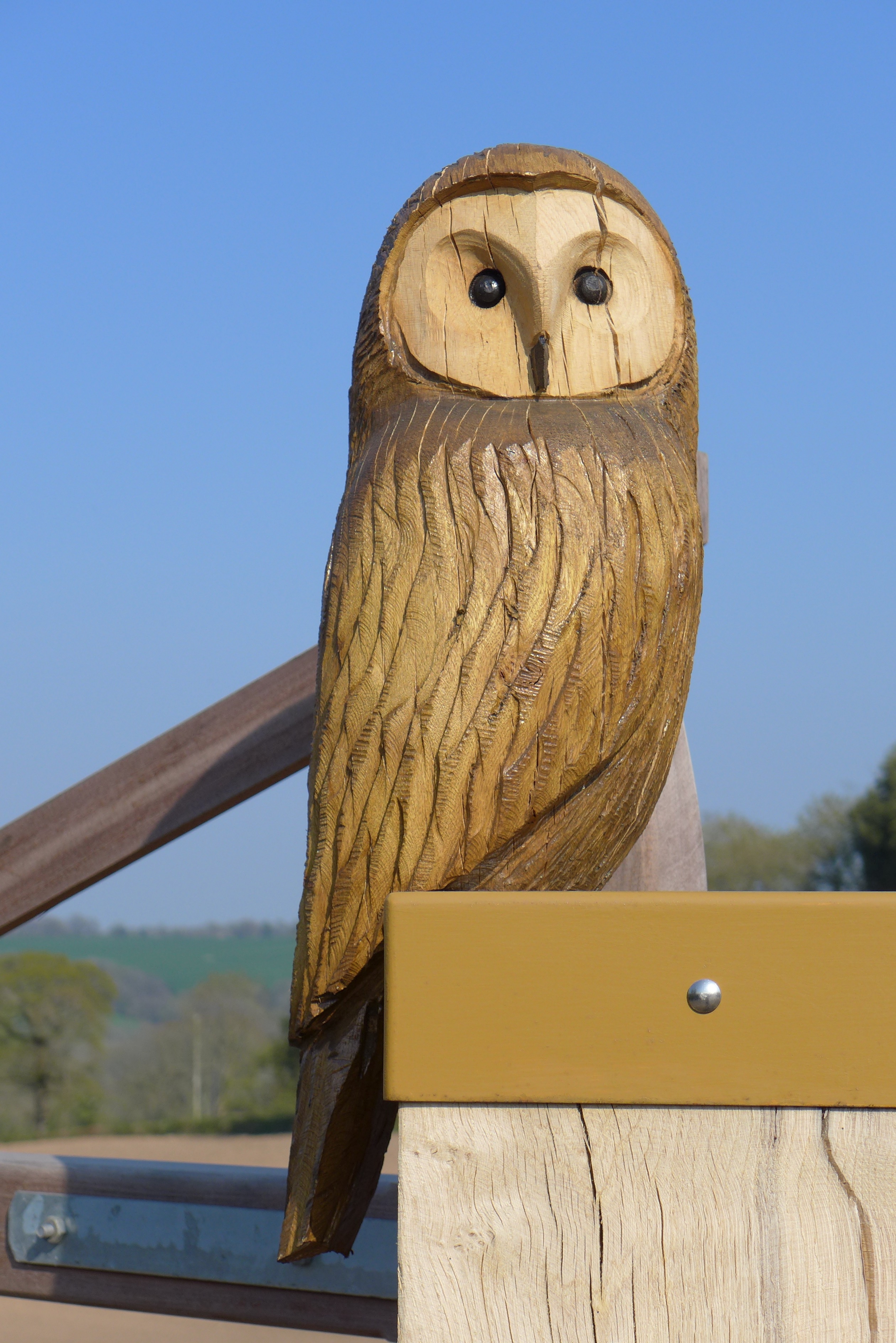
I hope you will forgive this detour for my friend Jean. In England a detour is called a diversion. On my trip with Jean and Den we came across one such diversion. It appeared to be impossible to get from where we were to where we intended to go. At one point I got out and asked a local how it might be done. He pointed in a direction and told me just follow that road to the crest of the hill then turn right. So we dutifully drove as directed for mile after mile after mile. The way he had described it, the turn was just up the road—but as it turned out, it was many miles. I had hoped to have a few more miles with Den and then Jean than the road allowed. But I am so grateful for those I did have. In memory of Jean Wheaton 1936-2025.
Kelly Wheaton ©2025 All Rights Reserved
 Wheaton Wood