Celtic Origins
Apologies to my faithful readers. I took a break after the death of my best genealogy friend, Jean to process what her life and loss means to me. I have found that I cannot be creative on demand, and must wait for inspiration and the imperative juices to flow. Sometimes all that it takes is a bit of curiosity and some serendipity.
PADEN YDNA
A few days ago I was revisiting my PADEN cousin’s Big Y DNA test. The Big Y that I and my cousin Malia sponsored back in 2018, is the gift that keeps on giving. PADEN is the maiden name of my paternal grandfather’s mother. You may recognize her from the diary that she kept and that can be found here under Mary ‘Lulu’s Diary’ entries. PADEN comes from the Irish surname Páidín, a diminutive of Pádraig (Patrick), which means “noble” or “patrician” or in the Scottish version also from a Gaelic pet form of the personal name Patrick. An alternative Mac Phaidein or Mac Pheadain, which means “son of Phaidin,” a name derived from the Gaelic Fáelán meaning “little wolf.” Our PADEN ancestor, John PADEN came from Northern Ireland, perhaps Coleraine to Maryland by 1798, when his daughter Nellie was born there. tmThe family settling in Funkstown, Washington County. In a desire to locate the PADEN family origins we finally resorted to YDNA.
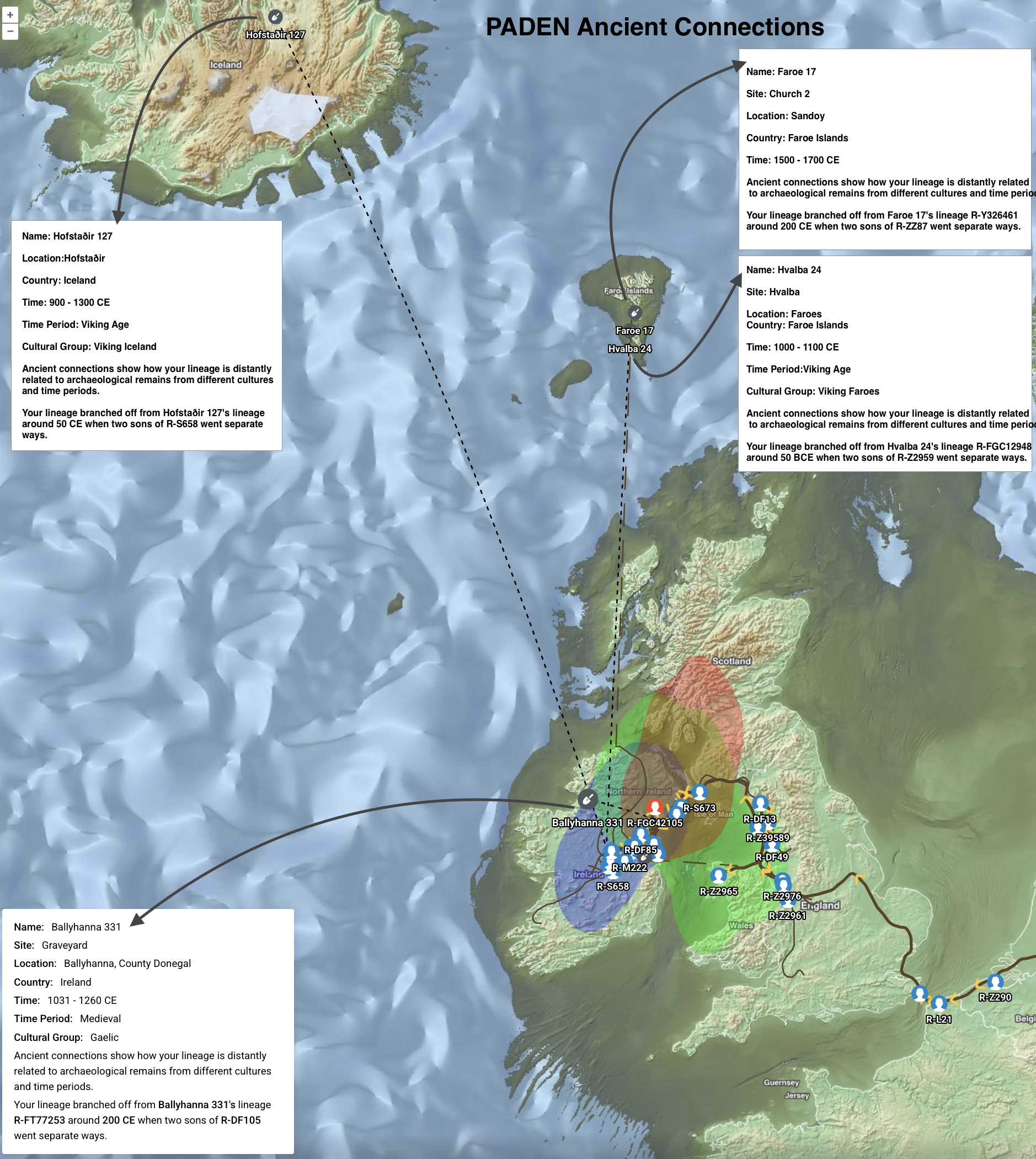
As more ancient skeletons are discovered and their DNA sequenced we are getting closer and closer to recreating the paths our ancestors took. Not just in a genealogical time frame but deep back into history. I annotated this map from FTDNA for our PADEN Ancient Connections for my cousins. It lists 4 ancient remains that match our PADEN ancestors. I will insert a caveat from my friend Roberta Estes “These remains are probably NOT YOUR ANCESTORS, but definitely ARE your distant cousins.” We SHARE a common ancestor. Sometimes that common ancestor will not be discovered in the same area that our ancestors lived. However, in looking at the Ancient shared DNA matches it does give us a geographic area. Since this was the Viking Age it is likely that these were sea faring people who frequented the Isles.
Our PADEN’s complete SNP path from the R Haplogroup : M207>M173>M343>L754>L761>L389>P297>M269>L23>L51>P310>L151>P312>Z290>L21>S552>DF13>Z39589>DF49>Z2980>Z2976>DF23>Z2961>Z2956>Z2965>M222>Z2959>S658>DF104>DF105>ZZ87>DF85>S673>S668>FGC8740>DF97>FGC19851>FTA3893>FGC19846>FGC42106>FGC42105>BY202797>BY202928
Each one of these SNPS is a mutation that happened in the duplication process of a one Man’s YDNA at the time a germ cell was replicated. That germ cell became a sperm cell fertilizing an egg that carried the YDNA. All descendants of that man will retain that mutation. His father or brothers will not! Only direct patrilineal descendants. The SNP M222’s overall frequency is: 28% in Ireland, 13.5% in Scotland, 4.7% in England, 2.5% in Wales, 2.5% in France, 1.2% in Germany. It is considered a Celtic marker found at high frequencies among Celtic language speakers.
Below is a chart of the PADEN matching Ancient remains organized by when the SNP occurred that separated our branch from that of the subject’s remains.
| Name of remains | Location | Time frame of remains | Cultural group | Time branching occurred | SNP Split |
| Hvalba 24 | Hvalba, Faroe Islands | 100-1100 CE | Viking | 50 BCE | R-FGC12948 — R-Z2959 |
| Hofstaòir 127 | Hofstaòir, Iceland | 900-1300 CE | Viking | 50 CE | R-S658 |
| Ballyhanna 331 | Ballyhanna, Donegal, Ireland | 1031-1260 CE | Gaelic | 200CE | R-DF105 |
| Faroe 17 | Sandoy, Faroe Islands | 1500-1700 | Viking | 200CE | R-Y32646– R-ZZ87 |
MY ANCIENT DNA
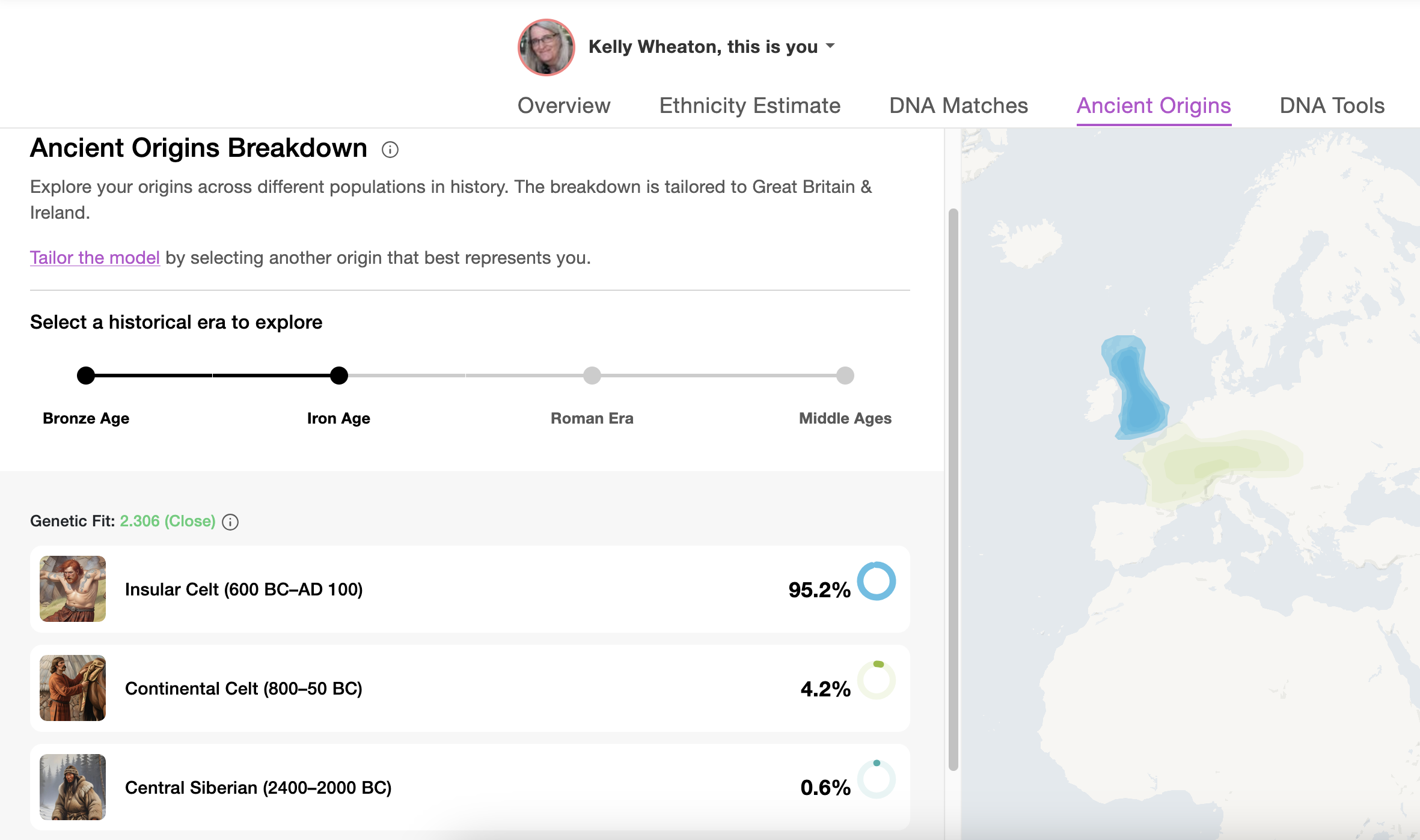
Okay, but it didn’t stop there. I went looking for my autosomal DNA at Ancestry which lists me as 3% Icelandic. I have tended to ignore that, other than to note my Norwegian and Scottish ancestors, but with these Icelandic matches for PADEN it gave me pause. So I went digging at the other companies I tested and happened upon My Heritage’s tools for Ancient Origins. My Heritage added this Ancient Origins feature back in February 2025, but I had not explored it. The chart below shows me during the Iron Age with a close match with the reference populations. The earlier Bronze age is 54.2% European Farmer (6300-2800 BCE) and 45.4 % Western Steppe (3300-2600 BCE). Now all of these should be taken with a spoon full of salt but I found the 98.4% CELTIC fascinating. I never would have expected that!
However, maybe I should have. Going back to my pre-teen years I have been interested in Ancient History. And particularly the cultures considered back then, as primitive, whether they be Native American or Maori or Celtic. The fascinating overlap of their wisdom traditions often passed down in story telling and song spoke to me of something very different and grounding. They were not the dominant cultures that got to write their own histories, so I was often skeptical of what was written about them. Savages is an oft used term by the dominant culture—and it is meant to demean and degrade.
When I was a toddler I remember three large stones that my parents had purchased, and placed in our yard by crane. They were in the Japanese tradition and they were each about 3 feet long or wide. It was then my love of stones was cemented for life. And anyone who has traveled with me, knows how much I will go out of my way to visit a stone circle. Below are Stonehenge, Clava Cairns and Callanish.
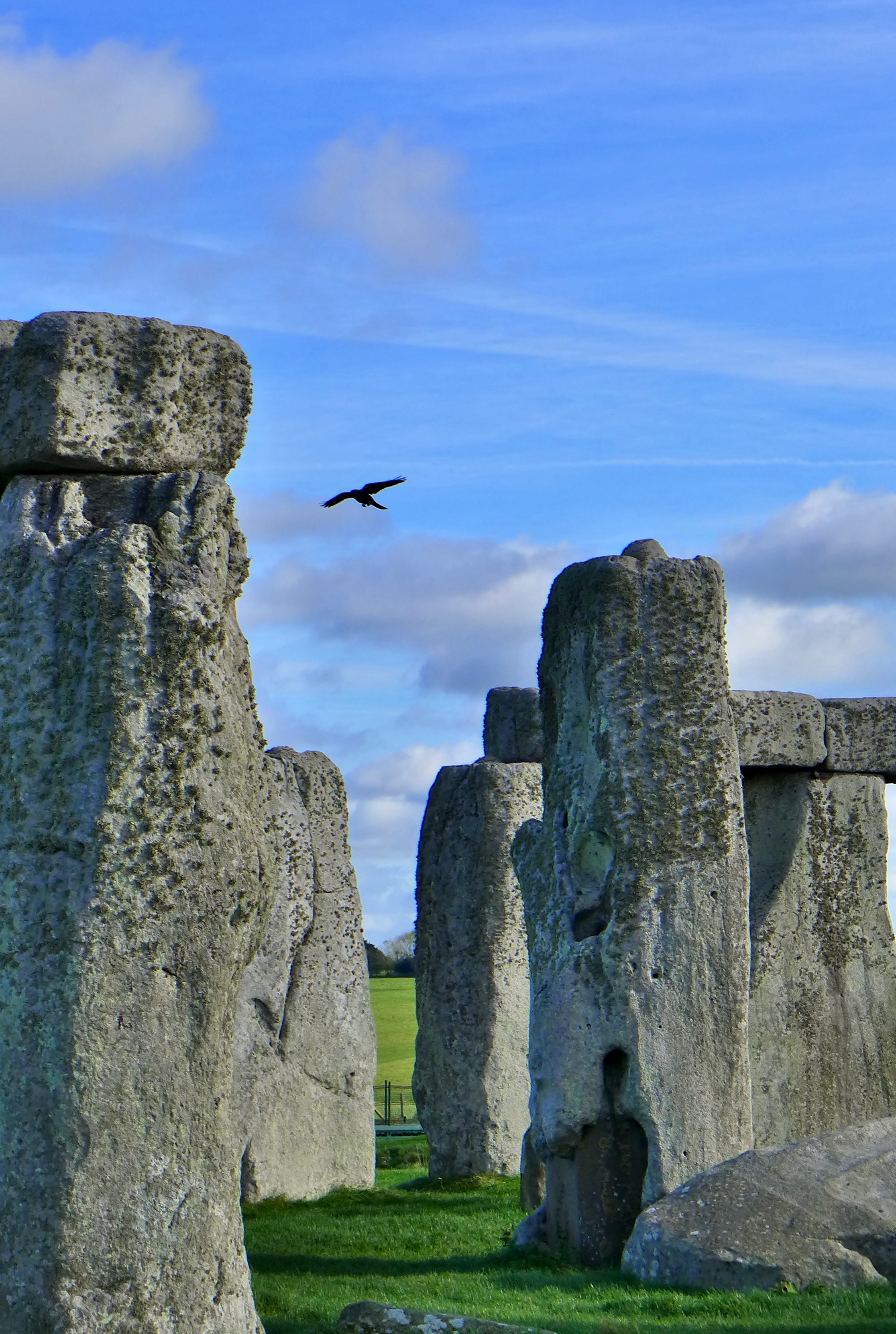
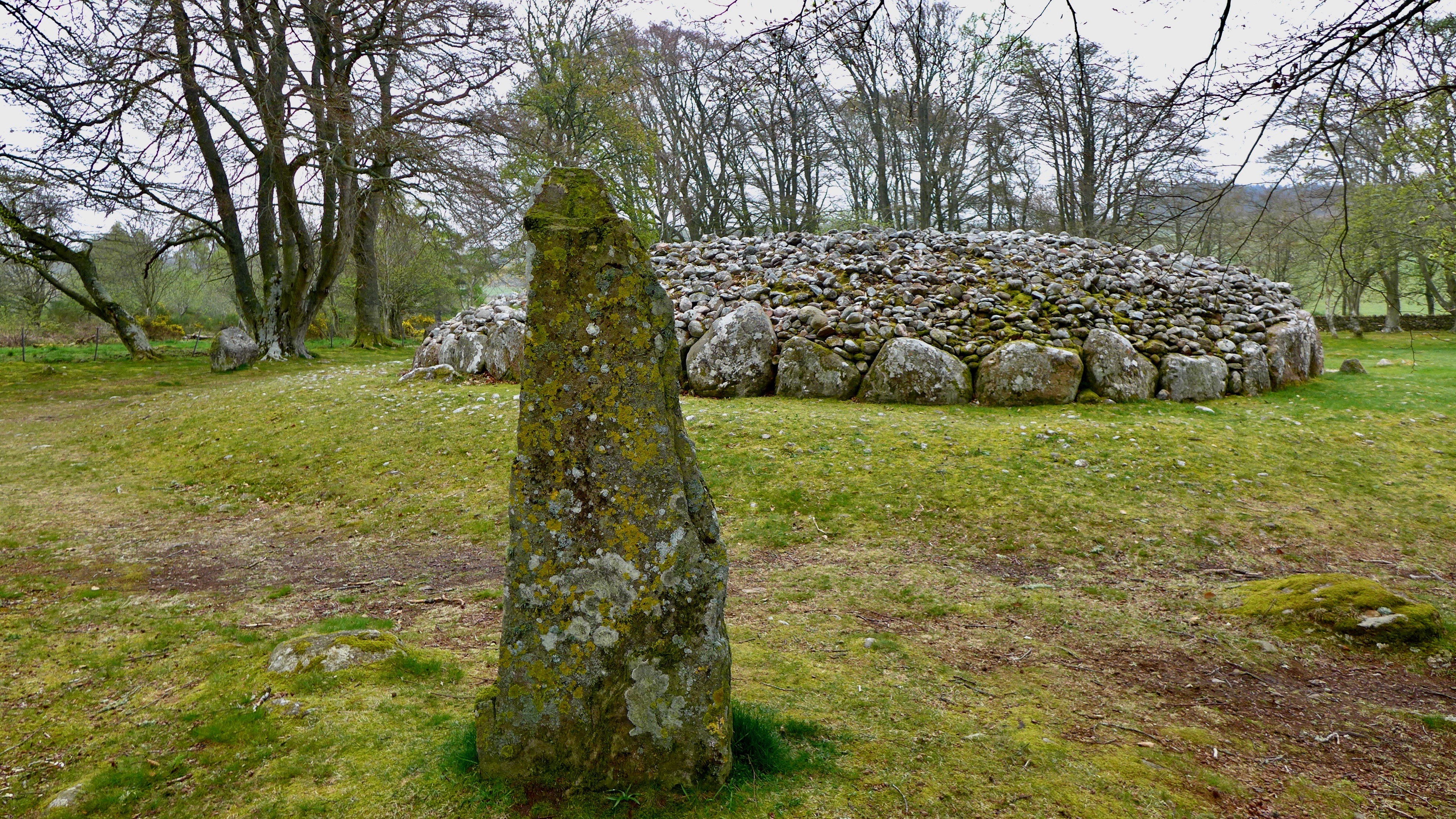
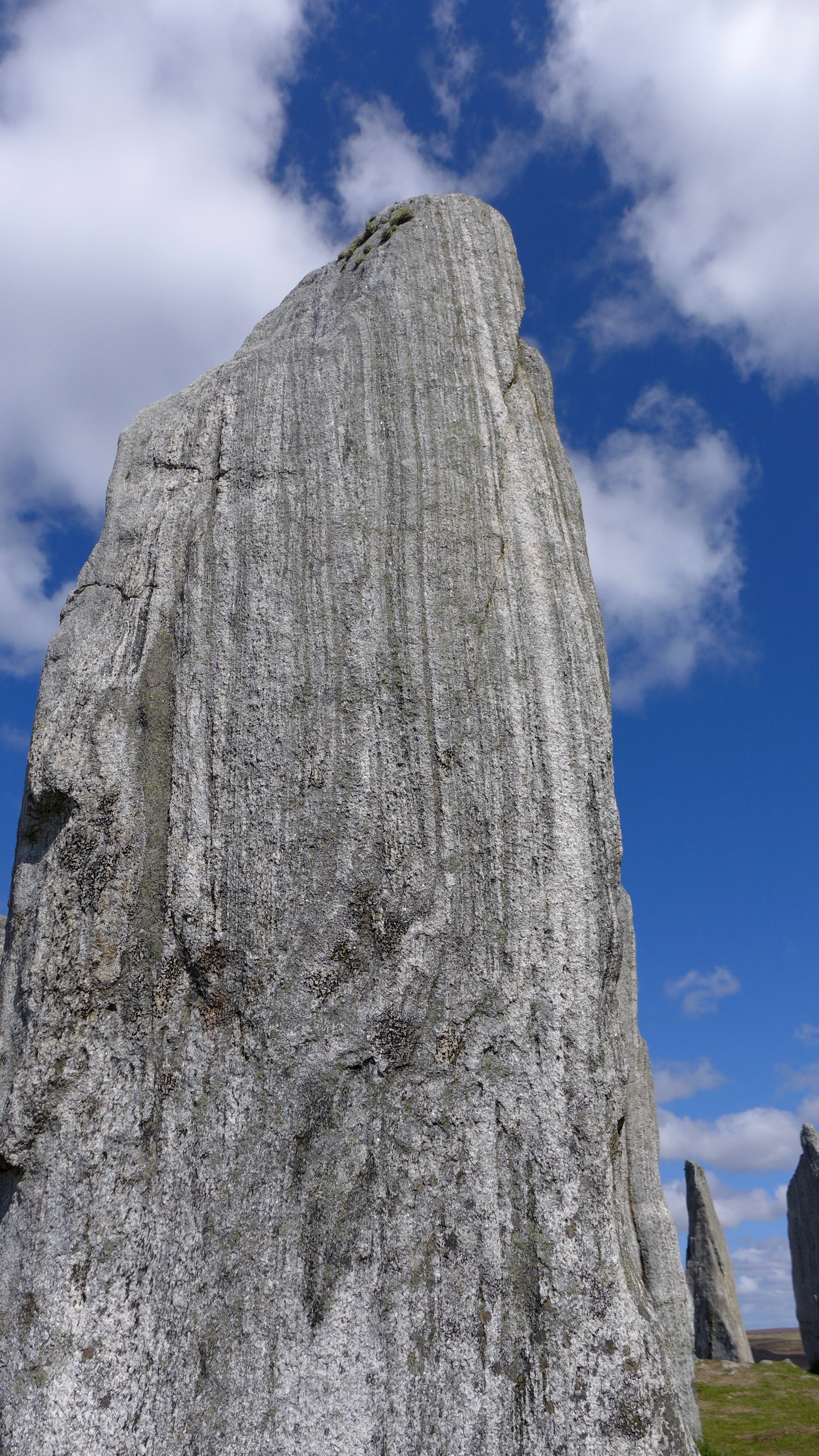
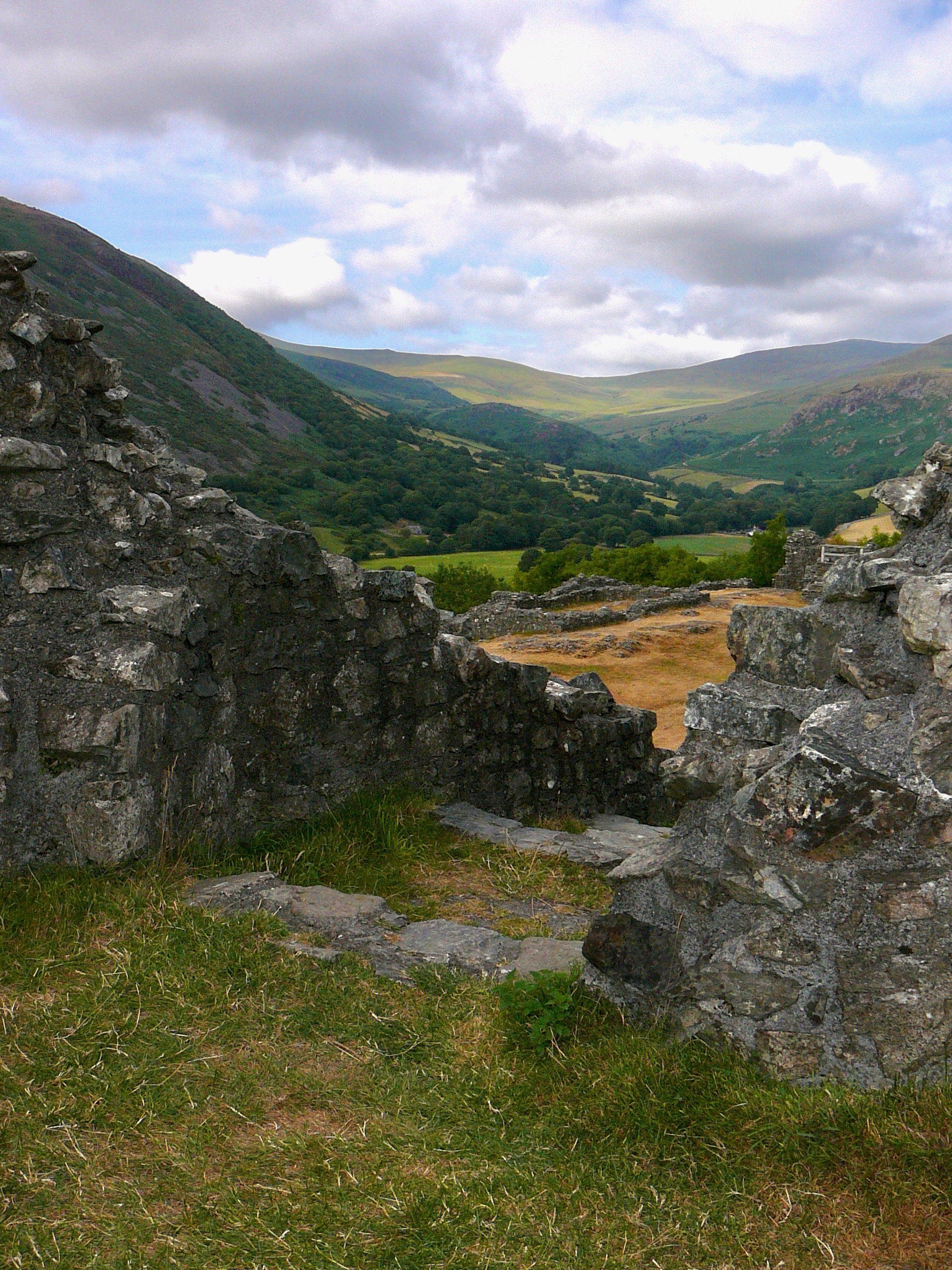
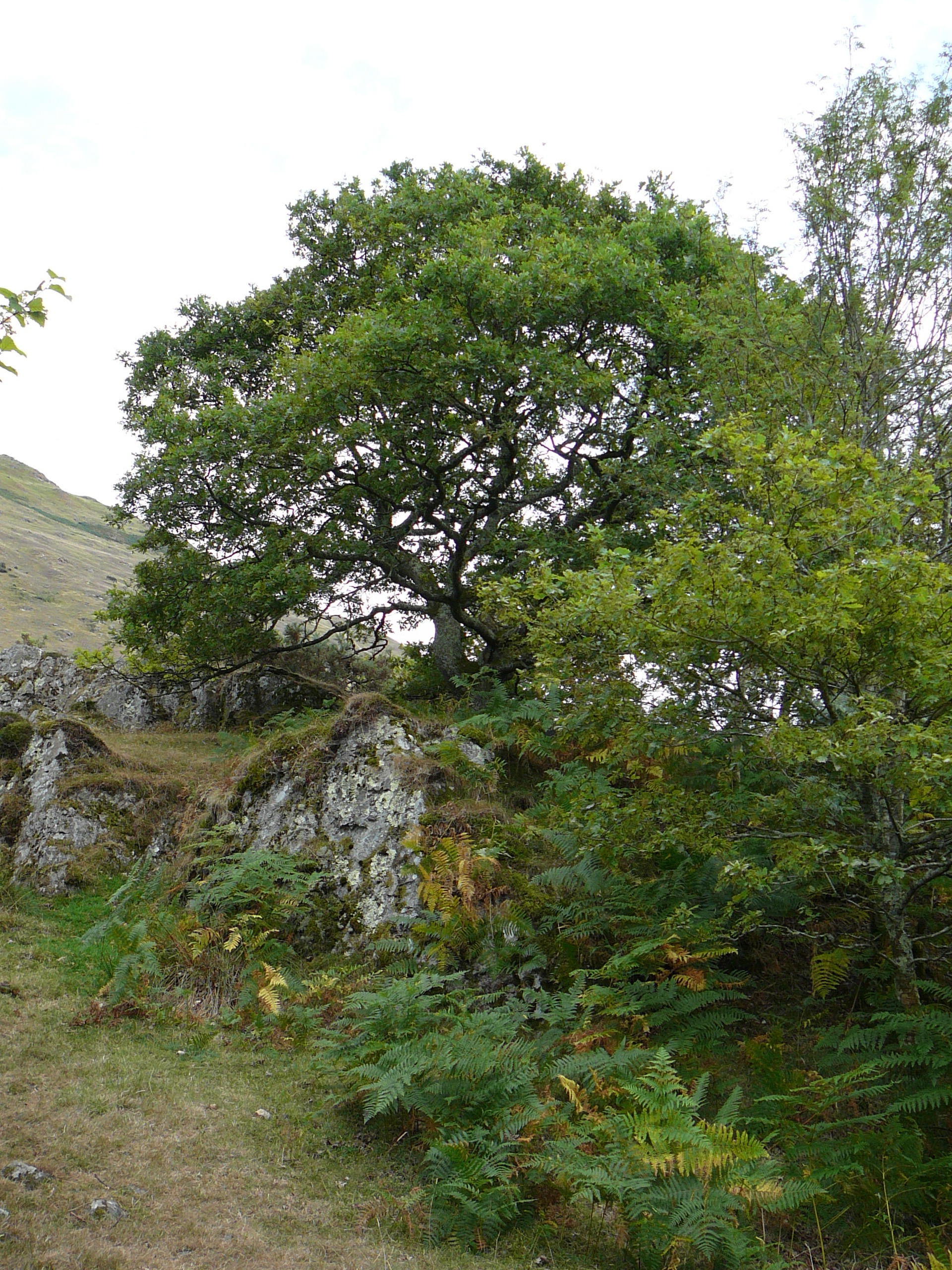
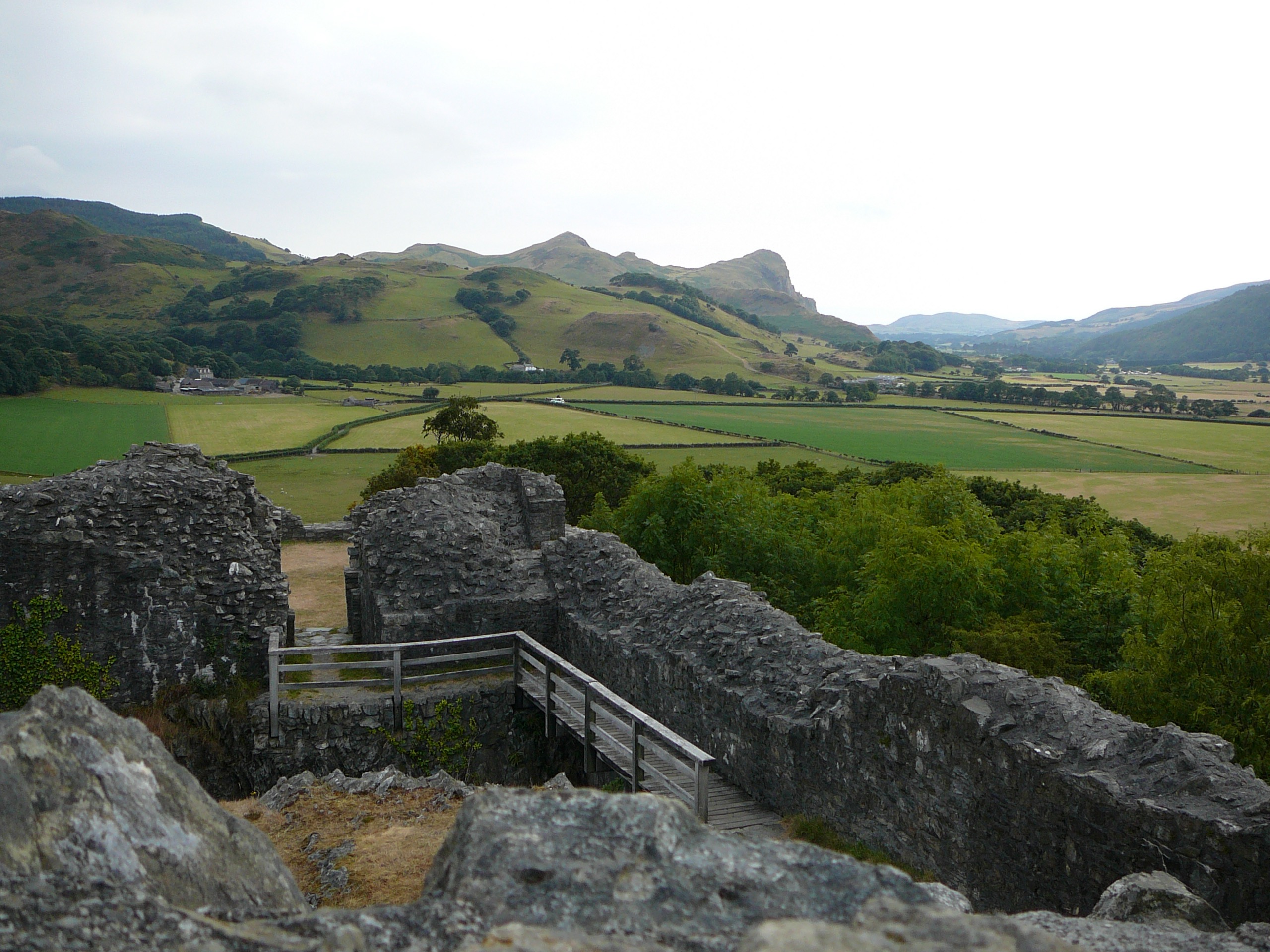
Whether Art, Archaeology, History or Music the ancients call to me—so not a surprise that I fell in love with the ancient lore of Wales and tales of Arthur Pendragon and Llewelyn the Great. And later with the book and later TV series, Outlander. It isn’t just ancient stones, or bones, or ancient Springs, or the Tree of Life. It is this love of the natural world expressed in ancient things. It is neither new, nor superficial. Their age and ability to endure, is somehow comforting. The following photos of Llewelyn the Great’s (1173 –1240) Castell Y Bere, near Llanfihangel-y-Pennant, Wales, taken in 2005 hint of such things.
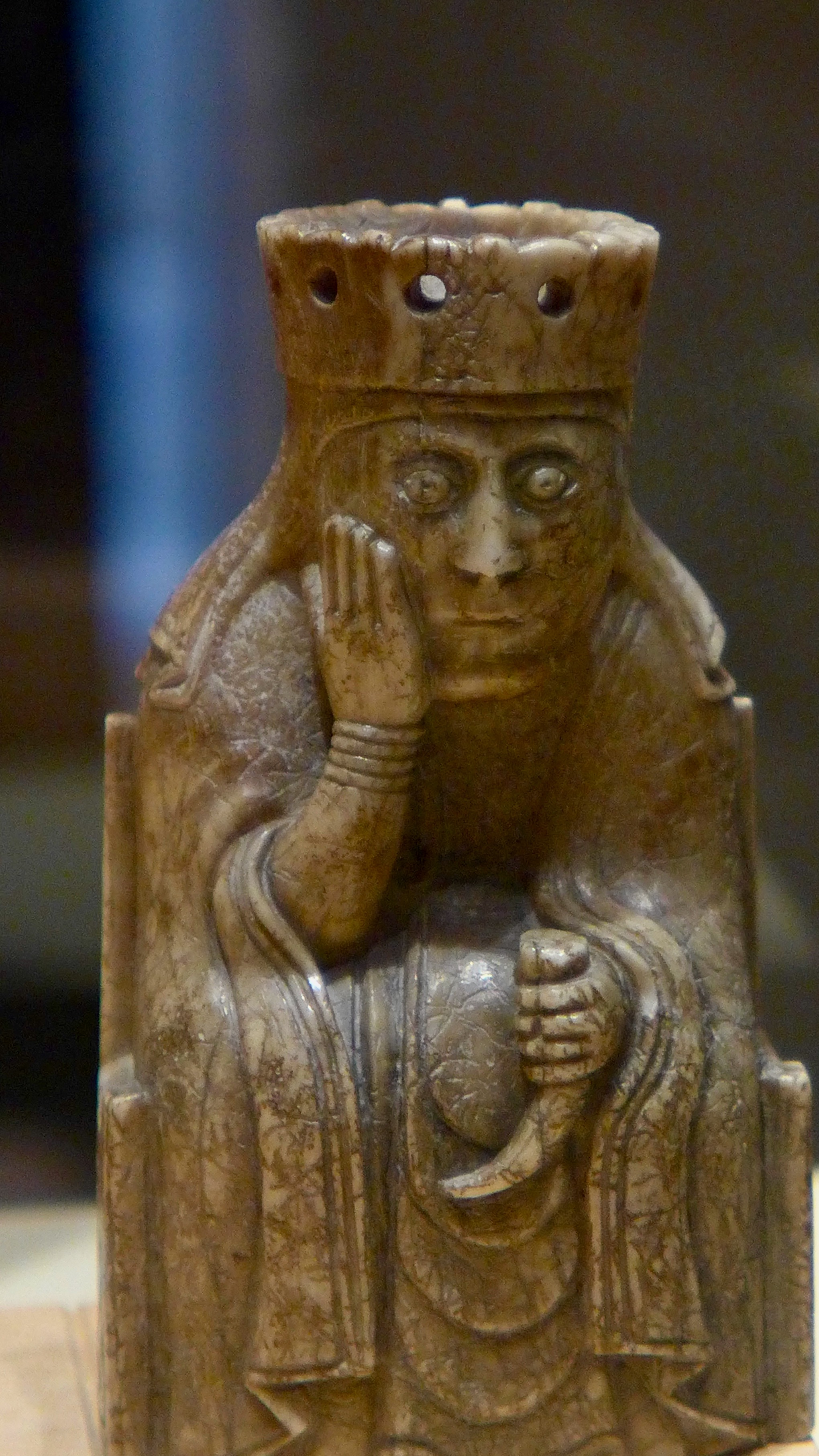
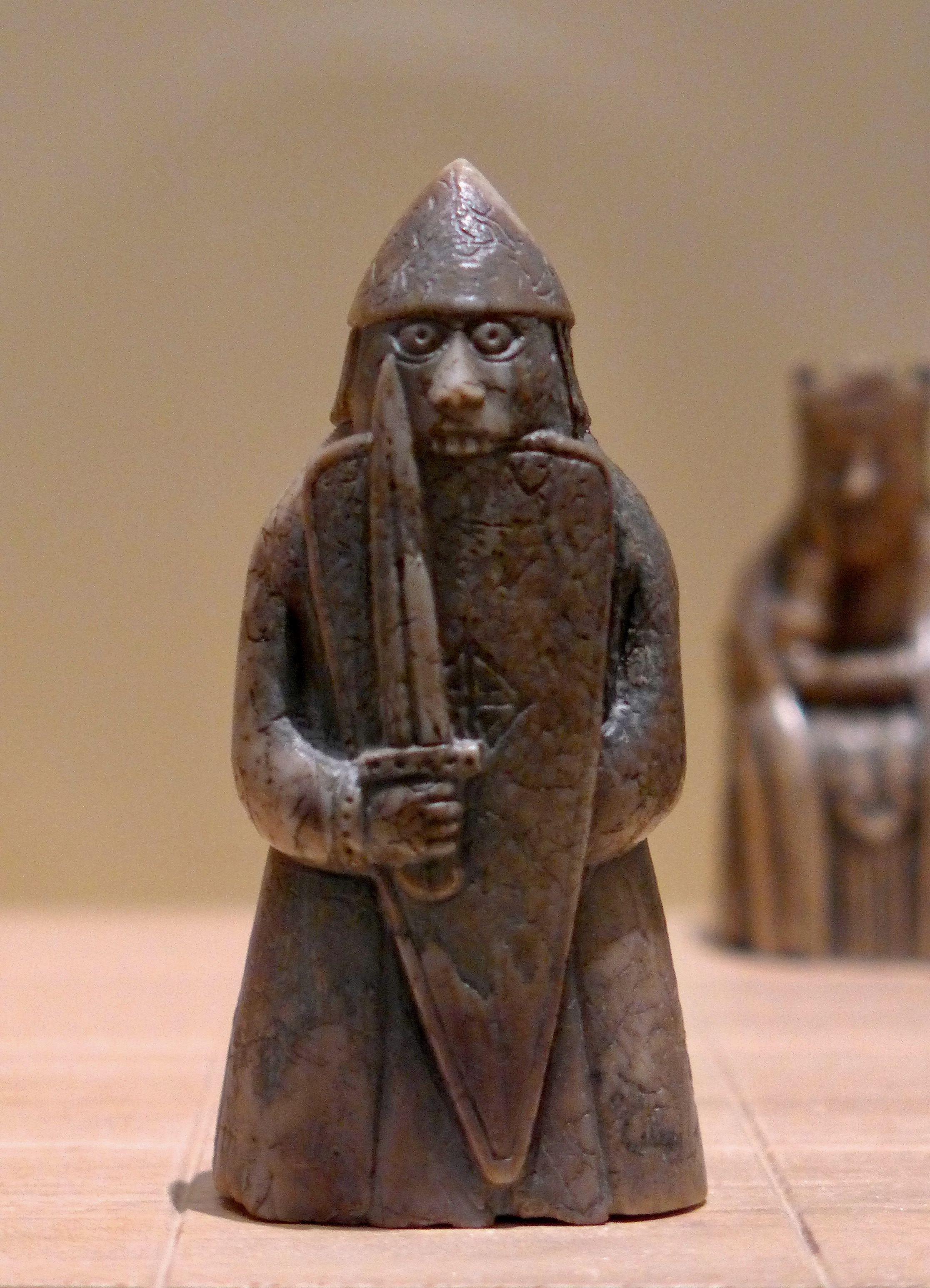
And then there are the symbols of the Celts and later the Vikings that drew me into their spirals and animal motifs. In 2016 my friend and I planned a trip to Scotland and as preparation I read Peter May’s Trilogy set in the outer Hebrides and Adam Nicholson’s ‘Sea Room’. As luck would have it the ‘Celtics Art and Identity’ exhibit, that was first on display at the British Museum, was to be at the National Museum of Scotland during our visit. All a long winded way of saying an interest became a passion. And it was helped along by my husband’s YDNA which is of Celtic origin. And reading Peter May’s ‘The Chess Man’ I became acquainted with the Lewis Chessman carved of Ivory. Which I was able to view half of them at the National Museum of Scotland in 2016 and the other half this year (2025) at the British Museum, [my principal reason for going there]. These 12th century Ivory pieces I find enchanting. [Those below are a Queen, a Beserker and a King at the Museum of Scotland. Although a smaller collection, perhaps finer pieces.]
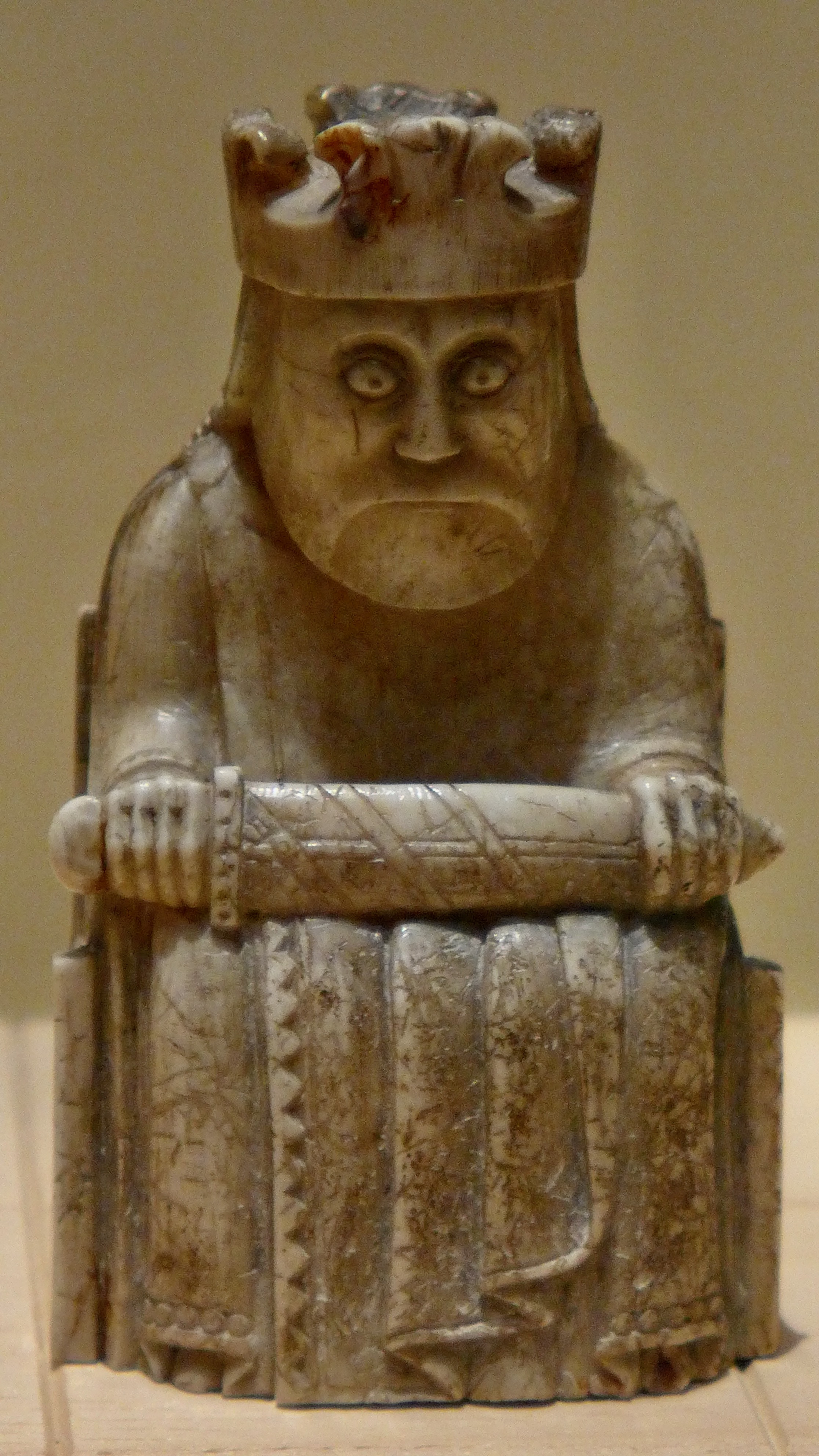
DO WE HAVE A CHOICE?
In reflecting on this unlikely journey I remembered a friend from the early days of 23andme and DNA Forums. She was an older African American woman and she shared with me her story of having taken German back in high school. Her friends gave her a hard time about it. And yet years later when she was married to a military man and stationed in Germany, she joined the German opera. She loved all things German and had no reason for it. Then she got her early DNA results and she was significantly German. In his book ‘The Horse, the Wheel and Language’ by David Anthony he writes:
“When you look in the mirror you see not just your face but a museum. Although your face,
in one sense is your own, it is composed of a collage of features you have inherited
from your parents, grandparents, great-grandparents, and so on.
The lips and eyes that either bother or please you are not yours alone but are features of your ancestors,
long dead individuals but still very much alive as fragments in you.
Even complex qualities such as your sense of balance, musical abilities, shyness in crowds
or susceptibility to sickness have been lived before.
We carry the past around with us all the time, not just in our bodies.
It lives also in our customs, including the way that we speak. The past is a set of invisible lenses we wear constantly, and through which we perceive the world and the world perceives us.
We stand always on the shoulders of our ancestors,
whether of not we look down to acknowledge them.”
And so I choose to believe that we are attracted to the ancient through the pull of the ancestors. The echoes of lives long since erased from the earth that we carry in our DNA. This book shelf is a testimony to them.
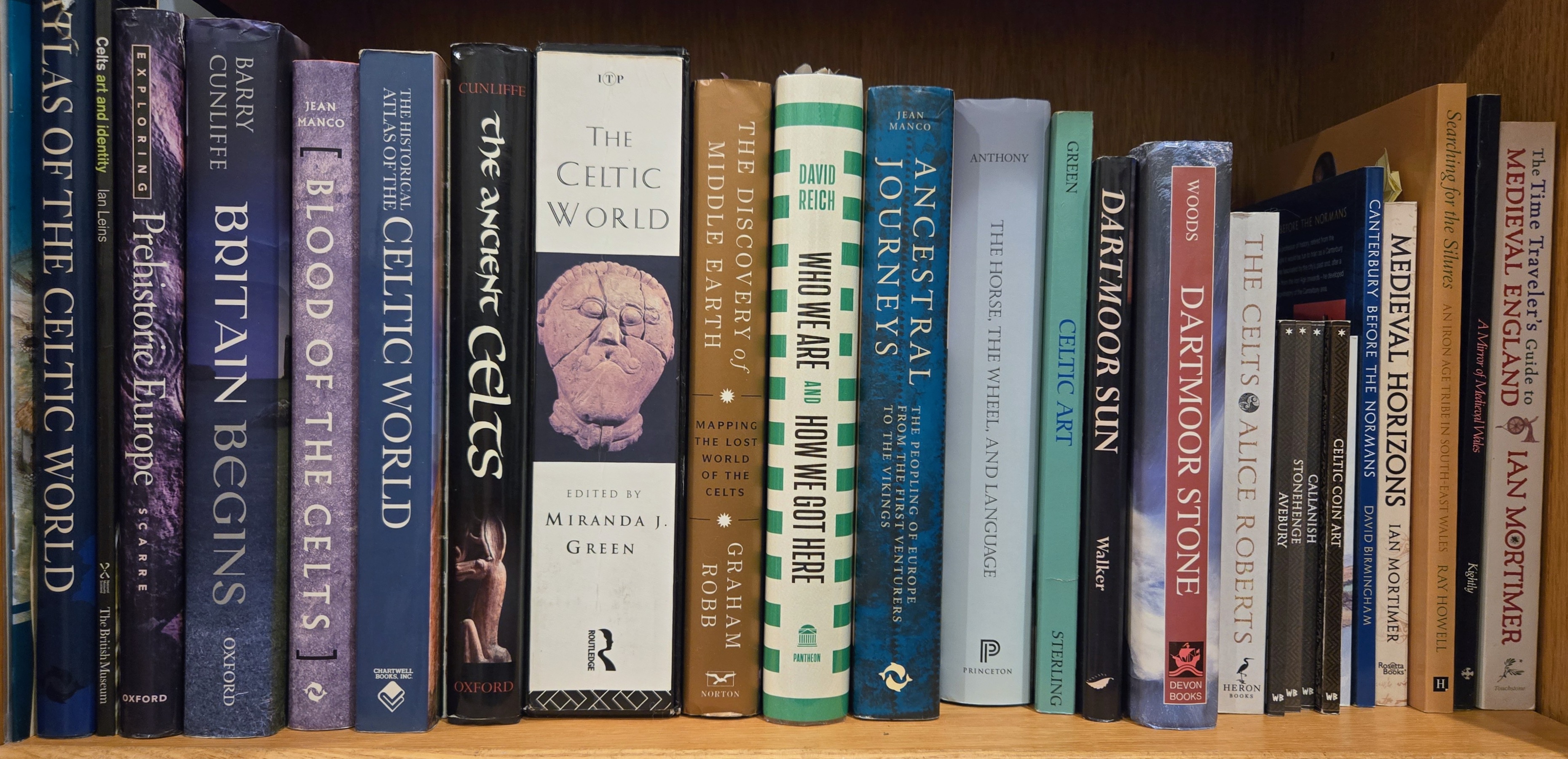
When I started my Celtic journey I suspected I might be maybe 25% Celtic and perhaps that is still true—but the significance of the Celts to me is great. Not to diminish other stories or cultures, as they are all valuable and very much intertwined.
This last photo is of a boss in the church of St Pancras at Widecombe on the Moor in Devon, England. It is likely an original from the 15th century. It is of 3 hares where their ears create a triangular pattern. Hares are sacred in the Celtic tradition, symbolizing prosperity, fertility and rebirth. The three-hare motif is in Christian parlance seen as a sign of the holy trinity. However its roots are in Buddhist China and likely spread along the Silk Road to Europe and was adopted by the Celts. It is often seen in the vicinity of the Green Man in old churches.
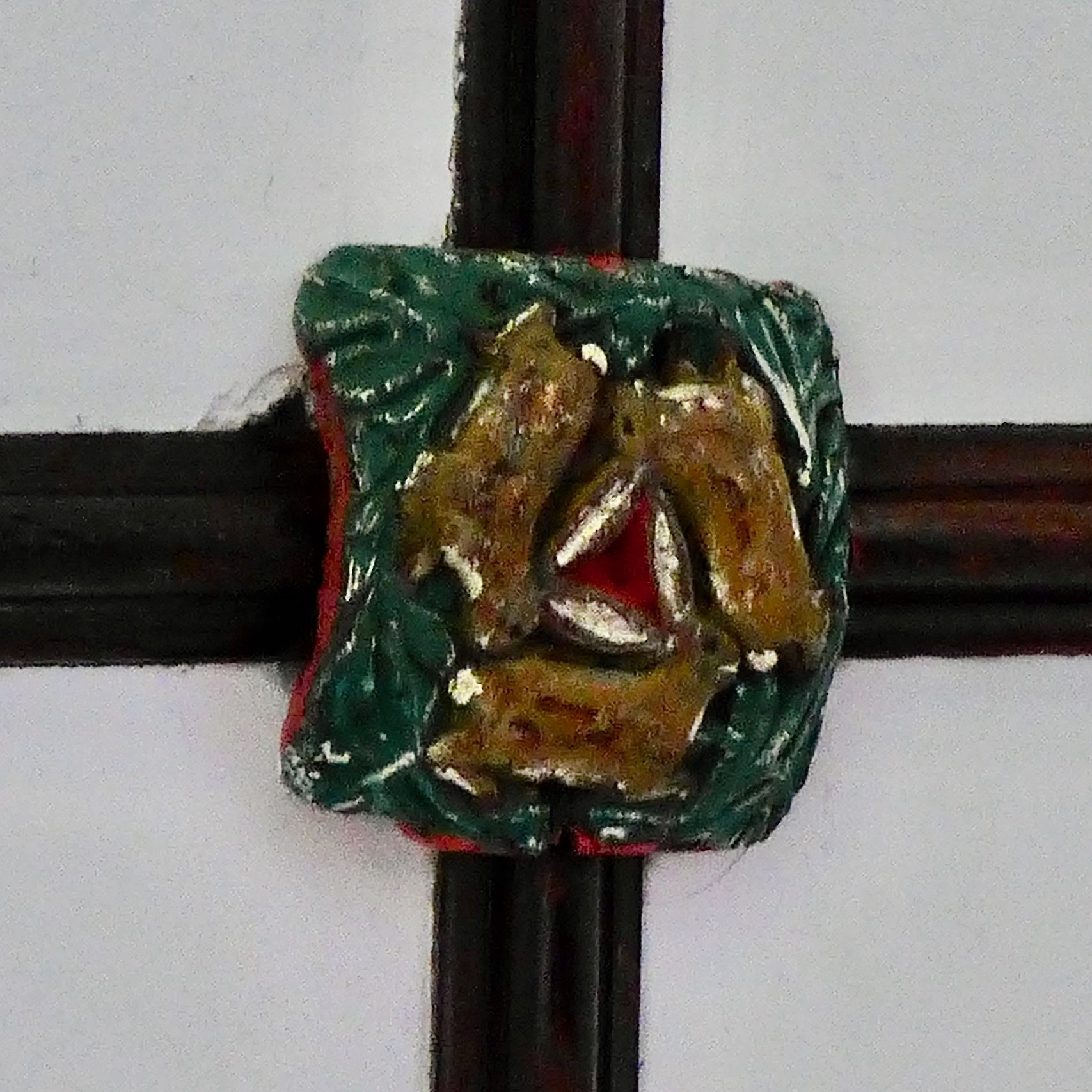
A couple of years ago I wrote this piece on the Winter Solstice and the Celts, in case you are interested.
Thank you for indulging me. I hope to get back to my tour of Kent, England soon. hopefully this little detour has primed the pump.
Kelly Wheaton ©2025 – All Rights Reserved
 Wheaton Wood