KENT The Garden of England Day Two Part One: Canterbury
Posted on June 28, 2025 Leave a Comment
About my process. When I start out to write a blog post I often have a general idea of what I intend to cover. However, as I start writing I follow various threads. Sometimes what I intend as one post becomes more than one as I travel down various gopher holes. These travelogues are not meant to be comprehensive. They are meant to inspire and point out things or stories that are easily missed. One thing I really appreciated about our guide, Ben Sims, is that he kept telling stories that would get picked up later in our journey. If you are visiting Canterbury you can take a journey on a boat called a punt, pictured below.
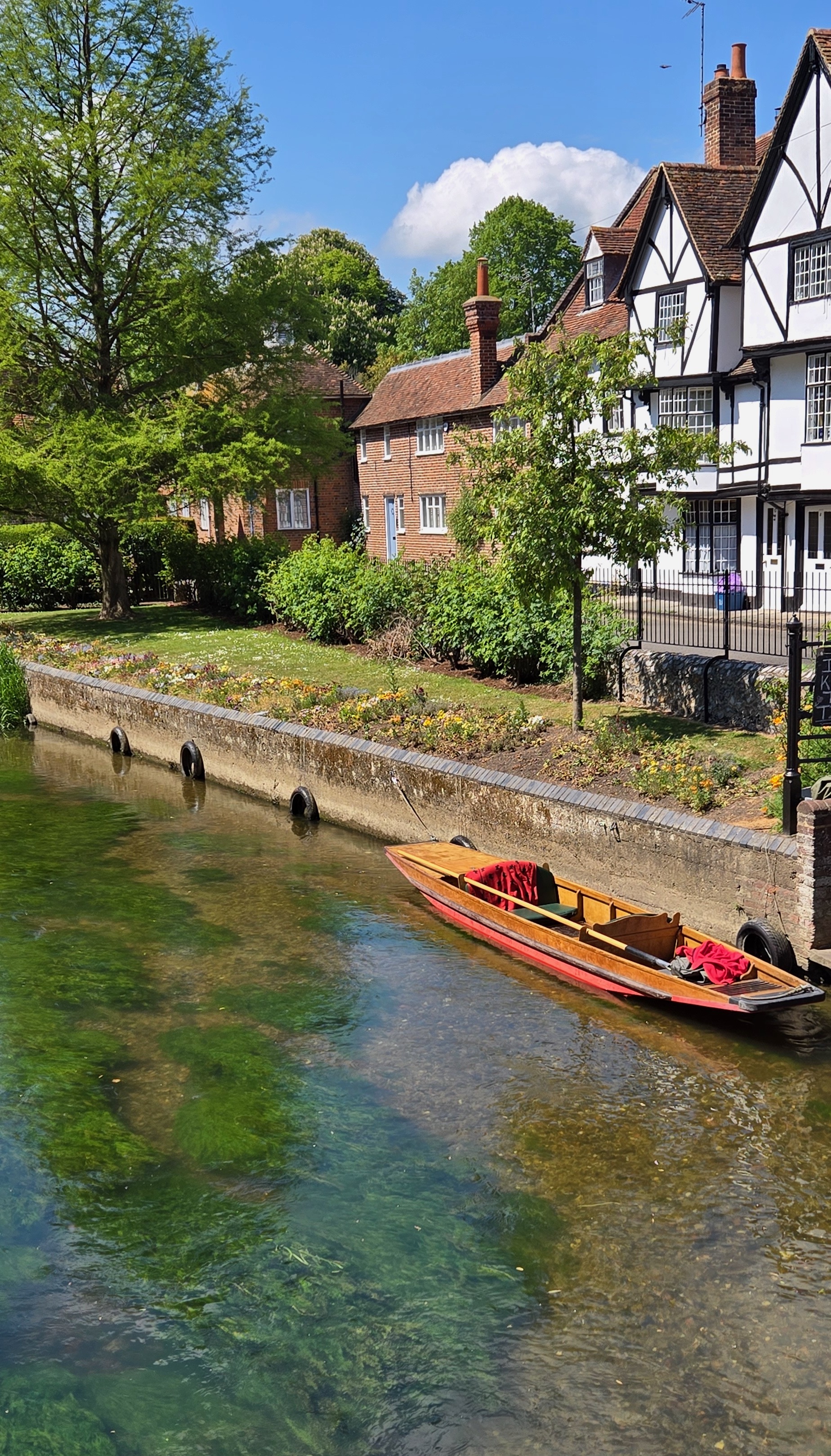
HISTORIC CANTERBURY
Canterbury is a very ancient place. Human occupation began here about 10,000 years ago. Some six miles southwest of the Canterbury Cathedral is Julliberrie’s Grave, also known as the Giant’s Grave. Located near the village of Chilham [This village will be visited later] , it is an unchambered long barrow probably dated to to 3,000-4,000 BCE. The Cantiaci, a Celtic Tribe, had their main settlement at Canterbury. These Iron age settlements were here long before the Romans arrived in 43 CE. The Romans called Canterbury, Durovernum Cantiacorum or the stronghold among alders [a tree]. By 300 CE there was a Roman Amphitheatre and Temple and many buildings with red tile roofs. Once abandoned by the Romans about 410 CE it fell mainly to ruin. The Vikings, the Angles and the Saxons followed. Durovernum Cantiacorum became known at Cantwarbyring, or the township of the men of Kent.
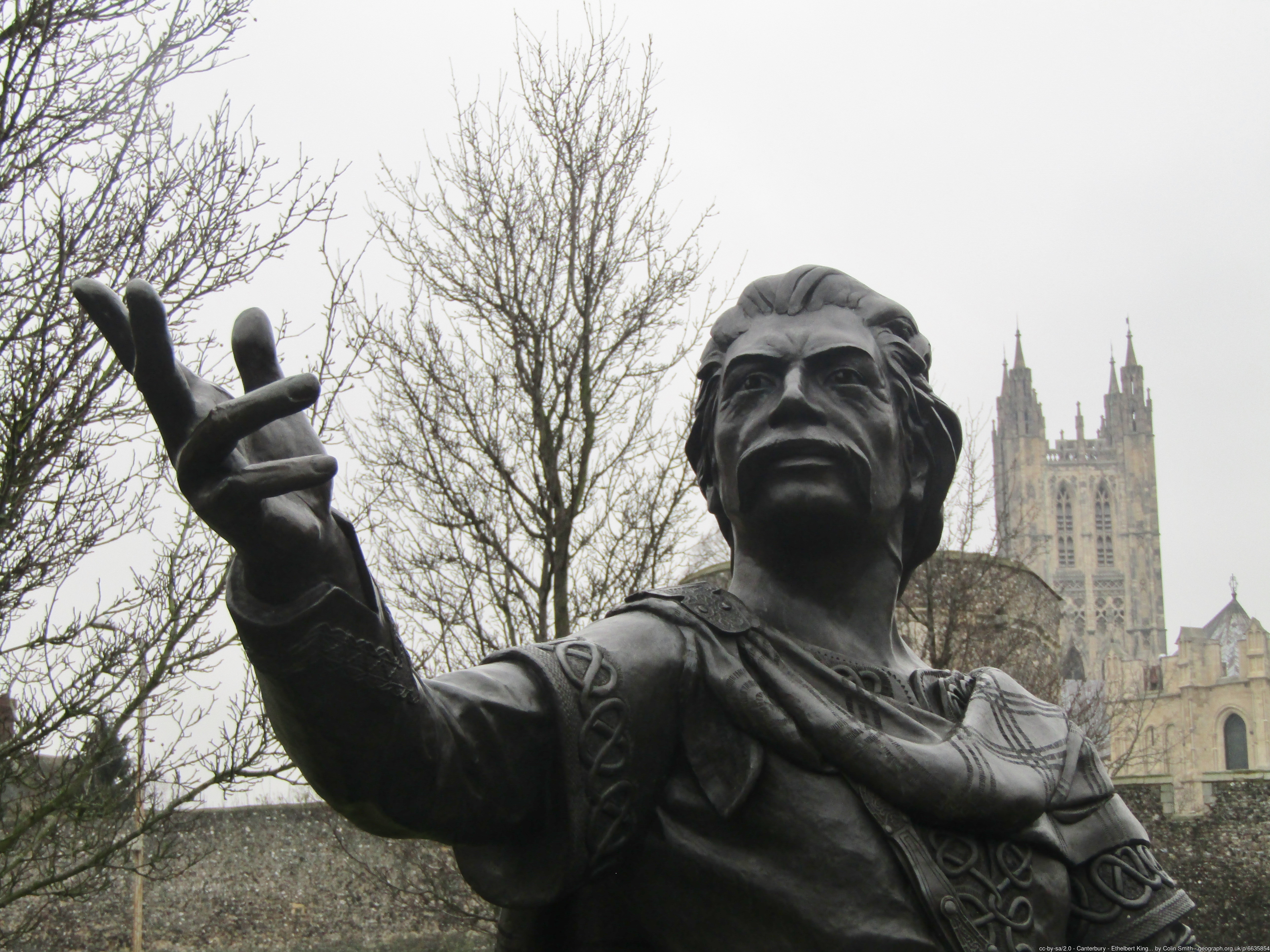
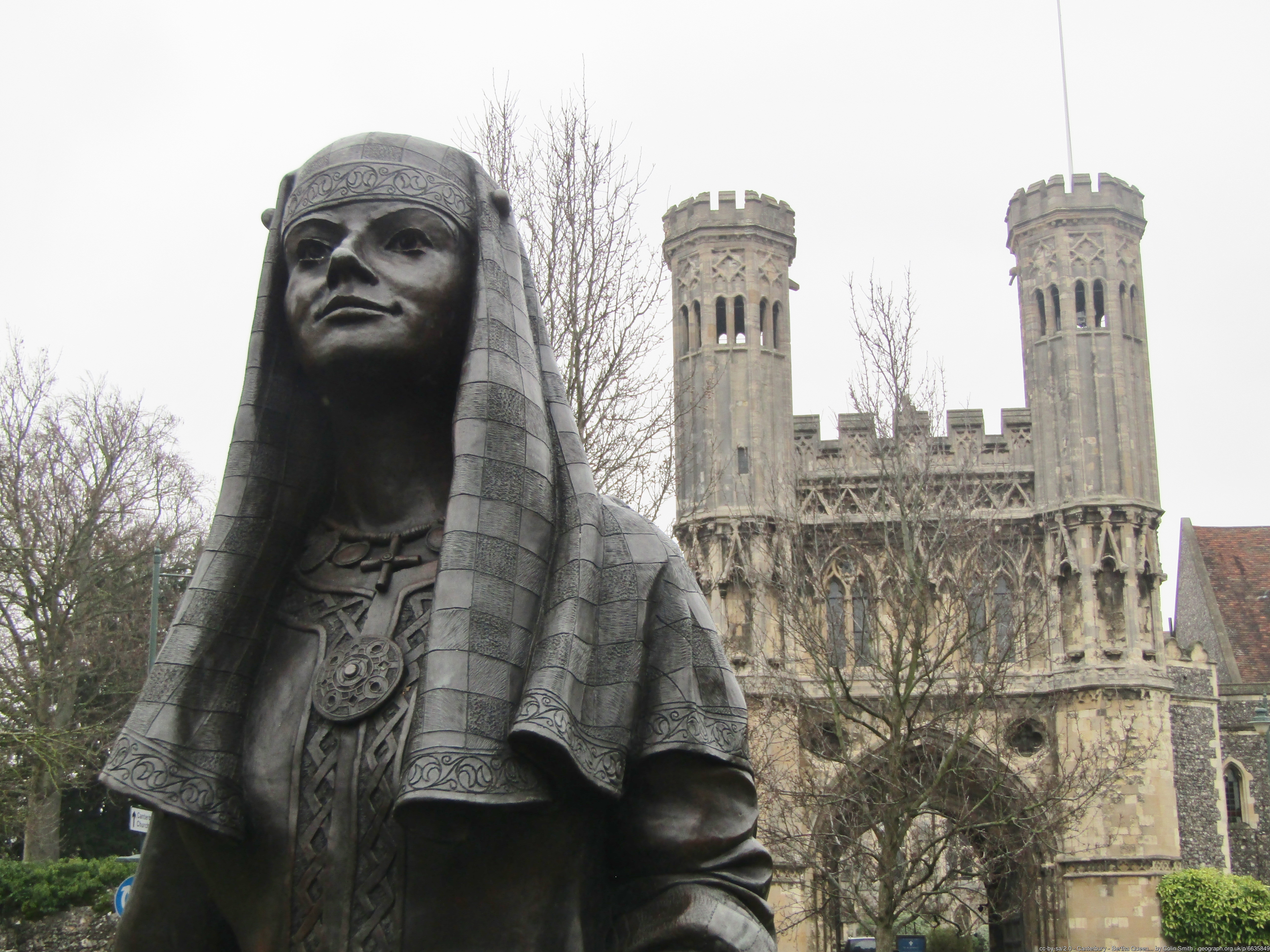
In 561 Æthelbert became King of Kent, where he ruled for 56 years. It appears that Cantwarbyring was his capital. Although Æthelbert was a pagan he married Bertha, a Christian. Bertha and St Augustine are credited with her husband’s conversion to Christianity. St Augustine arrived in Kent on a mission to convert the pagan Anglo-Saxons to Christianity and a hundred years later much of England was Christian. Æthelbert gave land to St Augustine for a Cathedral and Abbey. The Saxon Cathedral founded in 598 CE by St Augustine, burned down in 1067. St Augustine’s was rebuilt by the Normans before becoming a Tudor royal palace and later a poorhouse, a jail and a school. When the Normans arrived they brought their own people. Lanfranc was appointed Archbishop of Canterbury. He presided over the building of a new monastery and Cathedral.
As mentioned the second day I was up early and out finding CUSHMAN related places but also anything else that caught my eye. Canterbury has substantial vestiges of its walled city and its core has many Medieval buildings intact. Although very different than York it did remind me of it in some ways. York and Chester having the most substantial intact walls of English walled cities. I have already shared the CUSHMAN places but here are some others from my early morning ramble.
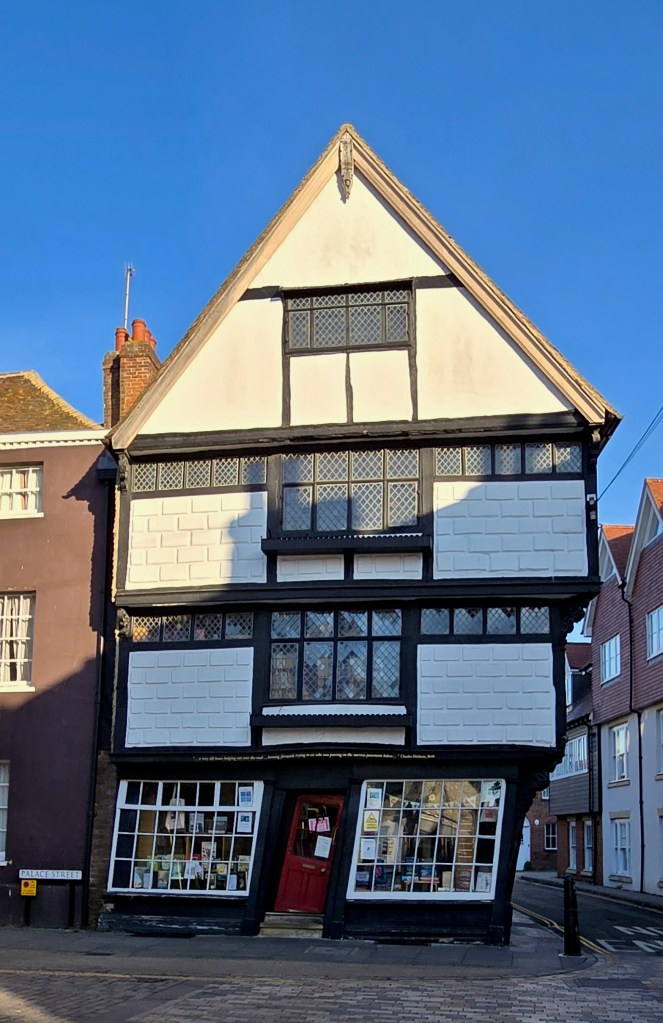
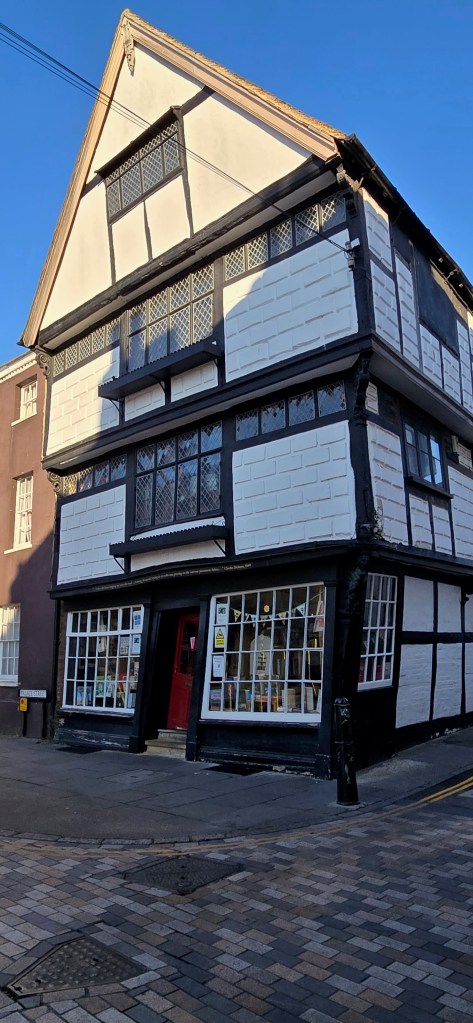
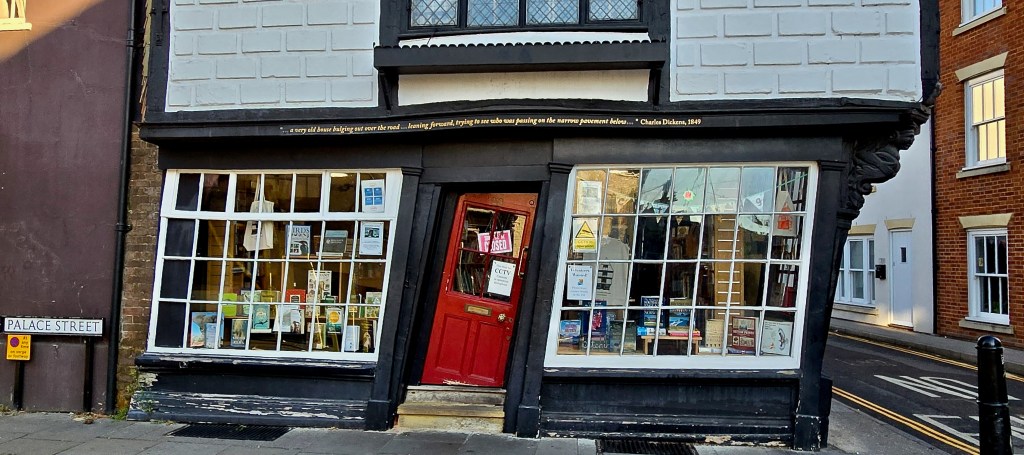
Let’s start with the crooked house at 28 Palace Street which dates back to 1617. It is a 3 story timber frame now reinforced with steel and once the abode of immigrant weavers. The Chimney collapsed in 1988 and the brick fell into the basement. It now houses “The Catching Lives Charity Bookshop” and I would have very much enjoyed going inside but luckily it was closed. As I only had a carry-on and had already visited another charity bookshop in town! The inscription above the door reads:
“…a very old house bulging out over the road…leaning forward trying to see who was passing on the narrow pavement below…” Charles DICKENS
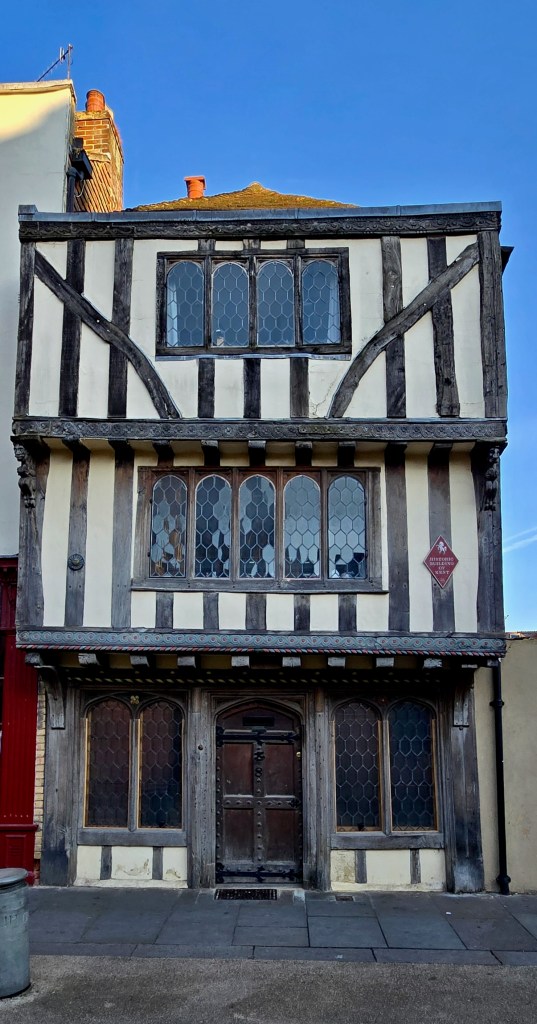
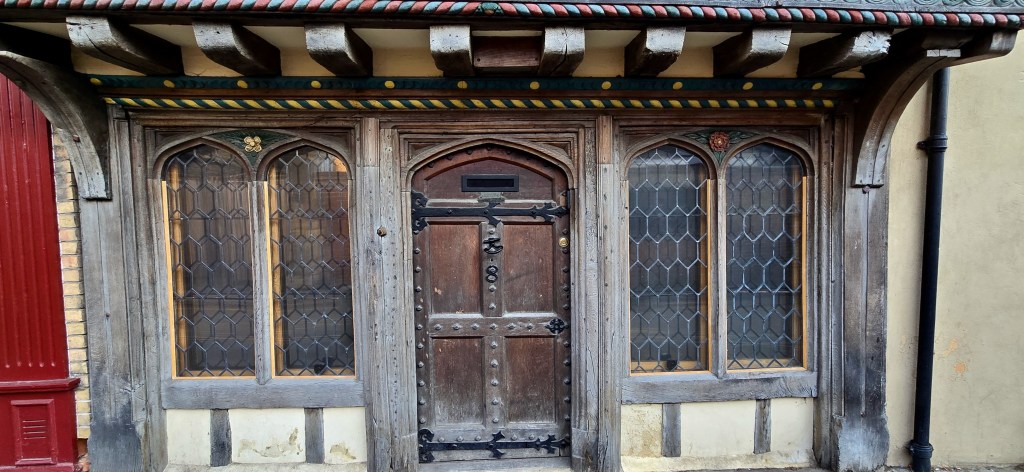
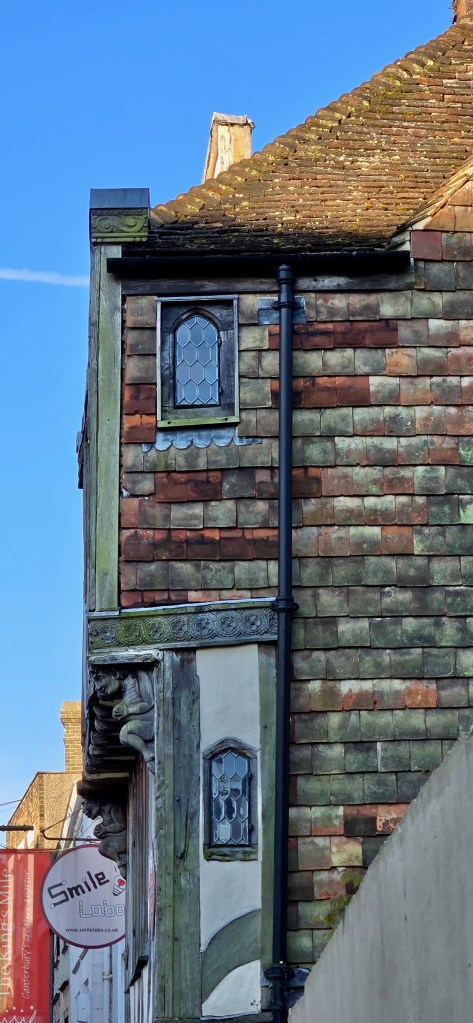
Next up, 8 Palace Street is one of the most photographed buildings in Canterbury, but I did not know that at the time. Built around 1250 as the priest’s house for nearby St Alphege church which was the marriage location of Robert CUSHMAN, nearby. The timber framing and first floor overhang were added in the late 15th century, and then major extensions in 1665. It has delightful carved corbels. Definitely a building with character.
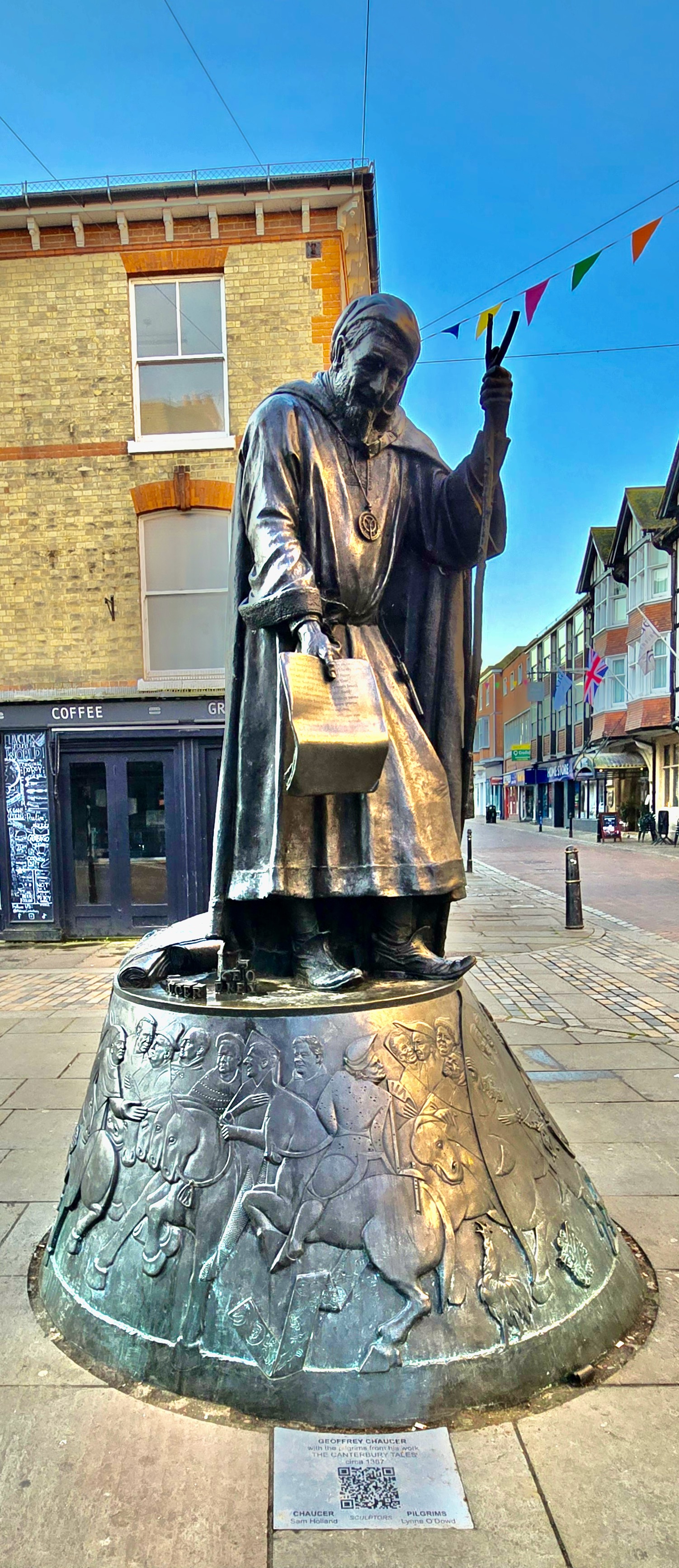
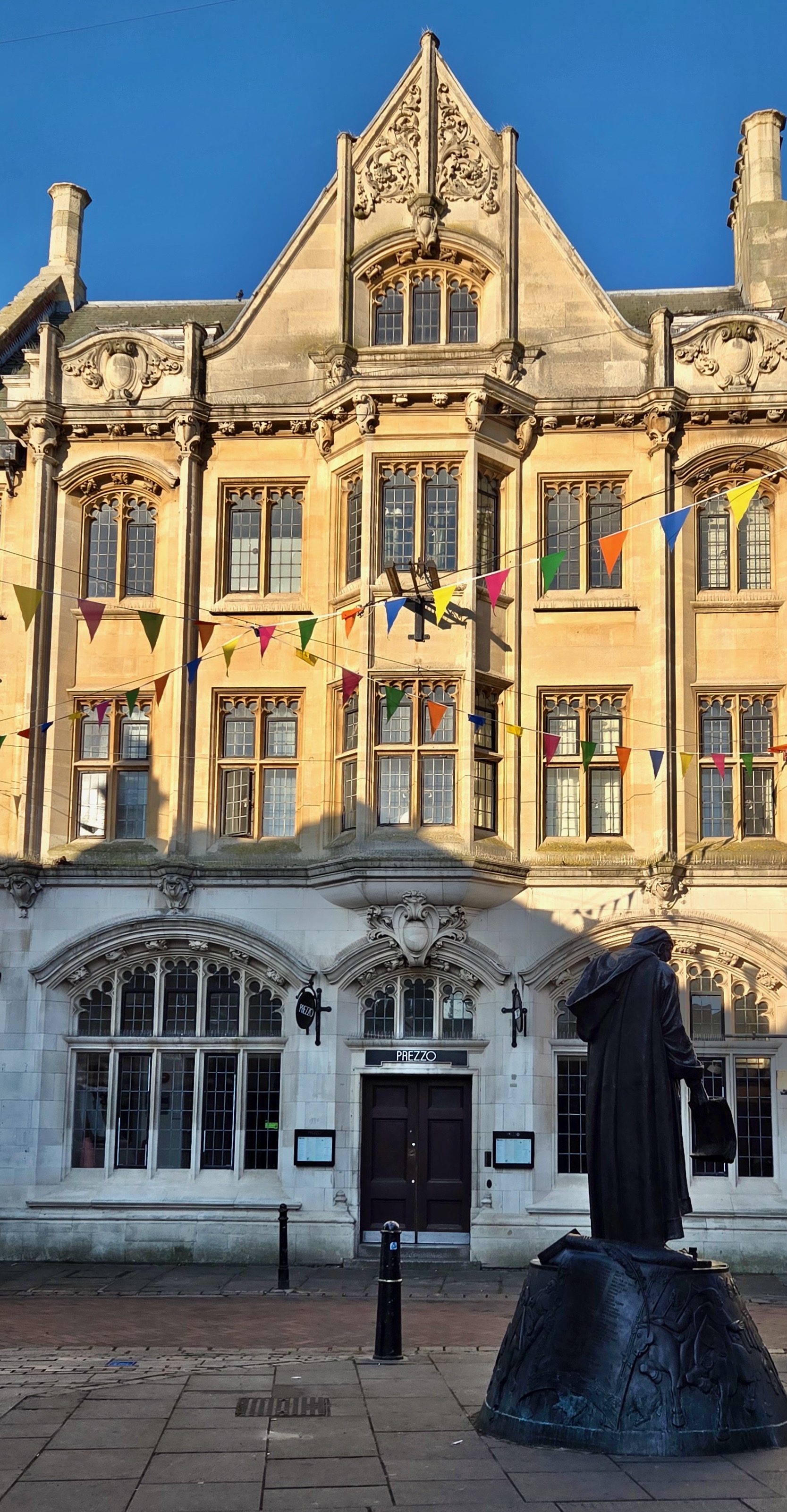
This statue of Geoffrey CHAUCER was placed in 2016. The work of sculptor Sam Holland of Kent, and the large plinth, sculpted in bas-relief, by Lynn O’Dowd of Yorkshire. Geoffrey CHAUCER wrote The Canterbury Tales. They are a collection of 24 short stories written in verse, between about 1387 and 1400. Together they make up a fictional story about a contest held by a group of pilgrims traveling from London to Canterbury to visit the shrine of Saint Thomas BECKET at Canterbury Cathedral. The Pilgrims Way, from Southwark Cathedral in London to Canterbury Cathedral is 90 miles and is called also called the BECKET Way. [The West direction of the Pilgrim’s way leads to Winchester in Hampshire.] Directly across the street from the statue is the early 19c Italianate building.

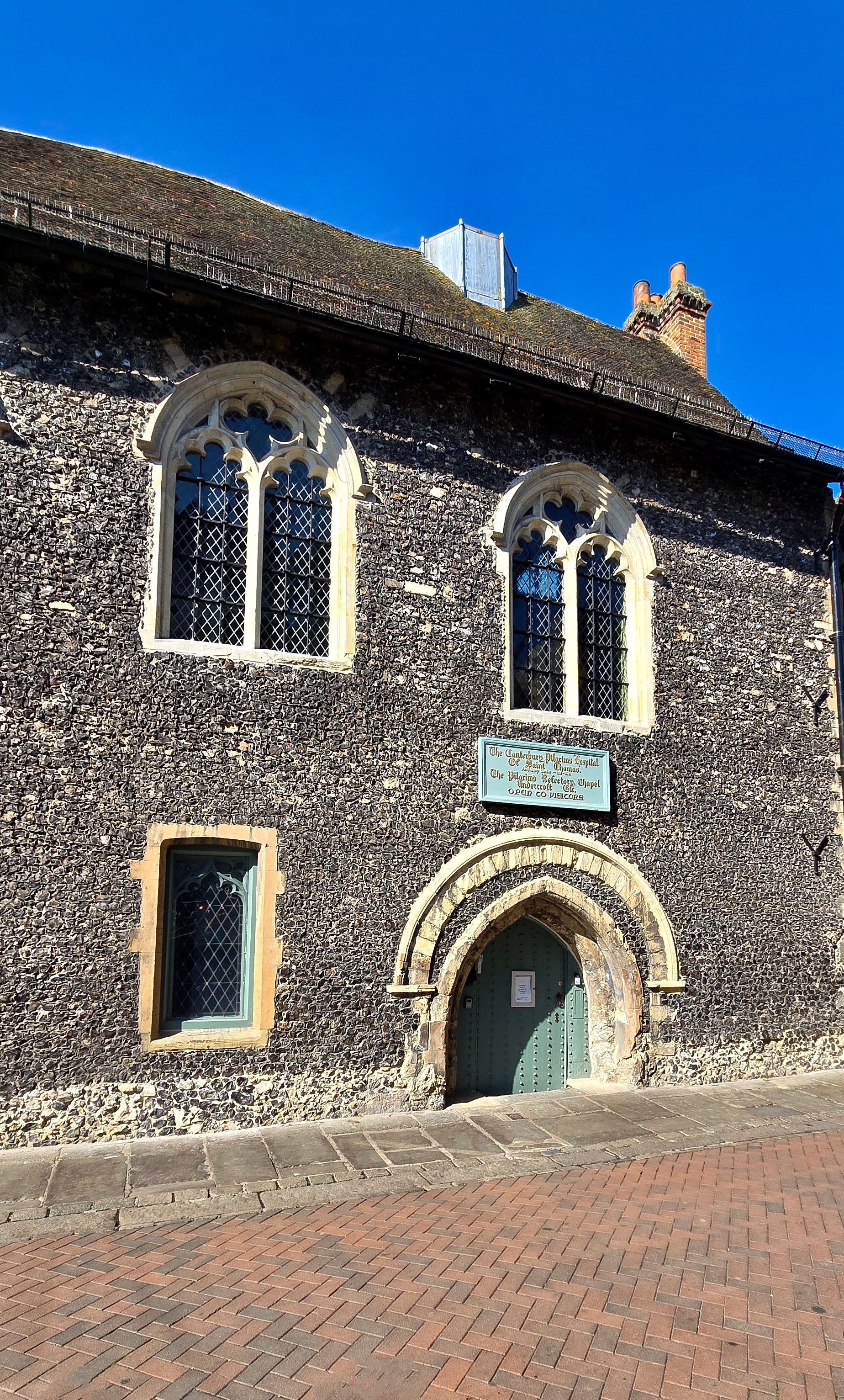
Just next door to the above, at 25 High Street is the Eastbridge Hospital of Saint Thomas the Martyr. Founded in the 1180’s for poor pilgrims visiting the shrine of Saint Thomas BECKET. It was restored 1832-1927. Twelve pilgrims were accommodated each night and were charged 4d for board and lodgings. In the 14c a chapel was added, and after the Dissolution the building was turned into almshouses for the poor. A few more local sites before we dive further into Saint Thomas BECKET.
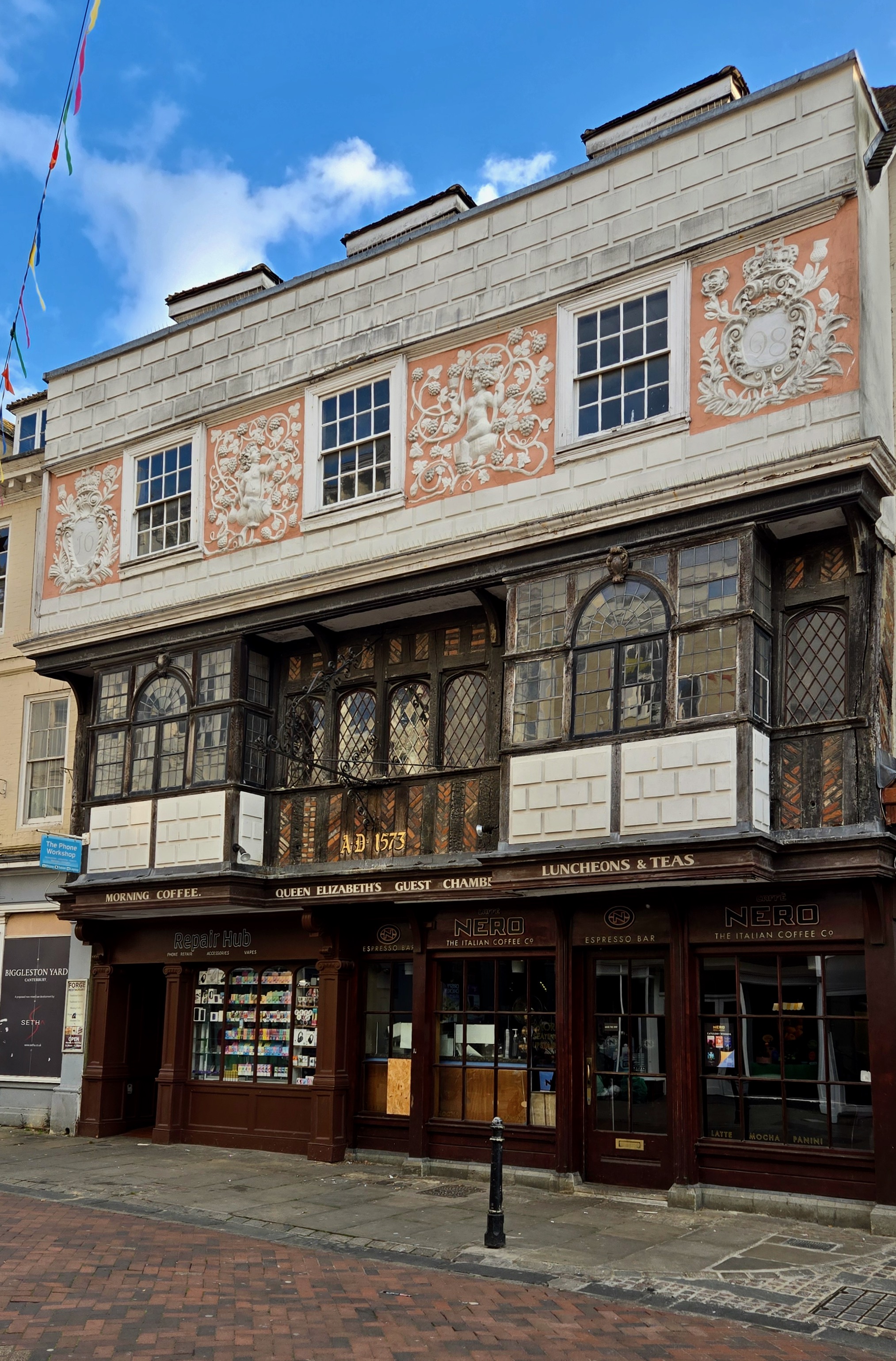
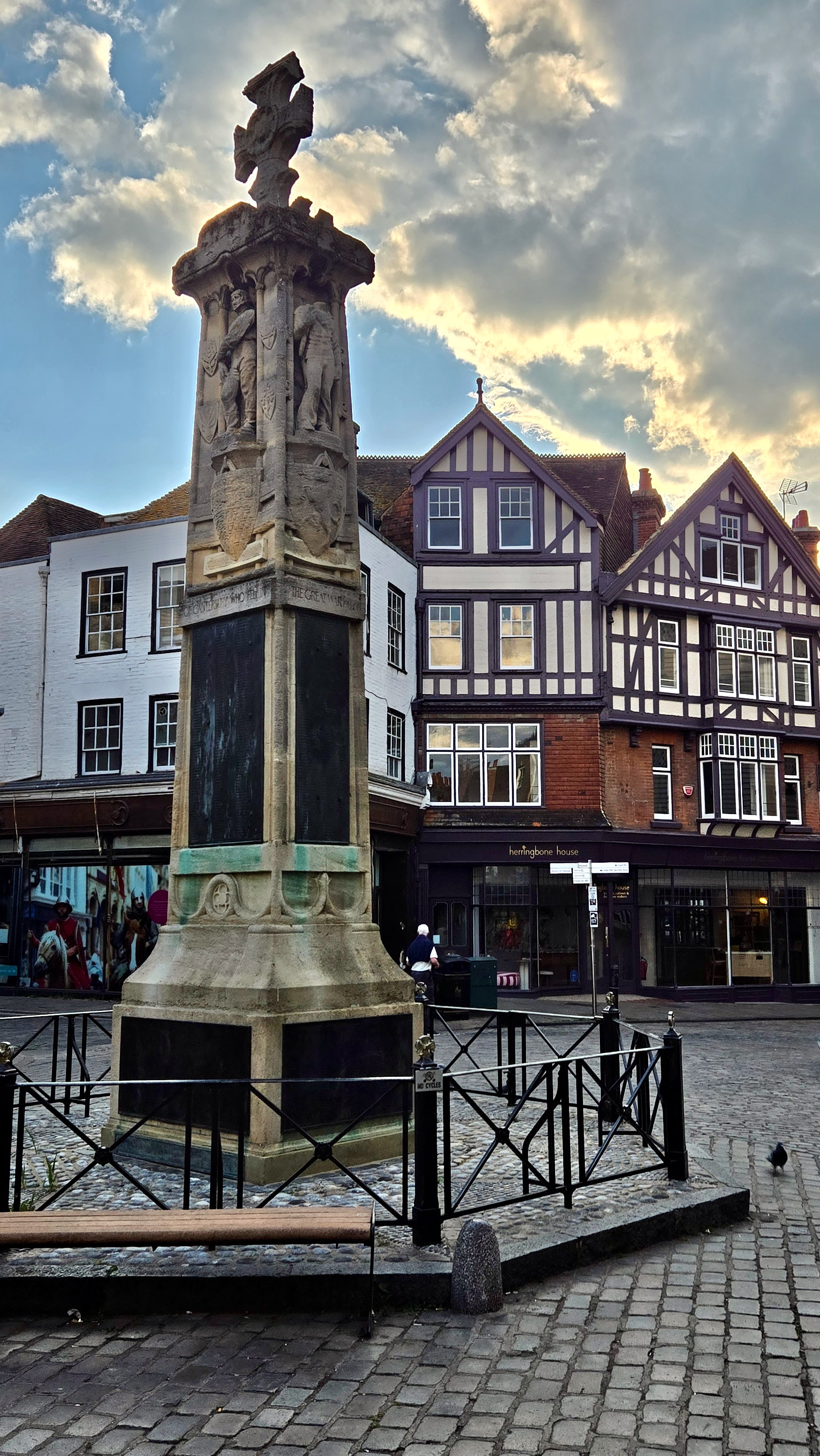
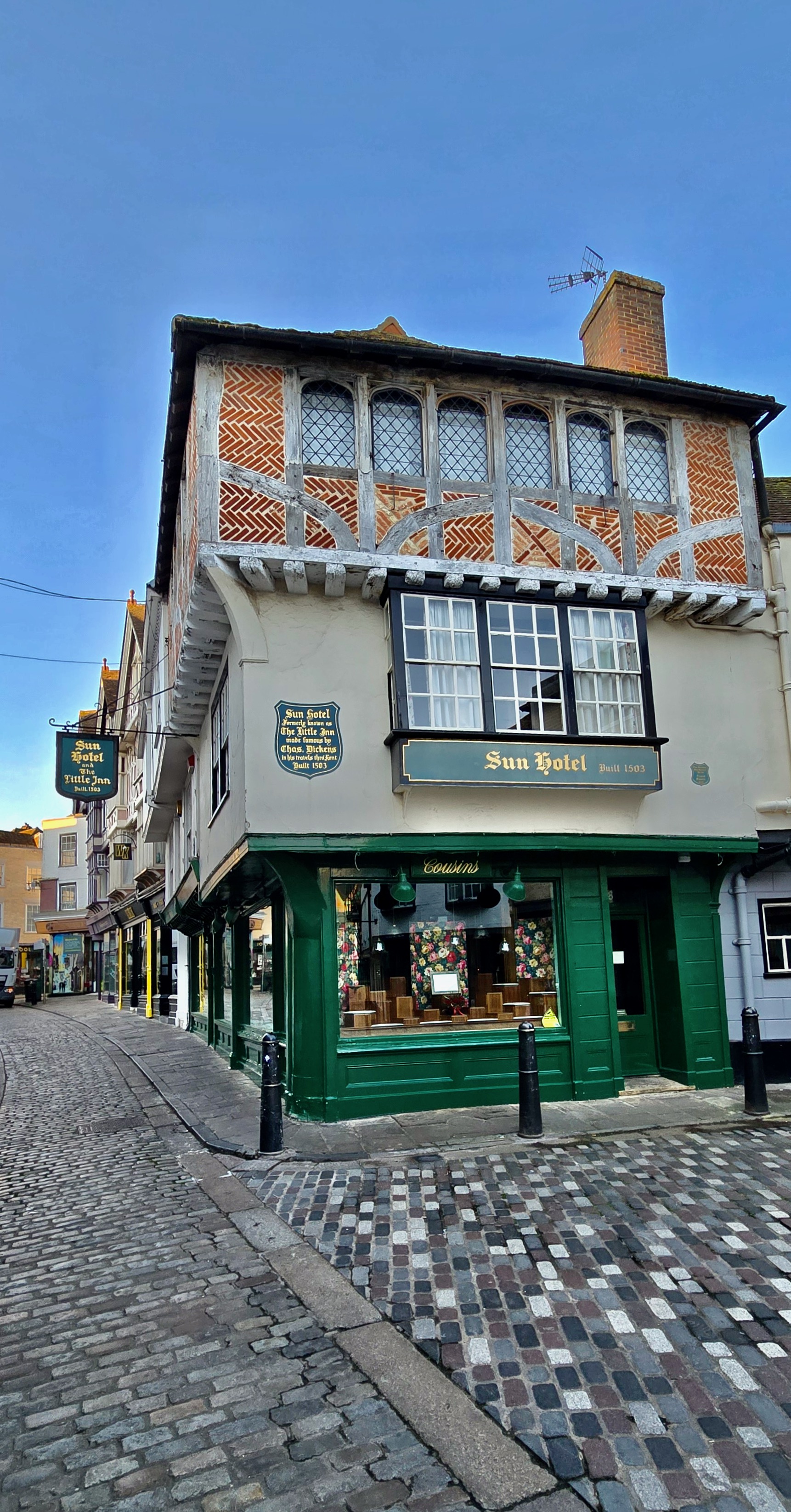
Queen Elizabeth’s Guest Chambers at 43-45 High Street was established as a building site by 1200. From the 15th to 18th centuries it was know as the Crown Inn (top left). The current facade was added in the 17th century to the building of 1573. The war Memorial stands adjacent the Christ Church Gate entrance to CanteburyCathedral but was being renovated during our visit. The Sun Hotel was built in 1603 (right) and is believed by some to be a place of Charles Dickens acquaintance.
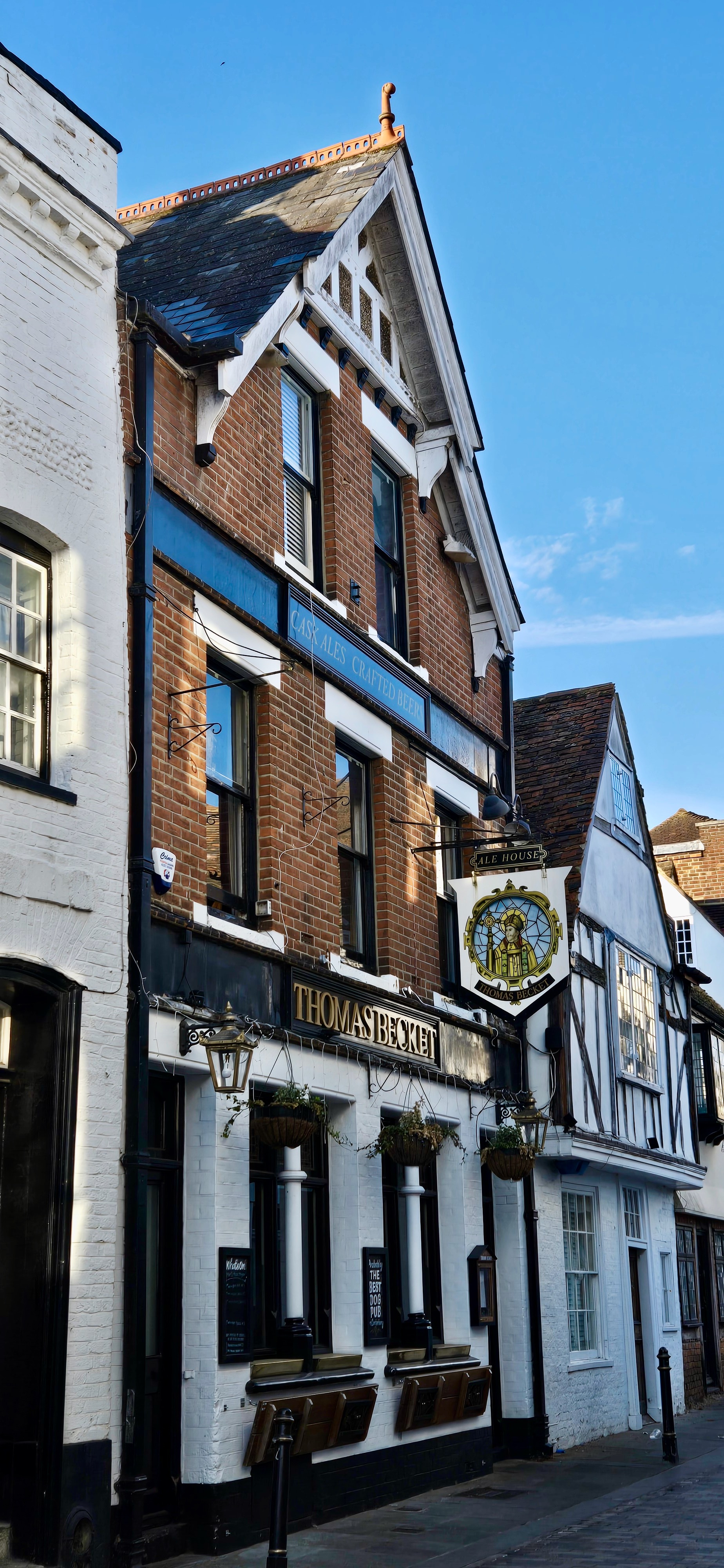
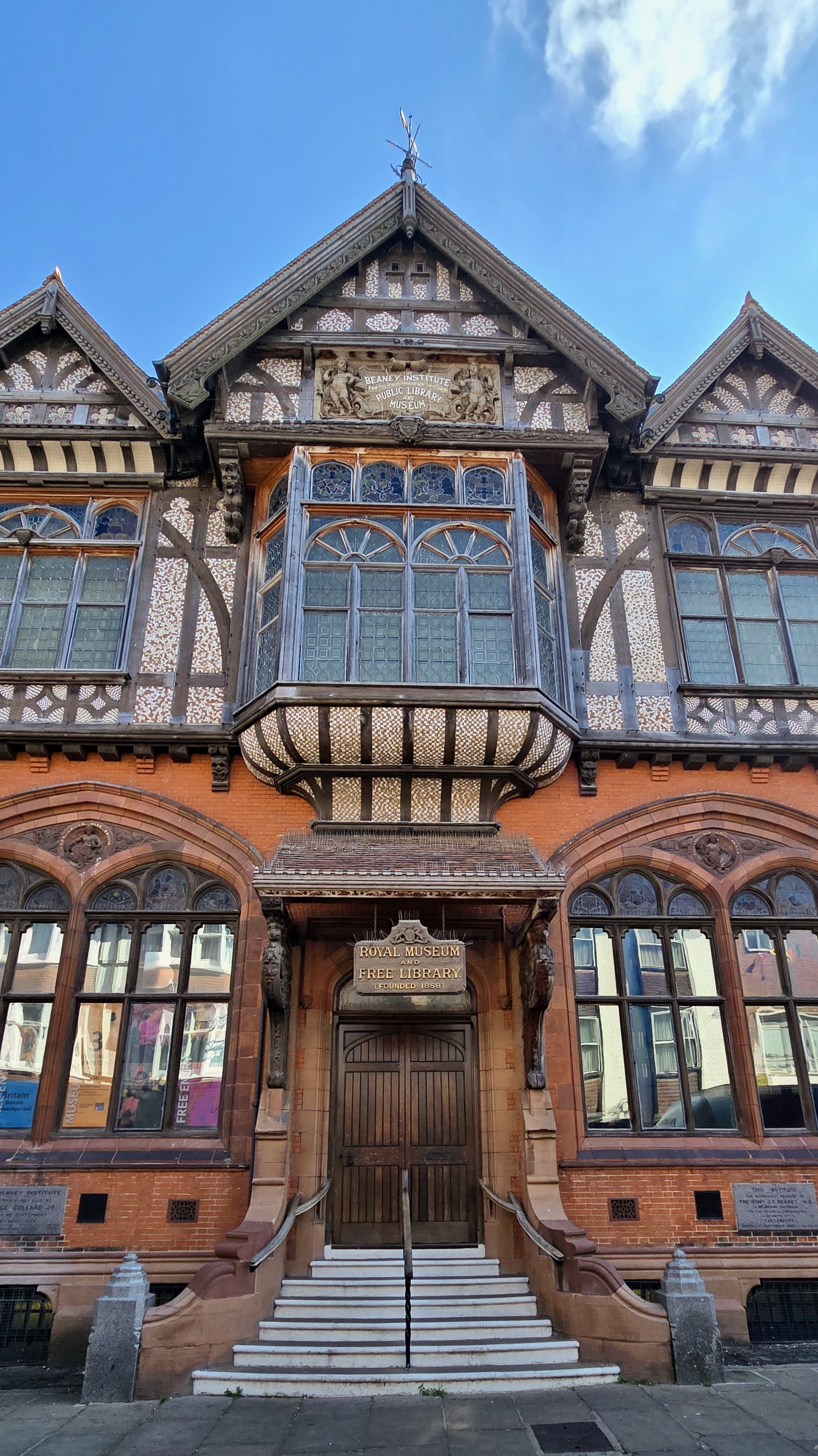
The Thomas Becket pub (lower right) dates to about 1775 when it was registered as a Trade Club for bricklayers and was known as the “Bricklayer’s Arms.” The building(s) that predates it was likely a wayfaring stop for pilgrims on there way to St. Thomas BECKET’s shrine. The last image is of the Royal Museum and Gallery designed in a Tudor Revival style by A.H. CAMPBELL and opened in 1899. It was initially named the Beaney Institute.
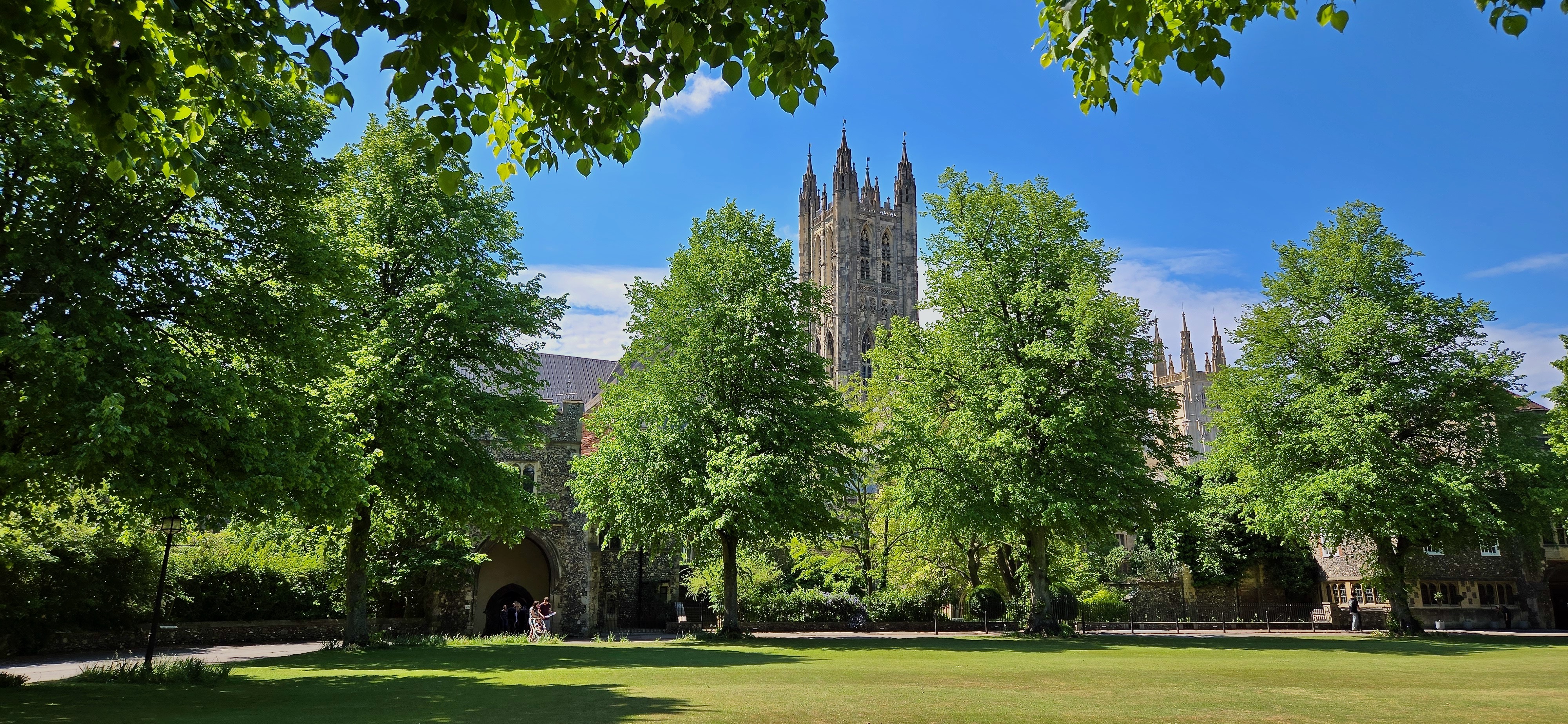
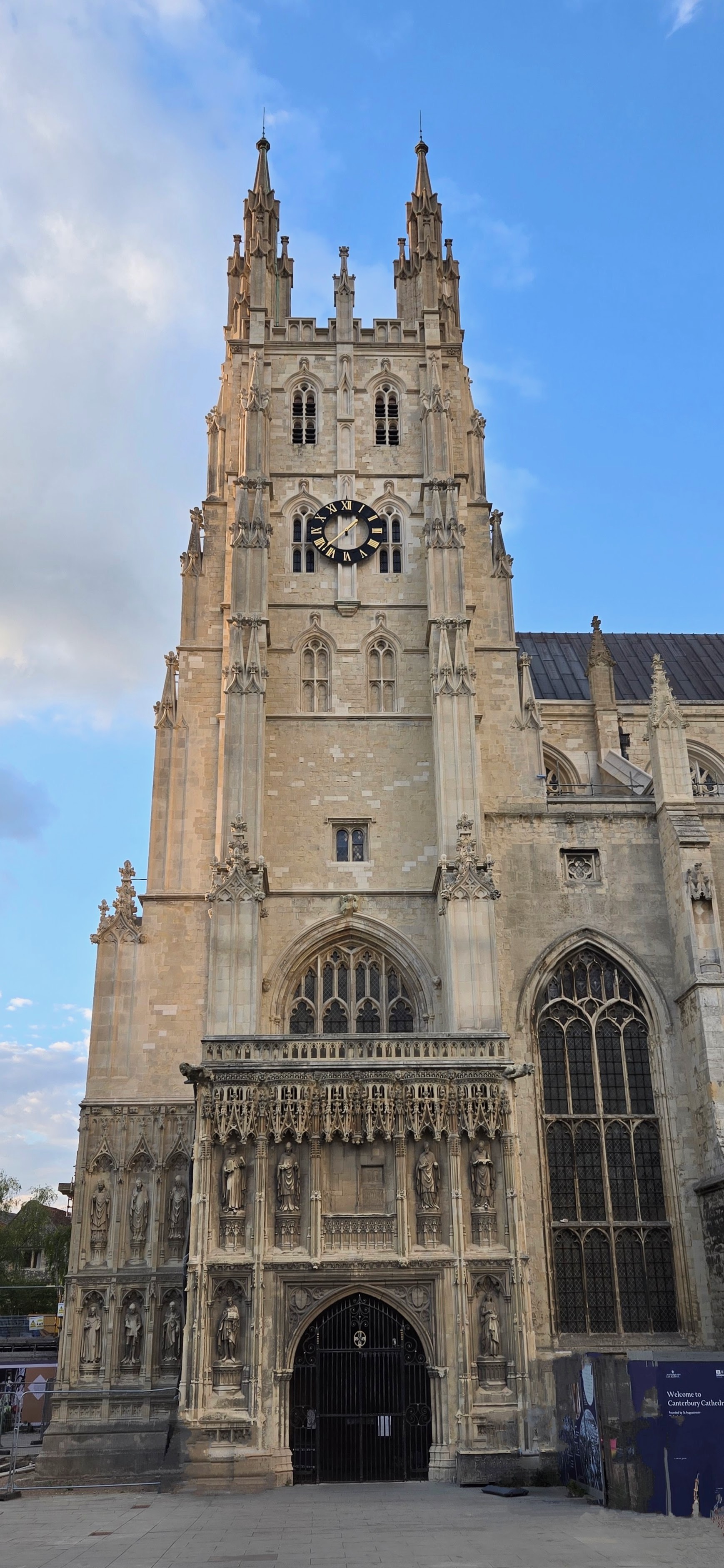
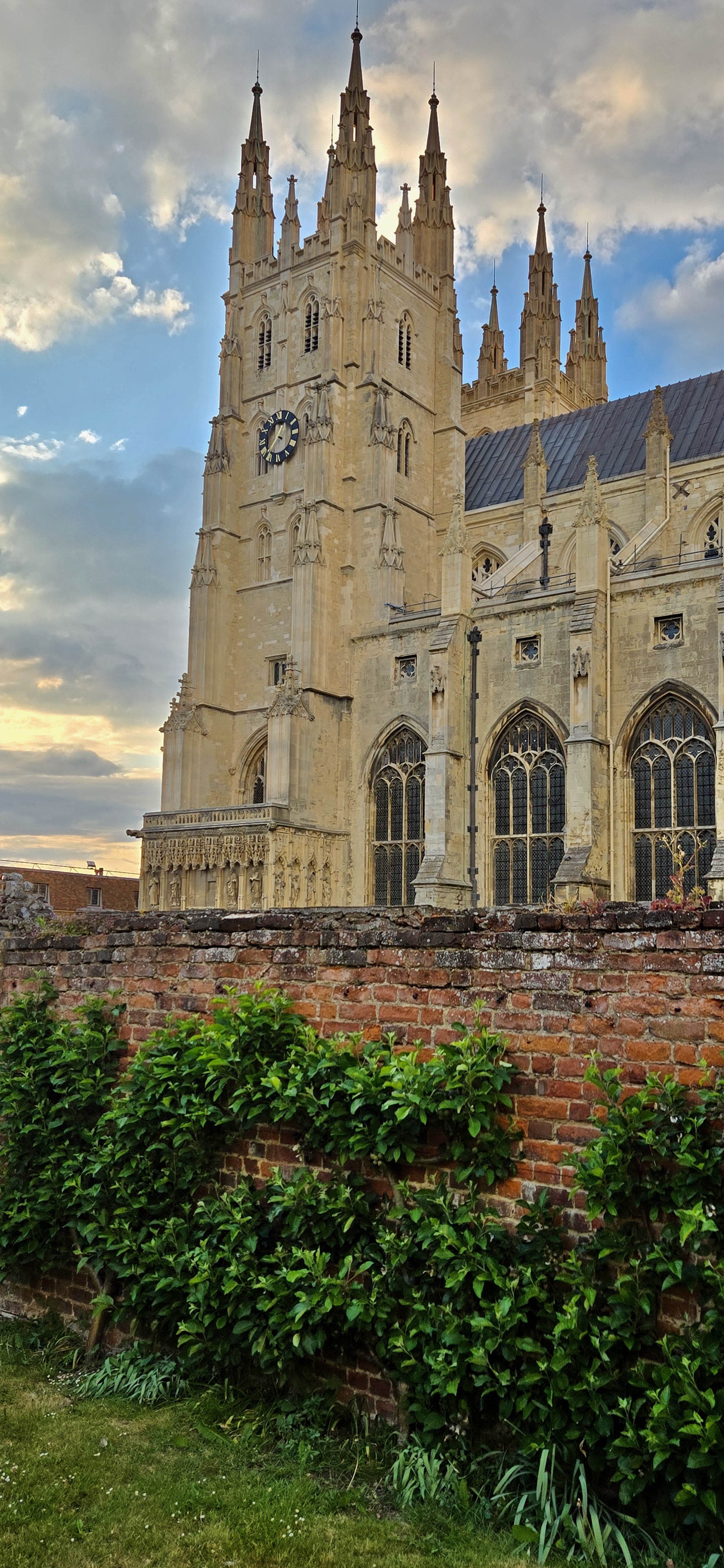
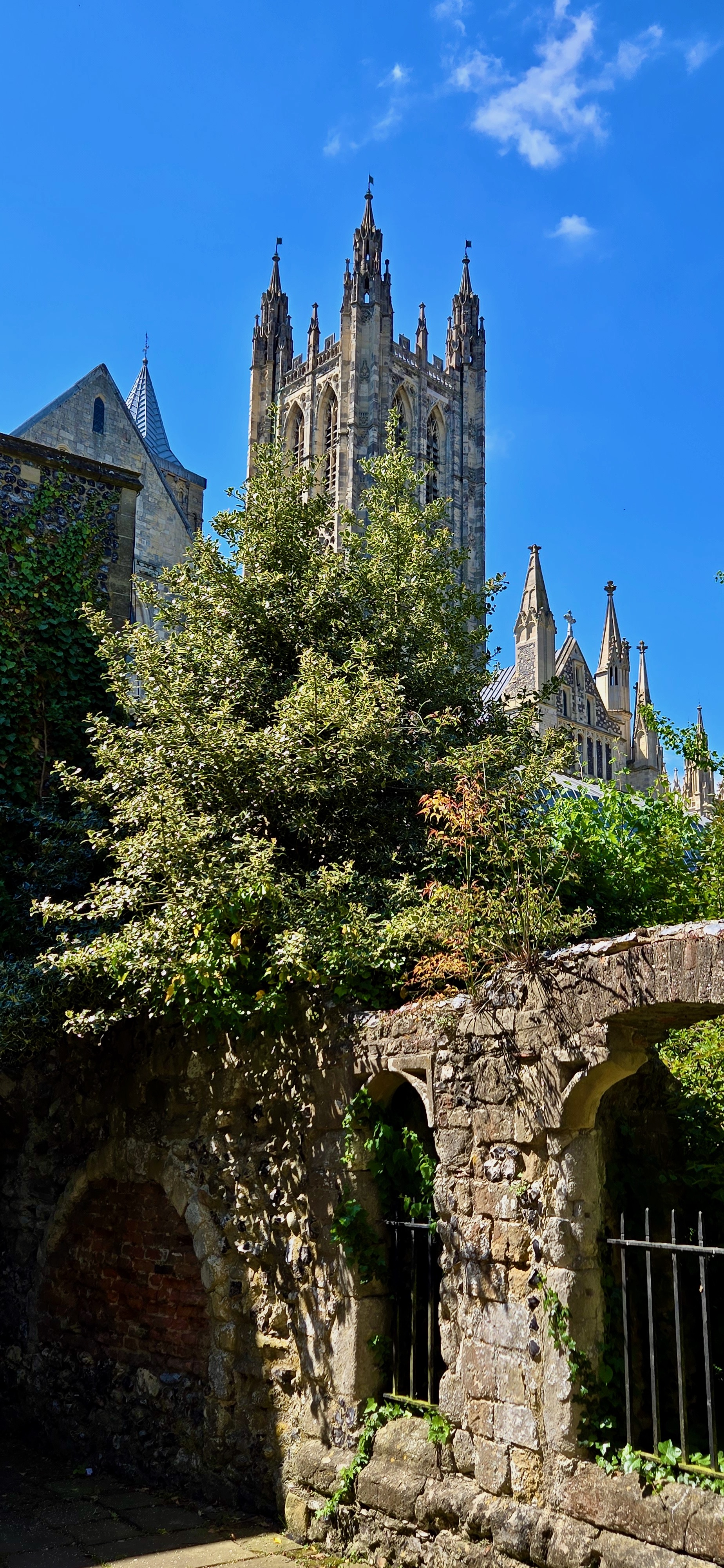
Before heading inside the Canterbury Cathedral here are a smattering of outside views. As with many historic buildings in England many are always undergoing restoration/renovation.
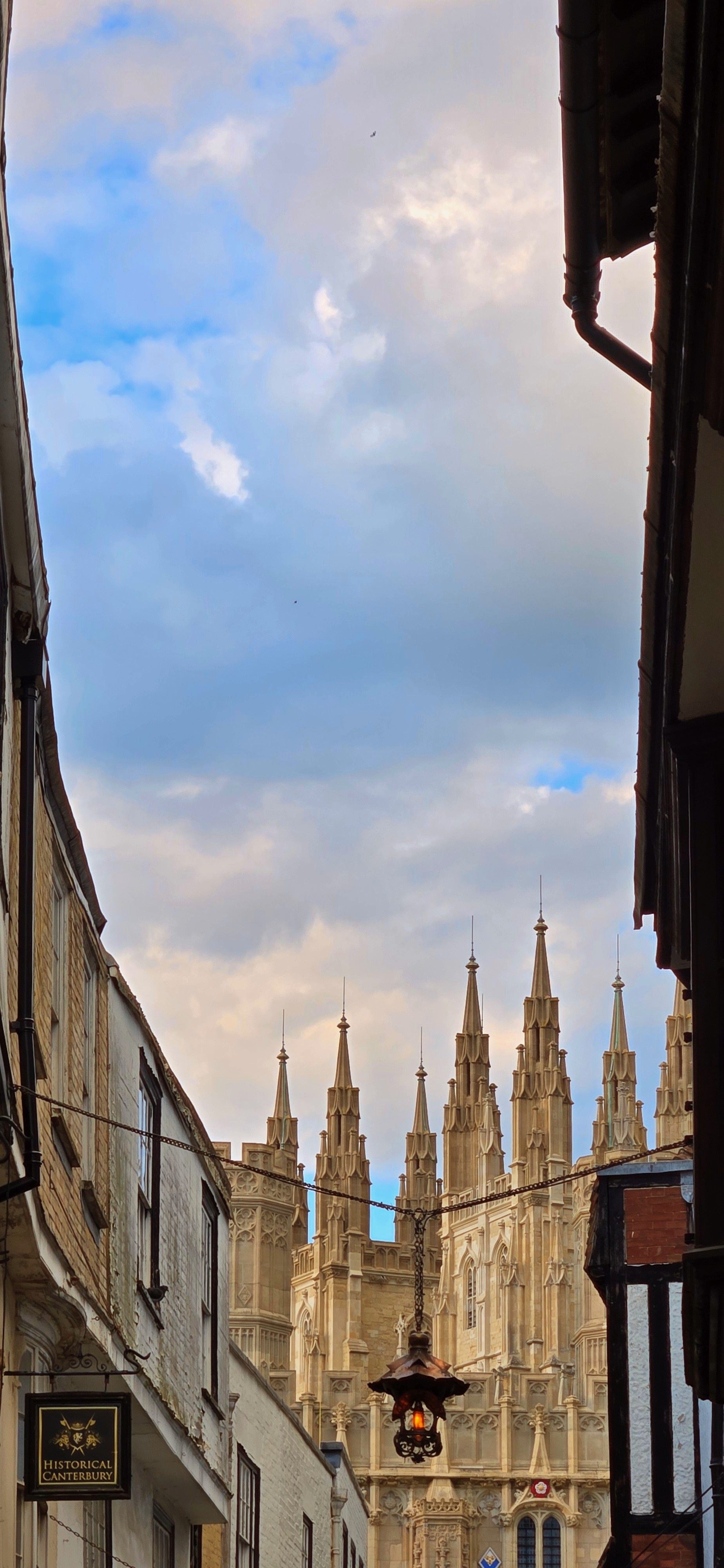
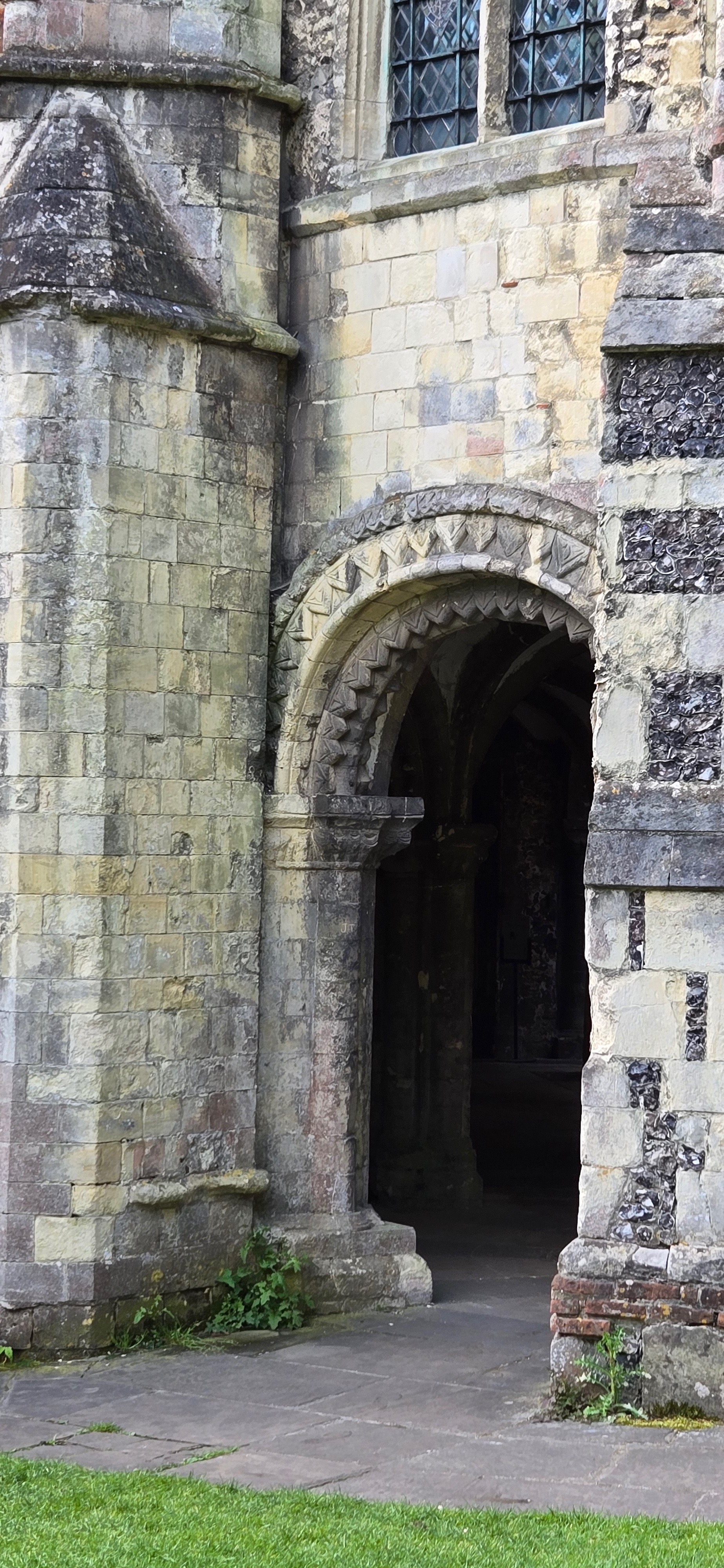
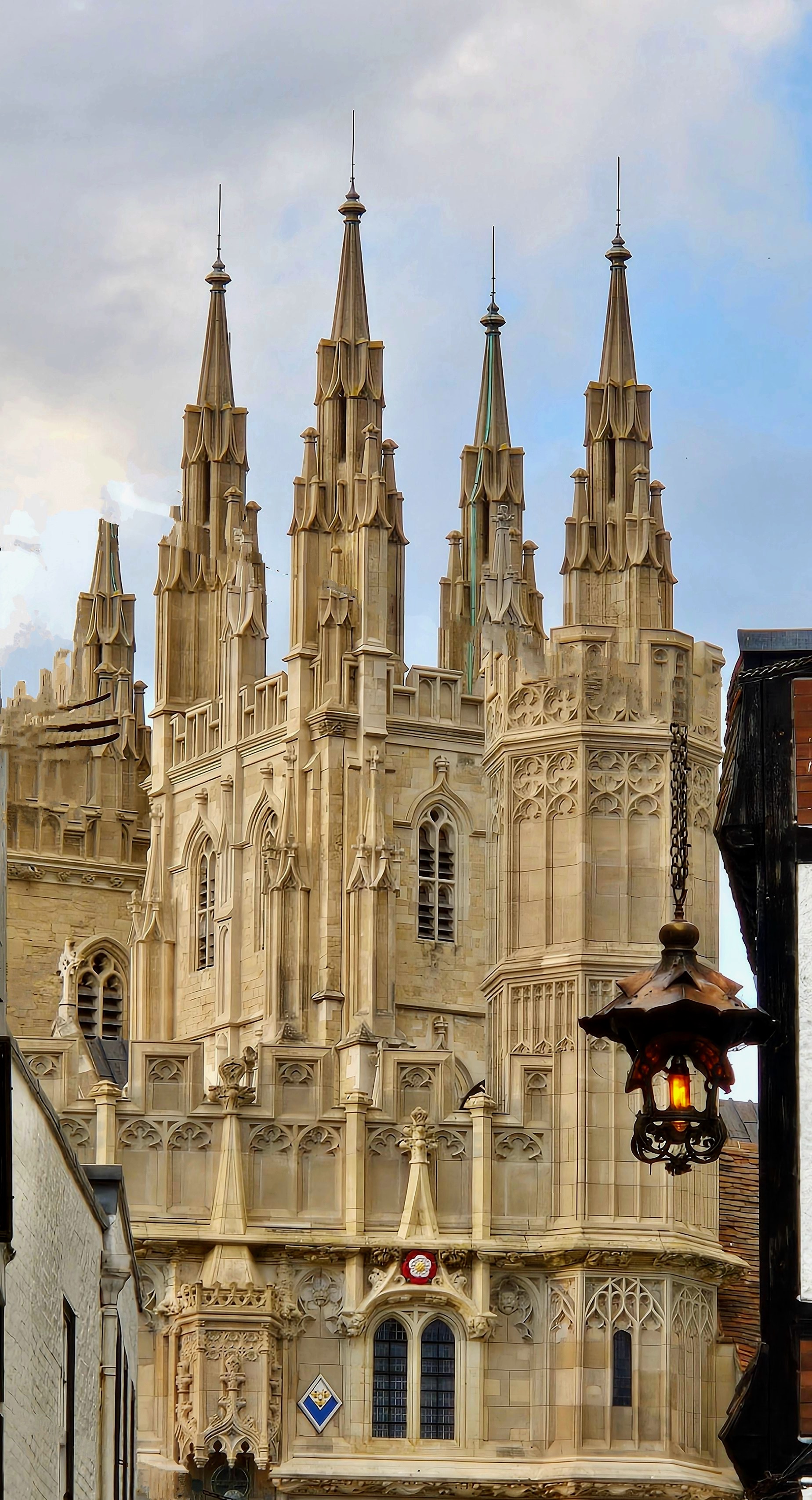
SAINT THOMAS BECKET
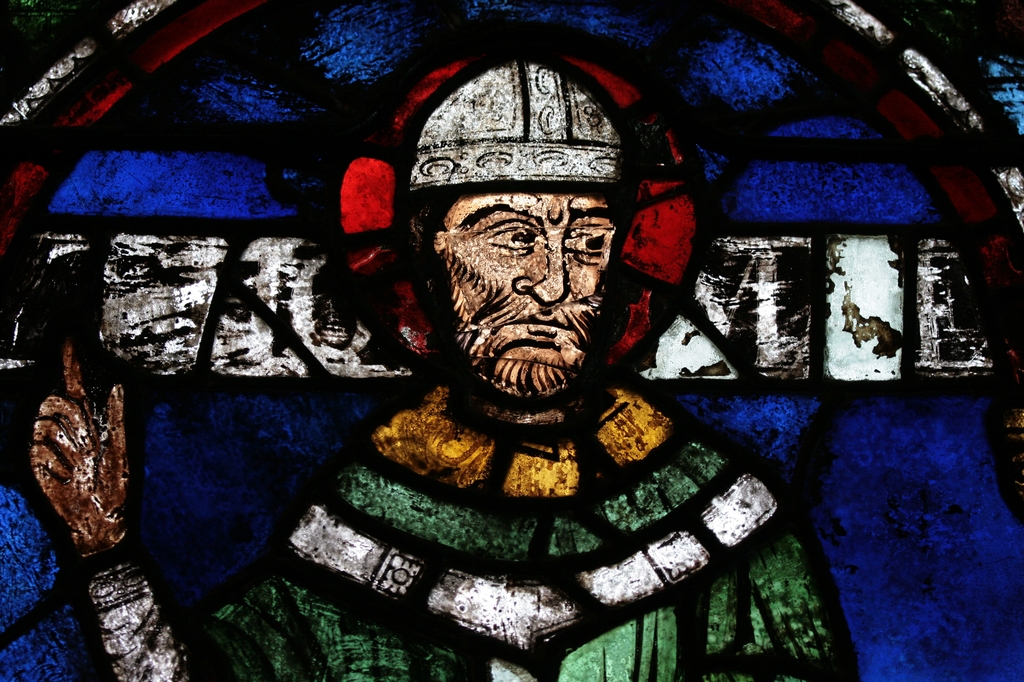
As you have seen in some of the photos above Thomas BECKET is an important name in the history of Canterbury. Becket was born the 21st of December 1019 or 1020, on the feast day of St Thomas the Apostle, at Cheapside, London, of Norman parents. Fortuitously, Thomas BECKET served in the household of Theobald of Bec, the Archbishop of Canterbury. In 1154, Theobald named BECKET Archdeacon of Canterbury. Theobald later recommended him to King Henry II for the vacant post of Lord Chancellor, to which he was appointed in January 1155. Beckett and King Henry II became friends. Becket was nominated as Archbishop of Canterbury in 1162, after the death of his mentor, Theobald.
I had seen the film Becket (1964) with Richard Burton as Thomas BECKET and Peter O’Toole as King Henry II, but I only vaguely remembered the story. While at the British Museum one of the few things, outside my main focus, that I photographed was this reliquary casket. At least 45 reliquary caskets survive depicting the story of Thomas BECKET. Many are thought to have been made in Limoges, France. I would continue to meet Thomas Becket in many places.
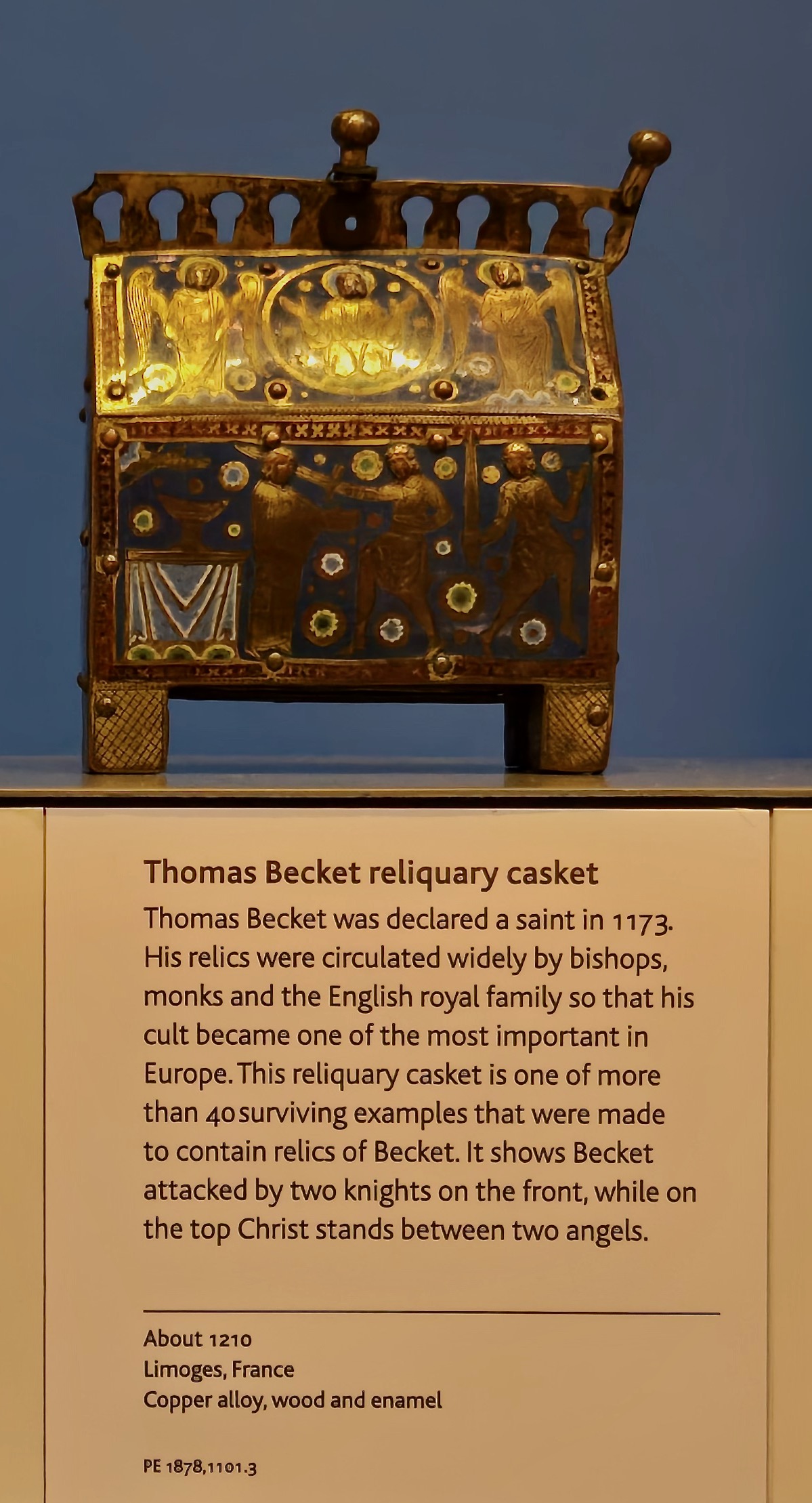
During my rambles I picked up 4 slim books at the Oxfam charity used bookshop on High Street in Canterbury. Among them was a book called Becket’s Murderers by Nicholas Vincent. I quote from the opening:
“As David Knowles long ago pointed out, there is no single event in the history of the Middle Ages of which we know more than the murder of Thomas Becket, Archbishop of Canterbury, on 29 December 1170”
At one time King Henry II and BECKET were friends, but upon BECKET’s ascension to Archbishop of Canterbury, the struggles between the power of the church and that of the king began to fray that friendship. BECKET was excommunicated for 7 years but finally returned in a compromise with Kind Henry II in 1170. BECKET then excommunicated 3 churchmen, including the Archbishop of York. He was upset that he had crowned Henry’s eldest son as joint king , which should have been BECKET’s role. This upset King Henry II who wanted the Archbishop reinstated. The monk Edward GRIM writing in 1180 states that King Henry II was at his castle at Bures, Normandy, Christmas 1170 when he said referring to Thomas BECKET:
“What miserable drones and traitors have I nourished and promoted in my household, who let their lord be treated with such shameful contempt by a low-born clerk!”
This is oft quoted later as “Will no one rid me of this troublesome priest?” Reportedly, 4 knights—Reginald Fitzurse, Hugh de Morville, William de Tracy and Richard le Breton—traveled from Normandy to Canterbury with the intention of forcing BECKET to withdraw his excommunication of the Archbishop, or take him back to Normandy. The day after their arrival, they confronted BECKET in Canterbury Cathedral Tuesday 29 December 1170. BECKET resisted and the 4 ended up killing him. None, at the time, believed that Henry II wanted him to be killed. However, his words ultimately had that effect. Hundreds of clerics including archbishops were murdered with some regularity throughout the realm in this time frame. What is different about BECKET is that he became incredibly famous. In the book by Ian Mortimer, “Medieval Horizons: Why the Middle Ages Matter” tells us that pilgrims to BECKET’s tomb brought in Ł400 per year. The altar of the Sword’s Point is near the spot where Thomas BECKET was murdered lies in the Martyrdom Chapel. There was a small altar that had a reliquary containing the point of the sword which had cut into his head. Pilgrims came to kiss the flagstones, said to bear the marks of his final footprints.
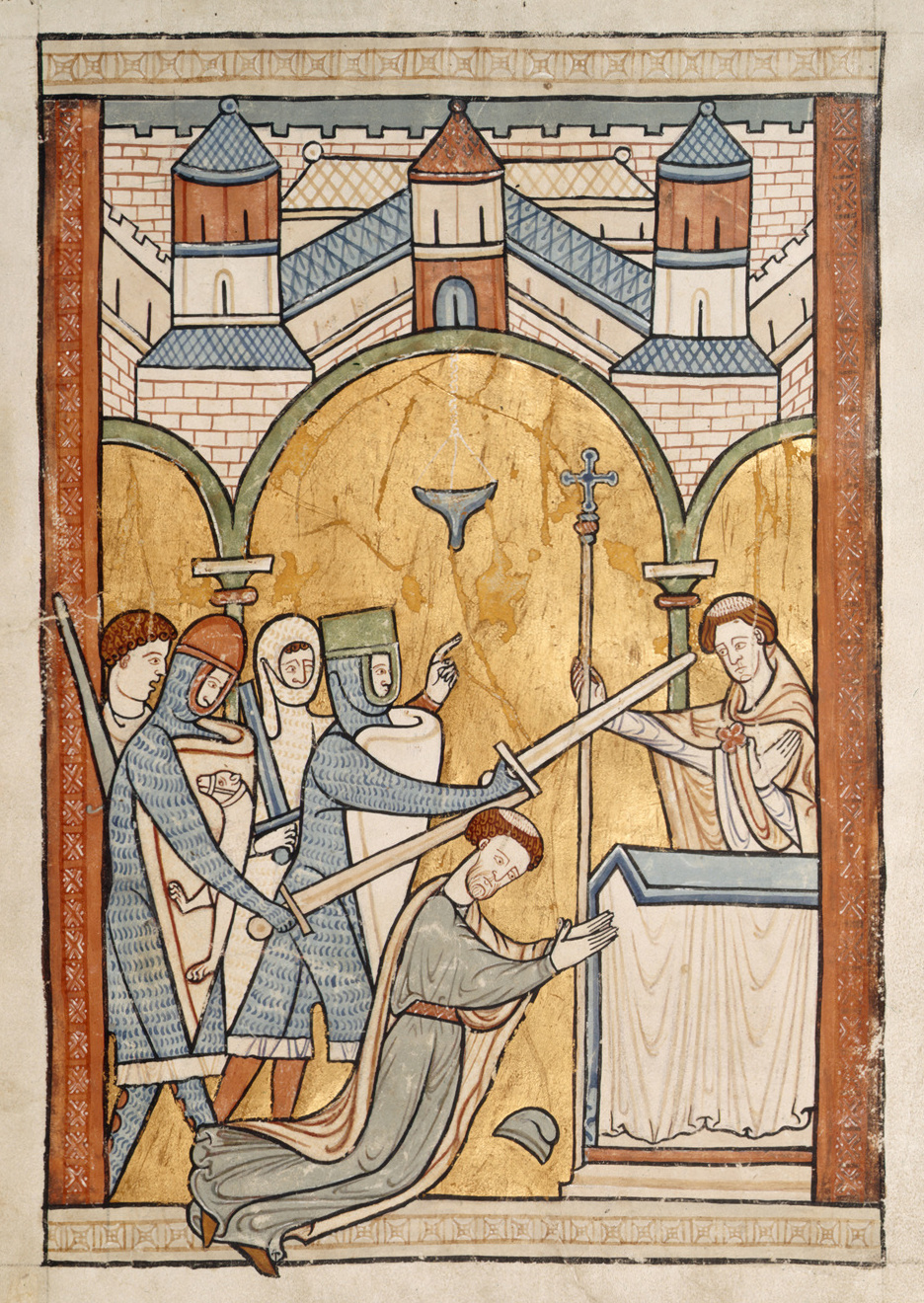
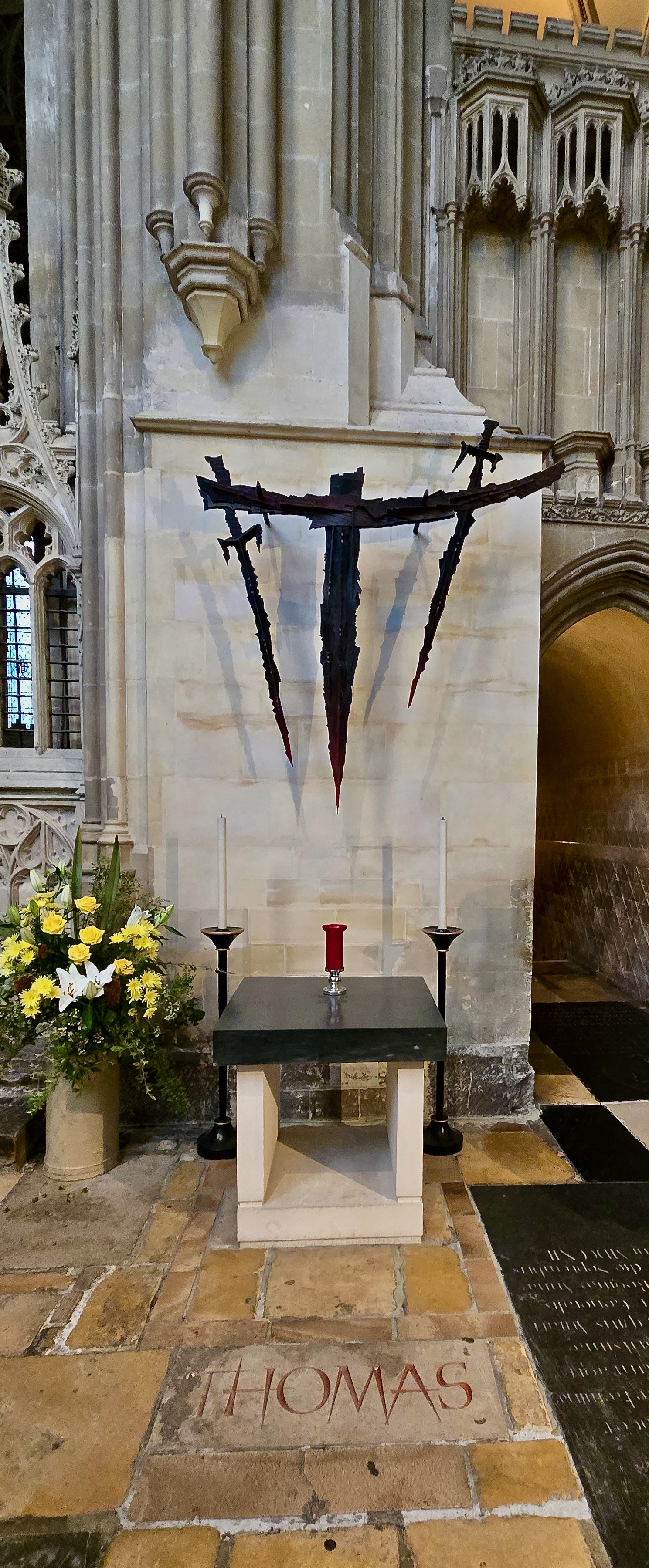
In July 1174 King Henry II walked from London to Canterbury barefoot. He prostrated himself before Becket’s shrine, and was whipped by the monk’s of the priory. He spent the night in prayer and penitence by the tomb of his former friend Thomas BECKET. Between BECKET’s death in 1170 and his removal to the shrine in the Trinity Chapel in 1220, his body lay in a marble tomb in the crypt. Even after the move, the empty tomb continued to be venerated as a site which had held the saint’s body. The Corona Chapel, held a golden head reliquary, containing a piece of Saint Thomas’s skull In 1314 it was remade with gold and jewels. The shrine was not installed in the Corona until 1220, in a ceremony at which the King Henry III was present. The Corona Chapel can be seen beyond the Quire and the Trinity chapel at the far east of the cathedral. BECKET’s shrine became a major pilgrimage site, attracting visitors from across Europe.
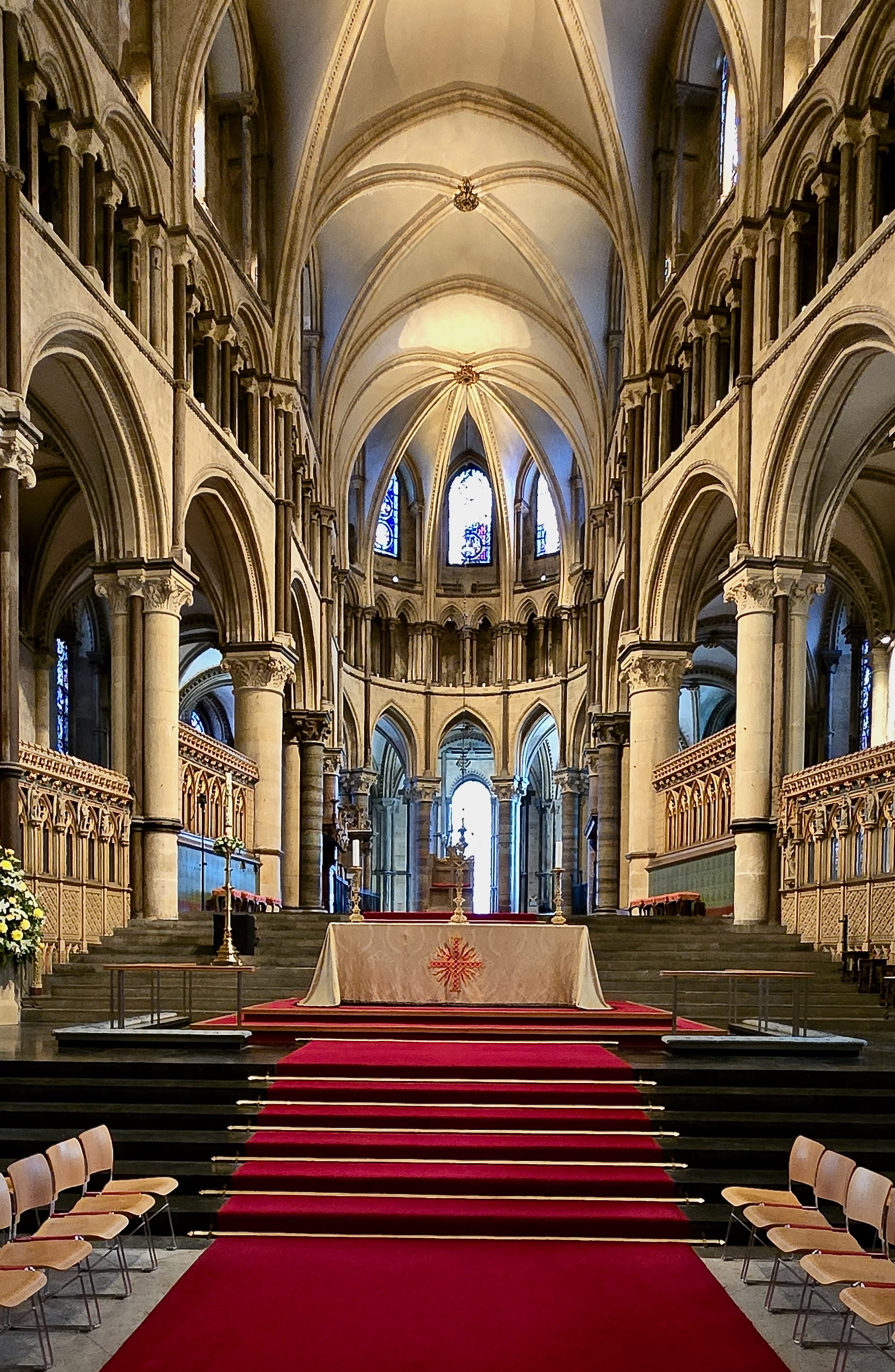
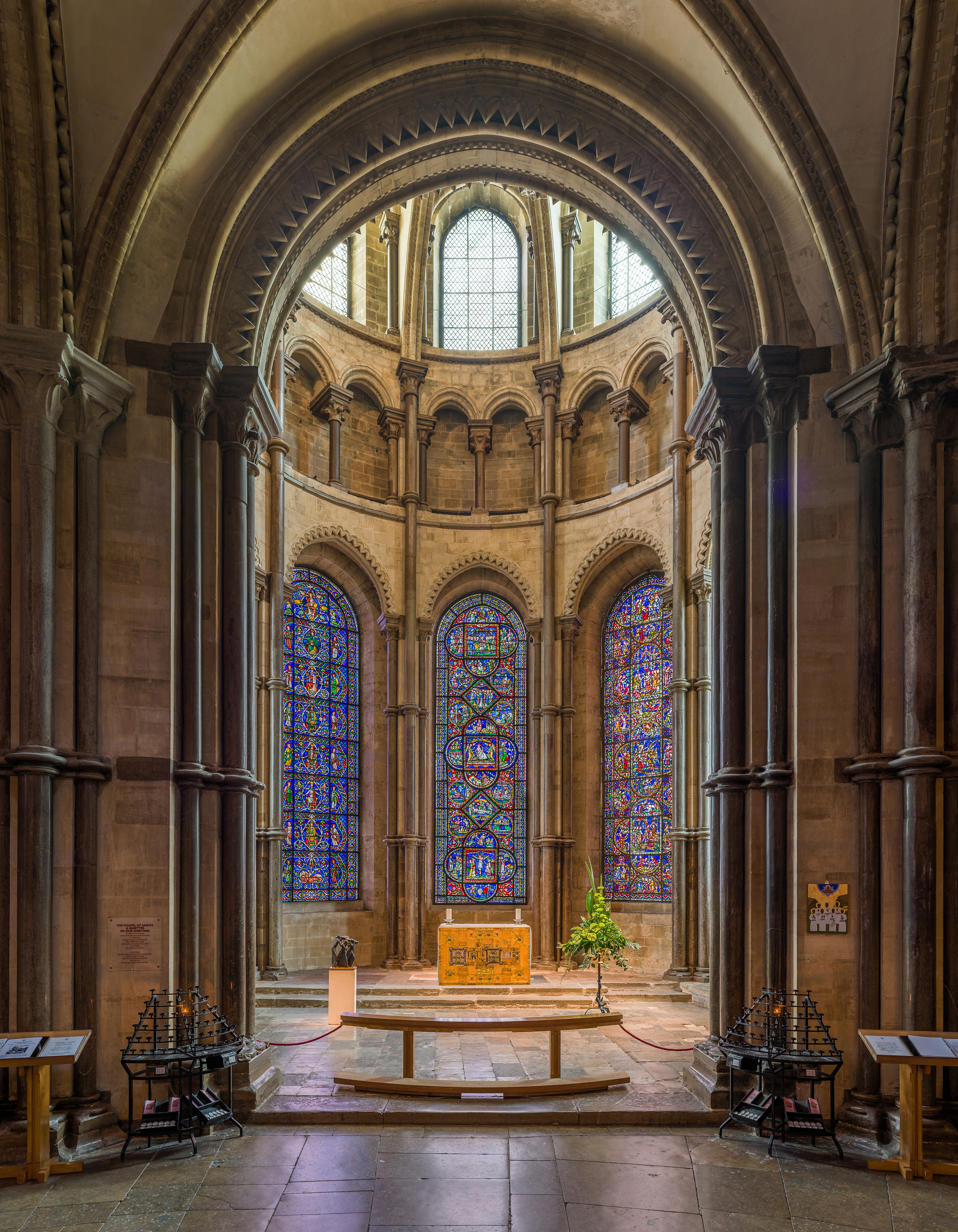
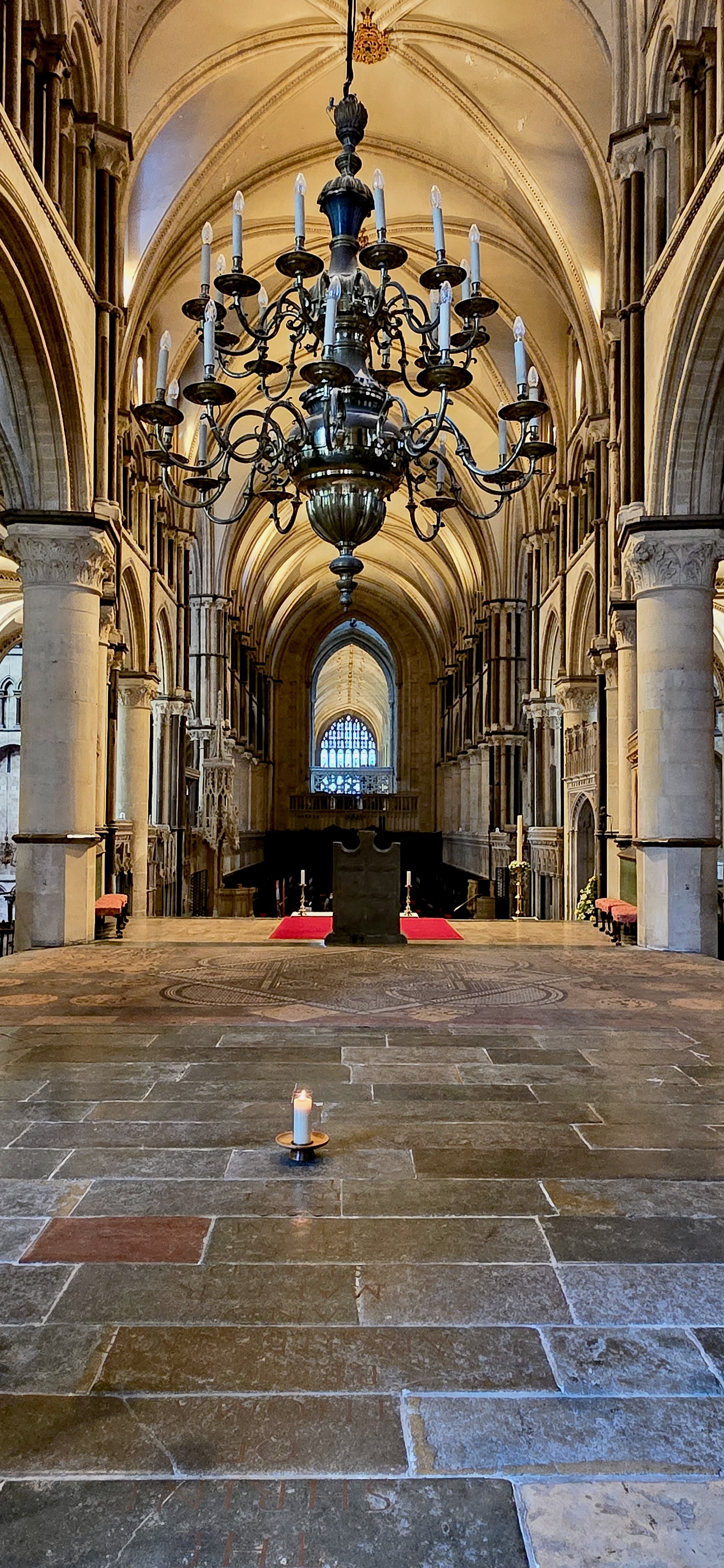
The Trinity Chapel became the location of Thomas BECKET’s remains in a lavish tomb. King Henry VIII during the Reformation in 1538 ordered the destruction of the BECKET Shrine, and his bones were either burned or reburied elsewhere. No one knows there location. A single candle marks the spot where the shrine used to stand.
Surrounding the Trinity Chapel are the Miracle windows that depict miracles ascribed to Saint Thomas BECKET. The oldest date back to the 12th century and were installed to surround Becket’s shrine in the Trinity Chapel. After a fire destroyed much of the cathedral in 1174. Some glass panels have been restored or replaced, but much of the original early 13th century glass remains.
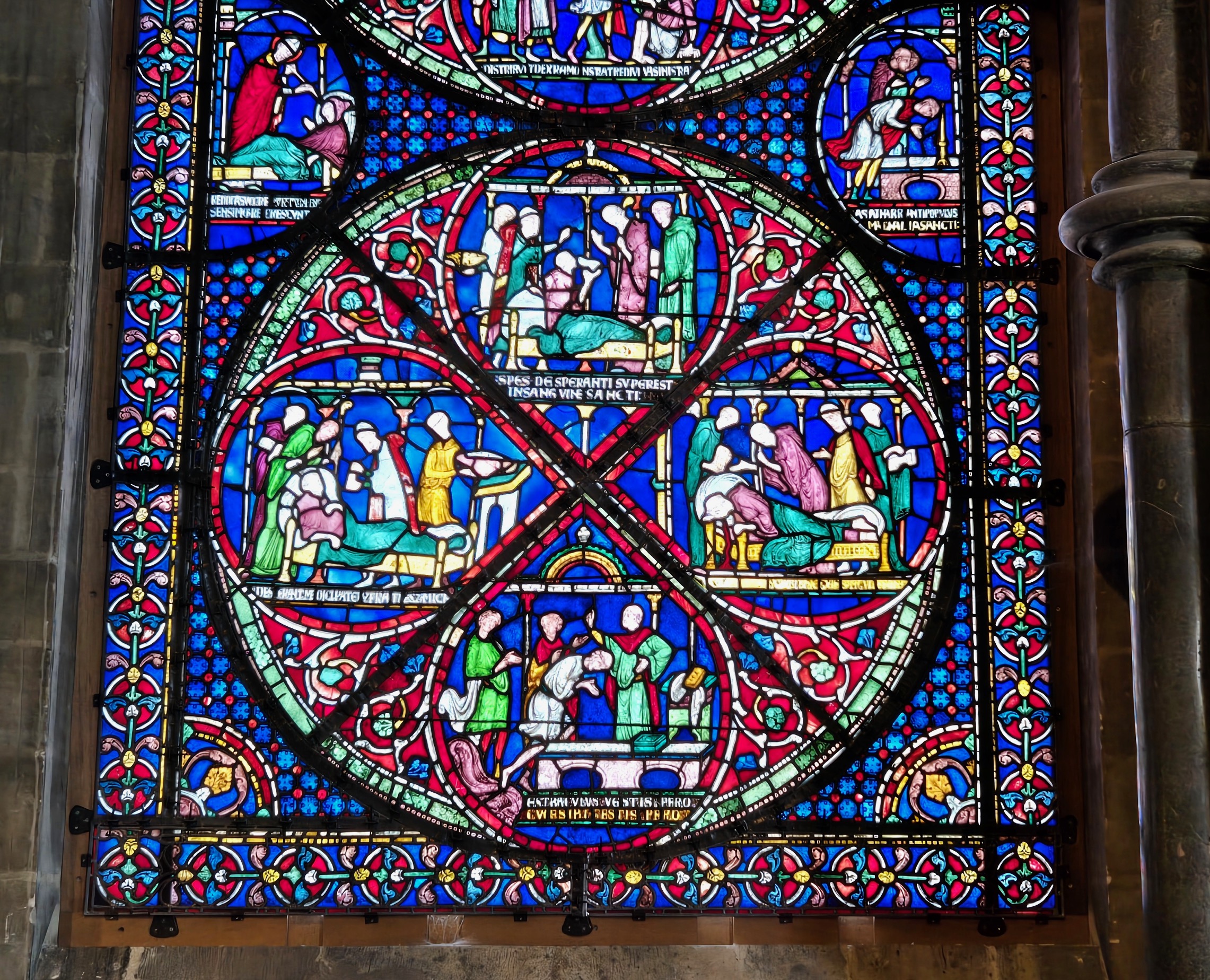
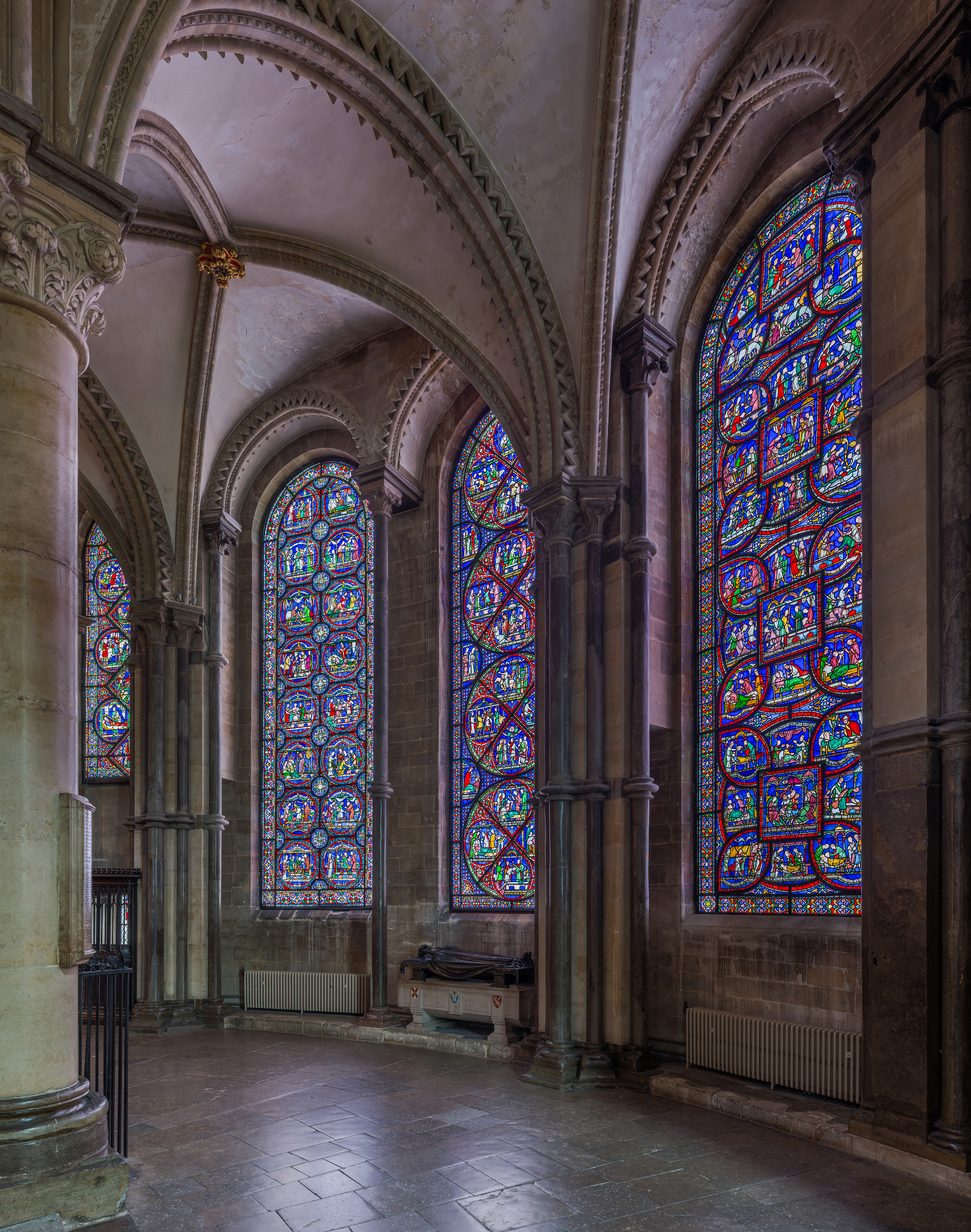
Thomas Becket was canonized as a saint in 1173 by Pope Alexander III just three years after his assassination.
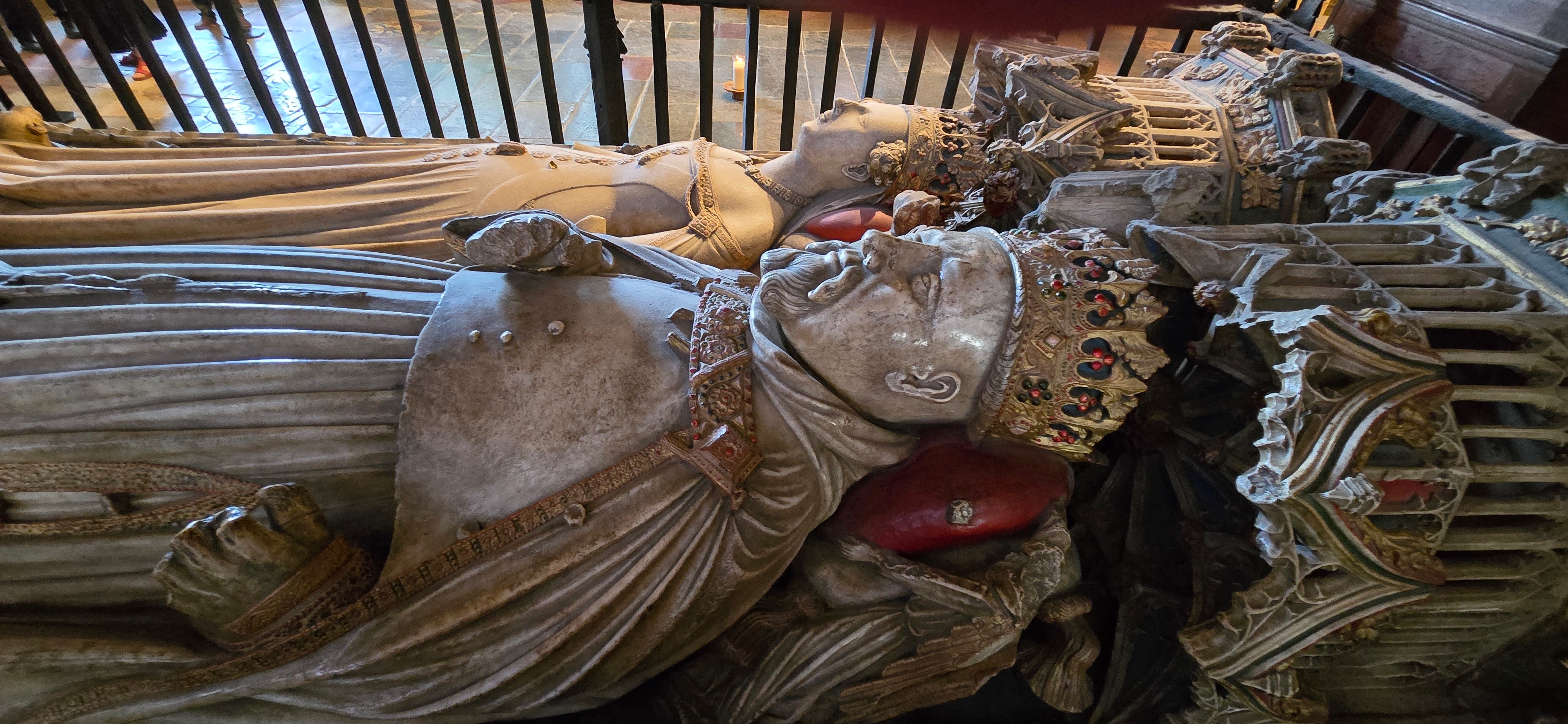
Adjacent the Trinity Chapel is the effigy of Edward Plantagenet (1330-1376), The Black Prince. He was the son of King Edward III and was his eldest son, but he died before his father. He was of an age where nobility was expected to fight and he was a fearsome warrior. Edward’s son became King Richard II after King Edward III’s death. King Richard was succeeded, by his son, King Henry IV whose effigy along with his wife Joan of Navarre are below.
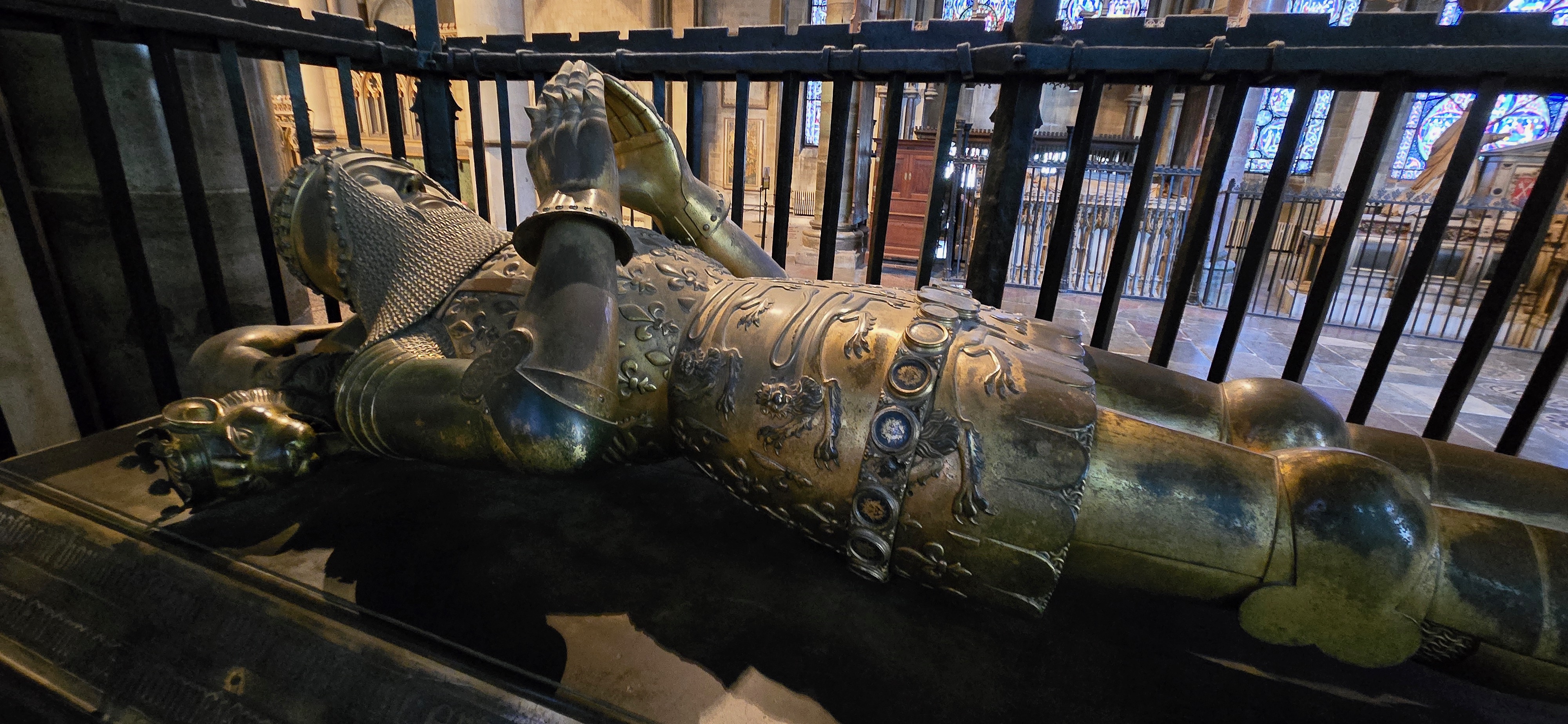
Before we leave Canterbury for Leeds Castle a bit more of the Cathedral and grounds. Yes, the architecture is awe inspiring, but even more so is the fact that these structures were built back in the medieval period which we tend to view condescendingly. If you look closely you will see the candle of Thomas BECKET behind King Henry IV (1367-1413) and with his wife Joan of Navarre.
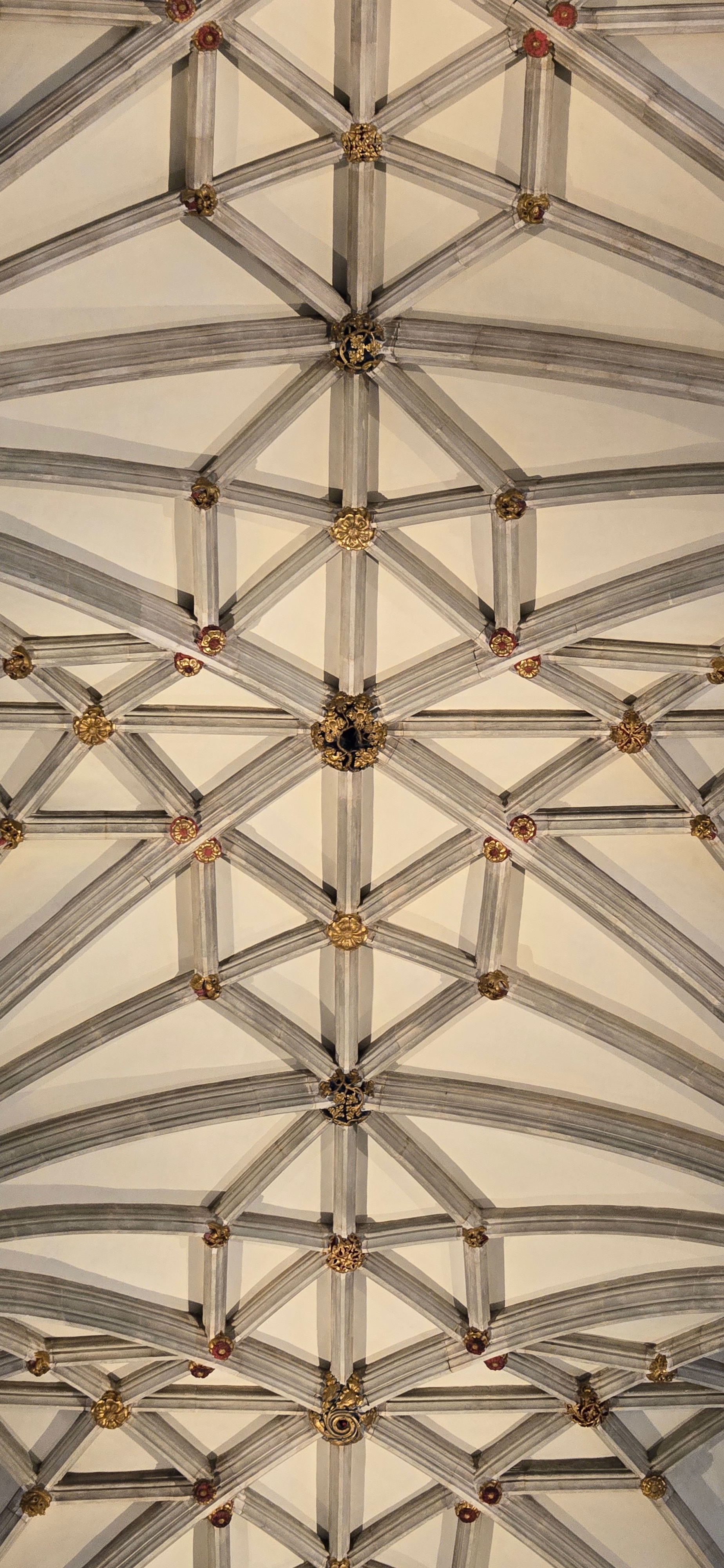
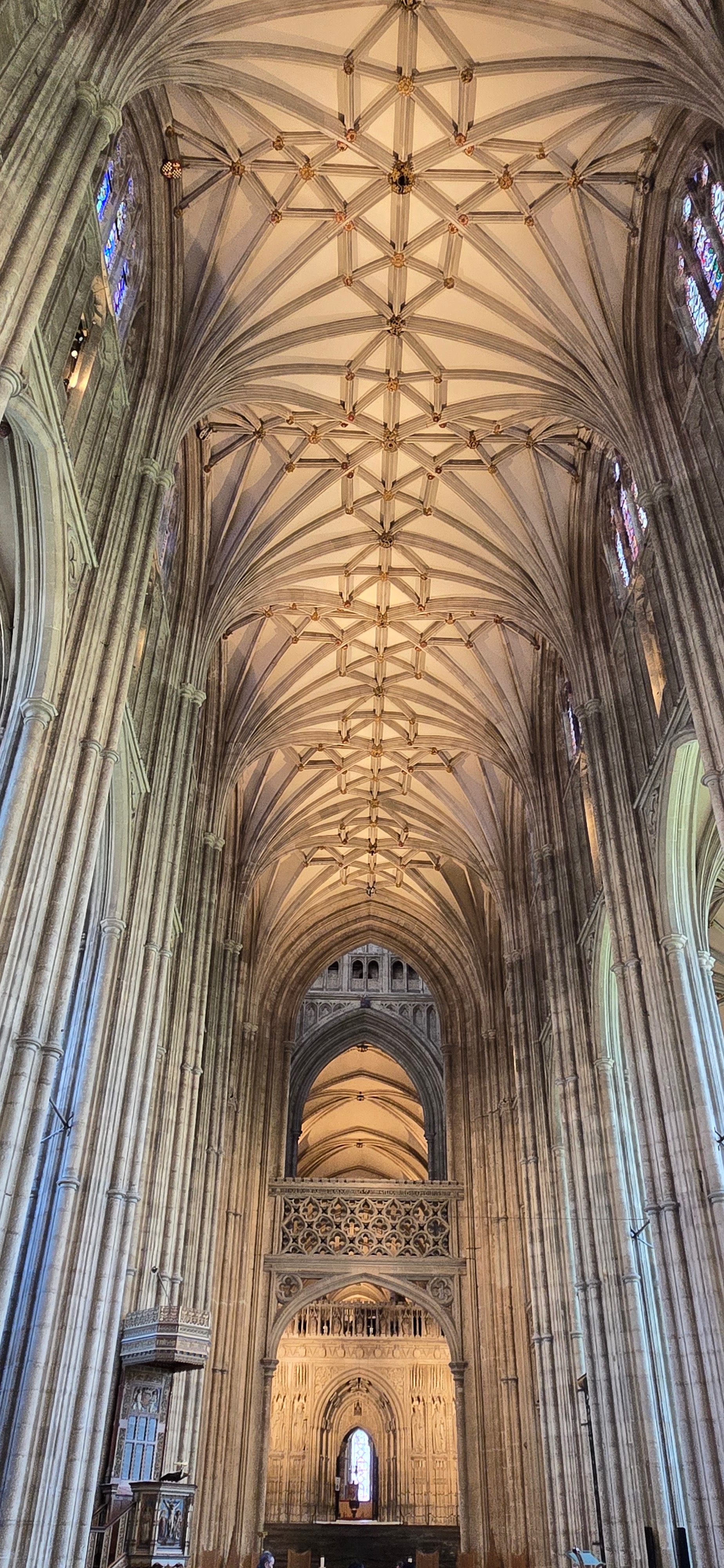
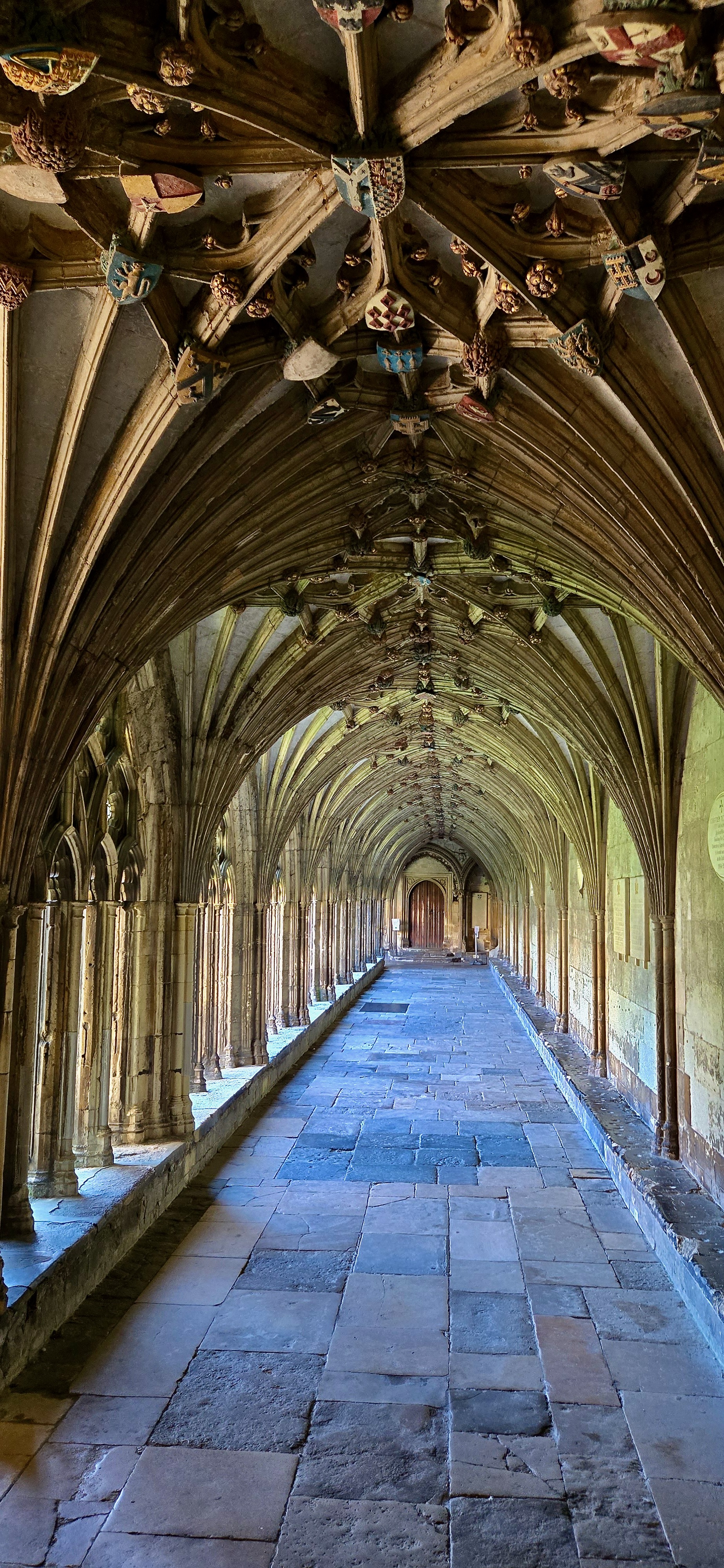
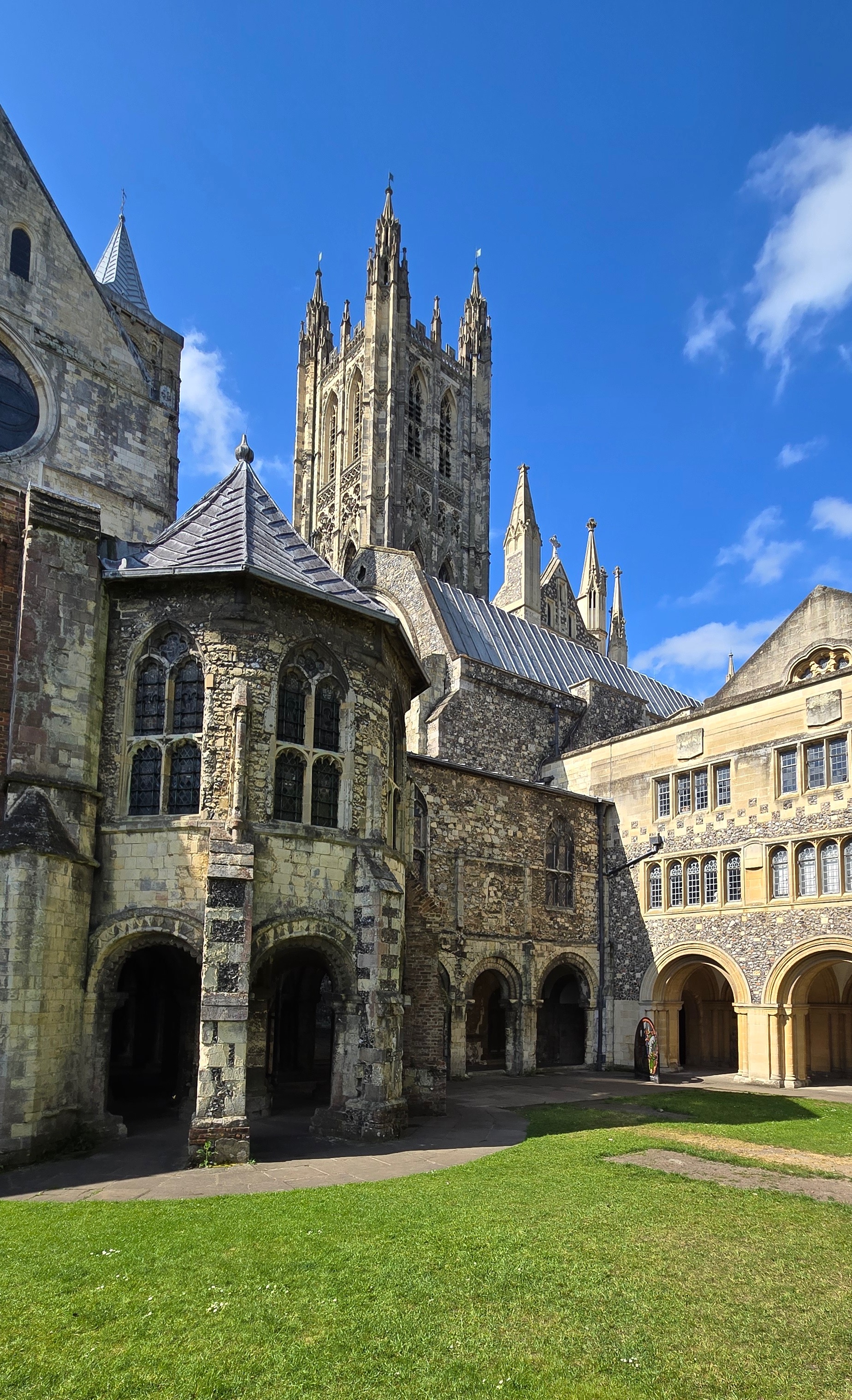
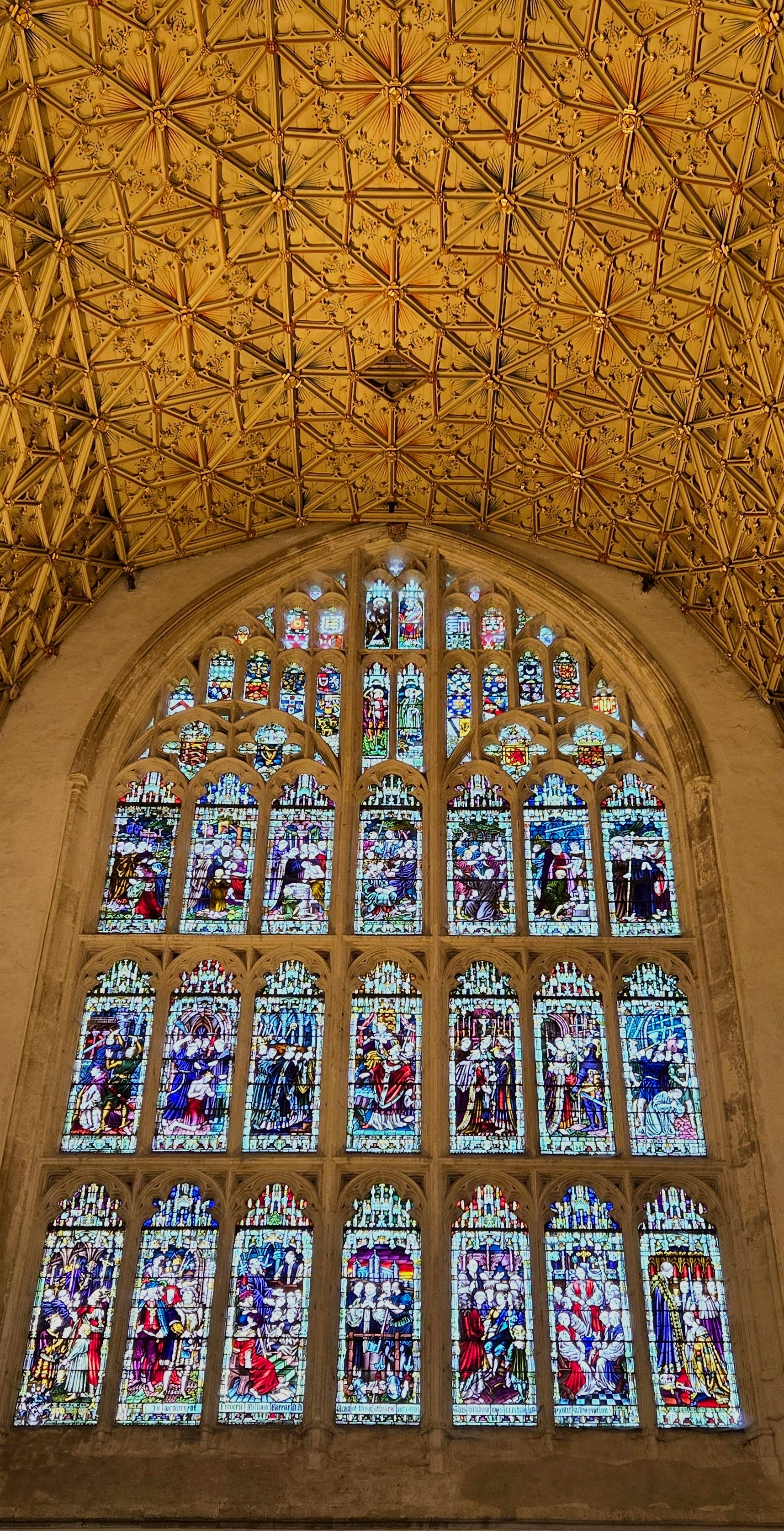
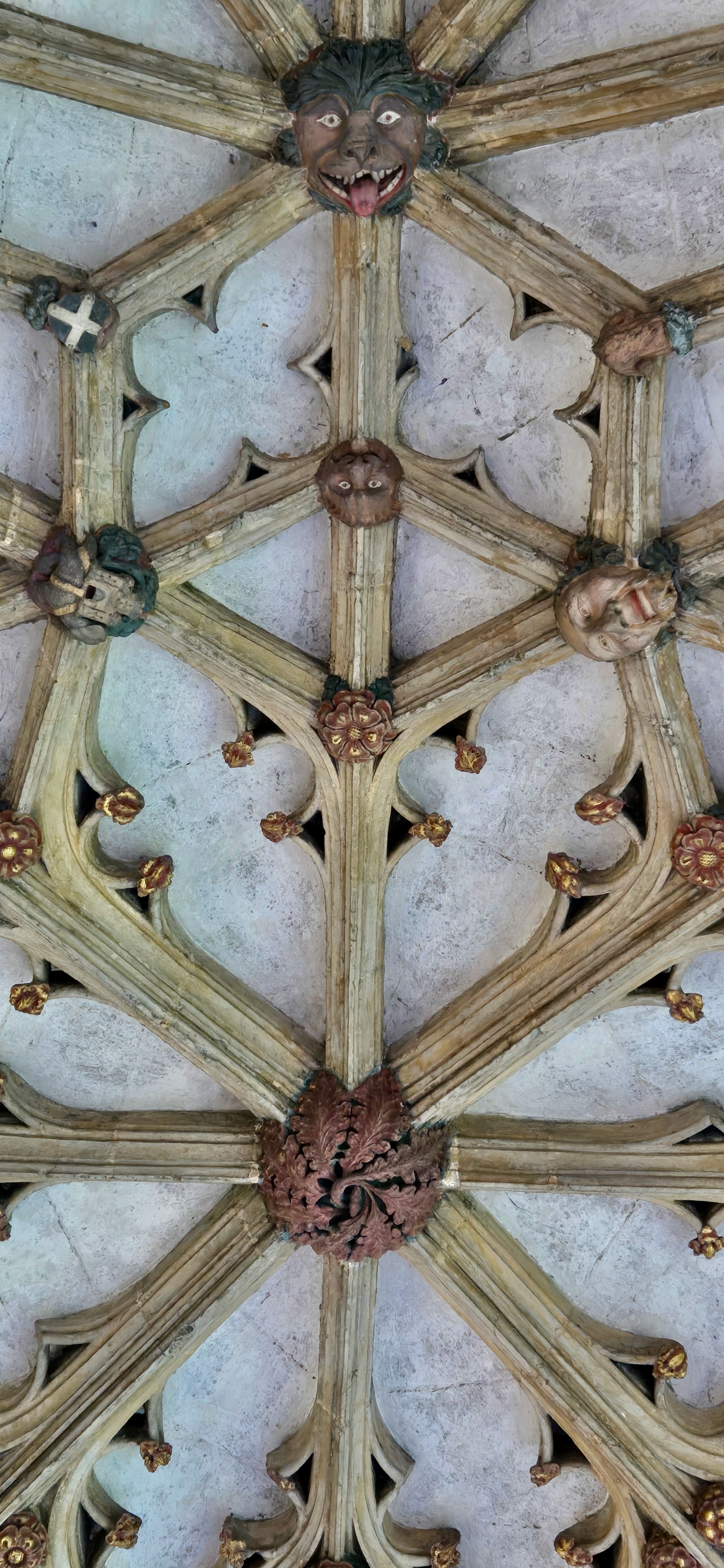
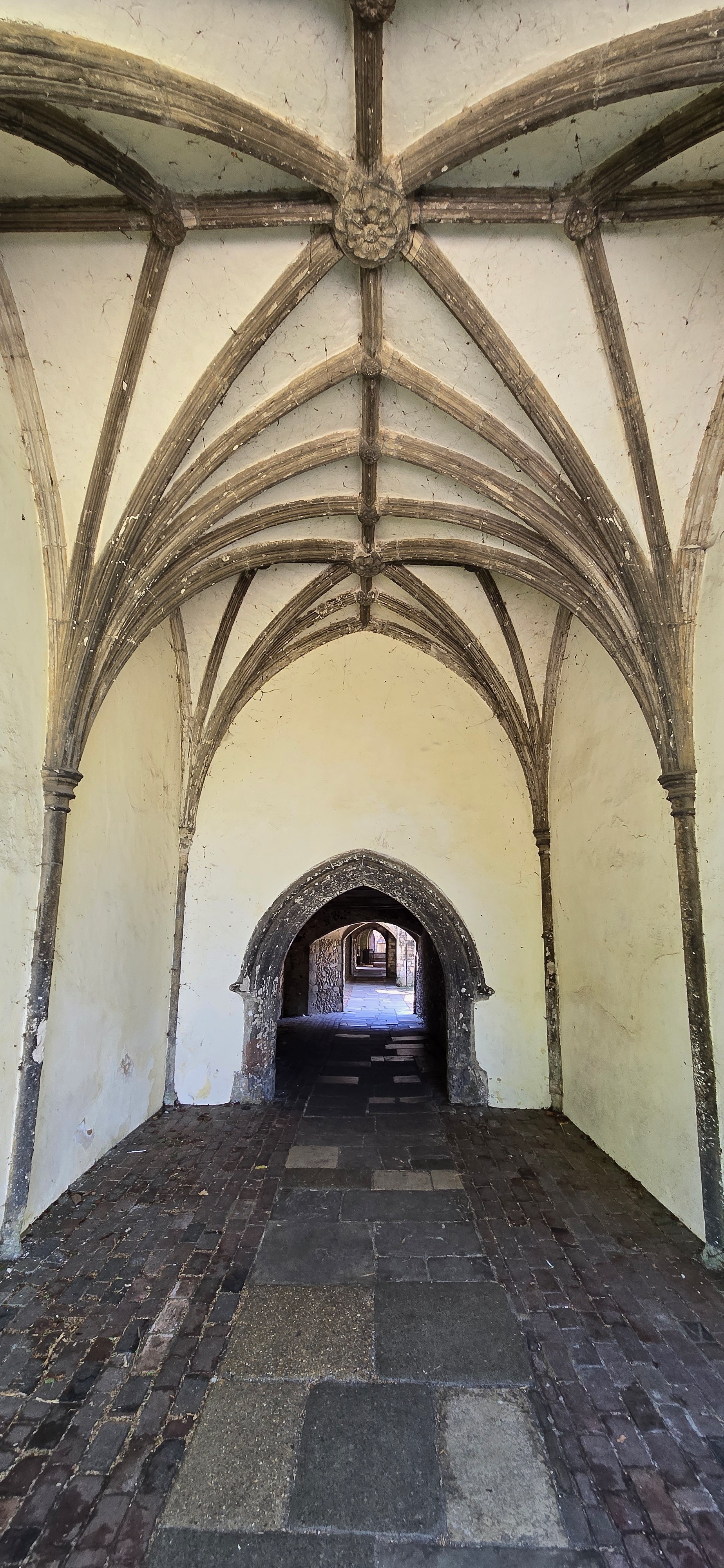
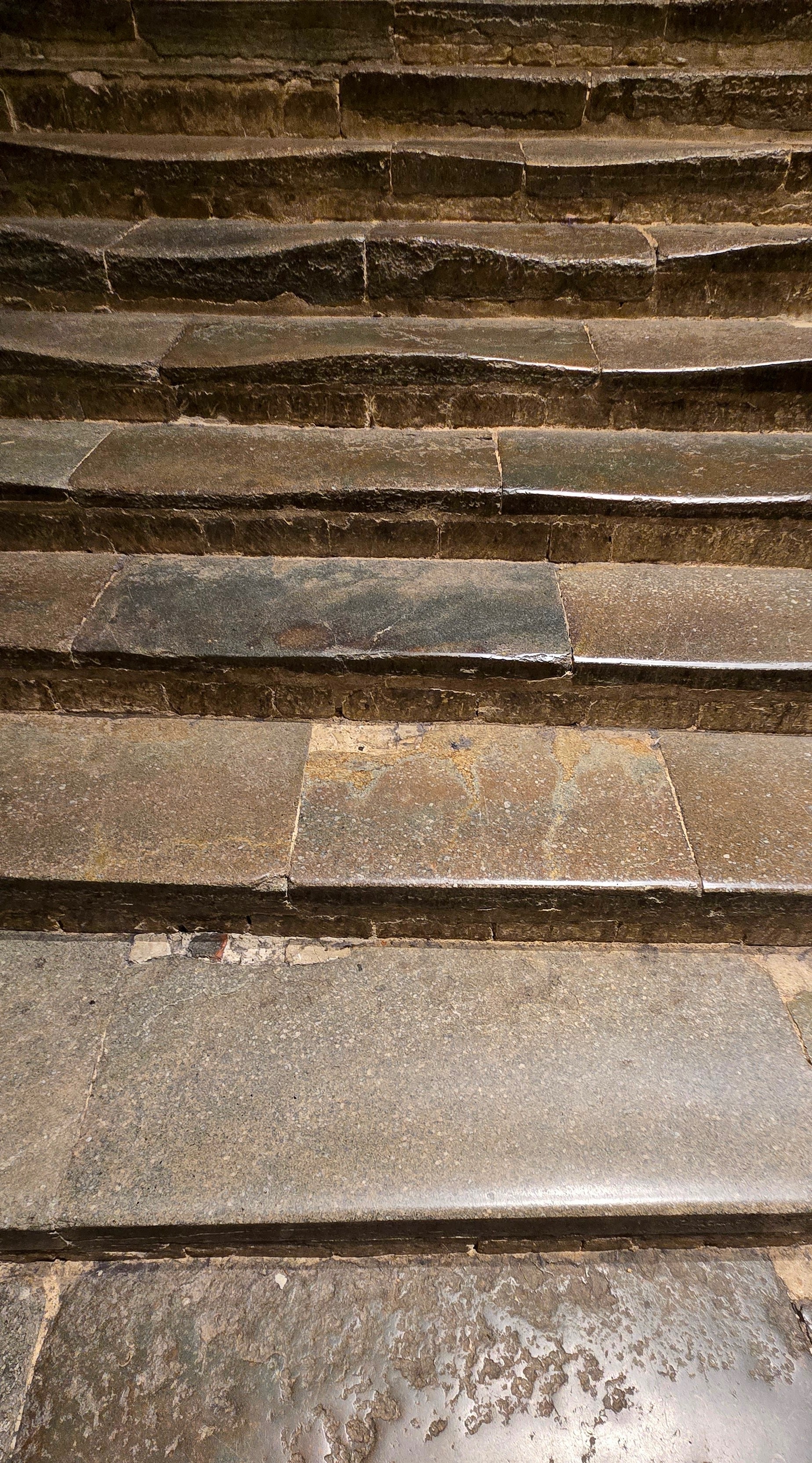
And finally I leave you with these steps, worn down over time by the millions of pilgrims and visitors to Canterbury cathedral. If you go, do sign up for a guided tour, it will give you much greater appreciation for the history and treasures here.
Kelly Wheaton ©2025 – All Rights Reserved
KENT The Garden of England Day One Part Three: Canterbury : On the trail of Robert Cushman
Posted on June 28, 2025 3 Comments
When we finished up at Hever castle we made our way to Canterbury. It was Canterbury that led us to the KENT The Garden of England tour through Blue Roads/Backroads Touring. My friend Denise and I met in kindergarten and she is a direct descendant of Robert CUSHMAN 1577-1625 who was responsible for organizing and arranging the sailing of the Mayflower. He is her 6th great grandfather. Her line is:
- THOMAS CUSHMAN [Couchman] 1512-1567
- Thomas CUSHMAN [Coucheman] 1538-1585
- Robert CUSHMAN 1577-1625
- Thomas CUSHMAN 1607-1691
- Thomas CUSHMAN 1637-1726
- Robert CUSHMAN 1665-1757
- Robert CUSHMAN 1698-1751
- Isaac CUSHMAN Deacon 1745-1834
- Isaac CUSHMAN 1779-1829
- Robert CUSHMAN 1803-1888
- William Wilkins CUSHMAN 1843-1919
- Mark Walton CUSHMAN 1879-1940
- Robert Mark Cushman her father
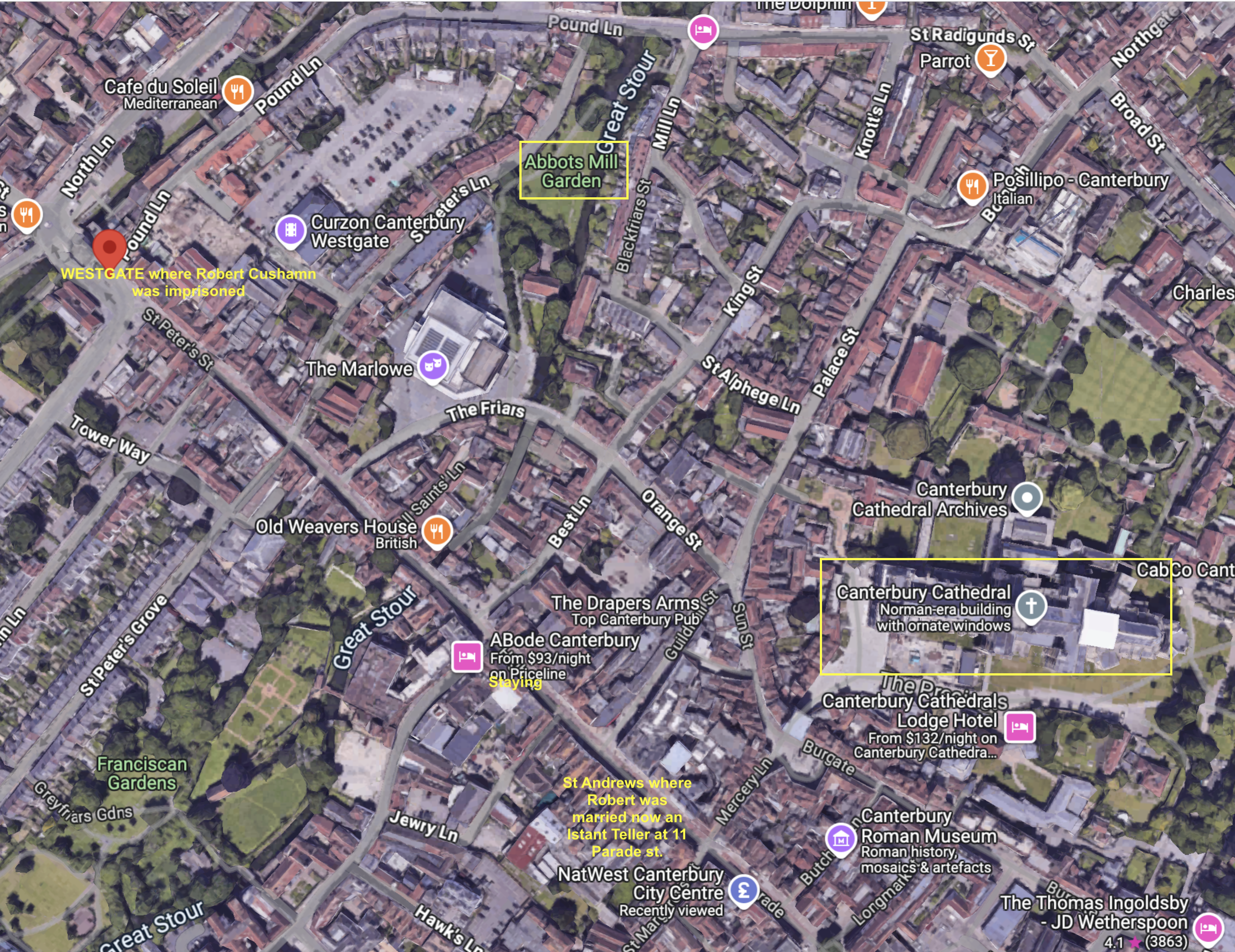
Robert CUSHMAN 1577-1625 was born 9 FEBRUARY 1577 at Rolvenden, Kent, England and died 6 MAY 1625 at Beneden, Kent, England. He appears as an apprentice to George MASTERS in Canterbury in 1597, at the age of 18. He lived at George Master’s house in St. George the Martyr parish making tallow candles until 1599 and maybe as late as 1603. This was the map I had prepared in advance.
We arrived at the ABode Canterbury where we were staying the night. The building is a Grade II-listed 12th-century structure with medieval windows and exposed beams that has been renovated over the years but still maintains its timber frame exterior on High Street, Canterbury and some of the timber frame construction inside.


We checked in and then were on our own for the rest of the evening. I took advantage of that time to wander about Canterbury and along with early the next morning located some of the places associated with Robert CUSHMAN.
Just a few steps from the Abode you will find the The Weavers Established in 1500 on the Great Stour River. It would have been here along with the Abode during Robert CUSHMAN’s time. Make sure to expand the 3rd photo to see the Ducking stool. These were sometimes used as punishment or to humiliate and in the case of suspected witches they were used to prove whether you were a witch or not. If she floated, she was in league with the devil, rejecting the water of baptism. If she sank, she was clearly not a witch, however she would also be dead. Great choice.

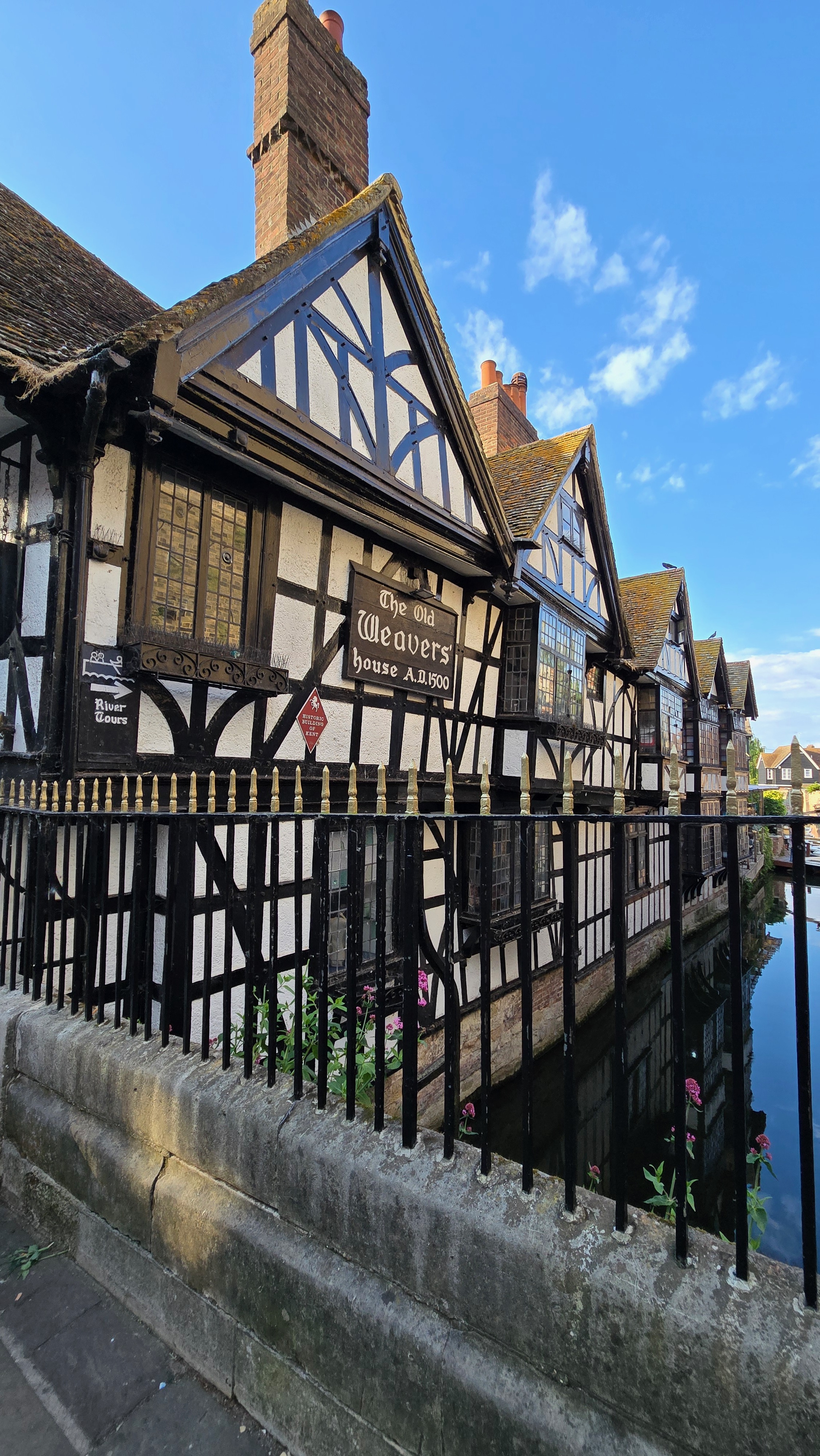
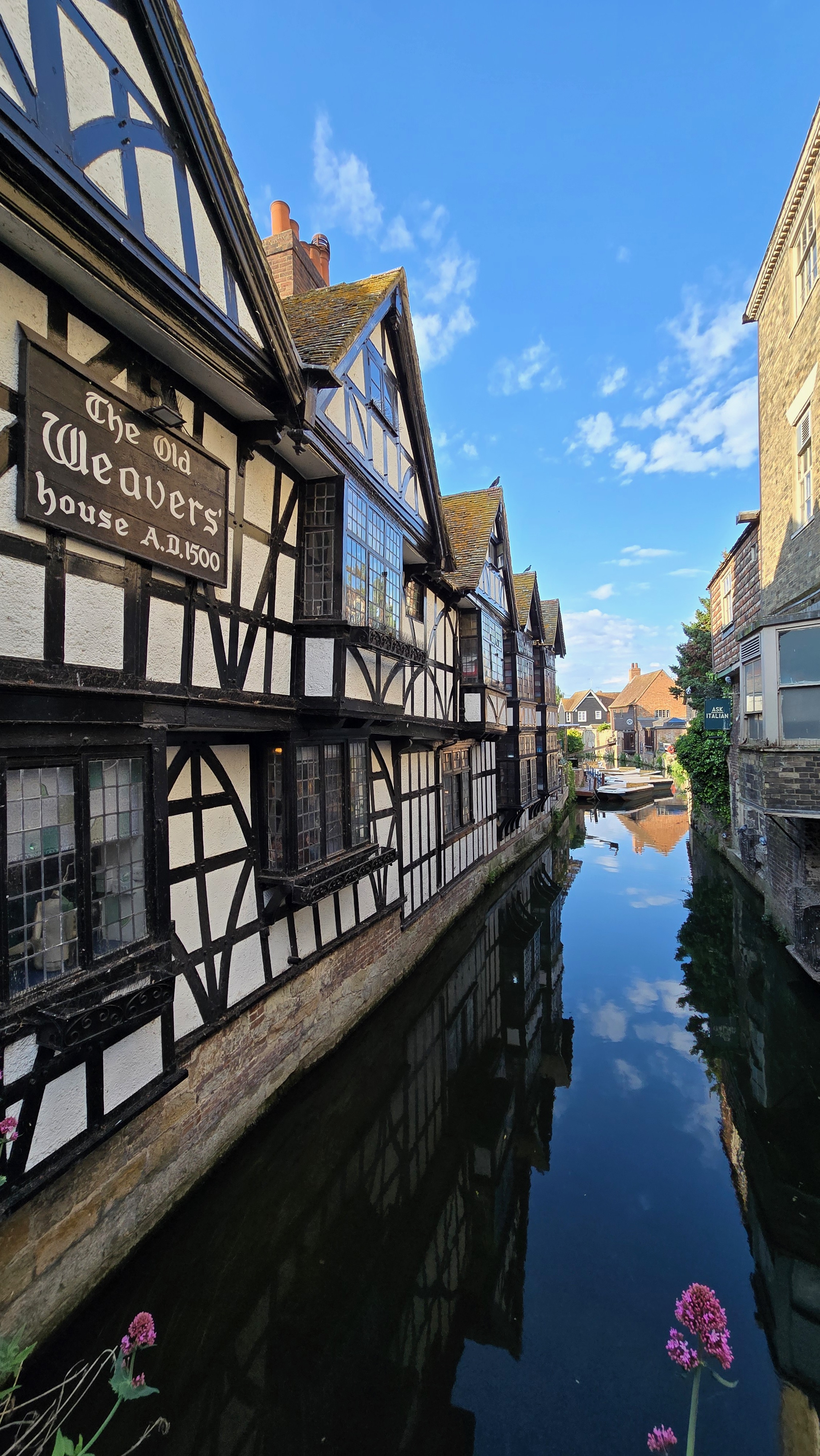
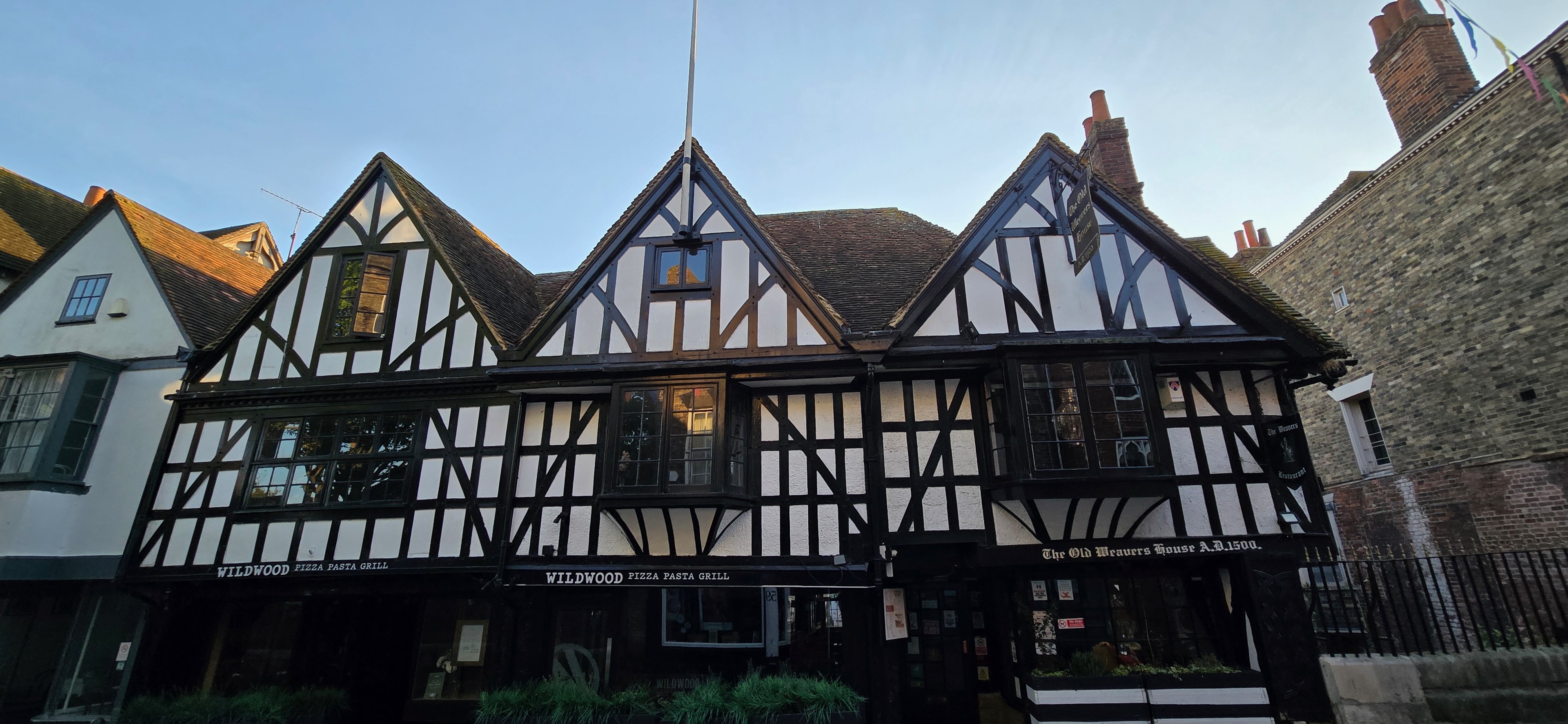
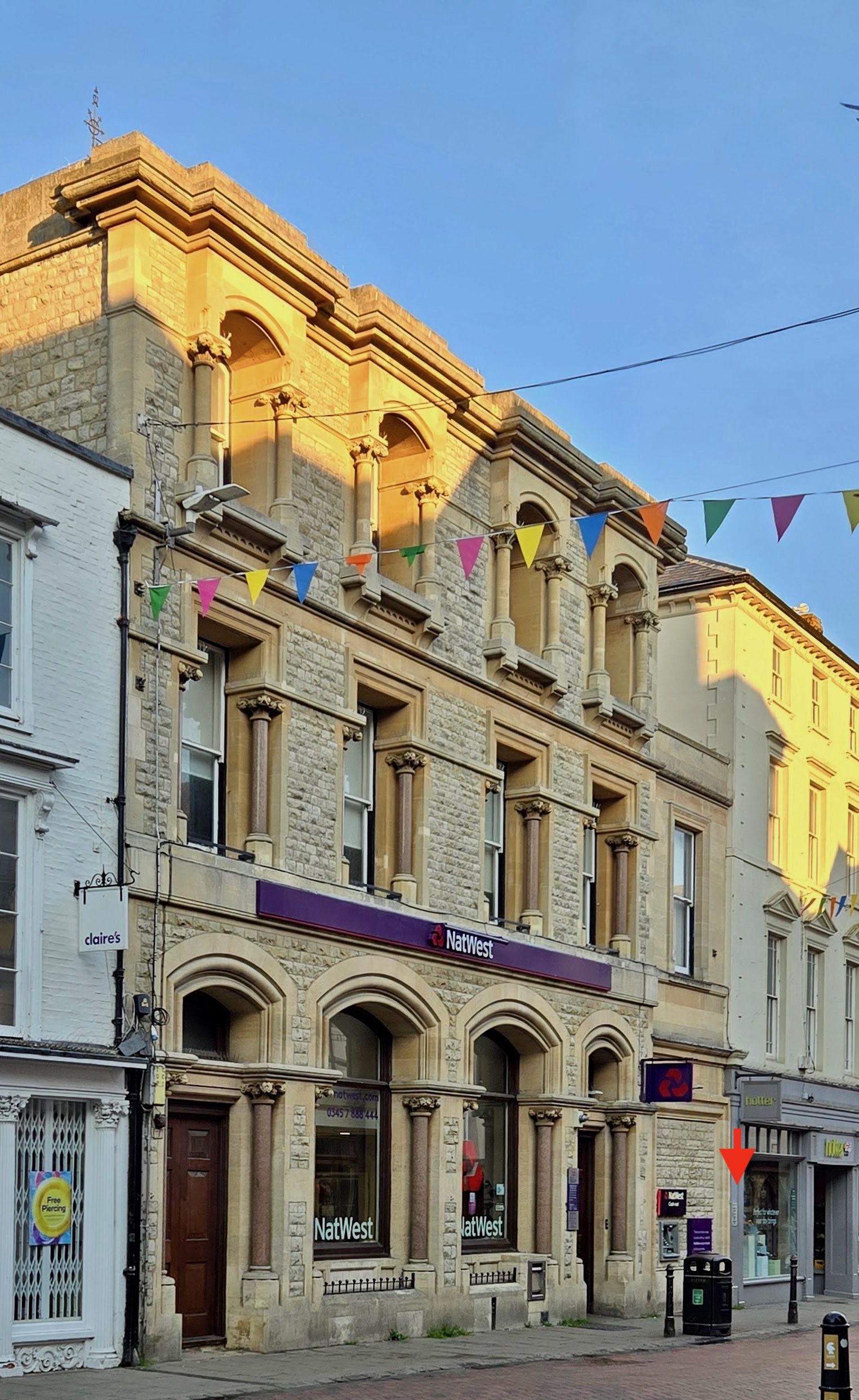
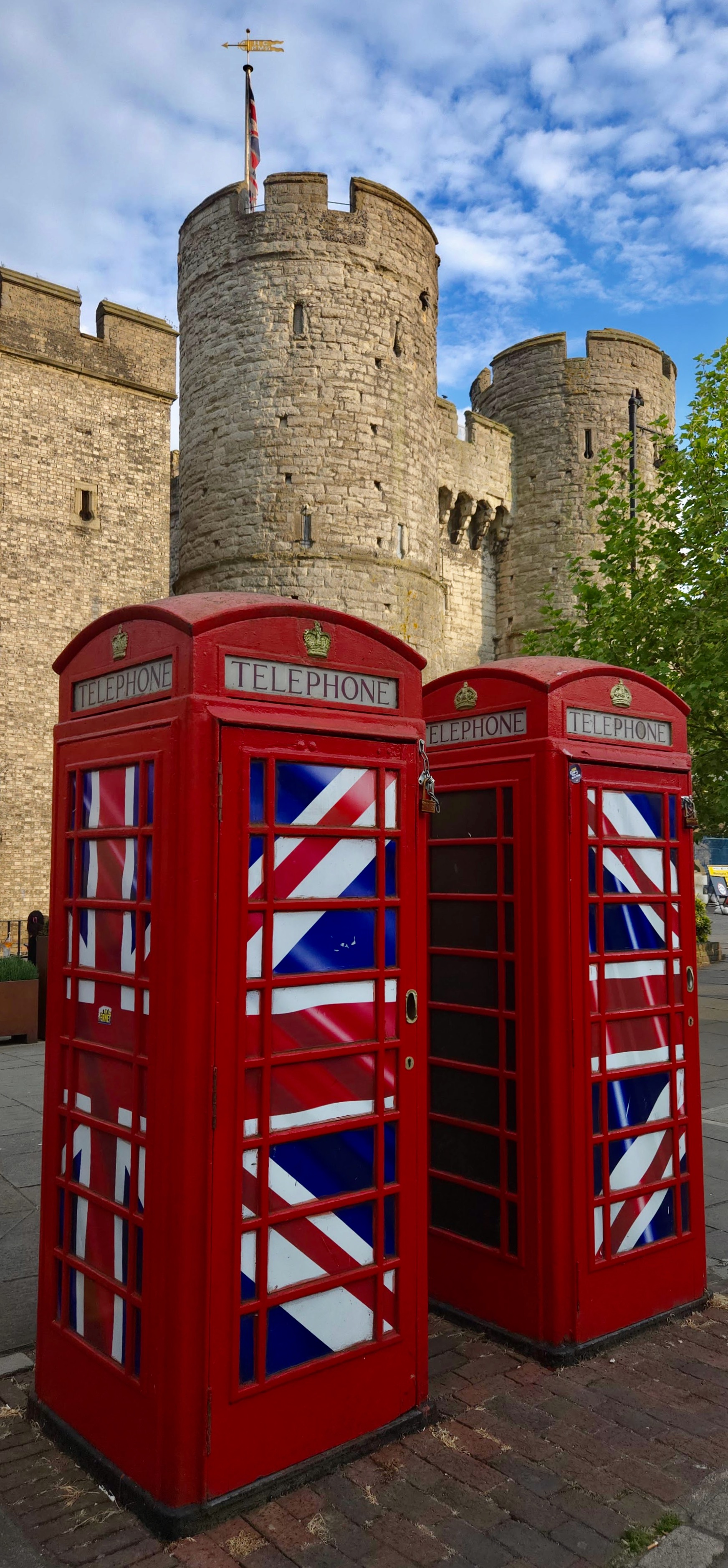
Next I headed down High street toward Westgate. The Westgate tower housed the gaol or jail where Robert CUSHMAN was briefly imprisoned. His crimes included distribution of libels and not attending his parish church of St. Andrew’s. Robert was a Puritan or Pilgrim. Kent was a hotbed of dissension from the Church of England during this period. The church of St Andrew no longer stands. His child Thomas was baptized here. It is located where the Natwest instant teller is located on Parade Street. There is a plaque commemorating it. I have marked its location on the photo.

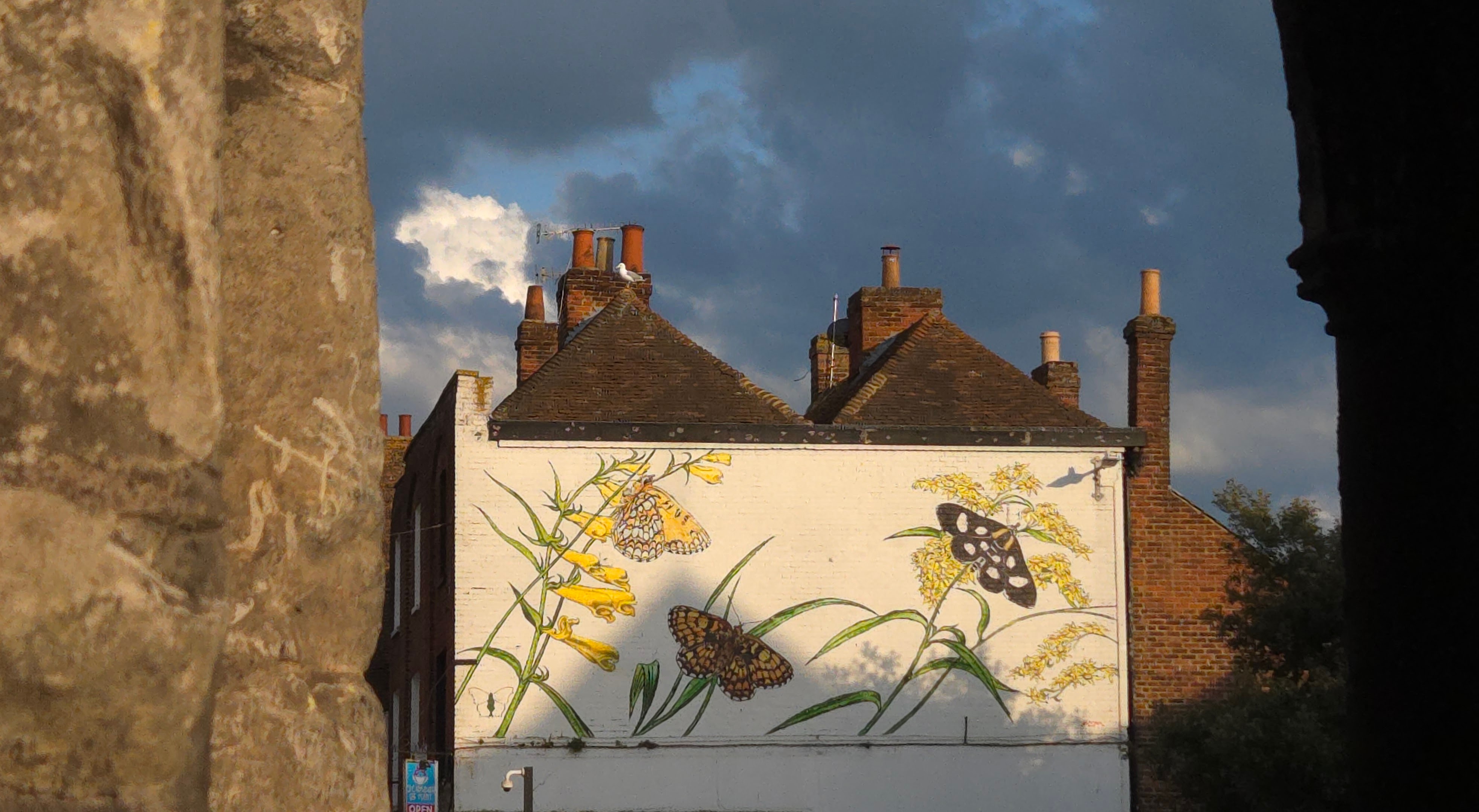
The tower was surrounded by construction so it made getting a good shot difficult. The lighting was interesting so I accepted the intrusion. My reward was to be on the other side. I broke out in a wide grin to see a mural with butterflies through the arch. Denise’s childhood nickname was “butterfly” so I took it as a good omen. [as always click on an image to see the full view]


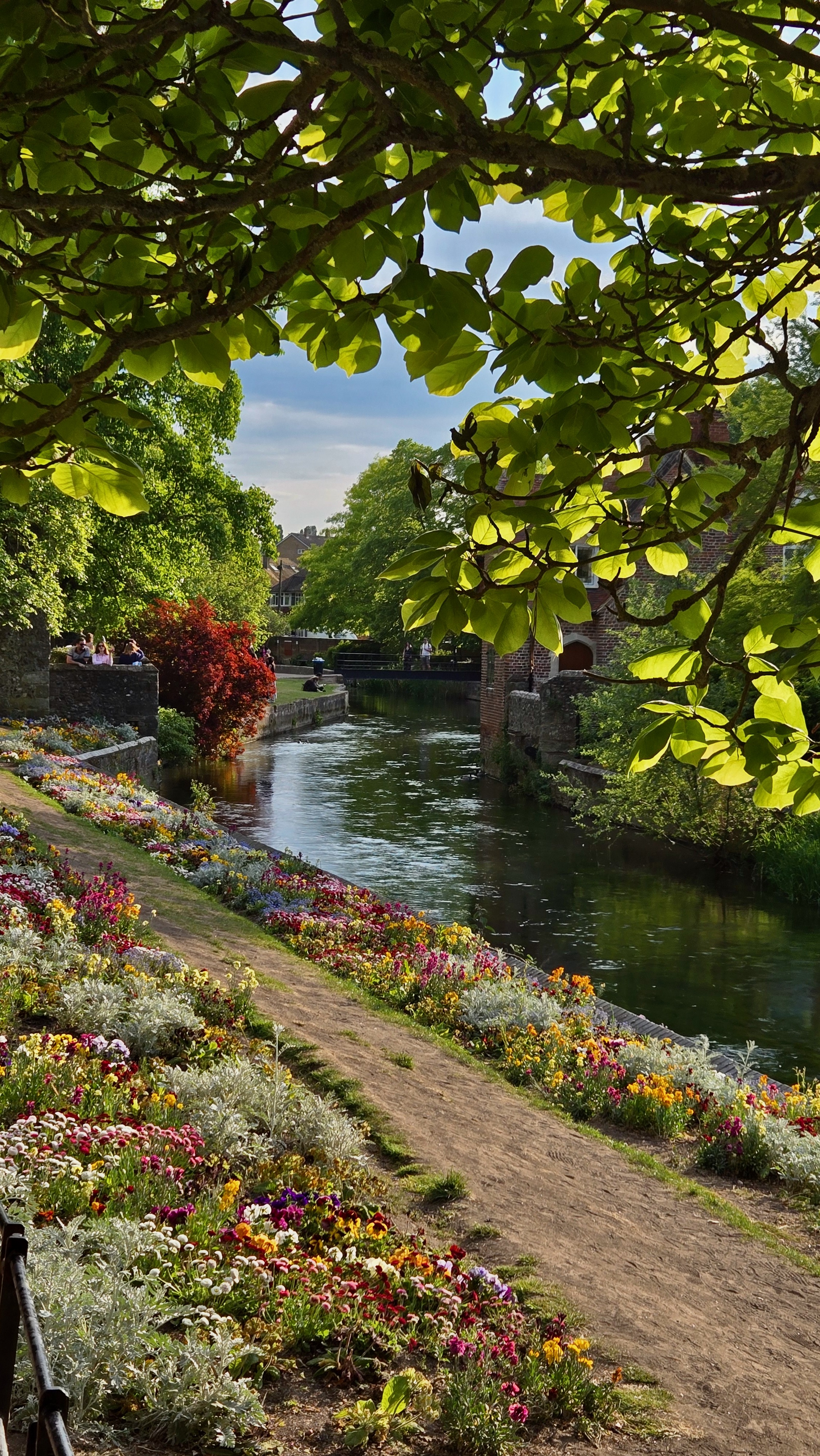
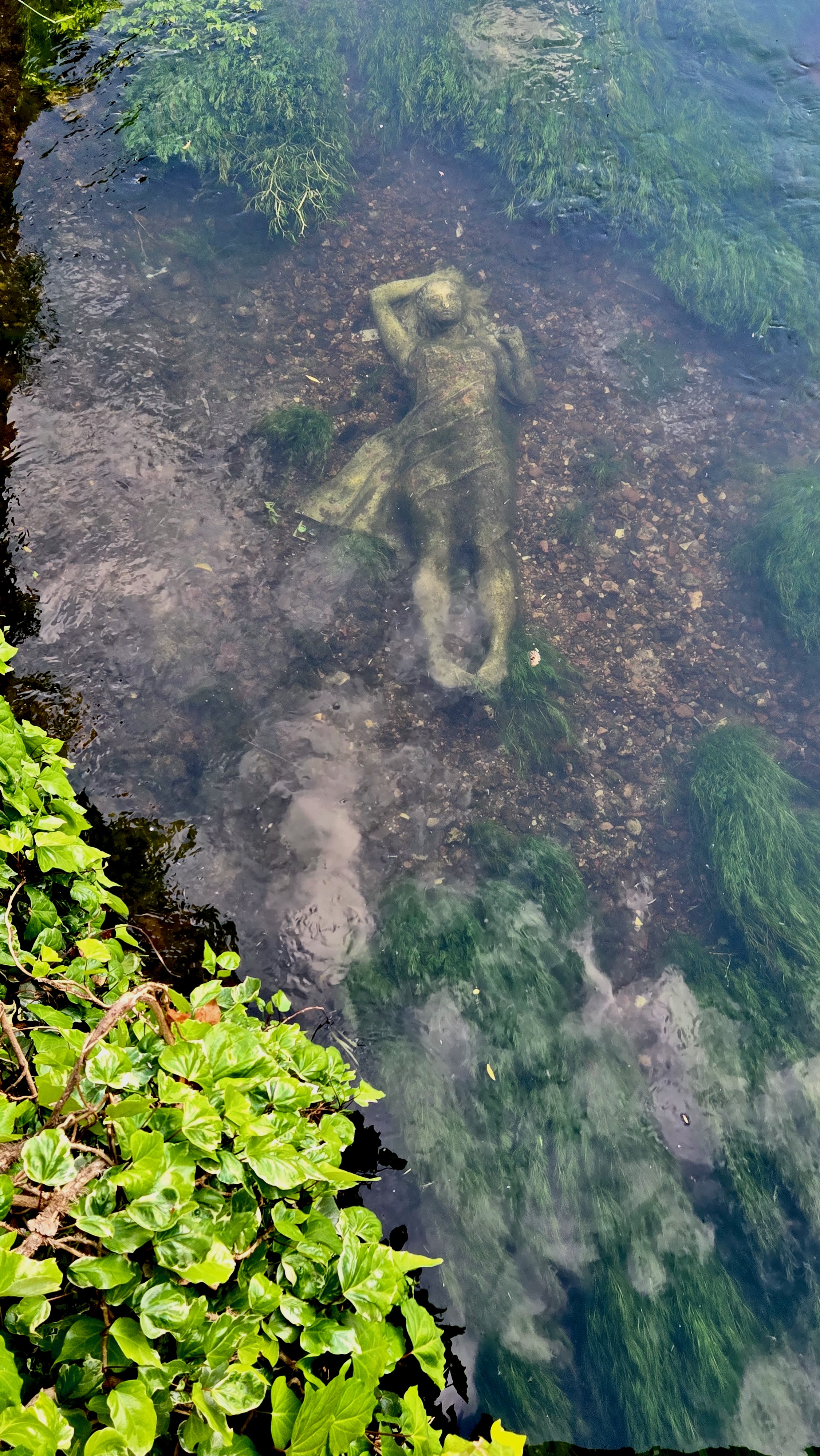
Just past the tower lies the River Stour and the Westgate Garden River Walk. I expected it to be closed as the website and the gate said 6 PM. That was clearly not the case as many people were enjoying the pleasant spring evening here. I ate my dinner overlooking the river on a park bench. I was to be pleasantly surprised with a much better view of Westgate Tower. If you find yourself in Canterbury don’t miss this gem. And make sure not to miss the mermaid sculpture by Jason deCaires Taylor installed in 2024 as seen from Westgate Bridge. The sculpture of recycled glass, LEDs and Stainless steel, named “Alluvia” and inspired by Sir John Everett Millais’s painting “Ophelia.” Ophelia is from Shakespeare’s Hamlet, which may have been inspired by a 16th century drowning which took place on the River Stour.




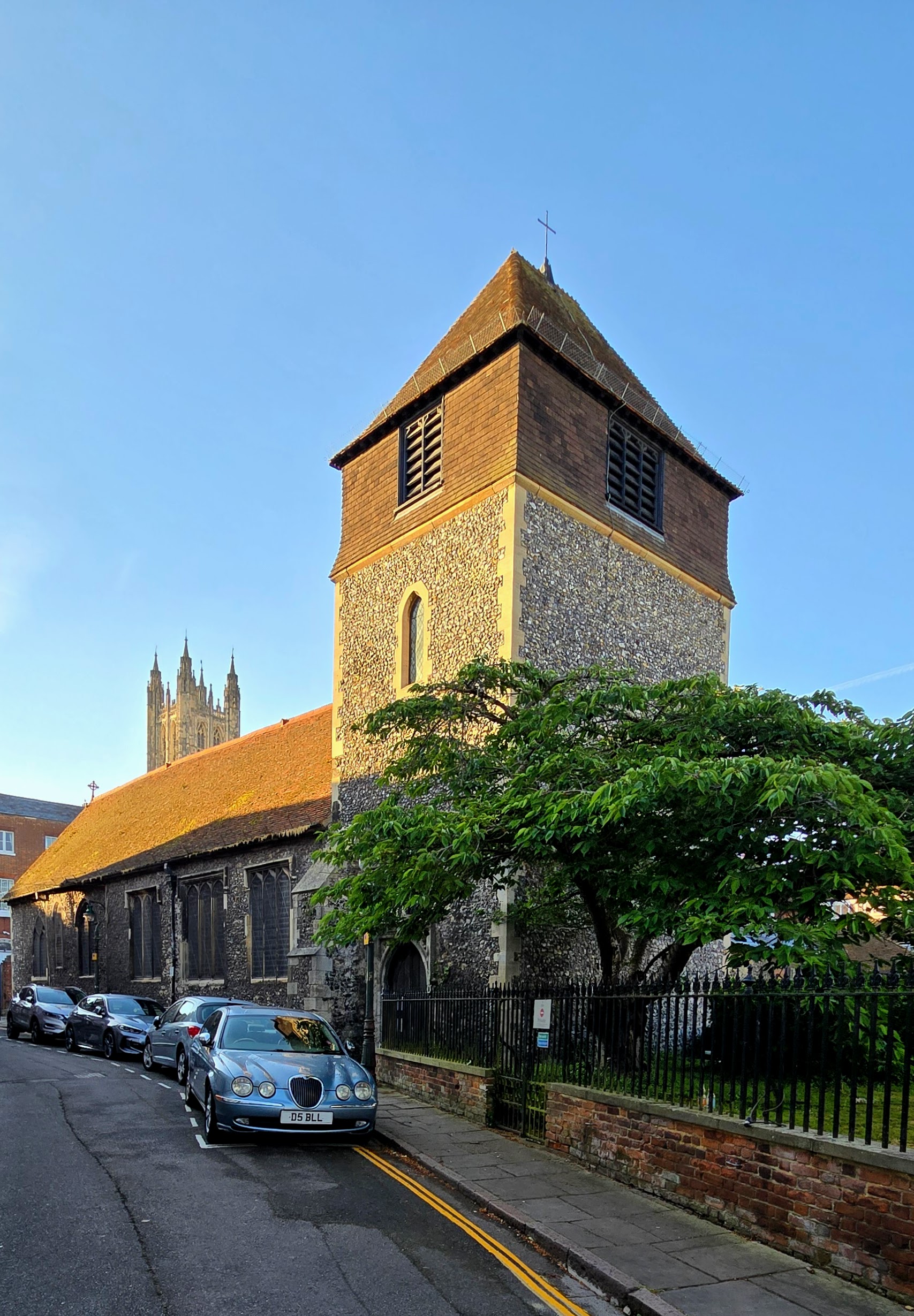
Continuing with Robert CUSHMAN, he married Sarah REDER at St Alphege church the 31st of July 1606, at the age of 28. The church of St Alphege was built in the late 12th or early 13th century. Partially rebuilt about 1470 with more restorations in the 1880s. Constructed of flint rubble with freestone dressings. It is now part of King’s School. The third photo shows detail of the flint and the last shows St Alphege with Canterbury Cathedral in the background.


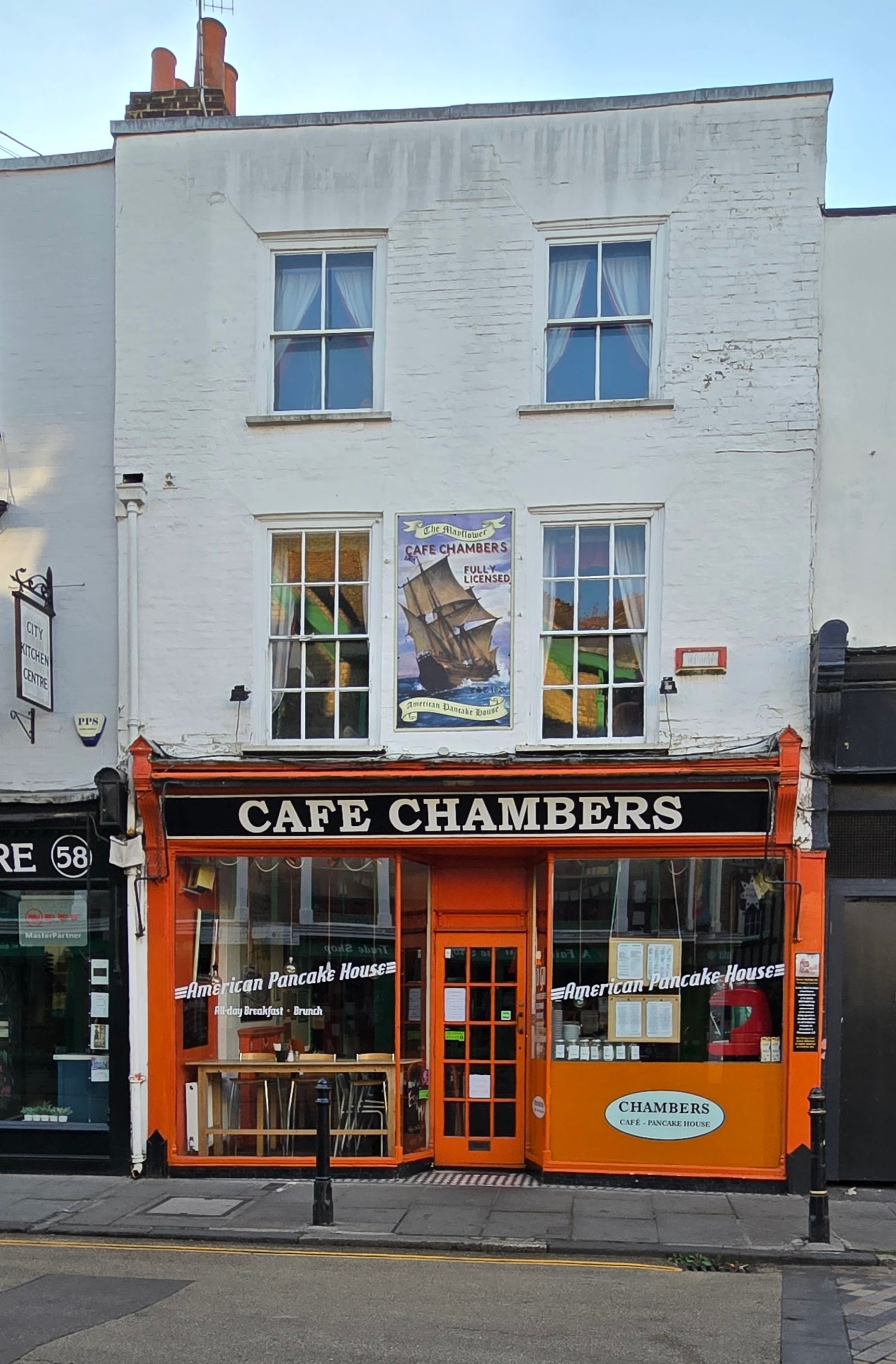
I did not take a photo of the Mark’s & Spence at 4 St George’s Street because it was built in 1930 and any vestiges of its history were gone. This was the site of George Master’s grocery and store where Robert CUSHMAN was apprenticed. It is almost directly across the street from St. Andrew’s. By 1611 he had moved to Leiden, Holland] where a group of Puritan had found asylum. His first wife Sarah and two of their children died there. In 1617 he married secondly, Mary Clarke SHINGLETON in Leiden. By 1617 he returned to England and spent part of the time in London near Tower Hill [Very Close to the Tower Hill Suites] and part time at an Inn on Palace Street, which is now the Mayflower Restaurant at 59 Palace Street.
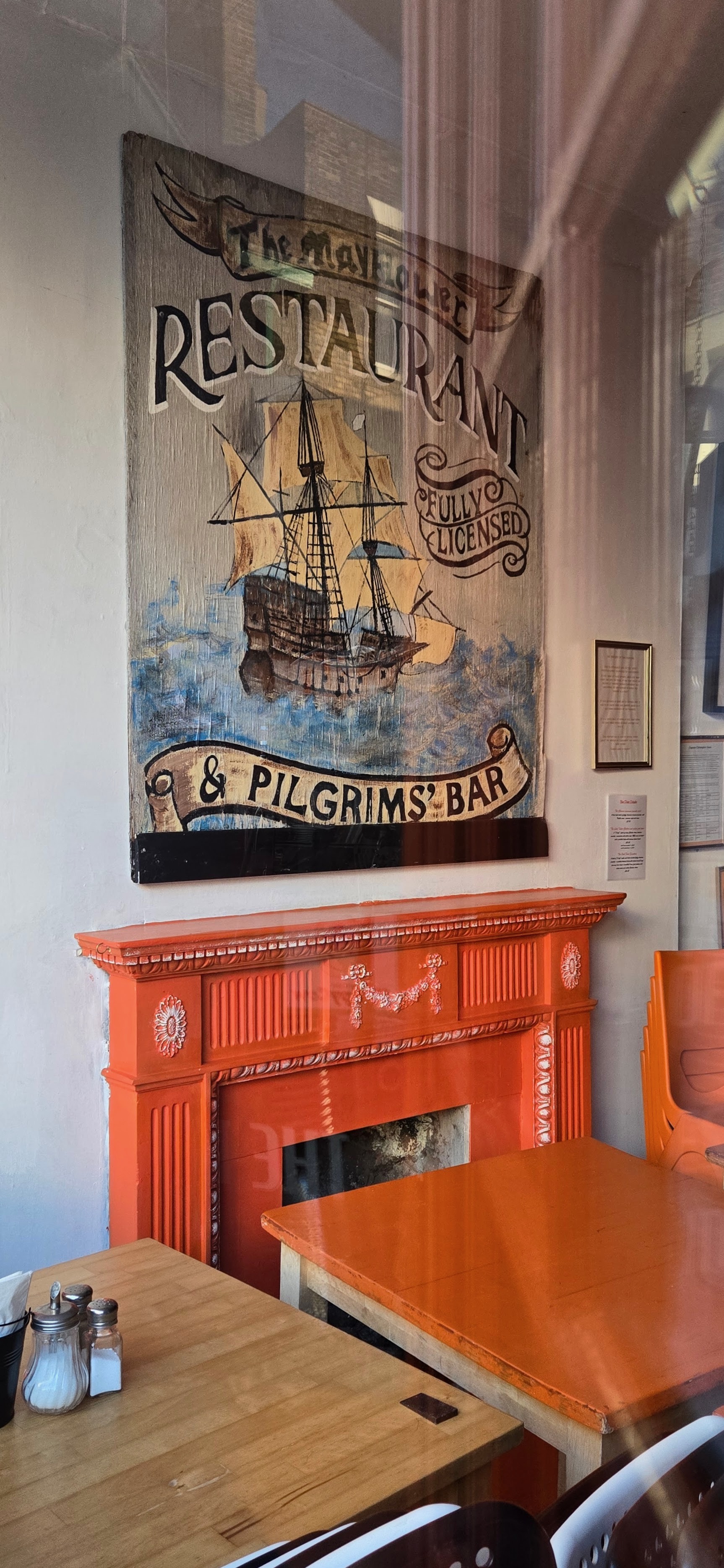

He and John CARVER became became agents of the Leiden congregation and in June 1619 they had secured a patent. They worked to secure finances and passage to America. The Mayflower sailed from London at the end of July, 1620, and was to meet up with the Speedwell from Leiden at Southampton. The Speedwell was not seaworthy and eventually had to be abandoned. Robert CUSHMAN was ill and he and his family decided to stay behind when the Mayflower sailed for America. A year later, in 1621, Robert and his son Thomas arrived in Plymouth aboard the Fortune. Robert stayed but a few weeks leaving his son Thomas in the care of Governor BRADFORD. He arrived back in London the 17th of February 1622. His health issues persisted and he traveled to Beneden where his brother Richard was living. He died there the 6th of May 1624.
If you read my earlier posts “Robert CUSHMAN’s father was Thomas Henry CUSHMAN married Elinor HUBBARDE 18 Jul 1568 in Rolvenden. He dies 14 February 1586 at Rolvenden. Then Elinor marries second at St Alphege, Canterbury to Emmauel EVERDEN, he dies 3 December 1589. [Remember above Robert CUSHMAN is visiting the EVERDENs in Beneden when he dies.] His mother, Elinor, married for the third time 6 November 1593 to Thomas TILDEN at Teneterden. Thomas TILDEN is the father of my Nathaniel TILDEN!!! So Robert CUSHMAN and Nathaniel TILDEN were step brothers. So Denise and I are cousins!
Elinor dies 22 July 1601. Thomas TILDEN marries a third time to Alyce BOURNE. He dies in Wye in 1617. When his son, Nathaniel TILDEN [ my ancestor] immigrates to America on the ‘Hercules’ in 1634 leaving from Sandwich, Kent. Nathaniel TILDEN brings his wife and 7 children AND 7 servants. Among them is a Sara COUCHMAN (CUSHMAN) who may be Robert CUSHMAN’s daughter. So Denise’s story and mine converge.
In my next post we will continue our visit to Canterbury.
Kelly Wheaton ©2025 – All Rights Reserved
KENT The Garden of England Day One Part Two: Hever Castle
Posted on June 22, 2025 2 Comments
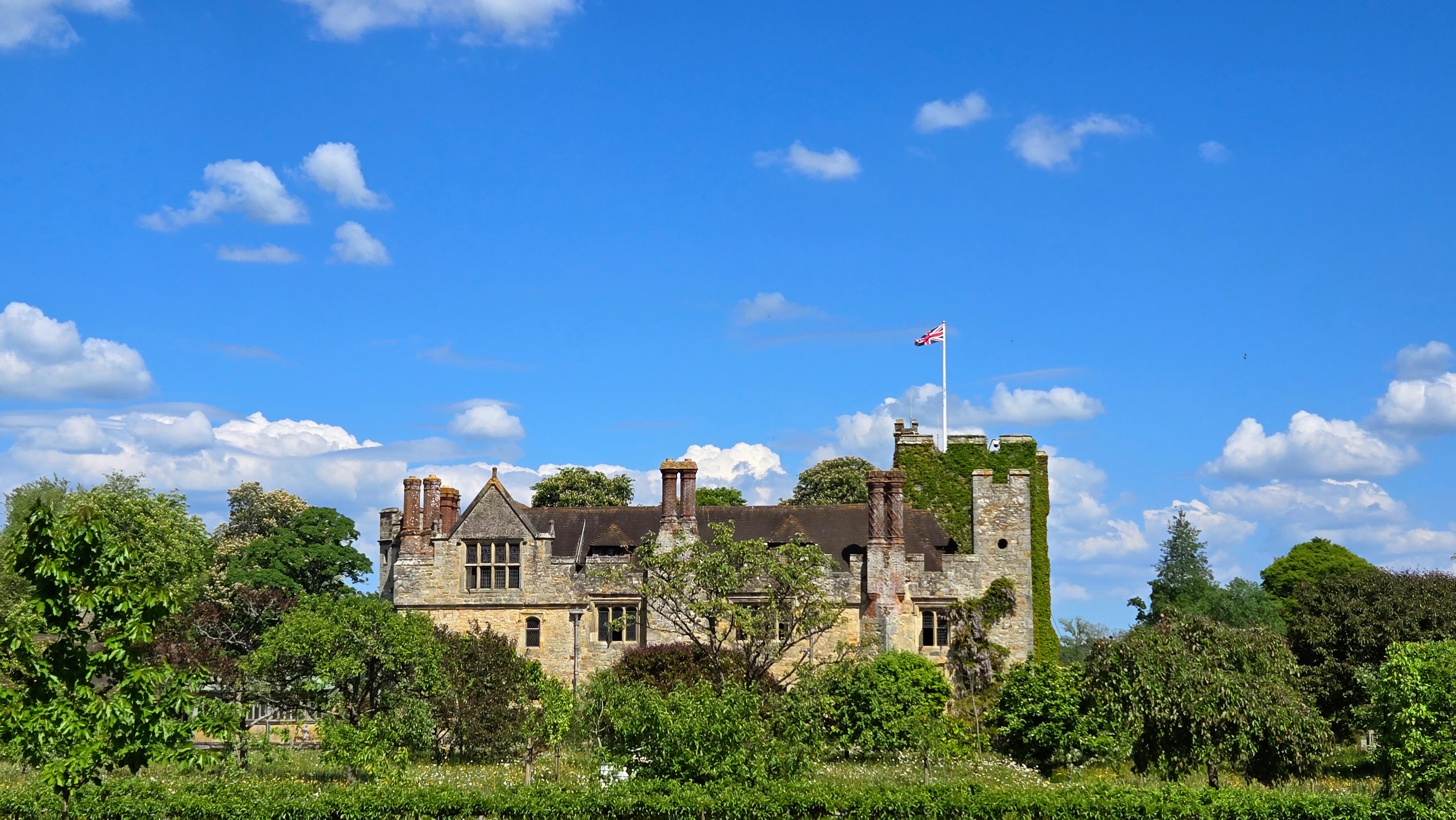
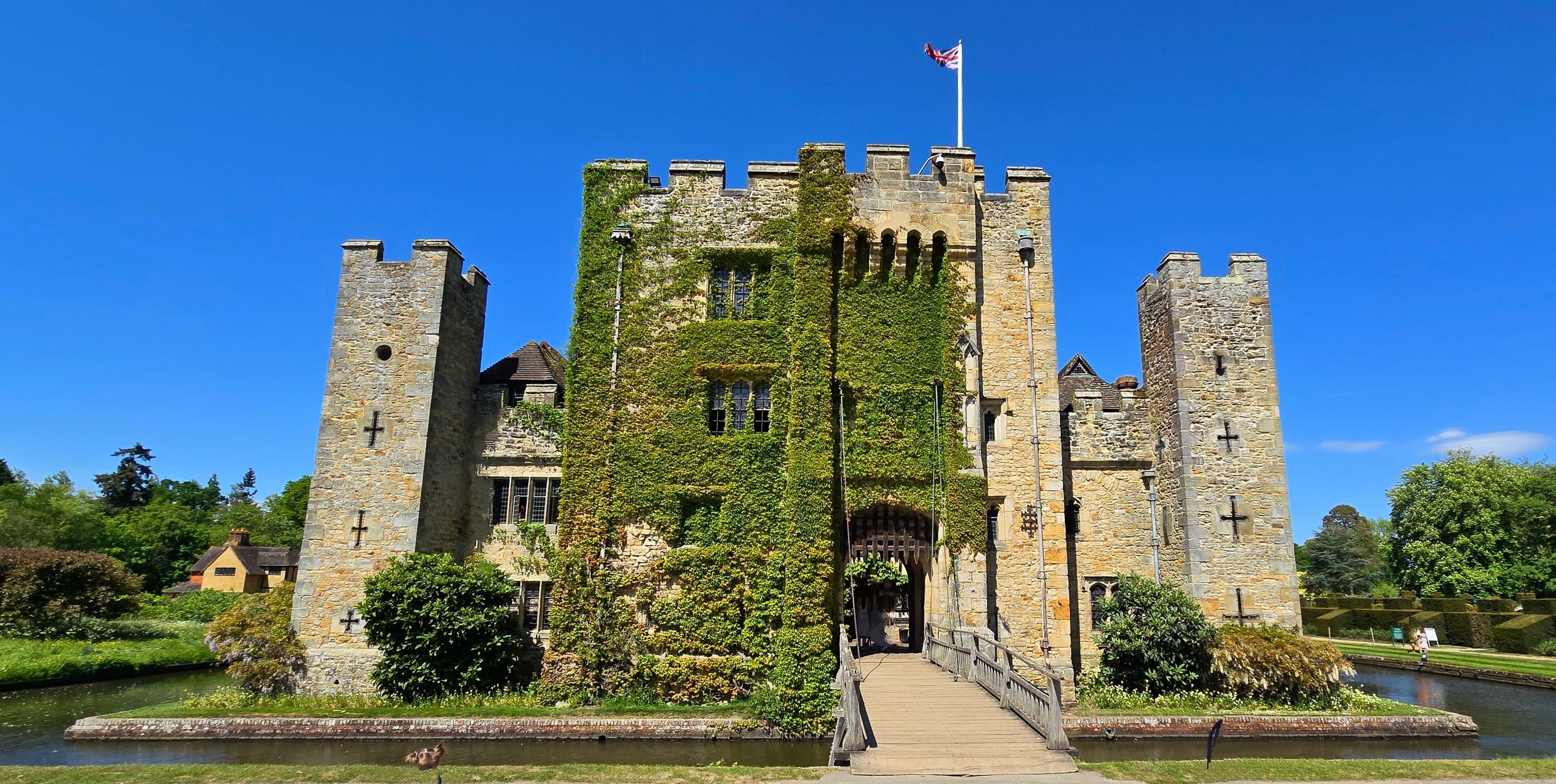
The morning was spent at Chartwell and for the afternoon we traveled the 5 miles to Hever Castle, childhood home of Anne BOLEYN, 2nd wife of King Henry VIII of England. In previous visits to London I visited the memorial at the Tower of London that commemorates the many who were beheaded here, including Anne BOLEYN.
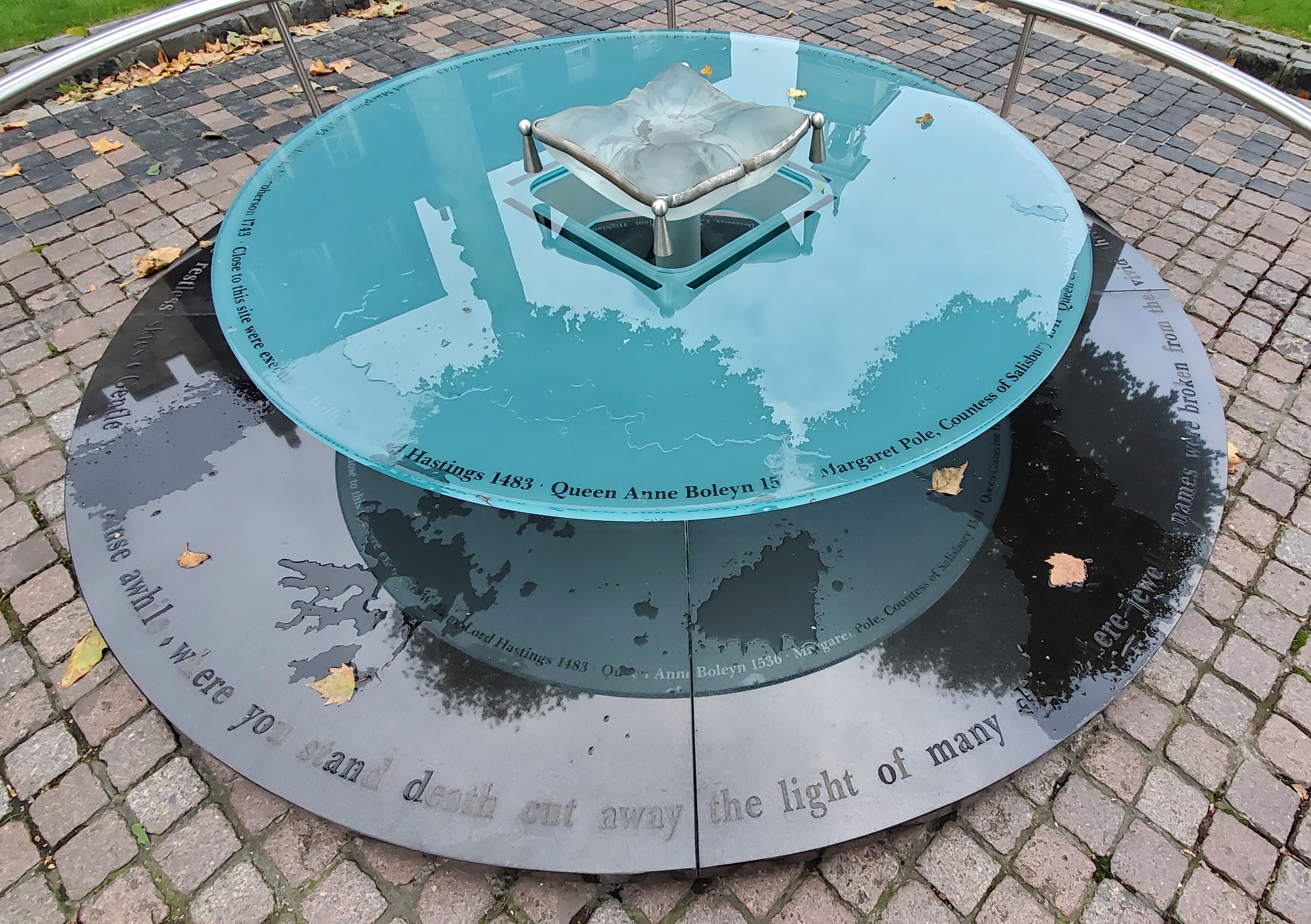
King Henry VIII casts a long shadow. His first wife, Catherine of Aragon, failed to bear him a son so he divorced her as well as separating from the Church of Rome. He established the Church of England with himself at its head. In 1534, the Church of England renounced the authority of the Papacy and began the English Reformation. This involved the dissolution of all Catholic monasteries, friaries, priories, and convents ; the seizing of the church’s wealth; the disposal of their assets; the destruction of many buildings and relics; and the dispersal or destruction of their libraries. This is the backdrop for the divorce and marriage of Anne BOLEYN>
Henry was enamored with Anne BOLEYN who refused him until they were married. It is said he was a frequent visitor at Hever Castle, her childhood home and the seat of the BOLEYN family. He married Anne in a secret wedding in late 1532 or early 1533.

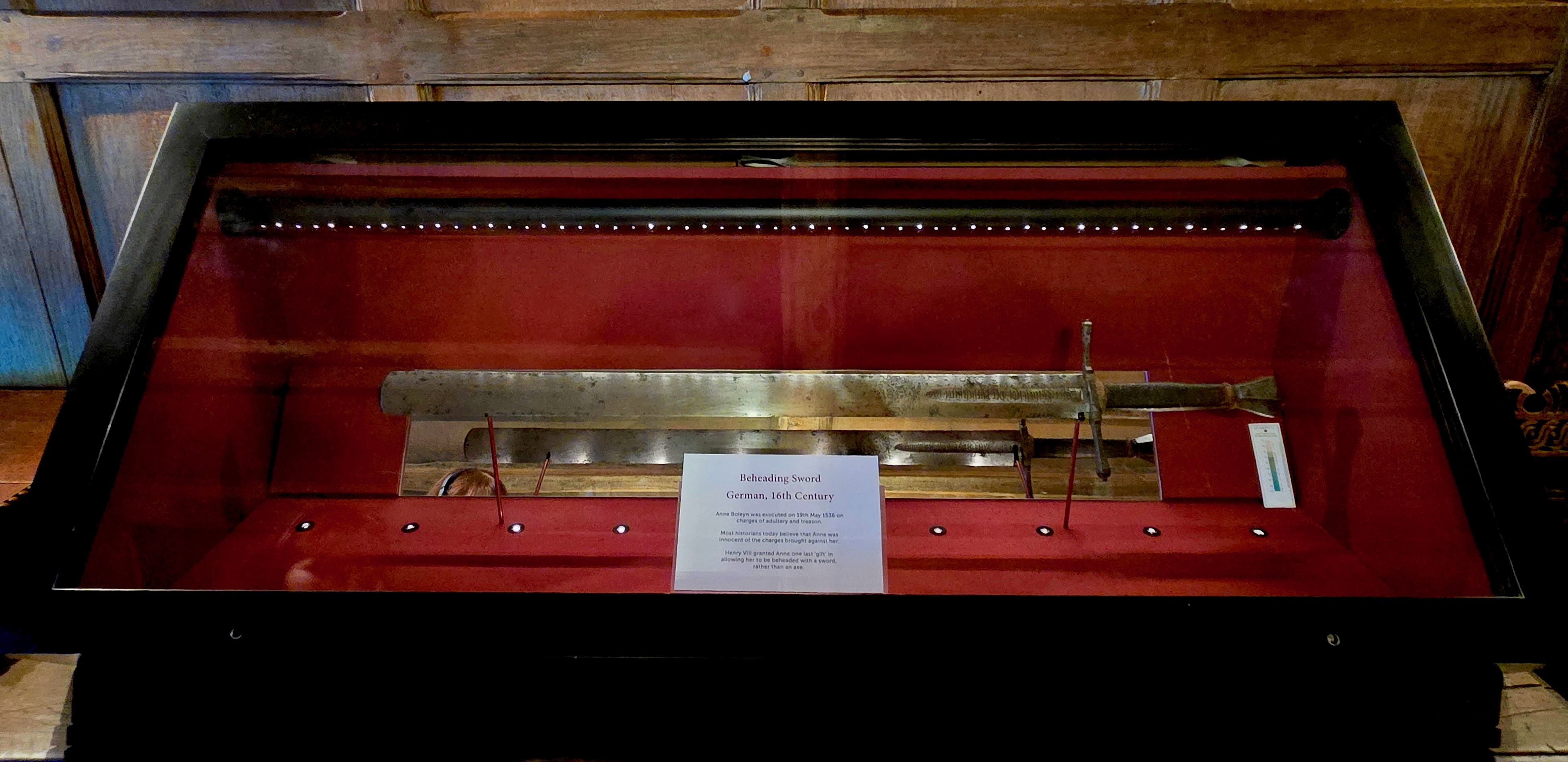
Anne’s first pregnancy ended with the birth of a daughter, on September 7, 1533, Elizabeth [who become Elizabeth I , Queen of England] . A second pregnancy ended in a miscarriage or stillbirth in 1534. The third pregnancy resulted in a miscarriage on January 29, 1536. Anne was executed less than four months later, on May 19, 1536. She was accused of adultery, incest, and high treason, although many historians believe these charges were invented to make room for a new wife and hopefully a male heir. Anne’s brother George was executed on May 17, 1536, two days before Anne, also for alleged involvement in incest and treason. King Henry VIII granted to Anne that she be beheaded by a sword rather than an axe. This sword is displayed here. A solemn reminder of the brutality of the time.
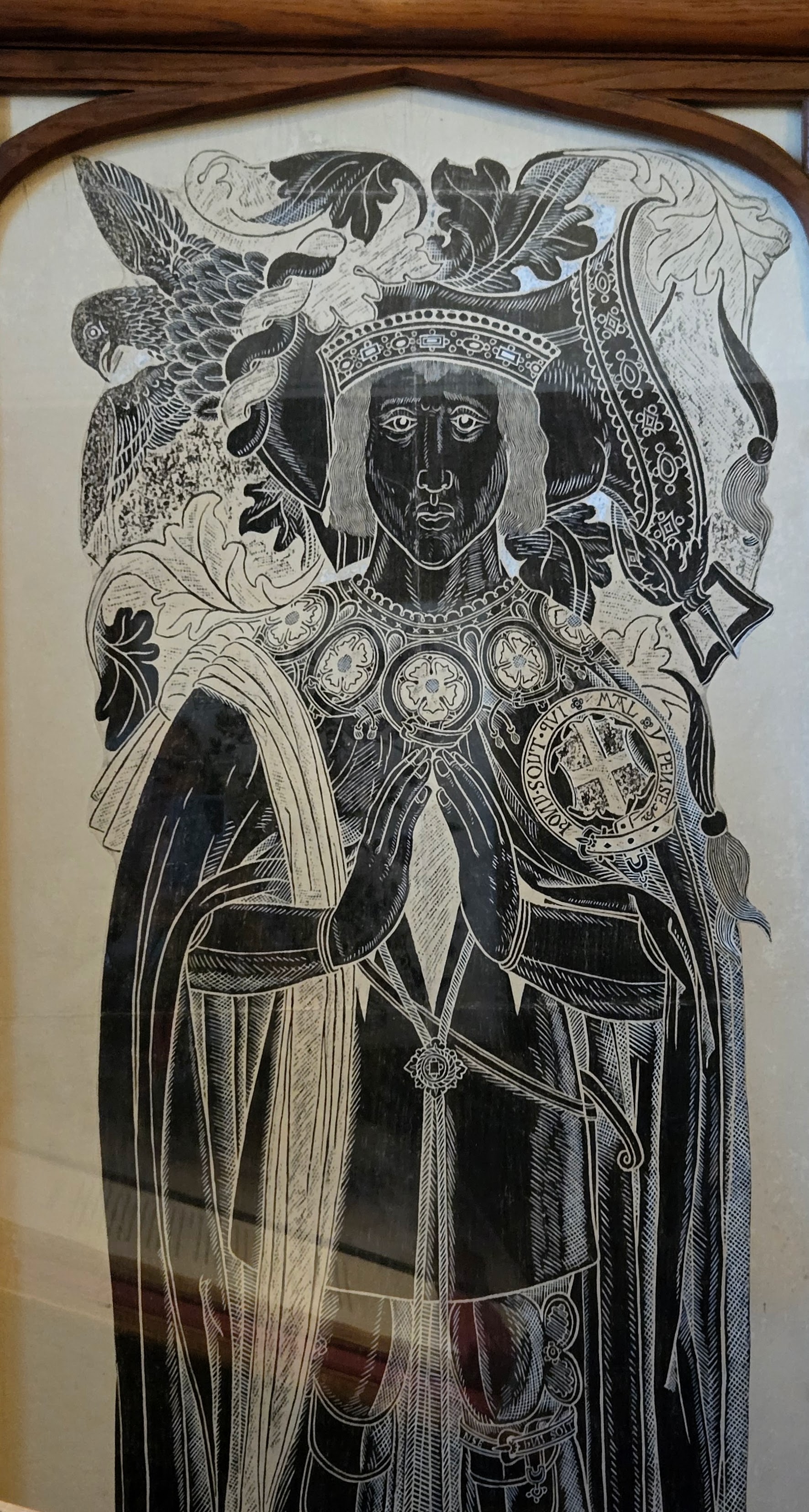
Anne & George’s father, Thomas BOLEYN, lost his position as Lord Privy Seal after their demise, and died in 1539. After his death Hever Castle became the property of King Henry VIII. Below is part of a brass rubbing of Thomas Boleyn on display at Hever Castle.
Henry VIII later bestowed Hever castle to his fourth wife, Anne of Cleaves, as part of their divorce settlement. Eventually, the castle was acquired and restored by William Waldorf Astor, of New York City Astors, in the early 20th century. He later settled in England. In 1973 it was acquired by a private company that manages it today as a tourist attraction. [It is not a part of the National Trust or English Heritage] The Castle is a mix of old and new. There are some rooms outfitted to the time of Anne BOLEYN and King Henry VIII and some in the time of the Astors.


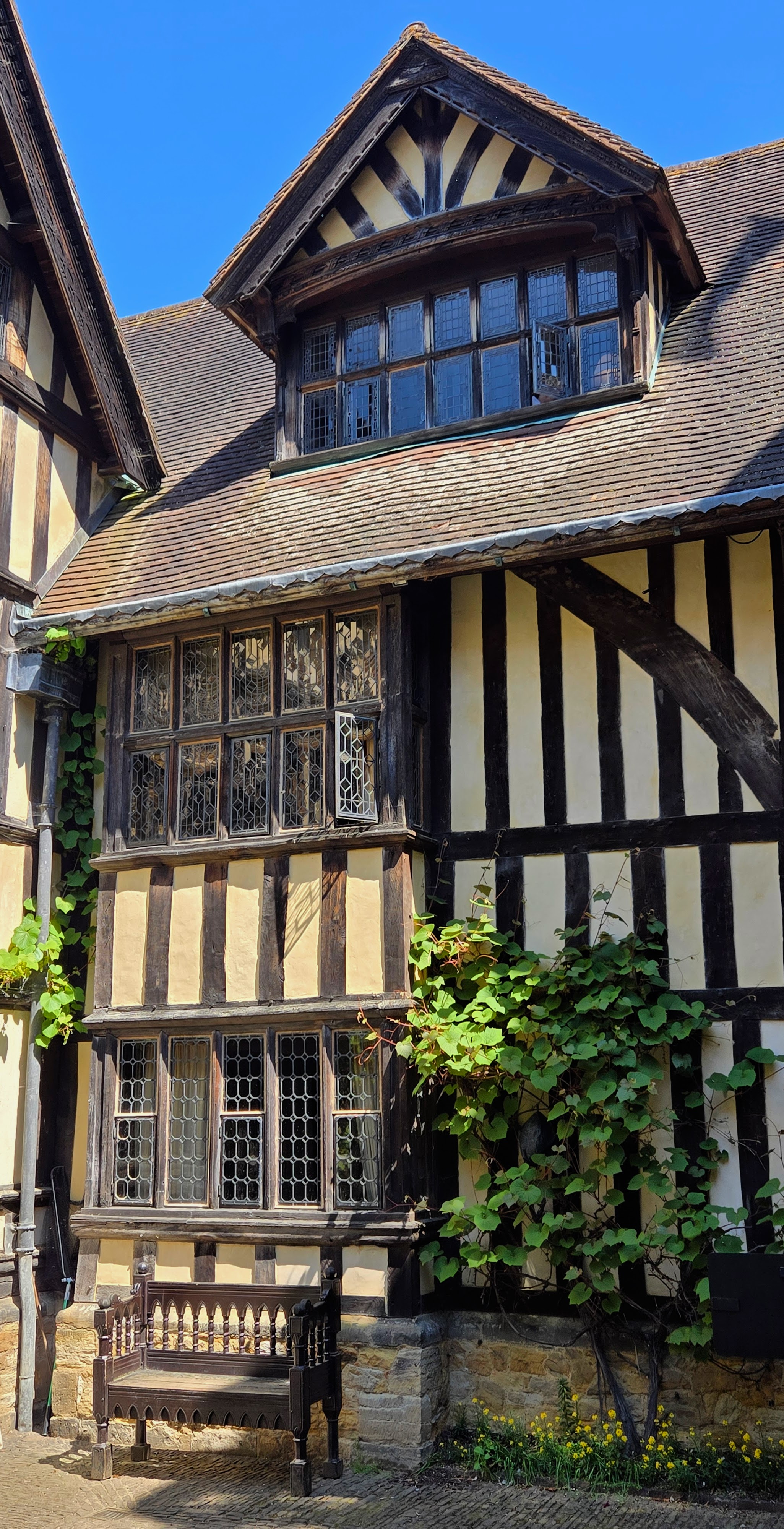
Like all the places I visited I offer just a smattering of photos to whet the appetite. I have to leave out so much but I try to make the photos I include show what impressed me. Windows are definitely something I am drawn to. The first below is a stained glass of the BOLEYN Family Coat of Arms.
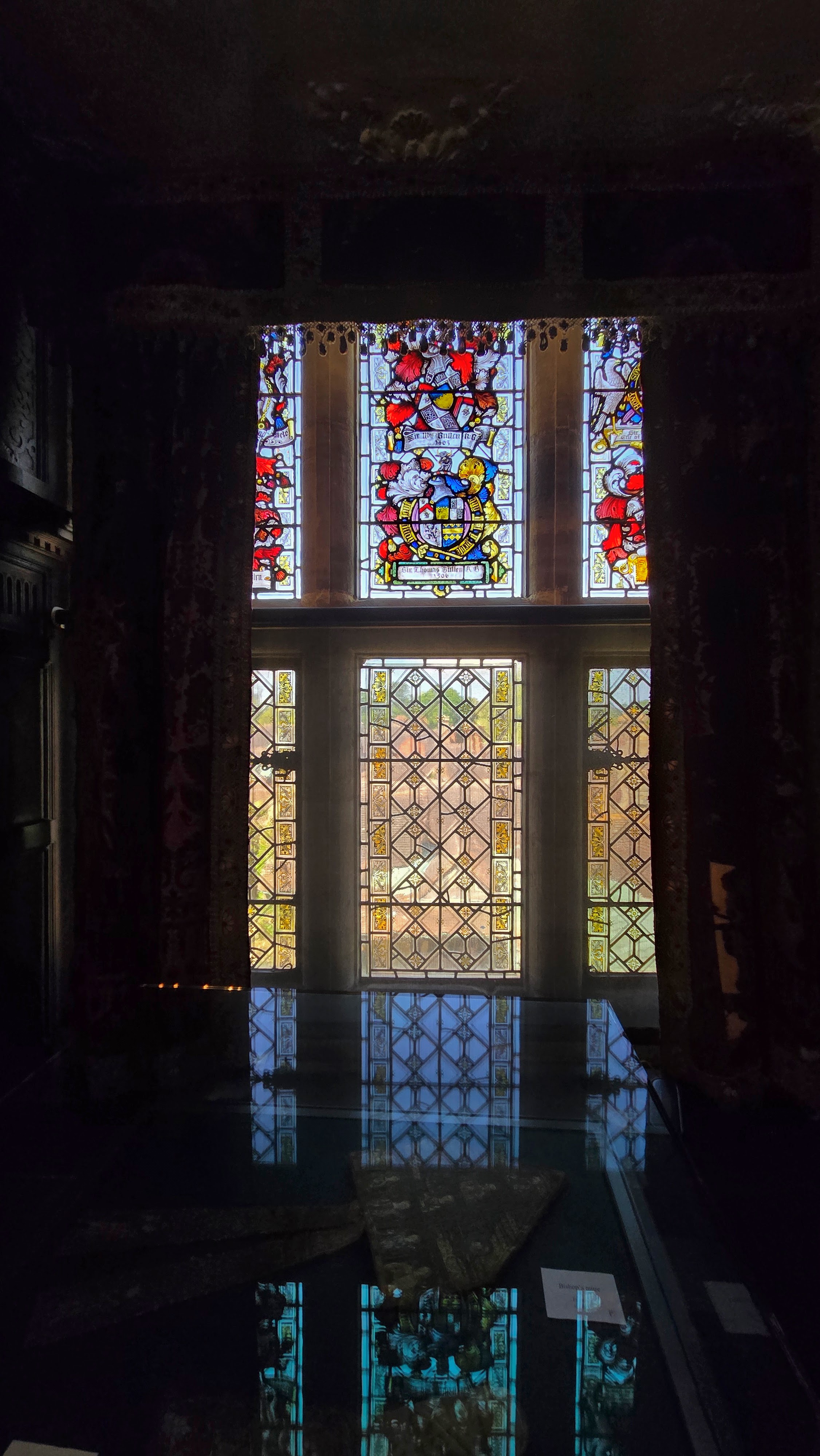

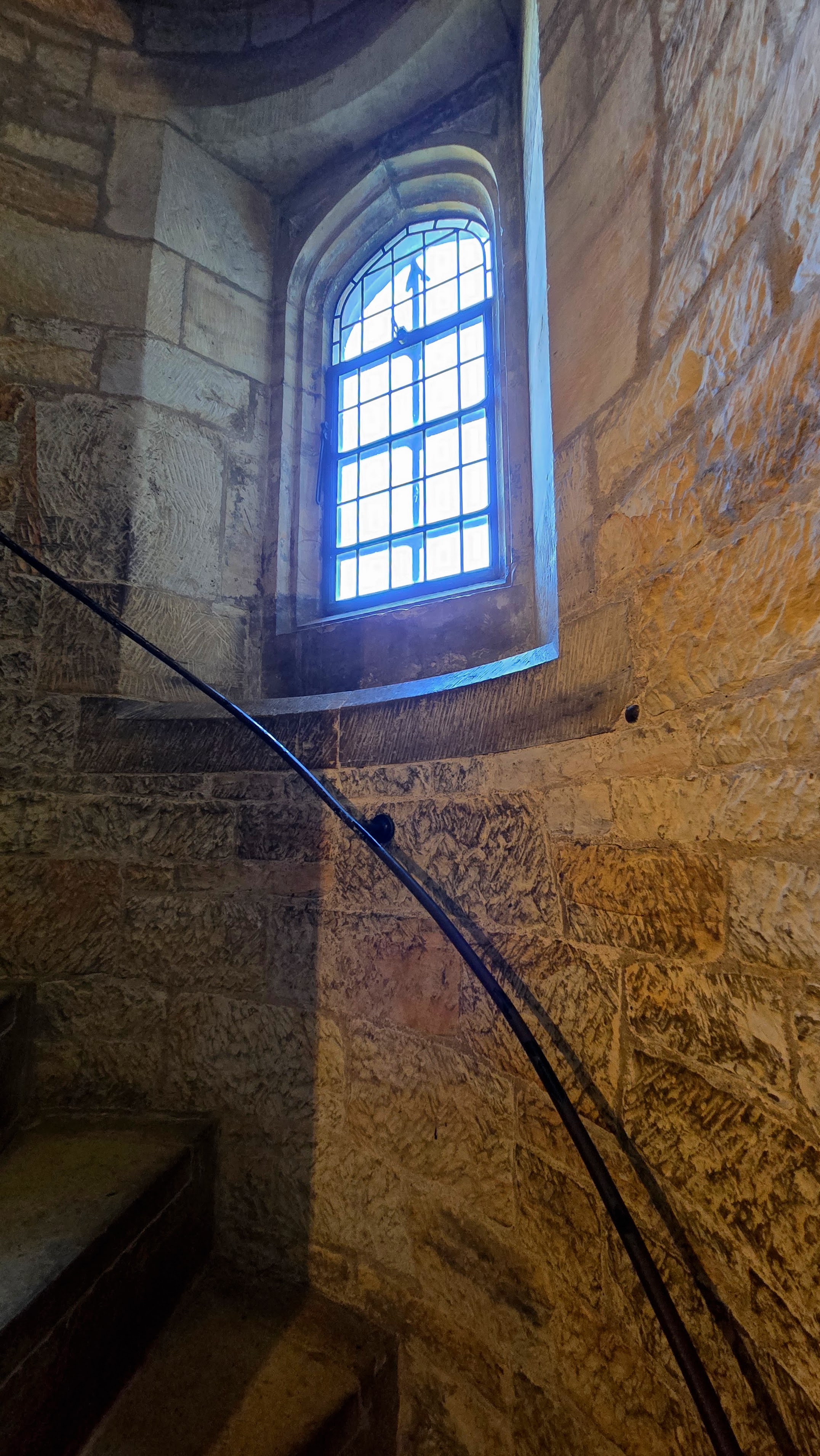

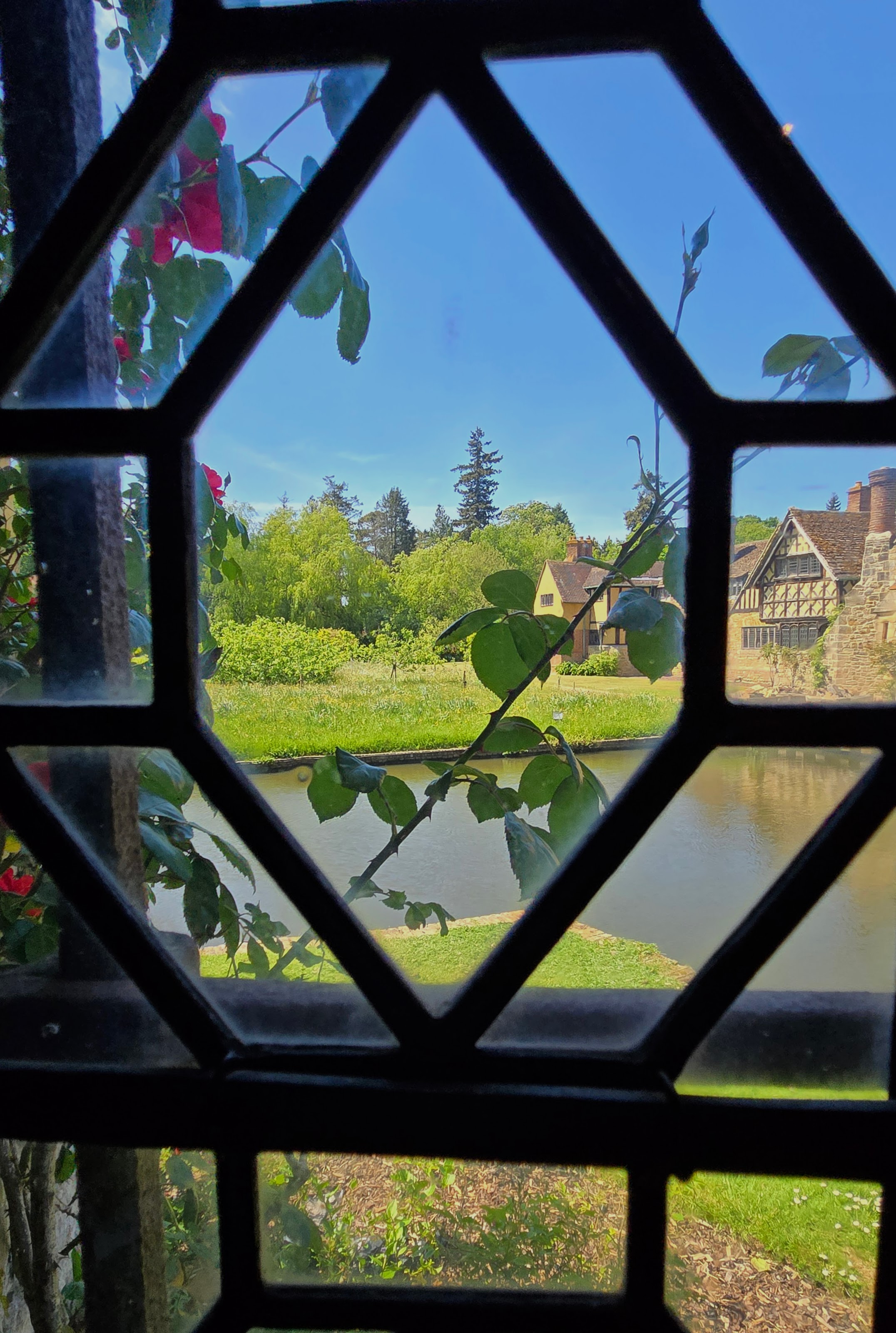
I also tend to seek out architectural details or vignettes. Line, texture and color.
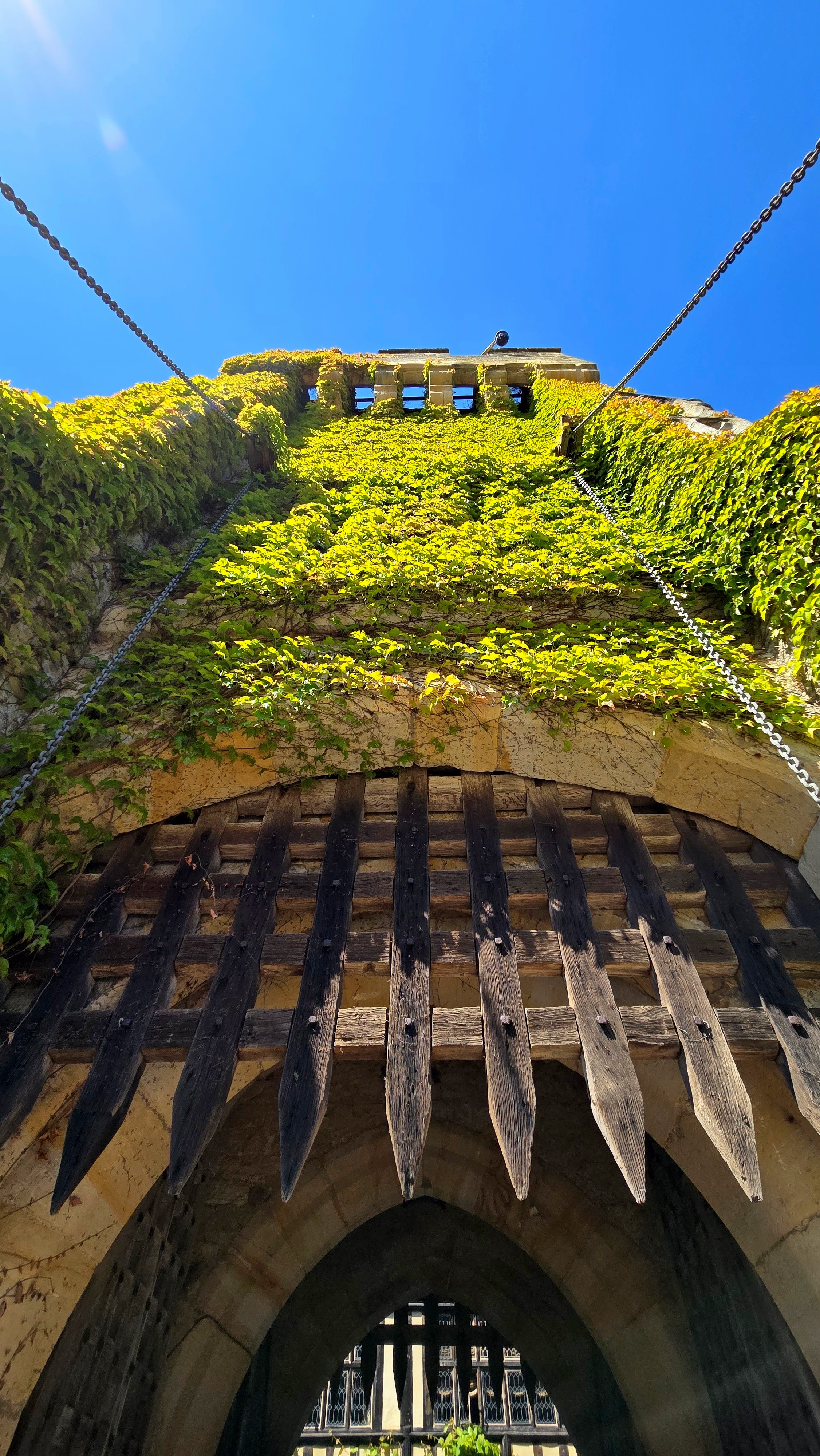

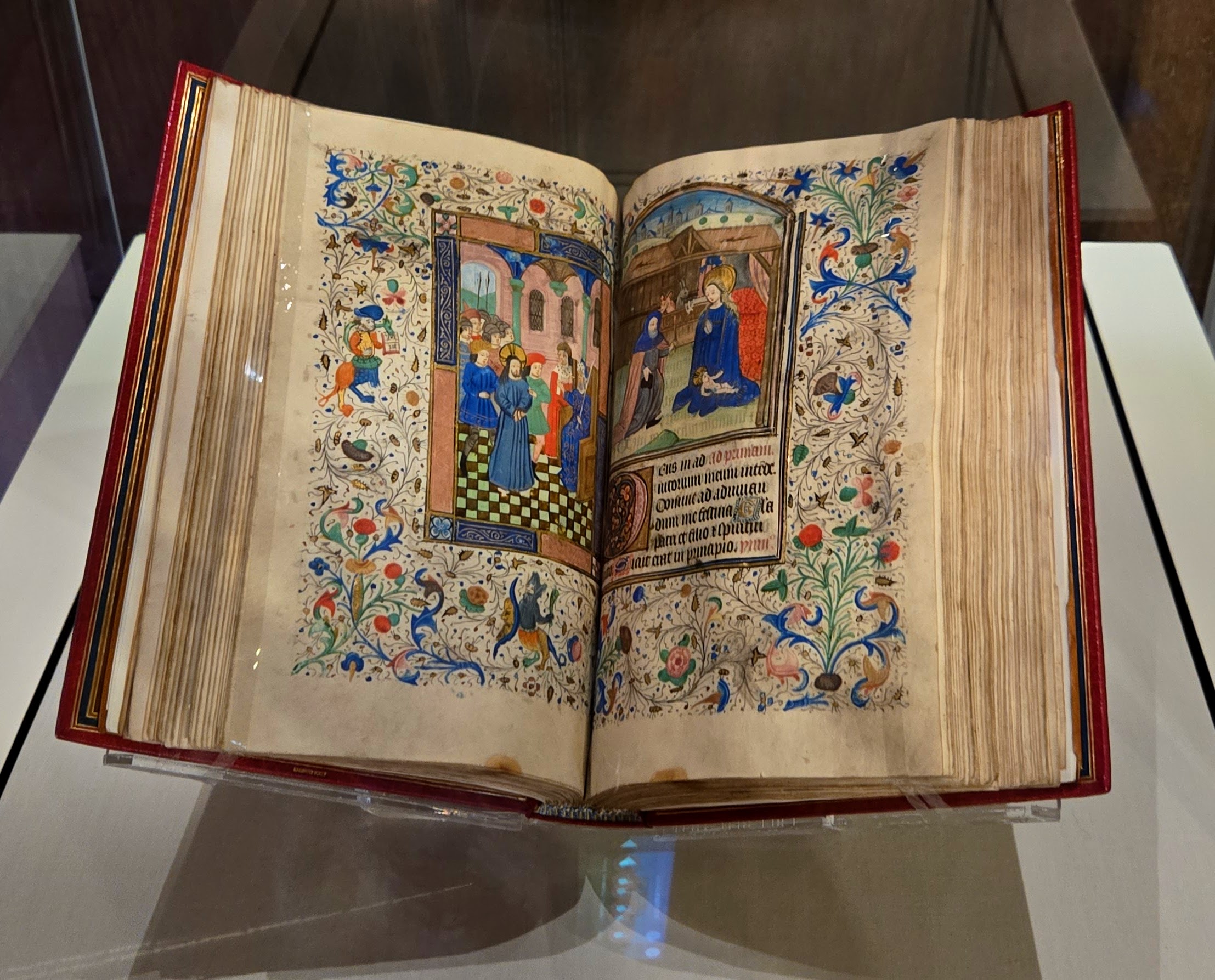
Perhaps the most intimate object on display is Anne BOLEYN’s Book of Hours, or personal prayer book.
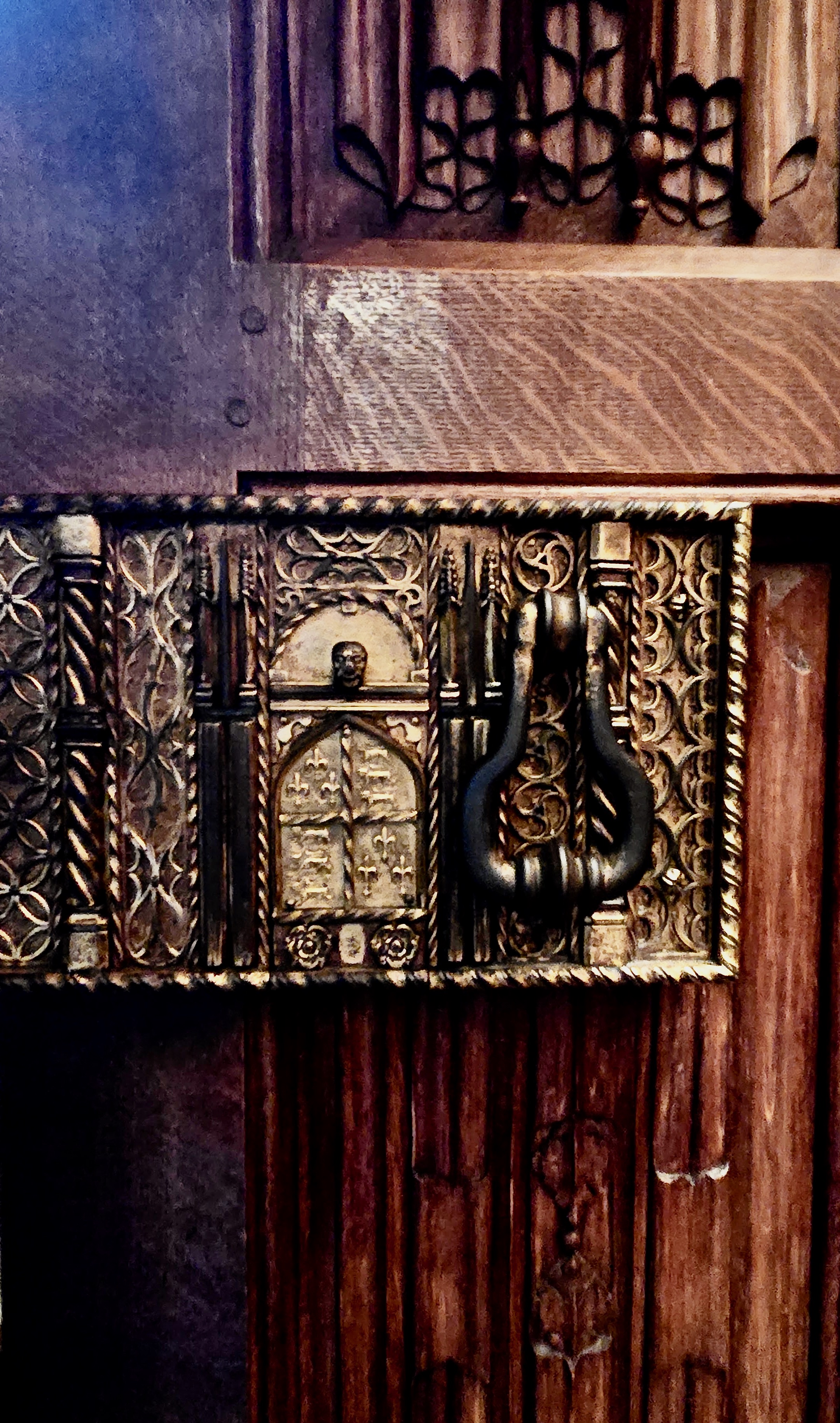
As impressive is the Castle, it is a relatively small moated castle. The rooms have a more intimate quality than a royal castle. Henry VIII is believed to have visited Hever Castle during his courtship of Anne Boleyn, but whether he ever stayed here is debated. The castle has 4 portraits of Henry on display and a lock said to have belonged to Henry VIII. One of the portraits and the lock below.

I think I could have spent another day here and only scratched the surface. I was drawn outside to the Woodland garden and I was not disappointed. But as Ralph Waldo Emerson said:
“For everything you have missed, you have gained something else, and for everything you gain, you lose something else.”
Exploring the Woodland garden at length, meant I missed the Rose Garden and the Italian Garden, and so it goes. These two photos are looking up toward the staircase to the woodland and looking back toward the castle. [Please expand to get the full experience]


Just a smattering of the Woodland. If you go in the Spring don’t miss it. Especially if you are a Rhododendron lover.


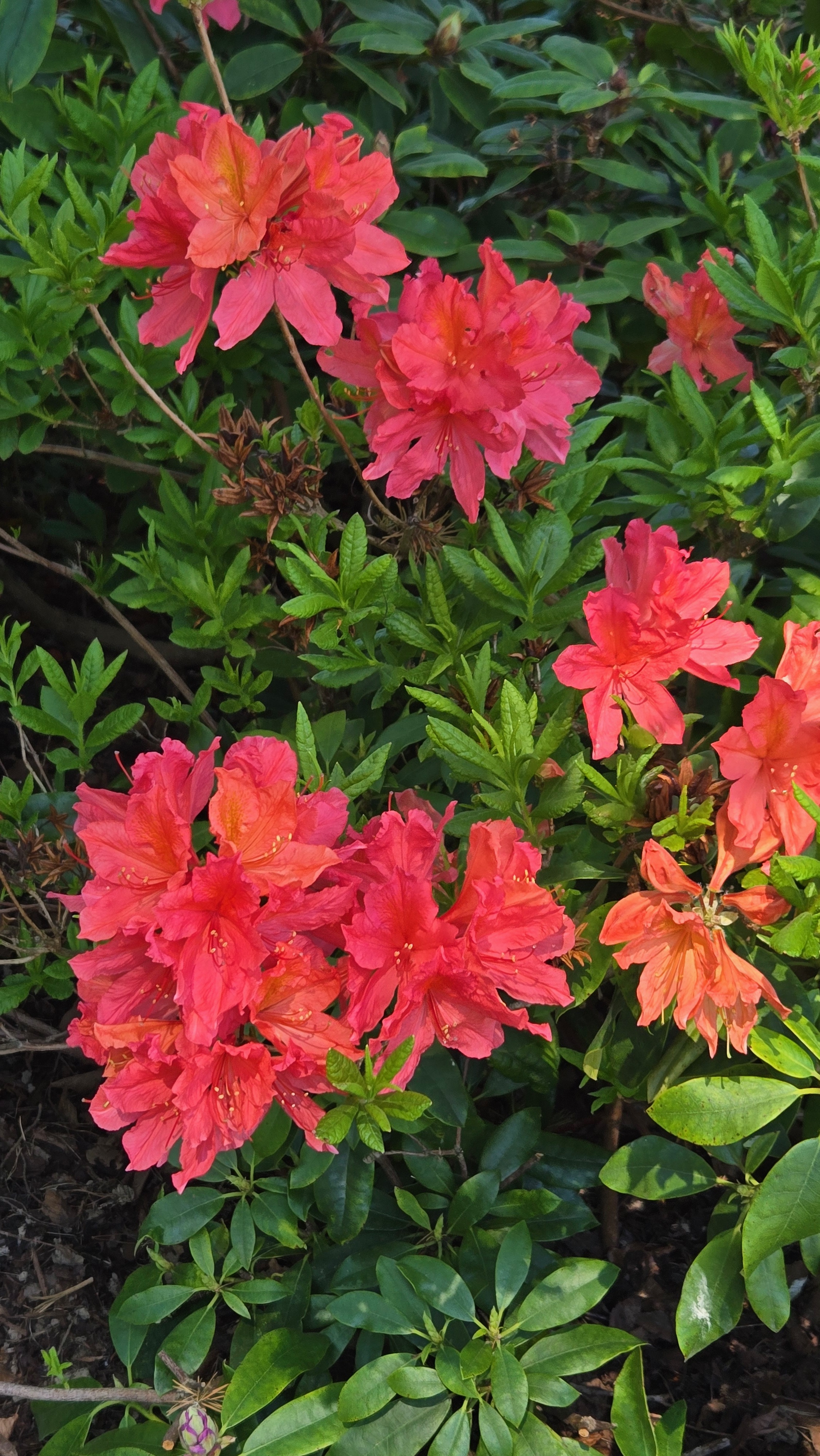

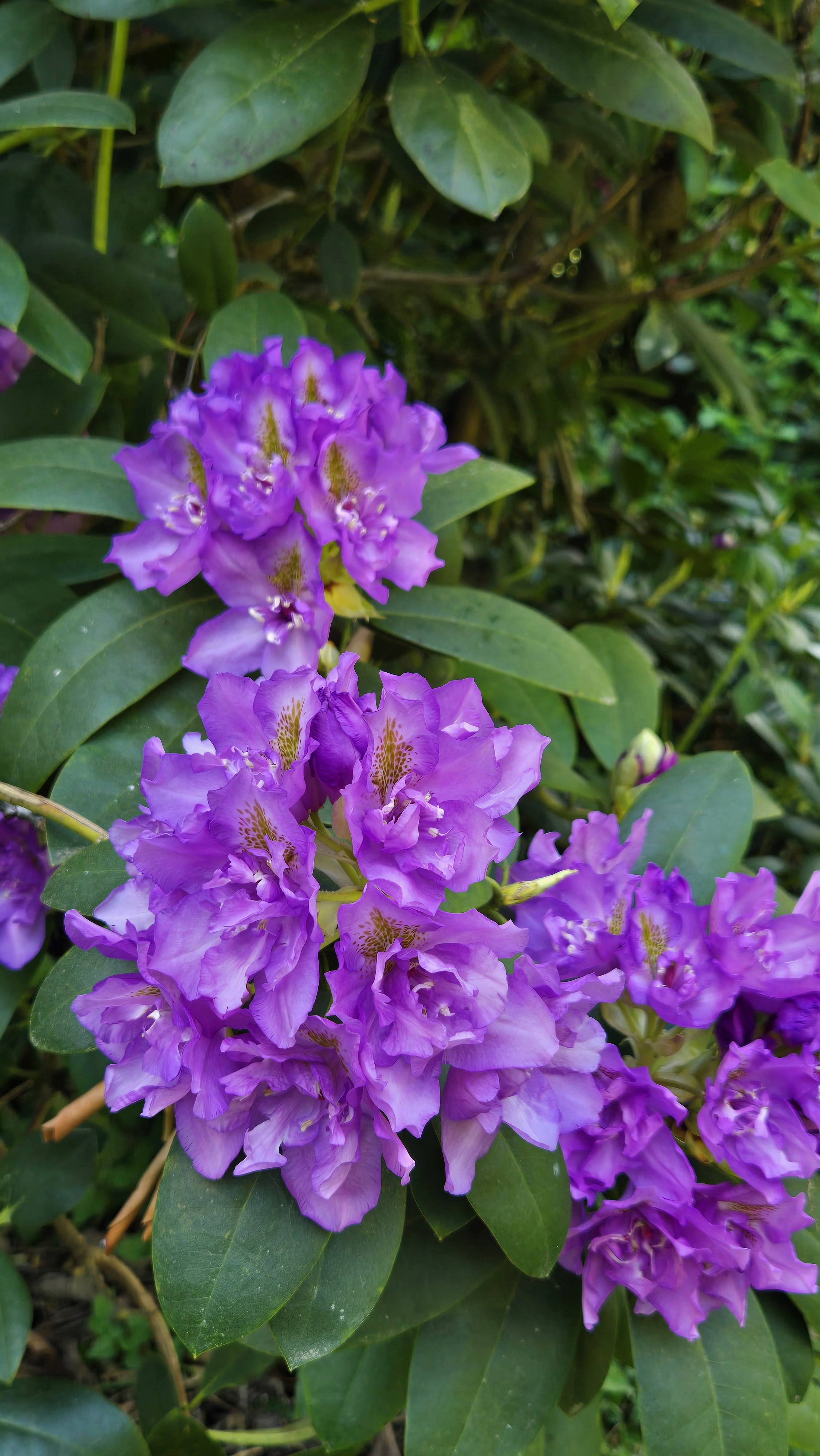


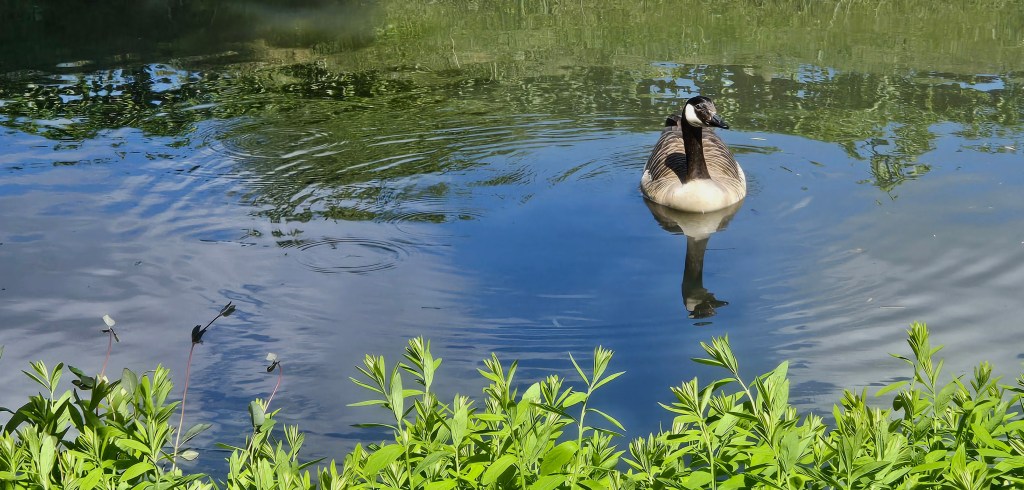
And finally I made it back to the cafe where I bought my lunch. I ate at a picnic table, with a view of the castle and surrounded by mallard ducks and a curious goose. But what really caught my eye was the reflection of brick in the water.


Next we made our way to Canterbury. Up nest Part Three of Day One.
Kelly Wheaton ©2025 – All Rights Reserved
Vvv
What you are Missing if you Aren’t Using Family Search for your Genealogy
Posted on June 18, 2025 2 Comments
This is written for my Genealogy class and most of it is a repetition of resources found on FamilySearch.org however it is a curated list and aimed at beginners that do not know where to start at Family Search or those more advanced who have not mined all the great resources that are available there. Unlike Ancestry or MyHeritage, Family Search is FREE to all, with a simple registration. And although it is sponsored by the Church of the Latter Day Saints, registering is not going to send anyone to your door.
Unlike Ancestry or My Heritage where you pay a subscription fee and you can maintain your own tree(s), at Family Search everyone is attached to a Master Tree. This means that others can make changes, attach relevant documents etc. Which can be helpful or can lead to frustration when someone gets it wrong. I do not maintain an active tree on Family Search (because there’s not enough hours in the day) but that doesn’t mean I don’t use their resources.
The LDS church has its main research facility in Salt Lake City Utah called the FamilySearch Center. It has satellite branches and affiliates around the country and the globe. to find one closest to you click here. Some records are only available to peruse at one of these libraries or affiliates. This is usually due to copyright or privacy concerns or due to agreements with the original record holders. But most are available on demand anywhere you have internet access.
Although the Family Search records are incredible I want to focus on the easily overlooked bits that should be at the top of most genealogist’s lists, but often aren’t. These are resources that are educational for beginners and advanced genealogists alike. These include educational materials and resources as well as what records are available for any place on the globe. The best place to start:
FAMILY SEARCH WIKI
In their words The Family Search Wiki is:
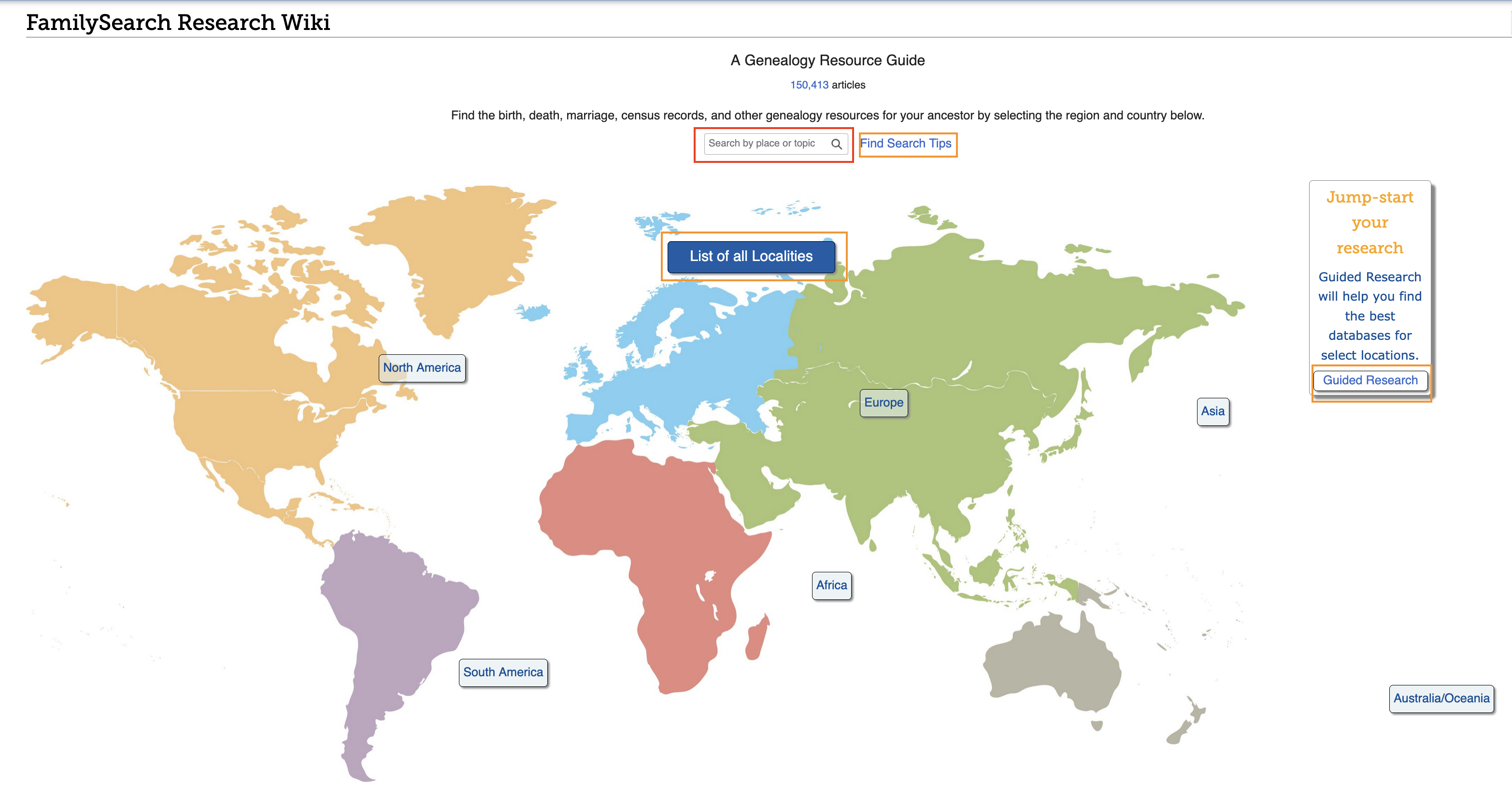
“A Genealogy Resource Guide to 150,400 articles: find the birth, death, marriage, census records, and other genealogy resources for your ancestor by selecting the region and country below.”
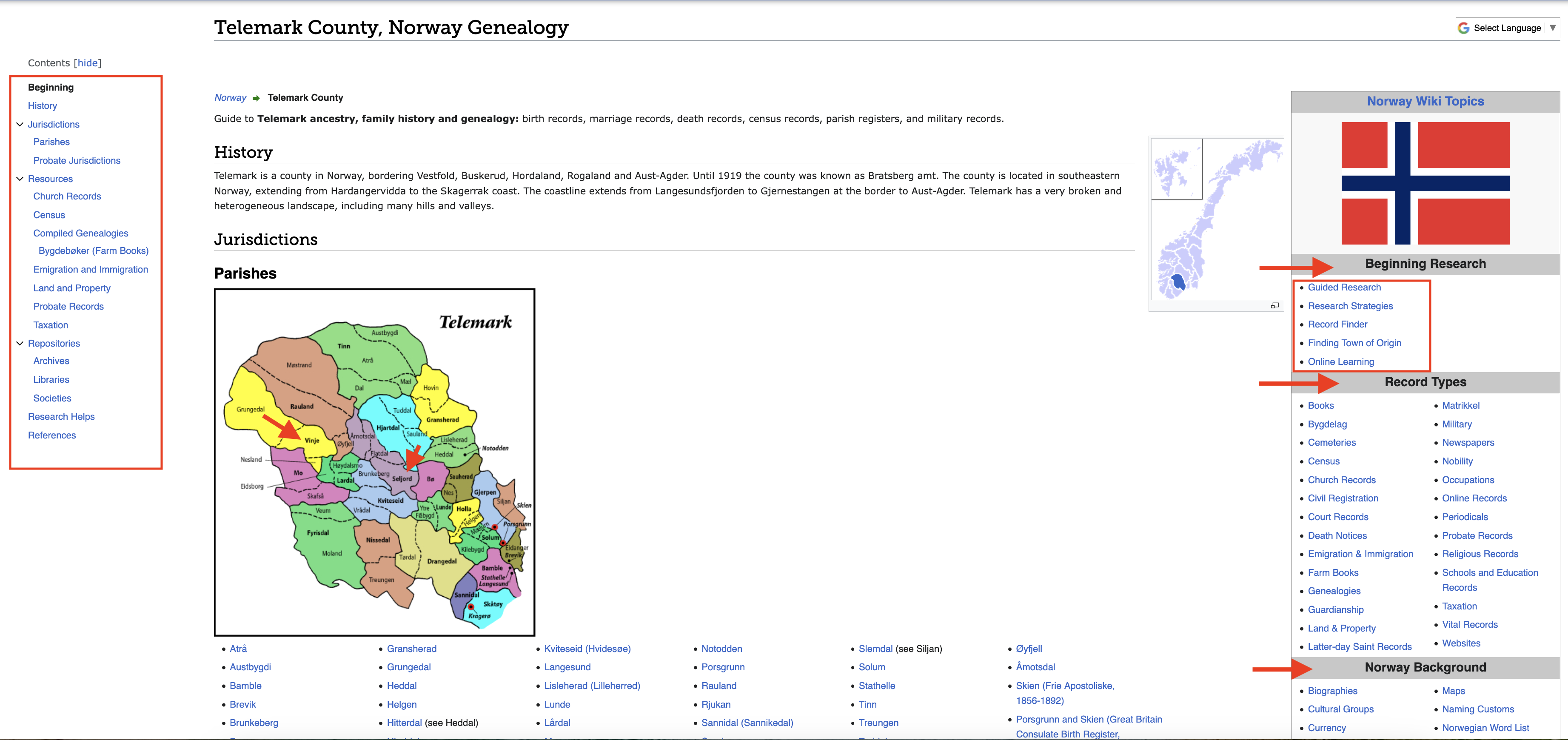
These are easily searchable by location by clicking on the map. I have highlighted in Red the main search bar but the ones in orange also deserve your attention. Just click on the map and start exploring.
I clicked on Norway and then Telemark County. This is what it brings up. I have highlighted some of the rich resources on this page. Including two of the parishes where some of my ancestors hark from. These are incredibly valuable and for many places they are one of the best places to start your research. They are intuitive and easy to use. But if you still find them overwhelming there is more HELP available at Family Search.
FAMILY SEARCH HOW TO CLASSES & VIDEOS
You can access Access thousands of videos on a wide range of genealogy topics. Options include live classes and recorded sessions that you can watch on demand. Search the on Demand Video Library from Roots Tech including 1,500 sessions on 185 topics in over 30 languages. Or attend a Class or Webinar. There are a myriad of topics. Here’s one called I Didn’t Know You Could Search Like That! Or this one on DNA Double Trouble: Using DNA to Solve Two Generations of Adoptions. Or if you had followed the link above on Telemark you could have been led to a whole page of videos Norway Online Learning.
You can also search more broadly on the Family Search You Tube Station.
FAMILY SEARCH LABS
Family Search labs are a gold mine of experimental TOOLS. My favorite is the FULL TEXT SEARCH LAB. It basically uses Artificial Intelligence (AI) to transcribe and index documents. This means that in a probate or deed record that your ancestor might be mentioned in but not appear as one of the parties of record but AI can find them and make those records available to you.
So for this blog post I decided to use the tool on my longest standing Brick Wall. I entered “John Merritt” New Jersey 1790-1830 as the search terms. This brought up 30 results. Scrolling through the first ones the third caught my eye. It is “John Merritt and Margaret his wife.” This is the first time I have found a John Merritt with a wife Margaret in New Jersey in the right time frame in 50 Years of looking. 🎉🎉🎉 WooHoo!
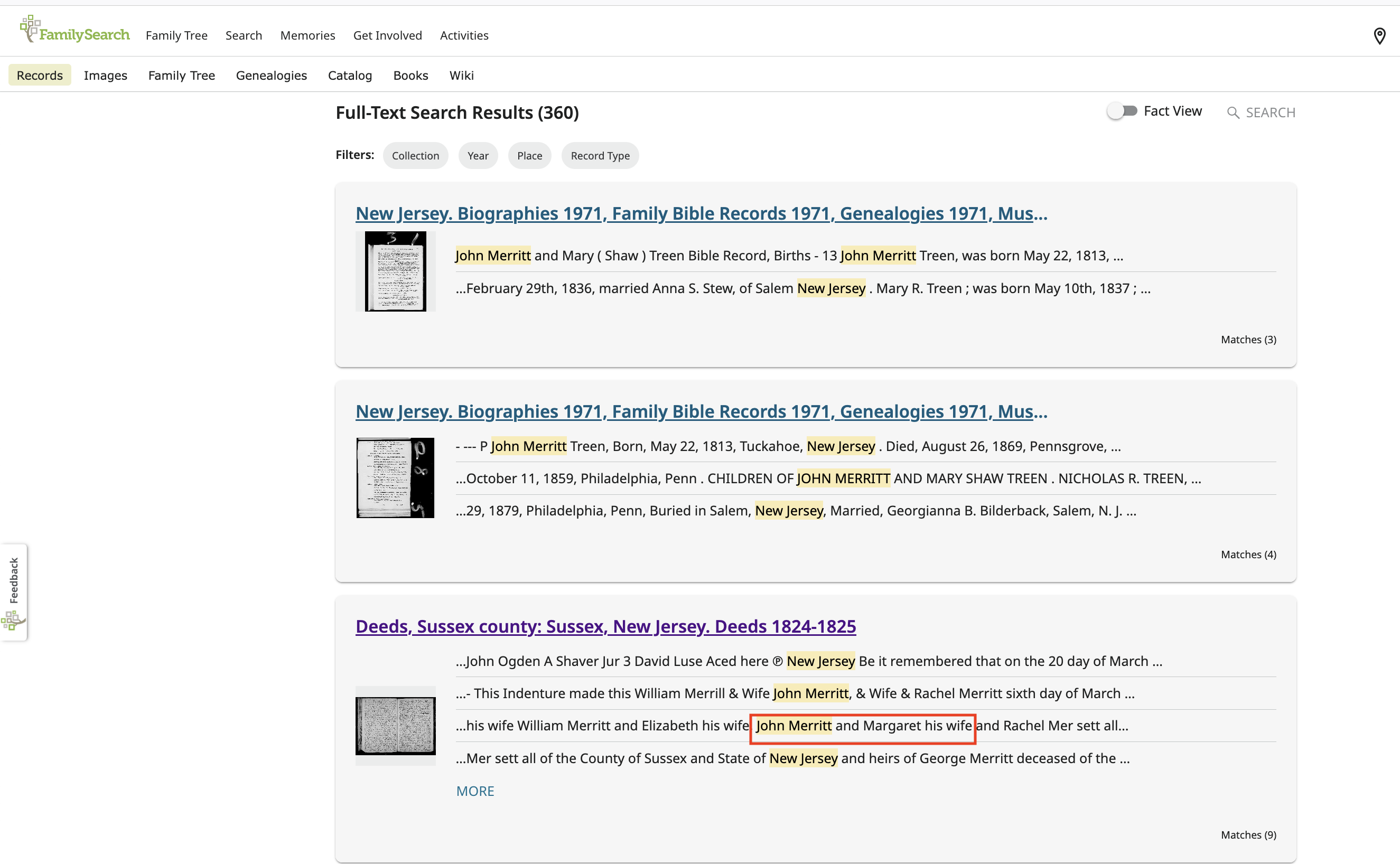
So this new record “may” just be the silver bullet I have been looking for. In previous searches at Family Search FULL TEXT SEARCH LAB, I have found other gems. If you are a long time genealogist this is the tool that I would spend the most time with. It may not be the best place for beginners, but if you have exhausted other resources this is where I would head.
Please use this link to find out more about the How do I find the new full text search that was announced at RootsTech? You can thank me later. In the meantime I will be down the gopher hole following this lead…
Kelly Wheaton ©2025 – All Rights Reserved.
KENT The Garden of England Day One Part One: Chartwell
Posted on June 17, 2025 1 Comment
When we were planning a trip to England, Denise’s first desire, was to go to Canterbury and I had always wanted to see Sissinghurst Gardens. Before Covid-19 there was a 3 day tour out of London that did just that but when I was looking last year it was no longer available. So after lots of searching we settled on Blue Roads/Back Roads Touring (Blue Roads in US) because it hit them both as well as many other places we wanted to see and their tours are limited to 18. (I have a preference for smaller groups.) After a delicious breakfast we all met outside by 9. Everyone on time and loaded up ahead of schedule.


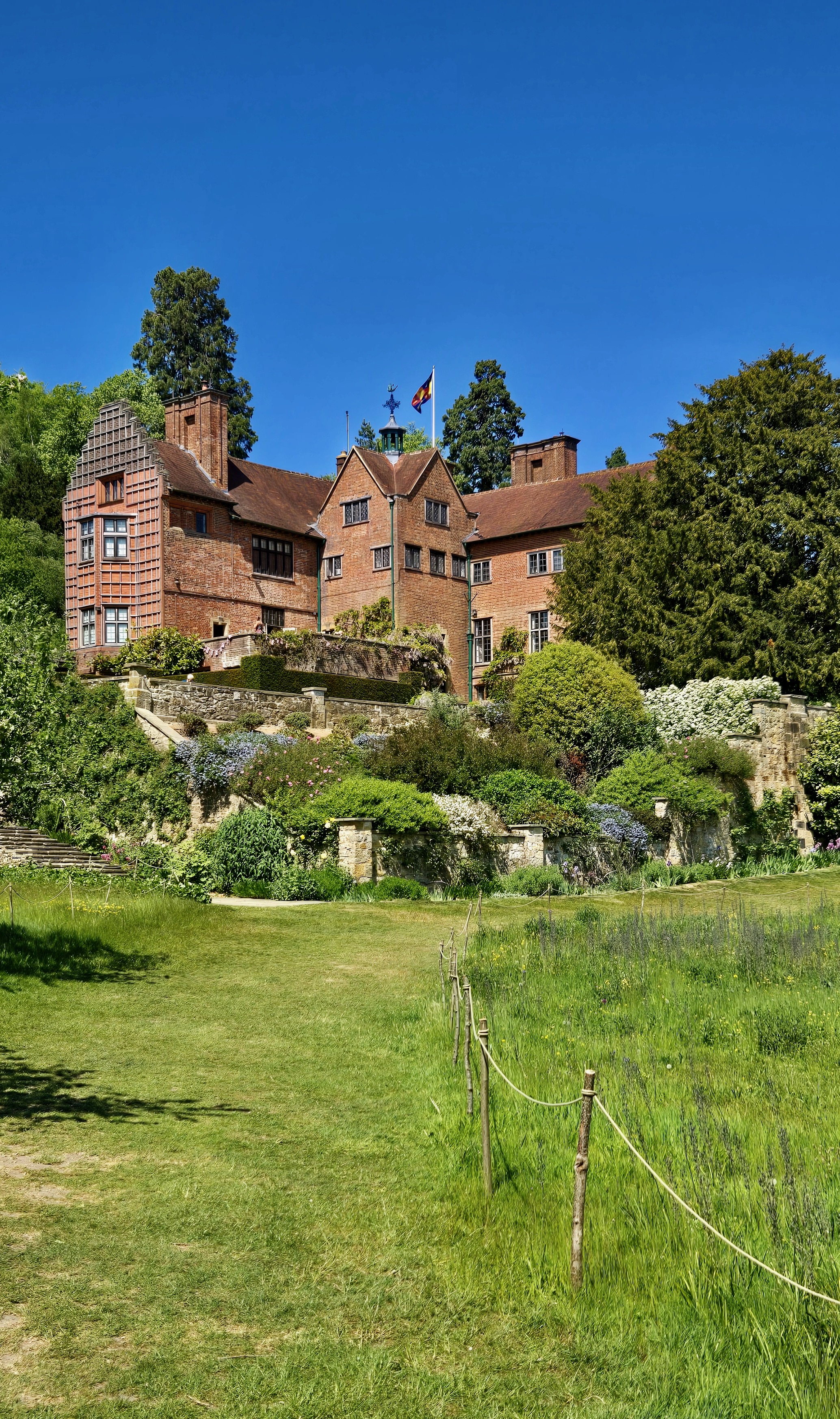
We are on our way and headed to Chartwell, the home of Sir Winston Churchill for forty years. He bought the property in September 1922 and lived there until shortly before his death in January of 1965. Churchill’s architect, Phillip TILDEN, began work on the house in 1922. I believe that he comes from the line of ancient Kent TILDENs I previously wrote about. Chartwell has been restored and preserved to look as it did in the 1920–30s. It is owned by the National Trust. I have also been to the birthplace of Sir Winston Churchill, Blenheim Palace in Warwickshire. A very grand estate indeed. Americans often have a bit more interest in Churchill because many of them are related to him. His mother Jennie Jerome was the daughter of an American businessman. In the late 19th and early 20th centuries many American heiresses married British nobility. Often referred to as the “Dollar Princesses” their money helped British aristocrats the money to help them keep their estates which taxes were making it impossible for many to keep. The TV series Downton Abbey highlights one such fictional family.


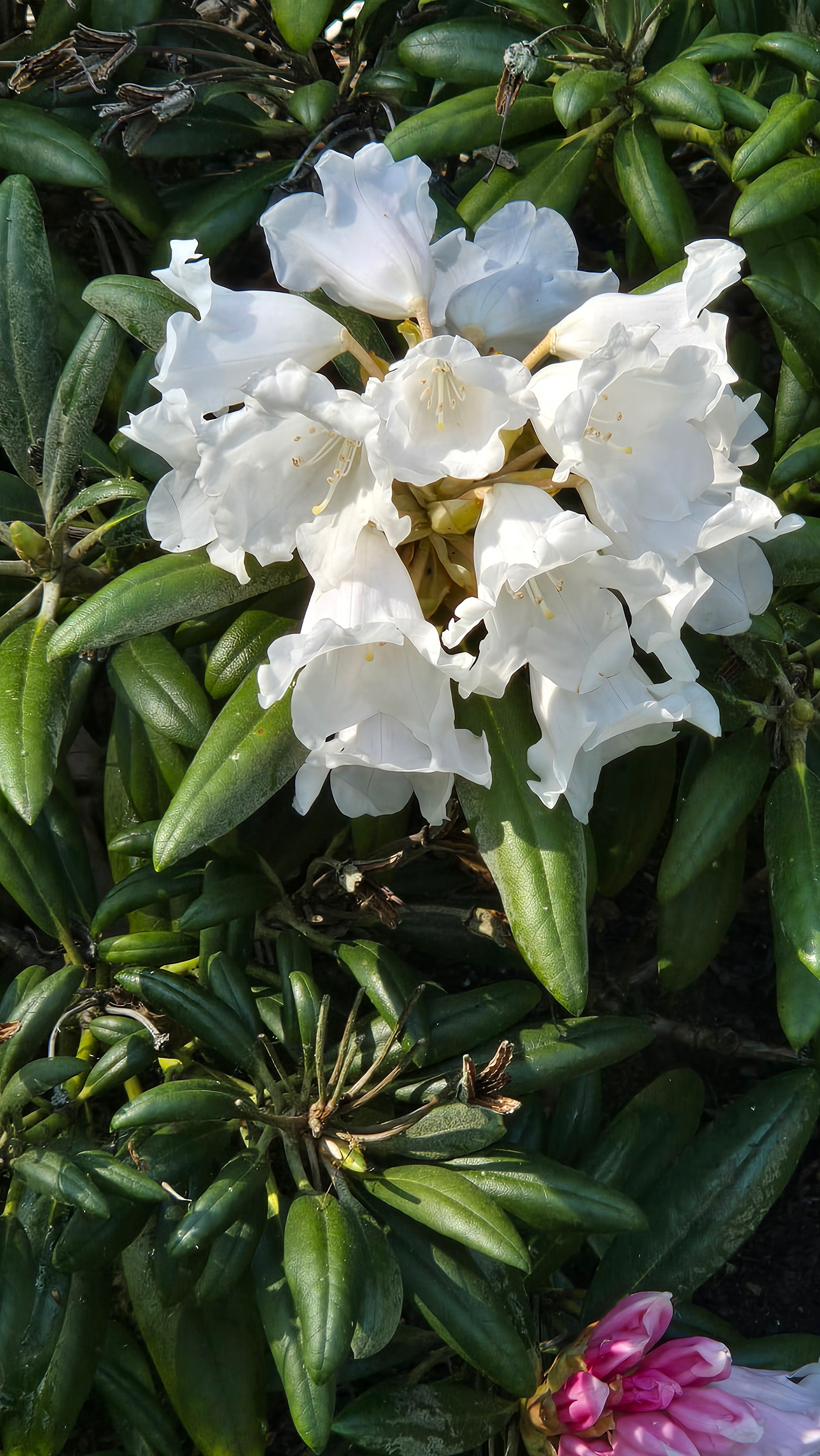
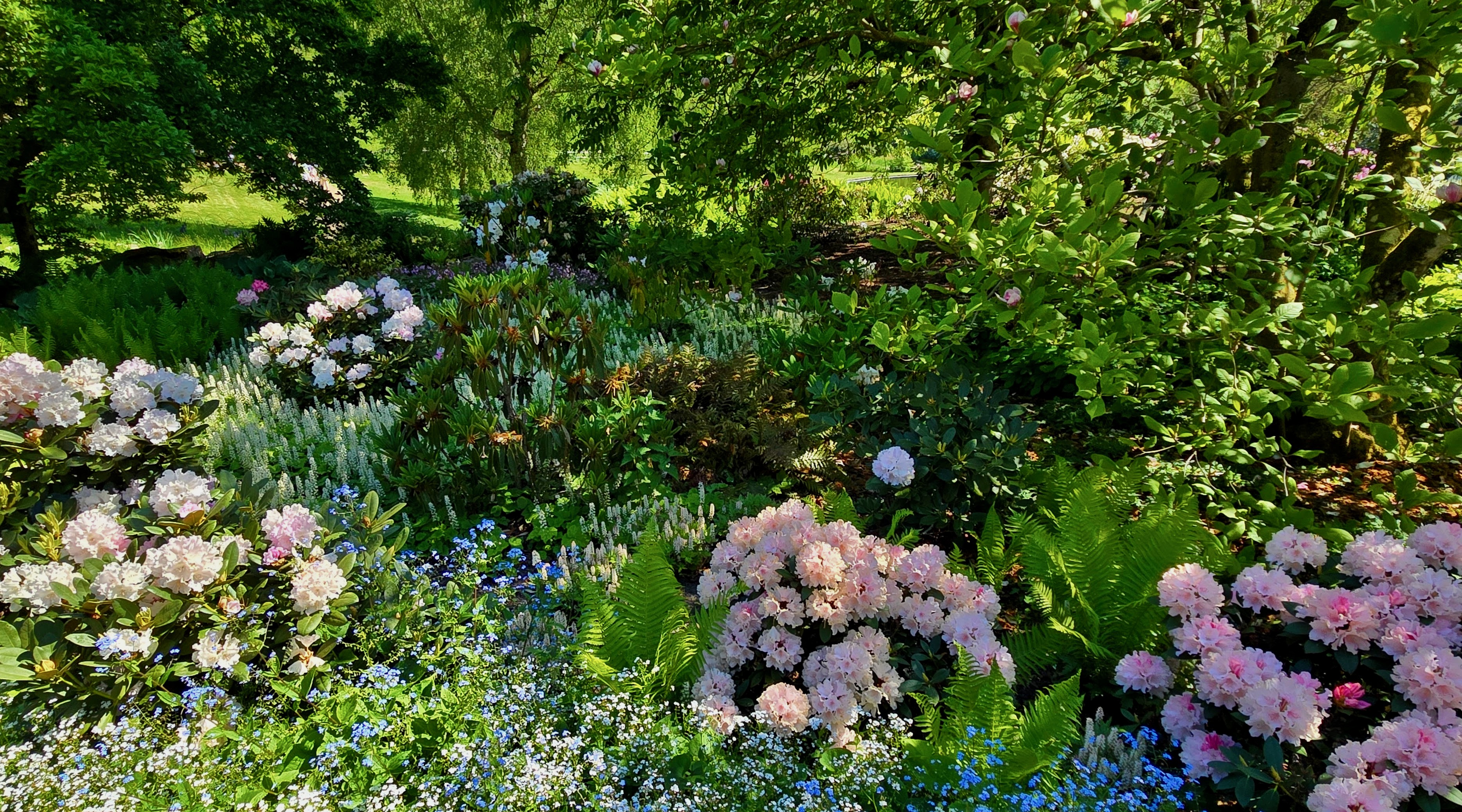
Chartwell in contrast feels like a well loved home and garden. Much to my enjoyment the approach is via a lovely woodland garden complete with Rhododendrons. When I used to live in the woods I grew over 100 Rhododendron varieties.


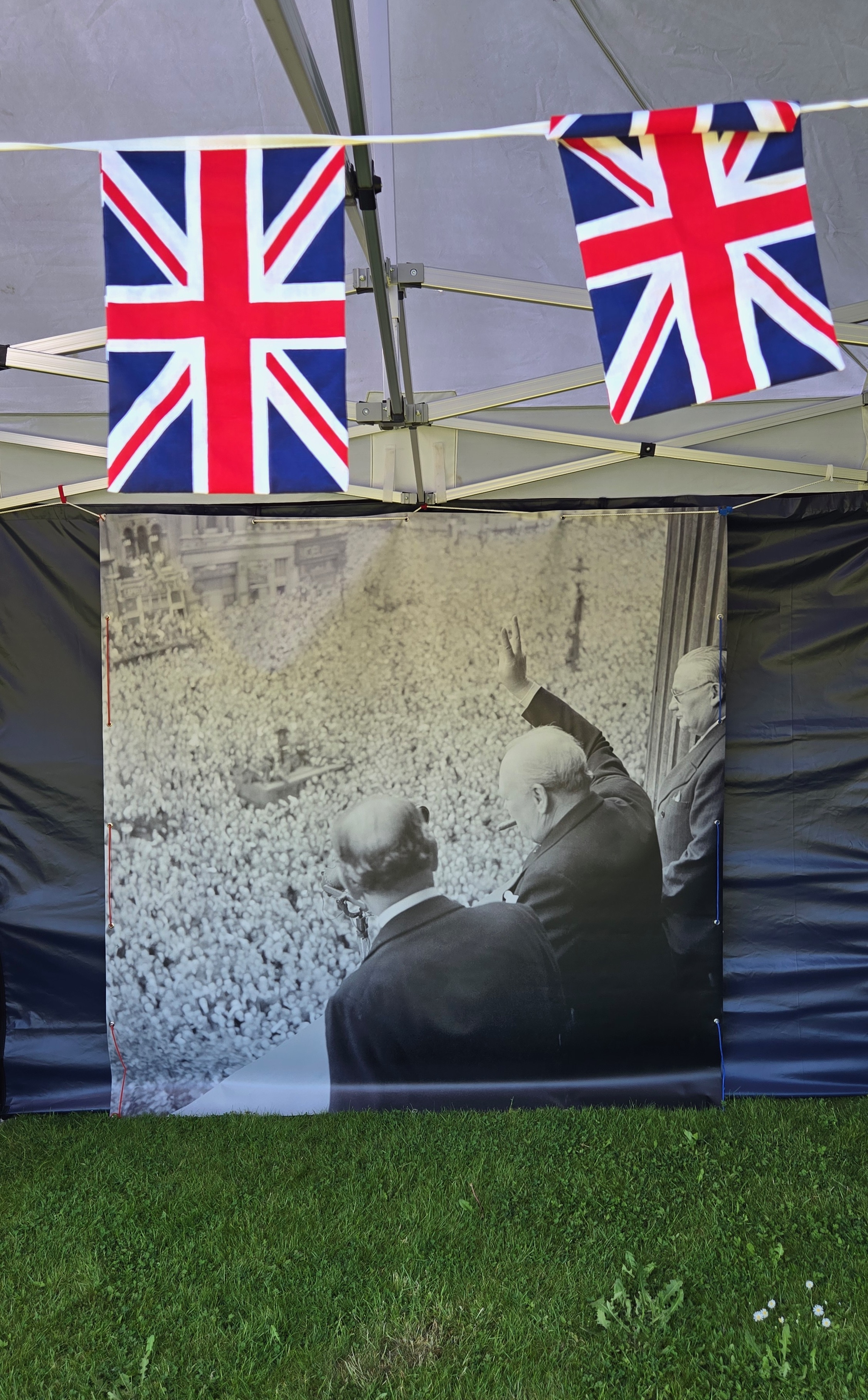
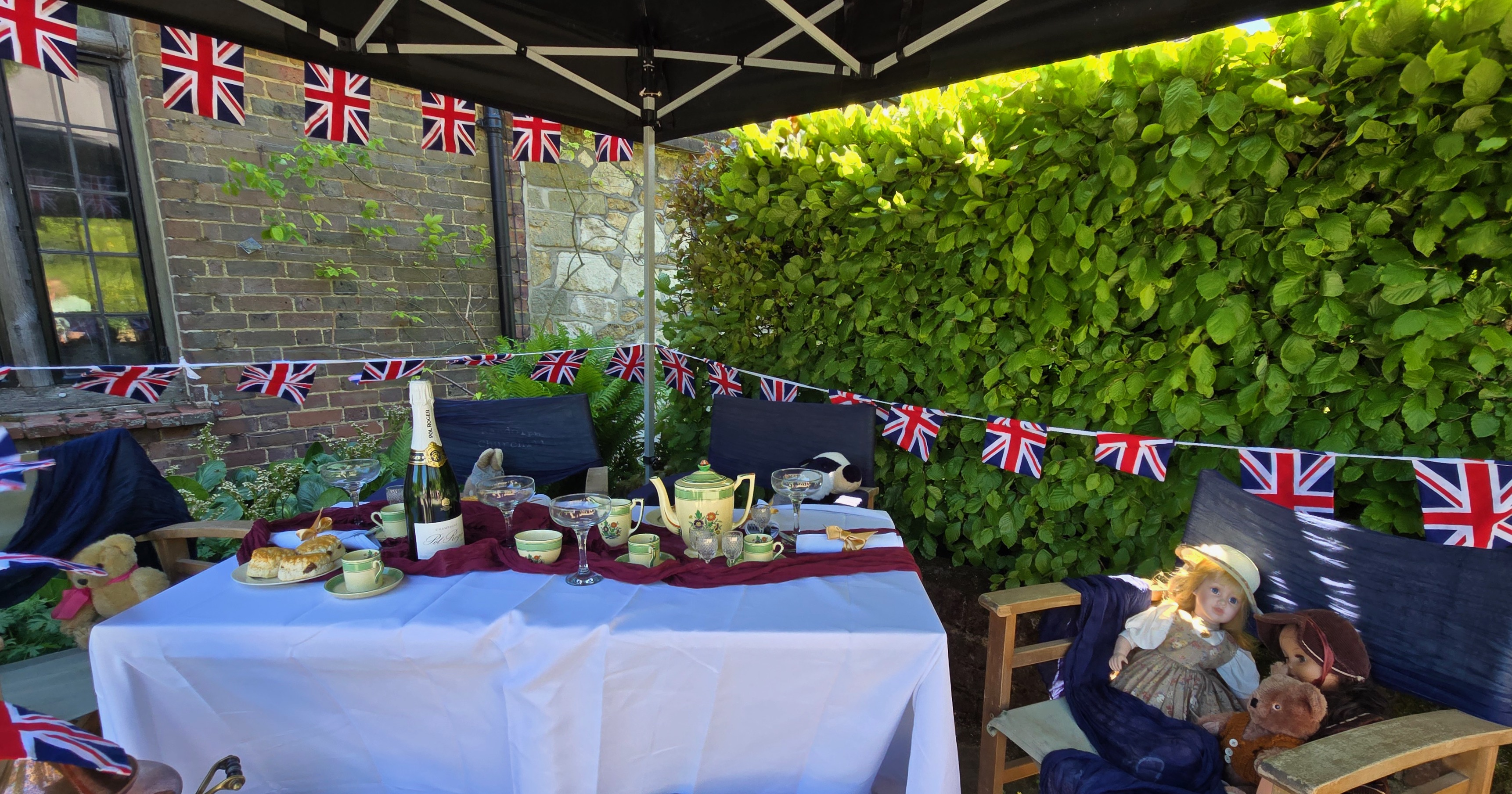
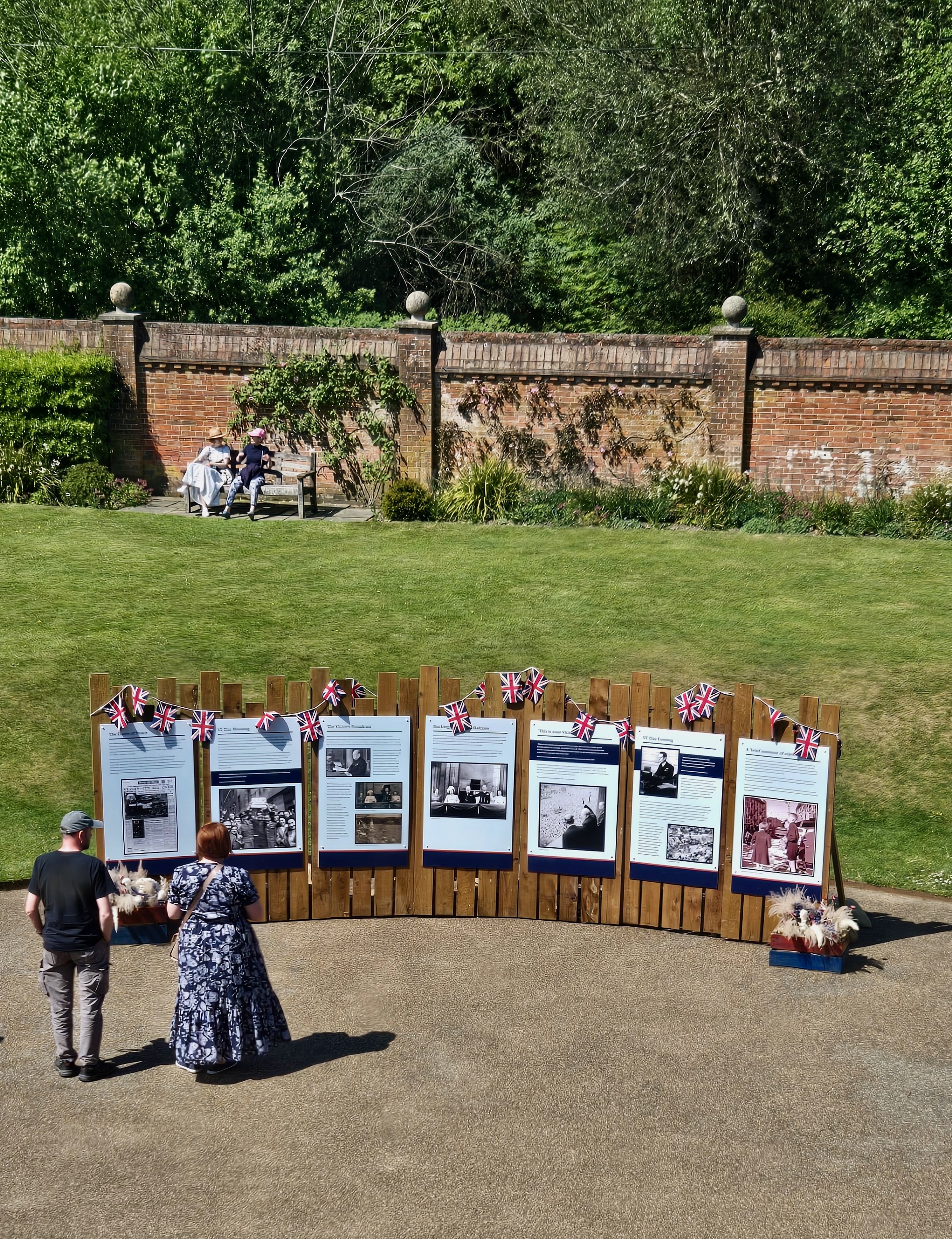
This was the Sunday after the 80th anniversary of VE day (Victory in Europe for WWII) so there were exhibits commemorating the occasion throughout the grounds. As well as some folks in period dress. Quite Festive.



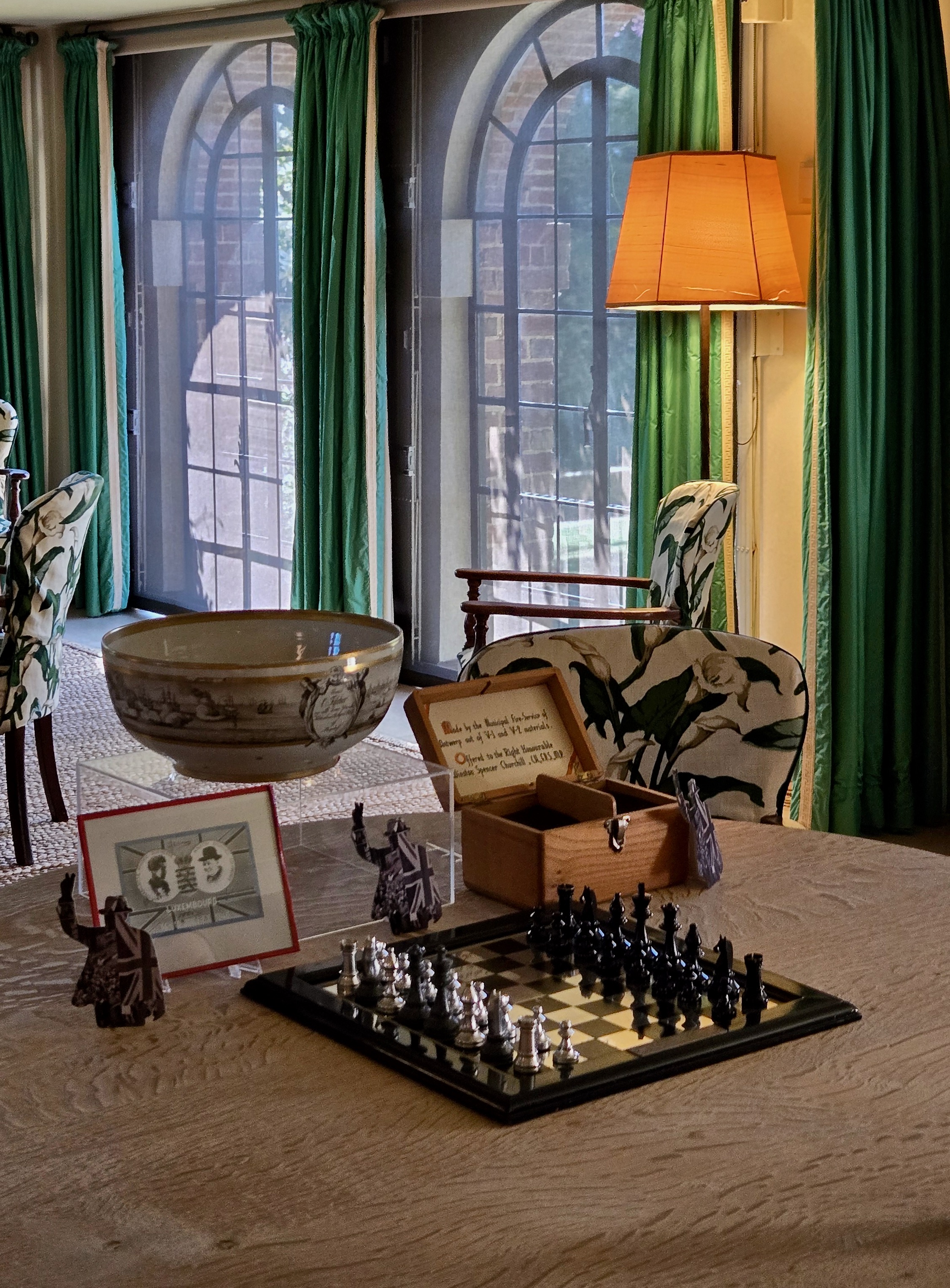
There are many things to see. And many things that are easy to miss. We were told by the attendant that the chess set in the foreground of this photo was on display for the very first time. It was made by the Municipal Fire Service of Antwerp of V-1 and V-2 materials. This is a stunning room full of light and the Calla Lily seat covers are 40’s style.

In any place one visits there are certain iconic or obligatory photos, and I do take those. For Sir Winston Churchill’s home at Chartwell, these are certainly ones.


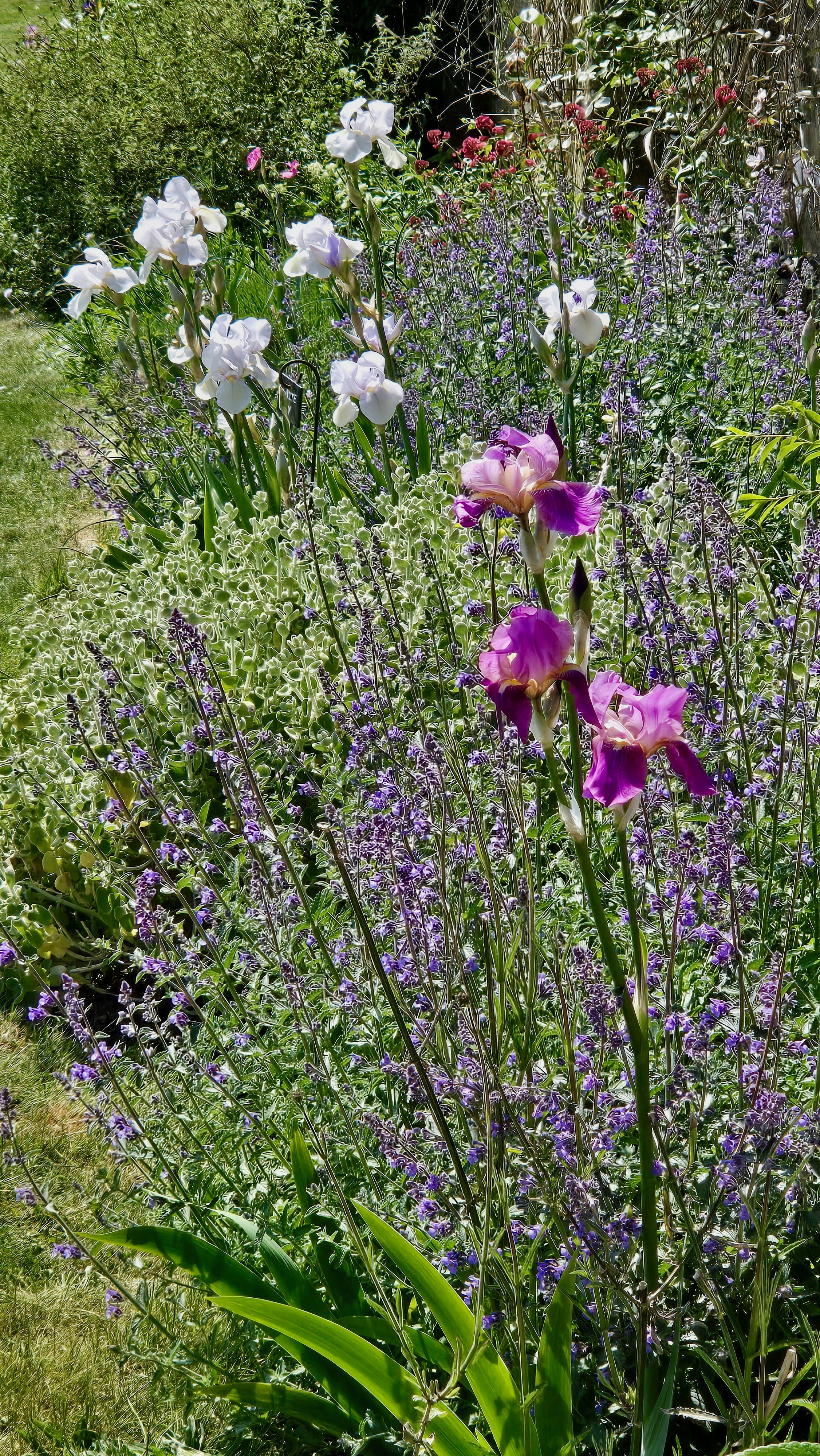
But there are many things that just catch my eye, and yes many of them are flowers, doorways, windows etc. A smattering from Chartwell. I include 3 of Winston’s paintings.
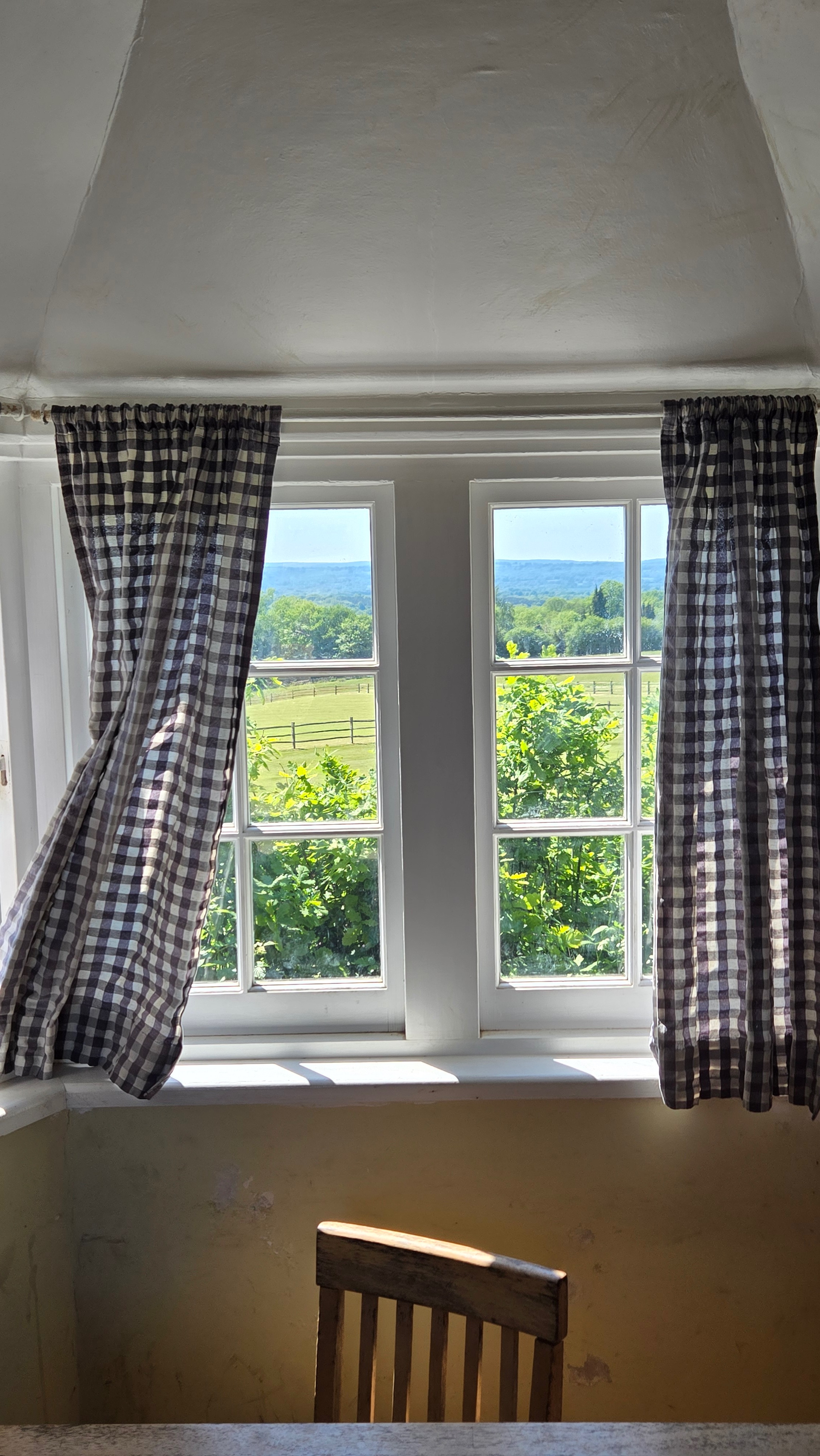

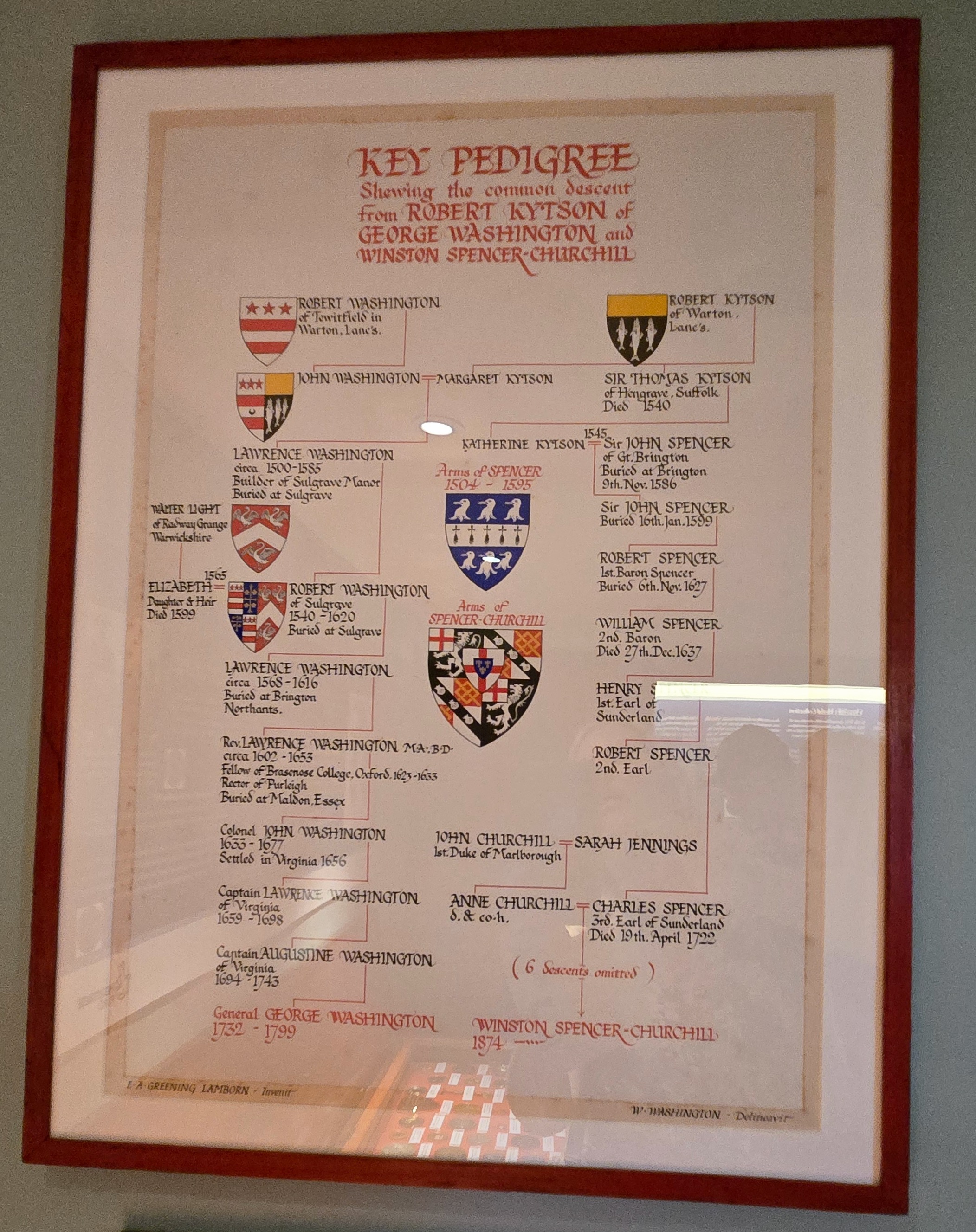

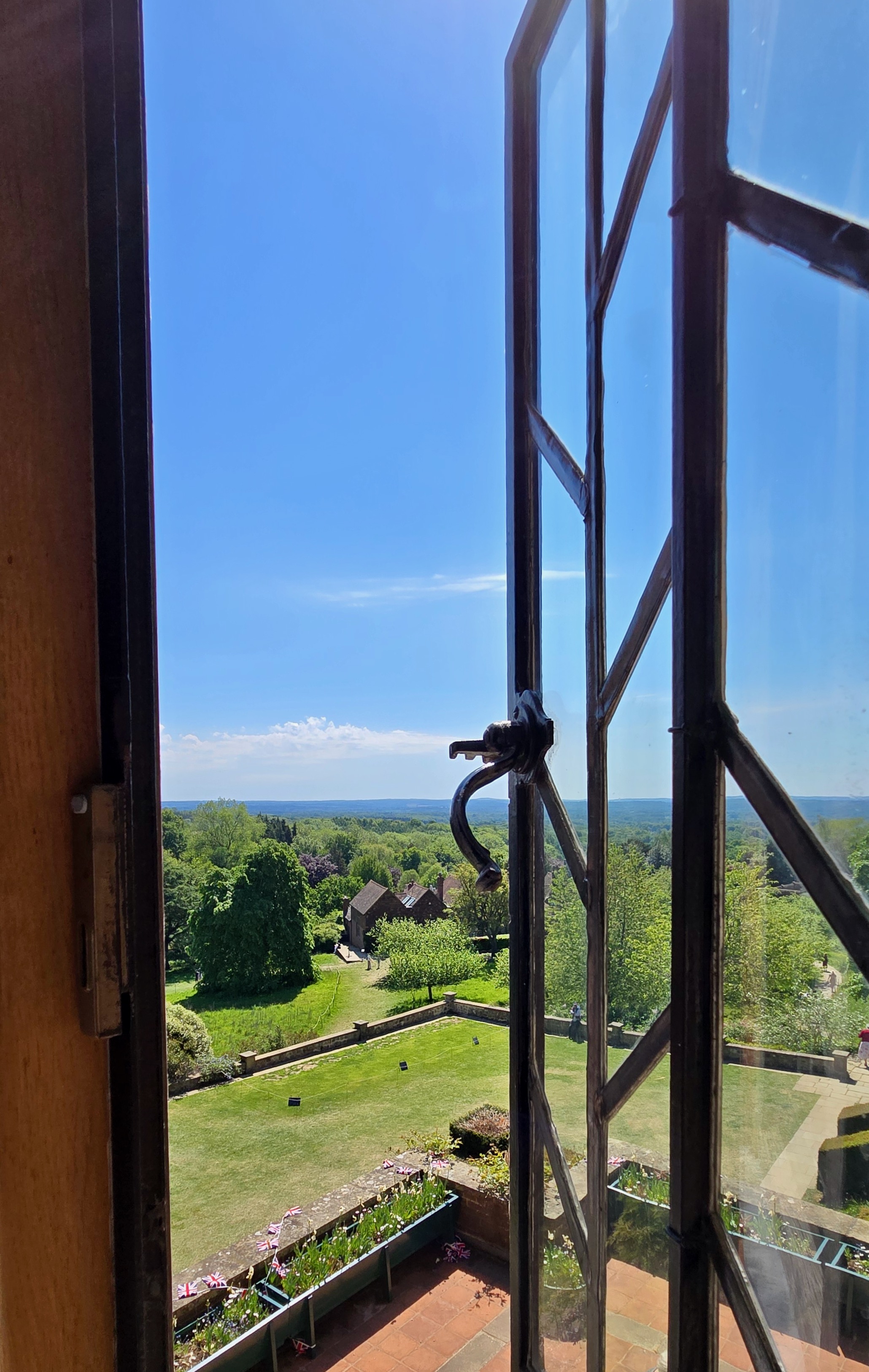

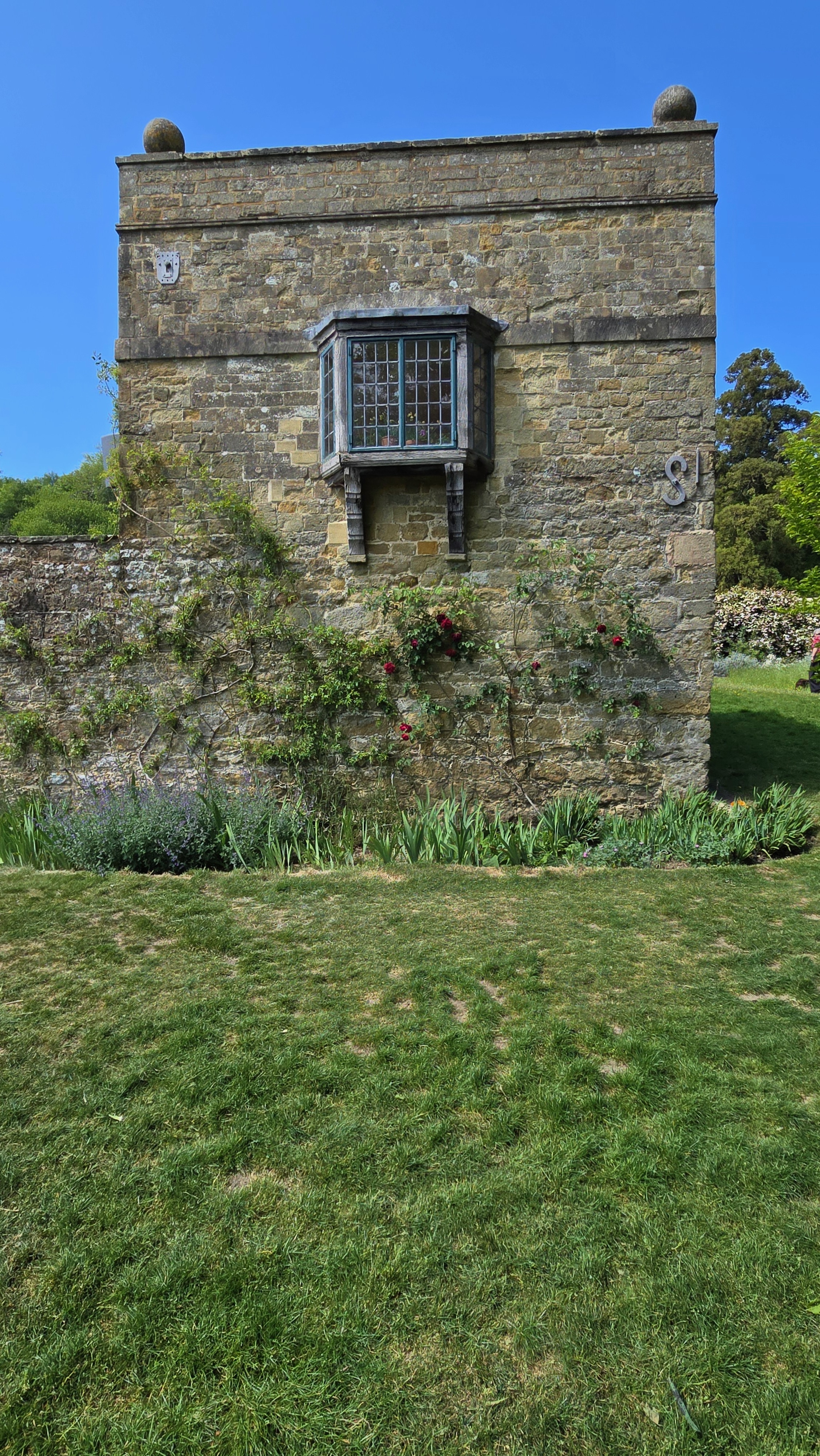
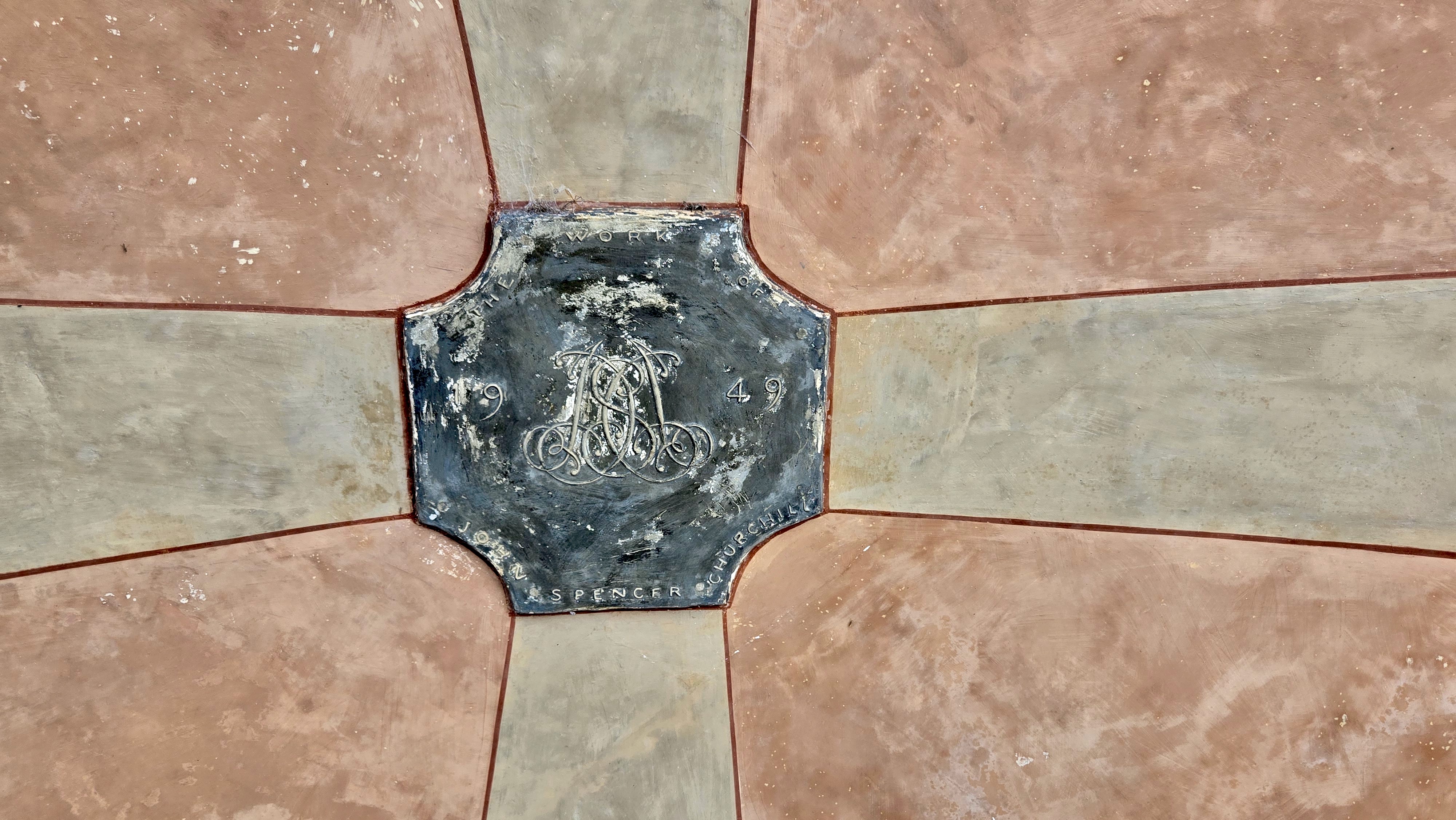
One lovely little spot is the Marlborough Pavilion. It is decorated with scenes from the Battle of Blenheim of which Sir Winston’s ancestor the Duke of Marlborough was victorious. Sir Winston’s nephew, John Churchill did the painting as a birthday gift from Lady Churchill. Climbing roses and vines cover the pergola that leads up to the Pavilion.

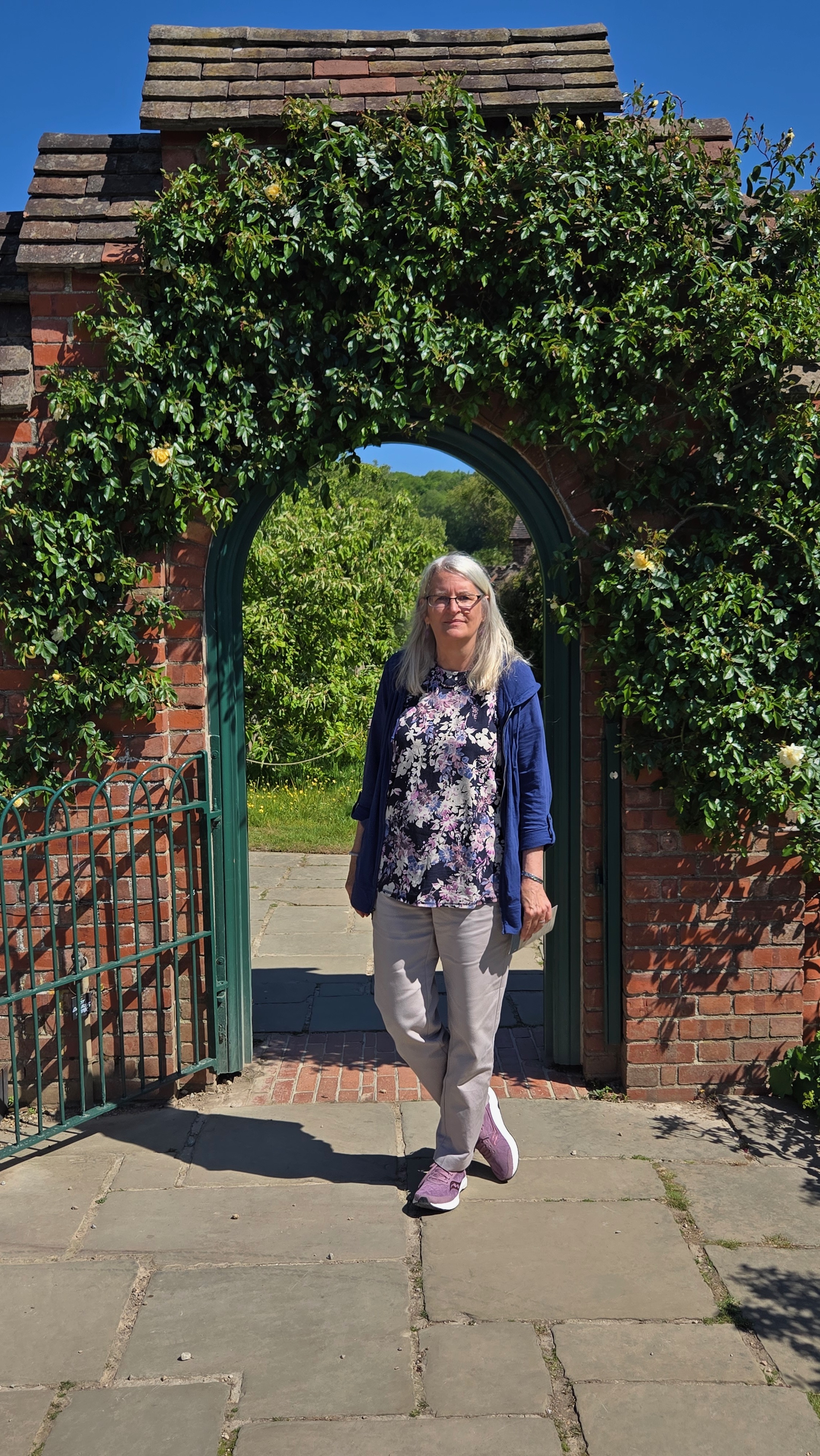
I am grateful to Joan and Chuck for this photo. I was much happier than I look!
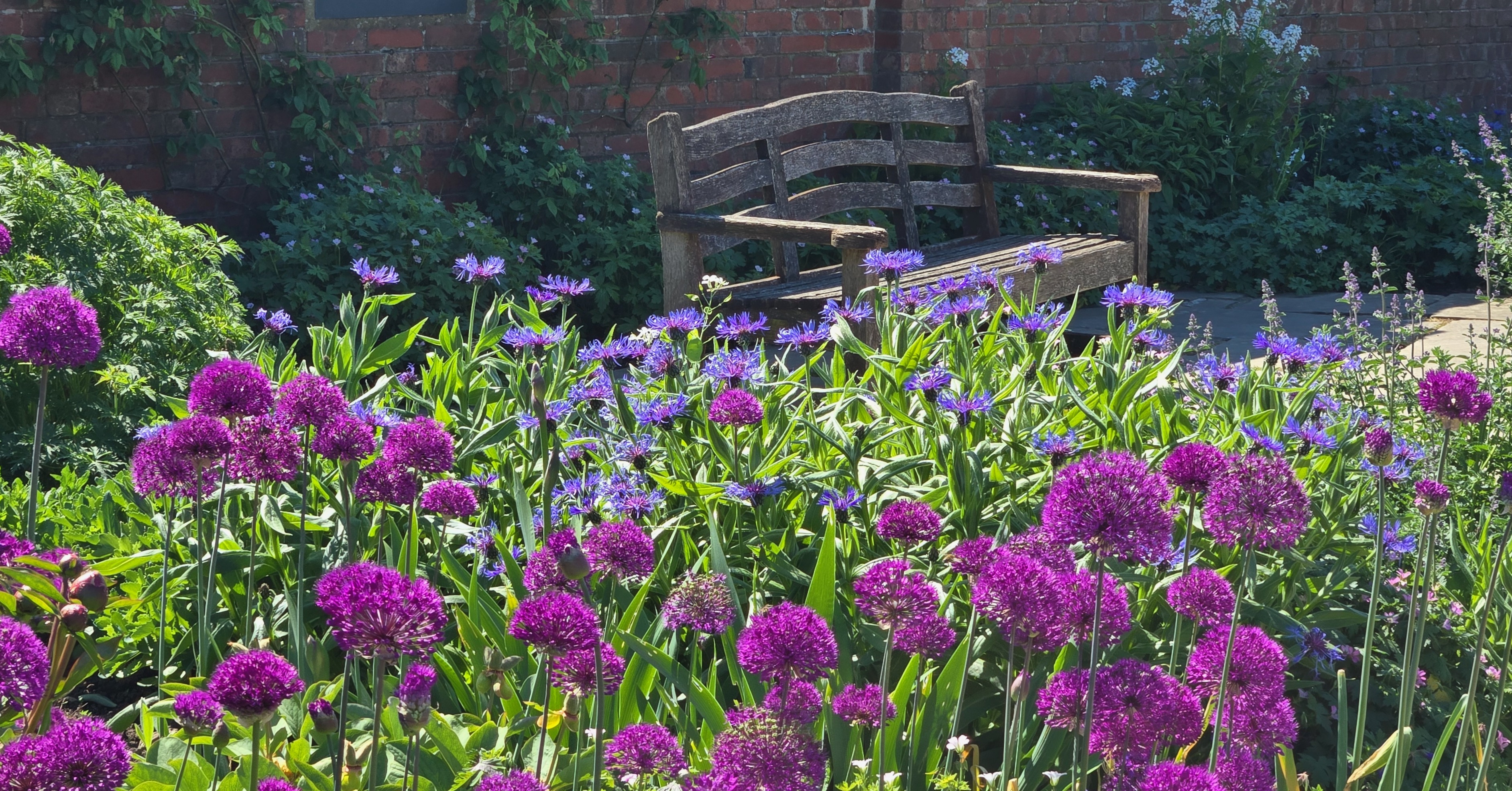
And this photo that appeals to me as a gardener and as a connoisseur of garden seating.

This teapot was a definite eye catcher. It is dated 1939. It is from the Dulyovo Porcelain Works. The company was established in 1832 in Moscow Oblast. I am happy for a better translation but I get roughly In Memory of the Allied Farm Exhibition 1939. I do not know its provenance but wonder if it was a gift from Russian Statesmen or citizens to Mrs Churchill. Claire Knight writes in Mrs Churchill Goes to Russia: The Wartime Gift Exchange between Britain and the Soviet Union : “During the years of the Anglo-Soviet Alliance (1941-45), Britain brimmed with an unprecedented enthusiasm for all things Russian.” I suspect that this was gift received by Mrs Churchill when she visited Russia. “The tour served as not only the official ‘thank you’ from the Soviet leadership, but also as the medium through which the Soviet populace were able to demonstrate their appreciation to Mrs Churchill and through her, the British people. ” Mrs Churchill and the English people had raised Ł7.5 Million for Red Cross Aid to Russia.
Sometimes it is the little things that catch our fancy. Be on the look out for yours.
Kelly Wheaton ©2025 – All Rights Reserved
LONDON Day Four: Tower Hill
Posted on June 6, 2025 1 Comment
I slept in to 6:30 AM. I had mostly packed the night before. I suppose it is a bit of compulsive anxiety that causes that organizing and packing before being able to sleep. It allows me a more restful sleep knowing I am almost ready to go. Showered, dried my hair and went down to the solarium for breakfast. I was done, checked out and on my way by 9. Taking the Underground from Earl’s Court to Tower Hill takes 21 Minutes on the District Line.
Riding the subway you see a kaleidoscope of constantly changing people. Some are visitors like myself, who are trying to negotiate the peculiarities of the Underground and others are regulars who ride it daily. Cell phones are ubiquitous. They allow people to be doing something, but allow you to maintain the proper detachment from others [particularly when jammed in like sardines]. This morning there was a group of school children with matching tee shirts and backpacks and several teachers watching over them. The most likely people to engage with me were fellow travelers. This AM it was a man, about my son’s age, from Switzerland. Unlike my non-traveling self, I was not the one to initiate engagement, except when I needed help. “Does this train go to xyz?” “I think so, but I don’t live here,” was a typical interchange.
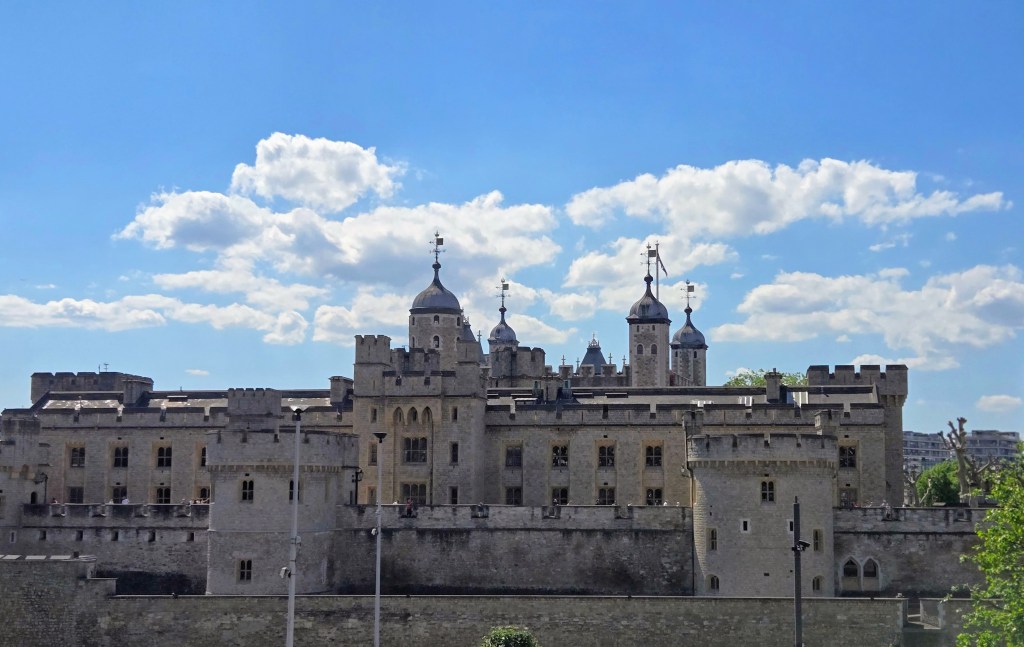
I arrived at Tower Hill Station, to yet another sunny, blue sky masterpiece. I had walked my way from the station to the hotel via Google Street view in advance of my trip. I had done this with many places so I would recognize them, and know where I was. In this case the hotel was steps from the train station however the entrance to the underground was around the corner. Some photos of the Roman Wall and Tower of London. As a side note Denise’s ancestor Robert CUSHMAN stayed very close to here.


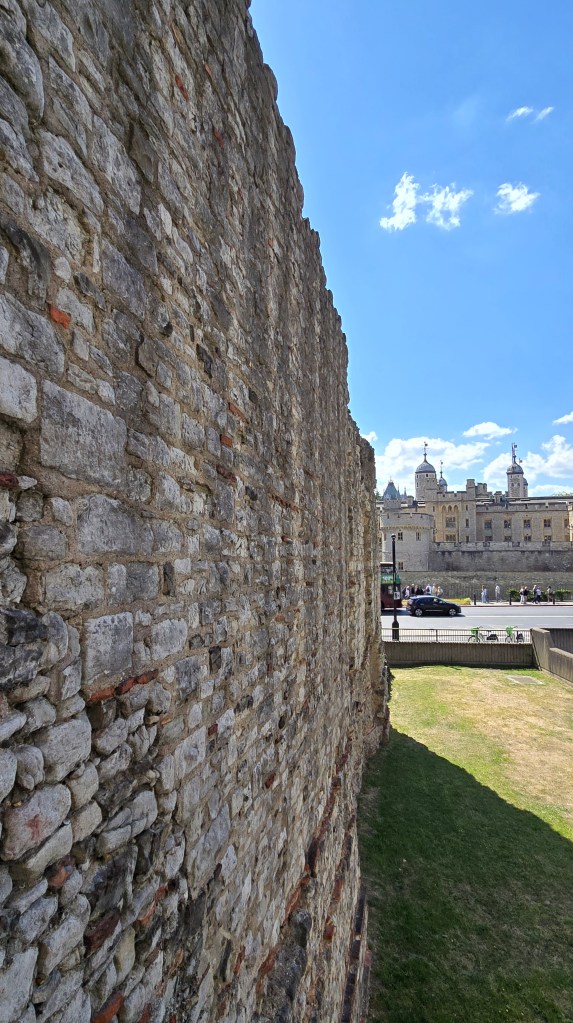
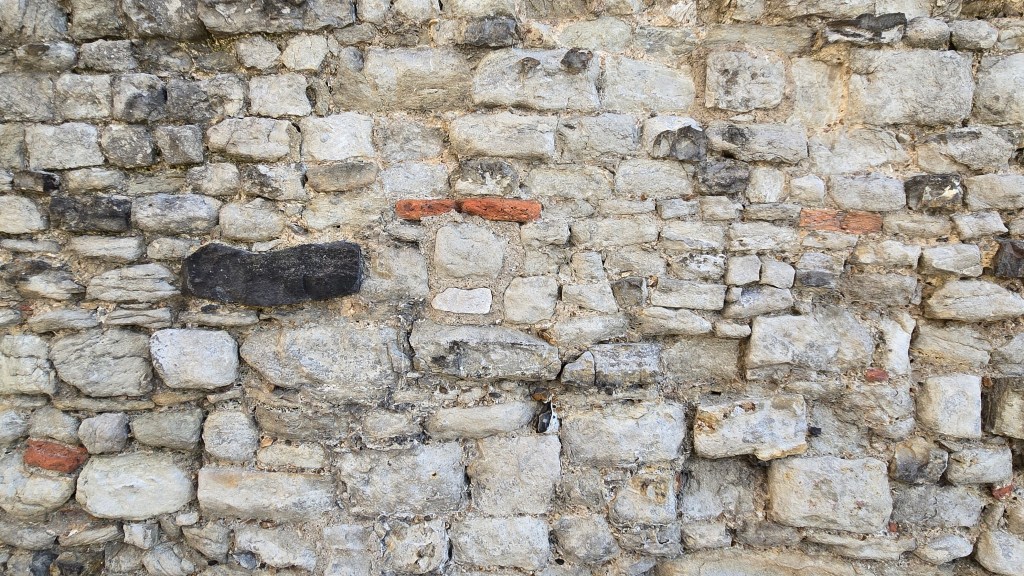

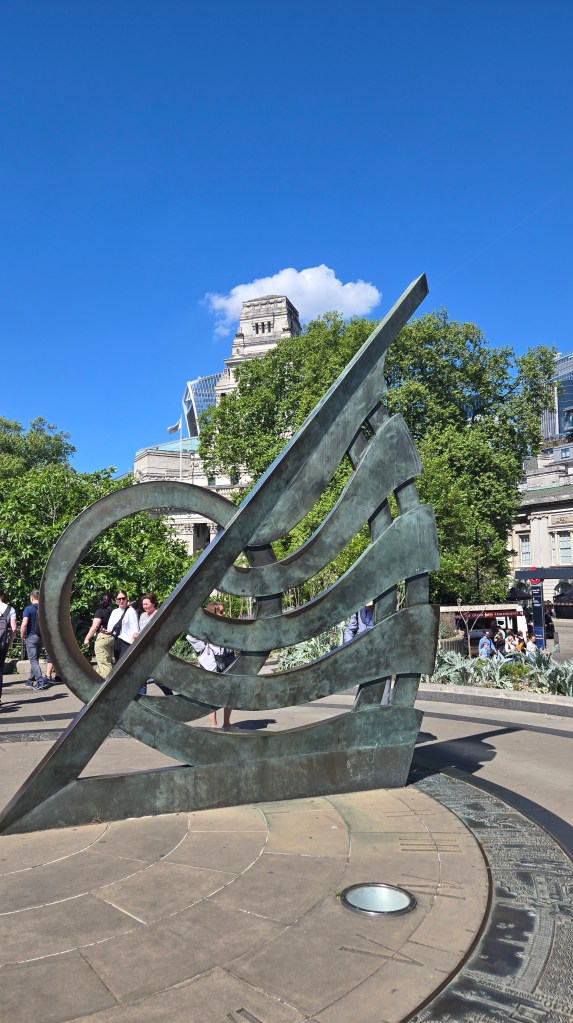
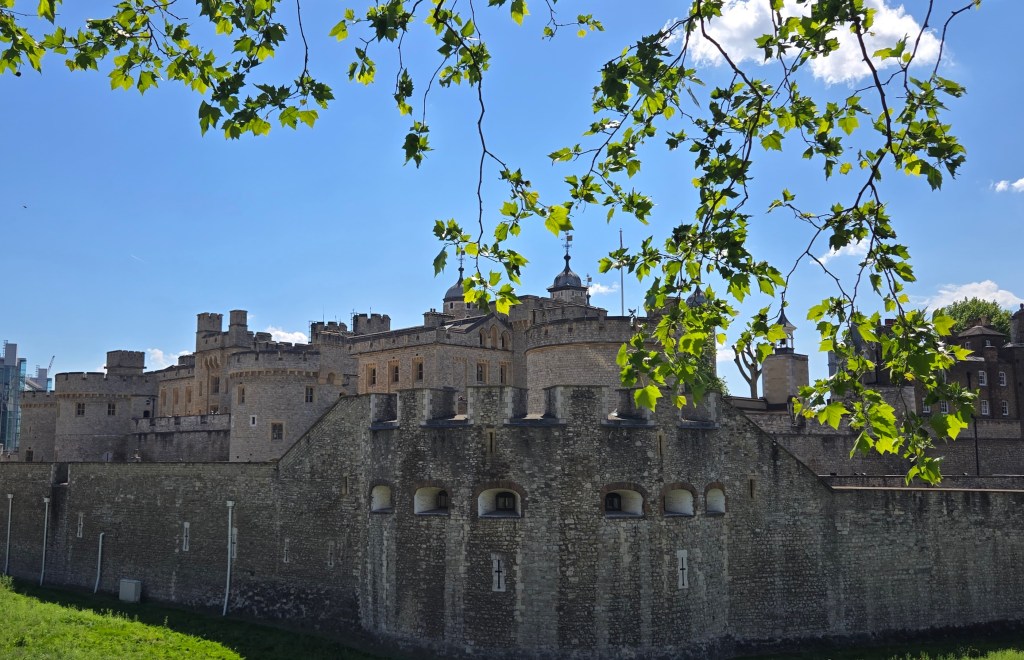


The large sundial with historical timeline is worth a look. Then I arrived at my destination the Tower Suites Blue Orchid.
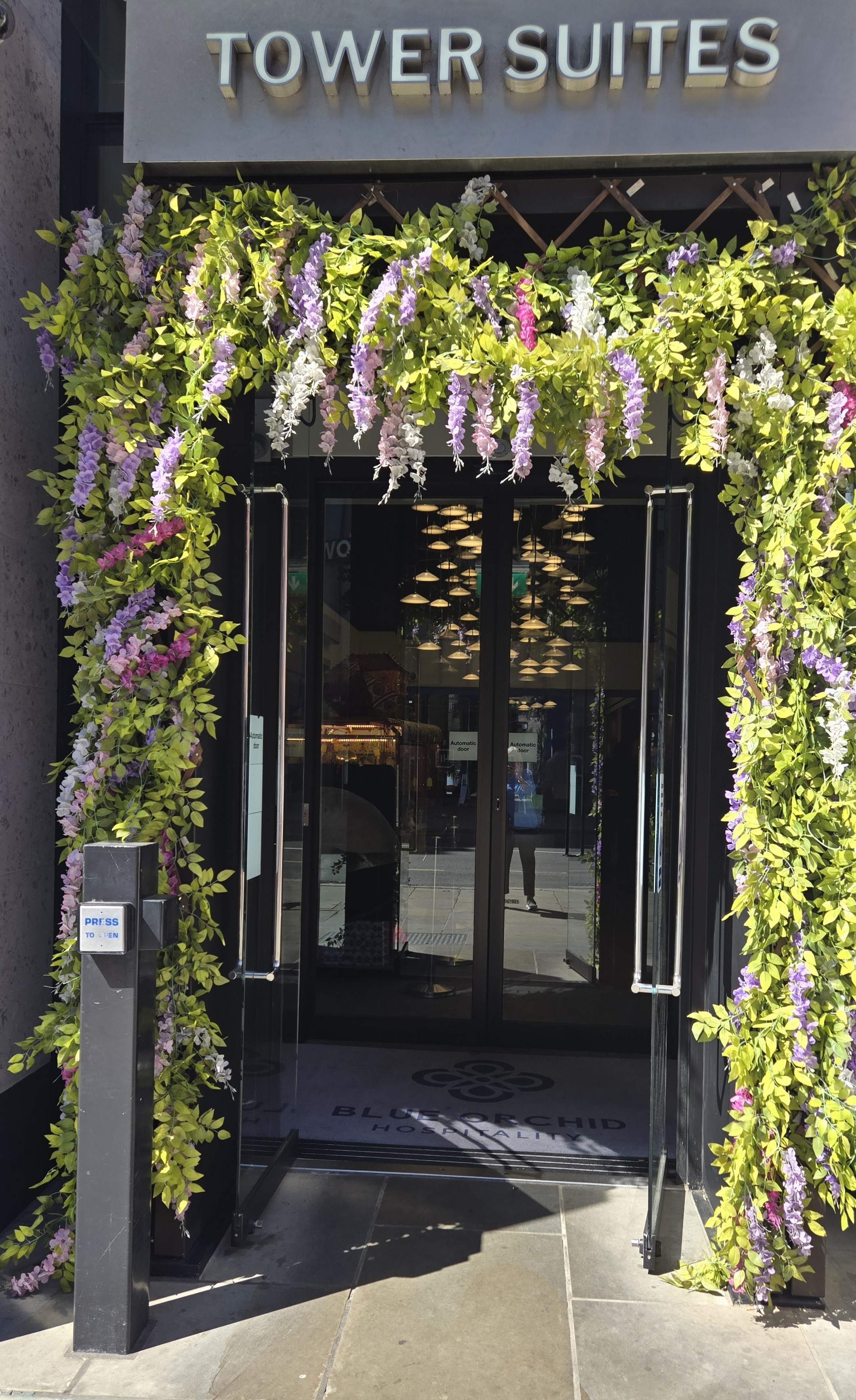

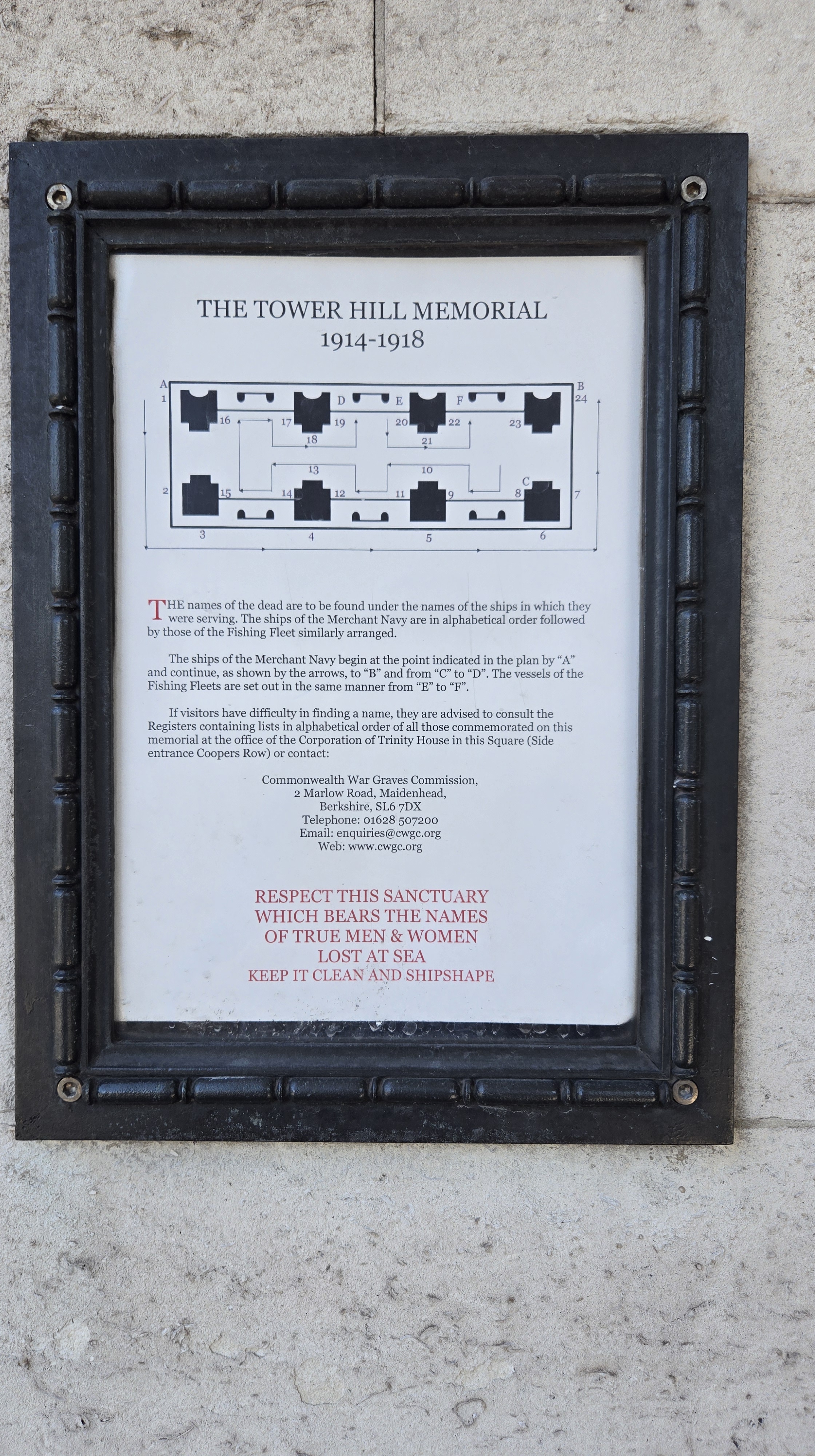
Since it was still before noon and check-in was 3 PM I dropped off my bag and went on my way. I should note this is a very convenient location. I was only staying a night but an upgrade to a view of the Tower of London should be considered. I had been to the Tower twice and was not planning on a third visit this trip. My destination was the ruins of St Dunstan in the East. However on the way I planned a repeat visit to All Hallows by the Tower. But first I visited the war memorial. You can see All Hallows through the memorial. Very moving.


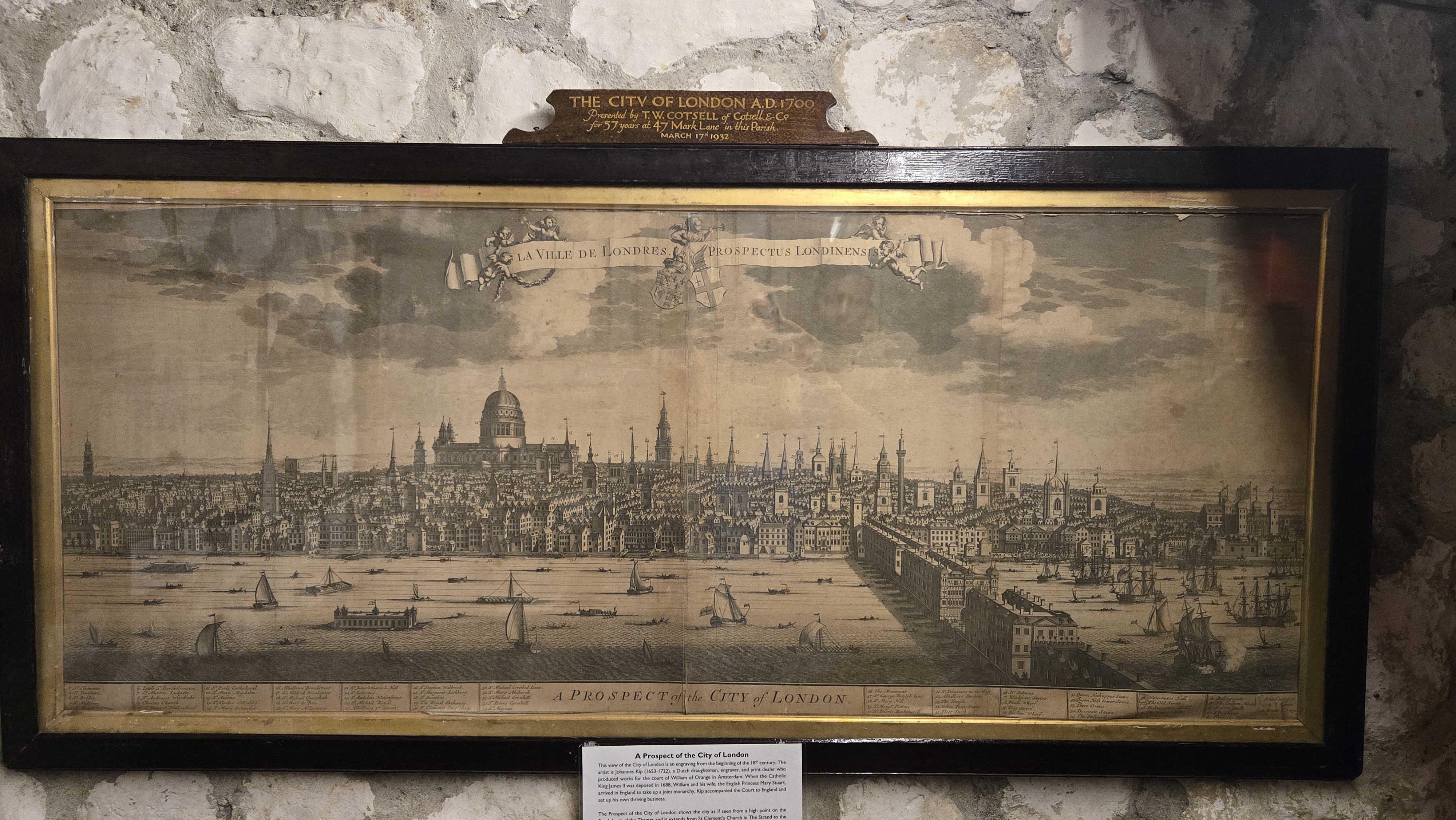
The All Hallows by the Tower church is adjacent the Tower of London. The oldest church in the City of London, dating to 675 AD. It has survived the Great Fire of London and World War II bombings. The under croft has a lovely museum including Saxon artifacts. Of note to Americans is the parish Register showing the entry for William PENN Penn , the son of an English naval officer Sir William Penn, and Dutchwoman Margaret Jasper, who was widow of a Dutch sea captain and the daughter of a rich merchant from Rotterdam. This William PENN a prominent Quaker who would found the Province of Pennsylvania. He was an advocate for democracy and religious freedom.


From here it is a short couple of blocks to the West to take you to the ruins of St Dunstan in the East (which is to the west of All Hallows by the Tower). The church was largely destroyed in the Second World War and the ruins are now a public garden. St Dunstan’s was originally built about 1100. A new south aisle was added in 1391 and the church underwent repairs in 1631. It was badly damaged in the Great London Fire of 1666. A steeple was added in 1695–1701 to the designs of Sir Christopher Wren who is probably best known for his redesign of St Paul’s Cathedral in London and the Sheldonian Theatre at Oxford. St Dunstan’s was severely damaged in the Blitz of 1941. Wren’s tower and steeple survived as well as the north and south walls. St Dunstan’s The parish is now combined with the Benefice of All Hallows by the Tower and occasional open-air services are held in the church. For most this ruin provides a quiet respite from the hustle and bustle of the city.
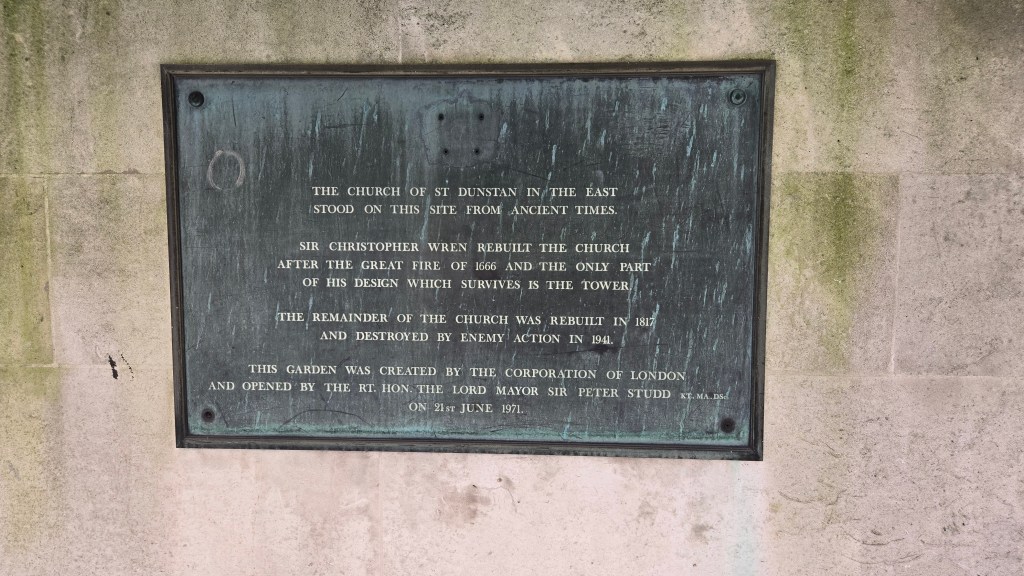

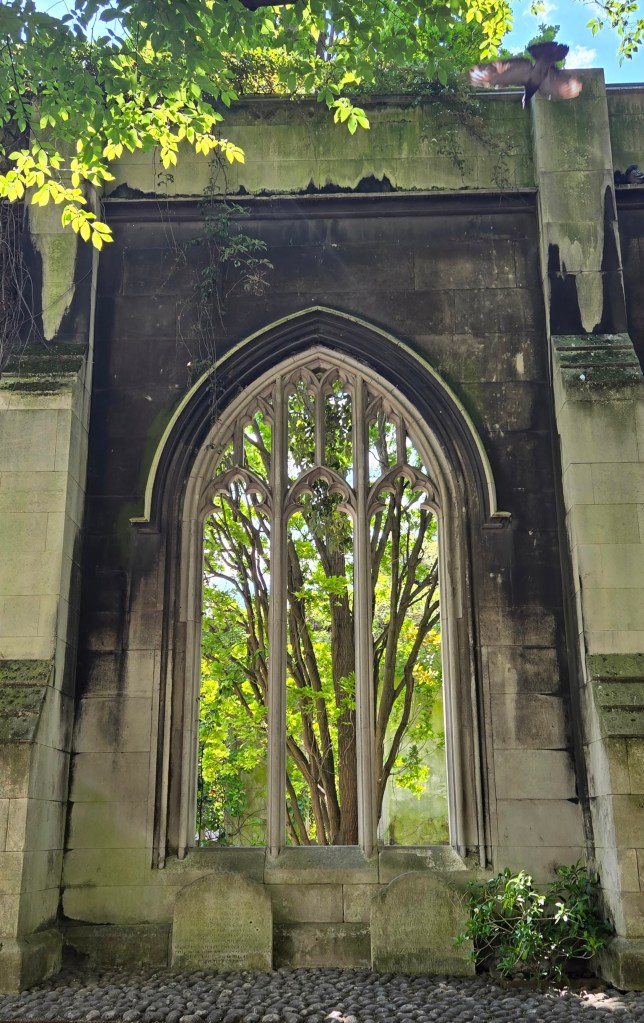

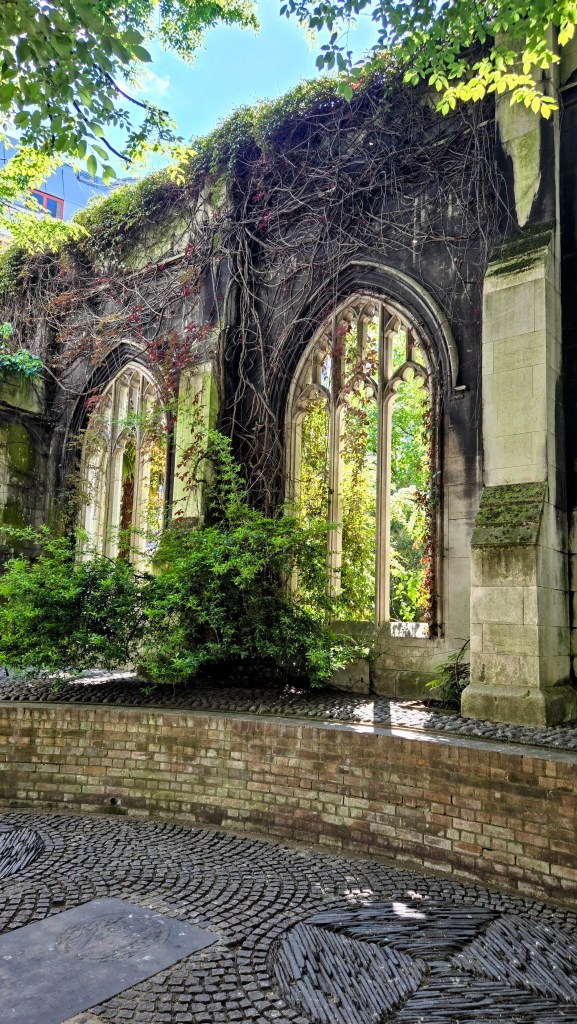
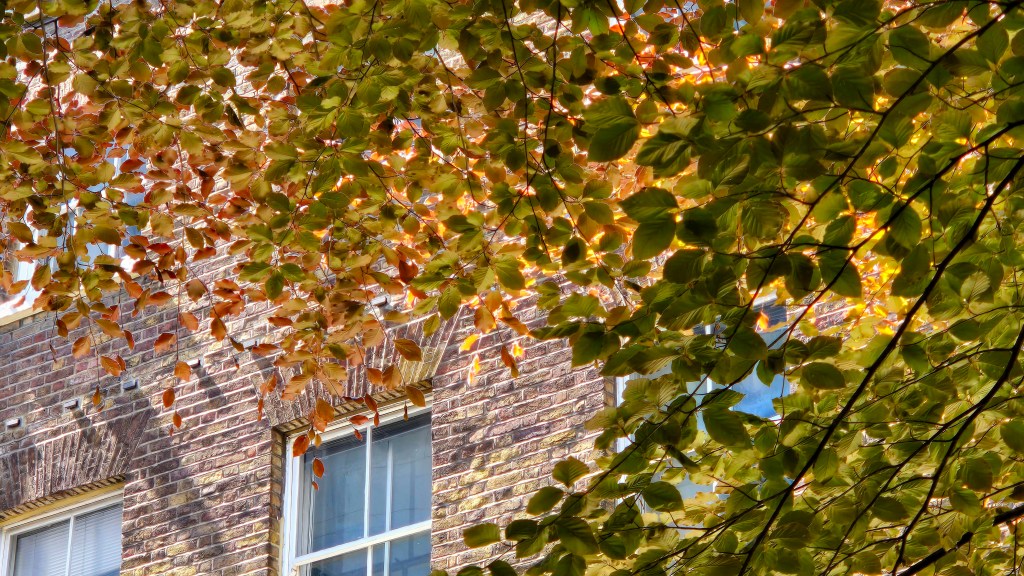


There were two thing that happened here. First I met a delightful couple, Romain & Juliette, from Strasbourg, France. Strasbourg is only 42 miles from Hunawihr where my Paternal grandmother’s HENNINGERs were from oriinginally. Hans Peter HENNINGER died the 15 March 1652 at Hunawihr. Just across the River from Strausbourg in Germany my ancestor Jacob KUTZ 1664-1728 lived in Offenbach. We shared a bench for a time and talked about many things including their work in sports marketing. We shared travel stories and it was a very welcome conversation after 4 days alone.

And we were witness to an angel. The ruins are a favorite photo shoot location, not surprisingly. I asked permission to take these photos. Not everyday you see an angel!
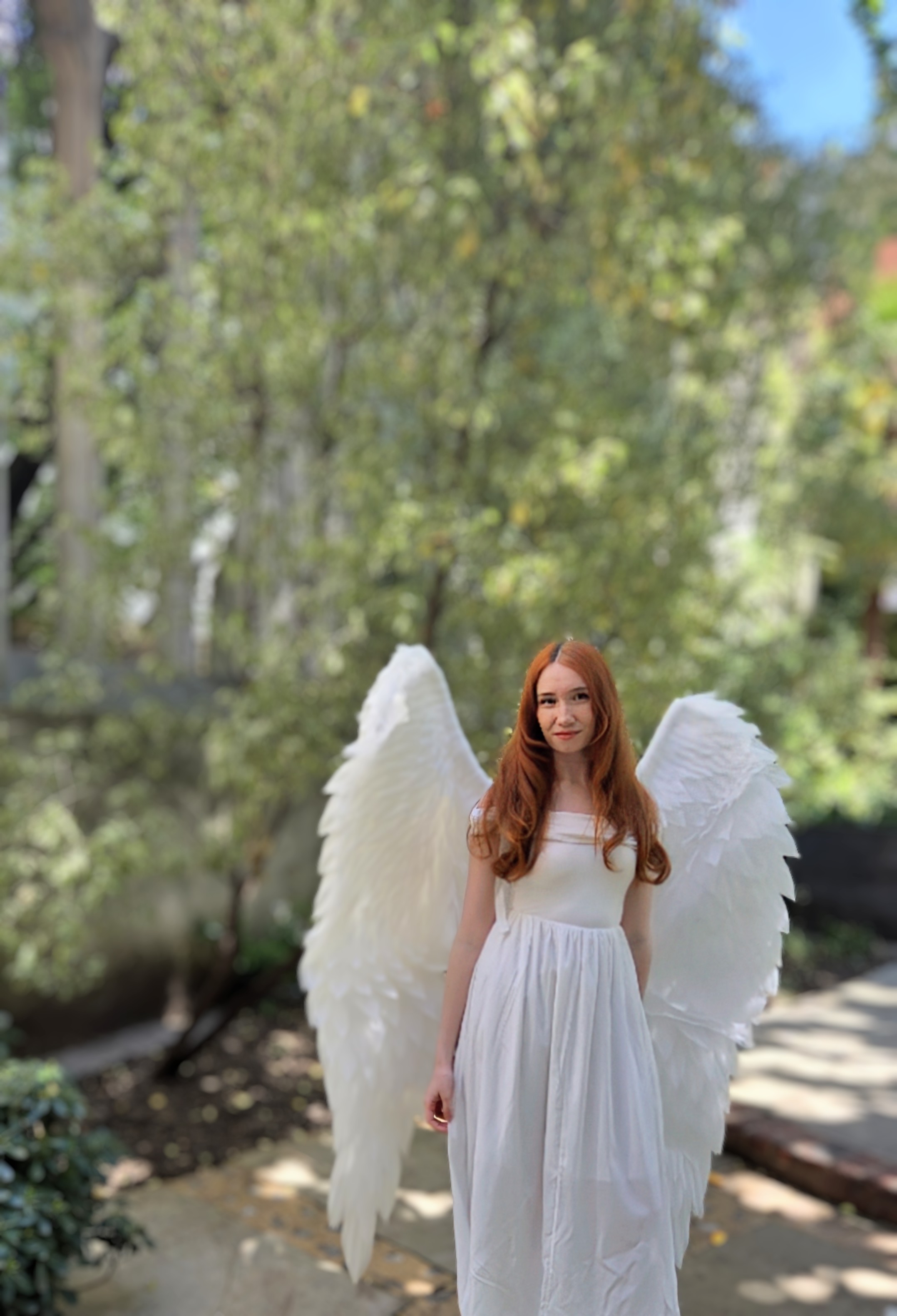
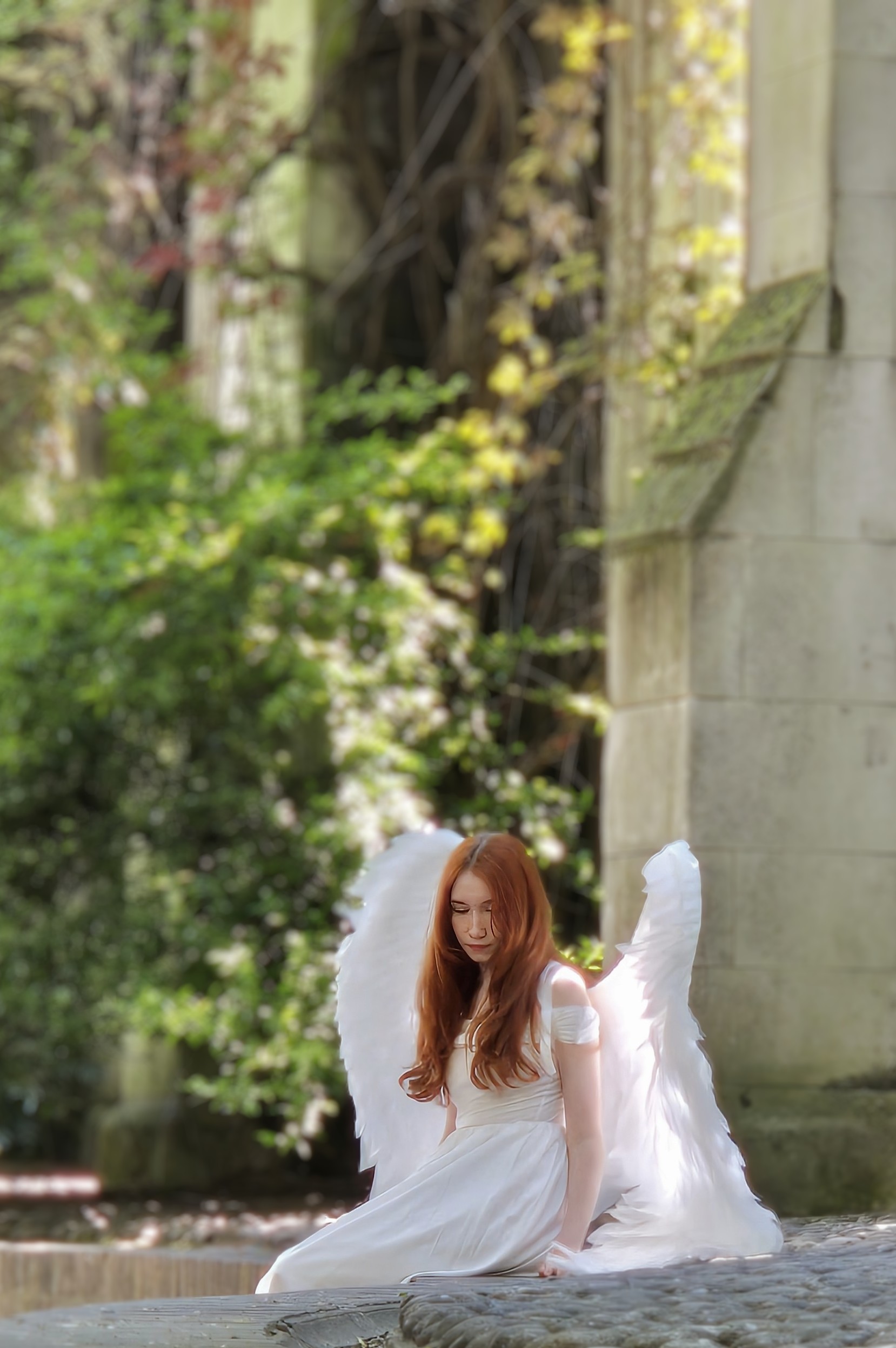
I made my way back via the Tower of London, taking the long way round by the River Thames before arriving at the hotel. Later tonight I will meet my tour group for dinner.


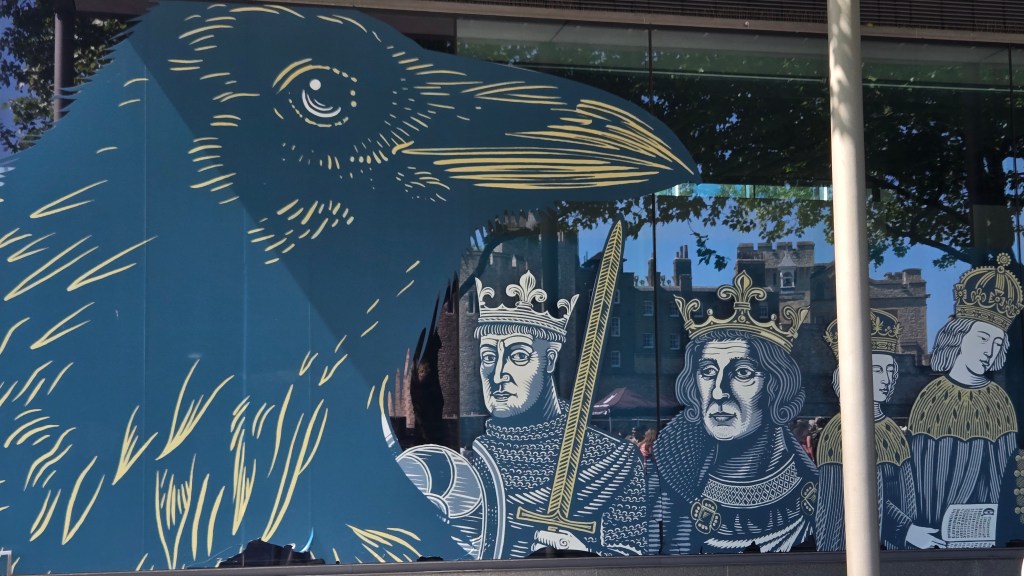
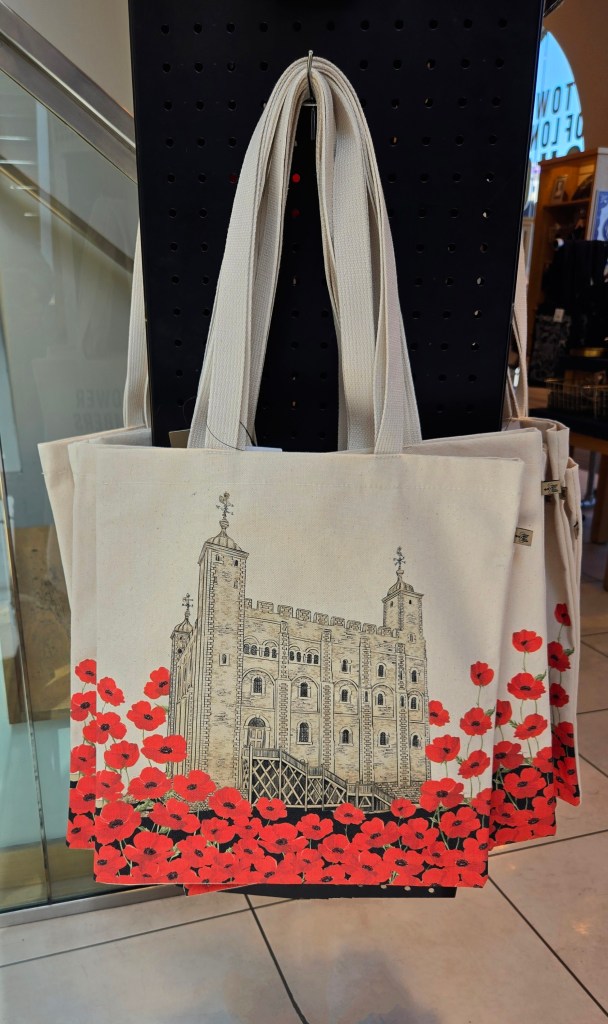

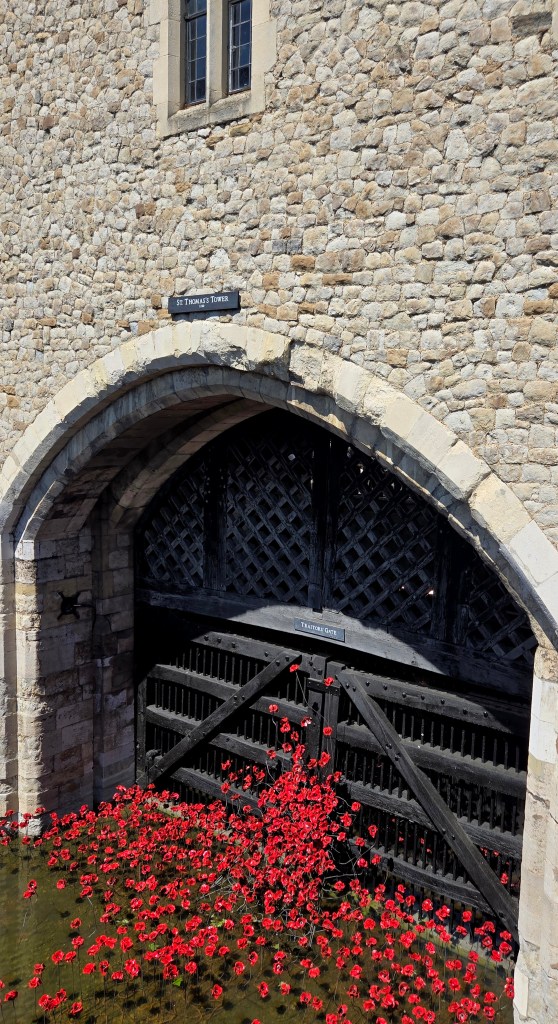
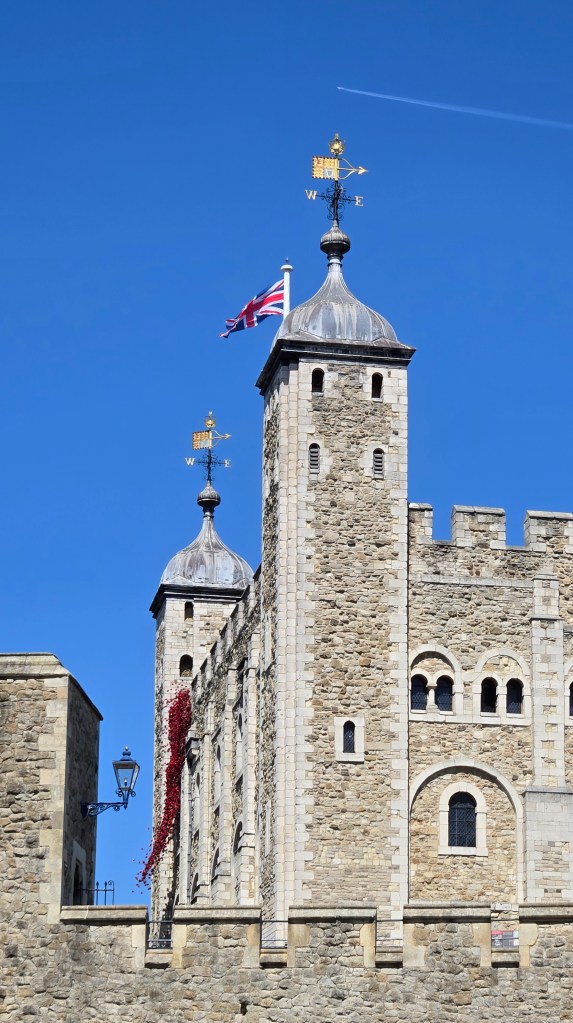
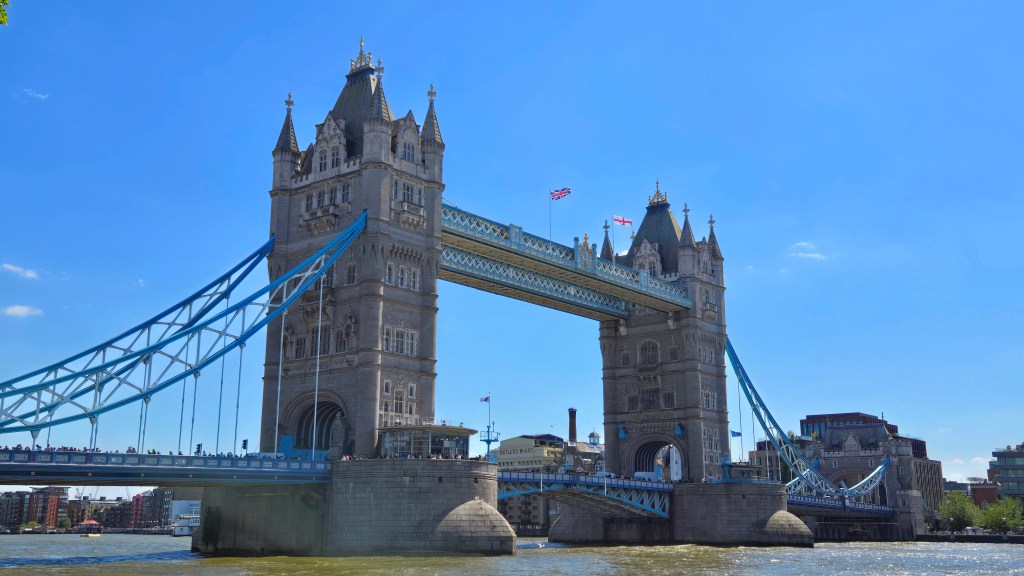


As it turned out Denise was not the only no show. It turned out there were only eleven of us! I met everyone but it took me a day to remember names. We had a lovely Italian dinner at the Cento Alla Torre ( at Tower Suites by Blue Orchid) and the best Minestrone soup ever! I had the pan-fried sword fish served with lemon and herb dressing and for dessert “Panna Cotta alla Lavande e vaniglia,” lavender, dairy free milk, vanilla and macerated strawberries. Yum, yum.
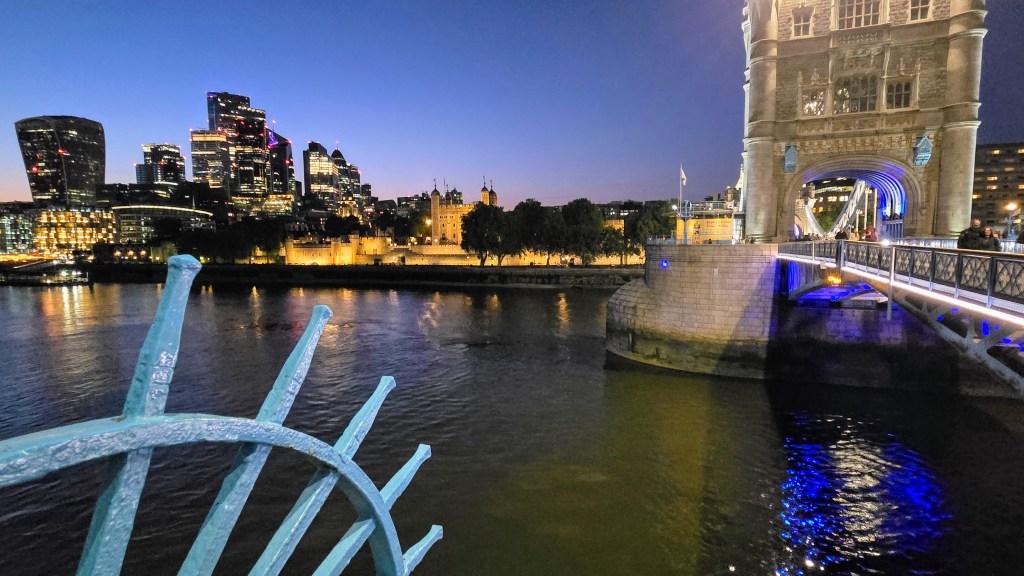
After dinner I asked if anyone was up for a walk. But with no takers I wandered out alone. And I wasn’t sorry. Please note the ceramic poppies in honor of VE day showed up best at night as they spilled out of the tower.


Kelly Wheaton ©2025 All Rights Reserved
LONDON Day Three: The British Museum & Trafalgar Square
Posted on June 5, 2025 Leave a Comment
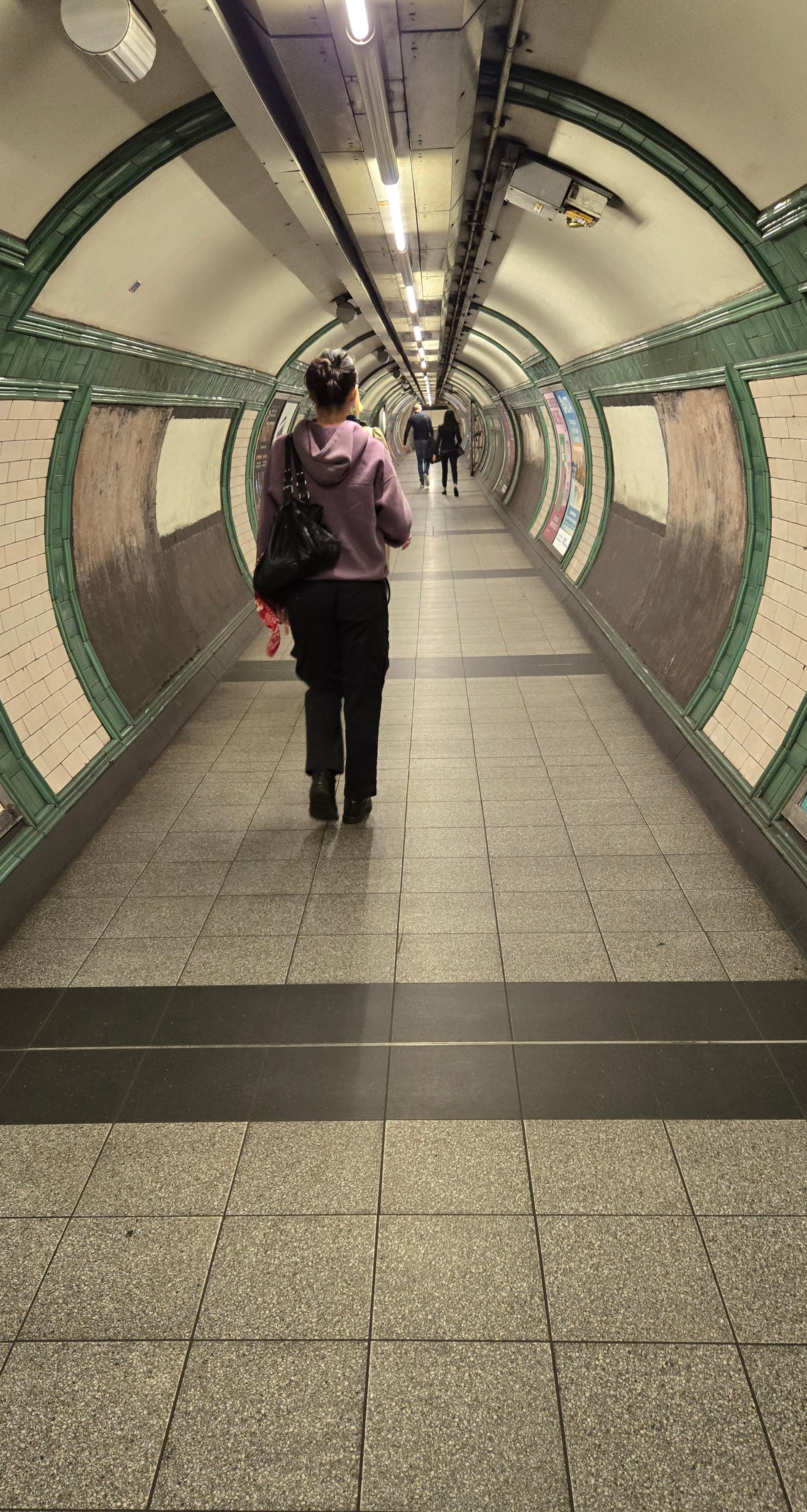

As I have mentioned previously—flexibility is key when traveling. I had tickets for the British Museum for 11:10 AM [First available time slot when I booked ]. But I had arrived there by 9:30 [opening is at 10] from Earl’s Court to Tottenham Station. So I asked, and stood in line and was admitted just after 10. The line was long but moved fast, including bag check. I had a lovely conversation with 2 women that identified themselves as my neighbors. They were Mexican citizens. General consensus about America’s current course made me friends everywhere.
I had wanted to go to the British Museum on my previous 2 visits to London, so this time I was determined to make it. My first stop was the Roseta Stone. It did not inspire me as much as I expected. It is encased in plexiglass and that does not enhance the presentation. The plexi is too close to the object and mars the majesty of the stone. Not to be negative—it just did not show it off in its best light. But I did my best to get a couple of decent photos.


My second, yet most important stop, was room 58 and the Lewis Chessman. Why the Lewis Chessman, you may ask? Good question. I only played chess a little in my youth, so it wasn’t that. I first became aware of the Ivory chessman when reading the historical mystery trilogy by Peter May. The 3 books are “The Black House,” “The Lewis Man,” and “The Chessmen.” This past year an additional novel was added, “The Black Loch.” These all take place in the Outer Hebrides island, of Lewis and Harris.

The Hebrides are the western most islands, off the coast of Scotland. In preparing for a trip to Scotland some years ago I read the trilogy and a book called “The Sea Room” by Adam Nicholson which will be important later in this trip. In any event the Lewis Chessmen and women [queens] were discovered in 1831 on a beach not specified, on or near Uig Bay, Isle of Lewis. The pieces, 94 in all are fashioned from walrus tusks and a few from whale teeth. The British Museum holds 82 pieces, and the National Museum of Scotland has 11 pieces, and one piece is owned privately. I had seen and photographed those in Scotland on my trip there. The 2 sets combined include 8 kings and 8 queens, 16 bishops, 15 knights, 13 warders some of which are beserkers (rooks) and 19 pawns and a buckle [not sure of the others]. They are “believed” to have been carved in the 12th century in Trondheim, Norway due to similar carvings from there. Good evidence of Viking occupation/incursion in Scotland. It is said the Vikings were one of the most important influences in Scotland. In any event the chessmen captured my imagination and I wanted to see more. You can buy replica chess sets, but they are crude by comparison. I will have to do a side by side comparison—but although the British Museum has more pieces, my initial reaction is the National Museum of Scotland had the more finely carved.

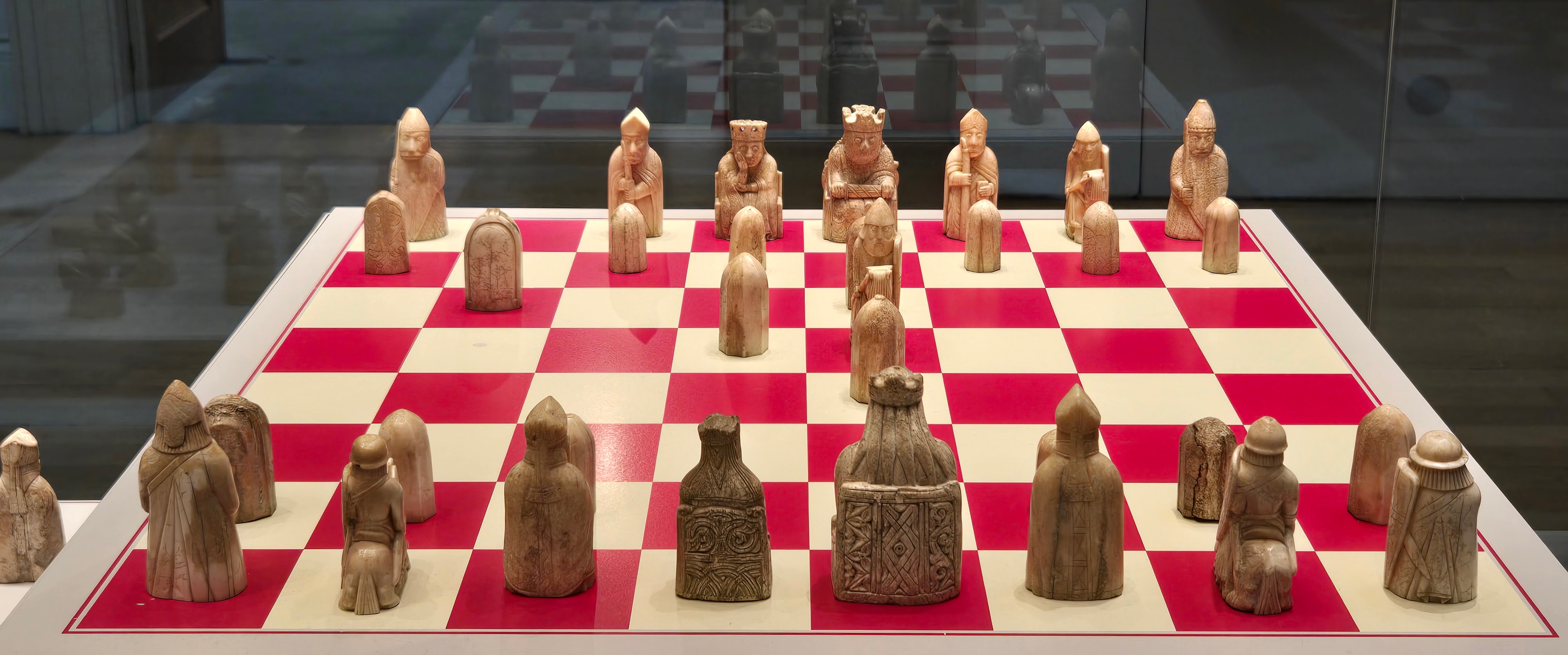


I was told by the guard in the Chessmen room that I was very lucky to have them to myself for a good 20 minutes as usually they are difficult to see, let alone photograph. My mother had a set of carved Monkeys from China. I bought a set of my own as a girl in San Francisco’s Chinatown. They were “see no evil—hear no evil—speak no evil.” Mine were carved of ivory and the thing you know if you have held something of ivory, is they are lighter than expected and ivory has a grain and texture, different, but similar to wood. So for me, there is something familiar and tactile even though I am unable to hold them.
During my visit to the National Museum of Scotland I attended a special exhibit of the “Celts: art and Identity” in 2016 [previously at the British Museum]. Seeing the Gundstrup cauldron is not something easily forgotten. You think it is going to be small but it is 27 inches in diameter and 17″ tall. It is made of silver and intricately decorated inside and out. It dare to the La Tene period of 150-1 BC.

I have been enchanted with Celtic and Viking artwork for as long as I can remember. I get lost in the curves, knots, scrolls and fanciful animals, drawn into a world that invites the imagination to go deeper…
I wandered through the impressive collection of Egyptian artifacts which was massive but the presentation was not so great. I also made a point of going to the Museum’s room on money which told the story of money but the collection itself was quite lean. I was hoping to see lots of Anglo Saxon and Celtic coins, and was quite disappointed that there were only a couple. In the Musee of Beaux Arts is Lyon had a lovely collection.
I found the outside architecture of the British Museum impressive but sterile, much as I found some of the exhibits. The best museums fit the collection to the space in pleasing ways. The Sutton Hoo and British rooms doing much better than the Egyptian or Roman collections, from my perspective. I am not a museum curator, but I know what I like and what engages me. The British Museum has grand architecture in and out, and masses of people but I would visit the Victoria & Albert Museum any day, over the British Museum. It by contrast is warm, inviting and engaging. It reminds me of the huge warehouse “Toys R’ Us” [now defunct] versus your corner toy shop. The one has everything to the point of overwhelming and the other is intimate with someone who guides you to just what you are looking for. This drove home a salient truth for me. The organization of space, whether small or lofty and the presentation of objects inside that space matters to me, a lot more than I realized.
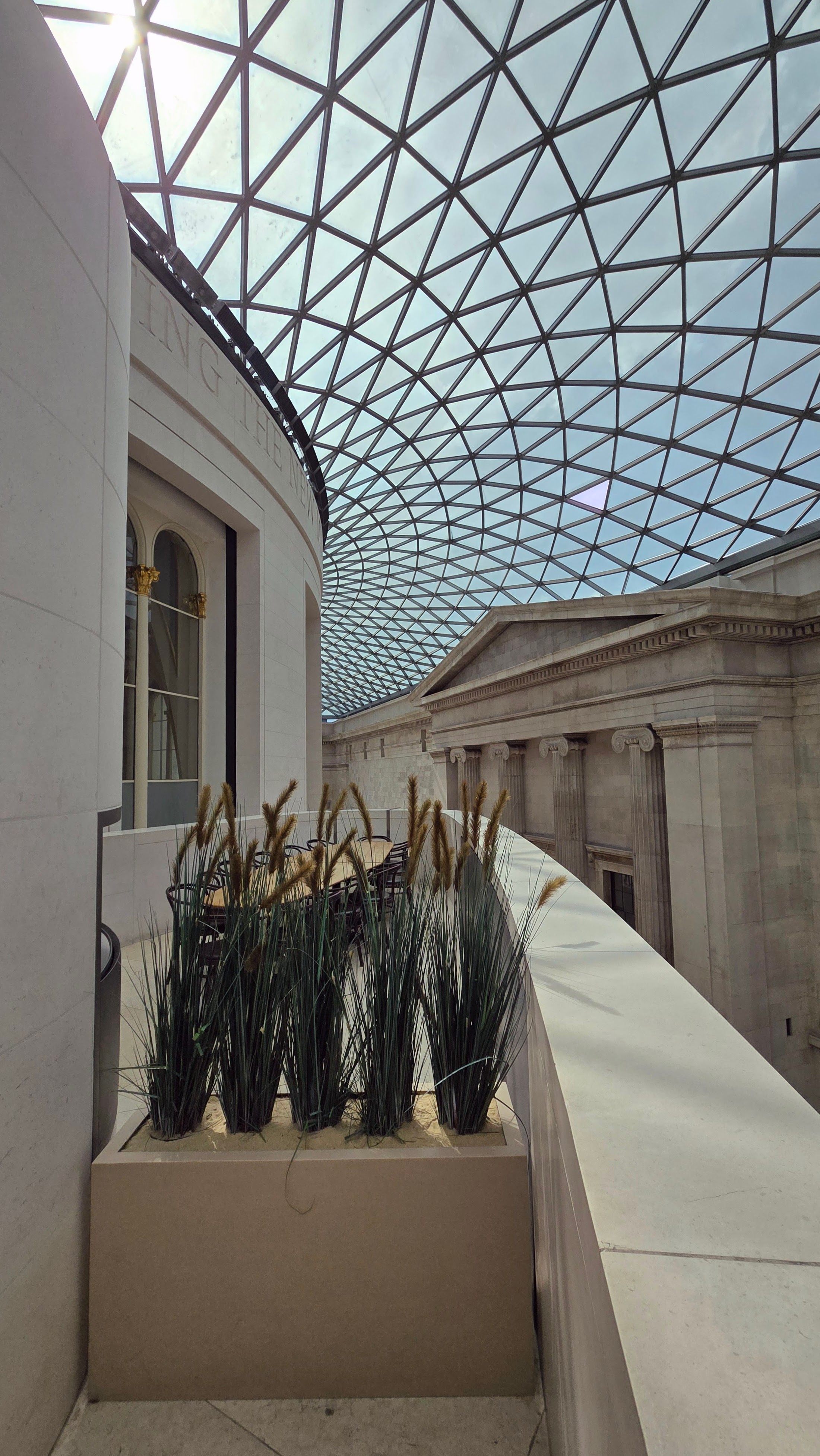

I found a little sanctuary within the British Museum. I met a man there who said he comes to this spot often. I took these photos visited the gift shop and went on my way. I hope I have not dissuaded you from going. I am glad I did, but it really wasn’t so much “my cuppa tea.”

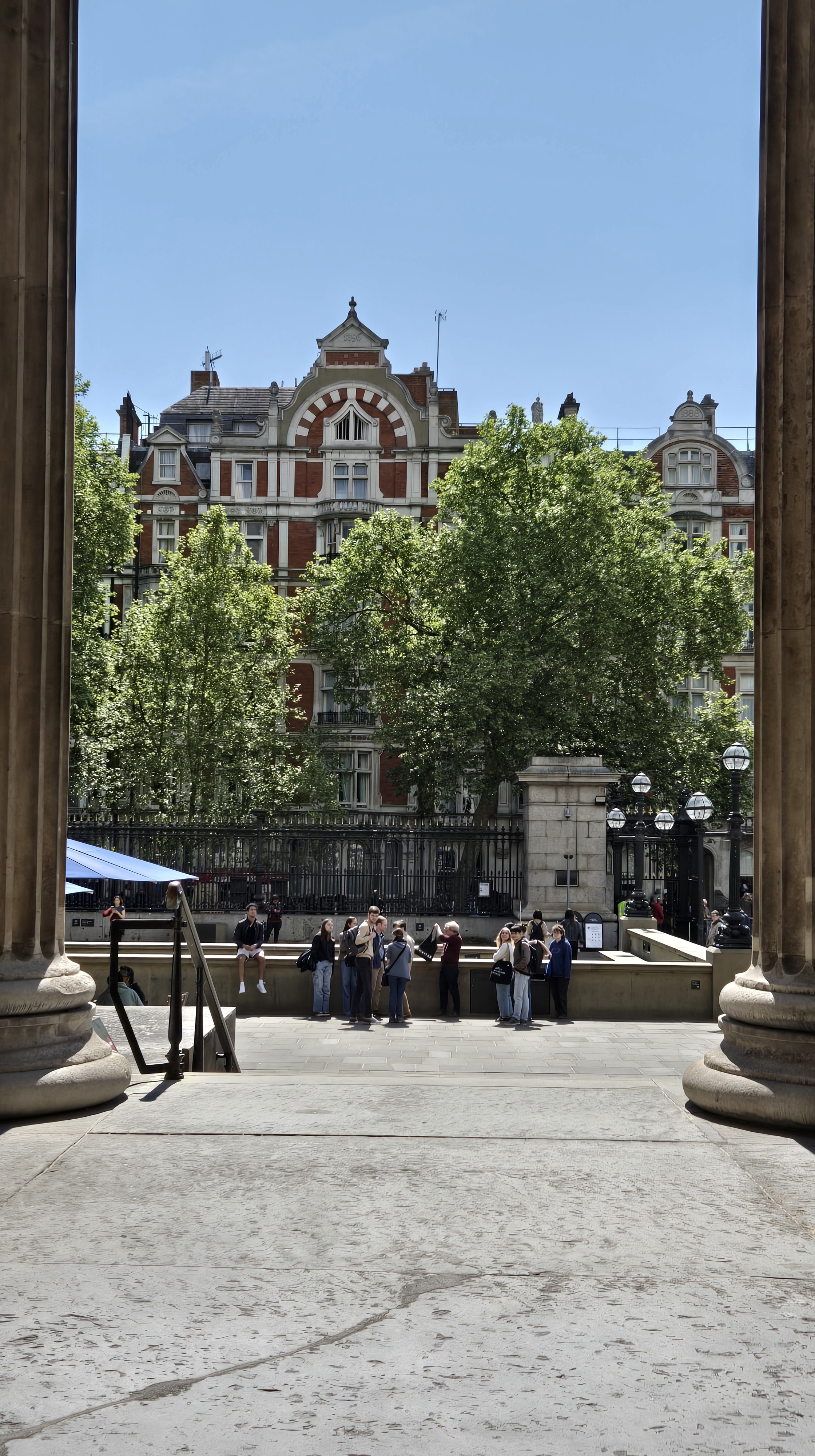
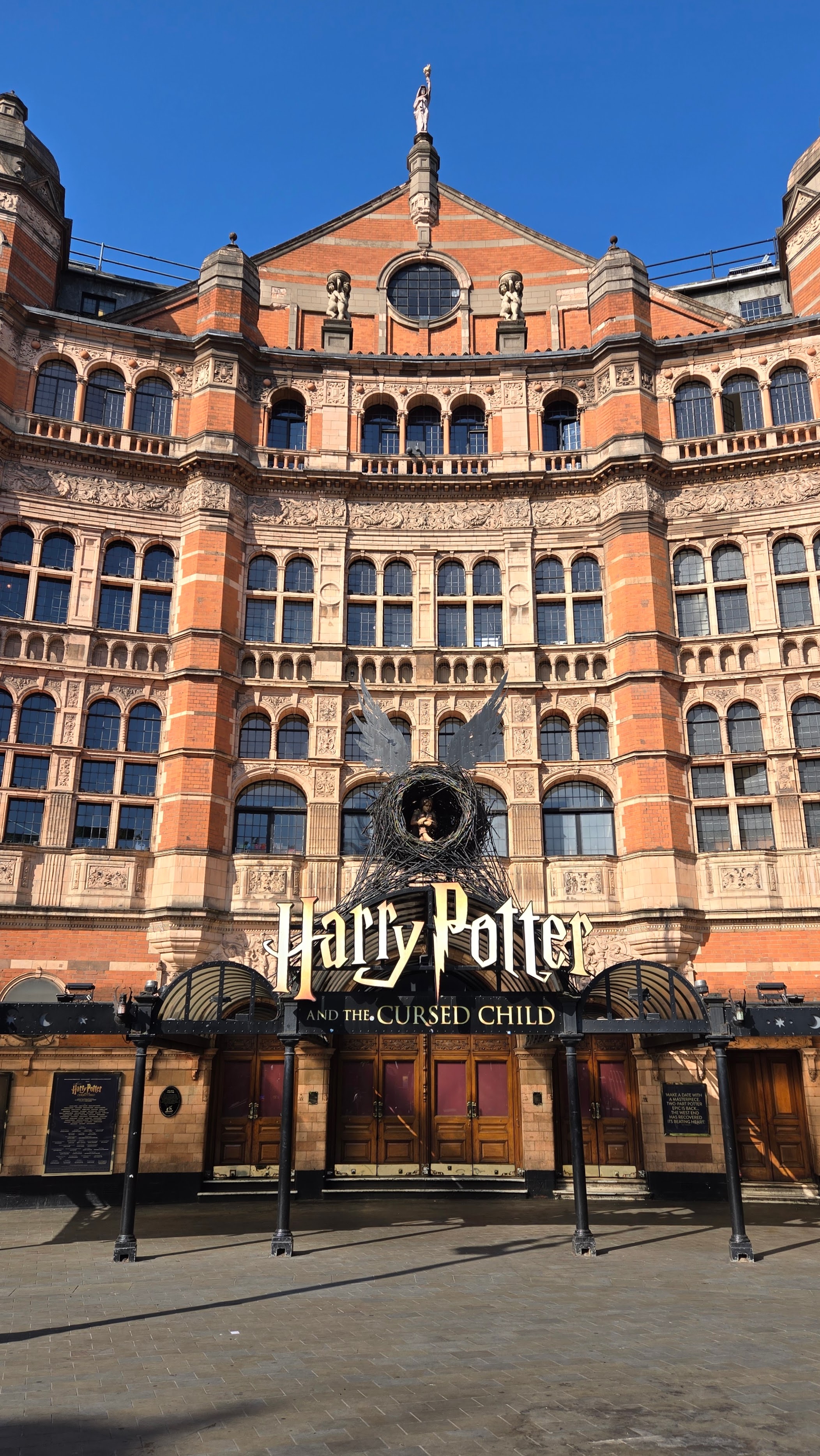
The walk from the British Museum, along Charring Road, takes you through the heart of the Theatre District. Along with the Billboards in the Underground, every conceivable theatre production is here. A few of the sights.



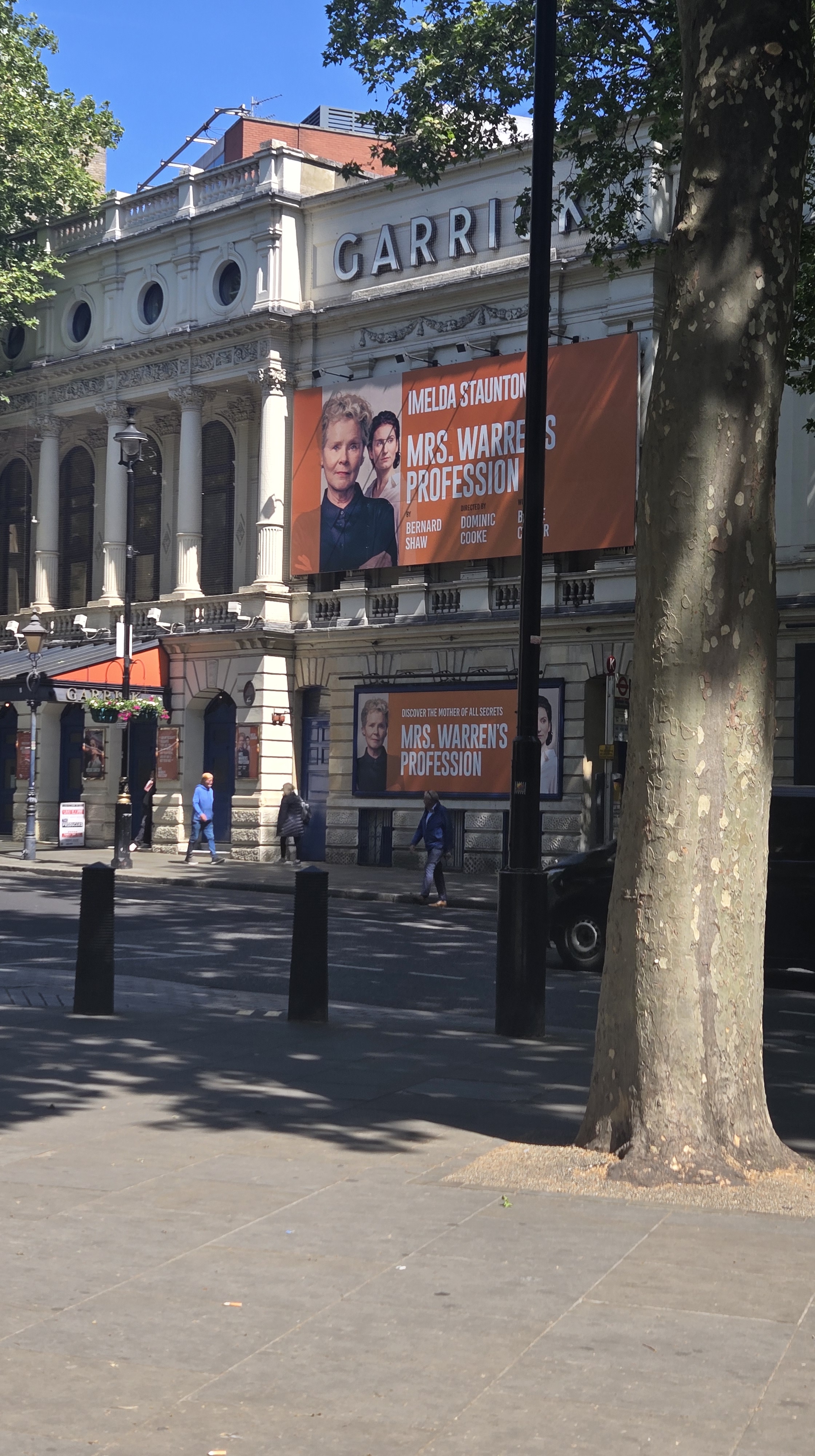
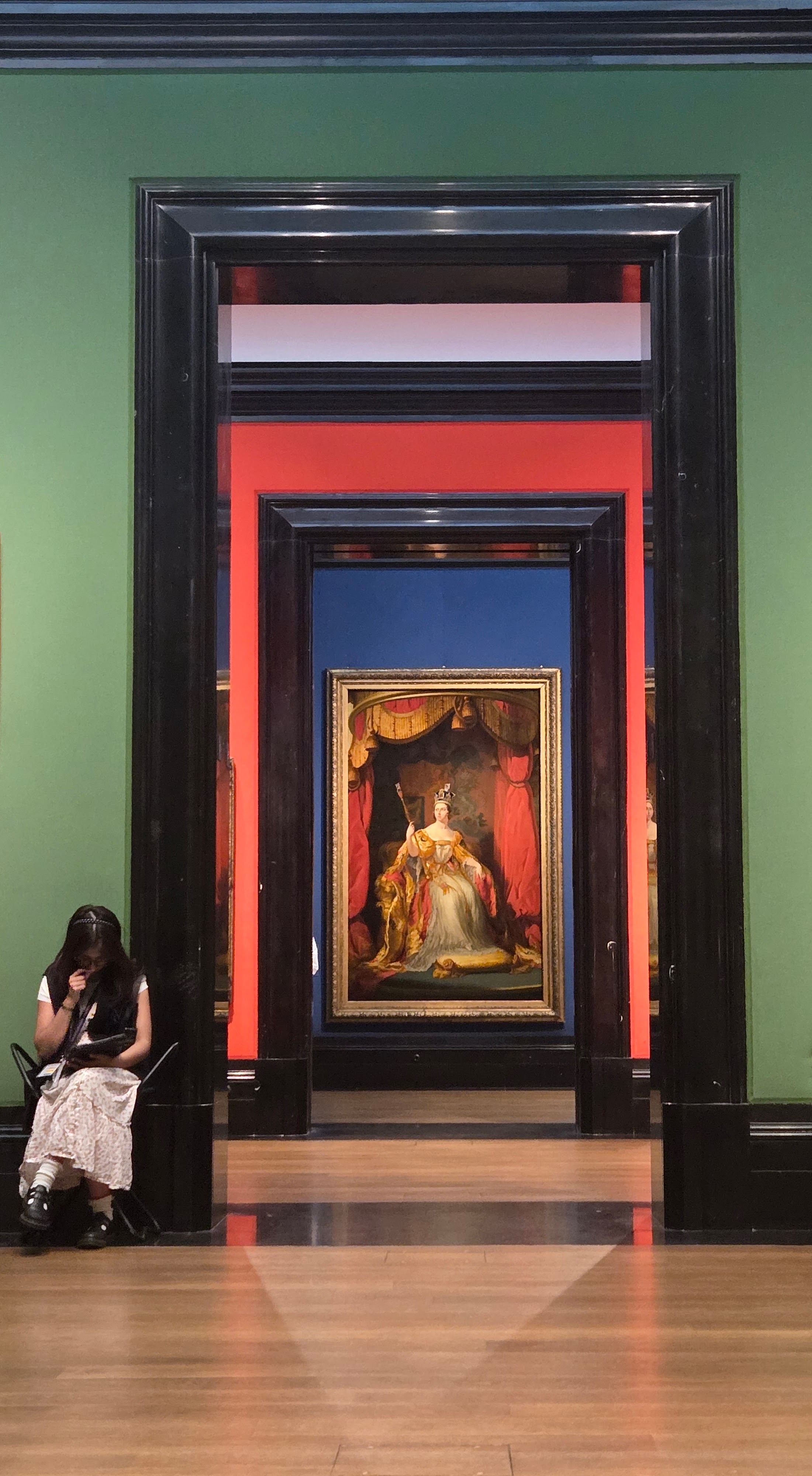
Grabbed one of my meal deals and found a seat outside the National Portrait Gallery. I sat for a leisurely lunch while watching the world go by. I noted the Theatre across the Street and it was familiar. I texted Dale, and asked isn’t this the Garrick where we saw “Noises Off”? Hard to believe in a blink of an eye I could text Dale and get a response, “Yes.” I finished my lunch and entered the National Portrait Gallery. Unlike the British Museum, The Victoria & Albert, The National Gallery and the National Gallery are all FREE, although donations are welcome. I am particularly a fan of the Tudor Rooms with their life size portraits, rich in colors and detail. The lighting is dark to protect the paintings and it adds to the intimacy. I spent some time here.




Then a short walk to the elevator that takes you to the crypt under St Martin in the Fields Church. I didn’t end up going inside the church this visit. I had just missed entry into the mid day concert. On a previous visit I had heard a rehearsal for a chamber concert which included Vivaldi’s “The Four Seasons.” The glass elevator is missed by most tourists. My last visit I stood in the crypt in a crowd of wall to wall people watching the first of several BREXIT votes. This one happened to be favorable to the crowd who were against BREXIT. The crypt has vaulted brick ceilings, a cafeteria, a brass rubbing station and a gift shop. This time the gift shop had shrunk (post Covid-19) and the brass rubbing station had moved into it. The gift shop still had a lively collection of books, cards, linens and housewares. I spent much longer than you might think trying not to buy a mug which would be too bulky and heavy to carry for the rest of the trip. In the end, against all reason I bought it and a box of Cartwright & Butler Lemon & Sultana Biscuits [shortbread type cookies with lemon & raisins] for friends back home. When I got back home it matched the card I received from my daughter.

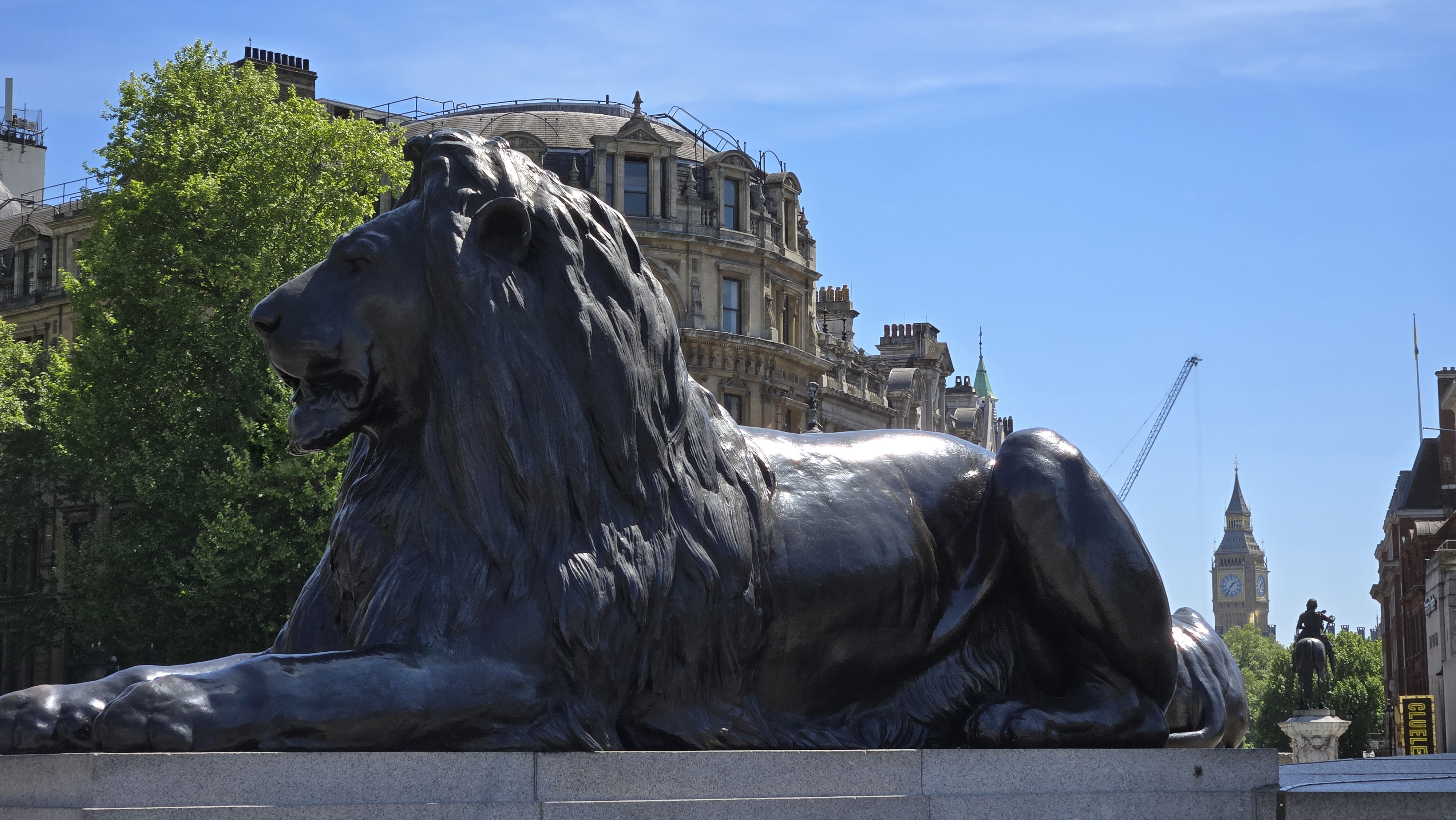
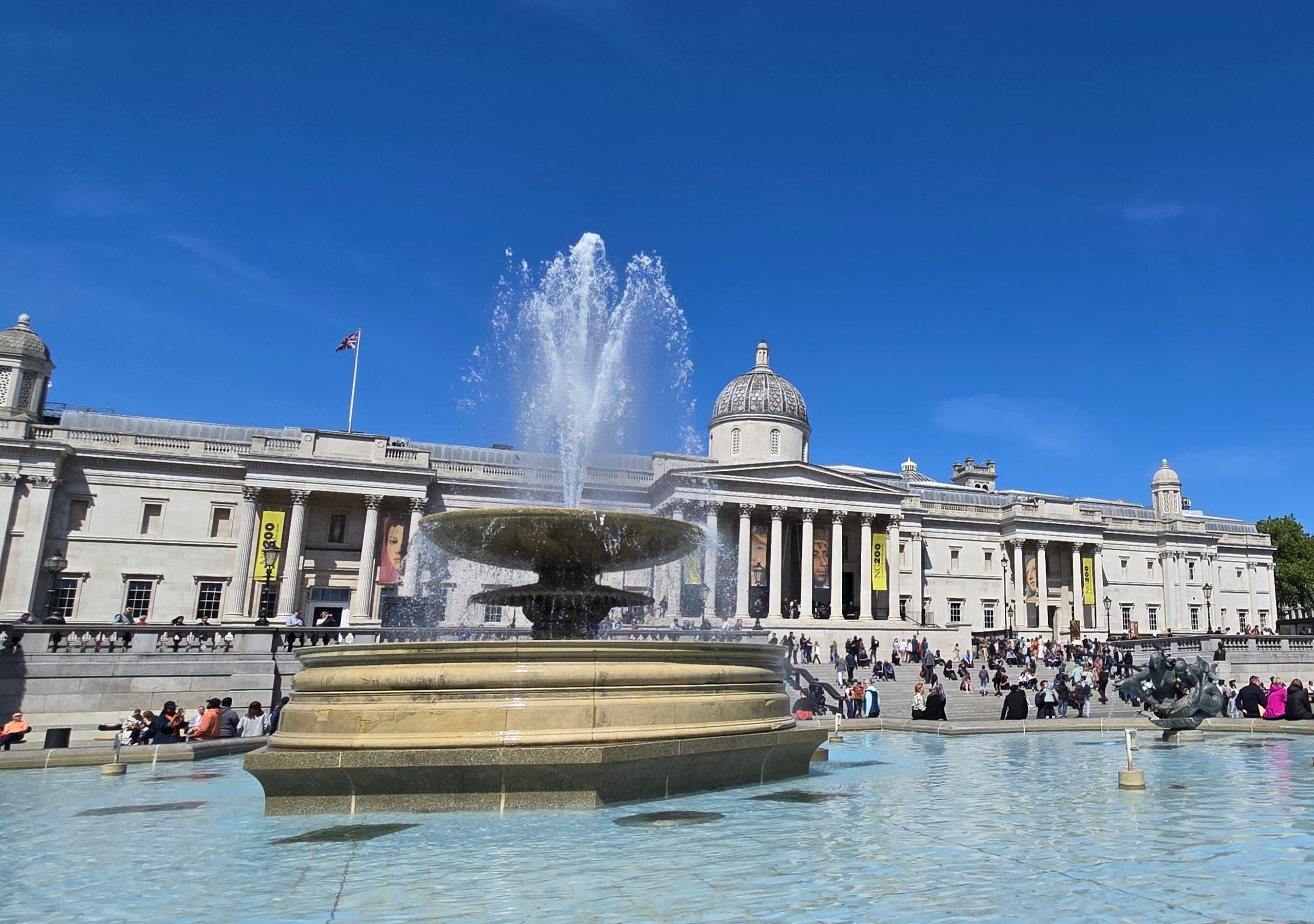
I came back up into the light of day and wandered around Trafalgar square and even spent some time bench sitting and people watching. It is a lively venue for both, especially on a sunny day. Leaving Trafalgar it’s a short walk to Charring Cross Station, which was closed. Argh! For all the wonders of the Underground, station closures, line closures and other misadventures it was often stressful. People are generally helpful, but occasionally give bad advice. I got on the right train once, going the wrong direction and was thwarted several times in having to do work arounds when service was disrupted. In spite of that it’s hard not to love the convenience. I walked to Embankment Station and made my way back to Earl’s Court. Even though not as centrally located I was pleased with my choice of a home base. My last night here before moving on to Tower Hill.


Kelly Wheaton ©2025 – All Rights Reserved
LONDON, Day Two, Part Three: A Day to Remember
Posted on June 4, 2025 Leave a Comment
This is a short one. I can’t forget to show you the beautiful flowers from the Flower Mart stand on High Street in Earl’s Court from today. Have I mentioned I love flowers and Gardens? <winks> I didn’t buy any, but I sure did admire them.


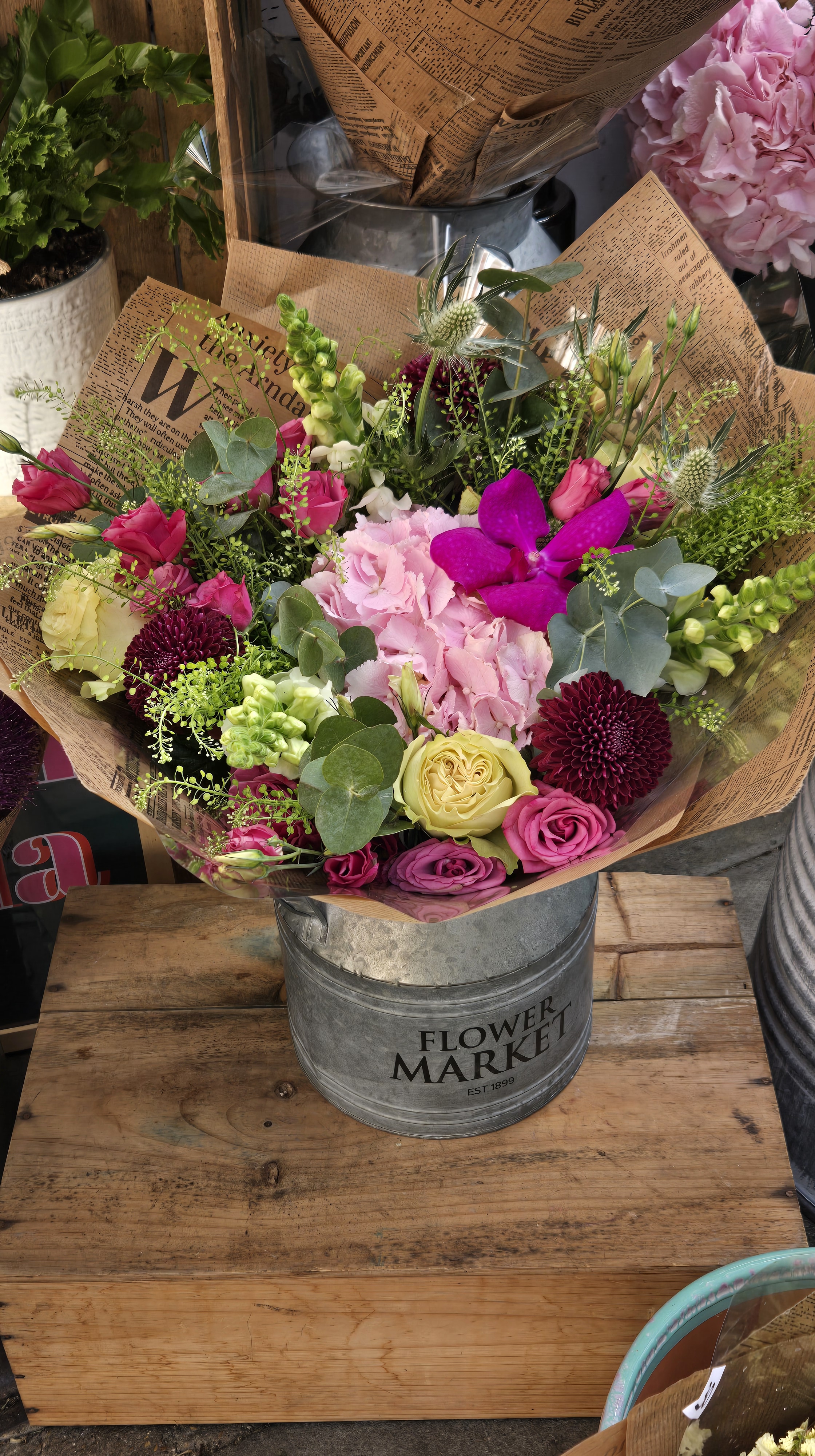


In my last post I had arrived back at my hotel after the Victory in Europe celebrations. I thought my day was done. I turned on the TV to the BBC while I prepared to eat my dinner.
The first words I heard were, “We have white smoke.”
As world leaders go, I admired Pope Francis for being a champion for the poor and an outspoken advocate for human rights. He died the day after Easter, Monday, April 21, 2025. The conclave to elect a new pope began yesterday, May 7th, in Rome. Here it was the next day, and I turned on the tele to find out we had a new pope.
Ordinarily, I would not have had the television on during the day back home and by the time I heard, it would have been old news. So I sat listening to the analysis and speculation on who it might be, in real time. I took photos of the TV in my room. I was watching history—after seeing such ancient history earlier this day.


The whole thing took me by surprise and I wept when Cardinal Robert Prevost, now Pope Leo XIV was announced. I am not sure why, but it probably was part relief that the church had not selected a conservative, that he was the first American born pope and that he would provide a sharp contrast with the current corruption in Washington. Maybe it was a combination of visiting the ancient Catholic Temple Church which had been consecrated on the 10th of February 1185, more than 840 years ago. Having received a blessing and prayer for PEACE from the priest at the Temple Church.
Reflecting on the Magna Carta that was signed at the Temple, which set out the rights of the people, independent from their sovereign. My conversation with the barrister on the appeals court about the law, politics and who would succeed Pope Francis and the overall sense of celebration of the 80th anniversary of VE day May 8th, 2025 in London—and I so far away from my home and reflecting on those coming back from WWII and those that were never to return. It pulled at all sorts of threads of the day together and left me dumbfounded.
In addition we had recently watched the 2024 movie “The Conclave.” It doesn’t matter what your religion or lack thereof—as a voice for reason and caring, a Pope can make a difference. A day I will not soon forget. Yes, Virginia, there are a few miracles still out there…happy to have been witness to a few.
Kelly Wheaton ©2025 – All Rights Reserved
LONDON, DAY Two, Part Two: VE 80th Celebration
Posted on June 3, 2025 Leave a Comment
As mentioned in my last post I made a spur of the moment decision to head over to Westminster Cathedral where private ceremonies were to be held with King Charles, dignitaries and veterans in celebration of the 80th anniversary of VE [Victory in Europe, during WWII] at Noon. I had no expectations. It was a way to hit this area and free up more time on Friday. Arriving at the Westminster Underground Station I headed for Westminster Bridge because it was one of those picture perfect days. Remember I had started my day with a view of the London Eye [Ferris Wheel] far to the east up the Thames, looking West. And here I am in the opposite position looking East. Like so many cities built near a major River, London is no exception—on a gray day nothing can look more dismal or depressing —but on a bright sunny day punctuated by soft cumulus clouds, it’s beautiful.

Now I know the God’s have a sense of humor but come on. The advertisement on the bus is for the Tom Cruise movie “Mission Impossible: The Final Reckoning.” Now I couldn’t quite be sure whether this was an oblique reference to the current state of the United States or the fact that at this angle the Elizabeth Tower was doing its best impression of the leaning Tower of Pisa. On my two previous visits to London with my cousin Dale, the tower had been wrapped in cloth coverings and scaffolding. The renovation took 5 years! Here at last I get to see it and it’s going to fall over?

Not to worry the bus passed and The Elizabeth Tower along with the bell inside which is called Big Ben were righted. Whew! Alls right with the world. BTW Dale this one is for you!

Were there crowds yes, but nothing like during BREXIT. There was a large area all around Westminster Cathedral that was cordoned off with Police every where. I arrived just before one when the ceremony started at noon. When the ceremony ended the bells chimed 80 times, which was lovely to hear.


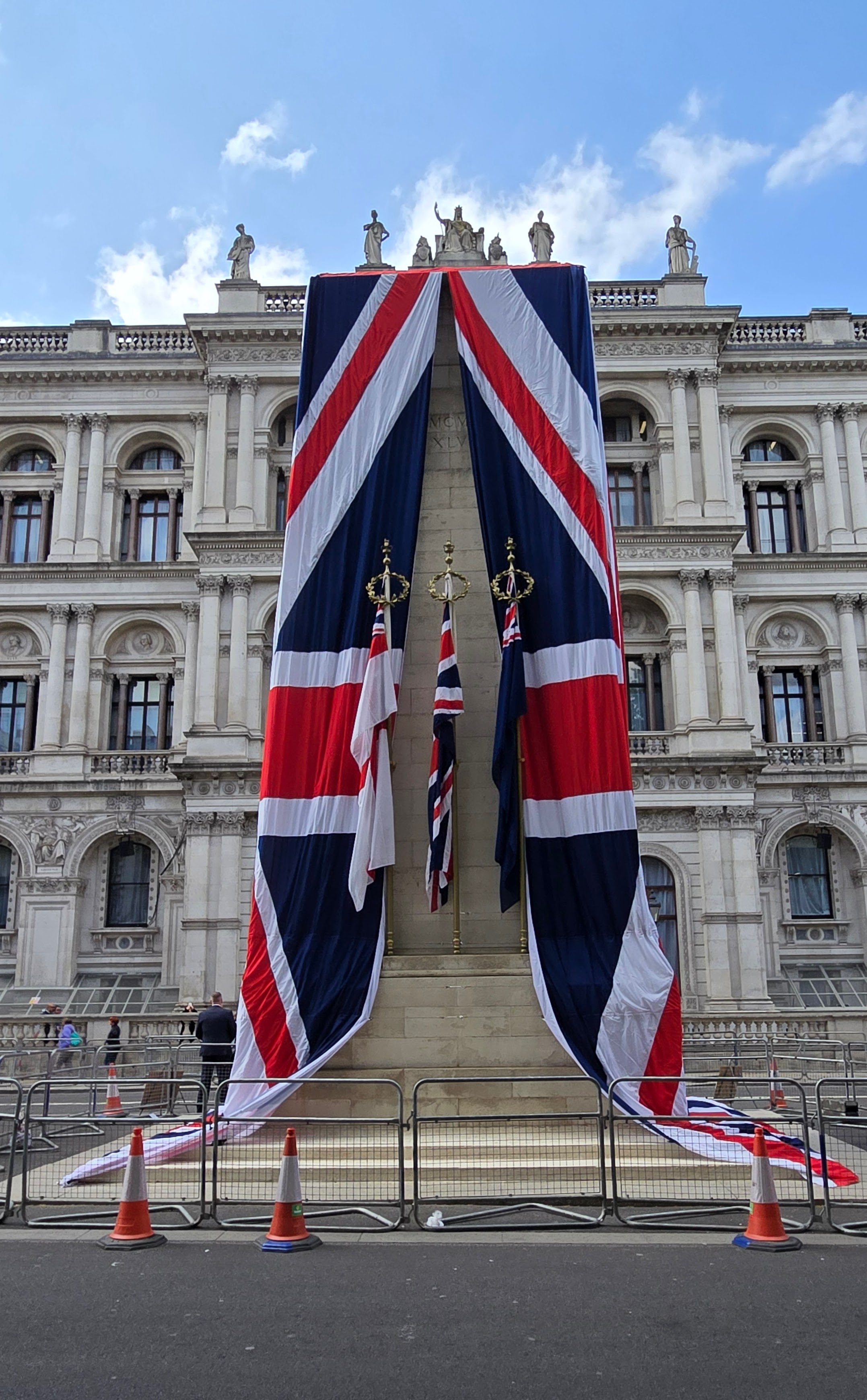
I wandered up Parliament Street to the Cenotaph which is a War Memorial unveiled in 1920 and is the site of the annual National Service of Remembrance. As you can see it was draped in the Union Jack. Then I watched as several dignitaries passed by after exiting the ceremonies at Westminster. There was a women and her husband that caught my eye and I captured this scene. Note in the background is King Charles Street Arch and the Cabinet War Rooms. I don’t know whether she or her husband were vets but she certainly enjoyed taking her photo with this British officer. And she was just too cute—red coat, blue dress and those sling back red Mary Janes with white socks. Her husband had a photo on the back of his coat which I think was of him as a boy during the original VE day. It made the day special. I have often heard my friend Jean (who lives in England) recounting the days during the War.


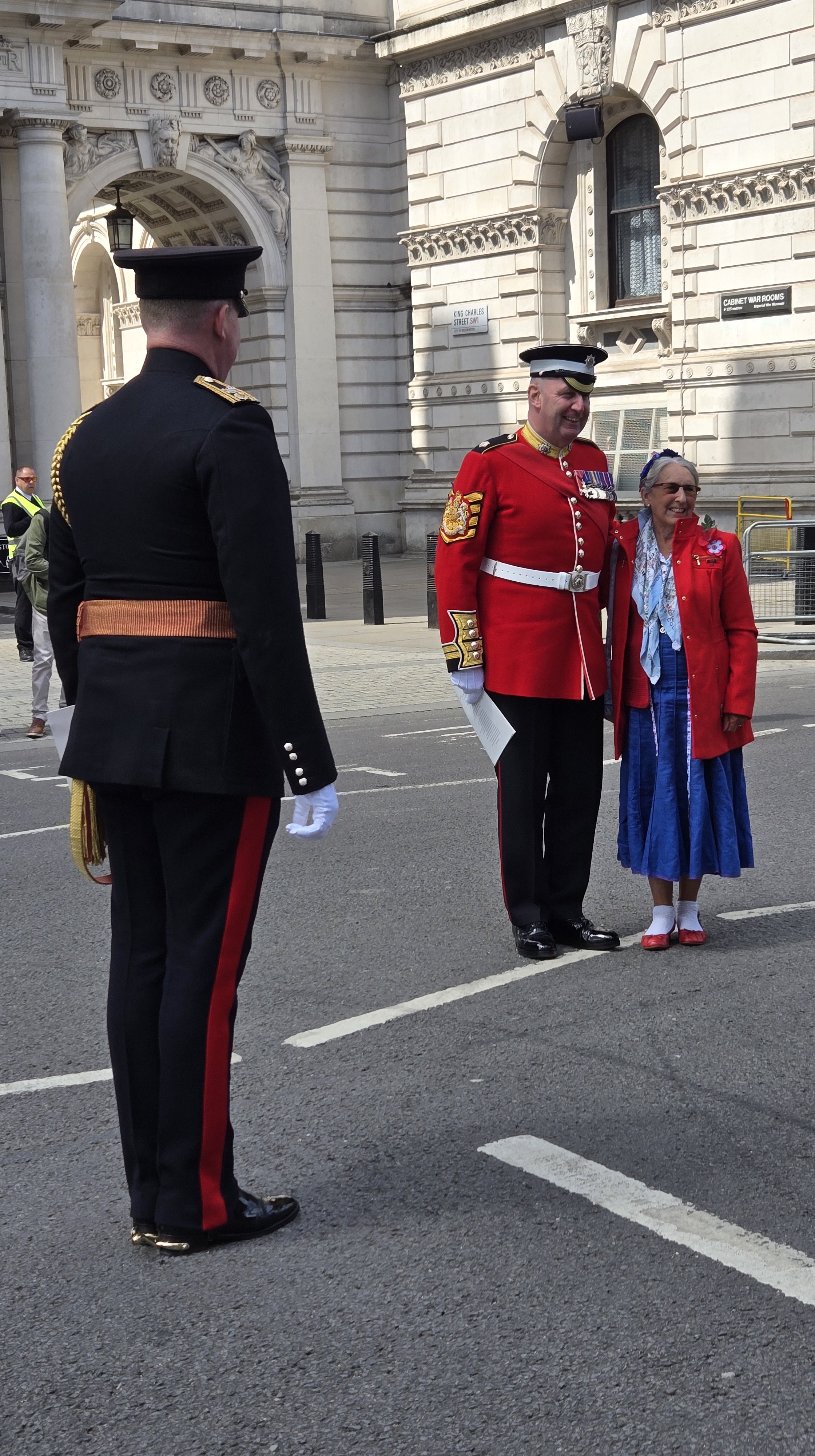

Going forward in my trip I was to see VE reminders everywhere.
I did not stay long making my way back to 20 Nevern Square. These photos are also for Dale, a Dr Who fan. This is outside the main entrance to the Earl’s Court Underground station. And another Dale pic of our friend Willie.
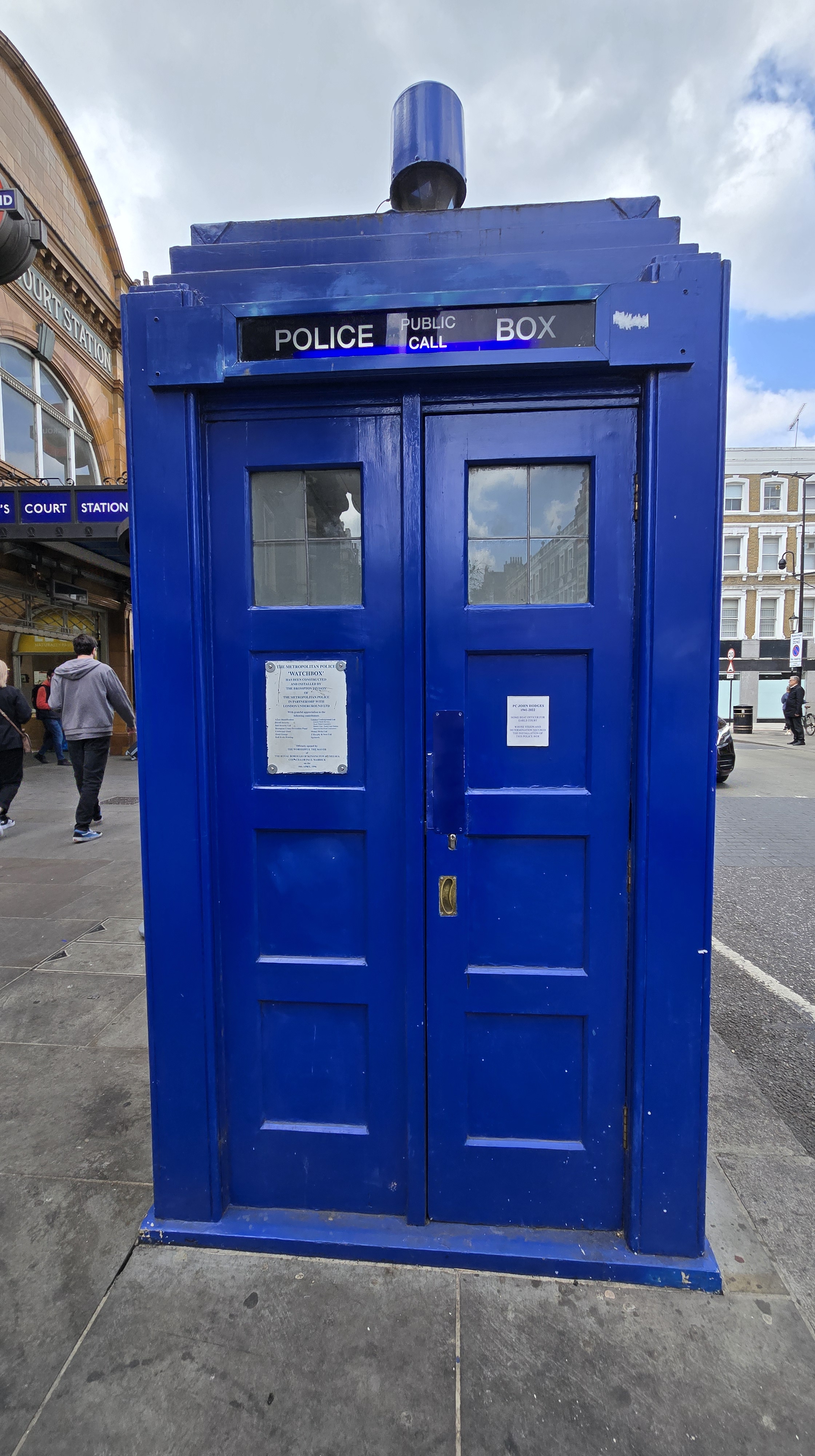

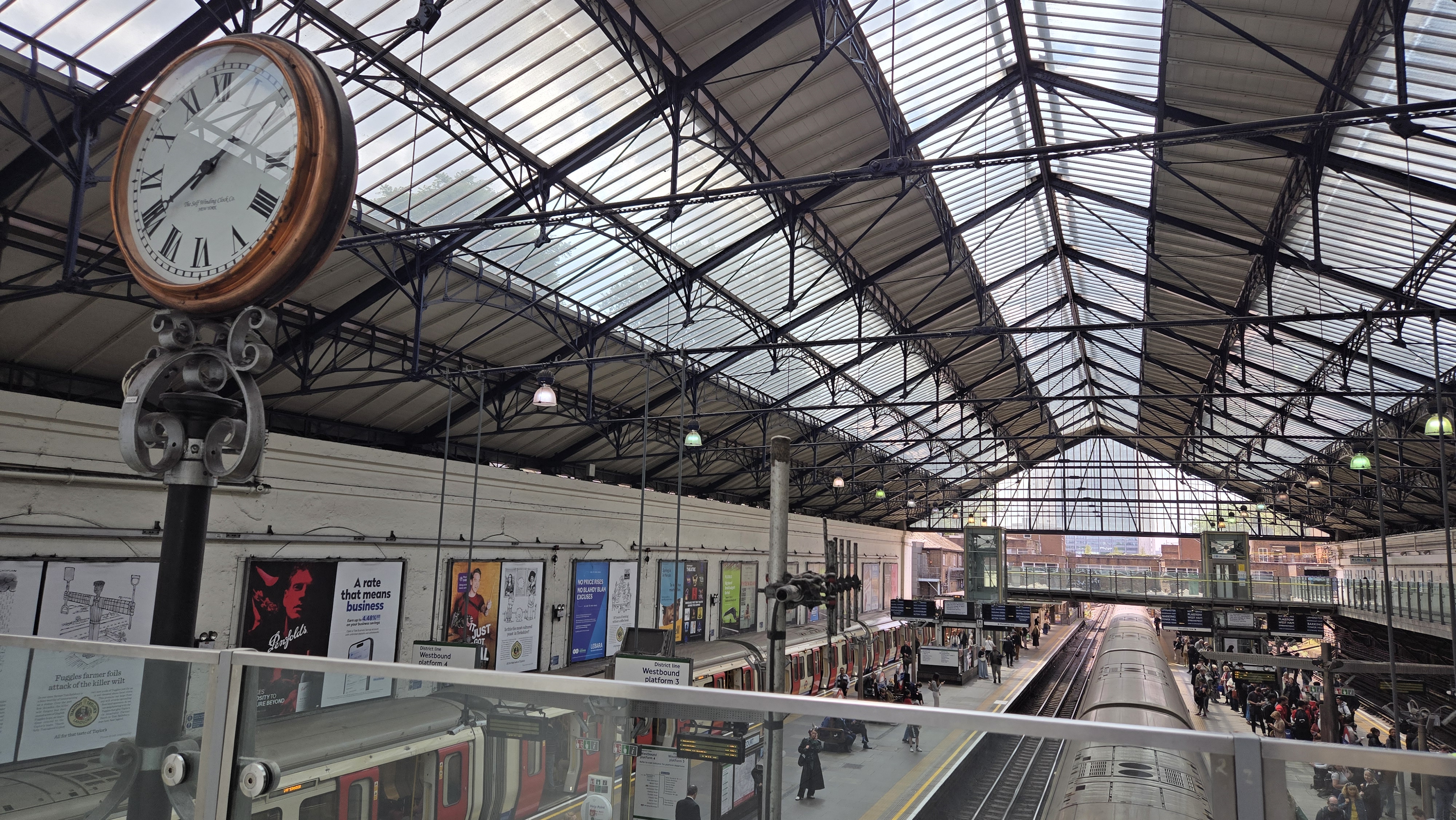

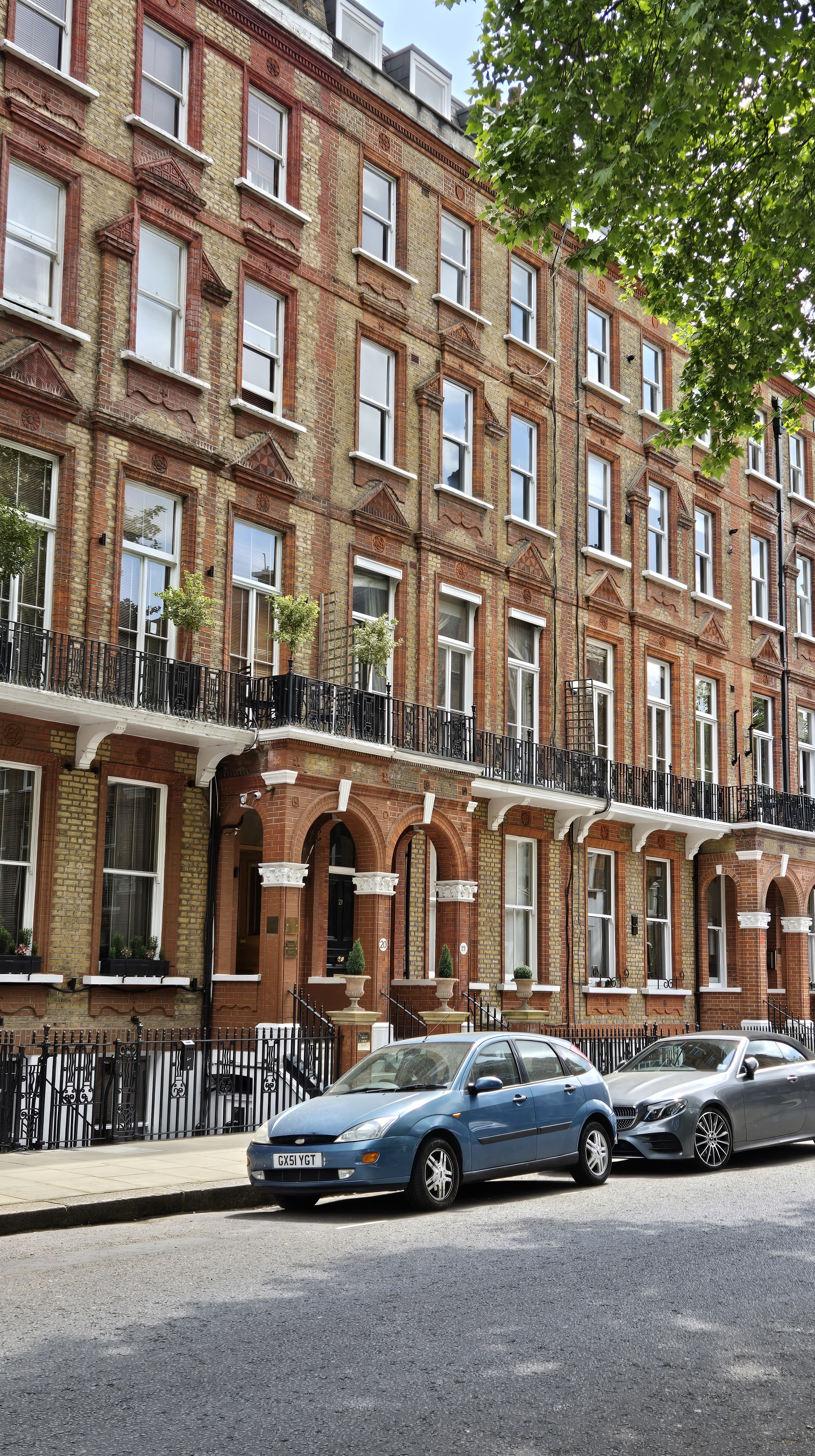
My walk to the hotel. Can you smell the jasmine? And isn’t that little house so lovely? I was only there a total of 3 nights but I found the walk very enjoyable each day on my comings and goings.


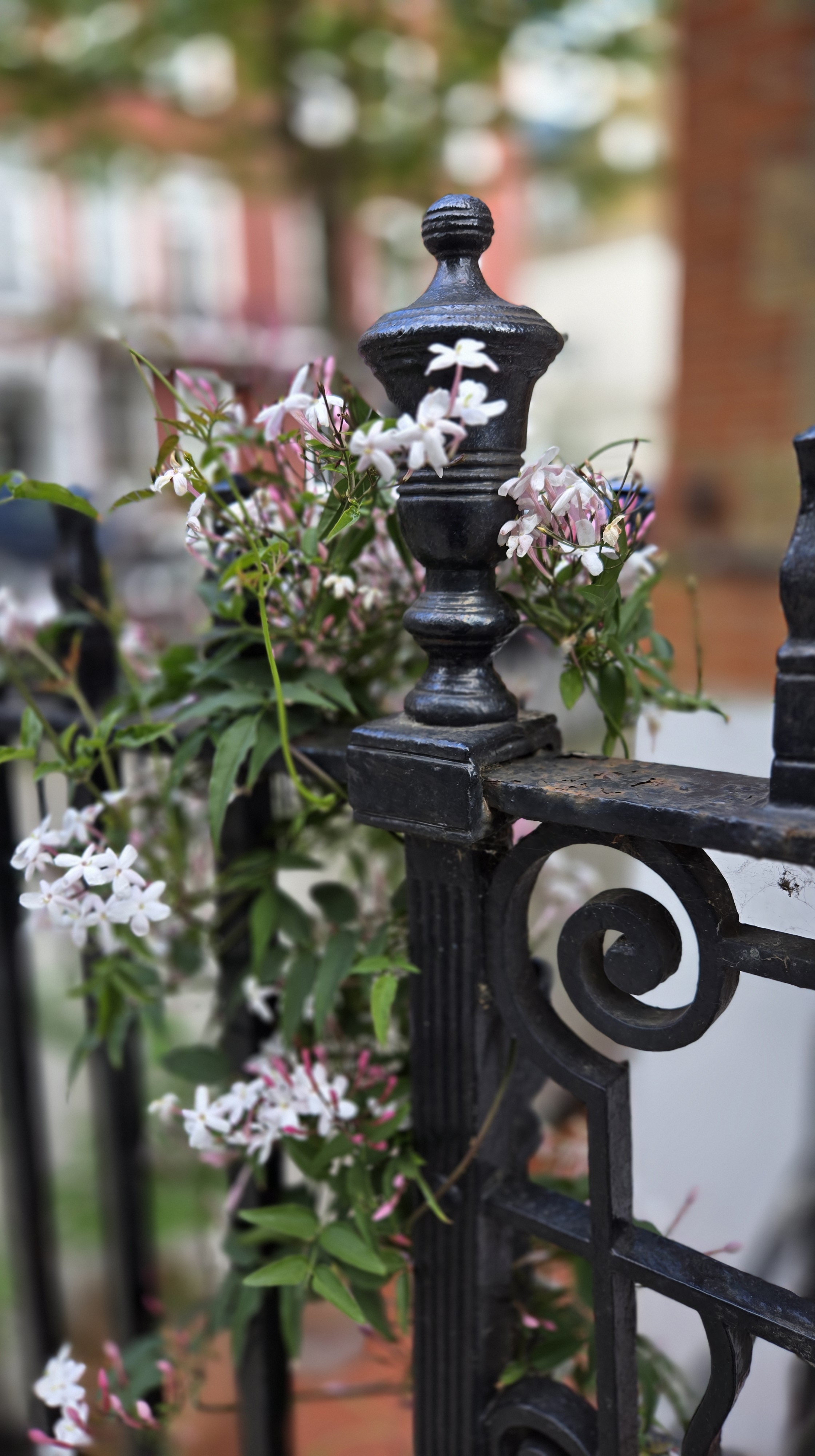


I picked up a meal at Marks & Spence and arrived back at a reasonable hour. In my next post you’ll hear how this day all came together.
Kelly Wheaton © 2025 – All Rights Reserved
LONDON Day Two, Part One: Temple
Posted on June 1, 2025 Leave a Comment
Temple: from the Latin templum meaning an ‘open or consecrated space’.
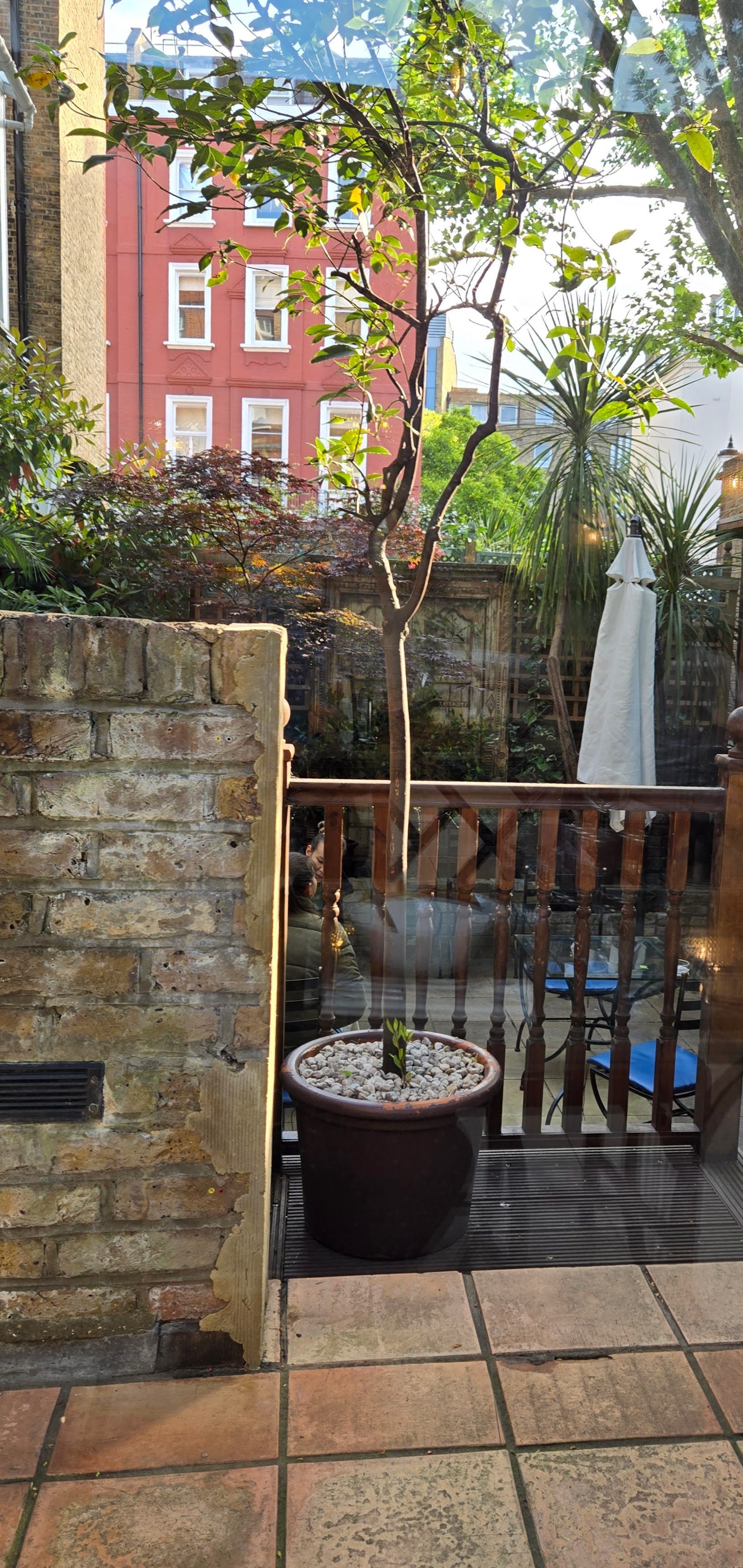
I had an itinerary and a plan, but that was based on traveling with someone who had not been to London before. Upon getting back last night and finding my feet and back complaining more loudly than expected I decided to revamp my plans and downsize my expectations. This was my view of the patio while eating breakfast.
I did not “have to” go or be anywhere. I reduced my goal to traveling to the Temple District. The Temple District is the main legal area in London and home to the Royal Courts of Justice, London’s 4 Inns of the Court, with their adjacent gardens and the Temple Church, built in 1185 by the military order of the Knights Templar. I like to travel with a plan, but not necessarily stick to it, leaving openings for serendipity.
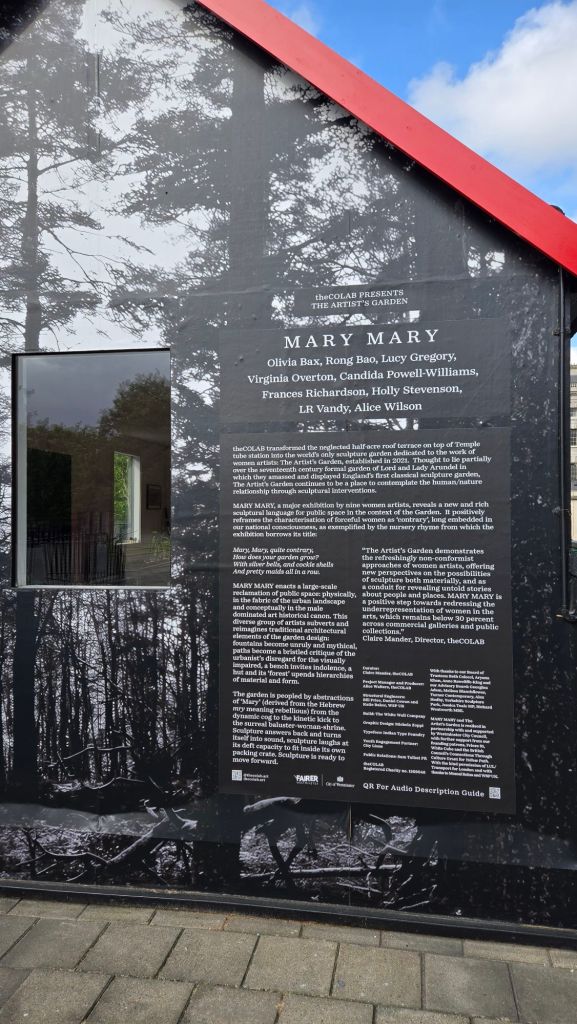
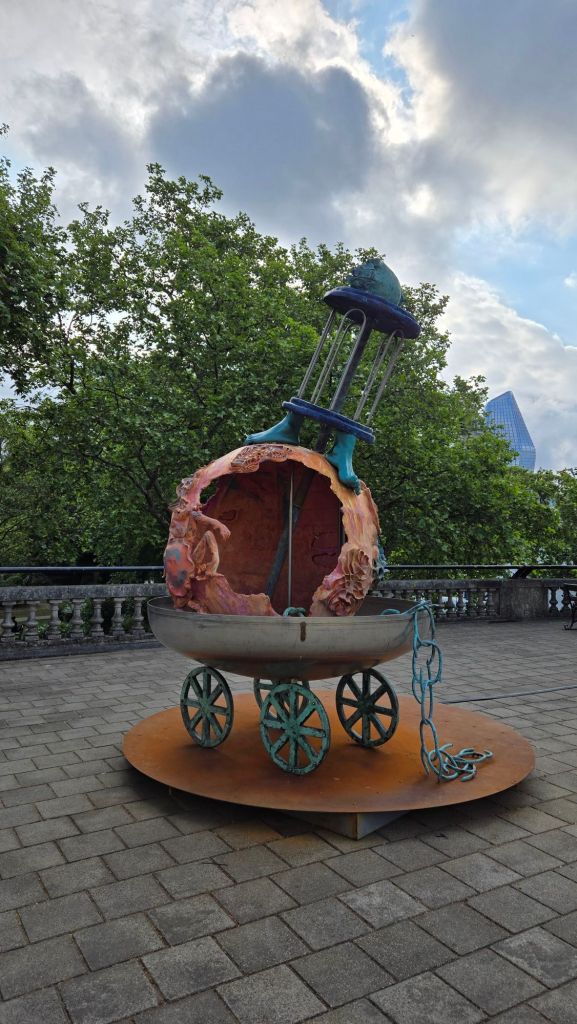
After breakfast I made my way to the Earl’s Court Underground Station and looked to catch the District Line to Temple Station. On exiting Temple Station I happened upon a Women’s art installation beside the River Thames with a fanciful pumpkin carriage with Chain, and a cupcake with the London Eye in the distance.
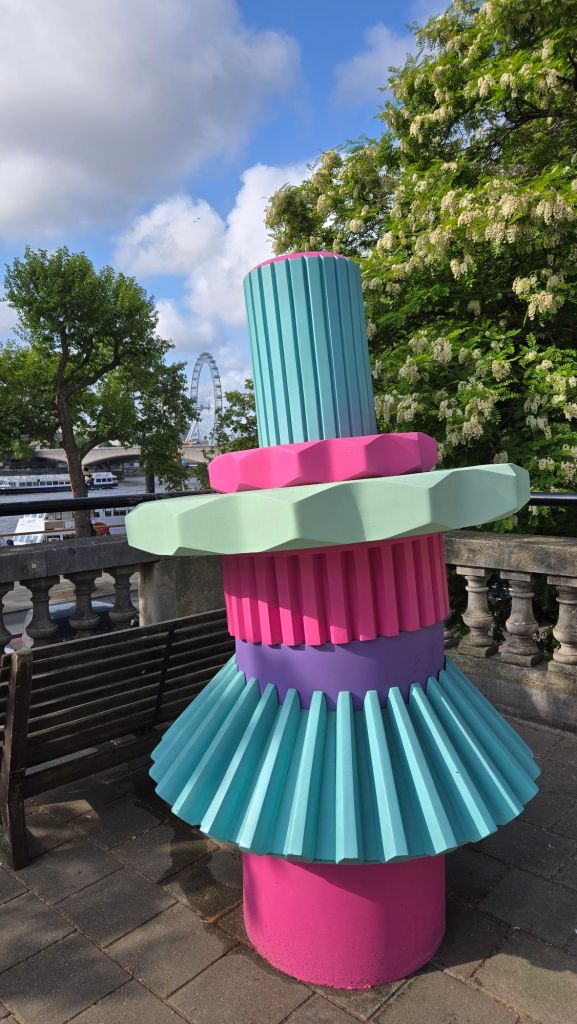
I had visited the remains of the White Friars Monastery on Carmelite Street [see map below] on a previous visit to London. The Temple district is loosely bounded by the River Thames to the south, Surrey Street to the west, the Strand and Fleet Street to the north, and Carmelite Street and Whitefriars to the east.

I became more interested in the Temple area when reading Nancy Maude Peters, “Was Shakespeare a Hydden Man? An Elizabethean Jigsaw Puzzle” This book builds a case for the author of Shakespeare’s works being Ralph SHELDON rather than William SHAKESPEARE. The same Ralph who was responsible for the SHELDON tapestries I saw at the Albert & Victoria Museum yesterday. Her book is available on Amazon and is well researched, albeit controversial. Interestingly, Ralph SHELDON is not among the 88 listed on Wikipedia’s Shakespeare Authorship Candidates list and she builds a better case than most of them. My interest in Ralph has to do with my working theory that my grandmother SHELDON’s line is connected to the SHELDON’s of Warwickshire of which Ralph SHELDON was a prominent member. Ralph SHELDON was admitted to the Middle Temple to study law 12th of November 1556 and had chambers there through May of 1560. About this same time Ralph’s sister Katherine SHELDON married Edmund PLOWDEN. Edmund was Treasurer of the Middle Temple and oversaw its design and construction in the 1560’s. The Middle Temple hosted the first recorded performance of Shakespeare’s play “Twelfth Night” in the hall on 2 February 1602. It is also of note that William Shakespeare set the scene for “Henry VI.” Pt. I. Act 2, sc. iv. at the beginning addressing the Wars of the Roses in the Temple Garden:
Warwick: “And here I prophesy: this brawl today,
Grown to this faction in the Temple garden,
Shall send, between the Red Rose and the White,
A thousand souls to death and deadly night.” SHAKESPEARE
Much of the Middle Temple was destroyed in a fire in January 1679, which caused more damage to the Inn, than the Great Fire of London in 1666. Peters goes into great detail about Edmund’s published law tracts and their influence on a number of Shakespeare’s plays. So there were several reasons for spending my first full day in London visiting the Temple District. Edmund PLOWDEN is interred at the Temple Church [below is his memorial and effigy]. I had not remembered this, but when I read his name I knew it was familiar so I took a couple of photos, even though I had forgotten his connection. But I jump ahead of myself.
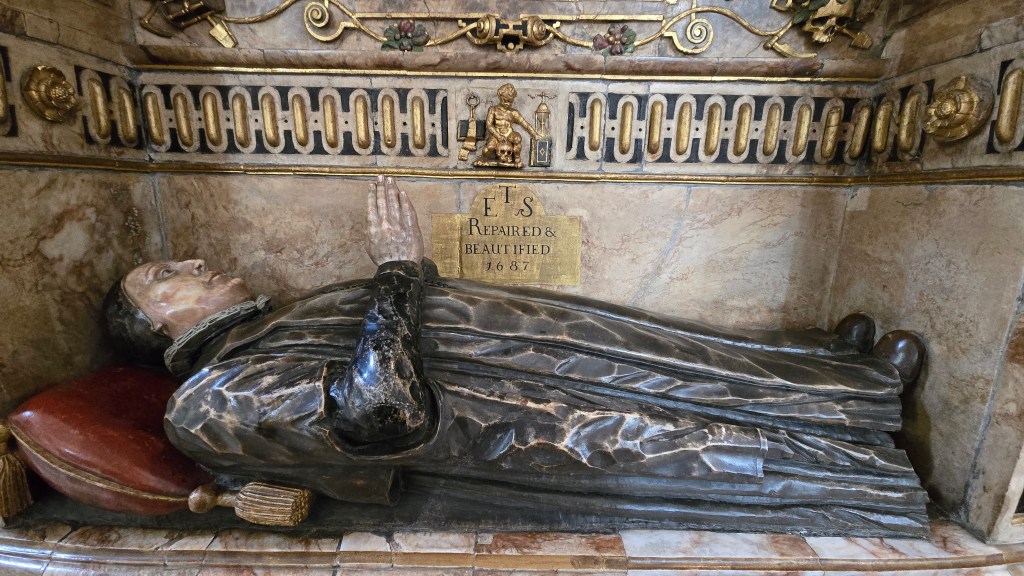
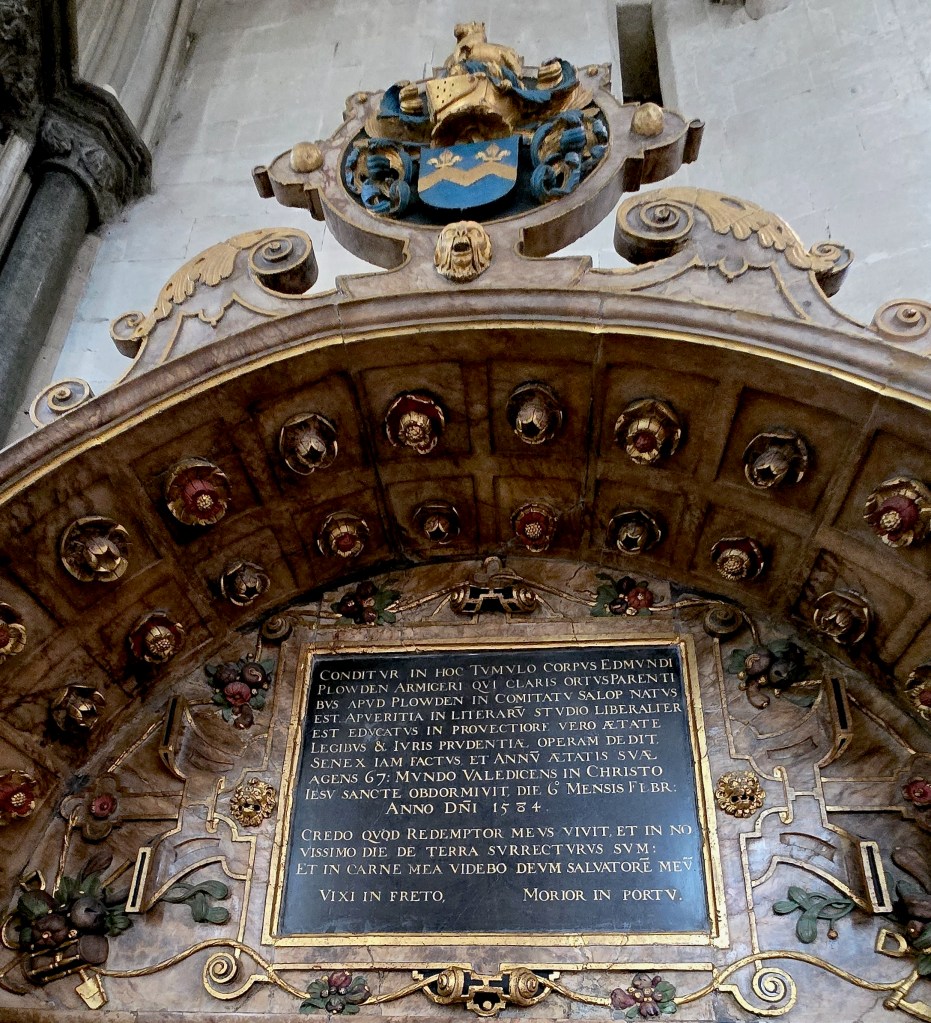
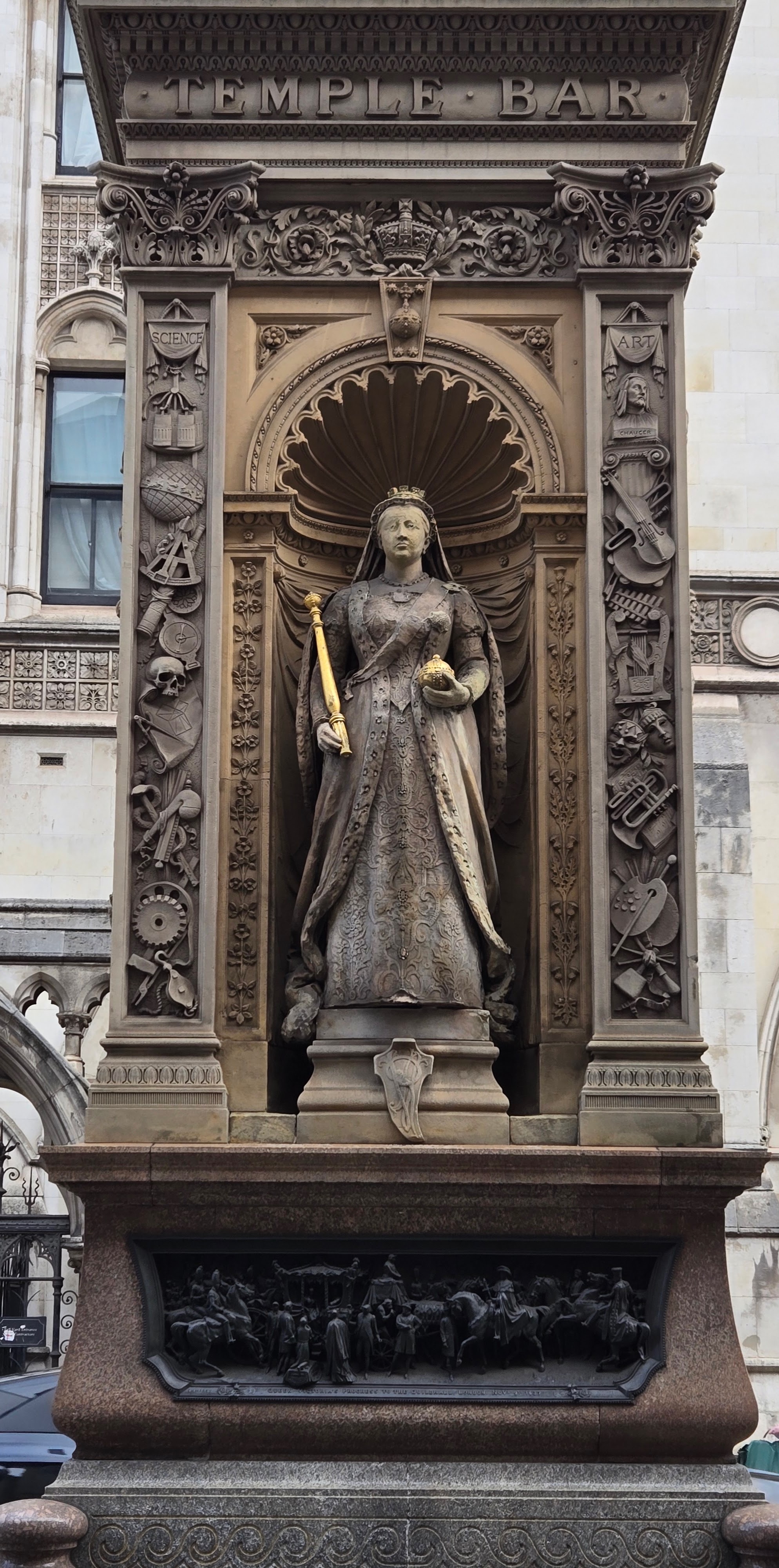
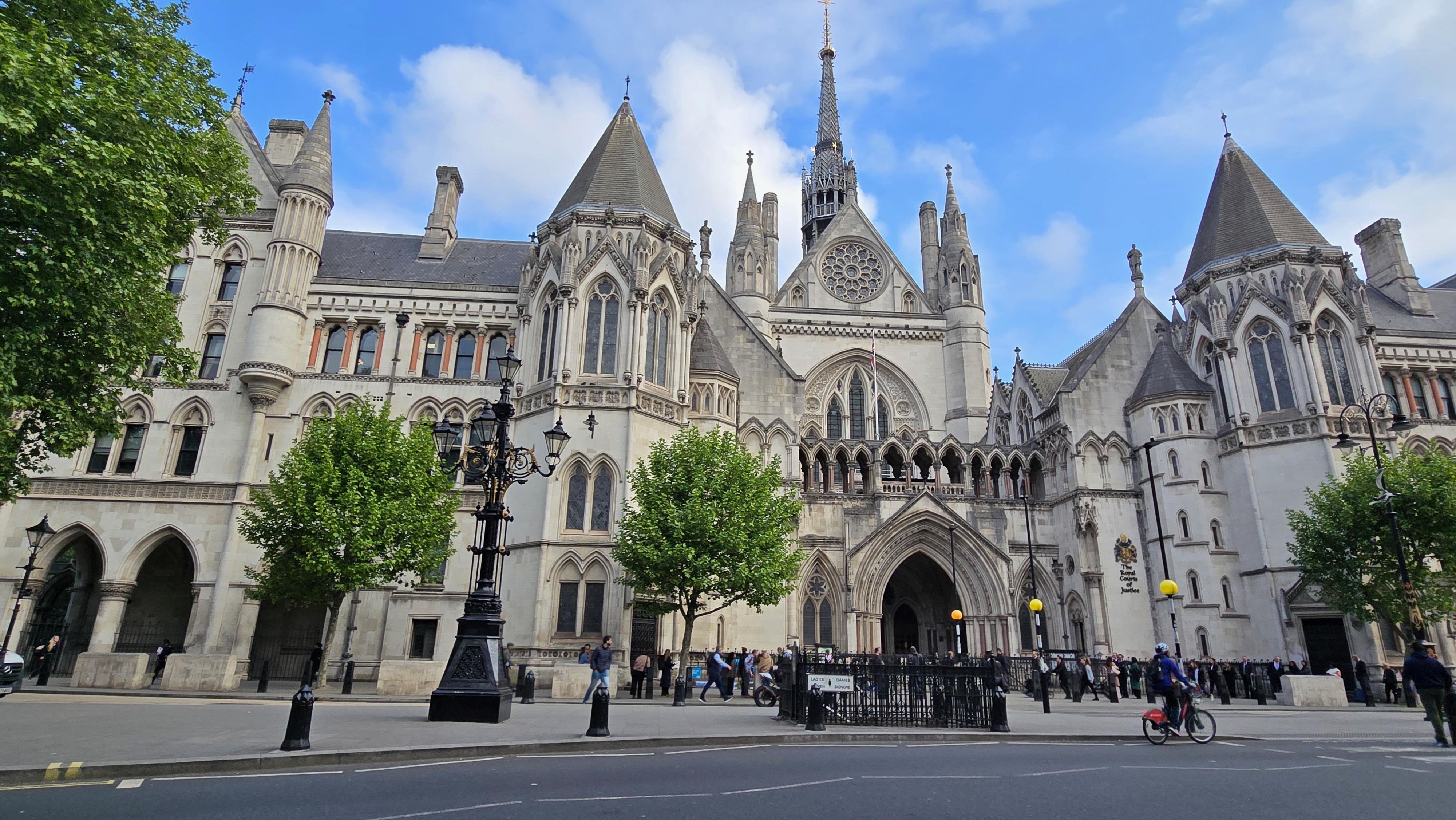
As I was at the Temple church more than a hour before it opened, I made my way up from the Thames to the Royal Courts of Justice on the Strand. This building dates to the 1870s and were opened by Queen Victoria in 1882. A statue honors her nearby. The Royal Courts of Justice, commonly called the Law Courts, house the High Court and Court of Appeal for England and Wales.


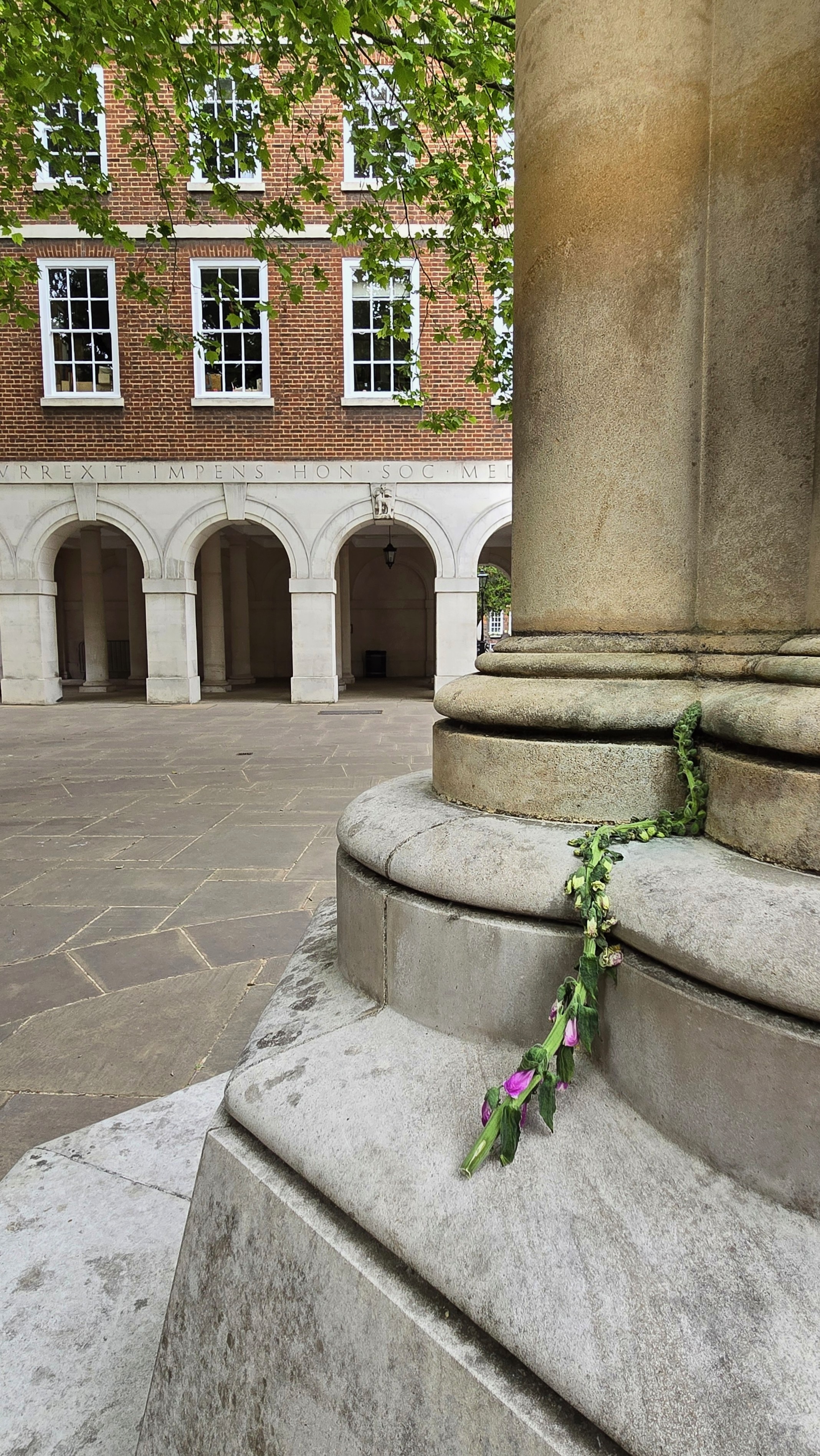
Then I wandered back to the Temple Church and still had about an hour so I wandered around the Temple buildings visiting their gardens as I went. The courtyard outside of the Temple Church is that of the Inner Temple and has this lovely statue to the Knights Templar. Someone had laid a single foxglove stalk at its base and I loved the way it hugged the statue. To whomever left it there thank you! It made me smile.

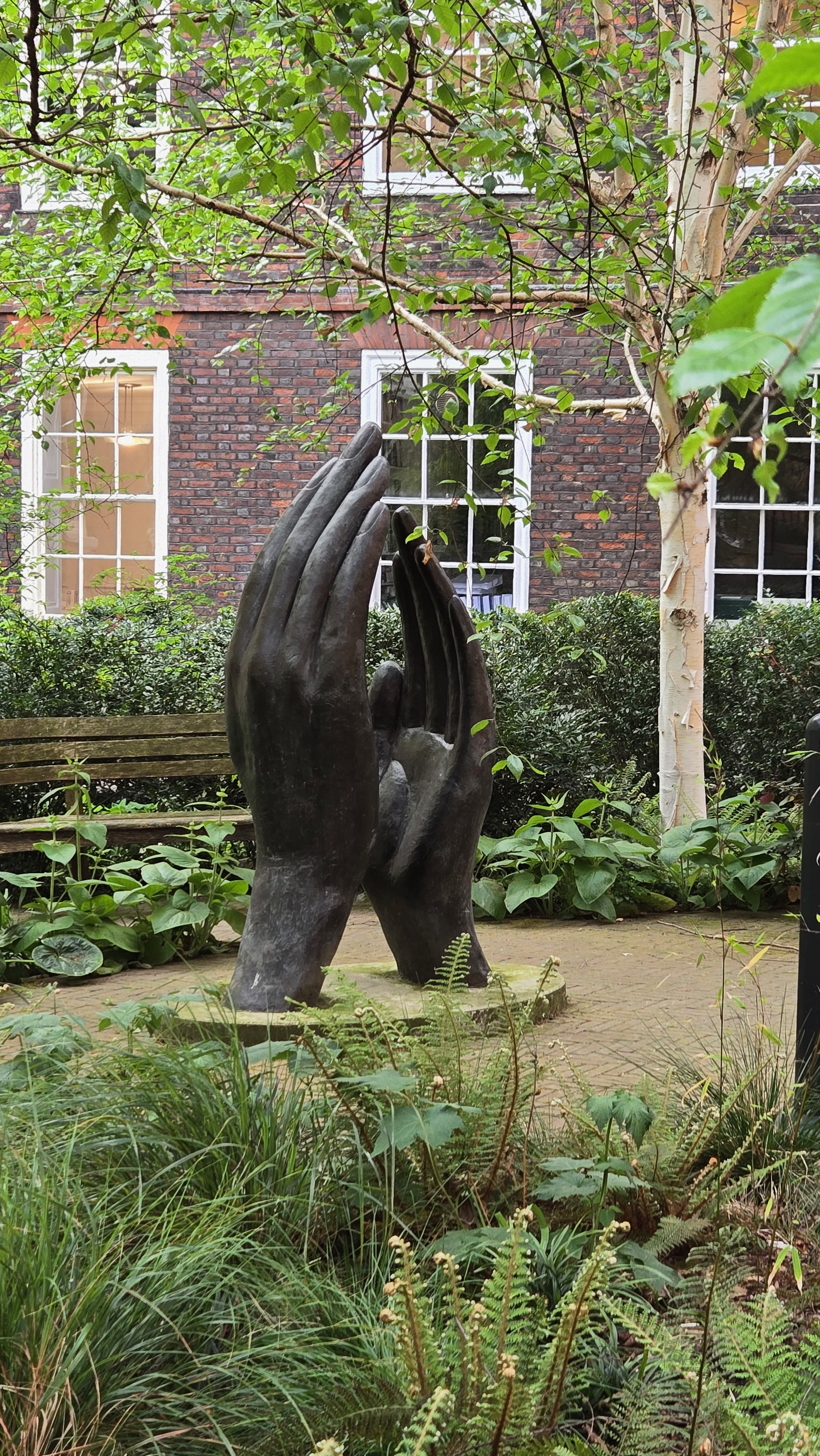
The first garden I discovered was that of Hare Court. This garden was envisioned by the Inner Temple’s Head Gardener, Andrea Brusendorf. Her vision was quite successful. I spent some time exploring this garden and enjoying the benches here and viewing the sculpture ‘Justice’ by Tanya Russell. Viewed from different angles giving very different impressions.

My next garden was that of Pump Court which is more of a courtyard than a garden. In each court building is a list of occupants. Note the Pump in the foreground.


ELM COURT GARDEN
My Next Garden was Elm Court Garden. It was this garden that stole my heart. This was originally part of Fig Tree Court which is memorialized here. [As with all my photos click on them to see the whole photo.] As the plaque denotes it was destroyed in the great fire of 1666 and then rebuilt in 1679 and then destroyed in 1940. It is now part of Elm court. The official listing for the buttery Listed entry #100206 In this case the term come from the French but and was not a place to store butter but rather a place of storage in general.
“The Inner Temple Hall Buttery [is] located 53m south of Temple Church.
It is the under croft and service end of a 14th century hall. Domestic under crofts of the medieval period could comprise three or more vaulted bays depending upon the wealth of the owner. They were constructed of stone, fireproof and used for the storage of provisions or items of special value. Although under crofts are sometimes referred to as cellars, they were not necessarily built entirely below ground level. Despite alterations and additions, Inner Temple Hall Buttery survives well. It is a rare example of a surviving 14th century secular building in Greater London. The building retains some significant 14th and 15th century architectural features and will contain archaeological information relating to the use and history of the site.”
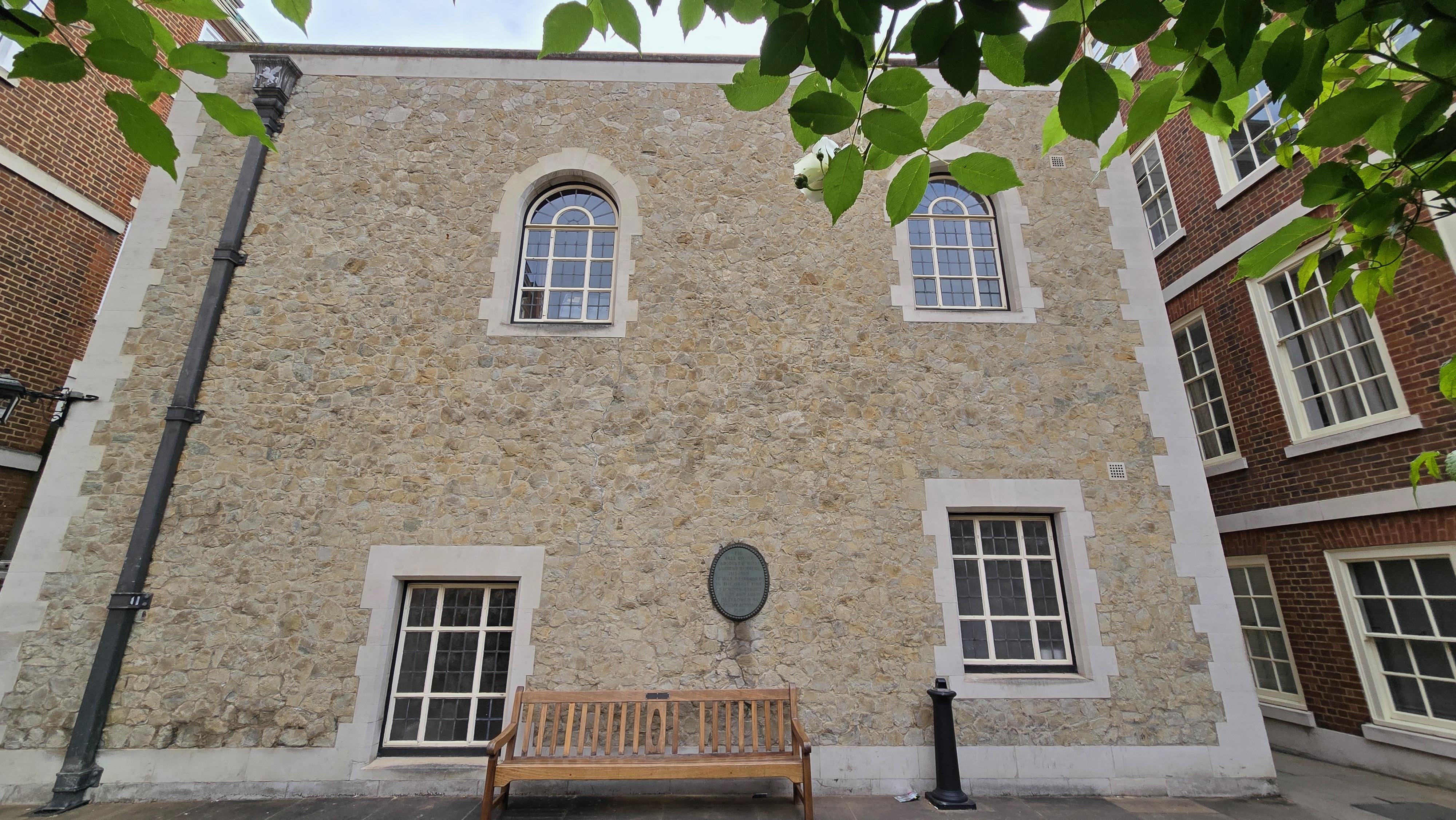

The Buttery forms the (slightly north) eastern boundary of Elm Court. The brick buildings as the stand today are from the rebuilding after WWII except for this wall of the Buttery. To the West is the Lamb Building and to the North and south Elm Court Buildings. This charming space that I fell in love with was originally part of the Middle Temple!!! The same temple where Ralph SHELDON and Edmund PLOWDEN belonged.


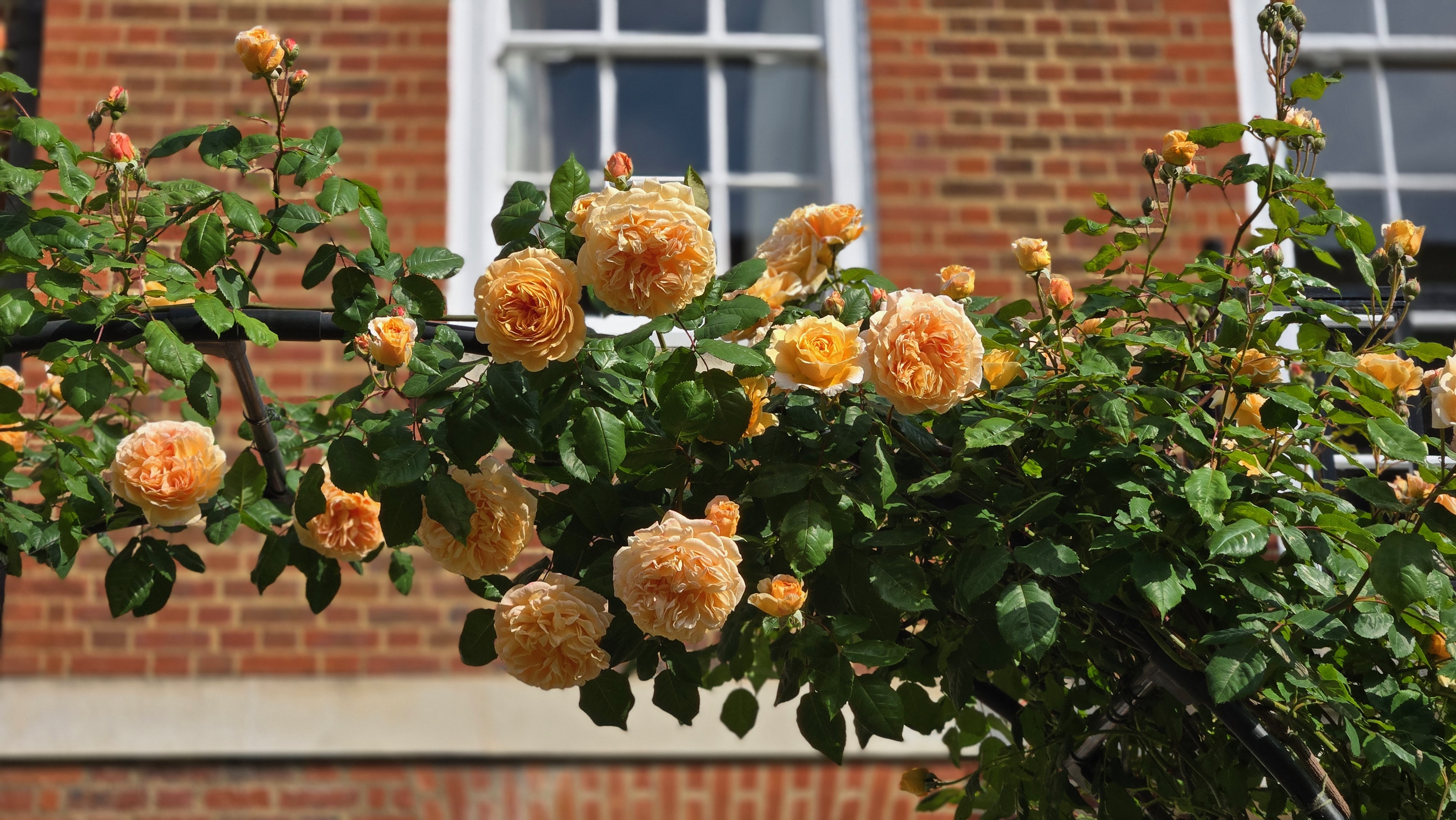
Since Gardening is a passion I want you to read about this garden designer Master Kate Jenrick the Middle Temple’s Master Gardener. “For planting inspiration, Kate looks to the dynamic duo of Christopher Lloyd and Beth Chatto,” both favorites of mine. But let me tell you what I noticed in this garden. There is an incredible attention to detail and the planting of color echoes. Color echoes are plants that share some of the same colors. Look at the photos above do you see how the color of the benches is echoed in the climbing rose and in the brick below. Look closely at the photos below and you will see colors repeated. I think this might be the David Austin Rose “Crown Princess Margareta.”

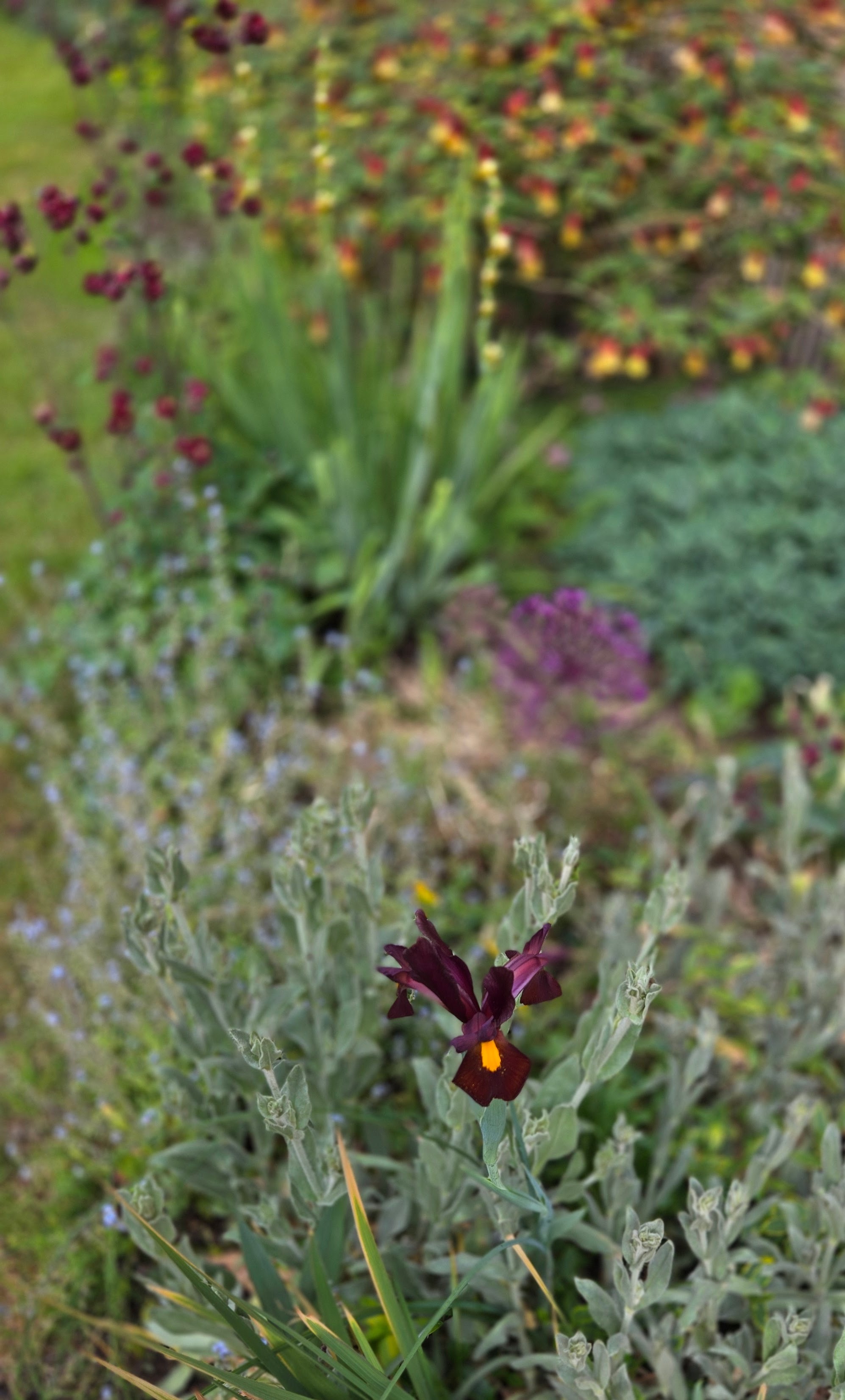
I love the inscription on the bench which reads “IN MEMORY OF TAHERA LADAK 1962 – 2014. SHE WAS A BRAVE ADVOCATE FOR FAMILIES FACING INJUSTICE.” And the Armillary sphere reads:
◆ Make Time Save Time ◆ While Time Lasts ◆ Time is No Time
◆ When Time Has Past ◆

I came back to this garden several times. Such was its impact on me.
MIDDLE TEMPLE GARDENS
However, Master Kate Jenrick is also in charge of the garden that nearly took my breath away. I was coming down the steps onto the Garden court of the Middle Temple Garden and stopped in my tracks. Wisteria dripping off the balustrades and banksea roses climbing the brick walls of Middle Court. A man, the only other soul there saw my admiration and said, “Stunning isn’t it?”
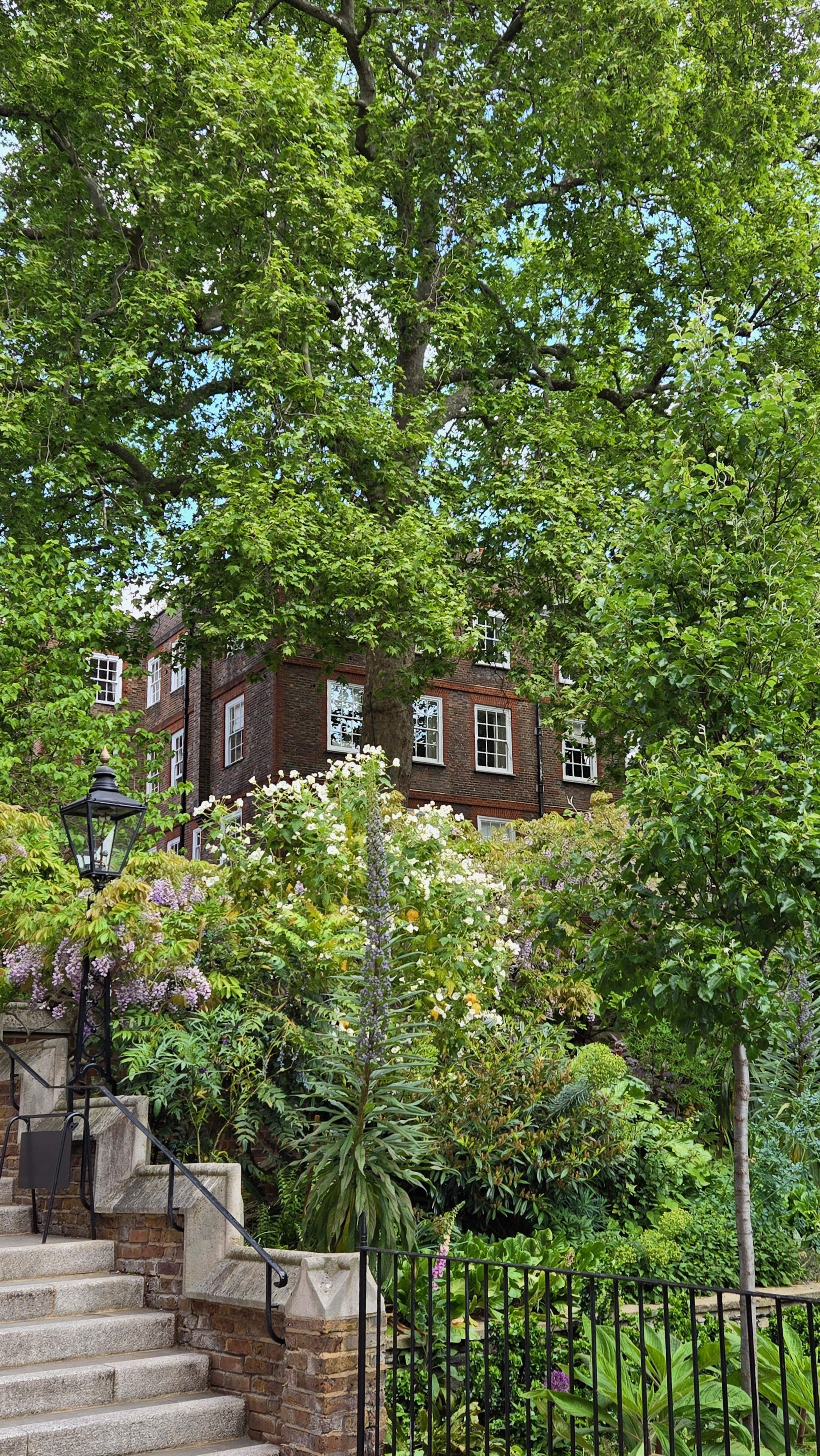


That was the start of a remarkable twenty minute conversation that ranged from gardens to American politics to who would be the next Pope. He said he worked with people not two blocks away who have never seen these gardens. It turned out he was a barrister with the Court of Appeals [photos earlier in this post]. And he was a gay, Catholic who had dreamt the night before about our American President, with whom he admitted he was mildly obsessed. [Who isn’t concerned for democracy in the world?] I did not get his name but a kindred spirit he was and I thank hi for taking the time to engage with me. I will forever remember him.
A few more photos of the Middle Temple and gardens. This arch of the Middle Temple


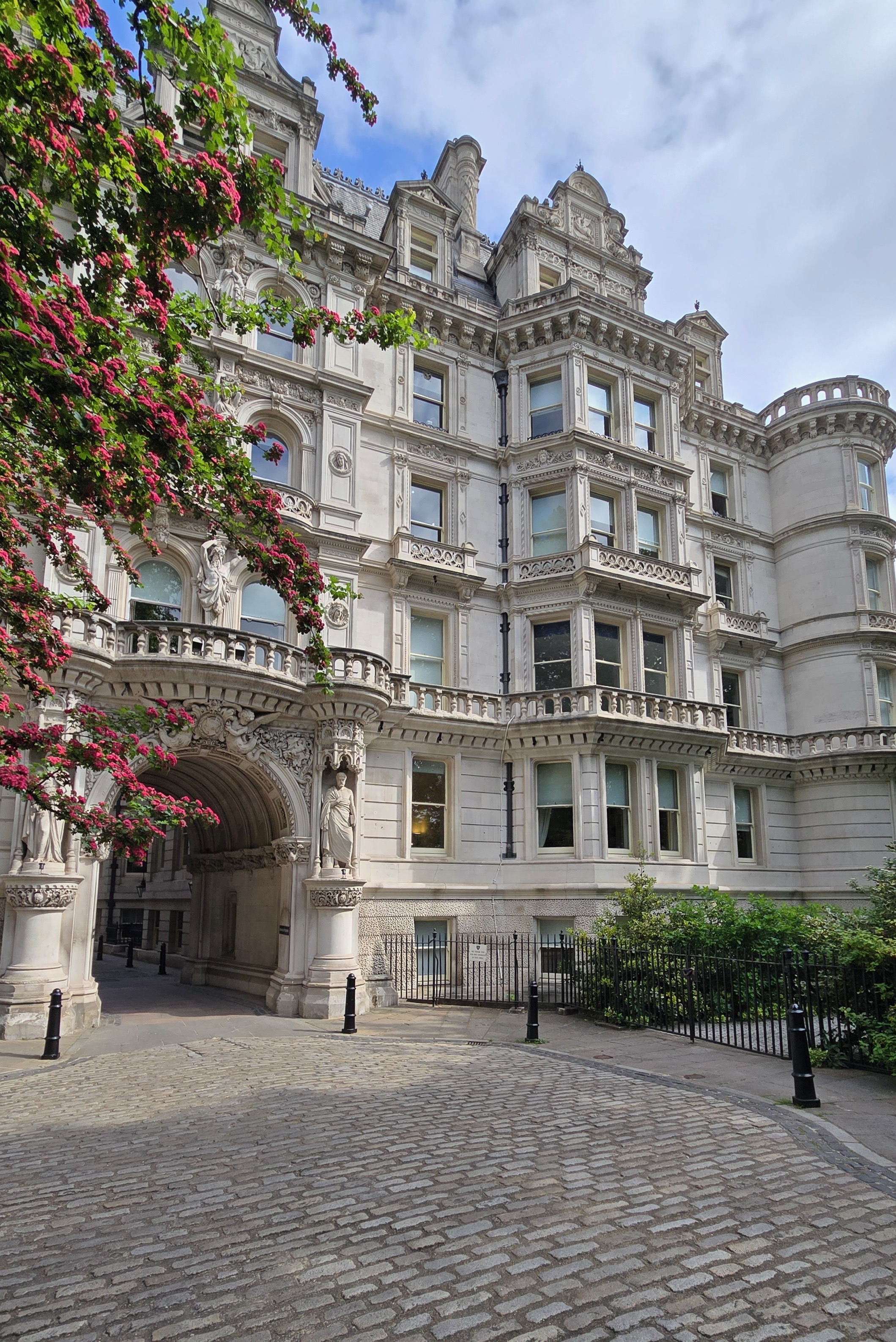

INNER TEMPLE GARDEN
I had planned to come back for the opening of the Inner Temple Garden but it wasn’t until 12:30 PM and I felt my garden fix was satiated. I did take this one of the Inner Temple from outside, as well as the familiar Dragon along the Thames.

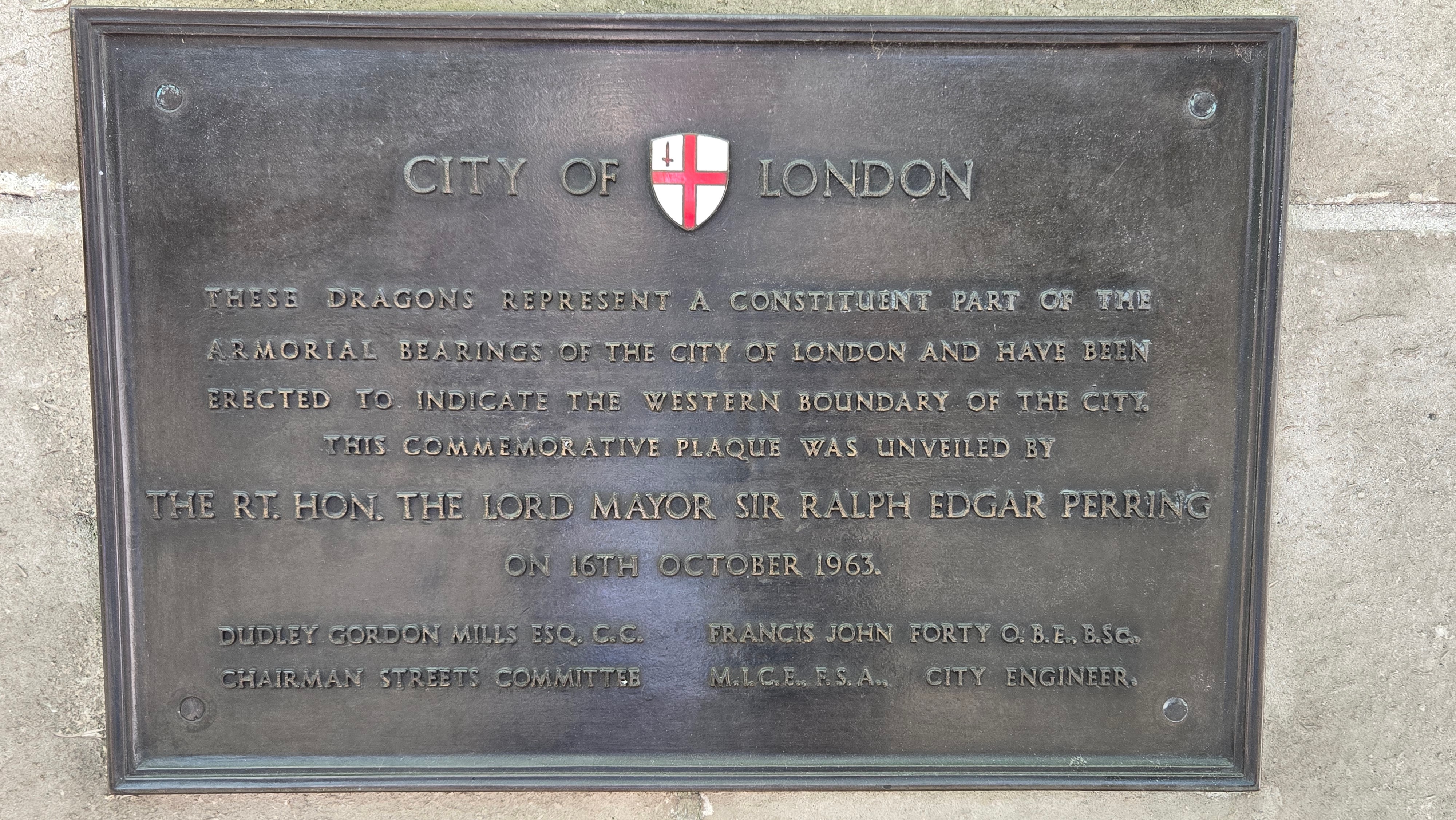
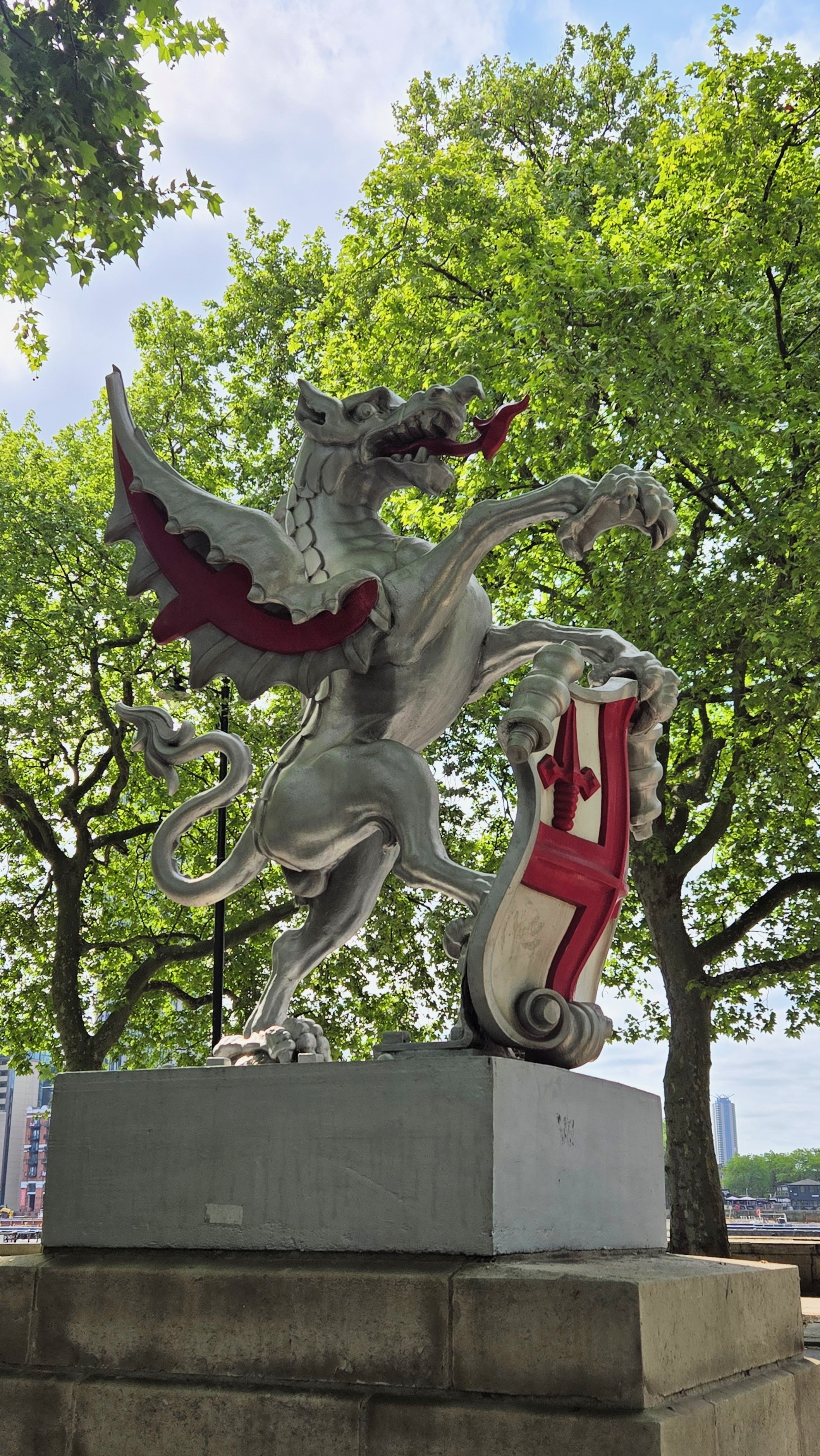
Now it was time to make it back to Temple church and of course another walk through of Elm Court.
TEMPLE CHURCH
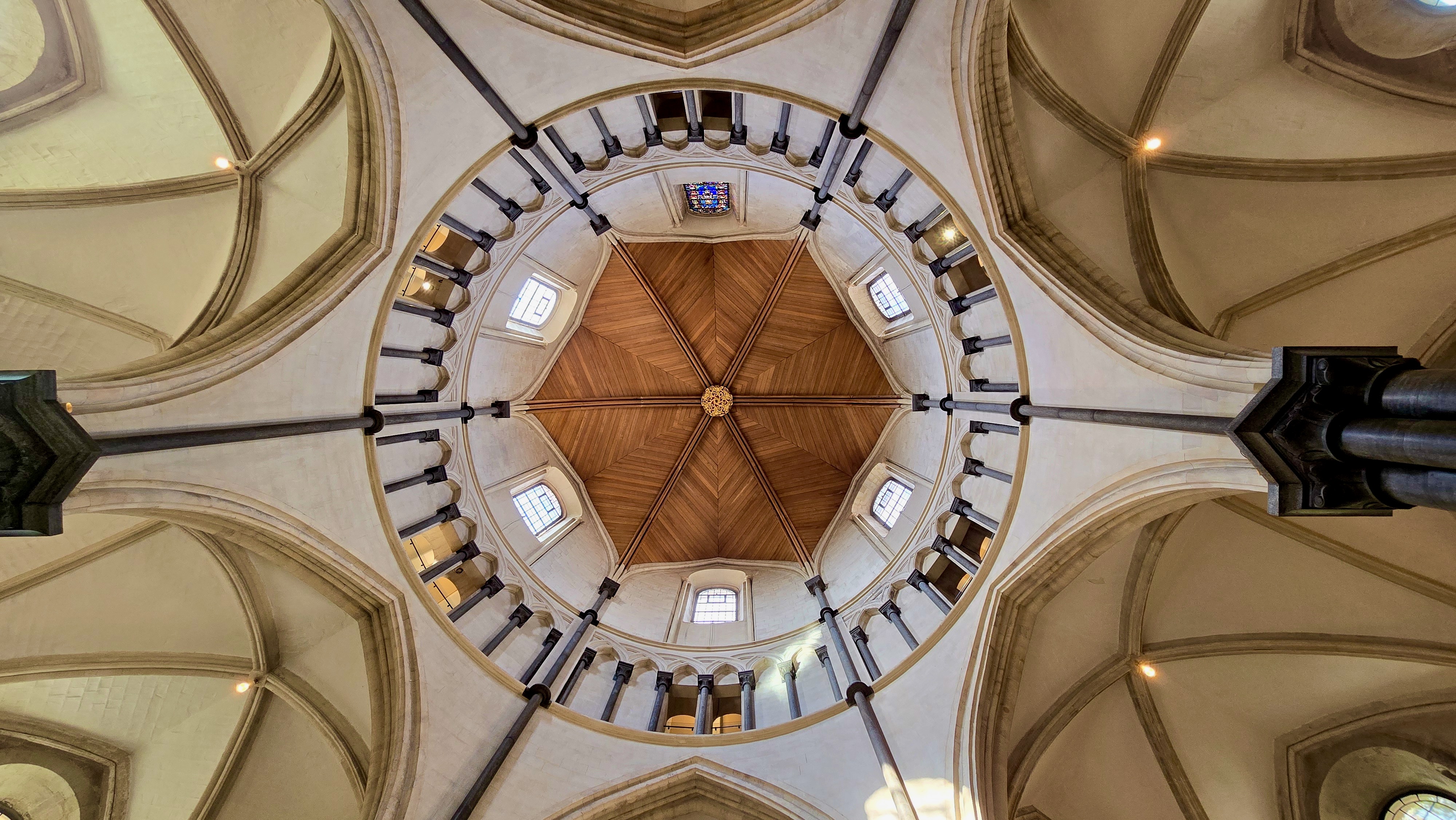
By the time I made it back to the Temple Church it was open and there were maybe a dozen people exploring it. Please google the church to find out more. This particular photo I took by laying on my back in the middle of the rotunda and shooting straight up [or the best that I could].
Some good information from the panels within the church.
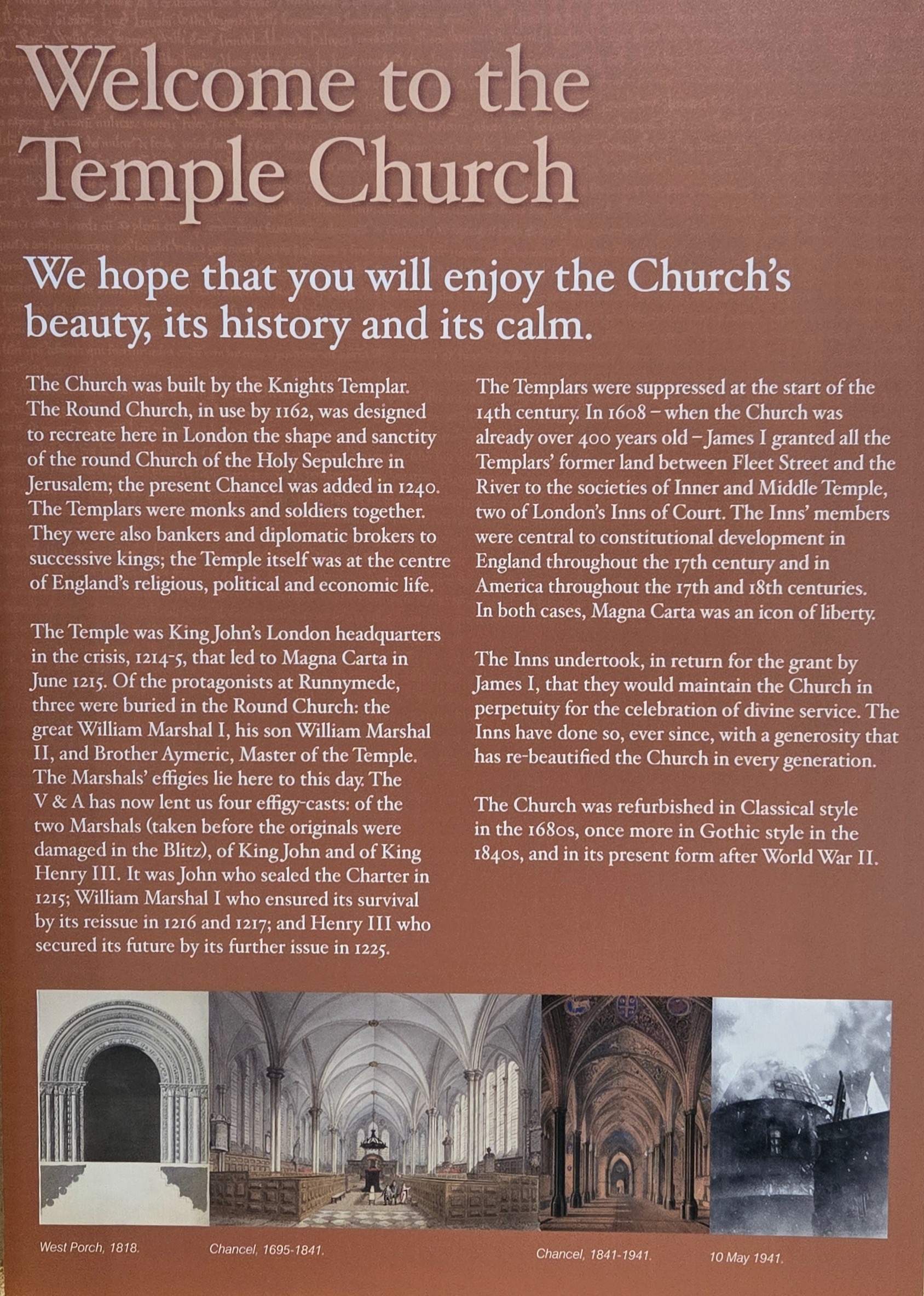

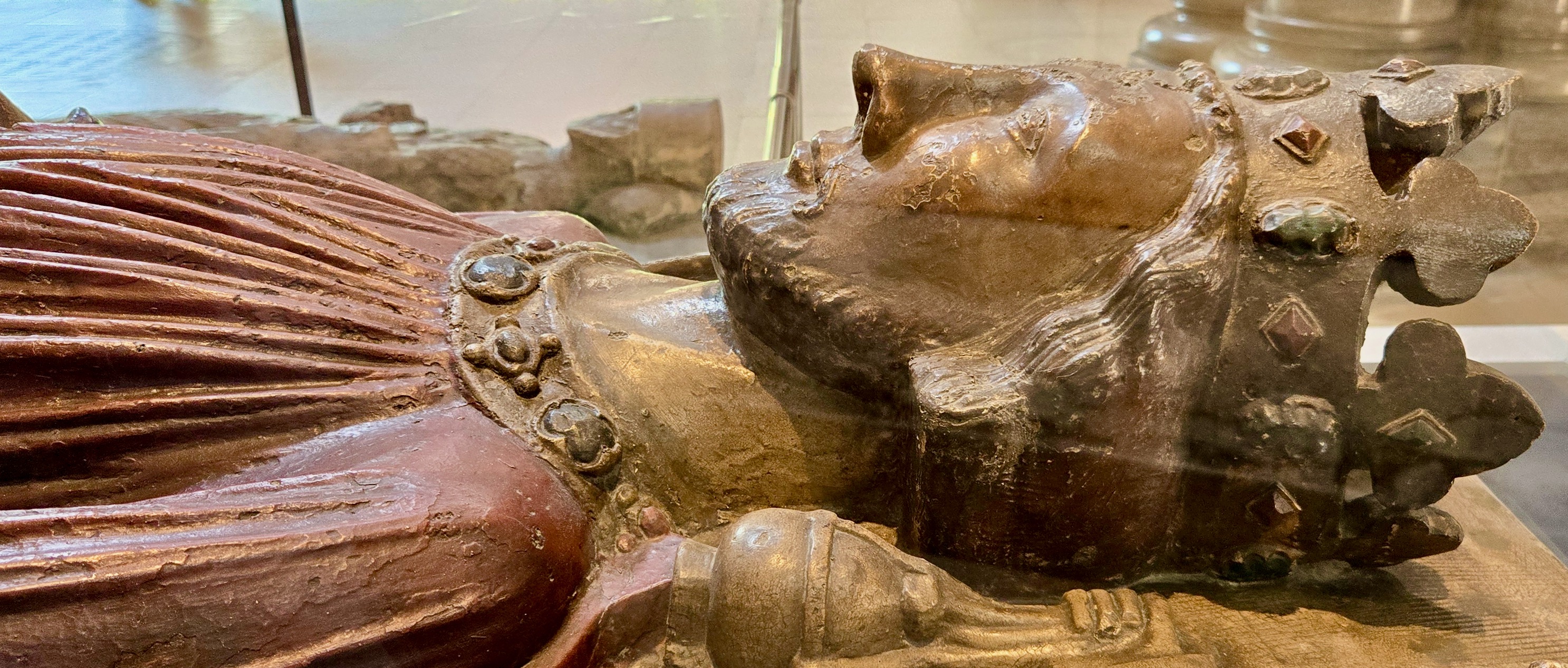
There were several Americans here as I was visiting and I suspect it is a draw, particularly now as our United States Bill of Rights are under attack. Our Bill of rights takes some of its ideas from the Magna Carta which came to fruition in 1215 under the Reign of King John. A copy of his effigy is on loan here from the Victoria & Albert Museum. [Original is in Worcester Cathedral].
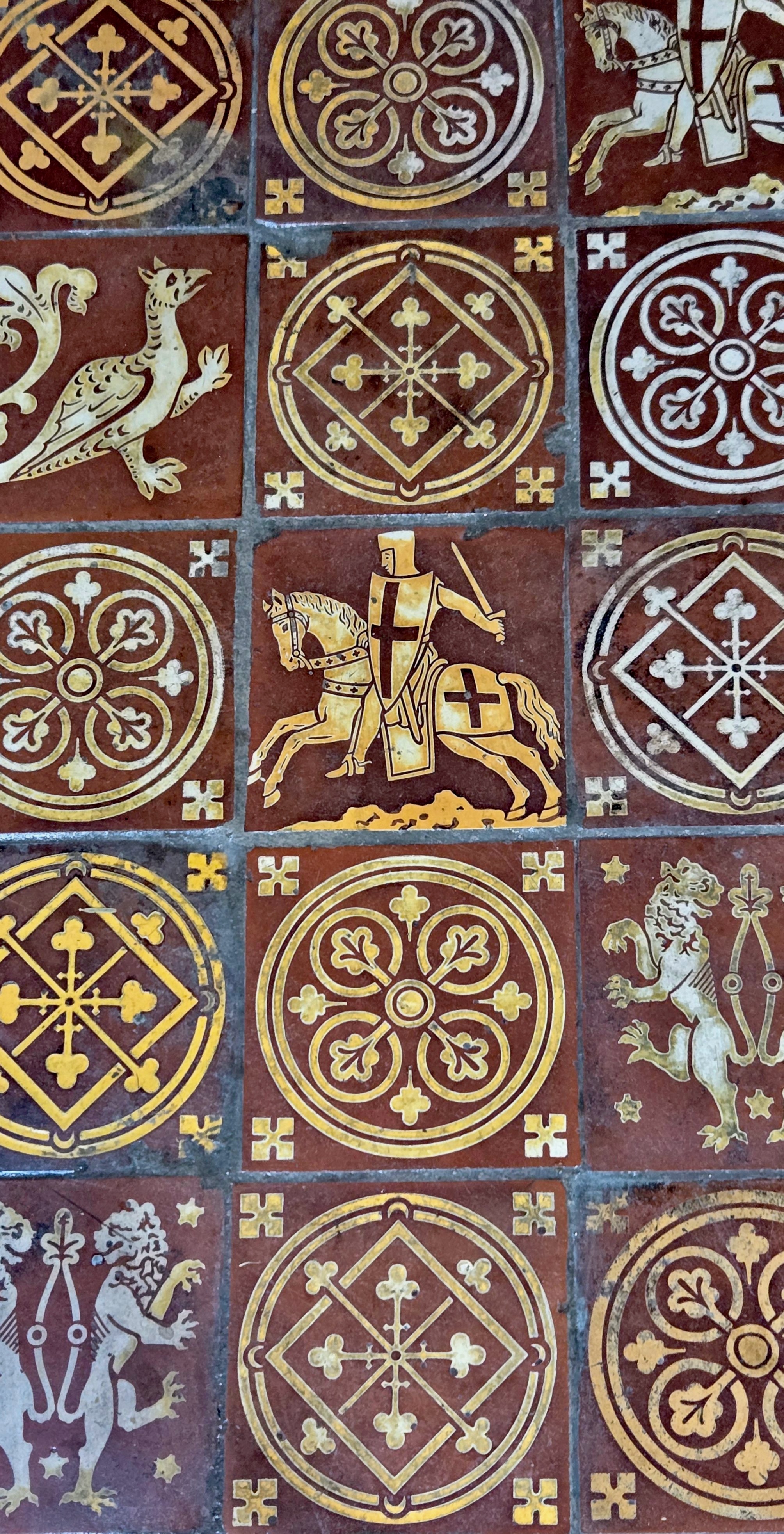


This church remains a Catholic church and its chancel dome was fashioned in 1162 as a replica of that in Jerusalem of the Church of the Holy Sepulchre. The priest gave us a blessing of PEACE while were there.
Outside the Temple church.


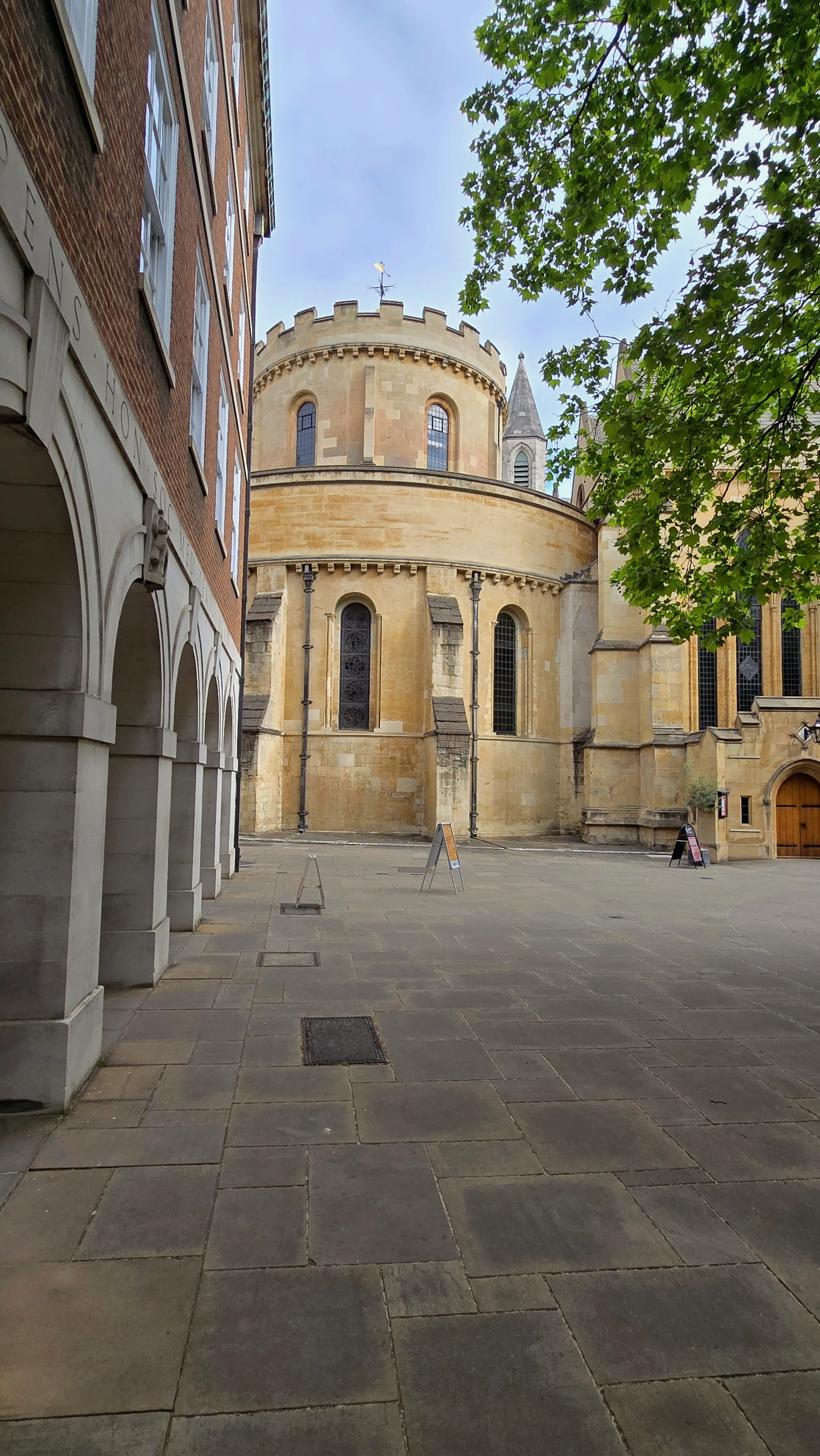
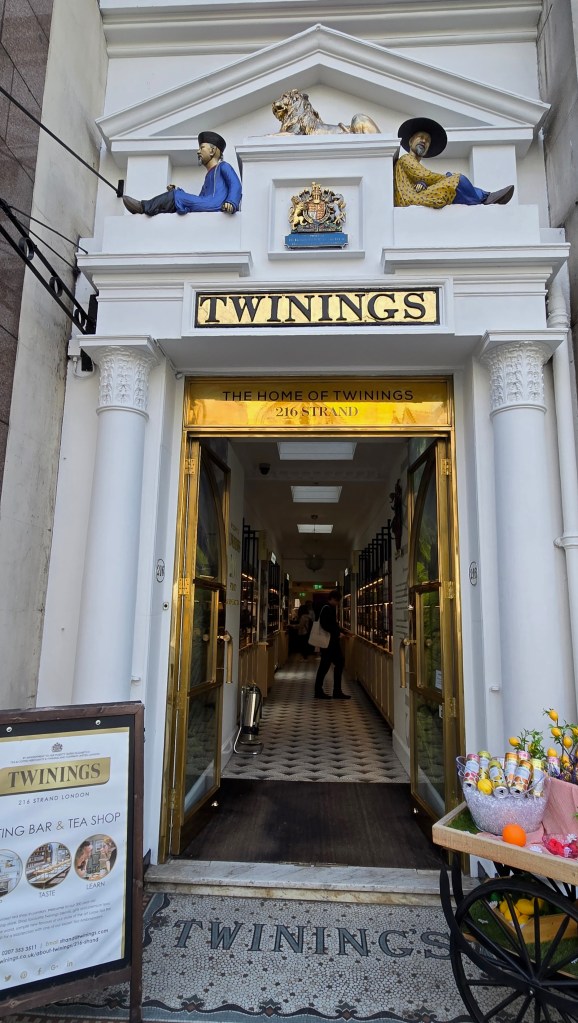
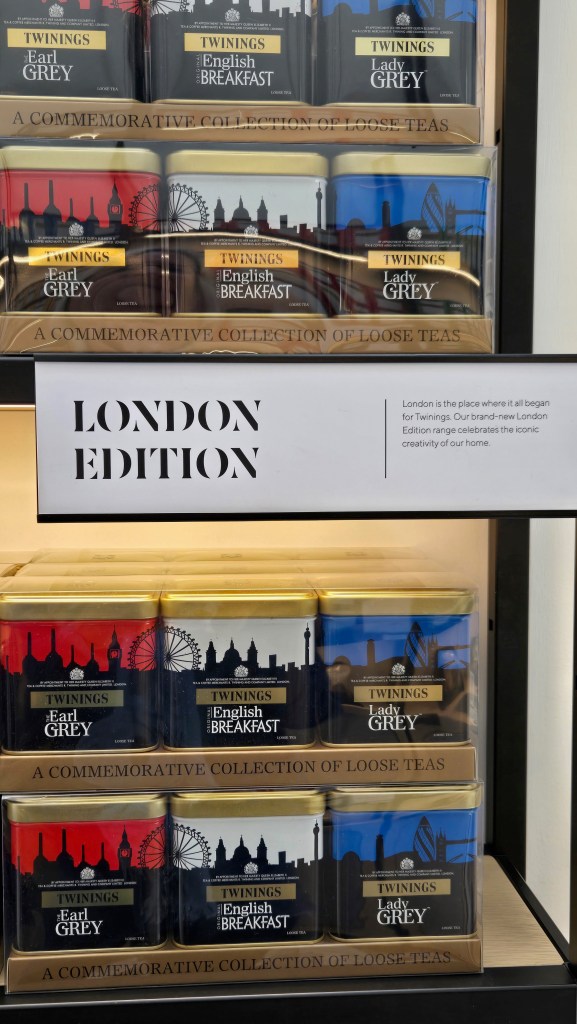
I had my lunch on the porch of Temple church before making my way back up to the Strand. Where I just happened upon a Twinging store and was able to fulfill a request from my friend, Denise’s daughter. Although I had thought we could get the same Earl Grey in the United States I was informed that this particular blend of Earl Grey was only found in London.
LINCOLN’s COURT GARDENS
Next I made my way to Lincoln’s Court on my way to the Chancery Lane Underground Station.
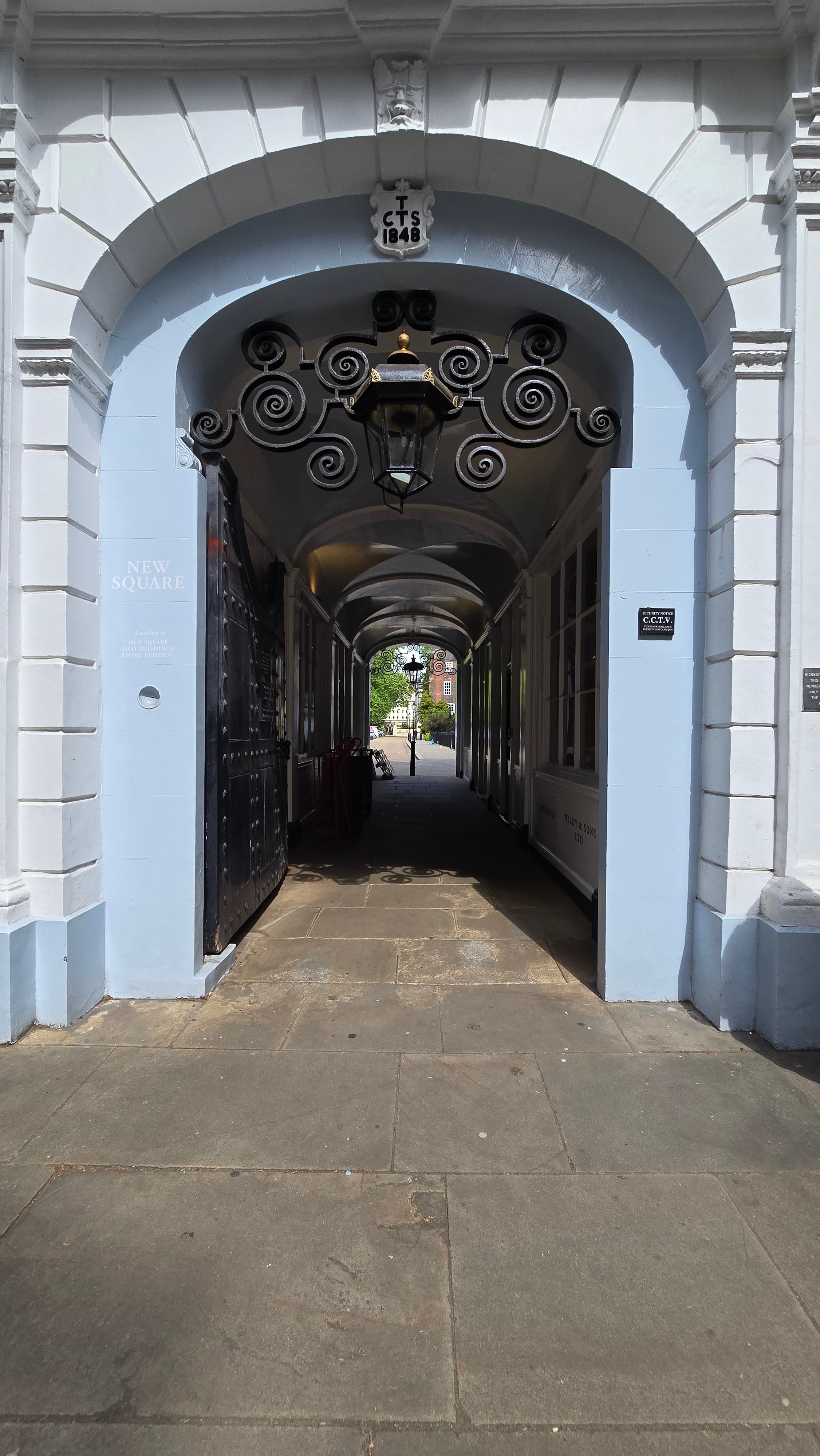
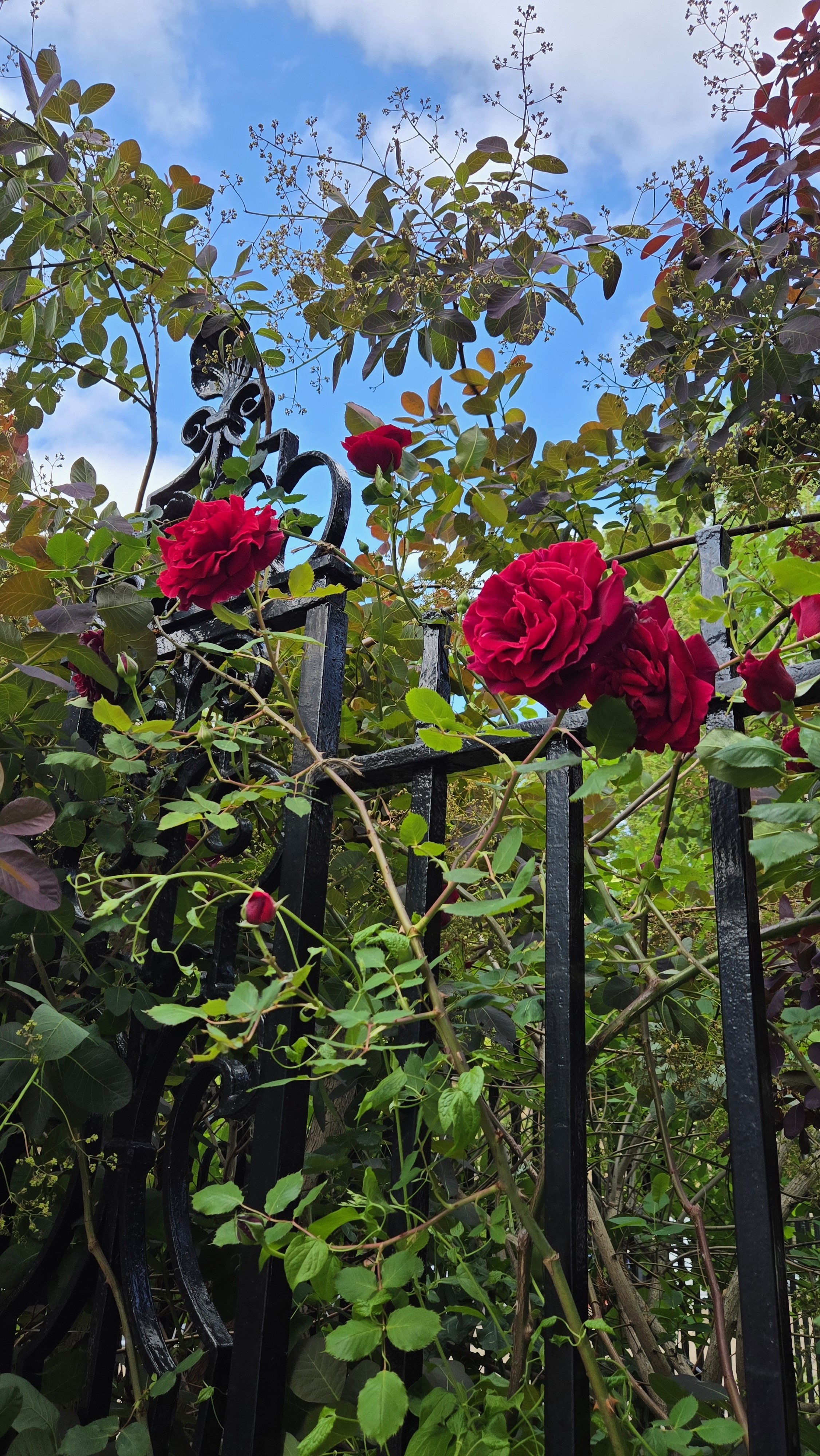
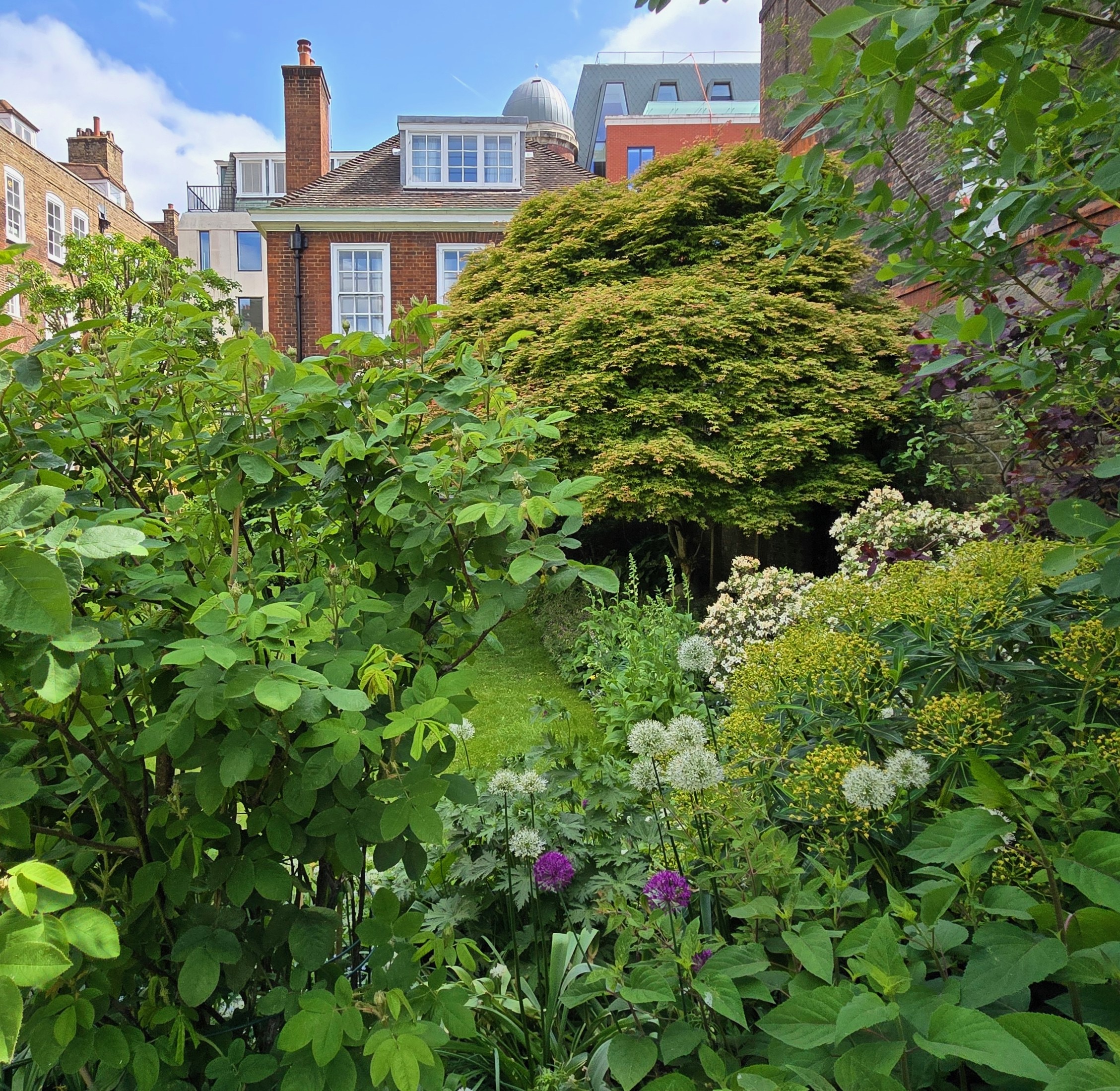


And then a couple of things happened. I knew that today, May 8th, was the 80th Anniversary of VE Day or Victory in Europe, commemorating the end of WWII for Europe. Celebrations were everywhere. These presented themselves. And note the building called “The Last Judgement.” So in an impulsive decision I decided to head over to Westminster. I had been to Trafalgar Square during the BREXIT Vote….how busy could it be?


In my next post I will reflect on the Celebrations for VE Day. It was a bit ironic to know that my father, uncle and grandfather were at this time 80 years ago stationed in the Pacific Theatre. My father and grandfather on Tinian Island, where the Enola Gay and Bockscar would leave from to drop their deadly cargo. My father would be among the first troops to occupy Nagasakai in September 1945. So the War in Europe ended in May, but for my family it did not end for another 6 months.
Kelly Wheaton © 2025 – All Rights Reserved
 Wheaton Wood