If Lodvor Wasn’t Lazy, Would I be here?: Stories from Vinje, Telemark, Norway
Posted on July 16, 2023 1 Comment
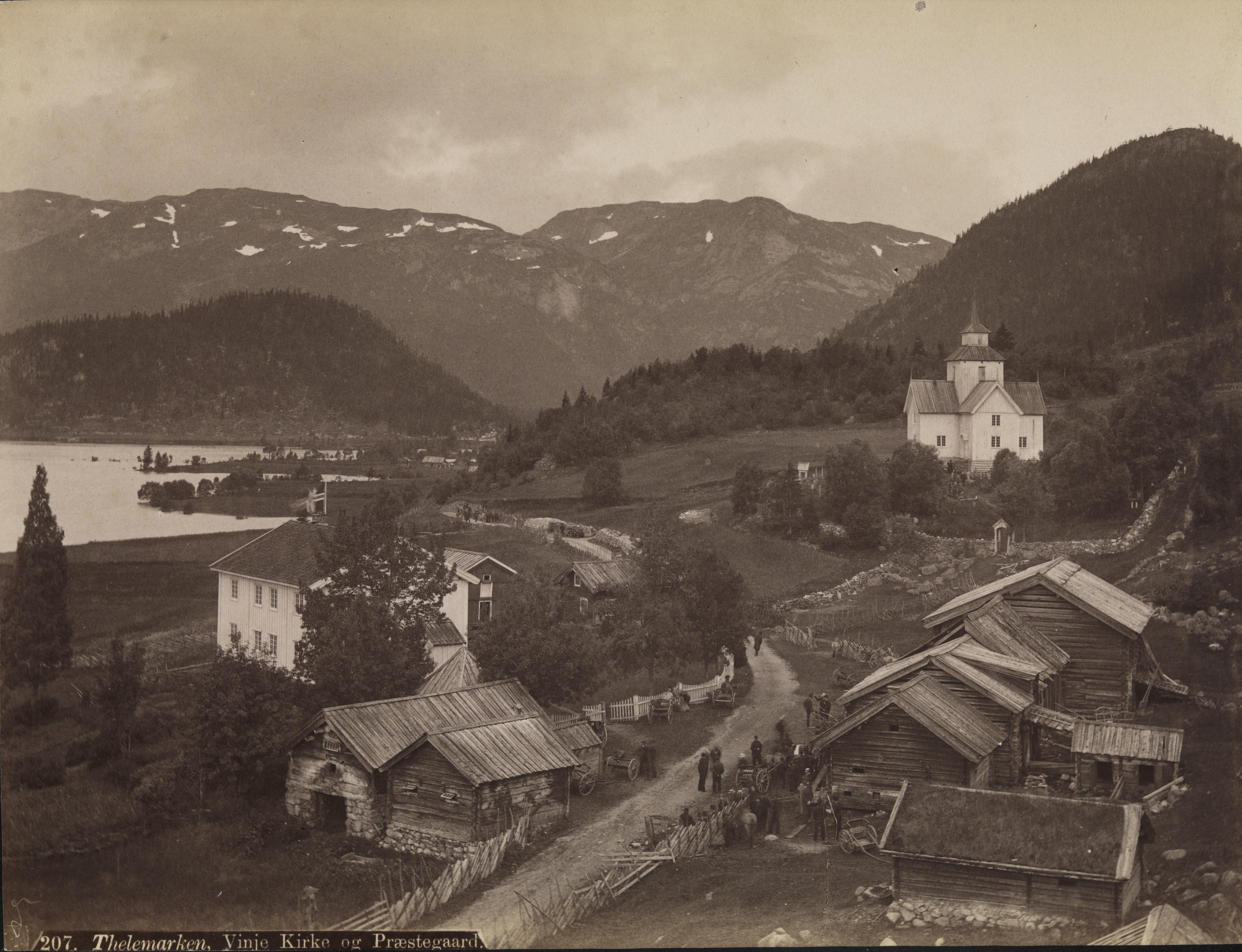
It seems our destiny hinges on a billion decisions made long before we were born. The Story of Lazy Lodvor(sometimes written with a final d) who literally squandered and lost his farms, is not just the story of my 5th great-grandfather—it is likely the reason that my 2nd great grandmother Asloûg Eilefsdotter (Elizabeth OLSON VANSTRUM) came to America in the first place. If the farm had stayed in the family she may have had better prospects. But as it was, the dwindling farm lands and growing population made it hard for families to eek out a living in mid- 19th century Norway. Her parents were farmers who owned no lands of their own, but lived and worked at many farms in Vinje [parish in Telemark]. Each farm has its own name and the history of the farms and the people who lived there are enshrined in the Norwegian bygdebøk or farm history books for Vinje.
So let’s backtrack a bit to Lazy Lodvor. Lodvor was Asloûg’s paternal great-grandfather. He had died before Asloug was born, as had her grandfather, so how much she knew of Lodvor is unknown, but he was a man of legends.
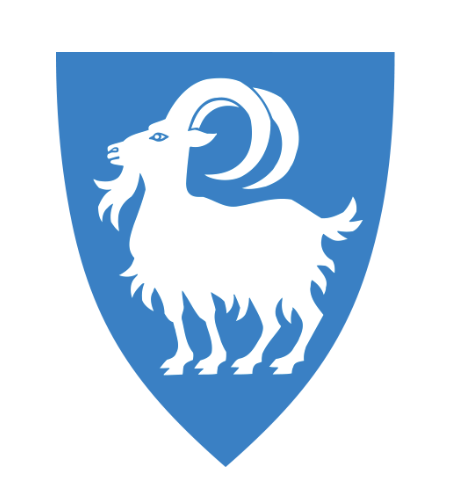
What we know of Lodvor comes from Rikard Berge’s “Vinje og Raugland “Vol II. When Rikard was 12 years old he began recording the traditional folklore from rural areas of Telemark. He was a musicologist, folklorist and biographer who collected the stories and genealogies of the area. Vinje roughly translates as “meadows” or “grasslands.” The importance of this area for farming is reflected in the Vinje Coat of Arms: a silver goat on a blue background.
The original stories are in an archaic dialect and it took many different people, a Norwegian to English Dictionary and Google Translate to make a go of it in English. Again I am indebted to Øystein Løk for his help. This is a rough translation but the gist comes through from “Vinje og Raugland Vol II.” pg 365. Midsæ is a farm, as is Haugland.
The Tales of Lazy Lodvor
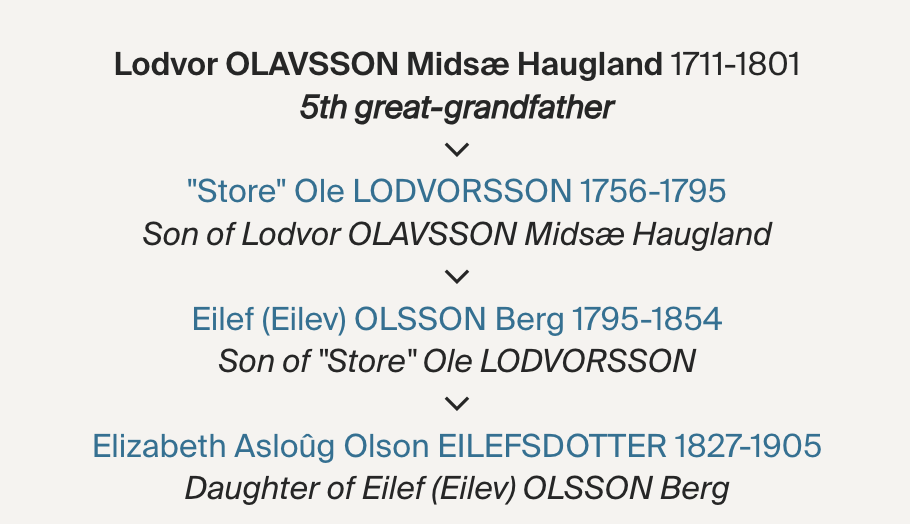
“Lodvord Olavsson (born about 1710), the most famous of the Midsæ-family, was certainly the son of Olav Haugland [Olav Lodvorsson Midsae Haugland]. He [Lodvor] said that he was a little chap when the locally registered soldiers were at the city of Halden to fight against Karl XII [King Charles XII of Sweden]. He listened with long ears to all stories and songs they brought back home from the war. He himself never was in any fight, but he was in the King`s register for many years. He even danced for the king, and if he hadn’t shouted so raucously each time he threw himself around, he might presumably have been better paid. The king quacked, I can believe. Lodvord had a farm it was said, in the King’s register, where he was written as “Høyentvedt” [High West].
So it seem that Lodvor was a bit of a storyteller and ham even in his youth. His father died when he was 19 so perhaps he lacked proper guidance. The death of his mother Jorunn Steffasdatter is unknown.

showing Vinje church in red and various farms where Lodvor lived
“It took some time until he acquired “Midsæ.” He was twice married. There were three wedding couples at the church of Vinje when he married [10 March? 1740] to Ingebjørg Knutsdotter–it was next rented at Christmas. He didn’t have a permanent residence at that time, but a couple of years later he was at Midsæ, from where he later moved to and from. In 1743 in addition to Midsæ, it is said he possessed two additional farms, so he at that time was considered a “good” man. Midsæ he bought from Major Kraft who held the farm for three years, before Lodvord took possession. At that time he [Lodvor] was staying at Hustveit, from now on he stayed as a farmer at Midsæ for many years. However, he wasted all of it, not only Midsæ but his two other farms, he ate and drank it all. ”If there had been more, more would have been lost”, he said. “Well, I have the barrel in Lopt’us (Lofthus).”
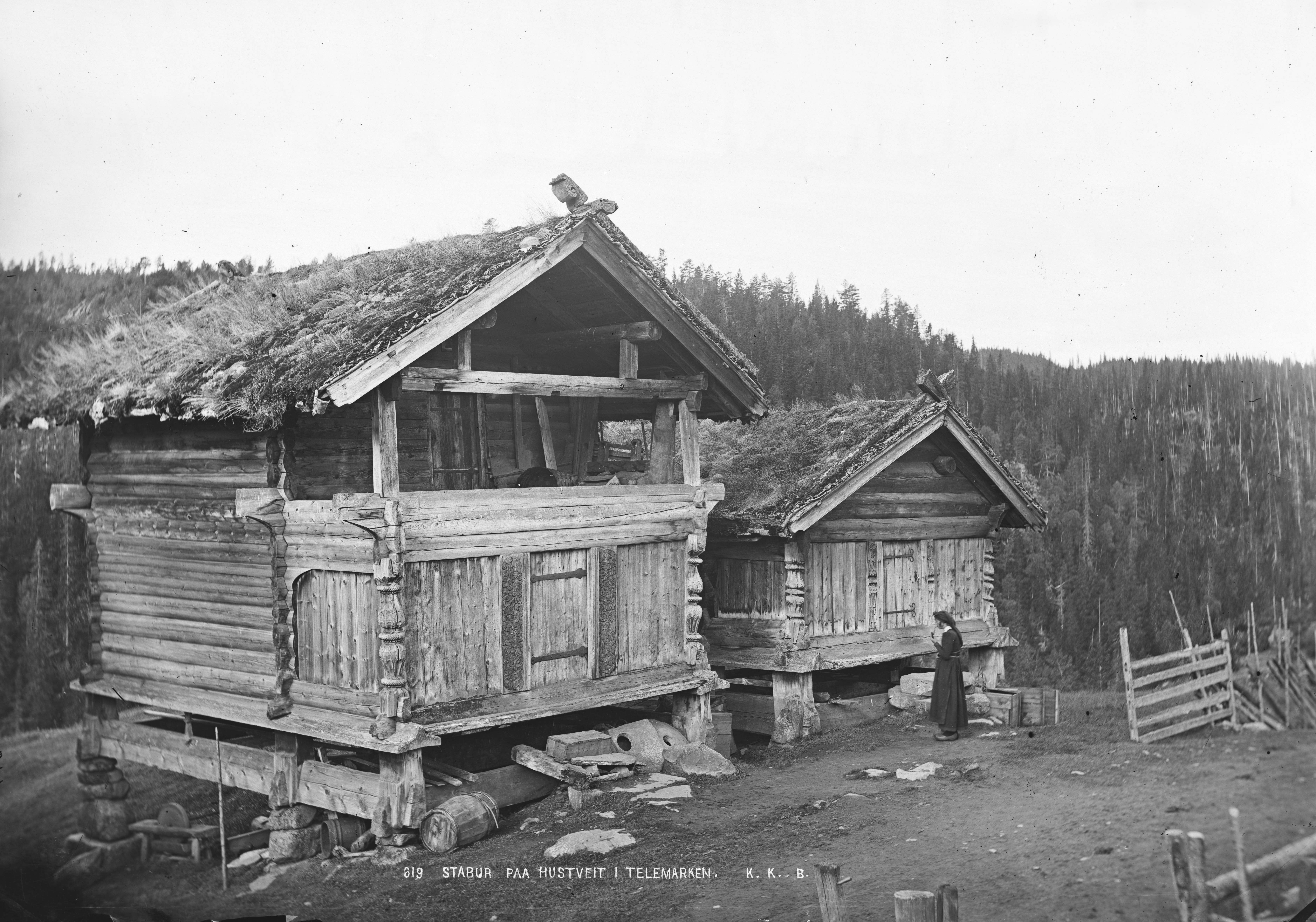
“He was so relentlessly lazy that they called him Lazy-Lodvord. He complained that he didn’t feel like working until Friday after sunset, he said. Lodvord liked his food. He had a big chair made from a huge log of aspen, Olav Plassen remembered, but it had become so rotten that a big hole peeped out in front of it.” Lodvord was sitting in his chair, he fried pieces of meat to eat, and when people turned up he put his knuckles inside the chair. He didn’t deny that he was lazy. “Howling! There should have been embers inside me!,” Hallvard Aaland quoted after him. Work was never attractive for Lodvord. The farm was separated. He didn’t care about the fields and therefore nothing was growing there but weeds, which he harvested. He would never harvest when the others did, just let the time go. One summer he began the haymaking three days before winter solstice. Then the winter storm came so cold that he had to hide under the barn to sharpen his scythe. “ Now I am about to be worried”, Lodvord said. After that this became a proverb: “I am about to be worried,” Lodvord said. He might go up to Bøgrend in order to go to the fields further up for hay. Then he sat down in Bøgrend and started drinking and making fun and singing – and everyone enjoyed Lodvord. But he was sitting there until dark and came back home to Midsæ with an empty sledge.”
Lodvor was incomparably smart, and had an answer for everything. He came to town in the springtime. His clothes and shoes were hideous. When the townsman saw the one leather shoe he had never seen one so bad before. Lodvor said, “Yes, here’s my wife.” The same year he went from Midsæ to Mosokn. Night came and he was tired so he sat himself under a fir tree. There he sat as the light shown all night. The fir stood for a long time and they called it Lodvor’s fir. Aslak Uppistog Vinje cut it down and she stood on the stump and spoke. [Perhaps of Lodvor]
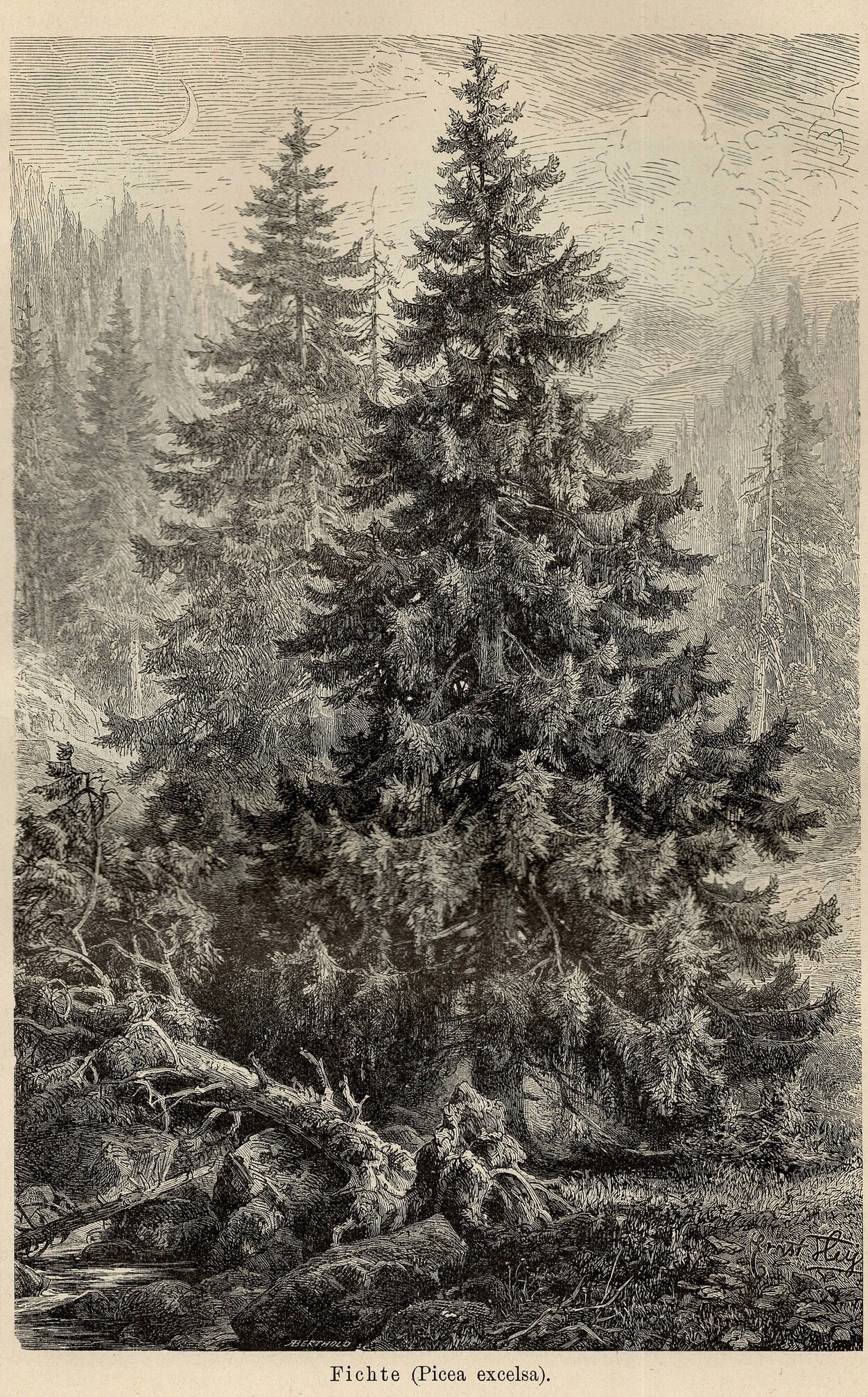
“In 1752 he was married a second time to Hæge Aadnesdotter [my 5th great grandmother], and they had several children. He had such disrespect for pregnant Hæge that she gave birth in a ditch, and they asked Lodvord if he didn’t want to be in the field again. He gave an oath, “I will walk in the field again before my Hæge becomes so wide ‘o sit there in this mountain,” he said. When they had eaten everything up, both he and Hæge and the all the children, called at Midsæ. He stood above the house and looked at the garden before he parted with him: “Ah, you lazy Lodvor!” he said.
Now the children were scattered, and Lodvord walked with a staff. He went far and prayed in many villages. Once he came to Hemmestveit in Brunkeberg for a wedding. Hæge Hemmestveit was so serious. “But you man,” she said, “who has become so rich what’s amiss with you, where can you house yourself?” He had lost so much, he said. “Have you had a big fashion success, elbow burn or accident on the road?” said Haege. “No,” said Lodvord, “I don’t have them.” But I lost my desire to work, that was big enough, he said.“
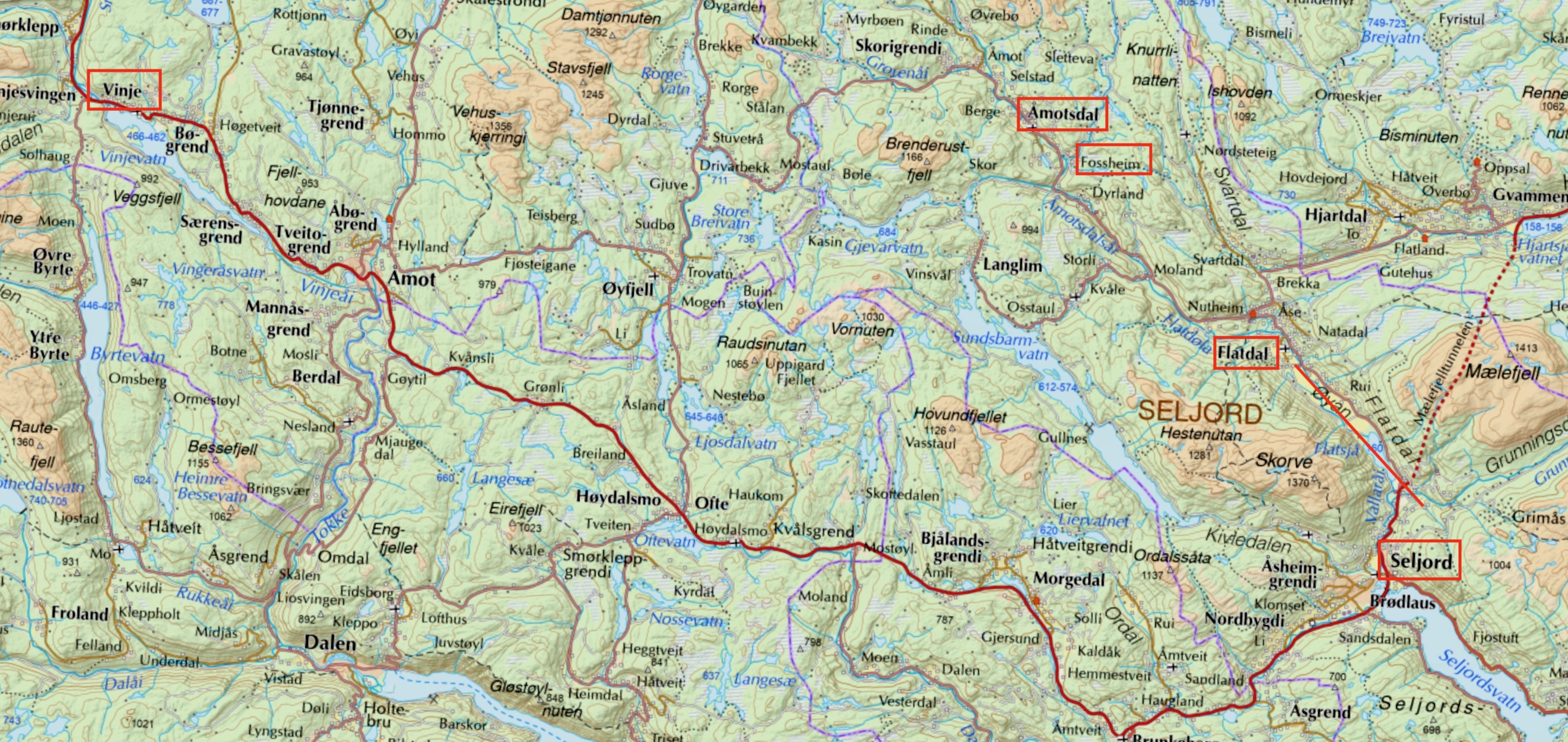
“Oh, Lodvord made good when he went begging . Once he left with some letters. He rested at Fossheim in Aamotsdal and put himself to good use there. Coming to Markenstein, which lies next to Kloppine, he came to think that he had forgotten to eat cheese at Fossheim. So back to with the begging to eat cheese. But when he came down to Flatdal, he guessed that he had left his correspondence with Markenstein, and so he returned the long way just for the sake of the cheese.
Usually beggars are not welcome, and it was so true with Lodvord. The wife at Nylend in Grungedal, after she had given to him, she said: “They will be sent to give this laggard something,” she said. “If you’re slow to them, dear, to take advantage of a noble for shame,” he said. So he was in the north of Suldal and prayed, and there sat a priest so hopelessly greedy that he wanted to take all the prayers. Now they promised a great gift of Lodvord, he dared to go in to the priest to pray. “Yes, I dare,” said Lodvord. So he came to the priest. “Do you go here begging!” said the priest. “No, I pray in Gus’s name,” said Lodvord. “Yes, then I’ll take it from you,” said the priest. “No, leave me, you do stop,” said Lodvord, ‘” A sorrow to your sex, you stand without a shave,” he said. Then the priest took him by the beard and let him out. “Then is it the law to take a man’s beard,” said Lodvord. “Lord, you have a beard,” he said. So long he argued with him until the priest was afraid and gave him, and not a little either.
They waited one cold day, and then Lodvord suited himself, and with his big hat entered the road. With his bounty he put a whole fistful of money in his hat. Put the saying in an oath, “bless you, my song, oh long have I waited for you!” he said, and so loudly that this stranger yelled and he jumped into the air. Sayings had to be songs. He knew countless visions, great visions old as all heaps, and newer wisps, steeds and stumps. He had such goals that no one knows about such ‘mouth robbery,’ and he sang so strongly and manly that everyone listened.
In Vinje they didn’t know about the story of when he came to Seljord [Where Aloûg’s mother’s family was from, some 50 miles from Vinje] on Christmas Eve , later spoken of all, over upper Telemark. Lodvor came to Seljord on Christmas Eve begging for shelter. There, they didn’t know him, and no one would let him in. Then he asked a man: “May I borrow your axe?” He got it and then he asked the wife for coals for a fire. “What do you want with that?” she said. “Well, as I don’t have a shelter I’ll need a fire”, he said. Then he went up to the nearby forest, where he collected a lot of firewood and made a huge logfire, so big that none of the farmers in the area could avoid seeing it. The fire shone so they could see it from Flatbygdi [8 miles away]. And then he started singing, about trolls in the mountains and strong fellows, so loudly that all the people in the area heard it and came by hundreds to listen to him, says Segni. They wondered why he was standing there by the fire. ”Well,“ he said, “my house is so big that I have got a shelter for all the people in Seljord. It isn’t like you who denied a lonesome, ice-painted man a roof over his head.” Then he sang loud, long ballads, people heard it all over the village and flocked to it. Everyone wanted him at their home. That Christmas Eve, the singer was stunned.
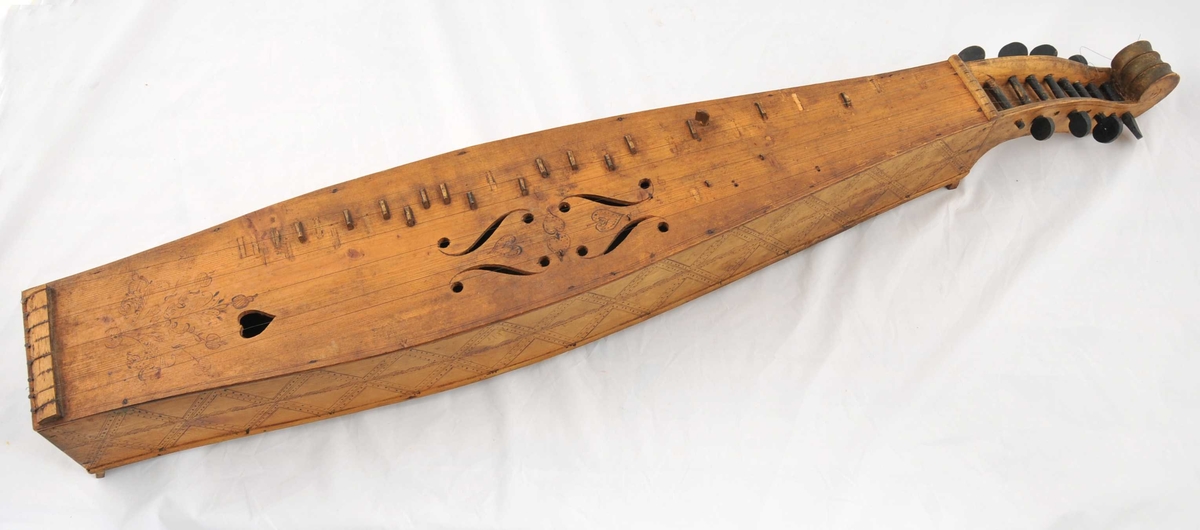
His last years Lodvor Olavsson didn’t leave Vinje. But he walked around from place to place and house to house no matter what the weather was like. Many times he lost his way, but he managed all the time, strong as a bear he was, to survive. He died at an age of ninety years in 1801. Many of his children died young, but one of the daughters, Birgit, grew up and had a long life. She lived at a small place called Grandalen nearby Midsæ. She was a gifted musician, like her father, and played and old string instrument called ‘langleik‘.”
Another of Lodvor’s children was “Store” [the older] Ole Lodvorsson and his second wife, Hege Jonsdotter, born the 20 JUN 1756 at Vinje, Telemark, Norway. He married at Vinje the 10th April 1790 to Asloûg Elifesdotter (grandmother to Asloûg Elifesdotter Vanstrum, the immigrant and my 2nd great grandmother). The older Asloûg gave birth to Ole’s son, Elif , 25th of October 1795. Sadly Ole, his father had died 4th of September 1795 less than 2 months before his birth.
My husband pointed out I was lucky that Lodvor Olavsson was a colorful character as if he had been an upstanding citizen, nothing would have been written about him. If he had not lost everything perhaps Asloûg would have stayed in Norway and I would never have been born! So thank you bestefar [grandpa] Lodvor!
In honor of Lodvor I offer this Norwegian Draumkvedet [The Dream Poem] a Norwegian visionary song, probably dated from the late medieval age. It is one of the best known medieval ballads in Norway. The first written versions are from Lårdal and Kviteseid in Telemark in the 1840s. Here sung by Harald Foss.
Kelly Wheaton ©2023 – All Rights Reserved
How My Forty Year Old Brick Wall Was Broken: The Benevolence of Strangers and the Problem with Names
Posted on July 13, 2023 7 Comments
This is a brick wall that my Aunt Dorothy and I began working on in the 1970’s and it took Forty Years to solve! Sadly it was solved 17 years after my aunt passed. And it happened over ten years ago! I have written several drafts but I am hoping to properly thank those genealogists that made it all possible. First off a thank you to my Aunt Dorothy who was better at the early Swedish and Norwegian research than I was. Tusen takk for the generosity of countless Norwegian genealogists and kin. They are second to none! Please be patient with brick walls and overdue thanks yous. Although I said thank you back then, I continue to feel gratitude to all who united Elizabeth with her roots. To those with your own brick walls be heartened that BRICK WALLS do fall and sometimes in the most unexpected ways. Here is one such story.

BRICK WALLS
Elizabeth Olson is my 2nd great grandmother and my mother & aunt’s great grandmother born in 1827 in Norway. She emigrated to the United States in 1852 which we knew way back in the 1970’s from the 1900 Census. My Aunt Dorothy had also located a lovely church registry in Red Wing, Minneapolis [see below]. Back in the 1980’s which listed her birthplace and Winge Sogn. I had written to all the all the County Archives in Norway with a Vinje, Winge, Vange etc looking for a birth record for either Elizabeth or her younger sister Sigrid Olson, but to no avail. All letters came back they could not be found.

We also had the purported names of her parents from her sister’s death certificate listed as Olaf Olsen & Jennie Jestedatter. So for the next 4 decades we chased down leads– that led to NOWHERE!
Then in 1973 I contacted a DNA match at ANCESTRY using the then “new” search feature looking for ones with the Lan [county] Sogn og Fjordlane, Norway where I thought Elizabeth’s Vinje was located. My great Aunt Verna Lundberg Tripod had even written her name and “from Near Bergen” on the back of a photo of Elizabeth. And my mother used to tell a tale of her skiing down the slopes to get to Bergen. Well my match at Ancestry, Terry, said he didn’t know how we were related but he ran a private Norwegian Genealogy Research group on FACEBOOK and if I’d like he would place my query there. That was 2 July 2013, I said yes, I would appreciate that. Here is what Terry Romstad posted:

At the time I was not a member of Facebook. Now seeing as this was a brick wall I had been searching for 40 years I really did not expect much. The next morning I got an email from Terry. A wonderful researcher had found Elizabeth, her sister Sigird, their emigration records and everything matched except the names.

So in less than 24 hours I went from no parents for Elizabeth to her parents and sister’s birth records just like that! It was Jean Marthler who found the records!!! And here is the kicker if the archivist had not been caught up with the names but matched the baptismal records they would have been located back in 1983. Here is the letter.
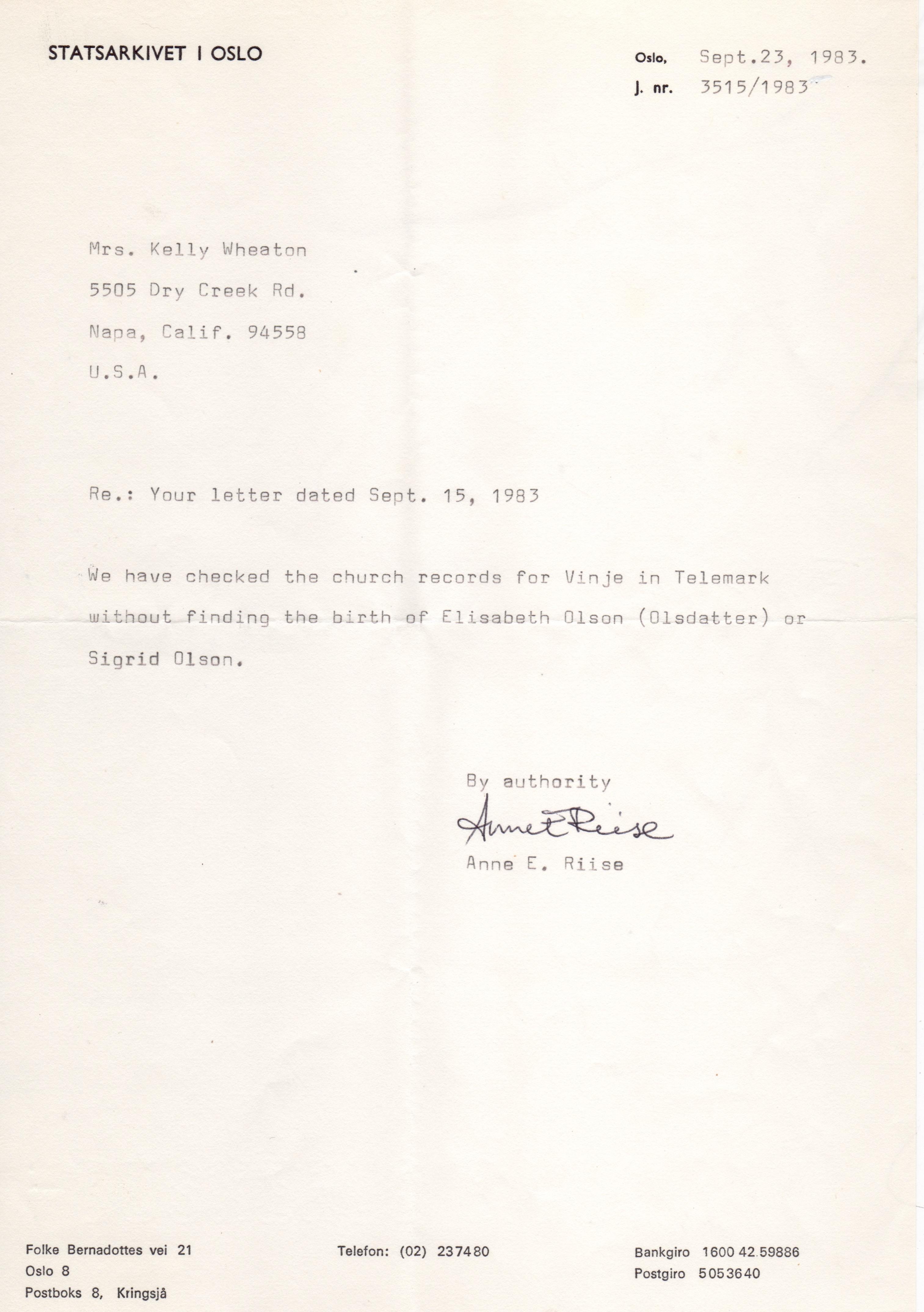
NAMES
So one VERY IMPORTANT MORAL is don’t get caught up on the names and especially when you are dealing with someone whose native language was not English. In this case Asloûg took Elizabeth as her Americanized given name. The English ‘Elizabeth’ and Norwegian ‘Asloûg’ both mean “consecrated or given to God” so this was not a name simply plucked at random. [Please note people did not receive a new name upon arrival—however they often took up a new name after arrival.] Her last name, in contraindication of the Norwegian patronymic system– where her last name would be her father’s first name plus “dotter” as in Elifesdotter, she took her father’s last name Olson dropping the double “ss”. So Asloûg Eilefdotter, daughter of Elif Olsson, became Elizabeth Olson. And it makes sense that not only her first name, but her choice of a last name would be based soundly in the land she chose to make her own. Add to the fact that Olson was a great deal easier than Eilfesdotter or Eilfeson. Then to further muddy the naming waters, sixteen years after Elizabeth’s immigration, her sister, Sigrid, joined her in America [1868]. After arrival, Sigrid took the last name Olson as well. So my advice to my much younger self, is ask for any child born/baptised in a small village on or about the day in question. These days we have access to the digital records so this is not as much of a thing. Lest you have any doubts that this is the right person further DNA matching has proved it!
SCANDINAVIAN RECORDS

If you are lucky enough to have Scandinavian ancestry you are lucky indeed because there records are second to none. I had been quite successful researching my Swedish Ancestry and Norwegian records are just as wonderful. Not only are baptisms, marriages and burials dutifully recorded we also have confirmations, household examination rolls and all the comings and goings of people in and out of the parish and immigration records and ship’s passenger lists. So if you are lucky enough to finally cross the pond and locate your ancestor in Norway as Jean Mathler did for me, a treasure trove of records awaits you. I highly recommend the Family Search Library guides:
BENEVOLENCE
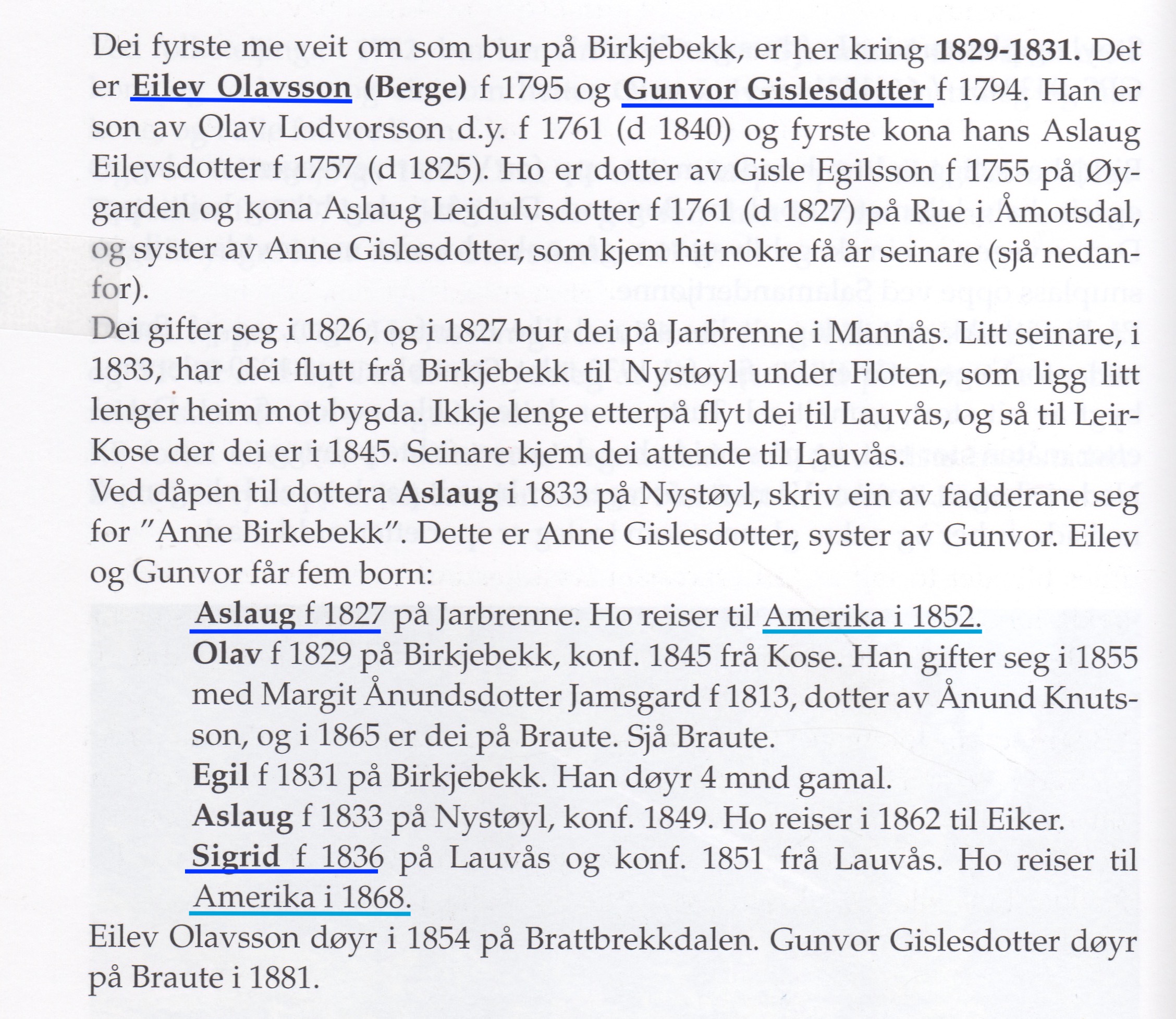
You have seen how a DNA match at Ancestry, Terry, led to a fellow, Norwegian Researcher Jean but it did not end there. The number of people on the Norwegian genealogy Facebook Group and elsewhere that helped me along the way with Asloûg’s ancestors, translations, books ect is numerous but two individuals are stand-outs. The first is Sharon who it turns out is a distant cousin and she sent me pages and pages of Family Group Sheets and Family trees for Gunvor Gislesdatter’s Ancestors [Asloûg’s mother]. And the other was A lovely retired schoolteacher from the Vinje area, Øystein Løk, whose kindness was overflowing. He sent me the Vol 3 of “Her budde dei” published in 2010 by the Vinje Hisorleilag and it has many, many references to my ancestors including this one which shows Aslaûg and her sister Sigrid and that they both immigrated to “Amerika.” Though I do not speak Norwegian you can use Google Translate to transcribe. I have underlined her parents and Aslaûg and her sister Sigrid. Please note both Aslaûg and her sister are listed as “Ho reiser til Amerika” or She travels to America. Proof positive we got the right family. [Click on Photo to see full image]

Øystein tirelessly helped with translating the old dialects of the old family history stories. How else would I have been able to understand the stories of Lazy Lodvord my 5th great grandfather. And it was Øystein who provided me with photos of the farm where Asloûg was born.; Jabrenne,


More to Asloûg’s story and ancestry hopefully in future posts. You won’t want to miss the story of Lazy Lodvord!
Tusen takk! Jeg elsker nordmenn.
Kelly Wheaton © 2023 All Rights Reserved
How Do We Know What the Y-DNA is Telling Us?
Posted on April 21, 2023 3 Comments
NOTE this was written to the SHELDON DNA project but the information is relevant to other surnames
I received an inquiry :
“Someone was recently asking me how I knew I was related to John 13 [John of Kingstown], since we obviously don’t have the DNA of an ancestor from hundreds of years ago. I found that I could not explain this! Could you give me a simple explanation of how we can trace our ancestry back to specific Sheldons using DNA?”
I jumped at the opportunity to make this into a teachable moment. Simply stated we have the YDNA of 14 descendants of John SHELDON of Kingstown, RI through various SHELDON male lines of descent and with minor differences their YDNA STR markers match– so we can make a strong assumption that the YDNA they all inherited was through John of Kingstown who was likely the son of Isaac of Windsor, CT [More on that shortly].
Her follow-up question: Does this mean that you have had 14 living male SHELDONs submit their YDNA to the project and you have found similarities in their results?
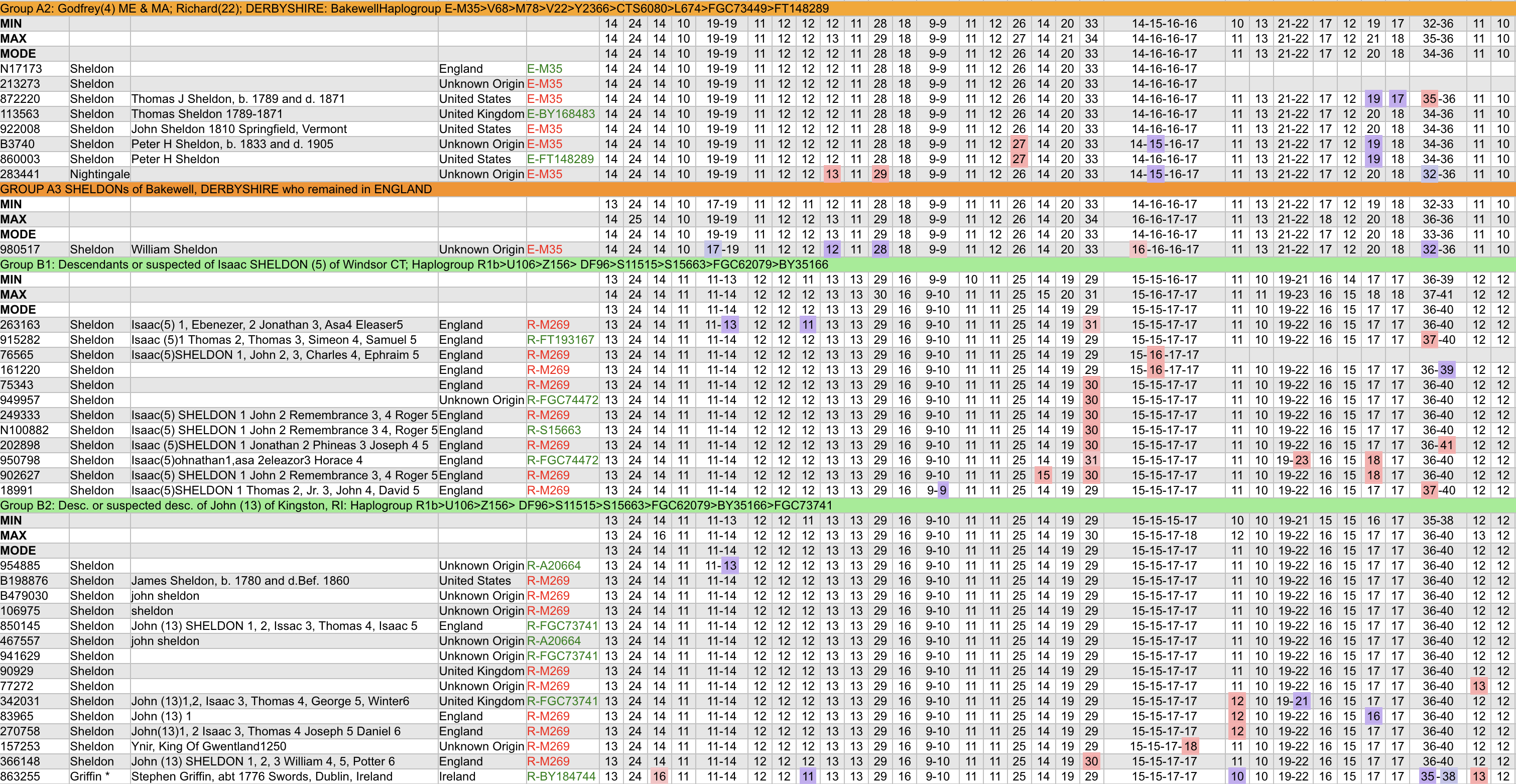
YES, as you can see under the green B2 results below, there are 14 male SHELDON testers from John and they all match each other. [They also match a dozen descendants of Isaac of Windsor Group B1. That’s a total of 26 that all match each other]. They do not closely match any of the other 2 million FTDNA testers as closely as they match each other and they create one of 50,000 Y-DNA branches in the human Y-DNA tree.
With minor deviations over time, a man passes his YDNA from father to son, son to grandson and grandson to great grandson and so forth. So, John of Kingstown’s YDNA is essentially the same as any of his strict patrilineal male descendants or ancestors. The only difference will be a different YSTRS value at a marker or two and occasionally a YSNP (mutation) that will further identify a branch in which it occurred. [YDNA does not go through the process of recombination like autosomal DNA.] Please see my DNA terminology for definitions.
Let’s look at a screen shot of the SHELDON project YDNA results. The first two groups are descendants of Godfrey of Bakewell and a Bakewell SHELDON descendant still living in England. The second two green groups are the descendants of Isaac SHELDON of Windsor CT [Group B1 ]and John of Kingstown RI [Group B2]. If you look at the string of values you will see the orange group have similar values as the green groups for the first 4 markers but at markers 5-6 things diverge broadly. Moreover note in the 5th column, the E-M35 of the orange group vs R-M269 of the green group. The Letters E and R refer to the major Y-DNA Haplogroups. Any two people in two different Haplogroups (even with similar markers) cannot be related in a reasonable amount of time—and most likely 5-10,000 years ago or more. So we know that Group A and Group B are not related in a genealogical time frame.
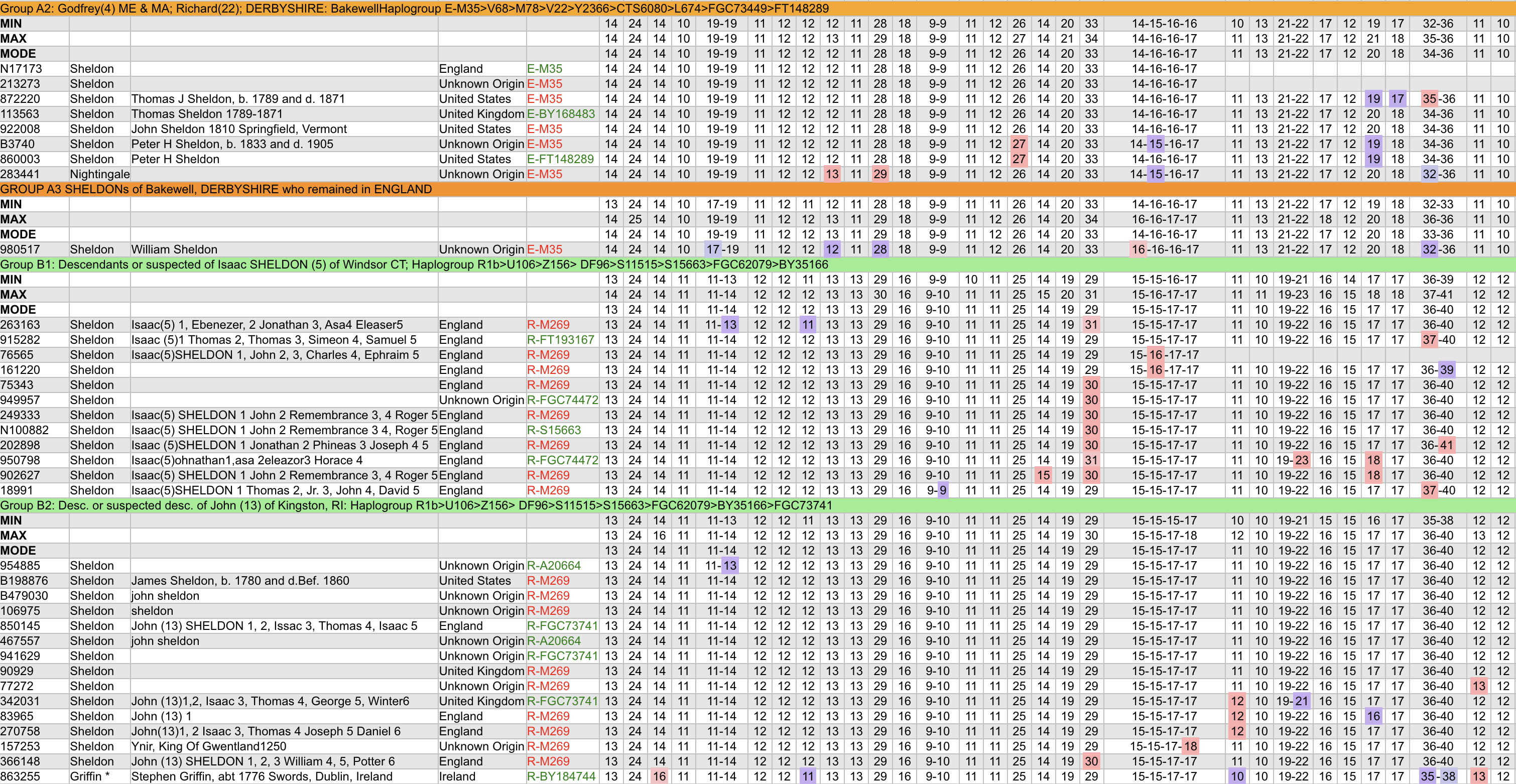
The number after the E is the name of the marker: ie. M35. Markers are named with a letter(s) for the lab and a chronologically assigned number based on when the marker was discovered. The Haplogroup markers (YSNPS) are different from the Y STRS markers which make the many columns we see above. The Broad Haplogroups are based on a mutation that typically happens just once in the history of mankind and all men carrying that marker will have a common ancestor. In the case of the marker M35 (Haplogroup E) the common ancestor is 15,000- 20,500 years ago. For Haplogroup R M269 the common ancestor is 4,000-10,000 years ago. So Haplogroup E is much more ancient than Haplogroup R. The oldest Haplogroup is A and the letters are assigned in alphabetical order. The other values seen after the E or R are markers and those listed in green have been tested usually through a Big Y test, those in red are predicted.
Here is an annotated Beta time tree of Group B:
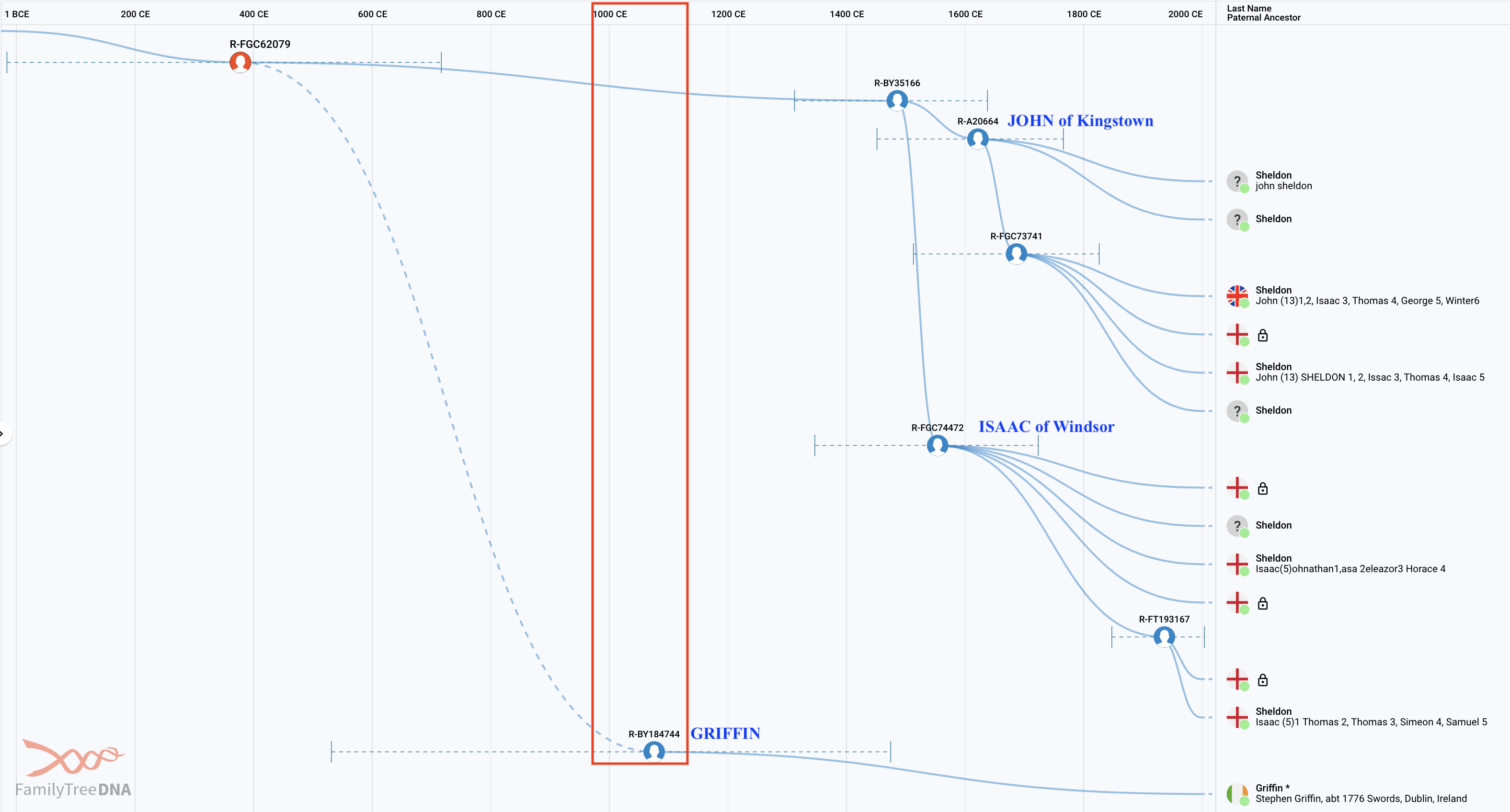
I have put a red box around the date 1000 Current age (aka as AD). We have a match with a descendant of a GRIFFIN whose common ancestor with Group B is about 1,000 years ago. You can see the defining marker for Group B is BY35166 about the year 1500. Then we have a branching in descendants of John of Kingstown and Isaac Jr of Windsor about 1600-1650. Having the marker A20644 is definitive for a John 13 descendant. Having the marker FGC74472 is definitive for an Isaac Jr descendant. So if you are a male SHELDON and test positive for marker A20644 you are a John of Kingstown descendant!!!
Another follow up question:
Why can we make a “strong assumption” that they inherited their DNA from John….why not someone from else?
Because in addition to the matches on YSTRS we have 12 Big Y testers who are Group B SHELDONs and they all match YSNPS with each other but no other surnames are positive for BY35166 so this would be considered conclusive evidence that the surname of the progenitor was SHELDON. Now it is always possible that Isaac was surnamed something else but from him forward they are all surnamed SHELDON. We know we don’t match the Group A group from Derbyshire. The twelve Big Y testers surnamed SHELDON claim Descent from Isaac of Windsor or John of Kingstown. We have two major branches below R-BY35166 which further defines Isaac Sr’s sons Isaac Jr and John of Kingstown.
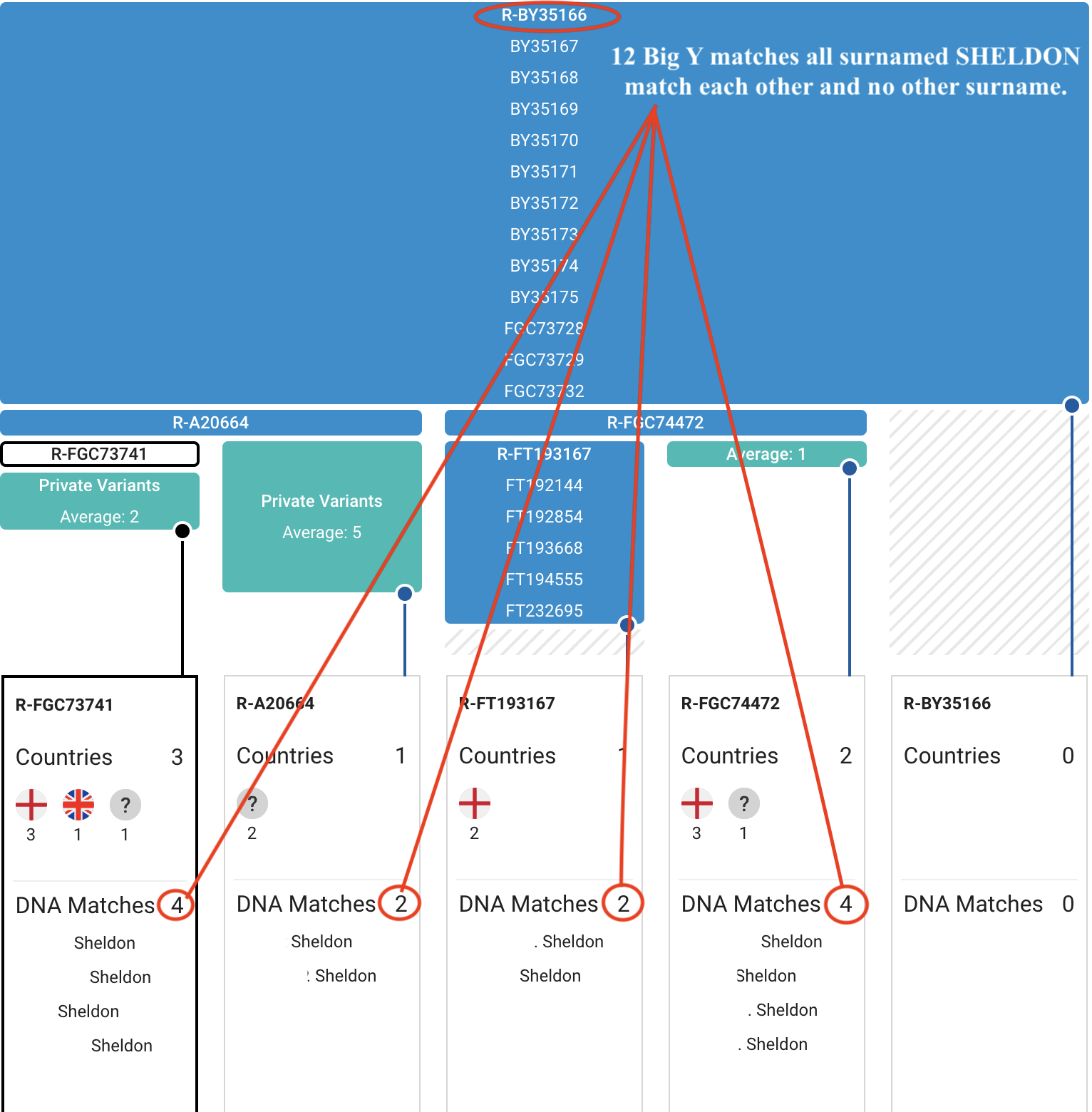
I hope that answers your questions! Thanks Jan for asking.
If we look closer we can see that some members of Group B1 (Isaac) and Group B2 (John) have identical YSTR markers. They share the same BY35166 and other non-DNA evidence suggests that John of Kingstown is likely the son of Isaac of Windsor—thus brother to Isaac Jr of Windsor. You can read more about that here.
Kelly Wheaton ©2023 All Rights Reserved
Nicholas BROME & the Three Murders: Part Five
Posted on March 6, 2023 Leave a Comment
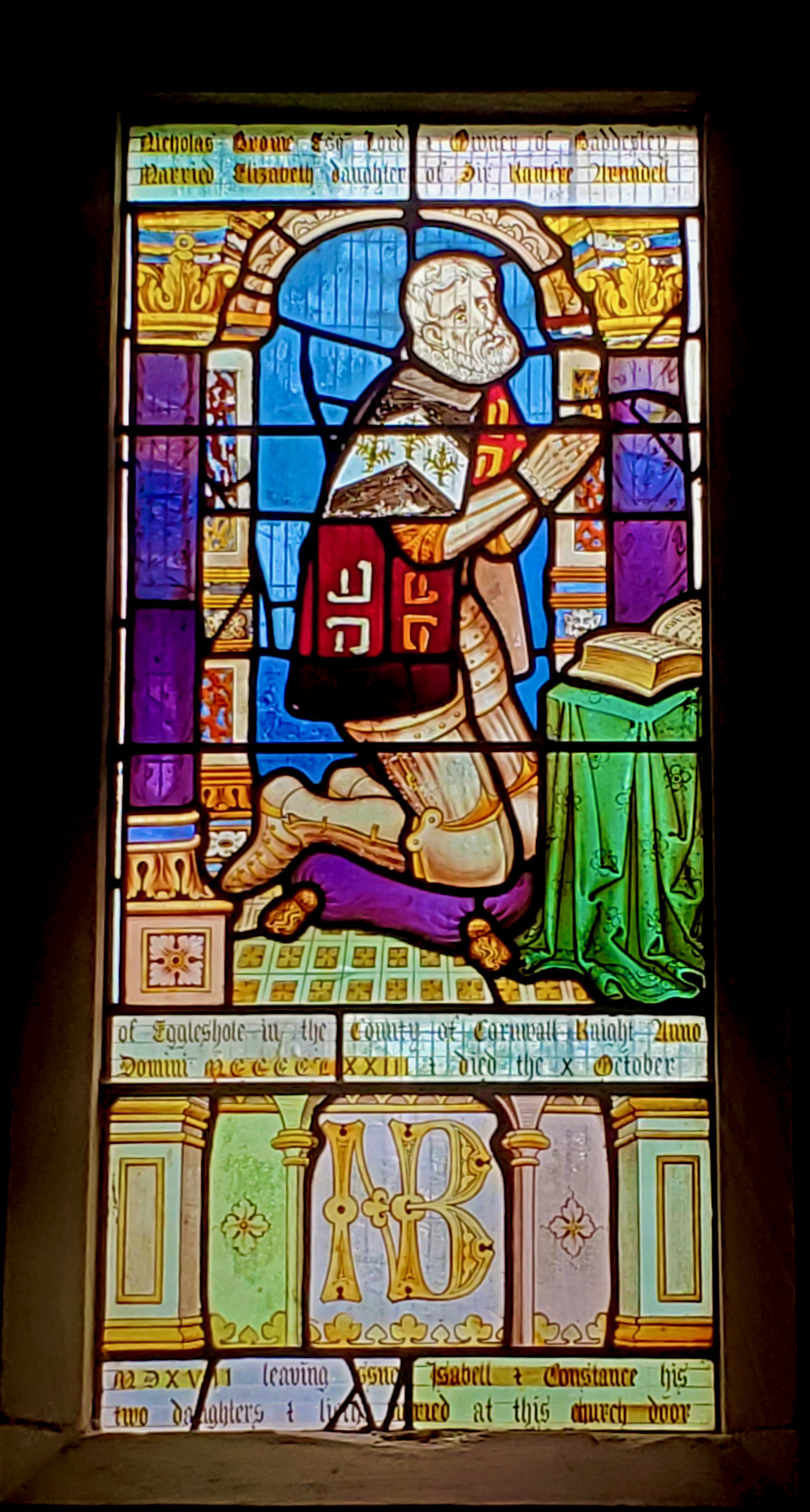
ST JAMES now ST MICHAEL at BADDESLEY CLINTON
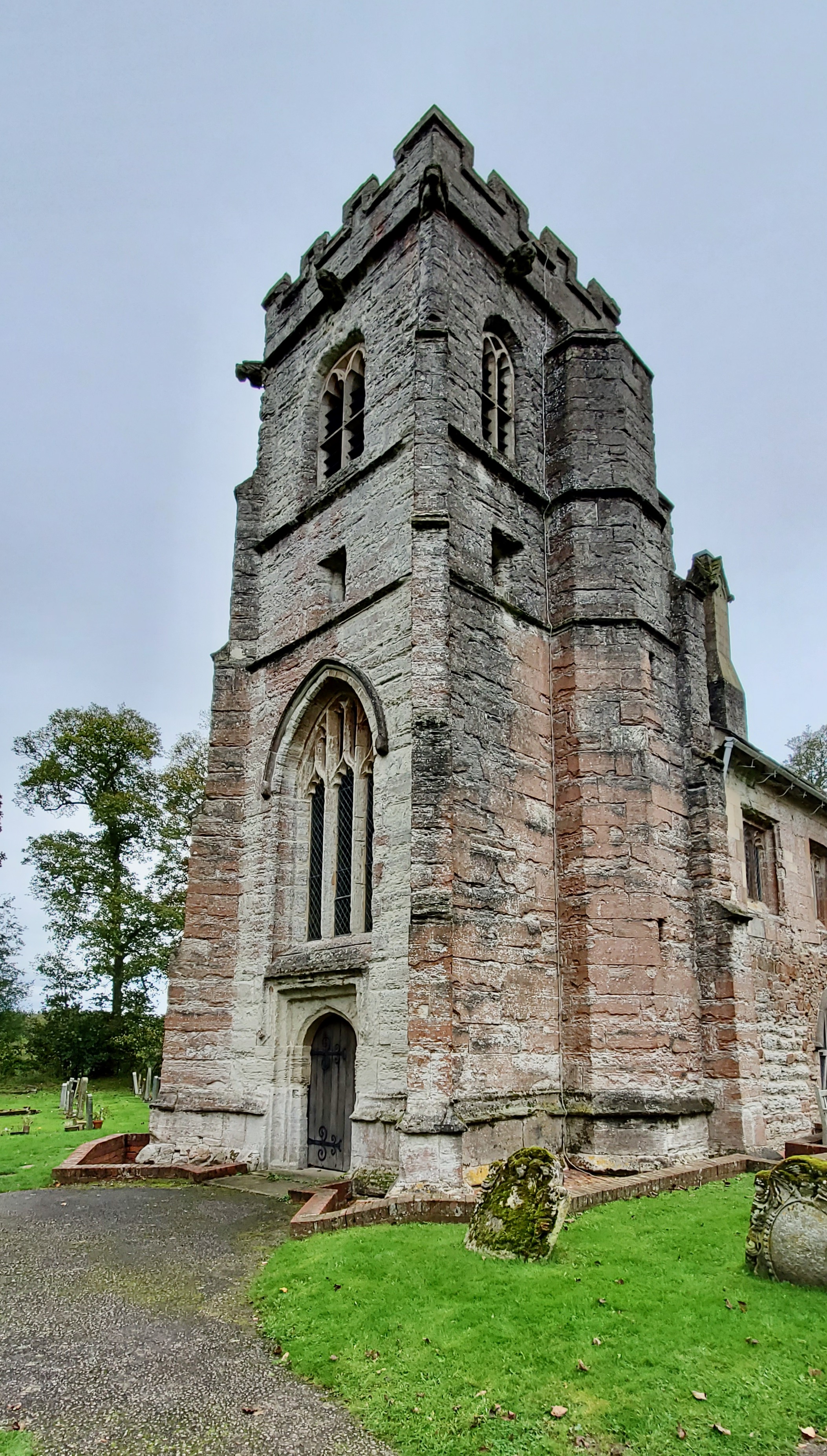
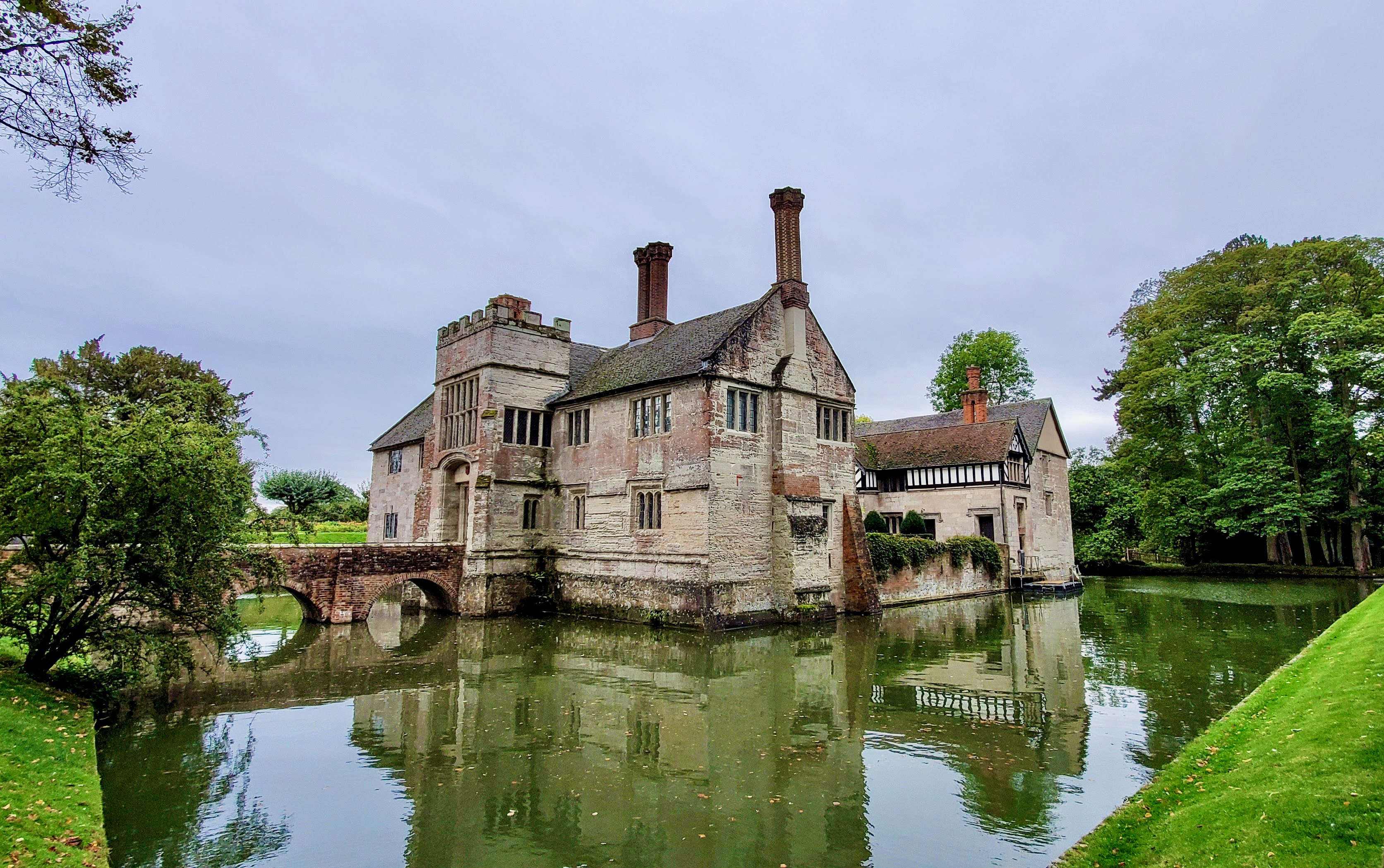
The above window at St Michael Baddesley Clinton [previously St James] gives some important details of Nicholas BROOME’s life: ” Nicholas BROME Esq. Lord & owner of Baddesley Clinton. Married Elizabeth, daughter of Sir Rawfre ARUNDELL of Eggleshole in the County of Cornwall, Knight Anno Domini 1473 and died the 10 October 1517 leaving issue Isabell and Constance his two daughters and lieth buried at the church dore.” This stained glass and those around it [see photo below] were commissioned by his daughter Constance who married Sir Edward FERRERS and inherited Baddesley Clinton Manor. This of course shows a pious Nicholas BROME in prayer. Perhaps praying for the souls of his father John BROME; John HERTHILL, who murdered his father and whose death Nicholas avenged by killing him; his soul [Nicholas], and that of the priest that Nicholas murdered [assumed to be William FOSTER].
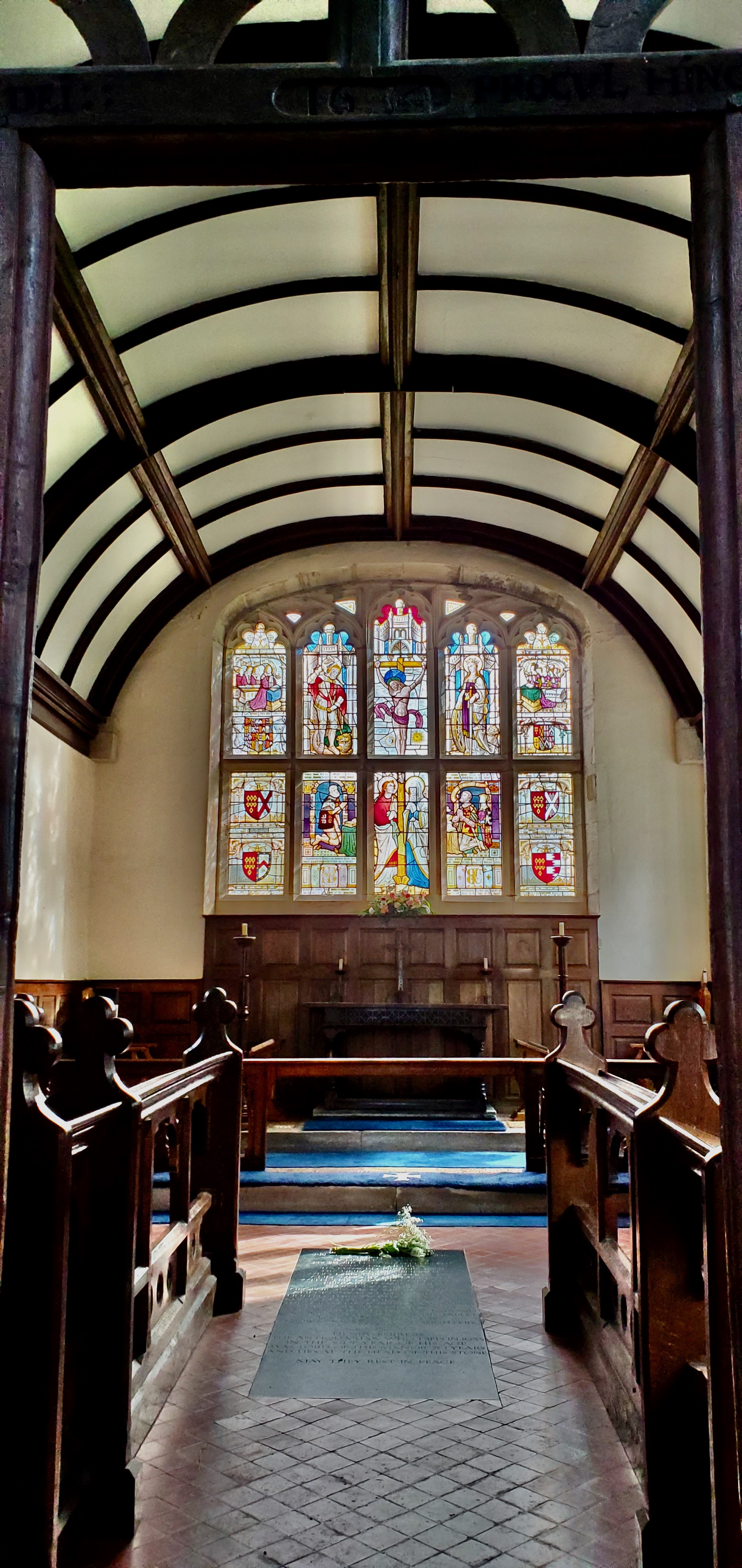
We have already noted that Nicholas BROME’s penance for the killing of the priest of Baddesley Clinton, was that Nicholas agreed to raise the walls of the Church at Baddesley Clinton by 10 feet and add a bell tower and he also agreed to fit nearby St Giles Packwood with a new bell tower as well. This is immortalized in the Bell Tower at Baddesley Clinton thus:
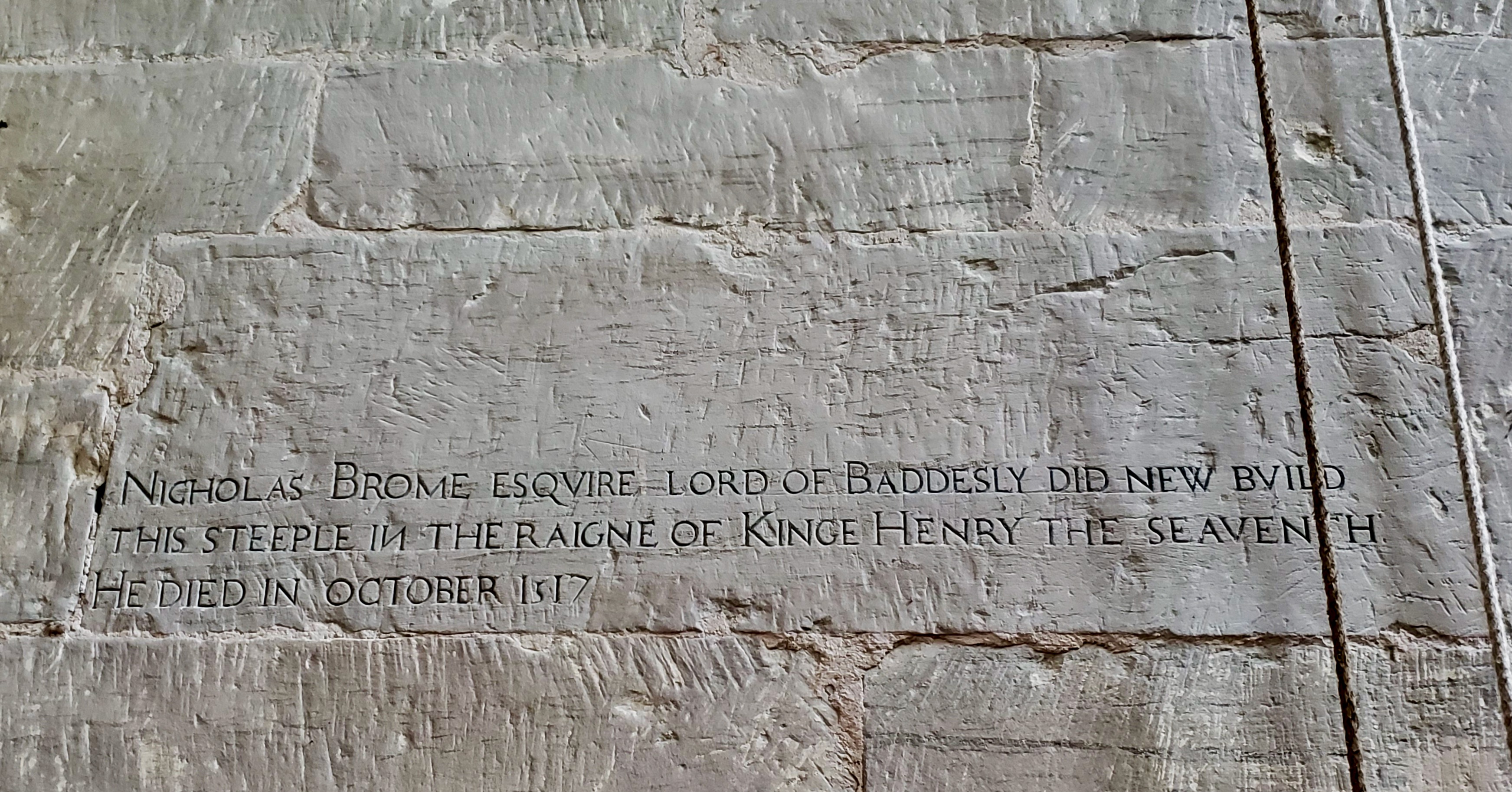
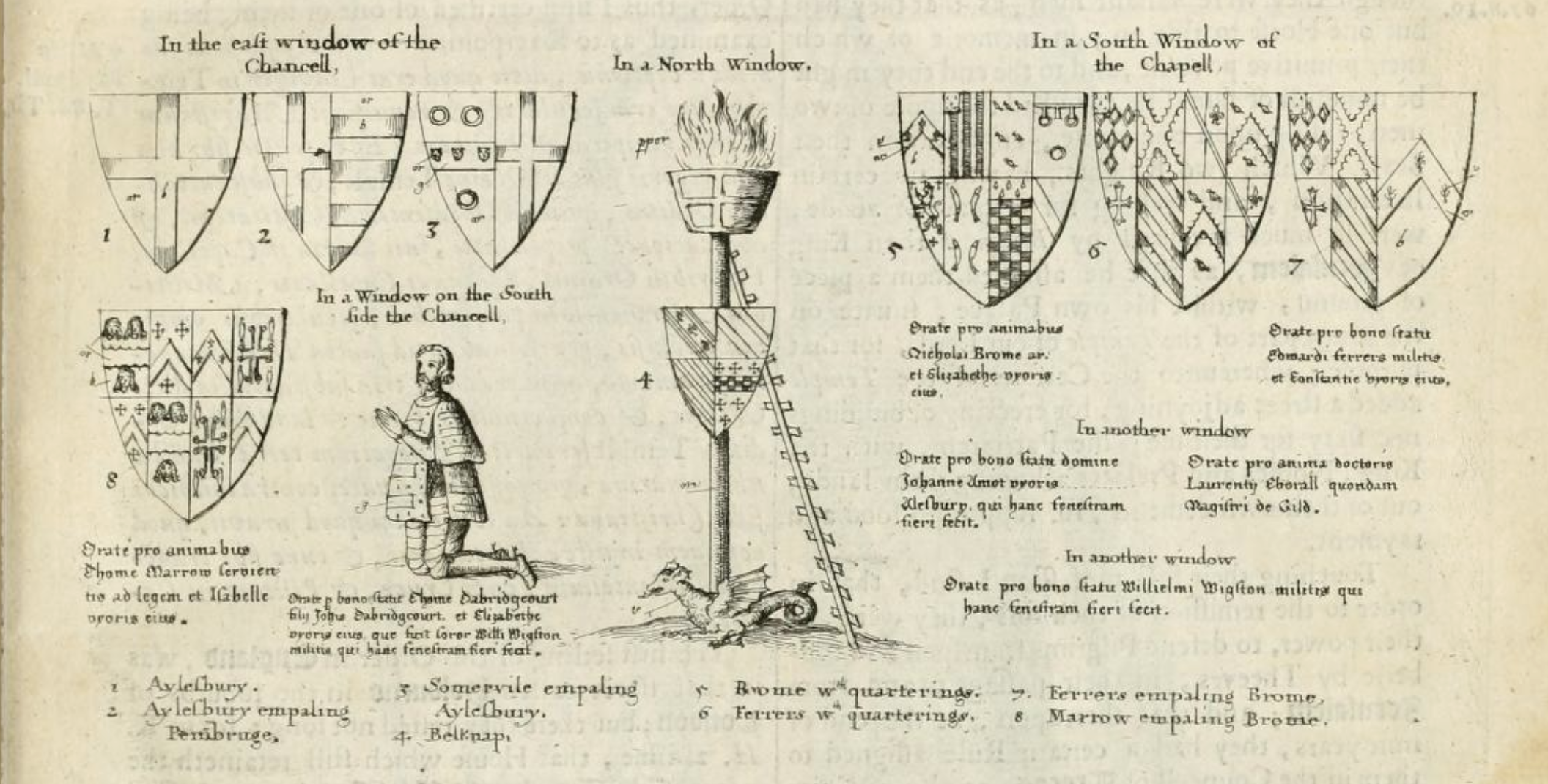
According to Dugale there was a window at Packwood St. Giles with this inscription: “Orate pro anima Nicholas Brome , qui campanile de fieri fecit” Translated: “Pray for the Soul of Nicholas BROME who built the bell tower.” These two towers known as the towers of expiation were built during his lifetime. Nicholas appointed 4 priests to Baddesley Clinton in his lifetime:
- William FOSTER 29 Nov 1478 [believed to be the priest he murdered c1485, after which there was a period of no clergy]
- Ale AWEN 23 May 1493
- William SNELESTON 14 Nov 1499
- Robert BANKE 8 Oct 1501
WILL OF NICHOLAS BROME
But of all the records of Nicholas I find his Will is the most illuminating. It tells us a fuller story of this man’s conscience and the burdens he carried. Nicholas BROME writes his will the 3rd day of October 1516, a year before his death. He does not mention his third wife Leticia so it seems likely she predeceased him, likely shortly before the Will was written.:
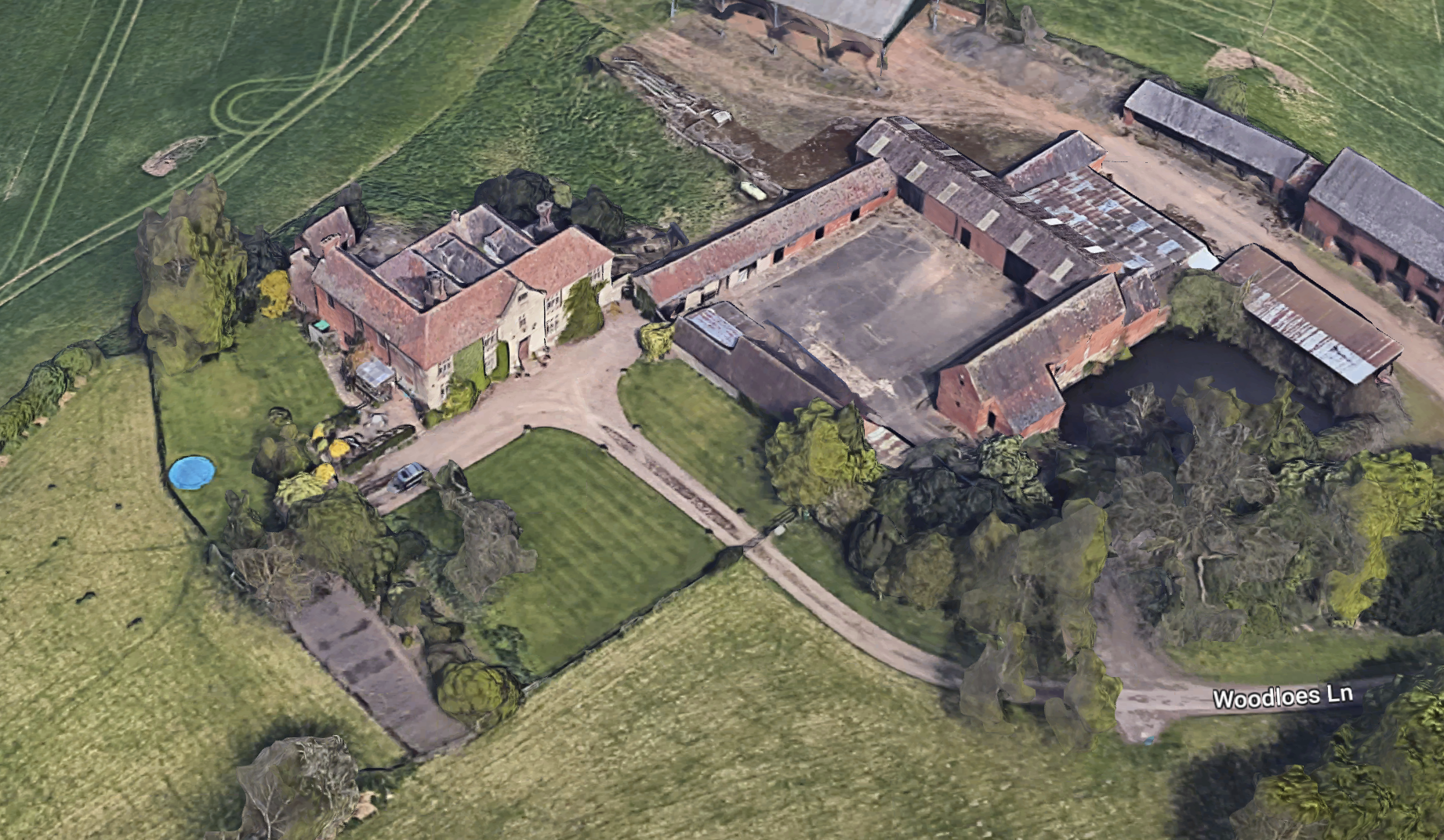
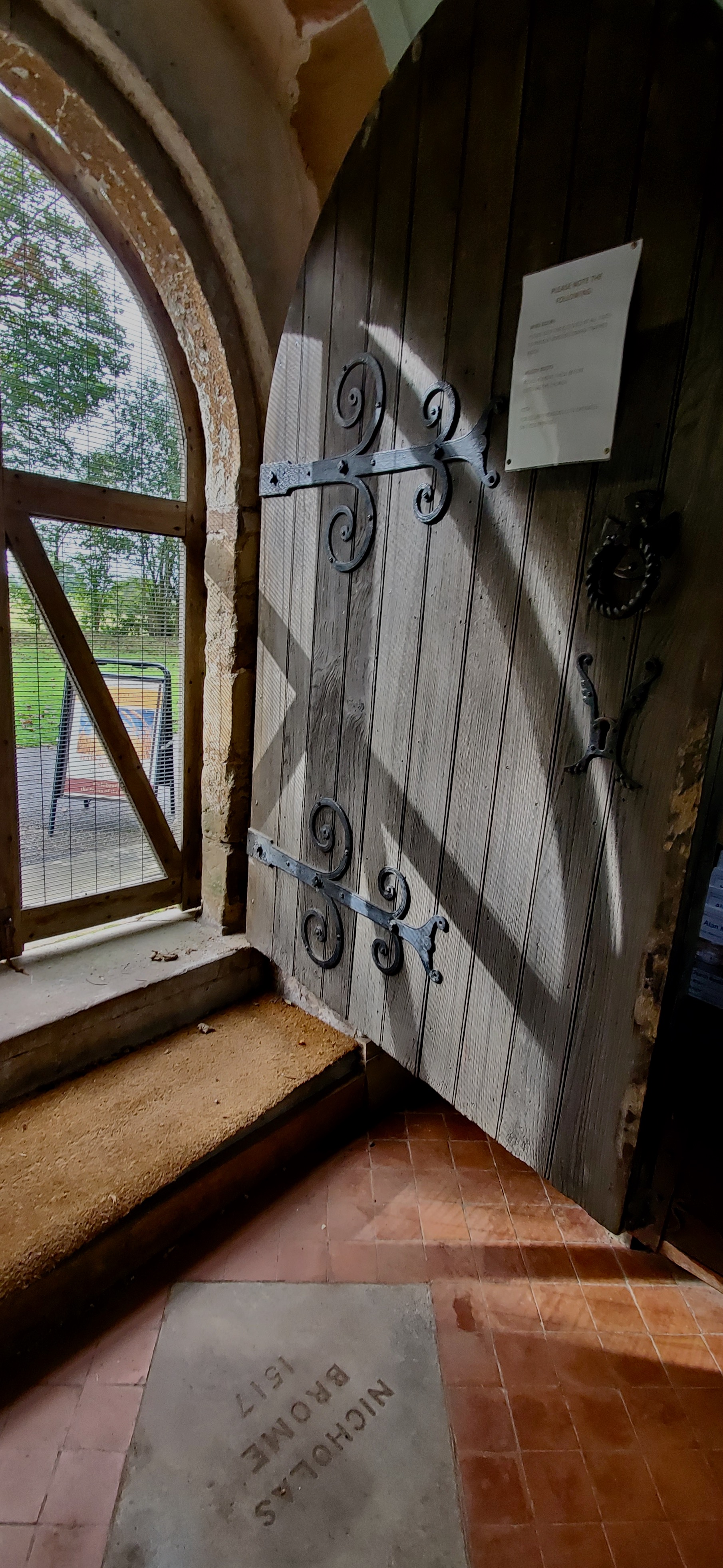
“I Nicholas BROME of Woodlow Esqr. beninge of hole of mynde [mind] and of good memory thanked be almightee God do make and ordeyne [ordain] this my present testamente and last will in manner and forme hereafter follwinge. First I bequeathe my soule unto almightee God my creator and saviour to our Lady St Mary and to all the saints and my body to be buried within the church doore of St James [Now St Michael] in Baddesley there as the people may tread upon me when they come to church…I also will that there be ordeyned [ordained] and layed upon my grave a flat stone of marble with an image of Latine of a meetly quantitee with a scripture mention of the day and yeere of my deceasde and my armes therupon to the intent I amy hereafter be the better remembered and prayed for.”
What we have seen in Antiquities of Warwickshire by Dugale, there was indeed a stone of marble and a likeness in brass of Nicholas. According to John Jarman, first tour guide of the National Trust property at Baddesley Clinton, “in 1870 there was a restoration of the church by Lady Chatterton and they found there were a number of tombstones on the floor of the nave of the Church, including Nicholas’ in the doorway”, which was a large marble stone and on it was a figure of a knight in armour…” Upon further excavation it was discovered that he had been buried vertically. While his will does not specifically say this it may have been his intent to be buried thus, as a final penance, where he shall never lay at rest. I can find only 2 other vertical graves in the 16th and 17th century England, both after Nicholas BROME’s burial. The first was Sir John SPELMAN of Narborough, Norfolk, Judge of the King’s Bench who died 26 Feb 1543. The second, is the playwright and poet Ben JOHNSON who died in August 1637 and was buried at. Westminster in the Poet’s corner. He is said to have remarked “I am too poor for that and no one will lay out funeral charges upon me. No, sir, six feet long by two feet wide is too much for me: two feet by two feet will do for all I want.” It is certainly unusual for the time. As a patron of the church Nicholas was entitled to be buried there, the fact that he spells out his desire to be ” buried within the church doore of St James in Baddesley there as the people may tread upon me when they come to church” seems significant.
Nicholas asks that a Mass be said for him at Baddesley Clinton for ten years by the parson. He asks that the following religious institutions sing mass and dirge for “my soule”. These include:
- Corpus Christie Geeld [Guild] in Coventree [Coventry]
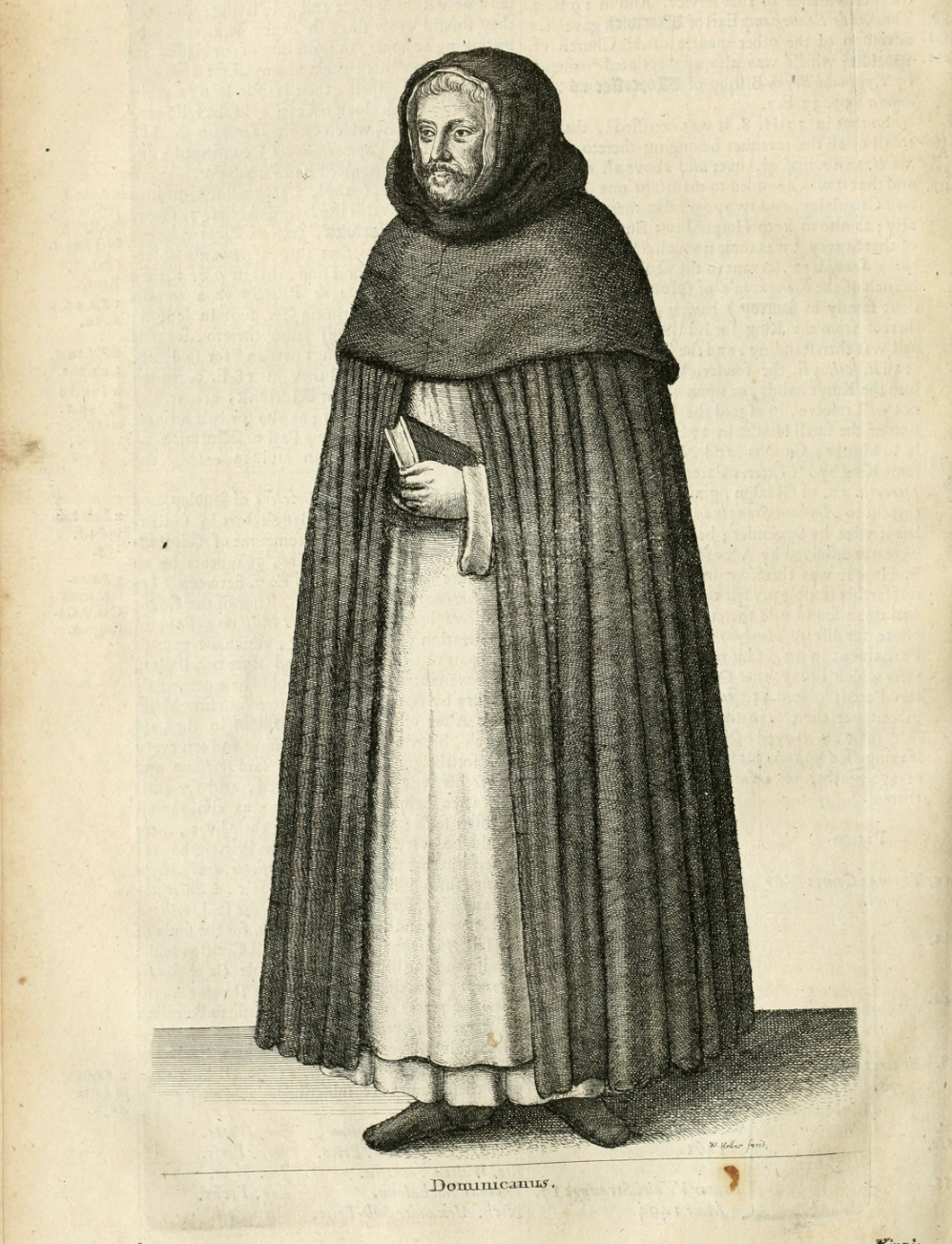
- Grey Friers of Coventree [where I am a brother]
- Gueeld [Guild] of Warwick; The Guildhall now Lord Leycester’s Hospital was built in 1450 by Richard Neville “The Kingmaker”. It was a place where members met to discuss religion, politics and trade.
- Black Friers of Warwick [where I am a brother]
- Convent of St Mary’s in Worcester [where I am a brother]
- Priest of Aston Cantlow [where I am a brother]
- The Prioresse and Convent of the house of Wroxall [Where his sister Joyce BROME was Prioress]
- The Warde and prieste of the Geeld of Knoll [Guild of Knowle] [where I am a brother]
The concept that prayers for the dead, by the living, could aid the dead in purgatory and affect their ultimate salvation was a common belief during this period. Christian burial demonstrates that death was not the deadline for salvation and there was still hope of redemption. I think it is safe to see poor Nicholas believed he needed all the help he could get in avoiding eternal purgatory or worse. Whatever we think of him using today’s metric in his time the avenging of his father’s death would have been a private matter, and viewed as honorable. The killing of a priest, no matter the circumstance would have been perceived as most unfortunate. Not only would the church extract its price in the funding of the two towers of expiation there appears to be a moral price that Nicholas paid as well.
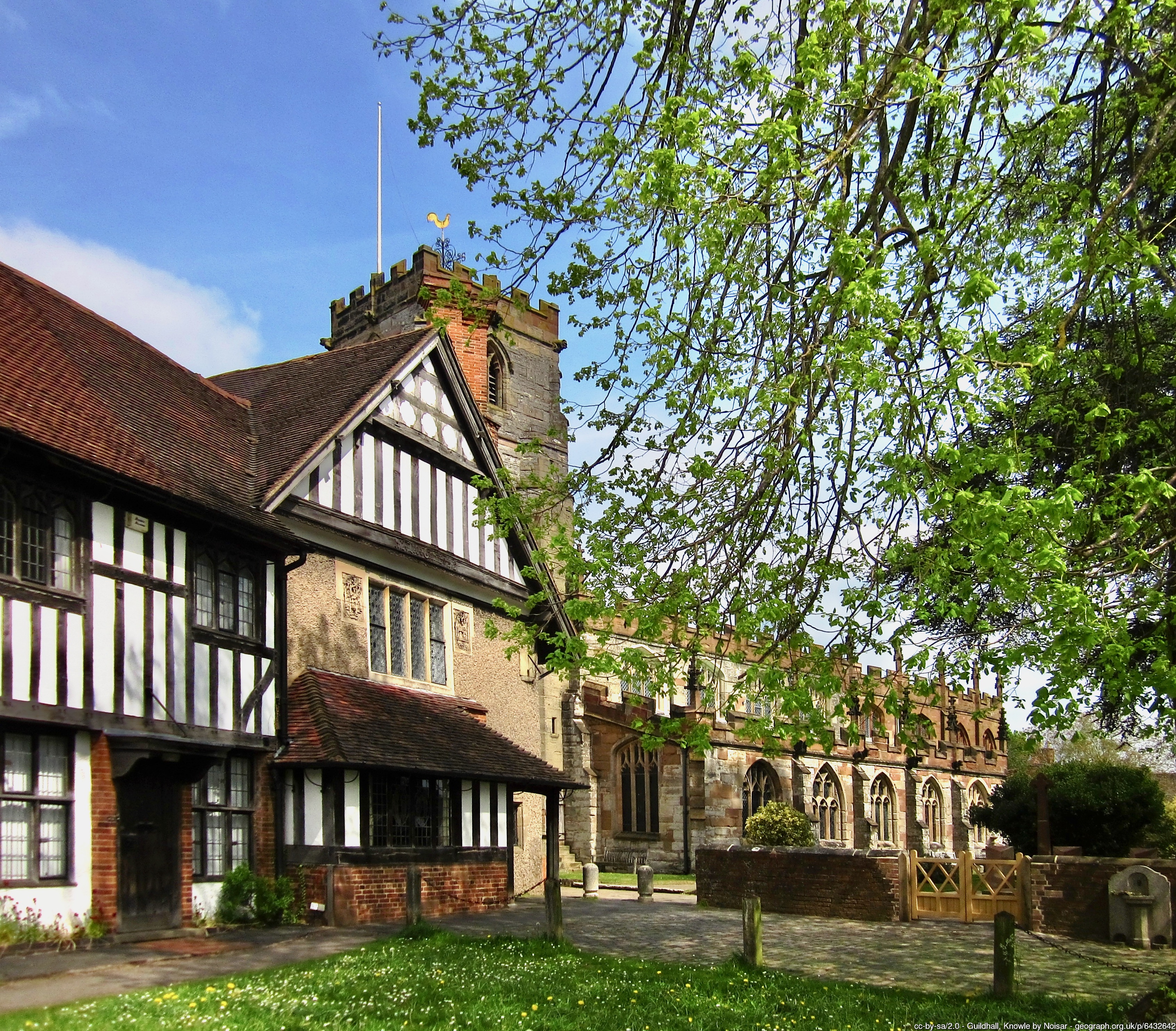
Below are photos of some of the religious or affiliated institutions Nicholas BROME mentions in his will. Three were 3 Guilds: Coventry, Warwick and Knowle; 2 Convents: Worcester and Wroxall; 3 Monasteries: Coventry, Knowle and Warwick; and 2 parish churches: Baddesley Clinton and Aston Cantlow. He was either a generous man or felt he needed all the help he could get, or both.
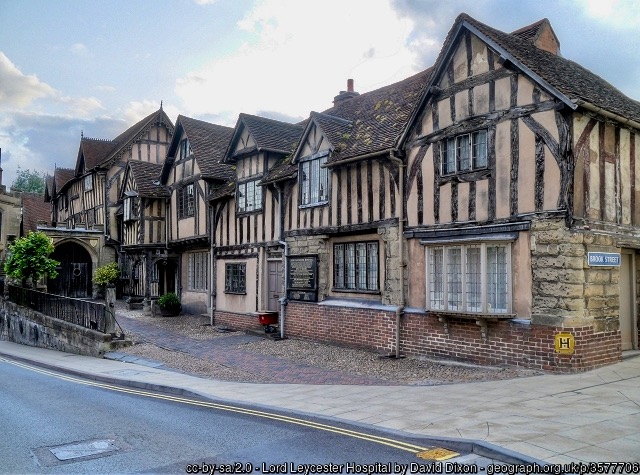
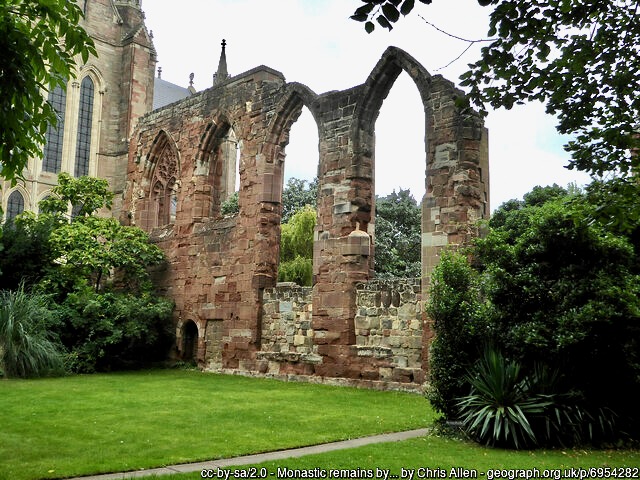
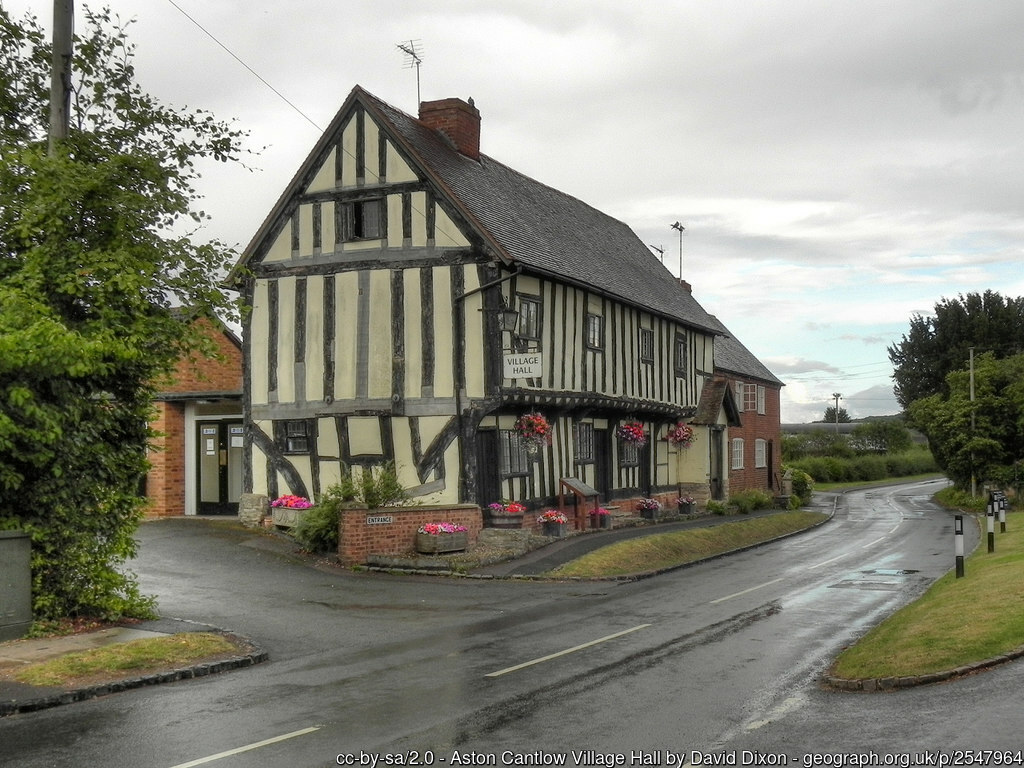
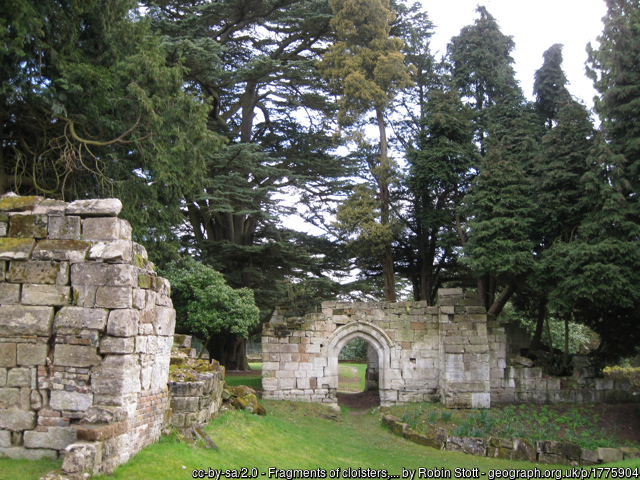
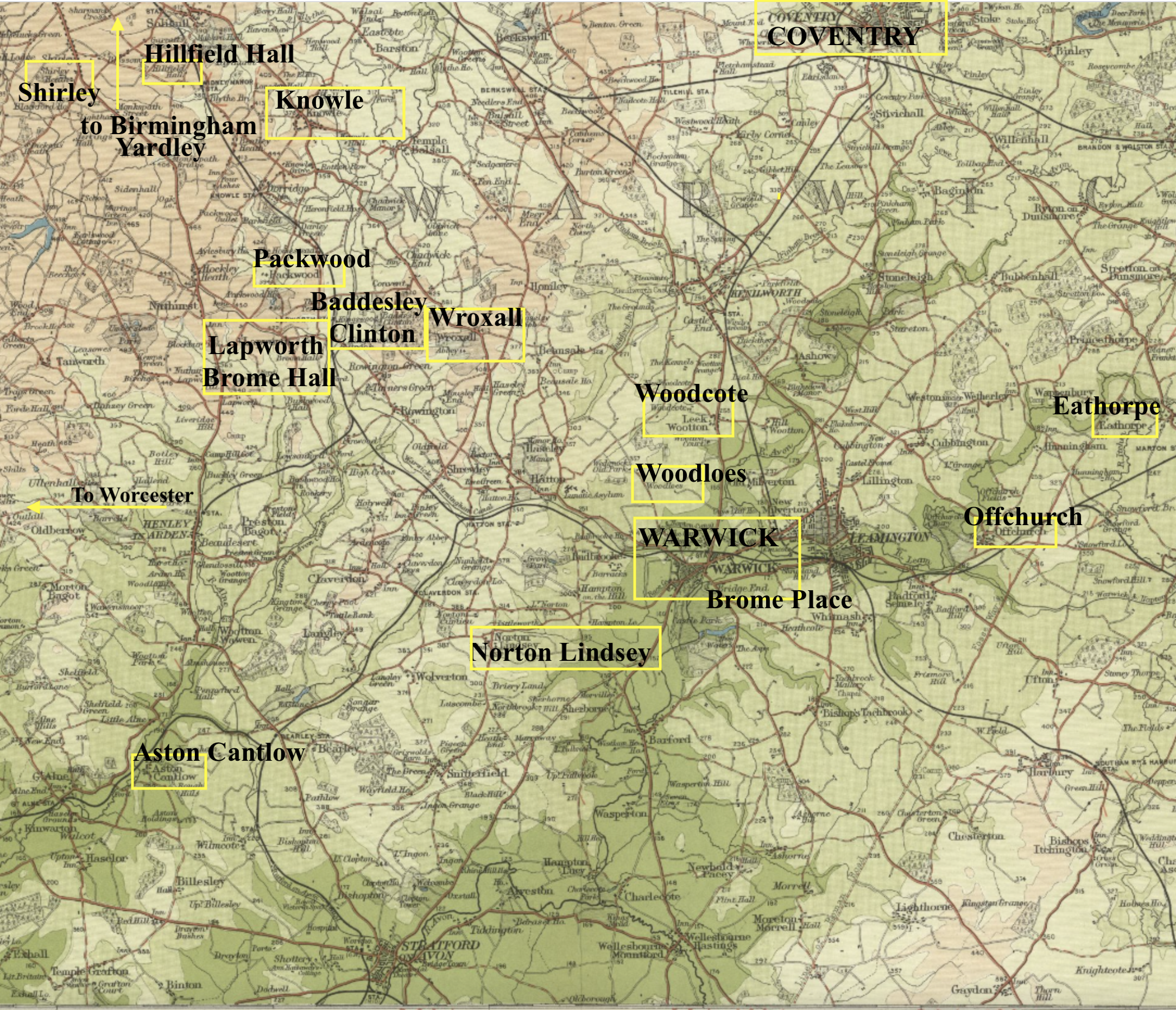
He also mentions the Manors at Woodloe, Upper Woodcote, Nether Woodcote, and lands at Norton, Offchurch, and Eathorpe and that the profits be used for the marriage of his daughters and the same to be given to his son Edward reaches 21 years of age. His son Raufe to receive his lands and tenements at Yardley and Shirley when he reaches 21. All properties and religious institutions are within about 9 miles of Baddesley Clinton save the Convent of St Mary at Worcester. This map shows their locations.
I think it is safe to say he was a conscientious father making arrangements for all of his children to be well settled. His father was murdered and he avenged his father’s death. His brother died and he inherited his brother’s inheritance. He was thrice married and had at least seven children survive to maturity. He died about the age of 67 and lived through 6 Kings of England: Henry VI, Edward IV, Edward V, Richard III, Henry VII and Henry VIII. Nicholas BROME was a man of the tumultuous times through which he live, but he was also a man with a conscience.
“O coward conscience, how dost thou afflict me!”
William Shakespeare ‘Richard III’ Act 5, S. 3
LEGACY & FATE
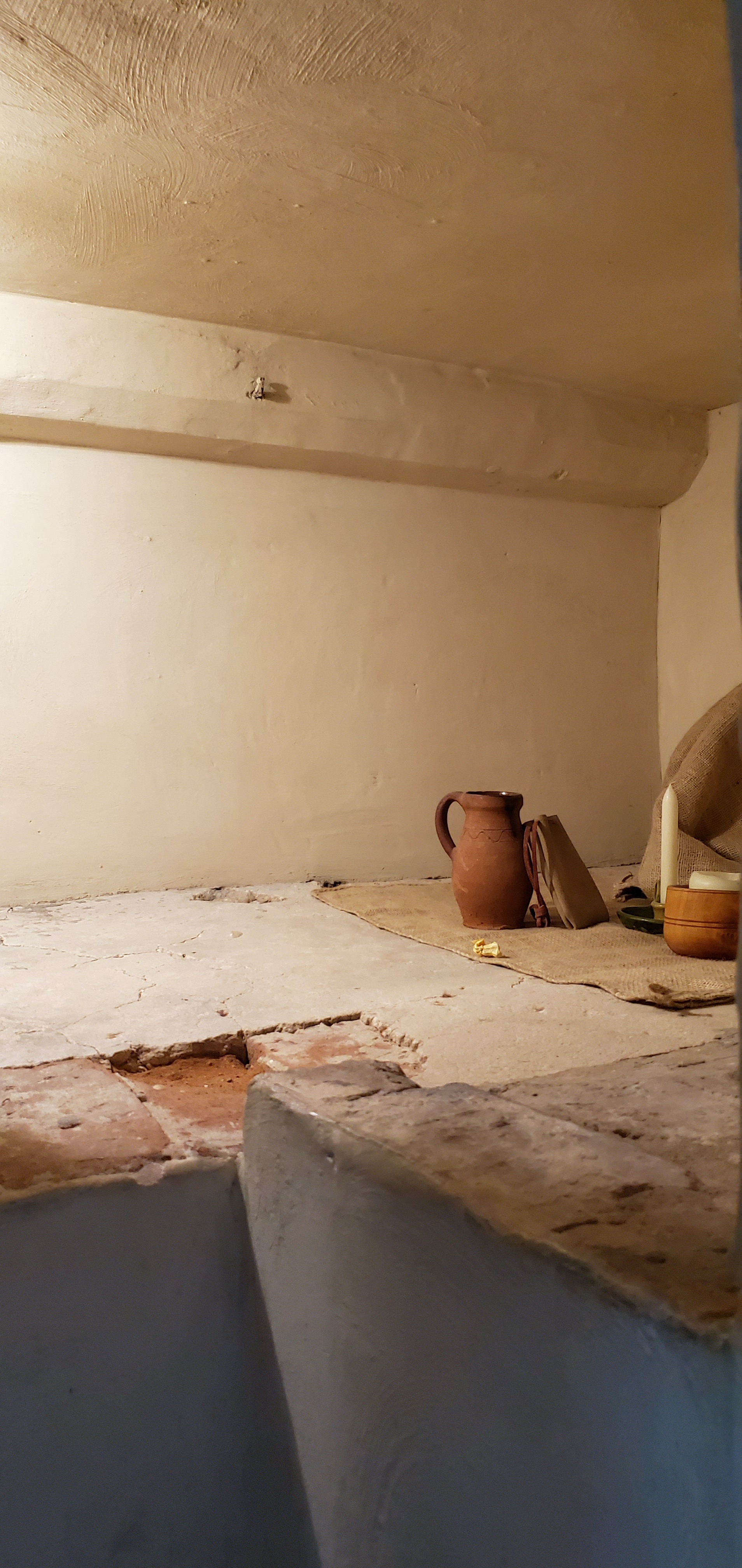
If there is a silver lining to Nicholas’ death perhaps it is that he did not live to see the Act of Supremacy of 28 November 1534, which formally made King Henry VIII head of the Church of England [with the help of Thomas Cromwell]. This led to the dissolution of the monasteries and religious houses from 1536-1541 which would have been unthinkable to Nicholas at his death. His daughter, Constance and son-in-law, Sir Edward FERRERS held Baddesley Clinton and remained devout Catholics. Edward FERRERS’ great-grandson Henry (1549-1633) was a lawyer at the Middle Temple, London and in 1586 he rented the house to the devout Catholics, Anne VAUX and her sister Eleanor BROOKSBY had “priest holes”constructed at Baddesley Clinton Manor. Below are photos of two of several priest holes at Baddesley Clinton Manor. During this time there was a network of travelling priests who visited many of the Manors held by Catholics. Masses were strictly forbidden so this forced these services to be held secretly. A turn of events Nicholas could have scarcely envisioned.

In 1591 a raid was made on the Manor at Baddesley Clinton, but it failed to find any Jesuits hiding there. However, on the 8th of July 1603 a Mr BURGOYNE, magistrate, who was living at the desecrated priory of Wroxall [where previously Nicholas’ sister had been prioress] sent a constable bearing a warrant to search a Catholic house at Poundley End, Rowington. He did not find the priest he was looking for, however, on the road back, not far from Baddesley Clinton he came upon Robert GRESWOLD in the company of the venerable John SUGAR, priest. The two were arrested and committed to the Warwick gaol where they were confined for over a year.
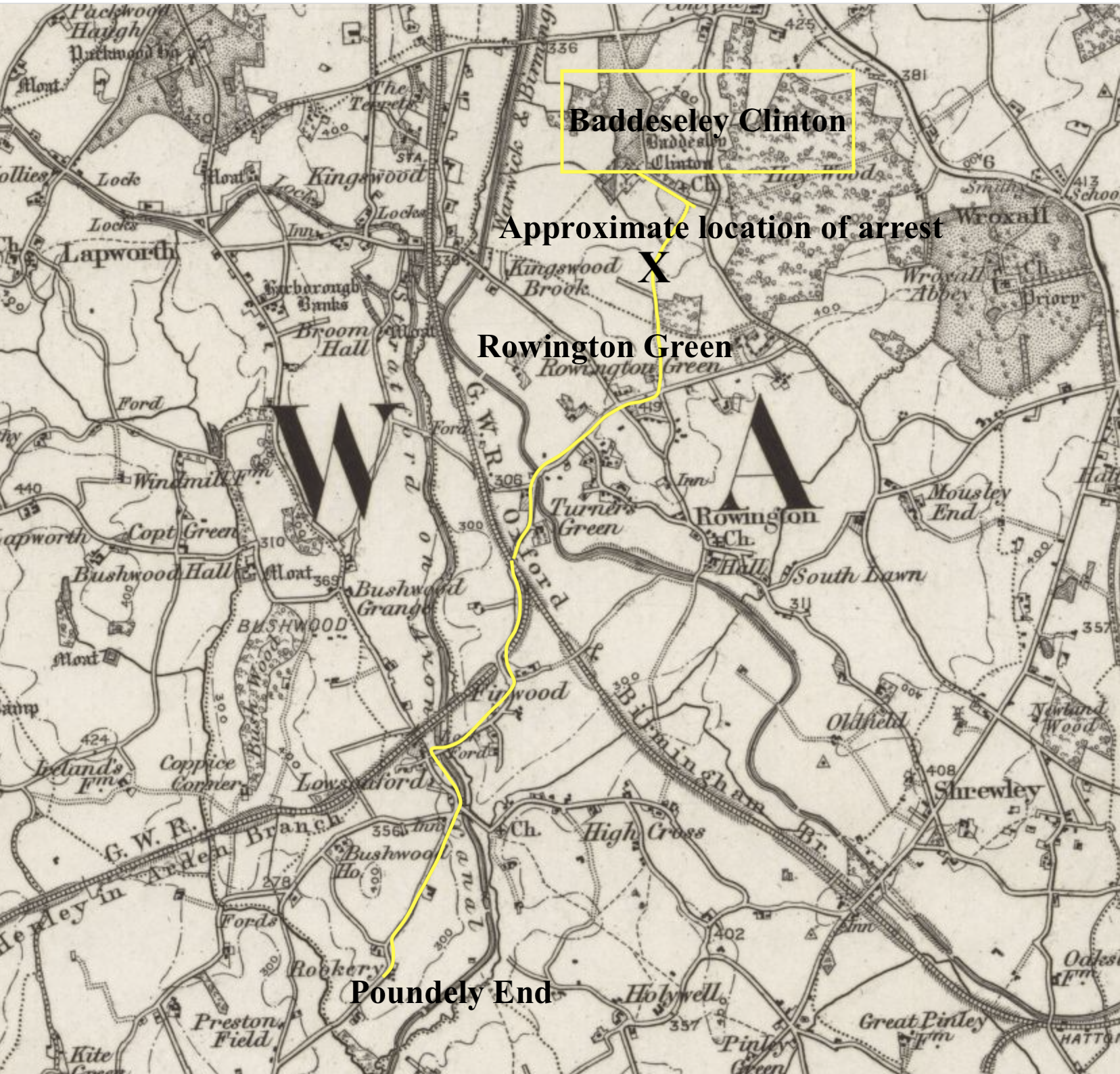
note Wroxall to the right
Both were offered the opportunity to renounce their Catholic faith. They both refused and were executed by hanging on 16th of July 1604. They were both beatified by Pope John Paul II in 1987. This was immortalized in a painting by Rebecca Dulcibella ORPHEN who married Marmion Edward FERRERS in 1867. The painting was destroyed however a photo of it can be found here. There are some new Frescos of Robert GRESWOLD and John SUGAR which you can read about here. They were painted by Martin Earle at St Francis of Assisi Baddesley Clinton in 2020.
Robert GRESWOLD [a distant cousin] is listed as a husbandman and servant to a Mr SHELDON of Broadway. This is most certainly William SHELDON (c1562-1626) who held the Manor of Broadway beginning in 1584. William SHELDON (1562-1626 or later) took over Broadway Manor in 1584. This suggests a strong network of Catholic loyalists among the gentry of Warwickshires and Worcestershire. I expect a future blog post will delve more into this. As some of you know we suspect the SHELDON’s of Broadway may be the progenitors of 2 branches of American SHELDONs.
Today I count myself among the many descendants of Nicholas BROME. I came upon Nicholas, almost by accident when searching for ancestors in Warwickshire, preceding a trip there in 2019. I hope that I have done Nicholas justice in fleshing out more about him. It is my fervent hope that Nicholas found peace in the afterlife.
Kelly Wheaton ©2023 – All Rights Reserved
Earlier parts of the Murders of Nicholas Brome:
NICHOLAS BROME & the Three Murders: Part Four
Posted on March 3, 2023 2 Comments
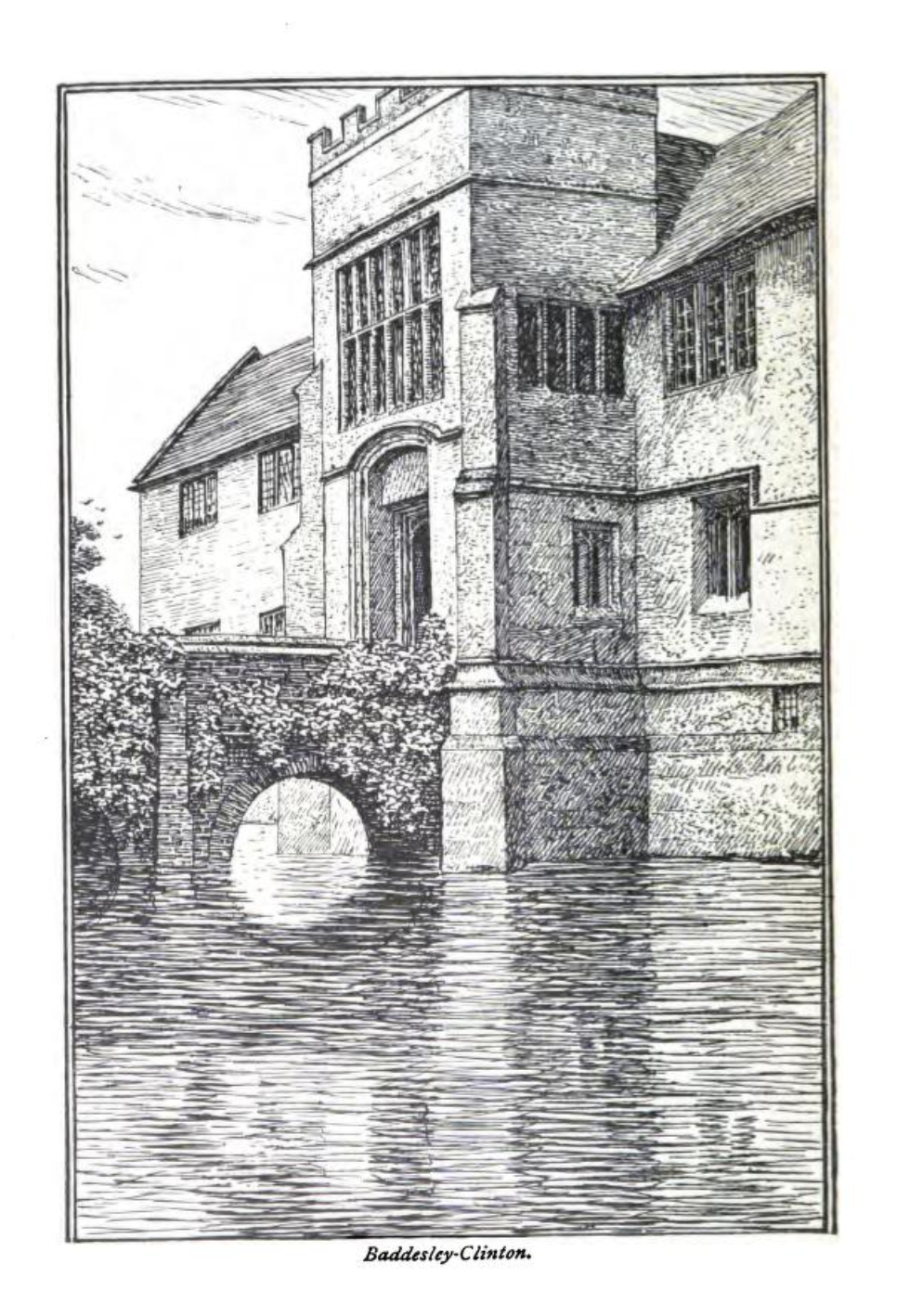
Hutton 1914 pg 341
When last we left Nicholas BROME we had fixed on the approximate date of the murder of the priest as about 1485. One of the challenges of trying to understand Nicholas is to understand the time and the circumstance in which he lived. Trying to do so with someone who lived 500 years ago presents challenges. I also alluded to the fact that the murders Nicholas BROME committed he paid for dearly, and not just in money. I will treat that in detail in Part Five. In this, Part Four I hope to flush out the rest of Nicholas’s life after the murders. If you are not interested in the family—then stay tuned for Part FIve.
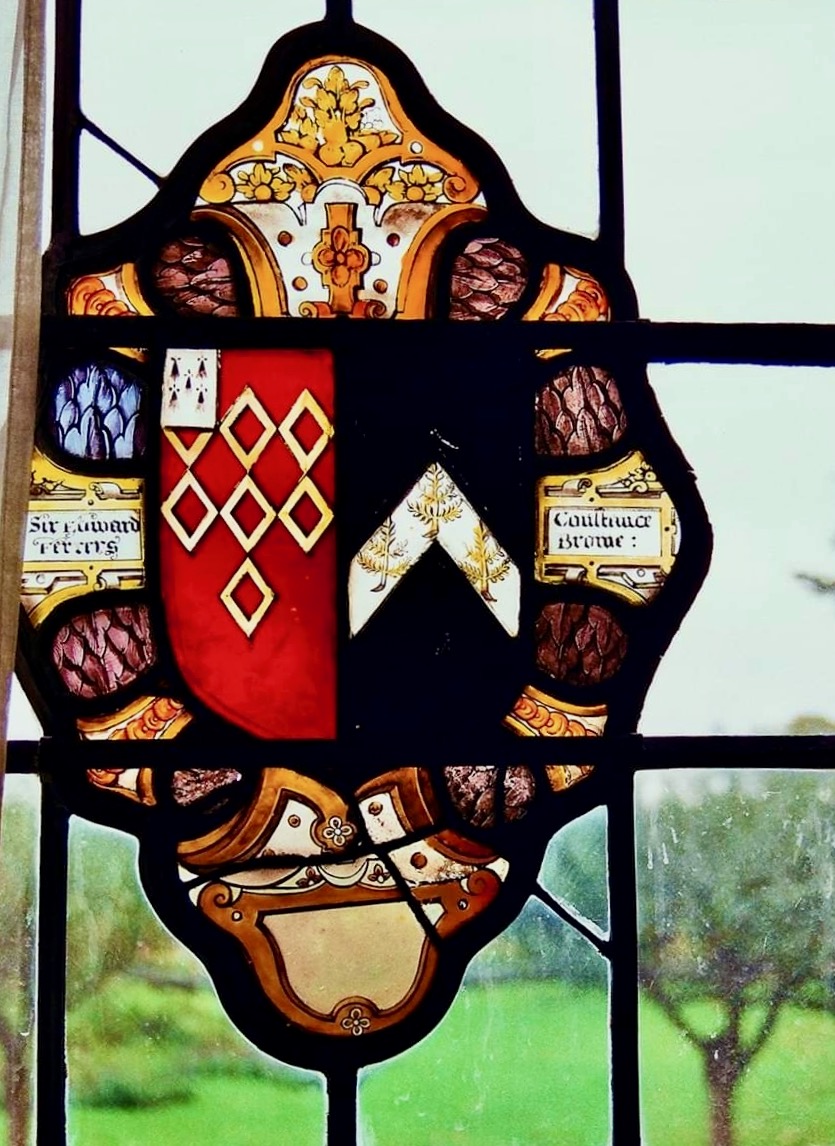
The biggest challenge with Nicholas has been discerning the most accurate details from conflicting information. Below are the Arms of John BROME & ELizabeth ARUNDELL (left) and Sir Edward FERRERS & Constance BROME from Baddesley Clinton Manor.

© Mark Sutton used w. permission
© Mark Sutton used w. permission
FIRST MARRIAGE
There is no doubt as to Nicholas’ first wife and the two daughters born of that marriage. He was married to Elizabeth Arundell, daughter of Sir Renfrey “Ralph” ARUNDELL and his wife Joan COLESHULL. Elizabeth was about ten years his senior. We know from the records that this was Elizabeth’s second marriage as she had previously married to William WHITTINGTON who died in 1470. She brings to the union with Nicholas, her 5 children (surnamed WHITTINGTON) son John, 16, and 4 daughters ages 8 to 14. She does not bring an estate or sums of money. They marry 10 Feb 1474. To this union two daughters are born: Isabel the oldest born about 1475 and Constance born about 1478. Isabel marries Thomas MARROW(E). Constance marries Sir Edward FERRERS to whom the Baddesley Clinton estate passes upon Nicholas’ death. Below are the drawings showing the Arms of Nicholas BROME and intermarried families from the College of Knowle.
SECOND MARRIAGE
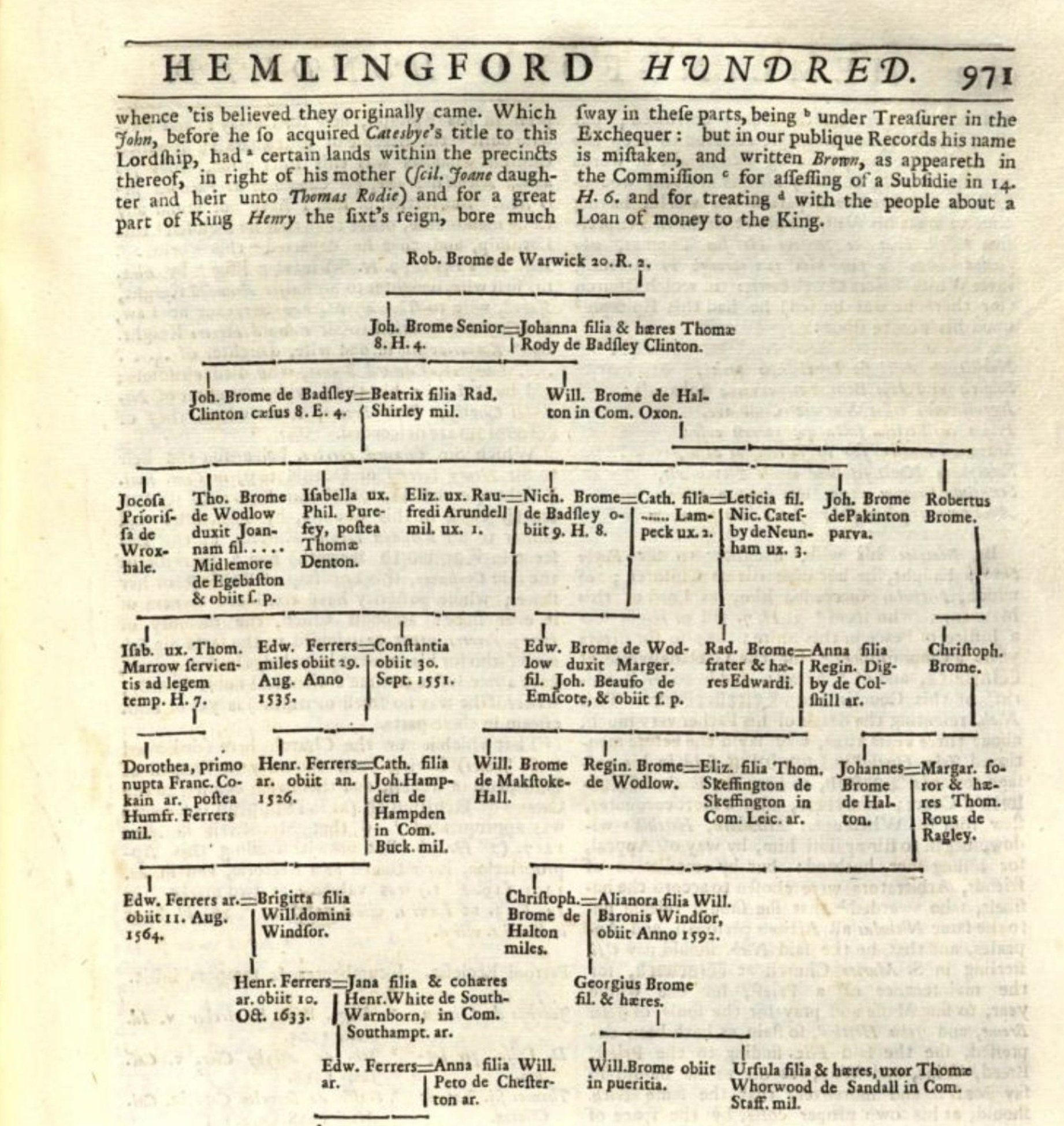
I am indebted to Anne Elliott author of ‘My Husband’ for providing me documentation, that the second marriage was to Katherine LAMPETT (LAMPECK) and NOT Letitia C. The above tree has all 3 wives, unlike the Visitation of Warwickshire that has only two [ARUNDELL & CATESBY]. I believe this accurately places the first two daughters and the two male heirs: Edward and Ralph to their appropriate mothers, Katherine and Letitia respectively. It is missing the later female offspring Elizabeth, Joyce and Anne. In a deed 10 Feb 1506 at Warwick Records Office (CR0023/1/1/65) it mentions Nicholas Brome, esquire and Katherine his wife. We know that their son Edward BROME son of said Katherine LAMPECK is buried at the Baddesley Clinton church according to Norris 1897 and Dugale 1730. We also know that Elizabeth BROME is buried there as wife of Thomas HAWES of Solihull and she is believed to be her daughter as well.
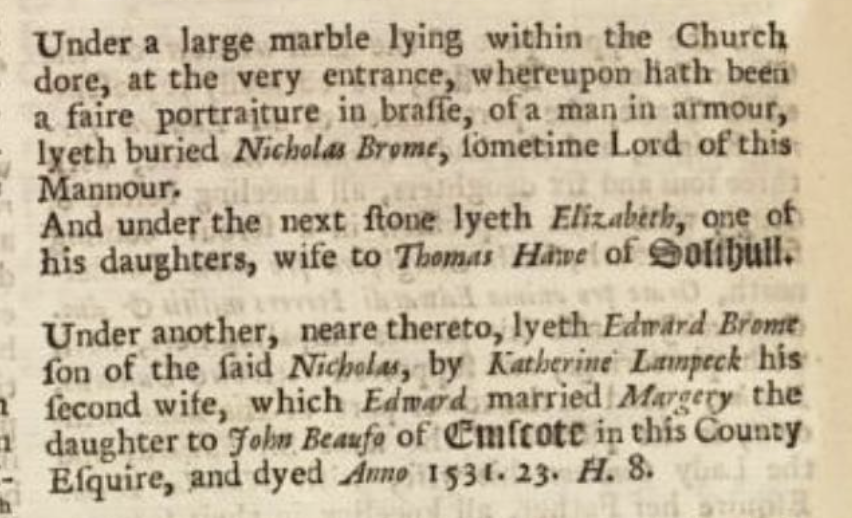
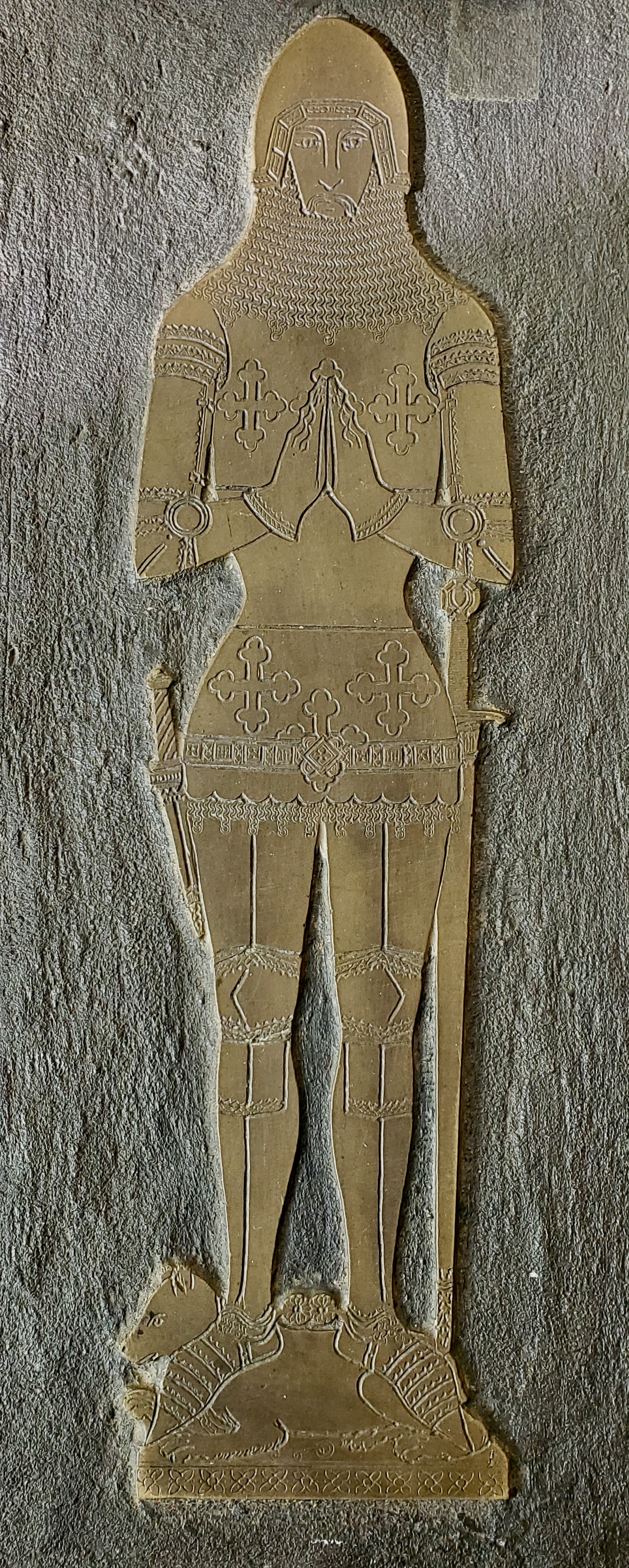
We learn from Dugale that Edward BROME is buried at Baddesley Clinton Church, son of Nicholas and Katherine (LAMPECK) BROME. Also next to Elizabeth (BROME), believed to be his full sister. The “fair portraiture, of a man in armour of Nicholas BROME has since been removed.” So unfortunately the brass likeness of Nicholas BROME was removed and we know not where it resides. Here is a brass of Thomas BEAUCHAMP of at Collegiate of St Mary, Warwick, so it may have been something similar.
THIRD MARRIAGE
In a deed of 11 Jul 1511 it mentions “Nicholas BROME, esquire of the manor of Wodelowe [Woodloes], for the term of his life, then after his death for the terms of his male heirs by his late wife Katherine, and then of his heirs by his present wife Letitia…” So we know by Jul 1511 Nicholas is married to his third wife Leticia CATESBY. So we can estimate a death date of Katherine of about 1507 and the third marriage likely shortly thereafter due to the young children Nicholas had with Elizabeth. Men traditionally found an eligible bride in a timely manner after a wife’s death. A marriage to Ms CATESBY would be opportune as it would be an opportunity to settle property disagreements with the adjacent CATESBYs. The will of Nicholas mentions the following children: Edward, 3 daughters namely Elizabeth, Joice and Anne and his two daughter [from first wife, Elizabeth] Dame Constance FERRERS and Dorthea MARROW and finally his son Raufe [Ralph] assumed to be of his third wife Letitica.
CHILDREN
So to the best of our available information
Children of Elizabeth and Nicholas
- Isabel BROME born c1475; married c1495 to Sir Thomas MARROW
- Constance BROME Born c1477; married c1497 to Sir Edward FERRERS; she died in 1551
Children of Katherine and Nicholas
- Edward BROME born c1500; married c.1525 to Margery BEAUFO; no issue; he died 1531
- Elizabeth BROME born c1506; married Thomas HAWES; she died before 18 Mar 1567
- John BROME c. 1509 assumed to have died young not listed in Will of Nicholas [not sure about his existence]
Children of Leticia and Nicholas
- Ralph BROME born c1511; married 2 Jun 1539 to Alice DIGBY at Coleshill, Warcs.; he died 20 Oct 1568
- Joyce [Joice] BROME born c1512; Unmarried; died after 1567 [mentioned in Will of brother Ralph BROME]
- Anne BROME c1514; mentioned in will of father so alive in 1516
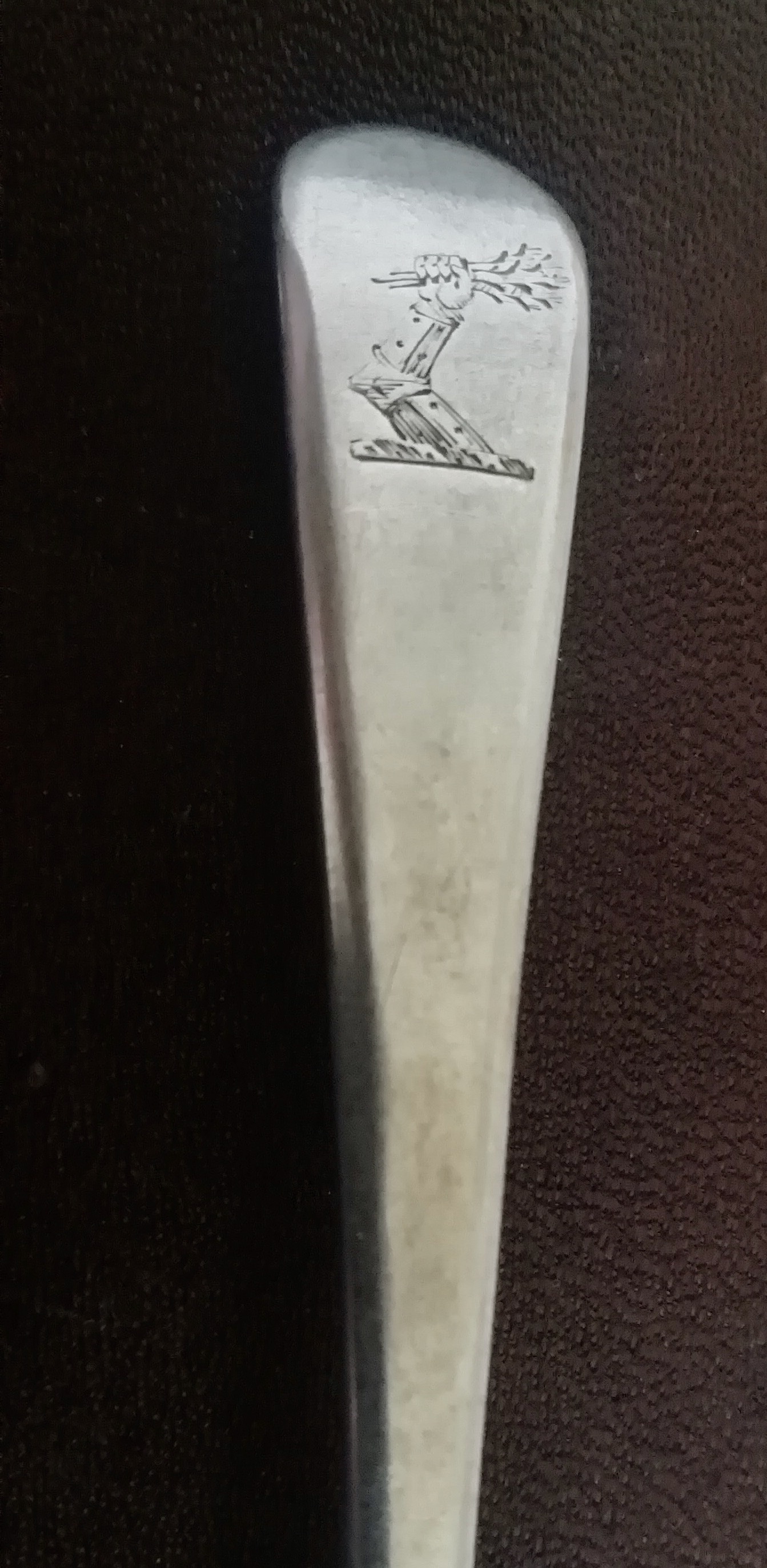
© Mark Sutton
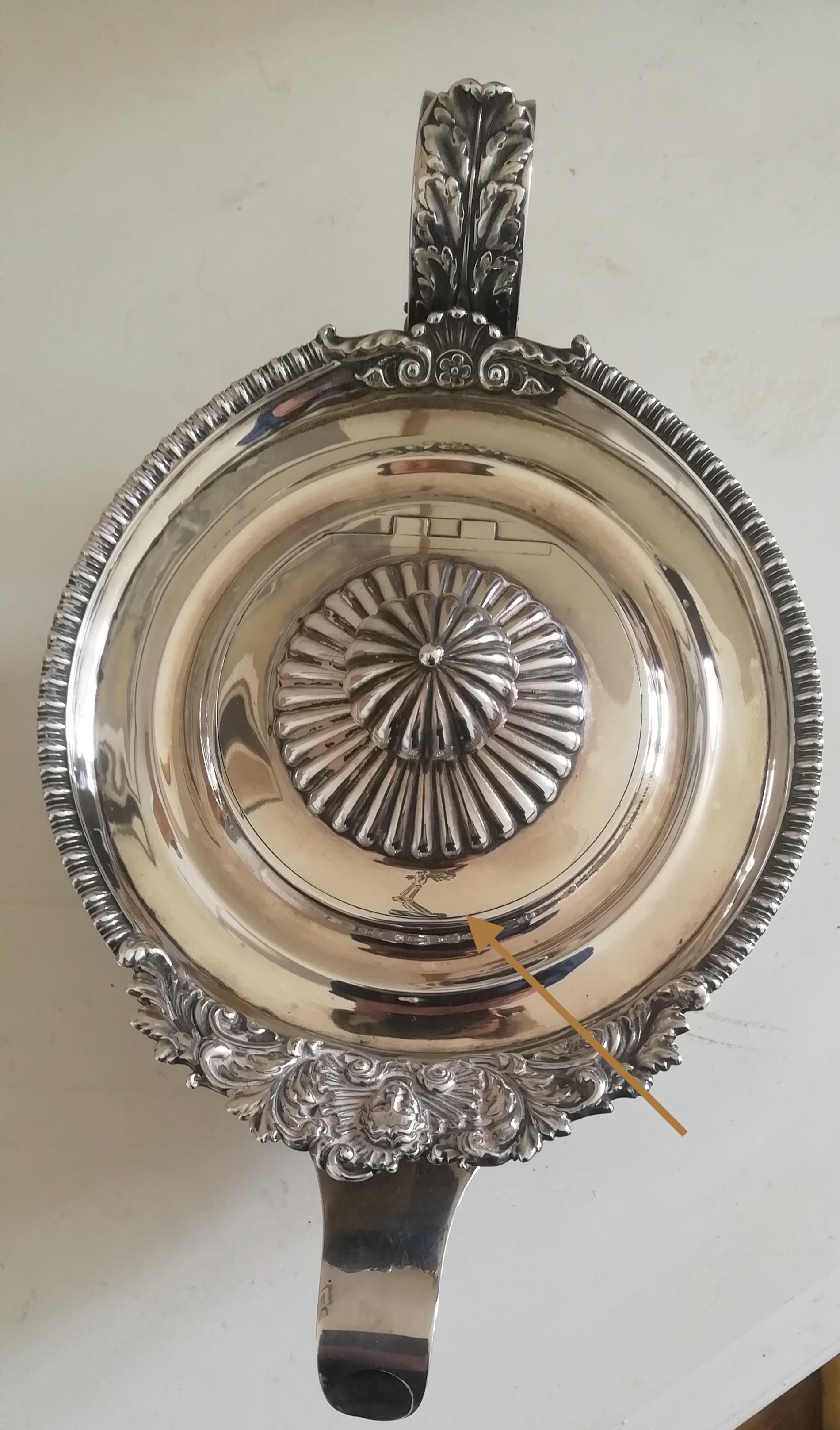
© Mark Sutton
TIMELINE, dates approximate:
- 1440 Elizabeth ARUNDELL born (Nicholas’ future wife)
- 1447 Thomas BROME born (older brother to Nicholas)
- 1450 Nicholas BROME born
- 1458 Elizabeth ARUNDELL first marries William WHITTINGTON
- 1468 John BROME (father of Nicholas) is murdered by John HERTHILL at Whitefriars in London, eldest son Thomas BROME inherits Woodloes, Brome Place etc
- 1470 WIlliam WHITTINGTON dies (leaving 5 children 8-16)
- 14 April 1471 Richard NEVILLE “the Kingmaker” dies
- 20 Dec 1473 Settlement between Nicholas, Beatrix & John BROME & Elizabeth Whyttyngton sister of John ARUNDELL DR3/264 Shakespeare Trust
- 10 Feb 1474 Nicholas BROME marries Elizabeth (ARUNDELL) WHITTINGTON, widow
- 1471 Nicholas kills John HERTHILL;
- 16 Mar & 18 Mar 1472 Settles with HERTHILL’s widow
- 1475 Isabel BROME born to Nicholas & ELizabeth
- 1478 Constance BROME born to Nicholas & ELizabeth
- 1478 Nicholas BROME appoints William FOSTER as priest at Baddesley Clinton
- 1483 King Edward IV dies as does his mother Beatrice (SHIRLEY) BROME
- 1485 Nicholas kills the priest at Baddesley Clinton
- 1486 Thomas BROME (Nicholas’ brother) dies without issue Nicholas inherits his father’s estate
- 1495 Isabel BROME marries Sir Thomas MARROW
- 7 May 1496 Nicholas BROME receives Pardon from King Henry VII
- 1497 Constance BROME marries Sir Edward FERRERS
- 5 December 1497 Elizabeth BROME mentioned in deed (still alive)
- 1498-99 Elizabeth BROME’s death
- 1500 second marriage to Katherine LAMPETT [LAMPECK]
- 1500 birth of son Edward BROME
- 21 January 1501 Indenture between George Catesby, esq., and Nicholas Brome [aka Broune] of Baddesley, esq., concerning the manor place of Brome with lands and appurtenances in the parish of Lapworth MS 3525/28 Birmingham Archives
- 10 Feb 1506 Deed Nicholas BROME, & Katherine his wife, of the manors of Wodlowes and Wodcote, …to the legitimate male heirs of Nicholas and Katherine, then to the legitimate heirs of Nicholas and his late wife Elizabeth. CR0026/1/1/65 Warwickshire Archives
- 1506 birth of daughter Elizabeth BROME
- 1509 birth of son John BROME (assumed died young)
- 1510 estimated death of Katherine and 3rd marriage of Nicholas to Leticia CATESBY
- 11 Jul 1511 Deed mentions current wife Letitia and late wife Katherine CR0026/1/1/67 Warwickshire Archives
- 1511 birth of Ralph BROME
- 1512 birth of Joyce [Joice] BROME
- 1514 birth of Anne BROME
- 1516 assumed death of wife Letitica who is not mentioned in will; Nicholas is Escheator for Warwickshire CR0026/1/10/54 Warwickshire Archives
- 13 Oct 1516 will of Nicholas BROME written
- Oct 1517 death of Nicholas BROME; The Inquisition Post Mortem took place in 9 Henry VIII (April 1517 to April 1518)
In part five we will examine Nicholas in light of his murders and the price of his conscience.
Kelly Wheaton ©2023 – ALl Rights Reserved
NICHOLAS BROME & the Three Murders: Part Two
Posted on February 12, 2023 2 Comments

“This late dissension grown betwixt the peers
William Shakespeare,
Burns under feigned ashes of forg’d love,
And will at last break out into a flame:
As festered members rot but by degree,
Till bones and flesh and sinews fall away,
So will this base and envious discord breed.”
Henry VI Part 1
When last we left young Nicholas BROME in 1468, he was 18, and his father, John had been murdered while attending Mass at Whitefriars church in London by John HERTHILL, steward to Richard NEVILLE, aka ‘The Kingmaker.

We must note that the HERTHILL’s and the BROMEs were on opposite sides in the War of the Roses. Although both the families had been previously under the protection of the Beauchamp family now they are adversaries: The Yorkist, HERTHILL and the Lancastrian, BROME. Quite a backstory for our young Nicholas! By 1450 the manor was under attack by Yorkist aligned forces. Whereas, John BROME had enjoyed successful trade with King Henry VI his fortunes were tied to the King’s rise and fall. When Henry VI was deposed in 1461 by Edward IV he lost his important connections to the crown. Although he loses some of his land in Lapworth, due to well placed friends Simon Mountfort of Coleshill and Sir Richard Verney he manages to retain his other lands in Baddesley Clinton and Warwick.
This was a period of incredible tumult and danger. From the article Violent Death in Fourteenth- and Early Fifteenth-Century England by Barbara A Hanawalt we learn that death by homicide in the cities of Oxford and London was more likely than death by accident in the 14th and 15th centuries. And we learn that Sunday was the most dangerous day, for most murders occurred on Sundays and by those with whom the person was acquainted. John BROME was attacked on a Sunday by someone with whom he was well acquainted who also had a grudge. We must note that enforcement of both church and civil law was lax during this period. “We must also note that while the Yorkist King Edward IV was in power, “the Kingmaker’s” steward John HERTHILL would have enjoyed his protection. But the tides take a change as Edward IV becomes unpopular and Henry VI’s wife, Queen Margaret, who has been exile in Scotland, works a secret deal with “The Kingmaker” which leads to Henry VI retaking the throne in October of 1470. [Not hard to see why Richard Neville, Earl of Warwick came by that moniker.] But alas the Kingmaker meets his maker 14 April 1471 and with his death John HERTHILL’s protection dies.
THE SECOND MURDER

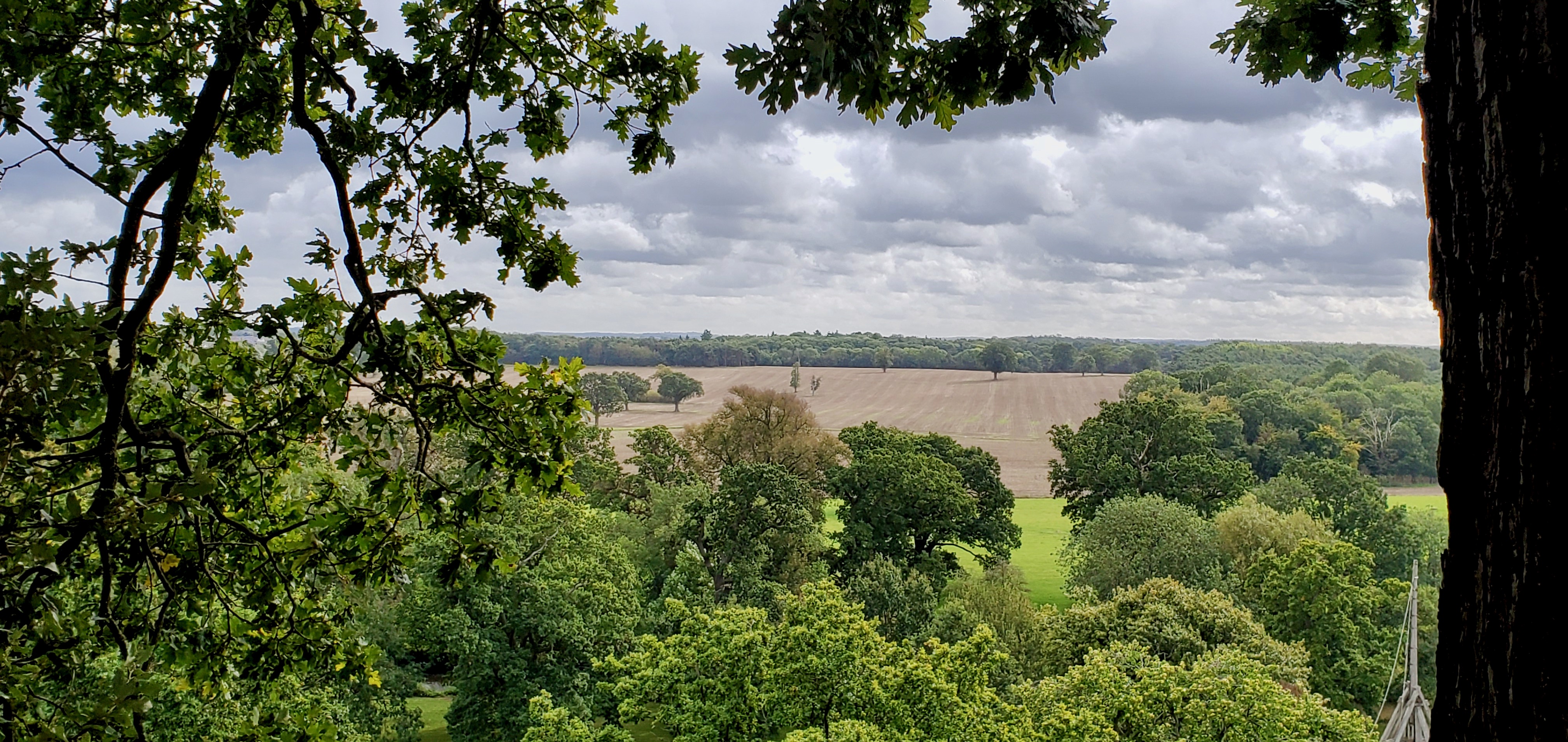
The 11th of April 1471, Edward VI is back on the throne. John HERTHILL is a free man and traveling regularly between Warwick Castle and Barwick, the court of the Earl of Warwick. HERTHILL would have left Warwick Castle and travelled on the west side of the River Avon perhaps with views like the one above. On his way to Barford he would travel through Longbridge field picture below.

On one such day someone else was marking his travels. Young Nicholas BROME confronts John HERTILL and an argument ensues. We must suspect that young Nicholas had vowed to avenge his father’s death since the law had not. And now he had reached the age of majority and the Kingmaker is dead, he must have felt it was his duty. In an event young Nicholas is successful and John HERTHILL is no more.
“Live by the sword, die by the sword.”

So what happens to our murderer? According to James William HAWES in his book Edmond Hawes of Yarmouth: “In wreaking private vengeance Nicholas BROME did nothing contrary to the habits of the time. During the Anglo Saxon period and for a century or more under the Normans private vengeance was recognized as a legal right and the injury done by a homicide could be compensated by payment of money (weregild).” Weregild otherwise known as “blood money.” So we find, not surprisingly, Nicholas in Arbitration at Coventry , 18 March 1472, is ordered to pay for a priest at Baddesley Clinton to say daily prayers for the souls of both his father, John BROME and John HERTHILL. Additionally he is to pay Elizabeth HERTHILL, John’s widow, 33 shillings and fourpence recompense. No matter which side the BROME family was on it, they retained friends in high places. The BROMES were benefactors of the church and had an extensive network of friends. In 1471 Simon Montford of Coleshill was appointed sheriff of Warwick and Leicester. He along with Richard Verney were good friends of his Nicholas’ father.
Although much remodeled Baddesley Clinton today and below as it may have been in Nicholas BROME’s time.


NICHOLAS MARRIAGE
Marriage, at this time, was often a strategic decision involving lands and dowry. Young Nicholas, at 23, agrees on a marriage settlement the 20th of December 1473 with the widow of William WHITTINGTON who died in 1470. Born Elizabeth ARUNDELL and about 10 years Nicholas’s senior she comes with a son John, 16, and 4 daughters ages 8 to 14. An odd marriage considering that there was no large payment or land acquisition involved. His wife was heiress to her brother, John ARUNDEL a cleric, who is party to the agreement. Perhaps John ARUNDELL was looking to settle his sister in a good estate and Nicholas is hoping to make further amends in the eyes of the church by marrying a widow and taking in her children.
Shortly before 12 January 1474. Nicholas’ brother Thomas BROME dies without issue. This means Nicholas inherits all the lands of their father, that had previously passed to Thomas. [Thomas was married to Johan (Joan) MIDDLEMORE. She later married to Sir John MYTTON, and litigation ensues over the Manor of Woodloes.]
So widow Elizabeth and Nicholas are wed 10th of February 1474 likely at St Michael’s Baddesley. This map of the church shows only the Nave was extant at that time.
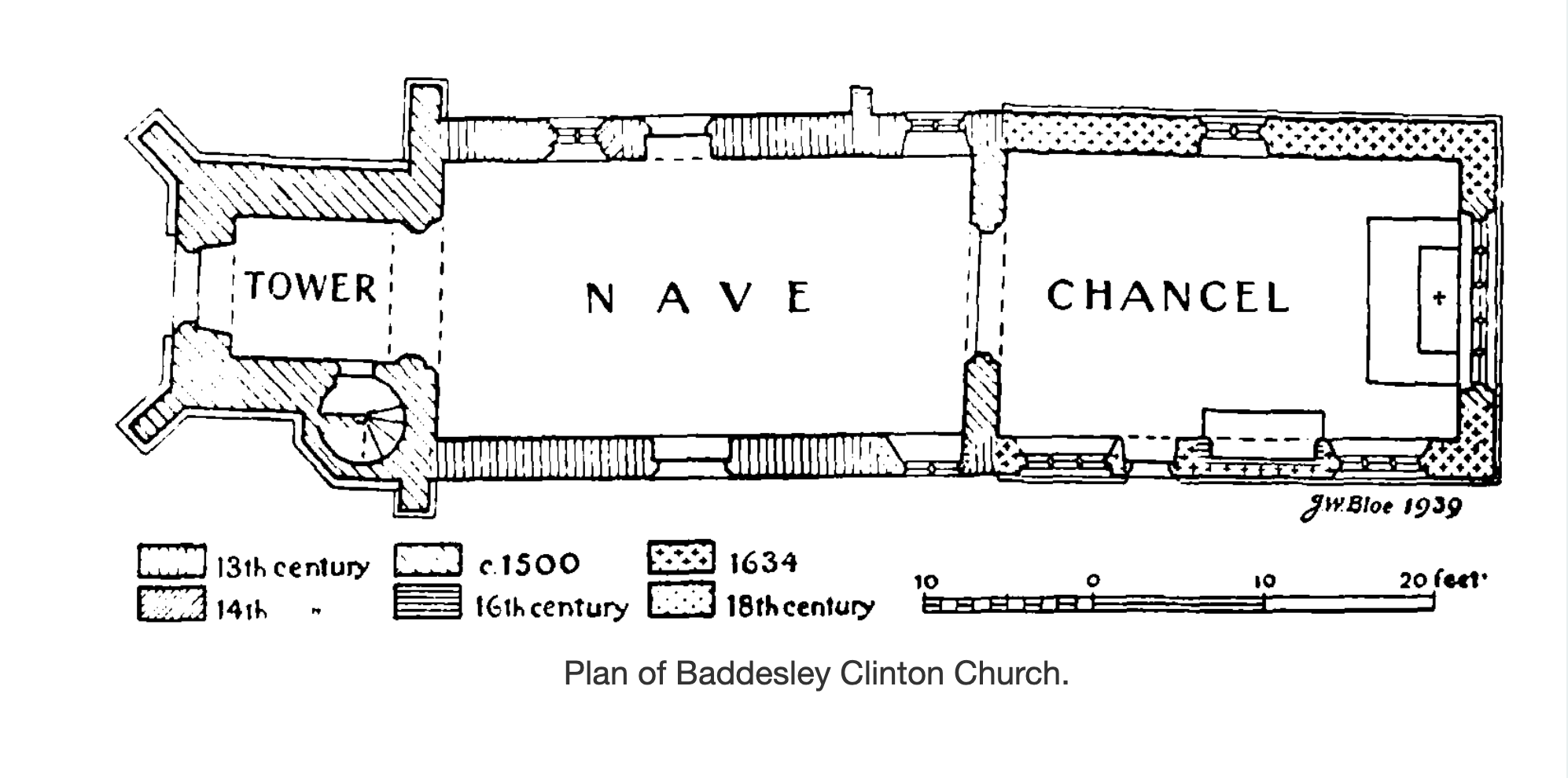
This shows the reverse view from the opposite side.
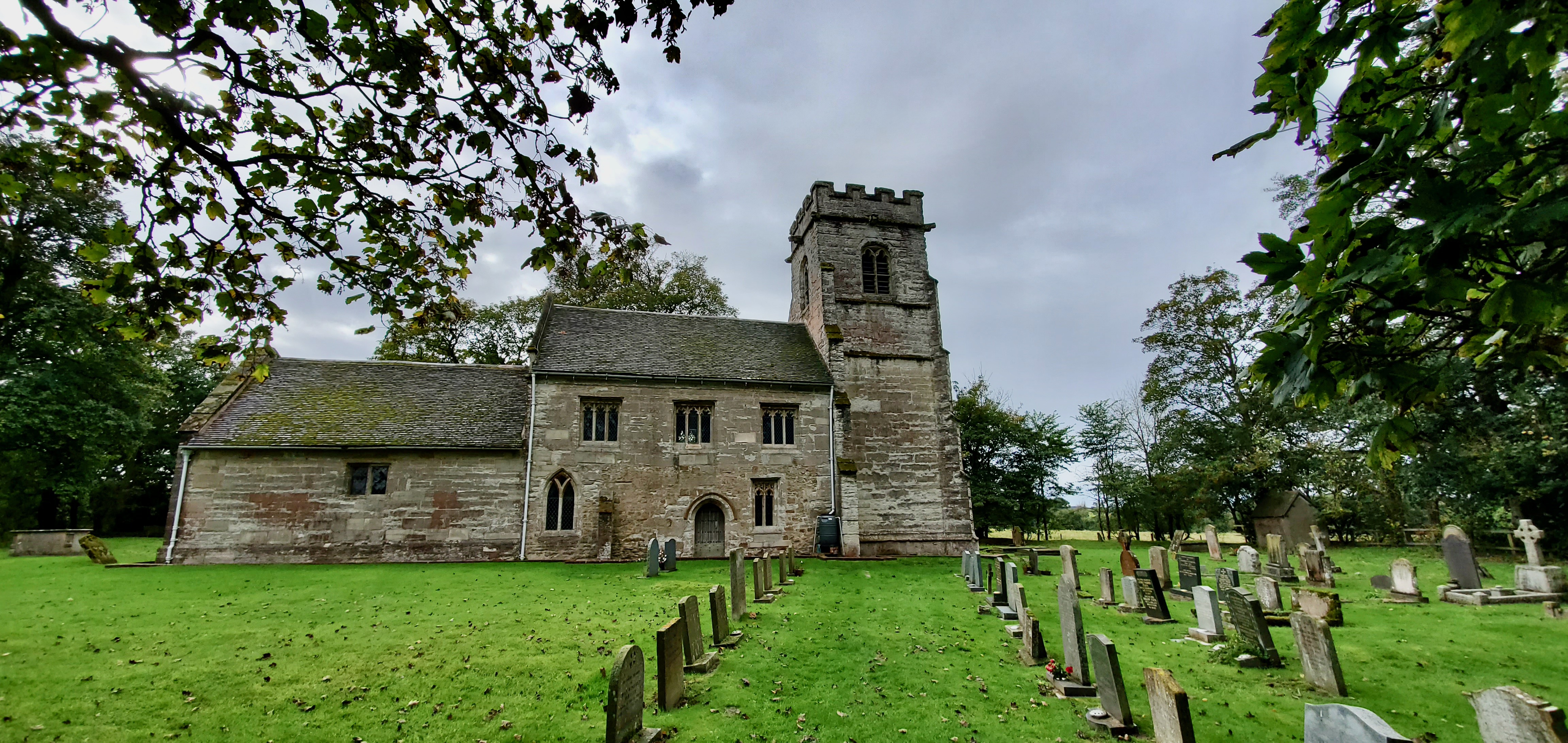
To this marriage we know two children are born: Isabel about 1474 and Constance about 1478 when her mother would have been 45. Also in 1478 Nicholas appoints William Foster to be the new parish priest at Baddesley Clinton. The 9 April 1483 King Edward IV dies suddenly and his son Edward V succeeds him.

The window at Baddesley Clinton showing the black and yellow of the BROME Coat of Arms. And the Red with yellow diamonds of FERRER family. Elizabeth and Nicholas’s daughter Constance marries Edward FERRER 1 Dec 1497.
We have another murder to contend with in our next chapter.
Kelly Wheaton @2023 – All Rights Reserved
NICHOLAS BROME & the Three Murders: Part Three
Posted on February 12, 2023 1 Comment
HISTORICAL BACKGROUND

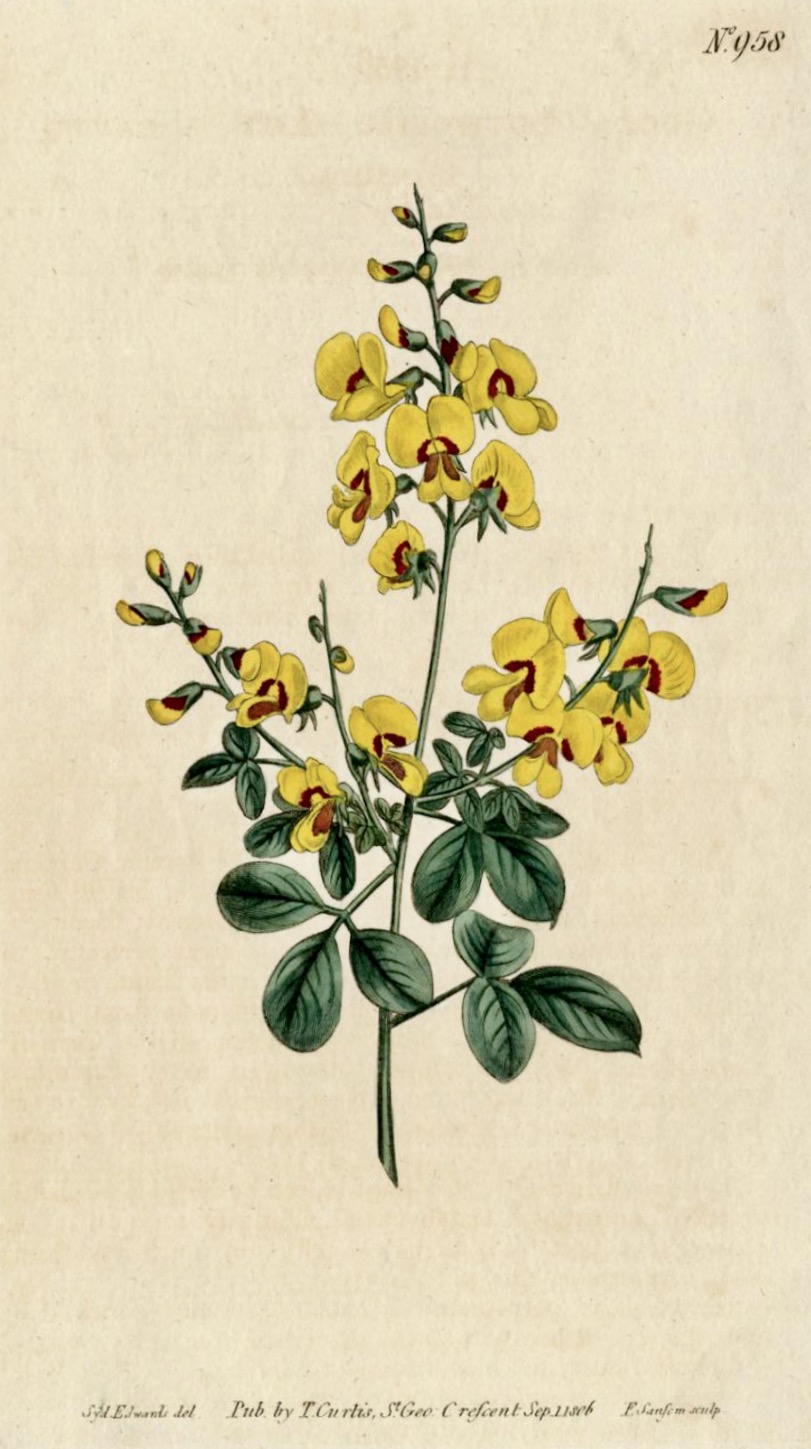
The Plantagenet Kings represented the richest family in Europe and they ruled the English throne from 1154 to 1485 while also holding Anjou in France. The name Plantagenet comes from “planta genista,” Latin for the yellow broom plant. A symbol of humility, the broom sprig was chosen as the badge of the royal house of Plantagenet and was worn by the Counts of Anjou on their caps. It is believed to have been worn during the crusades to the Holy Land. So the surname BROME has a connection to both the crown and to the church.
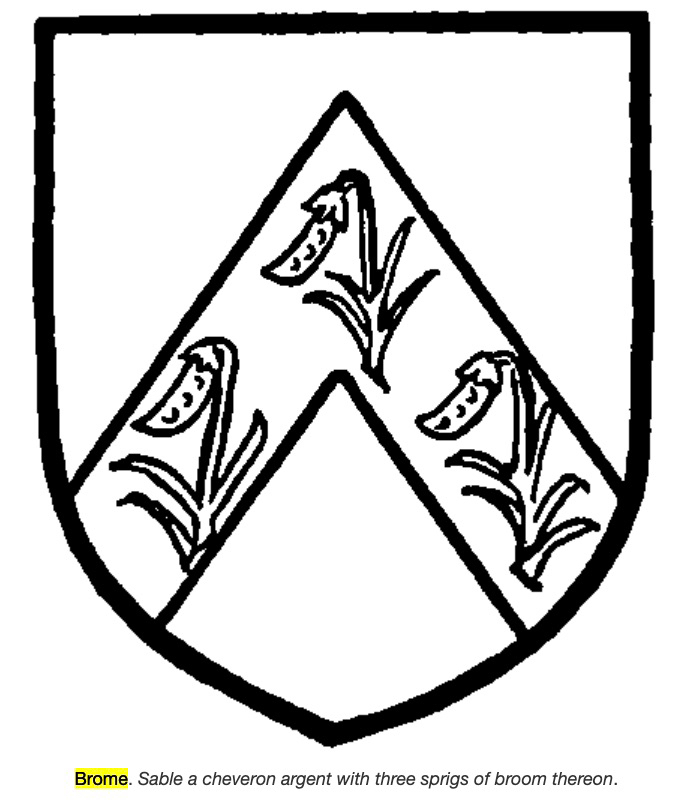
pg 13-19.
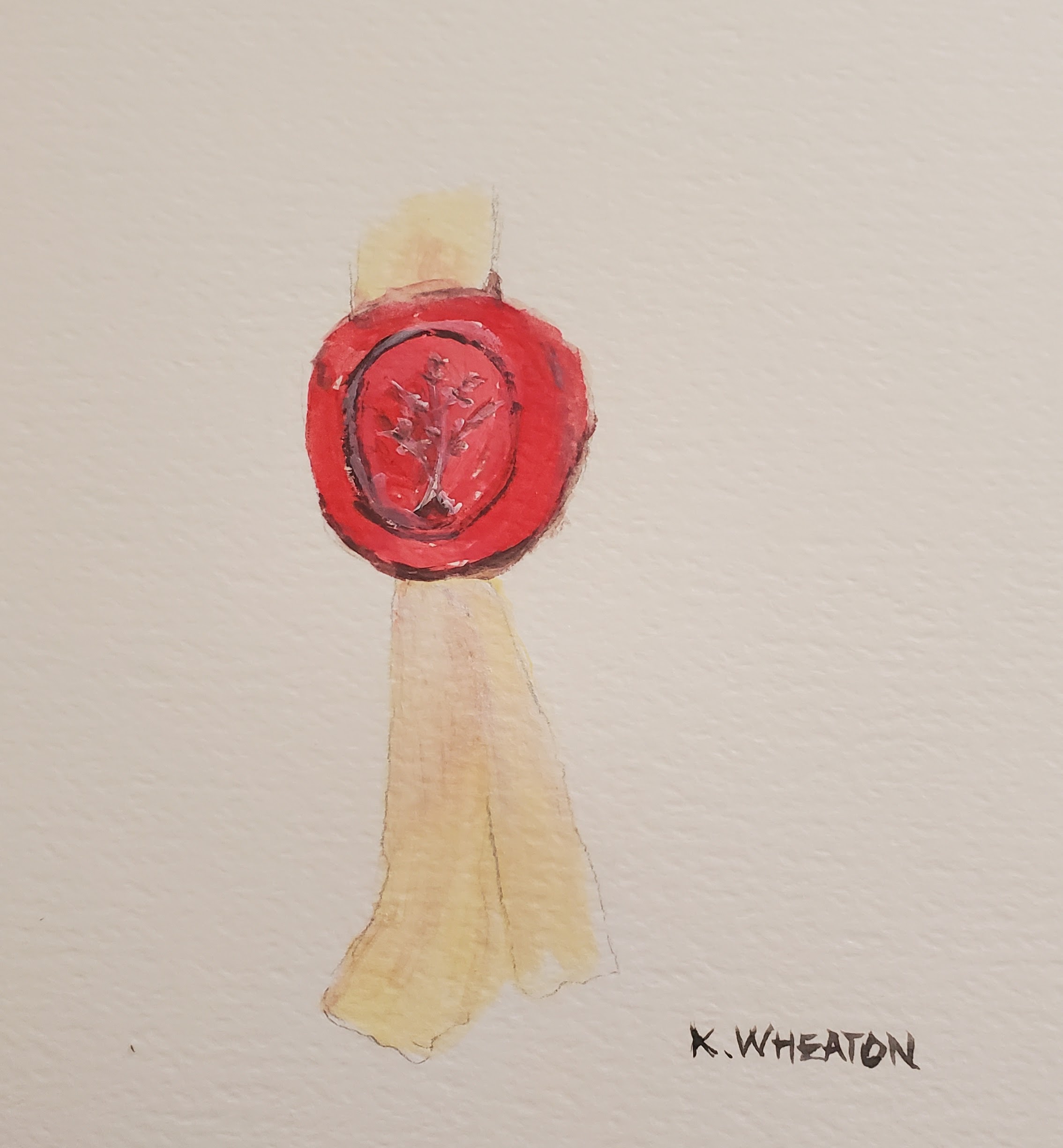
As you can see above the BROME family Coat of Arms had 3 sprigs of Broom and the seal of Nicholas was a sprig of broom below.
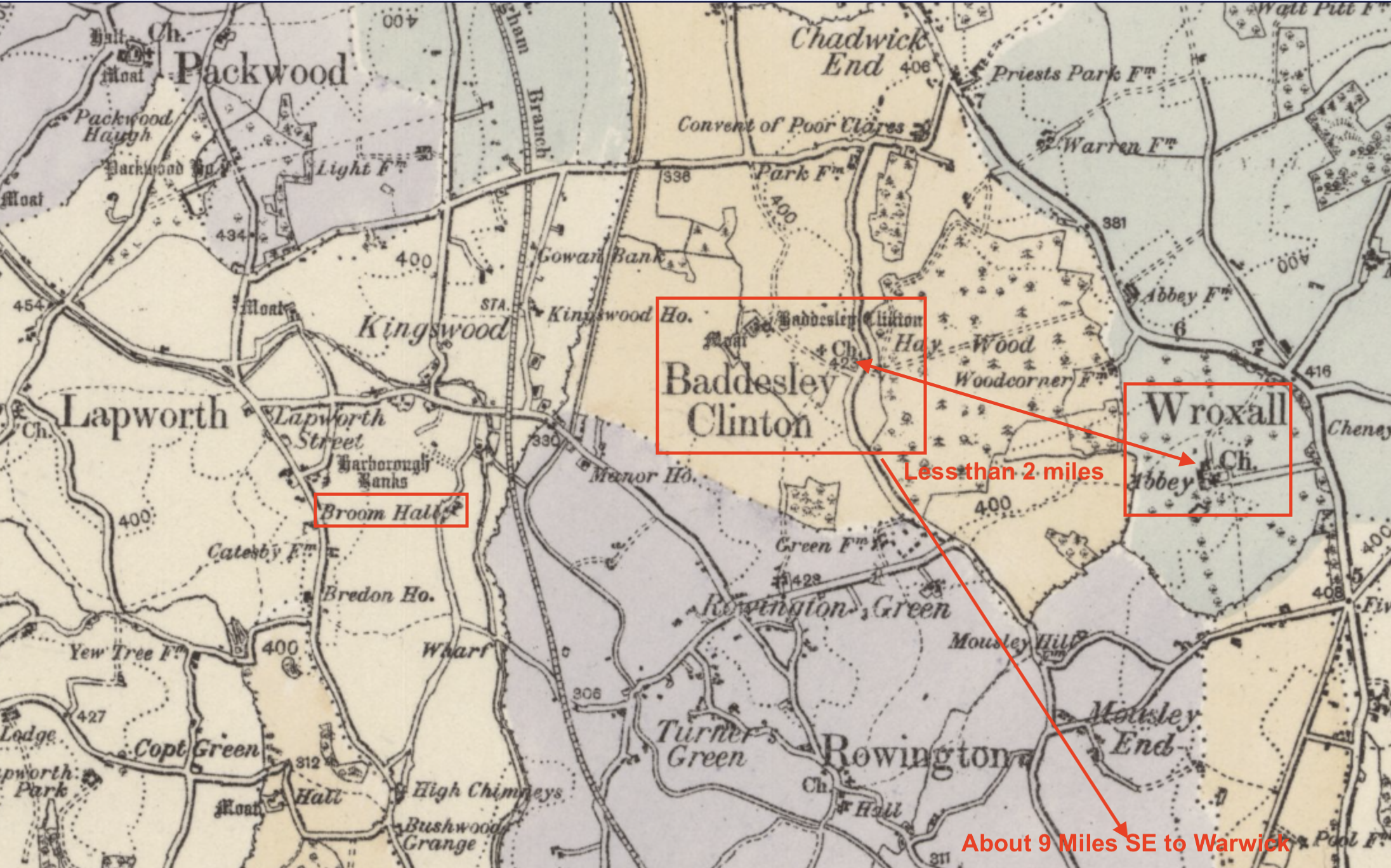
As mentioned earlier the BROME family were devout Catholics. Nicholas’ older sister Joyce BROME was the prioress of nearby Wroxall Abbey [see map for proximity] from about 1501-1525. Joyce died there on 21 June, 1528. And Nicholas’s brother-in-law, John ARUNDEL becomes in 1496 Bishop of Lichfield and Coventry, and later Bishop of Exeter in 1502. The BROME family are intertwined with the church but this devotion to the church is about to take an ironic twist.
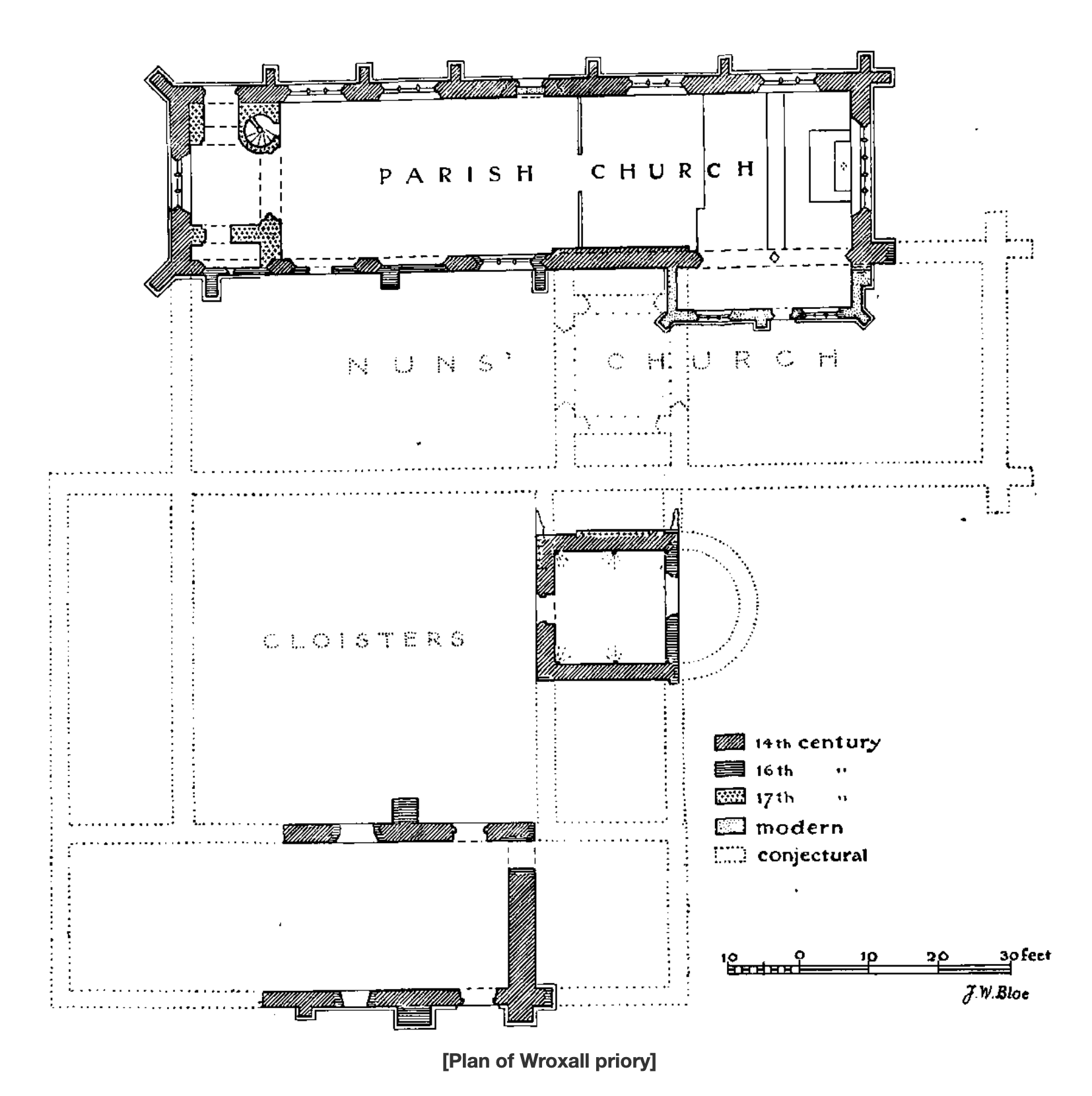
Fragments of cloisters, Wroxall Abbey Together with the north aisle of the abbey, now Wroxall church, this is all that remains of the 12th century Benedictine nunnery at Wroxall by Robin Stott and Plan of Wroxall from A History of the County of Warwick: Volume 3, Barlichway Hundred.
THIRD MURDER
“O, beware, my lord, of jealousy;
Shakespeare Othello Act 3
It is the green-eyed monster which doth mock
The meat it feeds on; that cuckold lives in bliss
Who, certain of his fate, loves not his wronger.”
Now that we have set the stage let us commence with the telling of the Third Murder. There is not a lot to tell but a short reference in William Dugale’s 1656 The Antiquities of Warwickshire. As follows “of Nich. [‘olas Brome] I have further seen, that comming on a time into his Parlour at Badsley, he found the Parish-Priest chocking his wife under the chin, whereat he was so enraged that he presently kil’d him.” Chocking , or stroking a woman’s chin in the 15th century, would have been an inappropriate intimacy for any man to undertake with another man’s wife and certainly not appropriate for the parish priest. We know no more details with which to fill in the story as it stands, in its stark soberness. So we will take Dugale at his word and can only guess if there were other extenuating circumstances. We do not know the date of the attack, or even the name of the priest for sure, but we know it had to happen between the appointment of William FOSTER as the parish priest 29 Nov 1478, by Nicholas BROME and the later appointment of Alex AWEN in 13 May 1493. We also know that Nicholas’ wife, Elizabeth, is alive 10 July 1496 when she is mentioned in a deed.
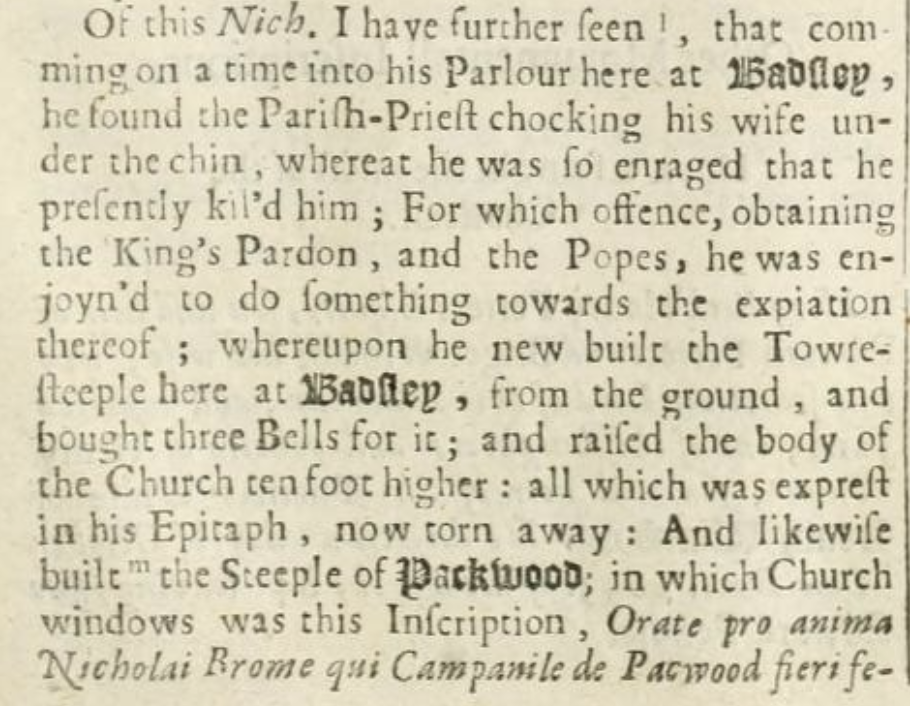
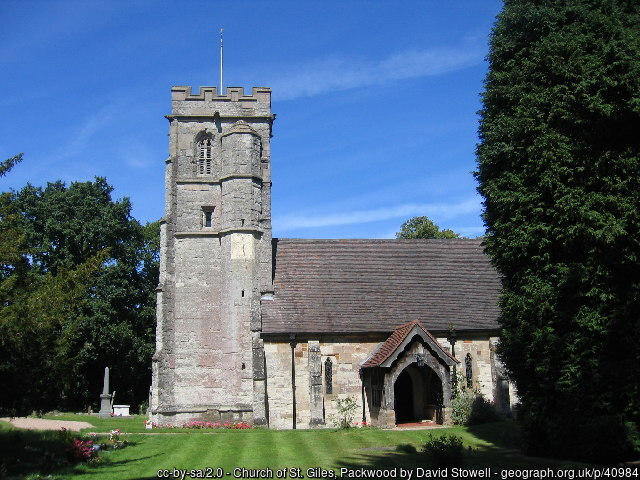
As you read in the Part Two, Nicholas paid blood money for the life of John HERTHILL to HERTHILL’s his wife. The amount or value placed on a person’s life was based on their status. When Nicholas killed a priest the value was much higher than for other mortal souls. He had to reckon with the church. The price Nicholas BROME paid for the death of the priest, was dear in monetray terms. He was “joyn’d to do something towards the expiation thereof; whereupon he new-built the Tower Steeple here at Badsley, from the ground, and bought three Bells for it and raised the body of the church ten feet higher: all which was expressed in his Epitaph, now torn away : and likewise built the Steeple of Packwood; in which Church Windows was this inscription, Orate pro anima Nicholas Brome qui Campanile de Pacwood fieri fecit” [Pray for the soul of Nicholas Brome who made the Bell tower of Packwood]. This would not been a small sum to renovate Baddesley Clinton’s church and add a tower to it and the church at Packwood nearby. [see map above –NW of Baddesley Clinton] Below are the two towers Nicholas BROME funded—know to some as the “Towers of Expiation [or Atonement].”
We do not know where Nicholas mother resided at this time but we do know she was buried 10 July 1483 in the Chancel at St Michael’s Baddesley Clinton, which at that time would have been in what is now the central section. The tower being added after the murder and the new Chancel wing added by the FERRER’s after Nicholas death.
PARDON
Nicholas Petitioned the King of England for a pardon for all his crimes he committed before 7 Nov 1485. This date was not long after Henry VII succeeded to the throne 22 August 1485, and his coronation was 30 October 1485. This further narrows the priest’s murder to between 29 Nov 1478 and 7 Nov 1485. In fact I would venture a guess that the murder was in 1485 when Nicholas was about 35. And for his mother’s sake I hope it was after her death in 1483.
King Henry VII’s mother was a Lancastrian and Henry VII was the first of the House of Tudor, combining the Houses of Lancaster and York, when he married Elizabeth of York 18 January 1486. Pardons were very common at this time and were used for political as well as healing purposes. For Nicholas this was a welcome opportunity. His pardon did not specify the crimes, when granted 7 May 1496. In an event getting a pardon for two murders must have been very welcomed by Nicholas.
Nicholas also petitioned the Pope. His pardon was granted by Alexander VI (Rodigio Borgia) who was Pope from 11 Aug 1492- 1 Aug 1503. I would surmise that he may have needed this pardon in order to remarry in the church.

But he paid a deeper price which we will cover in part 4.
Kelly Wheaton ©2023 – All Rights Reserved
NICHOLAS BROME & the Three Murders: Part One
Posted on February 9, 2023 5 Comments
Back in 2019, I was doing some genealogical research, before a trip to Warwickshire and it led to the discovery of Nicholas BROME, my 13th great-grandpa. I was researching all the possible connections I had in the area which led from my grandmother Helen Mildred SHELDON to her 3rd great grandmother Sylvia SHERMAN and her grandmother Jedidiah HAWES, all the way back on the HAWES line to Elizabeth BROME, daughter of Nicholas BROME, who married Thomas HAWES. [See below MY CONNECTION] I am indebted to Anne Elliott’s book mentioned below, articles by the first tour guide at Baddesley Clinton, John Jarman, the lovely staff there, the Shakespeare Trust in Stratford Upon Avon, innumerable books and my newly acquainted cousin Mark Sutton.
So please let me introduce to you, my 13th great grandpa, Nicholas BROME. I promise you won’t be bored.
PRIVILEGED BEGINNINGS
Nicholas BROME was born in the late medieval period about 1450 to parents John BROME and Beatrice SHIRLEY. They are believed to have married about 1431. His father, John BROME Esq., was a member of Parliament, representing Warwick, and was for a time the Under Treasurer of the Exchequer of England. He was a wealthy landowner and it seems, a successful entrepreneur. He raised cattle and sold hides to Henry VI at Kenilworth Castle, he had a rock quarry from which headstones were fashioned and owned a tile factory. He held manorial court at Baddesley Clinton and added to his land holdings, but it seems he made enemies in the process. The Manor of Baddesley Clinton is assumed to be where Nicholas was born. In the delightful, historical novel by Anne Elliott, My Husband: The Extraordinary History of Nicholas Brome, she recounts the possible circumstances of Nicholas’ birth. Although part fiction I highly recommend it. Nicholas’ mother Beatrice SHIRLEY was the daughter of Sir Ralph SHIRLEY Lord of the Manor at Ettington and grand daughter of Sir Hugh SHiRLEY who fell at the battle of Shrewsbury in 1403. The SHIRLEY family held this manor back to the time of the Norman conquest. This is a view of the 13th c. Tower of St. Nicholas at Ettington Park, now the grounds of a posh hotel.

A deed dated 2 June, 6 Edward IV, [1466 UK Archives E 40/4493] names the children of John BROME and his wife Beatrice: Thomas, Nicholas, and John, Isabella, Elizabeth, Agnes, and Jocosa [aka Joice or Joyce who becomes the prioress of nearby Wroxall Priory from 1501-1525]. On Saturday 11th of July 1450 Brome Place in Warwick is attacked by marauders. The next morning the Manor House at Baddesley Clinton while Beatrice and the terrified children were inside. It is said they escaped to the farm of one of their tenants. During this time Richard NEVILLE, known as the “Kingmaker”, is instigating the men of Warwickshire to rise up against King Henry VI. The same King with which John BROME is aligned. Trouble is definitely brewing. In 1453 King Henry VI takes ill but recovers by 1455 when the civil war known as the War of the Roses, begins. The factions fighting for the throne are the Houses of Lancaster and the House of York. The war spans the years 1455-1487.
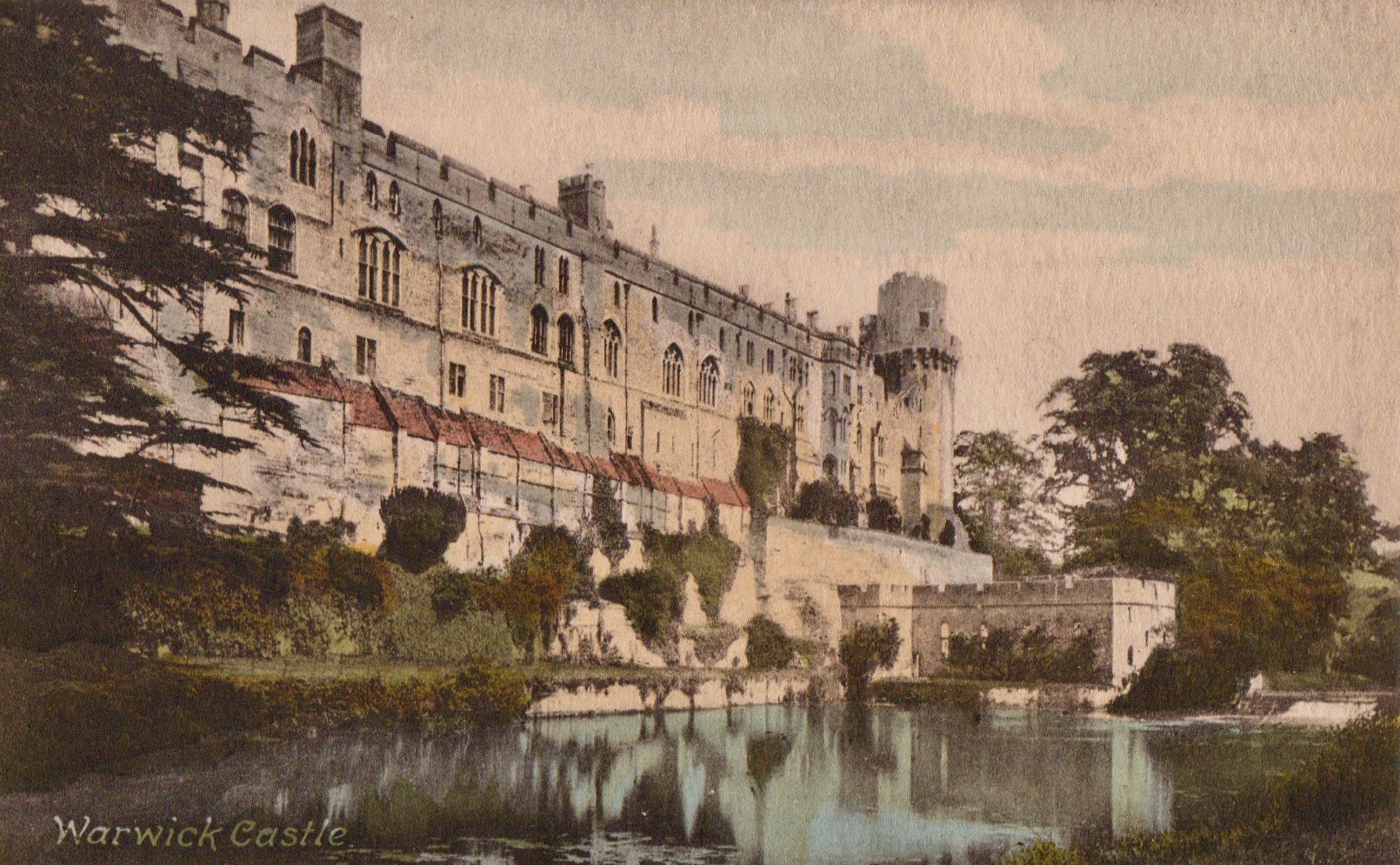
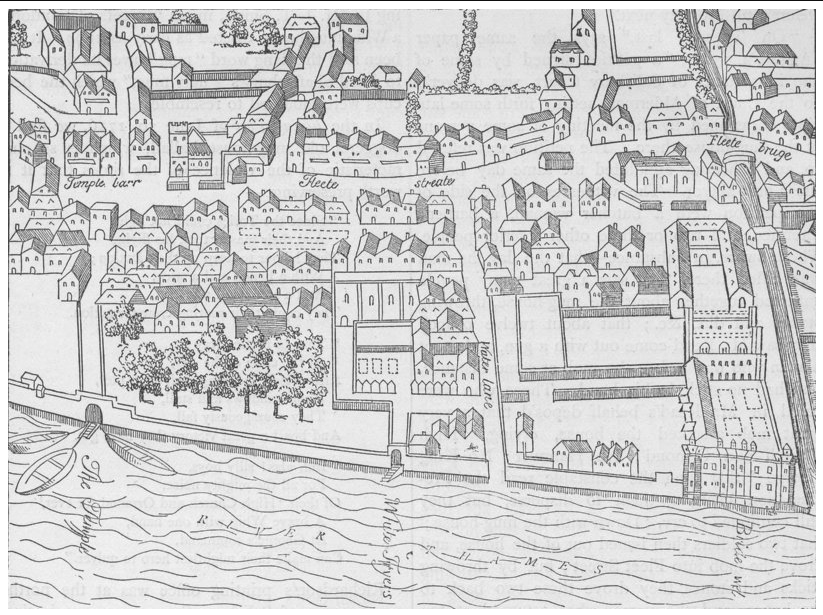
So into this cauldron of strife our young Nicholas arrives. The second son after his brother Thomas. In 1454 his father is having additions made to Baddesley with a Southwest Wing and renovations made to Brome Place at Bridge End in Warwick. With his father’s many businesses and properties there is likely much to keep young Nicholas entertained. Not to mention that Brome Place lies across the river from Warwick Castle. Early 20th c. Postcard and woodcut from Historic Warwickshire 1893 Burgess.


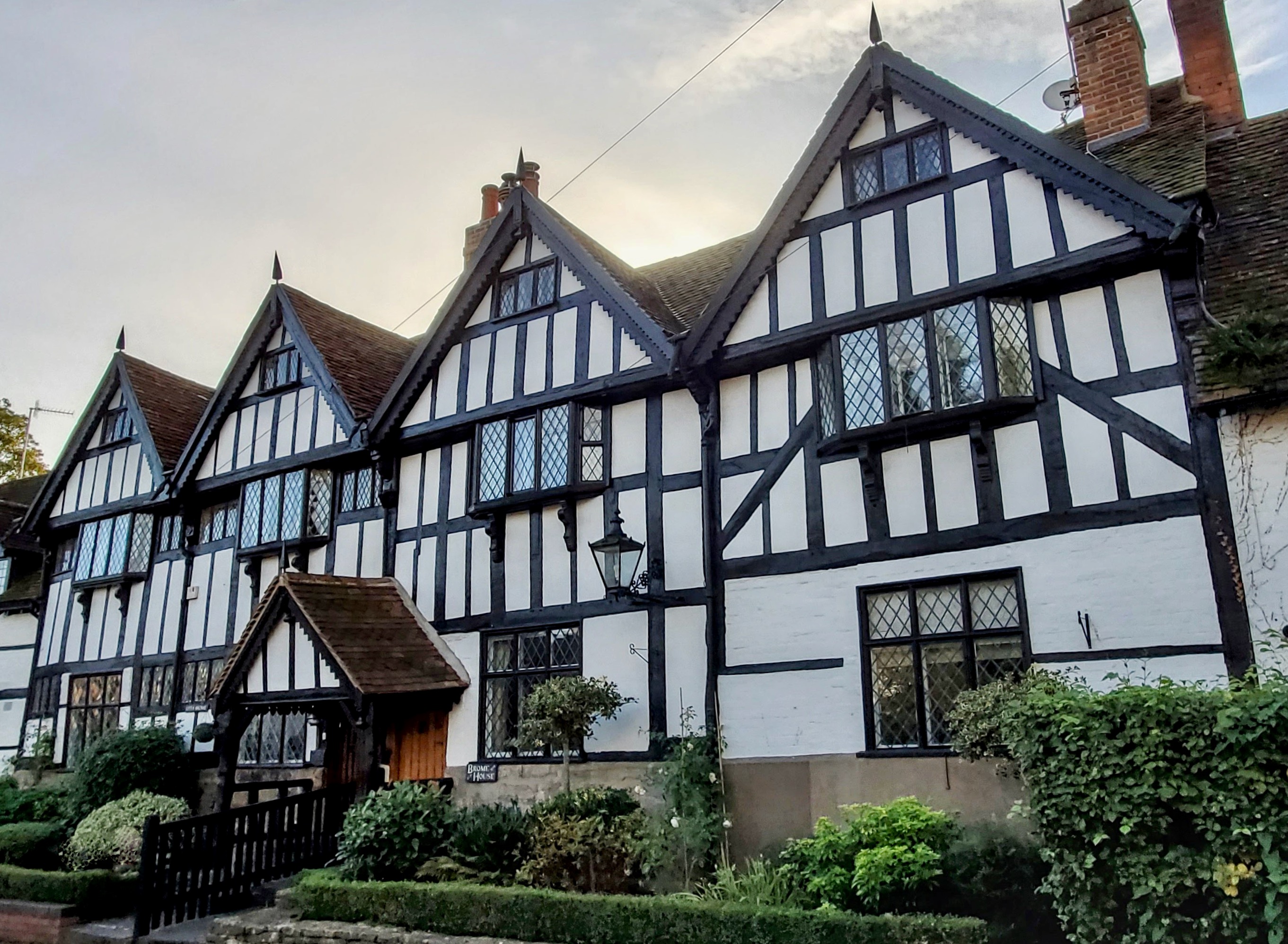
EDUCATION
As a nobleman’s son Nicholas likely had private tutors at home before receiving a more formal education, perhaps at the Collegiate of St Mary or within Warwick Castle proper or both. Please click on the photos below for expanded views.
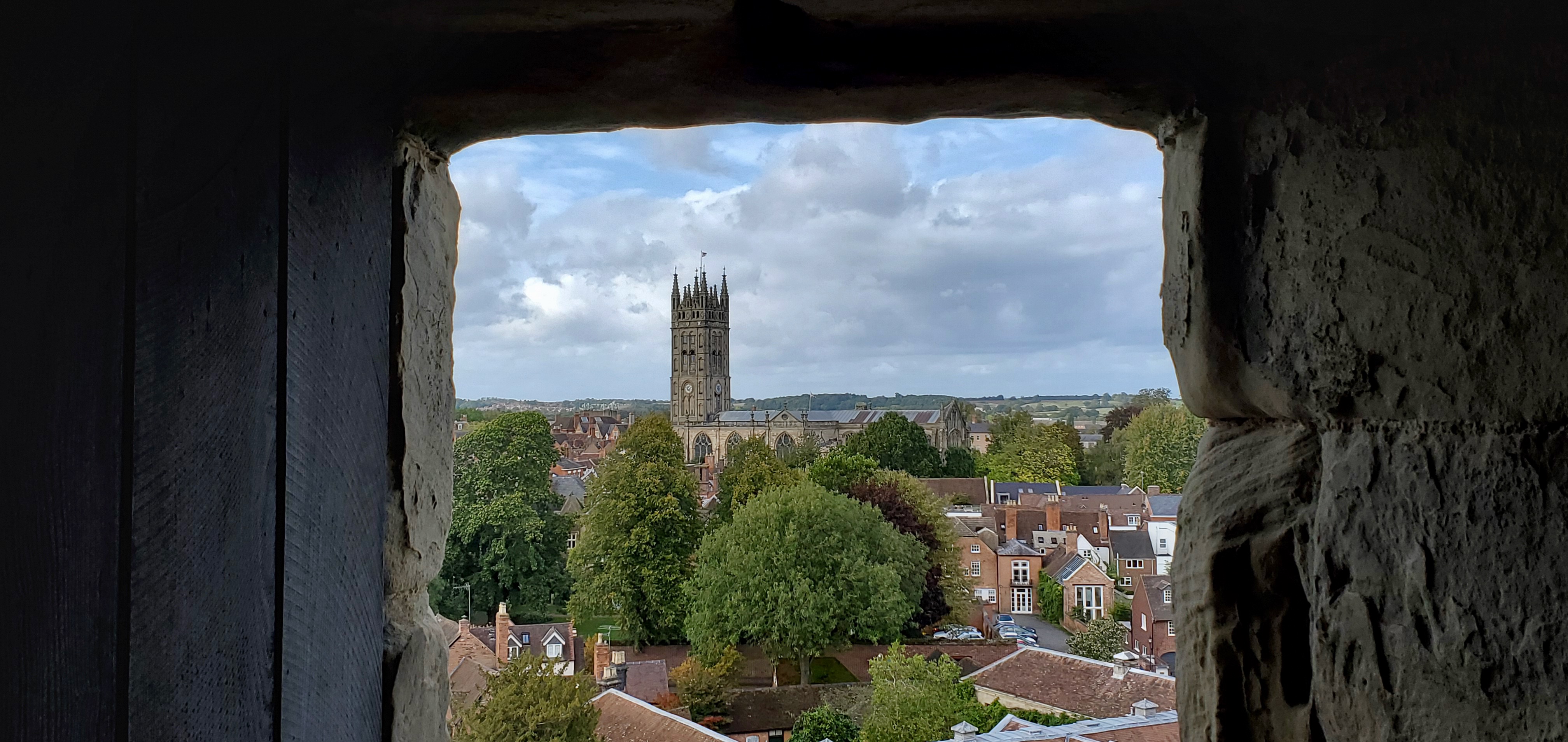


Views around Warwick above and the postcard below would be the view of castle as approached from Bridge End.


Interestingly, with the dissolution of the monasteries under King Henry VIII the collegiate of St Mary Warwick was dissolved in 1546, and the church was granted by the crown to the burgesses of Warwick. This would have been antithetical to the Brome family who were loyal Catholics. In any event life, for Nicholas, would have been busy and perhaps more exciting in the bustling market town of Warwick rather than the manor at Baddesley Clinton. It is likely young Nicholas was back and forth between the two, frequently.
THE FIRST MURDER
Nicholas’ father was often in London. On one such occasion in 1468 he was attending Mass at Whitefriars church when John HERTHILL, steward to Richard NEVILLE, aka ‘The Kingmaker,’ summoned him outside. Called out to the porch and after some words exchanged between them, John HERTILL ran him through with a sword. The argument was ostensibly a dispute about lands, and the redemption of the manor of Woodloes which John HERTHILL had mortgaged to John BROME. I suspect that there was much more of a political undercurrent involved since John BROME and Richard NEVILLE were backing opposite sides. In John BROME’s will written between the time of his wound and his death shortly thereafter he used this Expression : ” that he forgave his son Thomas who smiled when he saw him run through by HERTHILL in the Whitefriars Church Porch.” It is said he is buried there. This was in 1468 which if estimates are correct Nicholas would have been about eighteen. According to Dugale John BROME’s epitaph read [roughly translated]
“Lo! Here lies as dust the body of John Brome, a noble and learned man, skilled in the law of the Realm, a child of genius, witness the County of Warwick, who fell by the sword in this church, slain at the time of the mass by the hands of wicked men. He was buried in the tomb November 5, 1468. Kindly father, it is better for him to have eternal rest.”
Very little of the monastery remained after the dissolution and today the area is covered in modern buildings. However an architectural firm preserved some of the old excavated crypt. I received permission to visit it and here are the photos I took. Click on each for larger image. It was quite dark so resolution not great.
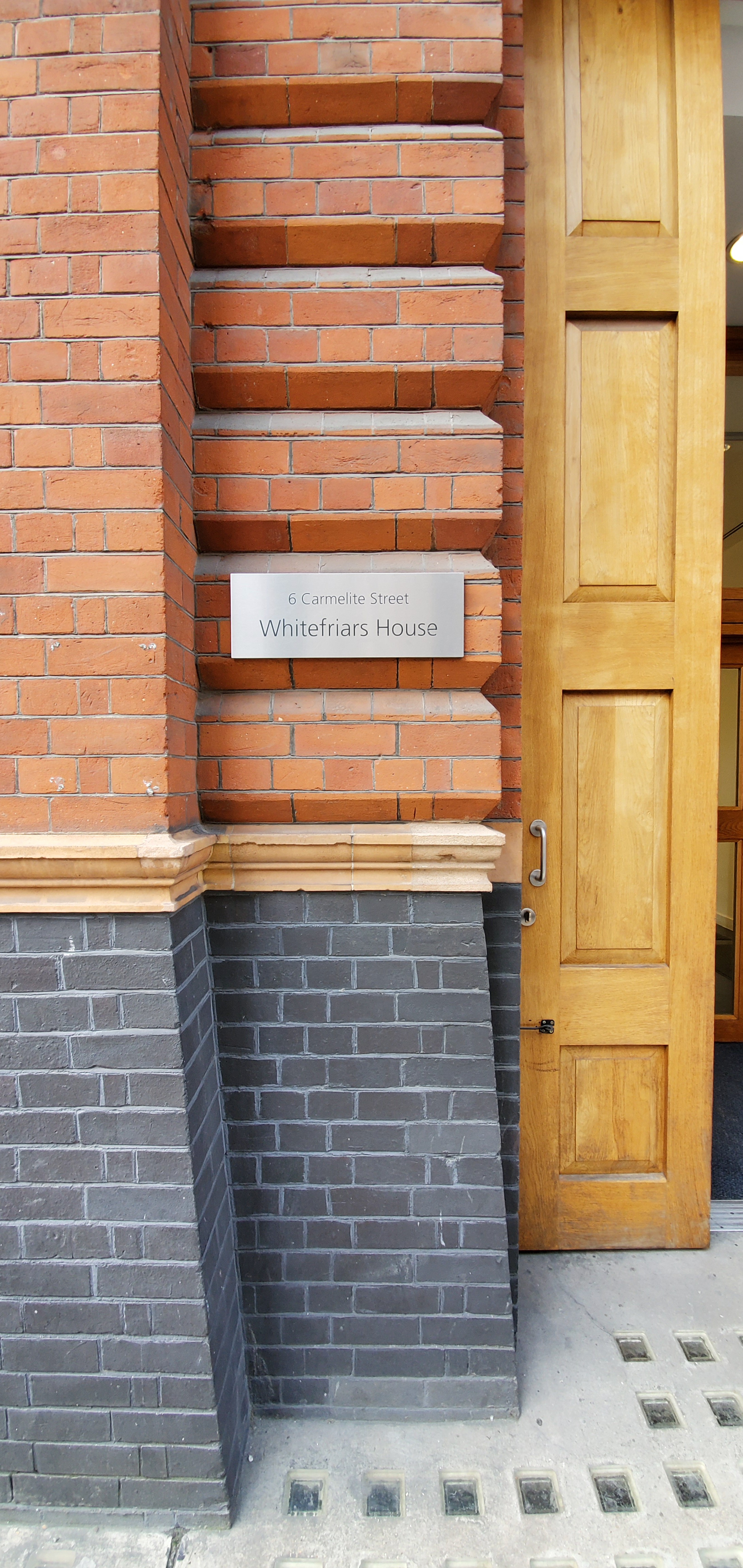

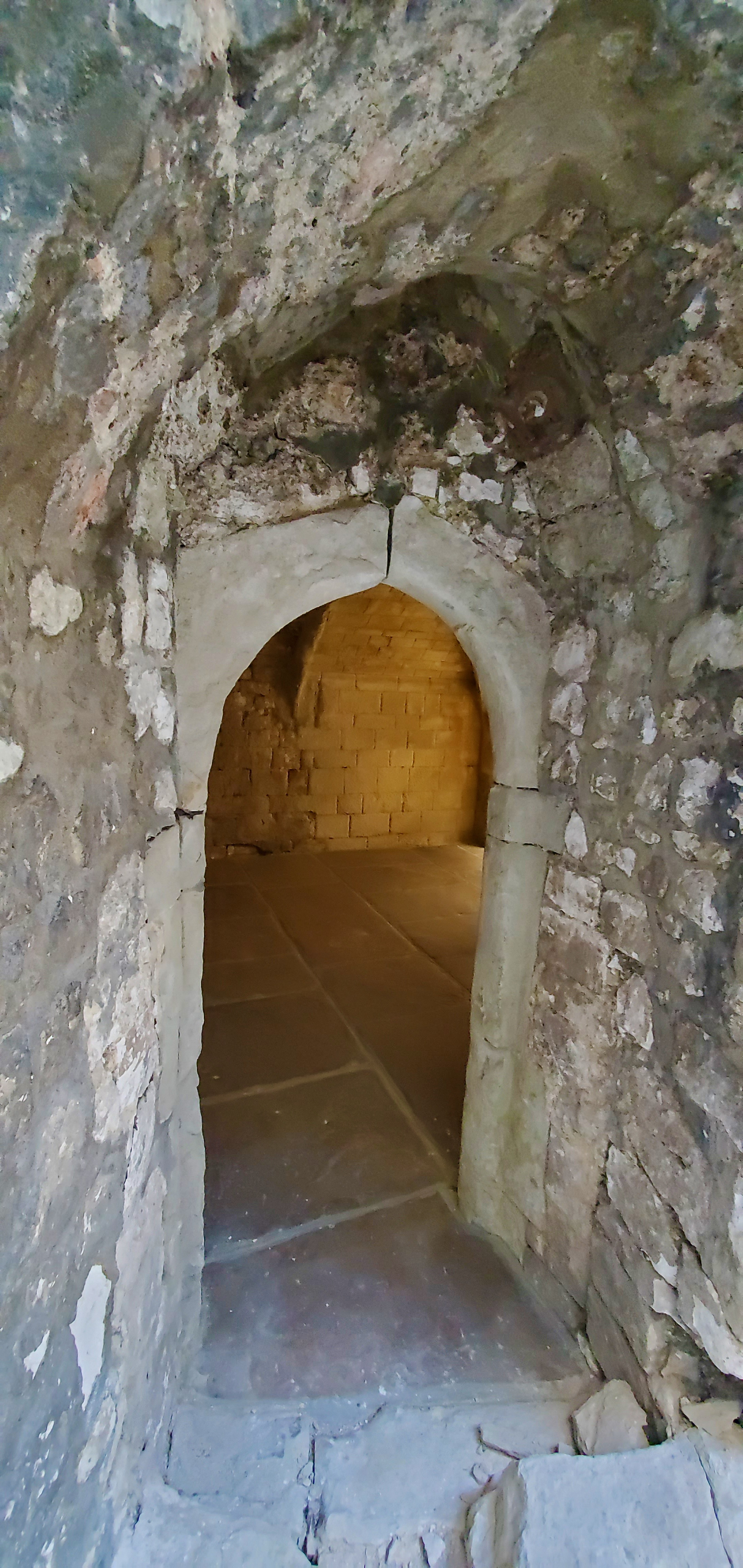
INHERITANCE
We shan’t leave this chapter without a note on Nicholas’ inheritance. Where his older brother, Thomas is forgiven though smiling during the attack on his father at Whitefriars, as the eldest son Thomas inherits Woodloes, Brome Place in Warwick along with other Warwick properties. However the manor at Baddesley Clinton goes to his mother, Beatrice, for her life. At her death Baddesley Clinton Manor would pass to Nicholas. Things don’t work out well for Thomas, as he dies at Woodloes in 1473 without heirs we shall assume as all of the properties he inherited from his father John BROME pass to Nicholas. Beatrice, their mother, dies and was buried 10 July 1483, in the chancel of St. Michael’s church of Baddesley Clinton. The window shown below with panels of many family members was commissioned by Nicholas’ daughter Constance who married Edward FERRERS in 1507. The Window panel on the bottom 2nd from left is of Nicholas BROME. The Chancel was added after his death.

MY CONNECTION
- Nicholas BROME 1450-151713th great-grandfather
- Elizabeth BROME 1501-1566
- William HAWES of Hillfield Hall Solihull 1531-1611
- Edmund HAWES 1580-1655
- Edward HAWES 1612-1693
- John Capt HAWES 1636-1701
- Benjamin HAWES 1682-1722
- Jedidah HAWES 1709-1764
- Benjamin SHERMAN 1734-1805
- Sylvia SHERMAN 1765-1831
- Justus SHELDON 1796-1871
- Elmer SHELDON 1819-1898
- Justus Warren SHELDON 1845-1923
- Helen Mildred SHELDON 1889-1948 who was my grandmother
To be continued…
Kelly Wheaton ©2023 – All Rights Reserved
The Intersection of Gardening and Genealogy
Posted on January 30, 2023 8 Comments
The idea for this post came after my recent migration from the “bird site not to be named'” taken over by a megalomaniac, to the much pleasanter and helpful, not for profit, social media site Mastodon. While this blog post is not about Mastodon I do want to put in a plug to fellow genealogists and gardeners to check it out. The desktop version works great but you may want to use one of the apps for Mastodon like Toot or Tusky as they seem to lead to less frustration for newbies.
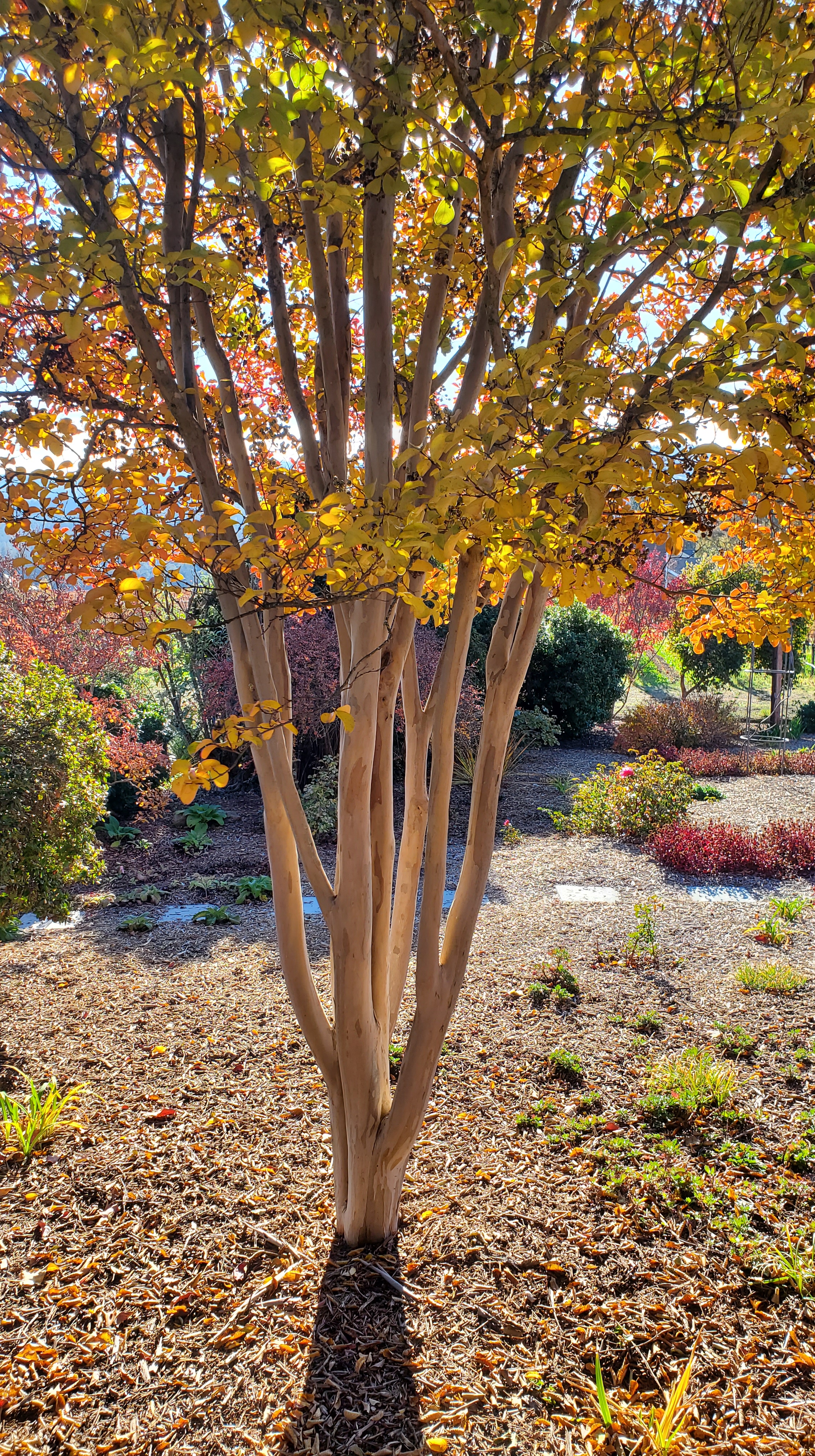
I couldn’t help but notice in the lists of interests posted in Introductions on Mastodon [new to me social media site] , the number of genealogists who are also gardeners and that got me to thinking of all the ways that the two hobbies overlap. That’s not to say that all genealogists are gardeners or vica versa, but it seems like a very high percentage are. It is certainly true for me. My interest in gardening goes back as far as my memories stretch to fuzzy caterpillars and beautiful garden flowers. My serious involvement with genealogy began at 17. Our garden whether cultivated or that which nature provides has always been my sanctuary. And it seems that the lives of my ancestors also provide a sanctuary from the cruelties of life.
So what things might they have in common. Gardeners and Genealogists are:
- Hopeful: the act of planting a seed or adding a new branch to the tree
- Patient: both gardening and genealogy take patience
- Dirty: they both reveal secrets and they both get you on your knees
- Colorful: Gardens and Family trees are colorful
- Tools: Gardening and Genealogy can be practiced by everyone whether tending to a potted African violet or spending hours researching an archive from afar.
- Rules: Good gardeners and genealogists often break the rules and tolerate chaos becasue it feeds their souls
- Stories: The best gardens are filled with stories, like the best genealogies
- Love: What’s not better with love?
HOPEFUL
There is nothing more HOPEFUL than planting a tree that you will never see reach its maturity, knowing that its branches will harbor future creatures and provide shade to people you will never know. And no genealogist finishes a family tree —we are ever hopeful that the gardens we make and the family history we uncover will blossom in the future and somehow the failures and brick walls will eventually be overtaken.
PATIENT
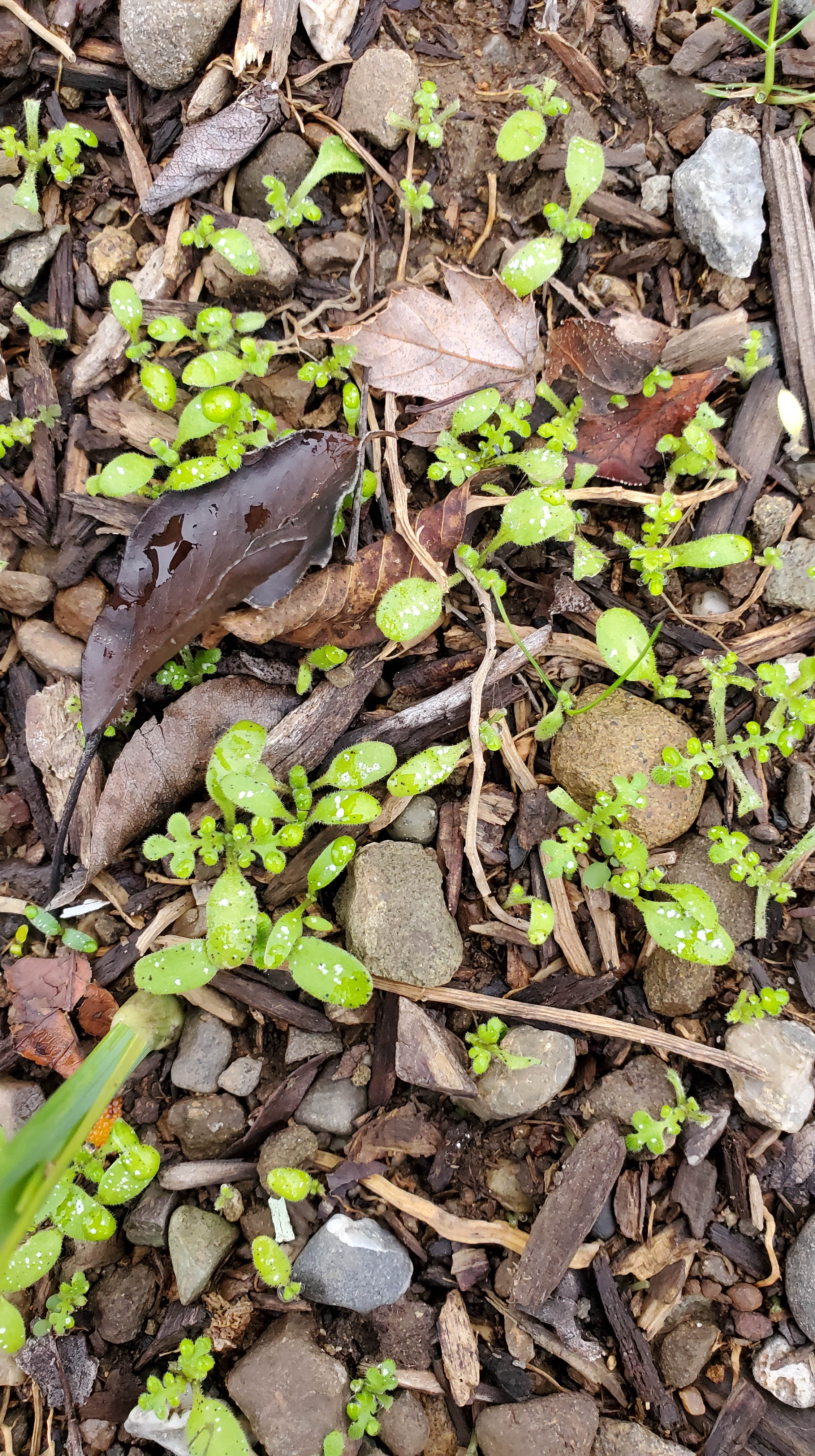
Anyone who sticks with gardening or genealogy will either make their peace with PATIENT or give up the pursuit. Some of my brick walls have taken 40 years or more to come tumbling down—and as a gardener I cannot possibly add up all the failures and dead plants that a lifetime of gardening entails. Yes, the weeds keep coming and yet I have spent the last few weeks a couple of hours a day on my knees weeding—in a rather futile attempt to win the war in favor of the native wildflowers. Similarly I am ever patiently plodding along hoping to make a new discovery or DNA match which will unlock the origins of my third great grandparents John MERRITT and Margaret GEARY.
DIRTY
Gardeners and genealogists get their hands DIRTY—I mean that literally. Your hands lead you to places you never expected and your searching for the right plant or the right resources unlocks untold secrets of our connection to the natural world and to our past. We get down and dirty and on our hands and knees in archives and libraries and gardens. We learn dirty little secrets someone worked hard to bury. We just keep digging.
COLORFUL
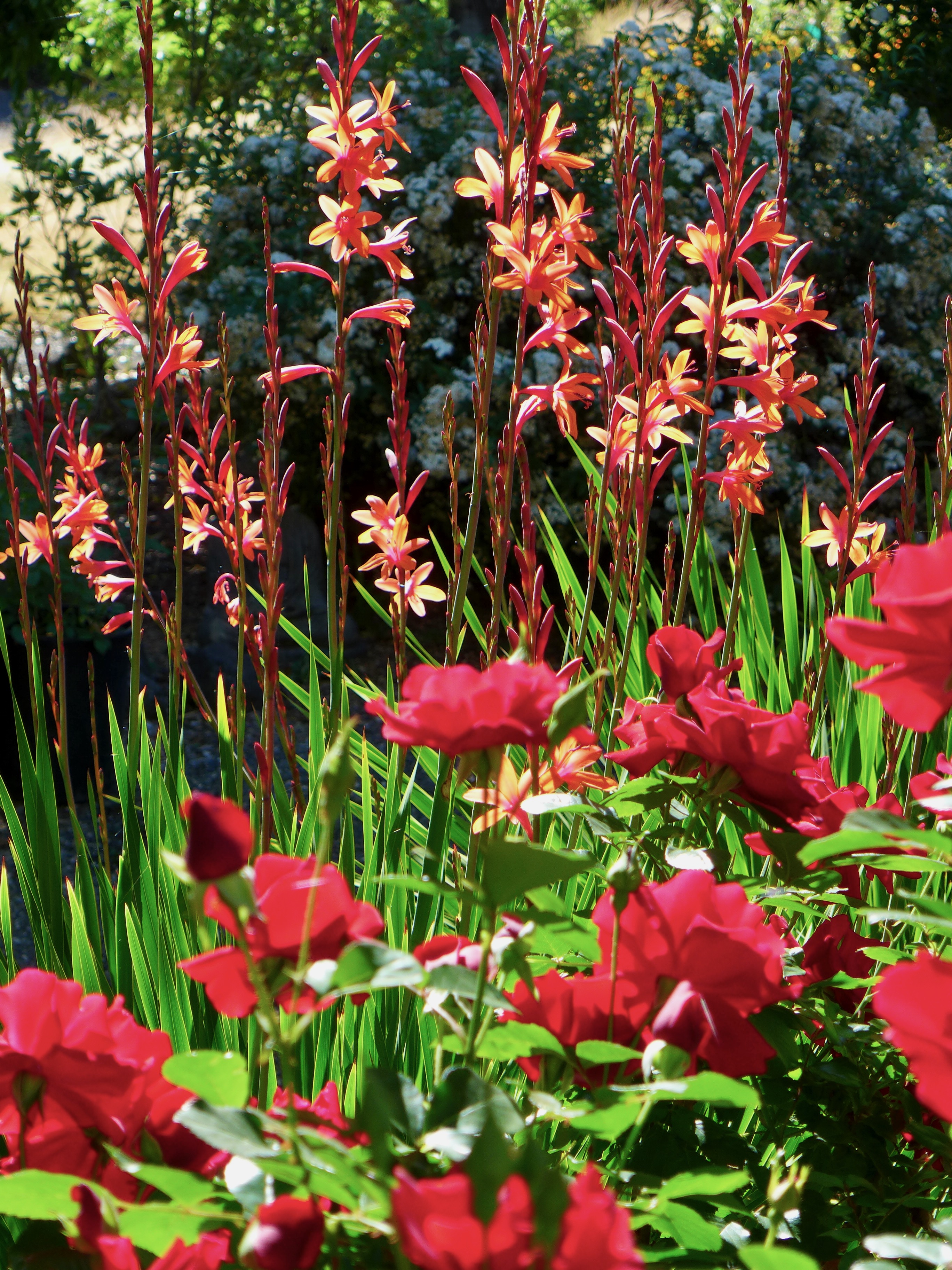
Even if you garden is currently covered in a blanket of snow or all shades of green, there’s no denying gardens are COLORFUL. Even if most of the color is plays of light and comes on the wings of those who visit it. Genealogy is colorful both in the characters we meet, the places they come from and for some the color coding we often use to separate this family from that one.
TOOLS
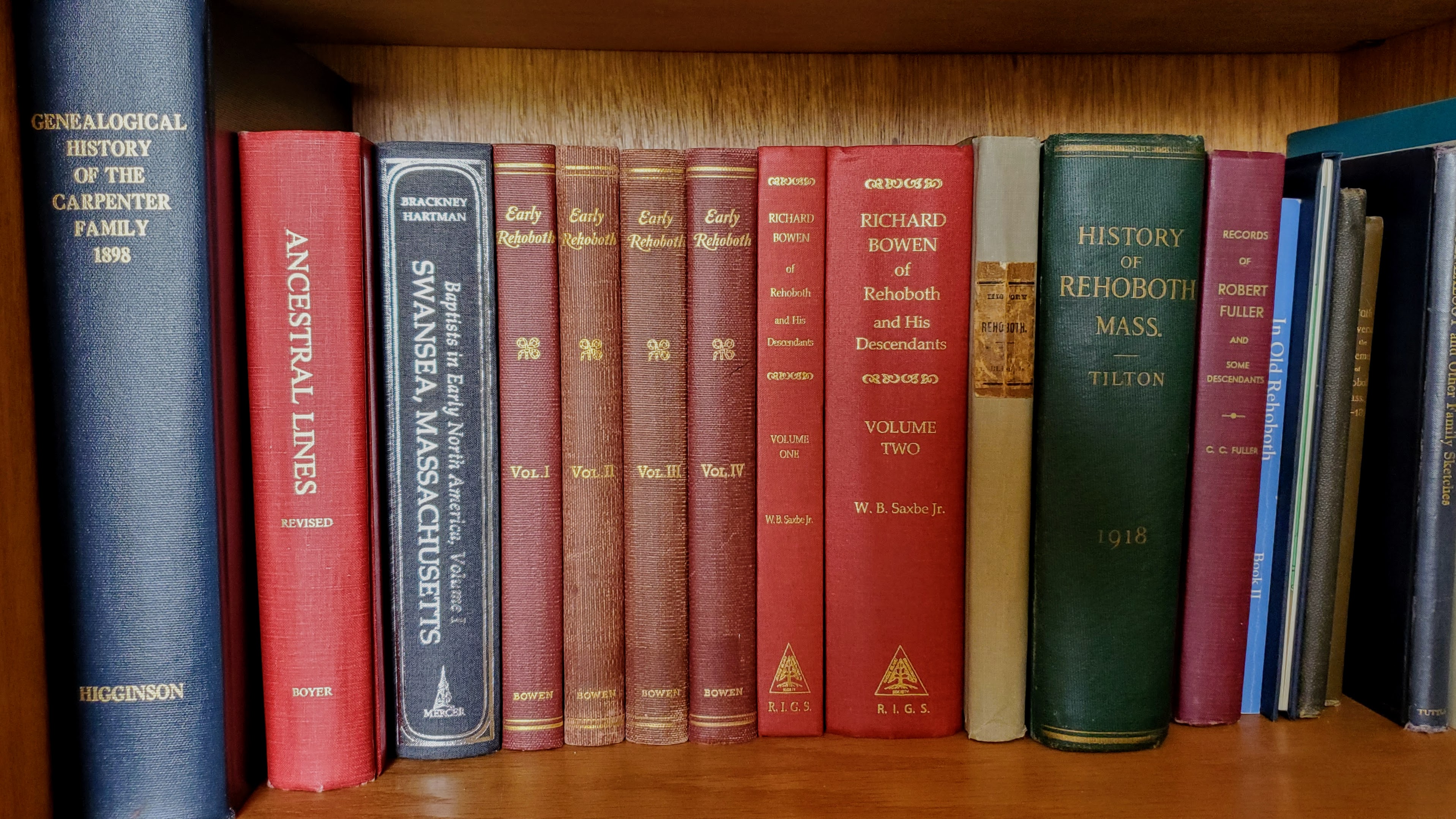
This goes without saying, both endeavors have their own sets of favorite TOOLS. And there is a large degree of overlap. Books, libraries and the internet being repositories of knowledge and inspiration. Metaphors abound in raking and shaking the leaves and trees. Pruning branches, cross pollinating and simply mucking about in gardens or graveyards.
RULES
Anyone reading my blog, knows I both like rules, and like breaking them. The best RULES are like paths, they are more interesting when they meander. The rules give structure and orderliness but they can also constrain and discourage. A gardener should always look forward to surprises as should the genealogist. The rules are guideposts. They are not fences nor gatekeepers and don’t let anyone tell you different!
STORIES

I say it again and again, who cares about all those names, dates and places and neatly organized files? Well you do. However, what is important is the STORIES. Even in the garden, it is telling its story. Plants that fail to thrive and others that spread with reckless abandon. My grandfather had a Japanese maple from which my parents had a seedling. Many gardens later the progeny of that maple carry on in my garden today.
LOVE
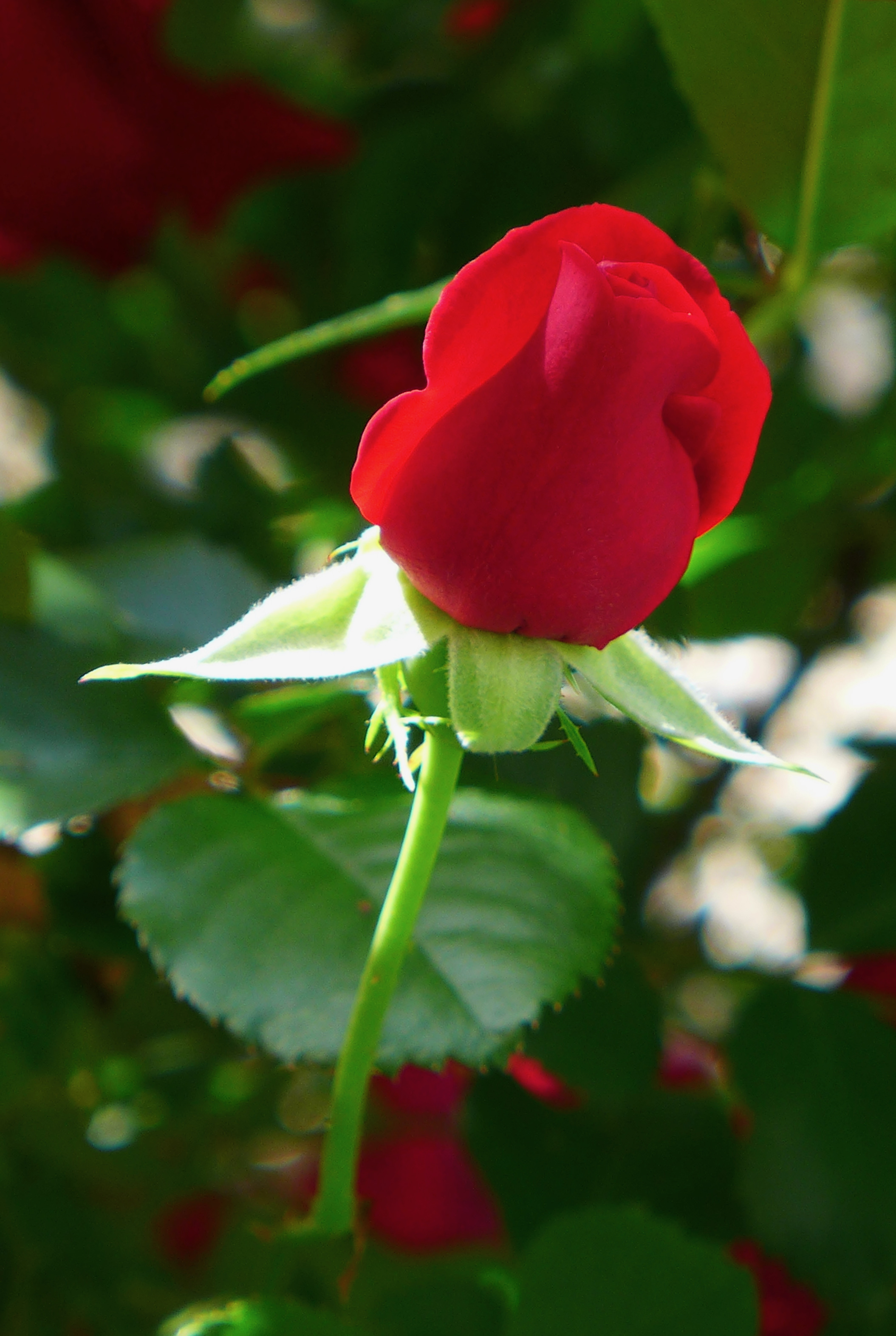
Arguably gardens and family history grow stronger with LOVE. Our time on earth is transient. We garden and compile family history, best watered with love and perseverance. It is both a solitary act of selfishness indulging in our love of growing things and the selflessness of helping and providing a path for others. Only fellow gardeners or genealogists will appreciate what it took to get there. We did it for love.
“Time is to slow for those who wait,
― Henry Van Dyke
Too swift for those who fear,
Too long for those who grieve,
Too short for those who rejoice…
But for those who love,
Time is Eternity.”
Kelly Wheaton ©2023 – All Rights Reserved
New Speculations on the Origins of Robert WHEATON: Part One
Posted on January 30, 2023 1 Comment
Many years ago I wrote an article TItled Conjectures on the Origins of Robert WHEATON. At that time all of the indications were that he was descended from the Wheatons of Devon. This turned out to be 5 different DNA WHEATON/WHEADON/WHIDDEN lines in Devon, England: Wheaton of Sidmouth; Wheadon of Axminster; Whidden of Buckfastleigh; Wheaton of Exeter; and Wheaton of Winkleigh and Brixham. After lots of DNA testing in England with not a single DNA match, I highly suspect Robert WHEATON, who settled first in Salem, Massachusetts in 1636, did NOT come from Devon.
INTRODUCTION
In April of 2015 I had the wonderful opportunity to meet up with Den and Jean Wheaton and spend 3 days visiting parishes in Devon and Somerset where WHEATONs were known to have lived in the 16th century and into the 17th century. On this trip Den and Jean WHEATON and I met up with David WHEATON of the Branscombe WHEATONs. So we represented 3 distinct WHEATON lines—none of them DNA related. We visited many churches from the southern Devon ie. Exter, Branscombe, Sidmouth, to mid Devon parishes like Tiverton, Honiton and Loxbeare. Each unique and beautiful in its own right. As we climbed higher and higher onto Exmoor I began to feel we were closer to the ancient Robert Wheaton homeland. When we went reached Wheddon Cross, Watchet and Stogursey I said, “this feels right.” Now of course a “feeling” can be meaningless but in this case it has led down some very circuitous gopher holes. In 2019 and continuing through Covid I have not let up in researching—although I have been remiss in not writing it up. So without further procrastination here goes.
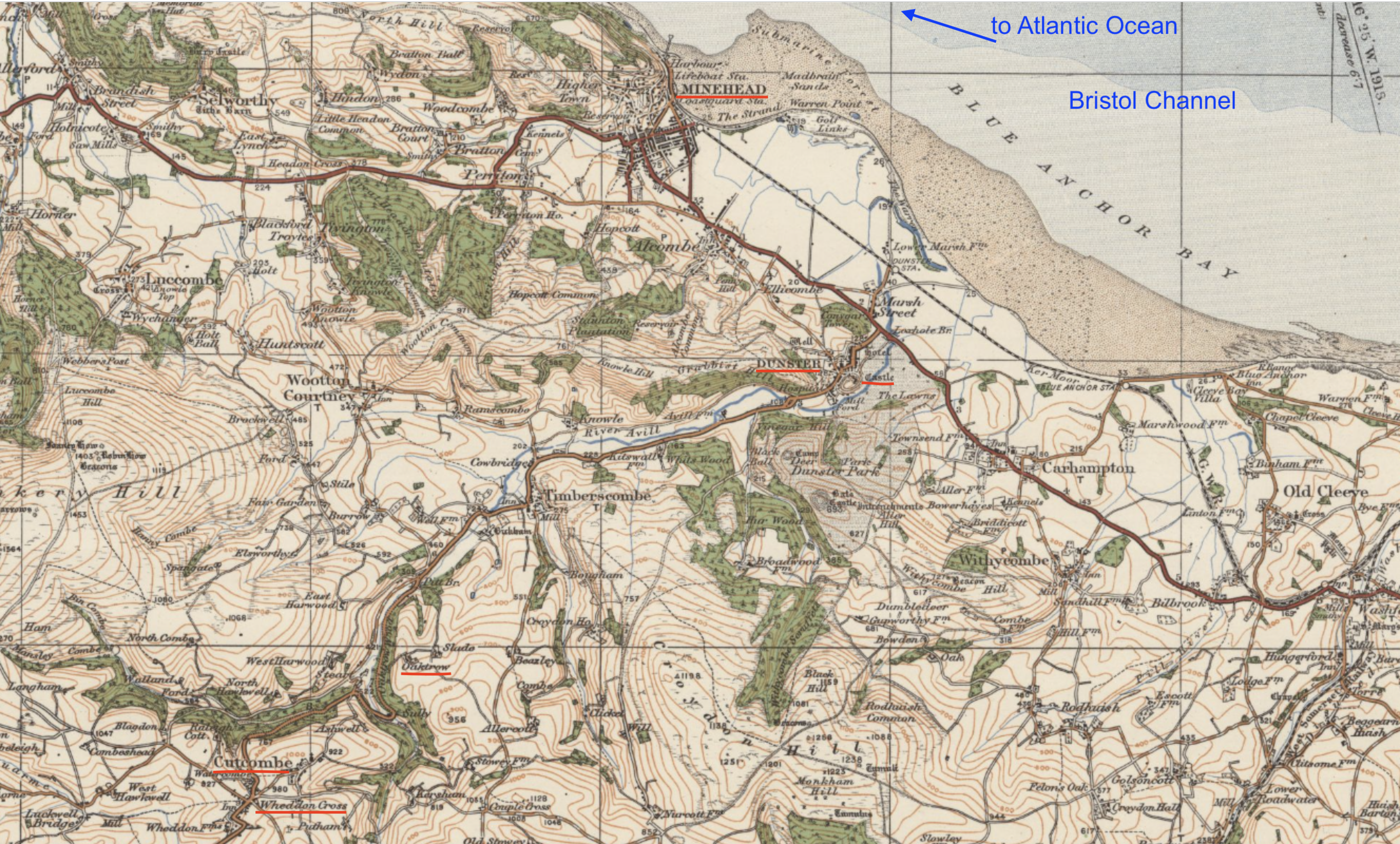
I am not sure what it was I feeling or even what I was looking for— it just felt right. The topography had similarities to where Robert Wheaton settled in Rehoboth, Massachusetts. The area of the original “Ring of Green” settlement of Rehoboth, where Robert spent most of his life, is actually located on the East side of the Seekonk River in what is today Rumford, Rhode Island [adjacent East Providence]. Robert owned a homelot on the Ring of Green as well as a farm/woodlot on present day Wheaton Ave. in Rehoboth, Massachusetts. The Seekonk River adjoining Rumford feeds directly into the larger Providence River which in turn flows into Narragansett Bay which exits into the Atlantic Ocean. The area is a mix of woods and wetlands. Similarly, in North Somerset, the Avil and Washford Rivers empty into the swamp lands of Minehead and Watchet which border the Bristol Channel and out into the same Atlantic Ocean. Both areas show a marine influence and the North Wheddon Coast and Exmoor have more similarity to Rehoboth than the Midlands and South Coast of Devon, my earlier focus. This may mean nothing at all, but when clutching at straws that’s where we will begin.
Compare the two areas adjacent waterways and nearby major waterways leading both to the Atlantic Ocean.

A little while later we got a bit of a nudge in this same direction when 3 anonymous samples of YDNA from the Bristol, England area, matched a key mutation of our Robert Wheaton [R-FGC22501]. The only other person other than our Headless Warrior in York to be positive for this SNP. To be fair this could just be a coincidence, but for now it is all we have. When Robert first appears in Salem the spelling appears to be abbreviated Robt. Wheato and then Robert Wheadon and Robt. Wheaden. Note in the later two instances the name is written Wheadon. It would be a bit ironic if Robert was a Wheadon and not as he was later known Wheaton. However, as I have pointed out elsewhere the dialects in southwestern England make d’s and t’s nearly interchangeable. In two instances a Farm called Wheaton later becomes Wheddon Farm. In many early documents a name will be spelled multiple ways in the same document.
SOMERSET ENGLAND
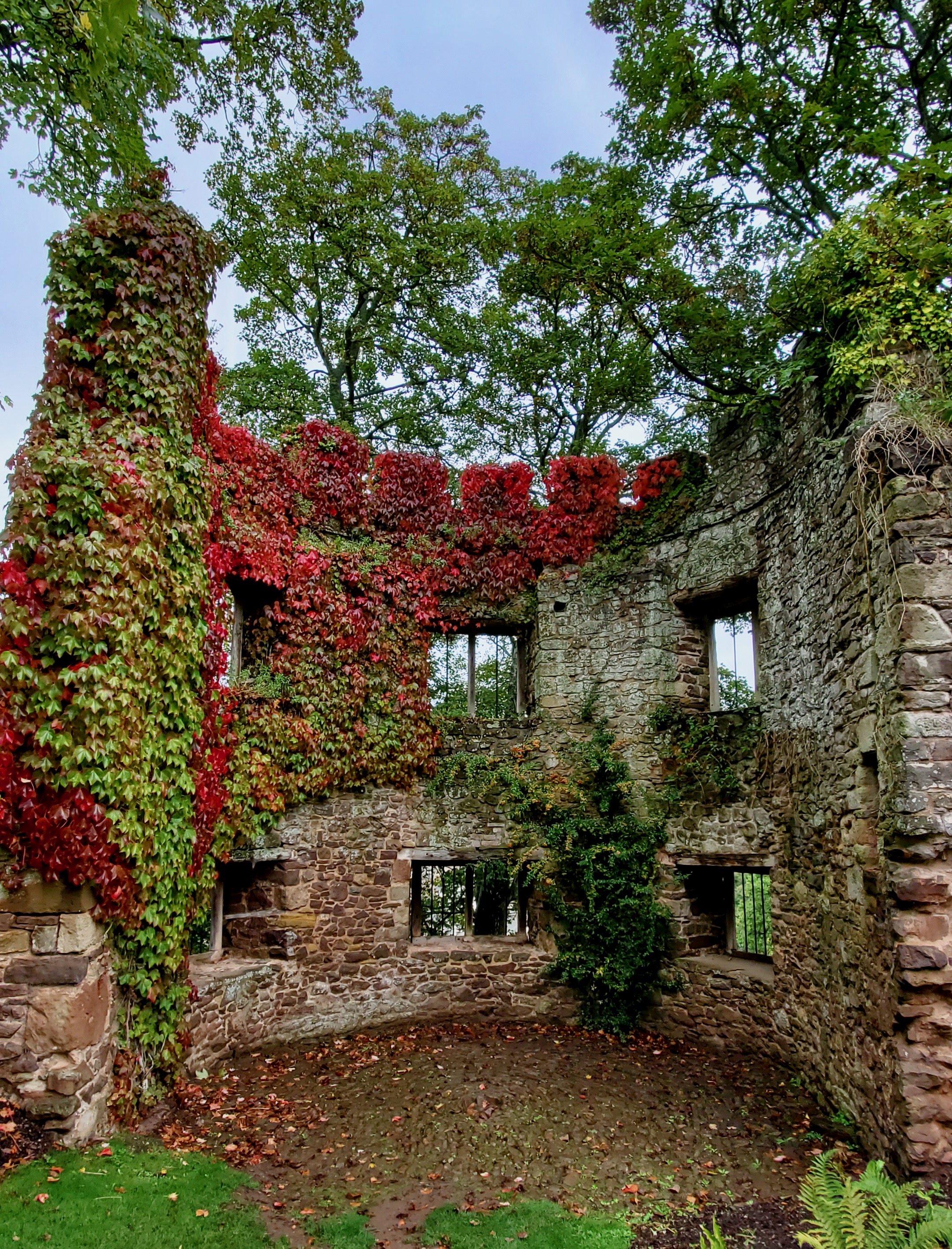
If we assume for the sake of conjecture that I am right about my suspicions about Robert WHEATON in Somerset, we need look to the first record in Somerset of a Wheaton/Wheddon etc. which is in the year 1201, when a Walterus of ‘Watesden‘ paid scutage on half a knight’s fee which is held of the honour of Dunster, the lands of William de Mohun. William de Mohun [also spelled Moion or Moyon] was a knight in the service of William the Conqueror who received as many as 68 manors in the west of England including 55 in Somerset. His home estate consisted of the ancient hundreds of Minehead, Cutcombe and Dunster. He built his castle upon an earlier fortified castle in Dunster [shown below] originally called Tore. He was engaged in breeding horses at Cutcombe and Nunney [near Frome]. [Planche, James Robinson The Conqueror and his companions London 1874]
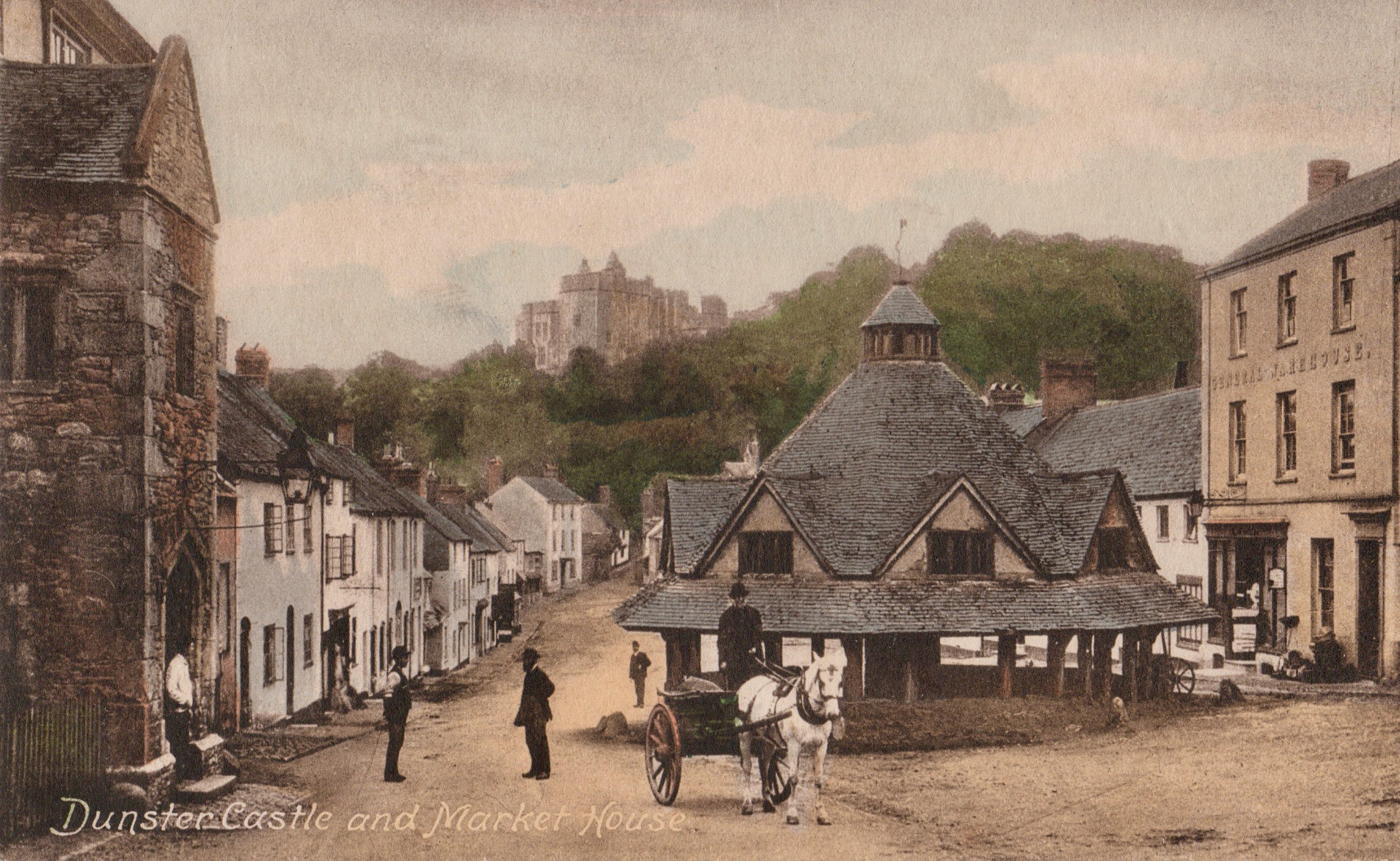
William de Mohun held two manors in Cutcombe both mentioned in the Domesday Book:
- Cutcombe [Udecombe, Codecombe] William de Mohun and 3 men at arms from him. Mill, 36 brood mares, 250 sheep. 22 villagers. Later 11 smallholders. 6 slaves. 6 pigmen 1.5 lord’s lands. Meadow 8 acres. Pasture 2 1 leagues & 0.5 leagues 5 furlongs mixed measures. Woodland 1 0.5 leagues & 14 acres mixed measures. Cutcombe is Somerset’s highest parish in elevation. [Uda = wood; combe = deep valley] Manor Value in 1086 £7.8
- Oaktrow [Wochetreu] Durand from William de Mohun. Oaktrow Wood. (in Cutcombe parish) Manor later known as Cutcombe Mohun, half a virgate of land. 1 plough. In demesne is 1 ferling and half a plough, 2 villeins, half a plough, 1 ferling, 4 acres of wood(land). 6 beasts and 50 sheep, 20 she-goats and 8 swine. 4 s. [och = oak, treu or treow = wood]
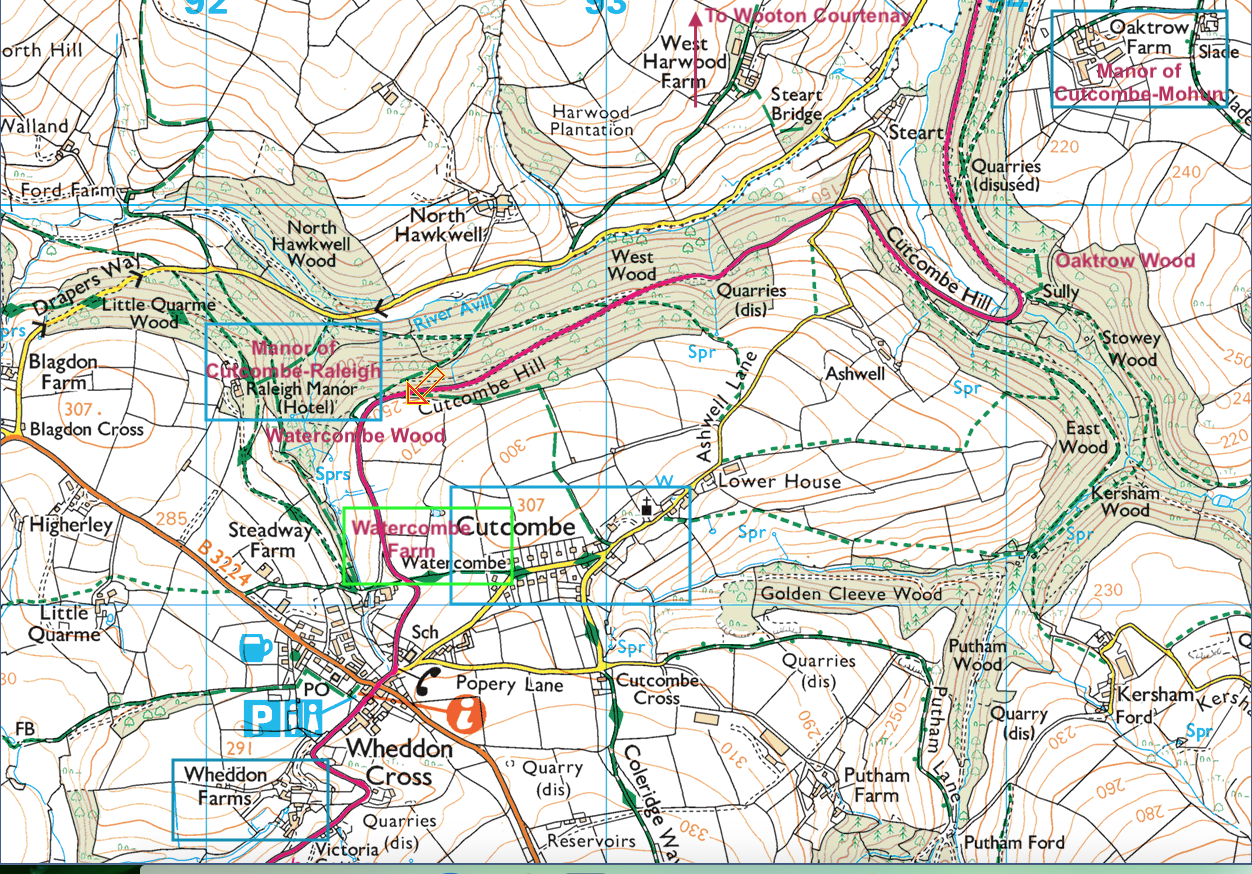
and Wheddon Farms Annotated OS map
A bit more on perhaps the first of Robert’s line.
“The early history of a small estate at Wheddon is obscure, It seems to have begun in 1201, when a Walter of ‘Watesden‘ paid scutage [Scutage: money paid by a vassal to his lord in lieu of military service] on half a knight’s fee [Knight’s fee: a unit measure of land deemed sufficient to support a knight approx. 1,000-5,000 acres] which is held of the honour [honour: Barony] of Dunster.”[Lands of William de Mohun]. “Walterus de Watesden reddit compotum de j. marca de feodo dimidii militis de honore de Dunstore de scutagio. In thesauro liberavit. Et quietus est.[original Latin]”
Lyte, Sir H.C. Maxwell. Historical Notes on Some Manors formerly connected with the Honour of Dunster 1931 p .88
WHEATON WHEDDON WHAT’s in a NAME?
Our next mention of a Wheddon in the Somerset records is in the year 1243 where a lawsuit mentions Robert de Wotedon, a son William, a Richard Whadden and a tenement called Whetendene in Cutcombe. In 1253, ten years later, we see three spellings Whetedon, Whetden and Whedden all different from the earlier three. This is not at all unusual as early documents may have multiple spellings in the same document. Although these spellings may seem very different, the alleged meaning is similar. In Proto-indo-european (udén), wodor, and wodon means water. Variations include waden [to wade], wader, weden, wedene again all meaning wet, wade or water. With den or done meaning valley. So we have Walterus of water valley or the wet valley.
In the Inquisition of Sir John de Mohun from 1285: “Wadendene [alias Uhetnedene, Wetdene]. 1/2 knight’s fee held by Walter de Wadedene [alias Wetendene]. This seems an apt description given all the waterways and springs I have marked on the map below. This area is bordered on the West by the Quarme River and the North the Avil River and everywhere you look are water courses and freshwater springs. Also note a place called Watercombe adjacent Cutcombe. Essentially Watercombe and Wheddon are the same thing. Water + combe = water valley.
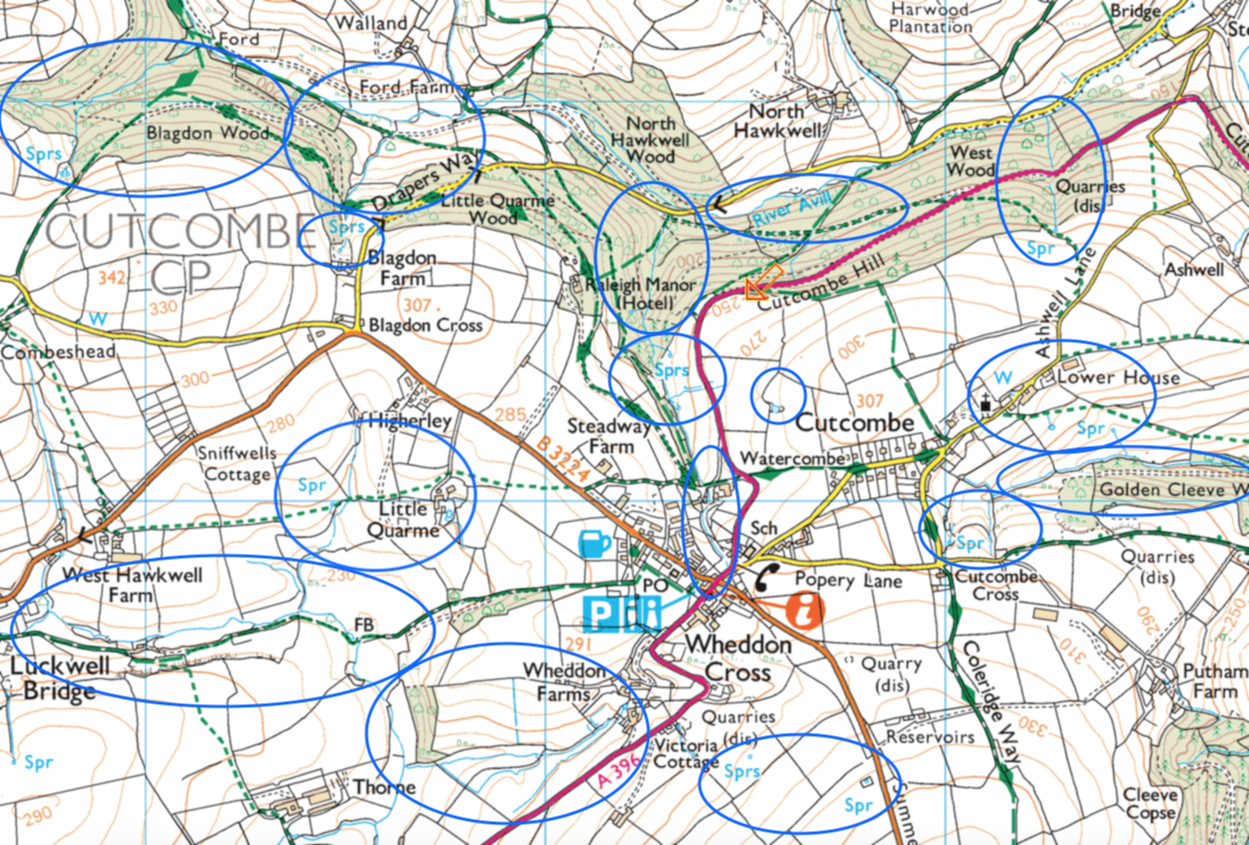
Map showing approximately 1.5 square Miles near Wheddon Cross with Rivers and Springs circled
There are several other mentions of Wheddons in the 13th century but this one is of particular note. “In 1253, Alice of Wheddon, daughter of William of Wheddon laid claim to a third [of the] manor of Wheddon, whereof her father had been seised in demense when he set out for the Holy Land [Henry III Seventh Crusade 1248-1254]. Robert Wheddon, the tenant in actual possession hereupon vouched his overlord, Reynold de Mohun [Reginald de Mohun 1206-1258, 3rd great grandson of William de Mohun], to warrant his title, but soon afterwards recognised the plaintiff’s right, and agreed that she and her heirs should hold of him and his heirs at a rent of 12d. Which, it will be observed, was a third of the rent payable by him to the lord of Dunster. [Lyte, Sir H.C. Maxwell Documents and Extracts Illustrating the History of the Honour of Dunster Somerset Record Society Vol 33 1918 pg 89] This is the only mention I have found of an actual manor and it may be construed that this is probably the Oaktrow, later known as Cutcombe Mohun. It later seems to fade into oblivion.
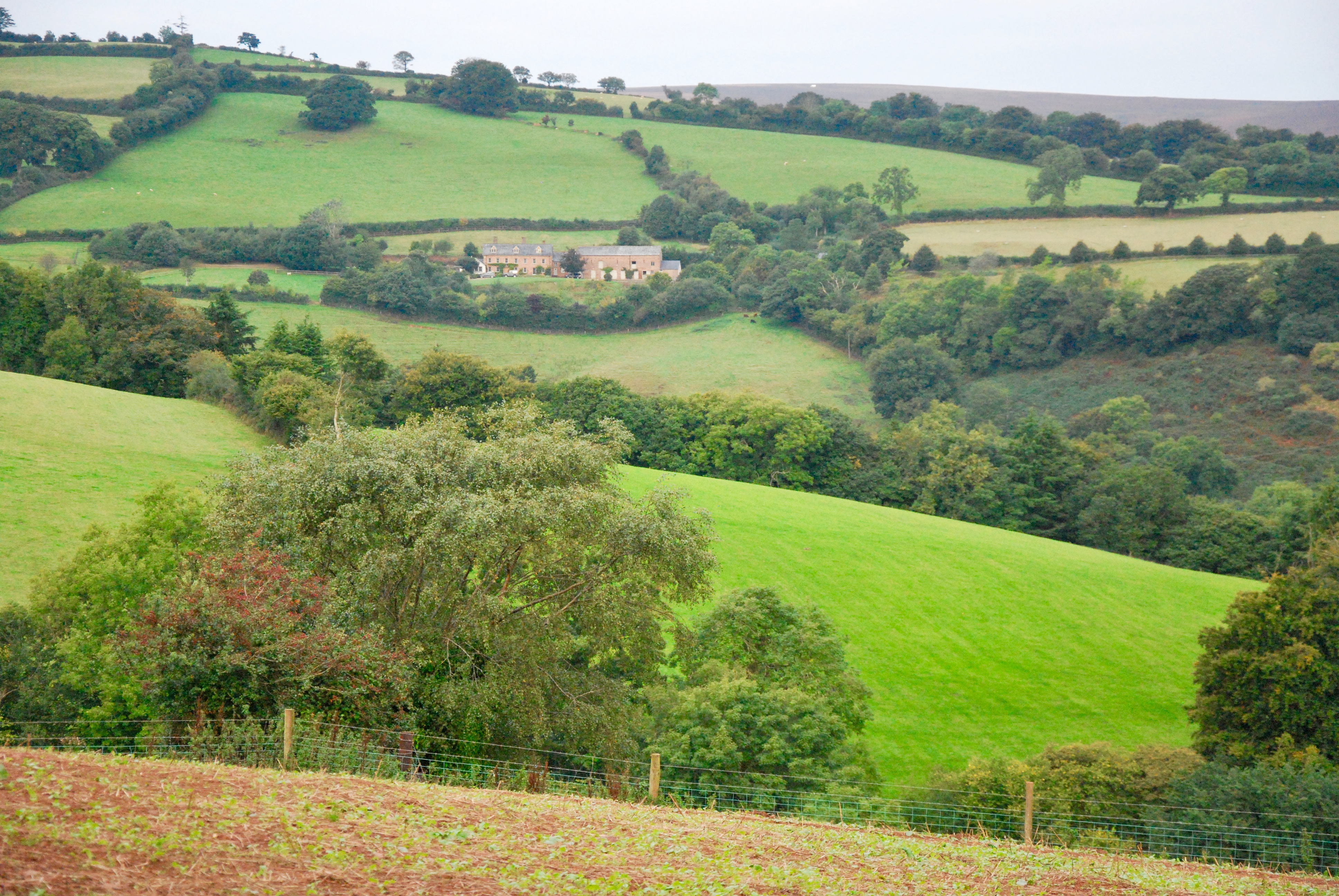
Also noteworthy that Alice’s father was a “Knight on Crusade in the Holy Land.” This William Wheddon may be the son or grandson of Walter de Wheddon who was the first of that name recorded. As is the case with William de Mohun there are 4 generations of that same name. So too we find a Walter de Wheddon son of Walter de Wheddon. In the 13th century other forenames include for Wheddon’s include: William, Robert, Richard and Alice. It is likely that the Walter de Wheddon mentioned in 1333 and 1335 as “regarder” of the forest of Exmoor would be a descendant of the original Walter since the first mention is 132 years earlier. A regarder was an ancient officer of the forest, whose duty it was to take a view of the forest hunts, and to inquire concerning trespasses, offenses, etc. It may have been a duty that was passed from father to son over many generations. In 1348 we find a Walter de Wheddon as a witness to a deed in Kilton some 20 miles to the East. In 1376 there is a debtor Alexander Leygh alias Alexander Wheton of Tiverton, North Devon. Creditor John More, citizen and mercer of London. [National Archived C241/164/8]
SILENCE
Then the record is silent for nearly 185 years! There are mentions of the place name Wheddon but none of that name or similar in the area. Then the 23 November 1559, Agnes Littlejohn and William Whetton are married at St. Mary Bridgewater [about 30 Miles east of Cutcombe]. In 1571 is a deed of Thomas Luttrell Esq to and a Thomas Withey alias Wheddone. [In 1376 Lady Elizabeth Luttrell purchased Dunster Castle from Sir John Mohun and it remained in Luttrell family hands until 1976 when it become part of the National Trust]
To Close Part One I share with you some photo of Cutcombe. The church of St John was constructed in the 13th and 14th century probably built upon an earlier church from the early 12th century. It sits at a high elevation with lovely views of surrounding countryside.

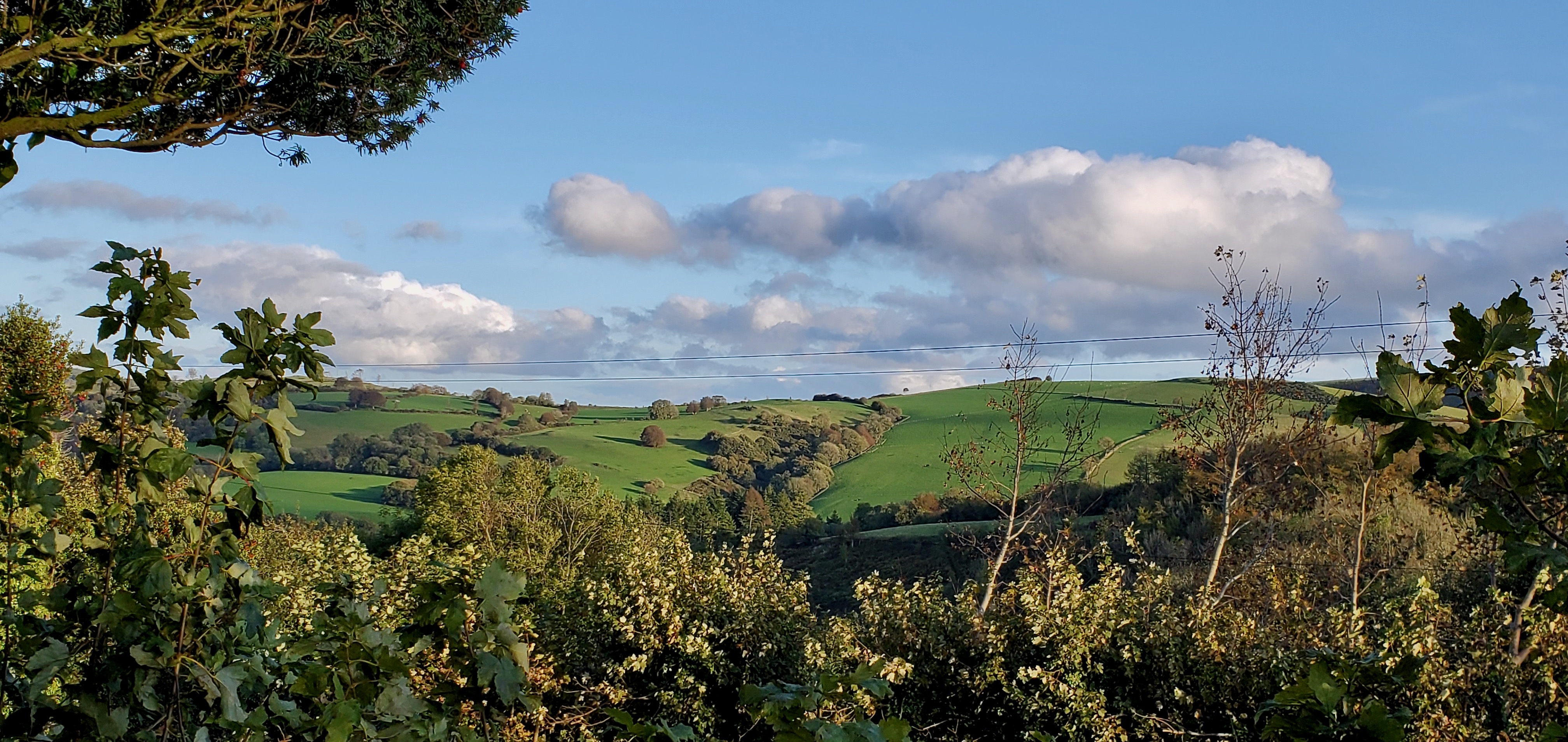

And for comparison I offer this photo taken in 2021 of Robert WHEATOn’s land in Rehoboth. The trees follow “Clayey Brook” which will make an appearance later in our story.
Kelly Wheaton ©2023 – All RIghts Reserved
 Wheaton Wood