In genealogy we use lots of metaphors for what we are trying to do when faced with a dearth of evidence, and often what we have is circumstantial at best.
Reading Tea Leaves
Following Bread Crumbs
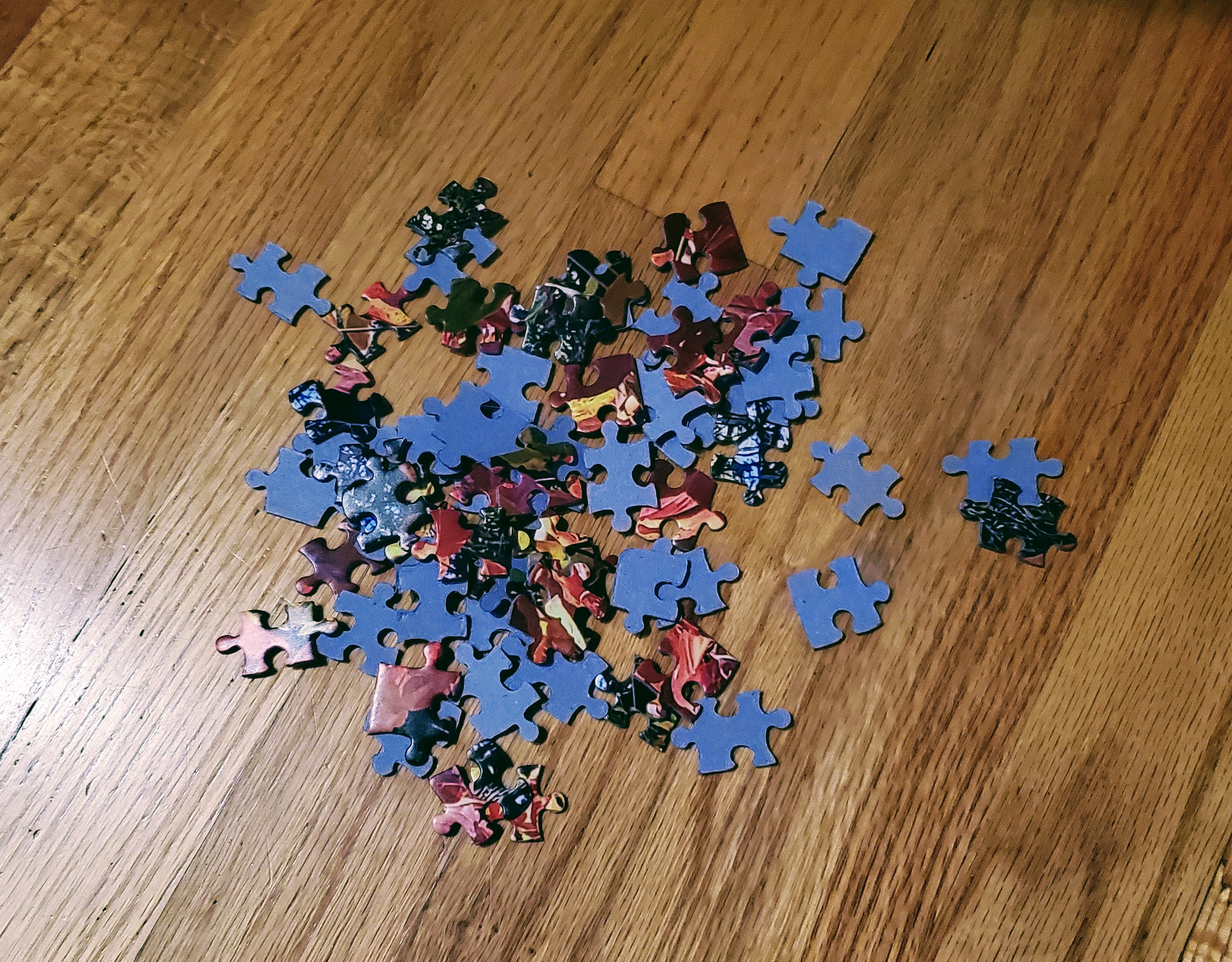
Fitting Pieces into a Jigsaw Puzzle
Putting Flesh on the Bones
Going on Treasure Hunts, without a Map
Scrambling Down Rabbit or Gopher Holes
Firing up the Old Time Machine
Crystal Ball Gazing
Communing with the Dead, hoping they will speak to us somehow, someway
After nearly half a century I am quite familiar with all of them and I am not at all embarrassed to admit that I will use anything to get at the truth of an ancestor’s story. I know in some circles these methods will be met with eye rolling or disdain. No both, we do what we have to do. Sometimes breadcrumbs are all we have. And even as breadcrumbs do not a loaf make…we do what we have to do. Clamber over stiles, plough through muddy fields, name your metaphor, the intrepid genealogist has done it, in metaphor or in fact.
The good thing about breadcrumbs is they lead us to places we never intended to go. And this is the very best thing about genealogy. Genealogy is not just filling in boxes on a tree,rather it is being led to new and unexplored places, physical and metaphorical. Oh how I wish, that back in Junior High and High School, I had been able to connect to what I was studying in a more personal way. So much I have learned about geography, history, anthropology, archeology, architecture and so forth is due to my desire and need to see my ancestors in the context of where they lived and what was going on around them. I can accurately fill in a blank map of the United States and do a fair job on the countries of Europe and the shires of England or even the counties of Germany! This is not due to geography coursework, but rather learning through the day to day research on my families and their origins.
Sometimes I muse on what drives a person to spend a half century on trying to unlock mysteries of their long dead kin? I think Maud Newton has some interesting thoughts in her book Ancestor Trouble: A Reckoning and a Reconciliation. She Writes “I, too, believe that our family dead, and our relationship to them, are important, to me as an individual and to humanity as a collective.” At some point we all need to ask ourselves this question: What is Genealogy all About for me? I think I can finally answer that for myself. I want to understand who I am in the context of my kin. How can their lives inform my own? I want to understand where I, where we, add to the great soup of humanity. Simply I just want to understand in some primordial way, what is it all about?
So crumbs do not a loaf make. However, they provide enough nourishment to see you through. As has been said in many ways it’s not the destination, but the journey. So, while some of my fellow genealogists are busy with lists, filling in names and ticking of boxes give me a few bread crumbs and off I go on another adventure, learning as I go. A few years back my girlfriend, Denise, and I went on a trip to Scotland. Our tour guide, Donald, when asked about times and plans he told us, “It’s guidelines—it is all just guidelines.” I have come to use this as my personal mantra, especially when it comes to genealogy. Whether you are a beginning genealogist / family historian or a more seasoned one, let me suggest that whatever you have been taught, told, etc. that all the rules—-they’re all “just guidelines.”
Everyone has their favorite or “best” way to organize, research, color code, document, etc. And yes there are guides to just about how you should do EVERYTHING that is genealogy related. But the idea that everyone needs to follow the same rules is nonsense. They always start out to be helpful, until they are not. We start out with one idea, one bread crumb, and often end up far from where we started. We make a commitment to log every resource we consulted. I did this for the first five years or so—but after 50 that’s ridiculous, it would take longer to enter all that into a database and check than it would to retrace your steps. I know more than I did back then. I say to myself, “Oh I remember this!” I don’t think oh silly me, but rather, “thank God I came back to this, look what else is here!.”
Let there be no shame in doing genealogy any way that works for you. Even if it is one bread crumb at a time.
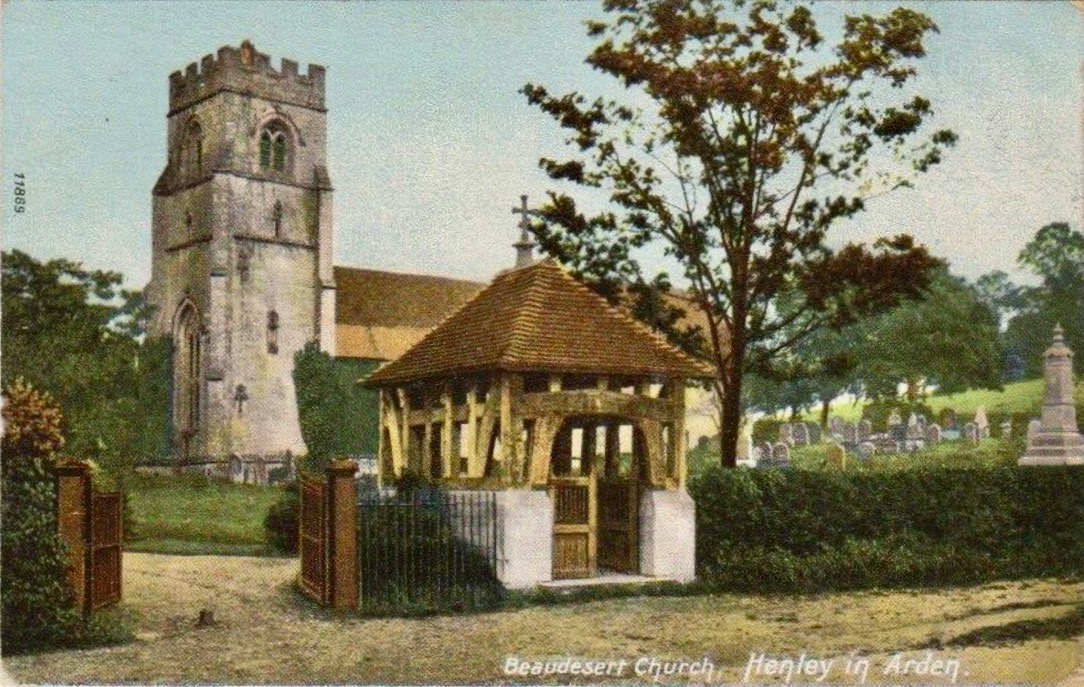
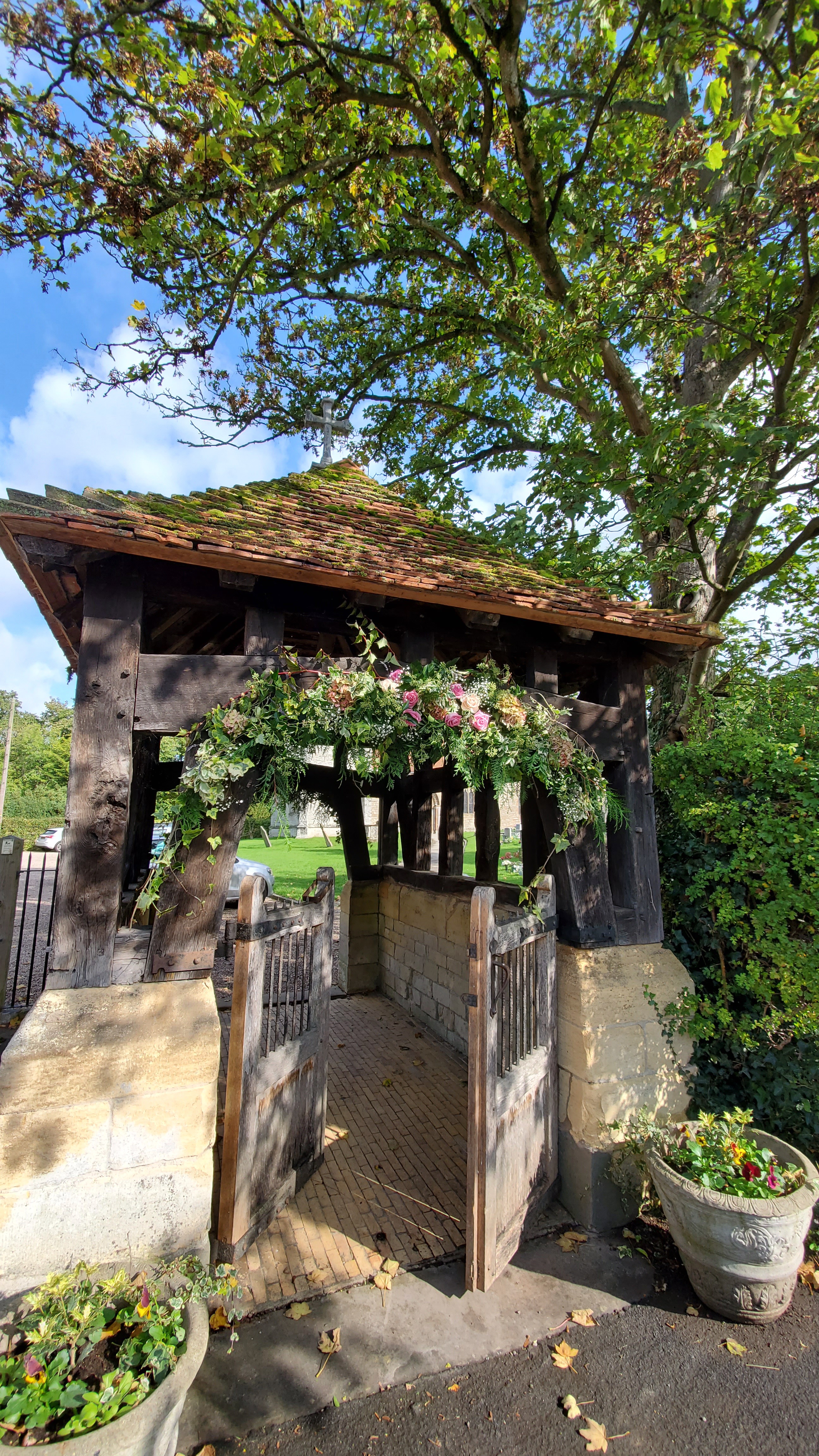
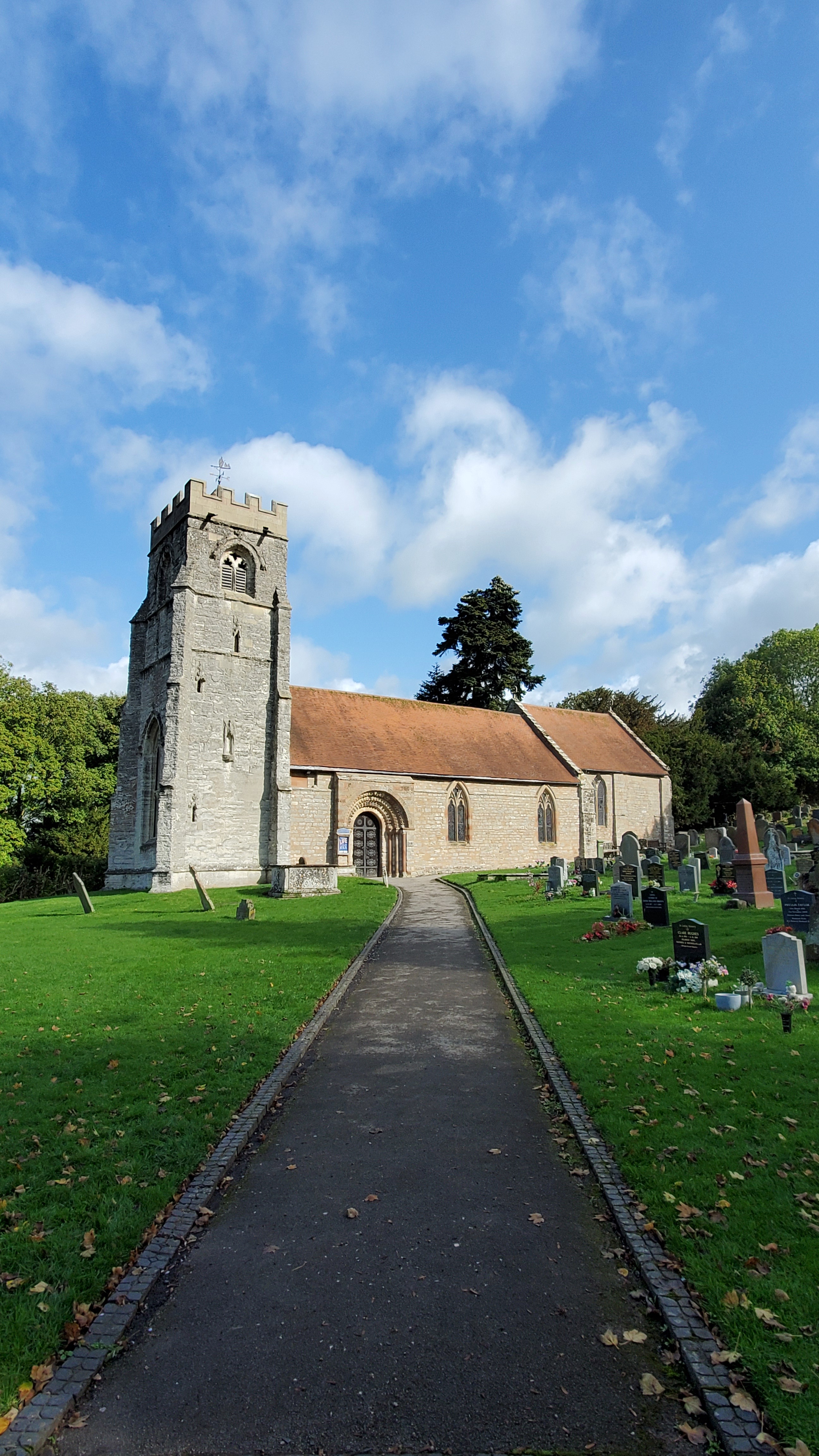
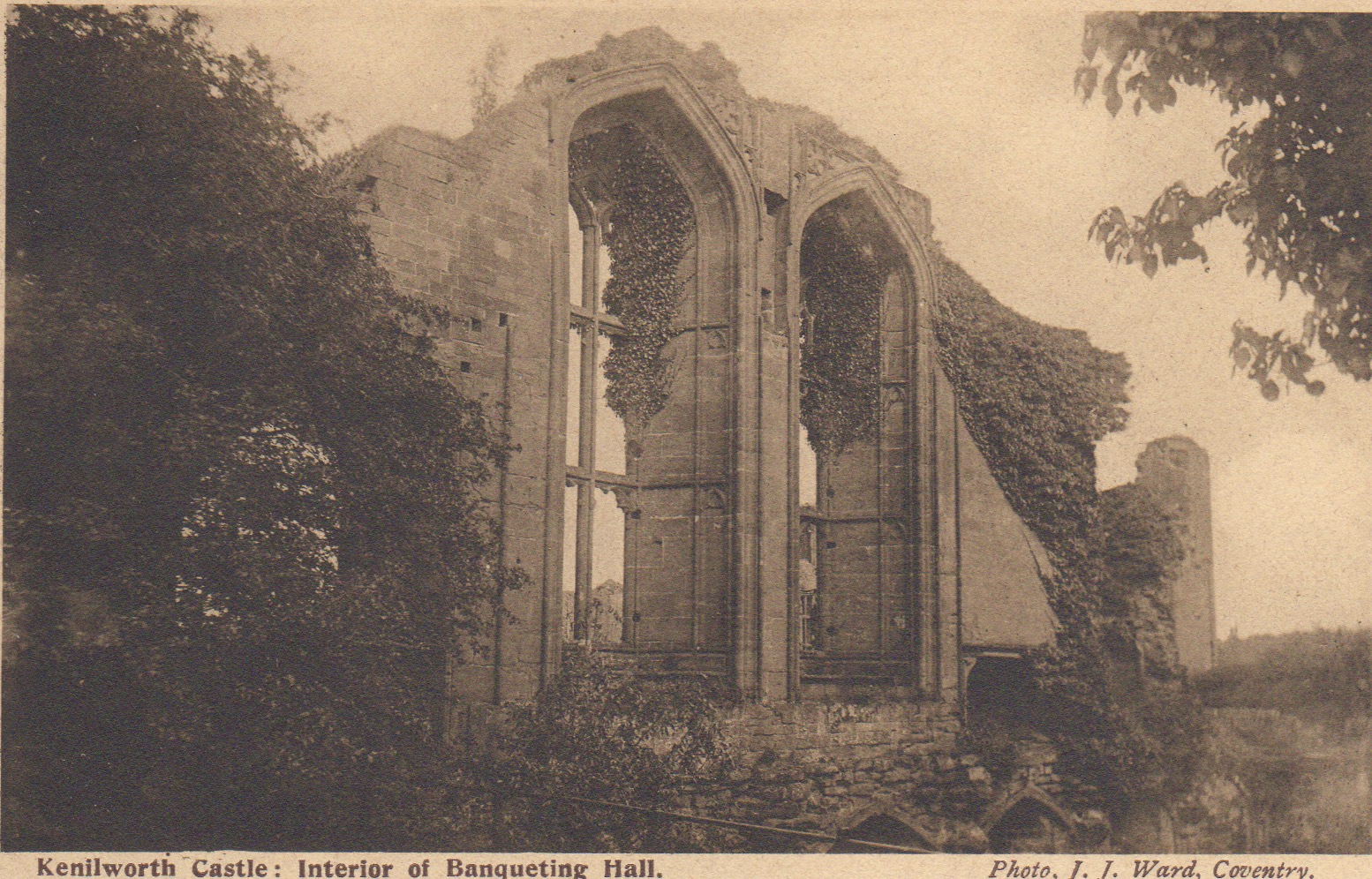
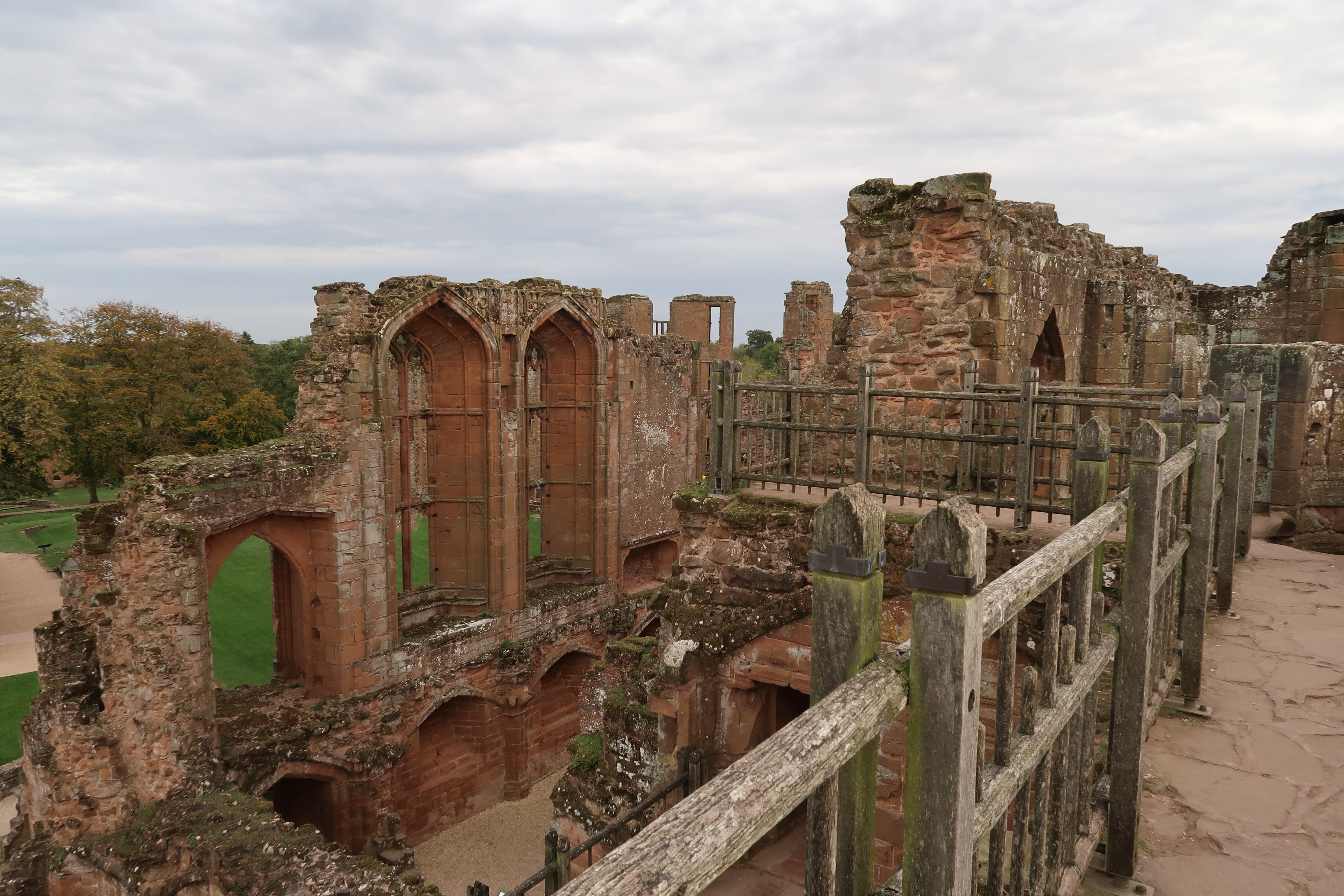
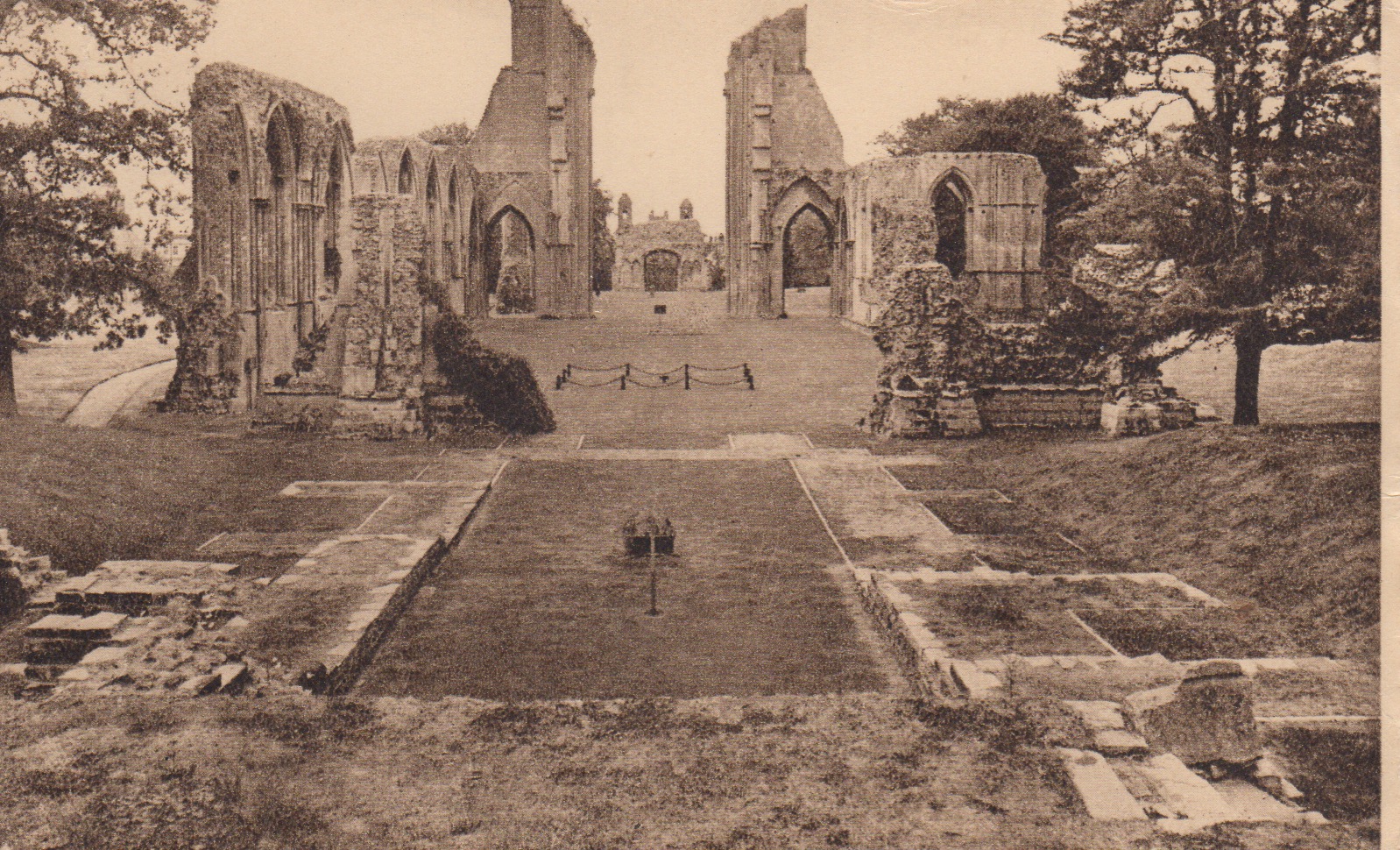
This is the second post as a follow up to the first Photos and Postcards: Now and Then. I just keep running into more examples in my photo and postcard collection.
This one it will take 3 to illustrate as I obviously wasn’t matching up angles. These are of St. Nicholas Church in Henley in Arden, in Warwickshire. The day of our visit was quite memorable as inside the church was a young couple, who had been married there the day before. They had come back to experience it in quiet of reflection—as it happened as they said, “in a whirlwind.” Please click on images for full image.
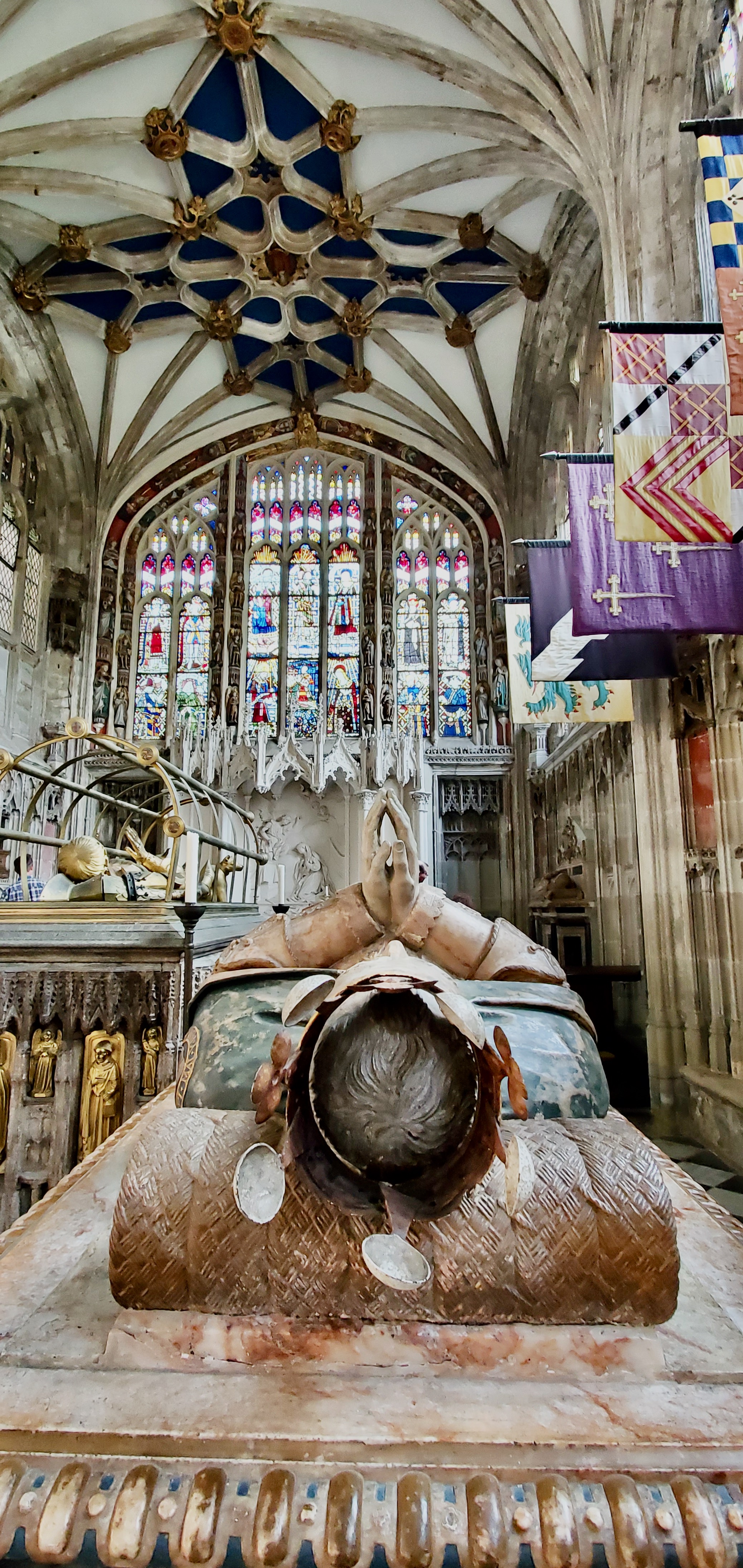
A very special Place the Beauchamp Chapel at the Collegiate College of St Mary’s in Warwick, Warwickshire, England. Final Resting place of my 17th great-grandfather Richard BEAUCHAMP Sir , Worcester “13 Earl of Warwick,” “Knight of The Garter,” and “Captain of Calais.”
This next one is a very different vantage point but is clearly recognizable. Dartmouth Castle and St Petrox Church in Devon. This protected port was quite strategic in many battles.
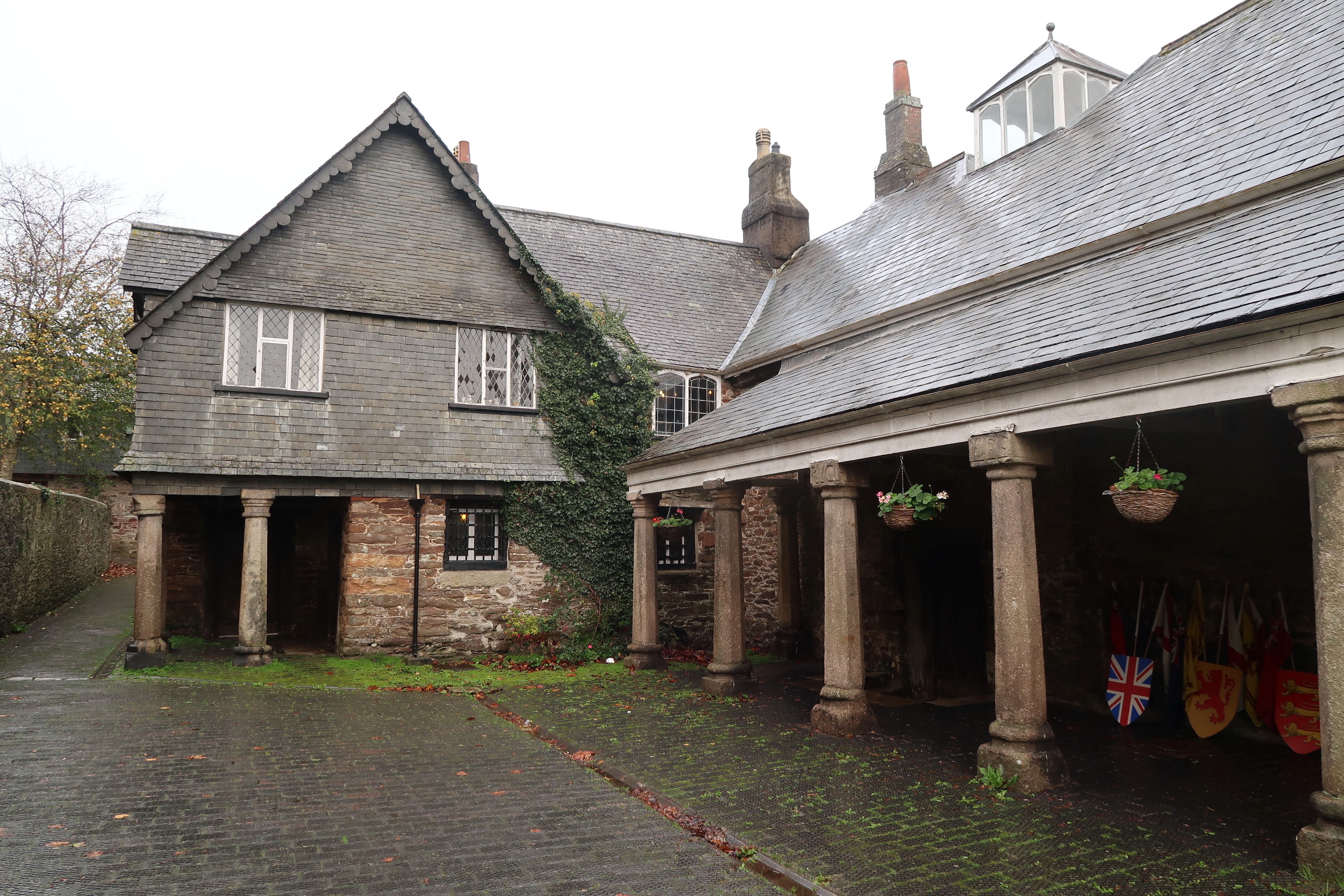
I stayed at this hotel last October and later purchased this old postcard posted in 1926. The apartment is on the next to the top floor as pictured on the right in the photograph with a Stone balustrade of a balcony on front side and iron railing on the side to the left in photo.
This is both a Writing Challenge and an exploration. Please complete Part One before reading Part Two. For this Assignment you need to make a list of questions you wished you had asked or were able to ask, a relative who is now dead or unable to be interviewed. What I want you to imagine is that you have been given a miracle opportunity to talk for several hours, once again or for the first time, to a parent, grandparent, aunt, uncle or even someone further back— This is that one chance you thought you would never get. Most of us wish we had asked our relatives more questions before they departed. Or we wish we had the opportunity to meet someone who died long ago. Here’s your chance.
It is important to think deeply about what you want to know. You can scour the web for a list of interview questions, but before you do that I want you to focus on just one person and what you would ask them. The questions should be tailored precisely to fill in the blanks of their story. Make the questions personal and realize this is your only chance to find out more about them. For some it may be obvious, if you have someone who died and there’s no death certificate and you want to know where to look. But others may be more subtle. “How did it feel when your mother died when you were 6 and you were farmed out to relatives? Was there anyone that made that experience better for you?” Or perhaps it is, ‘What were you told when cousin Judy got pregnant out of wedlock?” Or “what was it like to participate in the Battle of Round Mountain?” These are your questions so they can be anything your heart desires.
Here’s mine: I never met my maternal grandmother as she died of pancreatic cancer before I was born. Here are a few questions I might ask her.
What was my mother like as a child? Did you find her difficult as I have the letter you wrote to your mother suggesting she was a handful?
Did you ever think when you entered my mother’s photo into the Beautiful Baby contest she would win? Can you tell me more about that?
Your sister, Louise, was 11 1/2 years your senior how did you get along with her? She married when you were fifteen, how was that for you?
Did you bothe get along with your parents equally well? Or who got on better with one or the other?
You went to Michigan Agricultural College and graduated in 1912 with a Bachelor of Science degree. Can you tell me how it was you came to go to college at a time when this was not the norm for women. What were your aspirations. Can you tell me any stories of mischief you may have gotten into?
Your daughters contend that you had multiple abortions. Is this true? You were married at the time and I have been told that you had career goals did this factor into your decisions?
In 1918 Michigan’s voters approved a state constitutional amendment extending suffrage (the right to vote) to Michigan women. The National Suffrage Amendment, the 19th Amendment to the U.S. Constitution, was passed by Congress on June 5, 1919. Were you involved in either of these movements and can you tell me how you felt when they passed?
Do you have your list written down? If so then you may proceed to Part Two.
PART TWO
So now that you have your list of questions you have several choices with what to do with them. First choice: pretend you are the person you were going to interview and use what you “do” know to answer the questions. Obviously you don’t know the answers, so just guess. See what comes to you. Use your imagination. Second choice: take one question and turn it into a story of creative nonfiction. Take a really intriguing question and flesh out a story about it. “Maybe your question was how did you meet Grandpa?” If you don’t know the answer just contrive a plausible, but interesting story. Was the meeting arranged or was it a “meet cute.?” Third choice: is to turn the questions on yourself. That is recraft them and ask them of yourself. We often don’t tell our own stories assuming that our progeny will know them. They may only know bits and pieces and they will forget—so give them the gift of leaving a few breadcrumbs. And whatever you do, have fun and be playful.
“The past is but the beginning of a beginning, and all that is and has been is but the twilight of the dawn.”
After years and years of attempts to locate the original record of the first mention of Robert WHEATON in America, it was finally resolved thanks to J. Webb who responded to a request I placed on Mastodon. Thank you to the kindness of strangers!!! My attempts included a trip to Salt Lake City in 2013 and subsequent letters to the Salem Town Clerk. You can read more about that here. What was missing, and what the Salem Clerk would not bother to check in the original records was the recording for 16th of the 11th month: 1636 [Which would in reality be January of 1637 because the new year began in March.] This record did not appear on the Salt Lake City microfilm copy which may have been spliced out [I had checked the whole reel]. Pages jumped from 11 to 15.
So most likely Robert would have arrived in the summer of 1636 or before. I previously have written here about this record and why “refused to be Inhabitant” did not mean what some others have speculated. In any event I am absolutely delighted to have an image of the original entry.
Salem Town Records 1636-1659 pg 13 Bold lettering about half way down 2nd section
The entry for Robert is in the darkest pen toward middle of second half. It simply reads “Robt Wheato refused to be Inhabitant.” On the same page Edw. Beachamp rd. [received] for an Inhabitant. and below him [just above Robt] is Deborah HOLMES refused Land being a maid….and would be bad president [precedent] to keep hous [house] alone. [Lest we women forget how it was back then.] Please note the relationship of Deborah to Obadiah HOLMES is unknown. She likely married as we do not find her again in Salem.
This is an image of the Volume from which this entry is taken:
Salem Town Record Book 1636-1659
Robert Wheaton in Salem
In doing a bit of background I always assumed that the famous Baptist martyr Obadiah HOLMES had come to Salem before Robert WHEATON. I was wrong. Robert WHEATON arrives before January of 1637. He most likely would arrive in between Spring and early Fall as travel across the seas was otherwise to be avoided. When and where he arrived are lost in the annals of time. Whether he arrived as a freeman or an indentured laborer is also subject to speculation and whether he may have landed first in Boston or elsewhere is unknown. Obadiah HOLMES is recorded as receiving lands in the Salem Town Records book 26th day of the 11th Month 1638 [January 1639] and then again in December 1639 and in 1642. Obadiah’s birth can be fixed in 16010 when he was baptized 18 March 1609/10 at Didsbury, Lancaster, England [near Manchester]. We do not have a birth or baptismal record for Robert WHEATON just the notation that he died in his 90th year. His widow presents the Inventory of his estate 11 Jan 1696 so he likely died in December 1696, placing his birth likely between 1605-1610 in England.
Whereas Robert WHEATON was refused as inhabitant in January 1637 in Salem and not granted lands until the 26th day of the 9th month 1638 [Nov 1638] which preceded Obadiah Holmes lands granted by 2 months. Robert’s record here:
Salem Town Record Robt Wheadon second from bottom
At a towne meeting the 26th day of the 9th month 1638—of the several proportions of land laid out at Marble Head: To Robt Wheadon 10 acres of Land.
Robert WHEATON does not appear in the records of the Salem church, although Obadiah HOLMES does, being noted in the Salem church 24 March 1639 where he and his wife Katherine are listed as excommunct and removed [respectively]. Obadiah and Katherine’s children are baptized in the church records: Martha 1640; Samuel 1642; and Obadiah Jr 1644. So we might venture that his relationship with the church there was tenuous. Robert’s relationship with the church as is Robert FULLERs is non-existent. None of Robert WHEATON’s children’s baptisms are recorded there, nor his presumed marriage in Salem to Elizabeth BOWEN. ELizabeth BOWEN’s approximate birthdate is estimated by William B Saxbe Jr to be about 1620. The marriage is estimated to be about 1640 and their first three children born in Salem estimated to be born between 1641-45. A dte of 1638-1640 seems reasonable since he would have his ten acres of land by then. Elizabeth BOWEN’s sister, Sarah BOWEN, also marries in Salem to Robert FULLER. He is not listed in the early Salem church records nor his wife. It is assumed that their father Richard BOWEN was there, although no record is extant. Robert FULLER was a bricklayer. Obadiah HOLMES was a glassman by trade and Robert WHEATON was a tanner. The estimated population in Salem in 1639 was approximately 950 individuals so it seems likely they may have been acquainted, especially since they were contemporaries and all practiced a trade, whereas many of the Salem residents were strictly farmers.
Richard BOWEN, is first recorded in America at Weymouth, Massachusetts some 30 miles to the south where he is granted land about 1642-1644. It is of note that 2 acres, of the 16 granted him, are adjacent Samuel NEWMAN. This is important because Samuel NEWMAN, minister, is intimately involved in the formation of Rehoboth, Massachusetts. Many of the names we find among the founders of Rehoboth came originally from Weymouth, England to found Weymouth, Massachusetts and then to Rehoboth, Massachusetts.
Here is the second grant of land to Robert WHEATON the first day of the 2nd month 1644 [April 1644] in Salem.
Salem Town Records
It reads Granted to Robert WHEADEN 20 acres of land neere to the amrsh at Mr. Bishop’s ffarme, to be laid out by the towne, conditionallie that if hee deptefrom the towne before hee improve it, it shall return to the towne. The Salem fathers may have had inklings that Robert WHEATON might not be sticking around. Note at this point Roberts WHEATON and FULLER are in Salem . Their father-in-law Richard Bowen is in Weymouth. Obadiah Holmes is also in Salem.
Robert Wheaton et al in Rehoboth, Massachusetts
The drawing of Rehoboth lots took place in Weymouth on January 1st 1644. Obadiah HOLMES drew Lot #26 while he lived in Salem some 60 miles from Rehoboth. This might suggest he was not happy in Salem and looking for an escape. He apparently forfeited the lot a year later for failure to fence it, or establish his family there according to James T Holmes [see below]. The Lot is listed in the Rehoboth Town Records as Lot #26 Originally Obadiah HOLMES now Robert WHEATON. This is on the very First Page of the Proprietors Record for Rehoboth. Robert FULLER is granted 20 acres at Jeffries Creek, Salem the 26th day of 12th month 1643 [February 1644] also draws lot #43 January 1st 1644 for Rehoboth. Richard BOWEN of Weymouth drew lot #58.
Samuel NEWMAN was a popular cleric in Weymouth and he was instrumental in the foundation of the congregation in Rehoboth. Among the families that followed Samuel NEWMAN from Weymouth to Rehoboth were John and Ralph ALLEN; Richard BOWEN; Samuel BUTTERWORTH; William CARPENTER; Thomas CLIFTON; John HOULBROOKE; Robert MARTIN; Matthew PRATT; John READ; William, Edward and Henry SMITH, and Robert TITUS and perhaps others. Some estimates say the number could be as high as 40 families migrated from Weymouth to Rehoboth. It is very interesting to note that the two sisters Alice and Sarah BOWEN end up living next to each other in Rehoboth’s “Ring of Green” as Robert WHEATON and Robert FULLER’s lots adjoin each other! Besides Robert WHEATON and Robert FULLER, it appears Obadiah HOLMES and Roger AMIDON came from Salem and from Higham: Joseph PECK and Stephen PAINE.
Rehoboth’s “RIng of Green” The numbers of each lot refer to acreage
Two facts establish the approximate settlement in Rehoboth. “At the meeting on the 18th day of the 12th month [Feb] 1647 at a meeting of the towne it was agreed to draw lots for the new meadow and to be divided according to person and estate, only those that were under Ł150 estate to be made up to 150. Robert WHEATON drew lot 25, Robert FULLER lot 7, and Obadiah HOLMES lot 21. Richard BOWEN is not included but is in divisions before and after so I conclude his estate was more then Ł150. The population at this point would not have exceeded 100 freeman and likely closer to 70. By this point all men would have been well acquainted in Rehoboth. In the center of the Ring pictured above would be the Meeting House which would be the church as well. We have the birth of Robert and Sarah (BOWEN) WHEATON’s first child, Obadiah, in Rehoboth recorded as 20 Jan 1647. Obadiah HOLMES may have sold their lands in Salem about the same time in 1645. Obadiah sold his holdings in Salem by 1645, removing himself and his family to Rehoboth the same year, and becoming a member of Reverend Samuel NEWMAN’s church. Although we do not have a date for Robert’s sale of his Salem property it is likely about the same time, quite possibly their two wives travelling there together.
Comment: I have often wondered if Obadiah WHEATON was named for Obadiah HOLMES. I just went through all the Vital record of Rehoboth and Obadiah WHEATON is the first of that given name recorded. Followed by Obadiah BOWEN 1 Sep 1651. Maybe just coincidence—but I suspect not.
Paul Chiddicks is my muse. Paul publishes popular articles in the UK version of Family Tree Magazine and also authors the Blog The Chiddicks Family Tree. He often writes something that is the impetus for my own blog posts. Such was the case this morning when I read his post Ethical Dilemmas and How To Approach Them. I suggest reading his post first so you have an idea what I am responding to. Paul and I do not always agree, but I do love him for what he provokes in me. Paul thinks deeply about things and his responsibility as a genealogist and family historian.
The title of this blog post is provocative for a reason. I believe that keeping secrets and sanitizing the past is creating fiction. I know that many will disagree, and that is okay with me. I am a truth teller and I like to clearly separate fact from fiction. I don’t like secrets, never have. As a trained counselor I have had to keep many of them. I believe secrets often harm, more than they help. I will try to explain that more fully in my ramble here. But first off let’s’ take a short detour and talk about history.
HISTORY
Skeleton displayed at the Visitor Center at Stonehenge
“Those who cannot remember the past are condemned to repeat it.”
George Santayana
History is the study of past events usually described from a particular person’s viewpoint. When we reach the time when written history does not exist we call that Pre-history. As a genetic-genealogist I have watched as DNA has taken the “facts” of Pre-history and turned them on their heads. Time and time again, what we thought we knew, turns out to be a lie: pure fiction. Whether it is the belief that Neanderthals and modern humans never mated (LIE) to whose ancestors turns out to be a slaver or an enslaved person (TRUTH). If we are going to examine the past and tell the stories of our ancestors we will face the uncomfortable decision of whether to “gloss over” or ignore the truth, thus continuing the lie, or confronting it and telling the truth. I know that my good friend Roberta Estes who writes the blog DNAExplained has confronted many difficult stories, some very close to her. She has told them with great grace and courage.
The great swath of human history is at once a sordid tale of brutal violence: man’s injustice to man, with hints of uncompromising beauty and the will to survive. But much of our history is mundane and often tragic. While the hero of the story stands triumphant at the top of the hill—what did it cost others for him to get there? If as we get up in years we examine our own lives and hold them up to the tall tales of a sanitized past we will come up quite short. We will be comparing our lives with that of legends and fairytales.
“We read to know we are not alone.”
William Nicholson’s Shadowlands
I would argue we study family history to know we are not alone as well. We look for traces of ourselves and clues to who we are , in those that have gone before us. Perhaps, as some have argued this is driven by narcissism, but I argue it is to try to make sense of who we are in a world that is always trying to make us less than in order to sell us something we don’t need, to make us feel better about ourselves. From a shiny new sports car to botox injections we have taken living a lie to new depths. In my parents generation there were many things you didn’t talk about—or did so only behind closed doors. Now we pretend those things don’t happen here or worse yet tell so many lies we can no longer find or recognize the truth. Let’s take suicide which is the 11th leading cause of death in the United States and 3rd cause of death for 15-24 year olds. Let us say you have discovered a history of suicide in your family. Is it a proper thing to keep that a secret? Especially when we know it has a high genetic component?
LETTERS
Milo’s Letters
Paul wrote ” Just because an ancestor lived and died 150 years ago, does that give us the right to publicise their criminal past or private letters, or mental health issues for example?” The answer to that question is not completely straightforward as written materials and the right to publish them follow inheritance laws. During a person’s lifetime the right to publish clearly belongs to the writer. After their death the recipient maintains the right of ownership, but the right to publish belongs to the estate or heirs of the writer’s estate. Most items published in the United States more than 95 years ago are in the public domain. Unpublished letters and family photographs, are copyrighted for the life of the creator plus 70 years. So to answer Paul’s question yes we do have the right to publicize a 150 year old letter and generally speaking criminal and health records where extant are free game. But I think the deeper question he is getting at is should we? My reply is generally, yes. Perhaps that is a bit easier for me to answer unequivocally, because I have no living biological siblings or anyone living in my parents generation. But it is also true because I think the most honorable way to pay respect to my ancestors is to see them in their totality. Not as cardboard cutouts, but as living breathing humans in all their challenges and complexities.
Let me give a couple of examples. I have a 3 inch binder of my grandfather’s correspondence with his siblings in the later years of his life [photo above]. I have both their letters to him and carbon copies of his letters to them. So both sides of the story. In a phone conversation with a second cousin I was able to answer her own family mystery because I was able to read to her, directly from her grandmother’s letter to my grandfather. I also was able to discover the circumstances of my father’s wounds received when he was a marine, landing on Saipan during World War II, through a letter my grandfather wrote to my grandmother describing what had happened. The true horror of war is only to be discovered in making it personal in such a profound way. Yes, I do believe in making these public and sharing them. Knowing what my Dad went through during the war has helped fill in many pieces of his story I did not understand. Now I understand that he suffered from PTSD [Post Traumatic Stress DIsorder] but I did not understand it then as a child growing up in an often tumultuous household.
The most poignant letter I have is one my grandfather wrote but never sent. It is 3+ typewritten pages and was crumpled to throw out and then kept. Perhaps as a guidepost for one of his progeny to find. It is a letter written to his brother. It highlights his struggles to maintain a household and his sanity while taking care of his wife who is falling deeper and deeper into dementia. His closing line ” If I read this stuff over I will not send it, and you will not have a letter.” I have not chosen to share it and not sure that “I” will as I knew my grandfather well. However, I suspect he would be okay with me if I do chose to do so. He had his dignity which in the rawness of this letter remains intact. What he exposes is the human condition at its best and worse, in the dark nights of the soul.
SECRETS
I only have one family secret, that I have kept, that continues to haunt me. It happened quite a long time ago. It was a secret that I was not asked to be a party to, but that the holder decided to confess to me. It was a woman who had a child out of wedlock, over half a century before her telling me. She surrendered her child, to her sister and husband and the child was raised as their own. That child was deceased, but had children. When the secret keeper died, I happened to be on a board that was the recipient of a bequest. And there was a clause in that bequest—that loosely translated—said “speak now or forever hold your peace.” In the end I said nothing, because I believed the secret keeper, had the opportunity to to divulge the secret and had chosen not to. So I followed her lead. However as a genetic genealogist I thought of all the consternation that would cause someone in the future. I truly believe the grandchildren have a right to know that their great aunt was really their grandmother. It will be someone else’s muddle to resolve–but I suspect it will be someday.
Another thing I have learned through doing genetic genealogy for twelve years now, history has a habit of repeating itself. The adopted, give up children for adoption. Non-paternal events or Not Parentage Expected [NPE] tend to run in families. The very first page of my website I wrote was Dealing with the Unexpected Result. This was before I did my own atDNA testing and found my own secret. I had an ancestor who had enslaved ancestry and I had enslavers lurking in my family tree. That is probably worthy of its own blog post but needless to say I have embraced that secret because it informs who I am. It makes history real in a very personal way. When history is held at arm’s length—because we either can’t relate or because it is painful makes George Santanya’s quote manifest. I would argue you that we should feel discomfort when exposing the past. We should weigh the consequences and do so for solid reasons not in order to exploit the past but to inform the future on which we build.
Probably the most difficult secrets have involved incest. these are sometimes exposed through DNA testing and I personally believe it is among the most difficult things to grapple with. I try to deal with these instances with kindness, compassion and support. I do offer the person an out, before delivering any such news. And I do continue to support them in their search for truth.
DIARIES
Lulu’s Diary
Diaries are perhaps even more special than old letters as they are windows to a person’s soul. Most diaries are written without the writer intending for them ever to become public. In a way they are a person’s unvarnished history as they see it, or chose to set it down on paper. Such was the case with my great grandmother Lulu’s diary that she requested her daughter burn upon Lulu’s death. The daughter did not follow her mother’s wishes and kept the diary and it was passed down to my second cousin. He believed it was worthy of being published and felt it should get read by a wider audience. He scanned the original and sent to me and copies were distributed among the extended family. Several of us worked on transcription and I did the annotation. I came to know and love a great grandmother who died nearly 25 years before I was born. If not for her diary I would know very little about her and would not know the parts of her that connect me to her as a kindred spirit. Although her life circumstances are very different I can recognize parts of my grandfather, my father and myself in her. But why I chose to publish her diary on my blog had really very little to do with me and more to do with how important it is to get the voices of our ancestors out to a broader audience. In large part her story is about family and music and the mundanities of life. But it is also the tell of the suffrage movement on a personal level. It is the story of a woman trapped in a marriage with a mentally disturbed and abusive man and what it took for her to survive. While given the time she wrote it I am sure should would not have wanted it publicized, but her story is one of an ordinary woman dealing with life’s challenges. She is an inspiration to me and perhaps to others stumbling upon A Soprano’s Aria. You can find all 37 chapters here. You tell me if it was better burned? It is the history of the San Francisco Bay Area seen through the eyes of a middle aged housewife from the midwest.
So again thank you Paul for asking the questions. I am reminded of a training I once went through for hiring teachers. We ended up developing interview questions that were so revelatory that I still remember mine. The question I developed and got to pose during the interview was this. “You have just been to a meeting where it was disclosed that there would be staff layoffs. You are not allowed to disclose what you learned. Later that day a fellow teacher asks you about the rumored layoffs. They say ‘I don’t know whether to go out and do my Christmas shopping knowing that some of us may be laid off.’ What do you do?” I was told many a time that was the hardest question they had ever been asked. It was in fact a moral dilemma. The teachers being interviewed struggled with getting the answer correct. What they didn’t know is there was no right answer. What we were after was evidence of the struggle. The weighing of morals that demonstrated, they had some. Those that did not struggle with their responses were not considered for hire. I think the key is to recognize the risk in revealing secrets but also the risk in not revealing them.
All of life is a struggle, for some more than others. So I ask do you, do you want to write history or fiction? Is the purpose to exploit or enhance our understanding of the past and the human condition. Therein lies my answer.
This blog post grows out of number of things. An article on Self Healing Concrete, a conversation with my 98 year old neighbor, Mary and another conversation with my friend Jean. How lost knowledge is such a remarkable, but common place event. So many secrets are waiting to be rediscovered. We have been here before.
ROMAN SELF HEALING CONCRETE
First let’s look at self healing concrete. Please read the article linked above for the full story, but here we have e crux of it:
“Previously disregarded as merely evidence of sloppy mixing practices, or poor-quality raw materials, the new study suggests that these tiny lime clasts gave the concrete a previously unrecognized self-healing capability.”
David L. Chandler | MIT News Office January 6, 2023
Lime clast gives ancient Roman concrete self healing qualities that have proved to be much more durable than what we produce today.
“Rome’s famed Pantheon, which has the world’s largest unreinforced concrete dome and was dedicated in A.D. 128, is still intact, and some ancient Roman aqueducts still deliver water to Rome today. Meanwhile, many modern concrete structures have crumbled after a few decades.”
David L. Chandler | MIT News Office January 6, 2023
Not everything is as we have assumed. Ancient man was not as primitive as we thought. Maybe complex culture did not just spring out of nowhere. Whether the empire was Greek, Roman, portuguese or British. it was built an earlier ones.
JUNK DNA
We are always assuming that we know much more today, than cultures and civilizations of the past. That turns out to be only partly true. We still have much to discover from our forebears. We we “conveniently” forget again and again.
It makes me think of YDNA YSTRS, previously categorized by scientists as “junk DNA.” When I began my DNA journey the idea that there was DNA that served no purpose did not make any sense to me. It didn’t matter whether I knew the purpose—in my gut I believe nature is much smarter than we (humans) think we are. Turns out only about 2% of our DNA encodes for proteins, but the rest provides redundancy and its own self healing properties.
“even beyond the question of its functionality (or lack of it), researchers are beginning to appreciate how noncoding DNA can be a genetic resource for cells and a nursery where new genes can evolve.”
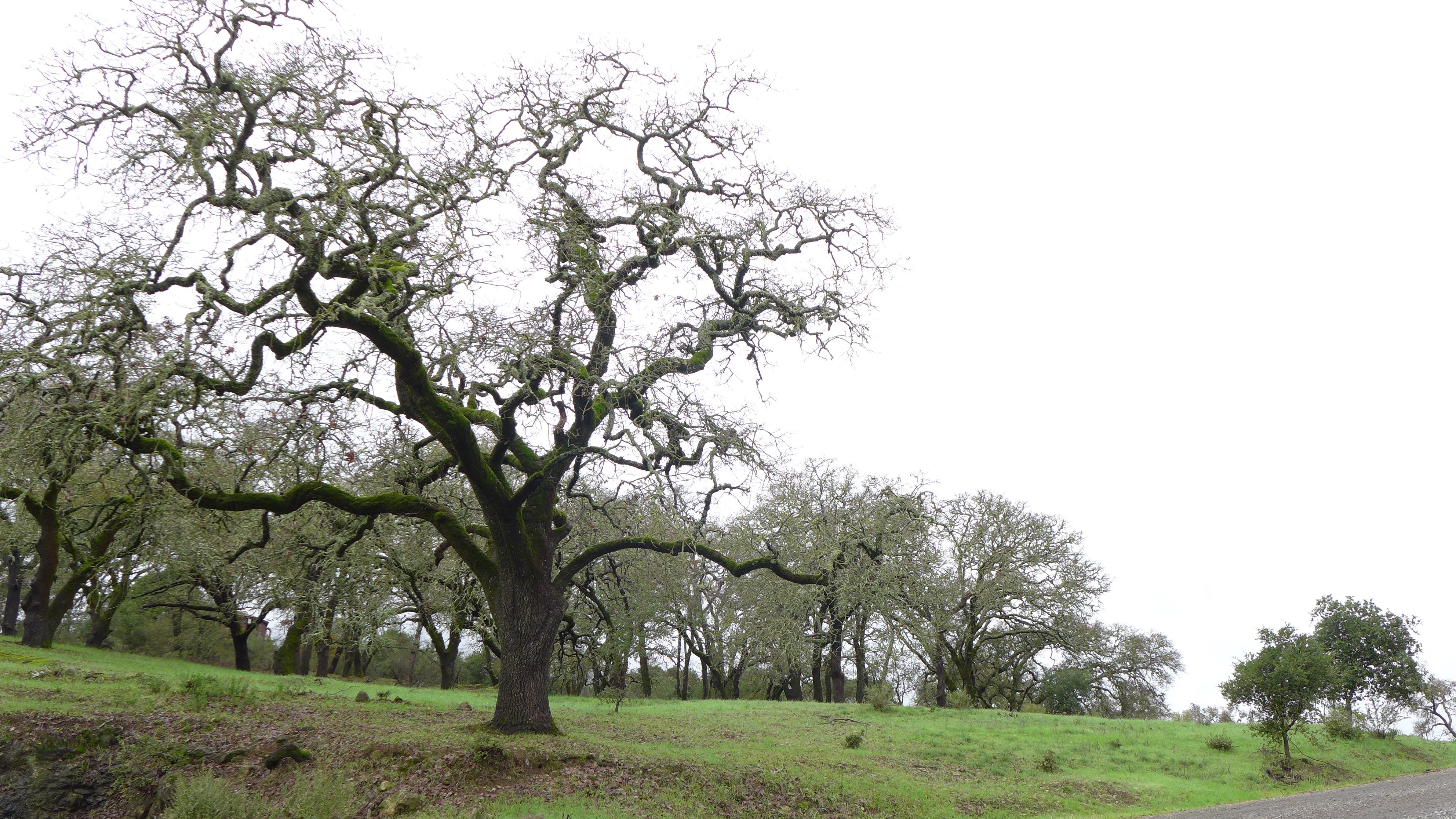
A conversation yesterday with Mary, 98, we were talking about the 275 year old Valley Oak that tumbled over during our recent storms. Mary was born not more than a mile from where she lives now—and she is a storehouse of acquired knowledge and experience. She surprised me by saying, “Valley oaks often uproot along with (non-native) Eucalyptus trees.” They blow over in supersaturated soils during storms. She then said, “I have never seen a Live Oak topple that way.” And what is interesting is that Live Oak (Quercus agrifolia) is susceptible to sudden oak disease, but not Valley Oak (Quercus lobata). They both grow in interior valleys of California. Here is some wisdom based on experience and I am inclined to think I would rather have a live oak near my house than a similarly aged valley oak. Many of our very old valley oaks are under stress from years of drought and they are past the prime of their life cycles. Wisdom born of experience…
SACRED SPOTS AND ANCIENT WISDOM
St Andrews Well, Stogursey, Somerset England
Jean and I have frequently talked about the wisdom of the past and how previous empires and civilizations were built on the foundations of earlier human knowledge. Holy sites are one place that there seems to be some memory of earlier incarnations. Holy wells and springs may go back thousands of years, or more. Many churches are built upon earlier “sacred sites.” A Celtic place of worship may have become a Roman one followed by an Anglo-Saxon church and finally a more modern one. The same is true of Celtic Hill forts often an earthwork located on an elevated location or rise for defensive advantages. They are typical in Bronze and Iron Age Europe. The Romans later built upon them and called them “oppidum.” As I have previously written about the hill fort at Lugdunum (Lyon, France) it is located well above the banks of the Saône River. How many of our cities and towns around the world are built on the banks of rivers , that periodically flood? What wisdom has been lost? The historical memory of nature that we largely ignore today.
But like a child’s game of telephone over centuries and millennium some of the knowledge and wisdom is lost, discounted, or simply ignored. I can’t help but muse on how much is lost in the onslaught of the “information age.” Especially when things move so quickly and anything old and ancient is dismissed as irrelevant. In humankind’s rush to control nature we have forgotten so much. We ignore nature’s wisdom at our peril.
BEAVERS
Beaver dam and Aspen trees
Some of you know that I have long been interested in beavers. It began in my teens when I spent a year in Pennsylvania where I became well acquainted with a beaver colony on Cowley Run, near Sizerville State Park. I knew nothing about beavers when I began, but scoured the local library for everything I could find. And then spent many hours watching them as they came out at dusk. And in an interesting twist of fate my son, a Professor at Utah State University, is a fluvial geomorphologist with a special emphasis on river restoration. He with many others turned to beavers, known as nature’s engineers. Known as a keystone species this lowly rodent holds great promise in helping to rejuvenate our arid wildlands and help prevent soil erosion, flooding and provide protection from fires. Nearly hunted to extinction for their pelts, these fascinating creatures have much to teach us. For a great read I recommend Ben Goldfarb’s Eager: The Surprising, Secret Life of Beavers and Why They Matter. I think of my son’s elderly friend Jay whose knowledge of the history of his ranch in Idaho led to his quest to reintroduce beavers and let them set the land right again.
History and nature have much to teach us. From how we are to survive cataclysmic events from sea level rise to floods to fire storms. Nature and humans have seen these things before. Rather than demand nature to agree to our terms, perhaps we need to be be informed by the wisdom of our past. There’s another book I recommend specifically about water by Erica Gies, called Water Always Wins. we need to see ourselves not as wiser than nature—not wiser than the civilizations before us, but rather a part of a continuum. It’s not the latest IPhone or pursuit of worldly goods that will improve our lives. The oldest among us and their wealth of experience and knowledge are being squandered and ignored. What can they teach us before they are gone?
“Those who cannot remember the past are condemned to repeat it.”
– George Santayana, The Life of Reason, 1905
As a genealogist and family historian I have always valued what my elders had to teach me. Many of my contemporaries could never understand that. Now reaching elder status myself, I wonder how much of what I have learned will be lost. I remember as a young teen after my grandfather died, how much of his wisdom I had not gained. How we each start anew chasing our tails rather than building on the hard fought knowledge of our elders. I don’t know how to fix that—but I know in my bones that it is of critical importance to our survival.
Winter Solstice 2022. A time of year where I am keenly aware of the changing patterns of light and dark. The Celtic origin myths and the lives of the Celts were much more attune with the natural world than we are now. How they lived and even their imprint upon the earth is very different than that of people today. Perhaps the allure of the Celts, or indigenous populations worldwide, is their closer connection with mother earth. I am aware of the importance of observation of our natural world. How living closer with nature, rather than trying to dominate and impose our will upon her, may be what separates the civilized from the uncivilized in what must be the great irony of our time. In that case perhaps it is better to emulate the latter.
The first thing to know is the Celts are not a race or a tribe of people. They are a culture composed of many tribes of people who spoke a shared Celtic language. At one time, celtic speakers encompassed a very broad area across Europe. The Celts were not mysterious to themselves, but were to some with whom they had contact. They did not leave written histories, so we are dependent on the writings of the Greeks and Romans for the little we know. And this is skewed in much the same way the Pilgrims viewed the indigenous people of America.
Rainbow cups courtesy of Numisantica Creative Commons
I can’t help but note the similarities in how the invading people, viewed the natives as primitive, barbarians and savages. The Celts, like Native Americans or indigenous peoples built mainly in wood or thatch or animal skins, so little of their communities remain. They did not have an early written language that survived. Unlike the Egyptians, Greeks, and Romans who built out of stone and left voluminous histories the Celts and Native American history is recorded in myth and song. Like the story of the three little pigs it was the house of brick that survives. When my son lived in Wales I learned that the Welsh or Cymraeg language survived attempts to eliminate it, through singing Cymraeg in church. What survives, and how it survives says much about the need of dominant cultures– to destroy the heroes of the culture they attempt to eliminate. Destroying structures and icons of the past is part of an assimilation process designed to erase the previous cultures power.
We see this in religion as well as material structure. Remove the statues of the saints or gods from churches and sacred shrines, replace pagan holidays with Christian ones. Build your forts, palaces or churches on the sacred spaces that came before them. It is such an ancient pattern that we have a word for it acculturation. But the word hardly suffices to embody the violence and the attempt at historical erasure this often encompasses. The world of the Celts is mysterious because so little of it survived and because often there exists a concerted effort for its history to be obliterated. The wisdom traditions of so many “primitive” people may hold keys to our own survival as we face major climate change. Humans have faced such events before.
The Celts as a culture followed earlier cultures, but generally are said to have arisen in the Iron age from the Halstatt culture about 750-450 BCE and from thence to the La Tene culture about 450 BCE to 50 CE. Where we have the most data on the Celts is from DNA and early burials. The Celts did not become a culture in isolation, rather they are part of extensive trading network that showed the in and outflow of many different cultures. You see this in the development of Celtic coins which were heavily influenced by the Greek and Romans. The Celts operated under a barter economy and did not use money in the traditional sense. They began minting their own coins in about the 250 BC and were fashioned after the familiar Greek coins. What they called the coins, their denomination and value and the symbols they used can only be guessed at. They do show many of the stylized elements found in other Celtic artefacts with a strong emphasis on nature and curvilinear designs. As the Romans moved into formerly Celtic lands, Celtic coins became more commonplace and continued to be minted until their defeat by Rome.
I always think about where indigenous people built their communities. Not in the floodplain or forests, but the Celts built dunon, or oppida as the Romans called their hilltop forts, usually built on low hilltops, adjacent a waterway, but not in the mighty river’s path. Observing and living in close contact with the earth you learn how to stay out of harm’s way and learn how to create defensible space. According to Graham Lobb in his book ‘France: An Adventure History’; the Celts built impenetrable hedges by notching tender sapling branches together on either side and threading them through with brambles and thorns. These hedges if you recognize them today, are all that remain of the Celts of Gaul. His description seems very much the description of a hedgerow anywhere in Britain.
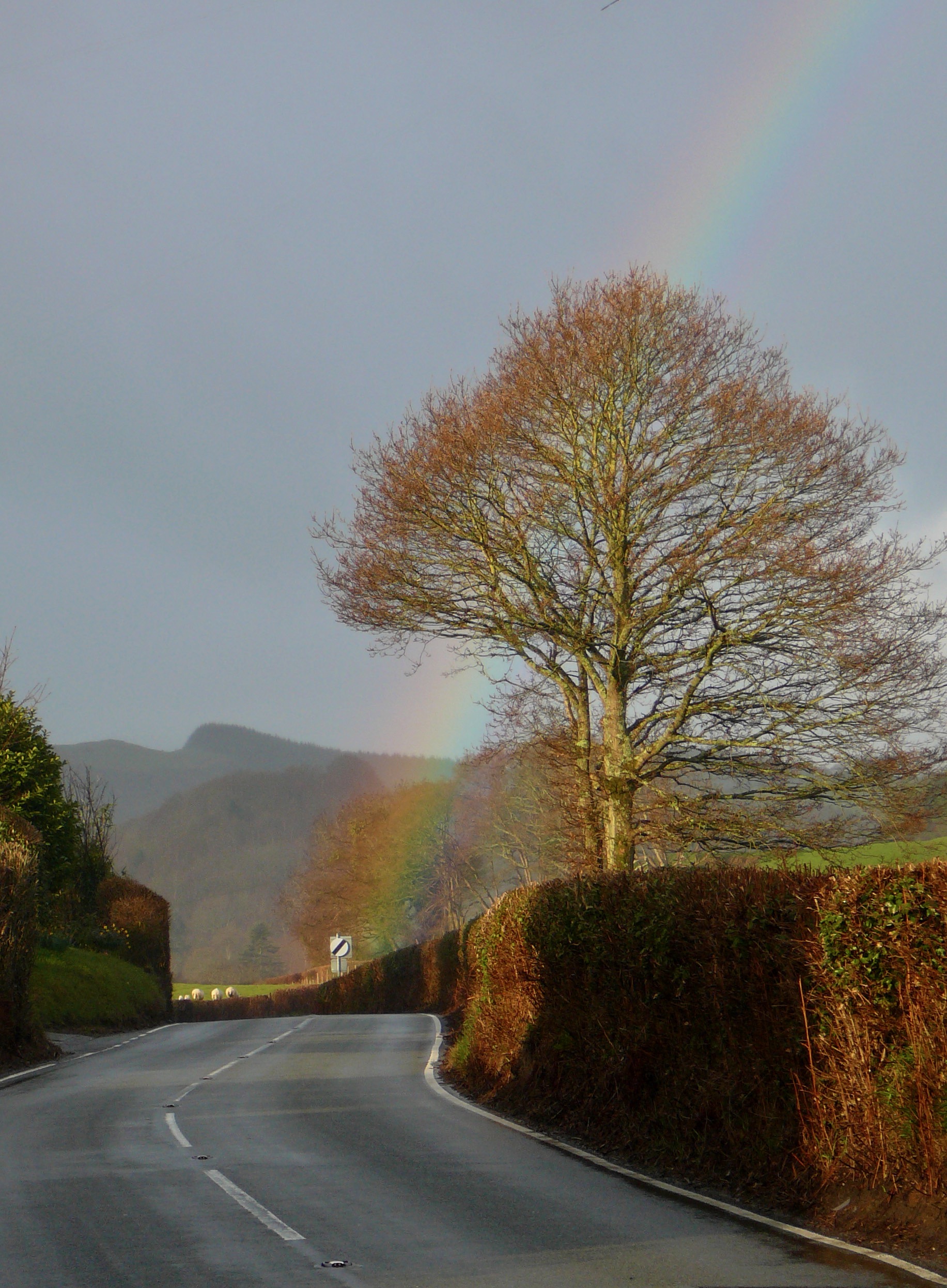
The road to Aberdyfi with hedgerow and rainbow
The patterns of so called primitive cultures informs practices of today and we seldom take note at all. A “sacred spring”Camp de Cesar’ actually a Celtic dunon, an ancient Roman road built upon an earlier Celtic one. In the ancient game of subsuming it is likely that the later culture built upon something of value and then forgot where it came from. On this auspicious day let us not forget that we, and everything we have ever built, is due to the careful observation of people for more attune to mother earth than we are.
I am the wind on the sea; I am the wave of the sea; I am the bull of seven battles; I am the eagle on the rock I am a flash from the sun; I am the most beautiful of plants; I am a strong wild boar; I am a salmon in the water; I am a lake in the plain; I am the word of knowledge; I am the head of the spear in battle; I am the god that puts fire in the head; Who spreads light in the gathering on the hills? Who can tell the ages of the moon? Who can tell the place where the sun rests?
This may meander a bit but there is a point. This post was provoked in response to a Letter from the Society for American Archaeology and a recent article in The Smithsonian Magazine. I will return to those later. This post is dedicated to the memory ofMarija Gimbutaswho was a Lithuanian archaeologist who back in the 1950’s believed the ancient Europeans and their indo-european languages had migrated from the Eurasian Steppes to Europe. DNA evidence has proven her theory to be trueeven though it was largely discredited at the time.
A standing stone–looking like hands in prayer at Callanish, Scotland
Background
I am the child of parents who adored science. My father was an electrical engineer assigned to the nuclear chemistry division of the Lawrence Radiation Lab of the University of California, at Berkeley. He built the equipment that allowed scientists to do what they wanted to do. He worked with the team on the discovery of Element 102 (Nobelium), on monitoring radon in groundwater to see if it might predict earthquakes (it didn’t), on analysis of the purported Sir Francis Drake’s Plate of Brass (it was a forgery) and on the analysis of dating ancient pottery shards. My mother was originally majoried at Berkeley in Architecture, took a leave of absence and returned twenty years later to get her degree in Physical Anthropology. At the time DNA was just beginning to be used in Anthropological inquiries. I tell you this not to impress, but to assure you I am no stranger to scientific inquiry. I also have a son who is a scientist. So although I myself ended up in the social sciences, I am not stranger to the scientific method and logic.
“The aim of science is to seek the simplest explanations of complex facts. We are apt to fall into the error of thinking that the facts are simple because simplicity is the goal of our quest. The guiding motto in the life of every natural philosopher should be, Seek simplicity and distrust it.“
Alfred Whitehead
One of the most wonderful parts of my education, as a re-entry student, was a class I took from the noted Civil Rights leader, Mario Savio, famous for his “Bodies Upon the Gears” address given at Sproul Hall at the University of California, Berkeley on December 2, 1964. Mario was a Physics teacher at Sonoma State University, and I came to know him through a seminar he led called “Science and Poetry.” As we learned in his class, there was a time when these disciplines were not separate. The way we humans described the world to ourselves was infused with the poetry and spirituality, that for many, still gives life meaning. Mario was one of the gentlest people I have ever met, but also one of the most passionate. I bring this up because he was a person who could straddle the chasm between Science and Art. I loved that class, and Mario, because he made it okay to draw on both hemispheres of our brain. To not chop up the world into rational scientific inquiry on one side and intuition and art on the other.
“The intuitive mind is a sacred gift and the rational mind is a faithful servant. We have created a society that honors the servant and has forgotten the gift.”
Albert Einstein
Orthodoxy
If you know me or have read me for any length of time you will find I bristle at ultimatums and rules. I eschew many organizations and even certifications because the elitism, group think and politics of such groups I find can be bothersome. I know these organizations do much good and are often quite helpful—however they can also be very parochial, elitist, and expect a certain adherence to their brand of orthodoxy. And frankly I just can’t abide that, whether it is in genealogy, genetic genealogy or related fields of anthropology, linguistics, archaeology, astronomy etc. Much of the progress in the world has been accomplished by those “thinking outside the box.” Those that dared to explore other reasons for things being they way they appear to be. And here is the kicker, the scientific method is “supposed” to be an empirical method for acquiring knowledge that involves careful observation, rigorous skepticism, a hypothesis or conjecture seeking to explain what is observed and then constant testing and revision of said hypothesis. But that is not what happens in fact. Whenever someone comes up with a completely different explanation they are often attacked and disparaged. The level to which this happens varies greatly depending on the specifics. There is also the politics and the competitiveness that enters the mix—that is frankly the antithesis of good science. Although not the subject per se of these three books, the reactions to them by the scientific community and the stories they tell, illustrate my point.
Neanderthal Man: In Search of Lost Genomes by Svante Pääbo
Who we Are and How We Got There by David Reich
Code Breaker: Jennifer Doudna, Gene Editing, and the Future of the Human Race by Walter Isaacson
So what got me to write this post was a Letter by the Society of American Archaeology to Netflix about a TV series called AncientApocalypse hosted by Graham Hancock. In the series Mr Hancock explores ancient civilizations around the globe and posits many questions and alternative theories than posited by main stream archaeology and he points out the unwelcome reception his ideas have garnered. And while I am not writing to discuss the merits of his program or his theories I did find the series intriguing and came away with a very different impression then the authors of the letter to Netflix. Quoting the letter “This series publicly disparages archaeologists and devalues the archaeological profession on the basis of false claims and disinformation.” When I read that my first thought was: “methink thou does protest too much.” It goes on to make claims that I as a viewer simply did not feel justified, including the claim that “the theory it presents has a long-standing association with racist, white supremacist ideologies; does injustice to Indigenous peoples; and emboldens extremists.” Well I did not come away with that at all— And my feelings on the subject has always been that cultures that have been deemed as “primitive” are seldom so—but viewed that way because historians, archaeologists etc find it “easier” to explain in the absence of recordings of their oral history (rather than written) and building in transitory materials (wood vs stone) then it is easier to call them primitives. This never makes sense to me. Vast complex civilizations just don’t rise out of nothing. I do not believe they “need” a white superior culture to have educated them (even if that is what Graham believes). And in my limited experience almost all human endeavours, build on earlier ones. Just because we lack evidence does not mean that they did not exist. I expect years from now more will come to light. I can separate someones theories about what they think may have happened from the evidence we have in hand. I also think evidence is often misinterpreted.
In the excellent book by Lisa Brooks: My Beloved Kin: A New History of King Philip’s War she draws on a different interpretation of the historical record in early new England referring directly to the original documents and she draws out a much more complex narrative of the clash of cultures between the indigenous people of New England and the European Colonists. And that book struck me very clearly that in making assumptions about what we don’t understand we so clearly miss the mark. Savages and barbarians are people who do not share our culture. The dominant culture sees what it wants to see, which is precisely my concern for orthodoxy in scientific endeavours.
In my last couple of blog posts you may have read about the Roman settlement of Lugdunum (Lyon, France) built upon the earlier Celtic Hillfort. Or the Cathedral of York built on the earlier Roman Basilica which I would venture to guess may have been at the site of a Celtic shrine or sacred place. Traditions matter and they are often subsumed into the dominant culture or religion of the invaders or victors. It doesn’t much matter to me whether the scientific evidence exists yet, I basically understand most of what humans do has some logic or sense to it. Sometimes difficult for us thousands of years later to decipher, but for me it needs to make sense. So if someone makes educated guesses about Stonehenge or the Serpent Mound in Ohio I think that’s absolutely fair game. And I think scientific orthodoxy cuts off their noses to spite their faces in dismissively being unwilling to entertain such ideas. It’s for that same reason it never made sense to me, that Homo sapiens (modern man) was alleged to never have mated with Homo neanderthalensis. Due to the work of Svante Pääbo and associates we know that they did and those with Northern European ancestry carry that Neanderthal DNA. Some of my genealogical discoveries and even some genetic ones have been based on hunches on intuition. They are not always right—but they often lead to unexpected discoveries. Being open to that is what I advocate.
I do not wish science to become ungrounded in evidence, far from it. But I am equally concerned that scientific orthodoxy rejects out of hand that which doesn’t “fit” into their current theories. So I was delighted today to see the article in Smithsonian Magazine: Document Detectives Use Smudges and Bloodstains to Investigate the Past Proteins left behind on historic artifacts are revealing centuries-old secrets. In the article Pier Giorgio Righetti, an Italian chemist, describes the response to his work with Gleb Zilberstein, formerly of the Soviet Union, as a “a barrage of criticism” questioning their techniques, their conclusions, their legitimacy. How many times do we have to see this to not get that the dominant culture and prevailing views are unsettled by anyone or thing that questions their “authority” or suggests a new way of doing things? I personally did not feel that Graham Hancock was disparaging archaeology, far from it; he was however protesting the treatment of his ideas by archaeologists. Whether he is crackpot or genius or something in between is not the point for me—it is whether the scientific orthodoxy is so keen on maintaining submission within its ranks, that it becomes itself a sort of religion and shuts down other points of view. I found his series interesting even when I didn’t agree with his conclusions.
Dissension
I read broadly and I like cross disciplinary approaches to complex problems. I am not threatened by the most outlandish theories or the most benign ones. I tend to find myself agreeing with authors and scientists that posit explanations which are consistent with what I know about how people behave. Past peoples —and many of them so called savages or barbarians acted in ways that were consistent with their culture and understanding of the natural world. They were often keen observers of the natural world and this may have led to elaborate attempts to pay homage to it and the gods that they engendered. Predicting when the summer solstice would arrive and marking that in a temple or stone circle seems a completely reasonable thing for humans to pursue. It demands a very close attention to the natural world, detail and history which belies the “primitive” tag so often given to early peoples. Similarly accusing people outside of the orthodoxy as unscientific and not credible seems more self serving than saving us from charlatans.
Rollright Stones near Long Compton, England with Druid sculpture in background
DNA and new discoveries are doing an excellent job of overturning many a sacred cow. Perhaps scientific visionaries that see a thing before the proof exists deserve their due. Perhaps it is my inherited penchant to root for the underdog and celebrate the discoveries of those who dared to be different that allows me to be generous with finding value in some of the more controversial books or theories. I purchased a few years ago, a book by Graham Robb: Mapping the Lost World of the Celts. And while some of the theories he posits are unconventional and I remain skeptical, the book itself is a fascinating read with incredible detail and information. One reviewer writes “A work of colossal ignorance and pseudo-academic arrogance” and yet another writes “Put aside suspicions of grand conspiracies and dare to enter the web Robb weaves here. It is an intellectual journey well worth the effort…” And I have to say it is a book I return to again and again for its wonderful maps and history. It is not necessary for me to agree with all the authors conclusions to find value in it. So perhaps this is a very long winded way of saying that science is better when infused with art and intuition. For you who must stay inside the lines and never question authority—sorry to have wasted your time. But those of you who know exactly what I am saying and finding yourself nodding in agreement—know we are not alone. And as long as I am going to open myself up to criticism I might as well mention that intuition is often the providence of women and disparaged by the patriarchy. I don’t think this is an accident.
Addendum I wrote on Mastodon:
I do not understand why some in the scientific community, are almost relgious zealots when it comes to defending their scared cows. A professional or amateur can be wrong about 9 things & right about one. And that one thing can be the key to unlocking universes. Discrediting All of someone’s work (or worse yet personal attacks) in a dismissive, arrogant way is antithetical to the scientific method but sadly you see this as the standard by which so much science is practiced.
At Family Tree DNA many of the Haplogroup projects are for very large Haplogroups (quite old) including thousands of members such as Haplogroup Q or R1b. The project I started is based on a single Y SNP that occurred in a man about 4,000 years ago who is FGC22501+, a descendant of the huge Haplogroup R1b. At the time of its founding in 2015 we started with 10 men who were FGC22501+ and have grown to nearly 170 FGC22501+. We have been very lucky to have identified ancient remains that are FGC22501+ stretching back about 4,000 years. We can watch as the descendants of the first FGC22501+ spread across Europe. The major parent SNPS (Clades) are U152 > L2. U152 is estimated to have occurred about 2700 BCE and L2 is one of at least 14 subclades of U152. L2 is estimated to have occured about 2500 BCE. Not long after that the L2 SNP occurred (maybe a couple of generations) the FGC22501 SNP occurred.
What this means is we have the unique opportunity to study how this mans YDNA spread throughout Europe and beyond. This is a screenshot of the map I maintain of earliest known FGC22501+ individual’s Most Distant Paternal Ancestor. I have annotated it with approximate birth or death dates of FGC22501 Most Distant Ancestors. I have circled the earliest three which is likely in the cradle area of the earliest FGC22501+ individuals.
Annotated Google Map of FGC22501+
In the first 1700 hundred years the spread of FGC22501 ranges from 22 to about 175 miles. So not really all that far. But then it starts spreading 700-1000 miles or more. As mentioned in previous posts the earliest FGC22501+ individual was probably part of the early bronze age, Únětice Culture. Based on the geographic areas they lived in they were most likely later part of the celtic Boii tribe, but descendants may have been associated with any number of Celtic Tribes.
When they project was started we had no idea where it would lead or that so many men would share this SNP. But it does lead to many a history lesson as my previous blog post showed. Here’s an abbreviated time line.
TIMELINE within R1b
M173 SNP c. 20,000 BCE
M343 c. 17,000 BCE
U152 2600 BCE
L2 2500 BCE
FGC22501 2450 BCE
FGC22538 AND Y37744 both below FGC22501 and formed about 2250 BCE
With the DNA testing of more and more ancient human remains we will hopeful get even finer granularity into the history of this SNP and where it traveled.
“We shall not cease from exploration, and the end of all our exploring will be to arrive where we started and know the place for the first time.”
T.S. Eliot
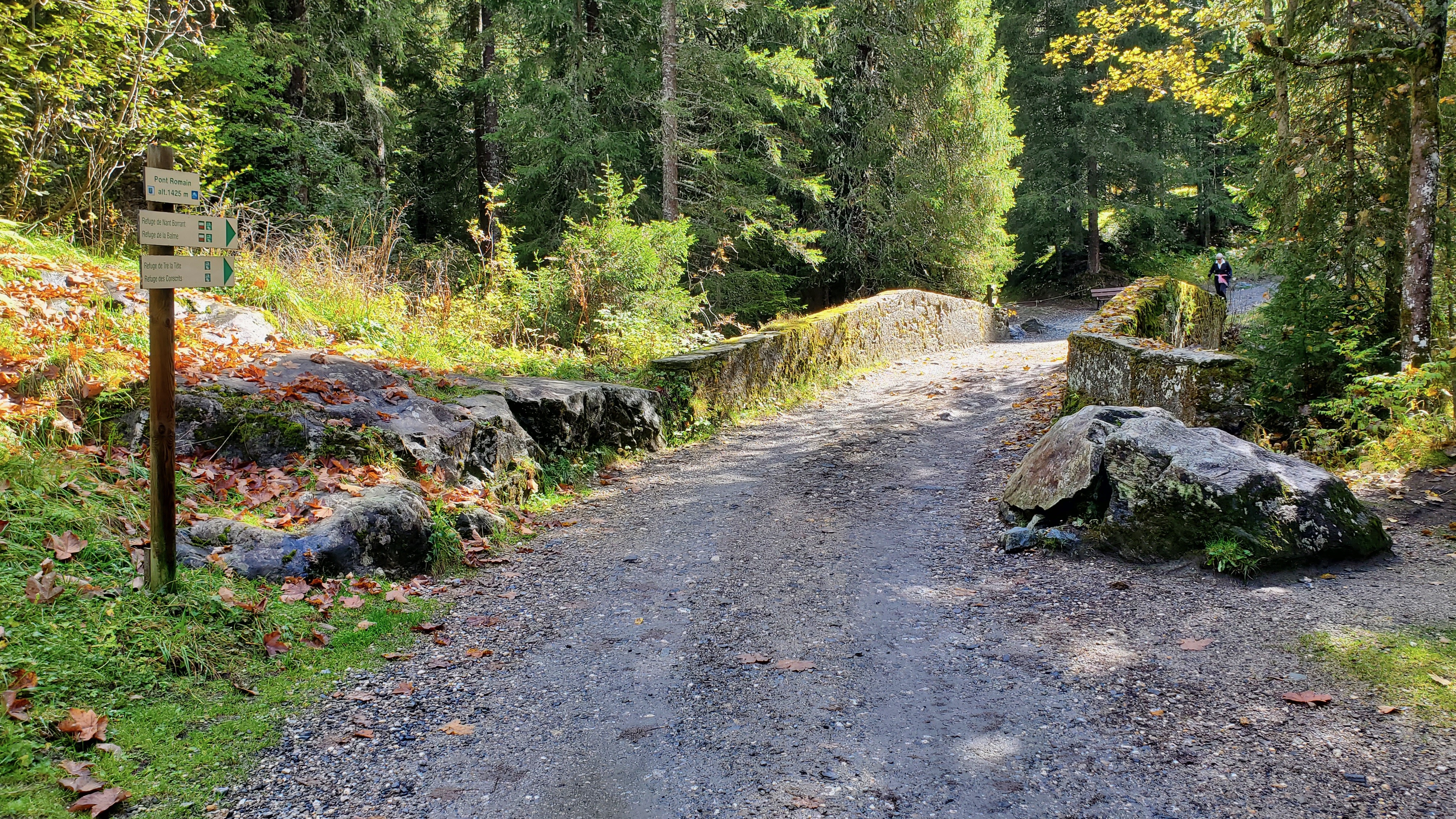
I recently wrote about the unexpected connection between where I stayed in the French Alps (Saint Gervais near les Contamines and the Roman Road and Bridge) and the Roman occupation of Lyon known as Lugdunum by the Romans. Basically, we were following in the footsteps of Roman armies traversing the alps and making their way to Lyon but at the time I had no idea.
Roman Bridge
Along the way the Romans conquered Gaul and founded their capital of Lugdunum (now Lyon). Then a few days ago, Vanessa, a fellow administrator of the YDNA U152-FGC22501 Celtic project, asks me to watch videos The Mystery of the Headless Romans, and another The Roman Catastrophe Of Teutoburg Forest: Varian Disaster. The original speculation was that these were decapitated Roman gladiators of York. They are of interest because one of them, 6Drif-22, is Y-DNA FGC22501+ (a very old cousin of my husband from whose YDNA, the SNP or mutation, FGC22501 was named). The video recounts another theory on who they were and how they came to be decapitated. So I am watching the video (especially starting around minute 37) when the explanation gets to the Roman Emperor, Caracalla, who along with his brother Geta inherit the throne from their father, Septimius Severus, who died at Eboracum (known today as York, England). In the video Roman expert, Anthony Birley, believes that the decapitated skeletons of York were high ranking individuals and political enemies of Caracalla and that they were brutally decapitated to send a strong message. In the writings of the Roman Historian, LuciusCassius Dio (c.155 – c. 235), he recounts how Caracalla after the death of his father, had his father’s doctors, chamberlains, secretaries, and even Caracalla’s own tutor beheaded in a public execution. I note that the established date range of 100-400 AD with the date of Septimius Severus death in early 211 is consistent. However, what really catches my eye in the video is an image of Caracalla, which seems oddly familiar.
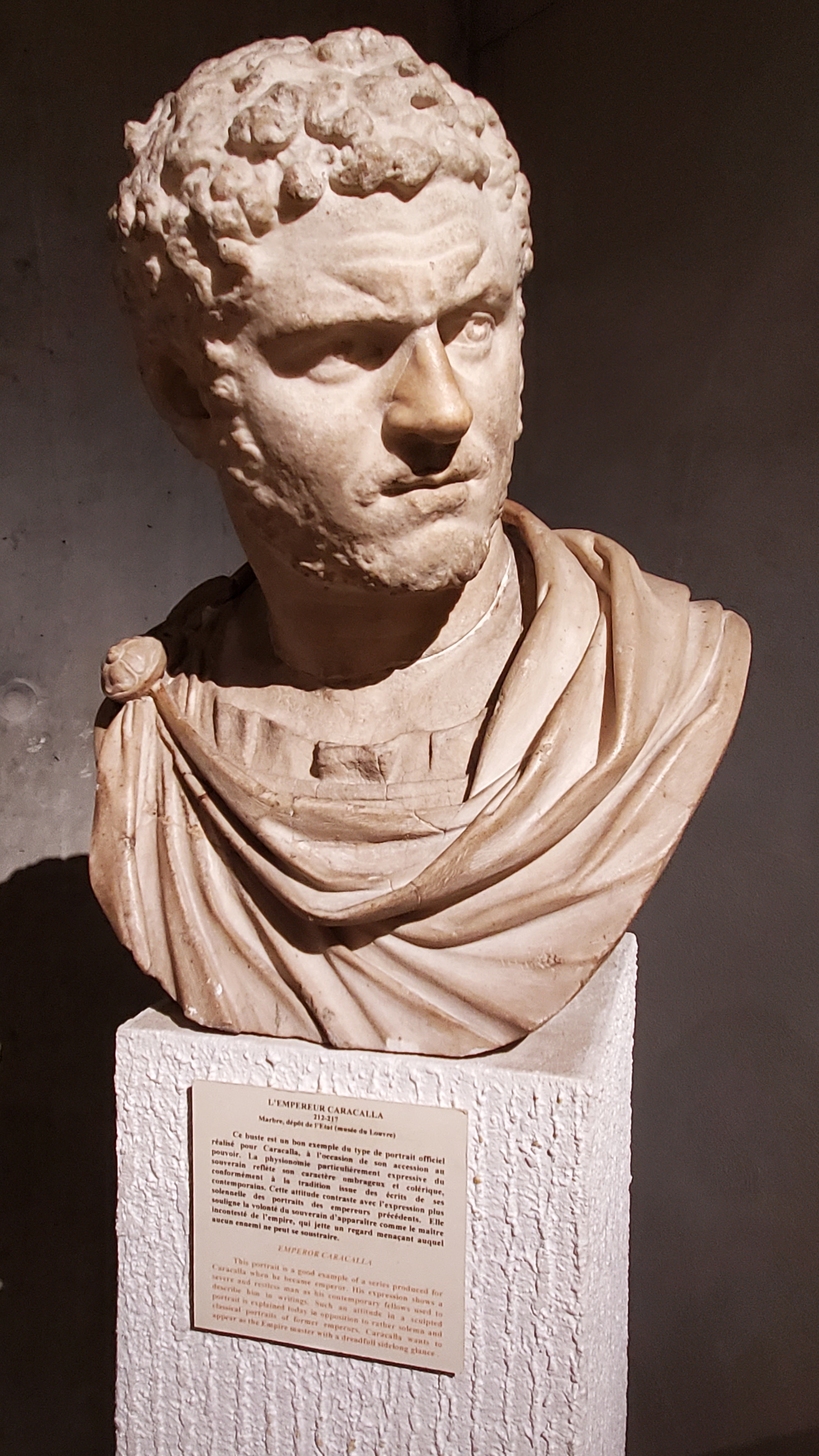
So I go to the photos I took in Lyon at the Lugdunum Musee et Theatres Romains (The Roman Museum of Lyon) and there it is! A photo of a bust of Caracalla. I had taken the photo, as he reminded me a little of my son. It is the only photo of a bust I took although there were many in the museum. What are the odds?
Caracalla ruled 208-211
And there’s more! Caracalla is the son of Lucius Septimius Severus and his second wife Julia Domna. His father Severus defeated Albinus in the year 197 at the Battle of Lugdunum (Lyon) in Gaul said to be the bloodiest, largest, and most hard-fought of the clashes between various Roman forces. So Septimius Severus captures Lyon. And get this, then growing restless, eleven years later in 208 he travels to Britain, strengthening Hadrian’s Wall and reoccupying the Antonine Wall. In 209 with an army of 50,000 men, he invades Caledonia (now Scotland) but does not succeed in capturing it. In an 210 he contracts a fatal illness and dies in early 211 at Eboracum (York). Where we come full circle with our FGC22501+ Skeleton. More about that here and here.
Below are coins depicting father and son.
Lucius Septimius Severus DenariusCaracalla Denarius
There have been about 70 Emperors of the Roman Empire and yet these two were to be my guideposts. Now you might be thinking that’s not so much of a coincidence, however the number of large European cities I have visited is small and even smaller is the number I have explored on foot. There are 8: London, York, Edinburgh, Exeter, Warwick, Ulm, Heidelberg and Lyon. The reason I was in Lyon was that my son was there on sabbatical. The reason I was in the Alps, was after 35+ years of watching the Tour de France, I had always wanted to go. While looking for a place to stay, I found one in Saint Gervais that I liked. Once I made the reservation I looked at hikes and points of interest and found a hike to a Roman Bridge via a Roman Road. I had already determined that my trip would not place me in proximity to any of my French ancestors or to the possible Celtic stronghold of FGC22501 which is more to the north near Toul (Tullum Leucorum) and Trier (Augusta Treverorum). So I came to these places in France by happenstance and not by design. I did not expect to find a genealogical connection there. That’s what makes the disparate elements coming together all the more compelling.
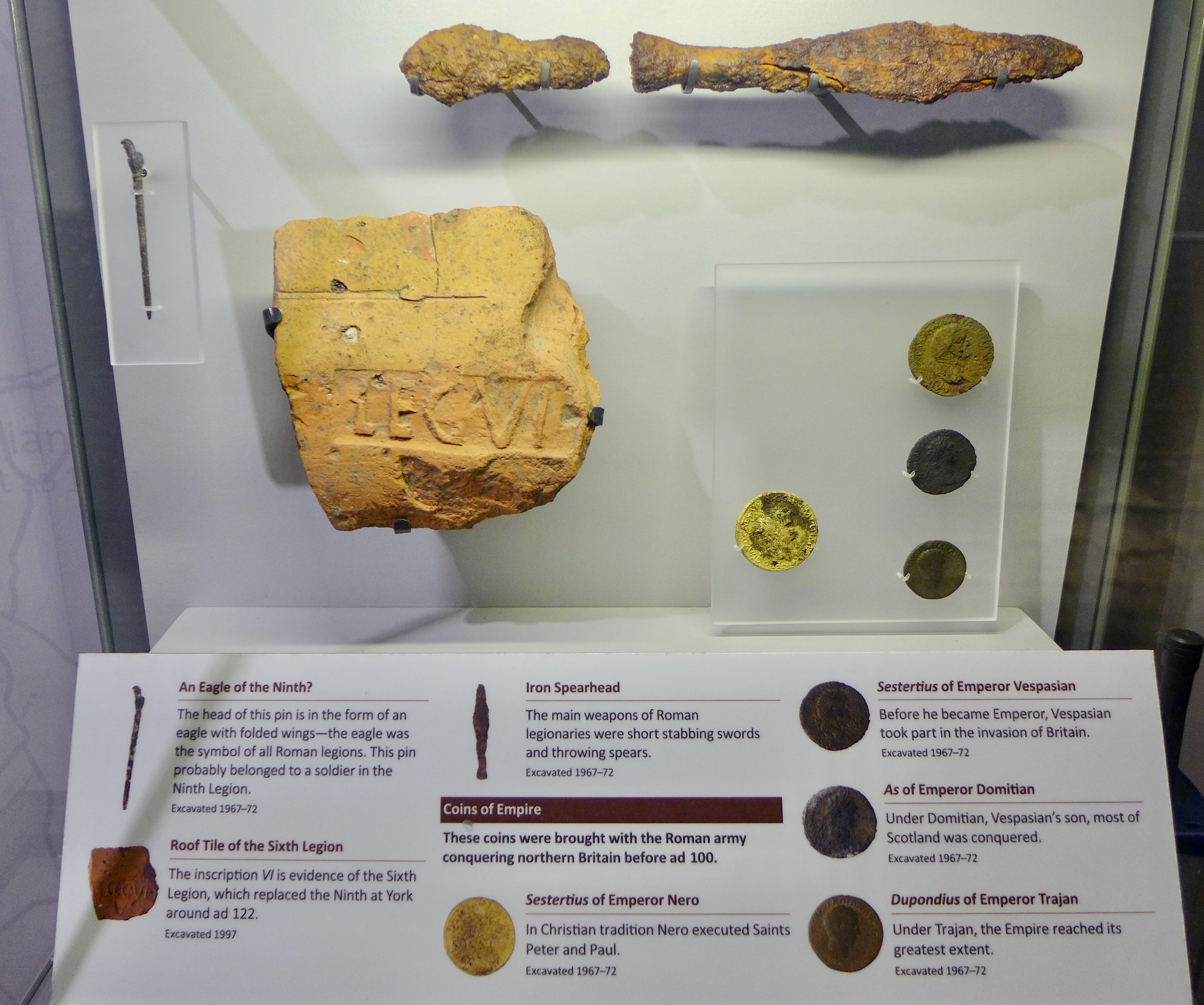
This uncanny intersection happened before, when I visited the city of York in search of a possible more recent ancestor who was incarcerated at York Prison. While in York I visited the lovely Cathedral and found that it was built on top of the remains of a Roman Basilica and is visible in the undercroft of York Minster. First is a Roof tile of the VI Victrix who joined with Severus to attack Caledonia and other artifacts of the Roman occupation.
Roof Tile of the VI Victrix Legion & other items Undercroft of York Cathedral 2015
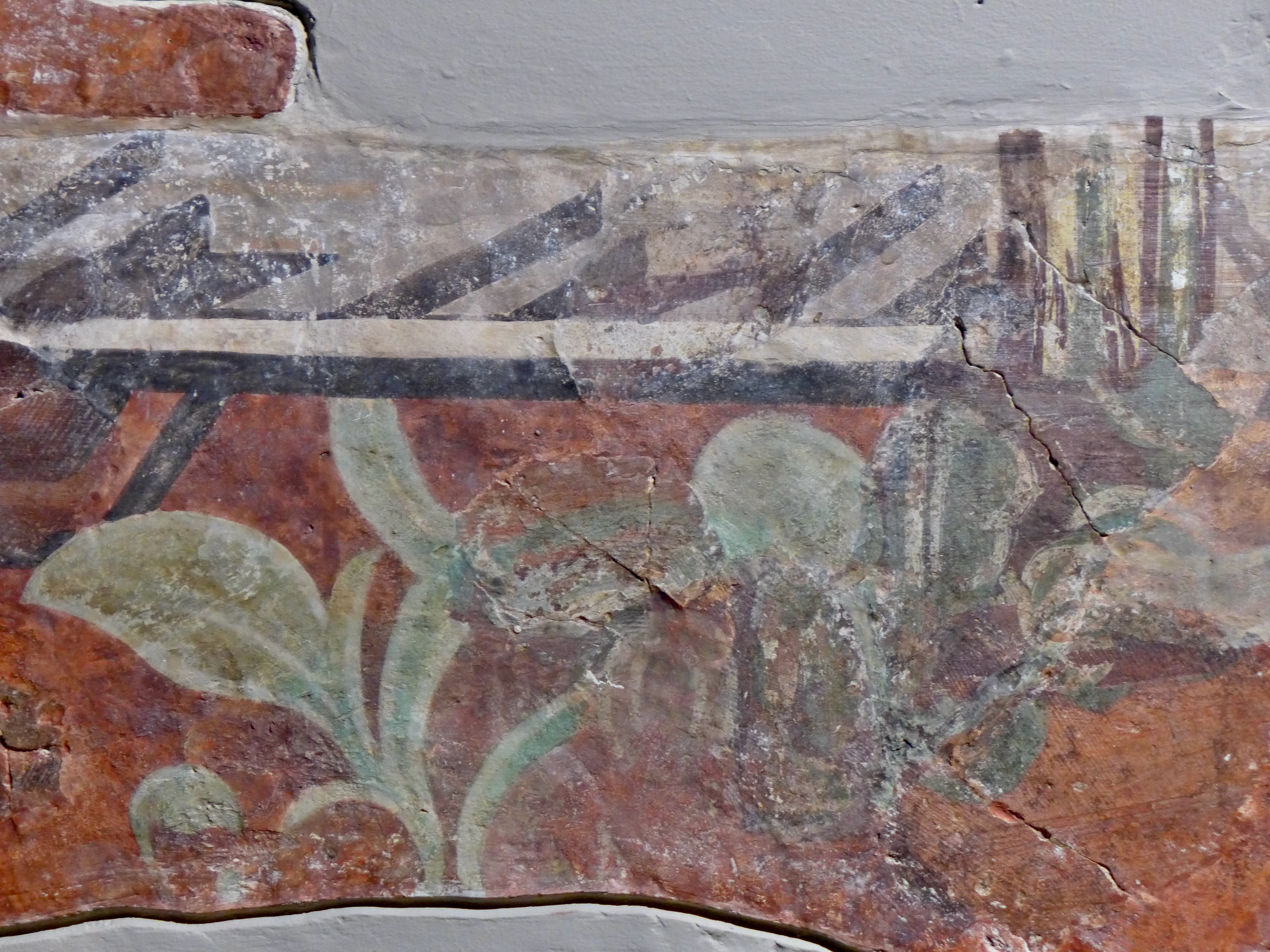
This is a remnant of a mural in said Basilica I photographed while there.
Part of a Roman Mural in Basilica under York Cathedral
TIMELINE
2300-1600 BCE (before Current Eon) a man dies in Prague, Czech Republic (about 4,000 years ago) and he (known as I7202) is positive for the mutation FGC22501 (this is the earliest known man having this mutation)
290-250 BCE two of his direct Y descendants also FGC22501+ die and are buried about 28 miles NW of Prague in Radovesice, Czech Republic. So in 1300 +/- years the DNA has not moved very far.
145 ADLucius Septimius Severus is born in Libya, Severus is a Roman officer under Marcus Aurelius and later Marcus’ son Commodus
165Roman Legion I Italica is founded by Marcus Aurelius when Rome fought the Parthians and the Germans. His emblem was the Capitoline she-wolf.
193 Severus along with the Italica marches on Rome and seizes power after the death of the Roman emperor Pertinax and kills Dudius Julianus the then emperor, to become the new emperor.
197Severus founds the Roman Legion II Parthica expands the empire capturing Gaul for himself in the bloody Battle of Lugdunun (Lyon) where he fights his powerful rival, Clodius Albinus, the Roman governor of Britain.
198Severus proclaims his son Caracalla co-emperor
208 In the Spring, Severus travels to Britain where he gathers 50,000 men in an attempt to conquer Caledonia (Scotland) Drawing on the Roman Legions: II Parthica (his), VI Victrix from Eboracum (York),II Augusta from Caerleon, Wales & XX Valeria Victrix from Chester.
209Severus makes his younger son Geta co-emperor with Caracalla
210Severus becomes fatally ill and dies in 211 in Eboracum (York) never realizing his conquest of Caledonia
211Caracalla and Geta succeed their father as co-emperors but that is short lived as Caracalla has his brother murdered by the Praetorian Guard
213Caracalla campaign against the Germans
100-400 estimated death of the skeleton 5Drif-22 (FGC22501) perhaps executed by Caracalla and buried outside the city of Eboracum (York) so that would fit
November 2014 my husbands Y Elite DNA test identifies and names the SNP FGC22501
April 2015 I visit the city of York (Eboracum) and the remains of the Roman Basilica in the undercroft of York Cathedral. About 2 blocks away an excavation is taking place unbeknownst to me
2016 one of the skeletons exhumed in the excavation, 6Driff-22, tests positive for FGC22501 and the results are published
2022 recently Y DNA analyzed skeletons from Radovesice, Czech Republic I14974 and I15951 test positive for FGC22501
October 2022 I travel to St Gervais in the French Alps and hike the Roman Road to the Roman Bridge near les Contamines
October 2022 I visit the 2 Roman amphitheatres and the Roman Museum in Lyon (Lugdunum) and take a photo of the emperor Caracalla because it reminded me of my son
November 2022 I watch a video mentioning Caracalla as the possible murderer of the 6Drif-22 skeleton in York
Random elements tied together through history and DNA tell a story of human civilizations and their movements. I did not set out to discover this story, but it seems it insisted on being told. The 4000 year old skeleton in Prague is the earliest known direct Y DNA ancestor of my husband and it is also my own in that I am also descended from the original American progenitor Robert WHEATON as well. This is but one line in human history that travels, most likely from the Eurasian Steppe to Prague and the Unetice culture and from there into Celtic cultures like the Boii tribe. Vanessa makes a strong case that many of the FGC22501 men later became chancellors and seneschals to the powerful leaders and clergy. This may account for not only their survival, but how over time they scatter broadly across Europe. Even though they were originally Celts they may have traveled with Romans, Saxons or later Normans particularly in the branches that end up in Britain. There is no evidence that FGC22501 was of Roman origin, but some of the Celtic Tribes did align with the Roman armies. Some were mercenaries or some taken by force.
The Y SNP FGC22501 has representatives in the following countries today: Germany, Belgium, Netherlands, Romania, Denmark, Sweden, Norway, Belarus, Switzerland, Spain, England, Wales, Canada and the United States. There are dozens of surnames that are descendants of the first man in who this mutation FGC22501 occurred. What ties them together is their Y DNA and our shared history. We are never very far from our past, when we take a closer look around its everywhere.
“Civilization is a movement and not a condition, a voyage and not a harbor.”