Deciphering our past Part 3 : FGC53429+ DUKES & NOBILITY IN FRANCE
Introduction
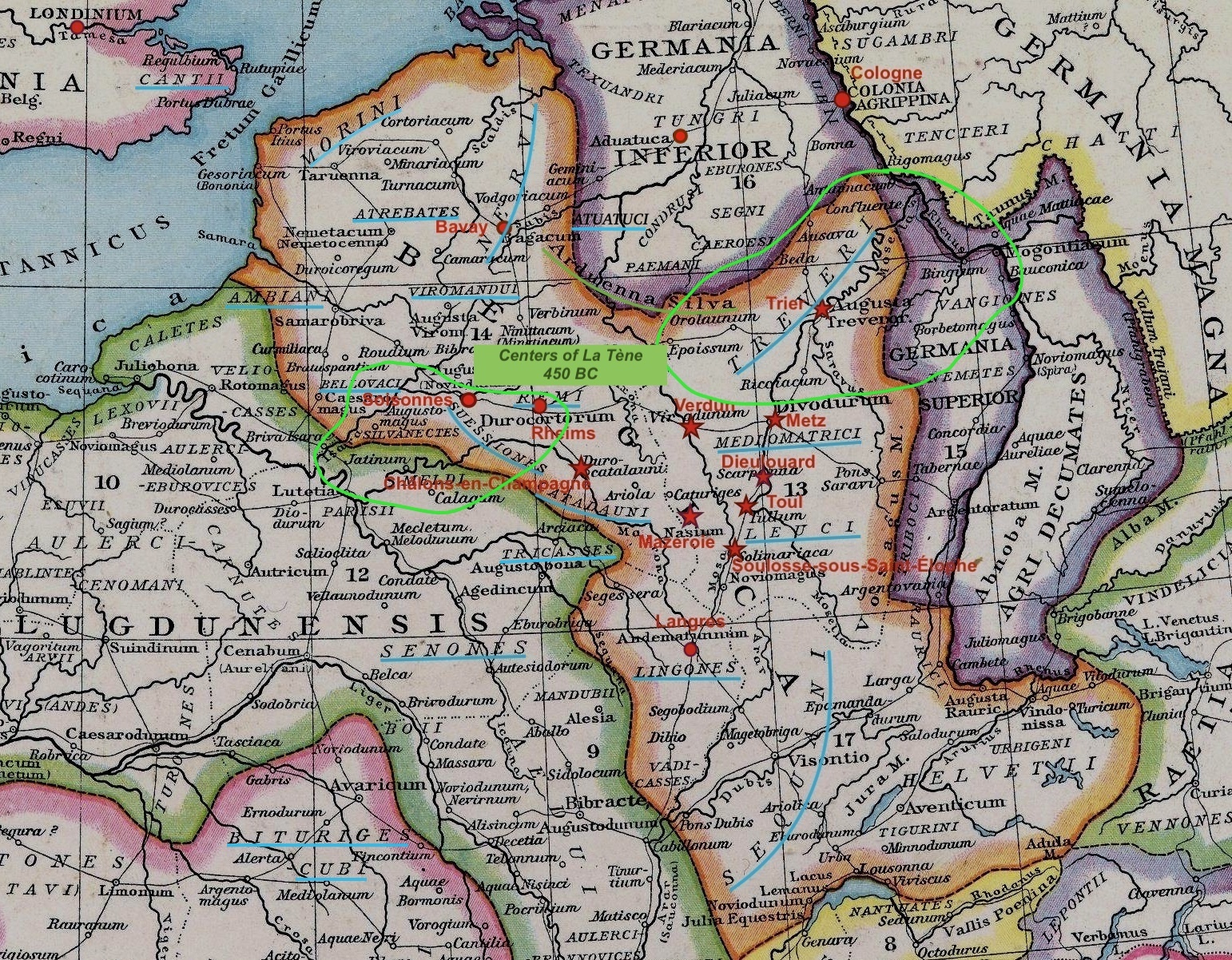
In this chapter we switch our focus from the parent SNP FGC22501 to a specific sub-clade SNP FGC53429+, but still with our eyes on the Sun Wheel symbol. Our target area for FGC53429+ on the map above is in Gallia Belgica. This map show the early Celtic Tribes of about 200 BCE. The previously mentioned Ad(t)uatuci Tribe in the middle top. I have added the areas of early La Tène Boii concentration about 450 BCE [green outlines]. The FGC53429+ descendants were bishops and hereditary episcopal nobility of Reims, Trier, Verdun, Metz, Laon, Cologne, Utrecht, Lincoln, St-Davids, Durham, Bruges, and Antwerp. Is it possible that they were descendants of the Ad(t)uatuci and later the Suessiones Tribe that each had versions of the Sun Wheel on their coins?
The following is the timeline of FGC22501 to FGC53429. In essence traveling form Bohemia to Belgica about 574 current age.
- R1b>U152>L2>FGC22501 appears to have originated in Bohemia about 2200 BCE [As above]
- R1b>U152>L2>FGC22501>FGC22538 originated about 2153 BCE
- R1b>U152>L2>FGC22501>FGC22538>FGC22516 originated 1591 BCE
- R1b>U152>L2>FGC22501>FGC22538>FGC22516>FGC22518 originated about 1585 BCE
- R1b>U152>L2>FGC22501> as above FGC22518>FGC42117 originated 1469 BCE All the above likely staying in Bohemia
- R1b>U152>L2>FGC22501>as above FGC22518>FGC42117> FGC42109 originated about 998 BCE perhaps beginning to migrate
- R1b>U152>L2>FGC22501>as above FGC22518>FGC42117> FGC42109> FGC53429 originated about 574 CE in Belgica.
Symbols of Power
Symbols reduce the infinite complexity of the world or the universe into manageable, recognizable pieces, allowing for immediate understanding. They are effective in branding and recognizing, power, authority or affiliation. They are evocative and have the capacity to move people, acting as catalysts for passion, belief and sometimes action, as in a holy war. So might an ancient Sun Wheel be both an external and internal symbol used to identify in this case both secular and spiritual power. From ancient Celtic seers to later marquis? Heraldic designs came into general use among European nobility in the 12th century. Systematic, heritable heraldry began at the beginning of the 13th century. But before that we see the Sun wheel still in use in Anglo-Saxon coins 690-715. Although difficult to piece together this early symbol dating back as far as the Royal Game of Ur 2600-2400 BCE we can see the Sun Wheel symbol. The Wheel itself is invented about 3500 BCE. The Domestication of the horse perhaps around 2200 BCE on the Eurasian Steepe. In many ancient traditions the sun god or goddess is responsible for pulling the sun across the sky each day via horse and chariot. Those who can understand and explain the powers of god and the universe are both revered and feared. They co-opt the power of the gods.
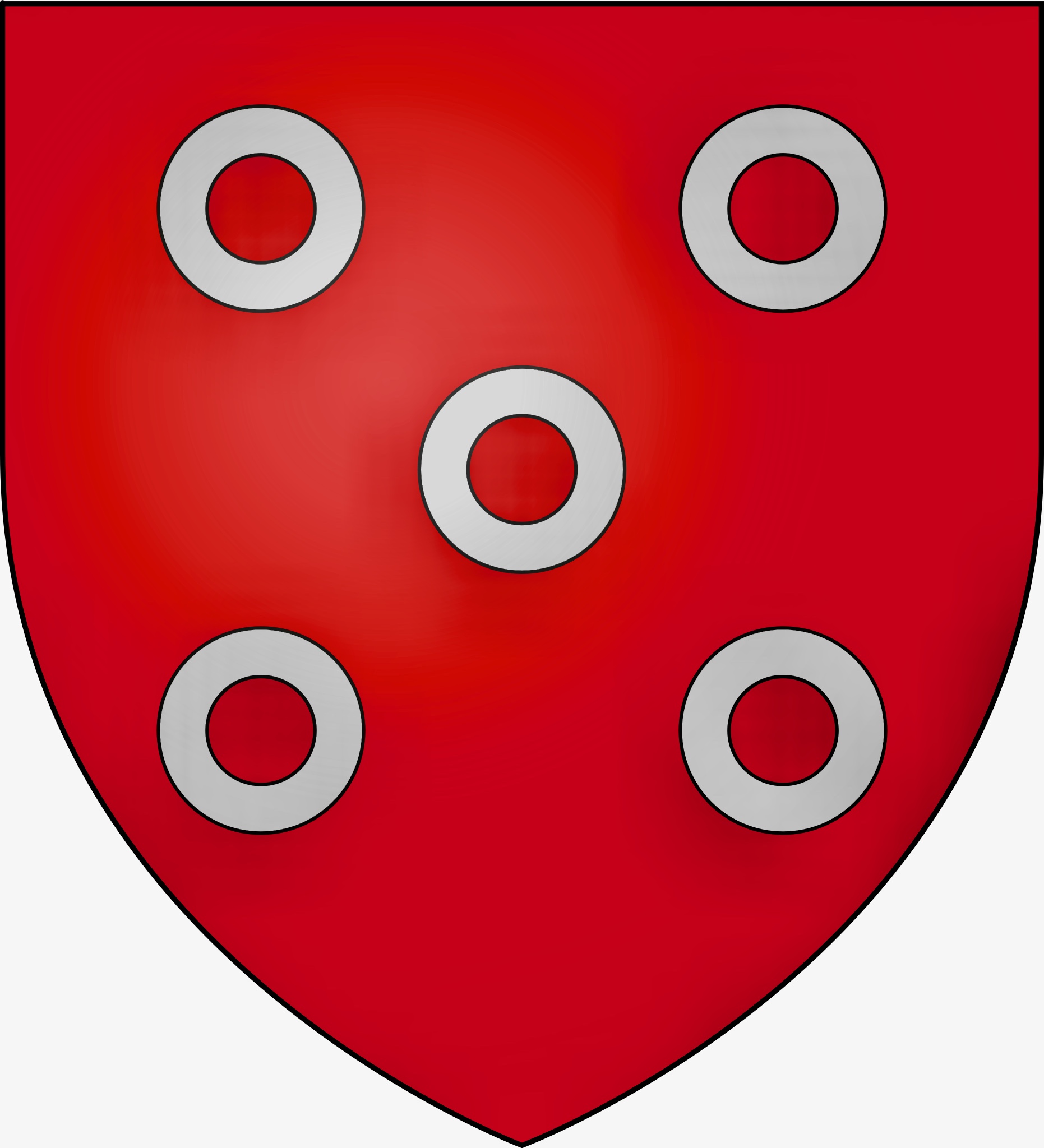
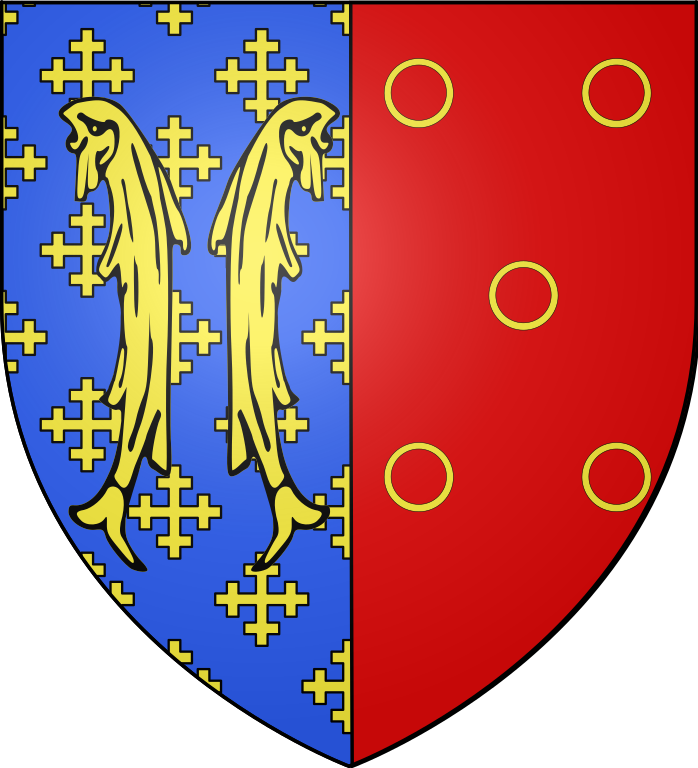
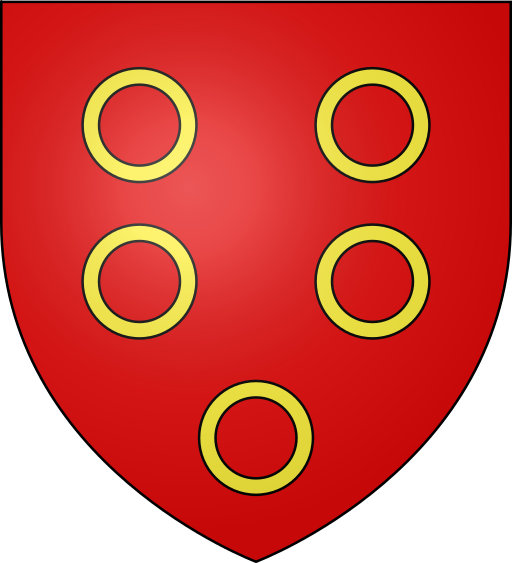
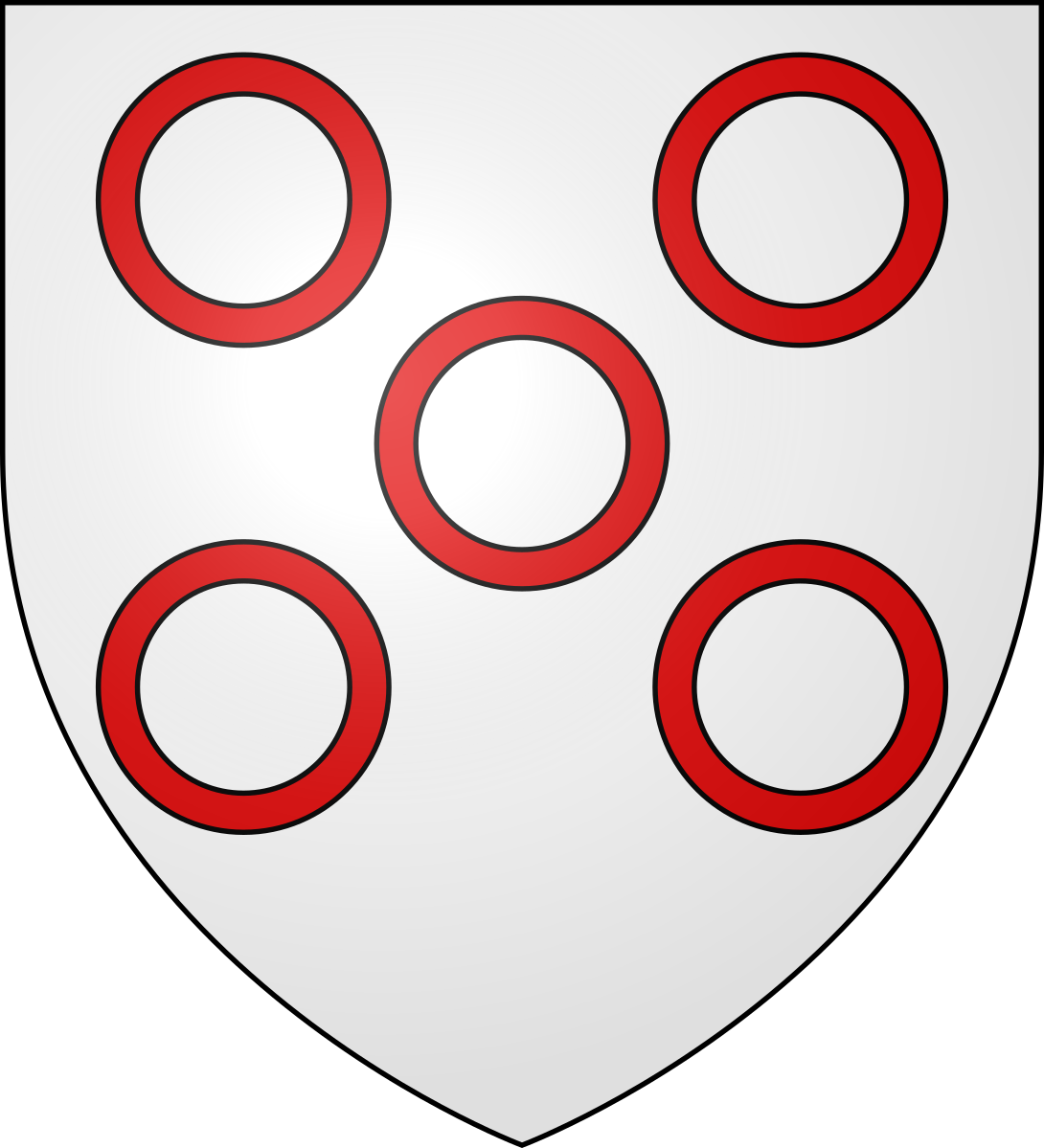
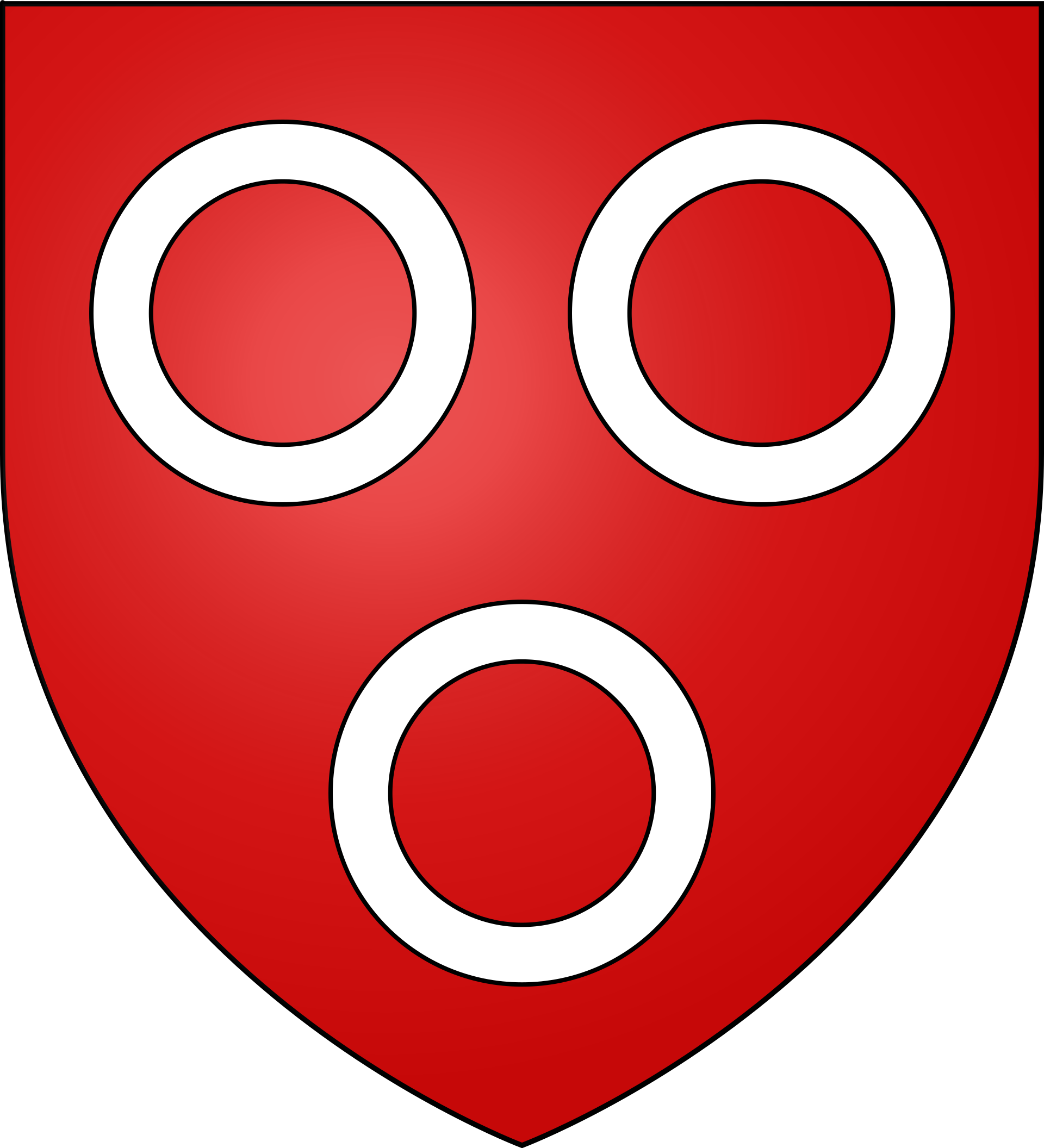
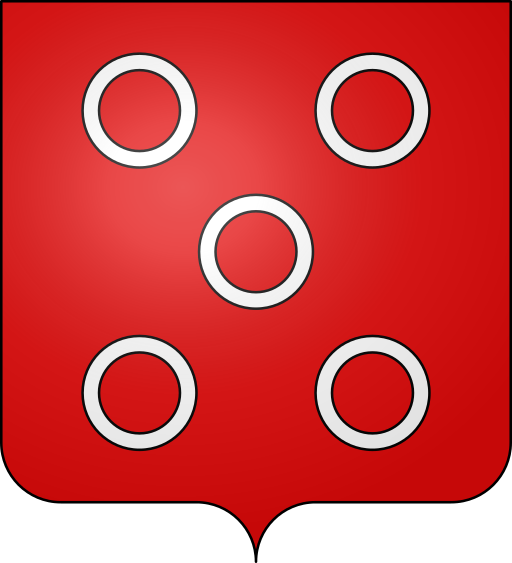
Due to the extensive work of Vanessa Van der Beke we have found that the 5 or sometimes 3 annulets [rings] are frequent symbols appearing on the Blason (Coat of Arms) of families and places associated with FGC2253429+. Is this a coincidence? Almost all arms with annulets belong to marquess [episcopal nobility]. (However, not all marquess have arms with rings / annulets). There were many places and families in France and elsewhere having arms with rings. Vanessa was able to connect them to the palatine counts (episcopal counts) of the Carolingians and their successors. A sampling below.
Timeline
- 100-57 BCE Aduatuci coins minted with 5 annulets
- 57 BCE Dispersal of surviving Aduatuci after their conquest by Ceasar
- 140 CE Vicus Beda (Bitburg) founded. Bitburg was stopping place for travelers from Lyon through Metz and Trier to Cologne.
- 400 CE End of Roman rule & takeover by Frankish Tribes
- 690-715 CE Frisian Sceattas Anglo Saxon coins minted with 5 annulets
- 715 CE Frankish Castrum Bedense (Bitburg) became the capital of the Bidgau (Bitburg province)
- 720 CE, the noble Frankish woman Bertrada founded an abbey in Prüm, close to Bitburg and Trier
- 768 CE Charlemagne made Prüm his personal abbey with possessions in Belgium, the Netherlands, France & Germany with 300 monks
- 795 – 855 CE Lotharius I, King of Lorraine was buried in the abbey of Prüm . The abbey of Prûmh had a villa in Erdorf near Bitburg, which belonged to vassals of the counts of Vianden who had arms with annulets. Erdorf’s coat of Arms had 5 annulets
- Count Wigeric(k) From 915 or 916, he was the count palatine of Lotharingia. He was the founder of the House of Ardennes. He died 9 July 953 He married Cunegonde of the Carolingans
- Count Gerald (Gozello) of Metz (911-942/3) married Oda of Saxony (905-965)
- Bruno the Great (925-965) his brother Otto I appointed him Duke of Lorraine.
- Van der Beke arms and the arms used by the military commanders and masters of accounts from the duchy of Bar from the former duchy of Lorraine, Arms 5 silver annulets on a red field [see above]
- c1147 Geoffroy de Vienne et de Louppy with Arms with 5 annulets, gold on red field [see above]
Background on the Noble Titles
Following the collapse of the Holy Roman Empire the Merovingians were the ruling family of the Franks c481-751 who established the largest and most powerful kingdom in Western Europe. They followed the Roman laws and were served by mayors of the palace who liked weak kings so they could increase their own power and territory. Until one of them grabbed the highest power and became king himself and ancestor of Charlemagne creating the dynasty of the Carolingians.
Charlemagne (748-814) was King of the Franks from 768, King of the Lombards from 774, and Emperor of what is now known as the Carolingian Empire from 800-814. When Charlemagne became emperor he had one big concession: the imperial title belonged to the ancient Roman empire, so to continue it, he had to share it with the highest entity in Rome: the pope. The title of emperor belonged worldly 50% to the emperor and ecclesiastically 50% to the pope and the realm was called the Roman-German Empire. During his reign Charlemagne made great efforts on behalf of medieval education. Later the Ottonian emperors (919-1024) of the German or Saxon dynasties expanded them further, mainly through abbey and chapter schools. Children of the nobility, ministerials, and the wealthy attended these schools. Precursors to formalized noble classes were high-status clans, warrior elites, or landholding families before the standardization of hereditary titles. About 1250 in France the proto-nobility emerges before the introduction of marquis sometimes changed to: sire, prince, marquis, margrave, knight, page, esquire, or simply count (earl). In the medieval context, the Latin word ‘marchio’ meant among other things: marquis, margrave, marshal, but equally count palatine, episcopal count, accountant, chancellor, governor, diplomat, bailiff, or counselor.
By virtue of his ecclesiastical position, the Marquis or Margrave was usually educated in both secular and ecclesiastical law. In addition to guarding and defending the imperial or royal domain, the palace, and/or borderland, a Marquis was also frequently employed as a diplomat. A marquisate is the territory, domain, or rank held by a marquis, marquess, or marchioness. It could be an entire county such as Flanders or only a part of it like Vienne (le-château) in the county of Bar.
Furthermore, it could be a secular or ecclesiastical marquisate, in contrast to a secular duchy which contained multiple counties. In a modern context, a marquisate roughly corresponds to a Ministry of Foreign Affairs and a duchy to a Ministry of the Interior, both assisted by the Ministries of Justice and Defense.
A key element of Emperor Otto I’s (912-973) domestic policy was to strengthen ecclesiastical authorities at the expense of the nobility who threatened his power. So he filled the ranks of the episcopate with his own relatives and with loyal chancery clerks. As protector of the Church he invested them with the symbols of their offices, both spiritual and secular , so the clerics were appointed as his vassals through a commendation ceremony. The bishops had the right to appoint a temporary “count for life” (comte viager), theoretically subject to the authority of the bishop. These counts were selected from the noble family of Ardennes. Because of the duality of the imperial title their servants were equal : this meant a bishop and a king were equal, a duke and a count palatine (marquess) were equal. One holding the worldly power and the other the ecclesiastical power. They were always second : to the king of France, England, the dukes of Bar, the counts of Flanders. But as ecclesiastic equals they served as regents when the worldly emperor, king, duke, count was absent we replaced his authority.
The division of power between church and state, pope and emperor had serious consequences because everything needed to be divided. The emperor had kings, the kings appointed dukes (who controlled a whole territory ie.: Lorraine). The pope had bishops, the bishops appointed count palatines (seneshals who controlled border lands called marks, hence the name of margraves – mark counts – later changed into marquess). These margraves served also as episcopal counts protecting the bishoprics, when the bishop obtained worldly power from the emperor he became a countal bishop (Verdun) or a prince bishop like in Cologne, Utrecht, Liège and Durham. Over centuries the pope lost more of his power and the Roman-German empire changed into the German Empire.
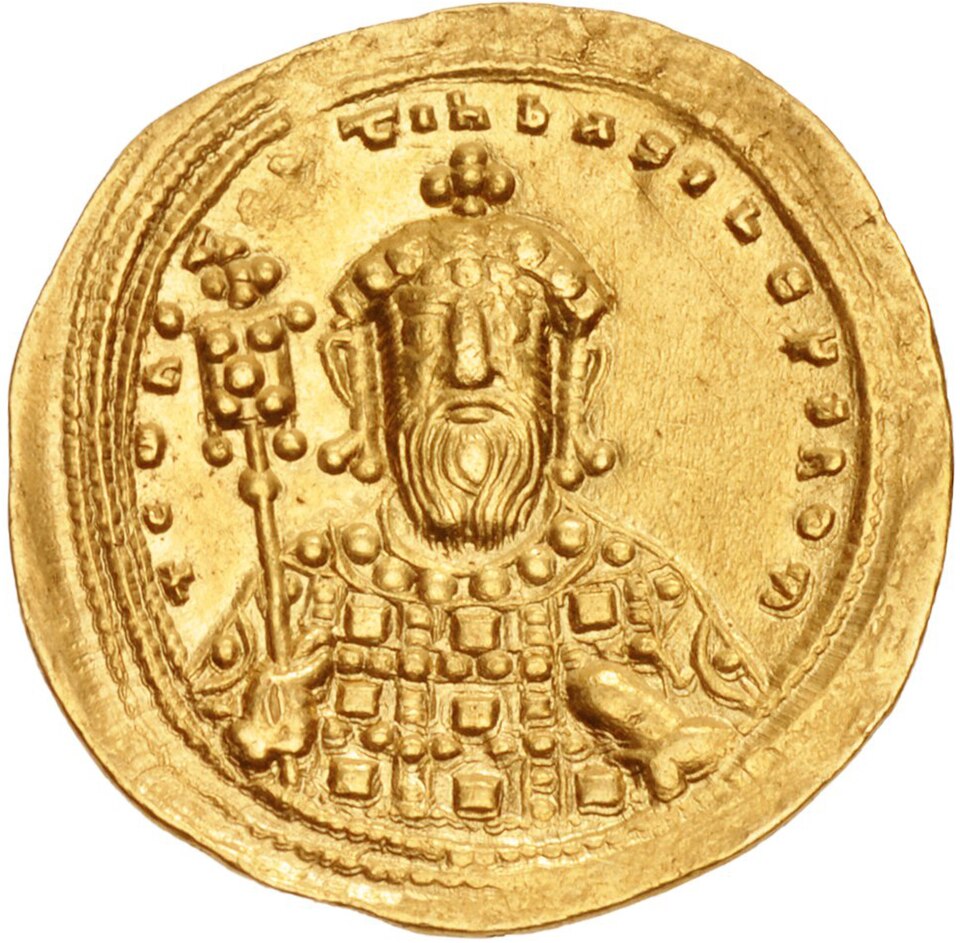
If you look closely this coin contains the symbol of the Sun Wheel. It appears on coins from the Macedonian through the Byzantine Dynasties. it is a sign of power.
Case Study : van ver beke
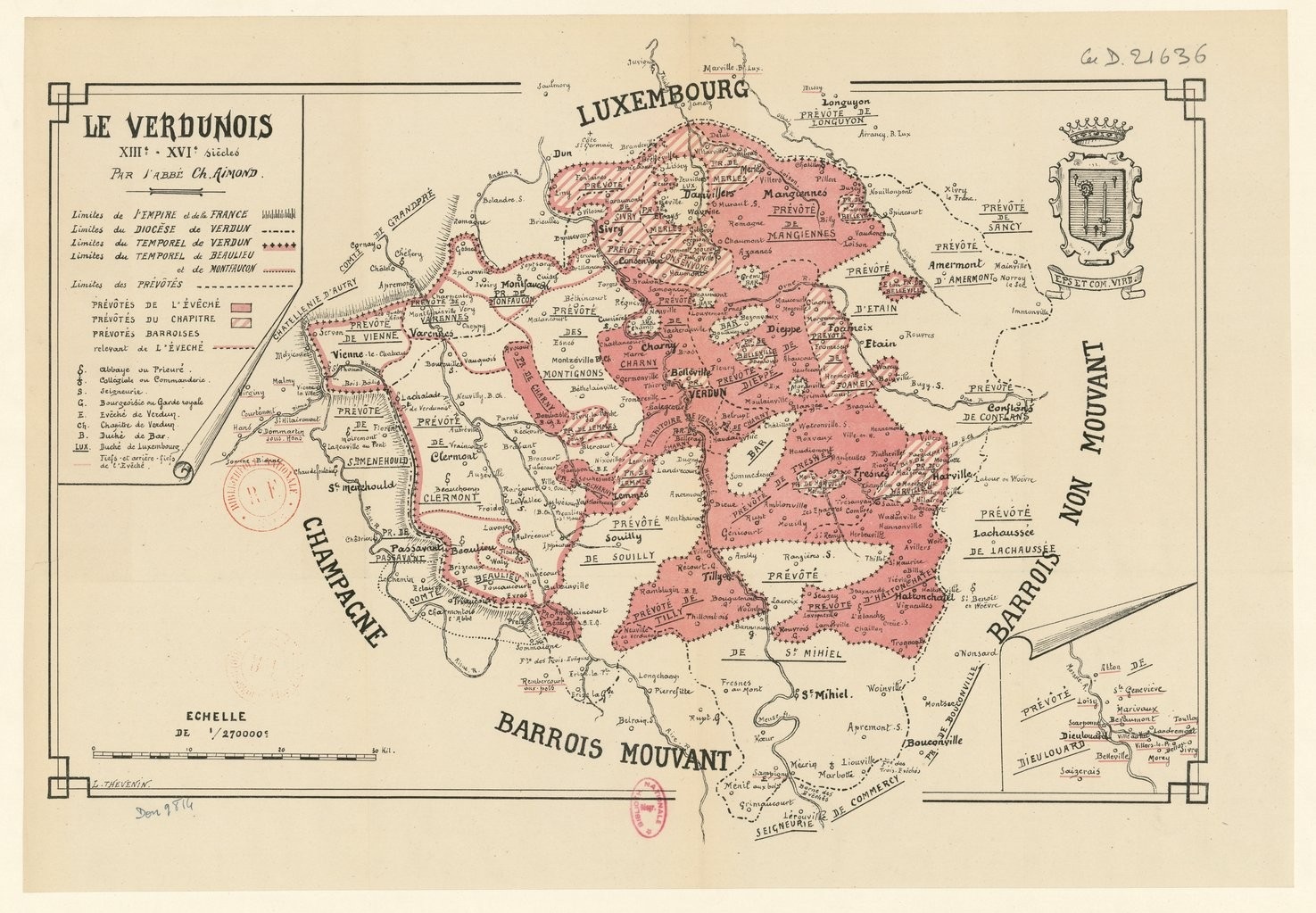
At the time of the Dukes of Lorraine, beginning in 959, Upper and Lower Lorraine, the royal lineage of the House of Ardennes (Verdun) was a marquisate of the Holy Roman Empire vis-à-vis the Kingdom of France. Van der Beke, comes from the royal family of the House of Ardennes (Verdun), they also possessed, on the border between the Kingdom of France and the Holy Roman Empire, the count-bishopric marquisates of:
- Moncel-lez-Lunéville for the Count-Bishopric of Metz.
- Vienne (later Vienne-le-Château) for the Count-Bishopric of Verdun
- Louppy (later Louppy-le-Château)
- Chardogne for the Count-Bishopric of Toul, which they had acquired through investiture.
- County of Voncq (possibly) next to the originally Merovingian palace of Attigny, which briefly served as a Christmas and summer residence under the Carolingians,
Returning to the Blason (Coat of Arms) of the families and places associated with FGC2253429+ we see how the symbol was adopted by families and places alike. It reminds me of a family heirloom whose provenance has been lost to time but whose story can be read in its symbol. Or in this case the YDNA.
Episcopal counts like van der Beke made their titles hereditary and no emperor or king could intervene. The titles were open to either males or females so you could have a marquess and a marchioness. We see this in this text of the prince-bishop and count palatine Anthony van der Beke. The episcopal principality of Metz was a bishopric state of the Holy Roman Empire. This State is distinct from the diocese of Metz, founded in the 4th century, initially subordinate to the ecclesiastical province of Trier, over which the spiritual authority of the bishop is exercised, and which extends over part of the Lorraine area. The episcopal principality is for its part the set of territories (possibly disjointed) over which the bishop exercises the temporal power of a lord, disposing of high, medium or low justice depending on the case. The bishops of Metz, who initially came under the Duchy of Lorraine, obtained imperial immediacy as temporal lords of the episcopal principality in the 11th century, and were part of the college of ecclesiastical princes at the Diet of the Empire. In the 11th century, the influence of the Holy Roman emperors faded; the royal counts become dukes of Lorraine, while the bishops, residing on the spot, concentrated more and more in their hands the temporal power the exercise of which they delegated to their counts palatine; these become “episcopal counts. Verdun was part of the middle kingdom of Lotharingia and in 1374 it became a free imperial city of the Holy Roman Empire. The Bishopric of Verdun formed together with Tull (Toul) and Metz the Three Bishoprics, which were annexed by France in 1552.
The Sun Wheel does not belong to FGC22501 exclusively or its descendants— However following the DNA and this symbol shows a connection that does tell a story. We can never fully know the truth of a thing, but we can follow it deeply and perhaps get a richer view of history for doing so. This story may get further chapters as more discoveries are made. I hope it has whetted your appetite to dig a little deeper into your own stories.
And here’s where it came full circle. In part one I showed the Cross of St Cuthbert showing the familiar symbol . It happened to pop up on my Facebook feed. I sent the photo to Vanessa. She offered an explanation Anthony van der Beke (de Beck) was the bishop and chancellor of the Flemish count and the county of Flanders Seger. Van der Beke traveled with gold, emeralds etc as gifts from the Flemish count. This may be how the Cross of St Cuthbert makes its way to Durham Cathedral in 697 CE. We tend toward thinking people lived in isolation. They did not. Whether we want to draw discrete lines around countries, cultures, art or people—they will ever defy our attempts to hem them in. There is something in that which comforts me and my historical world view. We discover, we fashion we re-fashion. “There’s nothing new under the sun.” Remember that next time you pick up a dice—
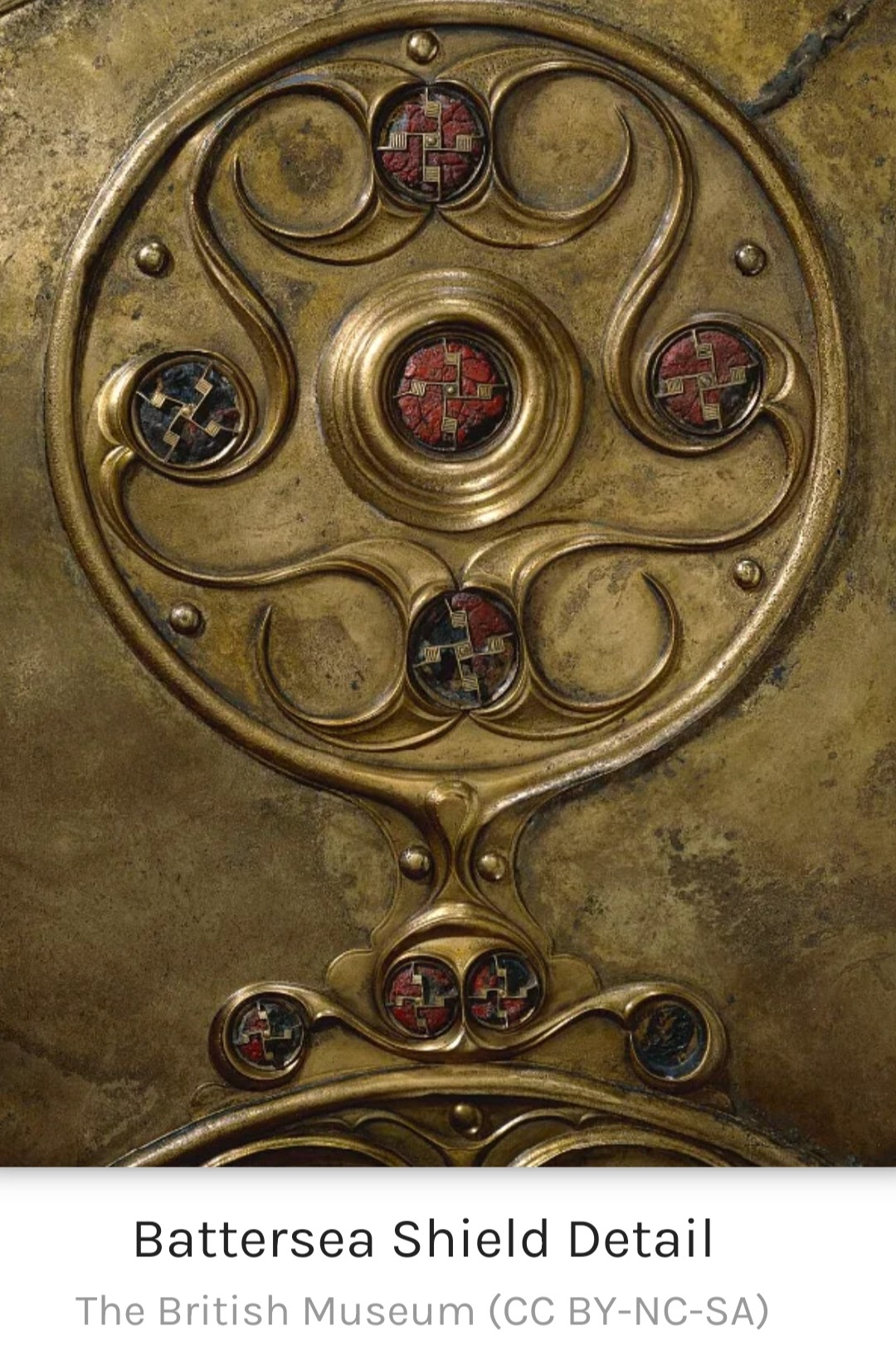
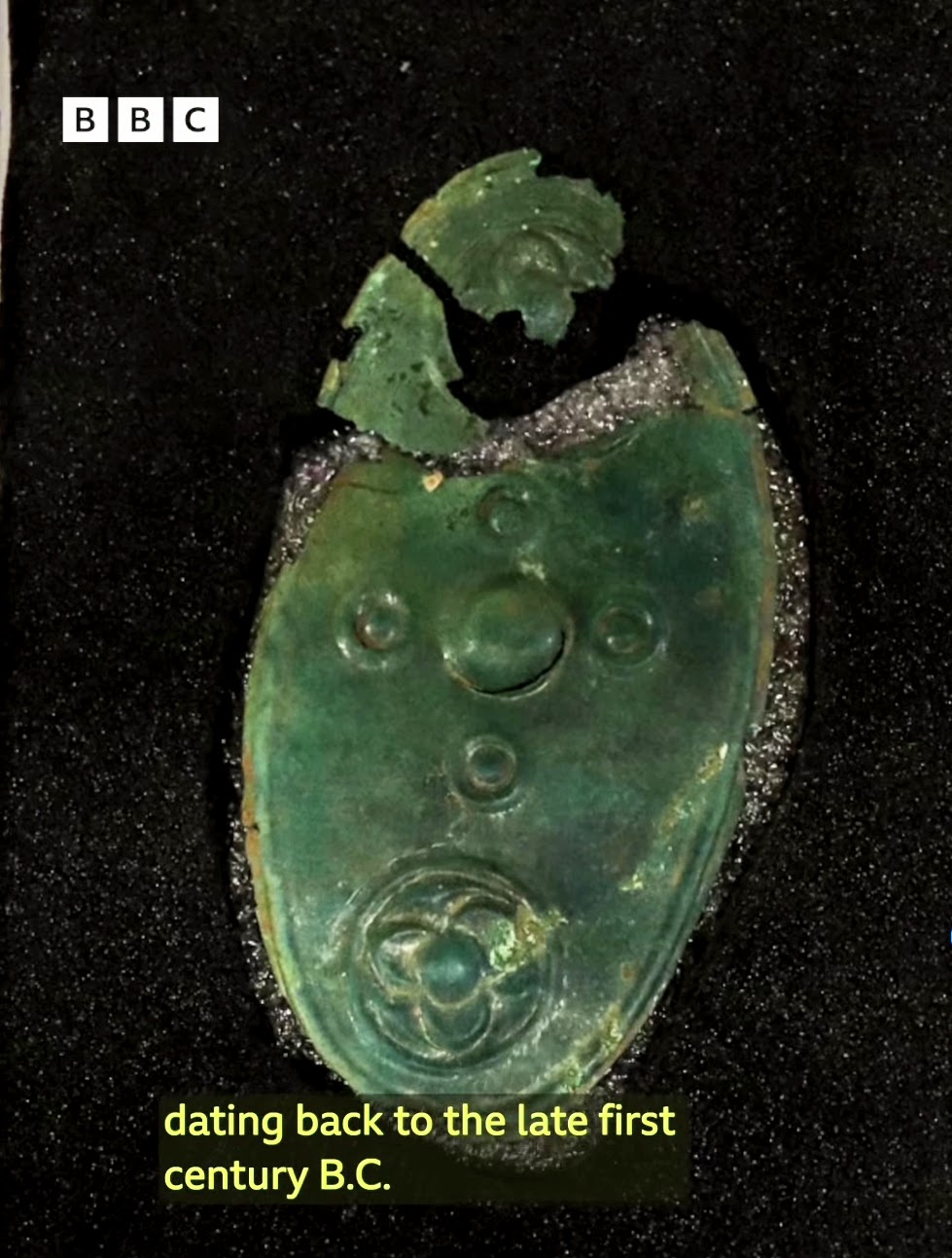
PS. A couple of recent finds with a familiar pattern, both shields. The first is the famous Battersea Shield dating from roughly 350-50 BCE. And the newest a miniature shield at Cirencester which was actually the capital of the Dobunni tribe. It should be on display later this year at Corinium Museum in Cirencester.
More Exploration
- First Horse Warriors (exploring the Botai culture of the Eurasian Steppe) and Native Horse PBS documentary NOVA: Season 46, Episode 9 2021
- The Horse the Wheel and Language: How Bronze Age riders from the Eurasian Steppes shaped the Modern World. by David W Anthony 2007
- Who We Are and How We Got Here: ancient DNA and the New Science of the Human Past David Reich. 2018
- Celtic Art: Symbols & Imagery. Miranda Green 1996
Kelly Wheaton ©2026 All Rights Reserved


