Just Say NO to Favorites! Writing challenge
Posted on November 26, 2022 4 Comments
I can’t be the only one who cringes everytime I hear the word favorite. No offense intended, but asking me for my favorite ancestor or heirloom is like asking a mother to choose a favorite child. Reminds me of those moral dilemma stories they gave us in high school, where you have to pick who to save. Who do you let drown? Grandma, your first born, your baby, your spouse? In any given moment a choice may be made, but we choose differently at different times, different contexts. And whatever the choice, it’s not one I want to make forever.
So please let us agree to ban the word favorite. It’s a lazy word anyway. What you meant to ask is “Tell me about an unusual heirloom and how did you come to have it?”

This hand blown Steuben Gold Aurene Glass vase used to sit on my great grandparents piano. In the 1970’s my great aunt sent it to me wrapped in newspaper in a shoebox via regular parcel post. How it survived I will never know, but it makes me smile everytime I think about it. Objects matter in their relationship to us. In the stories they tell. What objects need to have their stories told?
Or tell me an interesting story about ice cream? I can think of many. I remember when Ortmans Ice Cream Parlor starting carrying Bubble Gum Ice cream. It was bubble gum pink with colored gumballs, but the best part was even when you finished the ice cream you still had the gum to chew. It was my first choice for awhile…I don’t have a favorite—it depends on my mood, the weather or the choices in front of me.
Favorite photo of an ancestor? Banish the thought. Way too many to choose from. Maybe it isn’t even a photo. Maybe its a painting, a word picture, a drawing, or a fancy sarcophagus. It’s fine to ask your oldest, your most unusual…but favorites, phooey. This is one of my oldest. Share an image of an ancestor that has meaning for you. I was told by a friend to go to the Beauchamp Chapel of the Collegiate Church of St Mary when he heard I was going to Warwick, England. At that time I had not realized he was my 17th great grandfather. He is very pious resting his head on a swan and his hands raised in prayer.

Favorite ancestral place? Again impossible to choose. And there are so many I will likely never get the chance to travel to. Some places feel familiar, like home, even if you’ve never been there before. Some places call out to you in mysterious and magical ways. Everyone is a favorite. The word becomes meaningless. Just choose a place your ancestor(s) lived and write about it. How did it make you feel being there? What resonated with you?
Favorite DNA test? Well what are you trying to do? What is your budget? I have plenty of strategies but no clear cut favorite. If you are adopted maybe your favorite is the one that reveals your birth parents. Maybe your favorite is the autosomal test that comes closest to your known ancestral breakdown. What is best for you may change over time. Better to write about something you discovered or a mystery that was solved using DNA
Your favorite Ancestor? Well unless it’s the one leaving you gold ingots, a yacht or an exotic island, who would you choose? Much better to write about an ancestor you know little about, but piques your interest. What can you discover about your ancestor, do they who share a name with you? Which ancestor calls to you right now? Who do you want to know more about? Just pick one and see how much you can find out. That’s what I did with my 3rd great grandmother Catherine Adeline STEWART MURPHY MOSIER.
I started writing this post about how I dislike the notion of favorites. Maybe you love favorites and find no problem choosing. Lucky you! So write about your favorite piece of jewelry. Your favorite family recipe. The rest of you just pick something and write. Explore—see what more you can discover about the person, place or thing? Why does it interest you? What stories does it/he/she hold?
- Tell me about an unusual heirloom and how did you come to have it?
- Or tell me an interesting story about ice cream?
- Share an image of an ancestor that has meaning for you.
- Just choose a place your ancestor(s) lived and write about it.
- Better to write about something you discovered or a mystery that was solved using DNA
- Much better to write about an ancestor you know little about, but piques your interest.
- So write about your favorite piece of jewelry. Your favorite family recipe. The rest of you just pick something and write.
So this mini rant became a writing challenge. pick one or more of the above and use to tell a story. You don’t have to share it, but you can. Have fun. Write and try not to judge. I give you permission not to have to choose a favorite anything. Just write and enjoy where the writing takes you.
Kelly Wheaton ©2022 – All Rights reserved
Unexpected Roman History Lesson While Traveling in France
Posted on November 7, 2022 3 Comments
I recently spent a couple of weeks in France. I was there to visit my son and grandson who are living there while my son is on sabbatical. Most of my travel in the past decade has been genealogy related (both in the US and Europe). Pre-trip I checked out where I would be and there were no nearby genealogy connections so I had to be content with general history-touristy stuff. Even my interest in Celtic Tribes—I was too far removed from the ones of most interest. The interest in Celtic tribes comes from my work with the YDNA group R1b> U152> L2> FGC22501. Back in the day when my husband’s YDNA was one of the early tests at Full Genomes Corporation there were about 50 previously unnamed YSNPS found in his sample. Today we have about 145 men in our R-U152-FGC22501 project at FTDNA that are positive for the YSNP found in my husband’s YDNA. The earliest instance of this YSNP currently discovered is from about 4,000 years ago in Prague, Czech Republic. You can read more about that in my blog post here.
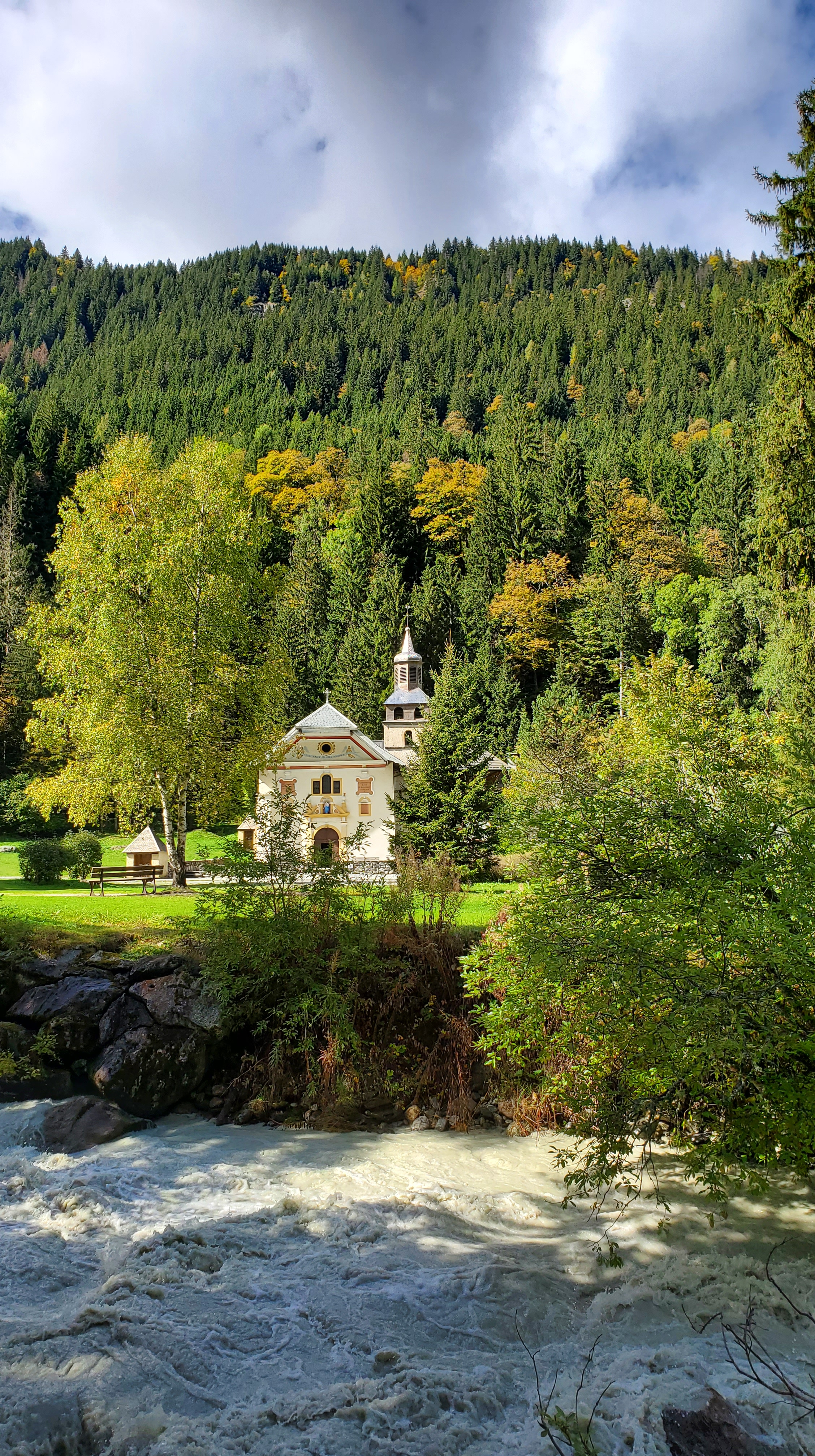
When you get back looking at Celtic tribes in central Europe and later spreading broadly you will run into the Roman Empire which ruled over Gaul (France) from the 1st century BC to the 5th century AD. Only 600 years but their mark endures. My first stop in France was a few nights in the charming village of Saint Gervais les Bains or St Gervais Mont Blanc. Les Bain of the Baths named for its mineral hot springs. Unlike many current ski areas in the Auvergne-Rhône-Alpes, St Gervais began as a market town and thus retains an identity apart from a purpose built ski resort. It sits in between the much better known Chamonix and Megève rimmed by Mont Blanc. If you happen to be a Tour de France fan (like I am) you will recognize much of the area. We arrived on a drizzly night and it rained most of the next day. We drove up to the end of the road at Les Contamines-Montjoie where you can visit the lovely Notre Dame de la Gorge.
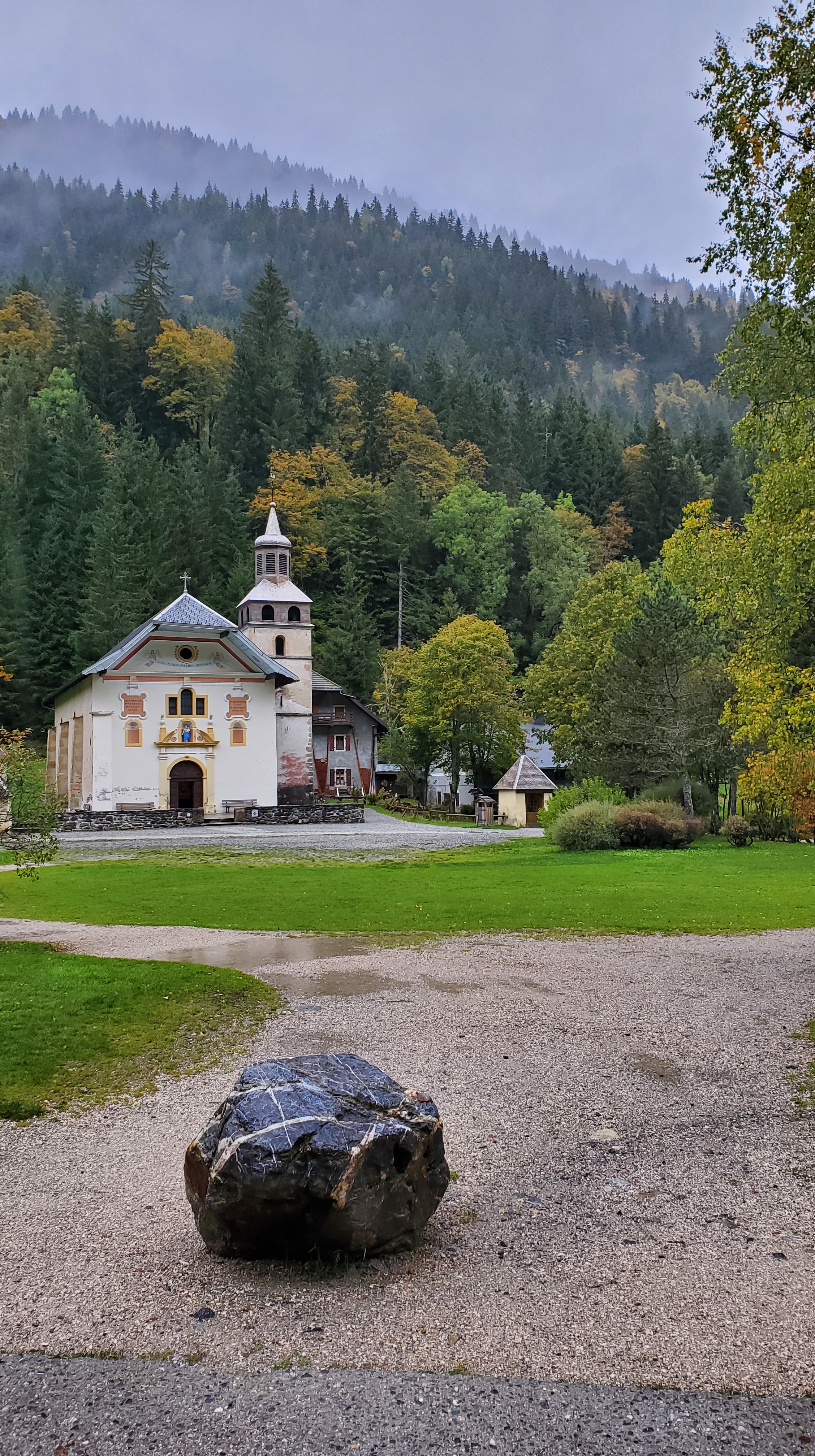
If you turn around from this exact spot and cross the bridge you will be on your way up the trail to the Roman Pont aka Roman Bridge. That rainy day we headed up a short ways before turning around and heading back. The trail follows the old Roman road and it is steep and occasionally slippery when wet. What a difference a day makes. the stream Bont Nant has risen considerably.

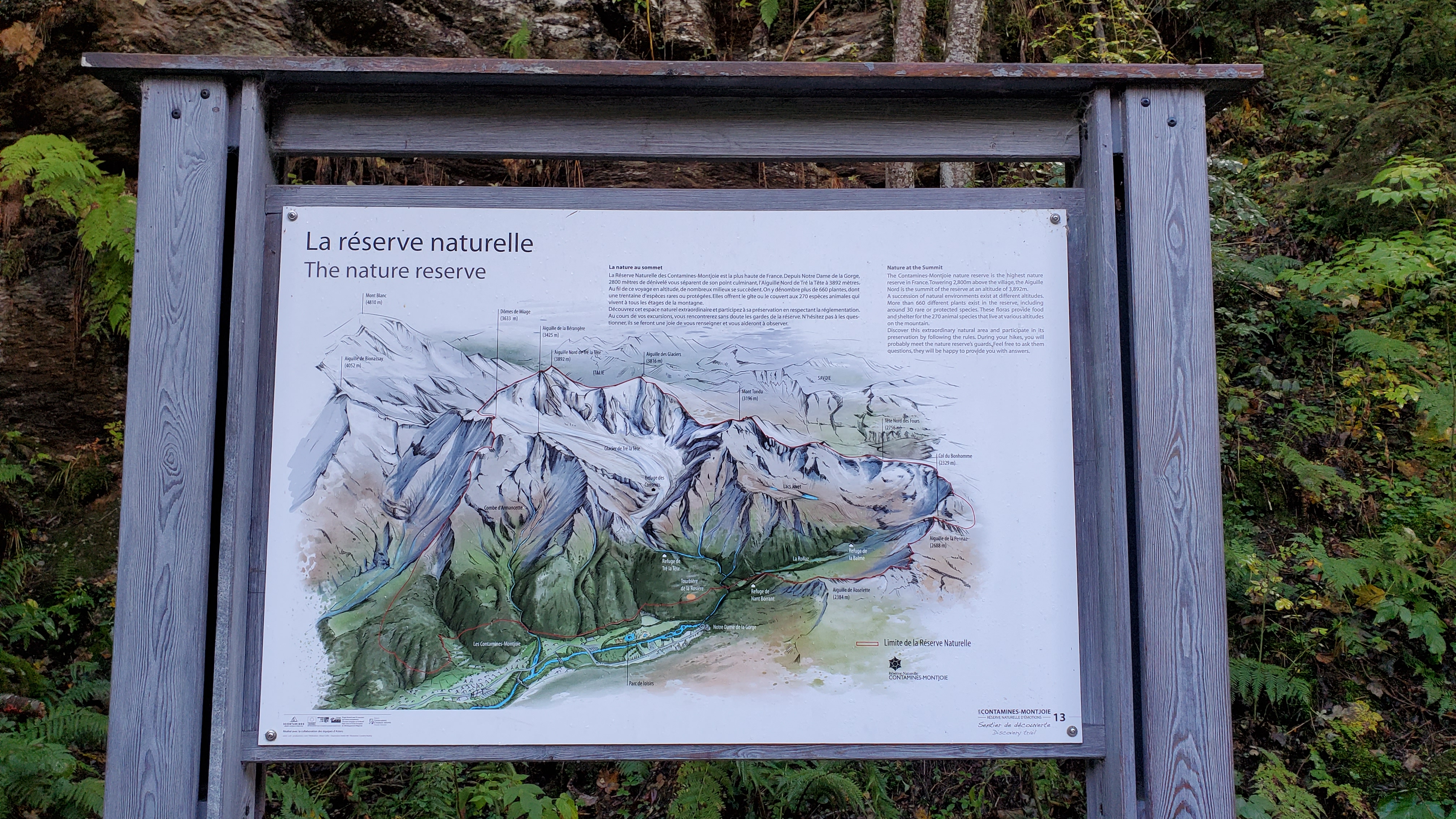
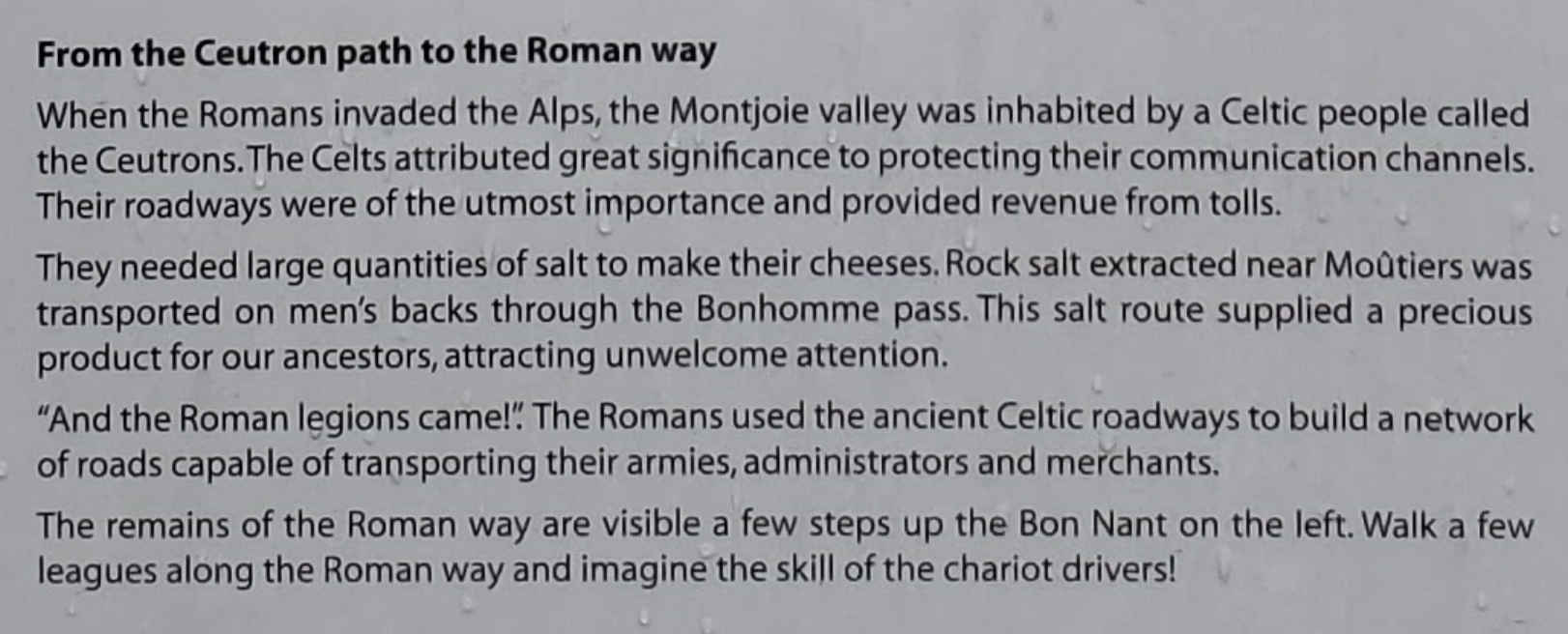
You can’t help but pause as you hike this steep road and wonder at how they travelled from what is now Italy, across the alps and into Gaul (France). The hike to the bridge is about .88 miles which doesn’t sound like much but it is a good trek and took me longer than the estimated 45 minutes! But I liked the history of it. If you had plenty of time and were up to a strenuous hike you could keep going and end up in Augusta Praetoria, near the present day Aosta in Italy. It is known as “the most Roman town after Rome,”because, long ago, it hosted 3,000 praetorian soldiers on a military outpost at the then edges of the Empire.

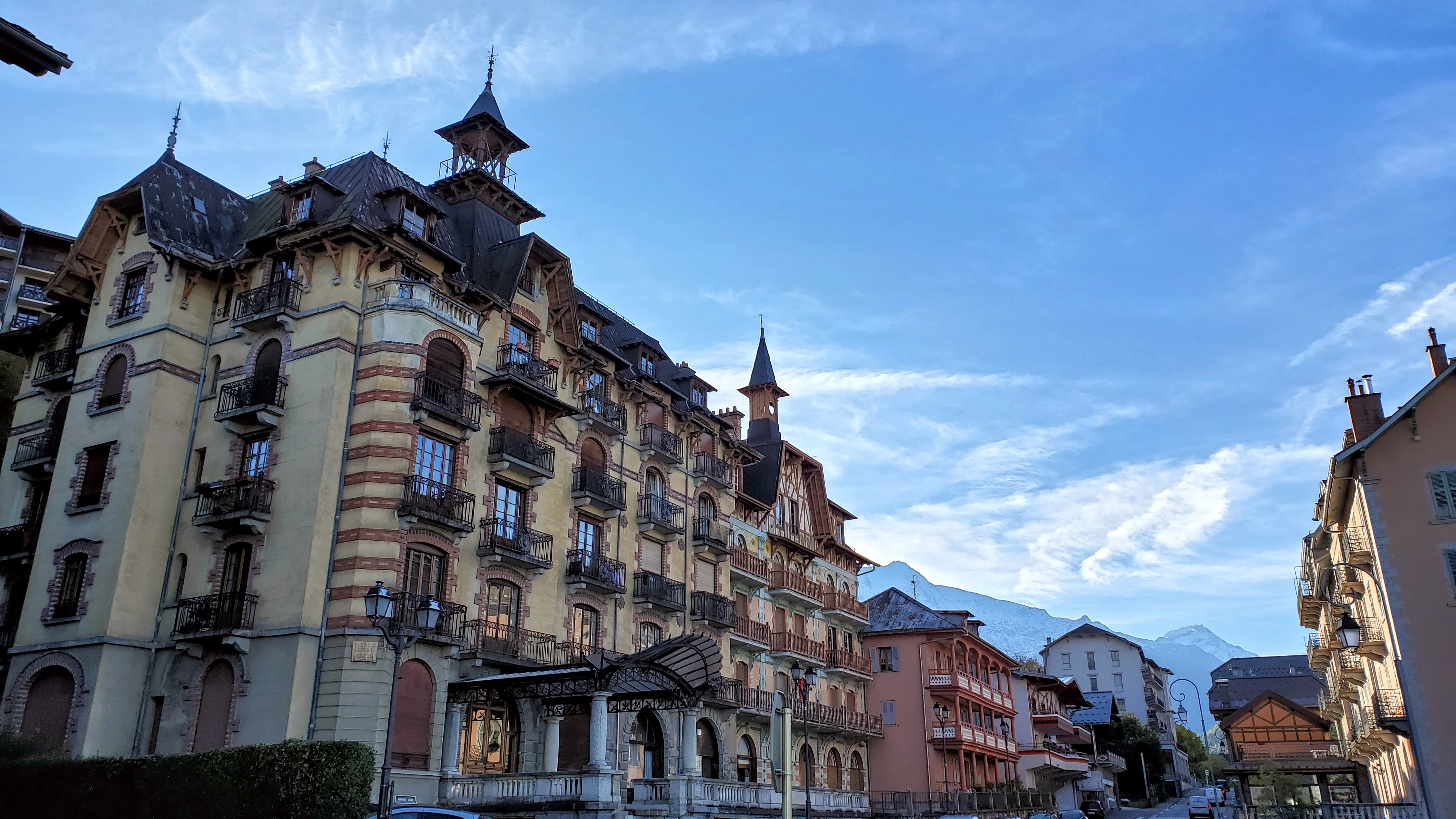
Not Roman history but I can’t help showing you the gorgeous Ancient Mont Joly Hotel now converted into apartments. The oldest hotel establishment in Saint-Gervais it has three styles of architecture: neo-classic for the southern part built in first half of the 19th century, neo-industrial for the central part, and Art Nouveau for the northern part built in 1910-11. The Northern part is where we stayed. You can see the stone balustrade (at front) and the two additional terraces (side) of the apartment in the far left 4th floor (5th for Americans). Stunning views of the alps in every direction. (Find it on AirB&B).
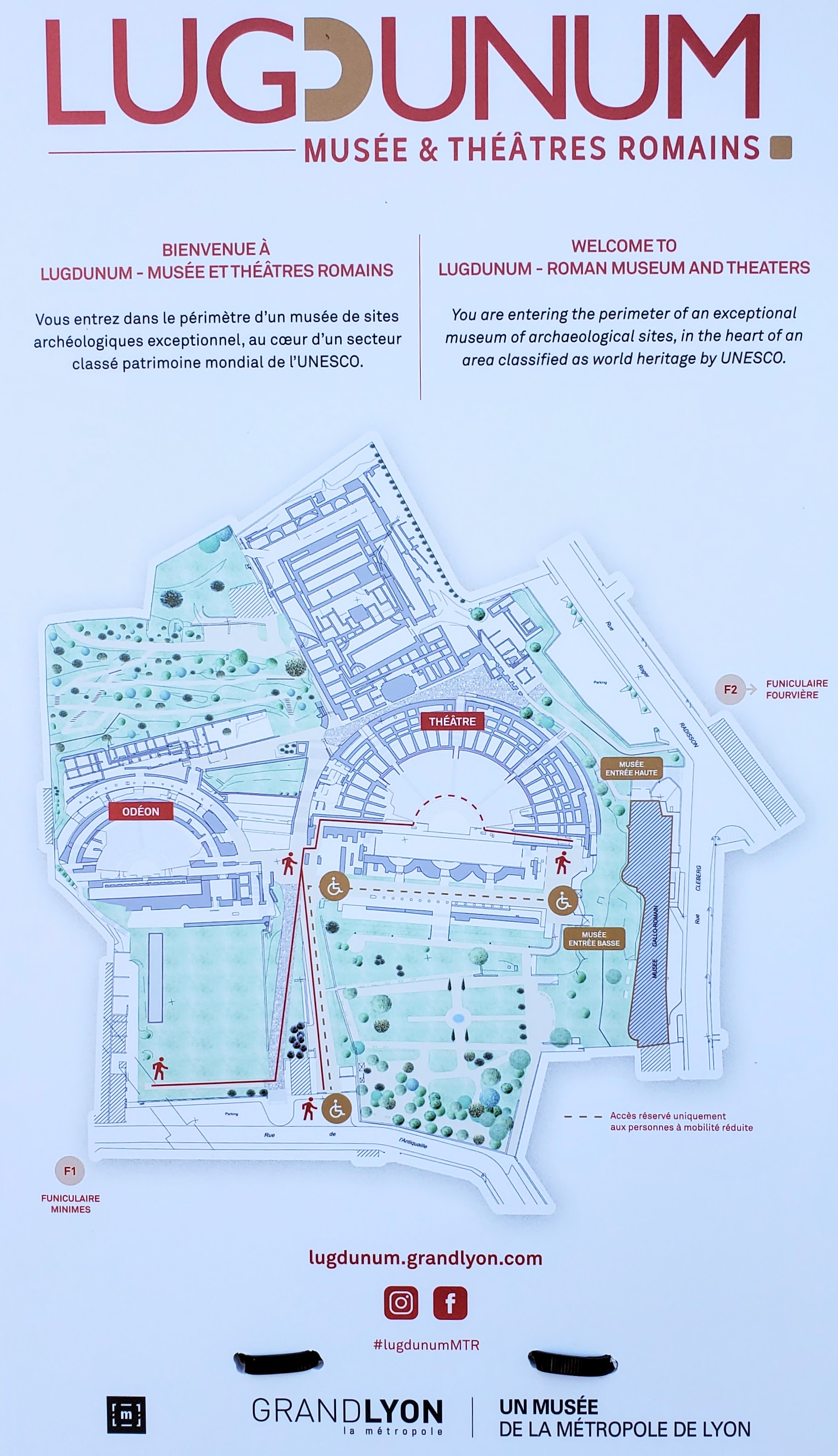
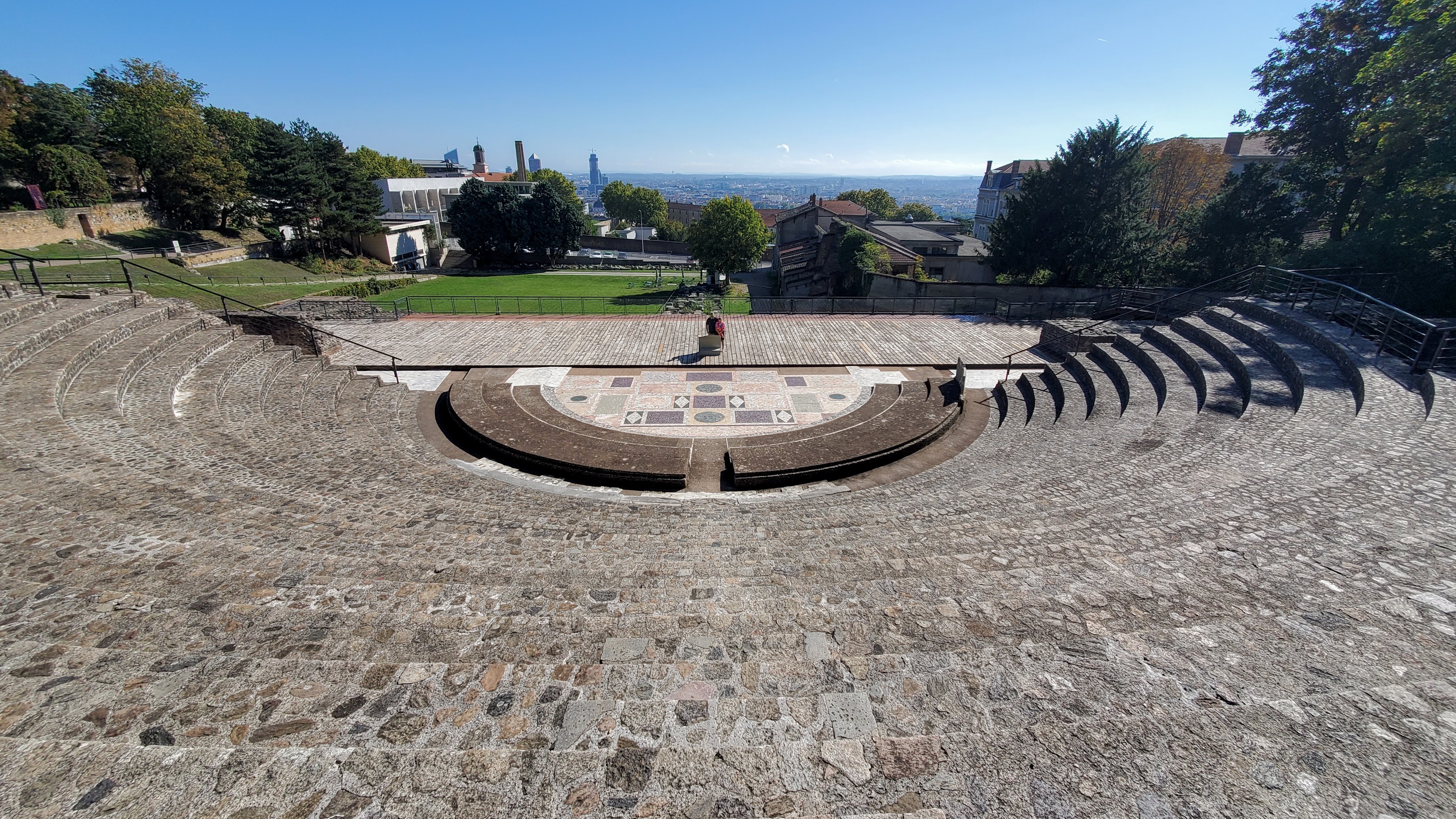
After several days in the alps we drove back to my son’s digs in Lyon, France. And on my second day wandering about, I learned about Lugdunum. Lugdunum (now Lyon) and its sister city Vienne would have been where you ended up if you followed the Roman road from Augusta Praetoria, across the alps across the Roman bridge and then westward to the twin cities of Lugdunum and Vienne. I only had time to explore the Roman parts of Lugdunum founded as a Roman outpost in 43 AD. (although I heard that Vienne has some lovely Roman architecture of its own). Lugdunum later became the capital of Gaul. It is now the second largest urban area in France and third largest city after Paris and Marseille. I only knew it as the “The Gastronomic Capital of the World.” (A well earned reputation I might add). My first view of the Roman Theatres is approaching from below (from the east so the bottom of this image). Please note this is a UNESCO World Heritage site. THe shaded area on the far right is the Musée et Theatres Romains (museum).
Now I suppose if you had been to Rome or any number of other places with extensive Roman Ruins you might not be so impressed. For me I had seen the Roman site under York Cathedral in York England, and parts of Roman roads and foundations but this was my first good look at something they had built. This was my first view. About mid frame on right you will see the roadway headed up to the two theatres.
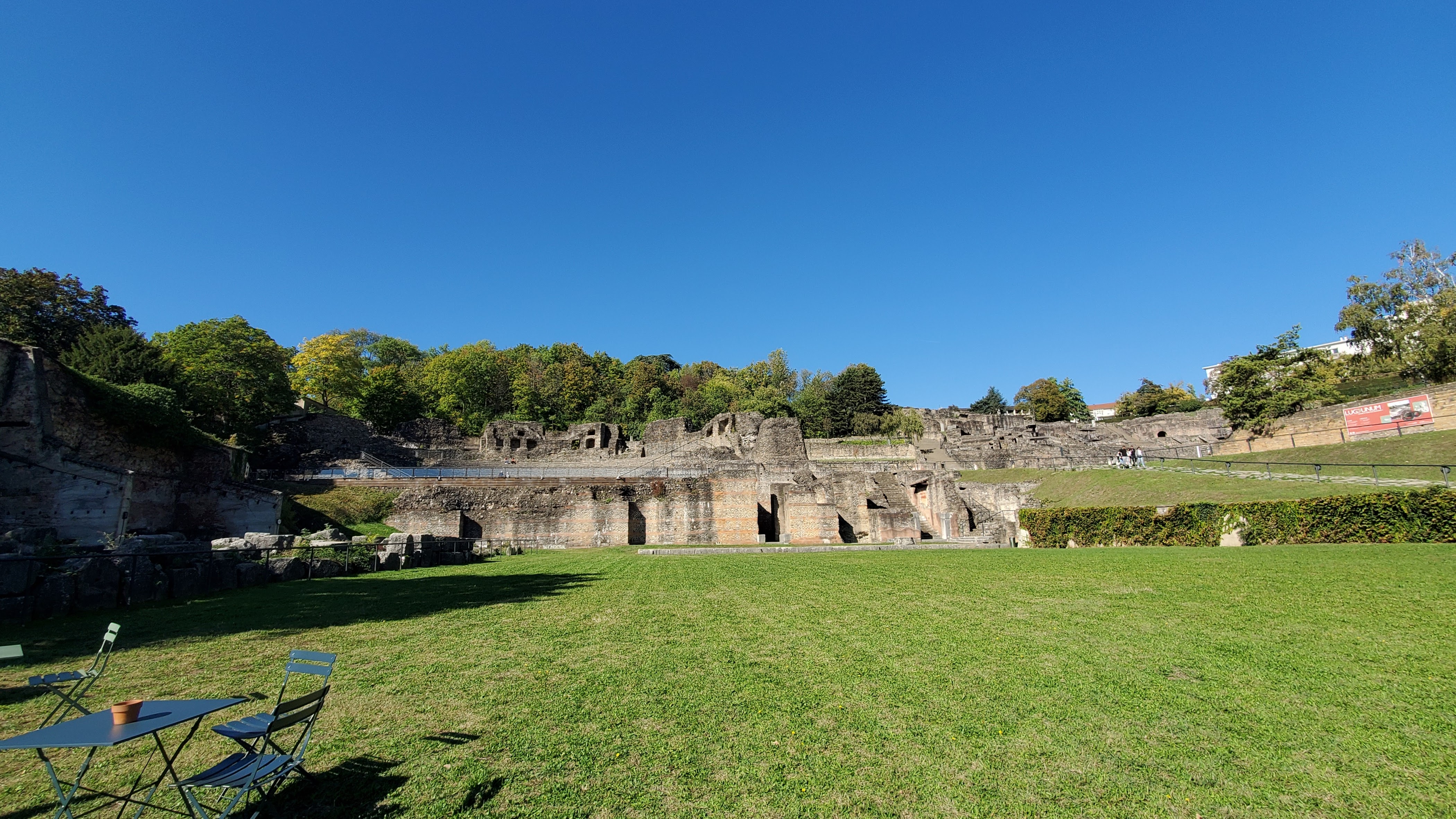
Lugdunum sits near the confluence of the Saône and the Rhône Rivers and is dominated by two hills: Fourvière to the west (where the theatres are located) and Croix-Rousse to the east. One can imagine that this area was a built upon an earlier Celtic settlements, probably of the Segusiavi tribe, dating back to the La Tène period 450 BCE forward.
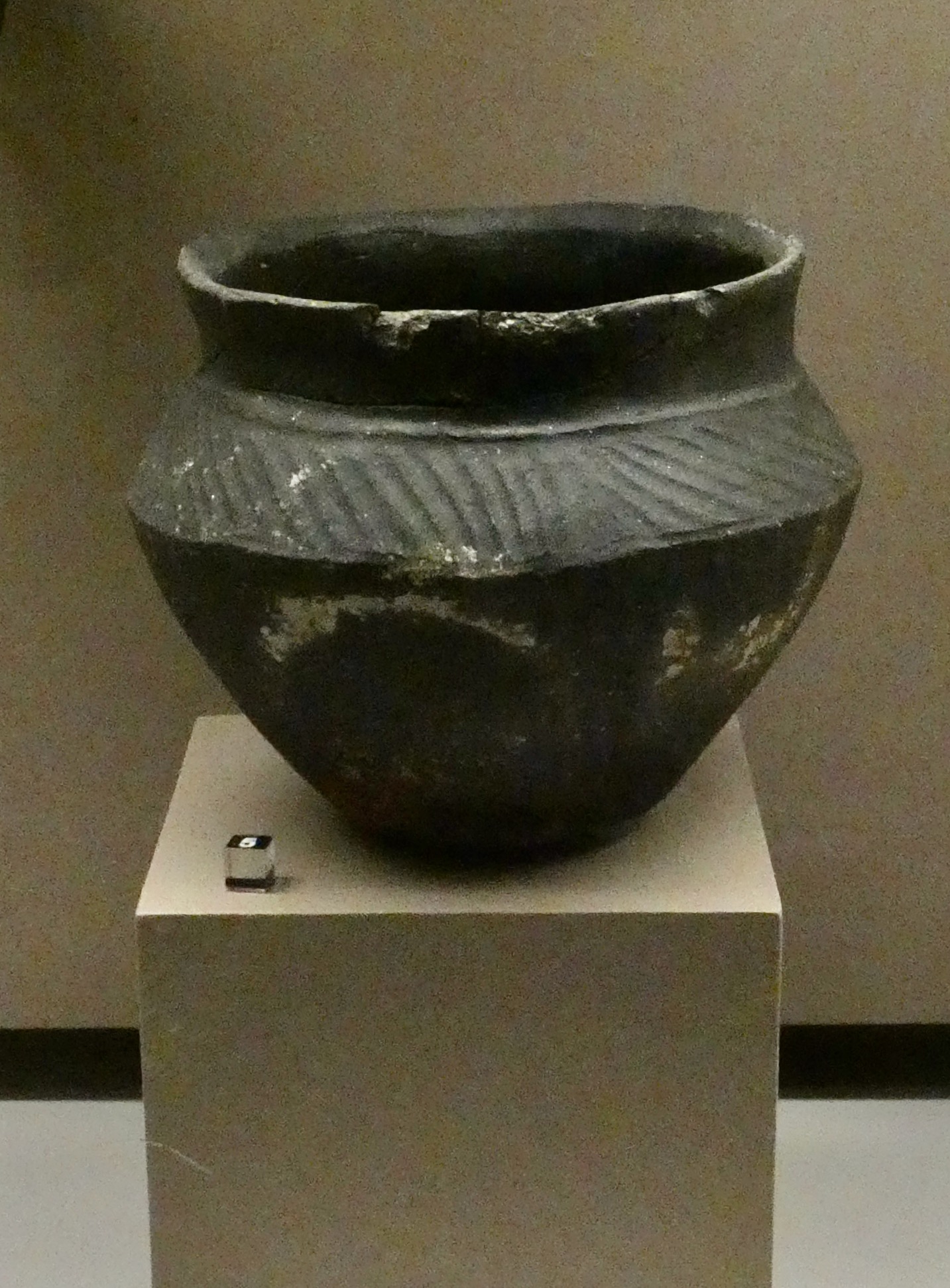
from the Roman Museum Lyon
There is evidence of a “oppidum” or hillfort on which the Romans built their city known as Lugdunum. Lugdunum is a latinization of the Gaulish Lugudunon, meaning Lug’s fortress (celtic hillfort). Lug was a Celtic God and later seems to be associated with Mercury. Below is the Roman road heading to the two theatre’s.
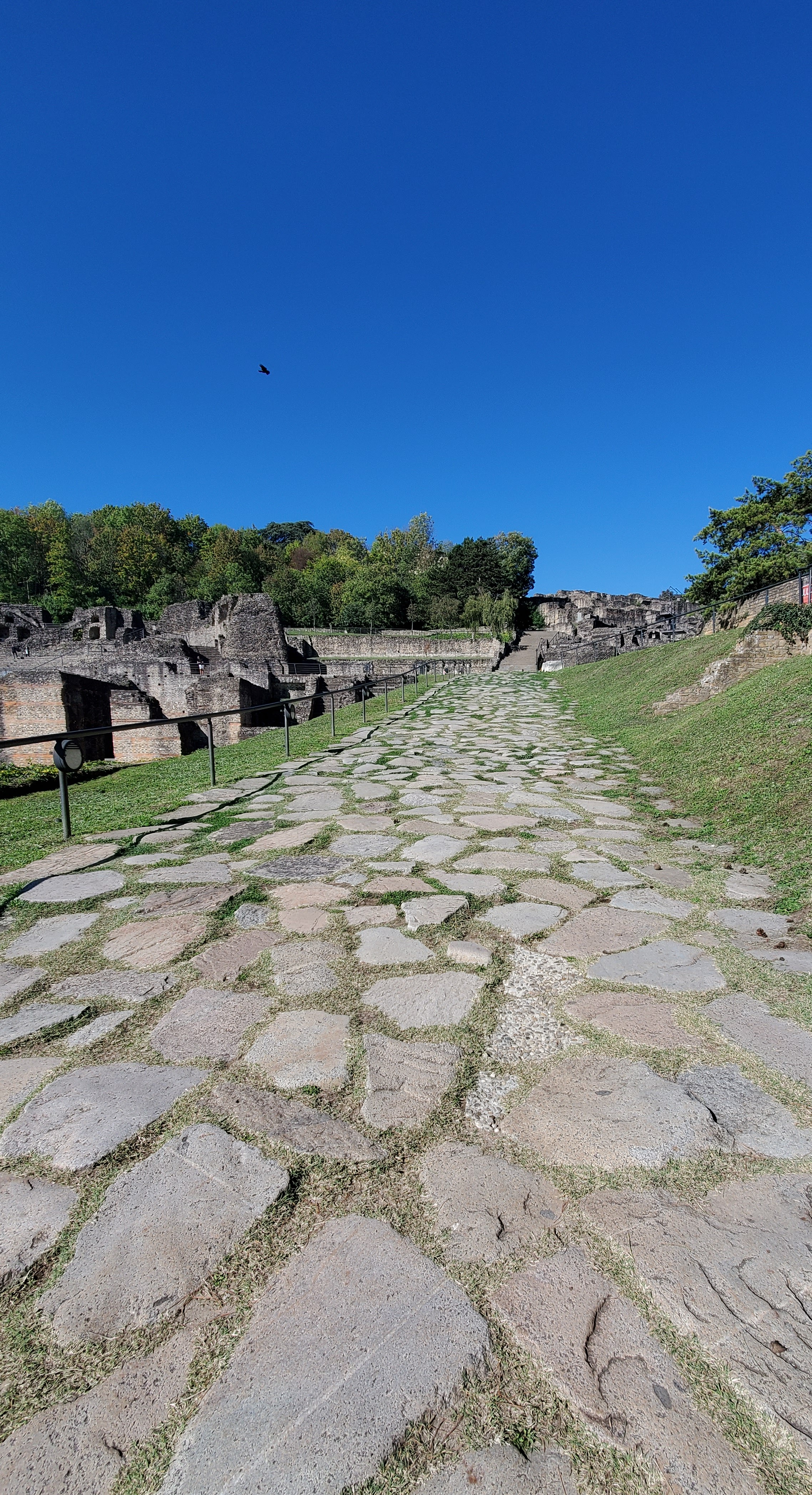
The two Theatres the one on the left (south) the Odeon would have been covered, is about 220 feet in diameter and seated 3,000 and the one on the right (north) about 325 feet in diameter and seated 10,000 people. Lugdunum from 70–192 AD, may have numbered between 50,000 to 200,000 inhabitants. Today’s population of Lyon is about 515,000.
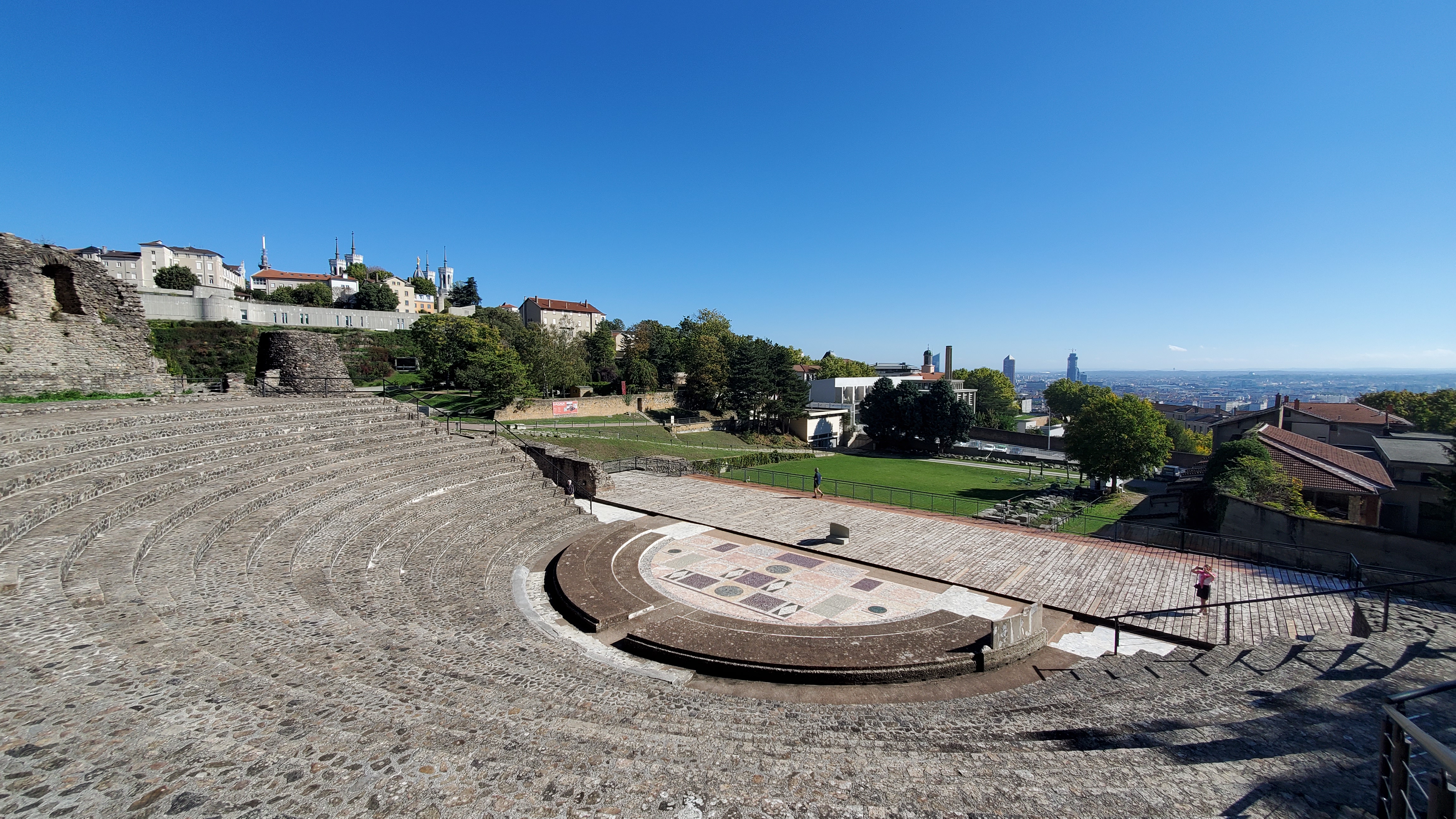
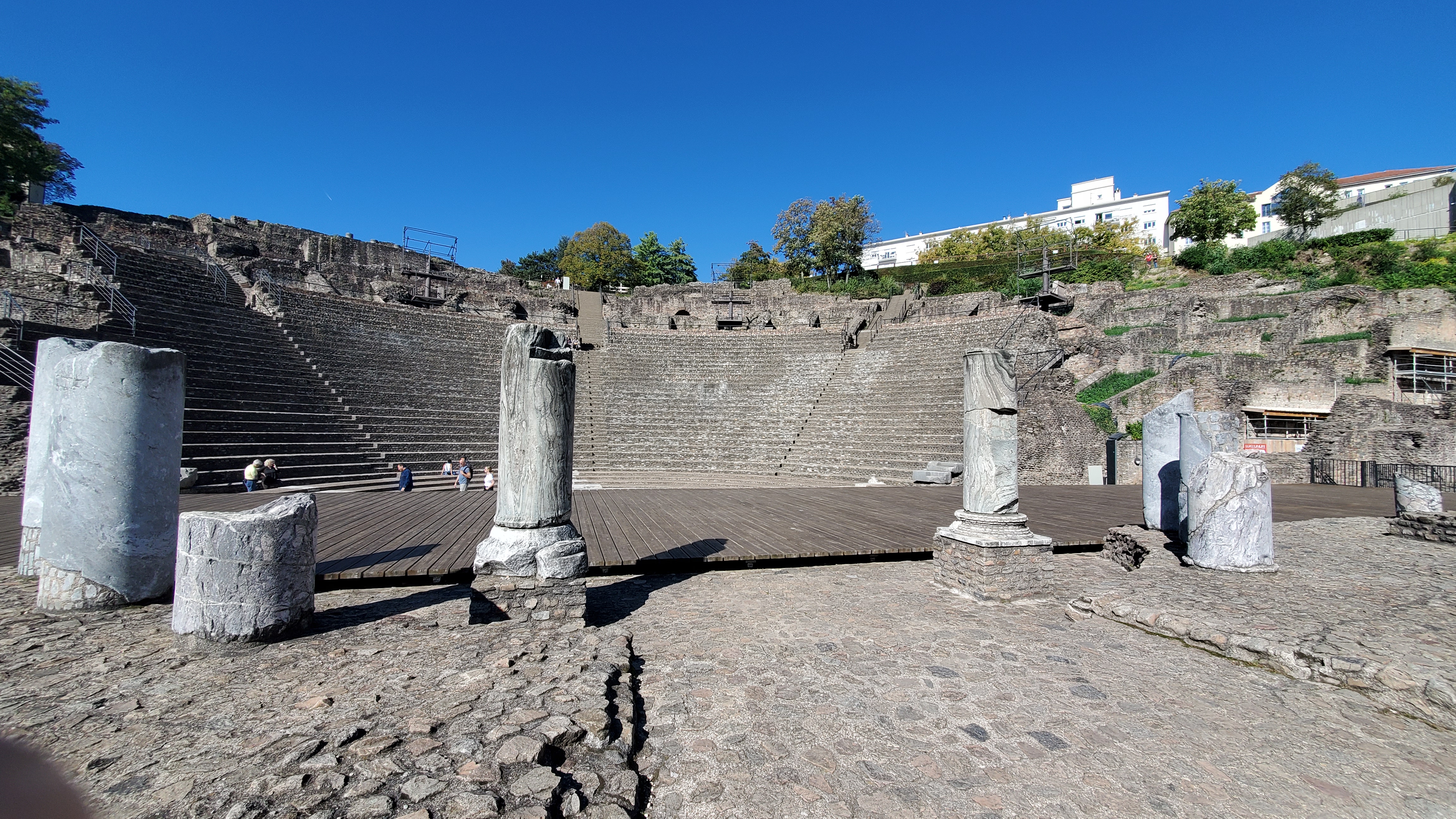
When I visited in early October you can see there were just a handful of visitors. A distinct advantage over some of its more well known Roman theatres.


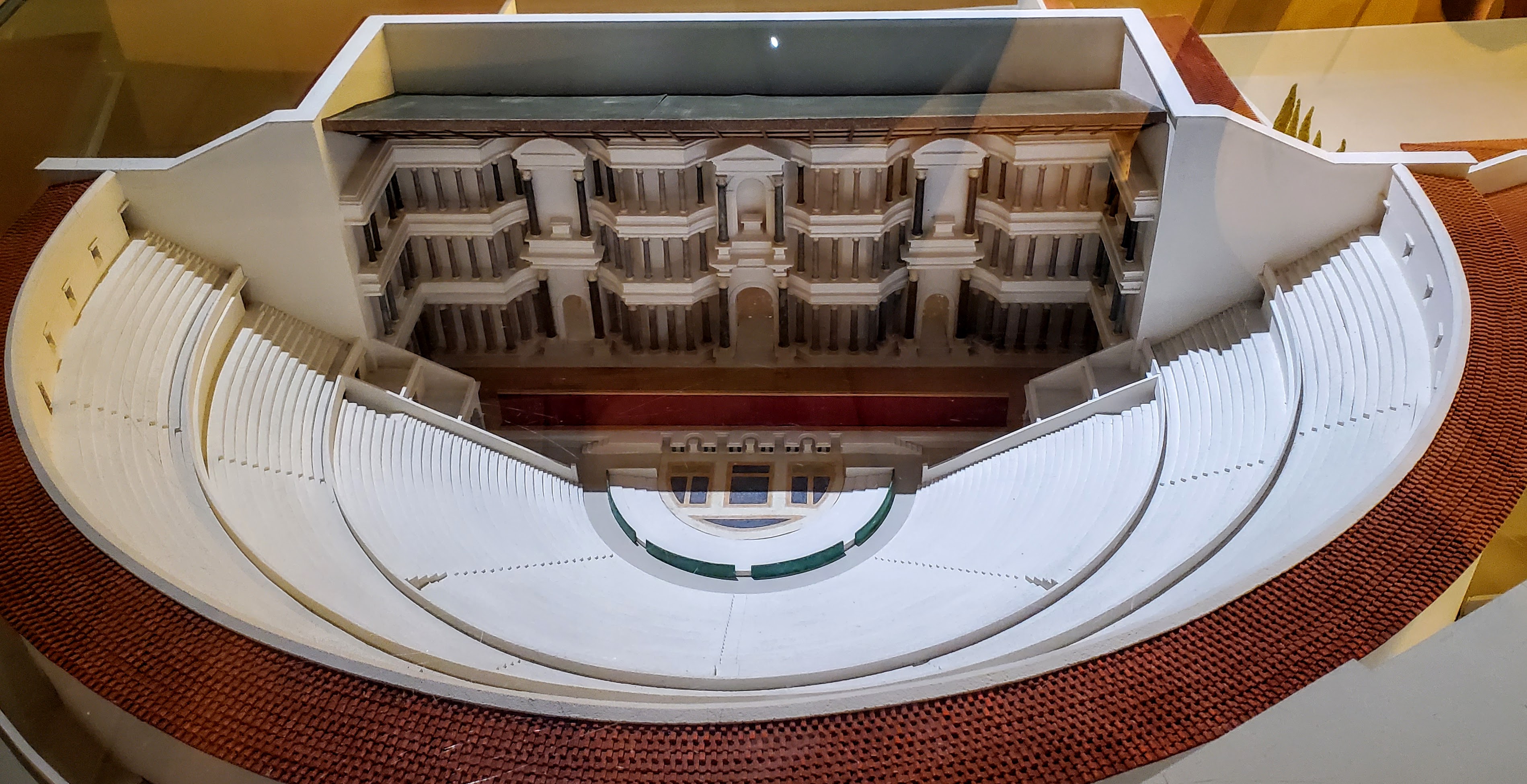
And a model of what it may have looked like in its hey-day.
The Museum’s internal architecture is both pleasing and the collection artfully displayed.
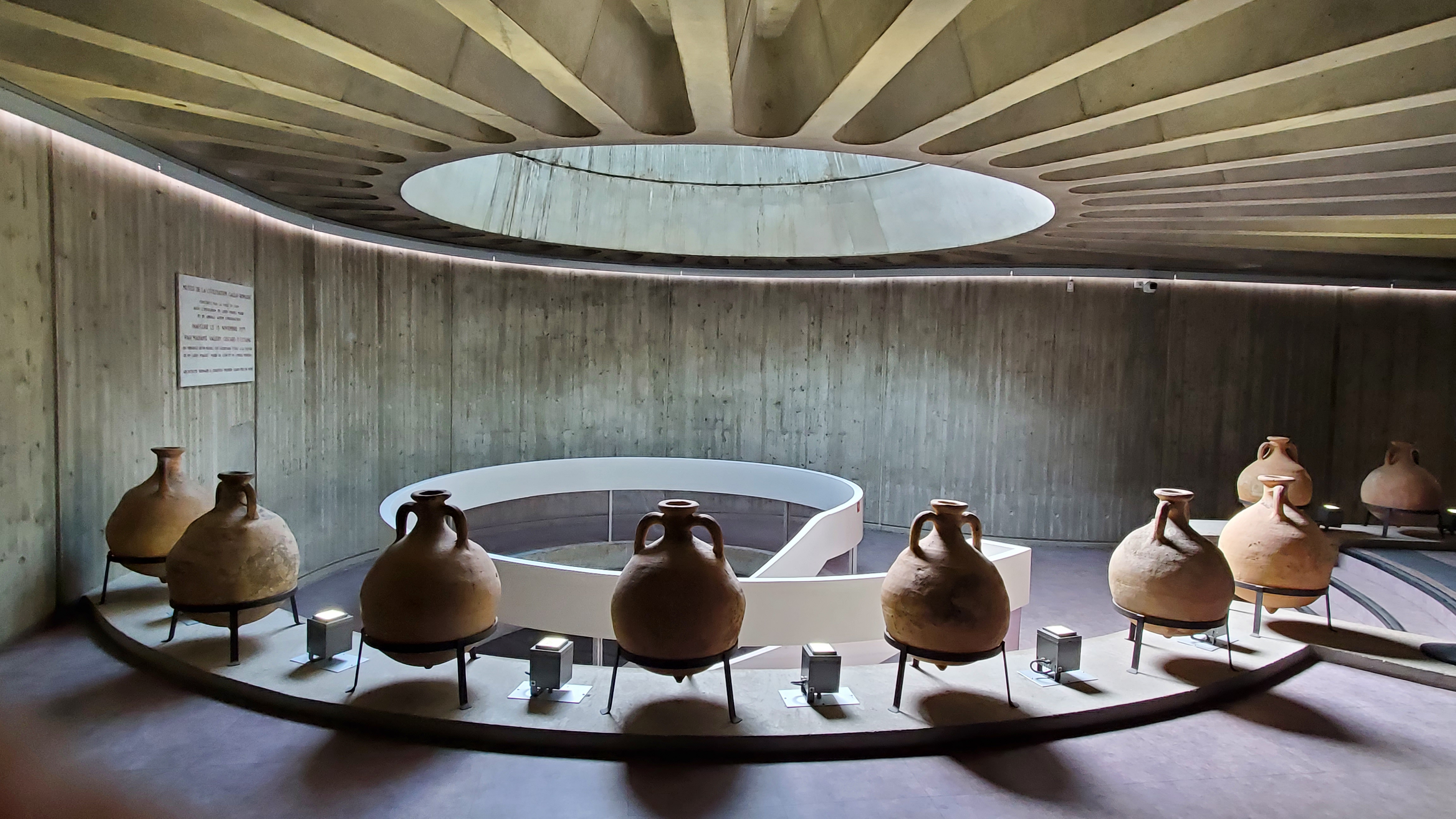
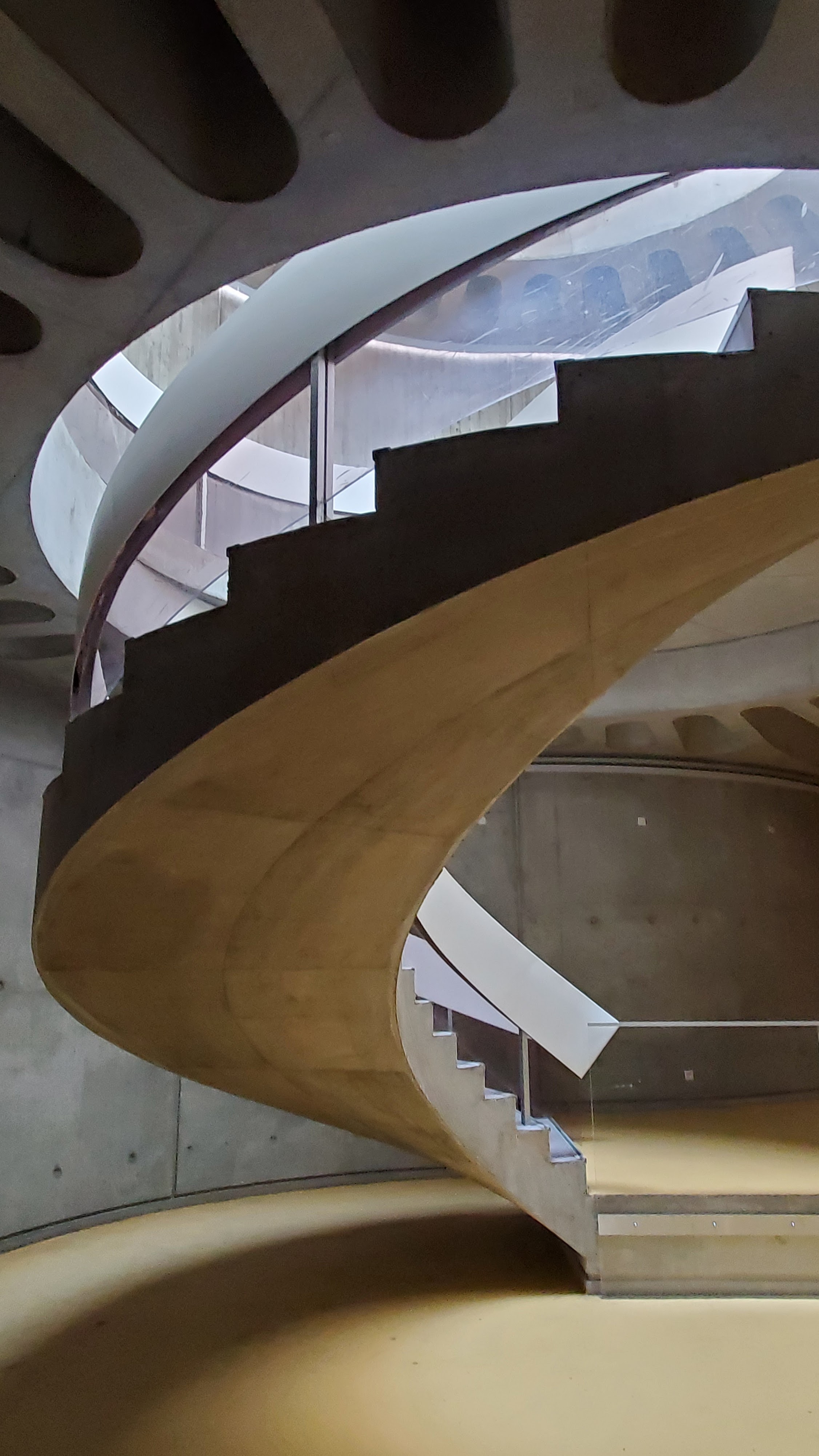
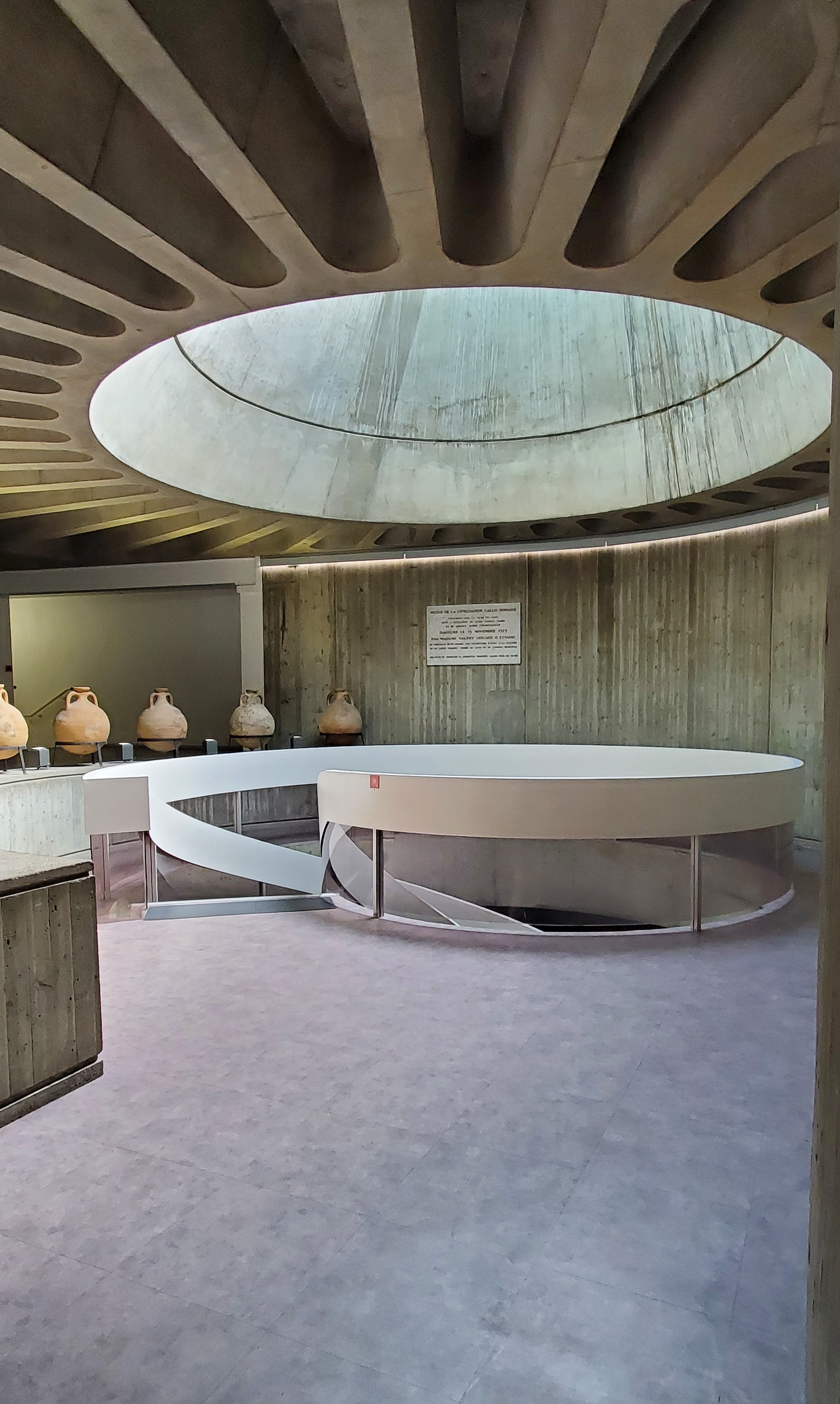
I am always impressed with cultures that preceded us and their level of sophistication like architecture, art , sculpture etc.
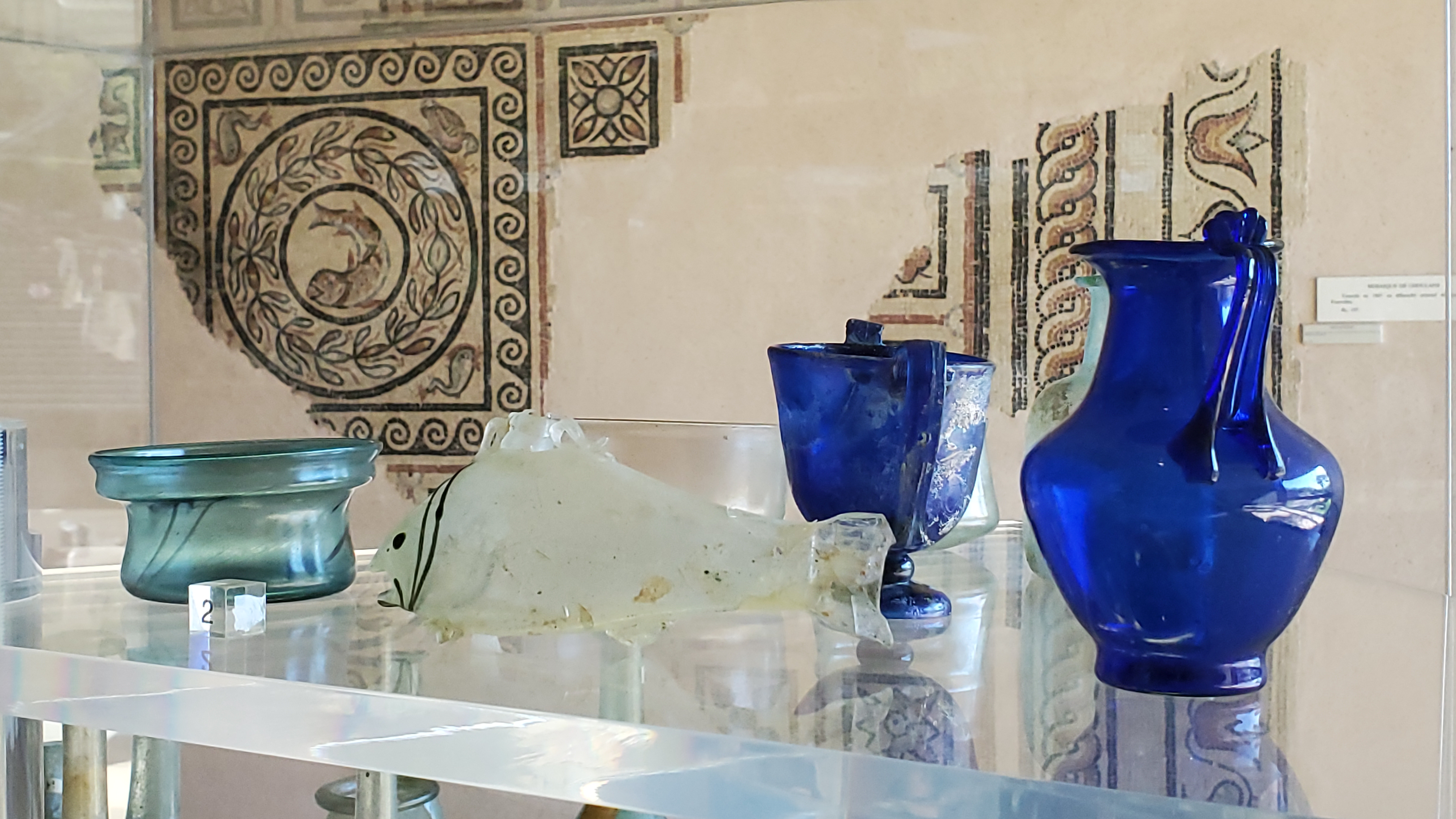
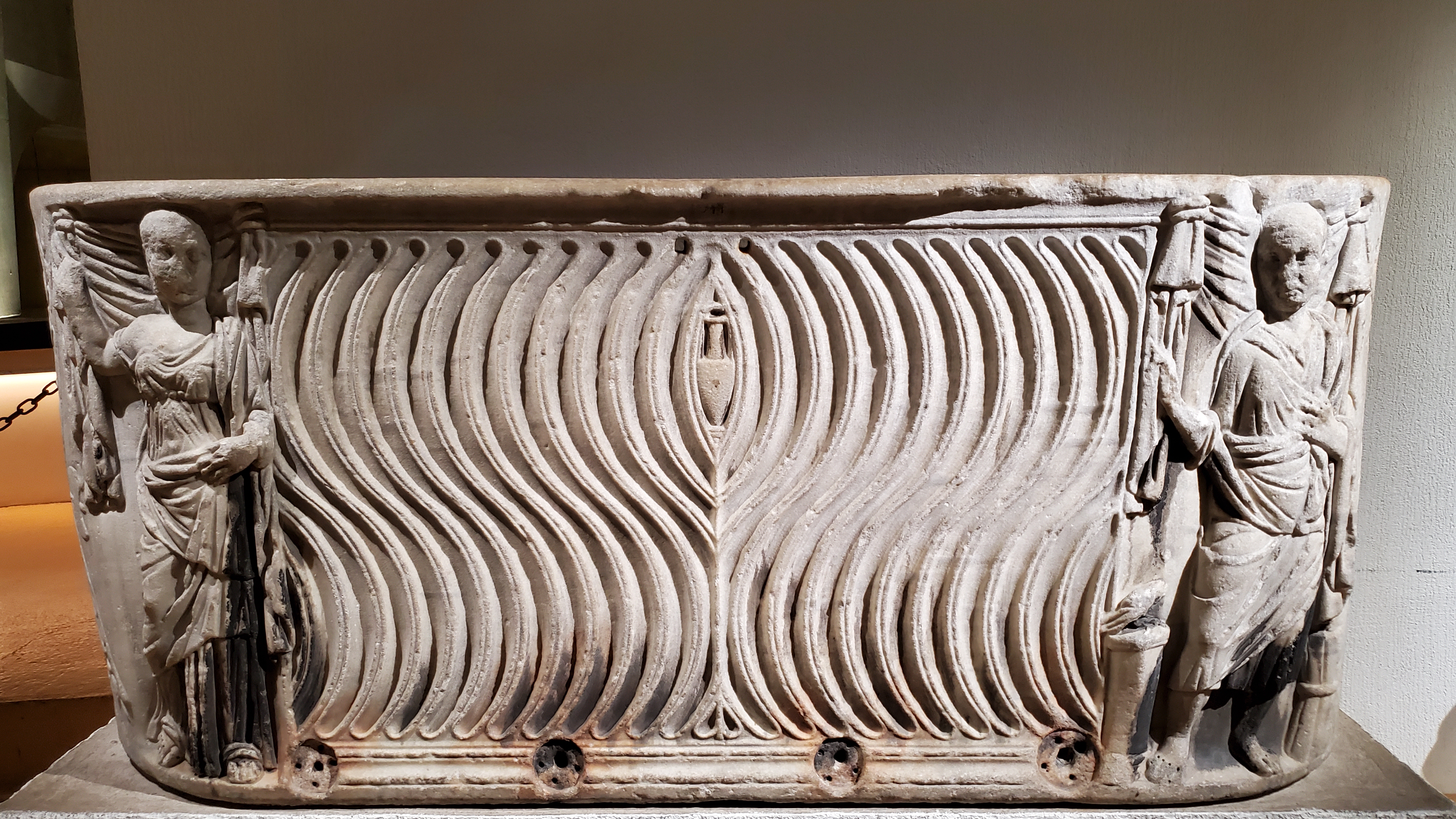
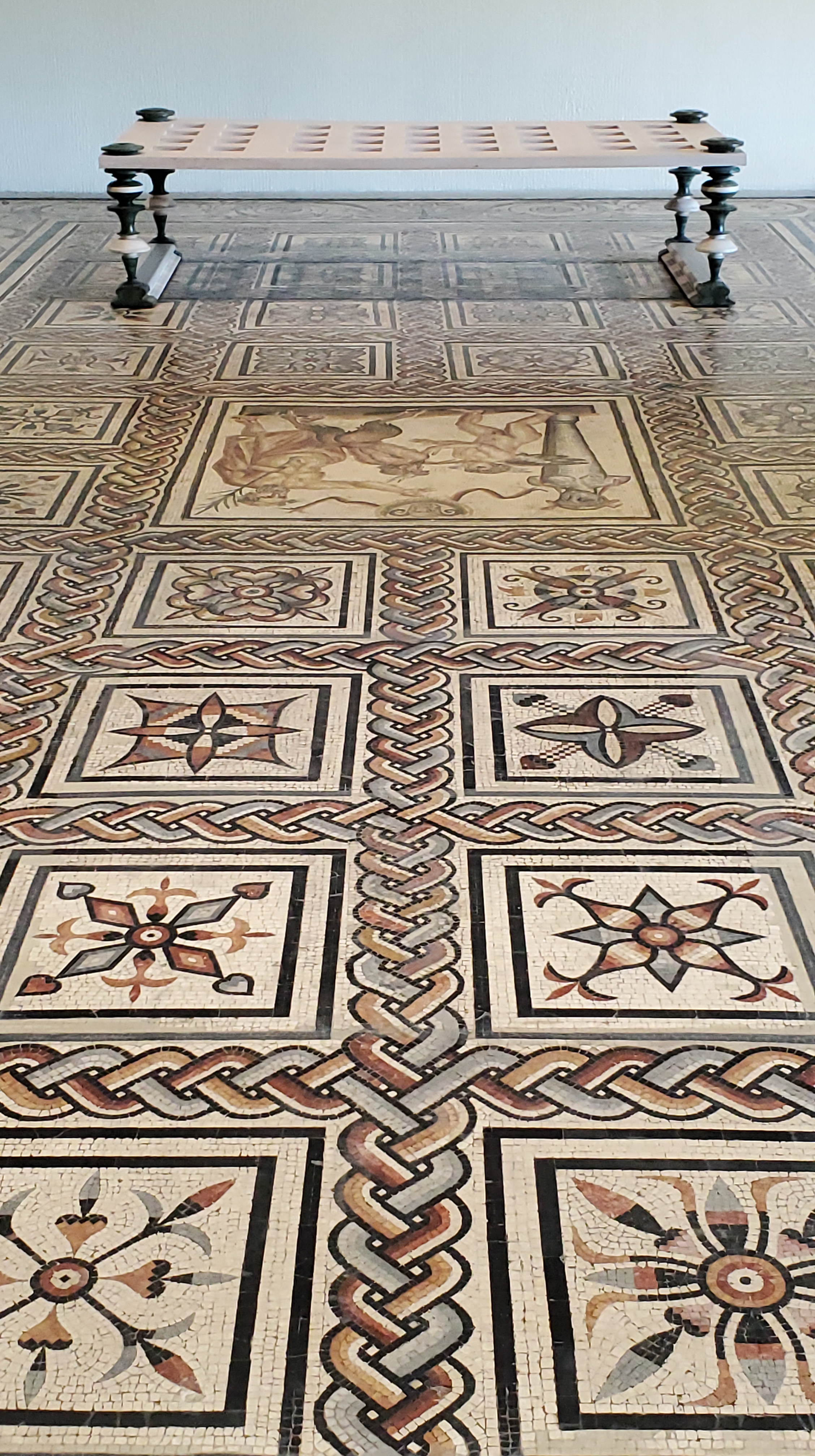
And while I know of no Roman ancestry I do know that many English families have origins back in Celtic Europe and much migration with the Roman conquest of Britain brought their gene pools to land there.
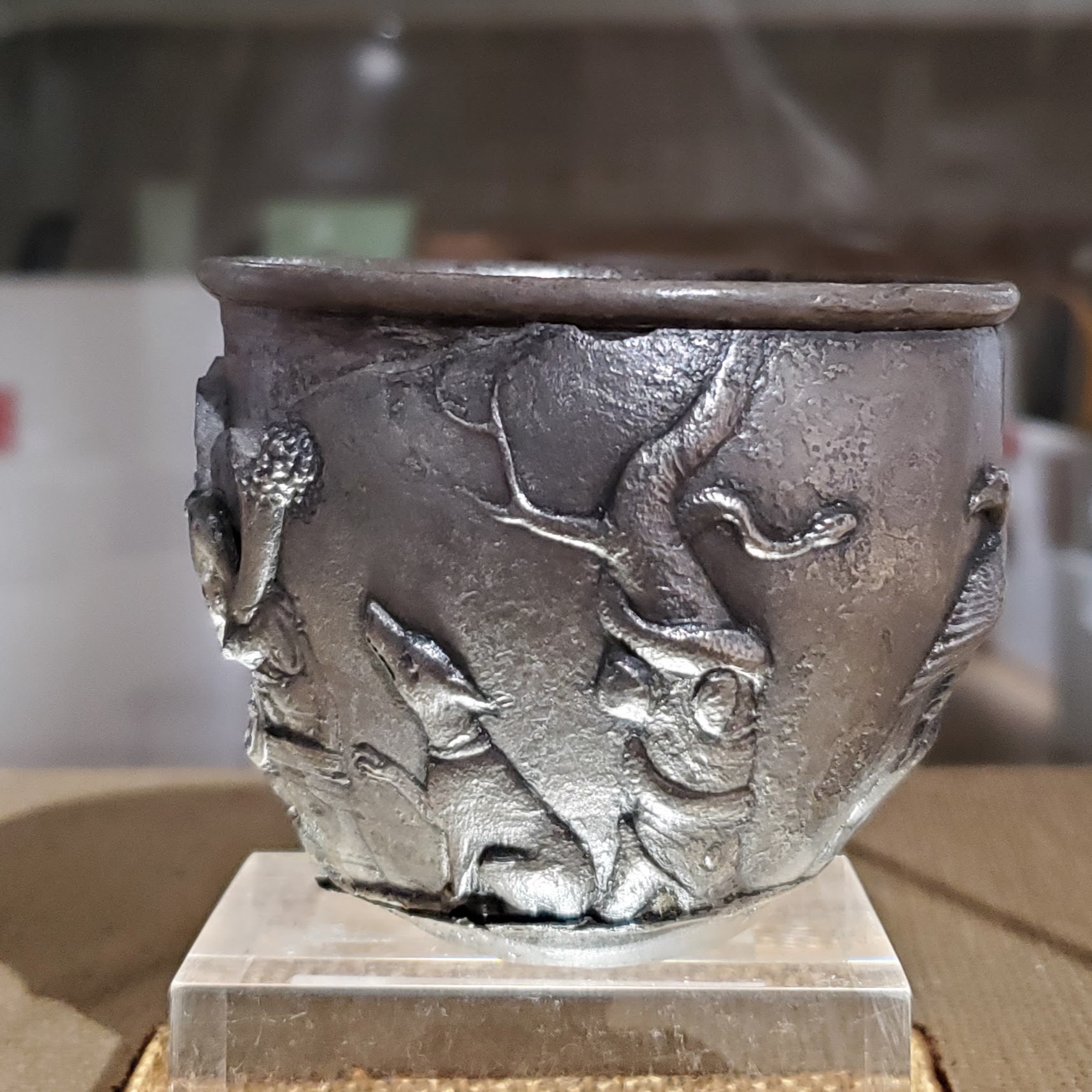
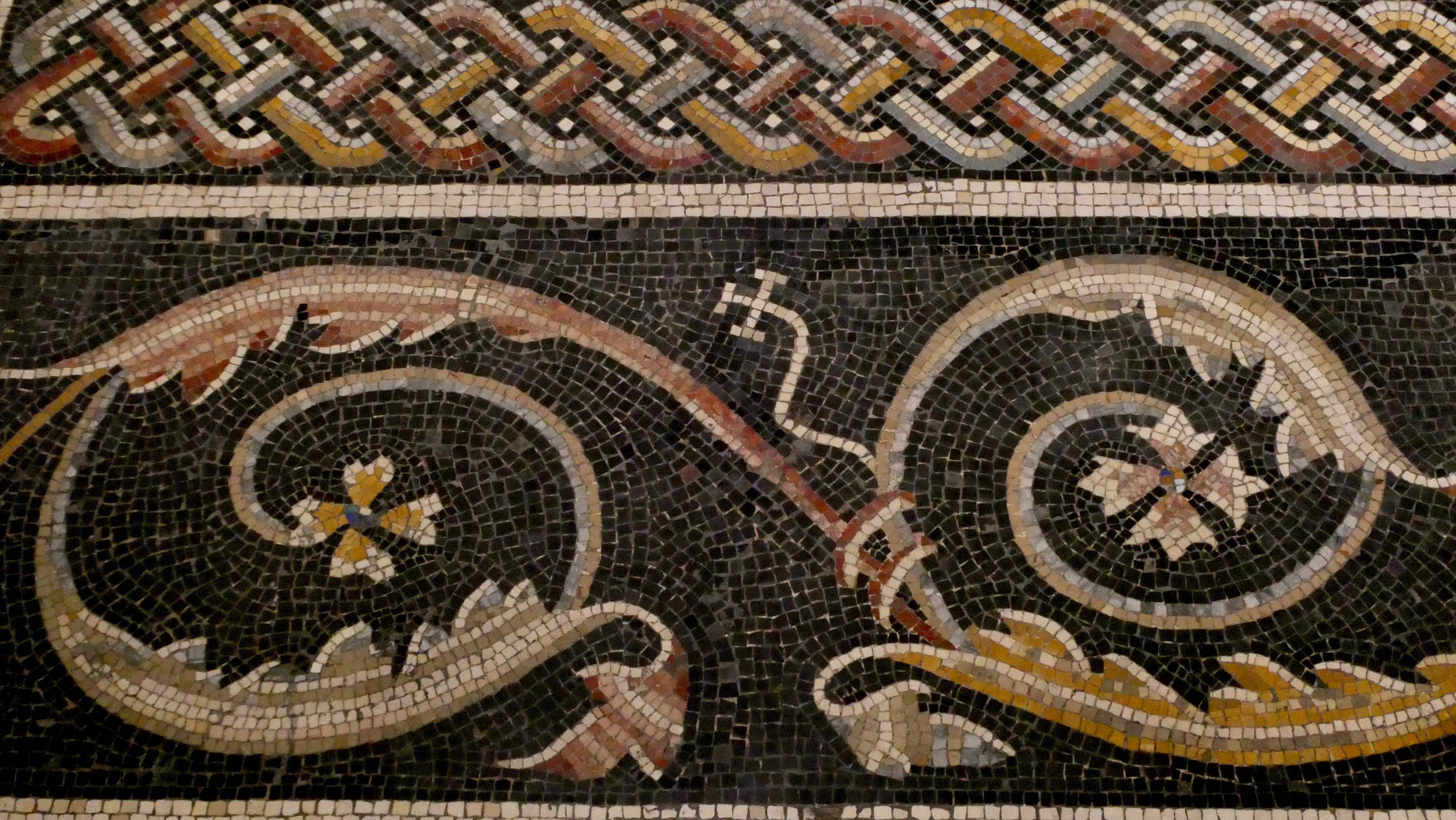
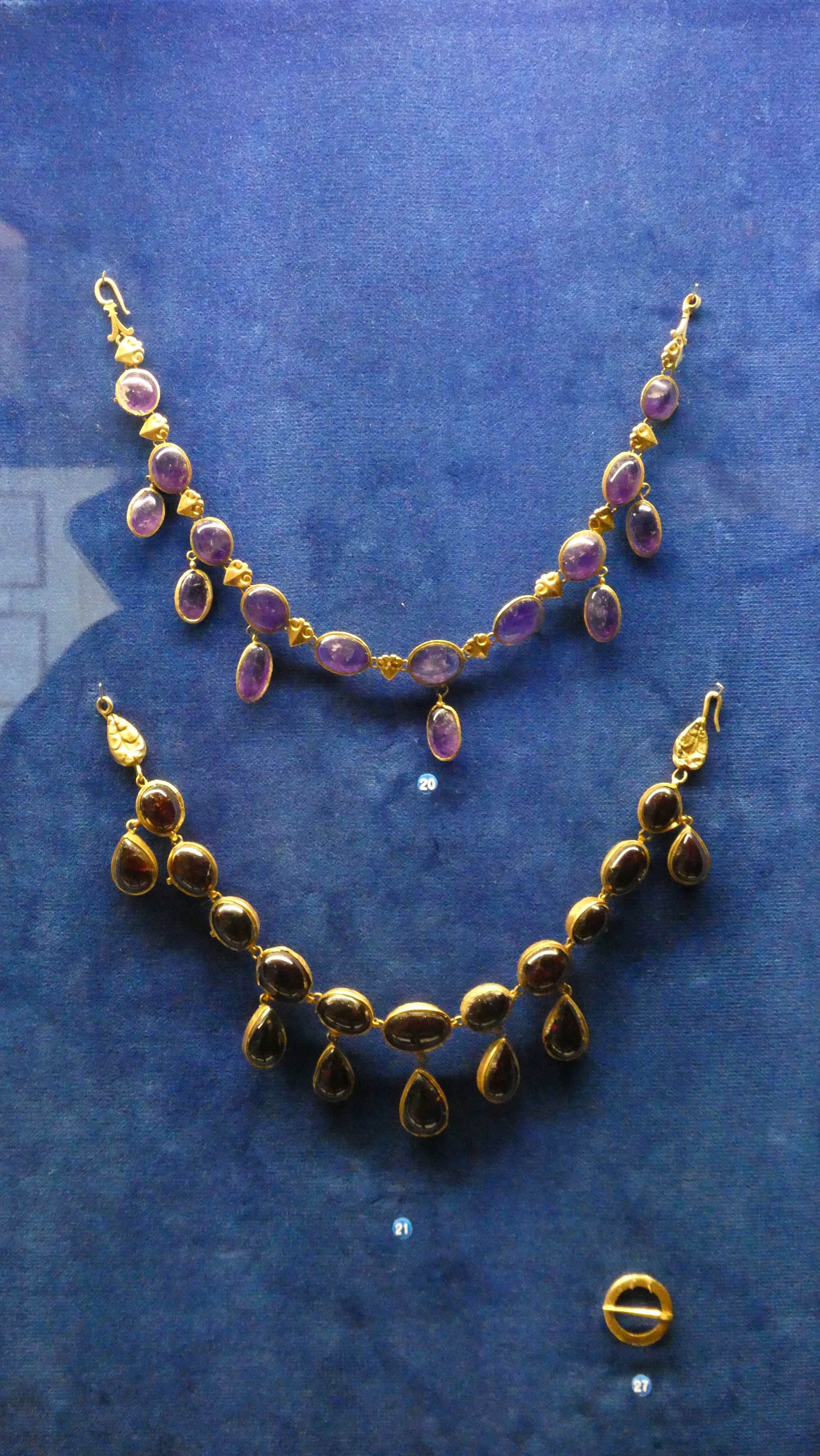
Thanks for letting me indulge my little Roman reverie. No matter where we tread we are likely to find a connected history all around us. If you happen to land in either Lyon or Saint-Gervais take a closer look. Visiting off season and not to the most famous of destinations can pay unexpected dividends. Happy travels!
Kelly Wheaton ©2022 – All Rights Reserved
Justus Warren SHELDON in Eaton Rapids, Michigan & the power of Colorized Photos
Posted on October 22, 2022 2 Comments
I have written posts about my great grandfather Justus Warren SHELDON before but this one is going to focus on his time in Eaton Rapids, Eaton County, Michigan. It seems that Matthew LaRue “Rue” PERRINE owned a large 472 acre farm on the banks of the Grand River but he died of Typhoid fever in September of 1894 at the age of 82; upon which time the farm was purchased by Justus Warren Sheldon. I am unable to locate the exact location of the farm but from this plat map from 1873 and the designation of 472 acres I can come close.
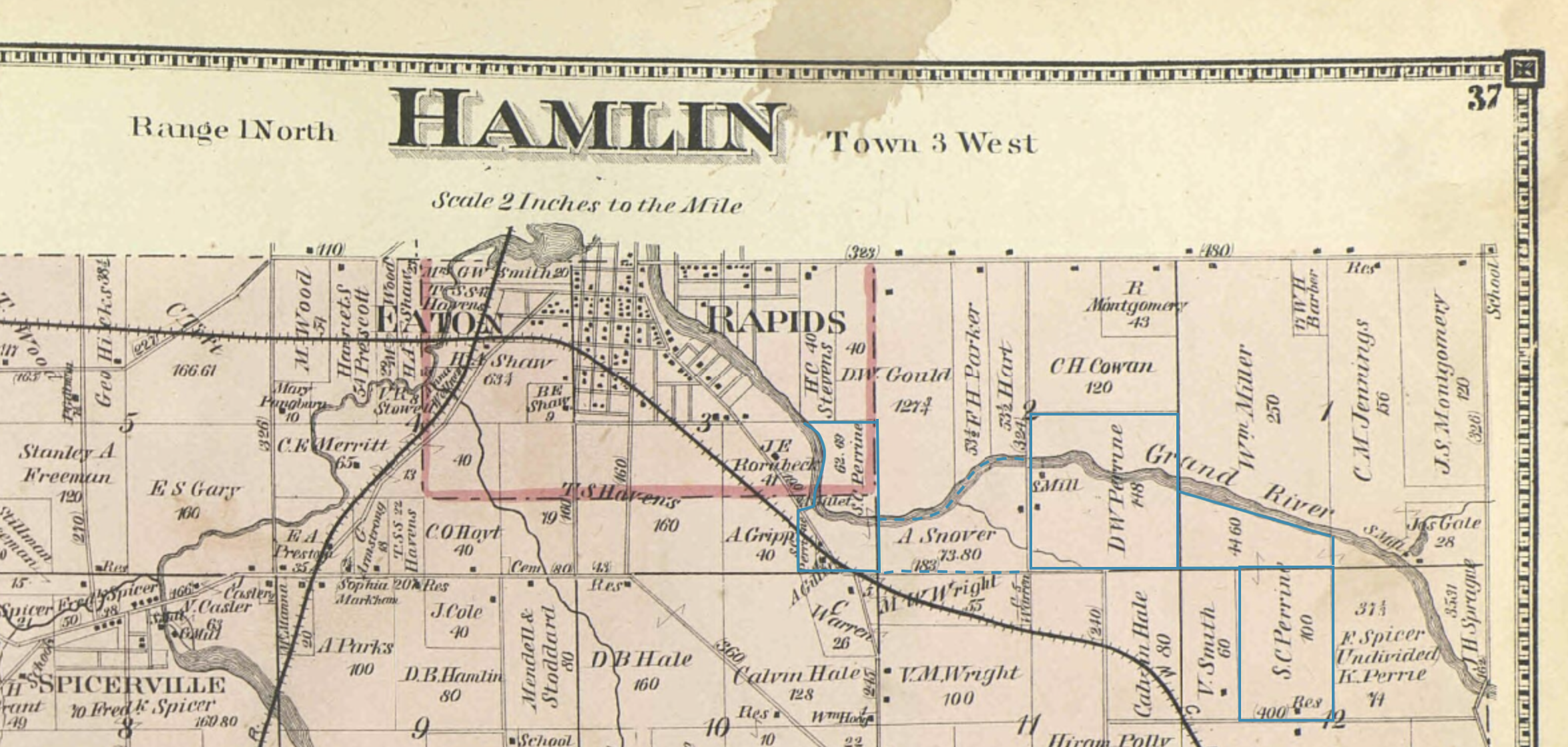
The large parcel that was listed as DW Perrine is “Rue’s” son and given that the property later became the VFW Children’s Home we can place that parcel here. This is listed as 148 acres so the farm would have been much larger than I have shown below. Note the S (saw) Mill on the above map. This is where the oaks were felled, milled and transformed into Justus Warren’s House in the town of Eaton Rapids.

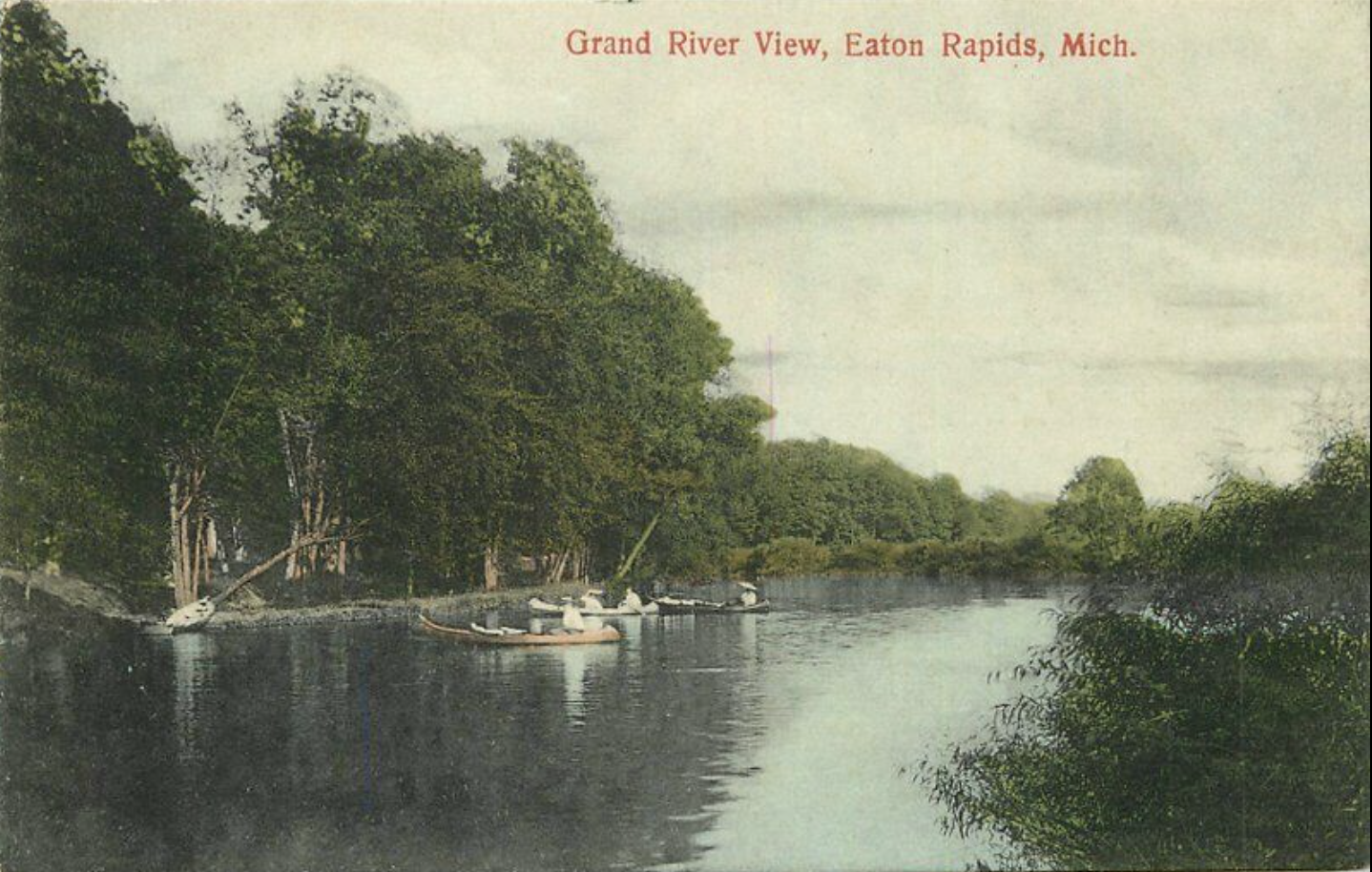
So based on the sale of this property we can place Justus SHELDON’s arrival in 1894-5. By the year 1900 he is listed living in Ward 1 of Eaton Rapids City, Eaton County Michigan census. So at this time he would have been living in the city but also owning the large property bisected by the Grand River. I have written about the property above as the Grand River Stock Farm.
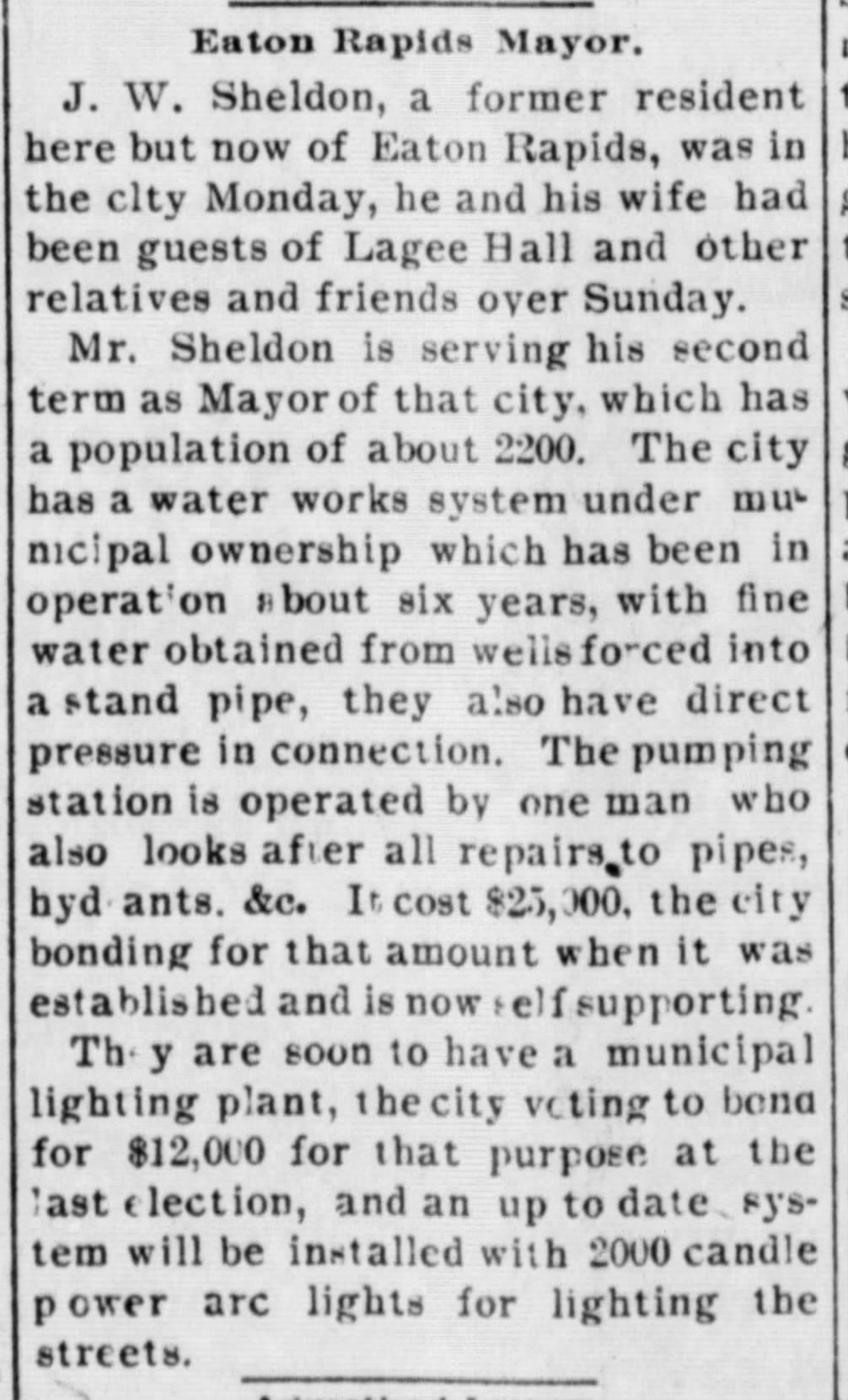
According to a recent property listing his house at 221 State street is a “Superb Victorian Era home built in 1901 by Warren Sheldon. Original and beautiful white oak woodwork throughout. Enter this home and enter an era of Grace and style 5 bedrooms , 2 baths, gorgeous!” A newspaper article from 1904 mentions Justus serving his second term as mayor of Eaton Rapids. He was first mayor in 1899 and then again in 1904.
Part of the reason for this blog post is to share photos that I have of the exterior and interior of the house. These have been graciously colorized. Let’s start with the exterior. Click to expand each photo. We can date the photos as about 1903 based on the sheet music in the Music Room.
EXTERIOR
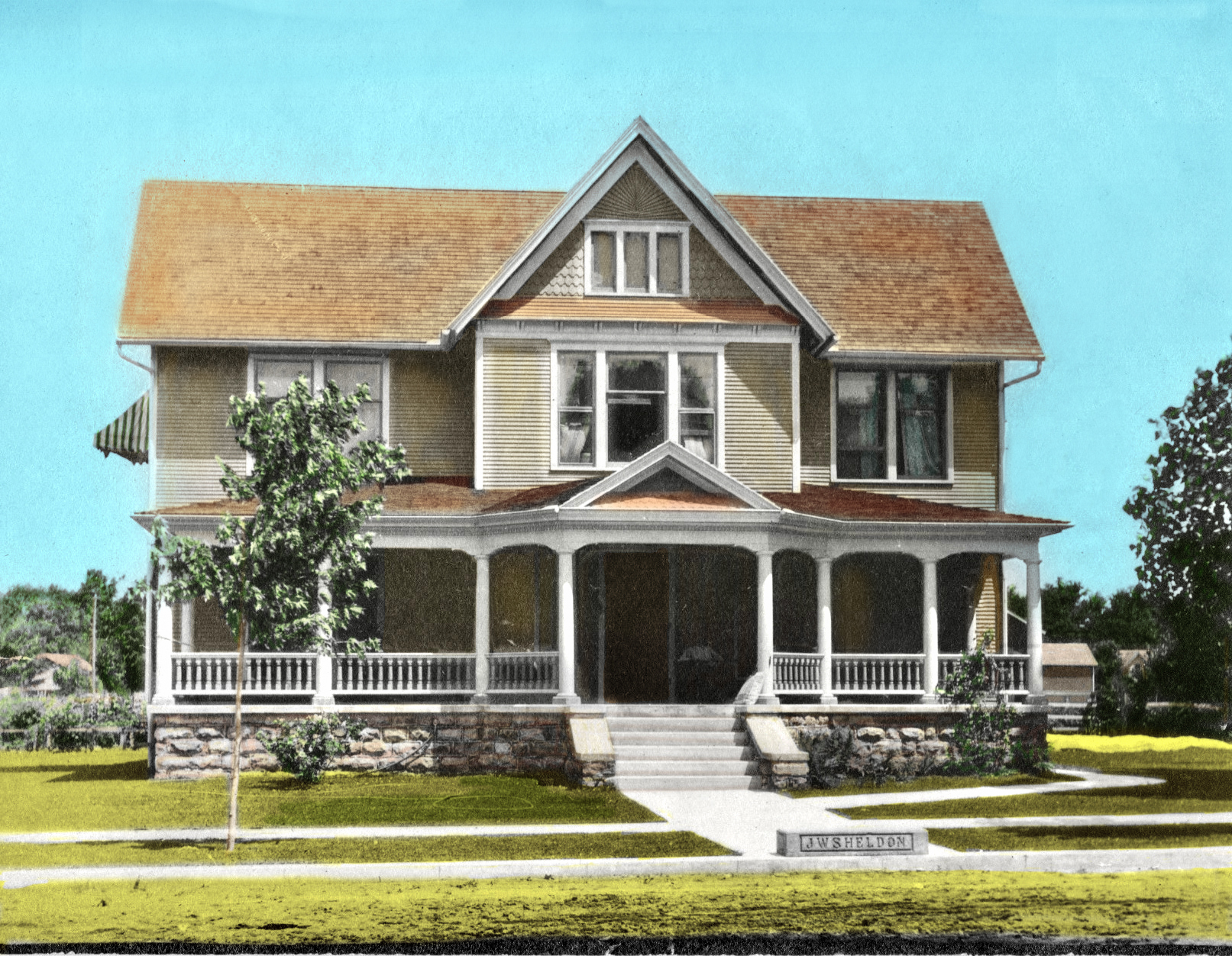
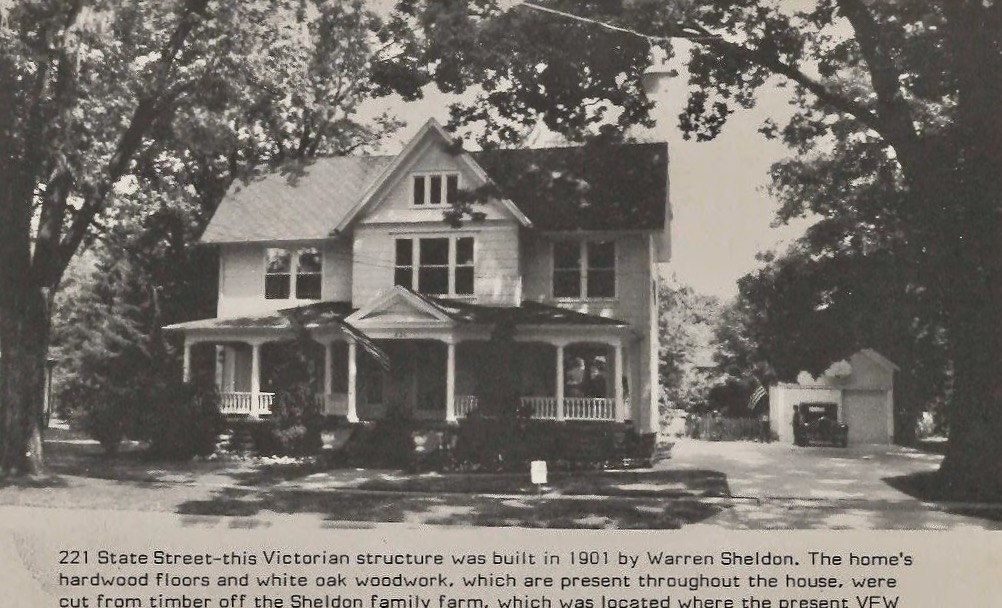

Note the size of the trees and in the first photo the block identified J. W. Sheldon.

INTERIOR
If you would like to compare the recent photos of 221 State St to those in my collection click on bolded link.
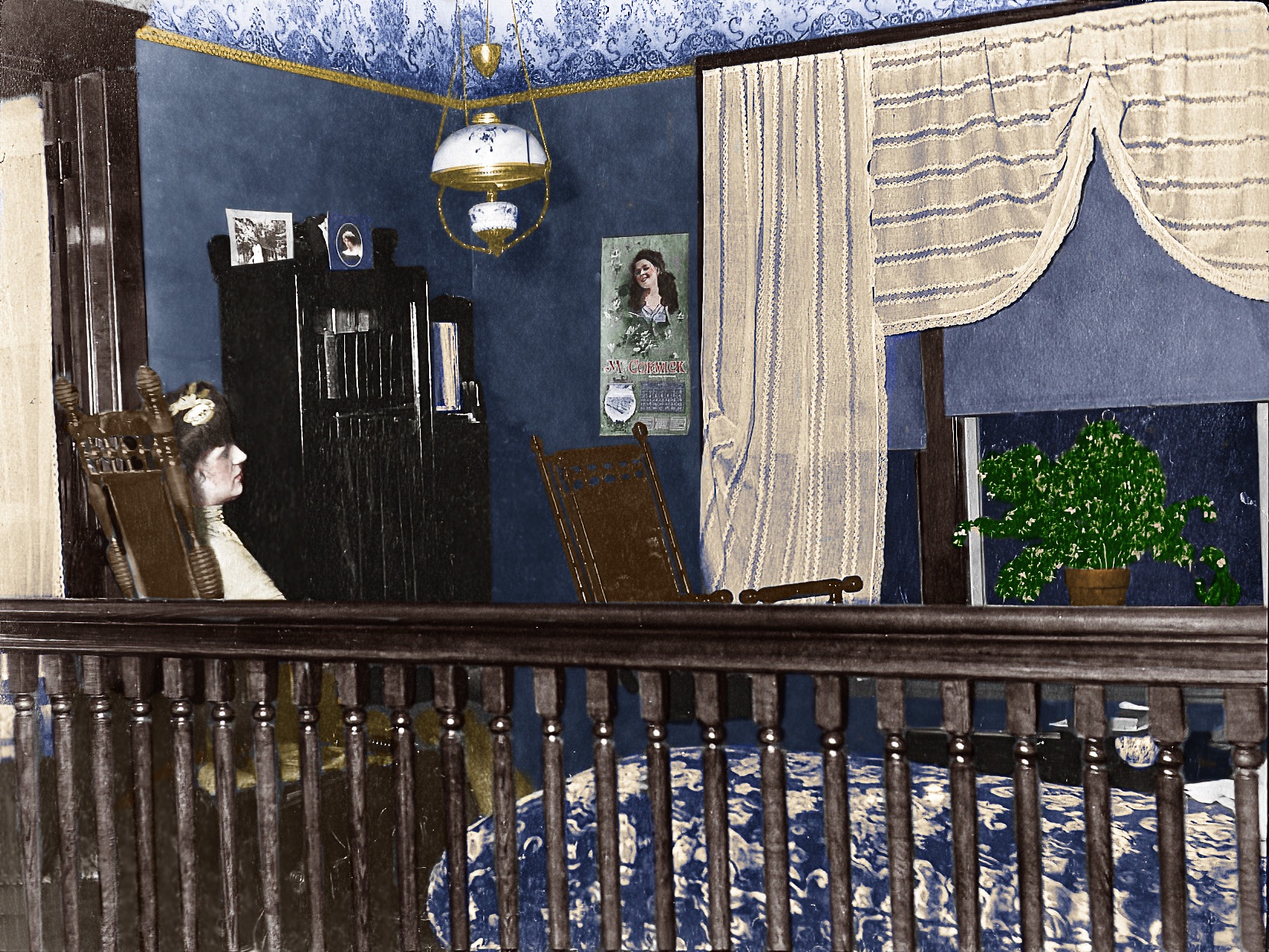

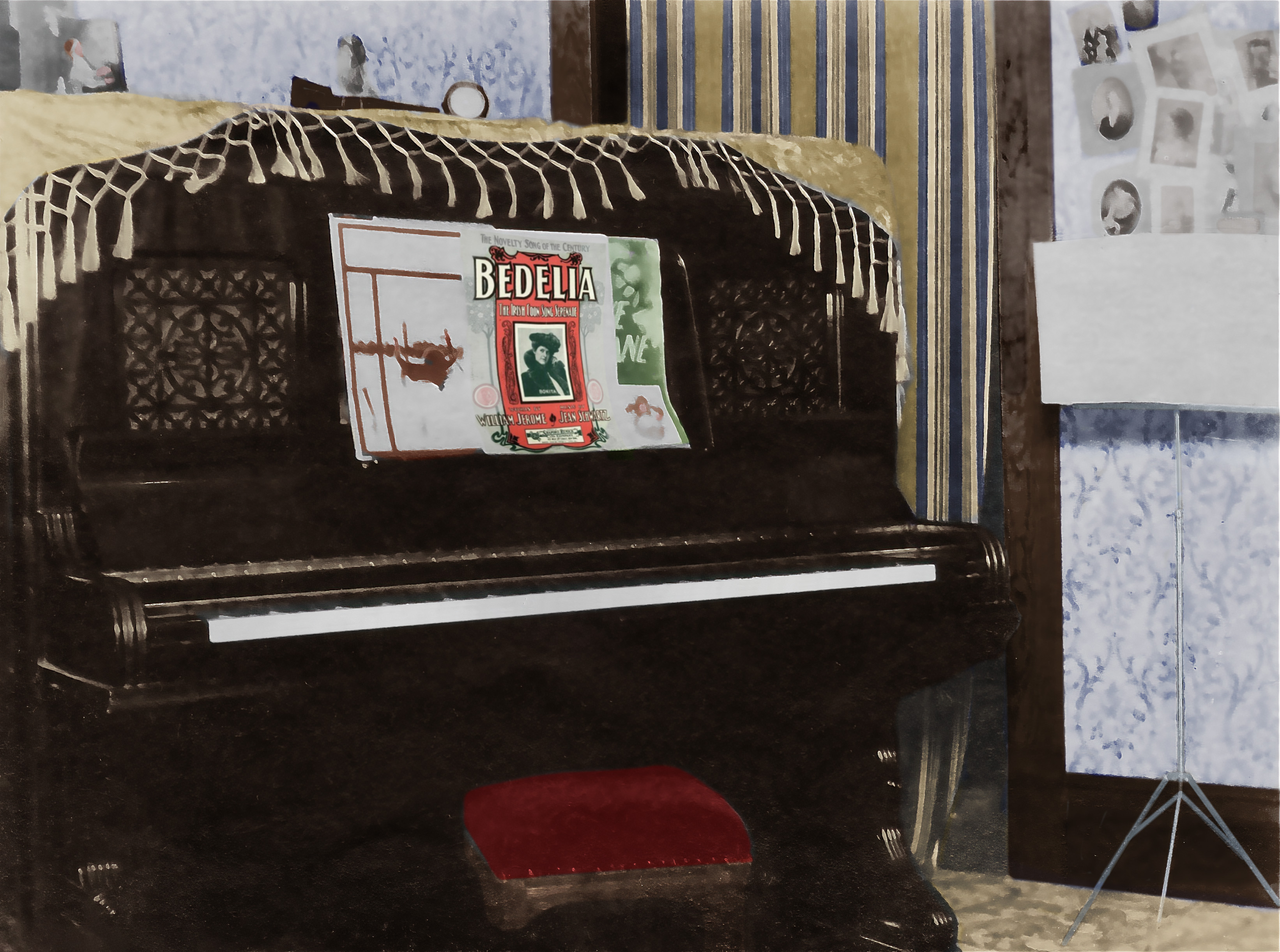


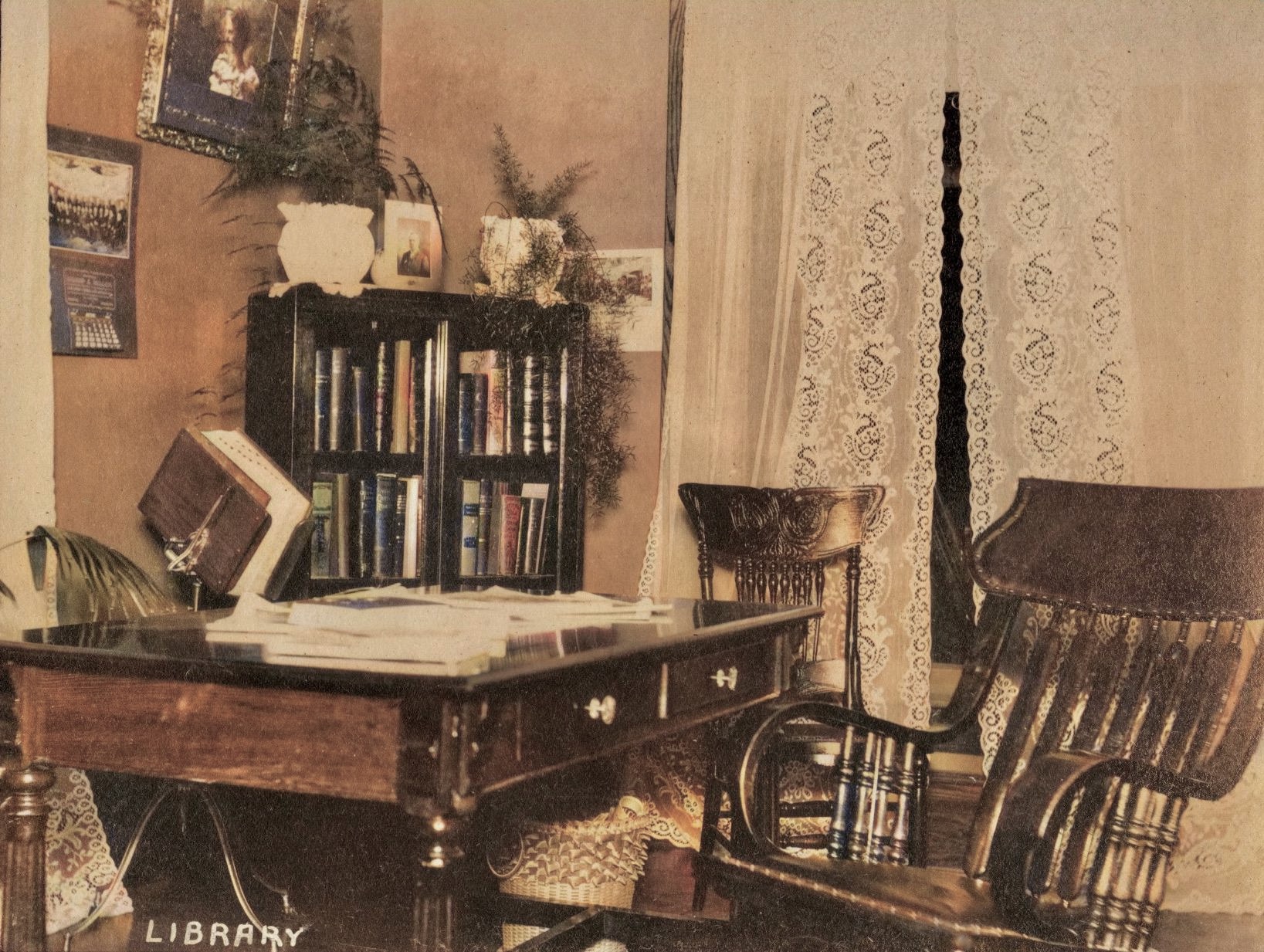
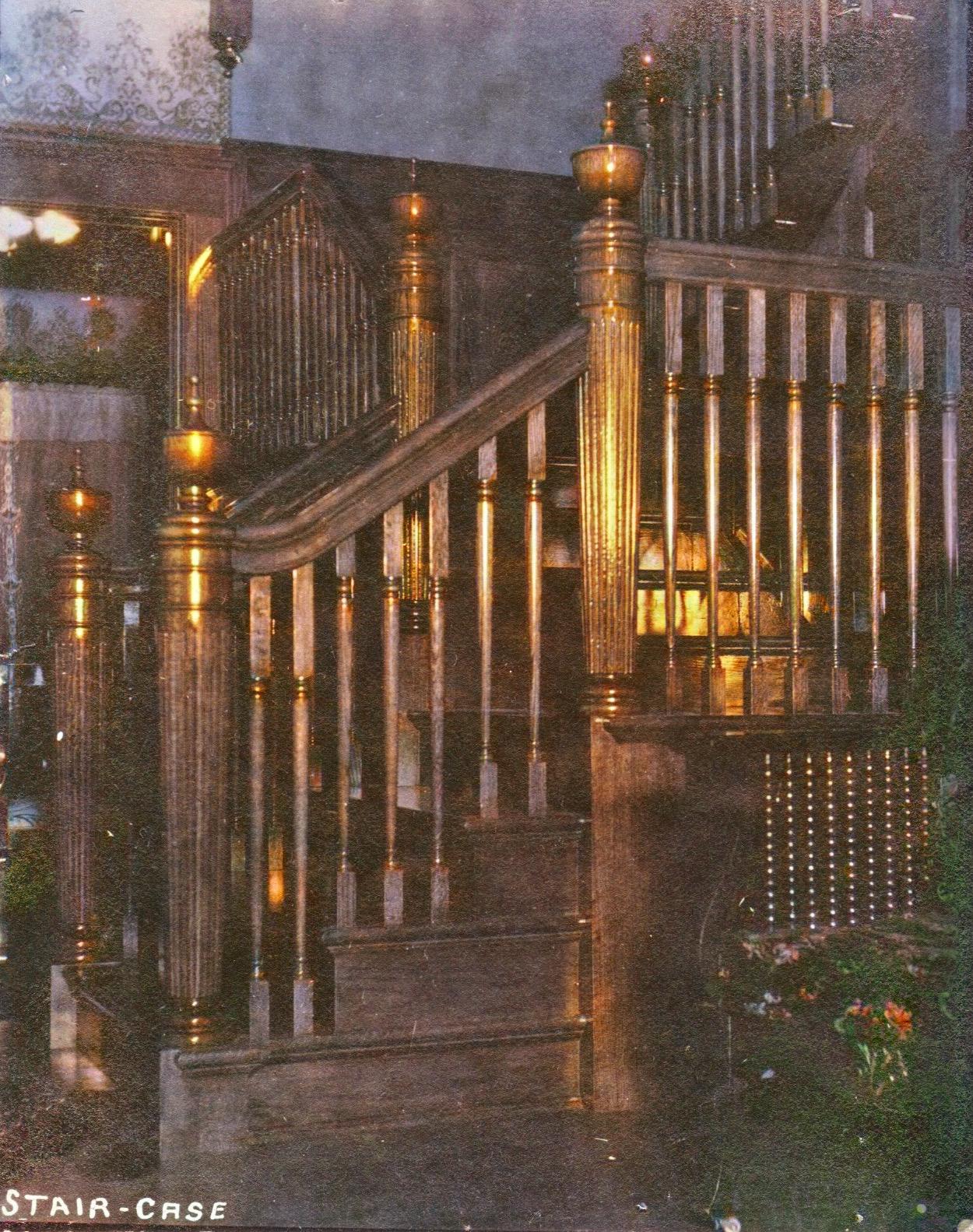
All of the photos are original black and white photos that have been colorized by individual artists or the new (currently free) Palette.fm website. While we can only guess at what the colors and house originally looked like—these renditions do help bring the house to life. Obviously this was a house of which the owner was quite proud. It’s not often we have interior photos of a private home in this time frame.
Kelly Wheaton © 2022 – All Rights Reserved
What Is It About Boxes? Writing Challenge
Posted on August 31, 2022 4 Comments
I am rather sure I was a cat in a previous life. Don’t all cats love boxes?
box. noun: a container with a flat base and sides, typically square or rectangular and having a lid.
I love boxes—all sorts of boxes. Big cardboard appliance boxes, the kind we made into forts or houses or castles. Little bitty jewelry boxes, metal boxes, wood boxes. All sorts of boxes. I like nesting boxes, the kind for birds and the kind of box where one box fits inside another. Really, Is there any one who doesn’t like boxes? I have 3 boxes sitting on my desk at the moment. (Who knew?) One, is a tin box that I bought at the Stuttgart airport in Germany. It had dark Fedora Chocolates in it, each wrapped in a facsimile of painting. Two, is a handmade box, I think of Myrtlewood, my mother had, that I inherited. Third one, is a hinged wood box with an anchor, my grand-daughter gave to me for Christmas, that looks like a treasure chest. And lets not forget flower boxes! I even have a collection of flower box photos. Although not really a box in the proper sense unless you consider the flowers its lid. Why not?

And this is a photo of the three boxes that reside on my desktop. Although someone pointed out the one on the bottom is properly called a “tin” or as I say a tin box.

There’s so many things I love about boxes where to begin? I admire both the utility of them and the mystery of what may be inside. Or even what I can store in it… As my last blog post was about my Grandmother’s Trinket box, I feel I am not alone. In fact I know I am not. My mother saved boxes and on the day after Christmas “Boxing Day” we delighted in seeing how many boxes we could fit inside each other, before packing them away in our special stash. This was back in the day where Department store purchases were boxed in fancy boxes from “The Emporium”, “Capwells” and “Gumps.” Special boxes were treasured and passed down, sometimes re-appearing at Christmas and repurposed over and over again. Hat boxes, shoe boxes, file boxes, recipe boxes. These specialty boxes are going extinct replaced in part by generic Amazon boxes and electronic files. Gifts, more often than not, are given in “gift bags” with tissue. Just not the same, is it? I was wondering how often I have written about boxes tangentially and it is quite a bit. Here are two.

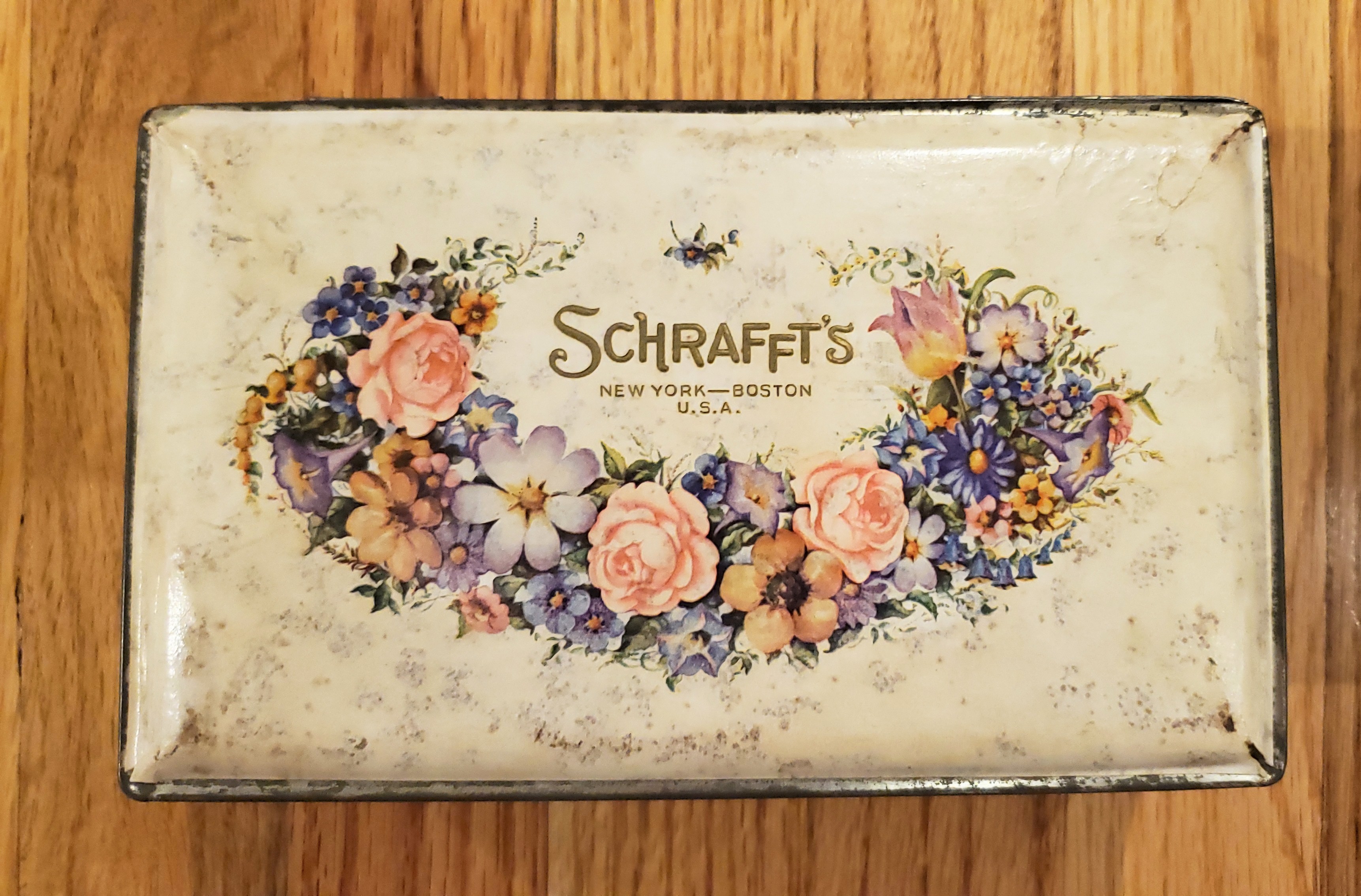
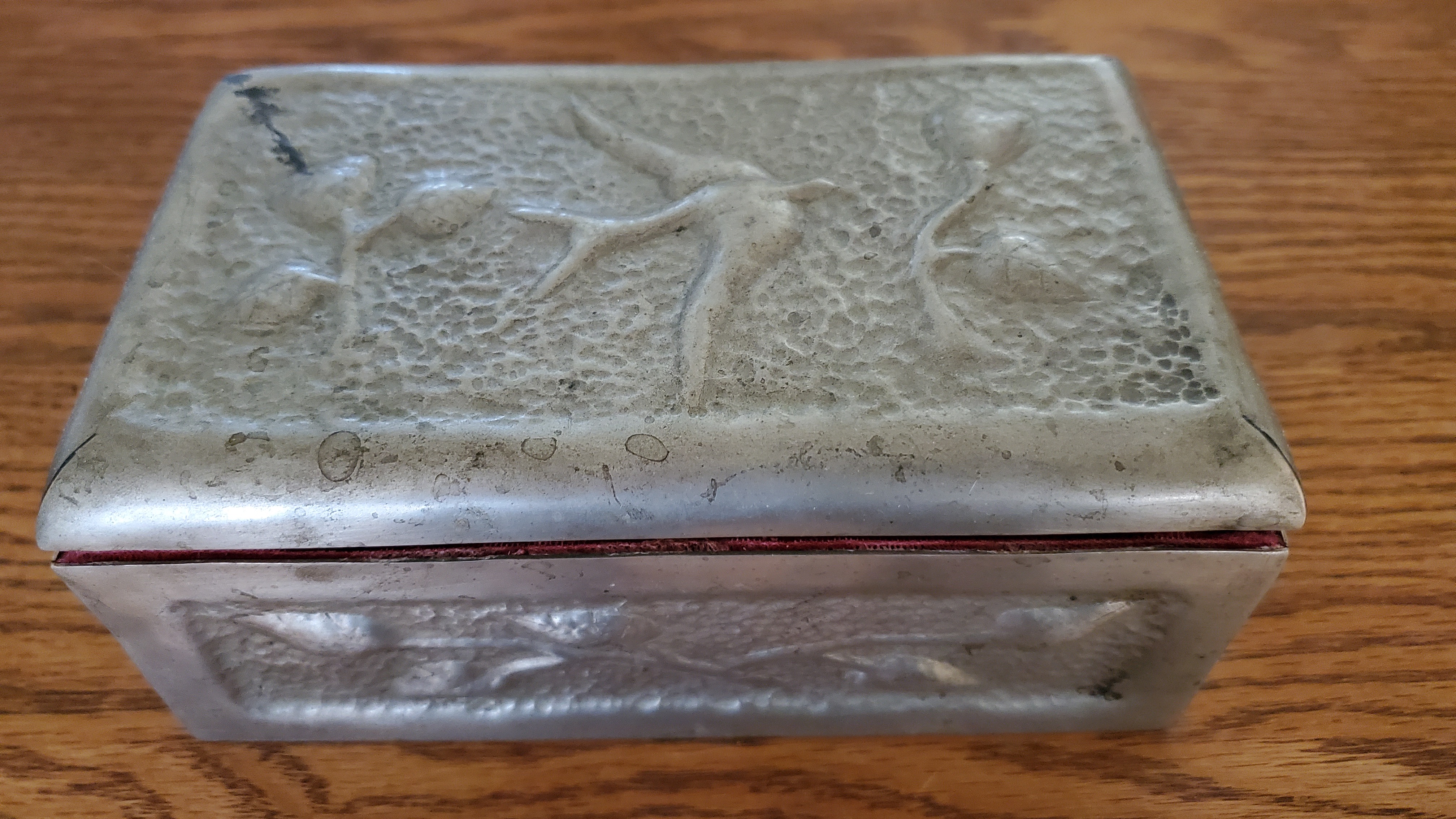
And here are a three boxes I have yet to write about. The first two were handmade by my father. The last is a gift from my husband. And each is a story not only of how the box came to be and how the box came to me, but what is stored inside.


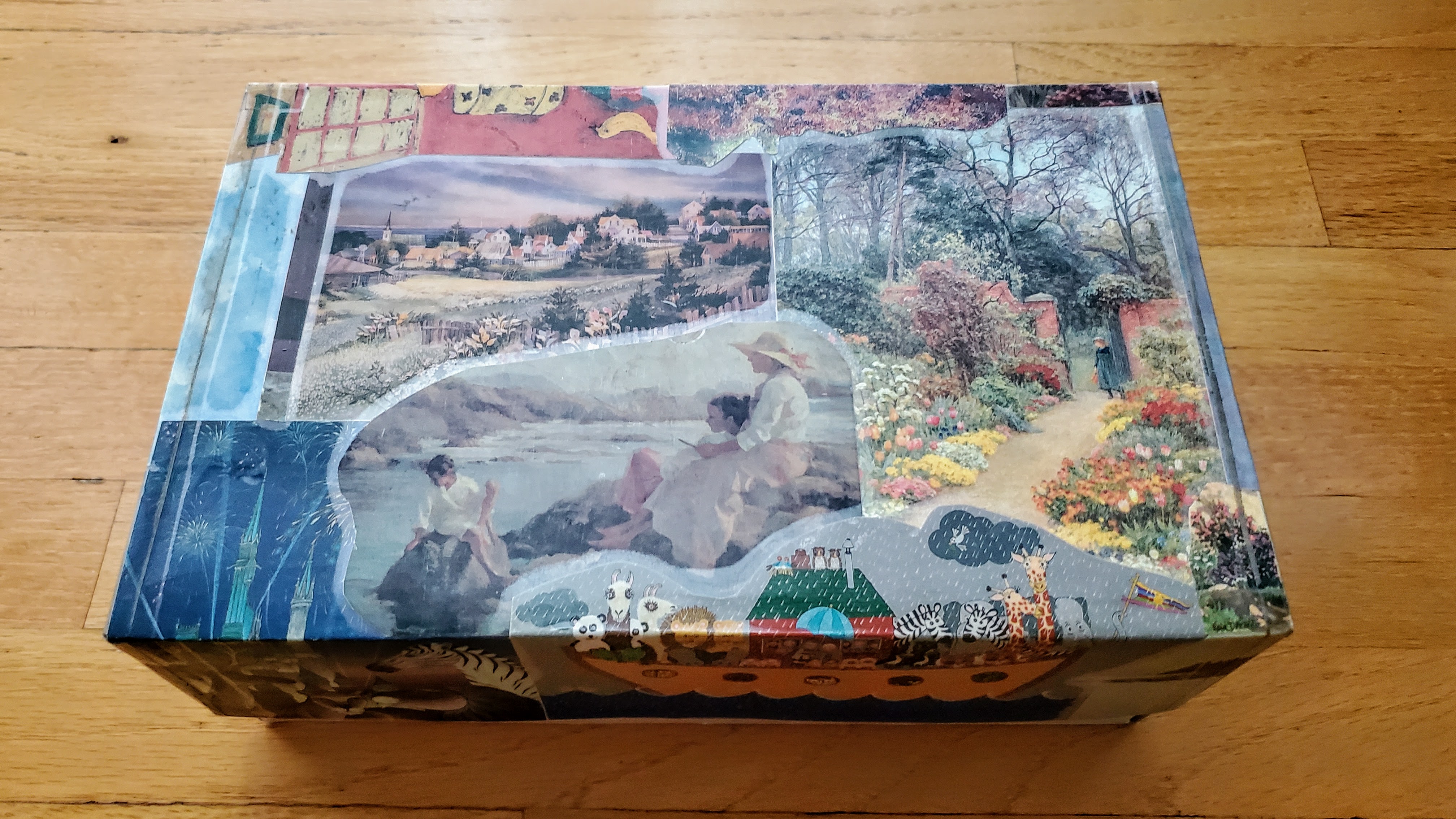
The box below I made a couple of decades ago from a shoebox covered in greeting card images I liked. The inside of the lid is decorated too! The box is chock full of greeting cards from family and friends. Some now gone…
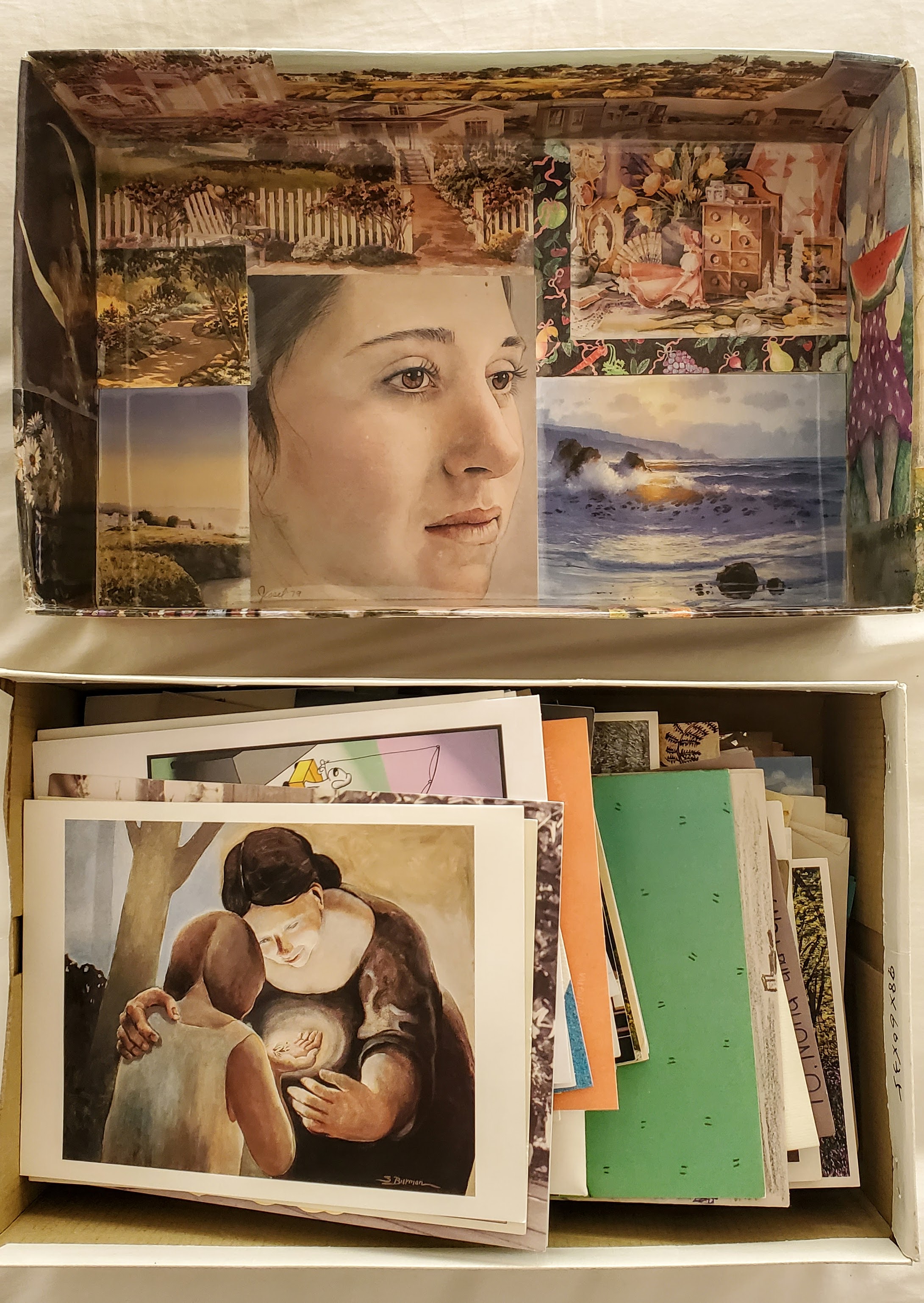
Each box tells at least one story and sometimes quite a few. Each item inside the box, a memory; a story waiting to be told. Do you have a box waiting for you to tell it’s story? If so this writing challenge is for you.
BOXES WRITING CHALLENGE
- Pick a box — what you call a box is up to you
- Write something about the box
- Could be where the box came from, who gave it to you
- Or could be what was/is inside the box
- Or maybe what you store there now
- Are there cuff links from your great grandfather, your mother’s watch, earrings from a favorite auntie
- Are there photos or mementos of trips or performances
- Newspaper Clippings, a card, a love letter
- You can use the broadest interpretation of box you would like
- Maybe it’s a cereal or cracker box, just let it speak through you
- Cracker Jacks, chinese candy box…
For this writing challenge describe what it is. Does it have a smell, a feel, an emotion the box or object evokes. Describe it in words so that even without a photo someone can picture it in their mind’s eye. You can use this as a very simple writing prompt to describe something in a few paragraphs or you can use it as a jumping off point for something much more. Up to you. And please find someone to share your story with. Use your imagination, and have fun.
Kelly Wheaton © 2022 – All Rights Reserved.
Property Map Treasure Hunts: Finding the Places Your Ancestors Lived
Posted on August 29, 2022 6 Comments
One of the many wonders of Google Maps is the ability to travel down many streets and roads via “Street View.” And then of course there is aerial view that allows you to locate your ancestors properties of a bygone area by comparing old Platt and Ownership Maps with current ones. I am always amazed I don’t see more people doing this. Roberts Estes who writes one of my favorite blogs DNA Explained is a shining exception. There are several things required to do this but none are that difficult. If the ancestors you are hunting appear on a census from 1850 or later (and sometimes before that) you are likely to find a community, a township or a post office they lived near listed on the census. If it is 1900 or more recently you may find an actual street address. Sometimes you need to go back or forward a page to see the street name usually written vertically in the first column. Here’s an example from the 1920 Census for San Francisco, California for my great grandparents Frank S & Lulu P Mosier at 1435 Oak Street.


Another source of actual physical address in 20th century is City Directories. Sometimes you may have a photo or letter with an address as well.
What if all we know is the township they lived in? Well that is going to be a bit trickier but certainly worth the work if you are successful. Some old land ownership maps are fairly obscure and hard to find but it is always worth and internet search using the Township and county as many of these are available on line. In England there are Tithe Maps which can be quite helpful and in America we have the historic Sanborn Fire Maps. Among my favorites are the County Land Ownership Atlases. There are many places to look for these from Historical Societies to subscription services like Ancestry or MyHeritage to free services like FamilySearch. But there are other places you should check. The Library of Congress Map Collection , New York Public Library Map Collection, David Rumsey Historical Map Collection, The Harvard Library Map Collection, The Perry-Castañeda Library Map Collection, Norman B. Leventhal Map Center of the Boston Public Library and last but not least the US Bureau of Land Management which includes Land Patents, plat books etc for the west, Midwest and some of the South (including exact section locations within a township or county). Please note that Map collections often include places well outside where you might think. Just because the Collection is in Texas doesn’t mean they do not have Maps across the globe.
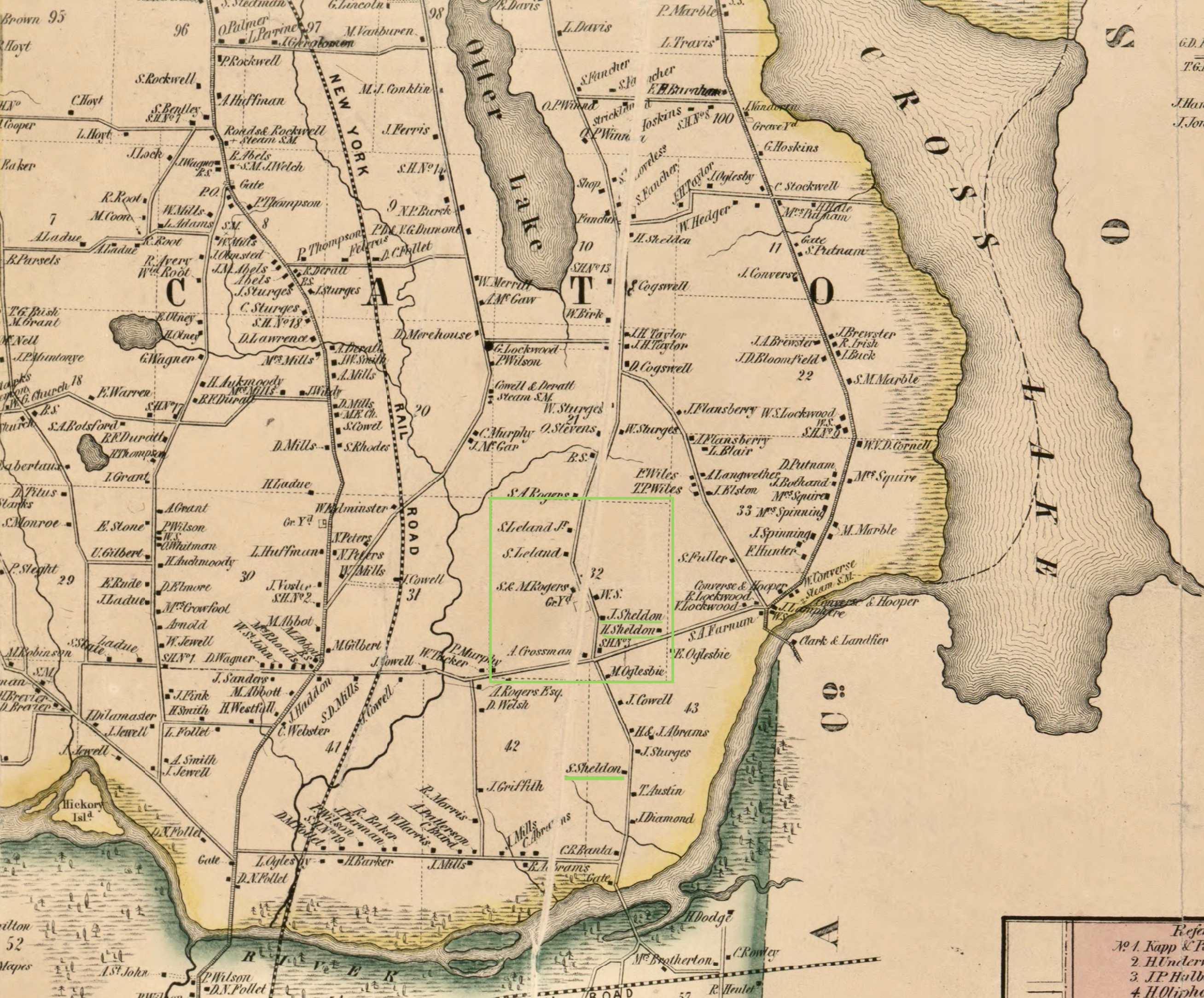
So let’s look at a couple of recent ones, that I just uncovered. My 2nd great grandfather Jonathan Blynn HALL according to The History Of Kent County Michigan came to Kent County in June of 1844 purchased land there and then returned to his native Middlebury, Genesee County (now Wyoming) New York where he married my 2nd great grandmother Sarah Jane MERRITT the first of January 1845. They settled in Grattan Township, Kent County Michigan. We can locate their farm on the 1894 Land Ownership Map as seen here:
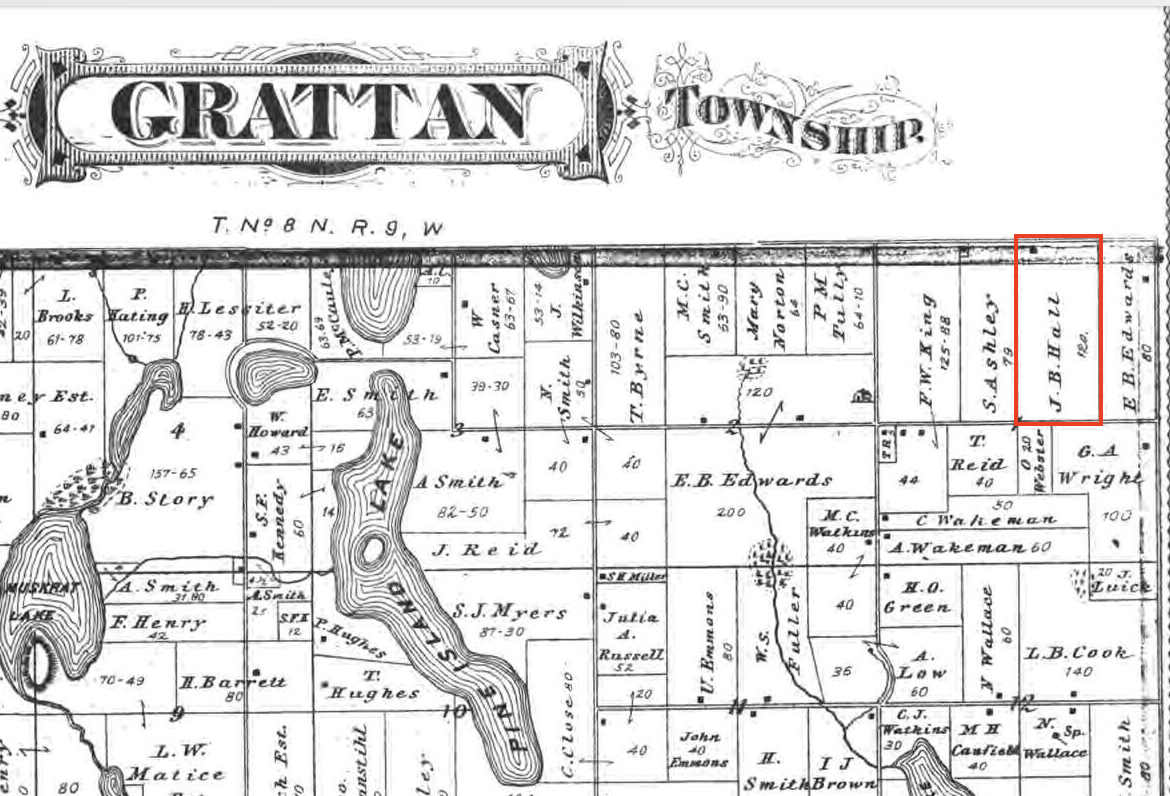
This particular map is quite helpful since it has many lakes that make the locating easier. Although I have zoomed in here doing a search on Google for Grattan Township located the top right corner which made this easy. What is fascinating here is how close the cemetery is to the family farm.
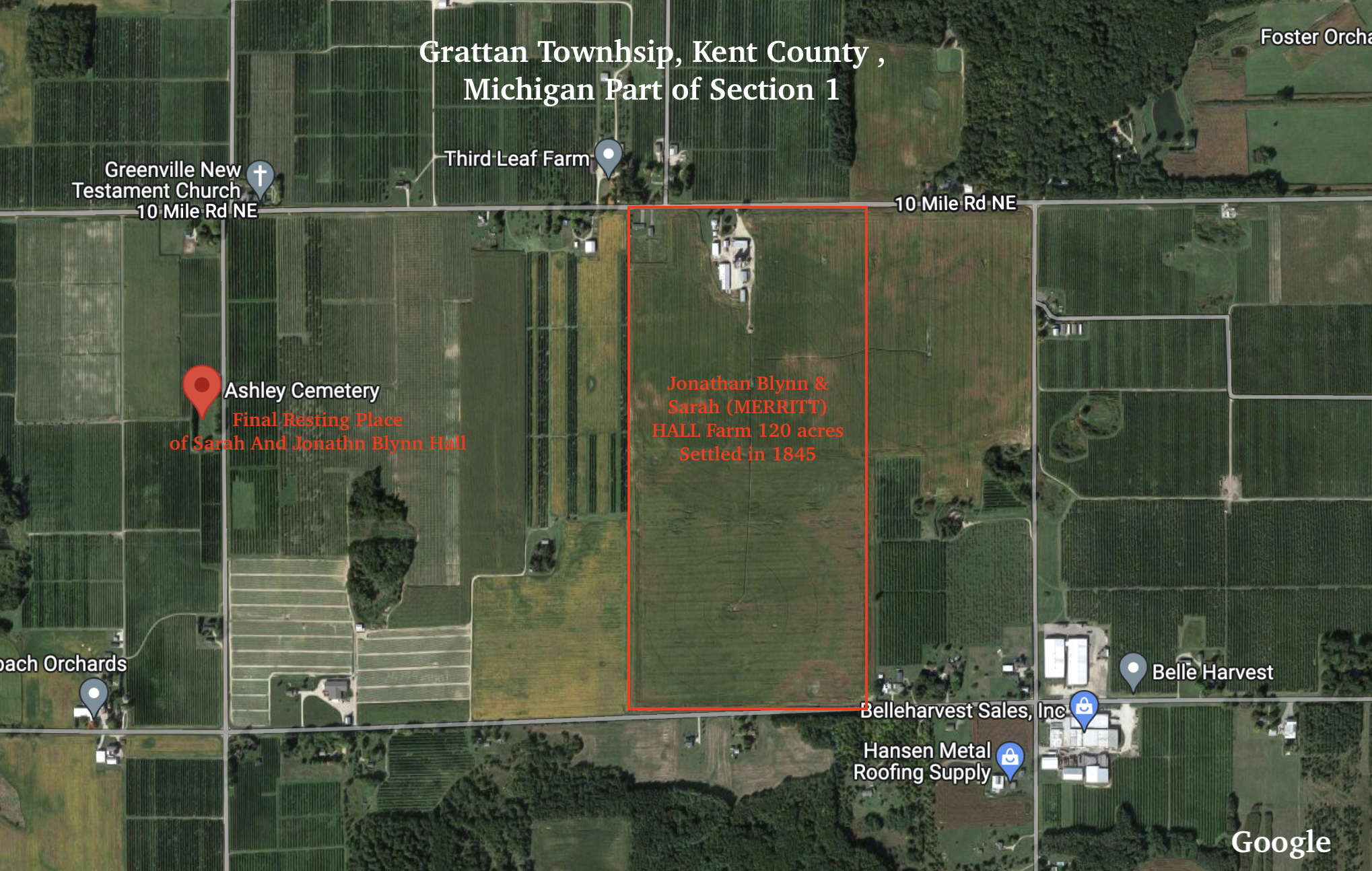
The proximity to the family’s final resting place is probably a clue for many to the proximity to which they lived. My cousin visited the cemetery where our Sheldon’s are buried in Cato, Cayuga, New York never knowing that the family farm was nearly across the road. See map at top of this post. Note the graveyard (Crossman Cemetery) and then Justus Sheldon’s Farm across the road. Here is the Google version.

Now sometimes it is much more difficult the farther back in time we go. I have spent months trying to locate the original plot of Robert WHEATON in the 1643 Division of lands of Rehoboth, MA (originally Seacunke). The original map looks like this:

Robert Wheaton’s 6 acre lot is now located off Greenwood Avenue in what is now Rumford, Rhode Island. In working with archivists at the Carpenter Museum in Rehoboth and the Hunt House Museum in Rumford it is still a bit squishy where exactly his lot was because the old map does not conform to current reality. Sometimes we can just get close and not arrive precisely. Rivers, roads and other land contours can and do change. This may not be precise but it is fairly close. My best guestimate is Robert Wheaton’s lot was between what is now Huntington Drive and Berwick Place. Most likely between Huntington Drive and Haywood Place. The south edge of the lots originally was the Ten Mile River (crossing what is the current Agawan Hunt Golf course). (I am still going to work on this and it may be a future blog post.)

Also note that some of the Map sites include modern overlays—so they superimpose the modern map over the old one. Most have a slider where you can adjust the degree of opacity-transparency. Here is a small example below of a map from Essex County, New York. The gray portions are the old map and the Green and yellow are the current roads etc.

Where to look for ANCESTOR LOCATIONS
- Old letters
- Old Photographs
- City Directories
- Census records
- Land Records
- Probate Records
- Historical or Genealogical Organizations
MAP RESOURCES
- Sanborn Fire Maps
- The Library of Congress Map Collection
- New York Public Library Map Collection
- David Rumsey Historical Map Collection
- The Harvard Library Map Collection
- The Perry-Castañeda Library Map Collection
- Norman B. Leventhal Map Center of the Boston Public Library
- US Bureau of Land Management
A must is Understanding Land Descriptions
Have fun! It isn’t always possible to find out where your ancestors lived but it’s almost always worth a try.
Kelly Wheaton © 2022 – All RIghts Reserved
Semper Fi: The Secrets They Kept
Posted on August 22, 2022 6 Comments
We ask our young men and woman to don the uniform and go off to fight wars in foreign lands. We mouth the words, “Thank you for your service”, but how much do we know of their losses? The wounds that we can see and the many we can’t see. The loss of friends, comrades, the loss of innocence, the loss of support from a country that said, they’d have their backs. Just look at how politics prevented the passage of the Honoring our PACT Act, to help soldiers exposed to hazardous burn pits, until John Stewart and others shamed them into passing it. No wonder our soldiers kept secrets only to be shared amongst themselves and their dwindling band of brothers (and more recently sisters). I feel a responsibility to share these secrets from two soldiers I loved. They lived and died carrying burdens that no one wanted. Semper fi.

Some time after my father died I became curious about his service in the Pacific Theatre during WWII. I was lucky to have a 20+ page transcript of an oral interview he did for the Camp Tarawa Project in Hawaii and an article that Dad had written for the 1990 2nd Marine Corps Reunion. Even luckier was the fact that I was still in touch with his childhood friend Dave, who had been the one asking for the article from my Dad. My Dad and Dave had met as boys in Weaverville, California. They stayed friends through moves to San Francisco, joining the Marines, serving during the war, going to the University of California at Berkeley, weddings, the Korean Conflict, children, jobs and retirement. So when I asked Dave for help in understanding my Dad’s Marine Corps service I had picked just the right person. Not only did Dave know my Dad; they had lived through some of the same horrendous battles, although in different units. The medallion above was sent to me by Dave.

According to the article my Dad wrote at Dave’s urging, entitled ‘Why Me?: “I moved to San Francisco for my senior year and following graduation in the spring of ’42’ Dave came to S.F. so we could become able bodied seamen or cabin boys on one of the last sailing vessels still is service, a Chilean fertilizer ‘Bat Guano,’ ship. For some unremembered reason this great adventure did not materialize and we decided that joining the Marine Corps was ‘Second Best’. Unfortunately I was not yet seventeen and Dave couldn’t wait.…On my birthday in late ’42’ I was at the recruiting office in the Palace Hotel hours before it opened. Unfortunately the Recruit Depot (Boot Camp) in San Diego was full up and I suffered a long wait, til January of ’43” In this article he recounts many stories but fails to mention the Battle of Tarawa except in passing. In the 76-hour Battle of Tarawa (also known as Betio Island), the U.S. Marine Corps suffered almost as many killed-in-action casualties as all U.S. troops suffered in the six-month campaign at Guadalcanal Island. Suffice it to say that the amphibious landing at low tide turned out to be a disaster– the ocean turned red with blood. 1,009 US Marines died in 72 hours and 2,101 were wounded. From John Wulkovits’s ‘One Square Mile of Hell‘ “The smell was inescapable…it was everywhere, and it was not the kind of smell one gets accustomed to. It suffused the Marine’s hair, their clothing, and seemed to adhere to their bodies. They smelled it for weeks after the battle, and like all pungent odors, it evoked instant and nightmarish memories.” p 200
My father writes in a letter home to his Mom November 26, 1943 : “I was in the attack on Tarawa Island. And it’s a miracle I’m still kicking. I am aboard ship and headed to a safe port… I lost everything I owned in action and am now wearing Japanese and Navy clothing. I could use some pictures of the family. Well Tally Ho.” PFC Duane F. Mosier, HQ Co. Note the differences in the versions. They glossed over the tough spots to make it all more palatable for those at home.
Over several years, I pieced together what I could through letters, histories and the interview transcript and then I would email it to Dave for further insight and feedback. I knew that my Dad was injured in the Battle of Saipan and received a purple heart medal. I had seen the scars on his leg from shrapnel. As close as I was with my Dad, he never elaborated and I never knew the full story. Both my dad who was in the Marine Corps and his father who was an Electrician in the Navy were stationed on Tinian Island during WWII. Tinian is famous for being the departure base from which the bombers laden with left: Little Boy and Fat man.
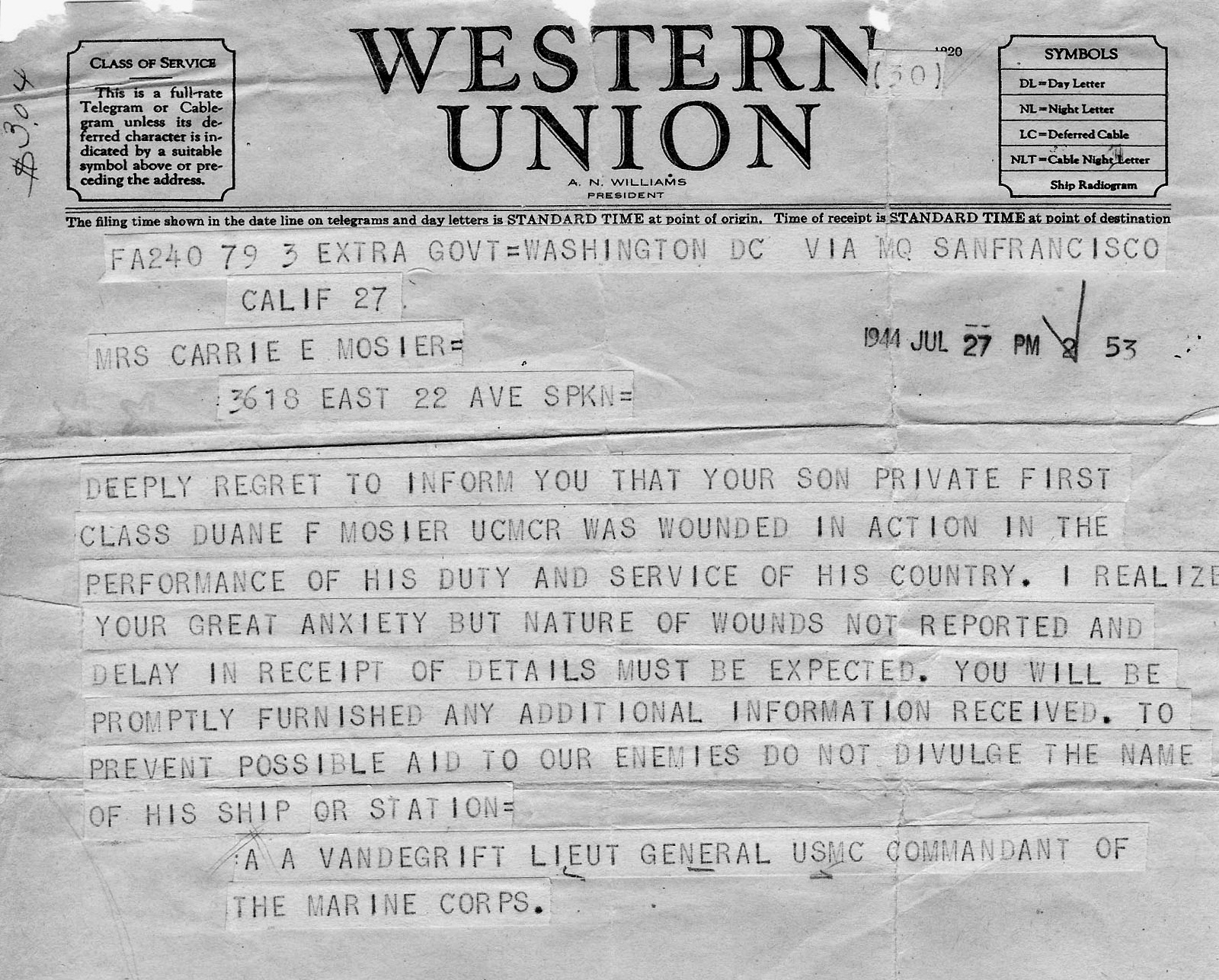
It was in a letter my grandfather, Milo, sent to my grandmother dated Tinian Island September 16, 1944 that I learned the truth. “Duane’s wounds are not thoroughly healed but he gets around as if he didn’t have them. He’s got about six of them. I would have seen him months ago but he refused to be evacuated and stayed here. He is just the same Duane, only he is a little too strained, too much tension. I will be glad to see him out if it. There isn’t any part of the worst that he hasn’t been through.
When he got his legs burned up he was on the bottom of a pile of men who had dived into a hole to escape a shell burst. Those on top were blown to bits. That was rather violent but it didn’t bother him much. Maybe someday he’ll tell you of the things that did bother him, He is a very good boy. Incidentally his top sergeant used the same words when I first met him.”
My Dad’s service included the Battles of Tarawa, Saipan, Tinian, Okinawa and the occupation at Nagasaki. Those may lead to other posts, but at the end of my research, suffice it to say, I had a totally different view of what hell my father had lived through. He was just barely 18. Both Dave and Duane joined the Marine Corps Reserves while attending UC Berkeley. A way to stay in touch with Marine Corps buddies and bring in some extra money. Then the Korean conflict arrived and Dave was sent to serve overseas. My Dad was luckier and was stationed stateside in San Diego. He wrote his parents October 4, 1951: Dear Mom & Pop, I don’t know whether this year in the corps is going to mature me or bring about a premature second childhood. Since I last wrote I have done a lot of thinking about the Marine Corps lost time and I find that the facts regarding the Corps achievements in the past haven’t changed much, but my sense of values has and I feel that I fear, misinformation, disregard for human life, narrow mindedness, naive pride and prejudice tied together by mutual suffering and so called guts have made the Marine Corps what it is and was — a myth that accomplishes its end by drawing a curtain in men’s minds– like a religion—if you begin to believe there are no questions, no problems, no nothing, but glory.
In a letter from another of my Dad’s friend Ken, wrote to me April 10 2007: “He [my Dad] once told me of an incident of seeing a Japanese soldier getting out of a truck where he was camped several hundred yards away; Duane had a rifle on his lap; he aimed from the hip and fired one round—the soldier fell out of the truck; that really bothered Duane about killing a man.” In the interview below, my dad speaks more broadly from the interview:
Q. So did you take prisoners? A. Occasionally, sometimes we did on Okinawa. It’s a long drawn out battle, but when you’re confronted with enemy civilian forces they’re coming toward you. Any time they find anything like food, help, anything, they stop, that’s as far as they are going. That really plays havoc fighting a war, going out and hunting down their military brethren and so forth. So people do things like the My Lai [Viet Nam] incident, only much worst, you know, just get rid of these people.
Q. Did it happen to you? A. I was present when that order was given to somebody other than me. And had it rejected—“If you want to get rid of then, do it yourself.” But also, “Oh boy, we’re in seventh heaven, we’ll carve a few more notches on our rifle butts,” -–just slaughter.
Q. You mean they were killed? A. Yes. And we’re talking hundreds.
Q. And you saw it? A. Yes. These things happen and who knows what’s the right move.
Q. This was outside of which town? A. Oh, this was on Okinawa, south of the Kunishi Ridge.
George Feifer in Tennozan: The Battle of Okinawa and the Atomic Bomb Chapter 25: American Atrocities speaks in more detail. When men are trained to kill and placed in a steady diet of cortisol and adrenaline bad things happen. We lose our humanity and respond like machines trained to do a job—but not able to discriminate and turn the training on and off at will. Seems like there are echoes in our current news diet of endless, breathless, anger, horror and manufactured rage. Study history, it is the stuff of authoritarian regimes…
65 years later in 2016 I received an email from Dave’s daughter telling me that he was in the hospital and he wanted me to call him. It took a couple of attempts, I finally reached him not long after he had a meeting with his doctors and wife, Ruth. He had received sobering news that there was not much more to be done. When I asked what he wanted he said, “I want to walk out the front doors of the hospital and if I have a heart attack and die that will be okay.” I felt he was a yearning for one more bit of normalcy. He wanted to go home. He wanted to tell me something about what had happened on Saipan. I could tell it was important to him. I said: ” I am not a priest, but that if it would help him I would listen.” He was a devout Catholic and said he had tried talking to a priest, but he was too young and didn’t understand. It was flattering to think, he thought I would. He then proceeded to tell met me about a woman who surprised him coming around a corner where he was on guard. He shot and killed her before he could completely assess the danger and it had haunted him ever since. I hesitated then responded, “War is hell. It is kill or be killed. You didn’t know, she could have been armed—and you could be the one that was dead. God knows you had no malice.” He listened attentively and I added, “On behalf of a merciful and benevolent God, you are absolved of your sins.” He was grateful and seeed satisfied. He died a couple of days later and when speaking to his daughter I assumed that she knew the story. As it turns out he had not shared it with his family. These are the secrets soldiers keep. These traumas they carry in a lifelong rucksack of memories, horrors and regrets.
These are not pretty secrets—but they are the secret casualties of war. They are important components of our family histories, but also of the toll of war on all humans and our collective history. We dare not shy away from the unpleasant stories. We owe it to our veterans to remember them and to learn their bitter lessons.
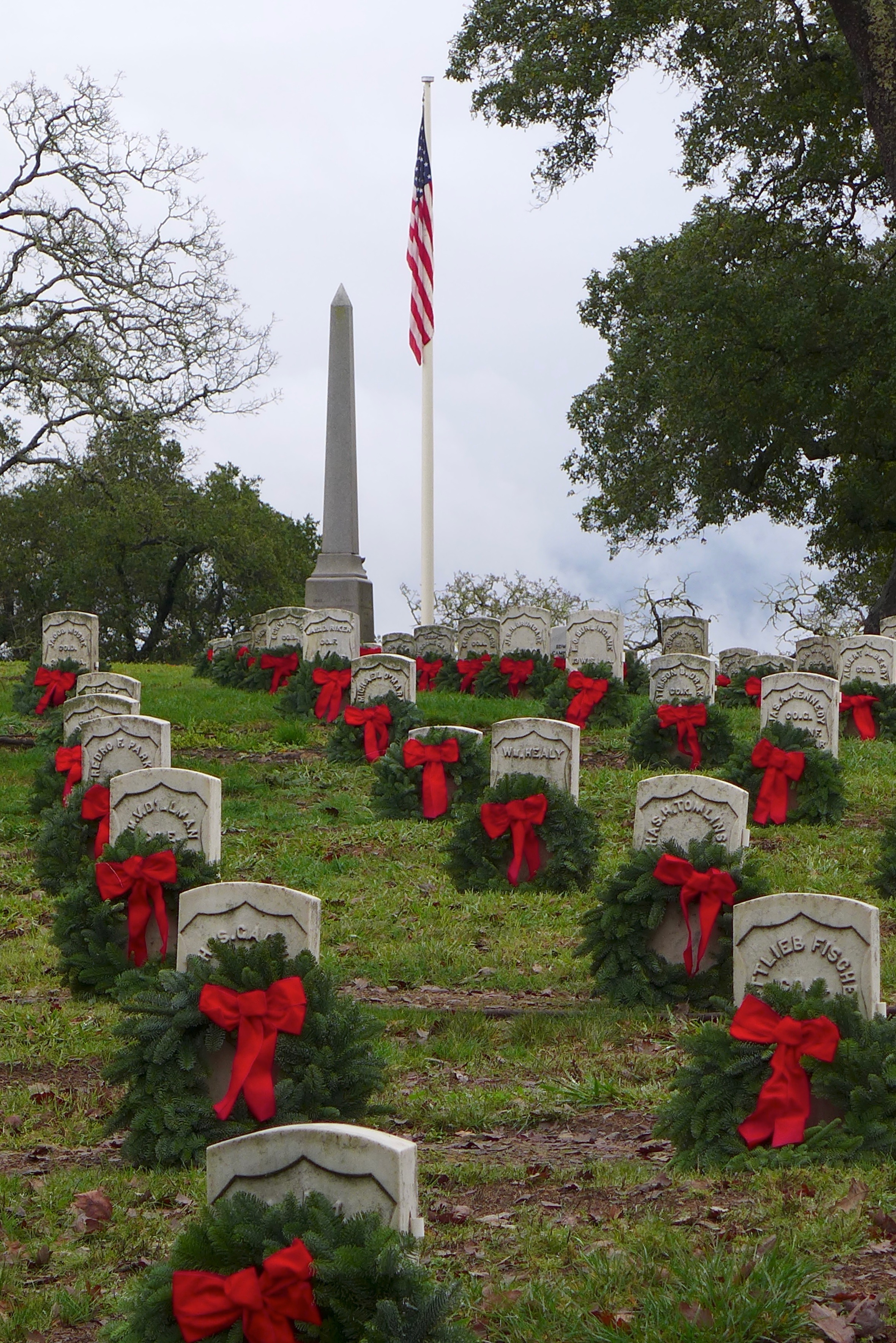
“Only the dead have seen the end of war.”
― Plato
Kelly Wheaton © 2022 – All Rights Reserved
And What About Frank?: A Soprano’s Aria Chapter 37
Posted on August 8, 2022 7 Comments
Not everyone in our family trees are people we admire. Sometimes they are unsavory characters that people want to bury the details of—but I think we need to know about the good bad and the ugly. Here’s my follow-up piece to Lulu’s diary.
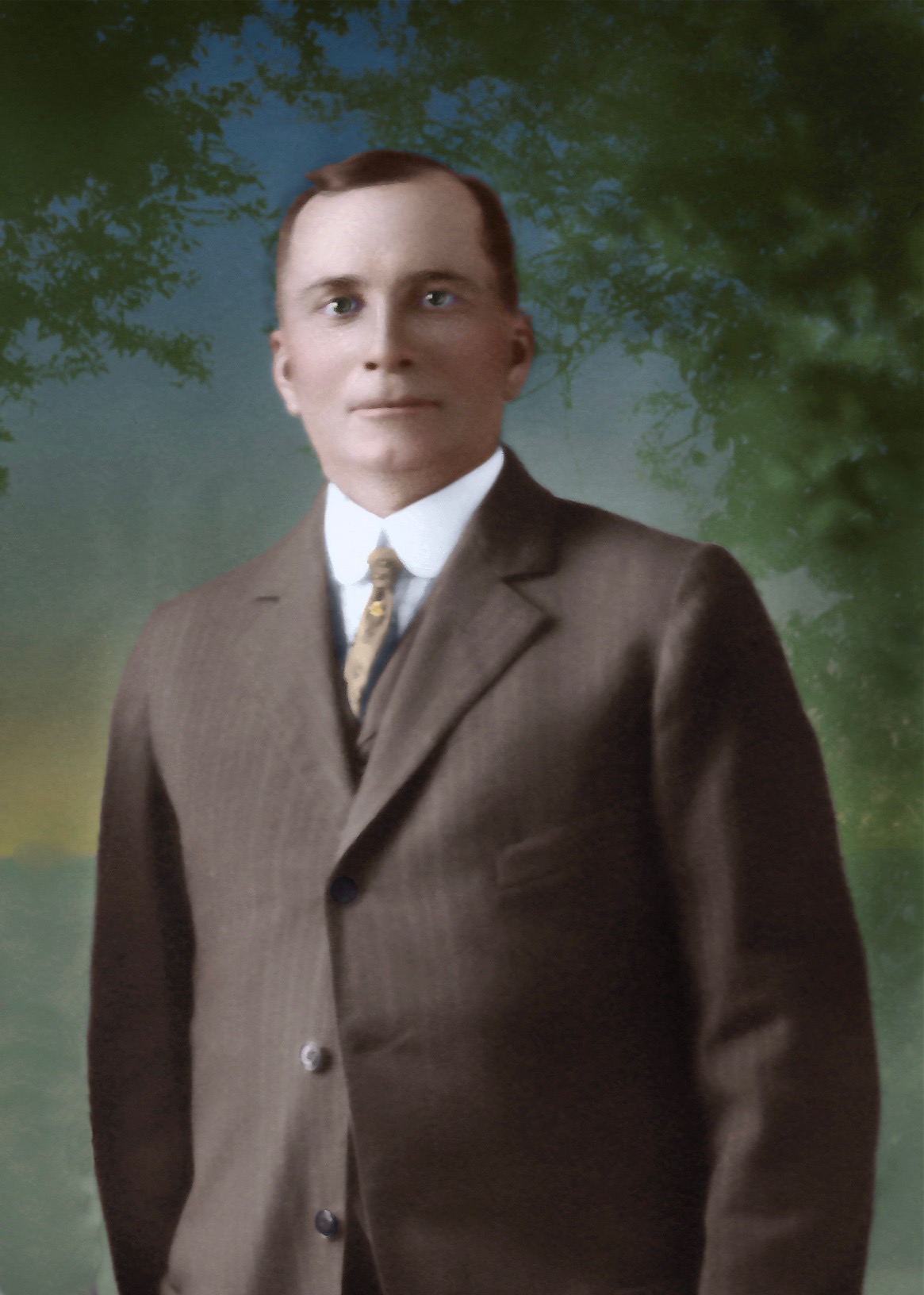
This is Lulu’s husband Franklin “Frank” Stewart MOSIER my great grandfather. Frank Mosier had a drinking problem and anger management issues. He may have suffered from Borderline Personality Disorder which is also called emotionally unstable personality disorder. He was certainly that!
Criteria for BPD. Five must be present:
- Frantic efforts to avoid real or imagined abandonment
- Unstable and intense interpersonal relationships
- Lack of a clear sense of identity
- Impulsiveness in potentially self-damaging behaviors, such as substance abuse, security, shoplifting, reckless driving, binge eating
- Recurrent suicidal threats or gestures or self mutilating behaviors
- Severe mood shifts and extreme reactivity to situational stresses
- Chronic feelings of emptiness
- Frequent and inappropriate displays of anger
- Transient, stress-related feelings of unreality or paranoia
I started to wonder about what caused, as a cousin called it, a “mean streak” in Frank. While writing a piece about his mother Catherine Adeline STEWART MOSIER I discovered a few clues which may help explain Frank. Franklin “Frank” Stewart MOSIER was Catherine’s 9th child of 12. He was born two years after his twin sisters Luella & Louisa which might suggest Mom was a tad busy when he arrived. He was followed by a brother less than 3 years later who died as an infant. Then another son, the next year, and finally a daughter when he was 6, who also died as an infant. Among the environmental factors that may cause BPD are:
- being a victim of emotional, physical or sexual abuse
- being exposed to long-term fear or distress as a child
- being neglected by 1 or both parents
- growing up with another family member who had a serious mental health condition
While no one can know what the family dynamic was it is easy to see how young Frank may not have received the attention he craved. He had an 18 year old older brother who leaves when he is about 3. And two brothers 9 & 11. His oldest sister marries before he turns 7. And I suspect Mom and Dad were busy with twins and then dealing with the loss of two children so young Frank would have been exposed to lots of early loss and perhaps a depressed or stressed mom. When he was 11 his oldest sister dies of complications of childbirth so his world view may have been supercharged with stress for a young boy. We do not know whether his father was a drinker, but he may well have been—and we know Frank had run-ins with the law.
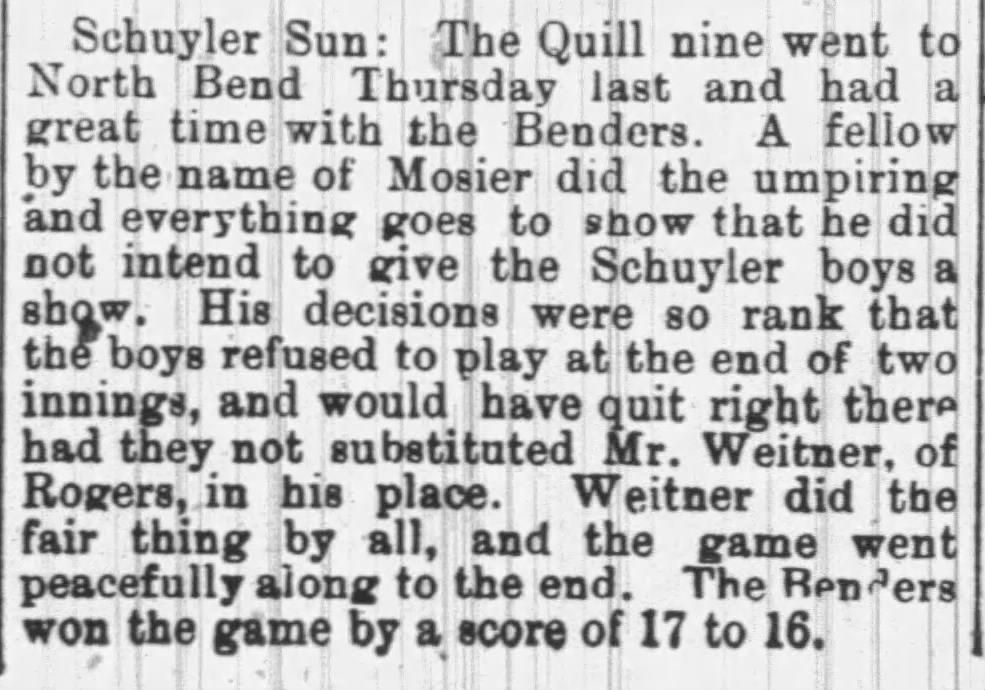
I am not sure if this clipping is for John Wesley Mosier (Frank’s father) or Frank, but somehow it feels like Frank. The Mosier in question was umpiring a game and it seems his calls way off base (pun intended).
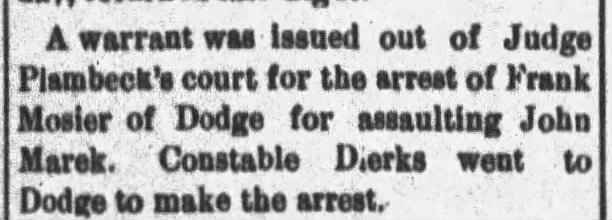
Here newly married [8 Nov 1889] Frank Mosier is arrested for assault. I wonder if Lulu was worried even then what she had got herself into.
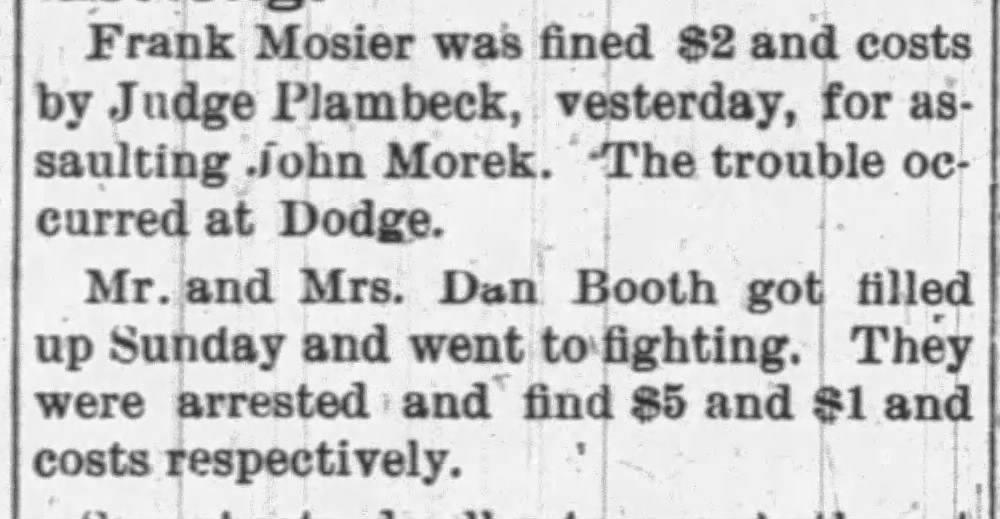
In a correspondence between my grandfather to his sister in 1964—some family secrets are disclosed about their Dad, Frank. “I don’t know why I got started on this but guess you brought it all back when you said you left home because you didn’t like the way the old man was shoving me [Lolita] around. I don’t think I was aware of why you left.” Lolita letter to Milo April 7, 1964.
Milo replies.”[After] I came home from France. You told me, a day or so after the incident, that the Old Man had said, ‘Now see what you did– You made Milo Leave home.’ I went in (to the bathroom, I think) to see what he was doing to you, and he grabbed me by the vest front and threw me out like a bean-bag.
I think it possible that my leaving might have had some effect on him; I don’t know—He always liked me, but I didn’t know that he had beaten you, the way you described…He was the product of an era when violence was a way of life; and to drag a man through the sagebrush at the end of a lariat was an occasion for great hilarity. I knew him very well. I worked with him in wrecking yards; on construction jobs in the mountains; and drank with him in speak-easys. The only credit I can give him, is that he was as tough to men, as well as women and children; at least in my experience, And he enjoyed a certain respect from those of his ilk with who he worked….
From a moral standpoint the Old Man was a lascivious worm.” April 11, 1964
Lulu’s divorce decree was finalized 23 July 1918. True to form Frank is involved in a drunk driving accident the following year.

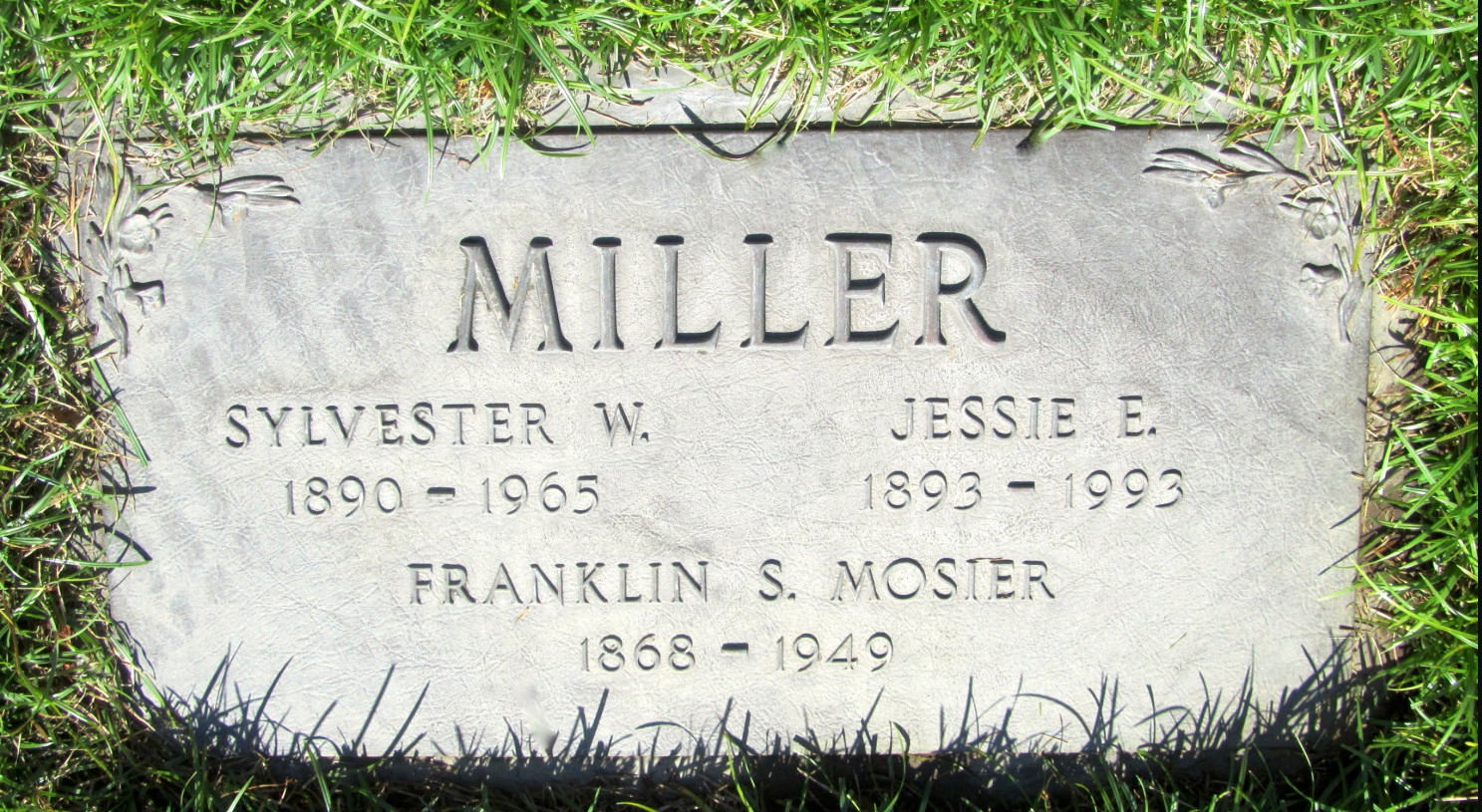
In spite of the accident he is listed as a truck driver in 1924. I have not located him on the 1930 census but in the 1940 census he is living with his daughter Jessie MOSIER MILLER and her husband Sylvester. We do learn on this census he only had an 8th grade education. There was both affection and disdain for Frank from his children. In spite of a tough life he lived to be 78 years old. The informant on his death certificate was my grandfather Milo. He was admitted to San Francisco Hospital on 5 Nov 1949 and died on the 8th. Remarkably my father was relatively silent about all his grandparents. Neither my father or grandfather were drinkers. My grandfather was a kindly, gentle soul with a sometimes tough exterior. I suspect there were some tender parts to Frank as well, much overshadowed by his demons. We have nothing to tell of your story great grandpa, Frank — from your perspective. May you rest in peace.
The 36 earlier chapters of A Soprano’s Aria: Lulu’s Diary are found here.
Kelly Wheaton © 2022 All Rights Reserved.
When Genealogical Evidence is Wrong, Wrong, Wrong
Posted on August 8, 2022 5 Comments
The great thing about having half a century of genealogical research under my belt is that it’s easy to recognize when an official has got it very wrong. But what about when you are starting out and you tend to take these pieces of evidence: birth, marriage, death, census records as pronouncements of truth? Well it can really mess with your research let me tell you. I recently came across my great grandmother’s 1930 census record and it was so badly wrong I just had to share it with you. And it’s an honest mistake by the census enumerator.

As above it has Karl B Anderson’s birthplace as Illinois and his parents born in Ohio and Indiana. Well this is a simple transposing error as it is Lulu who was born in Illinois and he in Sweden.
I have a 3rd great grandfather, John L. (Loy or Lafayette?) MOSER, who was born 27 MAR 1800 in Orange County, North Carolina, USA. However that did not prevent his children from inventing all sorts of places for his birth. And not a single one I have found got it right!
- 1880 John Wesley Williamson MOSIER said his father was born in AL (not yet a state)
- 1880 William James Jasper MOSIER said his father was born in Tenn
- 1880 Madison Columbus MOSIER missing
- 1900 John Wesley Williamson MOSIER said his father was born in PA
- 1900 Madison Columbus MOSIER said his father was born “At Sea“
- 1900 William James Jasper MOSIER said his father was born in PA
- 1910 John Wesley Williamson MOSIER said his father was born in SCOTLAND
- 1910 William James Jasper MOSIER said his father was born in AL
- 1910 Madison Columbus MOSIER missing
So we have PA, Tenn, AL, At Sea and Scotland as the place of birth of their father! None of which is correct!!! Their 2nd great grandfather Frederick MOSIER was born in Breitenau, Ansbach, Bayern [Bavaria], Germany. He immigrated to PA with his father Johan Martin MOSIER. Their grandfather Nicholas MOSER was born in PA then moved to Orange County, NC, then to Madison County, AL and finally to Anderson County, TN. Their mother Nancy WILLIAMSON’s family is believed to have roots in Scotland so this may be where some of these places have their genesis. What is clear is that with 7 CENSUS records NONE is correct. This should be a cautionary tale to others. All records are fallible. Not everyone knows where their parents are born. Please take all evidence with a teaspoon of salt.
The above are extreme examples but they are more common than you might think. And let me tell you, they can send you on some wild goose chases if you aren’t careful!
Kelly Wheaton © 2022 All RIghts Reserved.
Comfort Laps: Writing Challenge
Posted on August 8, 2022 3 Comments
Our reminiscences are important parts of who we are. As we stitch them into narratives they connect us to our ancestors, sometimes in unexpected ways. I urge my readers to not shy away from writing about uncomfortable and challenging topics.
My mother, for reasons that remain somewhat of a mystery, did not like to be touched. Whether she was mildly autistic or physically or sexually abused or some combination, we never knew for sure ( and it wasn’t for lack of asking). However, I was programed to seek and need human touch. Yes, an extraordinary bad combination. I can remember as a very young child trying to climb up into Mom’s lap and being rebuffed. And yet my mother delighted in repeating a story of how I climbed into the lap of a black woman as we were waiting in a Kaiser hospital waiting room in Richmond.
Mom would recount this as evidence of the lack of racism with which I was raised. I always felt it was so much more. This would not be the first time I would seek comfort in a lap of a black woman. For a short period of time we had a housekeeper named Sylvia. She had deep ebony skin, and a powerful personality and how she could clean. Even my mother bent to her will. Before long our house which had looked like an episode of the television show Hoarders, now sparkled. It was Sylvia who taught me how to iron, beginning first with my Dad’s handkerchiefs. (Yes there was a time when they had to be ironed!) It was Sylvia’s hugs which enveloped me in warmth. It was Sylvia who had the house clean enough to open the drapes and “let the sunshine in!” When she left, the darkness returned. I thought of Sylvia when I read the novel Yellow Crocus by Lalia Ibrahim. The story is about Mattie an enslaved wet nurse who takes care of Lizbeth, a white woman’s infant, while forced to relinquish her own son. Why am I drawn to black women’s stories?
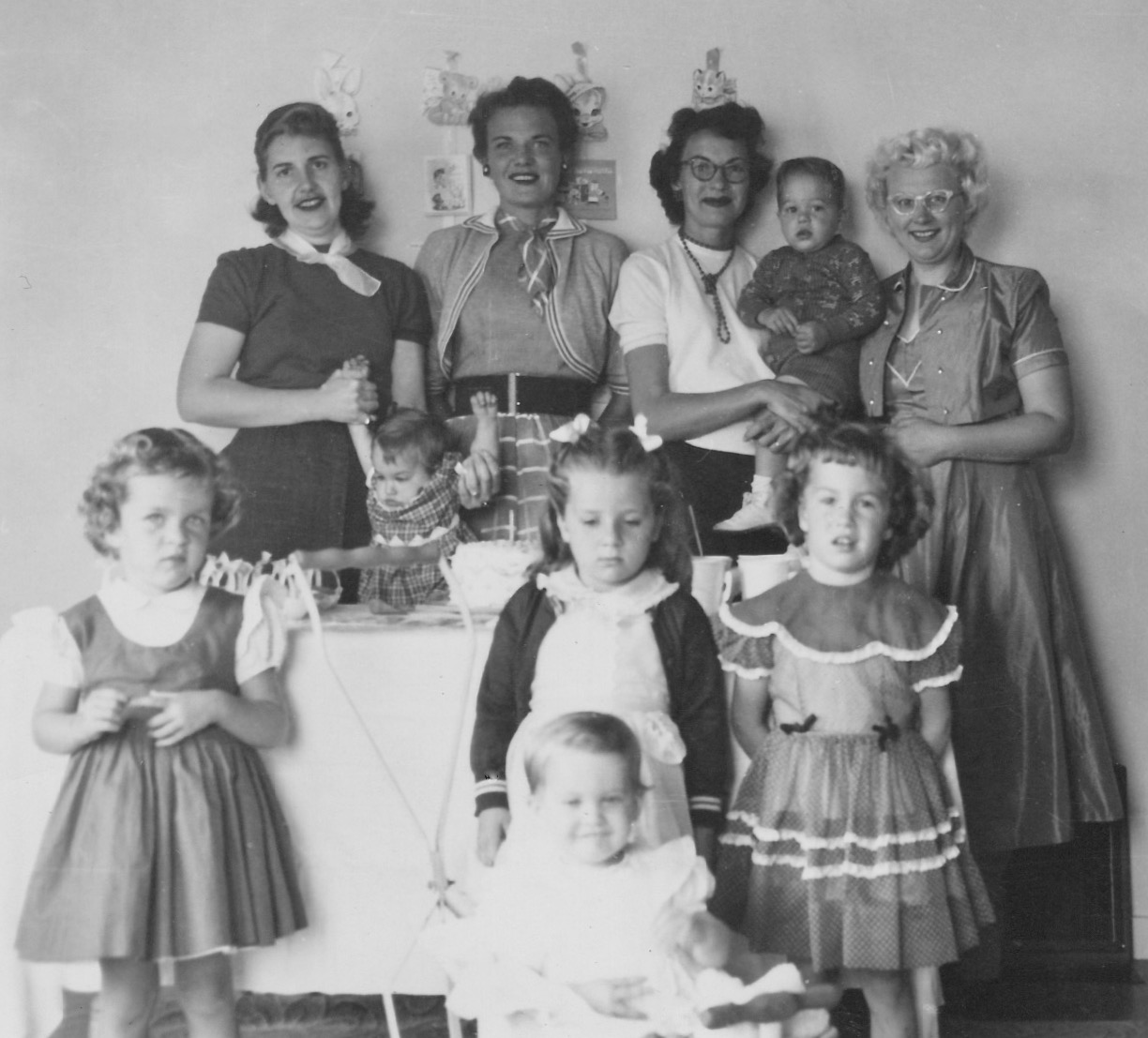
This is a photo of my first birthday party. I am the one being held up by my mother—I always felt this photo (and the ones taken along with it) is particularly unnerving. My mother is not holding me like Ruth is her son, of about the same age. Maybe I am being too sensitive or critical—but it does speak to me even now. Is she just playing the part of a mother? It sometimes felt that way.
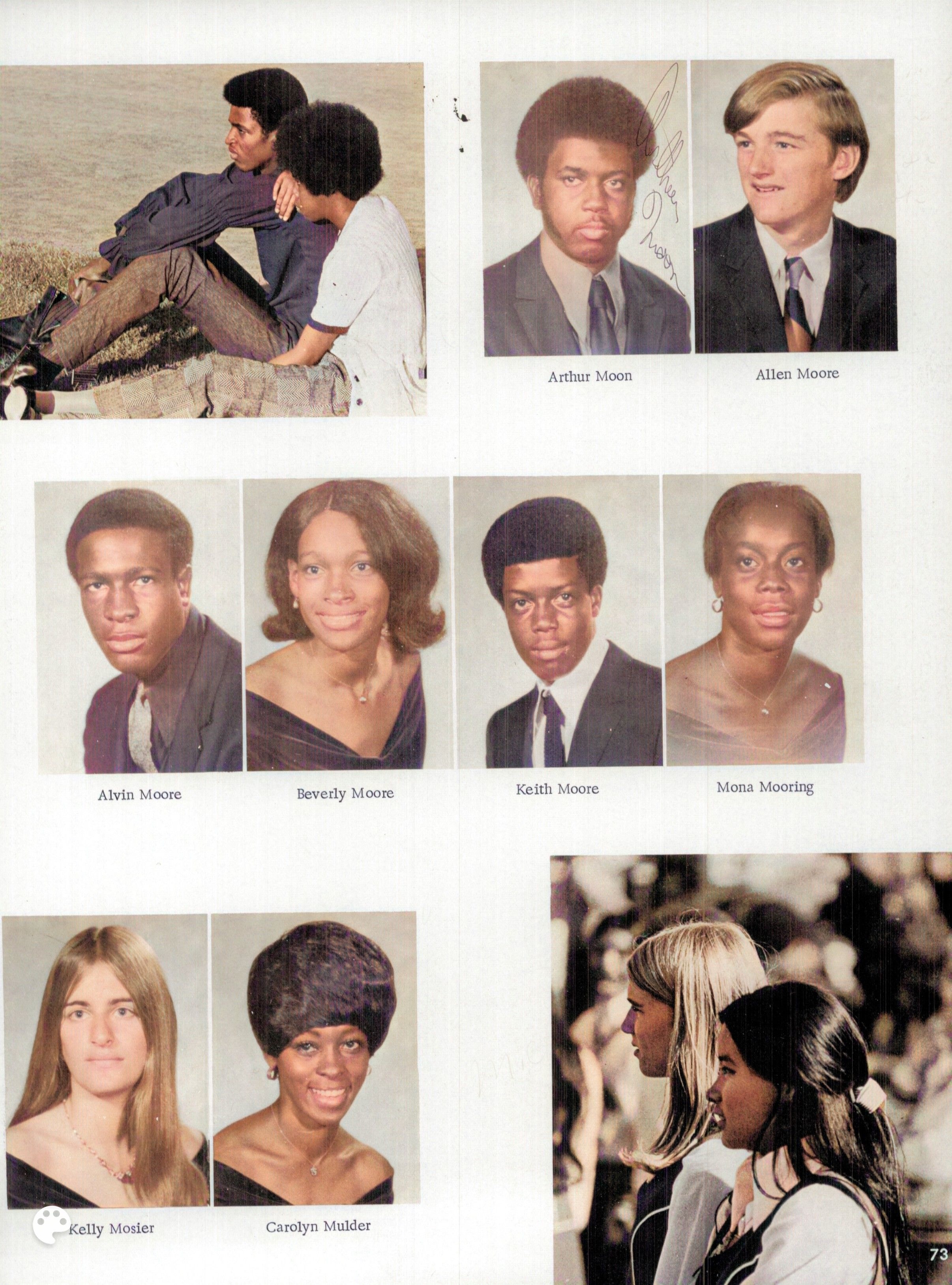
Half way through my high school career I opted to attend the majority “black” high school rather than the “white” high school I had been attending. And perhaps it would shock you to know I felt very comfortable there. A page from my yearbook:
And then back in 2011, as I have mentioned before, I was browsing books at my library’s book sale and came across Pearl’s Secret: A Black Man’s Search for his White Family by Neil Henry. It was to be a foreshadowing of things to come. (Although mine was in reverse.) A few weeks later my autosomal results revealed that I had two African segments. I was surprised, but not disappointed. And ever since I have been looking to discover who was my African ancestress. I suspect it was a female that was the first who had African heritage in my tree. I go back to her a thousand times and wonder if these yearnings are some how callings from my DNA. It’s not much in percentages (depending on the DNA company .6%-2.8%) but likely a 3rd or 4th great grandparent.

Was it Eleanor BROOKS born about 1731, Elizabeth wife of Thomas SPARKS born about 1689 or Agnes wife of John BARNES born in 1737? A few hundred years ago and my ancestry takes a different path. I know she comes from this part of my tree because of who matches these segments and how I match them. It may well be on the SPARKS line as I have pedigree collapse here and matches indicate a HENAGER with SPARKS ancestry which matches the SPARKS here. To date I have not a single African match on these segments, but it does not keep me from hoping I will find her someday. We talk of the rainbow bridge for our deceased pets. For me the rainbow bridge includes—-a yearning for a long lost great grandmother’s lap. Perhaps a strange sort of yearning for a mostly white woman, but it has been with me for a very long time. A feeling of connection in an unexpected place.
It was my paternal aunt who confirmed that there were rumors about my grandmother having mixed race ancestry. My DNA bears that out. When I first got my atDNA results I corresponded with an African American woman in her 70’s. She told me in high school she took German. Her friends couldn’t understand why. She was attracted to all things German and when her husband was stationed in Germany she sang in a German choir. It wasn’t until she tested her DNA she realized she had German ancestry. It always makes me feel as if our ancestors have a pull on us whether we are aware of it or not. And so it goes.
WRITING CHALLENGE
- Pick a vivid memory, that speaks to you
- What echoes can you identify that memory with?
- Could be a book someone read, a movie you saw, or an incident
- Flesh out whatever you can whether it makes any sense or not
- Wait a few days or weeks and let it percolate
- Revisit and see what comes up
Sometimes it is only in the writing that the pieces knit into place. Its okay to have lots of little vignettes like the one above. Not quite a full story—more of a question.
“Be patient toward all that is unsolved in your heart and try to love the questions themselves, like locked rooms and like books that are now written in a very foreign tongue. Do not now seek the answers, which cannot be given you because you would not be able to live them. And the point is, to live everything. Live the questions now. Perhaps you will then gradually, without noticing it, live along some distant day into the answer.”
Rainer Maria Rilke
Kelly Wheaton © 2022 All Rights Reserved.
Genealogy Intersections: Revisiting the 1719 Deed of Little Packington in Warwickshire
Posted on August 7, 2022 1 Comment

You can’t do genealogy for long before you realize what a small world we live in and how everything and everyone seems to have some sort of relationship. I call these genealogical intersections and they often crop up when doing gophering. I wrote about a very important one in my story of A Tale of Two Soldiers. Quite a few blog posts ago I wrote Who Should own Historical Documents about an Indenture I purchased between George SHAKESPEARE of Coleshill and Waldive WILLINGTON of Kingsbury (both in Warwickshire). This involves a Messuage or tenement and lands, meadows etc in Cliffe in Kingsbury Parish and a Messauge & lands known as Fisher’s Farm and Bromefields in the parish of Little Packington. So I thought I would take a little closer look at some of those names and some interesting intersections.
I find this kind of research quite rewarding and I highly recommend it even if it appears to have no connection to any of your own families, you just never know what might turn up. I know I have many families in Warwickshire. And I know of many families that intermarried with the SHELDONS of Warwickshire. To date I cannot connect my SHELDONs to those of Warwickshire but I suspect they do connect. Let’s do a little Kevin BACON 6 degrees of separation. The document I purchased:
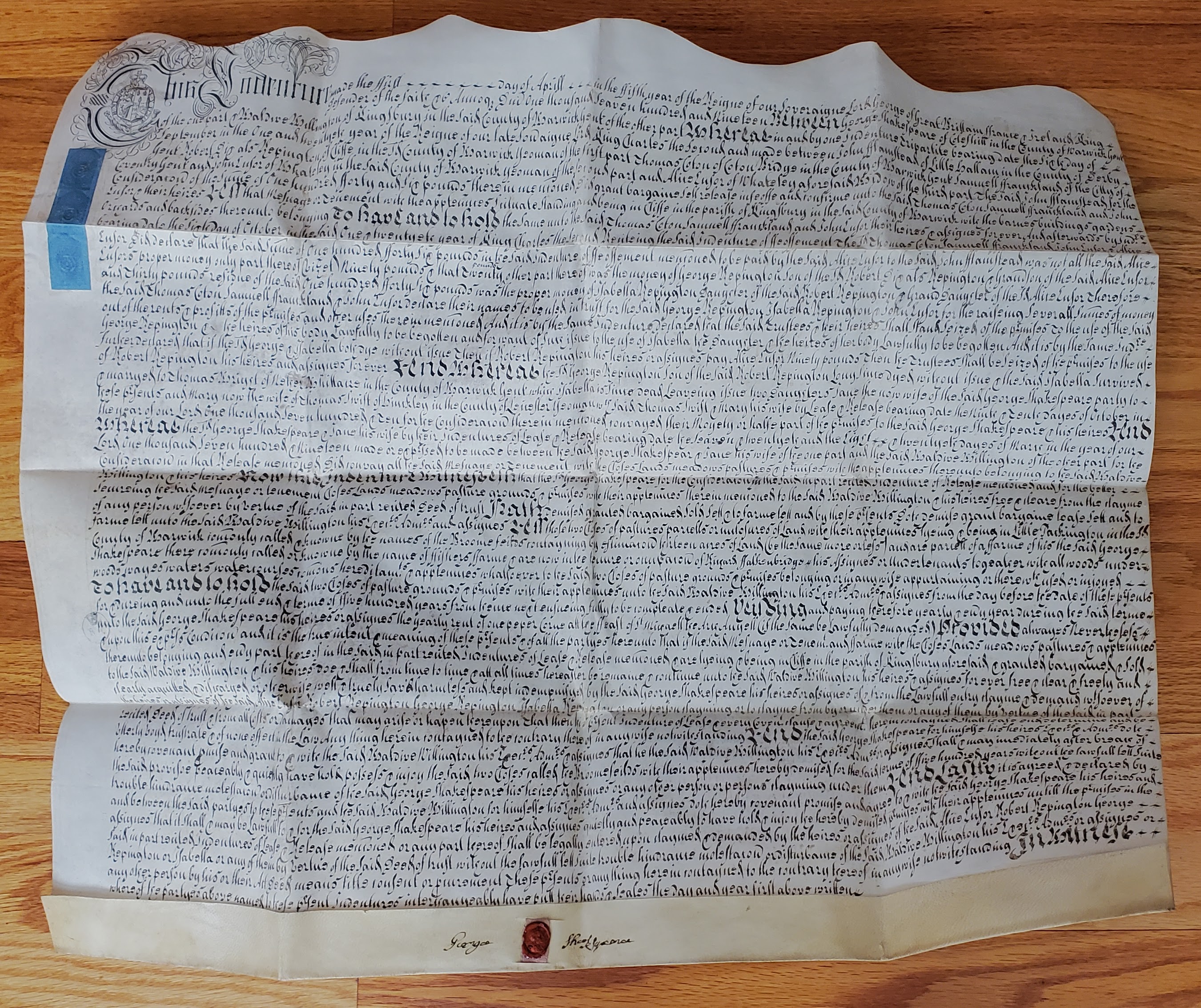
For those who might be interested here is the transcription. Feel free to scroll through. (the hastags are in the original):
This Indenture made the ffirst ####### day of April### in the ffifth year of the Reigne of our Soveraigne Lord Georg of Great Brittain ffranc & Ireland King # defender of the faith & Anno Dui One Thousand Seaven hundred and Nineteen. Between George Shakepeare of Coleshill in the County of Warwickshire of the one part & Waldeve Willington of Kingsbury in the said County ow Warwick Gent of the other part Whereas in and by one indenture triparte bearing date the sixth day of September in the one and twenty of year of the Reign of our late sovevainge Lord King Charles the second and made between John fflamstead of Little Hallam in the County of Derby Gent Robert Dix[ie] also Repington of Cliffe in the sd County of Warwick Yeoman of the first part Thomas Coton of Coton Bridge in the County of Warwick Gent Samuell ffrankland of the Citty of Coventry Gent and John Ensor of Whateley in the said County of Warwick Yeoman of the second part and Alice Ensor of Whateley aforesaid widow of the third part the said John Fflamstead for the consideration of the sum of one hundred fforty six pounds therin mentioned did grant bargain & sell release infeoffe and confirme unto the said Thomas Coton Samuell ffrankland and John Ensor their heires All that messauge or tenenment with the appteuments scituate standing and being in Cliffe in the parish of Kingsbury in the said County of Warwick with the barnes & buildings gardens orchyards abd backfields there unto belonging to have and to hold the same unto the said Thomas Coton Samuel ffrankland and John Ensor their heirs & assignes forever And afterward & by Ind. Bearing the date the sixth day of october in the said one & twentieth year of King Charles the Second Renteing the said indenture of ffeoffement the sd Thomas Coton Samuell ffrankland John Ensor & Alice Ensor did declare that the said dum of one hundred fforty six pounds in the siad indenture of ffeoffement mentioned to be paid by said Alice Ensor to the said John fflaumstead was not all the said Alice Ensors proper money only part there of viz of Ninety pounds & that twenty pounds other part thereof was the money of George Repington son of the Robert Dix[ie] & als Repington & grandSon of the said Alice Ensor ## and thirty pounds residue of the said One hundred fforty six pounds was the proper money of Isabella Repington daughter of said Robert Repington and grandDaughter of the sd. Alice Ensor therefore ##the said Thomas Coton Samuell ffrankland & John Ensor declare their names to be used in trust for the said George Repington Isabella Repington & John Ensor for the raising Severall sums of money out of the rents & profits of the premises and offer uses there in mentioned And it is by the same Indenture declared that the said trustees and heir heires shall stand seized of the premises to the use of the said George Repington and the heirs of his body Lawfully to be begotten and for want of his issue to the use of Isabella the daughter & the heirs of her body Lawfully to be begotten And it is by the Same Ind. # further declared that if the sd. George & Isabella both dye without issue then if Robert Repington his heirs or assignes pay Alice Ensor Ninety pounds then the trustees shall be seized of the premises to the use of Robert Repington his heirs and assigns forever. And Whereas the sd. George Repington son of the said Robert Repington Long since dyed without issue and the said Isabella survived ## and marryed to Thomas Knight of Nether Whitacre in the County of Warwick Gent while Isabella is since dead Leaving issue two daughters Jane the now wife of the said George Shakespeare party to ## kepe Payents and Mary now the wife of Thomas Swift of Hinckley in the County of Leicester Yeoman The said Thomas Swift & Mary his wife by lease & Release bearing the date the ninth and tenth dayes of October in ## the year of our Lord One Thousand Seven Hundred & Nineteen made or eclipsed to be made between the said George Shakespeare and Jane his wife of the one part and Waldive Willington of the other part for the consideration in that Release mentioned Did convay all the said mesuage or tenement with the closes lands meadows pastures grounds & premises with the apptentues there unto mentioned to the said Waldive Willington and his heires. Now The Indenture Witnesseth that the sd. George Shakespeare for the consideration in the said in part impart rented Indenture of Release mentioned and for the better ## securing the said mesuage or tenement closes lands meadows, pasture grounds & premises with their apptennmens therein mentioned to the said Waldive Willington & his heirs free & cleare from the clayme Of any person whoever by vertue of the said in part willed Deed of trust Hath demised rented bargained & sold lett & to farme lett and by those presents doth demise grant bargan lease lett and to farme lett into the said Waldive Willington his { Etes Adm. Es and assigns Ass those two closes of pastures pacells or enclosures of Land with their ap#purtements lyeing and being in Little Packington in the sd. County of Warwick comonly called and knowne by the names of the Broomefields contayning by estimation thirteen acres of land (be the same more or less) and are parcell of a farme of his the said George # Shakepeare there commonly called or knowne by the name of ffishers farme are now in the tenure or outbarow of Richard ffalkesbridge and # his assignes or undertenants togeather with all woods underwoods wayes waters watercourses commons here ditam ts & apptenueumens whatsoever to be the said two closes of pasture grounds & premises belonging or in any wise appurtaining or there witnsesed or injoyed # To have and to hold the said two closes of pasture grounds & premises with their appt#en#es unto the said Waldive Willington his { and et es Adm.es & assigns from the day before the date of these p’ymentsfor & during and unto the full end & terme of ffive hundred years from hence eo & Feusueing fully to be compleate and ended Yielding and paying herefore yearly & eny year dureing the said terme ## unto the said George Shakespeare his heirs or assigns the yearly rent of one peper due att the ffeast of St Michaell the arc Angell (if the same be lawfully demanded &) Provided always Nevertheless ## and upon this p’ys conditon abd ut is the true intent and meaning of those pYents & of all parrtyes here unto thay is the said mesuage or teneme. And ffarme with the Closes Lands meadows pastures & apptenuences there unto belonging and only part there if the said in part writed Indentures of Lease & Release men’oned & are lyeing and being in Cliffe in the parish of Kingsbury aforesaid and granted bargained & sold # to the said Waldive Willington and his hers doe & shall from time to time & att all times hereafter be remaine & routine unto said Waldive Willington or his heirs and assignes forever free and clear and freely and # nearly acquitted & disaryed or herewise we & huely lar’d harmless and kept indemmifyed by the said George Shakespeare his heirs assignes of & from the Lawfull entry clayme & demand wilsoever of # the heirs or assignes of the said Alice Ensor Robert Repington George Repington Isabella Repington or any person claiming or to clayme from by or mq or them or any of them by vertue of the said in part # writed deed of trust and from all costs or damages that may arise or happen in here upon that thou his pYent indenture of Lease & every Coven clause & ayreemt herin contayned shall lease end determine and be # uttelry bound frustrate & of none effort in the Law Any thing herin contayned to be contrary there of in any wise not withstanding AND the said George Shakespeare for himself his heirs & et es and Admin es. Doth # herby covenant ? Puise and grant to & with the said Waldive Willington his E er es. Admin es & assigns that he the said Waldive Willington his er es. Admin es & assigns shall & may imediately after breach of # the said proviso peaceably & quietlly have hold possess & injoy the said two closes called the Broomfields with their ap#ptu#mes hereby demised & for the said terme of ffive hundred years without the lawfull lett suits trouble hinderance molestaton or disturbance of the said George Shakepseare his heirs and assignes quietlly and peaceably to have hold & injoy he herby demised pLinjes with the said George Shakespeare his heirs and # assignes that it shall & may be lawfull to & for the said George Shakespeare his heirs and assignes quietlly and peaceably to have hold injoy the herby demised pLinjes with their ap#ptu#mes until the Premisses in the # said in part rited & Indentureds of Lease & Release mentioned or any part thereof shall be legally entered & upon claymed & demanded by the heirs of Assignes of the Said Alice Ensor Robert Repington George ## Repington or Isabella or and of them by vertus of the said Deed of Trust without the Lawfull lett suite trouble hindrance molestation or disturbancce of the Said Waldive Willington his E er es. Admin es & assigns or # any other person by his or their Act Deed means title covnent or purement those Pyents or anything here in contayned to the contrary here of in anywise notwithstanding In WITNESS where if the parties above named to these pYent [present] indentures interchangebly have putt their hands & seales the day and year first above written #
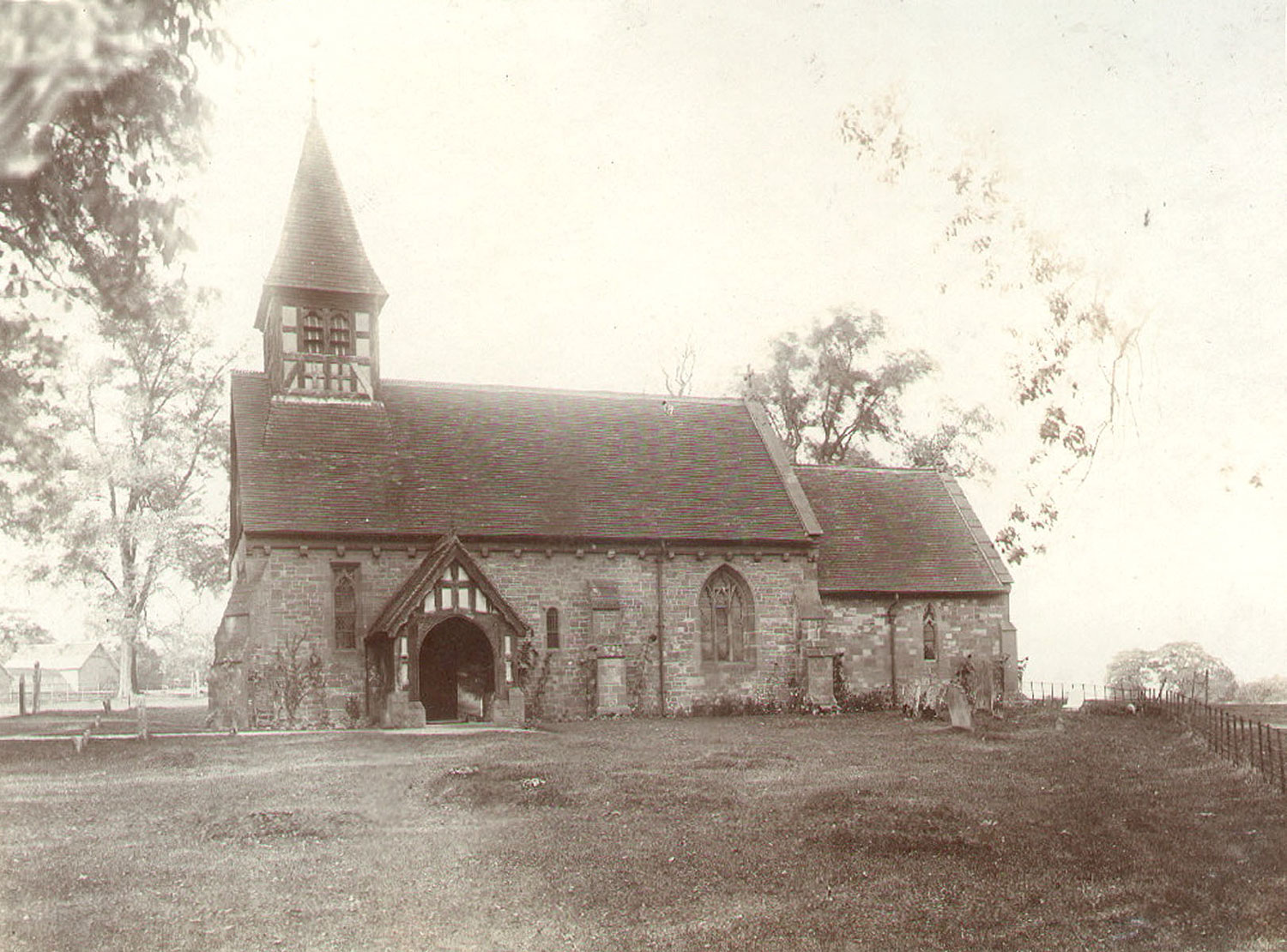
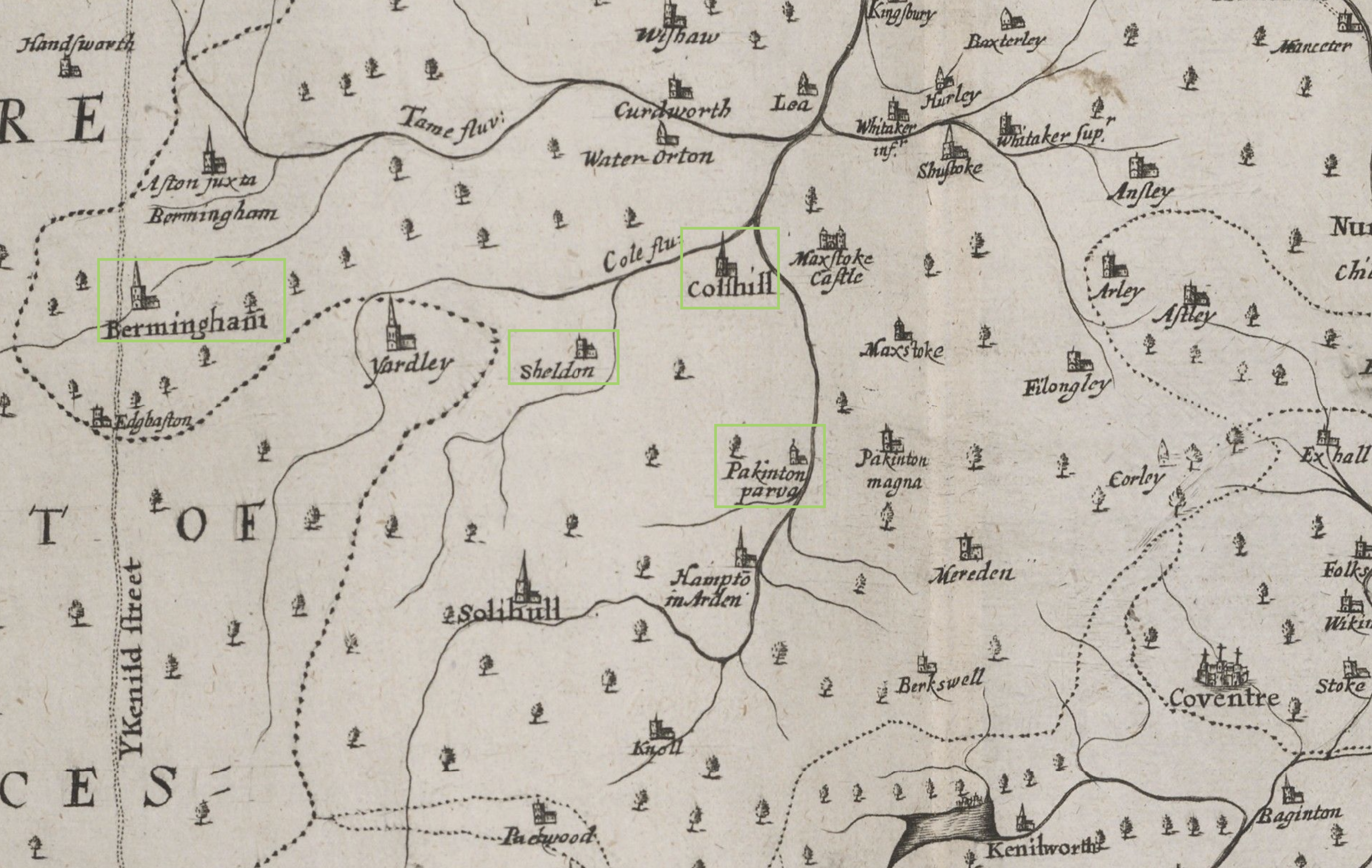
One of my Warwickshire ancestors is Nicholas BROME (1450-1517) my 13th great-grandfather. In an obscure thesis I find reference to the Manor of Little Packington which originally belonged to the cathedral Priory but was then at the dissolution granted to William WILLINGTON and William SHELDON. This is William WILLINGTON father of Mary WILLINGTON (1502-1553) who married William SHELDON (c1495-1570) of Beoley son of Ralph SHELDON of Sheldon tapestry fame. And just a few years later it is in the possession of Thomas BROME and his wife of Woodloes. Thomas BROME is the great grandson of Nicholas BROME [my 13th great grandfather] of Baddesley Clinton and Woodloes. In 1653 the manor was sold to Thomas Fisher and it has since generally followed the descent of Great Packington. What is interesting is that the Indenture contains both a Brome fields and a Fisher’s farm. The parish church of St. Bartholomew Little Packington is no longer a church but has been turned into a residence. George SHAKEPSEARE in his will dated 30 May 1719 gave to the churchwardens and overseers £10 to be laid out in land or secured, in order to lay out 10s. in bread yearly to the poor of Little Packington. (on map below it is shown as Pakington parva. Also Bermingham=Birmingham; Colshill=Coleshill)
At this point I do not know of any SHAKESPEARE’s in my family tree—although my cousin Dale SHELDON has some. The George SHAKESPEARE of Coleshill and of the indenture, was born to Thomas and Grace (HARBERT) SHAKESPEARE and baptised 9 January 1657 at Little Packington, Warwickshire. Thomas was born 26 April 1610 at Little Packington and married about 1645 to Grace HARBERT who was born about 1624, making his mother about 33 when George was born but his father 47.
How these SHAKESPEARE’S relate to the famous William is yet to be discovered. But the deed is connected to my BROME family and perhaps to my SHELDON family. And whether the deed’s George SHAKESPEARE shares an ancestor with the scribe William SHAKESPEARE, who knows. And there are the surnames COTON, FRANKLAND REPINGTON and ENSOR which could lead in many directions. All good fun following the gopher holes.
Kelly Wheaton © 2022 All Rights Reserved,
 Wheaton Wood