Divorce Decree on Ground’s of Extreme Cruelty: A Soprano’s Aria Chapter 25
Posted on November 19, 2021 Leave a Comment
June 1 – At Westlunds sewing
June 2 – Lolita and Dewey came over to Jessie Millers. Syl, Jes, Dew, Lo. and I went as far as Oakland Lo & I called on the kiddie R’s and I accompanied Lo. as far as the mole? and returned alone to Hayward; walked out at 1-2 in the morning. Withstood trip well.
June 3 Monday – and washday cleaned house. Hot and exhausting work.
June 4 – Went to Oakland and bought goods for new (silver bloom) dress and soilsette for Milos herbs also mauve flowered crepe for night gown Called on Mrs Fryer at Fairlawn Hotel Fruitvale and had lunch rode down town in Lois’s little auto bought Dictionary—Funk & Wagnalls, and came home; found letter from Bro Horace telling of Uncle Asa’s death in Neb. and one from Eilene.
June 5 – Got second letter from Milo since he arrive at Camp Mills L. I. answered it. Jessie is making fruit cake to send to him. I made the handkerchiefs.

June 6 Thursday – Jessie & I took the box in to Hayward and mailed it. Then went to S. F. Lovely trip. Ripe cherries all along the San Leandro valley. White caps on the bay. Wind and cool weather in the city. F S was home so J & I spent the day in G. Gate Park. The children were quite elated because their father had just bought a new Chevrolet. I ran in and had a bite of dinner and out again just missing him by a hairs breadth. So it goes I was sorry that I couldn’t stay and fix Eilenes dresses for her as I had intended. It was a most disappointing day. When we arrived at Hayward we could not get an auto so walked out.
Friday June 7 – Aftermath blue as blue devils are supposed to be. Mrs. Miller went to the city. I clean up my cloths and do some mending. Cut out gown.
Sat June 8 – Clean house finish night gown. J & S go to Dorans card party.
Sun June 9 – Looking for Bro Horace. Mrs. Miller, Herbie & Esther arrived before we were up. Cool in the shade. A man is cutting Mrs Westlunds wheat for hay. All the hills have turned brown and are covered with little mounds of hay. It is a beautiful sight.
June 10 – Dull as Mondays are want to be.
Mon June 11 – Went to Oakland and bought me a new silverbloom dress and a nightgown.
June 11 – Making my new striped dress. Weather very hot.
Wed “ 12 – Jessie went to town to get buttons for my new dress. 3 sizes to match. I like them.
Thu 13 – still sewing. Mrs. Gentry drove in or rather out in her buggy to get me to sew for her.
Friday June 14 – At Mrs Gentrys place making her a wash foulard.
Sat 15 – Still at Gentrys. When I had the dress nearly done Jessie & Syl drove over in their Fathers new Chevrolet to get me to come to Hayward to see Mr Mosier. I went. The meeting was very causal just wanted to know what I wanted. I told him I wanted nothing at all. He had feared I would want alimony which he did not propose to give. I calmed his fears and then we all rode or drove out to Millers. He and I said good bye friendly enough. I know it hurt us both but whats the use? None. He told me today that I was as much to blame as he. Jessie went over to the city with him and Dewey brought her back late in the night. Lolita came along and they stayed over night.
Sunday June 16 – We all went out riding in the machine. Tried to find Uncle but failed. Went to Mt. Eden and drove around over the country awhile and back to Millers when we had a light lunch and then Dewey and Lolita went back leaving me lonely.
Monday June 17 – Got a letter from Milo saying he had got the box and pictures thanking us. And asking me to send a “housewife.”
Tuesday 18 – I was all ready in my new suit to go to the city for comfort kit supplies and to deliver a chicken to Mrs. Schlessinger for Mrs Miller, when I met the Post Man and got a letter from Milo, one from Allie one from Jessie Kendrick and one from Ruth Westlund. Here was news from New York Washington Los Angeles and Nebraska. Milo said they were sailing the day he wrote. I went on over to the city called on the children, Eilene accompanying me back to the Emporium to do some shopping. We got her a cape and stuff for Leo a suit. I got the comfort kit stuff and dident send it as I have to have an order for it first. Came home alone and lonesome.
June 19 – Wrote to the children in the city of S. F. In evening went in to Hayward with Dorans met Gentrys and went out to their place to sew. Stayed there Thurs.
Friday, 20, 21. Coming home Fri eve found Jessie busily preparing to take a summer course after all.
Sat June 22 – A change in the weather which has been scorching hot and is now cloudy and cold. I spend a gloomy day.
Sun June 23 – Looked for the folks all day. Nobody came.
June 24 – Jessie packed her grip and started to college. Syl thinks he may have to go to war and Jessie had better prepare to earn her own living. She was going to look at a house and lot on her way in to Berkeley.
Tuesday June 25 – I sent my suit in to Hayward to be cleaned and pressed. This is the first time for it. Have had it nearly 2 years. No mail again today and Eilene hasn’t come yet wonder whats the matter. Weather is sunny and hot again. Mother Miller washing. Later in the day I stood looking out the window and saw an auto slow up at our gate and back up down the hill. I said to Mrs M how many times they had fooled me thinking some one was coming and then they either changed speed and went on up the hill or backed down again. While I was talking I glanced out again and said O here they are coming up the hill again, I wonder they turn in the lane, Surely thats Lolita getting out. Yes she picks up Deweys hat that has fallen out and while he tries our awfully steep little hill I go out down to meet my Lolita girl. Im so glad to see them Eilene and Leo here in the machine. She has brought her sewing and is to stay. After a hurried lunch Dewey and L return to the city and still later in the day, evening in fact Jessie came home from college. The course was going to cost her too much so she decided to return and talk it over. We are all having a fine time visiting. Syl brought 50 lb cherries for 5.00. E & I sleep at Westlunds.
June 26 – We cut out Eileens cape she has not enough material so returns to the city for more. I receive notice from my lawyer to fix date for trial. Eilene will call on him when she returns tomorrow. I get on fine with the cape.
June 27 – F. S.’s birthday he is 50 years old. Leo [junior] and I awoke early, he looked at me and said Eilene aw daw. Dewey aw daw, and went to sleep again. Finally we arose. Had a great time dressing washing and combing and hunting the keys. Finally we are all ready to climb up hill to the tank house. Jessie is getting breakfast and Syl is dressing. It is cool and sunny. I am feeling quite well. I will sew on Lolitas white skirt until Eilene comes.
June 28 – Spent the day at Mrs Westlunds house sewing for Eilene. When I came up to Jessies place to lunch I found her washing so I helped her finish. I then went back and blind stitched the bottom of Es cape which is about 5 yd around the bottom and then cut out her house dress of Jap. crepe. Back up to dinner and back down to bed. The hill is hard to climb.
June 29 Sat – I am up at 5:30 war time, dress, make bed and am ready to sew as soon as it is light enough. Fitted the dress I cut last night before breakfast. I must make Leo’s suit today. It is cloudy out and might rain. Dident rain – very tired – slept soundly.
Sun June 30 – was a beautiful sunny day to end the last day of June. In spite of the continued dry weather things seem to grow on somehow. I help Eilene finish her sewing. Come up to breakfast helped get it. Went back to Westlunds sewed awhile, cleaned up the house and ourselves, rested about 15 min flat on my back and gathering up my things, went back to Jessies to sleep in my own bed again. Dewey and Dutch came while we were at dinner bringing some ice cream which went fine with our cake and peaches. Syl took me in to see the lawyer Mr. Perry. He was not in so we came back. Got the entire bunch, excepting Mrs. Miller and went in to Oakland to the Methodist church to a choral program, stopping on our way thru Hayward to call at Mr Perrys res. to find him in. He soon attended to my business and then we went on. There were in the car Syl. Dewey Dutch who was christened. Ernest Walh, Jessie, Eilene, Leo ba’e and my own dear self. The car behaved fine and got us in to town in time for the meeting. The singing was fine. The pipe organ with chimes very sweet. Roy & Rose brought us to the car line. Syl treated to refreshments. Walked home 12:00.
July 1 – I have a sort of after the ball feeling this morning, but am up early and none the worse for my late walk. Am spending the “morns morning” writing to my Bro Horace, my son Albert and my Diary. The morning is cool cloudy and damp. Jessie is sleeping.
July 6 – O but how time flies Tuesday July 2 Rose drove out in their Chevrolet bringing Essie for a visit. Jessie & I went back with her. J stopped at Melrose and went on in to Oakland did a little shopping and came home walking all the way out from Hayward. On Wed July 3 Jessie Syl and Mrs. Miller went to a card party at the schoolhouse. I stayed at Westlunds all evening and night. July 4 – Our natal day was right royally celebrated in all the bay cities but no I could not go It was too inconvenient and I was not well enough to walk so much. Herbie came out to see Essie that was our one and only concession to the day.
July 5 – Essie & Mrs. Miller went to S. F. We spend the day dutifully at homely tasks.
July 6 – I wash clean h. bathe and shampoo my hair. While Jessie waits at the foot of the hill for the mail it brings both good and bad news. I get a card from Milo says this and nothing more. “The ship on which I sailed has arrived safely over seas.” Jessie get a letter for Syl which says he has been transferred to class 1. Which great big news upset my Jessie so she had a crying spell poor girl. It is sad days for thewives.
July 7 Sunday – A very quiet uneventful day. Late in aft. Lolita came out and Syl took her suitcase in to Hayward. Then she returned. She walked. J and I took an evening walk down the ranch wood road and met Syl coming back.
July 8 Mon. – I helped Jessie dig potatoes at Westlunds which we promised her we would do to repay her for her many kindnesses.
July 9 Tue – Finished the potatoes. Syl found out he would have to report for duty Aug 3.
July 10 Wed – Hot sunny day. Dewey came out to look at the motorcycle. Syl has advertised the place for sale trade or rent. Lolita dident come today. Will work on Jessies dress.
July 11 & 12 – Nothing of importance.
July 13 Sat. – Lolita came out to the Miller Ranch. I was alone and glad to see her. J. & S. came home for the eve.
July 14 Sun — Dewey came out and got his motorcycle that he bought of Syl for $350.00. J & S came in evening.
Mon. – Went down to Westlunds with Lolita to sew. Stayed there until Wed July 17 when J & S went over to the city where L & I “moved” back up the hill the better to look after the ranch.
July 18 – Lolita & I “did” a big wash cleaned house and all the rest of it.
19 Fri – Still working on Lolitas dress. She is very proud of it.
Sat 20 – Jessie ironed I cleaned house Lolita made a cake Everything was done up in apple pie order. Then Fryers came. Got a squab dinner. Kiddies went wild over the live stock. They went back in the evening. J & S accompanying them as far as the Fruitvale station.
21 Sunday – Lolita Mrs. Miller & I spent very quietly at home alone
22 Monday – Jessie and Sylvester went back to town to do some shopping and see a prospective buyer for the place.
July 23 Wed – Ive looked forward to this day for 5 years when I brought suit for divorce in Minneapolis and was induced to drop it upon husbands promise to reform, which he failed to and today I am to appear in the Superior court of the State of California to get my decree upon grounds of extreme cruelty. I am expecting Dewey and Eilene every minute now and Lolita and I will go in with them. J & S will meet us at the court house in Oakland. It is now time to dress. Later Dewey had some trouble with his tire but arrived in time to get us all in Oakland on time. My hearing went off smoothly and the lawyer thinks everything will come out all right.

I gave Eilene the coat I made for baby and she was very much elated over it. We bought Dewey a silk shirt for I am getting ahead of my story. We bought the material for babys coat and Eilenes dress.
July 24 – Deweys 21 birthday. I cut babys coat.
“ 25 – Sewing on baby Leos coat fixed a skirt for Lolita. Jessie made Lolita a house dress.
July 26 Friday – Jessie Syl got Rays machine to use while he settled up the business here and secured another habitation wherein to dwell.
Sat. July 27 – Sylvester took me in to Oakland where I met Dewey and Eilene and we signed the papers. After which I gave Eilene babies coat which I had finished and we then bought Dewey a silk shirt for his birthday. Then Dewey took the suitcase and hurried home and raised some money to send Allie to buy a bargain in tools. Syl Eilene and I went out to lunch. Eilene went on home and Syl and I did some marketing for Sundays dinner and drove home merrily in his borrowed Chevrolet, for the use of which he had to buy a new tire. Jessie and Syl went back to Hayward to get Essie & Herbie
Sunday July 28 – I got up early and had everything in order when Esther and Herbert came in from Westlunds where they spent the night. We had a good breakfast of musk mellon fresh ranch eggs potatoes hot toast coffee etc. We four fared well here on this bald knob of a hill top where we have spent so many quiet peaceful hours and which we must soon leave. After a light lunch Syl took us on a little sight seeing trip up the canyon. It is too dry and dusty to be beautiful now but those lofty hills are always grand. The whole valley is busily engaged in picking and drying apricots. Mrs Miller and I canned some for home use after we returned from our ride. Syl and Jessie took Essie and Herbie to town. Jessie and Syl stayed in so as to hunt up a house now.
July 29 – Jessie and Syl did not return. Mrs Miller and I busy with the fruit. Go to bed late.
Tue July 30 – Jessie & Syl arrive about noon on foot. Rays machine went back on them when they were nearing San Leandro on their homeward way last night. We were disappointed. They rented a bungalow in Berkeley and we started at once to pack.
July 31 – the “Movie” man couldn’t move us today so he will come early tomorrow. We are gathering up the odds ands of things and truly it is as the Irish woman said “You never know what a lot of thrash you do be having till you go to moove.” Syl went over to the city to see if he couldn’t get Deweys auto to help move us in. We do not look for him until late. Syl came without the car. It was in the Garage being overhauled.
Aug 1 1918 – Up early and all busy packing up to moove. Thot I lost Westlunds keys but found them hanging on the door knob. I left the place in order and J & S returned the key to a neighbor Mr Frank. Westlunds will be home soon. Moovers came about 10. Mrs Miller & I got the new address the money Keys and directions and started on ahead. Mr Fraiser picked us up in his auto. I drew my money out of the bank $35.00. Paid Mr Perry 25 and then we got some very bad sandwitches at Kelleys and started for our new home. We arrived safely and found a very pretty brown shingled bungalow behind a magnificent palm tree. Our vine and fig pear and apricot trees are in the back yard. We got pretty tired waiting. They came about 3 o’clock pigeons goats and all. We started setting up furniture at so late in the evening J. & Syl came with 40 squabs that they had dressed and told us that they had sold the pigeons for $2.25 per doz. a rediculous small price.
Fri Aug 2 1918 – Jessie & Syl are off early to settle up their affairs. Mother Miller & I are busy as bees unpacking and cleaning house.
Sat 3 – Still getting things settled at our new address. 1534 Bonita Ave Berkeley California.
Sun. Aug 4 – Very tired slept late. Breakfast at 10 taking it easy Mother Miller went out and got the sun papers. Dinner at 6 Ray and Rose came in.
Kelly Wheaton Copyright 2021. All RIghts Reserved.
Getting in Trouble in Early Rhode Island: John SHELDEN / SHELDON of Newport & Kingstown
Posted on November 13, 2021 1 Comment
I have come to love the ancestors that got into mischief and survived to be my ancestors. Such is the case of my dear John SHELDEN and one of the first records of him on these shores. I, like my cousin Dale SHELDON find his escapade a delightful insight into our ancestor.
Newport
From The RI Court Records Vol 1 pg 37
“John Sheldon Beinge by Recognzence bownd to this Court and by the Cenrl Aturny indicted for an afray by Disorderly Carridges acted in and at Thomas Coulds howse on the 6th janr 1657. The jurry impanelled: upon the Traverce pleads not guilty And refferrs him Selfe to god and Guntry for Tryall.”John Sheldon Beinge by Recognzence bownd to this Court and by the Cenrl Aturny indicted for an afray by Disorderly Carridges acted in and at Thomas Coulds howse on the 6th janr 1657.
The jurry returned and their answer is that the indictments came not Soe orderly to them as to justify them to give in A verditt because it had not beine passed on by A grand in quest before hand.
Thomas Gould Robert Griffin Edmund Audly John Sheldon and Thomas Winterton all of newptt Beinge bownd over to this Court for Disorders Done at Thomas Goulds house on Wedensday night the sixt of January last and the Court haveinge had A verry strict and a Searious hereinge and inquiry into the matter are convinced that the sayd persons in their then drinkinge helths intended nothing against the dignity of his highnes the lord protector, &cr thay also Solemly Denyinge any indignity intended in the same, and also confesinge their sorrow for their Rude and unorderly Caridges at the afore-sayd time and place, and of makeinge soe much disturbance therby and promisinge every one of them to Endeavour to avoyd the licke Disorderly actions againe, the Court are pleased noe longer to continue the sayd persons to stand bownd but upon paying Fees due to officers of Court thay are Discharged by proclamation in open Court.”
To place these transgressions in context let us have a closer look at the laws he violated.

Apparently a dim view of drunkenness was taken by the Colony of Rhode Island. It looks as if the young men got off with a fine of five shillings, being sufficiently repentant. The charge of speaking against the Lord Proctor (Oliver Cromwell as acting head of England), a much more serious charge could have much more serious consequences. See the consequence should they have been convicted. (Hung, cut down drawn and quartered).

Since we do not see our John SHELDEN back in the court records it seems he must have learned his lesson. What else can we learn from this record?
If you have been reading my blog posts on gophering you will realize that looking closer at the friends of your ancestors may provide dividends. So we have John SHELDEN’s friends who were arrested and charged with him: Thomas Gould, Robert Griffin, Edmund Audly and Thomas Winterton, who else is a part of this record? We have the Pettit jurors who heard his case. Remember when searching for origins across the pond everyone your ancestor came in contact with is a potential clue. And back in 1657 Rhode Island people knew each other. It truly was a jury of your peers. In 1650 the total population of Rhode Island was 785 and by 1660 1539. So for Newport it was likely a few hundred at most. So who was on the jury:
- Mr. John EASTON, foreman (1624-1705) bpt 15 Dec 1622 Romsey, Hampshire
- Edward ENMAN (INMAN) (bc1620-1706) possibly bpt 25 Aug 1616 Edward INMAN s of William at Wootton Wawen, Warcs.
- Capt. Thomas COOKE (1600-1677) 13 Apr 1600 in Netherbury, Dorsetshire, England
- James BADECOCKE (1612-1607) unknown possibly Redford, Semele, Warwickshire
- Thomas LAYTON (1614-1681) 17 Apr 1614 in Cranfield, Bedfordshire, England
- Mr Peter EASTON (1624-1705) bro of John above bpt 19 Dec 1624 Romsey, Hampshire
- Henry BULL (1610-1684) perhaps bpt 14 Dec 1606 Henry Bull s of Mr Bull Sutton Coldfield, Warcs.
- Petter GREENE (1622-1659) bpt 10 Mar 1622 in Salisbury, Wiltshire, England
- Sam WILBORE (1614-1697) possibly 1614 in Sible Hedingham, Essex, England
- Francis BRAYTON (1612-1692) unknown origin
- Lott STRAINGE (STRANGE) (1647-1690 too young) so perhaps John (Lott?) STRANGE bpt 3 Jun 1623 Ashchurch, Gloucestershire
- John ALMY (1637-1676) son of William ALMY bc 1601 possibly son of Christopher Almy of South Kilworth, co. Leicester, England
So we are going to scrutinize all the families in John’s network of friends and family. Sadly we do not have John’s wife’s surname and we only know of one child. So we have no choice but to focus on his friends and neighbors, since some ancestors leave very little behind. We have 3 possibilities for people with a connection is the area that John’s YDNA relative appears to be from. All are speculative. Adding his friends we have:
- Thomas GOULD (bc1623-?)possibilities bpt 15 May 1602 Thomas GOULD, Nuneaton Warcs.; bpt 12 Jan 1605 Upton Snodsbury, Worces Thomas GOOLD; or bpt 2 Feb 1625 Birmingham, Warcs. Thomas GOOLD
- Robert GRIFFIN (bc 1620?-1684) no agreement (All Midlands) bpt 28 Jan 1601 Rob Griffin Allesley, Warwickshire; bpt. 24 Nov 1624 Blockely, Wiltshire
- Thomas WINTERTON (bc1620?-?) possibly bpt 10 Feb 1621 Kimcote, Leics.; bpt 10 Dec 1620 Wyken, Coventry, Warcs OR bpt 4 Jan 1607 Claybroke, Leceistershire
Let us now turn to the first record we have of John SHELDON when he was a witness 13 Oct. 1652 “John Sheldon and Richard Knight witness a covenant between Peter Easton and Henry Stevens, both of Newport, RI.” This would be the same as the Peter Eastman above and we can add RIchard Knight and Henry Stevens.
- Richard KNIGHT (1620?-1680) several good possibilities bpt 19 Oct 1626 Wootton Wawen, Warcs; bpt 5 Dec 1619 Hampton in Arden; bpt 6 Oct 1624 Brailes, Warcs.; 13 Dec 1612 Long Compton, Warcs.
- Henry STEVENS (1620-1676?) possibly bpt 25 Mar 1605 Aston Juxta, Birmingham, Warcs

NARRAGANSETT COUNTRY later KINGSTOWNE
On the 20th Jan 1657, the land Company known as the Pettaquascutt Purchasers acquired a large tract of land measuring approximately twelve square miles (encompassing much of present day Kingstown). The deed was executed between the Naragansett Indian Sachems: Qussaquanch, Kachansquant and Quequaquenuet and John HULL of Boston, John PORTER Samuel WILBOR, Samuel WILSON and Thomas MUMFORD all of Rhode Island. Two later members added were Benedict ARNOLD the first and William BRETON. The lands were broken up so that each member received woodlands, marshlands and farmland.
Next, 18 Apr 1663, is a record where John SHELDON is a witness to a deed from Zachery RHOADES to Stephen ARNOLD both of Pawtuxet. Zachery RHOADES deeded 100 acres of land on the shore of the Pawtuxet River to his brother in law Stephen ARNOLD. Zachery married Joane ARNOLD, but he died just two years later, in a drowning accident off the Pawtuxet shore. The older brother of Stephen and Joane and first born, was Benedict ARNOLD I, all children of William ARNOLD of Ilchester, Somerset, England Benedict ARNOLD I, as noted above, was one of the Pettquascutt purchasers. He went on to become the first Governor of Rhode Island. (It is Benedict Arnold V who is notorious for defecting from the Continental Army to the British army during the Revolutionary War.)
Then 19th of January 1664 Henry HALL and Richard KNIGHT purchase from the Chief Sachem of the Naragansetts a large tract of land in present day Kingstown Rhode Island and later referred to as the Hall-Knight Purchase. This tract was to the west of the Pettaquascutt Purchase. The boundary between being known as the Pettaquascutt line. [See second map below.]
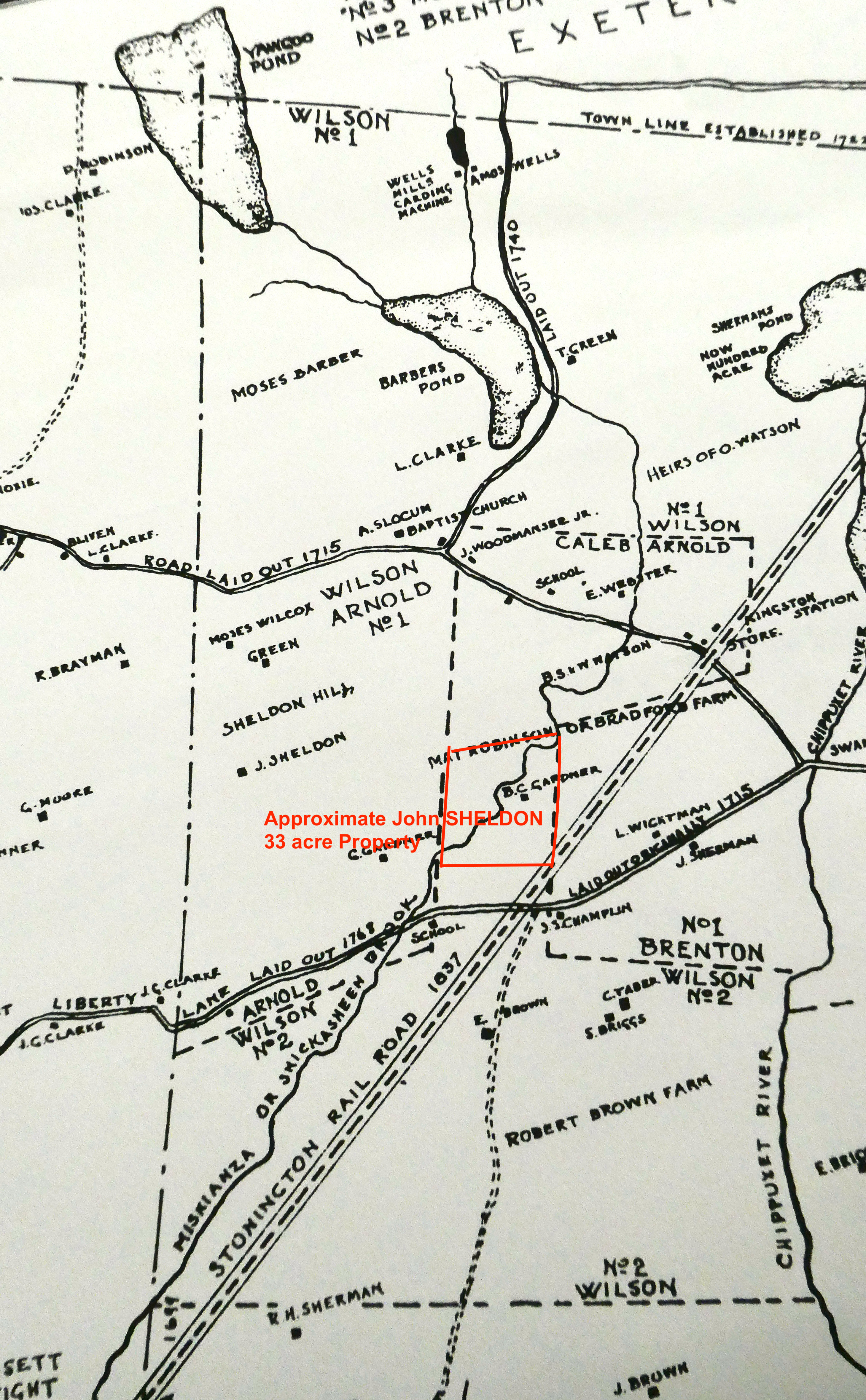
A deed of 22 Sep 1671 recorded 26 Oct 1683 from Benjamin CONGDON to John SHELDON of Narragansett Country, Planter, for seven pounds being 33 acres of a larger parcel had by CONGDON 22 Sept 1671 from William BRENTON, Benedict ARNOLD, John HULL, John PORTER, Samuel WILBOR, Samuel WILSON and Thomas MUMFORD ( the original Pettaquascutt Purchasers).

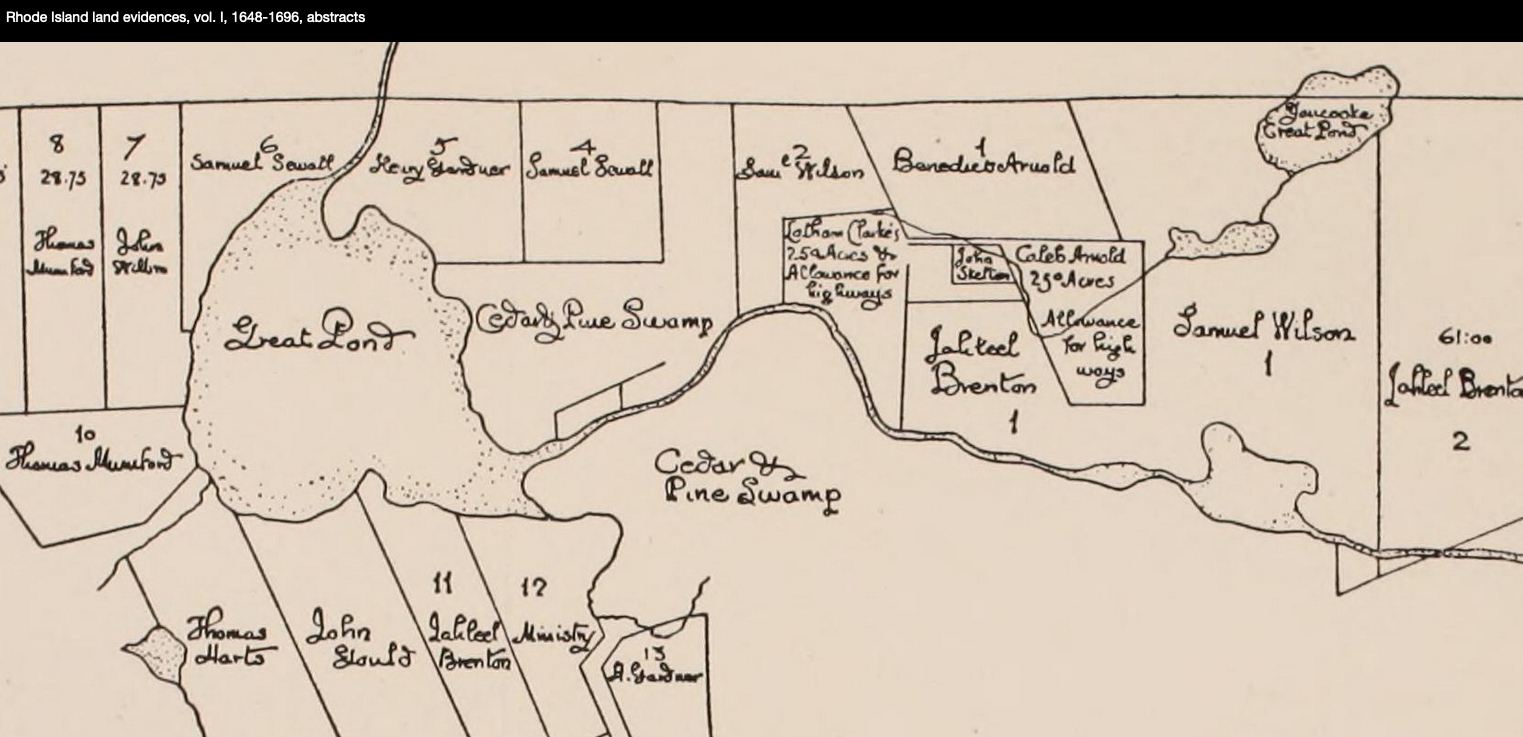
Another view rotated with North at top and approximate location of John SHELDON Senior’s property.
Then we have on July 29, 1679 forty-two residents of the Narragansett Country signing a petition to King Charles I of England asking him to make a judgement as to which colony the Narragansett Country belonged to. Was it to be Massachusetts Bay Colony, Connecticut or Rhode Island? “John SHELLDIN” and “John SHELDON Jun’r” signed this petition.

In 1681, forty residents of Narragansett founded the new town of South Kingstown and we find John SHILLDON and John SHELDON Junior among them. This is copy taken in 1723 from the original town records of Kingstown before it became North and South Kingstown of the original 1679 record. Since John Sheldon senior does not appear on this list we can assume he died between August 1679 and December of 1696.

CORRECTION: Although it appears in the South Kingstown Book shown above as only John SHELDON Jr. the one from an earlier version apparently showing a more complete list does include John SHELDEN (senior). See below. So my original hypothesis must be amended and it would appear that John SHELDEN senior died between Dec 1696 and the writing of John Juniors Will in 1704.


That is the sum total that we have for John SHELDEN/ SHELDON. We know he had a son John SHELDON Junior, however we do not have a birthdate for him nor for John SHELDON senior’s marriage or the births of any of his other children, if he had any others. Since his son John was a signatory in 1679 we can assume he was at least 21 at the time making his birth at or before 1658. We also know that John Senior was a witness in 1652 placing his birth probably before 1630, however he could have been born much earlier. If we look at the friends that he was arrested with their births look likely to have occurred between 1601-1625 so that leaves a very broad window of between 1601-1630. Will delve into possibilities for his birthplace in another post and further scrutinize his friends likely origins.
Kelly Wheaton Copyright 2021. All RIghts Reserved.
Happy that the World Still Contains a Little Joy: A Soprano’s Aria Chapter 24
Posted on November 12, 2021 Leave a Comment
Thursday April 11 Fri 12 – Sat 13 — Helping Jessie with her washing & housework and looking over my diary.
Sunday April 14 – Spent most of the day writing. Later in the afternoon Mrs. Miller & I went call on Mrs. Hausenbalg. She is an old woman of German birth and widow of a Dr. She has traveled extensively and has collected some interesting souvenirs of foreign lands. We spent a most agreeable hour at her house. She gave us some violet plants.
Monday – I did some more writing for my lawyer who has my case and working on baby Leos hat which I am embroidering.
Tuesday Apr 16 – Finished my writing and embroidering. Got a letter from Frank with his love. What’s the use?
Wednesday April 17 1918 – I went to Hayward and gave my papers to my lawyer Mr. Leslie Perry. Then Jessie & I went in to Oakland and I bought me a pair of white kid gloves and a new hat and a bottle of Tanlac medicine. I hope it will help me.

The day has been sunny and pleasant. We called on Mrs. Fryer who was out. I was disappointed. Jessie & I ate our picnic lunch beside Lake Merritt where Allie used to board. I called up Fruitvale 425. Josephine came to the phone. Her mother had not returned so we came to Hayward bought some meat. Hired a jitney (for 75 cents) to bring us home and arrived tired and glad to be home. Jessie & Mrs. Miller had dinner ready. Syl is talking war gardens. The Fruit trees are in bloom and are lovely along the way.
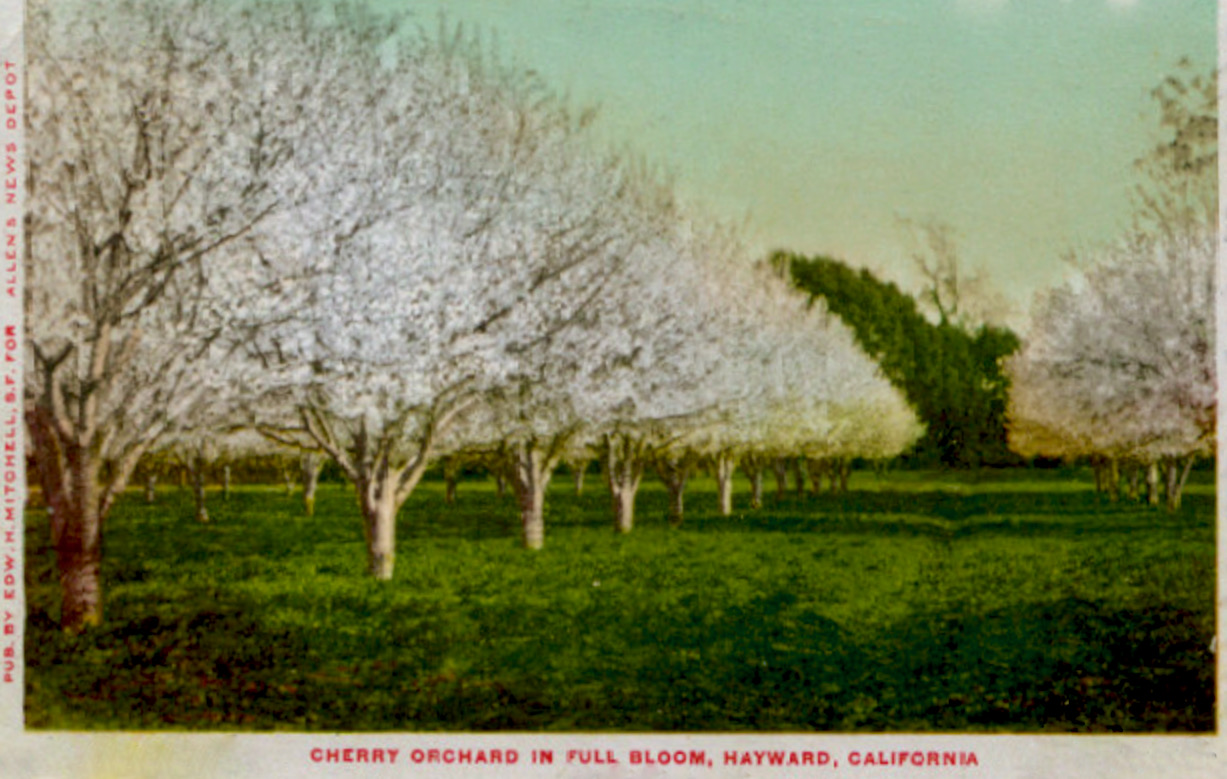
Thurs 18 – There was a high wind blowing all day. It also was hot. A curious combination. I worked awhile on Jessie coat and trimmed Mrs. Millers hat.
Friday Apr 19 – The wind has gone down and the day is lovely. I got a nice letter from Sister Goldie and answered it.
Sat April 20 Patriots day – Spent the day cleaning house and washing a little. Night found me very tired.
Sun Apr 21 – Esther Miller Kaufungs birthday. She got a wrist watch and a liberty bond. The Sylvester Millers are giving her a grand birthday party. I am doing my bit. Ray and Rose and Aunt Daisy Hepburn are broke down somewhere along the way. The morning is sunny and cool. The dinner is nearly ready and everyone is happy. Eva Coe and her finance Mr. Scotty Bently are among those present. Jessie and Syl went in with them and Jessie remained for the week.
Mon 22 – Usual routine of ranch life.
Tues 23 – Got letter from Frank saying he had left home for good and telling me to go home. I took the letter to the lawyer he advises not to go home and asks for time to fix up papers.
Wed 24 – Sylvester’s aunt Frankie her daughter Mary and son Ernest and his cousin Ruby also Ray and Rose Miller all came out in Rays new Chevrolet to luncheon. We had a good time and Mother Miller went in with them this leaves me alone all day long to run the poultry ranch.
Thu Apr 25 1918 – Leo Hoffman’s 2nd birthday I gave him an embroidered hat. Dewey came over in eve. after pipe fitting tools and helped Syl lay some pipe to supply water to the pigeon lofts. I cooked up a nice dinner for them.
Fri Apr 26 – I am tired out today as a result of too much effort yesterday. I only did what my hands found to do. It is not so windy and so more pleasant. I must go and cut the chickens greens.
Apr 27 Sat – Housecleaning. Jessie and Ma Miller returned.
Sunday April 28 1918 — Such a joyful day deserves more space than usualy given to my daily news. Eilene and Leo Lolita and Charlie Cameron and friend David came over and after we had a fine dinner we all went over to my very own big bay tree and spent the end of the perfect day. They crawled and climbed all through that wonderful tree like monkeys snapping pictures and scaring baby Leo most to death.
Mon 29 and Tues 30 – was just the aftermath.
May 1 – Usual housework dull and discouraging.
Thu 2 – Mrs. Miller went to S. F.
Fri 3 – More housework and lonesomeness; cut Jessies outing dress.
Sat 3 – Syl came home early and while they worked among the poultry I sewed on the dress. Then got supper and made a strawberry shortcake for the Doran young people coming over in the evening. Later they arrived and passed the time pleasantly till 12.00
Sun May 5 – Dawned bright and glorious. Cool and sunny. We arose at 9 and while I cooked a good breakfast J. & S. did up the morning chores. Then we ate and set out 200 onion plants. Dressed and started to Hayward on foot our car we ordered having missed connections. When we were nearly there Mr. Cole of the garage picked us up and got us in to town just in time to catch the big Locomobile car that runs regularly between Hayward and Oakland. We had a glorious ride into Melrose to attend Ray Millers birthday dinner. Everybody enjoyed themselves hugely. After dinner Jessie played and I sang and Ray snapped the group on the lawn. Then Jessie & I called up my Mrs. Fryer who was luckily at home and I went over to get Lois’s picture Mrs. Fryer was keeping for me. After chatting a bit she brought me back to the Miller party in her tiny little camouflaged ford car that rides like a cradle. O my heart goes out to the memory of my sweet Lois but all I have left is her memory and this picture I prize so highly. Ray brought us home and we went to bed about 10 o’clock a little tired and happy that the world still contains a little joy for those that seek it.
Mon May 6 – J and I finished planting the onion sets. No mail. I am looking for a letter from Allie.
Tues May 7 – Made gray cashmere petticote. Very Grandmotherly.
Wed Apr 8 – Wrote letter to Jessie Kendrick asking for a little financial aid. It is cold and windy but my heart is warm with a new hope of a brighter future of health and happiness and freedom from care.
Wed Apr 8 – got a letter from Bro Horace and one from my lawyer Lester Perry with a rough draft of my court complaint. I have been revising it all afternoon.
Thursday forenoon – Went to Hayward to consult my lawyer rode part way in with Mrs Westlund. Jessie certainly has good neighbors. I bought some Sal Hapatica [Bristol Meyer’s Mineral Salt recommended for Rheumatism, gout, kidney and liver problems], a purse for Jessie and a handbag for myself which I needed to conserve my silver. I started to walk home and was kindly picked up by Mrs. Finklestein and rode as far as the school house with her. When I got to the “P. O. Box 171A Miller” I found Jessie after the mail. There were 3 letters for her. One was from Leo and Carrie partly to me. I was so doubly glad to get it. We sat in the Eucalyptus tree and read them while we rested. One was from Essie Kaufflung who arranged for Jess and Syl to go camping with them Sat and Sun. I am helping her get ready.
Fri May 10 – Jessie and Mrs Miller have gone and to fight off depression read one old scientific work called “The tomorrow of death” which contains some reasonable arguments and comforting facts.
Sat 11 – Very busy with housework and chores about the ranch.
Sun 12 – Mrs. Miller and I were too lonesome and stupid for words when in walked Milo, Dewey and Dutch. Got up a hasty dinner and enjoyed their short stay very much.
Mon 13 – Usual routine
Tue 14 – Went into Hayward and got some thread to work on Eilenes and Jessies sewing. Jessie is making junior house wife.
Wed 15 – Jessie & I went to the Presidio to see Milo. It was wonderful to see so many fine young fellows in their uniforms. He took us into his barracks and introduced us to his friends. I do not know the army names for them. They seem to be a splendid set of young men. We went out into the grounds and took several snap shots which Leo ba’e Hoffman spoiled later.
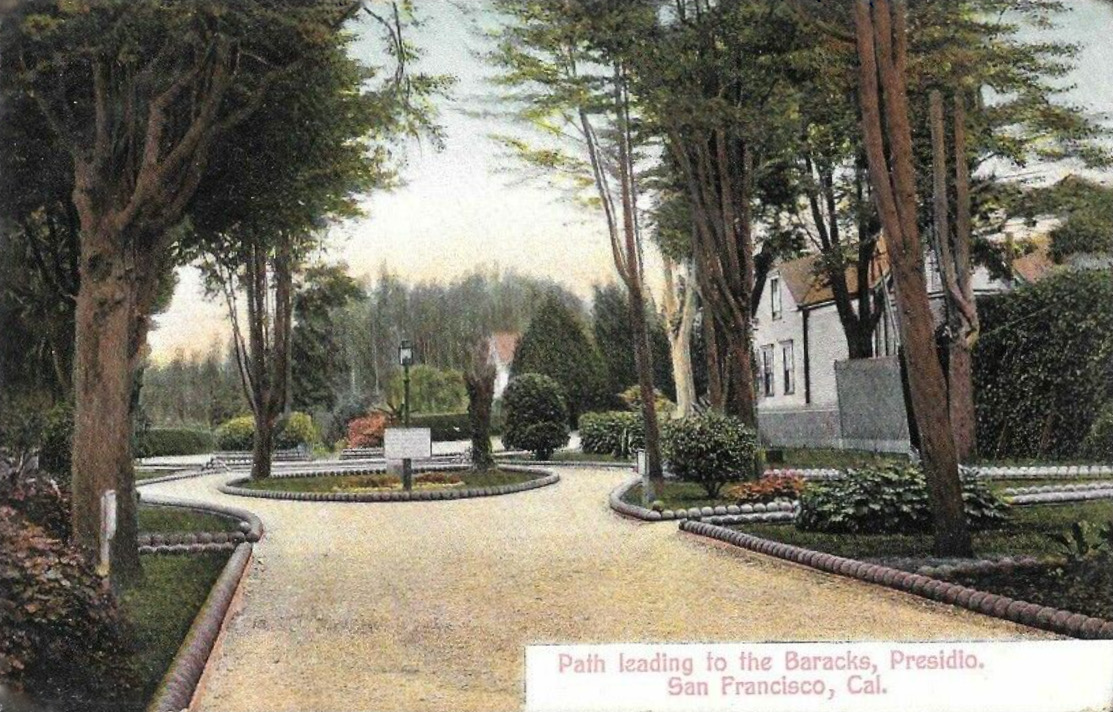
Milo accompanied us out to the house and J & I came back to our own little Hayward arriving at 11:30. An account of Mr Cole being out on a wild goose chase. We got another automobile to bring us out. Midnight. Glad to get back.
Thu & Fri — Dull blue days. Trouble seems to weigh me down. Jessie is resting up after her trip to town. I am trying to make Lolita a waist out of an old skirt of Jessies. I am cheered with several letters from my bros and sisters offering help and sympathy.
Sat May 18 – Jessie & I did a big wash. I scrubbed and ironed. Jessie went with Sylvester to the dentists in afternoon and to call on the Doran young peole in the evening. I go to bed tired and rest good.
Sunday May 19 – Up bright and early doctoring a caloused foot and then preparing for a crowd which is likely to appear on this popular ranch later in the day. Jessie & Syl get up later and pitch in to help put everything in order. She has got the roast in and is finishing up the ironing. The sun shines bright and the wind which has blowed dismally for days has gone down. I hope it to stay down for awhile.
Sun eve. – nobody came so we have a very quiet dull and stupid Sunday.
Mon May 20 – Usual house and ran. work
Tue 21 – Much the same at Jessie’s ranch house. Washed clohes
Wed 22 – sewing on an old waist for Lolita also a suit of underwear for myself. I made Lolitas bloomers this week.
Thur 23 – Still sewing
Fri 24 – Eilene walked out without the baby. We were disappointed. I cut out a red cross apron for her and remodled her blue silk. She went back same day.
Sat 25 – Lovely and lonesome Sunday. I have plenty of time to think over the news Eilene brought that Milo had gone east on his way to France. O my Milo Boy I pray for your welfare daily also all the others. Ray Rose and her aunt came late in the evening.
Mon 27 – Mrs. Westlund could not get her dressmaker so she asked me to help her out so I went down and cut out Ruths party dress.
Tue 28 – Still sewing at Westlunds. My head ached very bad but put in a full day.
Wed 29 – Mrs Westlund took me in her Lizzie to Mrs Gentrys to sew a day for her. I cut out Ruth Gentrys dress and nearly finished it in a day. I recd $3.00 for the days work. The most I ever received for a days sewing. This included lunch and dinner.
Thu May 30 – Decoration day. I went with Mrs. Westlund to the cemetery and listened to the exercises which were very high class and appropriate. A sad feature of the day was the open grave waiting for the first victim of the worlds war to come back to Hayward (And Milo’s over there.)
Friday May 31 – Last day of May two months without a drop of rain.
Kelly Wheaton Copyright 2021. All Rights Reserved.
The Shelter of My Big Bay Tree: A Soprano’s Aria Chapter 23
Posted on November 11, 2021 1 Comment
Fri Feb 1 1918– Usual routine
Sat Feb 2 – Usual housework, sewing, etc. baking
Sun Feb 3 – Eilenes birthday anniversary and they all except Milo came over to Jessies. Frank brought them their water pipe, window sash, sack potatoes and box of Newton Pippin apples. Dewey brought my hamper. Jessie put up my lunch and I took to the woods up the canon. I had a fine day. Resting and reading and climbing hills. After the Father and Dewey left with the truck the rest tried to find me but couldn’t.

Just looking at the photo I can smell the fragrant leaves
When the sun had gone down I left the shelter of my big bay tree and came home. Lolita was almost overcome at our greeting. Baby didn’t know me at all and Eilene was frankly glad. I enjoyed their short stay and a light dinner before they departed homeward to San Francisco.
Mon Feb. 4 – Planted 118 kale plants that I dug up on our Mr. Davy’s place for Sylvester and Jessie, and hoped for rain
Tues. 5 – Planted red carnation seed and wished fervently for rain which is needed very much. Sewed on Mrs. Millers combinations.
Wed. 6 – Last evening a delightful shower came up which developed into a hard rain which lasted all night and until the middle of this forenoon. Never was such a welcome rain. It means fruits, bread and butter, eggs and vegetables and water in the wells. It means that we shall have pleanty instead of privation. At 10 o’clock the sun came out and sent the clouds scurrying over the hills of the coast range between which the little Castro valley reposes. The kale plants are very grateful and so are we. Jessie just came back from posting a letter and no mail for me today. Sorry. Will put in the afternoon service.
Feb 7 Thursday – Bought a ticket to a high school play (Hayward) of Ruth Westland.
Fri the 8th – Jessie M. and I rode to the Hayward with Mrs. Westland to see the play. It was rendered conscientiously the actors had rehearsed their parts well. The costumes were beautiful and appropriate. The play was a Southern familie’s part in the Civil War.
Feb 9 Sat. – This day will start out in my memories as a diamond on black velvet. We went to the Oakland auditorium to see and hear the Minneapolis Symphony Orchestra. It was a total dream, flawless perfect. We had a hard days shopping before went but all the tired aches vanished—soothed by the perfect rhythm of those magic instruments played by those masters of music. We got into Hayward at 12 o’clock and Syl got a taxi to take us home tired and happy. Such is the power of music. Mother Miller had arrived before us from S.F. and was in bed.

Sun Feb 10 – Mother Miller tells us of her venture in the free market in S. F. She has rented a stall and will try out her luck. Jessie helps Syl clean to chicken house, etc.
Mon 11 – Mrs. Miller leaves for the city and Jessie and I take up the ranch work, interspersed with sewing knitting etc. This week passes in this quiet monotone till
Feb 15 – I get a letter from my sister Goldie full of news. I am telling her I have left my husband and hope it is for good.
Feb 16 Sat – I mailed my letter and in the same mail is a letter to me from Frank. He implored me to return to him. I do not feel as if I could and certainly don’t want to.
Feb 17 – It is rainy. I went after the milk. Jessie and Sylvester went over to the city to church and to see the folks. J left minute instructions for feeding and watering the poultry and pigeons to say nothing of the pair of squabs they were feeding by hand. I kept the ranch alone by myself for 24 hours. This ink is worthless (on account of the war)
Mon Feb 18 – I follow instructions carefully and come out with flying colors, no casualties. Quite an experienced rancher, I. Late in the evening I went after the milk to Mrs. Hollands, and returning with Brownie the dog at my heels saw two autos tearing down the hill full speed. Brownie wasn’t quick enough in getting out of the road and was knocked into the ditch. At first I thought she was killed but after some coaxing on my part I got her home. Soon after, Syl came alone Jessie having stayed in town to help the girls with their costumes for the play they were giving in Ingleside.
Tue 19 – Jessie came home bringing the dresses for me to help make.
Wed 20 – We worked steadily on the dresses, pretty yellow voile one flowered and one Lolita’s a lovely golden yellow silk voile.
Thu 21 – Jessie went back into the city with the dresses nearly completed and finished them up so the girls wore them that night at the play.
Fri 22 – Jessie came home again. It being Washingtons birthday, Sylvester was home. He saw J coming and went to meet her and got the milk. They came up the hill arm in arm chatting happily loverlike. She said everything was all right at home. Uncle getting better and all of them hoping I’d stay away. Frank professes to be unconsolable, pity he woke up to my worth so late. Mr. Davis came with his wife and baby and bought part of the chickens. I finish knitting my bath towel.
Sat Feb 23 – Lots of rain and cold high winds. I am busy all day mending my corset and making over my pongee [silk] skirt. It is very disagreeable feeding the pigeons the mud is so bad. Jessie is resting up. I mix bread at 11 oclock at night.
Sunday 24 – I get up early and do up the work bake bread and pack yesterdays eggs. I do the eggs almost every day now. Jessie got up at 9 and got breakfast. Afterward she and I worked at their pigeon loft and I hunted up some old Colliers [Magazines] and read most of the story of Margery Nawn. [by Robert Dunn 31 Mar 1917] After a good dinner, who should come but Lolita and Charlie. We got them their dinners.and enjoyed their short stay very much. They had walked in from Hayward and had to walk back. They started at 9 the moon was full and the wind in the north which will be at their backs all the way and make the three mi walk easier. Charlie looked quite manly in his new overcoat and Lolita was very sweet in one of Lois’ blue felt hats she had made over. “Sweet little departed Lois my heart aches for you.” Jessie gave Lo a dog, fresh eggs and they left promising to come again soon.
Mon 25 – The wind is still blowing hard and cold. Jessie went to Hayward with Mrs. Westlund to get some trimming for the black dress we are going to make for her.
Feb 26, 27, 28, 29, 20, 31 – was spent cutting fitting and making Jessie’s black dress and the regular housework.
Mar 1 – Jessie and I went to Oakland. Started to walk in and was picked up by Mr. VanHouser in his old Reo which was way ahead of walking. Shopped all over Oakland had a good lunch of beef stew with dumplings. Got the same car home that Syl and the Doran girls took. Their folks met them at A st and so we got to ride nearly home which was a treat.
Sat Mar 2 – We did a big wash, baked war bread cleaned house and several other things including ironing.
Sun Mar 3 — This being the day before Lolita 17th birthday Jessie gave her a dinner consisting of roast veal and lemon cake combination salad etc. It was very good. Mrs. Miller came home for the day. She reported her venture in the free market stall as a complete failure.
Mon Mar 4 – Lolita’s 17 birthday I received an ans to my letter to Atascadero saying they had sent me a sample copy of their new paper the Literary Review. I haven’t got it yet. Sewed on Lolitas dress
Tue Mar 5 – I worked most of the day embroidering the white middy suit Jessie & I gave Lolita for her birthday.
Wed Mar 6 – I received another letter from Frank imploring me to return to him he is going to church and is sorry he didn’t take the stand earlier says God has forgiven him and asks mine etc. All this threw me into a nervous outbreak in which recited in minute detail old bygone acts of cruelty indifference and neglect on his hand till Jessie begged me to forget it and when I said I was going to write she persuaded me not to. My head began to ache and think as I could I could find no way out. Every door of happiness seems locked to me. Even here in the quiet country I find no peace for his letters calling me his dear wife seek me out. It sounds to hollow and empty he was never my dear husband for any length of time and there never was a time in our married life when his wishes wants and desires didn’t come first. I took off his ring and hope I’ll never wear it again. I’m cautious in my statements because I know my weak will and I’ve been dominated by him so long that I can scarcely call myself an individual, but no matter what comes I do not want to be his wife any more and never will of my own free will and accord.
Thu Mar 7 – Worked on Lolitas dress
Fri Mar 8 – Finished Lolita’s dress and mailed it to her by parcel post. Ran down the hill and feel week
Sat 9 – Jessie went to Oakland to get Syls birthday present and some things for his dinner. I stayed at home and cleaned house did some washing and ironed for at least 4 hours. I had written to Milo to meet me in S. F. on Sun while the Millers had their family party. He came right out instead and we intended to go out on a little pleasure trip. Syl & Jessie were quite surprised to find him here when they arrived. A letter came for them and when Jessie read it I sat down in a chair with the flat iron in my hand. We had planned every thing so carefully and it was to be a surprise on Syl. Now here was Milo [not her son Milo] and his sister Esther and her husband Herbert Kauffering were writing to say they would be out in the evening to stay all night. We were busily engaged in getting dinner cleaning chickens washing eggs etc when in came 4 of the Doran family. Surely here was a case of the surprisers being surprised. We had quite a time providing sleeping quarters for them all but succeeded at last.
Mar 10 – the day of the surprise birthday party. Pouring rain had a jolly breakfast of fried eggs apples coffee and bread. Expect the rest of the family about noon. Syl got a lovely shaving set from Jessie his wife a pair of felt house slippers from me and a pair of gloves from Essie & Herbie. The rest arrived in a down pour of rain. We had a fried chicken dinner, spent the day visiting and playing cards and they all including Milo returned in the same big Lozier [automobile] to Hayward, in the same old rain.
Mar 11 Monday – Still raining. I was sick last night but quite feeling better now. It is 3 mo since I had a sick spell. I got another letter from Allie, he can’t come west to work in the ship yards and maybe will be a soldier soon. He is staying at 2020 Harriet Ave.
Mar 12 – Usual routine of ranch work and cleaning
Ma 13 – Embroidering on my new white waist
Wed. ditto Weather cold and raining. Not very well.
Thur. Sewing and reading The Fair Mississippian [1908 Novel by Mary Murfree]
Friday Washed. Mrs. Miller went to Frisco
Sat Got letters from Allie and Edith Press? Allie thinks he is going to settle and Edith wants me to come over in SF to sew for her. Milo came over J & S came home a little later in a car but too late for Milo, to ride and good to see my soldier boy.
Sun Mar 17 – Jessie walked into Hayward to meet Eilene and Lolita. Milo & I walked over in the canyon and got some nice flowering branches and saw my nice big bay tree. It surely is a wonderful tree. Milo who was such a Joy, was impressed by it. After breakfast …… Syl got ….. (repairing) He and Milo drove in after Jessie, Eilene & Lolita and Leo was glad to see them all. Had a good dinner. I fixed my clothes also packed up and rode to S.F. With them when they returned it. Found Rosses glad to see me. I finished Jessie’s black dress and she wore it to Dorans Saturday evening with Milo and S.
Mon Mar 18 First Day at Ross’s busy sewing.
Tuesday, Mar 19 – worked on Mrs. Ross’ corduroy and satin suit cut Edith’s blue. Lolita called in the evening and we went for a walk. I felt so much better and slept well.
Wed. 20 – Lively sunny day. Lolita called early in the morning to say Eilene had a bad sore on her face and had to go to the hospital. I ran over to the house the first time I had been there since I had left over a mo ago and told her I would take care of Leo baby while she went. Soon after I came back. Jessie came and I told her about Eilene. She went over to the house on Oak St a few blocks from Rosses on Fell St. and they brought Leo, left him with me and went to the affiliated hospital. Edith and I had a lively time with the boy but he was not bad only a little homesick. They returned at noon. Dr said the sore was infection but would be all right soon. They went back for lunch. Later Jessie came back and visited with me. She brought a letter from Albert saying he was soon going to Seattle and I would come and live with him there. I finished the corduroy and satin suit today and fitted Ediths blue serge. Dinner is over and we are resting from our labors. I think I’ll take a walk. It is rather windy tonight.
Mar 21 – Last night after I wrote in my diary for the day I decided to take a walk around the panhandle of the G. G. park. As I passed the house I saw Milo come out and I followed him to Dutch’s house and finally over took him down on Divisidero street. We walked back up Haight St to Masonic and back to Rosses. I took town car to show Mrs. Ross my fine soldier boy. Jessie and Lolita came in and we had a fine chat.
I was so wide awake after they left I could not sleep and lay awake until after 2 o’clock. This morning Jessie came in to see me. We went down town, came back went over to see Eilene and then home to Hayward. Sorry to see her go. I sewed steadily all day on Ediths blue dress. It is now evening and dinner is over. The evening hour happy bangs heavily with nothing much to do.
Mar 22 Fri — At Ross’s all day.
Mar 23 still sewing. …shopping with the Rosses in the eve. met Dewey & Dutch
Sun Mar 24 At Rosses. Copying some songs…. Mrs. Ross & Edith went to [illegible] E called at the house and told Eilene to come over which she did in the afternoon F. S. became suspicious and followed, walking past the house several times but didn’t see us. Mrs Ross finished her sweater. Just Eilene [Illegible]
Mar 25 This suit ….I put in sewing. It only??? Ross is agreeing to for my ?? $10.00 which ….to me if I ….with …..Eileen came in to bring the yarn.
Tuesday Mar 26 Just poured down today. Finished Ediths blue serge dress and started her cape. Davy came with my allotment from Wash. And J. signed it for him to cash. He was not at all well and should not be out. He is going to get himself a new suit. Mrs. Ross Edith and Charlie went out this eve. So I am alone in the down stairs flat till they return
Mar 27 – Still no news from Albert which keeps me guessing. Sewing all day long. Tired.
Mar 28 — At Rosses sewing hard and Lolita came in in the evening and got Milos sweater. Sweet girl.
Mar 29 – Good Friday Finished black silk coat. Eilene and Lotlita came over in the evening to show their new hats and admire my sewing.
Mar 30 – Jessie’s birthday. She ran in to see me a minute and then went over to the house and finally downtown to meet Sylvester. I cut out a fancy waist for Mrs. Ross and put in a tiresome day at it. Jessie brought my mail. A welcome letter from Agnes and some Atascadero pictures. Also one from my erstwhile dear husband begging me to return because he is lonely and sorry and will never do it again. How many times has he promised me the same before and never kept it. I can’t trust him. My faith is gone.
Sunday Mar 31 (1918) – This beautiful eastern sun rising I am sitting in Mrs Rosses sunny south window overlooking the park pan handle and posting up my Diary. I have no ink handy so hence the perishable pencil. I look for J. & S. in later in the day.
(Sun evening) – After writing the above I went to the exposition and went to the anniversary of the installation of the big organ Mme. Jomelli sang and Edwin Lemare the king of living organists played. After I came back and had had dinner Jessie & Sylvester came in and I arranged to go to Oakland Wensday morning to do some shopping and meet Jessie late in the evening.
Mon 27 – Mrs. Westlund could not get her dressmaker so she asked me to help her out so I went down and cut out Ruths party dress.
Tue 28 – Still sewing at Westlunds. My head ached very bad but put in a full day
Wed 29 – Mrs Westlund took me in her Lizzie to Mrs Gentrys to sew a day for her. I cut out Ruth Gentrys dress and nearly finished it in a day. I recd $3.00 for the days work. The most I ever received for a days sewing. This included lunch and dinner.
Thu May 30 – Decoration day. I went with Mrs. Westlund to the cemetery and listened to the exercises which were very high class and appropriate. A sad feature of the day was the open grave waiting for the first victim of the worlds war to come back to Hayward (And Milo’s over there.)
Friday May 31 – Last day of May two months without a drop of rain.
Monday April 1 – Nothing out of the ordinary happened today. I sewed hard and fast all day glad when bed time came at last.
Tuesday – Apr 2 – Finished Mrs Rosses waist. She paid me $23.20 for 14 days of work and I want to say I earned it and more.
Wed. Apr. 3 – Arose early and put a few snaps on Mrs. Rosses waist. Went over to see Eileen and Lolita who had not gone to work early. She got ready and came as far as her work with me. I had a nice call on Eilene and dear little baby boy Leo. I had a pleasant boat ride in the morning sunshine across the bay and met Jessie at the 14 St. Franklin station. We shopped around considereable[y] buying some silk etc. for their dresses and then got a jitney to bring us out to the poultry ranch for $1.00
Thurs Apr 4 – Arose early after rather a cool nights rest. Colder out here than in the city. Frost and ice evidently this morning but it dident discourage the poppies. Ripped up a shirt to fix for Jessie and spent the rest of the day embroidering on my waist. It is now past sundown and soon another day will be over. I wrote to Leo today and will write to Milo and Sister Goldie Mathews.
Friday Apr 5 – Jessie & I washed cloths and did other house work.
Sat 6 – Jessie & I rode to into Hayward with Mrs. Westlund. Jessie stayed in Hayward to do some shopping and I went on in to Fruitvale with Mrs. W. She left me off at Fruitvale ave and I walked up to the Fairlawn hotel where I had been informed by Mrs. Jeh (pronounced Jay) that Mrs. Fryer was staying with the children.
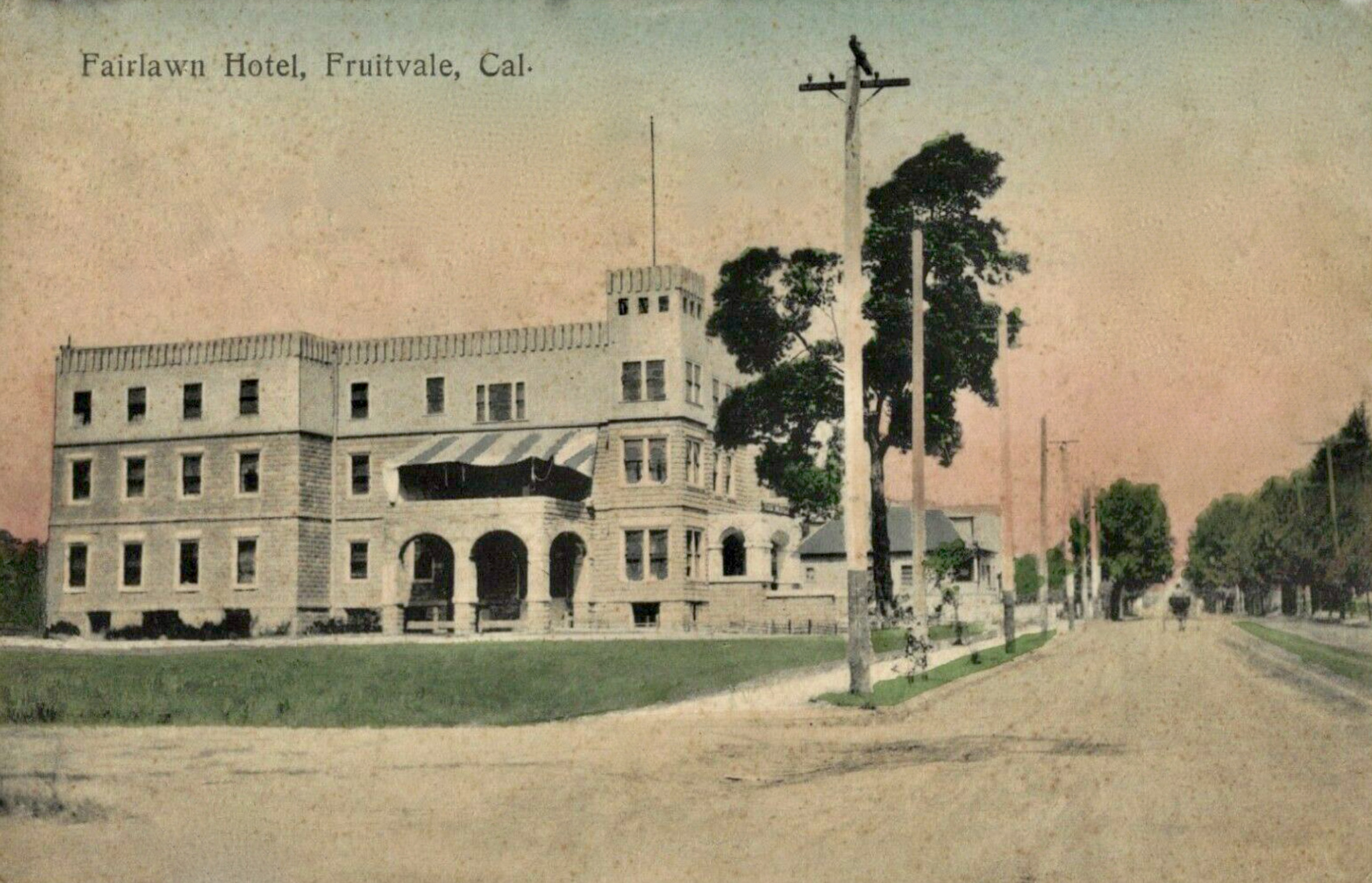
I found her in, Jessie having phoned her from Hayward that I was coming out. I had lunch and dinner with her and between them we took in a parade the (Nations Liberty Loan) and a picture show. I started home about 9 and walked home to Jessie Millers from Hayward. Arrived tired and hungry and after a 11 oclock supper I went to bed and was lulled into a peaceful slumber by the patter of rain on the roof that blowed up after I got home.
Sunday morning April 7 – Arose early and put my wardrobe in order washed my hair and watching the highway for possible visitors. I went down the hill after the Sunday paper and Brownie the dog followed. A passing auto ran over her and killed her poor Brownie.
Apr 8 (These blots on my fair books pages were made by my grandchild Leo Hoffman, bless his heart.) This is mon. morning and the beginning of a new existence for me. I have decided to apply for a divorce to break the tie that has bound me to a life of misery. I’ll be glad when its all over. I do dread it so. I pray for strength to go on with it. Syl has gone to Oakland to his Aunt Carries funeral.
Apr 9 – Miserable and downcast all day. Syl sees a lawyer and makes an appointment for me.
April 10, 1918 – I have gone to see Leslie Perry about my divorce. He says I have to live here 3 mos in the county to apply for divorce. I will be a nervous wreck before the times up I’m afraid.
[Editor’s note: I can totally identify with my great grandmother here—seeking the solace of “her” tree. And knowing my grandfather I can see him and my father appreciating her tree as well. I wonder if Milo ever took my Dad there—one of many questions I would love to ask.]
Kelly Wheaton Copyright 2021. All RIghts Reserved.
How a Historical Novel Inspired my Genealogy Research: In Praise of Gopher Holes
Posted on November 11, 2021 Leave a Comment
In my blog post “They Aren’t Rabbit Holes they are Genealogy Networks” I wrote about my deep dive back into 15th and 16th Century documents while trying to locate the origins of 17th Century English immigrants to America. This is the another part of the story. It all started when Dale and I were planning our second genealogical research trip to England. Once we had a rough itinerary I took a look at my Family Tree Maker tree to see if I had any other ancestors in the areas we were visiting. That is how I discovered my murderous ancestor, Nicholas BROOME (1450-1517). Nicholas is my 13th great grandfather. His father was John BROME (1410-1468) and he was the purchaser in 1438 and owner of the lovely moated Manor house, Baddesley Clinton, which is now a National Trust Property.
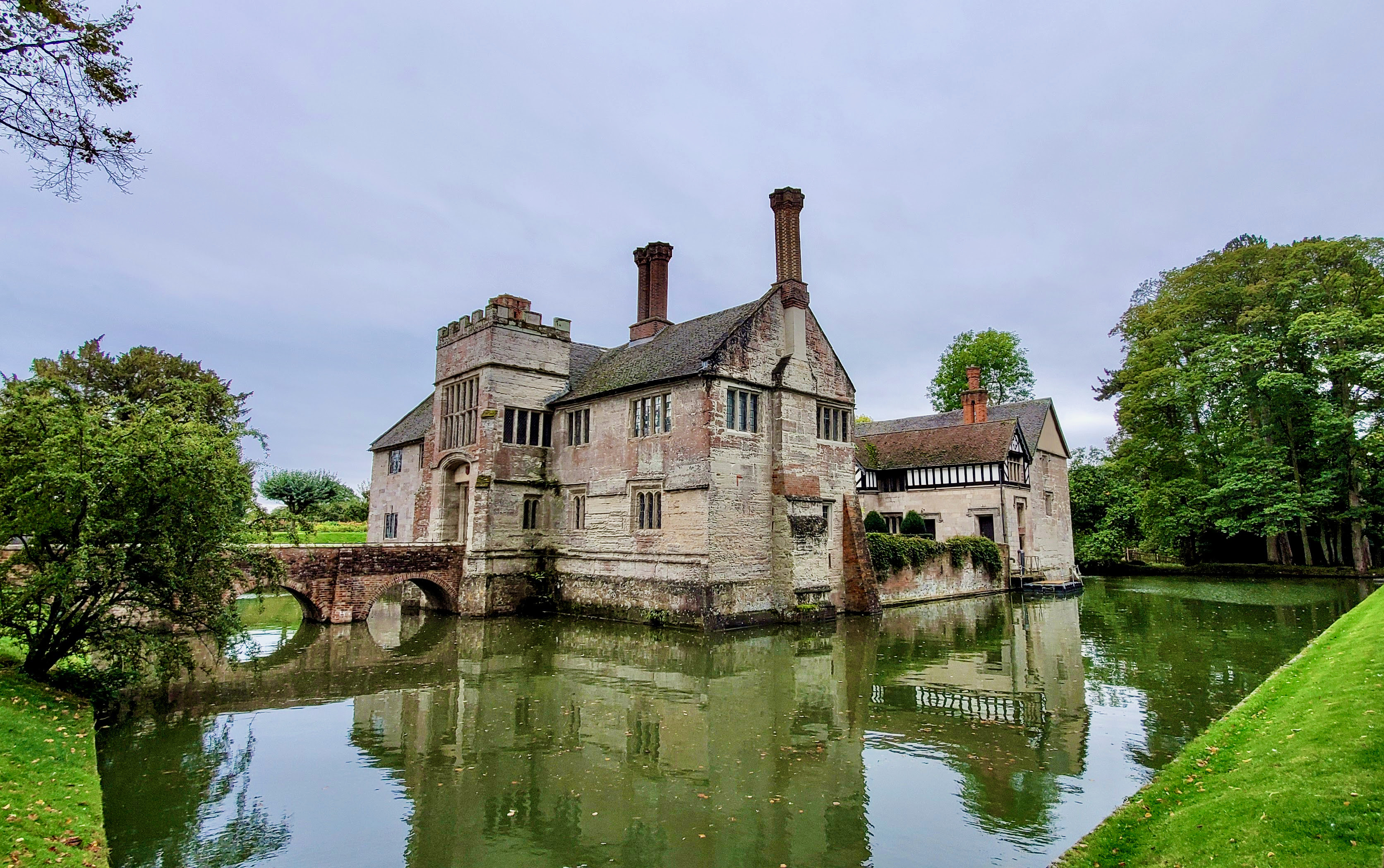
John BROME was Under Treasurer of England and was murdered on the porch of Whitefriars Church in London over what appears to be a property dispute back in Warwick with John HERTHILL, who just happened to be the steward of Richard Neville, aka the Kingmaker. [I feel as if there is more to this story than the historical record has revealed so far.] Well, it seems young Nicholas, some three years after his father’s murder met up with John HERTHILL in Longbridge Field on his was back from Barford to Warwick. It is here in Longbridge Field that young Nicholas, now almost 21 takes the life of John HERTHILL.
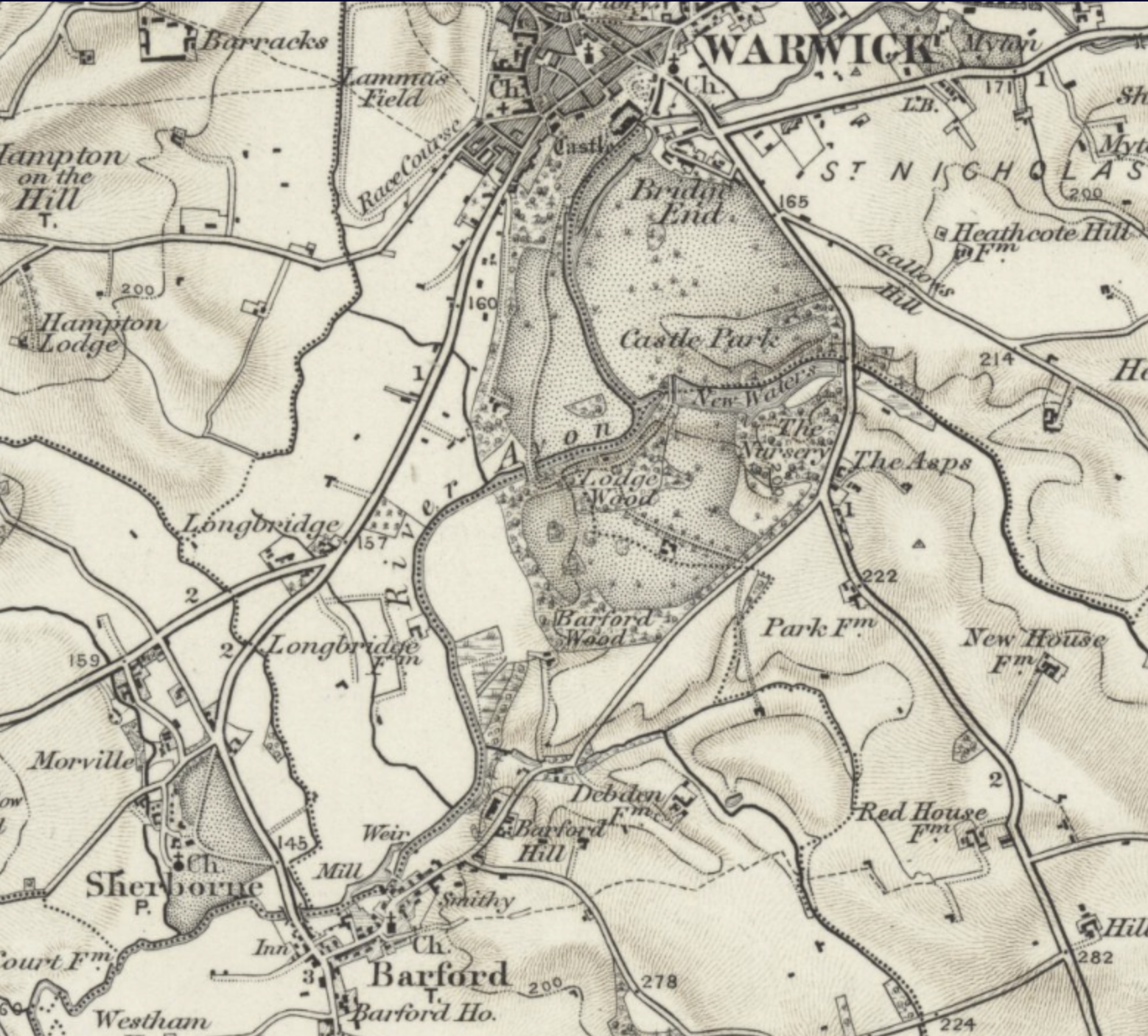
In addition to Baddesley Clinton, which lies some 10 miles northwest of Warwick, Nicholas, upon his father’s death, acquired the lovely Brome Place strategically located just opposite Warwick Castle in Warwick. At the time there was a bridge that crossed straight over to the Castle. Nicolas suffers no imprisonment for his crime and atones for this and future sins—but perhaps that deserves its own blog post.
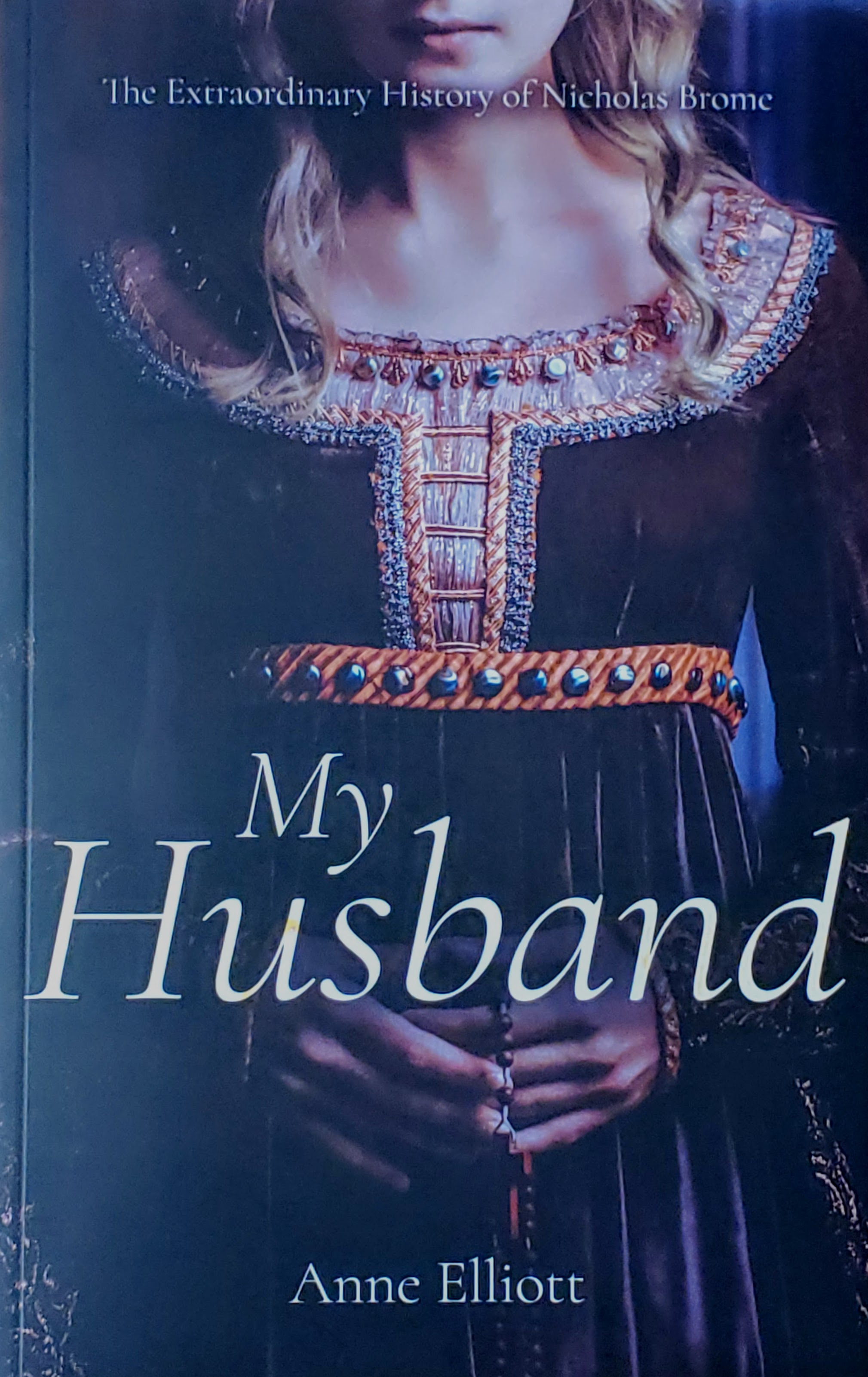
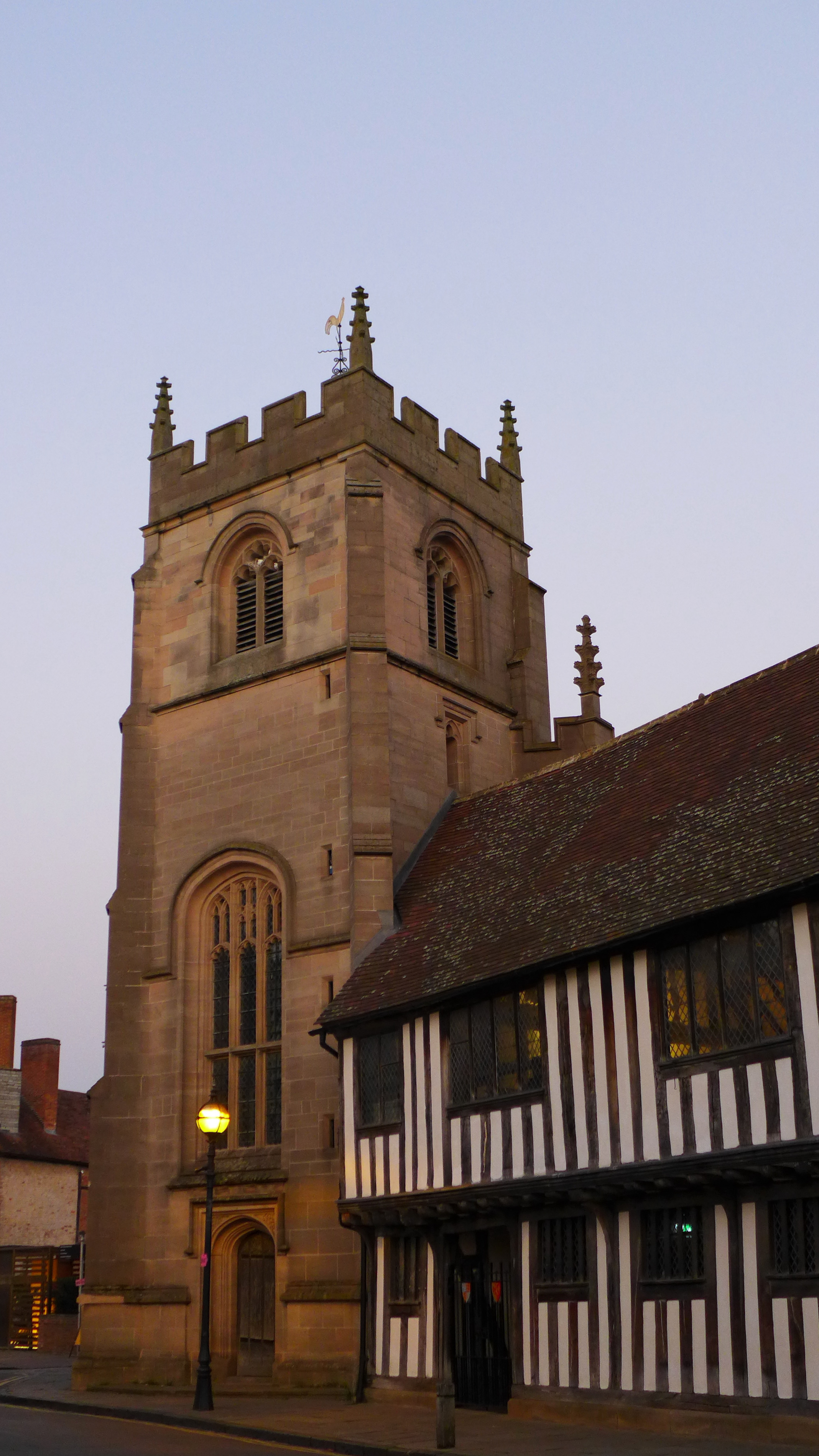
While doing research on Nicholas BROME I found a lovely short historical novel called “My Husband: The Extraordinary History of Nicholas Brome by Anne Elliot ” which I devoured before my trip. It mentions the Guild of the Holy Cross in Stratford on Avon which I had been to before. Anne Elliott cleverly uses Nicholas’ membership in the Guild of the Holy Cross as a vehicle for her characters to meet. And that became the future inspiration for my research, because I realized that fraternal organizations were a powerful network where people would meet and do business.
We sometimes tend to forget that our ancestors were nearly as good at networking as we are. Arguably their financial success and very survival may have been predicated on these religious and trade associations. The larger landowners in a given area would likely belong to more the one Guild. We find the BROME family as far back as the 1300’s in Guild of the Holy Cross in Stratford on Avon (founded in 1353). We also find them in the Guild of St Anne in Knowle where records begin in 1451. Although many would belong to just one Guild the wealthy may have belonged to several. And although one would presuppose the Guild had a tight geographic area that is not always the case. Knowle’s Guild through the monastery’s land holdings included membership for Solihull, Henely in Arden, Erdington, Corley (north of Coventry) Brailes, Wiloughby, Shuckburgh, Shenington and Halesowen. And members could be even farther afield.
So this really is a long winded way of justifying gophering. If we pay attention to things we learn in one place, they can turn out to be valuable in a completely different venue, simply because we learned something about the way things work. So maybe you spent 5 days or 5 years tracking down an ancestor that turns out not to be yours. I can assure you, what you discovered is not lost energy. The tunneling down gopher holes is not wasted. Something you learned will pop up again, and you will know just where to go because you have been there before.
I do believe that those with more open minds, and well developed intuition will be rewarded as much or not more as the more traditional or methodical researchers ( although both both bring their own rewards). If you are a gopher, take heart, in the end you will be rewarded. New discoveries sometimes take looking at data from a new perspective and there’s nothing like gophering to change your perspective. It could be a novel, a TV program or a book on a completely unrelated matter. It can all be put to good use, eventually.
As for Nicholas BROOME, he twice murdered and at his behest is buried just inside the door of St. Michael’s Church at Baddesley Clinton, standing upright so that in a final act of penance, people will trod upon his head for ever more. Thank you grandfather Nicholas for continuing to be a source of inspiration. And thank you Anne Elliott for bringing his story to life.
Kelly Wheaton Copyright 2021. All Rights Reserved
My Soldier Boy & Divorce: A Soprano’s Aria Chapter 22
Posted on November 9, 2021 Leave a Comment
Jan 1 1918 May the year be a happy one. I finished work, began on Mon.
Jan 2 got letter from Jessie Sat and saying she would be over Sun.
Jan 3, 4, 5 Ordinary housework.
Jan 6 Jessie came over . Worked hard, washed curtains in kitchen Syl [Sylvester] came in evening.
Sunday Jan 7 F.S. [Franklin Stewart MOSIER] began the morning by his usual insulting language only a little word pointed which I took guilty saying but little on account of the day and J & S [Jessie & Sylvester] being here. They think I should leave him and be done with it all.
Monday Jan 8 Jessie & I called on Mrs Fryer. She entertained is beautifully and was so glad we came. She proved to Jessie that F.S. statement concerning Joe and I was absolutely false.
Tues. Jan 9 Baked bread and ironed some, in forenoon. Washed clothes in afternoon with Eilene’s able cooperation and all nervous and upset.
Wed Jan 9 [?] Answered Allie’s New Years card and wrote to Bro. Hod. [Her brother Horace] The day is sunny and pleasant. I will work on a quilt I’m repairing. (9:30 oclock) did quite a lot on the quilt—fitted Lolita’s dress that Eilene gave her washed and wiped the supper dishes, made the bread and now I am finishing up my writing preparations and going to bed. I brout in the wash which dried beautifully. Every thing is calm but would have liked to have gone to an entertainment at the Church to night but gave it up fearing to start trouble again and now to bed.
Jan 10 Baked bread in morning worked on a quilt all the rest of the day.
Worked on a quilt all the rest of the day. One quilt made of Lolita’s old gingham dresses helped out with the new scraps and 9 piece blocks. Looks better than I thot it would.
Frank came home broken hearted he lost $4.50 while fixing the car and lost and forgot it and eating his dinner which he did. Dewey brought home his wages and believe me it was gratefully received for I was literally down to my last cent which I gave the bubs[?] Dewey is now getting 2.00 per day which is a little more than Lolita gets. There is quite a rivalry between them and Milo is out of work. F.S. Talks of quitting his job. No rain yet. Bacon is 60 cents a lb sliced.
Jan 11 This has been a notable day in the family. Milo and Donald Shaw went down and enlisted in the aviation corps today. He is so proud and happy. O but I hope it will last. I don’t know just when he has to go. I got a letter today from Jessie. She wants me to come and see her and help make a quilt.
I sewed and washed some today. Weather is still fair with no rain which is sadly needed. Milo and Don went to Poly technic school to see a friend today. Milo went to to Ingleside this evening. Lolita expected Charlie this evening.

Jan 12 Milo got his few belongings together that he thot they would et him keep and went down town to keep his appointment with the recruiting officers and has not returned. It is now 10 oclock in the evening and I suppose my little Milo, boy is a sure enough soldier boy by now. God bless you my soldier boy. O but I’d like to see where they have sent him. Seems so sudden and final. Frank quit his job and was in time to see him off. He cried but Milo and I didn’t O no, not us, but I think the tears dripped down inside. It rained nearly all day, a blessed much needed rain.
Jan 12 No word from Milo. How I would like to hear from him. It is an open question whether I go to Jessies or not but finally decide to go. After a very pleasant trip across the bay listening to some native Hawaiian music I arrive in Hayward. Morning cool and sunny and a 3 mile walk ahead of me due north with the sun hot on my back. Got to Jessies and S met me down by the big tree, I was glad to get there and rest and eat the good lunch she set out for me. Later in the day they go to see a thousand baby chicks.
Mon July [January?] 14 Aftermath: feeling bad, tired out, blue and anxious about Milo.
15 feeling rested and better raining a little. Started a knit wash rag.
Wed 16 Goergous weather, beautiful view. Jessie did her washing. I helped some and knitted a little. Mrs Westlund called, had a pleasant afternoon. The pigeons are cooing and the chickens are having a noisy session previous to going to roost. Evening draws on a peace. A meadow lark is whistling his exquisite notes. Childrens high pitched voices resound up and down this beautiful little valley peacefully lying between its protecting hills.
Jan 17, 1918 Another wonderful day but we need the rain instead of sunshine. Arose early as usual and after breakfast mixed Jessies white and raisin bread helped with the egg and tied some on her comforter.
Fri Jan 18 A quiet uneventful evening.
Sat Jan 19 Sunny cold and windy Jessie went to Oakland to meet Sylvester and left me sole in charge of the poultry ranch. I fed and watered the hens and pigeons and goat and gathered the eggs in the evening got me a little dinner and kept a lookout for the dear chilluns”. Esther and Herbert drove out in their auto and soon after that J & S came. We had a late supper of ham and eggs and retired for the night.
Sun Jan 20 – Got up first made the kitchen fire and while the rest got the breakfast I got ready to go to Hayward to take the street car for home. Herbert was going to H to meet Mrs. Miller so I rode with him at 10:45. Arrived in S. F. after a pleasant trip, found every one well at home. F. S. grouchy and fault finding giving me his usual certain lecture for the days ending.
Mon Jan 21 – Allies 28 birthday feel downhearted after a sleepless night. Baked bread and started a crocheted edge on a handkerchief for Eilene’s birthday. Milo came over to call.
Jan 22 – Household routine
Jan 23 Wed. – Called on Mrs. Fryer. She said she had been sick and was better and was going to sell her furniture at auction the next day.
Thurs Jan 24 – I went over to Mrs. Fryers sale. It made me feel sad to see her house broken up. Met Mrs. Mansfelt —the noted music teacher and had lunch at Mrs. Jays who asked me to come and see her again. I came home and went out again, calling on Mrs. Ross and getting a crocheted yoke to do over and bought some bread.
Fri Jan 25 – Washed cloths
Sat Jan 26 – Finished washing and cleaning up house
Sun Jan 27 – Milo came home on a visit from the Presido [Presidio] where he is stationed as a rookie in the medical dept. He has a very bad cold and looks bad. I hated to see him go home.

Lolita showed her father some cloths Mrs. Fryer gave Lolita that had belonged to poor dear, sweet Lois which made him so mad that he is taking out on me.
He is sullen and morose. I am nervous with apprehension. Lolita and Charley went to church. Milo is sick of a bad cold and sore throat. I hated to see him go. I went to bed at about 11 oclock and then Frank began abusing me about going to Fryer’s sale, abusing me with the most shameful and violent language, accused me of being too familiar with Mrs. Fryer’s Bro which of course is untrue.
He became threatening and menacing until I became frightened and got up and dressed. He had already got up and dressed, so I went to packing up. Finally he calmed down when he saw he had me properly humiliated and turned off all the lights. I went into Lolita’s room and slept or rather laid awake with her.
Jan 28 – In the morning he came into the parlor where we were lying in the davenport bed and said he would go in a week if I stayed. I refused. Again he came in to say he must go to work and to come into the kitchen where it was warm to talk it over.
He seemed to think it was all my fault. I said very well then you’re the finest man that ever was but I don’t want any more of you. For 28 years you have made my life miserable and I was going to quit and he better be sensible and not appear if I should apply for a divorce.
He said now that he knew I wanted the divorce so I could marry again he would tell a story in court that would disgrace me so that no man would have me. I said “so you would tell a disgraceful story in court about your children’s mother would you. He guessed that he would. In reply I said, “ I’ve got your measure at last. I don’t have to have a divorce but I’m going to go.”
He begged me to stay and take care of the children.
I reminded him of the times past when he used many times to say If you don’t like it here you can go, and move, to quick to suit me. I can get plenty of women that’ll take better care of the children than you do and you cant have them. Your not fit to be the mother of nigger babies”! And he said that was when they were little but now you have them all turned against me.
He knew I never would leave the poor little things and so he could talk big but now they are all grown up, the youngest, Lolita, will be 17 in March and they are all of them tired of hearing him revile and insult me every time when loses his temper which is every time I leave the house to go anywhere.
After all this he came to kiss me good bye. I didn’t return it but said, “so I’m disgraced am I.” He turned away, wiping away his tears. When I went to finish packing I found he had unpacked most every thing I had packed before.
Soon he returned. ( I was weeping into my coffee and choking down some bread and butter.) and said he didn’t want me to go away without any money and gave me $5.00 which he had to borrow. He probably thought I would relent. It had the use and I’ve forgiven him 70 times 7 already. My health is broke. I’m nervous and dispeptic [depressed] bitter and morbid all because of his unjust treatment.
The scene I have just described is mild compared to some I have had with him for many times he has grabbed me and shoved me against things and called me every vile thing he could lay his tongue to. He has a most amazing vocabulary of rough language. I am ashamed to write it down.
He went away again and Eilene went out to call up Milo and Jessie. She found Milo better and could not get Jessie on the phone so I decided to go anyway. I took the crocheted yoke I fixed for Edith over to Rosses and Eilene and I went down to Sabins jewelry store on Fillmore St and got our pins that were being mended and I got the ring tightened on my watch and bought a new black silk ribbon gold mounted for it, so I can carry it without fear of losing it. We then came back home and finished packing up my things and then started. I had a safe and uneventful trip over. Was fortunate in getting the same car that Syl was on and also the Doran girls. Their parents were in Hayward to take them home so they asked me to ride as far as their place which was or is almost all the way. Jessie and Mother Miller were preparing their dinner when I came and were surprised to see me. I told them how matters stood and they said I was welcome to stay and we decided I should do up some sewing for them.
Jan 29 — They haven’t got the material so I spent more of Tuesday in crocheting a border on a handkerchief for Jessie.
Wed Jan 30 – Cold frosty morning Jessie is writing home inviting them all out here Sunday to a birthday dinner for Eilene.
Thu Jan 31 –Getting ready for company
[Editor’s note Milo was my grandfather. He did not end up serving in the Army aviation Corps but as a medical corpsman. Since he met my grandmother upon his return from France, that is a good thing—otherwise I might not be here to write this!]
Kelly Wheaton Copyright 2021. All Rights Reserved.
Gophering for British Surname Origins
Posted on November 8, 2021 3 Comments
Although similar resources can be had for surnames for other places, in this post we are concentrating on British origins. Doesn’t really matter what side of the Atlantic you are on, some time or other you will face families that left no bread crumbs as to where they hark from. If you are lucky the surname will be obscure and will drive you to a specific area. For the rest of us with SMITH, JONES, CARPENTER, FULLER, TANNER etc those occupational names can occur anywhere. I am not promising these resources will solve your dilemma but I recommend you check them anyway, but especially if you have more unique surnames. And don’t forget the friends and family plan. Maybe your SMITH married a MUMFORD. That might be a major clue.
One of my very favorite resources is Guppy’s Homes of Family Names in Great Britain, which lucky for us is available to search on the internet. So make sure you look up close associates or families they married in to when consulting Guppy. If we consult Guppy for the SURNAME SHELDON we find them under Derbyshire we mentions both the hamlet in Derbyshire and the parish in Warwickshire. Here’s the church of SHELDON in Warwickshire and we shouldn’t be surprised to find a Nicholas de SHELDON as one of the early rectors.


Perhaps our favorite names are what Guppy calls Peculiar names. These are names that are found in specific geographic areas and not widely distributed elsewhere, which helps us home in on where they come from. Let’s take a look at Guppy’s list for Warwickshire:

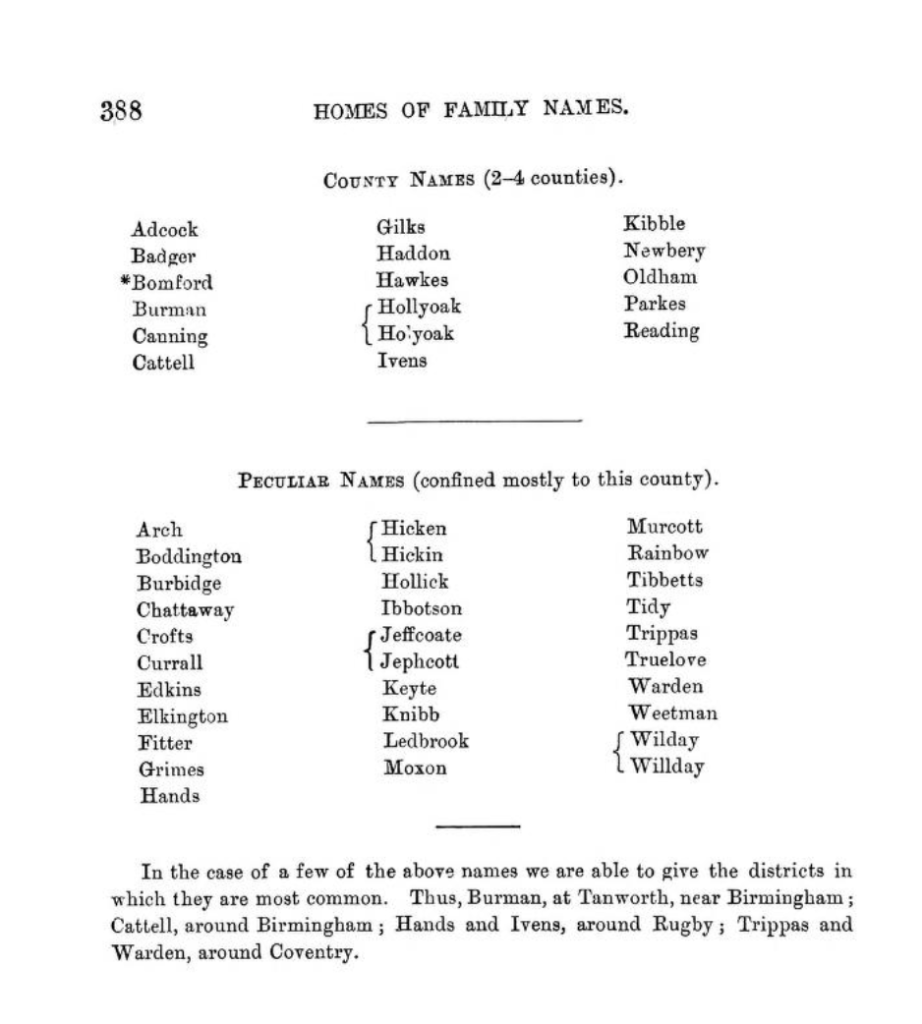
Looking at our names from my last Blog post we find mentioned above is the name MUMFORD. Guppy says it appears in 4-10 counties. And if we flip to the back of Guppy we find he gives the relative distribution of MUMFORDS per 10,000 in 1890 when the book was published. So this reduces our list of places to look for MUMFORD from all the shires in Great Britain down to just 4 with the highest concentrations in Bucks and Warcs. It’s definitely a good start. And since we think the MUMFORD’S in Windsor Connecticut may hark from Warwickshire it gives us another tidbit of evidence. If we end up with a Peculiar name like BURBAGE we have likely found our origin.

As much as I love Guppy he’s not perfect but definitely worth your checking. He does not have some of the rare surnames like BISSELL and GRESWOLD for Warwickshire. So we turn next to Surname distribution maps. There are several Available you may want to check the links here at Family search.

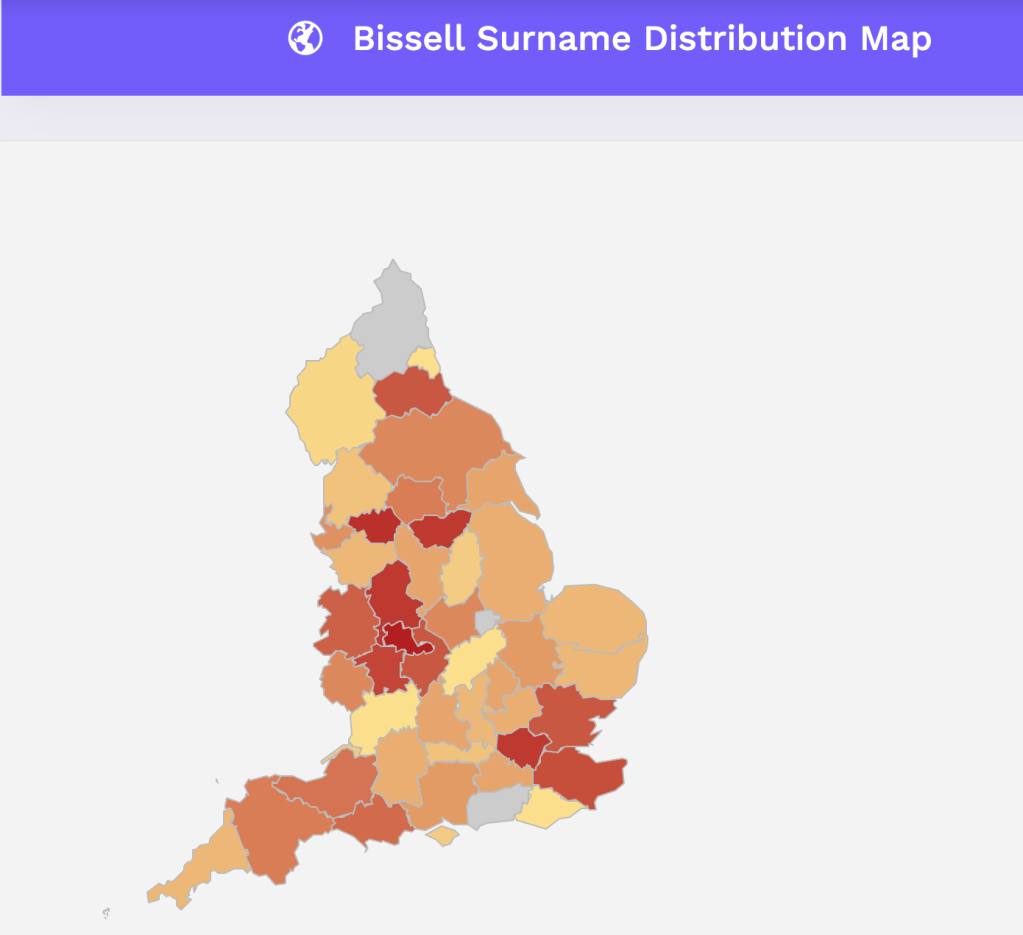

These suggest that there is a fairly high odds that A BISSELL in America from the 1600’s has origins in the midlands with the hotspot in Warwickshire. If we chose a more common name like KNIGHT the results are going to be more ambiguous.


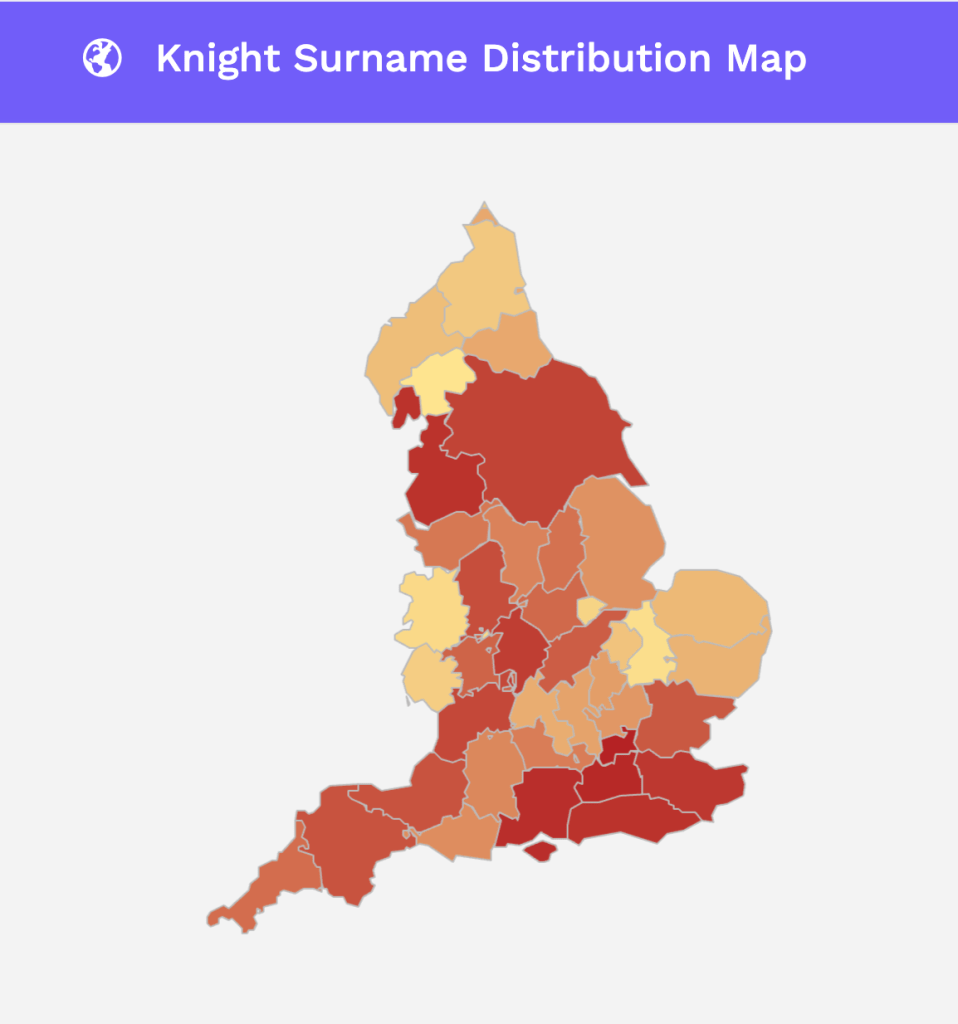
Where else can we look for clues? if the name might be geographical—that is taken from a particular place we can do a Google Map Search and see what turns up. (In my first example SHELDON is also a place name occurring several places in England). For instance one of my ancient families is SHIRLEY and this shows up as a town in the parish of Solihull, Warwickshire and the later family seat of the SHIRLEY family is some 25 miles south in Ettington and is now a lovely hotel.

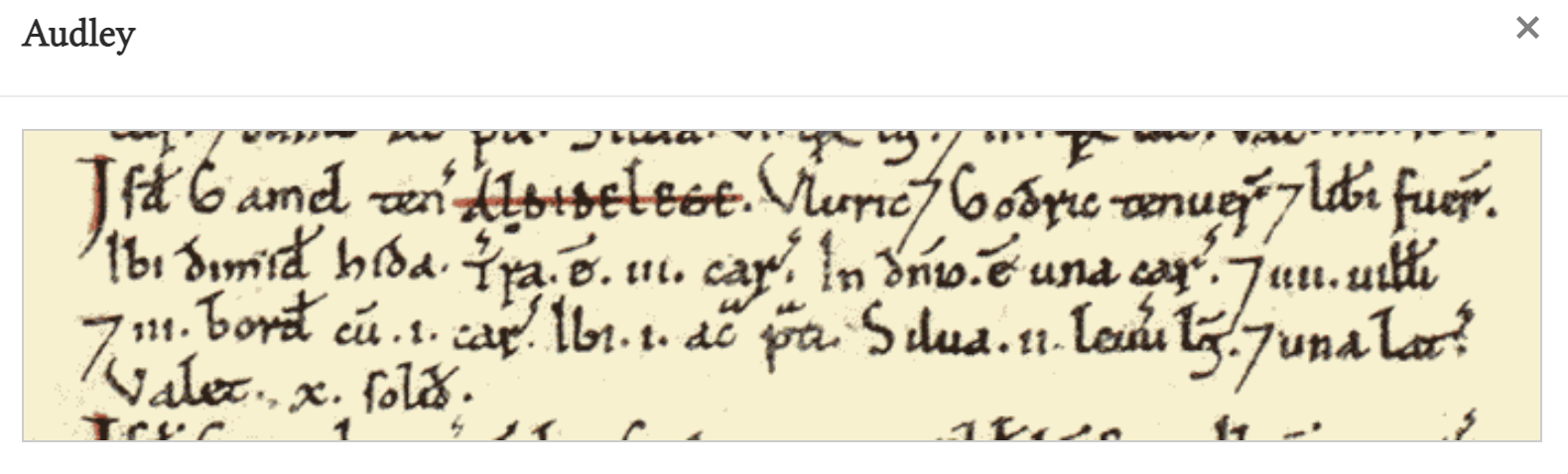
If your surname is a geographical place you might want to find out more about the place in a Gazetteer or at Open DOMESDAY. I searched for the surname AUDLEY turns up a place in Staffordshire. “Audley was a settlement in Domesday Book, in the hundred of Pirehill and the county of Staffordshire. It had a recorded population of 7 households in 1086, putting it in the smallest 40% of settlements recorded in Domesday.”
Our fifth place to look for origins is at Family Tree DNA whether you have done a DNA test or not. You will want to check here for surname projects and then look at the DNA results page to see if any specific places turn up. And you might want to take a look at the British DNA project by County. You can search by surname or by county to see if you get any clues.
And finally for Americans you might find your ancestor in the maps generated from the Great Migration Project. Well worth checking those out as well. Of course the above resources are in addition to all the typical searches you might do at Family Search, Ancestry, MyHeritage, Find My Past etc. When you are gophering for Surnames there are few diamonds to be found other than peculiar names. But sometimes when you have nothing, any little bit helps.
To recap:
- Consult Guppy’s Homes of Family Names in Great Britain Check indexes front and back and various Counties
- Try your hand at a surname distribution Map index here
- If you have a name that may be a place name try a Google Map search
- If it looks like a geographical name try Open DOMESDAY
- Check out DNA projects by surname and the British DNA project by County
- Finally check the Great Migration Project
Even if you don’t find the answer you are looking for familiarizing yourself with these tools will serve your future gophering. Get digging.
Kelly Wheaton Copyright 2021. All RIghts Reserved.
They Aren’t Genealogy Rabbit Holes they are Gopher Networks
Posted on November 7, 2021 8 Comments
We’ve had it wrong. Genealogists who go off on tangents who hop from this to that chasing rabbits back to their dens, we have the wrong metaphor. I have both hares and gophers in my backyard so I am surprised I did not figure this out earlier. But here goes…you know the drill you are looking for anything you can find on great-great-granny Emeline Jones and before you know it you are looking at her brother’s, Civil War pension file (he died in the Civil War), which reminds you, that you need to look for that Revolutionary War record for another ancestor. Then while you are at it before long, you are looking up historic maps of the area to see how close they lived to the battlefield, when you realize there’s a diary about a neighbor to your ancestors who wrote about the battle and off you go searching for a copy… and so forth and so on.
This method of research has been dubbed by my friend, George Sheldon, as Kelly’s rabbit hole Genealogy. But yesterday I had to correct him. It really is the gopher method. And the metaphor is perfect. You “go for” one thing and end up with lots of things you weren’t even looking for. You dig, and dig and dig and sometimes run in to stones and even a brick wall or concrete foundation and you just keep digging. Did you know a gopher can move up to 2 1/2 tons of soil a year? I am pretty sure I visit at least 5,000 web pages this year alone, if not this month.
Well I want to tell you about some heavy digging I did this past week. I started off working on my last blog post about the Fleur de lis, but that got me thinking very far afield. Asking “why” is all the enticement a gopher needs to start digging. But the why did John Shelden choose a Fleur de Lis embellished initials for a sheep brand in Colonial America was not a simple rabbit hole it led to a network of intertwined passageways back in time. And where did I end up? Two very interesting records. First, The register of the guild of Knowle in the county of Warwick, 1451-1535. Look at the beautiful pages of the illuminated manuscript here. And this is a black and white version of one of the pages :

So you might be wondering why would she be looking in the 1400-1500’s record of the town of Knowle? Because I can is the short answer. But before I truly answer the question I must share with you my research question. My question is a deceptively simple one: Where did the two early SHELDONs in America come from in England? This question has been asked hundreds of times in the past three hundred plus years and still there has been no answer. The best research was accomplished by E.Hortense Sheldon in her treatise Sheldon’s Prior to 1700 published in 1961. I have worked on this question in earnest with Dale SHELDON over the past 6 years including two research trips to England together.
A gopher can dig 6 feet deep and have a network of tunnels covering 200 to 2,000 square feet. That’s more than 1/5 of an acre and in my yard it’s closer to 1/2 acre overall. That’s because gophers are social animals. They move in, they bring their friends and family.
Again a perfect metaphor. We are researching the origins of two SHELDON men whose DNA has revealed they are closely related. One is an Isaac SHELDON who appears to have come to Windsor, Connecticut in 1639. The other is a John SHELDON who first appears in Newport RI in 1652 and ends up in Kingstown, Rhode Island. We do not know the exact relationship of the two men, they could be father and son or cousins but we know they share the same YDNA signature. To date the SHELDON DNA Project has sponsored a dozen YDNA kits for those with recent English ancestry and to date not a single one has matched the descendants of Isaac and John (of which 41 have tested and they all match each other). So where does one turn?
My answer to that question was two-fold. First, I decided to focus on all the early settlers of Windsor, Connecticut. And also of Kingstown, Rhode Island with a nod to early associates of John SHELDEN there and in Newport, Rhode Island (but I am not including them in this post). So what did I do? I worked backwards from these founders first sifting through to find any that either were from Warwickshire, England or did not have a place of origin identified or the identification was sketchy at best. And that’s what led to one Reverend Ephraim HUIT (HEWITT) who came to Windsor in 1639. And he is incredibly important because he arrives in Windsor about the same time that Isaac SHELDON shows up in the records and some have Isaac as being a part of a contingent who came from England with HUITT. The others arriving about this time in Windsor came from Dorchester, Massachusetts. By looking at the origins of these early settlers I can place them in two groups. Those who likely came with Rev. Huit and those that came from Dorchester. (The Dorchester group have origins in Somerset, Devon and Dorset , England.)
And second was to work forward from the records back in England. We are lucky that we know a bit about Rev. HUIT from the historical record. He studied at Cambridge and matriculated in 1611. He married Isabel OVERTON the 22nd of April, 1622 at Tarvin, Cheshire, England. It has been estimated he was born about 1592 but this is based on current age at graduation. During this time frame he might have been between 14-16 at graduation, so an estimate would more like be 1593-1597. Based on his marriage date of 1622 this might have been closer to 1697. He was first a curate at Knowle and then a Chaplain at Wroxall. He ran afoul of William Laud, Archbishop of Canterbury with his Puritan teachings and ends up robbed of his livelihood, he immigrates to America.
So where would one look for records of Wroxall? Well perhaps in the Records of Wroxall Abbey and Manor, Warwickshire John William Ryland London 1903. And we can find many things there but of note is the lack of parish registers between 1604-1641, except for one critical page from 1634. Please note: “Sarah Huitt the daughter of Ephraim Huit & Isabel his wife bapt. at Wroxall August the 10 1634.” It does not get any better than that! ALso note there is a GRESWOLD (aka GRISWOLD) on the page.
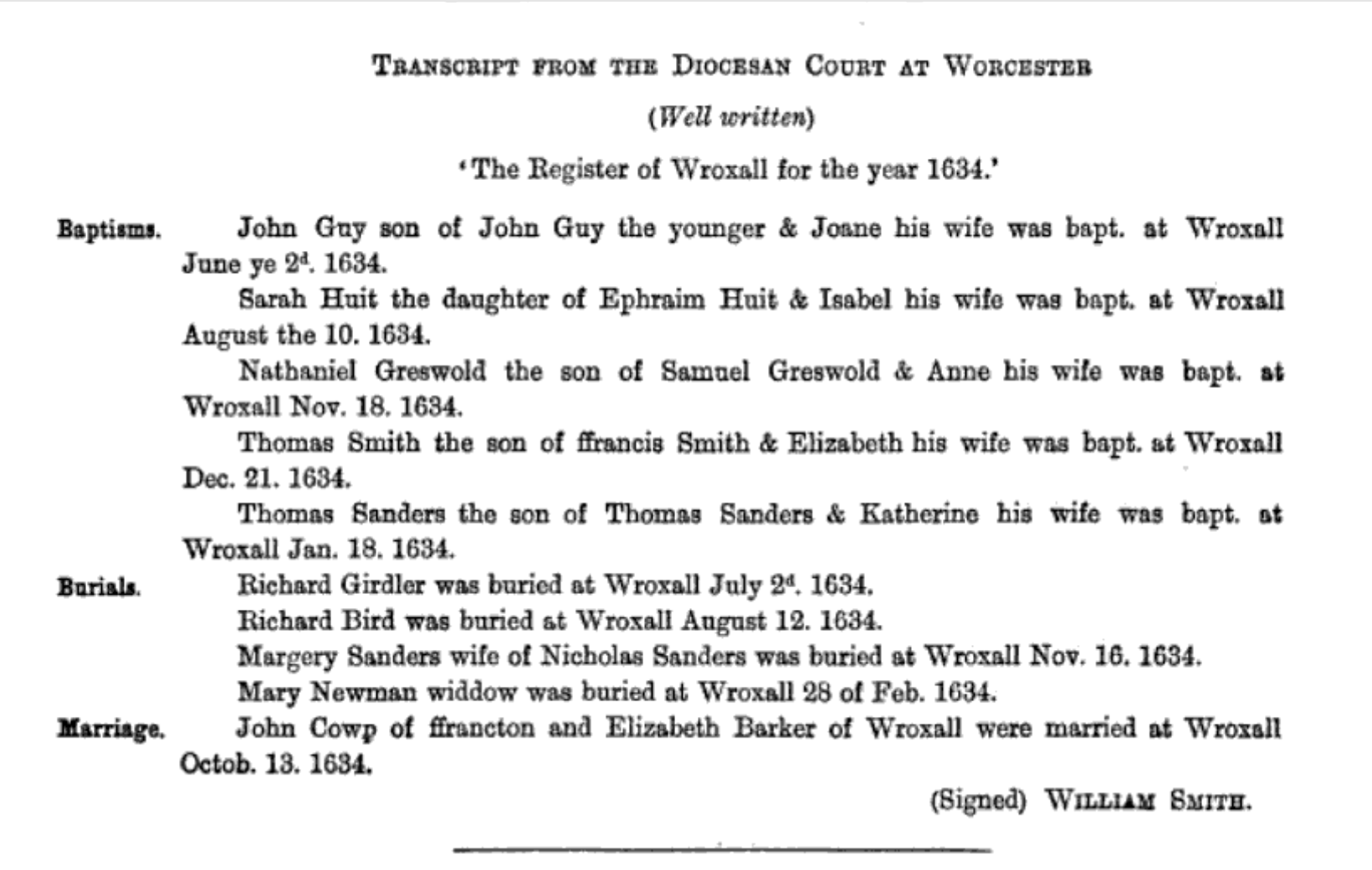
So my list of early settlers of Windsor filtering out those that came with the Dorchester group looks like this:
- Rev Ephraim HUIT bc 1597 prob Warwickshire. Definitely at Knowle and then Wroxall
- Daniel CLARK b 1639 said to be of Wroxil. We find a Daniel Clarke bpt 1608/9 at Wolston, Warcs.
- John BISSELL bc 1590 & alleged brother Thomas 1589. We find John BYSSEL bpt 16 Nov 1590 Sheldon, Warcs. ao of William and one Thomas BYSSELL bpt 24 Feb 1588/89 son of John
- John DRAKE Known to have married at Hampton in Arden, Warcs. to Lettice SHAXSPEARE 25 Jun 1615
- Francis GRISWOLD bpt 10 Jan 1605 at Wootton Wawen, Warcs; son of Clement
- Edward GRISWOLD bpt 26 Jul 1607 at Wootton Wawen, Warcs; Son of George
- John MASON bc 1605 We find a John Mason bpt 21 Oct 1607 at Ladbroke son of Thomas & Joice (he did not have a Thomas or Joyce)
- George PHILIPS bc 1592 NO ISSUE We find George bpt 29 Dec 1583 at Eastham, Warcs. son of Nicholas PHILLIPS
- John PORTER bc 1610 We find bpt 13 Dec 1612 John Porter at Sutton Coldfield son of John PORTER
- Isaac SHELDON bc 1610 We find no baptisms for an Isaac SHELDON in this time frame anywhere in England.
- John TAYLOR bc 1605 uncertain he died at sea abt 1645. There are many possibilities for John in Warcs. But an interesting one is John TALOR bpt 6 Nov 1604 at Whichford, son of William
- William TILTON bc 1586 we find bpt 15 feb 1586 at Wolston, Warcs son of John. William we know had sons Peter, Abraham, Samuel and Daniel. We also find a bpt for a Peter 2 Apr 1620 at Wolston son of William
Twelve men. Of those, seven are solidly from Warwickshire: HUITT, CLARKE, BISSELL, DRAKE, GRISWOLD & TILTON And four are a bit more speculative: MASON, PHILIPS, PORTER & SHELDON.
Which leads me back to The register of the guild of Knowle in the county of Warwick, 1451-1535. and the early Visitations of Warwickshire. Why you may be asking. To see how long these families had been in the area. All twelve surnames are represented in the Guild of Knowle. All are very well represented except Tilton that has only one mention. The Guild of Knowle covered a very large geographic area which included parts of Worcestershire. These guilds often had a religious affiliation, provided for the poor and were a network of clergy, gentry, craftsmen and merchants. It was a fraternal association that fostered relationships be they personal or business. So they are an excellent way to find families before parish registers are to be found. And unlike the Visitation books they include the merchant and craftsperson classes.
There’s of course more to this story but here’s several RESEARCH POINTS
- When you can’t find something about your ancestor look at who his friends and associates are, track every last one down looking for clues
- Chase down every lead—every gopher hole
- Pay attention to surnames that pop up frequently when you are looking at your own
- Work backwards and forwards in time
- Don’t be persuaded by someone else’s sloppy research or speculations—they may be wrong (this is certainly the case with Ephraim Huit whose family goes back in Warwickshire for many centuries and is not of Cheshire as some speculate.)
When we are working in the 17th century backwards the records are often missing or incomplete so we have to search for every tidbit we can. That means unearthing lots of dirt hoping for a few diamonds in the rough. To be continued…
Kelly Wheaton Copyright 2021. All Rights Reserved.
The Mystery of the Fleur-de Lis: Why would John SHELDEN / SHELDON use this symbol in his sheep brand?
Posted on November 6, 2021 9 Comments
You just never know what mysteries you will be presented with in your research and how sometimes there is very little to be found about them. Such is the case of John SHELDEN’s [John of Kingstown] sheep brand as registered in South Kingstown, Rhode Island in 1705. You might think why does it matter—and perhaps it doesn’t. However John SHELDEN and his origins are a long standing conundrum—so faced with such a dearth of information one (at least this one) has a tendency to follow any possible lead.

Before further exploring John SHELDEN’s brand, I want to point out the Brand above his, is for a James PERRY which may seem curious as his brand has a S imposed on a P. I suspect that this is because his father Samuel PERRY of Sandwich, MA would have been required to have a “S” for Sandwich and added the “P” and when James moved to South KINGSTOWN he took his father’s brand with him. This would not have been unusual as brands tended to be hereditary or passed through families.
Below is the brand of John Sheldon: “John Shelden his Marke is A slit in the Right Eare And A Crop on the Left Eare and A Afore Gad in the Same Eare his brandes JS on the Neare Buttuck”. When a J was used on other brands they also didn’t have the hook and did have a line through the center, but only John’s is topped with a fleur-de-lis.
ON BRANDING
It is claimed that on February 5, 1644, Connecticut enacted the first branding law in the colonies. The act called for livestock owners to ear-mark or brand their cattle, sheep, and swine that were over 6 months of age by May 1, 1644, and to register their marks in the town book. Livestock owners would be fined if found in violation “thirty-four cents a head,” with half allocated to the complainer and the other half to the town treasury. Earlier on the 7th of June 1637 the New Plymouth Court pg 118 “It is also agreed by the bench that all that have not brought in their eare marks of their cattle betwixt this and the next court shall be fyned in default thereof at the descretion of the bench.” In 1658 a copy of Plymouth Colony Laws appears in the Rehoboth Book of Law’s and it proscribes “the Markes for horses for Distinctions of the Townes ffor Plymouth a P on the neer buttocke, ffor Duxburrow a D on the nere buttocke” and so forth…. Rehoboth Book of Laws pg 84. May 7 1662 Massachusetts records Vol 112 pg 138 General Court Order Approving proposed nrand mark and referring the Selectmen to the Law for the ordering and raising of taxe in each town. Kingstown records sheep brands beginning in July of 1696. As livestock became more prevalent in an area the need for branding or ear marking obviously became more necessary.
BACKGROUND
The John SHELDEN of the brand above is the son of John SHELDEN Sr. bc 1630, who died between 1697 and August of 1704 when his son John Jr wrote his will [at South Kingstown, RI] and mentioned his “late father”. What we know of the Eldest John SHELDEN is actually not very much. The first evidence is 13 October 1652 when John Sheldon [Sr.] and Richard Knight witness a covenant between Peter Easton and Henry Stevens, both of Newport, RI. So we can first place him in America is in 1652. When and wherefore he came from is a long standing question. That little Fleur de Lis, just another in an endless list of possible clues as to his origins.
MEANING of the FLEUR de LIS
A possible list of associations
- Symbol of the Virgin Mary
- Symbol of Purity
- Symbol of the Holy Trinity
- Symbol of Catholicism in Protestant England
- Symbol of French Royalty
- Heraldic Symbol
- Makers Mark Symbol
I cannot shake the idea that the fleur- de-lis was used on the sheep brand of John SHELDEN for a reason and not because it was just a random symbol that he liked. The intricacy and skill at executing such a brand was beyond any of the others recorded. As a mark is a “symbol” of the owner it suggests in of itself a specific meaning and almost all the marks contained the initials of their owner. So why the fleur- de-lis?
WAS THERE A CATHOLIC CONNECTION?
We know that prior to the reformation under King Henry VIII all of England was Catholic. And afterward except for the brief period under his daughter Mary I “Bloody Mary” (1553-1558) Catholicism in England was either persecuted or barely tolerated. Then came James IV of Scotland who became a Catholic in 1670 and the King of England as James II in 1685-1688. [The date of the brand registration is 1705.] We know that the SHELDONs of Beoley and Broadway were devout Catholics. We know that a Robert GRISSOLD (GRESWOLD), son of John and Isabel GRISSOLD of Rownington, Warwickshire became a martyr to his faith in 1603 when he and a Catholic priest by the name of John SUGAR were arrested. John Sugar had been ministering to Catholics in the area [on foot] and had been saying mass at Baddesley Clinton. More about Baddesley Clinton shortly. At this time Robert GRISSOLD was described as a husbandman and servant to a Mr SHELDON of Broadway. Both John SUGAR and Robert GRISSOLD were sentenced to death. Robert GRISSOLD was given the opportunity to renounce his faith, but he would not and was hung, a slightly better fate than John Sugar who was hung and quartered. Robert GRISSOLD was beatified by Pope John Paul II in 1987. Mr SHELDON of Broadway was likely William SHELDON, Lord of the Manor, who died in 1626. Broadway and Rowington lie a good 25 miles apart so an interesting association that a servant to Mr SHELDON of Broadway should be living in Rowington and attending to the priest John SUGAR. William SHELDON’s wealth came in large part from his uncle Ralph SHELDON.
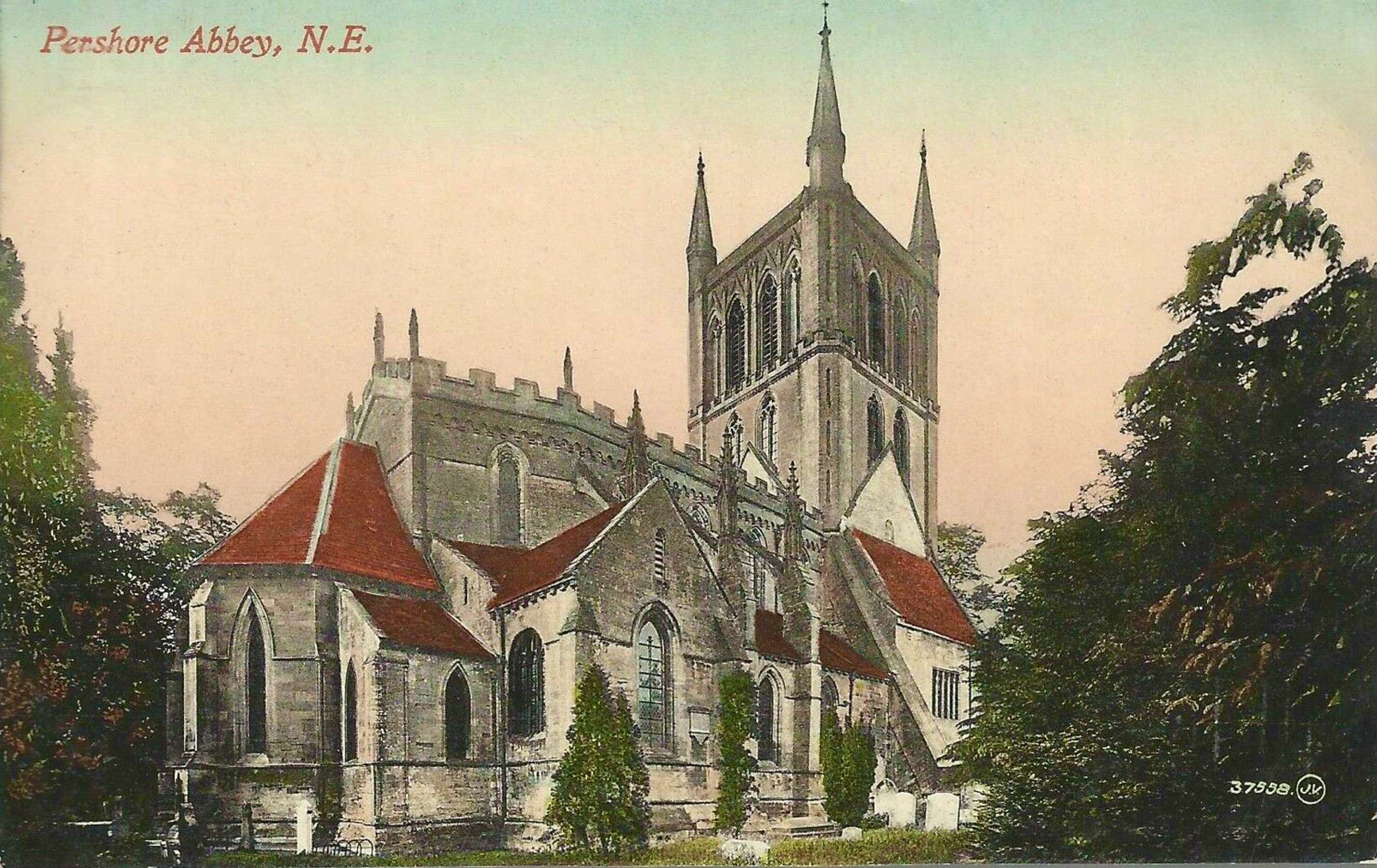
The monks of Pershore owned the parish of Broadway for hundreds of years. In 1533 a disagreement between the Abbot of Pershore and his tenant farmers ensued. Ralph SHELDON was a representative of the tenants to the then Abbot John STONYWELL. They seemed to have had a long standing civil, if not contentious relationship. Three years later with King Henry VIII’s Dissolution of the Monasteries Ralph SHELDON became the first lessee and later the land owner of much of the Catholic church’s previous land holdings through Pershore Abbey. In 1539 leases of 80 years each were granted by the Abbot of Pershore to Ralph SHELDON for the Manors at Abberton and Broadway.

When Ralph SHELDON wrote his will 28 March 1545 he wrote “oure souveraigne Lord Henry the eight by the Grace of God, King of Englande, Fraunce and Irelande as Defender of the Faith and in the Church of Inglonde and also of Irelande in erth the Supreme Head” and that he bequeaths his “soull unto Almightie God and our Lady Saint Mary and to all the Holy Company”, and he directed that “every priest that shall be at my dirge and mass to have 12d, And every clerk that can sing to have 4d, and to other that cannot sing 2d. I will that a priest shall sing for me, my father and mother, my brother William and Baldwin Heath and Agnes Heath’s souls and all expired souls, Immediately after my decease five years in our Lady Chapel at Beoley or Abberton at the discretion of my wife and William Sheldon my son.” December 25 1570. His remains lie at the Lady Chapel [now known as the SHELDON Chapel] at Beoley and the latin marble ledger reads in part:
“To God, the best and greatest
This marble covers the body of William Sheldon, esquire, whose flame aroused by death returned to Heaven and there amid its kindred stars it burns and shines. He, devoted to his aged father, faithful to an unhappy King, loyal to the religion of his sires, succeeded late in life to a rich estate. Suddenly deprived of it on account of his inviolable loyalty to his King, he never mourned for it, but with equanimity bore its loss during his life. He pleased God by his uprightness; his contemporaries by his courtesy; the poor by his generosity; the world by his goodness.“

Of further note is a meeting that occured in Broadway in June 1644 when King Charles I rode through to Worcester to secure the Royalist garrison. He travelled back through Broadway en route to his base at Oxford and spent the night at the home of Mr SAVAGE, a Royalist supporter. [Mr Savage’s daughter Ann married William SHELDON’s son William about 1619.] In May 1645 King Charles I again was in Broadway and spent the night at the “Lygon Arms” where he met with William SHELDON, the Lord of the Manor. There was a pronounced connection between the gentry of Worcestershire and Warwickshire and the Catholic Church that may have been as much political as ecclesiastical, as seen above. It was not always easy to discern what side one was on and could have dire consequences if not on the correct side.
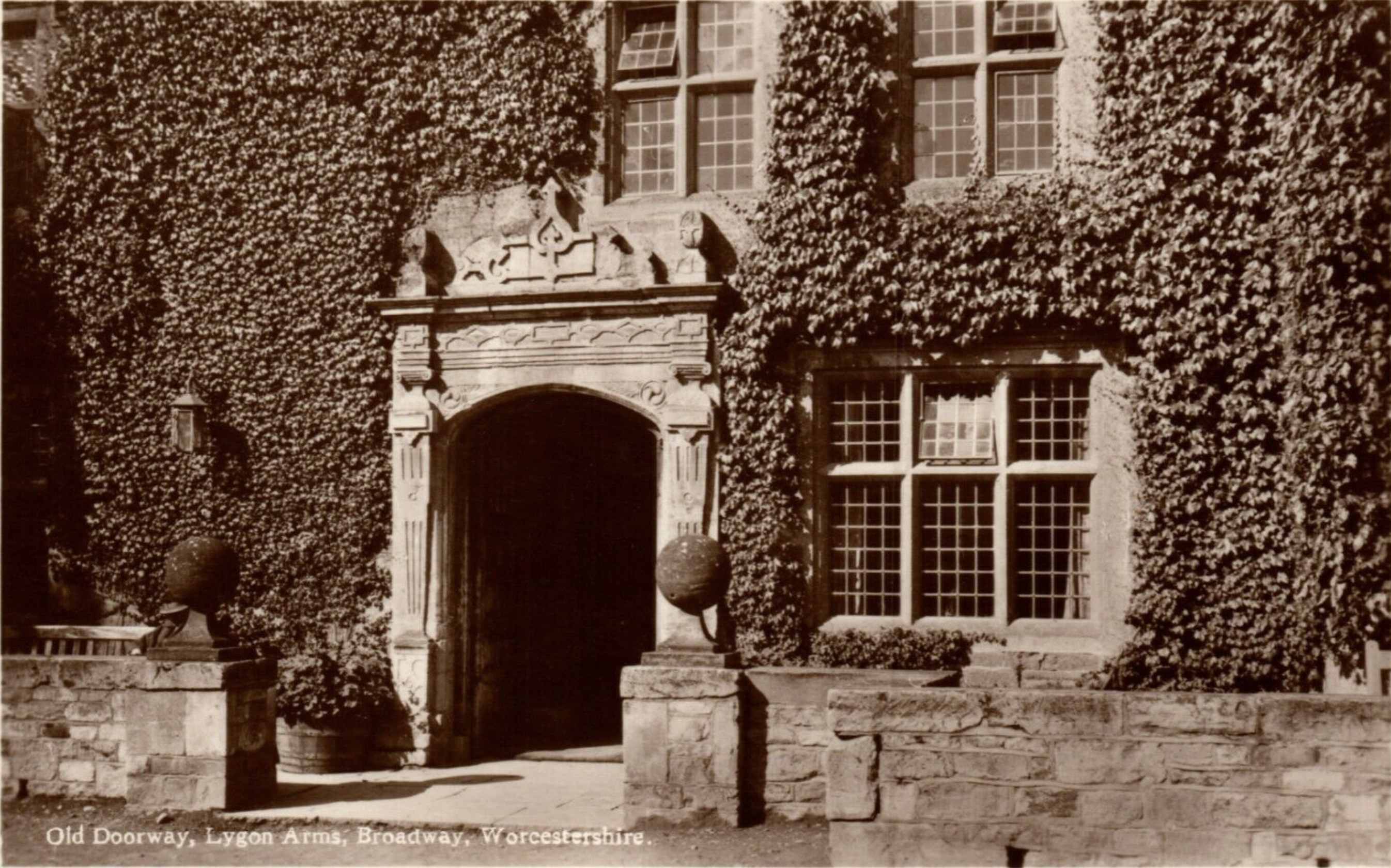
Due to DNA evidence we know that Isaac SHELDON of Windsor, Connecticut and John SHELDEN of Newport and Kingstown, Rhode Island are closely related and possibly father and son. We highly suspect that Isaac SHELDON immigrated in 1639 with Rev Ephraim HUITT, [perhaps with two sons Isaac Jr and John, both born in England]. Rev Ephraim HUITT was a curate at Knowle and later settled at Wroxhall as rector in 1626. In 1638 he incurred the displeasure of William Laud, Archbishop of Canterbury (appointed by King Charles I). In 1638 Laud commented in a report on Huit: “He hath taken upon him to keep fasts in his Parish by his own appointment and hath contemned [reject with disdain] the decent ceremonies commended by the Church. My Lord the Bishop of Worcester proceeds against him and intends to either reform or punish him.” This likely precipitating his immigration to the American colonies where he joined the Rev. John Wareham in Windsor.
Wroxhall would be at the location of the former Benedictine Abbey and Priory. Just 5 miles to the north is Knowle. where we find the Guild of St Anne where we find many of the prominent families of the area. The Guild was a religious & charitable association founded in 1413. At its peak it had over 3,000 members, including senior clergymen and local gentry including the LUCY’s of Charlecote, the FERRER’s of Baddesley Clinton, the FETHERSTONE’s of Packwood, the THROCKMORTON’s of Coughton. Walter Cook founded in 1416 the College of Knowle, a religious institution providing a communal life for its resident priests. Both Guild and College were dissolved at the Reformation in 1547 and their property confiscated. The second Guild register (1451-1535) survived is at the Birmingham Reference Library. Here we find “Willffi Sheldon et vi eius de Beley” in 1486 [trans William Sheldon and his wife of Beoley.] Then in 1514 “Thomas Sheldon of Warwick,” in 1520 “Richard Sheldon & catryn“
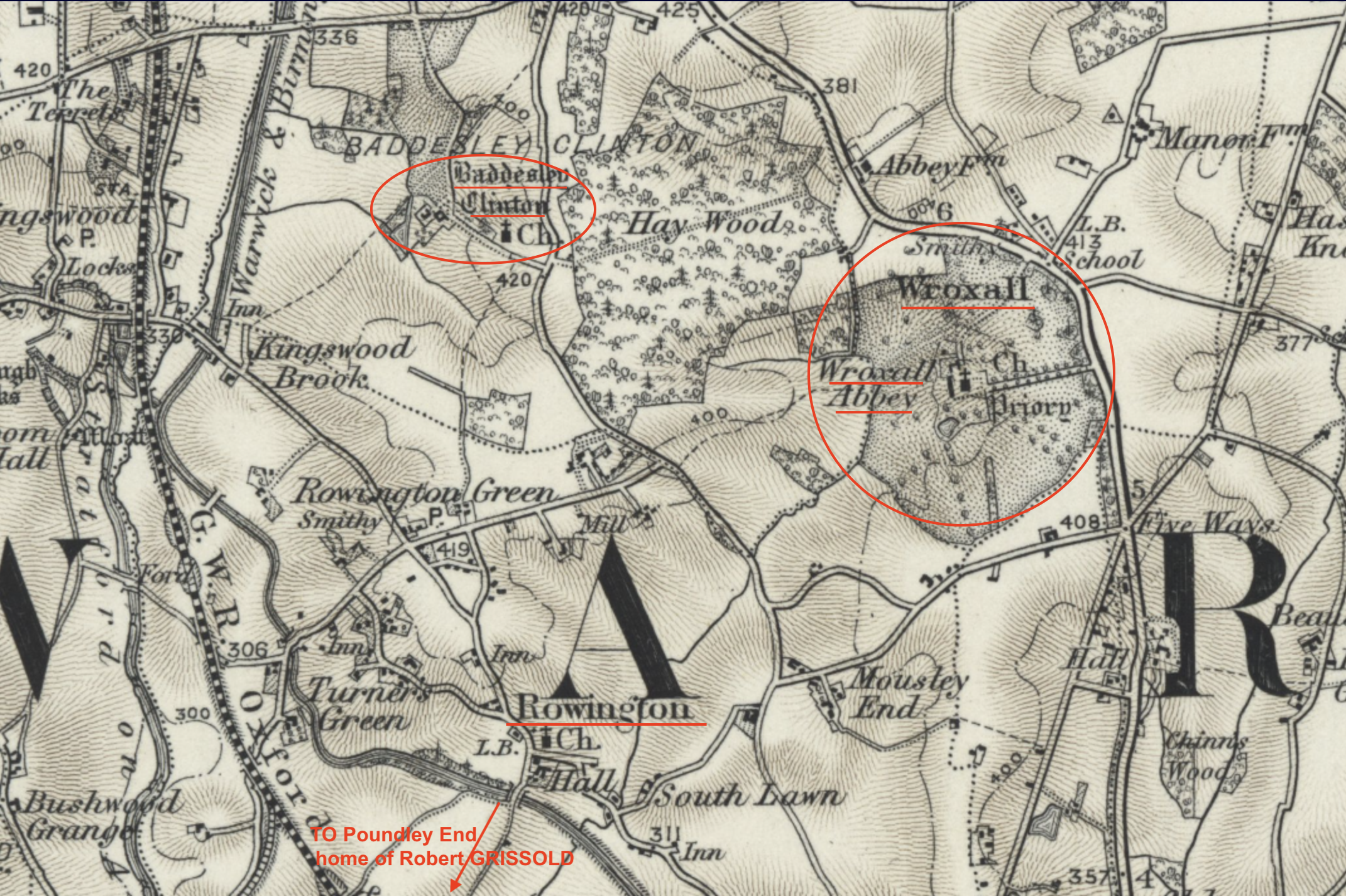
BADDESLEY CLINTON

Returning to Baddesley Clinton the manor originally belonged to the BROME family but at the time of GRISSOLD’s arrest it would have passed from Nicholas BROME to his daughter, Constania, who married Sir Edward FERRERs. The FERRERs were Catholic recusants and there were three priest holes [hiding places] at Baddesley Clinton. One off the Moat Room, one leading into a ceiling space and a third in an old privy.


From the Reformation forward most Catholics considered it too risky to keep records. The earliest extant non-London Catholic register is a priest’s notebook for Baddesley Clinton which begins in 1657, but for most places registers do not begin until the late 1700’s. Looking closely at the map you can see that Wroxall lies in the province of Wroxall Abbey which was a Nunnery but further back there was a Benedictine Priory of St Leonard going back to 1135.
Here is a window from Baddesley Clinton showing the FERRER arms halved with that of the HEXSTALL. Notice anything interesting?

So putting these things together we have these curiosities:
- Ralph SHELDON of Broadway benefits from the Dissolution of the monasteries
- The Dissolution also impacts the Priory of St Leonard, a nunnery which was supported by the BROME and Ferrer’s families
- Mr [William] SHELDON of Broadway’s servant Robert GRISSOLD of Rowington is arrested and hung in 1603 for being unwilling to renounce his Catholic faith and his association with the priest John Sugar who was conducting mass at Baddesley Clinton. [Distance from Broadway to Rowington about 26 miles–somewhat a curious connection]
- Rev. Ephraim HUITT of Knowle and then Wroxall emigrates to America in 1639 after being condemned by William Laud, Archbishop of Canterbury
- Isaac SHELDON who appears in the Windsor records in 1640 may have come with Rev. HUITT. others that “appear” to have come with him from Warwickshire are Edward GRISWOLD, John BISSEL, Daniel CLARK, Peter TILTON & perhaps John PORTE
- William SHELDON of Broadway meets with King Charles I in 1645
- Earliest extant Catholic records outside of London are for Baddesley Clinton beginning in 1657
- John SHELDEN of Newport is arrested for drunkenness and talking badly of the Lord Protector (Lord Oliver Cromwell) January 6, 1657.
- 1705 a Fleur-de-lis adorns the brand of John SHELDEN of South Kingstown, Rhode Island
So at this point we cannot say for certain the meaning of the Fleur de Lys of the SHELDEN brand found in South Kingstown, but one thing we can see are there are some strong Catholic connections and we have lots more to come on early founders of South KIngstown and Windsor Connecticut.
Further References
Hallmarks, Touchmarks and Guilds
SIlversmith Jeremiah Dummer of Newbury MA used a heart with his initials inside and a fleur de lys
Guildford-Saybrook Chests commonly used ROse, thistle and Fleur de Lis.
Colonial clay pipes were often stamped with a Fleur de lis
EUROPEAN CLAY PIPE MARKS FROM 17TH CENTURY ONONDAGA IROQUOIS SITES
Hallmarks on Gold and Silver Plate
Thanks to Dale SHELDON who did all the driving on our previous research trips to England and his help with this research. This is also published as a blog post over at SheldonGenealogy.org
Kelly Wheaton Copyright 2021. All Right Reserved.
Drunkards & Lunatics: The Case for Original Records & Research
Posted on October 29, 2021 1 Comment
I cut my teeth in genealogy back in the early 1970’s when I spent many a day in the Prothonotary’s Office of Cameron County Pennsylvania in Emporium. Emporium is the county seat and its population has averaged between 2,000-3,000 for most of its last 150 years. So not a very big place and when I was visiting the courthouse back in the day—I very rarely shared the room, where all the records were kept, with anyone. There were row after row of MARRIAGE, DEATHS, BIRTHS, DEEDS and ORPHANS COURT Dockets. But there was one Docket that always piqued my interest: the LUNATICS and DRUNKARDS Docket. After several months visiting regularly I got up my courage to ask the Prothonotary the purpose of the LUNATICS and DRUNKARDS Docket. Ah she says, “the only way you could get a divorce, back in the day, was if your spouse was a LUNATIC or a DRUNKARD.” So that is how I learned about the DIVORCE docket. I also eventually ventured down into the musty basement where old tax lists and naturalizations resided. You never know unless you ask.

Sometimes the best research is just sticking your nose wherever you can. I am currently doing some research on King Philip’s War and my research into several Massachusetts and Rhode Island towns is informing my research in a way that is somewhat surprising even to me. In 1899 , Carolyn Hazard in her monograph The Narragansett Friends’ meeting in the xviii century, with a chapter on Quaker beginnings in Rhode Island wrote about the Friends Meeting House located on the ridge of Tower Hill on the Old Pequot Trail in present day South Kingstown, Rhode Island. Furthermore she states it was destroyed in December 1675 and many were killed inside when it was attacked by the Narragansett natives. Then in 1902 in The State of Rhode Island and Providence Plantations at the End of the Century: A History Vol I we read: “On the 15th of December 1675, the garrison house of Jireh Bull…was attacked and fifteen persons killed, the house was destroyed and only two of the inmates succeeded in escaping.” Ms Hazard states “It was the destruction of this house which was the actual incitement to the Great Swamp Fight, which practically exterminated the Indians, putting an end to King Philip’s War.” And yet in two thesis papers and 6 books I read on King Philip’s War published in the past 25 years, none mentioned this at all. And while not justification for the slaughter of the Narragansett that ensued it is an important part of the story. I do wish to recommend two books with original sourced scholarship. Richard Le Baron Bowen’s 4 Vol Early Rehoboth published in 1948 and Our Beloved Kin: A New History of King Philip’s War by Lisa Brooks from 2018. Ms. Brooks adds one more piece to the puzzle. Three months before the Narragansett attack of the meeting house its owner Jeriah Bull was encouraging settlement in the Pettaquamscutt Purchase. This was the native answer to the ever increasing English takeover of Narragansett lands. The original records matter more than a thousand recitations of the victor’s justification for the way things turned out and a wholesale whitewashed of history. [Pun intended.]
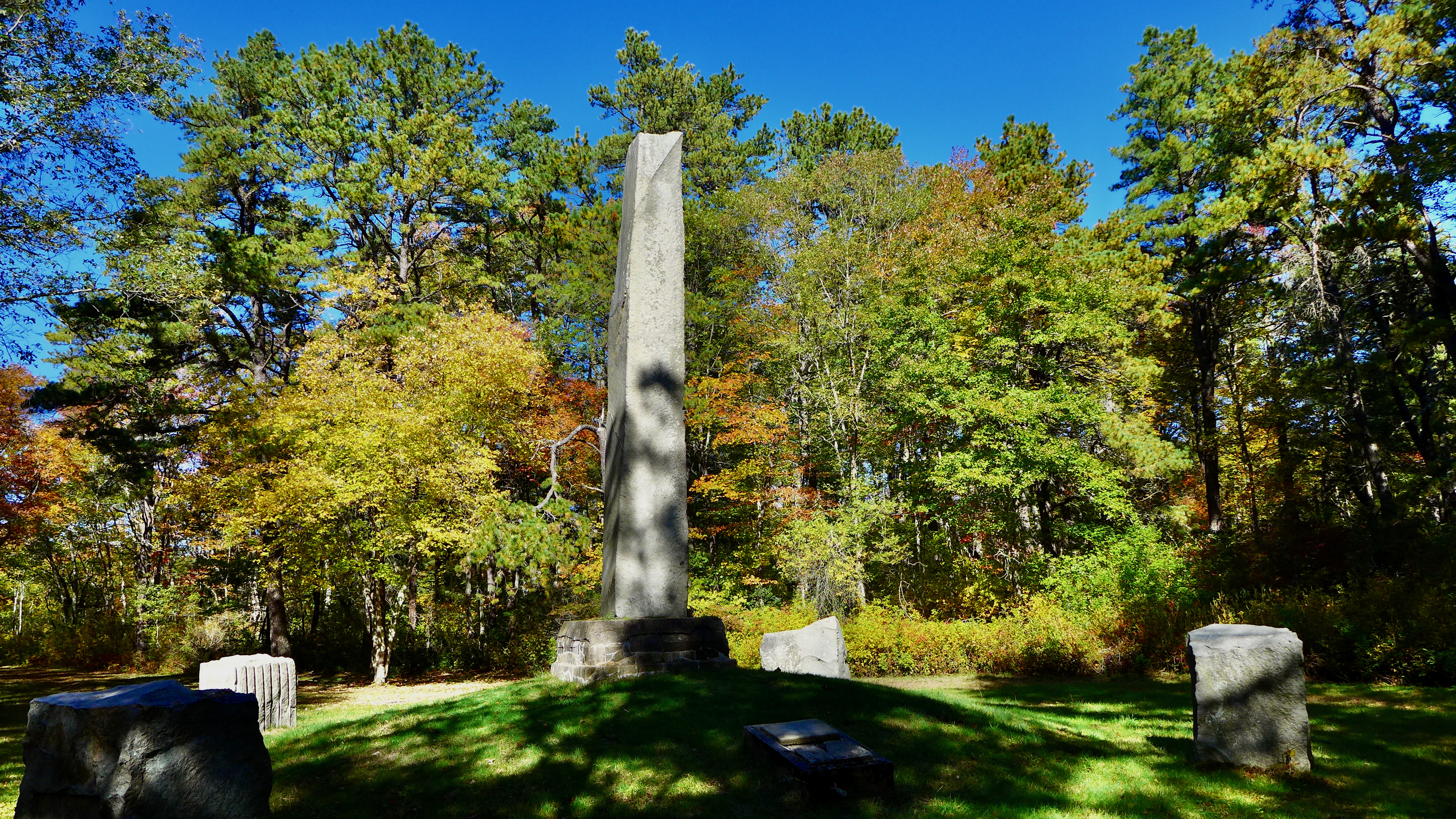
Which brings me to another deep dive and observation. There are records, never published, that reside in courthouses and archives that add much to the personal stories of our ancestors. In my brief visit to the South Kingstown, Rhode Island Town Records Office I turned up a list of sheep marks and brands beginning in 1697. There are a total of 84 listed for the period from 1697-1722. Most are simply the initials of the recorder. One of the persons that interested me is for John SHELDEN. Here is the listing for his marke.
“John SHELDEN his Marke is a Slit in the Right Eare and a Crop on the Left Eare and A for Gad in the Same Eare his brand is JS on the neare Buttuck.” What immediately stood out to me was the Fleur-de-lis at the top of the J. [Please note the Capital “I” with a cross hatch is actually a “J”]. I only took a photo of the whole page and this closeup but it really struck me that this was how unusual this was. So I decided to take a longer look at all the registrations so I visited my local Family Search Library affiliate and copied all the pages of brands.
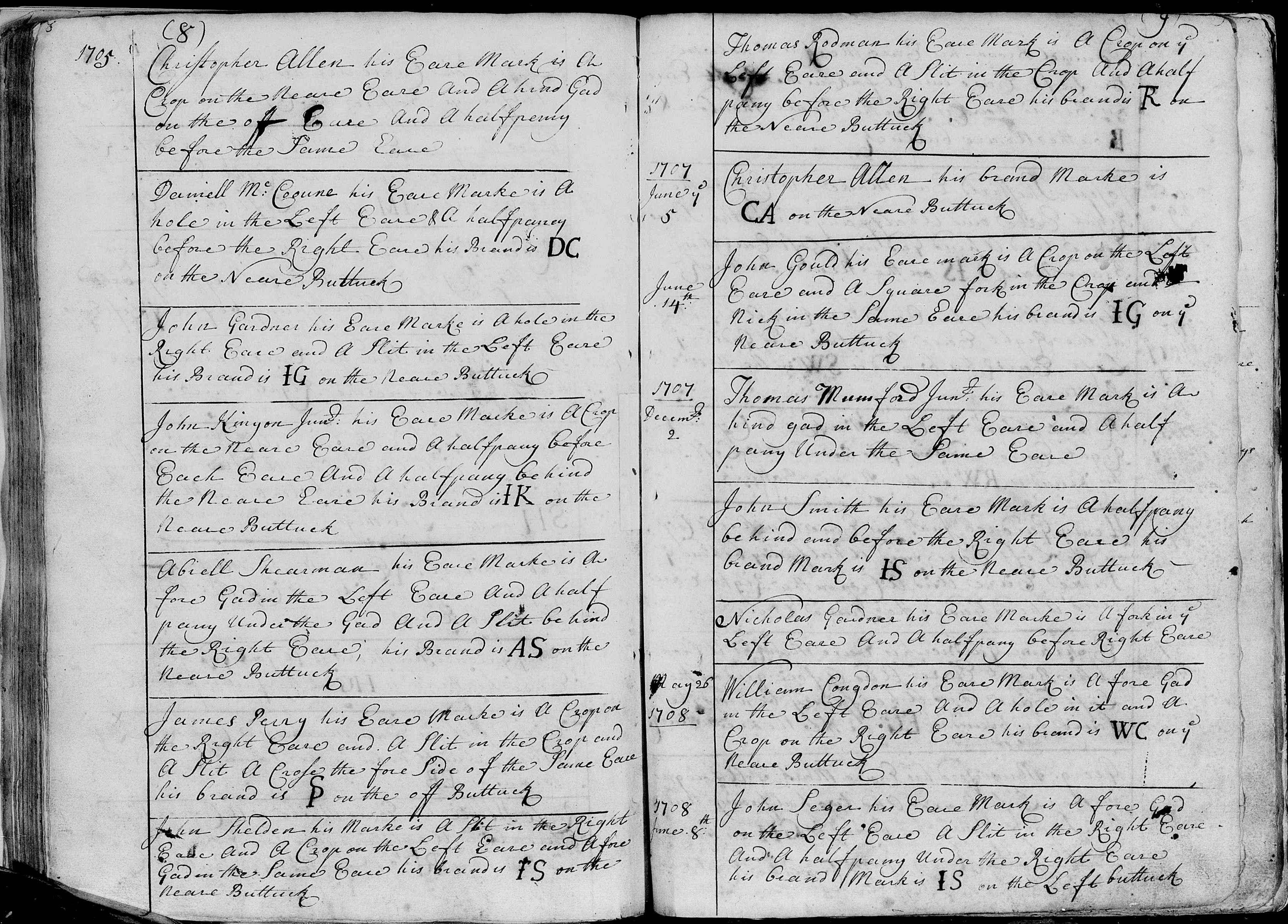
John SHELDEN is the first to be recorded with the initials “JS” so the Fleur-de-lis does not appear to be an embellishment to distinguish his brand from John SMITH [but it effectively does] as seen above whose brand is on the neare Buttuck. Or from John SEGER who brand was on the Left Buttuck. You will also note that most of the brands including those on these two pages are simple initials. We have a couple more creative ones.

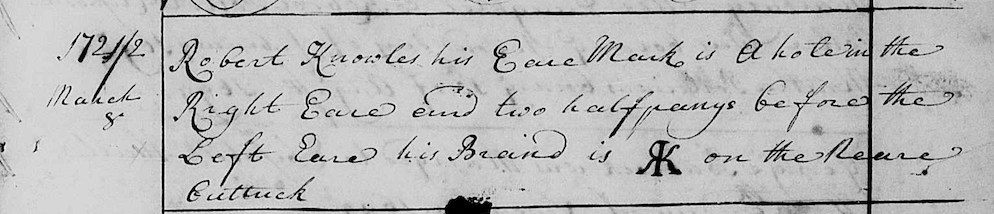
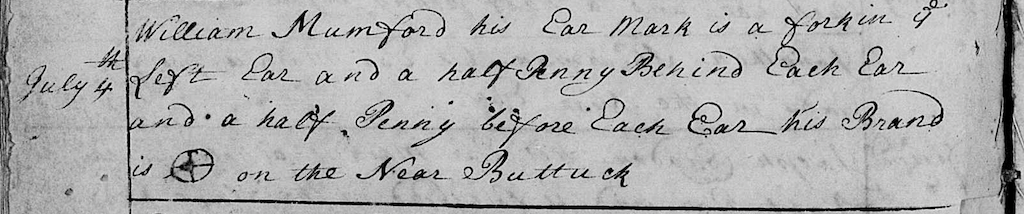
William BROWN combines his B on top of the W. Robert KNOWLES uses a backwards R with a K and finally William Mumford has a circle with a cross. But no other has a Fleur-de-lis or the intricacy of John SHELDEN’s brand. I will have a future blog post on the possible meaning or implications, but this bit of detail is lost if you do not look at the original records. And as I have previously mentioned the color photo I took in person is far more appealing than the black and white images. And if you are so inclined try doing a Google search on Animal Branding in the colonies—someone wanting to do a book could significantly add to what is out there…
My point is that unless you look at records in person or chase down every possible angle of a historical event or family history you will miss so much of the story, your ancestors invite you to tell. Looking at the records from the viewpoint of the Narragansett, the Wampanoag and the Sakonnet as well as that from the residents of the towns of Seekonk, Little Compton, Providence, Swansea, Rehoboth, Kingstown, Newport and Portsmouth and from the various religious perspectives: Quakers, Puritans, Congregationalists, Baptists etc. gives a much fuller picture of the context of our ancestors lives. Do not assume that everything that can be discovered or written has already been done. It hasn’t and you can do it.
Kelly Wheaton Copyright 2021. All RIghts Reserved.

