Genealogical Research: Is there a Method to the Madness? YES
Posted on August 23, 2021 Leave a Comment
In my just completed series The Case of the Mystery Birth Certificate I started with a mystery and I just kept going down rabbit holes, searching for more puzzle pieces to help solve the mystery. I wrote the posts in real time as I worked so you can somewhat see the process. I decided it might be helpful to really dissect the research to see if it might be helpful to others. I did not use a methodical approach where I wrote a research question and then plotted each resource I would consult, rather I did what I usually do—I followed my nose. [Note: If you haven’t read the four short blog posts you should do that now before I give it away]
At the end if you want to just jump ahead I will tell you the salient points at the BOTTOM of this post. I am going to explain my process but I am also going to lists resources I checked at the end. So here is the rough chronology. My 2nd cousin who owns the diary of our shared great grandmother sends me scans of the diary on August 9th. [I had previously received the first half from him and that part is transcribed.] Over the next few days I skim some of the pages and come across the birth certificate and wonder what it is about. About the same time I happened to be working on researching my great grandmother’s whereabouts and making a chronology of where she lived when. This took me to a conversation with a distant cousin an genealogical friend which led to websites that have San Francisco City Directories. And I was able to locate the MOSIER clan in 1914-1918; not listed in 1919; 1920-1925; missing in 1926; 1927-1929; 1930 not listed etc. So I set my sites on finding Franco Giralamo and he was not listed in any of the years. That’s when I discover the birth certificate was wrong and her father was Giralamo FRANCO by searching for her mother Laura CRAVIOTTO.
In this particular circumstance I was looking for “opportunity.” I run into this a lot especially when working with adoptees or NPE’s (not Parentage Expected). You can’t generally make a child without opportunity, which means proximity. So in order to discover why my great grandmother had the birth certificate of someone completely unrelated in her diary, my first thought was to locate where they may have been together and that led to San Francisco. So back to those City Directories looking for Giralamo FRANCO. I only found him in one in 1920 in San Francisco. Here’s what my timeline looks like:
- 1886 Giralamo FRANCO b. Murialdo, Savona, Italy
- 1907 Angelo CRAVIOTTO immigrates (Laura’s father) from Calice Ligure, Savona, Italy
- 1910 Giralamo FRANCO Immigration (lists Cora DAMICO as sister)
- 1911 Eugene DAMICO City Directory gardener, Corbett Ave SF
- 1911 Carlo FRANCO Immigration (Giralamo brother) lists Giralamo & his address as 204 Alemani Ave SF
- 1913 Laura CRAVIOTTO Immigration
- 1914 Marriage Laura CRAVIOTTO & Giralamo FRANCO in San Francisco living on Corbett Ave SF
- 1915 Draft Registration for Gerlamo FRANCO 27th St & Stanford Heights SF
- 1920 Giralamo FRANCO City Directory, gardener 27th St & Stanford Heights SF
- 1921 Yolanda Rosa FRANCO birth in St Helena, CA
- 1923 Angelo CRAVIOTTO ( Laura’s brother) City Directory gardener, 27 Stanford Heights SF
- 1924 Giuseppe FRANCO (Giralam’s brother) lists Giralomo’s address as Corbett Ave SF
- 1930 Census Giralamo FRANCO St Helena-Calistoga Hwy, St Helena
- 1933 Article lists Giralamo’s address as Dunk’s St, Colma employed at several dairy ranches (his death)
- 1938 & 1939 Saint Helena Star articles mention the FRANCO children involved in 4H in Saint Helena but from San Francisco!
- 1940 Census Laura FRANCO (widow) Dunk’s St, Colma
Please note in the above list only ONE of the records is a census. I cannot find him in the 1910 Census. Note that records of friends and family often give an address for Giralamo. Note that only one listing in 1920 in the City Directories for San Francisco although he was there much of the time. YOU MUST LOOK AT ALL SORTS OF RECORDS TO DETERMINE WHERE SOMEONE LIVED and WHEN. Some of these records will NOT be for the person in question. Also note the patterns. On this map from 1915 you can see that Corbett, Stanford Heights and 27th Ave are at the same spot!
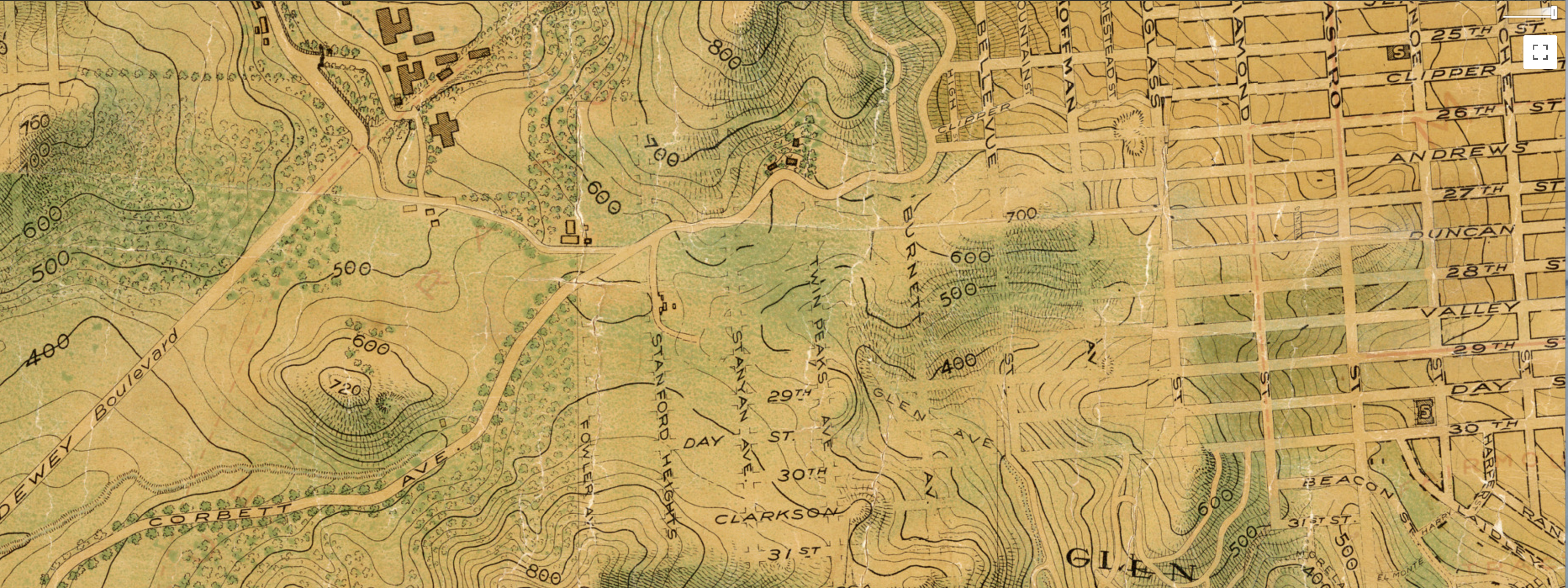
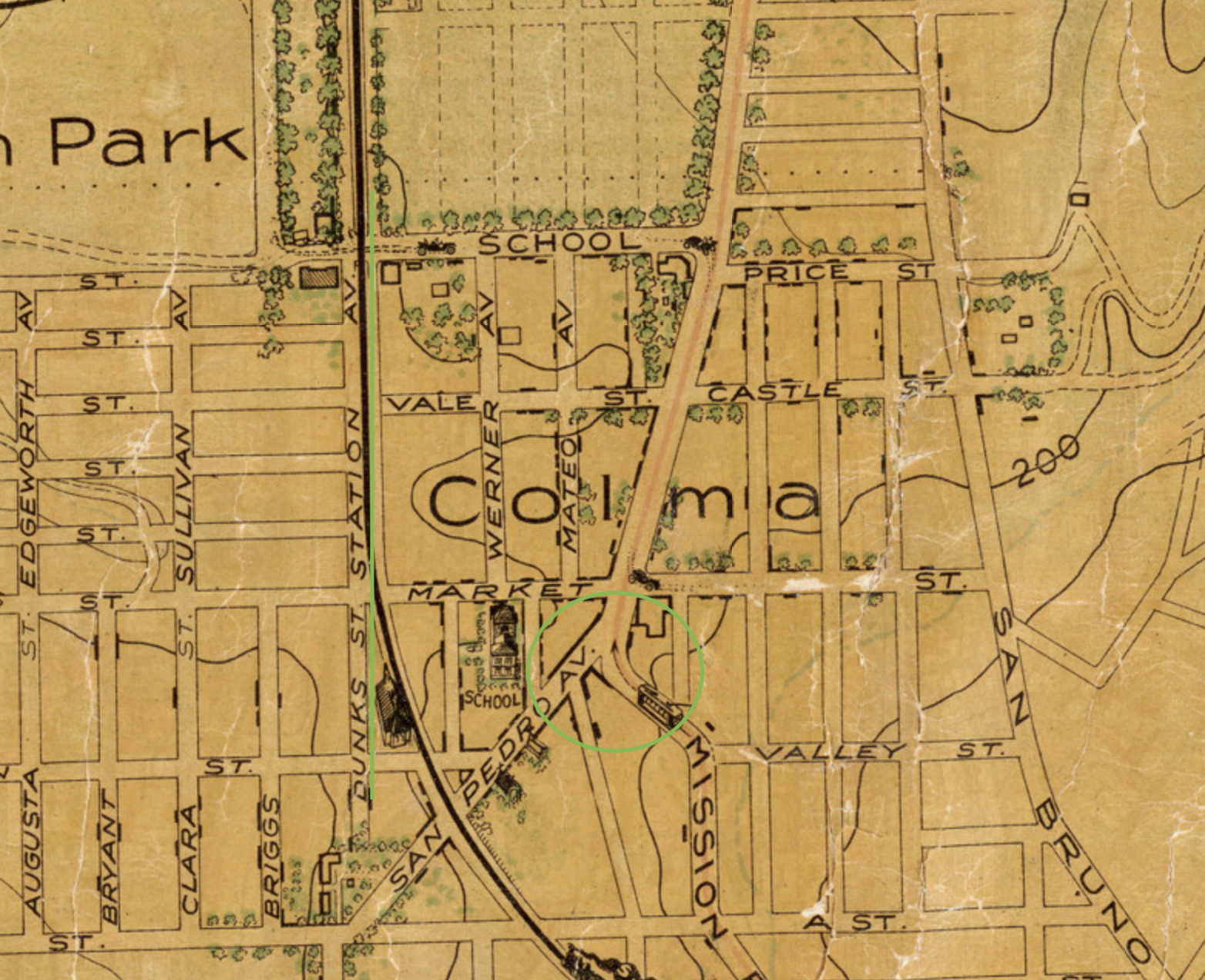
Period MAPS are VERY, VERY IMPORTANT! Always try to find a map as close to the time frame in question as you can. Giralamo FRANCO was killed by a drunk driver at the safety zone of the interurban streetcar at the intersection of San Mateo Ave and San Pedro Rd in Colma. Let’s look at the map.I have highlighted Dunks St. where the FRANCO family lived and the intersection where Giralamo was killed.
My great grandmother Lulu and the FRANCOs did not live in reasonable proximity at any time. That was a dead end. So I was back to square one after a week of research that included interviewing my neighbors, online research, and in person research at my local library. And in the end the answer came about because I was inventing stories that might have made PROXIMITY possible. One was that as a produce vendor Lulu got to know Laura FRANCO but the second one came as I was writing the first. Lulu’s health was not good—what if she came to St. Helena for her health. What if she and Laura were convalescing at the same time. That caused me to revisit the diary and find that they were indeed in St. Helena at the same time. This was consistent with the level of intimacy that having the birth certificate suggests. Now I have thought why didn’t I go directly back to the diary? I think that was a bit of serendipity that allowed for a much more complete story. So the final point is RABBIT HOLES should be welcomed. Even when they don’t inform your current research they generally educate you in other ways—which may become relevant later on in your research.
GENEALOGICAL RESEARCH MAXIMS
- Look for OPPORTUNITY & PROXIMITY.
- Look not just for your ANCESTOR but relatives and friends for clues.
- Look far beyond CENSUS to all Records that may have places your ancestor lived and when. Just because you can’t find them in a census or a City Directory it doesn’t mean they weren’t there. My list above proves that.
- Create a timeline.
- Consult multiple sources for the same record. They are indexed differently and search engines are different. You may be able to find a record at one source and not another.
- Period MAPS are VERY, VERY IMPORTANT! Always try to find a map as close to the time frame in question as you can.
- Finally trust your OWN process. Follow your hunches, venture down rabbit holes. You never know where they might lead.
RESOURCES USED
- Census
- City Directories for San Francisco
- Ships Passenger Lists
- Draft Registration Cards
- Rumsey Historical Map Collection
- Newspapers.com
- My Heritage
- Ancestry
- FamilySearch
- Google (targeted searches)
- Local paper archives via Local Library
- Marriage Records
- Birth Records
- Social Security Death Records
- FindAGrave
- In person Local Histories and references at Saint Helena Library
- My great grandmother’s diary
- My neighbors
Kelly Wheaton Copyright 2021 All RIghts Reserved
The Case of the Mysterious Birth Certificate: Mystery solved!
Posted on August 23, 2021 2 Comments
I have to say this story has me digging into families that I never heard of and are of no relation to me, however I am richer for it. It also has me day-dreaming and inventing stories of how Lulu MOSIER and Yolanda Rosa FRANCO parent’s paths may have crossed. And there is one thing that keeps coming back to me. There’s got to be a connection through farming or gardening. And then I remember a box of peaches. I had transcribed this part of Lulu’s diary back in 2017, so I went looking for the peaches and found it.
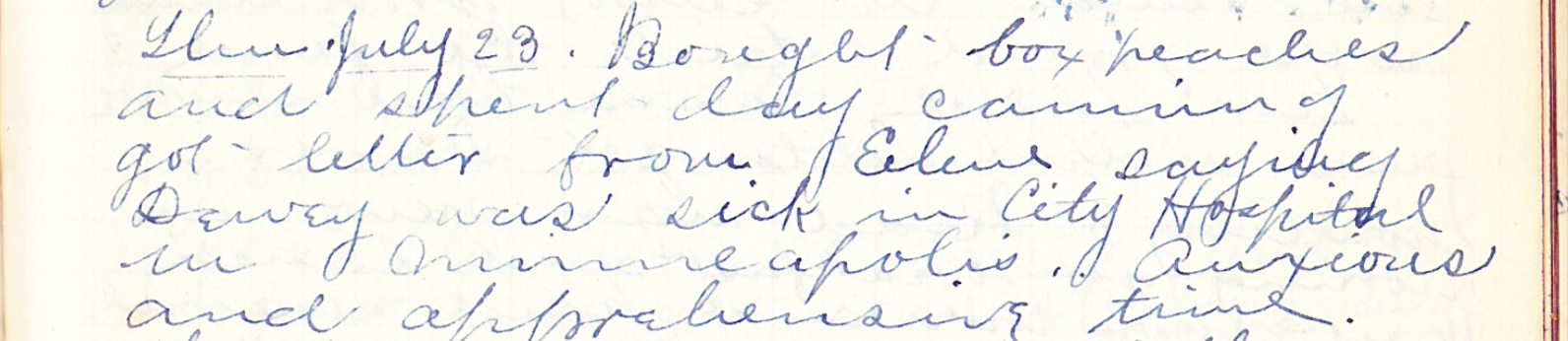
1914 “Thu July 23 Bought box peaches and spent day canning. Got letter from Eilene saying Dewey was sick in City Hospital in Minneapolis. Anxious and apprehensive time.”
So here is Lulu less than a year after she arrived in San Francisco and she is buying produce from her favorite seller Laura FRANCO. Laura arrived in San Francisco last year just like Lulu. Laura and her husband Giralamo were married on Valentine’s day earlier in the year and she still has the glow of new love. It lightens Lulu’s heart to talk to her even though she speaks no Italian and Laura’s English is poor. They chat and smile. Lulu is worried about her son Dewey in Minneapolis and she is struggling to make ends meet at home and her husband continues to be abusive. This is a brief respite from her day and she is grateful to Laura.

“A few days later she visits Laura again. Tuesday July 28 Bought nox tomatoes for 60 cents and made 17 qt chili sauce. ” Laura’s father has a produce company at 895 McAllister St called “A. Craviotto Company.” Note that it is owned by A Craviotto and B Vernazzo.

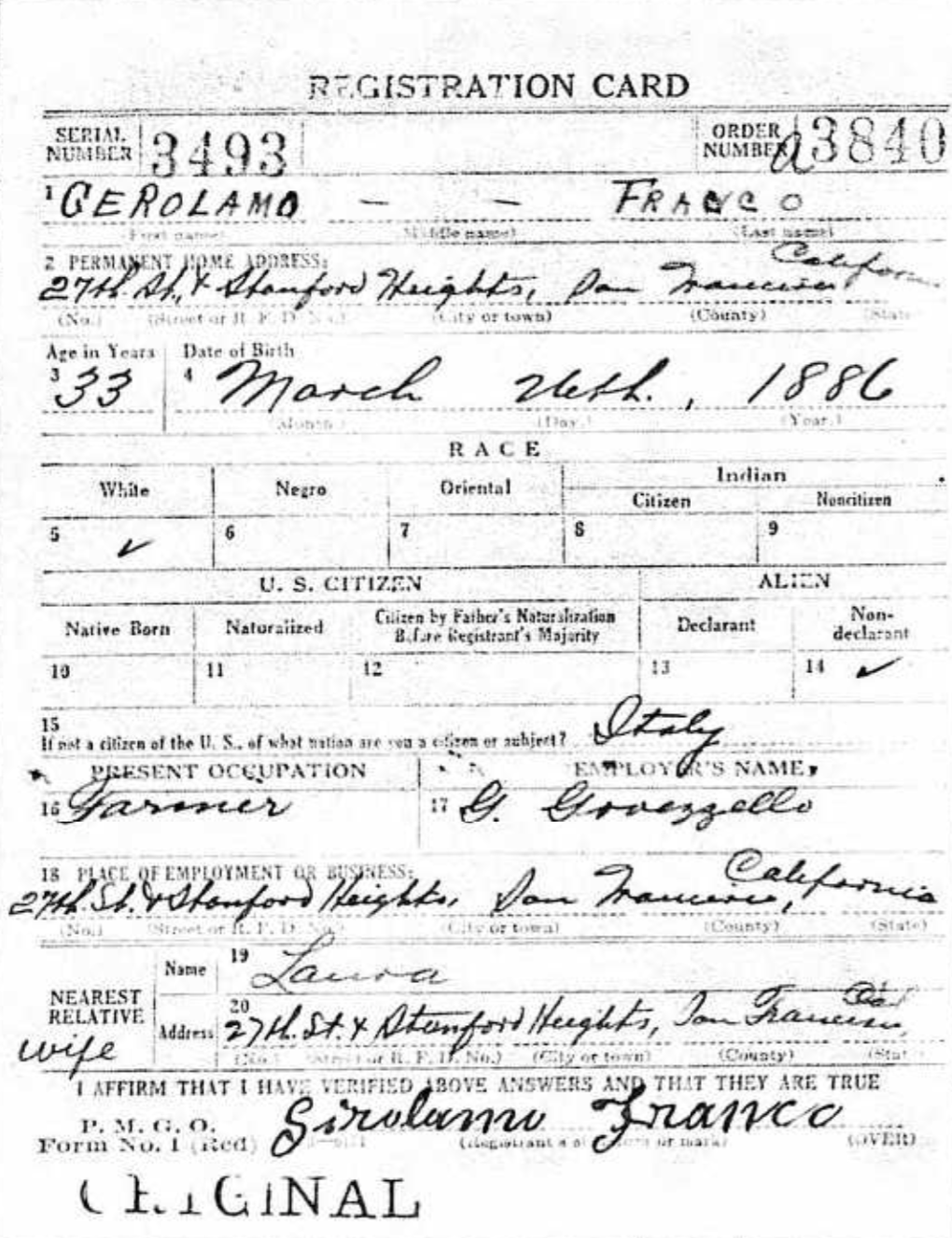
In 1915 we find That Giralamo’s draft card has him working as a farmer for G Gernazzo which I believe is Vernazzo at 27th Street and Stanford Heights. This is also listed as Giralamo and Laura’s address.
All the above—nice try Kelly but it’s not TRUE . So I looked at Lulu’s Diary again. Lulu was ill frequently—so I got to thinking—lots of folks came to St. Helena for health reasons. I went to the parts of the diary that are yet to be transcribed and there it was. At this point in the diary she is summarizing the last few months.
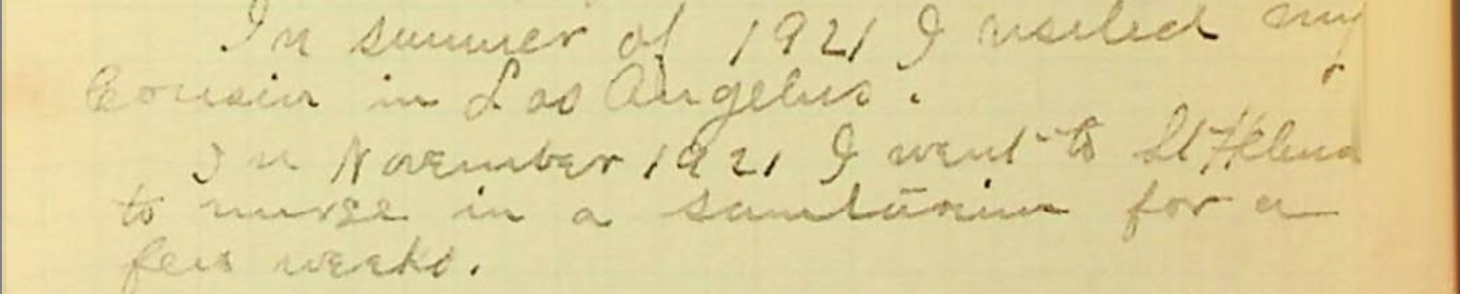
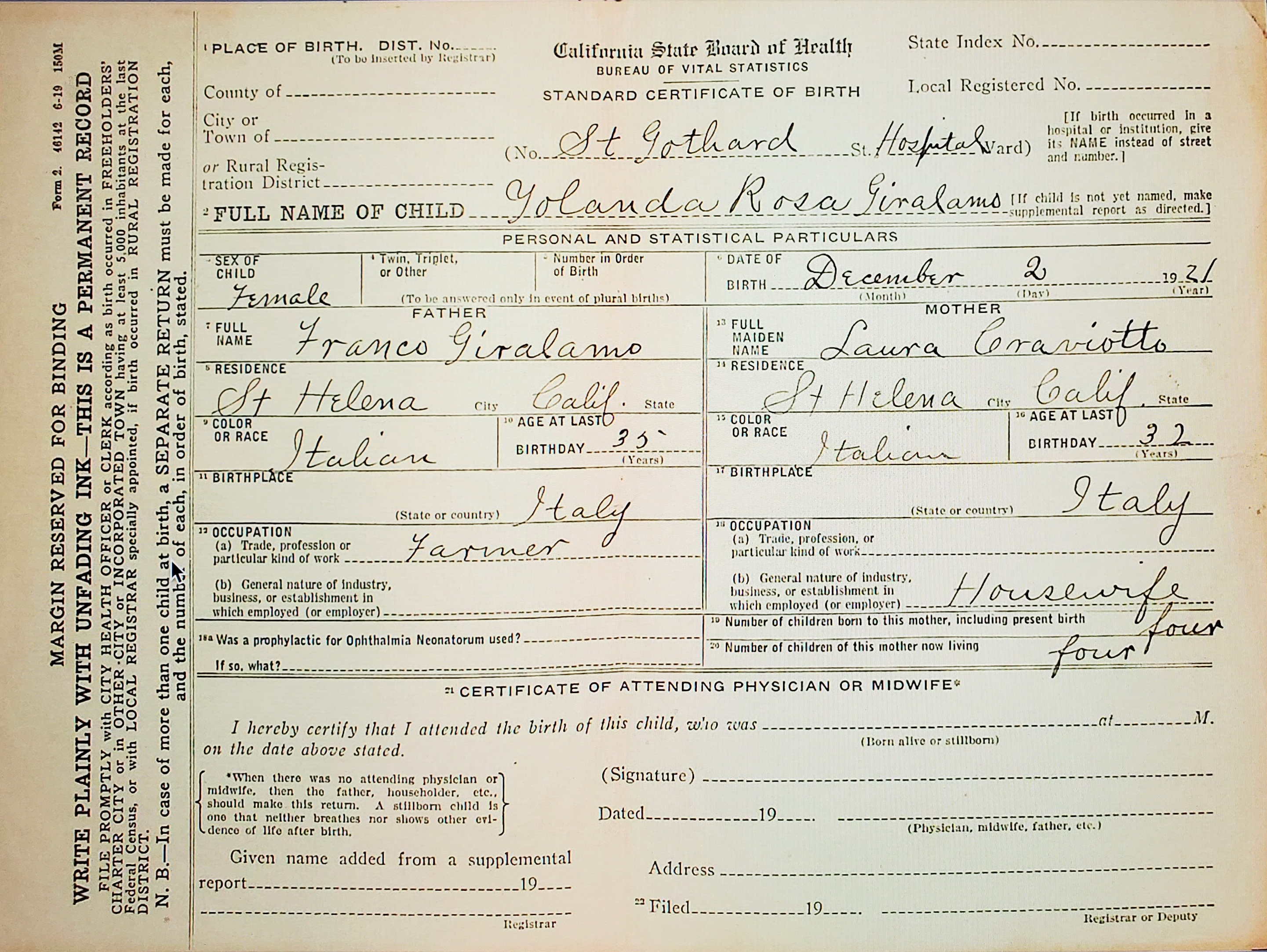
“In November 1921 I went to St Helena to nurse in a sanitarium for a few weeks.” Remember this all started with a Birth Certificate. My neighbor told me, at this time, most births were at home in St. Helena, so likely there was a complication and Laura Franco was hospitalized and gave birth to her daughter Yolanda Rosa at the hospital in St Helena. There she met my great grandmother Mary “Lulu” (PADEN) MOSIER while they were both convalescing. Perhaps they were even roommates. This birth certificate was filled out in error as the name should have been Yolanda Rose Franco, and not Giralamo. That is why the bottom was never completed. And this incorrect one perhaps was given to Lulu and she kept it in her diary to remind her of Laura and Yolanda and her time in St. Helena.
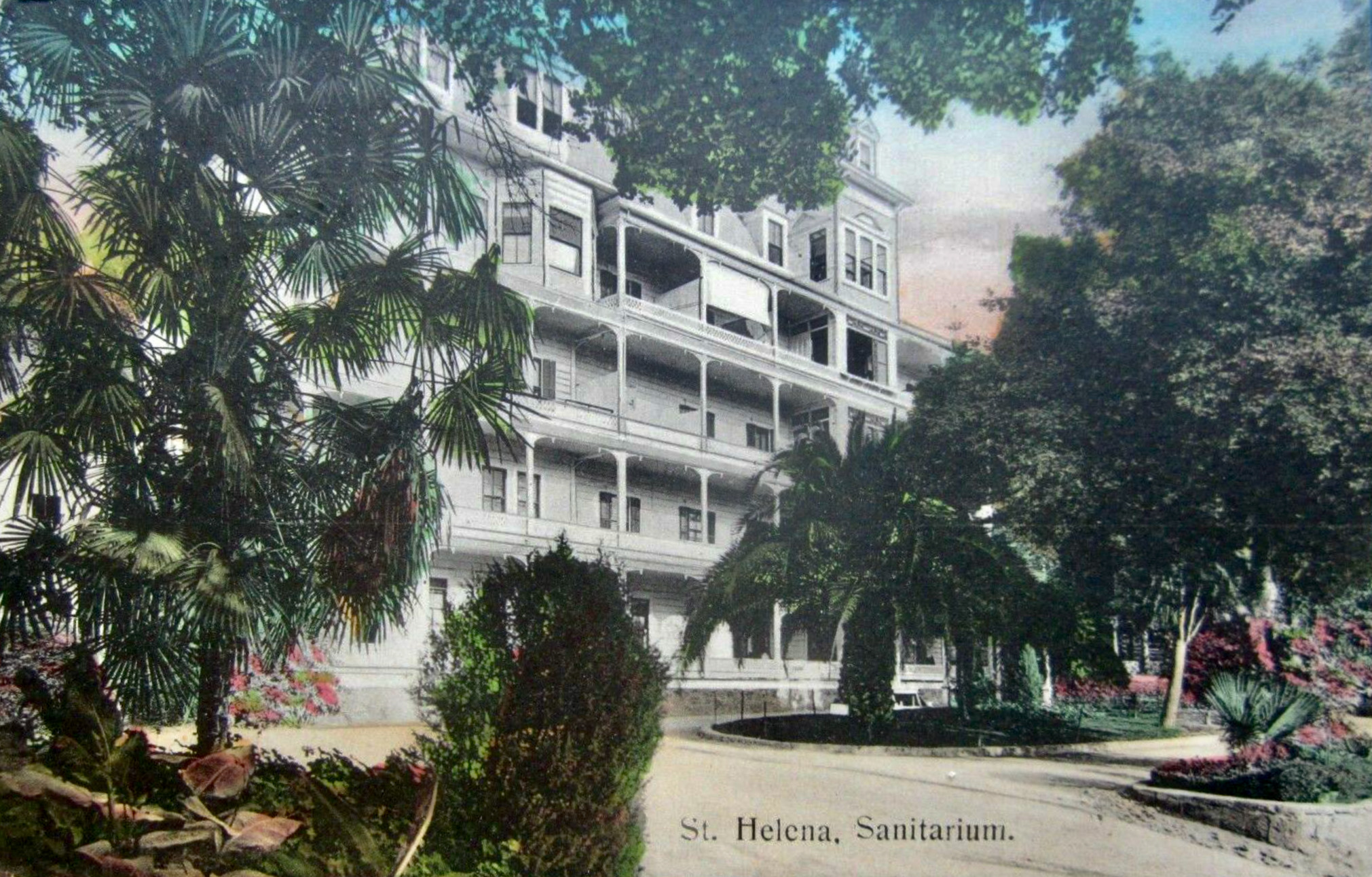
I spoke with my neighbor about my discovery and she thinks they both might have been at the St. Helena Sanitarium rather than at St. Gothards.
My neighbor was born in 1924 and she said her birth certificate was wrong as well. When she and her sister went to the County Clerk’s office her birth certificate could not be found and they wrote to Sacramento, which did find the birth certificate but she had been give the wrong last name! Although her father’s name was correct her name was wrong. She said that old Dr O’Connor had a “drinking problem!” And so perhaps that explains Yolanda’s birth certificate as well—Maybe a trip to the court house can confirm that!
Just to tidy up loose ends I will let you know that Giralamo Franco met an unfortunate end in 1933 when he and a 70 year old woman were struck by a drunk driver in the safety zone of a streetcar in Colma, CA. He died and is buried at the Italian Cemetery in Colma.

Laura and two children are in the 1940 census in Colma. Laura’s obituary mentions Yolanda and family in St. Helena. Apparently the children continued to visit St. Helena as they are mentioned in local newspaper articles for 4H in 1938 and 1939. Laura died in 1950.

In the process of trying to solve this mystery I dug into early histories of San Francisco and St. Helena. Explored families from Italy and births in the remote village of Murialdo. I have gained more stories from my neighbors and I think we all feel a bit closer after sharing this journey. Never underestimate where those rabbit holes lead. And now it is time for me to return to transcribing Lulu’s diary. I am sure she will be the source of future blog posts.
Kelly Wheaton Copyright 2021 All Rights Reserved.
The Case of the Mysterious Birth Certificate: Part Three
Posted on August 21, 2021 Leave a Comment
I am doing my best to put this behind me but it just won’t let go. Some rabbit holes are like that—you would swear you were chasing just one rabbit and before you know it they seem to be multiplying. Note Please read the earlier parts or this won’t make much sense. I know you are thinking that my talking about rabbits multiplying is strictly metaphor but its not.
To recap Yolanda Rosa FRANCO’s birth certificate was found in my great grandmother’s diary and I am sill looking for why. Yolanda was born in Saint Helena but as it turns out her father spelled various ways Giralamo FRANCO was born in a very small village in Italy called Murialdo, Savona, Italy. And as it turns out so was my neighbor’s mother Guiseppine (Josephine) Serafina FRANCO. Well both Giralamo and Guiseppine were born to a father named Giovanni Battista FRANCO but not the same Giovanni Battista FRANCO. Are you confused yet? Well I got so confused I had to create a spreadsheet to keep them all straight.

So in the end I found that there were not one, not two, not three not four, but five Giovanni FRANCO‘s living in Murilado, Italy in 1877-1902 and plotting out the births of their children and the spouses shows these are separate individuals. Four of the five were named Giovanni Battista FRANCO!!! Geremia Patrizio Pacifico FRANCO (later known as Giralamo) is Yolanda’s father and we know this because his date of birth is recorded in the parish records for Murialdo but also on his draft card where his name is Gerolamo FRANCO born also 26 Mar 1886 in Murialdo. Then we have Guiseppine FRANCO born in 1900. On a tree on FamilySearch it shows “our” Giovanni Battista FRANCO (wife ODELLA) as the son of Carlo FRANCO bc 1830 and Vittoria SECCO bc 1837. Whether Giralamo and Guiseppine were first cousins, second cousins or some other I am not sure but it seems likely they were related. And it may be this connection that lured Giralamo from San Francisco to Saint Helena. In the connection category we also have Giralamo’s wife was Maria Rosa Severina ODELLA and that my neighbor’s father’s sponsor was Carlo ODELLA.
A closer look at the ship’s passenger list shows the Geremia FRANCO arrived on the ship Ancoda 12 April 1910. It shows he was born in Murialdo, his father was Giovanni and that he was headed to San Francisco.


It shows the person above him as Eugenia DAMICO who has listed his brother in San Francisco as his contact. It states ditto for Geremia but that is probably an error. However when we look up Eugene DAMICO in the 1911 San Francisco City Directory we find him listed as a gardener residing at Corbett Ave. I cannot find Giralamo in any City Directories except 1920.

However when Gerolomo FRANCO married on Valentine’s Day 1914 to Laura CRAVIOTTO both are listed as living on Corbett Av in San Francisco. His occupation “gardener.”

You may wonder why I am trying to track all of Giramalo’s movements. I am trying to find an intersection between Giramalo and my great grandmother Lulu MOSIER. In 1915 Gerolamo FRANCO’s draft card lists his address as 27th Street & Stanford Heights in San Francisco where he is a “farmer.” In 1920 the only San Francisco City Directory in which I have located him he is listed as a Gardener.

Here is a map of the area from 1911 which shows Corbett Ave. which actually winds around Twin Peaks. You can see 27th Street where it meets Stanford Heights. [I am awaiting permission to post a photo of the farm area]

So we have Girolamo in 1920 in San Francisco and then in December of 1921 his daughter Yolanda Rosa is born in St. Helena. And the family is still there in 1930. Strangely Girolamo is listed as living in San Francisco in 1924 when he is listed on his brother Guiesppe FRANCO’s Draft card as living on Corbett Road. Did Giralamo travel back and forth between the Lyman farm in St. Helena and the Farm near Corbett Ave in San. Francisco? Or was his brother mistaken?

Several things I have learned so far that are good for all genealogists. Checking multiple sources brings a much broader view of information. Records do not always agree. I have used Ancestry, Family Search and My Heritage for this work as well as specific Google searches. Check every possible permutation of spellings and pay attention to others listed on records. Although I have tried very hard to place Lulu and Girolomo in proximity to each other to date that remains elusive. I have not made the connection between them, however I have made a connection with my neighbors. I also have not “yet” located a obituary for Yolanda Rosa (FRANCO) JOHNSON that may list her children. Lots more rabbits to follow…
Kelly Wheaton Copyright 2021 All Rights Reserved
Family Heirlooms: Dog Tags
Posted on August 20, 2021 1 Comment
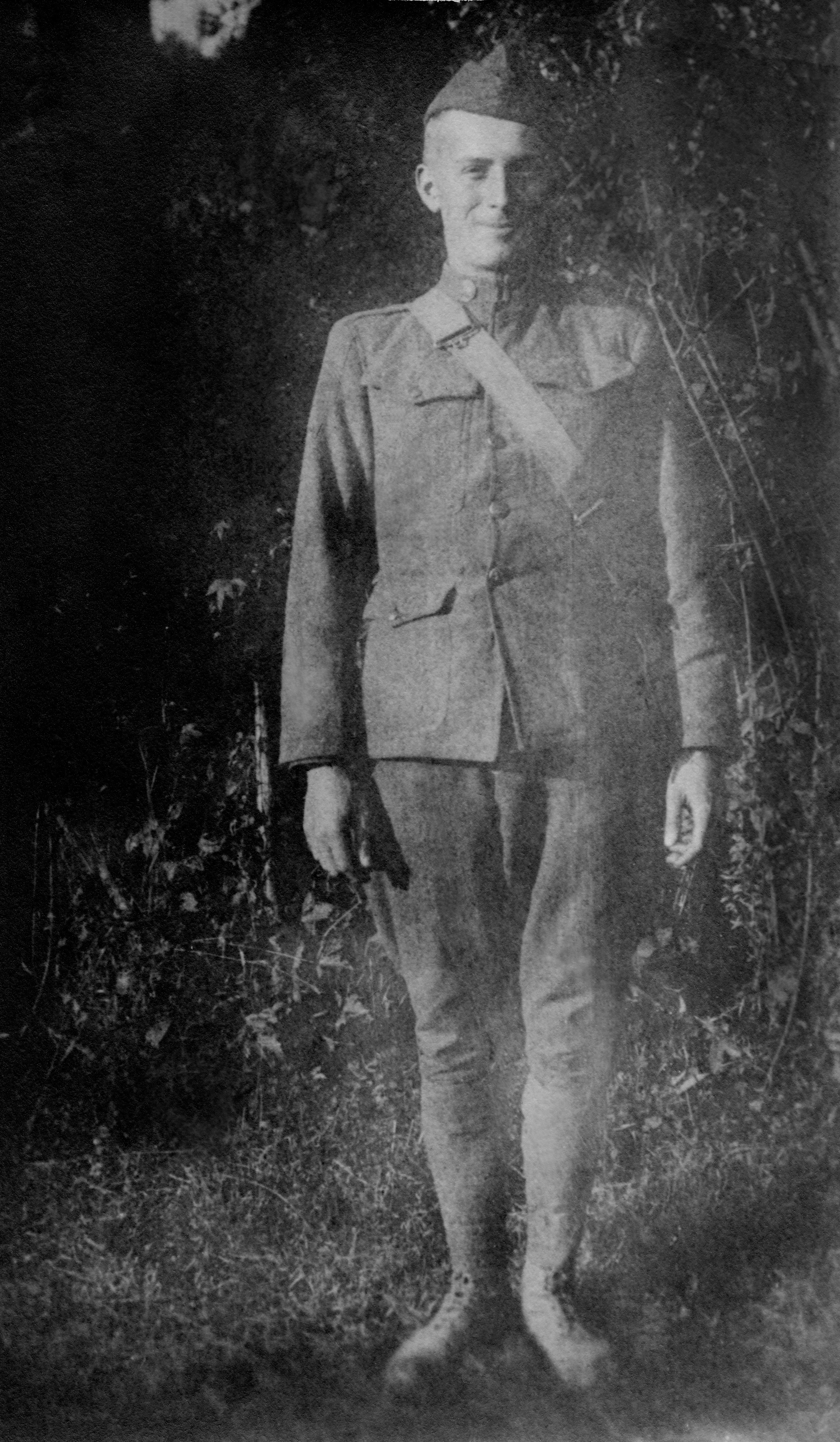
Maybe you are lucky enough to have some dog tags from a family member or even yourself. For those that wore them close to their heart imagine the stories they could tell. Dog Tags or Military Identification Tags have a long history which is well chronicled here. A soldier wore identification tags so, in the unfortunate circumstance that they were injured or killed, they would be identifiable. The following collection of dog tags were all issued to my grandfather Milo Dean MOSIER.

My grandfather was not career military and yet this collection tells his story quite well. I have written about his WWI service in my earlier post “The Inherited Object Revisited.” The simple aluminum disk marked Milo D. Mosier was issued for his time as an Army Medic during WWI where he served in France.
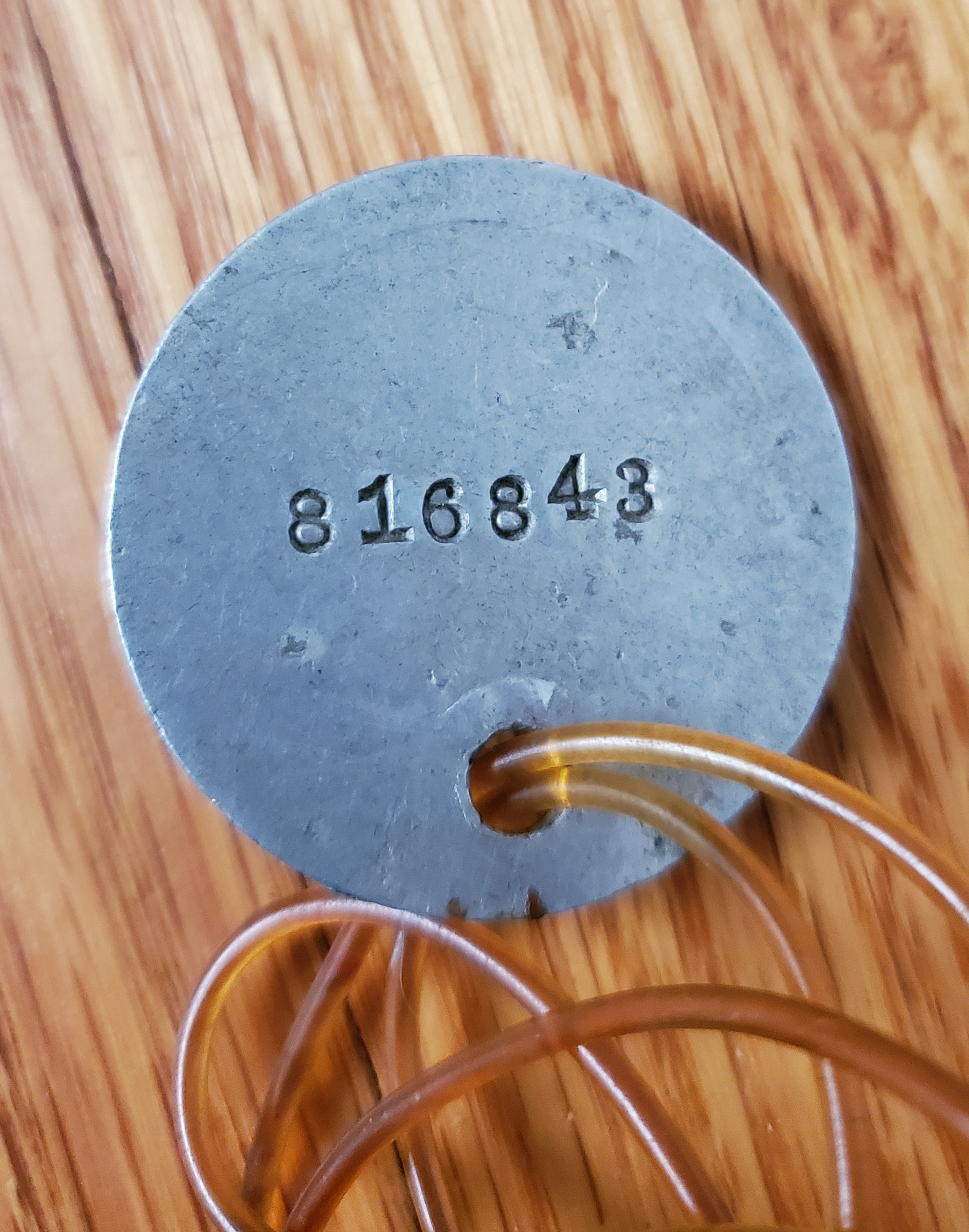
The rounded rectangular tags on the same aged nylon cord are from his service in the US Army in WWII where he served stateside as a Private at the 60th Base & Air Squadron at Stockton Air Field, California from October 16, 1942 to March 18, 1943. It is not exactly clear to me why he only served for 5 months.

However he did not stay out of service for long, on 12 June 1943 he enlisted in the US Navy for a period of 2 years as a Chief Electrician’s Mate with the 107th Naval Construction Battalion aka the CB’s or Sea Bees. This service is represented by the two tags on the upper left. Here is a code to the tags
- [Last Name] Mosier
- [First Name] [Middle Initial] Milo Dean
- [Serial No.] [Religion Code] 378-37-78 (no religious code)
- [Month and Year of Tetanus] T 8/4/45
- [Blood Type] A
- [Naval Branch] USNR
During this service he was stationed in the Pacific on Tinian Island which is famous for being the island from which the “Enola Gay” departed with its atomic bomb destined for Hiroshima. And 3 days later “Bockscar was originally headed with its bomb for Kokura but the smoke was so heavy it hit the secondary target of Nagasaki. An excerpt from a letter Milo wrote to my grandmother Carrie dated 16 May 1945 (a couple of months before the atomic bombs) ” I suppose you read in the paper about the air raids on Japan. We know many of the crews . We like to watch the Big Ships come home after a heavy mission.”

My father also served in WWII but in the Marine Corps and he spent some time on Tinian and was lucky enough to meet up with his dad, Milo. Sadly I do not have his dog tags, but I do have this photo of them together.

My father ended up being among the first US troops to reach Nagasaki after the bomb….so many stories buried here. The final set of tags I am not sure of they are the ones on the bottom left. I suspect these are something to do with his post war civilian service at Mare Island where he was an Electrician on Nuclear submarines. I am guessing the “A” was for his blood type and the “P” for Protestant. (I had not known his blood type before this deeper dive!) If someone recognizes these drop me a line. Each time I explore a family heirloom it draws me a little deeper into the story. What stories are hiding in your own family treasures. If you have any dog tags feel free to share in the comments.
Kelly Wheaton Copyright 2021 All Rights Reserved
The Case of the Mysterious Birth Certificate: Part Two
Posted on August 18, 2021 4 Comments
Please read the original post first, here. This makes my head spin and it is beyond belief. This is why we stumble down rabbit holes and sometimes end up in a truly Alice in Wonderland experience. This is an unbelievable outcome and I still do not have the answer to my original question, but where it has led me is worth recounting.
Last night after posting the story I got to thinking about where to go for more information on Yolanda Rosa FRANCO. What I left out of the last post is that I happen to live in St. Helena and my across the street neighbor was born in the same year as Yolanda, so I decided to ask her and her sister if they remembered Yolanda. Yolanda would have lived here from 1921 to at least 1930 so they may have gone to school together. Neither of the sisters remembered Yolanda or the family. When I mentioned that they lived next to the BATTUELO’s on the Highway between St. Helena and Calistoga we honed in on where they lived and why they probably didn’t go to school together, thus didn’t remember Yolanda. Those living north of Bale Lane went to school in Calistoga. My neighbor’s father worked on the Lyman Farm which was across from the Old Bale Mill. The farm extended all the way to the Napa River and I would guess included what is now Battuelo Family Vineyards plus the land to the West all the way to Highway 29. She said that this was a very large farm growing all sorts of produce all year around. There was a railroad adjacent so produce could be easily loaded and shipped. My guess is that Yolanda Rosa FRANCO’s father, Giralamo, worked on this farm as he is listed on the 1930 census as a laborer on a farm.
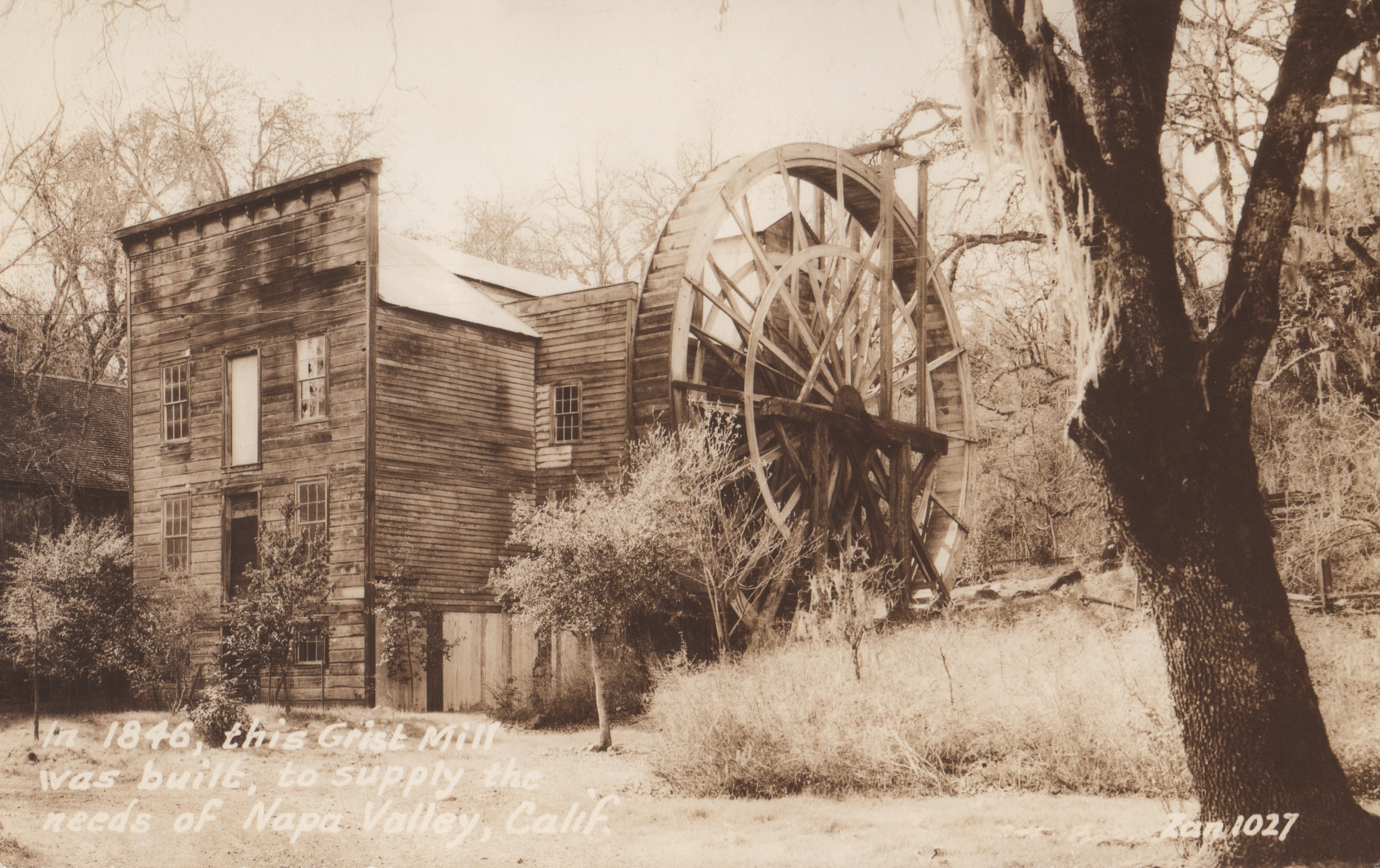
But here is where it got more interesting. My neighbor’s mother’s maiden name was FRANCO!!! So the younger of the sister’s asks me, “do you know where Giralamo FRANCO was born?” No but I will do some more research. So I do a search on Family Search for Giralamo’s parents: Giovanni FRANCO and Rosa ODELLA. That yielded the Marriage certificate for Giralamo that I had already found, but also the birth records of 3 other sons born to Giovanni FRANCO and Rosa ODELLA. And where were they born? In the same tiny village as my neighbor’s mother Giuspina FRANCO, namely Murialdo, Savona, Liguria, Italy. The brothers were Giralamo born in 1886, Carl Lorenzo 1888, Luigi 1892 and Pietro in 1894!
So let me recap. My great grandmother Mary Lulu PADEN MOSIER wrote a diary in which she kept a birth certificate for a Yolanda Rosa Giralamo (which I discovered is really supposed to Yolanda Rosa FRANCO). I have no clue as to why she has this birth certificate for a child born in St. Helena when she lived in San Francisco. My search led me to her parents Marriage certificate and the correct name and then the 1830 census in St. Helena. And then to a conversation with my 99 and 97 year old neighbors. Which in turn led to their mother a FRANCO who came from the same village in Murialdo, Savona, Liguria, Italy, which currently has about 800 residents (in the extended area). My neighbor said that many of the sons of families from Murialdo immigrated to the Napa Valley, many to work on the Lyman Farm.
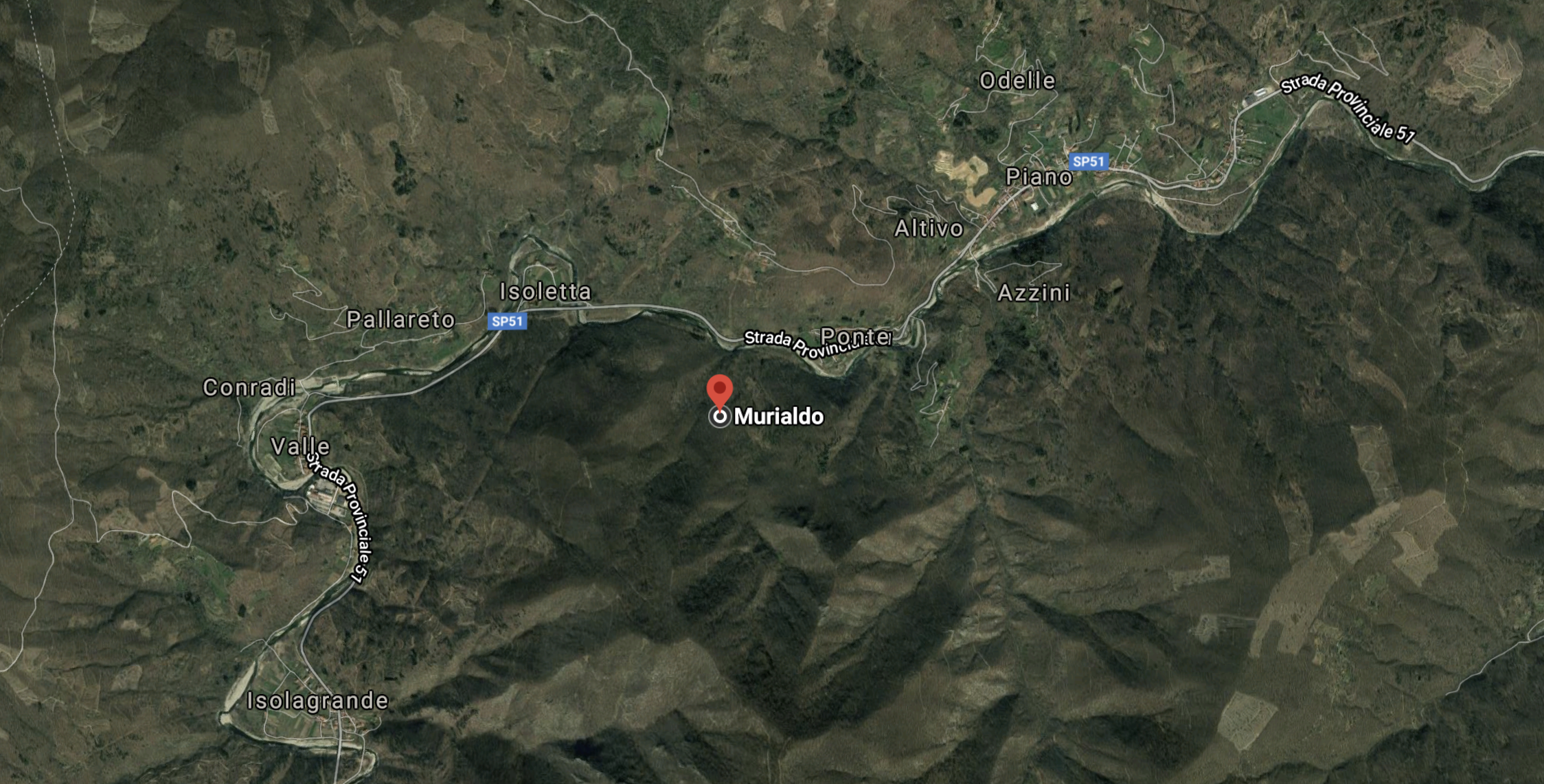
The immigration sponsor of my neighbor’s father (immigrated in 1911) was an ODELLA who was likely the same ODELLA family as Rosa ODELLA wife of Giovanni FRANCO, Grandparents of Yolanda Rosa FRANCO whose birth certificate is in my great grandmother’s diary. Also please note on the above map the hamlet of Odelle from which I would guess the ODELLA family takes its name. So what a very small world it is indeed! So this little rabbit hole has led me to my neighbors and a connection I could never in a million years would think possible. So thank’s Lulu for providing me this very interesting diversion. Why she had Yolanda’s birth certificate? I still don’t know but the new found connection, to my neighbors of 30+ years, I am enjoying immensely.
Kelly Wheaton Copyright 2021 All Rights Reserved.
The Case of the Mysterious Birth Certificate
Posted on August 17, 2021 7 Comments
Some mysteries send us down circuitous rabbit holes. Here are the basic outlines of this one. My great grandmother’s Diary had this birth certificate among its pages. I haven’t the slightest idea who this is or why this birth certificate would be kept by her.
My great grandmother Mary “Lulu” PADEN MOSIER ANDERSON was born in 1867 in Illinois and died 28 OCT 1930 in San Francisco, CA. She lived from 1913-1930 in San Francisco. She had eight children that survived childhood and not a one had a daughter that could have been this child (by adoption). My great grandmother was of Scottish & German extraction. This child is Italian. Why did she have this Birth Certificate in her diary? What is the connection?
St. Helena is about 65 miles north of San Francisco and there is no known connection. And this was the easy part. Doing a search for Yolanda Rose Giralamo brings up nothing in the CA State Birth Index. Nor can I find her on the 1930 or 1940 census. I also searched for her father Franco Giralamo. And I can only find one mention of a “Franco Giralamo” or anything close to it. That is in the 1929 City Directory for San Francisco a Franco Giralamo a laborer lives ar 25 Montana St. Okay the only clue is this birth certificate so let’s have a closer look. The birth occurred at St Gothard Hospital in St. Helena, CA. St Gothard’s began its life as a private home in 1907, then became St Gothard’s Inn in 1911. July 11 1921 it opened as St Gothard’s Hospital and less than 5 months later it would be the birthplace of Yolanda. It stayed a hospital until 1938 when it returned as St. Gothard’s Inn.
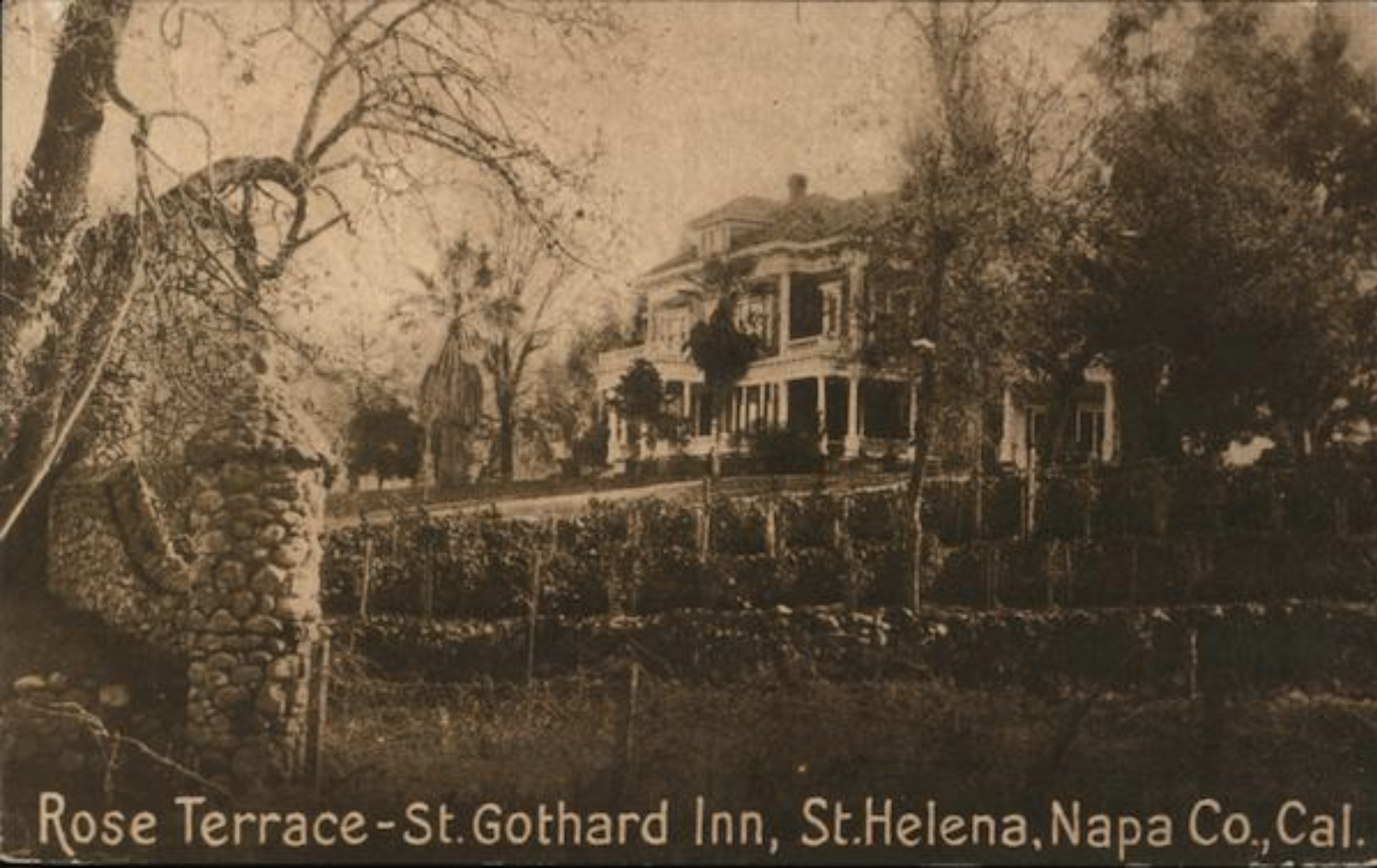
Several things I note on this birth certificate even though this birth occurred at a hospital the bottom is not filled out. The mother Laura is listed as the mother of 4 children all living….this suggests a marriage in about 1910-1915. So not finding anything for Franco Giralamo I searched for Laura Craviotto. BINGO! Laura CRAVIOTTO and Girolomo FRANCO were married on Valentine’s Day [14 Feb] 1914 in San Francisco, CA, both born in Italy he 26 and she 24. His name was Girolomo FRANCO not Franco Giralamo!!!
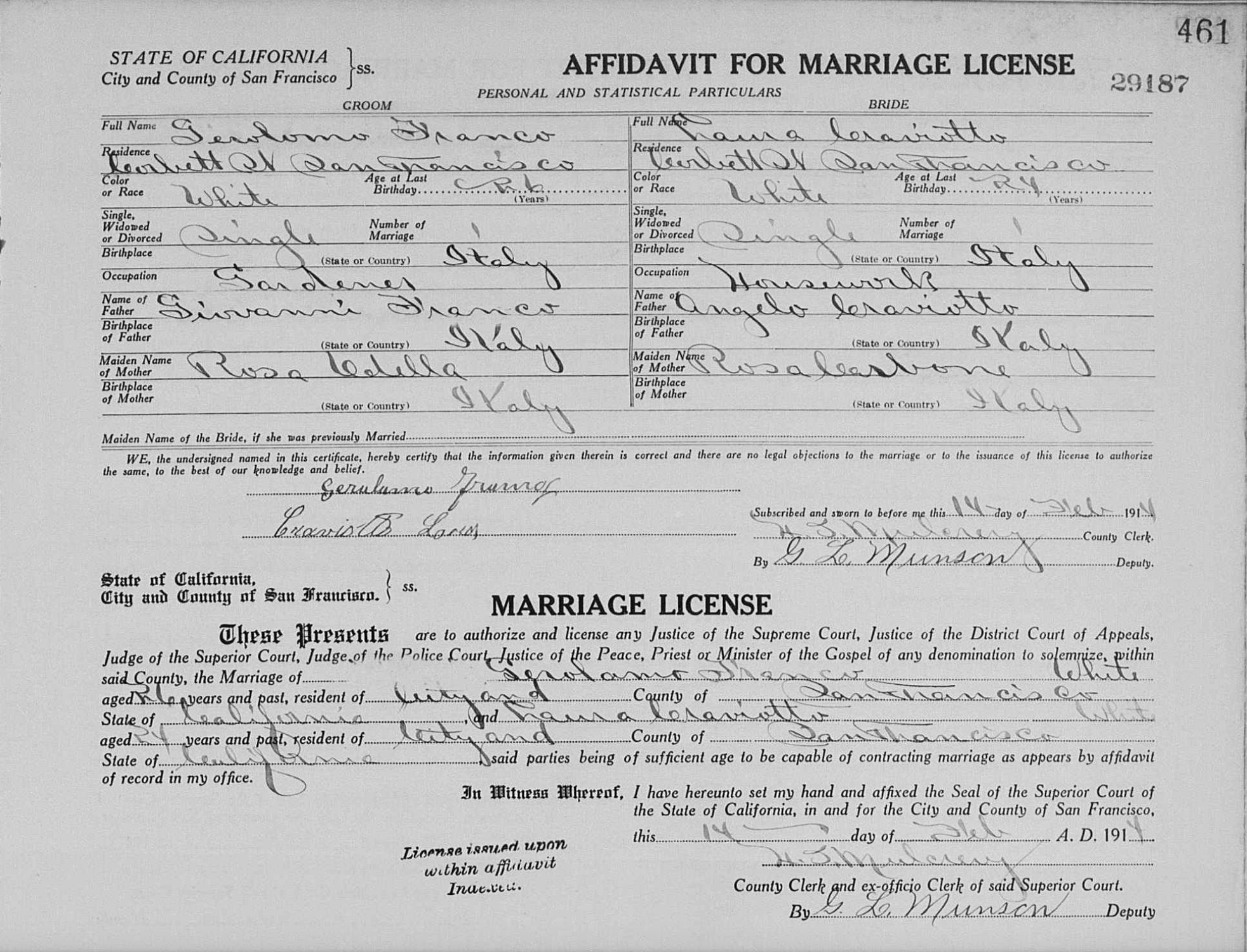
So perhaps that was a discarded Birth Certificate because it was improperly filled out??? Once I knew Yolanda’s father’s “real” name it was easier to find him. They appear on the 1830 census for St. Helena, California living along the Calistoga-St Helena Highway. By this time we see that Girolomo and Lora have 5 children. That he immigrated in 1910 and she in 1913. Unfortunately Girolomo dies the 23rd of April 1933. Laura as a widow is listed in Colma, San Mateo County in the 1940 census. She dies 21 September 1950. Moral of this search: Search on any parameter you have and do not overlook the possibility that the surname and given name have been switched.
But how is Yolanda Rose FRANCO connected to my great grandmother? I am not sure I will ever know the answer to that but here is a guess. The FRANCOs and the MOSERs lived in very different neighborhoods. The FRANCO’s near Little Italy and the MOSERs in the Panhandle. However it may be that Lulu’s husband Frank MOSER and Girolomo FRANCO met as laborers and somehow the families were acquainted. It is a mystery waiting for more clues. Yolanda Carmen FRANCO JOHNSON died 10 July in 1984 in Alameda, CA. Meanwhile maybe a member of the family will someday find this post in a web search and get a bit more detail than the would have had otherwise…..onward to more rabbit holes!
Kelly Wheaton Copyright 2021 All RIghts Reserved.
The Well-loved Family Heirloom
Posted on August 15, 2021 5 Comments
Paul Chiddicks recently asked if we have a favorite Family Heirloom. I have too many to have a favorite but this one is certainly a well used one. It belonged to my great grandfather Justus Warren SHELDON who at the time of his acquisition of the cane, lived in Eaton Rapids, Eaton county, Michigan. He lived in Eaton Rapids between 1895-1919 and was mayor there in 1899 and again in 1904.
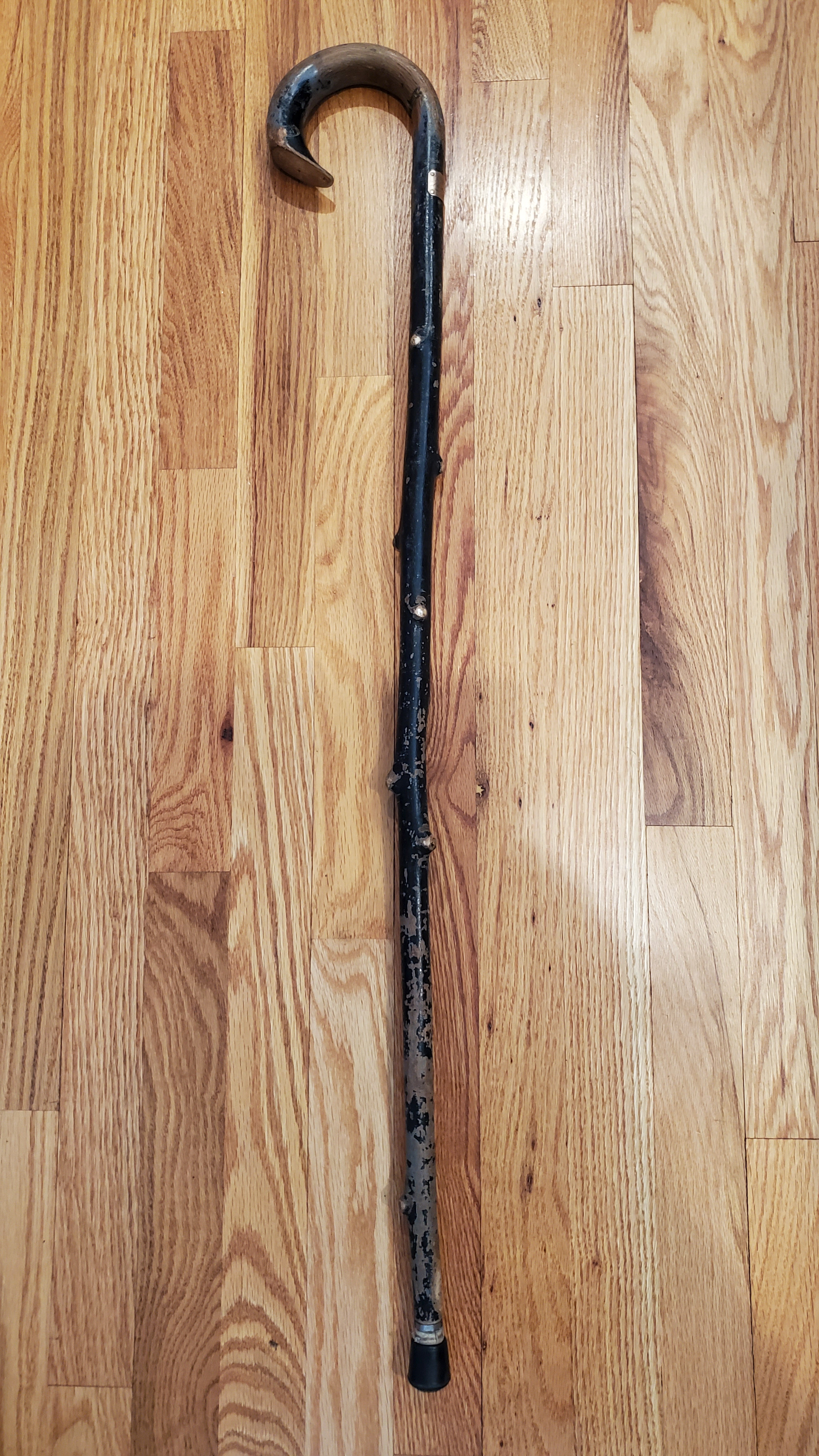
I do not have a photo of Justus with this cane but it was clearly his as the name plaque on it shows. It reads J.W. Sheldon Eaton Rapids, Michigan. Not only was the cane used by Justus, my mother, his grand daughter, used this during a broken ankle episode and later in her life. Who knows but it may be used by me someday.
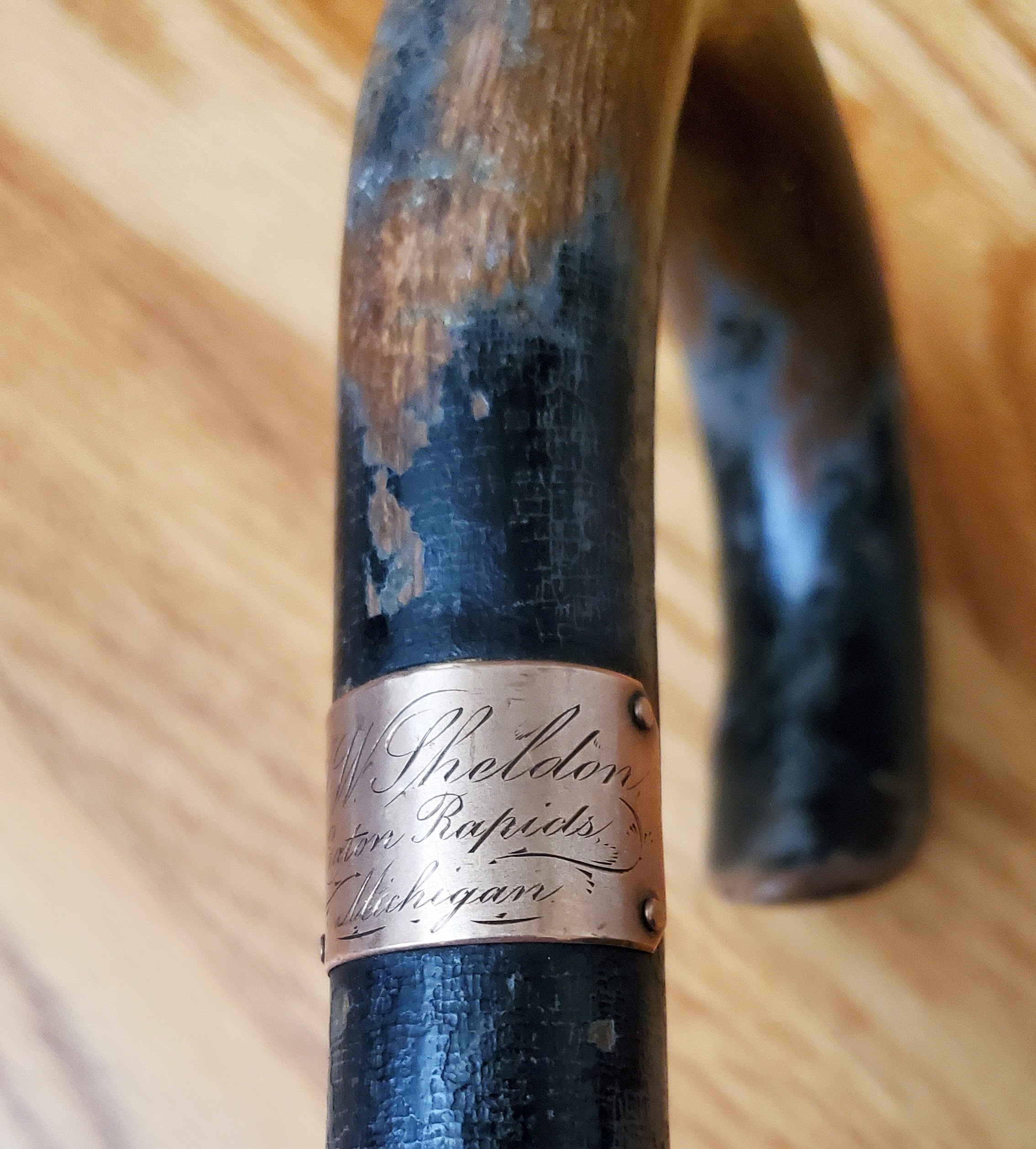
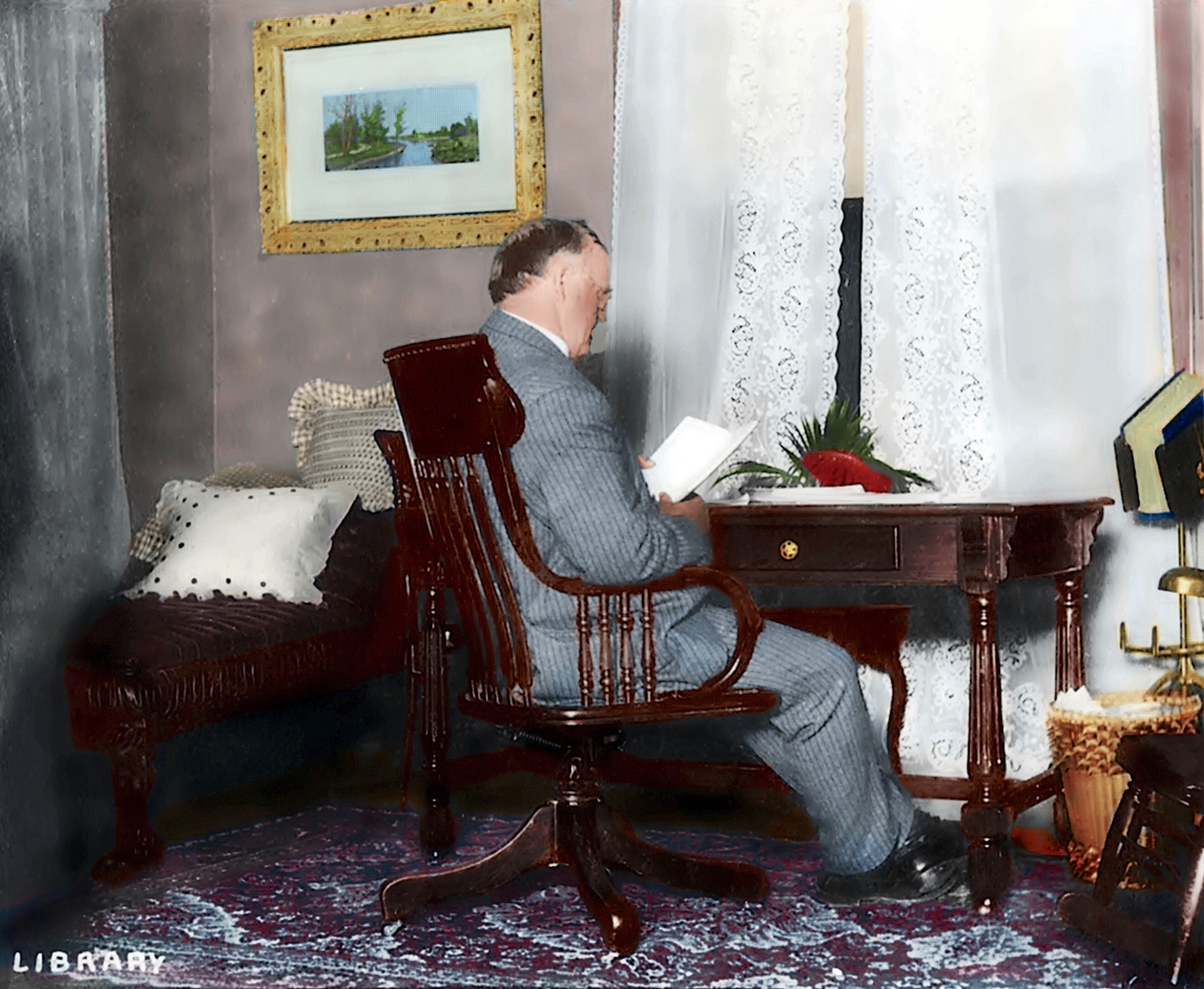
One of my favorite photos of Justus is with my great grandmother Lois Eurette Hall while they were visiting an Ostrich farm in California. Although he looks a bit stuffy in this photo he was adored by my mother and was quite the doting grandfather.
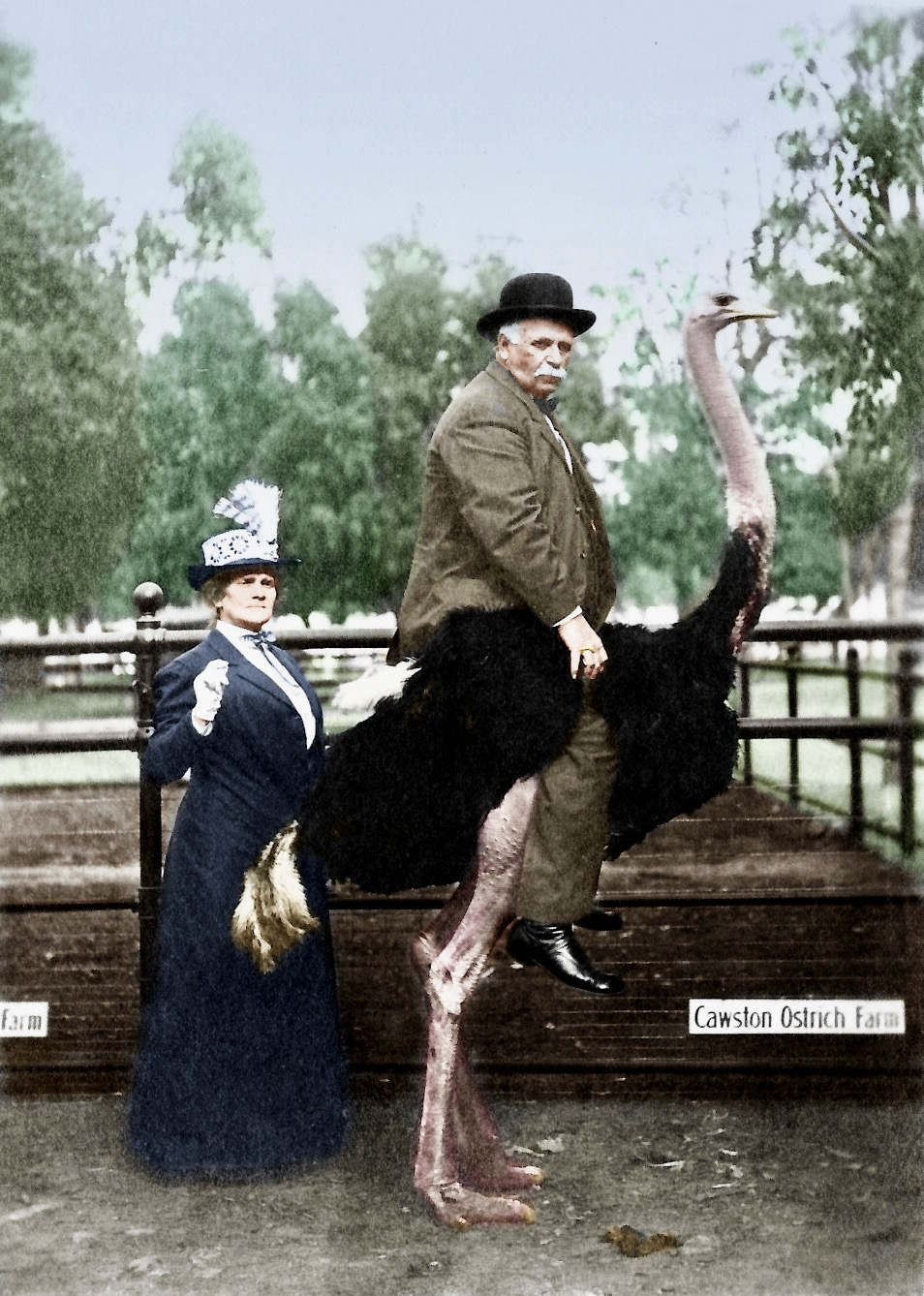
While researching the dates of Justus tenure as mayor I found a bit of interesting detail on the house that he built in Eaton Rapids. According to the Revitalization of the Eaton Rapids Home Tour his house at 221 State Street was built in 1901. “The buildings hardwood floors and white oak woodwork which are present throughout were cut from timber taken off the Sheldon family farm which was located where the present VFW is.” I cannot know for certain but I suspect this cane may be of similar origin.
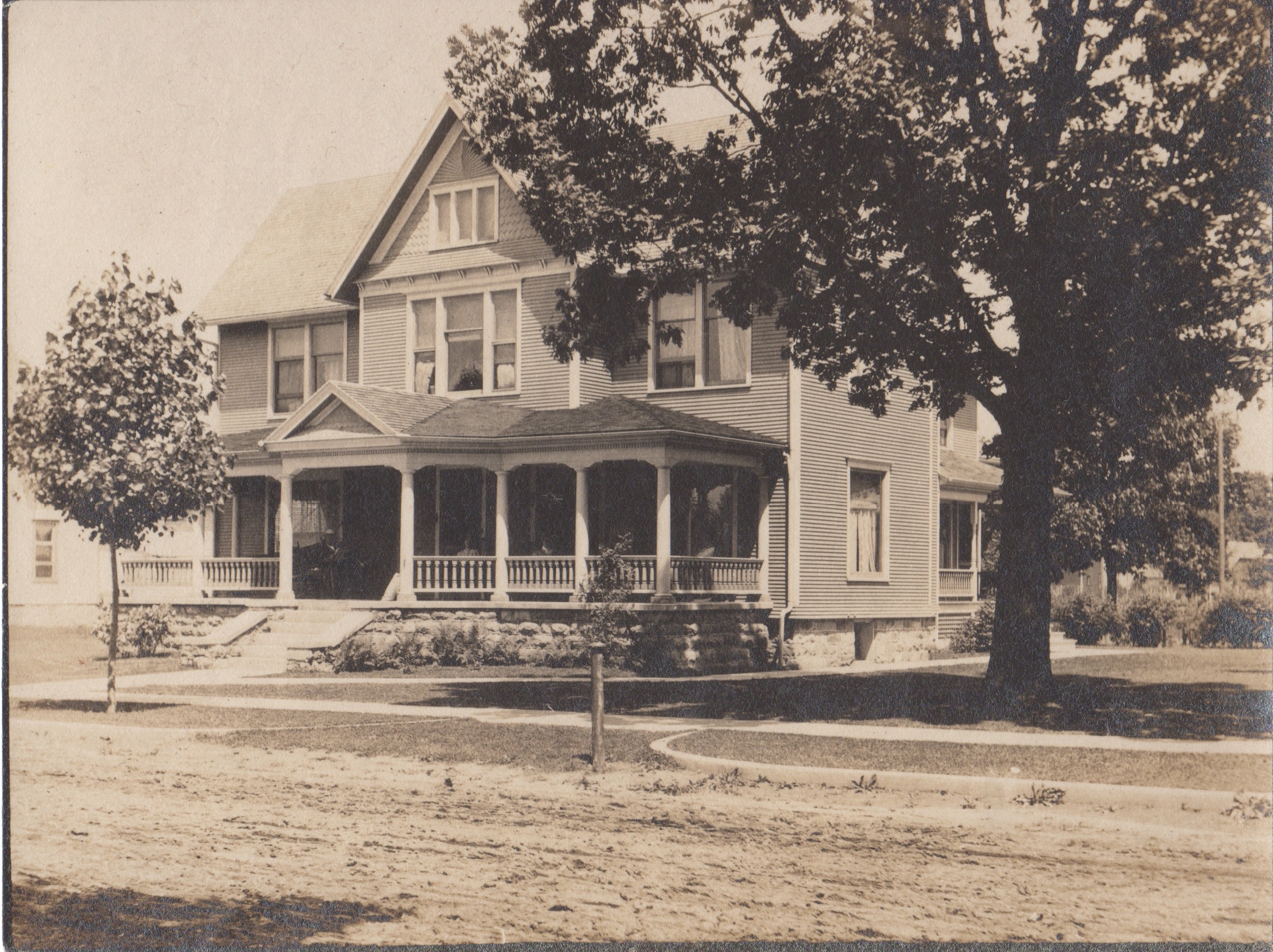
A photo of the house today shows the house not much changed in its 120 years. I am guessing the cane and the house are of similar vintage—thus the well loved Heirloom—leads to a well loved house!
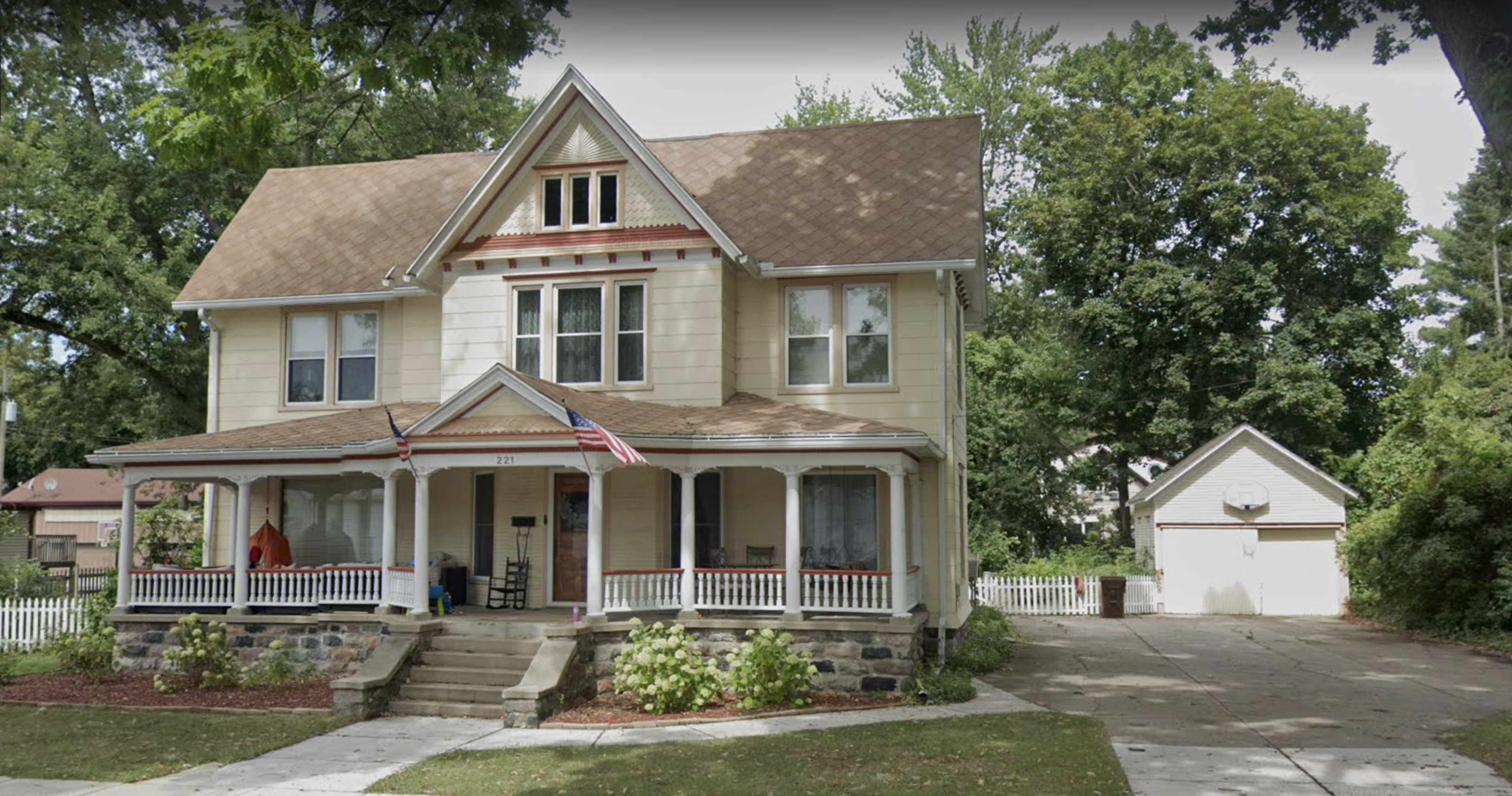
More of the house in a future post….I have 21 photos inside and out! A preview:
Copyright Kelly Wheaton 2021 All RIghts Reserved
Things Aren’t Always What They Appear to Be: Context Matters and the Case of the Missing Record
Posted on August 9, 2021 1 Comment
Like most of my posts I use examples from my own research and genealogy to illustrate important lessons. Although the details are often important to me and those who may share ancestors or places the deeper lessons are intended to be educational for everyone at all levels of genealogical or historical research. We all make mistakes and some, I fear, deliberately mislead in order to foster their own ideas. This example I ran into very early on in my research—-I hope that it will foster skepticism when something doesn’t seem quite right.
Back in the 1970’s while researching the WHEATON origins in America, I came across a published genealogy which continues to unsettle me. William G Hill privately published his book in 1887 “Family Record of Deacons James W Converse and Elisha S. Converse including some Descendants of [among others] Robert Wheaton, of Salem MASS 1636.” Now there is some excellent information here that has proven to be correct however let me draw your attention to one statement on page 44:
“First. That Robert Wheaton came from the pure, unmixed, ‘native’ Welsh, or rather Cumry race, which was of Tartaric origin; which race though often driven to the mountain fastness of Wales by Angles, Saxons, and Normans was never subjugated. They never intermarried as did the Angles, Saxons, and Normans, and never since A.D. 180 changed their religion. They never gave adherence to Rome, and the followers of Martin Luther and John Calvin came among them, they found nothing to reform.“
Where to begin? Robert WHEATON was not Welsh although it is likely his wife, Alice BOWEN, may have been and “if” he did live in Wales— WHEATON is not a Welsh surname. The rest seems fanciful at best seeing as we have DNA and archaeological evidence to the contrary.
“Second. Their religion, creed, church government, and mode of worship were and ever have been essentially like the Baptists of the present day. Their views were wholly unlike those held by the Puritans and Pilgrim Fathers in many respects. Robert Wheaton was in active sympathy with Obadiah Holmes and Roger Williams, the latter being banished from Salem and the Colony in the fall of 1635, by the Puritans.”
This is largely correct although we have no evidence of Robert WHEATON’s sympathies we do have some circumstantial evidence which is recounted by William G. Hill which is correct even if some of the surrounding material is false [not included here]. Robert WHEATON does remove from Salem to Rehoboth. “During the year 1643, the proprietors of Rehoboth were ‘required to give the value of their estates.’ There were fifty-eight in all returned; No 26 reads:
Mr Obadiah Holmes, formerly of Salem, now Robert Wheaton’s. Ł100:00:00″

So we know that once Robert WHEATON removed to Rehoboth, he held land previously awarded to Obadiah HOLMES, although this could be mere coincidence. Given that there were only 58 original proprietors and that Obadiah HOLMES and Robert WHEATON were in Salem at the same time and both had Baptist sympathies it seems likely they were acquainted. We also know that neither Robert’s marriage to Alice BOWEN, nor the baptisms of his children are recorded in Salem [although church records exist for this period] supporting the conclusion that he was not of the established church in Salem. But here is where it gets dicey. William G. Hill: “Who shall say that the influence of those early Welsh settlers for good upon destinies of the people our country was second to the Puritan or Pilgrim Fathers? The reasons therefore, apparent why Robert Wheaton ‘refused to be Inhabitant’ of Salem in 1636.”
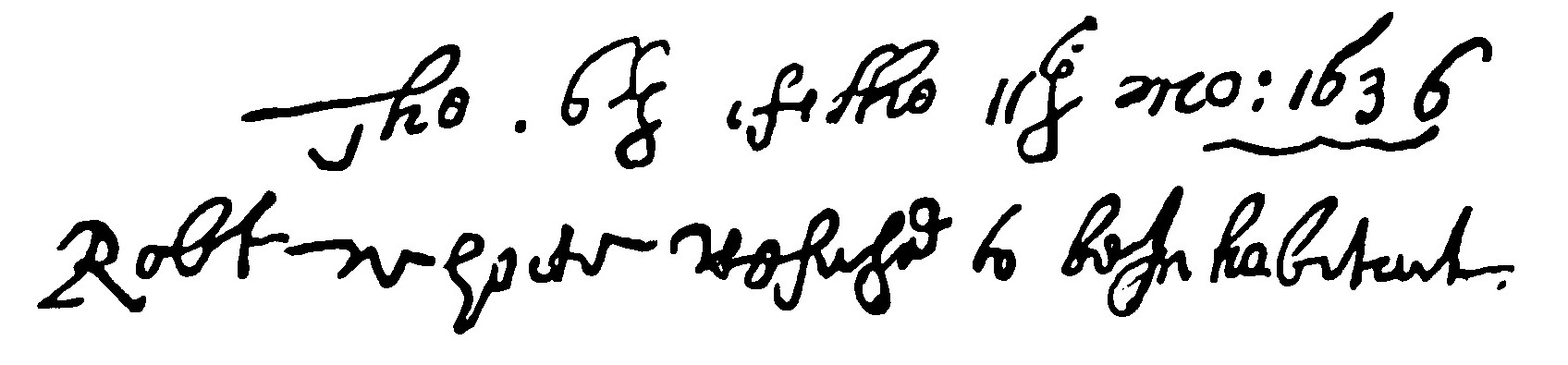
Robt Wheto refused to be Inhabitant facsimile from Hill’s book
Refused to be Inhabitant. Hmm. That always seemed quite a big deal. First a mystery detour. In February of 2013 I visited the Family History Library in Salt Lake City and was able to examine a microfilm copy of the original Salem Town records. Strangely that did not include this text anywhere within ten pages before or after where this is supposed to appear? In spite of not being able to locate the original there are numerous transcriptions available of the early Salem Town Records including a microfilm transcription also from the Family History Library
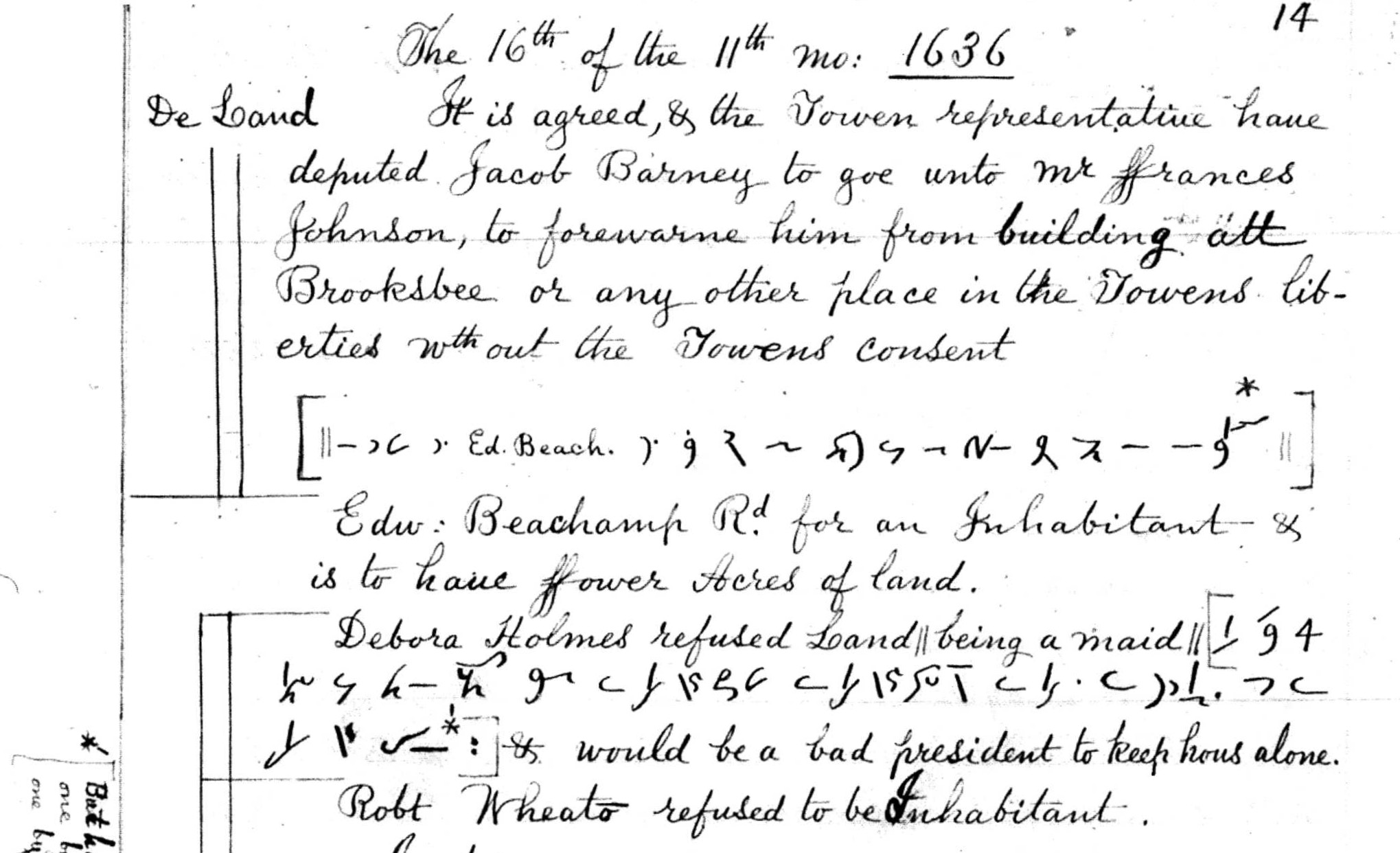
And there are several print versions including this one from 1868!:
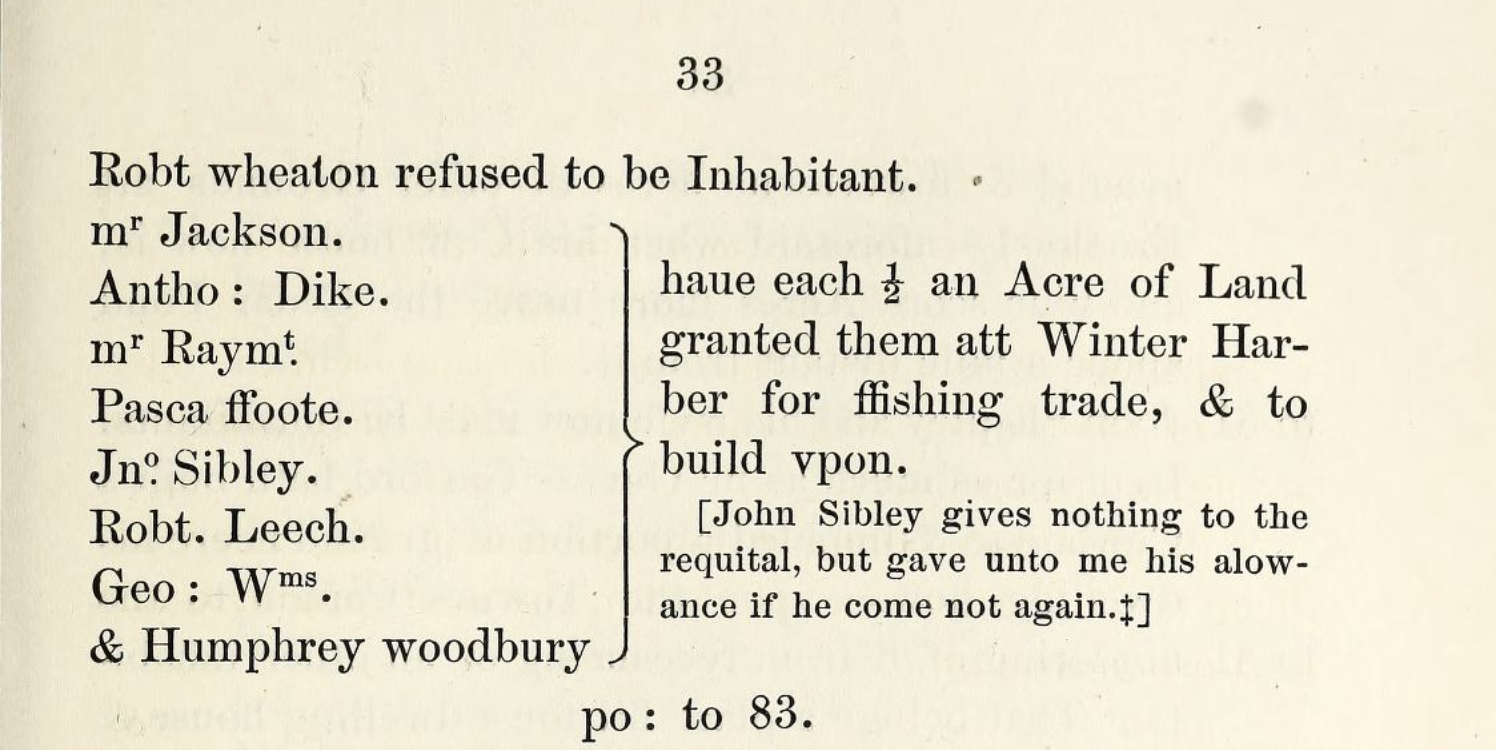
So it appears to me that sometime between 1868 and 1887 some of the pages of the Salem Town Records go missing! I followed up by contacting the Salem Town Clerk, a lengthy and frustrating process and the original was not found. [Anyone living near Salem wanting to go on a treasure hunt please contact me!].
Here is what the original microfilm looks like but it doesn’t follow the transcriptions.

pages 12-13 are missing
Please note the second paragraph begins John Abby this appears on the transcriptions on page 11 [of the original Town Records] and the list seen above on page 14 of transcriptions with the Robt Wheato directly above. Whether this is just a microfilming error or something more sinister only an in person visit to the Salem Town Clerk’s office is likely to resolve this.
Refused to be Inhabitant. So what does this mean? Remember the title of this post “Things Aren’t Always What They Appear to Be: Context Matters.” So let’s dig a bit deeper. Robert WHEATON wasn’t the only one that Refused to be Inhabitant. And he was not the one doing the “refusing.” As it turns out this was not unusual at all. On the missing page 14 Edw. Beachamp is received as Inhabitant and granted ten acres. In 1637 a Geo Roaps [George Ropes] it is stated “cannot yet be recd becasue he hath a yr to serve. ” It seems that in April of 1634 the Salem fathers set the requirements for being an Inhabitant of Salem:
- 26 years of age
- permanent resident for 6 months
- must take the Oath of Residents
- not indentured
So when Robert WHEATON was refused as Inhabitant, he likely had not met all the requirements to become one. The Salem Town Meeting 26th of the 9th month 1638, Robert Wheadon granted 10 acres of land:

So it wasn’t that Robert WHEATON was an ornery Welshman that kept him from being a resident! I should note that this is a bit of my own detective work and I reached out in 2013 to David Allen Lambert at the New England Historic Society to see if they had any further information that might illuminate early Salem requirements. He thought my theory a valid one, but had no one with expertise in the Salem area that could help further. Subsequent inquiries with the Essex Institute and other repositories had not yielded anything further so for now I am sticking with Robert WHEATON had not met the requirements!
Kelly Wheaton Copyright 2021 All rights Reserved
On What We Leave Behind: Writing
Posted on August 7, 2021 2 Comments
A kind thank you to writer Paul Chiddicks who inspired this post.
My grandfather Milo Dean Mosier was a writer and I often find myself writing about him, for of all of my ancestors, I know more about his life, how he felt, and what moved him; precisely because he left behind a written record. In poems, stories and hundreds of letters his voice emerges. From the crumpled letter he never sent to the slim book of poetry he self published for family and friends, his life I am privileged to know, because he had the courage to put the words upon the page.
I would be remiss if I did not mention here, his mother, Mary ‘Lulu’ Paden Mosier. Lulu, who upon leaving Minneapolis on a train headed for San Francisco, began writing in earnest in a supreme act of courage, which arguably would change her life. Lulu’s diary was supposed to have been destroyed by her daughter when she died—but Jessie thought better of it and I am grateful that it is preserved. In its pages we watch the transformation of a women from overworked, brow-beaten wife and mother of eight children, to a woman who finally confronts her husband over his abuse and leaves him. Without those pages how would I know who she was? Her first substantial entry before her trip West:
“ Sept 12 1913 Friday morning dawned bright and fair in Col. Hgts [Columbia Heights]. Cool enough for winter coats, Our cosmos won’t bloom but the sweet alyssum and nasturtiums and dahlias are doing splendid, In the afternoon Mrs Schreveder and I and baby Ruth went to the Bijou to see the Battle of Gettysburg. It was a moving picture in 5 reels. Romance, patriotism, love and devotion, fidelity to duty, heroic bravery, and cruel wars inexorable toll of human lives were enacted before us with wonderful cleanness and realism. Lincoln’s speech at the dedication of the monument was beautifully shown, his sad countenance moving with feeling the placid shawl over his shoulders and the crowd standing about in old-fashioned garb made it seem very realm and left a lasting impression of the unspeakable horrors of war.”
I know she was a kindred spirit just from this small bit of prose. Knowing that Milo and I follow Lulu’s impulse to write makes me smile. Milo was lucky to have siblings he kept in touch with via letter and in their last decades they reminisce in letters telling childhood stories. Milo typed most of his letters on an old black Standard Royal Typewriter [that I remember well] and he kept carbon copies of his letters!

So for most of the last ten years of his life I have both sides of the correspondence. Milo’s sister Lolita writes: “You mentioned a poem you wrote in the 8th grade, for which Miss Shea hugged you. I remember the assignment that inspired it. I believe she wrote 4 or 5 words on the black board and requested the class to write a sentence—composition or anything they desired using the words—like brook, path—pool etc. She liked yours so much she read it to our class. Of course I was proud of my big brother….Any way I will try & remember what I can of your poem—
The little brooklet ripples along,
Over its path of gold
It curves around a rock
To form a pool, clear and cold.
So was this one of many incidents that spurred Milo’s writing? Sadly Lolita recounts “Miss Shea became ill…never came back and died during the following summer vacation.” [Note: Miss Mary Teresa Shea was born 1858 in NY of Irish parents Michael & Bridget Shea. She died 8 Jan 1917 and is buried at Holy Cross Cemetery, Colma, San Francisco, California] Let it been known that she is remembered here as someone who appreciated the aspiring writer.

Before Milo left Minneapolis his mother Lulu took him as a boy to the University for classes on mycology (the study of mushrooms) as recorded on the back of a photo of her in his hand and mentioned in his Eulogy. If we are lucky enough to inherit the ephemera of a relative we hold the threads of many stories. And the genesis of so much more. A letter to Milo in 1957 from his older brother Leo: “Thank you for the tear sheet with your poem and comments of Jack Burroughs [Oakland Tribune, columnist]. Carrie [ Leo’s wife] thinks the poem exceptional, and wonders where you got your fine vocabulary and the ability to write so well. I’m not surprised, because I have known it as part of you ever since I can remember. Some day you should gather up your poems and publish them in book form.” [In 1967 Milo had completed that task!] Rather than tell fanciful tales of our ancestors we can ground their stories in their own words and those that knew them best.
Milo went from attending Crocker Intermediate School to Polytechnic High School both in San Francisco. He replies to a letter to Lolita: “You mentioned not knowing why I left home, but you did at the time; because we talked about it, at least once. I didn’t see you much after that until I came back from France [WWI] You told me, a day or so after the incident, that the Old Man had said, ‘Now see what you did—You made Milo Leave home.’ I went into the room to see what he was doing to you, and he grabbed me by the vest front and threw me out like a bean-bag. I think it possible that my leaving had some effect on him; I don’t know—He always liked me, but I didn’t know that he had beaten you, the way you described.” So in those few lines we know the why of Milo’s leaving home and subsequently not finishing high school. We know why Lolita never spoke of her childhood to her grandchildren. We know a bit more detail than in Lulu’s diary of the level of abuse. And we have a reason for the interwoven shame Milo carried at not being able to protect his younger sister and not finishing his education.
While his formal education ceased in 1916 his life education had just begun. His first employment in 1915 to 1916 was as an apprentice jeweler. We do not know with whom he stayed after he left home and school behind. He worked as a clerk and delivery boy at a grocery store and as an apprentice at Quayle’s Motor Works learning Electric motor repair. But none of the jobs he would have in nearly fifty years would account for his interest in writing. There was a bit of the wander lust in Milo that took him to France in WWI and into the Pacific in WWII. I can know that wherever he went there was probably a book of verse in hand. He like his mother was an avid reader with a particular fondness for verse. Here the first of the poems in his book Artifacts:
Invocation
Peace, Lord to us: we stand
with wet feet on the sand
Of thy great sea.
Even now our boat is manned
Its program taped and scanned,
To launch us from the strand
As Vikings free.
Far though the deeps expand,
Farther thy mansions grand—
Adorn the astral land—
Perhaps with cities planned
By such as we.
O Lord of Heaven’s band,
When Space at last is spanned,
Teach us to hold the hand
That erst, with bloody brand,
The flames of hatred fanned
In mock of Thee. . .Amen.
Appeared in the Oakland Tribune 27th of November 1957
In a 1964 letter to Leo he writes; “ You keep referencing your Great Books discussion class. Is this in any way connected with the Britannica edition of the Great Books? Before I retired I bought that set of books, knowing I wouldn’t be able to afford them. Oddly I find little time to read them. I enjoy Fielding and Rousseau, but I disliked the emasculated translation of Aristophanes. In the Lysistrata at least.” The comments of a well read writer, I should say. I can’t claim to have read Aristophanes, have you? I remember these books and Milo’s thumbing through them from time to time usually during a highly heated discussion with my father over some point being debated. In verbal combat they sometimes appeared to be mortal enemies with fists pounding on the dining room table to be followed only a few minutes later with happy banter and then snoring as they both fell asleep “watching” the television.

A writer is someone who writes. No more, no less. His or her education can be self driven or from the pages of life. It doesn’t really matter. What matters to me as a family historian is that the few ancestors whose words are preserved, leave landmarks for me in my own life, touchstones to a past I may never know, but carry within my DNA. I was reflecting on this post and thought why I am writing about this now? And it came to me—-I am nearly the same age as Milo when he died. Life is short, time’s a wasting. Don’t worry about what you write or how well you will write—please just start writing now. I will close this post with another of Milo’s poems. In this case a Haiku, to show that even just 17 syllables can tell a story.
Winter
The snowflake settles
Where once these barren branches
Dropped cherry petals.
Kelly Wheaton Copyright 2021 All Rights Reserved.
Cher Ami: A Pigeon and a Poet
Posted on August 4, 2021 1 Comment
An article written by Frank Blazich and first printed on the National Museum of American History’s Blog and later reprinted in the Smithsonian Magazine prompted this post. The story was about using DNA to determine the gender of the famous Pigeon “Cher Ami” who resides at the Smithsonian in Washington D.C. As noted Cher Ami is featured in two films both called the “Lost Battalion” but my connection to Cher Ami is through a long and beautiful ballad poem my grandfather wrote called simply “Cher Ami.” As my grandfather’s epilog to the poem states “the sequence in which they [Cher Ami’s wounds] were sustained, being unknown, falls rightly within the poet’s prerogative to dramatize—the truth that overlies the experiences of the dramatis personae is so poignant that augmentation for effect would be senseless.”
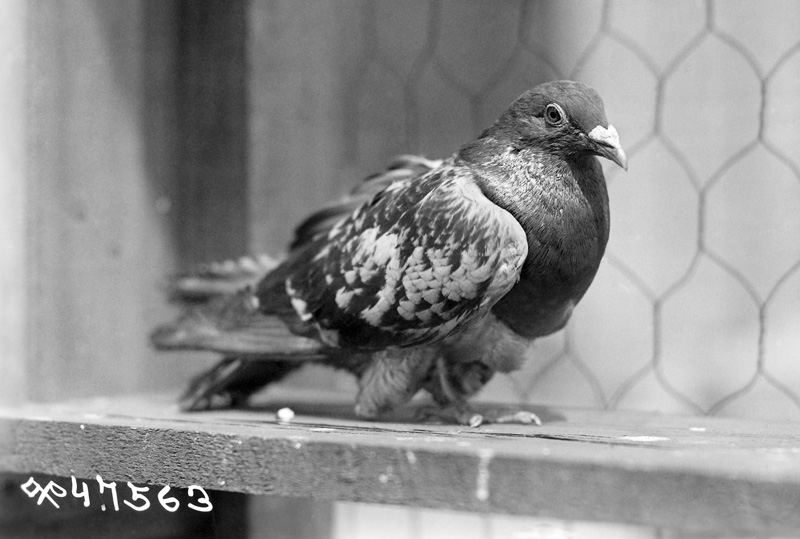
My grandfather, Milo Dean MOSIER in his words: “My job as a Medical Corpsman assigned to ride the forward ammo trains, took me back and forth–St.Mihiel, Verdun, Champaign,; and forward to Dun-Meurse, Stenay , and Buzancy.” While not a part of the “Lost Battalion” he was certainly familiar with the area and the casualties. Of the 40 some poems in his slim volume called “Artifacts” this was my childhood favorite. You see, I come from a long line of incurable romantics.
Cher Ami
Huddled beneath the sunless day, dripping and drear the Forest lay:
The water of Autumn’s endless rain lay puddled on the soaked terrain,
And filled the brook whose muddy flow Poured down the Vale of Charlevaux
Below the road that verged the Vale, Dug in, pinned down by iron hail,
Cut off by German infantry, now lay the men of Whittlesey.
***
From the crest above, where tree and vine, hid the grim gunned Giselher Line,
The Boche crept down, whenever he could, to hurl grenades from the tanglewood:
And upward hurl derisive hoots, as our planes dropped mis-aimed parachutes
With food and medicines–all to go to the jeering Germans’ hands below.
Probing the woods, to south and west, patrols were out on a fruitless quest.
They found some foes who fired and ran; and Whittlesey’s runners, dead, to a man;
But never a live American; No friend in olive dressed.
***
Each day new runners, in vain assay, died where the earlier runners lay;
And the Enemy Chief, to give him due, messaged, “I don’t want to murder you!”
Give up, and you will be treated well!” Which Whittlesey answered , “Go to Hell!”
The only messenger—only chance, to get relief for the trapped advance.
The other pigeon man was dead, Tollefson with a shattered head;
And the other crate the pigeons fled, lay smashed on the face of France.
And thus forlorn, they tossed their plea into the air with Cher Ami.
He spiralled up—they held their breath—he circled over the scene of death—
Then out of the forest fire flew! The enemy saw him— well they knew
Of the reasons why he should be stayed, so they filled the air with a fusilade.
***
One of the bullets glancing low, hit his breast like a hammer blow,
Knocking him down to a limb, too weak—but to stroke his feathers with his beak.
And knowing not of his injured bone, they pelted his perch with stick and stone:
And shouted at him to make him fly from his place in the broken branches high—
Finally Richards climbed the tree, and reaching, shook off Cher Ami.
***
With tortured muscles flexed in pain the wounded bird took off again;
And towering now, from the beechen shade, he entered that awful enfilade.
Up, out of the loom of La Palette, the metal stream was fiercer yet;
But into that tearing torrent , still drove Cher Ami toward Binarville.
Buffeted, battered on either side; over under, the iron tide
Twisted the air he had to ride, across the Dead Man’s Hill.
***
Hunters who hunt the Bandtail dwell on the shot he carries, and carries well;
But none would choose a six inch shell as a load for a pigeon kill!
Whipped to the side and beaten back, he bounced, as a plane in a bracket flack;
And scarlet blood, whence a leg had been, streamed out like the jess of a Peregrine.
And of his eyes but one could see through its ruby ring of royalty;
The other from sightless socket, gone—but still the great wings drove him on;
With reach and drive, and never a rest, from the agony of his broken breast.
***
Below now lay the loud-mouthed guns; and in the West the setting sun’s
Last rays lighted the dirty sky, as he scanned the land with his only eye.
Far to the left lay Neuvilly; Its shattered spire he could see,
Mist-shrouded; and the lovely Aire flowing north in its valley fair.
And down the right the silver Aisne lay shining on the broad champaign:
Between the two the loft was plain and he was almost there.
***
But the will to fly was waning fast, when he broke the steady beat, at last;
And, pinions set, he hurtled down as the falcon stoops o’er Montfaucon;
But never a falcon, falling free, had need as great as Cher Ami,
When bathed in blood, his body soft fell on landing—of the loft.
The excited loftman found him there and got on the phone to Delaware;
***
And the shelling ceased—Coincident? For every command was innocent,
And none had fired the fatal shoot; had proof, and alibis to boot—
And Delaware One, at the Major’s trench, later laid it on the French.
And those who would cover eyed askance, the Major’s orders to advance,
On which his units moved, and took their famous stand along the Brook.
***
Charges were talked of, but too much the Press had told of the feat; and such
Was the glory in the States—In brief they gave the Major a Silver Leaf—
They hung a medal on Cher Ami, for sharing the common casualty,
Of which they both would surely die, but not in a common graveyard lie.
***
Cheri Ami recovered from his wounds, and lived another year, dying in 1919. Colonel Charles W. Whittlesey awarded the Congressional Medal of Honor returned to his law practice. After putting his affairs in order took passage on a Caribbean cruise ship. The first night out, after a casual conversation with a fellow passenger, went out on deck and quietly stepped over the rail.
NOTES: La Palette a hill near Charlevaux Mill. Delaware was code for Headquarters of the 77th Division and Delaware One was code name for General Alexander.
Copyright Kelly Wheaton 2021 All RIghts Reserved

